|
(11) | EP 0 247 987 B1 |

| (12) | EUROPEAN PATENT SPECIFICATION |
|
|
| (54) |
A basic metal hydroxysulphate complex in solid form and a method for its manufacture Basisches Metallhydroxysulfatkomplex in fester Form und Verfahren zu dessen Herstellung Complexe d'hydroxysulfate basique de métal solide et son procédé de préparation |
|
|
|||||||||||||||||||||||||||||||
| Note: Within nine months from the publication of the mention of the grant of the European patent, any person may give notice to the European Patent Office of opposition to the European patent granted. Notice of opposition shall be filed in a written reasoned statement. It shall not be deemed to have been filed until the opposition fee has been paid. (Art. 99(1) European Patent Convention). |
Technical field
[0001] The present invention relates to a product in solid form containing a basic metal hydroxysulphate, and a method for producing polynucleate basic Me³⁺ hydroxysulphate in solid form which when dissolved in water produces positively charged polynucleate complexes possessing charge neutralizing properties in systems that contain suspended or colloidal negatively charged particles.
[0002] The object of the present invention is to obtain a rational method for producing industrially polynucleate, basic aluminium hydroxysulphate and/or ferri hydroxysulphate in solid form.
Background of the invention
[0003] There are known to the art a number of aluminium products which contain polynucleate aluminium ions in solution. These products have been produced in response to the demand for more effective chemicals for use, e.g. in water purification, paper sizing, and plant dewatering processes. The products accordingly exhibit considerably improved properties for use within the aforesaid technical fields, due to the higher electrical charge of the metal ions in comparison with the earlier simple compounds. The aluminium products developed with the object of improving efficiency when used in accordance with the foregoing are principally of two kinds, these being a) chloride-based basic aluminium compounds and b) sulphate based basic aluminium compounds. With regard to the first group there was initially developed a polyaluminium chloride (PAC) of the general formula
[AlClx(OH)3-x]n
where x is <3, normally 1-2.
[0004] Such compounds and methods for their manufacture are found described, for example, in SE-B-7201333-7, SE-B-7405237-4, SE-B-7412965-1, SE-B-7503641-8, and DE-A-2630768.
[0005] The other type of aluminium chloride solutions, PALC, which are also based on the same polynucleate complexes have the general formuli which can be written as:
[AlCl₃·xAOH]n
where A signifies alkali metal, and
[AlCl₃·
B(OH)₂]n
where B signifies an alkaline earth metal, n is a positive integer, and x is a number in the range 1-2.7.
[0006] Polynucleate aluminium chloride solutions of the PALC-type are described in FR-A1-7512975, according to which the solutions are prepared by alkalizing aluminium chloride solutions with solutions of alkali hydroxide. According to this publication, however, it has not been possible to produce clear, stable solutions other than in a highly diluted state. By "stable solution" is meant here and in the following a solution which will not change with regard to its composition and properties, even when stored for long periods of time. Thus it is stated in the aforesaid publication that a solution containing up to 0.40 moles of aluminium per litre can be obtained under certain circumstances. The stability of the solution, however, is greatly limited and the solution must be injected directly into the water to be cleansed. It is clearly evident from the publication, and in particular from the working examples that solutions having aluminium concentrations above about 0.1 mole/l cannot be expected to be effective and stable in the known PALC-solutions according to this publication.
[0007] Sulphate-based basic aluminium compounds have been described in EP-A-79850039-3, EP-A-80850033-4, and SE-A-8101830-1.
[0008] These products contain polynucleate metal-ions in solutions to a greater or lesser extent, and are thus effective water-cleansing agents. The sulphate-based products can also be used for purposes other than for cleansing water, in which the presence of polynucleate metal-ions favours the effects desired. In certain cases, however, it is highly desirable, and even necessary, to restrict the supply of sulphate-ions to the smallest possible amount in applications within the aforesaid fields of use, and particularly when using the product to produce drinking or tap water. This is particularly important in the case of systems used and cleansed repeatedly in order to eliminate the risk of sulphide accumulation in tissue and in water, this latter with regard to the corrosion of concrete. This thus applies to certain water purifying systems used in areas where there is a water deficiency, necessitating the available water to be used repeatedly for as long as possible, with intermediate cleansing of the water. In water such as this, after cleansing the water ten times with conventional aluminium sulphate or compositions having corresponding sulphate contents (FALS), the sulphate content of the water may reach such high levels as to result in an attack on the water-carrying conduit-system, resulting in troublesome leakages. The problem of enrichment of sulphate ions has now also become manifest in the manufacture of paper, where the water transportation system is, to a large extent, completely closed for environmental purposes. The manufacturing processes are seriously affected by excessively high salt concentrations in the paper stock.
[0009] US-A-4,238,347 discloses a method of producing sulphate-lean basic aluminium sulphate of the formula:
Al(OH)x(SO₄)y(H₂PO₄)z(H₂O)w
where
x is 0.75 - 1.5;
y is 0.7 - 1.07;
z is 0 - 0.2, and
w is 2.0 - 4.2, wherein
is equal to 3.
[0010] The compounds are prepared by reacting aluminium sulphate with comminuted calcium carbonate, optionally in the presence of phosphoric acid, and passing the reaction mixture through a filter to isolate the gypsum formed.
[0011] It has been found, however, that the carbon dioxide leaving the reaction process with the calcium carbonate together with the gypsum creates certain technical problems.
[0012] EP-A-0 069 718 and EP-A-0 069 719 describe an improved method for producing sulphur lean polynucleate aluminium hydroxide complexes of the formula:
[Al(OH)x(SO₄)y(H₂O)z]n
where
n is an integer
x is 0.75 - 2.0;
y is 0.5 - 1.12;
is 3;
z is 1.5 - 4, z being ≦ 4 when the product is in solid form, and
z is >>4 when the product is in solution, wherein aluminium sulphate is reacted with one or more compounds taken from the group CaO, Ca(OH)₂, BaO, Ba(OH)₂, SrO, Sr(OH)₂ in aqueous solution to form the aforesaid compound, thereafter the resultant earth alkali metal sulphate precipitate is isolated and the residual solution optionally evaporated. The resultant solution has splendid properties and can be obtained with a high basicity, OH/Al ≦2.0. Manufacture is complicated, however, since isolation of the earth alkali metal sulphate is difficult to achieve and places specific demands on the technical equipment used.
[0013] These references also teach that these complexes are unstable but can be stabilized by adding different organic complex formers to the solution of the polynucleate complexes. No economical route of preparing a stable solid form product is given.
[0014] Another method of producing these complexes is described in SE-A-8206206-8, this method comprising cooling a solution containing a polynucleate hydroxide sulphate complex of the formula:
Alm(OH)n(3m-n)+
in which the anion is
where m and n are integers, and which has been prepared by alkalizing aluminium sulphate with an alkali from the group NaOH, and Na₂CO₃, so as to crystallize out Na₂SO₄·10H₂O, which is then separated out and the residual solution optionally concentrated or dried to solid form by evaporation.
[0015] Still a further method of producing this complex is described in SE-A-8206207-6, in which a solution of an aluminium salt is neutralized to pH 5-7 to precipitate amorphous aluminium hydroxide which is isolated and thereafter contacted with sulphate ions in the form of aluminium sulphate and/or sulphuric acid to a y-value of 0.5-1.12, preferably 0.5-0.75, this product being optionally converted to a solid form.
[0016] The conversion of the solution to a solid form in order to maintain the stability of the complex in those circumstances when the presence of costly stabilizing agents are not desired is both complicated and expensive, such that the final product is not truly competitive with standard aluminium sulphate (BOLIDENR ALG) or aluminium-ferri sulphate (BOLIDENR AVR), for use in water cleansing processes. Water cleansing processes, drinking water, and then in particular domestic sewage purification processes require the presence of large quantities of flocculating agents for precipitating out the impurities present, such as, inter alia, phosphorous, and the cost of the water cleansing chemicals required in sewage purification in particular is very high. Demands have therefore been made for more effective and relatively inexpensive chemicals.
Disclosure of the present invention
[0017] It has now surprisingly been found possible to eliminate these technical problems in a simple and an efficient manner with the aid of the product according to the present invention, which product contains a sulphate-lean basic metal hydroxysulphate of the general formula
[Me³⁺(OH)x(SO₄)y(H₂O)z]n
wherein Me is Al and/or Fe, n is an integer; x is 0.75-2.0, preferably 1.0-2.0, more preferably 1.5-2.0; y is 0.5-1,12;
is 3; and z 1.5-4, the product in addition to said complex the product also contains calcium sulphate hemihydrate, the mole ratio Ca, expressed as Ca(OH)₂, and Me³⁺, expressed as Me₂³⁺(SO⁴)₃, being at most 2, and the product containing water in an amount, expressed as water of crystallization per mole Me₂³⁺(SO₄)₃, of at most 6H₂O.
[0019] The product is also produced in accordance with the invention in a simple and rational manner, the method being characterized by mixing to molten aluminium sulphate, Al₂(SO₄)₃·14H₂O and/or aluminium sulphate-ferri sulphate, Al₂(SO₄)₃·14H₂O; Fe₂(SO₄)₃·9H₂O, with a calcium compound taken from the group Ca(OH)₂, CaO, CaCO₃, CaMg(CO₃)₂; optionally expelling water from the mixture; and cooling the mixture to obtain a comminutable, or grindable solid product containing polyaluminiumhydroxide sulphate complex and optionally polyferri hydroxy sulphate complex and calcium sulphate hemihydrate.
[0020] Further characteristic features of the method and the product produced thereby are set forth in the following claims.
[0021] It has not been possible previously to prepare a complex of the aforegiven formula at temperatures higher than 70°C when practising the known methods, due to decomposition of the complex at said higher temperatures. It is therefore particularly surprising that the claimed product can be produced successively by means of the method according to the present invention.
[0023] The compound exists in the form of a polynucleate complex in aqueous solution and has the same form when solid.
[0024] The solid product obtained in accordance with the invention dissolves relatively quickly in water (<2 min), even when ground or comminuted to a relatively coarse particle size. The gypsum present is suspended in the resultant solution, while the metal hydroxysulphate complex is dissolved therein. The water cleansing properties of the obtained suspension have been found to be far superior to those of conventional aluminium sulphate products (BOLIDENR ALG, AVR).
[0025] The reason why the respective constituents of the product rapidly suspend and dissolve in a water phase is probably due to the fact that the gypsum present, which has a hemihydrate form in the solid product is rearranged to dihydrate therewith causing an increase in volume and temperature such as to accelerate the dissolution reaction.
[0026] The present invention will now be described more in detail with reference to a number of working examples.
Example 1
[0027] A product having a high mole ratio OH/Me (1.7) was prepared from 100 grams of molten aluminium sulphate-ferri sulphate (BOLIDENR ARV, Al₂(SO₄)₃·14H₂O; Fe₂(SO₄)₃·9H₂O, 7% Al, 3% Fe). The temperature of the melt was 115°C and the melt was held at this temperature while mixing 15.0 g CaO with the melt over a period of 2 minutes. The resultant product reaction mixture was then cooled to room temperature, the molten product gradually transforming into a solid, comminutable product.
[0028] The final product was analysed and found to contain water in an amount corresponding to 6H₂O per mole (Al, Fe)₂(SO₄)₃. The polynucleate aluminium sulphate-ferri sulphate complex present in the product contains 1.7 OH per mole Me (Al, Fe). The product comprised CaSO₄·0.5H₂O, calcium sulphate hemihydrate.
Example 2
[0029] 100 g Al₂(SO₄)₃·14H₂O having a temperature of 115°C were admixed with 15.5 g CaO, there being obtained in a manner similar to Example 1 an end product having an OH/Al ratio of 1.65 in the resultant polyaluminium hydroxysulphate complex.
[0030] In those cases where calcium hydroxide is used, it is necessary to evaporate off larger quantities of water, in order to obtain a comminutable product. This can be effected by maintaining the product at an elevated temperature, or by reacting the product in a vessel of large surface area so as to rapidly evaporate the water present.
[0031] It has been found that with a dry solids content of 69% or thereabove in Me₂(SO₄)₃·xH₂O measured by expelling water in a conventional domestic microwave oven for five minutes at maximum power, it is necessary to expel water during the reaction between Me₂(SO₄)₃ and CaO.
[0032] In order to obtain a comminutable or grindable product, the Me₂O₃-content of the polymetal hydroxy complex of the end product shall be in excess of 14% by volume, the calcium sulphate being precipitated out as hemihydrate. As beforementioned, this means that the crystallization water present per mole of ingoing Al₂(SO₄)₃ or (Al,Fe)₂(SO₄)₃, about 14H₂O, is reduced to 6H₂O in the end product.
[0033] A product according to Example 1 (PAV) above was tested with regard to its ability to clarify turbid sewage water. The test also includes a comparison test using standard aluminium sulphate-ferri sulphate (AVR). The starting turbidity was >100 FTU. As will be seen from the following table, the product according to the present invention gave a far better result than the standard product.
1. A solid product containing a polynucleate basic Me³⁺ hydroxysulphate complex of the
formula
[Me³⁺(OH)x(SO₄)y(H₂O)z]n
wherein Me is Al and/or Fe, n is an integer; x is 0.75-2.0, preferably 1.0-2.0, more preferably 1.5-2.0; y is 0.5-1,12;
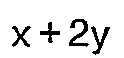
is 3; and z=1.5-4, said product when dissolved in water giving a positively charged polynucleate complex possessing charge neutralizing properties in systems containing suspended or colloidal negatively charged particles, characterized in that in addition to said complex the product also contains calcium sulphate hemihydrate, the mole ratio Ca, expressed as Ca(OH)₂, and Me³⁺, expressed as Me₂³⁺(SO⁴)₃, being at most 2, and the product containing water in an amount, expressed as water of crystallization per mole Me₂³⁺(SO₄)₃, of at most 6H₂O.
[Me³⁺(OH)x(SO₄)y(H₂O)z]n
wherein Me is Al and/or Fe, n is an integer; x is 0.75-2.0, preferably 1.0-2.0, more preferably 1.5-2.0; y is 0.5-1,12;
is 3; and z=1.5-4, said product when dissolved in water giving a positively charged polynucleate complex possessing charge neutralizing properties in systems containing suspended or colloidal negatively charged particles, characterized in that in addition to said complex the product also contains calcium sulphate hemihydrate, the mole ratio Ca, expressed as Ca(OH)₂, and Me³⁺, expressed as Me₂³⁺(SO⁴)₃, being at most 2, and the product containing water in an amount, expressed as water of crystallization per mole Me₂³⁺(SO₄)₃, of at most 6H₂O.
2. A polynucleate complex containing product according to claim 1, wherein the mole ratio
Ca(OH)₂ to Me₂³⁺(SO⁴)₃ is 1.0-2.0, preferably 1.5-2.0.
3. A method for producing a polynucleate basic Me³⁺ hydroxysulphate complex containing
product in solid form, which product when dissolved in water will provide a positively
charged polynucleate complex possessing charge neutralizing properties in systems
containing suspended or colloidal negatively charged particles, characterized by adding to molten aluminium sulphate and/or aluminium sulphate-ferri sulphate a
calcium compound taken from the group Ca(OH)₂, CaO, CaCO₃ and CaMg(CO₃)₂ and permitting
ingoing constituents to react to form said basic Me³⁺ hydroxysulphate complex and
calcium sulphate hemihydrate; and by cooling the resultant product reaction mixture
to ambient temperature to form a comminutable or grindable solid product containing
polyaluminium hydroxysulphate complex and/or polyferri hydroxysulphate complex and
calcium sulphate hemihydrate.
4. A method according to claim 3, wherein the melt has a temperature of 100-115°C.
5. A method according to claim 3, wherein the dry solids contents of the metal sulphate
present, is at least 69%, determined by heating the product in a conventional domestic
microwave oven for 5 minutes at maximum power output.
1. Produit solide contenant un complexe polynucléaire d'hydroxysulfate de Me³⁺ basique,
répondant à la formule :
[Me³⁺(OH)x(SO₄)y(H₂O)z]n
dans laquelle Me représente Al et/ou Fe, n est un nombre entier; x est égal à 0,75-2,0, de préférence à 1,0-2,0, plus particulièrement à 1,5-2,0; y est égal à 0,5-1,12;
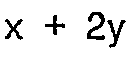
est égal à 3; et z est égal à 1,5-4, ce produit, lorsqu'il est dissous dans de l'eau, donnant un complexe polynucléaire à charge positive présentant des propriétés de neutralisation de charge dans des systèmes contenant des particules à charge négative en suspension ou colloïdales, caractérisé en ce que, en plus du complexe susdit, le produit contient également du sulfate de calcium hémihydraté, le rapport molaire entre Ca, exprimé pour le Ca(OH)₂, et le Me³⁺, exprimé pour le Me₂³⁺(SO₄)₃, étant de 2 au plus, ce produit contenant de l'eau en une quantité, exprimée pour l'eau de cristallisation par mole de Me₂³⁺(SO₄)₃, de 6H₂O au plus.
[Me³⁺(OH)x(SO₄)y(H₂O)z]n
dans laquelle Me représente Al et/ou Fe, n est un nombre entier; x est égal à 0,75-2,0, de préférence à 1,0-2,0, plus particulièrement à 1,5-2,0; y est égal à 0,5-1,12;
est égal à 3; et z est égal à 1,5-4, ce produit, lorsqu'il est dissous dans de l'eau, donnant un complexe polynucléaire à charge positive présentant des propriétés de neutralisation de charge dans des systèmes contenant des particules à charge négative en suspension ou colloïdales, caractérisé en ce que, en plus du complexe susdit, le produit contient également du sulfate de calcium hémihydraté, le rapport molaire entre Ca, exprimé pour le Ca(OH)₂, et le Me³⁺, exprimé pour le Me₂³⁺(SO₄)₃, étant de 2 au plus, ce produit contenant de l'eau en une quantité, exprimée pour l'eau de cristallisation par mole de Me₂³⁺(SO₄)₃, de 6H₂O au plus.
2. Produit contenant un complexe polynucléaire suivant la revendication 1, caractérisé
en ce que le rapport molaire du Ca(OH)₂ au Me₂³⁺(SO₄)₃ = 1,0-2,0 de préférence 1,5-2,0.
3. Procédé de préparation d'un produit contenant, sous forme solide, un complexe polynucléaire
d'hydroxysulfate de Me³⁺ basique, ce produit, lorsqu'il est dissous dans de l'eau,
donnant un complexe polynucléaire à charge positive présentant des propriétés de neutralisation
de charge dans des systèmes contenant des particules à charge négative en suspension
ou colloïdales, ce procédé étant caractérisé par l'addition à du sulfate d'aluminium
et/ou du ferrisulfate-sulfate d'aluminium fondu, d'un composé de calcium pris dans
le groupe comprenant Ca(OH)₂, CaO, CaCO₃ et CaMg(CO₃)₂, en laissant réagir les constituants
entrants pour former le complexe susdit d'hydroxysulfate de Me³⁺ basique et du sulfate
de calcium hémihydraté, et par le refroidissement du mélange de réaction produit résultant
jusqu'à la température ambiante pour former un produit solide pulvérisable ou broyable,
contenant un complexe polynucléaire d'hydroxysulfate d'aluminium et/ou un complexe
polynucléaire de ferrihydroxysulfate, et du sulfate de calcium hémihydraté.
4. Procédé suivant la revendication 3, caractérisé en ce que la masse fondue a une température
de 100-115°C.
5. Procédé suivant la revendication 3, caractérisé en ce que la teneur en matières solides
sèches du sulfate de métal présent est d'au moins 69 %, cette teneur étant déterminée
en chauffant le produit dans un four haute-fréquence domestique traditionnel pendant
5 minutes au débit maximum de puissance.
1. Festes Produkt, das einen vielkernigen basischen Me³⁺-Hydroxysulfatkomplex der Formel
[Me³⁺(OH)x(SO₄)y(H₂O)z]n
enthält, worin Me Al und/oder Fe ist, n eine ganze Zahl ist, x 0,75 - 2,0, vorzugweise 1,0 - 2,0, stärker bevorzugt 1,5 - 2,0 ist, y 0,5 - 1,12 ist,
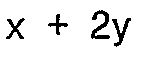
3 ist und z 1,5 - 4 ist, wobei dieses Produkt beim Lösen in Wasser einen positiv geladenen vielkernigen Komplex ergibt, der ladungsneutralisierende Eigenschaften in Systemen, die suspendierte oder kolloidale negativ geladene Teilchen enthalten, besitzt, dadurch gekennzeichnet, daß das Produkt zusätzlich zu diesem Komplex auch Calciumsulfathemihydrat enthält, wobei das Molverhältnis von Ca, ausgedrückt als Ca(OH)₂, und Me³⁺, ausgedrückt als Me₂³⁺(SO₄)₃, höchstens 2 ist und das Produkt Wasser in einer Menge, ausgedrückt als Kristallisationswasser je Mol Me₂³⁺(SO₄)₃, von höchstens 6H₂O enthält.
[Me³⁺(OH)x(SO₄)y(H₂O)z]n
enthält, worin Me Al und/oder Fe ist, n eine ganze Zahl ist, x 0,75 - 2,0, vorzugweise 1,0 - 2,0, stärker bevorzugt 1,5 - 2,0 ist, y 0,5 - 1,12 ist,
3 ist und z 1,5 - 4 ist, wobei dieses Produkt beim Lösen in Wasser einen positiv geladenen vielkernigen Komplex ergibt, der ladungsneutralisierende Eigenschaften in Systemen, die suspendierte oder kolloidale negativ geladene Teilchen enthalten, besitzt, dadurch gekennzeichnet, daß das Produkt zusätzlich zu diesem Komplex auch Calciumsulfathemihydrat enthält, wobei das Molverhältnis von Ca, ausgedrückt als Ca(OH)₂, und Me³⁺, ausgedrückt als Me₂³⁺(SO₄)₃, höchstens 2 ist und das Produkt Wasser in einer Menge, ausgedrückt als Kristallisationswasser je Mol Me₂³⁺(SO₄)₃, von höchstens 6H₂O enthält.
2. Produkt, das einen vielkernigen Komplex enthält, nach Anspruch 1, worin das Molverhältnis
von Ca(OH)₂ zu Me₂³⁺(SO₄)₃ 1,0 - 2,0, vorzugsweise 1,5 - 2,0 ist.
3. Verfahren zur Herstellung eines Produktes, das einen vielkernigen basischen Me³⁺-Hydroxysulfatkomplex
enthält, in fester Form, wobei dieses Produkt beim Auflösen in Wasser einen positiv
geladenen vielkernigen Komplex liefert, der in Systemen, welche suspendierte oder
kolloidale negativ geladene Teilchen enthalten, ladungsneutralisierende Eigenschaften
besitzt, dadurch gekennzeichnet, daß man zu geschmolzenem Aluminiumsulfat und/oder Aluminiumsulfatferrisulfat eine
Calciumverbindung aus der Gruppe Ca(OH)₂, CaO, CaCO₃ und CaMg(CO₃)₂ zugibt und die
Bestandteile unter Bildung des basischen Me³⁺-Hydroxysulfatkomplexes und von Calciumsulfathemihydrat
reagieren läßt und das resultierende Reaktionsgemisch auf Umgebungstemperatur kühlt,
um ein zerkleinerungsfähiges oder mahlfähiges festes Produkt zu bilden, das Polyaluminiumhydroxysulfatkomplex
und/oder Polyferrihydroxysulfatkomplex sowie Calciumsulfathemihydrat enthält.
4. Verfahren nach Anspruch 3, bei dem die Schmelze eine Temperatur von 100 bis 115 °C
hat.
5. Verfahren nach Anspruch 3, bei dem die Trockenfeststoffgehalte des vorhandenen Metallsulfats
wenigstens 69 %, bestimmt durch Erhitzen des Produktes in einem herkömmlichen Hausmikrowellenofen
während 5 min bei maximaler Leistung, betragen.