|
(11) | EP 0 248 072 B1 |

| (12) | EUROPEAN PATENT SPECIFICATION |
|
|
| (54) |
AMIFLOXACINE INTERMEDIATE AMIFLOXACIN-ZWISCHENVERBINDUNG INTERMEDIAIRE DE L'AMIFLOXACINE |
|
|
|||||||||||||||||||||||||||||||
|
||||||||||||||||||||||||||||||||
| Note: Within nine months from the publication of the mention of the grant of the European patent, any person may give notice to the European Patent Office of opposition to the European patent granted. Notice of opposition shall be filed in a written reasoned statement. It shall not be deemed to have been filed until the opposition fee has been paid. (Art. 99(1) European Patent Convention). |
[0001] This invention relates to new Amifloxacine intermediates and a process for the preparation thereof. More particularly it is concerned with new anhydrides of 6-fluoro-7-chloro-1-methylamino-4-oxo-1,4-dihydro-quinoline-3-carboxylic acid and boric acids.
[0002] JP-A-59 122 470 describes BF₂-chelates of 1-alkyl-6,7-dihalogeno-4-oxo-1,4-dihydroquinoline-3-carboxylic acids which may be used as intermediates in the preparation of 7-substituted-3-carboxylic acids such as norfloxacin.
[0003] Ethyl-6-fluoro-7-chloro-1-methylamino-4-oxo-1,4-carboxylic-dihydro-quinolin e-3-carboxylate is an intermediate useful in the preparation of the antibacterial agent 6-fluoro-1-methylamino-7-(4-methyl-piperazino)-4-oxo-1,4-dihydro-quinoline-3-carboxylic acid (Journal of Medicinal Chemistry, 27, 1103 /1984/). The latter compound can be prepared in two steps from ethyl-6-fluoro-7-chloro-1-methylamino-4-oxo-1,4-dihydro-quinoline-3-carboxylate. The said ester is subjected to hydrolysis whereupon the 6-fluoro-7-chloro-1-methylamino-4-oxo-1,4-dihydro-quinoline-3-carboxylic acid thus obtained is reacted in the presence of a solvent at a temperature above 100 °C with 1-methyl-piperazine for 15-22 hours to yield the desired 6-fluoro-1-methylamino-7-(4-methyl-piperazino)-4-oxo-1,4-dihydro-quinoline-3-carboxylic acid (European patent specification No. 90,424; Japanese patent specification No. 84 01,468).
[0004] It has been found that the 6-fluoro-1-methylamino-7-(4-methyl-piperazino)-4-oxo-1,4-dihydro-quinoline-3-carboxylic acid can be prepared under milder reaction conditions during a shorter reaction time by reacting 1-methyl-piperazine with a compound of the general Formula I. (European Patent Application 87900245).
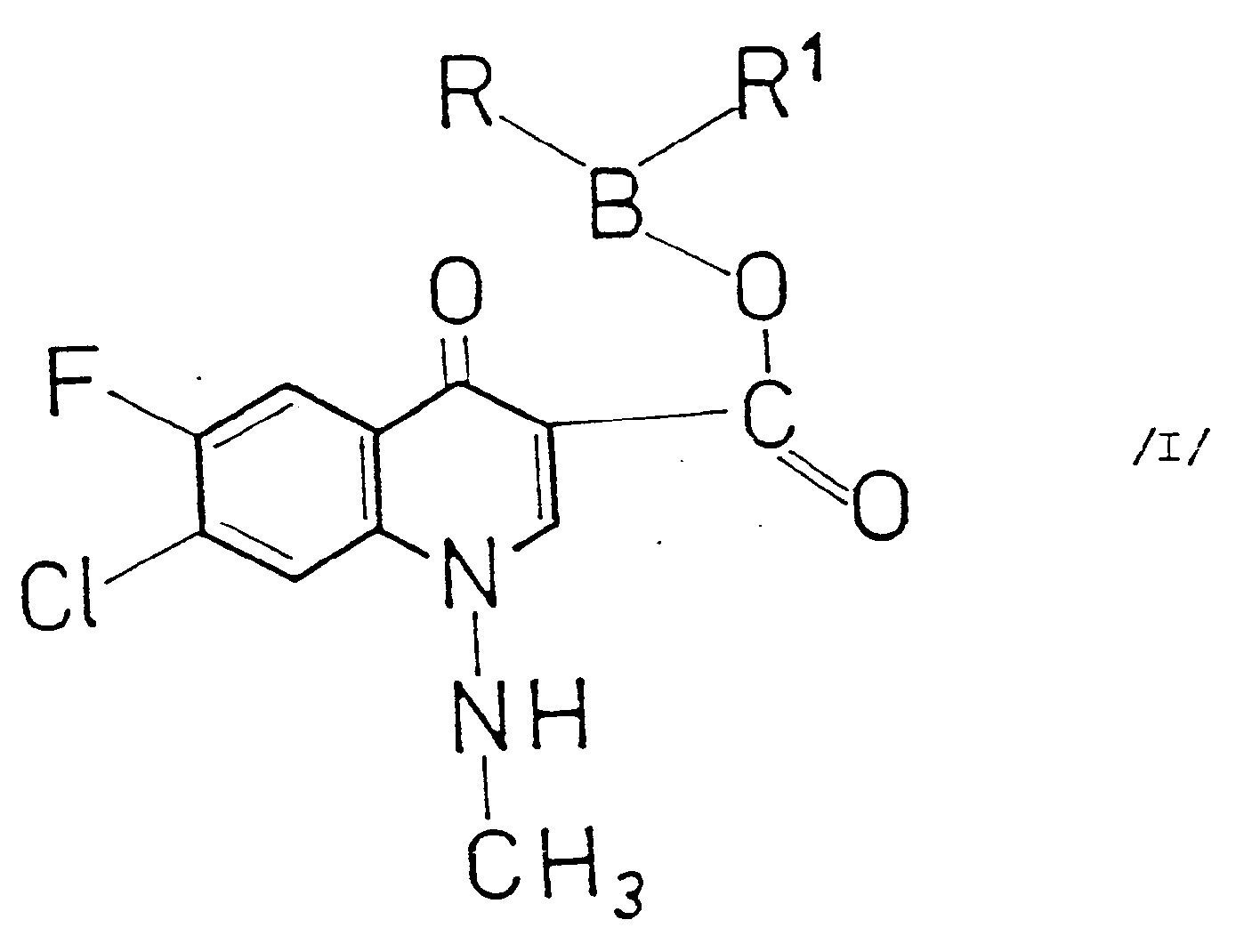
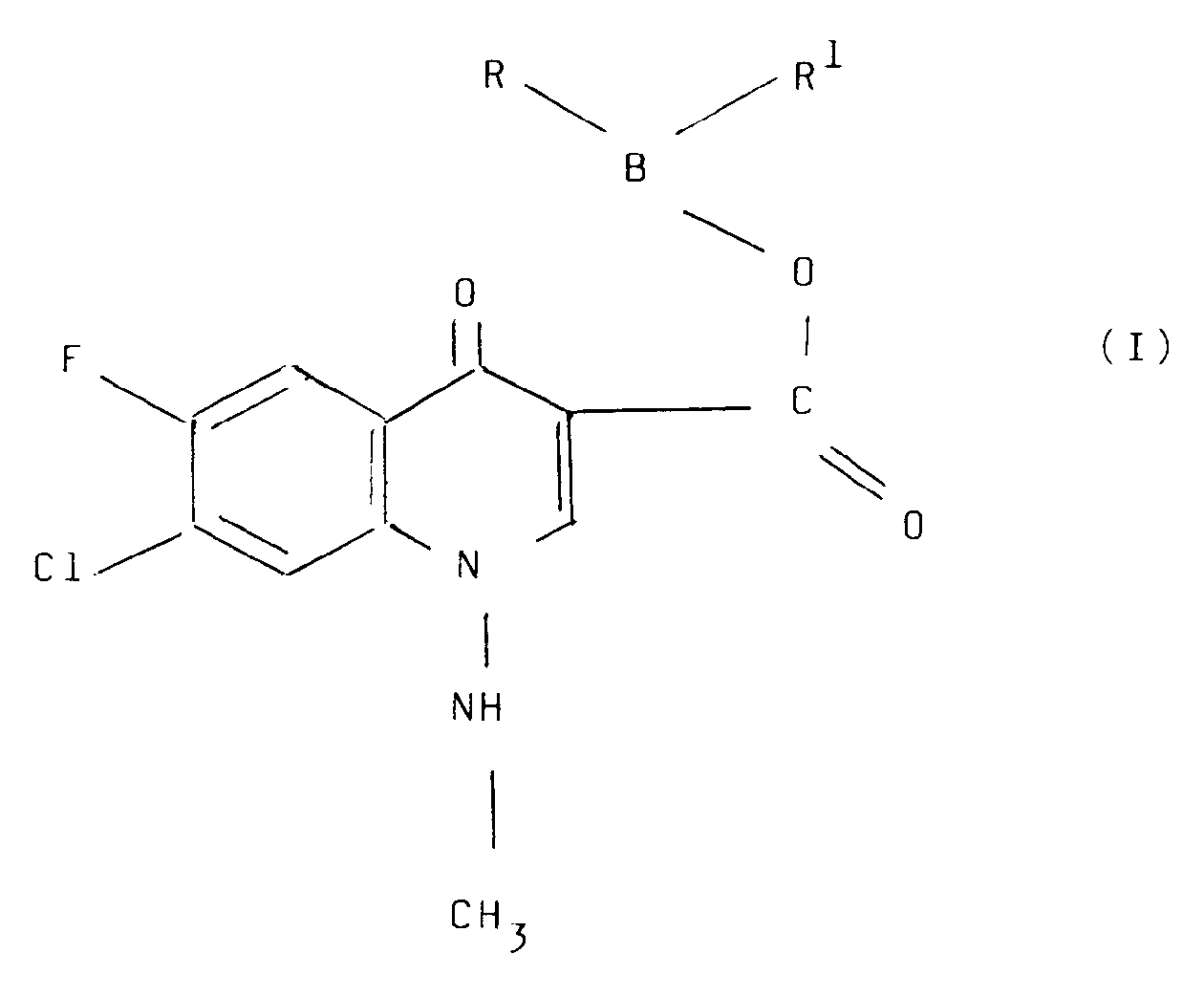
[0005] According to an aspect of the present invention there are provided new compounds of the general Formula I
wherein R and R¹ stand for halogen; an aliphatic acyloxy group comprising 2-6 carbon atoms and optionally substituted by halogen; or an aromatic acyloxy group comprising 7-11 carbon atoms.
[0006] According to a further aspect of the present invention there is provided a process for the preparation of the compounds of the general Formula I which comprises
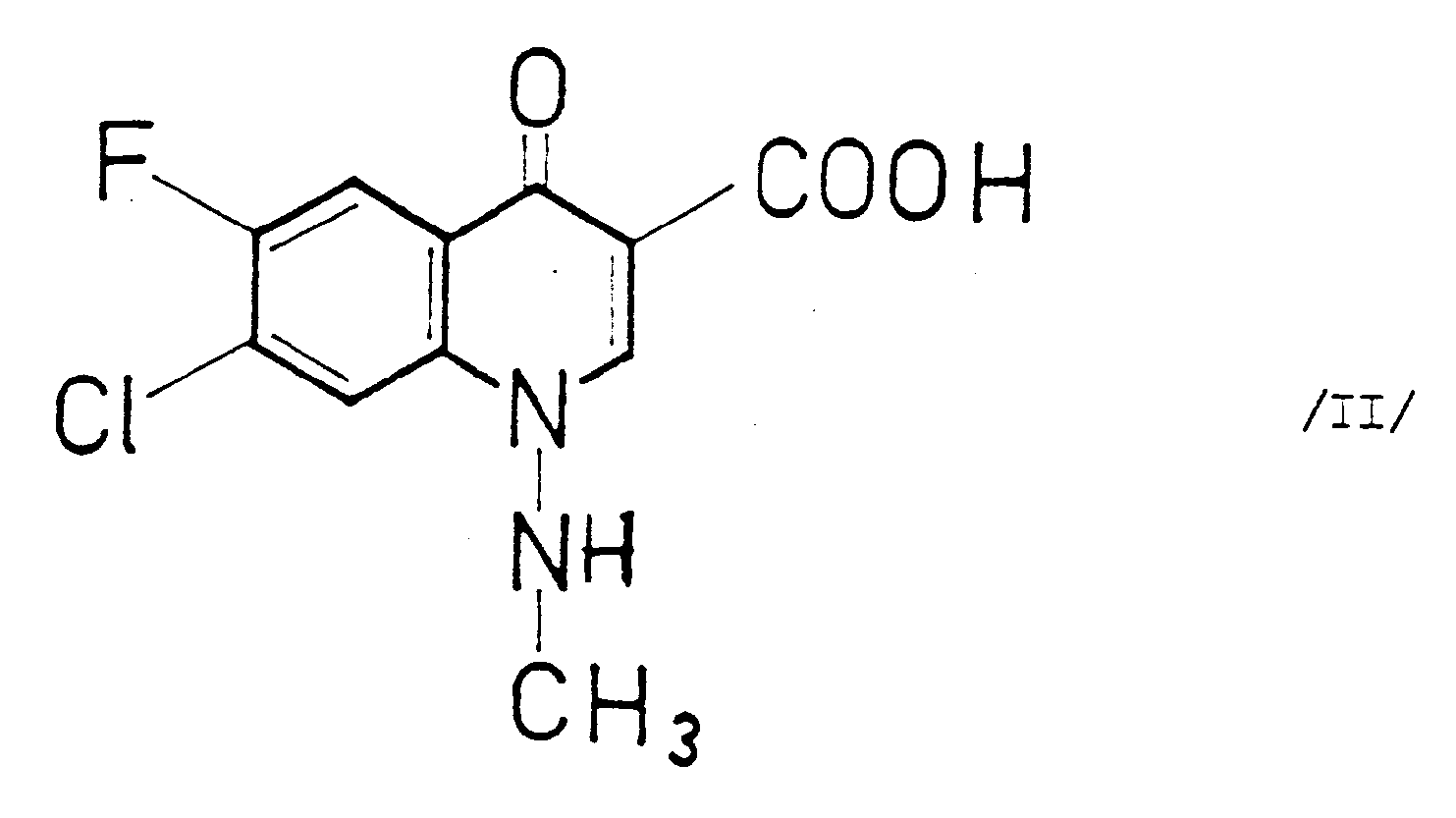
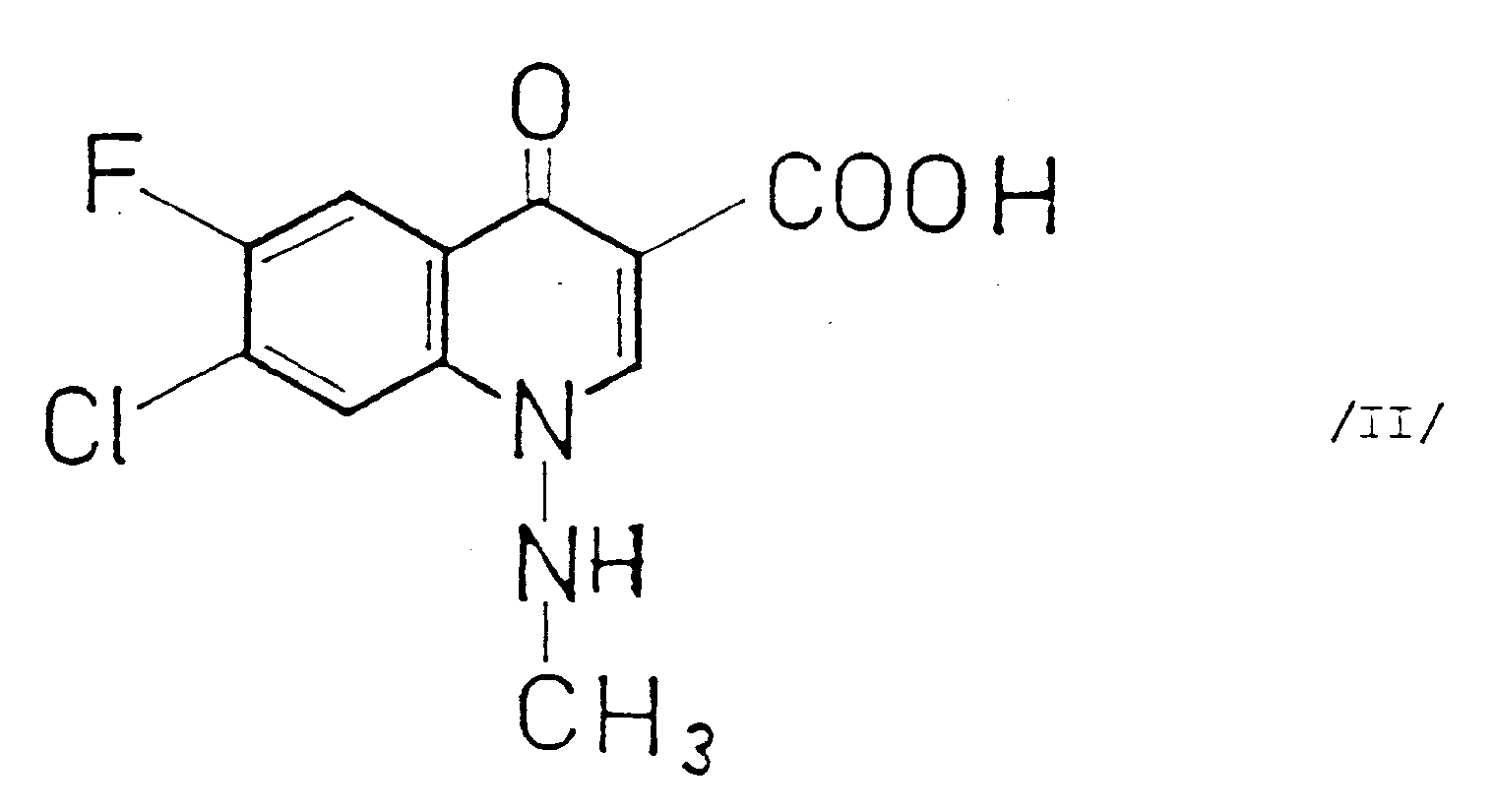
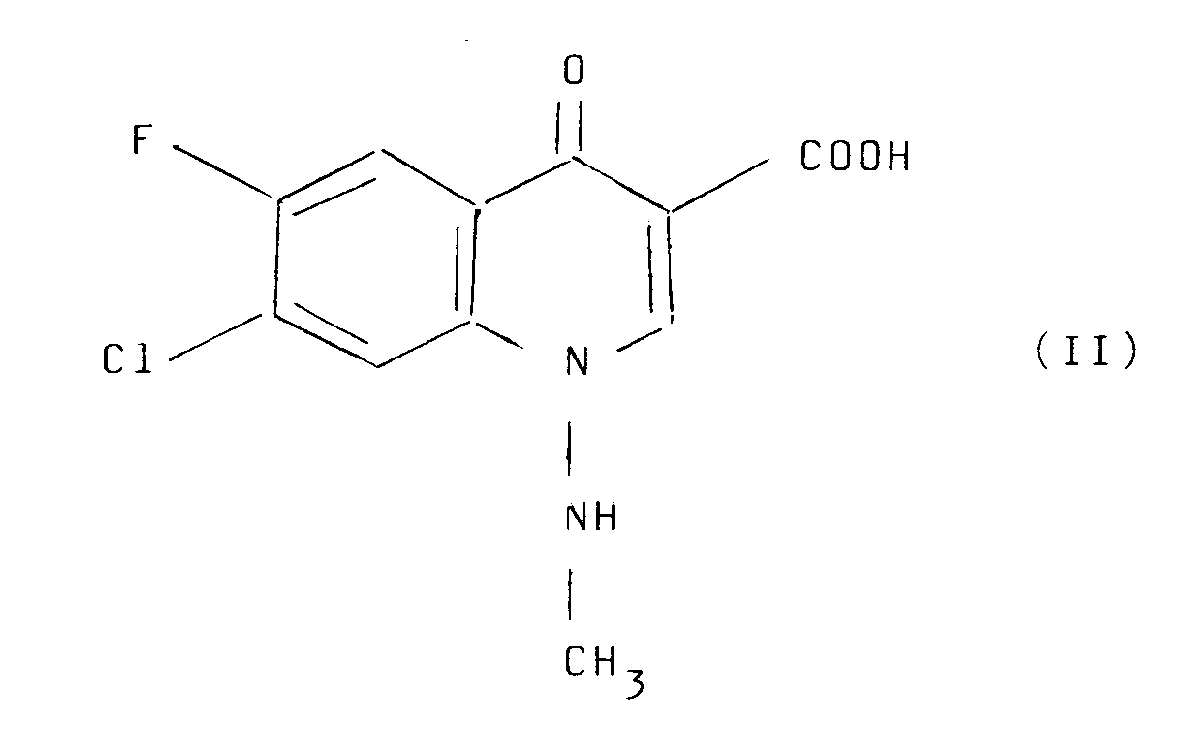
a) reacting the quinoline-3-carboxylic acid derivative of the Formula II
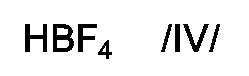
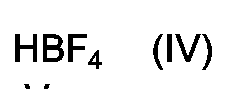
with fluoro boric acid of the formula IV
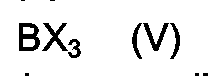
or a trihalo borate of the general Formula V
wherein X stands for fluorine, chlorine or bromine, or a triacyloxy borate derivative
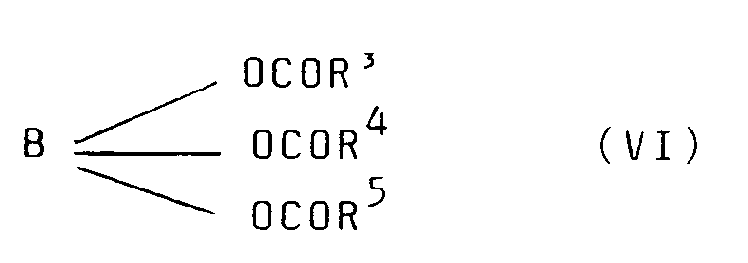
of the general Formula VI
wherein R³, R⁴ and R⁵ stand for alkyl comprising 1-4 carbon atoms and optionally
substituted by halogen; or aryl comprising 6-10 carbon atoms; or
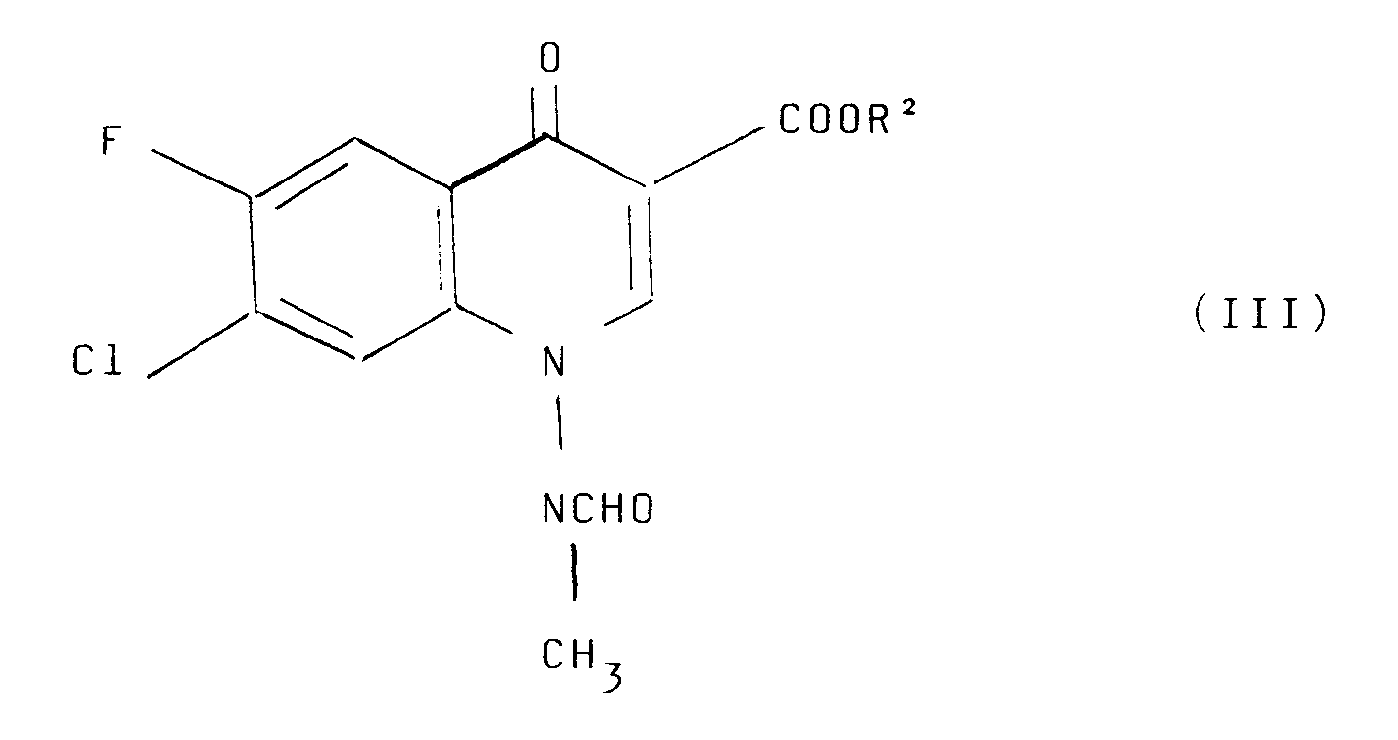
b) reacting a quinoline derivative of the general Formula III
wherein R² stands for hydrogen or alkyl comprising 1-4 carbon atoms with fluoro boric acid of the Formula IV, or a trihalogeno borate of the general Formula V wherein X has the same meaning as stated above, or a triacyloxy borate of the general Formula VI wherein R³, R⁴ and R⁵ are as stated above.
[0007] As compound of the general Formula V borone trifluoride, borone tribromide or borone trichloride or a complex or aqueous solution thereof can be used. One may preferably use a complex formed with an ether alcohol (e.g. a complex of borone trifluoride formed with tetrahydrofuran, diethyl ether, methanol, or propanol). One may preferably apply a solution of a borone trihalide formed with an aliphatic hydrocarbon (e.g. dichloro methane) or a carboxylic acid (e.g. acetic acid, trifluoro acetic acid or propionic acid).
[0008] The boric acid of the formula IV, the borone trihalide of the general Formula V or the compound of the general Formula VI can be used in a molar ratio of 1-50 - preferably 1-5 - related to 1 mole of the compound of the Formula II or III. The above molar ratio is however but a preferably interval and an other molar ratio may be applied as well.
[0009] The above reactions may be carried out, if desired, in the presence of a solvent. As solvent e.g. water, ketones (e.g. acetone, methyl-ethyl-ketone), hydrocarbons (e.g. hexane, benzene, toluene), ethers (e.g. diethyl ether, dioxane, tetrahydrofuran), organic acids (e.g. acetic acid, propionic acid, trifluoro acetic acid, etc.) may be used.
[0011] On raising the reaction temperature, the reaction time can be shortened. Some reactions can be accomplished at a temperature between room temperatur and 150 °C. The reaction temperature depends on the solvent used as well.
[0012] The compound of the general Formula I thus obtained, I precipitates from the reaction mixture spontaneously or on cooling and can be isolated by known methods (e.g. filtration).
Example 1
[0014] 5 g of ethyl-6-fluoro-1-(N-formyl-N-methyl-amino)-7-chloro-4-oxo-1,4-dihydro-quinoline-3-carboxylate are stirred in 25 ml of an 50 weight / vol % aqueous solution of hydrogen fluoroboric acid at 90-95 °C for 4 hours. After one hour and a half the precipitation of crystals begins. The reaction mixture is cooled to room temperature, then placed into a refrigerator and allowed to crystallize overnight. The precipitated crystals are filtered next morning and washed with some water. Thus 4.55 g of an anhydride of 6-fluoro-7-chloro-1-(methylamino)-4-oxo-1,4-dihydro-quinoline-3-carboxylic acid and difluoro boric acid are obtained, yield: 93.4 %. Mp.: 277 °C (decomposition).
Example 2
[0015] 5 g of 6-fluoro-7-chloro-1-methylamino-4-oxo-1,4-dihydro-quinoline-3-carboxylic acid are stirred in 25 ml of a 50 weight / vol % aqueous solution of hydrogen fluoro boric acid at 80-90 °C for 2 hours. After 45 minutes the precipitation of crystals begins. The reaction mixture is first cooled to room temperature and then allowed to crystallize for 2 hours at 0 °C. The precipitated crystals are filtered, and washed with some water. Thus, 4.95 g of an anhydride of 6-fluoro-7-chloro-1-methylamino-4-oxo-1,4-dihydro-quinoline-3-carboxylic acid and difluoro boric acid are obtained, yield 84.5 %. Mp.: 277 °C (decomposition). A mixture of the product thus obtained with any amount of the compound prepared according to Example 1 shows no melting point depression.
Example 3
[0016] A mixture of 1.42 g of boric acid and 10.7 g of propionic anhydride is stirred at 100 °C for 15 minutes whereupon the reaction mixture is heated to boiling point. After 30 minutes the temperature of the reaction mixture is lowered to 110 °C and 4.2 g of 6-fluoro-7-chloro-1-methylamino-4 -oxo-1,4-dihydro-quinoline-3-carboxylic acid are added. After some minutes the precipitation of crystals begins. The reaction mixture is stirred at 110 °C for 2 hours, cooled to 10 °C, whereupon 20 ml of water and 20 ml of ethanol are added to the crystalline suspension. The reaction mixture is allowed to crystallize in a refrigerator overnight. The precipitated crystals are filtered, washed with water and dried. Thus 6.12 g of /6-fluoro-7-chloro-1-methylamino-4-oxo-1,4-dihydro-quinoline-3-carboxylic acid-borone-dipropionyloxy/-anhydride are obtained. Yield: 93.5 %, Mp.: 215 °C (decomposition).
Example 4
[0017] 0.568 g of boric acid and 3.28 g of acetic acid anhydride are reacted in the presence of 1 mg zinc chloride, while the temperature of the reaction raises to 40 °C. The white suspension is slowly heated to 100 °C and 2 g ethyl [7-chloro-6-fluoro-1,4-dihydro-1-(formylmethyl-amino)-4-oxo-3-quinoline-carboxylate] are added which had previously been dissolved in 10 ml of 96 % by W/V acetic acid. The reaction mixture is further heated at 110 °C for 2 hours. The solution is cooled to room temperature and diluted with 40 ml of cold water. The precipitated crystals are filtered and washed with water and cold abs. ethanol, and dried. Off-white crystalline [6-fluoro-7-chloro-1,4-dihydro-1-(methyl-amino)-4-oxo-3-quinolinecarboxylate-0³,0⁴]-bis(acetate-0)-boron is obtained (1.75 g).
Decomposition: 272 °C.
Upon standing further 0.45 g product is precipitated from the mother-liquor.
1. Compounds of the general Formula I
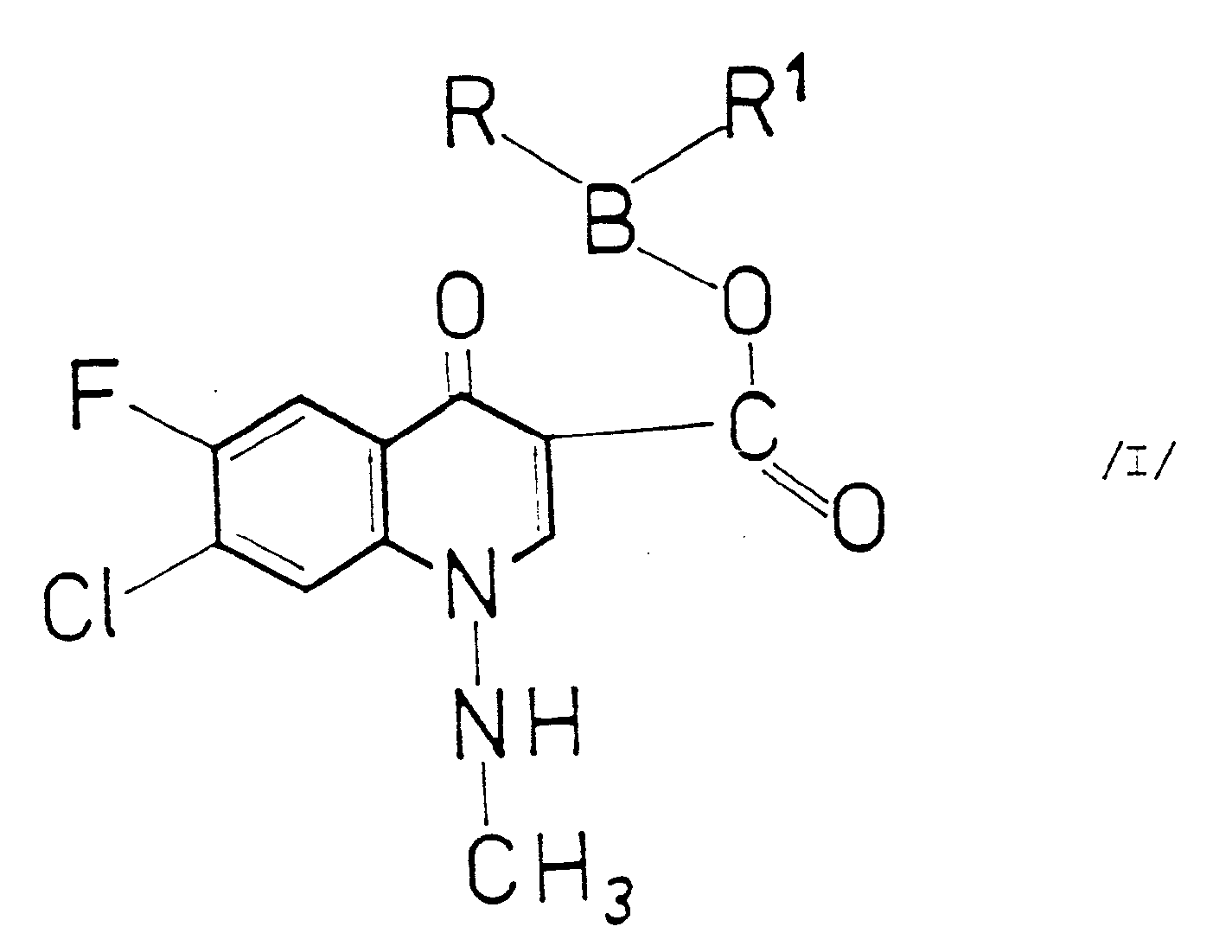
wherein R and R¹ stand for halogen; an aliphatic acyloxy group comprising 2-6 carbon atoms and optionally substituted by halogen; or an aromatic acyloxy group comprising 7-11 carbon atoms.
wherein R and R¹ stand for halogen; an aliphatic acyloxy group comprising 2-6 carbon atoms and optionally substituted by halogen; or an aromatic acyloxy group comprising 7-11 carbon atoms.
2. Process for the preparation of compounds of the general Formula I which comprises
reacting a compound of the Formula II
or a compound of the general Formula III
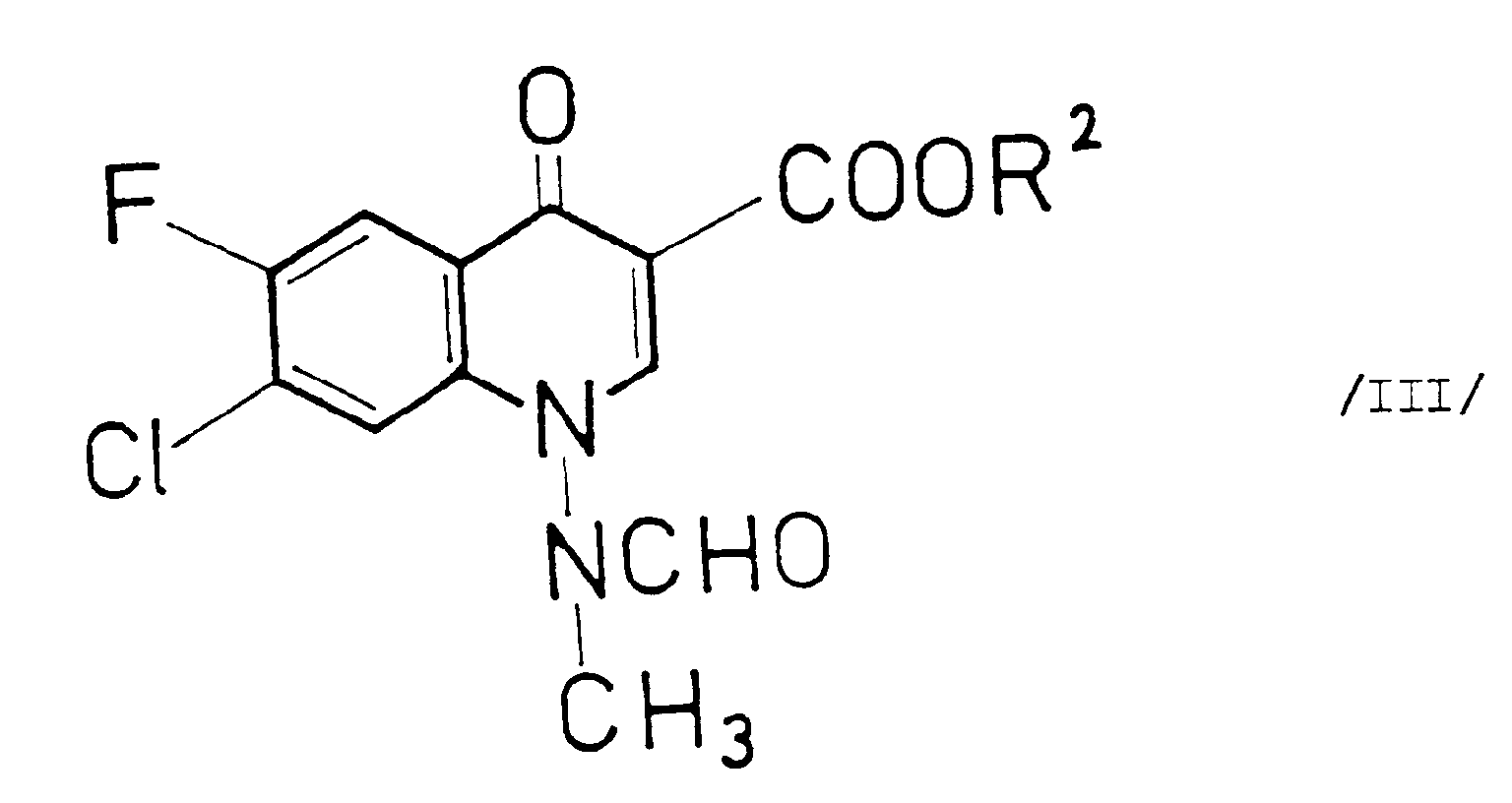
wherein R² stands for hydrogen or alkyl comprising 1-4 carbon atoms with hydrogen fluoro borate of the Formula IV
or a borone trihalide of the general Formula V
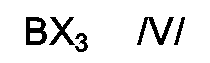
wherein X stands for fluorine, chlorine or bromine, or a complex thereof formed with an ether, or a borone derivative of the general formula VI
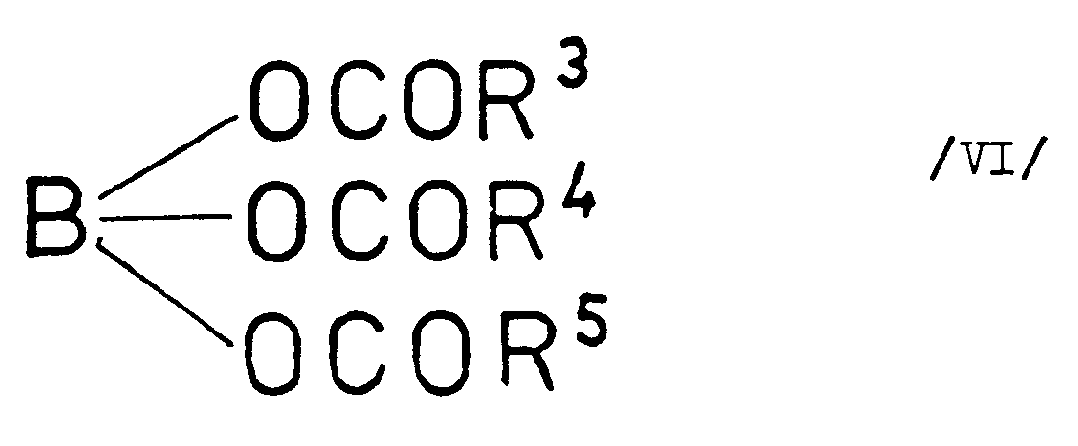
wherein R³, R⁴ and R⁵ stand for alkyl comprising 1-5 carbon atoms and optionally substituted by halogen or aryl comprising 6-10 carbon atoms.
or a compound of the general Formula III
wherein R² stands for hydrogen or alkyl comprising 1-4 carbon atoms with hydrogen fluoro borate of the Formula IV
or a borone trihalide of the general Formula V
wherein X stands for fluorine, chlorine or bromine, or a complex thereof formed with an ether, or a borone derivative of the general formula VI
wherein R³, R⁴ and R⁵ stand for alkyl comprising 1-5 carbon atoms and optionally substituted by halogen or aryl comprising 6-10 carbon atoms.
3. Process according to Claim 2 which comprises carrying out the reaction of the compound
of the Formula II or III with the compound of the Formula IV in aqueous medium.
4. Process according to Claim 2 which comprises reacting the compound of the Formula
II or III with the compound of the general Formula V in the presence of a solvent.
5. Process according to Claim 2 which comprises reacting the compound of the Formula
II or III with the compound of the general Formula VI in the presence of a solvent.
1. Verbindungen der allgemeinen Formel I
worin R und R¹ Halogen, eine aliphatische C₂-C₆-Acyloxigruppe, die gegebenenfalls durch Halogen substituiert sein kann oder eine aromatische C₇-C₁₁-Acyloxigruppe bedeuten.
worin R und R¹ Halogen, eine aliphatische C₂-C₆-Acyloxigruppe, die gegebenenfalls durch Halogen substituiert sein kann oder eine aromatische C₇-C₁₁-Acyloxigruppe bedeuten.
2. Verfahren zur Herstellung von Verbindungen der allgemeinen Formel I, dadurch gekennzeichnet,
daß man eine Verbindung der Formel II
oder eine Verbindung der Formel III
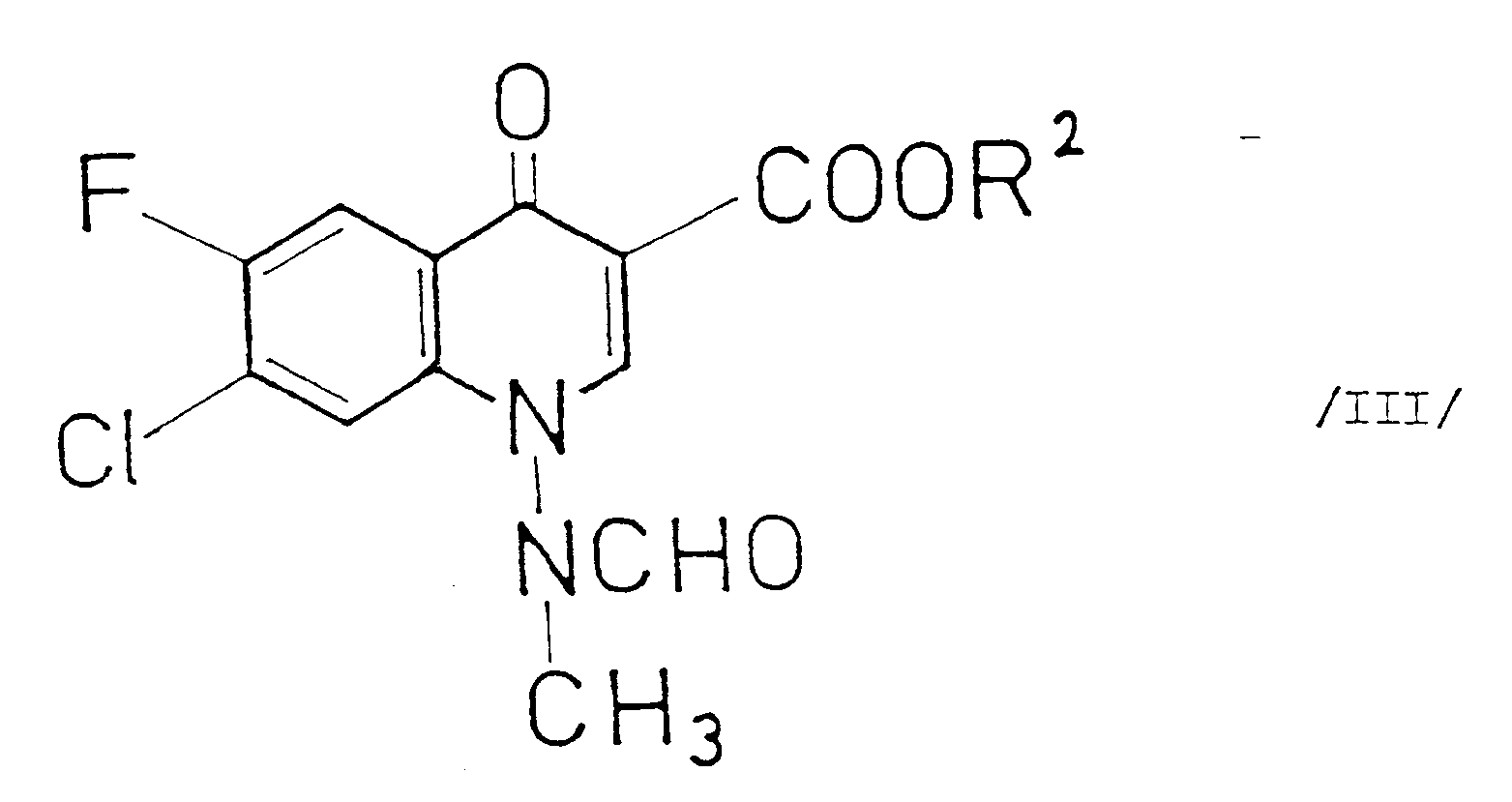
worin R² ein C₁-C₄-Alkyl bedeutet, mit Borfluorwasserstoffsäure der Formel IV
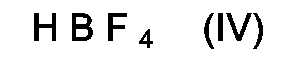
oder einem Bortrihalogenid der allgemeinen Formel V
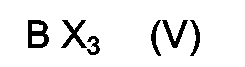
worin X Fluor, Chlor oder Brom bedeutet, oder einem mit einem Ether gebildeten Komplex oder einem Borderivat der allgemeinen Formel VI
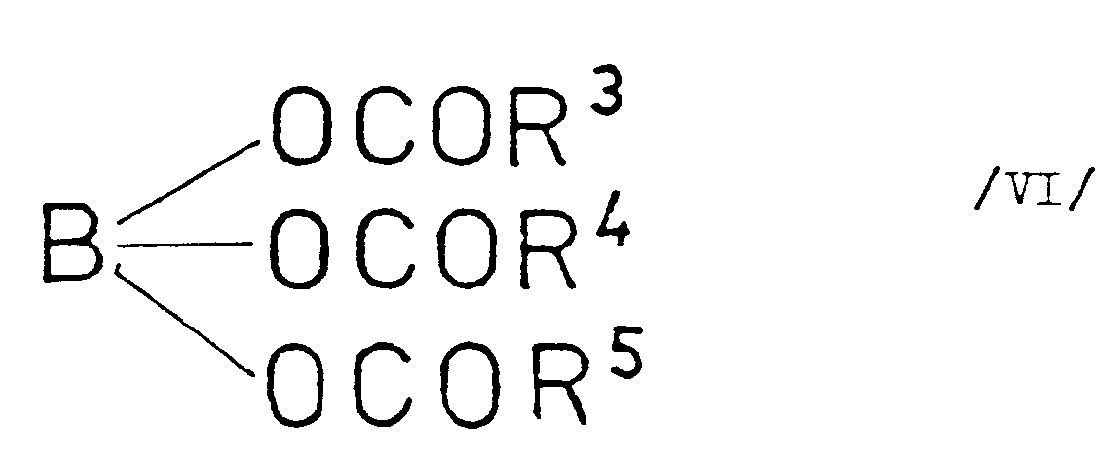
worin R³, R⁴ und R⁵ C₁-C₅-Alkyl, das gegebenenfalls durch Halogen substituiert sein kann oder C₆-C₁₀-Aryl bedeuten, umsetzt.
oder eine Verbindung der Formel III
worin R² ein C₁-C₄-Alkyl bedeutet, mit Borfluorwasserstoffsäure der Formel IV
oder einem Bortrihalogenid der allgemeinen Formel V
worin X Fluor, Chlor oder Brom bedeutet, oder einem mit einem Ether gebildeten Komplex oder einem Borderivat der allgemeinen Formel VI
worin R³, R⁴ und R⁵ C₁-C₅-Alkyl, das gegebenenfalls durch Halogen substituiert sein kann oder C₆-C₁₀-Aryl bedeuten, umsetzt.
3. Verfahren nach Anspruch 2, dadurch gekennzeichnet, daß man die Umsetzung der Verbindung
der Formel II oder III mit der Verbindung der Formel IV in wäßrigem Medium durchführt.
4. Verfahren nach Anspruch 2, dadurch gekennzeichnet, daß man die Umsetzung der Verbindung
der Formel II oder III mit der Verbindung der allgemeinen Formel V in Gegenwart eines
Lösungsmittels durchführt.
5. Verfahren nach Anspruch 2, dadurch gekennzeichnet, daß man die Umsetzung der Verbindung
der Formel II oder III mit der Verbindung der allgemeinen Formel VI in Gegenwart eines
Lösungsmittels durchführt.
1. Composés de formule générale I:
dans laquelle R et R¹ représentent un atome d'halogène, un radical acyloxy aliphatique comprenant 2 à 6 atomes de carbone et, facultativement, substitué par halogène, ou un radical acyloxy aromatique de 7 à 11 atomes de carbone.
dans laquelle R et R¹ représentent un atome d'halogène, un radical acyloxy aliphatique comprenant 2 à 6 atomes de carbone et, facultativement, substitué par halogène, ou un radical acyloxy aromatique de 7 à 11 atomes de carbone.
2. Procédé de préparation de composés de formule générale I, qui consiste à faire
réagir un composé de formule II :
ou un composé de formule générale III
dans laquelle R² représente un radical alkyle de 1 à 4 atomes de carbone avec un fluoroborate d'hydrogène de formule IV :
ou un trihalogénure de bore de formule générale V :
dans laquelle X représente le fluor, le chlore ou le brome ou l'un de leurs complexes formés avec un éther, ou un dérivé de bore de formule générale VI :
dans laquelle R³, R⁴ et R⁵ représentent un radical alkyle de 1 à 5 atomes de carbone, facultativement substitué par halogène ou aryle comprenant de 6 à 10 atomes de carbone.
ou un composé de formule générale III
dans laquelle R² représente un radical alkyle de 1 à 4 atomes de carbone avec un fluoroborate d'hydrogène de formule IV :
ou un trihalogénure de bore de formule générale V :
dans laquelle X représente le fluor, le chlore ou le brome ou l'un de leurs complexes formés avec un éther, ou un dérivé de bore de formule générale VI :
dans laquelle R³, R⁴ et R⁵ représentent un radical alkyle de 1 à 5 atomes de carbone, facultativement substitué par halogène ou aryle comprenant de 6 à 10 atomes de carbone.
3. Procédé selon la revendication 2, qui consiste à effectuer la réaction du composé
de formule II ou III avec le composé de formule IV dans un milieu aqueux.
4. Procédé selon la revendication 2, qui consiste à faire réagir le composé de formule
II ou III avec le composé de formule générale V en présence d'un solvant.
5. Procédé selon la revendication 2, qui consiste à faire réagir le composé de formule
II ou III avec le composé de formule générale VI en présence d'un solvant.