|
(11) | EP 0 253 290 B2 |

| (12) | NEW EUROPEAN PATENT SPECIFICATION |
|
|
| (54) |
Spherical toner particle Kugelförmige Tonerteilchen Particules de toner sphériques |
|
|
|||||||||||||||||||||||||||||||
|
||||||||||||||||||||||||||||||||
[0001] The present invention relates to a toner composition for developing an electrostatically charged image in electrophotography, electrostatic recording or electrostatic printing.
[0002] An electrostatically charged image formed on a recording medium in electrophotography, electrostatic recording or electrostatic printing has been developed by two main methods, i.e., a wet developing method using a developer comprising a fine dispersion of various pigments or dyes in an insulating liquid or a dry developing method using a finely powdered developer which is a so-called toner and prepared by dispersing a coloring material in a natural or synthetic resin. Examples of the latter method include cascade method. manual brushing, magnetic brushing, impression method and powder cloud method. The present invention relates to a toner suitable for this dry developing method.
[0003] A toner for developing an electrostatically charged image has been prepared by dispersing a coloring material in a soft polymer by melting and kneading and grinding the obtained polymer containing the coloring material dispersed therein. However, the powder obtained by this process has a very wide particle size distribution, so that the powder must be classified prior to the practical use as a toner. Thus, the process itself is disadvantageous in complexity and cost.
[0004] Further, the toner prepared by the above process involving a grinding step has edges and small cracks. Therefore, the toner is poor in fluidity and when it is stirred in a developing device, these edges and small cracks are broken to generate dust which causes lowering in the quality of an image, or scumming, thus shortening the life of the image.
[0005] On the other hand, several polymerization processes for directly preparing a colored polymer particle not involving any grinding step have been proposed in, for example. Japanese Patent Publications Nos. 10231/1961, 51830/1972 and 14895/1976 and Japanese Patent Laid-Open Nos. 17735/1978, 17736/1978 and 17737/1978.
[0006] These processes comprise suspending an oily phase containing a monomer, a polymerization initiator and a coloring material in an aqueous medium and polymerizing the obtained suspension to directly obtain a toner and relate to so-called suspension polymerization.
[0007] These processes have advantages in that the obtained toner is spherical and excellent in fluidity and that the preparation process itself is simple and economic.
[0008] However, the toner prepared by these processes is disadvantageous in view of the electrostatic chargeability and durability of electrostatic cnarge even at the normal temperature and at the normal humidity and provides no good image.
[0009] The inventors of the present invention have investigated the reason for the above disadvantages and, have found that carbon black which has been uniformly dispersed among monomers at the initiation of the suspension polymerization agglomerates again by the interaction during the polymerization to give a toner particle exhibiting an ununiform electrostatic chargeability. Therefore, it is disadvantageous that such a toner does not provide an even image.
[0010] A toner composition for developing an electrostatically charged image is disclosed in JP-A-57-37354, whereby the toner composition contains polymer particles obtained by polymerizing a polymerizable monomer with a colorant under the existence of a dispersion stabilizing compound for said colorant, said dispersion stabilizing compound being expressed by the following general formula:
(wherein R represents an alkyl group having a carbon atom number of not less than 11, and n represents the number of glucose units forming dextrin).
[0011] Object of the invention is to provide a toner composition having improved electrostatic chargeability characteristics and improved maintairlings of the electrostatic charge and which can provide good imaqes in electrophotography, electrostatic recording or electrostatic printing.
[0012] Surprisingly the inventors of the present invention have found that the disadvantages in the state of the art can be overcome by a toner composition as claimed in claim 1 and a process for preparing a toner composition as claimed in claim 2.
[0013] The hydrophobic dispersant includes, for example, an inorganic dispersant such as calcium silicate, silicon carbide and magnesium silicate and an organic dispersant such as an alkenyl succinic imide, polyethyleneimine and a derivative thereof.
[0014] The thickening agent includes, for example, aluminium dialkyl phosphate, aluminium stearate, 12-hydroxy-stearic acid and dibenzylidene sorbitol and other conventional thickening agents and conventional gelation agents. The polymer being soluble in the monomer may be used. It serves to prevent agglomeration of carbon black during the polymerization step.
[0015] The term "spherical toner" used in this specification refers not only to one of a genuine sphere but also to one having a distorted sphere such as cocoon-like shape. That is to say, the spherical toner according to the present invention may have edges or undulations microscopically as far as it has not any edge on its surface macroscopically.
[0016] The dispersion properties of the carbon black present in a toner (and on the surface thereof) are determined as follows:
[0017] Toner particles are added to an epoxy resin. The resulting resin is cut into thin films each having a thickness of several hundreds of Å (10 Å = 1 nm). The thin film is photographed with an electron microscope of the transmission type. The obtained photograph is analyzed for the state (dispersiblity, agglomeration, number of particles and the like) of carbon black with an image analyzer. Based on the size and number of carbon black particles present in the toner particle which have been determined by analyzing the photograph with an image analyzer, the standard deviation (σ) of particle size distribution of carbon black present in the toner particle is calculated according to the following equation:
wherein
- DAU
- is the number-average particle size;
- Di
- represents the size of the i-th particle and
- N
- is the number of particles.
[0018] The spherical toner composition according to the present invention can be prepared by suspension polymerization. An oily dispersion obtained by dispersing a polymerization initiator, a charge controller, carbon black and the above shown additive(5) in α,β-unsaturated monomer is added to an aqueous medium obtained by homogeneously dissolving a water-soluble polymer or dispersing a suspension stabilizer such as an inorganic salt which has a poor water-solubility. The resulting mixture is homogenized with a homomixer or homogenizer to form an oily disperse phase of 5 to 30 µm. The weight ratio of the oily phase to the aqueous phase is between 1 : 2 and 1 10 and is so selected as not to cause cohesion of particles during the polymerization. The homogeneous O/W dispersion thus prepared is transferred to a separable flask fitted with a stirrer, a condenser, a thermometer and a nitrogen gas inlet tube and heated to a temperature (50 to 90° C), at which the polymerization initiator can be decomposed, in a nitrogen atmosphere for polymerization.
[0019] After completion of polymerization, the polymerization mixture is filtered to remove the aqueous phase. When inorganic powder adheres to the surface of a product, the product is treated with diluted acid to remove the powder. The resulting product is washed with water and dried by spray drying, vacuum drying or the like to obtain a toner composition.
[0020] The α,β-unsaturated monomer for use according to the present invention may be any one. Examples thereof include styrene. p-chlorostyrene, p-methylstyrene, vinyl acetate, vinyl propionate, vinyl benzoate, methyl acrylate, ethyl acrylate. n-butyl acrylate, iso-butyl acrylate, 2-ethylhexyl acrylate, lauryl acrylate, n-octyl acrylate, methyl methacrylate, ethyl methacrylate, n-butyl methacrylate, iso-butyl methacrylate, lauryl methacrylate, diethylaminoethyl methacrylate, t-butyl-aminomethyl mathacrylate, acrylonitrile, 2-vinylpyrldine and 4-vinylpyridine. These monomers may be used alone or as a mixture of two or more of them.
[0021] According to the present invention, a polyfunctional monomer may be used as a crosslinking agent in addition to the above monomer to thereby further enhance the endurance of a toner. The amount of the polyfunctional monomer used may be 0.05 to 20 % by weight, preferably 0.5 to 5 % by weight based on the monomer.
[0022] The polymerization initiator for use in the present invention may be an ordinary oil-soluble peroxide or azo initiator. Examples thereof include benzoyl peroxide, lauroyl peroxide, 2,2'-azobisisobutyronitrile, 2,2'-azobis(2,4-dimethylvaleronitrile), o-chlorobenzoyl peroxide and o-methoxybenzoyl peroxide. The polymerization initiator may be used in an amount of 0.1 to 10 % by weight, preferably 0.5 to 5 % by weight based on the monomer.
[0023] Examples of the suspension stabilizer for use in the present invetion include water-soluble polymers such as gelatin, starch, hydroxyethylcellulose, carboxymethylcellulose, polyvinylpyrrolidone, polyvinyl alkyl ether and polyvinyl alcohol and inorganic salts which are difficultly soluble in water such as barium sulfate, calcium sulfate, barium carbonate, calcium carbonate, magnesium carbonate and calcium phosphate. The suspension stabilizer may be used in an amount of 0.1 to 5 % by weight, preferably 0.5 to 2 % by weight based on the water.
[0024] The toner according to the present invention mav further contain a low-molecular weight olefin polymer which is known as a so-called parting agent with the purpose of the inhibition of offset and the improvement in fludity and fixability.
[0025] It is preferable that this low-molecular weight olefin polymer is present in the polymerization system together with a coloring material.
[0026] Examples of the low-molecular weight olefin polymer to he used in the toner composition of the present invention include polyethylene, polypropylene. ethylene-vinyl acetate copolymer. chlorinated polyethylene wax, polyamide, polyester, polyurethane, polyvinyl butyral, butadiene rubbers, phenolic resins, epoxy resins, rosin-modified resins, silicone oil and silicone wax.
[0027] The toner obtained in the present invention has a softening point of 106 to 160°C and a glass transition temperature of 50 to 80°C. If the softening point is lower than 106°C, no sufficient non-offset range will be attained, while if the point exceeds 160°C, the minimum fixing temperature will be too nigh and other unfavorable phenomena will occur. On the other hand, if the glass transition temperature is lower than 50°C, the resulting toner will be poor in storage stability, while if it exceeds 80°C, the fixability will be unfavorably lowered.
[0028] Although the carbon black for use in the present invention is not particularly limited and may be any commercially available one, it is preferable to use a hydrophobic carbon black having a low-oil absorbing power, because the use of such carbon black enables the easy preparation of the toner composition of the present invention.
[0029] Carbon black is generally present in a toner particle as a secondary agglomerate rather than in a monodisperse state. According to the present invention, the carbon black dispersed in the toner must have a number-average particle size of 20 to 500 nm preferably 20 to 100 nm. Further, the dispersion properties of carbon black particle are generally evaluated by the standard deviation thereof. According to the present invention wherein the number-average particle size is 20 to 500 nm, the standard deviation must be not more than 30 nm. A spherical toner particle having such dispersion properties is provided by the invention for the first time.
[0030] As described above, the toner of the prior art obtained by grinding has disadvantages in that it is poor in fluidity and that the breakage of the toner proceeds in service to cause scumming or lowering in the quality of the resulting image, thus shortening the life of the developer. On the other hand, although the spherical toners proposed in the above Japanese Patent Publication and Laid-Open are free from the above disadvantages, they exhibit unstable changing characteristics, so that the charge thereof varies in prolonged service. Further, the image formed by using them exhibits quality and reproducibility of halftone dots inferior to those of the image formed by using the toner prepared by grinding.
[0031] Since the spherical toner according to the present invention exhibits excellent charge stability and fluidity and is not broken in service, no dust generates and therefore neither scumming nor lowering in the quality of the image occurs Such a toner particle is now provided by the present invention for the first time.
[0032] The present invention will be described in more detail by the following Examples, though it is not limited to them. In the Examples, all parts are by weight.
Example 1
[0033] 85 parts of styrene, 15 parts of lauryl methacrylate (LMA), 2 parts of a charge controller (TRH, Hodogaya Chemical Co. Ltd.), 0.5 parts of aluminium stearate, 8 parts of carbon-black (Printex 150T, DEGUSSA) and 3 parts of polyethylene wax; (210 P, Mitsui Petrochemical Ind., Ltd) were mixed to obtain a mixture.
[0034] 500 parts of water and 1 part of polyvinyl alcohol were added to 100 parts of the mixture. The obtained mixture was homogenized by stirring at a high rate of 10,000 rpm with a homomixer to obtain a fine dispersion. This dispersion was transferred to a separable flask fitted with stirring blades to carry out the suspension polymerization at 60° C for 9 hours. The polymerisation mixture was washed with hot water of 50°C and dried to obtain a toner.
[0035] 0.5 g of the toner were homogeneously dispersed in a liquid mixture comprising 9,3 ml of an epoxy resin (Epoc 812), 4.0 ml of dodecenylsuccinic anhydride (DDSA), 6.7 ml of methyl nadic anhydride (MNA) and 0.3 ml of tri(dimethylaminomethyl)phenol (DMP-30). The obtained dispersion was allowed to stand at room temperature for 2 days.
[0036] The obtained toner-containing epoxy resin was cut into thin films having a thickness of several hundreds of Å with a microtome.
[0037] The thin film sample was subjected to electron microscopy with an electron microscope of the transmission type.
[0038] The obtained electron microscope photograph was analyzed with an image analyzer for the disperse state of carbon black in the crosssection of the toner.
[0039] The carbon black dispersed in the toner had a number-average particle size of 88 nm and a standard deviation of 18.1 nm.
[0040] A developer was prepared by the use of the toner and a commercially available ferrite carrier having a particle size distribution of 150/250 mesh at a toner/carrier ratio of 4/96 and applied to a duplicating machine (Ricoh FT 4060). The obtained image was evaluated.
[0041] A clear image free from fogging and scumming was obtained under an environmental condition of 25° C and 50% humidity.
[0042] Further, the printing using the above developer was repeated 20,000 times. Good images were obtained until the last without any change in the quantity of charge.
Example 2
[0043] 85 parts of styrene, 15 parts of LMA, 2 parts of a charge controller (a product of Hodogaya Chemical Co.. Ltd.; TRH), 8 parts of carbon black (a product of Mitsubishi Chemical Industries, Ltd. #44),
0.5 part of silicon carbide and
3 parts of polyethylene wax (a product of Mitsui Petrochemical Industries, Ltd. 210 P) were mixed to obtain a mixture.
[0044] 500 parts of water and 1 part of polyvinyl alcohol were added to 100 parts of the mixture. The obtained mixture was homogenized by stirring at a high rate of 10,000 rpm with a homomixer to obtain a fine dispersion. This dispersion was transferred to a separable flask fitted with stirring blades to carry out the suspension polymerization at 60°C for 9 hours. The polymerization mixture was washed with hot water of 50°C and dried to obtain a toner.
[0045] 0.5 g of the toner were homogeneously dispersed in a liquid mixture comprising 9.3 ml of an epoxy resin (Epoc 812), 4.0 ml of DDSA, 6.7 ml of MNA and 0.3 ml of DMP-30. The obtained dispersion was allowed to stand at room temperature for two days.
[0046] The obtained toner-containing epoxy resin was cut into thin films having a thickness of several hundreds of Å with a microtome. This thin film sample was subjected to electron microscopy with an electron microscope of transmission type.
[0047] The obtained electron microscope photograph was analyzed with an image analyzer for the disperse state of carbon black in the crosssection of the toner.
[0048] The carbon black dispersed in the toner had a number-average particle size of 120 nm and a standard deviation of 27.5 nm.
[0049] A developer was prepared by the use of the toner and a commercially available ferrite carrier having a particle size distribution of 150/250 mesh at a toner/carrier ratio of 4/96 and applied to a duplicating machine (Ricoh FT 4060). The obtained image was evaluated.
[0050] A clear image free from fogging and scumming was obtained under an environmental condition of 25°C and 50 % humidity.
[0051] The printing using the above developer was repeated fifty thousand times. Good images were obtained until the last without any change in the quantity of charge.
Comparative Example 1
[0052] Eighty five parts of styrene, fifteen parts of 2-ethylhexyl acrylate, 2 parts of a charge controller (a product of Hodogaya Chemical Co., Ltd.; TRH), 8 parts of carbon black (a product of Mitsubishi Chemical Industries, Ltd. #44) and 2 parts of polyethylene wax (Mitsui Petrochemical Industries, Ltd. 210P) were mixed to obtain a mixture.
[0053] 500 parts of water and 1 part of polyvinyl alcohol were added to 100 parts of the mixture. The obtained mixture was homogenized by stirring at a high rate of 10.000 rpm with a homomixer to obtain a fine dispersion. This dispersing was transferred to a separable flask fitted with stirring blades to carry out the suspension polymerization at 60°C for 9 hours. The polymerization mixture was washed with hot water of 50°C and dried to obtain a control toner.
[0054] 0.5 g of the toner were homogeneously dispersed in a liquid mixture comprising 9.3 ml of an epoxy resin (Epoc 812) 4.0 ml of DDSA, 6.7 ml of MNA and 0.3 ml of DMP-30. The obtained dispersion was allowed to stand at room temperature for two days.
[0055] The obtained toner-containing epoxy resin was cut into thin films having a thickness of several hundreds of Å with a microtome (MT2-B). This thin film sample was subjected to electron microscopy with an electron microscope of the transmission type.
[0056] The obtained electron microscope photograph was analyzed with an image analyzer (LUZEX-500) for the disperse state of carbon black in the crosssection of the toner.
[0057] The carbon black dispersed in the toner had a number-average particle size of 225 nm and a standard deviation of 74.1 nm.
[0058] A developer was prepared by the use of the toner and a commercially available ferrite carrier having a particle size distribution of 150/250 mesh at a toner/carrier ratio of 4/96 and applied to a duplicating machine (Ricoh FT4060). The obtained image was evaluated.
1. A toner composition comprising a binder resin and carbon black having a number-average
particle size of 20 to 500 nm and a standard deviation of the particle size distribution
of at most 30 nm, having a softening point of 106 to 160°C and a glass transition
point of 50 to 80°C and being in the form of substantially spherical particles, obtainable
by the steps of dispersing carbon black, a polymerization initiator, a charge controller
and at least one compound selected from the group consisting of a hydrophobic dispersant
except a compound represented by the following general formula:
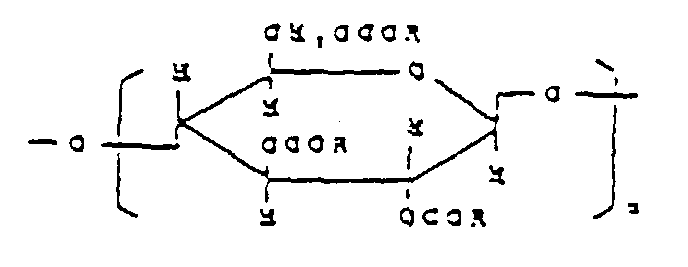
(wherein R represents an alkyl group having a carbon atom number of not less than 11, and n represents the number of glucose units forming dextrin),
binder resin and thickening agent in a monomer having a polymerizable unsaturation
to obtain an oily phase, adding the resulting oily phase to water containing a dispersion stabilizer to obtain a dispersion, agitating the dispersion with so high a rate as to have very fine particles of the oily phase, polymerizing the dispersion and recovering the obtained toner particles.
(wherein R represents an alkyl group having a carbon atom number of not less than 11, and n represents the number of glucose units forming dextrin),
binder resin and thickening agent in a monomer having a polymerizable unsaturation
to obtain an oily phase, adding the resulting oily phase to water containing a dispersion stabilizer to obtain a dispersion, agitating the dispersion with so high a rate as to have very fine particles of the oily phase, polymerizing the dispersion and recovering the obtained toner particles.
2. A process for preparing a toner composition which is in the form of substantially
spherical particles and comprises a binder resin and carbon black having a number-average
particle size of 20 to 500 nm and a standard deviation of the particle size distribution
of at most 30 nm, which comprises the steps of dispersing carbon black, a polymerization
initiator, a charge controller and at least one compound selected from the group consisting
of a hydrophobic dispersant except a compound represented by the following general
formula:
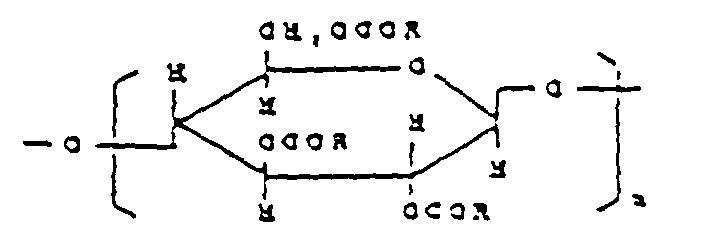
(wherein R represents an alkyl group having a carbon atom number of not less than 11, and n represents the number of glucose units forming dextrin)
a binder resin and thickening agent in a monomer having a polymerizable unsaturation
to obtain an oily phase adding the resulting oily phase to water containing a dispersion stabilizer to obtain a dispersion, agitating the dispersion with so high a rate as to have very fine particles of the oily phase, polymerizing the dispersion and recovering the obtained toner particles.
(wherein R represents an alkyl group having a carbon atom number of not less than 11, and n represents the number of glucose units forming dextrin)
a binder resin and thickening agent in a monomer having a polymerizable unsaturation
to obtain an oily phase adding the resulting oily phase to water containing a dispersion stabilizer to obtain a dispersion, agitating the dispersion with so high a rate as to have very fine particles of the oily phase, polymerizing the dispersion and recovering the obtained toner particles.
1. Tonerzusammensetzung umfassend ein Bindemittel, Harz und Ruß mit einer zahlendurchschnittlichen
Teilchengröße von 20 bis 500 nm und einer Standardabweichung für die Teilchengrößenverteilung
von höchstens 30 nm, mit einem Erweichungspunkt von 106 bis 160°C und einem Glasübergangspunkt
von 50 bis 80°C, in Form weitgehend sphärischer Teilchen, erhältlich durch die Schritte:
Dispergieren von Ruß, einem Polymerisationsinitiator, einem Ladungssteuerungsmittel
und wenigstens einer Verbindung, ausgewählt aus der Gruppe bestehend aus einem hydrophoben
Dispergiermittel, mit Ausnahme einer durch folgende allgemeine Formel dargestellte
Verbindung:
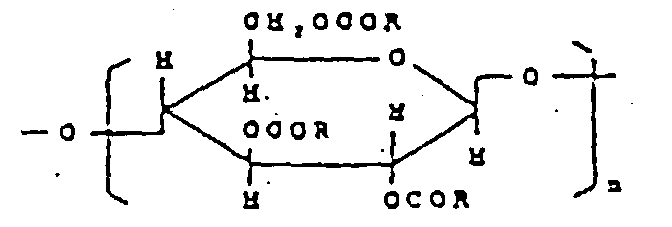
(worin R eine Alkylgruppe mit einer Kohlenstoffatomzahl von nicht weniger als 11 bedeutet und n bedeutet die Zahl der das Dextrin bildende Glucoseeinheiten),
einem Bindemittelharz und einem Verdickungsmittel in einem Monomer mit einer polymerisierbaren Ungesättigtheit,
um eine ölige Phase zu erhalten, Zugeben der resultierenden öligen Phase zu einem Dispersionsstabilisator enthaltendem Wasser, um eine Dispersion zu erhalten, Rühren der Dispersion mit so hoher Rate, daß sich sehr feine Teilchen der öligen Phase ergeben, Polymerisieren der Dispersion und Wiedergewinnen der erhaltenen Tonerteilchen.
(worin R eine Alkylgruppe mit einer Kohlenstoffatomzahl von nicht weniger als 11 bedeutet und n bedeutet die Zahl der das Dextrin bildende Glucoseeinheiten),
einem Bindemittelharz und einem Verdickungsmittel in einem Monomer mit einer polymerisierbaren Ungesättigtheit,
um eine ölige Phase zu erhalten, Zugeben der resultierenden öligen Phase zu einem Dispersionsstabilisator enthaltendem Wasser, um eine Dispersion zu erhalten, Rühren der Dispersion mit so hoher Rate, daß sich sehr feine Teilchen der öligen Phase ergeben, Polymerisieren der Dispersion und Wiedergewinnen der erhaltenen Tonerteilchen.
2. Verfahren zur Herstellung einer Tonerzusammensetzung, in Form weitgehend sphärischer
Teilchen, umfassend ein Bindemittelharz und Ruß mit einer zahlendurchschnittlichen
Teilchengröße von 20 bis 500 nm und einer Standardabweichung der Teilchengrößenverteilung
von höchstens 30 nm, umfassend die Schritte: Dispergieren von Ruß, einem Polymerisationsinitiator,
einem Ladungssteuerungsmittel und wenigstens einer Verbindung, ausgewählt aus der
Gruppe bestehend aus einem hydrophoben Dispergiermittel, mit Ausnahme einer durch
folgende allgemeine Formel dargestellte Verbindung:
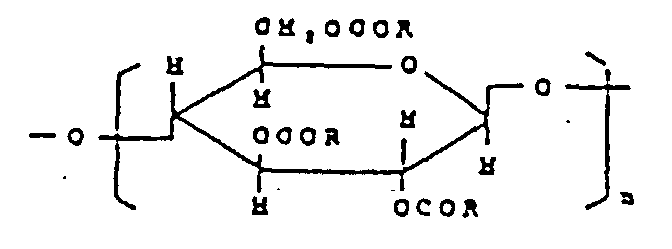
(worin R eine Alkylgruppe mit einer Kohlenstoffatomzahl von nicht weniger als 11 bedeutet und n bedeutet die Zahl der das Dextrin bildende Glucoseeinheiten),
einem Bindemittelharz und einem Verdickungsmittel in einem Monomer mit einer polymerisierbaren Ungesättigtheit,
um eine ölige Phase zu erhalten, Zugeben der resultierenden öligen Phase zu einem Dispersionsstabilisator enthaltendem Wasser, um eine Dispersion zu erhalten, Rühren der Dispersion mit so hoher Rate, daß sich sehr feine Teilchen der öligen Phase ergeben, Polymerisieren der Dispersion und Wiedergewinnen der erhaltenen Tonerteilchen.
(worin R eine Alkylgruppe mit einer Kohlenstoffatomzahl von nicht weniger als 11 bedeutet und n bedeutet die Zahl der das Dextrin bildende Glucoseeinheiten),
einem Bindemittelharz und einem Verdickungsmittel in einem Monomer mit einer polymerisierbaren Ungesättigtheit,
um eine ölige Phase zu erhalten, Zugeben der resultierenden öligen Phase zu einem Dispersionsstabilisator enthaltendem Wasser, um eine Dispersion zu erhalten, Rühren der Dispersion mit so hoher Rate, daß sich sehr feine Teilchen der öligen Phase ergeben, Polymerisieren der Dispersion und Wiedergewinnen der erhaltenen Tonerteilchen.
1. Composition d'un toner comprenant une résine liante et du noir de carbone ayant des
particules de dimension moyenne comprise entre 20 et 500 nm et une déviation standard
de la distribution des dimensions des particules au plus égal à 30 nm, ayant un point
de fusion compris entre 106 et 160°C et un point de transition vitreuse compris entre
50 et 80°C et ayant la forme de particules sphériques, la composition pouvant être
obtenue par les étapes de dispersion du noir de carbone, d'un initiateur de polymérisation,
d'un régulateur de charge et au moins un composé sélectionné parmi le groupe consistant
en un dispersant hydrophobe à l'exception d'un composé représenté par la formule générale
suivante :
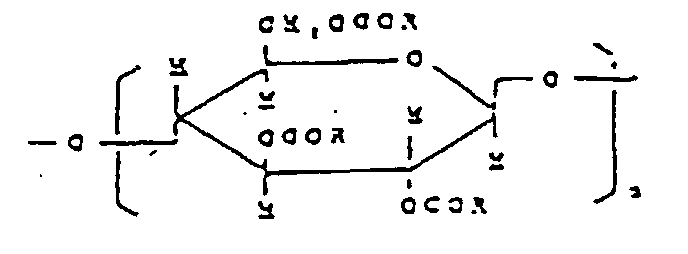
où R représente un groupe alkyle ayant un nombre d'atomes de carbone qui n'est pas inférieur à 11, et n représente le nombre d'unités de glucose formant dextrine, une résine liante et un agent épaississant dans un monomère ayant une insaturation polymérisable afin d'obtenir une phase huileuse, d'addition de la phase huileuse résultante à l'eau contenant un stabilisateur de dispersion afin d'obtenir une dispersion, d'agitation de la dispersion à une vitesse suffisamment élevée pour obtenir de très fines particules en phase huileuse, de polymérisation de la dispersion et de récupération des particules de toner obtenues.
où R représente un groupe alkyle ayant un nombre d'atomes de carbone qui n'est pas inférieur à 11, et n représente le nombre d'unités de glucose formant dextrine, une résine liante et un agent épaississant dans un monomère ayant une insaturation polymérisable afin d'obtenir une phase huileuse, d'addition de la phase huileuse résultante à l'eau contenant un stabilisateur de dispersion afin d'obtenir une dispersion, d'agitation de la dispersion à une vitesse suffisamment élevée pour obtenir de très fines particules en phase huileuse, de polymérisation de la dispersion et de récupération des particules de toner obtenues.
2. Procédé pour la préparation de la composition d'un toner dont la forme des particules
est en grande partie sphérique et comprend une résine liante et du noir de carbone
ayant des particules de dimension moyenne comprise entre 20 et 500 nm et une déviation
de la distribution des dimensions des particules au plus égale à 30 nm, lequel procédé
comprend les étapes de dispersion du noir de carbone, d'un initiateur de polymérisation,
d'un régulateur de charge, d'un initiateur de polymérisation, d'un régulateur de charge
et au moins un composé sélectionné parmi le groupe consistant en un dispersant hydrophobe
à l'exception d'un composé représenté par la formule générale suivante :
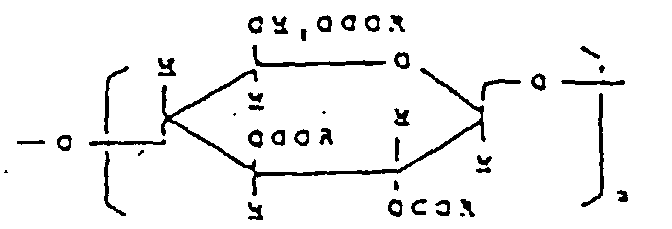
où R représente un groupe alkyle ayant un nombre d'atomes de carbone qui n'est pas inférieur à 11, et n représente le nombre d'unité de glucose formant dextrine, une résine liante et un agent épaississant dans un monomère ayant une insaturation polymérisable afin d'obtenir une phase huileuse, d'addition de la phase huileuse résultante à l'eau contenant un stabilisateur de dispersion afin d'obtenir une dispersion, d'agitation de la dispersion à une vitesse suffisamment élevée pour obtenir de très fines particules en phase huileuse, de polymérisation de la dispersion et de récupération des particules de toner obtenues.
où R représente un groupe alkyle ayant un nombre d'atomes de carbone qui n'est pas inférieur à 11, et n représente le nombre d'unité de glucose formant dextrine, une résine liante et un agent épaississant dans un monomère ayant une insaturation polymérisable afin d'obtenir une phase huileuse, d'addition de la phase huileuse résultante à l'eau contenant un stabilisateur de dispersion afin d'obtenir une dispersion, d'agitation de la dispersion à une vitesse suffisamment élevée pour obtenir de très fines particules en phase huileuse, de polymérisation de la dispersion et de récupération des particules de toner obtenues.