| (19) |
 |
|
(11) |
EP 0 262 012 B1 |
| (12) |
EUROPEAN PATENT SPECIFICATION |
| (45) |
Mention of the grant of the patent: |
|
27.12.1990 Bulletin 1990/52 |
| (22) |
Date of filing: 26.08.1987 |
|
|
| (54) |
Apparatus and method for generating a nearly mono-energetic, high flux beam of high
velocity atomic gas particles
Vorrichtung und Verfahren zur Erzeugung eines nahezu mono-energetischen, hochdichten
Strahles von atomaren Partikeln hoher Geschwindigkeit
Dispositif et méthode pour générer un flux intense et quasi mono-énergétique de particules
atomiques possédant une vitesse élevée
|
| (84) |
Designated Contracting States: |
|
DE GB IT NL |
| (30) |
Priority: |
26.08.1986 US 900616
|
| (43) |
Date of publication of application: |
|
30.03.1988 Bulletin 1988/13 |
| (73) |
Proprietor: PHYSICAL SCIENCES, INC. |
|
Andover, MA 01810-7100 (US) |
|
| (72) |
Inventors: |
|
- Caledonia, George E.
Milton
Massachusetts 02186 (US)
- Krech, Robert H.
Saugus
Massachusetts 01906 (US)
- Green, Byron D.
Reading
Massachusetts 01867 (US)
- Pirri, Anthony N.
Andover
Massachusetts 01810 (US)
|
| (74) |
Representative: Bertrand, Didier et al |
|
Cabinet Beau de Loménie
55, rue d'Amsterdam
75008 Paris
75008 Paris (FR) |
| (56) |
References cited: :
US-A- 4 091 256
|
US-A- 4 365 157
|
|
| |
|
|
- NUCLEAR INSTRUMENTS AND METHODS IN PHYSICS RESEARCH, vol. 13B, no. 1/3, March 1986,
pages 658-662, Elsevier Science Publishers B.V., Amsterdam, NL; J.B. CROSS et al.:
"High kinetic energy (1-10eV) laser sustained neutral atom beam source"
- RCA REVIEW, vol. 35, March 1974, pages 48-78; I.P. SHKAROFSKY: "Review of gas-breakdown
phenomena induced by high-power lasers-I"
|
|
| |
|
| Note: Within nine months from the publication of the mention of the grant of the European
patent, any person may give notice to the European Patent Office of opposition to
the European patent
granted. Notice of opposition shall be filed in a written reasoned statement. It shall
not be deemed to
have been filed until the opposition fee has been paid. (Art. 99(1) European Patent
Convention).
|
[0001] In the NASA Space Shuttle flights, degradation of the surfaces of several of the
Shuttle components has been noticed during the craft's low orbital circlings of the
earth. These have been theorised to result from the impact with atomic particles,
largely oxygen atoms which occur at those altitudes at orbital speeds of 8.0 km/s.
It was found that the degree of deterioration was of a nature that demands testing
of the material in a simulated environment.
[0002] Simulating the conditions of high velocity atoms found in the low orbit path of the
Shuttle is beyond the state of the art of present technology due to the difficulty
of achieving such high speeds in a decomposed gas or particle beam at high particle
fluxes.
[0003] The aim of the invention is to propose an apparatus and a method for generating a
nearly mono-energetic, high flux beam of high velocity atomic gas particles.
[0004] An atom beam source using a laser sustained plasma discharge, initiated by a spark
between a high voltage and a ground electrode provided in a chamber of gas least at
atmospheric pressure, is known from Nuclear Instruments and Methods in Physics Research,
Vol. 13B, N
°i/3, March 1986, Pages 658-662.
[0005] It is also generally known that a pulsed stream of fluid may be excited by a laser
beam impinging thereon in order to produce secondary particles or quanta for analysis.
Such a method is set forth in U.S. Patent N
° 4 365 157.
[0006] According to the invention, there is provided an apparatus comprising a vacuum chamber,
nozzle means within the vacuum chamber for ejecting a confined flow of a gas into
a narrow aperture, means for causing breakdown of the gas flow into a plasma within
the narrow aperture and means for accommodating volumetric expansion of the plasma
to produce a high velocity nearly mono-energetic atomic beam.
[0007] Thus, a high flux, nearly mono-energetic beam of atomic particles is achieved by
forcing a gas containing the material of which the beam is to be formed through a
nozzle throat into a confined and narrow, expanding flow column within a vacuum chamber
evacuated to a very low pressure. The column is irradiated to cause breakdown and
dissociation of the expanding gas, generating a plasma. The expanding plasma is allowed
to achieve very high velocities for the plasma components. The cooling of the expansion
allows the plasma to charge neutralize with the formation of neutral atomic particles
in the beam, but the densities are typically kept low enough to prevent reformation
of any gas molecules.
[0008] In typical implementation, the gas, or gas mixture, is forced through the nozzle
throat in pulses using a molecular valve. Very shortly after the initial ejection
of the gas through the nozzle, into its conical throat, a pulse of high power laser
radiation is focused into the ejected gas. Sufficient energy is applied given the
molecular density of the gas in the nozzle to produce breakdown and dissociation of
the gas into a very hot plasma. The plasma energy in turn drives an expansion of the
plasma which is guided outward by the nozzle walls to the nozzle exit producing an
exit gas with a very high, and substantially uniform velocity in the range of one
to ten km/s. A target of a material whose surface is to be modified intercepts the
flow of the atoms. Depending upon the atom and target material, various effects can
be achieved from the atomic bombardment including surface erosion, surface coating,
reaction of the atoms in the bombarding beam with target material and surface cleaning
or decontamination.
[0009] Among the gases for which the invention is particularly adapted for use in the creation
of a high velocity particle beam are the stable diatomics, oxygen, hydrogen, nitrogen,
fluorine, and chlorine. Other stable gases such as carbon monoxide, hydrogen chloride
and many hydrocarbons can also be used as precursors to the atomic particle beam.
[0010] Many other atomic species, such as metals or refractory elements may also be generated
by this technique, by producing a laser breakdown in gas mixtures species such as
metal carbonyls, organo- metalics, SiH
4, metal halides etc. can be used to produce extremely thin metallic or refractory
coatings on substrates useful in the semiconductor fabrication and in other applications.
[0011] These and other features of the invention are described below in the solely exemplary
detailed description and drawing of which:
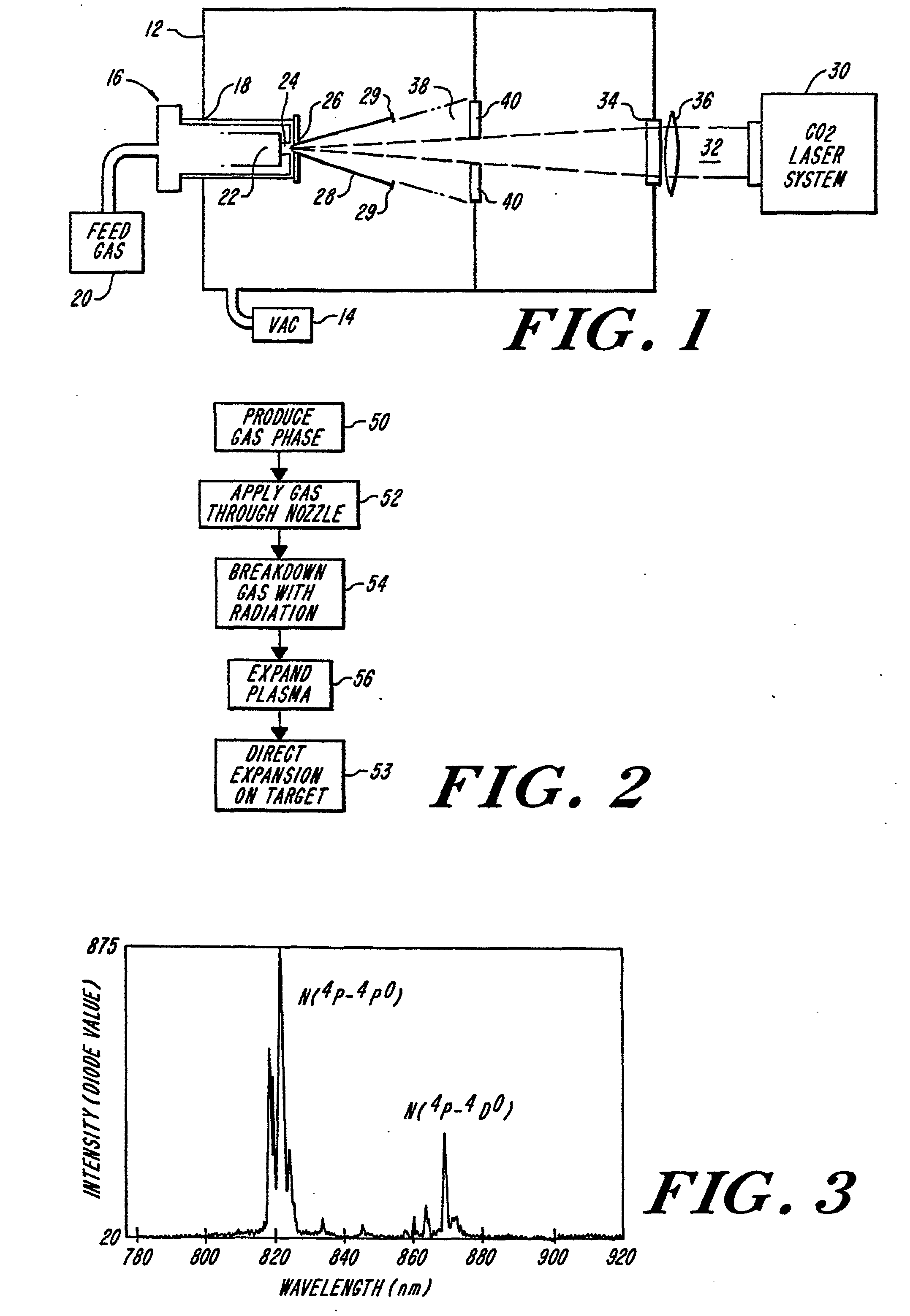
Fig.1 is a schematic view of apparatus for performing the invention;
Fig.2 is a process diagram illustrating the method of the invention; and
Fig.3 is a radiation spectrum of a nitrogen beam produced according to the invention.
[0012] The present invention contemplates the generation of high velocity atomic beams of
diverse particle types and the application of those beams to produce a modification
of the surface of a selected target material.
[0013] Apparatus for practicing the invention is illustrated with respect to Fig.1 which
shows a vacuum chamber 12 evacuated by a pump system 14 to a low pressure, typically
in the range of 10-
2 Pa or less to avoid contaminants in the beam generation process. Observation and
access ports may be installed on the vacuum chamber as desired as is conventional
in the art of vacuum processing.
[0014] A nozzle assembly 16 extends into the chamber 12 through a sealed port 18. A gas
or mixture of gases is applied to the nozzle assembly 16 from a feed source 20 at
an appropriate pressure, typically several 10
5 Pa or several atmospheres. It is useful to apply the gas to the interior of a chamber
12 through a pulsed delivery system in order to permit more control over surface effects,
enabling a mono-atomic layer to be produced and to limit the requirements placed upon
the vacuum pump 14. Continuous operation is possible as well. In one embodiment, the
valving for pulsed application of the gas is accomplished by use of a molecular valve
22 which may be a model BV-100 pulsed molecular beam valve manufactured by Newport
Research. This valve is capable of providing gas bursts as short as 100 microseconds
in duration. Short duration' bursts are useful because the number of atoms is limited,
allowing finer control of the target surface modification effects and reducing the
pumping load necessary to maintain the desired vacuum.
[0015] The molecular valve 22 transfers each burst of gas through a 3.175 mm (1/8 inch)
O-ring 24 and 1.0mm. aperture in a face plate 26 to a nozzle cone or throat 28, typically
provided with a 2
0° expansion angle and 10 cm length. This permits a narrow column of gas, typically
1.0mm in diameter, to be ejected into the chamber 12 with each burst.
[0016] A laser system 30 is provided as a source of radiant energy for producing breakdown
and dissociation of the gas exiting from the aperture in the face plate 26. The laser
system 30 is typically a carbon dioxide laser operating at the 10.6 micrometer wavelength
although other wavelengths are possible. The laser system is capable of providing
short duration pulses, 2.5 microseconds being typical, at approximately 5-10 Joules
of energy each. The length and energy of the pulse is a function of the need to achieve
a very rapid expansion with a limited number of gas atoms in each gas burst, thereby
to drive the very high velocity output beam of atoms. For a given terminal velocity
the required pulse energy is directly proportional to the amount of gas processed.
[0017] The laser system 30 generates a pulsed output beam 32 which enters the chamber 12
through a sodium chloride window 34 and is focused by a lens 36 to achieve a narrow
waist size, typically 0.1 mm diameter, at the apex of the throat 28 where the aperture
in the face plate 26 ejects the gas into the nozzle. The high energy, short duration
pulse creates a breakdown of the gas forming a plasma. The required intensity to achieve
breakdown is a function of both processed gas identity and pressure. The ultra high
temperatures in the resulting plasma in combination with the vacuum environment produces
a plasma expansion 38 confined by the throat walls that achieves a nearly mono-energetic
gas flow with velocities that reach the range of 1-10 km/s. at the nozzle exit.
[0018] Fig.3 illustrates a spectrum of a beam of nitrogen atoms developed according to the
invention. The plasma expansion 38 cools to produce a nearly mono-energetic or uniform
velocity flow of atoms.
[0019] Targets 40 are placed in the path of the expansion 30 for surface modification including
material coating and thin film production according to the desires of the operator.
The target 40 may be placed off axis from the laser beam 32. The actively affected
area of target 40 maybe as large as 100 cm
2, or larger. The application of the invention is not limited to any specific target
material. Nor is there a limit to the type of atomic species that can be generated
in the expansion beam 38. Conventional and stable diatomic mononuclear gases such
as oxygen, hydrogen, nitrogen, fluorine, and chlorine as well as multi-element stable
diatomic and larger gases can be used as the plasma precursor. In addition, it is
possible to produce a beam of other species such as metals or refractory materials
by applying a mixture of precursor gases from the feed system 20, for example, a combination
of a rare earth gas with a metallic carbonyl, organometalic, SiH
4, or metal halide among others. The applied plasma may react with the target 40 producing,
in the case of a carbonyl feed component, SiC or TiC, using silicon or titanium in
the feed gas as well. The high plasma temperature allows cool or room target operation
temperature.
[0020] The process of the invention is illustrated with respect to Fig.2 in which a gas
of a desired element or mixture of mono-or multi-element gases is produced in a step
50. This gas is applied through a nozzle such as represented by the nozzle system
16 in a step 52, being ejected into the throat region of an expansion cone. The thus
ejected gas is broken down in a step 54, typically by use of radiant energy, creating
a hot, pressurized plasma. This plasma is allowed to expand in the desired direction
as established by the nozzle walls in a step 56 and directed toward an appropriate
target in a step 58.
[0021] The following example will serve to illustrate a specific case of the use of the
present invention in the generation of a high velocity atom beam.
[0022] Oxygen at approximately 6 1/3 x 105 Pa is applied from the gas feed system 20 to
the nozzle where the molecular valve produces repetitive bursts of gas having a controlled
duration of up to 1.0 milliseconds. Typically, after the first 200 microseconds of
gas ejection into the throat, a 2.5 microsecond burst of laser radiation of wavelength
10.6 ¡.tm is focussed to a 0.1 mm waist at the apex of the nozzle throat. The vacuum
chamber is maintained in the range of 4 x 10-
3 to 1.33 x 10⁻² Pa during the process. Atomic oxygen flow rates of 9-10 km/s were
deduced from instrumentation applied to the chamber 12.
[0023] Targets of polyethylene and aluminum were placed to intercept the flow of the atomic
beam and exposed to hundreds of cycles of this atomic oxygen treatment. The results
showed clear evidence of material erosion. Scanning electron microscope analysis of
a polyethylene target exposed to the oxygen beam showed an oxygen surface enrichment,
while target areas beyond the beam showed no enhancement. Spectral analysis of an
irradiated aluminum target showed a spectral signature characteristic, in part, of
the irradiating beam.
[0024] The present invention thus provides a source of high velocity atoms of diverse types
and capable of providing surface modification of various target materials.
1. Apparatus for generating a nearly mono-energetic, high flux beam of high velocity
atomic gas par- tides comprising:
a vacuum chamber (12);
nozzle means (16) within the vacuum chamber (12) for ejecting a confined flow of a
gas into a narrow aperture;
means (30) for causing breakdown of the gas flow into a plasma within the narrow aperture;
means (28) for accommodating volumetric expansion of the plasma to produce a high
velocity nearly mono-energetic atomic beam.
2. The apparatus of claim 1 wherein said vacuum chamber includes means (14) for maintaining
a pressure of approximately 1.33 x 10⁻² Pa or less.
3. The apparatus of claim 1 wherein said nozzle (16) includes means (24) for providing
said narrow aperture of approximately 1.0mm diameter.
4. The apparatus of claim 1 wherein said nozzle (16) includes means (22) for causing
pulsed ejection of the confined flow.
5. The apparatus of claim 4 wherein said pulsed ejection causing means includes a
pulsed molecular beam valve (22).
6. The apparatus of claim 1 wherein said means (22) for causing pulsed ejection provides
ejection pulses of duration measured in one hundred to several hundreds of microseconds.
7. The apparatus of claim 1 wherein said means (30) for causing breakdown includes
means for generating radiant energy.
8. The apparatus of claim 7 wherein said means (30) for generating radiant energy
includes means for generating pulsed radiation.
9. The apparatus of claim 7 wherein said means for generating radiant energy includes
a laser (30).
10. The apparatus of claim 9 wherein said laser (30) includes a C02 laser.
11. The apparatus of claim 7 wherein said means (30) for generating radiant energy
includes means for applying the radiant energy to a portion of a region of the volumetric
expansion of the plasma.
12. The apparatus of claim 1 wherein the means for accommodating expansion includes
a nozzle cone (28).
13. The apparatus of claim 1 further including means for positioning a target (40)
in the path of the flow to produce surface modification of the target material.
14. The apparatus of claim 13 wherein a target (40) is provided in the positioning
means.
15. The apparatus of claim 14 wherein said means for causing breakdown includes a
laser beam (30) and said target (40) is positioned off axis from said laser beam.
16. The apparatus of claim 1 wherein said gas is selected from the group of diatomic
mononuclear and diatomic and larger gases, and mixtures of gas precursors to metals
and refractory materials.
17. The apparatus of claim 16 wherein said gas is further selected from the group
consisting of a mixture of a rare earth gas with a metallic carbonyl, organometalic,
silicon compounds, hydroxide and metal halide.
18. A method for generating a nearly mono-energetic beam of high velocity high flux
atomic gas particles within a vacuum chamber (12) comprising: ejecting a confined
flow of a gas into a narrow aperture by way of a nozzle (16) within the vacuum chamber;
causing breakdown of the gas flow into a plasma within the narrow aperture; producing
volumetric expansion of the plasma to produce a high velocity nearly mono-energetic
atomic beam.
19. The methods of claim 18 further including the step of maintaining a pressure of
approximately 1.33 x 10⁻² Pa within the vacuum chamber (12).
20. The method of claim 18 wherein said ejecting step includes the step of providing
said narrow aperture of approximately 1.0mm diameter.
21. The method of claim 18 wherein said ejecting step includes the step of causing
pulsed ejection of the confined flow.
22. The method of claim 21 wherein said pulsed ejection causing step includes the
step of molecular valving.
23. The method of claim 18 wherein said step of causing pulsed ejection provides ejection
pulses of duration measured in one hundred to several hundreds of microseconds.
24. The method of claim 18 wherein said step of causing breakdown includes the step
of generating radiant energy.
25. The method of claim 24 wherein said step of generating radiant energy includes
the step of generating pulsed radiation.
26. The method of claim 24 wherein said step of generating radiant energy includes
the step of laser radiation generation.
27. The method of claim 24 wherein said step of generating radiant energy includes
the step of applying the radiant energy to a portion of a region of the volumetric
expansion of the plasma.
28. The method of claim 18 wherein the step of producing expansion includes the step
of guiding the expansion by a nozzle cone (28).
29. The method of claim 18 further including the step of positioning a target (40)
in the path of the flow to produce surface modification of the target material.
30. The method of claim 18 wherein the step of producing expansion includes the step
of charge neutralizing the plasma.
31. The method of claim 18 wherein the ejecting step includes the step of ejecting
a gas selected from the group consisting of oxygen, hydrogen, nitrogen, fluorine,
chlorine, carbon monoxide, and mixtures of a rare earth gas with a metal carbonyl,
organometalic, SiH4, and metal halide.
32. A target treated for surface modification in accordance with the method of claim
29.
33. The method of claim 29 wherein said surface modification step includes the step
of coating the target surface.
34. A target treated for surface modification in accordance with the method of claim
33.
35. The method of claim 29 wherein said surface modification step includes the step
of producing a thin film on said target (40).
36. A target treated for surface modification in accordance with the method of claim
35.
1. Appareil pour produire un faisceau à flux intense et quasi monoénergétique de particules
gazeuses atomiques possédant une vitesse élevée, comprenant:
une enceinte à vide (12);
un moyen formant buse (16) à l'intérieur de l'in- ceinte à vide (12) pour éjecter
un courant confiné de gaz dans une ouverture étroite;
un moyen (30) pour provoquer la dissociation du courant de gaz en un plasma à l'intérieur
de l'ouverture étroite;
un moyen (28) de réception de la dilatation volumétrique du plasma pour produire un
faisceau atomique quasi monoénergétique possédant une vitesse élevée.
2. Appareil selon la revendication 1, dans lequel ladite enceinte à vide comprend
un moyen (14) pour maintenir une pression d'approximativement 1,33 x 10⁻²Pa ou moins.
3. Appareil selon la revendication 1, dans lequel ladite buse (16) comprend un moyen
(24) pour former ladite ouverture étroite d'un diamètre d'approximativement 1,0 mm.
4. Appareil selon la revendication 1, dans lequel ladite buse (16) comprend un moyen
(22) pour provoquer une éjection pulsée du courant confiné.
5. Appareil selon la revendication 4, dans lequel ledit moyen pour provoquer une éjection
pulsée comprend une soupape de faisceau moléculaire pulsé (22).
6. Appareil selon la revendication 1, dans lequel ledit moyen (22) pour provoquer
une éjection pulsée produit des impulsions d'éjection dont la durée mesurée est de
cent à plusieurs centaines de mocrose- condes.
7. Appareil selon la revendication 1, dans lequel ledit moyen (30) pour provoquer
la dissociation comprend un moyen pour produire une énergie de rayonnement.
8. Appareil selon la revendication 7, dans lequel ledit moyen (30) pour produire une
énergie de rayonnement comprend un moyen pour produire un rayonnement pulsé.
9. Appareil selon la revendicatin 7, dans lequel ledit moyen pour produire une énergie
de rayonnement comprend un laser (30).
10. Appareil selon la revendication 9, dans lequel ledit laser (30) comprend un laser
à C02.
11. Appareil selon la revendication 7, dans lequel ledit moyen (30) pour produire
une énergie de rayonnement comprend un moyen pour appliquer l'énergie de rayonnement
à une partie d'une région de la dilatation volumétrique du plasma.
12. Appareil selon la revendication 1, dans lequel le moyen de réception de la dilatation
comprend un cône de buse (28).
13. Appareil selon la revendication 1, comprenant en outre un moyen pour positionner
une cible (40) dans le trajet du courant pour produire une modification de surface
de la matière de la cible.
14. Appareil selon la revendication 13, dans lequel une cible (40) est prévue dans
le moyen de positionnement.
15. Appareil selon la revendication 14, dans lequel ledit moyen pour provoquer une
dissociation comprend un faisceau laser (30), et ladite cible (40) est située en degors
de l'axe dudit faisceau laser.
16. Appareil selon la revendication 1, dans lequel ledit gaz est choisi dans le groupe
des gaz mononucléaires diatomiques et des gaz diatomiques et supérieurs, et parmi
les mélanges de précurseurs gazeux des métaux et de matériaux réfractaires.
17. Appareil selon la revendication 16, dans lequel ledit gaz est choisi encore dans
le groupe formé par un mélange d'un gaz des terres rares et d'un composé de carbonyle
métallique, d'un composé organométallique, d'un composé du silicium, d'un hydroxyde
et d'un halogénure métallique.
18. Procédé pour produire un faisceau quasi monoénergétique de particules gazeuses
atomiques à flux intense et possédant une vitesse élevée à l'intérieur d'une chambre
à vide (12) comprenant:
L'éjection d'un courant confiné d'un gaz dans une ouverture étroite au moyen d'une
buse (16) à l'intérieur de l'enceinte à vide;
La dissociation du courant de gaz en un plasma à l'intérieur de l'ouverture étroite;
La production d'une dilatation volumétrique du plasma pour produire un faisceau atomique
quasi monoénergétique possédant une vitesse élevée.
19. Procédé selon la revendication 18, comprenant en outre l'étape de maintien d'une
pression d'approximativement 1,33 x 10⁻² Pa à l'intérieur de l'enceinte à vide (12).
20. Procédé selon la revendication 18, dans lequel ladite étape d'éjection comprend
l'étape de prévoir ladite ouverture étroite d'un diamètre d'approximativement 1,0
mm.
21. Procédé selon la revendication 18, dans lequel ladite étape d'éjection comprend
l'étape de production d'une éjection pulsée du courant confiné.
22. Procédé selon la revendication 21, dans lequel ladite étape de production d'une
éjection pulsée comprend l'étape de réglage du courant avec une soupape moléculaire.
23. Procédé selon la revendication 18, dans lequel ladite étape de production d'une
éjection pulsée produit des impulsions d'éjection dont la durée mesurée est de cent
à plusieurs centaines de microsecondes.
24. Procédé selon la revendication 18, dans lequel ladite étape de dissociation comprend
l'étape de production d'une énergie de rayonnement.
25. Procédé selon la revendication 24, dans lequel ladite étape de production d'une
énergie de rayonnement comprend l'étape de production d'un rayonnement pulsé.
26. Procédé selon la revendication 24, dans lequel ladite étape de production d'une
énergie de rayonnement comprend l'étape de production d'un rayonnement laser.
27. Procédé selon la revendication 24, dans lequel ladite étape de production d'une
énergie de rayonnement comprend l'étape d'application de l'énergie de rayonnement
à une partie d'une région de la dilatation volumétrique du plasma.
28. Procédé selon la revendication 18, dans lequel l'étape de production d'une dilatation
comprend l'étape de guidage de la dilatation par un cône de buse (28).
29. Procédé selon la revendication 18, comprenant en outre l'étape de positionnement
d'une cible (40) dans le trajet du courant pour produire une modification de surface
de la matiière de la cible.
30. Procédé selon la revendication 18, dans lequel l'étape de production d'une dilatation
comprend l'étape de neutralisation des charges du plasma.
31. Procédé selon la revendication 18, dans lequel l'étape d'éjection comprend l'étape
d'éjection d'un gaz choisi dans le groupe formé par l'oxygène, l'hydrogène, l'azote,
le fluor, le chlore, le monoxyde de carbone et les mélanges d'un gaz des terres rares
et d'un composé de carbonyle métallique, d'un composé organométallique, de SiH4 et d'un halogénure métallique.
32. Cible traitée en vue d'une modification de surface selon le procédé de la revendication
29.
33. Procédé selon la revendication 29, dans lequel ladite étape de modification de
surface comprend l'étape de revêtement de la surface de la cible.
34. Cible traitée en vue d'une modification de surface selon le procédé de la revendication
33.
35. Procédé selon la revendication 29, dans lequel ladite étape de modification de
surface comprend l'étape de production d'un mince film sur ladite cible (40).
36. Cible traitée en vue d'une modification de surface selon le procédé de la revendication
35.
1. Vorrichtung zur Erzeugung eines nahezu monoenergetischen, hochdichten Strahles
von atomaren Partikeln hoher Geschwindigkeit mit:
einer Vakuumkammer (12);
Düsenmitteln (16) innerhalb der Vakuumkammer (12), um einen eingegrenzten Fluß eines
Gases in eine enge Apertur zu emittieren;
Mitteln (30) zur Verursachung einer Unterbrechung des Gasflusses in ein Plasma hinein
innerhalb der engen Apertur;
Mitteln (28) zur Aufnahme einer Volumenexpansion des Plasmas, um einen nahezu monoenergetischen
Atomstrahl hoher Geschwindigkeit zu erzeugen.
2. Vorrichtung nach Anspruch 1, wobei die Vakuumkammer Mittel (14) zur Aufrechterhaltung
eines Druckes von näherungsweise 1, 33 x 10-2 Pa oder weniger aufweisen.
3. Vorrichtung nach Anspruch 1, bei der die Düse (16) Mittel (24) zum Bilden der engen
Apertur von näherungsweise 1, 0 mm Durchmesser aufweist.
4. Vorrichtung nach Anspruch 1, bei der die Düse (16) Mittel (22) zur Verursachung
einer pulsierenden Emission des eingegrenzten Flusses aufweist.
5. Vorrichtung nach Anspruch 4, bei der die Mittel zur Verursachung einer pulsierenden
Emission ein gepulstes Molekularstrahlventil (22) aufweisen.
6. Vorrichtung nach Anspruch 1, bei der die Mittel (22) zur Verursachung einer pulsierenden
Emission Emissionspulse einer Zeitdauer zwischen 100 und mehreren 100 Mikrosekunden
erzeugen.
7. Vorrichtung nach Anspruch 1, bei der die Mittel (30) zur Verursachung einer Unterbrechung
Mittel zur Erzeugung von Strahlungsenergie aufweisen.
8. Vorrichtung nach Anspruch 7, bei der die Mittel (30) zur Erzeugung von Strahlungsenergie
Mittel zur Erzeugung von gepulster Strahlung aufweisen.
9. Vorrichtung nach Anspruch 7, bei der die Mittel zur Erzeugung von Strahlungsenergie
einen Laser (30) umfassen.
10. Vorrichtung nach Anspruch 9, wobei der Laser (30) einen CO2-Laser umfaßt.
11. Vorrichtung nach Anspruch 7, bei der die Mittel (30) zur Erzeugung von Strahlungsenergie
Mittel zur Einleitung der Strahlungsenergie in einen Abschnitt des Bereiches der Volumenexpansion
des Plasmas aufweisen.
12. Vorrichtung nach Anspruch 1, bei der die Mittel zur Aufnahme einer Expansion eines
Düsenkonus (28) aufweisen.
13. Vorrichtung nach Anspruch 1 mit Mitteln, um innerhalb des Pfades des Flusses ein
Target (40) zu positionieren, um eine Oberflächenmodifikation des Targetmaterials
zu erzeugen.
14. Vorrichtung nach Anspruch 13, bei der sich das Target (40) in den Positionierungsmitteln
befindet.
15. Vorrichtung nach Anspruch 14, bei der die Mittel zur Verursachung einer Unterbrechung
einen Laserstrahl (30) umfassen und bei der das Target (40) außerhalb der Achse des
Laserstrahls positioniert ist.
16. Vorrichtung nach Anspruch 1, bei der das Gas aus einer Gruppe von 2-atomigen,
mononuklearen Kernen und zwei- oder mehratomigen Kernen von Gasen sowie aus Mischungen
von gasförmigen Mutterkernen von Metallen und hochschmelzenden Materialien ausgewählt
wird.
17. Vorrichtung nach Anspruch 16, bei der das Gas außerdem aus einer Gruppe bestehend
aus einer Mischung von Seltene-Erde-Gasen mit einem metallischen Carbonyl, Organometallen,
Siliziumverbindungen, Hydroxiden und Metallhalogeniden ausgewählt wird.
18. Verfahren zur Erzeugung eines nahezu monoenergetischen, hochdichten Strahles von
atomaren Partikeln hoher Geschwindigkeit innerhalb einer Vakuumkammer (12) mit den
Schritten:
das Emittieren eines eingegrenzten Flusses eines Gases in eine enge Apertur mit Hilfe
einer Düse (16) innerhalb der Vakuumkammer;
Verursachung einer Unterbrechung des Gasflusses in ein Plasma hinein innerhalb der
engen Apertur;
Verursachung einer Volumenexpansion des Plasmas zur Erzeugung eines nahezu monoenergetischen
Atomstrahles hoher Geschwindigkeit.
19. Verfahren nach Anspruch 18, mit dem weiteren Schritt des Aufrechterhaltens eines
Druckes von ungefähr 1,33 x 10⁻² Pa innerhalb der Vakuumkammer (12).
20. Verfahren nach Anspruch 18, bei der der Einleitungsschritt außerdem den Schritt
des Bereitstellens einer engen Apertur von ungefähr 1,0 mm umfaßt,
21. Verfahren nach Anspruch 18, bei der der emittierende Schritt den Schritt zur Verursachung
einer pulsierenden Emission des eingegrenzten Flusses umfaßt.
22. Verfahren nach Anspruch 21, bei dem die pulsierende Emission mittels eines Molekularventils
erreicht wird.
23. Verfahren nach Anspruch 18, bei dem im Schritt zur Verursachung einer pulsierenden
Emission Emissionspulse ener Zeitdauer zwischen 100 und mehreren 100 Mikrosekunden
benutzt werden.
24. Verfahren nach Anspruch 18, bei dem der Schritt zur Verursachung einer Unterbrechung
den Schritt des Erzeugens von Strahlungsenergie umfaßt.
25. Verfahren nach Anspruch 24, bei dem der Schritt der Erzeugung von Strahlungsenergie
den Schritt der Erzeugung von pulsierender Strahlung umfaßt.
26. Verfahren nach Anspruch 24, bei dem der Schritt zur Erzeugung von Strahlungsenergie
den Schritt des Erzeugens von Laserstrahlung umfaßt.
27. Verfahren nach Anspruch 24, bei dem der Schritt des Erzeugens von Strahlungsenergie
den Schritt des Einleitens der Strahlungsenergie in den Abschnitt des Bereiches der
Volumenexpansion des Plasmas umfaßt.
28. Verfahren nach Anspruch 18, bei dem der Schritt des Erzeugens einer Expansion
den Schritt des Führens der Expansion durch einen Düsenkonus (28) umfaßt.
29. Verfahren nach Anspruch 18, mit dem weiteren Schritt des Positionierens eines
Targets (40) im Pfad des Flusses um eine Oberflächenmodifikation des Targetmaterials
zu erzeugen.
30. Verfahren nach Anspruch 18, bei dem der Schritt zur Erzeugung der Expansion den
Schritt der Ladungsneutralisierung des Plasmas umfaßt.
31. Verfahren nach Anspruch 18, bei dem der Schritt der Emission die Emission eines
Gases umfaßt, das aus der Gruppe von Sauerstoff, Stickstoff, Wasserstoff, Fluoriden,
Chloriden, Kohlenmonoxid sowie Mischungen von Seltene-Erde-Gasen mit einem Metallcarbonyl,
Organometalle, SiH4 und Metallhalogeniden umfaßt.
32. Ein Target, zum Zweck der Oberflächenmodifikation gemäß dem Verfahren nach Anspruch
29 behandelt wurde.
33. Verfahren nach Anspruch 29, wobei der Schritt der Oberflächenmodifikation den
Schritt des Ummantelns der Targetoberfläche umfaßt.
34. Ein Target, das zum Zwecke der Oberflächenmodifikation gemäß dem Verfahren nach
Anspruch 33 behandelt wurde.
35. Verfahren nach Anspruch 29, wobei der Schritt der Oberflächenmodifikation den
Schritt des Erzeugens eines Dünnfilmes auf dem Target (40) umfaßt.
30. Ein Target, das zum Zwecke der Oberflächenmodifikation gemäß dem Verfahren nach
Anspruch 35 behandelt wurde.