|
(11) | EP 0 264 983 B1 |

| (12) | EUROPEAN PATENT SPECIFICATION |
|
|
| (54) |
An aqueous coating composition and a process of coating a substrate with such coating composition Wässerige Überzugszusammensetzung und Verfahren zum Überziehen eines Substrats damit Composition aqueuse de revêtement et procédé pour en revêtir un substrat |
|
|
|||||||||||||||||||||||||||||||
| Note: Within nine months from the publication of the mention of the grant of the European patent, any person may give notice to the European Patent Office of opposition to the European patent granted. Notice of opposition shall be filed in a written reasoned statement. It shall not be deemed to have been filed until the opposition fee has been paid. (Art. 99(1) European Patent Convention). |
[0001] The invention relates to an aqueous coating composition based on an organic compound and a curing agent for its. Aqueous compositions have the important advantage that upon application no or upon use of a co-solvent only little organic solvent is released into the atmosphere. Moreover, the use of water leads to fewer physiological drawbacks and fire and explosion hazards.
[0002] More particularly, the invention relates to an aqueous coating composition based upon a compound having at least 2 acetoacetate groups and a polyamino amide curing agent therefor.
[0003] Coating compositions broadly comprising acetoacetate groups-containing compounds (binder) and polyamine curing agents are generally known in the art. Such coating compositions are characterized by many desirable properties such as flexibility, hardness and toughness. See Hoy and Carder, "Polyenamine Coatings-I. Formulation of Coatings and Determination of Film Properties", Journal of Paint Technology 46(591), April 1974, pages 70-75.
[0004] Although these coating compositions possess a number of desirable characteristics, they are normally found as organic solvent based systems due to the insoluble (non-dispersible) nature of the organic components (particularly the acetoacetate groups-containing compounds) in water. As indicated above, environmental concerns and other hazards have made solvent based coating systems less desirable, prompting a need for aqueous alternatives.
[0005] The coating composition according to the present invention solves this problem by providing an aqueous coating composition comprising an organic compound and curing agent for it, characterized in that the organic compound is a compound having at least 2 acetoacetate groups and the curing agent is a polyamino amide having an amine number of 60-1000 built up from a mono- and/or dicarboxylic acid having 2-40 carbon atoms and a polyamine having 2-6 primary amino groups and 2-20 carbon atoms, and the coating composition further comprises a nitroalkane having 1-6 carbon atoms, an organic compound occurring in at least 2 tautomeric forms, and in one of the tautomeric forms a labile hydrogen atom is linked to a carbon atom and which compound contains at least one carbonyl group or sulphonyl group, and/or a formic acid ester having a solubility of at least 0,2 g in 100 g of water having a temperature of 20°C, with the exception of tert.-butyl formiate.
[0006] Suitable compounds containing at least two acetoacetate groups may be obtained by reacting diketene or an alkyl acetoacetate with a polyol having two or more hydroxyl groups.
[0007] As examples of polyols may be mentioned ethylene glycol, propylene glycol, trimethylol propane and pentaerythritol, polyether polyols as obtained by reacting an alkylene oxide with a hydroxy compound containing 2 or more hydroxyl groups, polyester polyols such as polycaprolactone polyols, and epoxy resins as obtained by reacting epichlorohydrin with a diaryloyl alkane. It is preferred that use should be made of addition polymers having acetoacetate groups.
[0008] Examples of suitable acetoacetate groups-containing addition polymers that may be used according to the invention include addition polymers, 4-100% by weight of which consists of a monomer unit having one or more acetoacetate groups, 0-96% by weight of an acrylic or methacrylic ester of a mono-, di- or polyfunctional hydroxyl compound having 1-18 carbon atoms, 0-20% by weight of a monoethylenically unsaturated mono- or dicarboxylic acid having 3-12 carbon atoms or an anhydride thereof, and 0-96% by weight of one or more other copolymerizable monomers, such as styrene, a-methyl styrene, vinyl toluene, acrylamide, methacrylamide, acrylonitrile, N-methylol acrylamide, dimethyl maleinate, vinyl acetate, vinyl versatate, vinyl trimethoxy silane and/or allyl glycidyl ether.
[0009] Examples of suitable monomer units having one or more acetoacetate groups include acetoacetic esters of a hydroxyalkyl (meth)acrylate or an allyl alcohol monomer unit or compounds of the general formula
wherein the group R, represents a hydrogen atom or a methyl group, the group X an oxygen atom or an NH-group and the group R2 is an n-functional organic group having 1-26 carbon atoms and n is a number of 2-4; the molecular weight of such a monomer unit is generally not higher than 500, preferably 140-300. The n-functional organic group R2 may contain urethane groups, ether groups and/or ester groups, for example obtained from a lactone, such as e-caprolactone, or an epoxy compound or isocyanate compound such as an alkylene oxide, glycidol, a glycidyl ester of a monocarboxylic acid containing 2-18 carbon atoms or an adduct of a diisocyanate and a diol. These monomer units are obtained for instance by acetoacetylation of an adduct of a lactone, a monoepoxy compound or a diisocyanate reacted with a diol to a hydroxyalkyl (meth)acrylate. Examples of other suitable monomer units include allyl acetoacetate and acetoacetic esters of ethylenically unsaturated diols or triols such as 2-butene-1,4-diacetoacetate and (2-methylene acetoacetyl)-I-propene-3-acetoacetate.
[0010] Examples of suitable acrylic or methacrylic esters of a mono-, di- or polyfunctional hydroxyl compound include methyl acrylate, methyl methacrylate, ethyl acrylate, hydroxymethyl acrylate, hydroxyethyl methacrylate, propyl acrylate, hydroxypropyl methacrylate, butyl acrylate, butyl methacrylate, hydroxyhexyl acrylate, 2-ethylhexyl acrylate, octyl acrylate, isobornyl acrylate, oleyl acrylate, glycidyl methacrylate or (meth)acryloxypropyl trimethoxysilane.
[0011] As examples of suitable monoethylenically unsaturated mono- or dicarboxylic acids containing 3-12 carbon atoms or an anhydride thereof may be mentioned acrylic acid, methacrylic acid, maleic acid, itaconic acid, maleic anhydride, cinnamic acid or dodecenic acid.
[0012] The addition polymers may be prepared in any convenient manner, for instance by polymerizing a one or more acetoacetate groups-containing monomer, optionally mixed with one or more other monomers, at a temperature of 50°-160°C, in the presence of preferably 0.1-10% by weight of an initiator, calculated on the monomeric compound(s). Examples of suitable initiators include free radical initiators, for instance potassium persulphate, hydrogen peroxide, cumene hydroperoxide, benzoyl peroxide, di-tert.butyl peroxide, tert.butylpertrimethyl hexanoate, tert.butyl perbenzoate, azobisisobutyronitrile, azobisvaleronitrile, and azobis(2,4-dimethylvaleronitrile). The polymerization is carried out in the presence of water and/or an organic solvent, such as a ketone, an alcohol, an ether, an ester or a hydrocarbon. The polymerization may optionally be carried out by using UV light and in the presence of UV initiators, such as benzil, benzoin ethers and thioxanthone derivatives.
[0013] Other suitable acetoacetate groups-containing addition polymers are addition polymers having, for instance hydroxyl groups, a number of which have been converted with a reactive acetoacetate compound or a compound yielding an acetoacetate group, for instance with diketene. Examples of suitable reactive acetoacetate compounds include alkyl esters of acetylacetic acid, preferably methyl acetoacetate or ethyl acetoacetate. Suitable hydroxyl groups-containing addition polymers include copolymers of a hydroxyalkyl (meth)acrylate such as hydroxyethyl methacrylate, hydroxypropyl methacrylate and/or hydroxybutyl acrylate and optionally one or more other comonomers, or copolymers of styrene and allyl alcohol.
[0014] The polyamino amide which according to the invention may be used as second component of the composition is obtained by reacting a mono- and/or dicarboxylic acid having 2-40 carbon atoms and a polyamine having 2-6 primary amino groups and 2-20 carbon atoms.
[0015] Examples of suitable monocarboxylic acids, which preferably contain 1-24 carbon atoms, include acetic acid, propionic acid, valeric acid, capronic acid, trimethyl acetic acid, caprylic acid, pelargonic acid, isooctanoic acid, lauric acid, myristic acid, palmitic acid, stearic acid, behenic acid or cerotic acid; aliphatic monocarboxylic acids having one or more conjugated or non-conjugated double C-C bonds, which generally contain 5-24 carbon atoms, such as linseed oil fatty acid, safflower oil fatty acid, soybean oil fatty acid, tall oil fatty acid, wood oil fatty acid, sunflower oil fatty acid, castor oil fatty acid, oiticica oil fatty acid, dehydrated castor oil fatty acid, linoleic acid, linolenic acid, oleic acid, sorbic acid, elaidic acid, a-eleostearic acid, β-eleostearic acid, rinicolic acid, erucic acid, isanic acid or isanolic acid; cycloaliphatic monocarboxylic acids such as cyclopentane monocarboxylic acid, cyclopentane propionic acid and cyclohexane monocarboxylic acid; and aromatic monocarboxylic acids such as benzoic acid and p.tert.butyl benzoic acid.
[0016] As examples of suitable dicarboxylic acids, which preferably contain 8-36 carbon atoms, may be mentioned aliphatic dicarboxylic acids such as oxalic acid, malonic acid, succinic acid, glutaric acid, adipic acid, azelaic acid, 2,2,4-trimethyl adipic acid, sebacic acid, dimeric fatty acids generally containing 36 carbon atoms; cycloaliphatic dicarboxylic acids such as hexahydrophthalic acid, hexahydroterephthalic acid, tetrahydrophthalic acid, endomethylene tetrahydrophthalic acid or methylcyclohexane-1,2-dicarboxylic acid; and aromatic dicarboxylic acids such as orthophthalic acid, isophthalic acid or terephthalic acid. Also suitable are, of course, mixtures of the above-envisaged mono- andlor divalent carboxylic acids. In addition to the above-mentioned carboxylic acids other carboxylic acids may be used, such as trimellitic acid, and trimerised fatty acids, which acids may be employed in a relatively small amount of not higher than, for instance 30% by weight, preferably less than 10% by weight, calculated on the total amount of carboxylic acid.
[0017] The carboxylic acids may, if desired, contain inert substituents, for instance: halogen, nitro, aceto, or alkyl ether groups. If desired, the above-envisaged acids also may be used as anhydride or acid halide, or in the form of an ester, for instance an ester derived from an alcohol having 1 to 6 carbon atoms.
[0018] Polyamines from which according to the invention the polyamino amide is partly built up are polyamines having 2-6 primary and 06 secondary amino groups, preferably 2-3 primary and 0-4 secondary amino groups. Examples of suitable polyamines are 3-amino-1-(methylamino)propane, 3-amino-1-(cyclohexylamino)propane, N-(2-hydroxyethyl)ethylene diamine, more particularly polyamines of the formula
wherein the group R, and the n groups R2 may be the same or different and represent an alkylene group having 2-6 carbon atoms and preferably 2-4 carbon atoms and n is a number from 1-6, preferably 1-3. By an alkylene group is also to be understood here a cycloalkylene group or an alkylene group having an ether-oxygen atom. Representative polyalkylene polyamines include diethylene triamine, dipropylene triamine, dibutylene triamine, dihexylene triamine, triethylene tetramine, tetraethylene pentamine, tetrapropylene pentamine, pentaethylene hexamine or polyamino compounds having different alkylene groups in a molecule, for instance:
or mixtures of the above-envisaged compounds. The two last-mentioned compounds may be prepared for instance by addition of ethylene diamine or diethylene triamine to acrylonitrile, followed by hydrogenation of the product thus prepared.
[0019] Preferred polyamines from which according to the invention the polyamino amide is also partly built up are aliphatic, cycloaliphatic or aromatic amino compounds having 2 or 3 exclusively primary amino groups. Examples of such polyamines include ethylene diamine, propylene diamine, butylene diamine, pentamethylene diamine, hexamethylene diamine, decamethylene diamine, 4,7-dioxadecane-1,10-diamine, dodecamethylene diamine, 4,9-dioxadodecane-1,12-diamine, 7-methyl-4,10-dioxatridecane-1,13-diamine, 1,2-diamino cyclohexane, 1,4-diamino cyclohexane, 4,4'-diamino dicyclohexyl methane, bis(3-methyl-4-amino cyclohexyl)methane, 2,2-bis-(4-amino cyclohexyl)propane, (3-methyl-4-amino cyclohexyl)-(3-methyl-4-amino phenyl)methane, 4,4'-diamino diphenyl methane, diamino diphenyl sulphone, bis(3-methyl-4-aminophenyl)methane and bis-(3-amino propyl)methylamine.
[0020] The polyamino amide may be prepared in any well-known or convenient manner from the mono- andl or dicarboxylic acid and one or more polyamines, for instance by reacting the reaction components with each other at a temperature generally of 100°-220°C, preferably 115°-190°C. Usually, no solvent is applied, but it is self-evident that one or more solvents, for instance methanol, may optionally be employed. In the reaction mixture the carboxylic acid is usually present in an amount such that according to the invention a polyamino amide having an amine number of 60-1000, preferably of 80-750 and more particularly of 200-600 is obtained.
[0021] These polyamino amides also may be applied as adduct to a compound having one or more epoxy groups. To prolong the pot life the polyamino amides may optionally be applied in the form of the ketimine or aldimine of the polyamino amide with ketones such as methylethyl ketone, diethyl ketone, methylisobutyl ketone or methylamyl ketone, or aldehydes, such as formaldehyde, acetaldehyde or isobutyraldehyde.
[0022] In addition to the polyamino amide still other amino compounds may be present. As examples of such amino compounds, which are preferably used in aldiminated or ketiminated form may be mentioned aliphatic or cycloaliphatic amines having at least one, preferably 2 to 4, primary amino groups and 2-24 carbon atoms and, more particularly, a molecular weight not higher than 580. It is preferred that these amines should have 0-6 secondary amino groups. Examples of suitable amino compounds include ethylene diamine, propylene diamine, ethanolamine, propanolamine, butylene diamine, pentamethylene diamine, hexamethylene diamine, decamethylene diamine, 4,6-dioxadecane-1,10-diamine, dodecamethylene diamine, 4,9-dioxadodecane-1,12-diamine, 7-methyl-4,10-dioxatridecane-1,13-diamine, 1,2-diaminocyclohexane, 1,4-diaminocyclohexane, 4,4'-diaminocyclohexyl methane, isophorone diamine, bis-(3-methyl-4-aminocyclohexyl)methane, 2,2-bis-(4-aminocyclohexyl)propane, nitrile tris(ethane amine), polyether polyamines, for instance those that are known under the trade mark Jeffamine of Jefferson Chemical Company, bis-(3-aminopropyl) methylamine, 3-amino-1-(methylamino)propane, 3-amino-1-(cyclohexylamino)propane, N-(2-hydroxyethyl)ethylene diamine and polyamines of the formula
wherein the group R, and the n groups R2 may be the same or different and represent an alkylene group containing 2-6, and preferably 2-4 carbon atoms and n is a number from 1-6 and preferably 1-3. By an alkalene group is also to be understood here a cycloalkylene group or an alkylene group containing an ether-oxygen atom. Examples of representative polyalkylene polyamines include diethylene triamine, dipropylene triamine and dibutylene triamine. Other suitable amino compounds are adducts of a polyamine or a hydroxylamine to a monoepoxy compound, a monoisocyanate or a monofunctional a,(3-ethylenically unsaturated carbonyl compound.
[0023] Other suitable amino compounds which may optionally be used are adducts of a di- or polyvalent epoxy or isocyanate compound or α,β-ethylenically unsaturated carbonyl compound and an amino compound containing at least 1 primary amino group and a group reacting with the di- or polyvalent compound.
[0024] As examples of suitable epoxy compounds, which as such may be solid or liquid, may be mentioned the di- or polyglycidyl ethers of (cyclo)aliphatic or aromatic hydroxyl compounds, such as ethylene glycol, glycerol, cyclohexane diol, mono- or polynuclear di- or trifunctional phenols, bisphenols such as Bisphenol-A and Bisphenol-F; polyglycidyl ethers of phenol formaldehyde novolak; polymers of ethylenically unsaturated compounds having epoxy groups, such as glycidyl (meth)acrylate, N-glycidyl (meth)acrylamide and/or allylglycidyl ether, and optionally of one or more other copolymerizable ethylenically unsaturated monomers; cycloaliphatic epoxy compounds such as epoxidized styrene or divinyl benzene which may optionally, subsequently, be hydrogenated; glycidyl esters of fatty acids containing, for instance, 6-24 carbon atoms; glycidyl (meth)acrylate; epoxy compounds containing an isocyanurate group; an epoxidized polyalkadiene such as epoxidized polybutadiene; hydantoin-epoxy resins; epoxy resins obtained by epoxidizing aliphatic and/or cycloaliphatic alkenes, such as dipentene dioxide, dicyclopentadiene dioxide and vinyl cyclohexene dioxide, and glycidyl groups-containing resins such as polyesters or polyurethanes containing one or more glycidyl groups per molecule, or mixtures of the above-envisaged epoxy resins. The epoxy resins are known to a skilled person and need not be further described here. It is preferred that the epoxy resin to be used should be a diglycidyl ether based on bis(4-hydroxyphenyl)-2,2-propane. The preferred epoxy equivalent weight of the epoxy resin(s) is in the range of 87 to 6000, more particularly 120-1000.
[0025] Examples of suitable isocyanate compounds include aliphatic, cycloaliphatic or aromatic di-, tri- or tetraisocyanates which may or may not be ethylenically unsaturated, such as 1,2-propylene diisocyanate, trimethylene diisocyanate, tetramethylene diisocyanate, 2,3-butylene diisocyanate, hexamethylene diisocyanate, octamethylene diisocyanate, 2,2,4-trimethyl hexamethylene diisocyanate, 2,4,4-trimethyl hexamethylene diisocyanate, dodecamethylene diisocyanate, w,w'-dipropyl ether diisocyanate, 1,3-cyclopentane diisocyanate 1,2-cyclohexane diisocyanate, 1,4-cyclohexane diisocyanate, isophorone diisocyanate, 4-methyl-1,3-diisocyanatocyclohexane, trans-vinylidene diisocyanate, dicyclohexylmethane-4,4'-diisocyanate, 3,3'-dimethyl-dicyclohexylmethane-4,4'-diisocyanate, a toluene diisocyanate, 1,3 - bis(1 - isocyanato - 1 - methylethyl)benzene, 1,4 - bis(1 - isocyanato - 1 - methylethyl)benzene, 1,3 - bis(isocyanatomethyl)benzene, a xylylene diisocyanate, 1,5 - dimethyl - 2,4 - bis(isocyanatomethyl)-benzene, 1,5 - dimethyl - 2,4 - bis(2 - isocyanatoethyl)benzene, 1,3,5 - triethyl - 2,4 - bis(isocyanatomethyl)benzene, 4,4' - diisocyanatodiphenyl, 3,3' - dichloro - 4,4' - diisocyanatodiphenyl, 3,3' - diphenyl - 4,4' - diisocyanatodiphenyl, 3,3' - dimethoxy - 4,4' - diisocyanatodiphenyl, 4,4' - diisocyanatodiphenylmethane, 3,3' - dimethyl - 4,4' - diisocyanatodiphenyl methane, a diisocyanato- naphthalene, polyisocyanates having isocyanurate structural units, the adduct of 2 molecules of a diisocyanate, such as hexamethylene diisocyanate or isophorone diisocyanate, and a diol such as ethylene glycol, the adduct of 3 molecules of hexamethylene diisocyanate and 1 molecule of water (available under the trademark Desmodur N of Bayer), the adduct of 1 molecule of trimethylol propane and 3 molecules of toluene diisocyanate (available under the trademark Desmodur L of Bayer), the adduct of 1 molecule of trimethylol propane and 3 molecules of isophorone diisocyanate, compounds such as 1,3,5-triisocyanato benzene and 2,4,6-triisocyanatotoluene, and the adduct of 1 molecule of pentaerythritol and 4 molecules of toluene diisocyanate.
[0026] Examples of suitable polyfunctional α,β-ethylenically unsaturated compounds include the (meth)acrylic esters of di-, tri- or polyvalent hydroxyl compounds, including polyester diols or polyols and polyether diols or polyols; alkyd resins and hydroxyl-functional (meth)acryl or vinyl (co)polymer resins; adducts of on the one hand a hydroxyl group-containing (meth)acrylic ester of a polyol to an at least bifunctional isocyanate compound or epoxy compound on the other; and adducts of (meth)acrylic acid to an at least bifunctional epoxy compound. For brevity, the compounds envisaged here are hereinafter referred to as poly(meth)acryloyl compound.
[0027] The hydroxyl groups-containing (meth)acrylic esters from which the adduct to the at least bifunctional isocyanate or epoxy compound is formed are the (meth)acrylic esters of polyols defined hereinbefore. As examples of an at least bifunctional isocyanate compound or epoxy compound suitable for the formation of the afore-mentioned adduct may be mentioned those isocyanate compounds and epoxy compounds already mentioned hereinbefore as component of the adduct of an amine compound to a polyfunctional isocyanate compound or epoxy compound. The poly(meth)acryloyl compound generally has an equivalent weight of 85-5000, preferably of 100-1000. The α,β-ethylenically unsaturated compound that may be used in the formation of the adduct to the amino compound is preferably a poly(meth)acryloyl compound mentioned hereinbefore. Optionally, use may be made of a compound having one or more a,(3-ethylenically unsaturated dicarboxylic acid units, such as maleic acid or fumaric acid or an ester thereof.
[0028] The amino compounds that are used in the formation of the adduct thereof to the polyfunctional epoxy compound or isocyanate compound or a,!3-ethylenically unsaturated carbonyl compound may in the first place be the afore-mentioned polyamino compounds preferably containing 2-24 carbon atoms or, optionally, monoamines, preferably primary monoamines which have a group, for instance a hydroxyl group or mercaptan group, reacting with an epoxy compound or isocyanate compound or an α,β-ethylenically unsaturated carbonyl compound. It is preferred that use should be made of a mixture of a polyamino amide and an amino compound in which the amount of the polyamino amide is at least 3, and preferably at least 5 equivalent %. The polyamino amide is preferably used in the non-blocked form and the amino compound in the blocked form.
[0029] For use in the coating composition according to the invention the amino groups of the afore described amino compounds may be blocked with an aldehyde or ketone containing not more than 10 carbon atoms, preferably 3-8 carbon atoms. Examples of suitable blocking agents for the amino groups include acetone, methylethyl ketone, diethyl ketone, methylisopropyl ketone, methylisobutyl ketone, isobutyraldehyde, cyclohexanone, ethylamyl ketone, diisobutyl ketone, 3-octanone and decanone. It is preferred that use should be made of an aliphatic or cycloaliphatic ketone, more particularly containing 3-8 carbon atoms.
[0030] An effective method of preparing the above-envisaged blocked amino compound is, for example, the addition reaction of the epoxy or isocyanate compound or the α,β-ethylenically unsaturated carbonyl compound referred to hereinbefore and an amino-, hydroxyl- or mercaptan-functional ketimine or aldimine. Optionally, the amino group(s) may be blocked after the addition reaction. The blocking of amino groups is known per se and need not be further described here.
[0031] In the coating composition according to the invention the polyacetoacetate, the polyamino amide and possibly the amino compound are usually present in amounts such that the ratio of the number of equivalents of primary amino groups of the polyamino amide and the amino compound(s), if present, to the number of equivalents of acetoacetate of the polyacetoacetate is in the range of 1/2 to 2, preferably of 2/ 3 to 4/3.
[0032] According to the invention the aqueous composition also contains a nitroalkane, a formic acid ester and/ or a certain organic compound occurring in at least 2 tautomeric forms, and in one of the tautomeric forms a labile hydrogen atom is linked to a carbon atom. For brevity, these last-mentioned compounds are hereinafter referred to as CH acid. It has surprisingly been found that the compounds referred to hereinbefore exert an emulsifying action on the present binder system containing a polyamino amide, providing an excellent dispersibility of the binder system in water. Examples of CH acids include 2,4-pentanedione, 1,1,1-trifluoro-2,4 pentanedione, phenylsulphonylpropane - 2,3 - methyl - 2,4 - pentanedione, and esters, for instance those of a (cyclo)aliphatic or aromatic hydroxyl compound having 1-10 carbon atoms, such as methanol, ethanol, butanol, hexanol, cyclohexanol, phenol, ethylene glycol, glycerol, trimethylol ethane and trimethylol propane, and a carboxylic acid, such as nitroacetic acid, cyanoacetic acid, trifluoroacetic acid, acetyl acetic acid or malonic acid. Examples of suitable esters include ethyl nitroacetate, cyclohexyl nitroacetate, benzyl cyanoacetate, ethyl trifluoroacetoacetate, methyl acetoacetate, ethyl acetoacetate, phenyl acetoacetate and diethyl malonate. It is preferred that use should be made of 2,4-pentanedione, methyl acetoacetate or ethyl acetoacetate or methyl cyanoacetate. The CH acid generally has a pka of 3-12, preferably 4-11 and more particularly of 62 9.
[0033] It is preferred that the formic acid ester should be an ester of formic acid and a monovalent alcohol having 1-6, more particularly 1-5 carbon atoms. Examples of suitable alcohols include methanol, ethanol, n-propanol, isopropanol, n-butanol, isobutanol, n-pentanol, isopentanol and ether alcohols such as 2-ethoxyethanol, 2-propoxyethanol and 2-butoxyethanol. More particularly, the ester is a formic acid ester of the general formula
wherein R, and R2 may be the same or different and represent a hydrogen atom or an alkyl group, the groups R, and R2 together containing not more than 5 carbon atoms. A specially preferred ester is methyl formiate, ethyl formiate or isopropyl formiate. Other suitable esters are the esters of formic acid and a bi- or polyvalent hydroxy compound having 2-8 carbon atoms. As examples of suitable hydroxy compounds may be mentioned ethylene glycol, propylene glycol, glycerol, trimethylol propane and pentaerythritol. Optionally, the formic acid ester may contain one or more hydroxyl groups. It is preferred that the formic acid ester should have a solubility of 0,2-50 g, more particularly 0,5-35 g in 100 g of water having a temperature of 20°C. The CH acid is usually employed in an amount such that per N atom of the amino group-containing curing agent 0,3-2 labile H atoms of the CH acid are present.
[0034] Suitable nitroalkanes have 1 to 6, and preferably 1-4 carbon atoms and contain one or two nitro groups. As examples may be mentioned nitromethane, nitroethane, 1- and 2-nitropropane, 1- and 2-nitrobutane and 1,3-dinitropropane. It is preferred that nitroethane or nitropropane should be applied. The formic acid ester is generally present in an amount such that 0,3-2 equivalents of formiate are present per equivalent of nitrogen of the amino group-containing curing agent.
[0035] The aqueous coating compositions may be formed from the polyacetoacetate, the polyamino amide and the nitroalkane, formic acid ester andlor CH acid in any convenient manner. It is preferred that the polyacetoacetate should be dissolved in an appropriate organic solvent and subsequently mixed with a solution of the polyamino amide in an appropriate organic solvent. In actual practice the nitroalkane, formic acid ester and/or the CH acid is either added to the solution of the polyacetoacetate or to the common solution of the polyacetoacetate and the polyamino amide.
[0036] To obtain the desired application viscosity water is added to the final solution. The aqueous composition may contain the usual additives, such as pigments, fillers, levelling agents, foam suppressing agents, rheology control agents, corrosion inhibitors and inert organic solvents, such as an aliphatic or aromatic hydrocarbon, and compounds such as butyl glycol. Optionally, pigment may previously be mixed with a solution of the binder or a component thereof in an organic solvent.
[0037] The coating composition ready for use generally contains water in an amount of at least 15% by weight, preferably at least 25% by weight and generally not more than 80% by weight.
[0038] The composition may be applied to the substrate in any suitable manner, such as by roller coating, spraying, brushing, sprinkling, flow coating or dipping. It is preferred that the composition should be applied by (electrostatic) spraying. The invention also pertains to a process of coating a substrate using the aqueous compositions referred to hereinbefore.
[0039] The substrate may be of, for instance, a metal such as aluminium, magnesium, steel, iron, titanium; of a synthetic material such as a fibre-reinforced epoxy resin, polyether-ether ketone, polyimide or polyester; or concrete or asbestos cement. The substrate may or may not have been pretreated. The coating is generally cured at ambient or elevated temperature, for instance up to not higher than 80°C. The coating thickness (after curing) is generally in the range of 10-200 pm. The coating composition according to the invention is harmless to the environment and hard curing and after curing it is excellently resistant to organic solvents such as petrol, and to water. The composition can be excellently used as primer or top coat in the automobile and car repair industry, as decorative coat on concrete and as abrasion resistant coat on wood or concrete.
[0040] The invention will be further described in the following examples, which are not to be construed as limiting the scope of the present invention. The term "parts" used therein refers to "parts by weight" and "%" to "per cent by weight". The coating thickness of the compositions was determined after the composition had been cured. The resistance of the coating to water and premium grade petrol was determined after 1 week's drying by placing on a panel a wad of cotton wool soaked with water for 2 hours or with premium grade petrol for 2 minutes, after which the appearance was visually assessed for hazing and decrease in hardness by scratching with a pencil of a 2B hardness. When no hazing or decrease in hardness is found, the result is rated "excellent". The result is rated "very good", when no decrease in hardness, but only slight hazing is observed, and the result is rated "good", when besides slight hazing a slight reduction in hardness is established which, however, will have disappeared after drying of the coating.
Preparation of polyacetoacetates A-D
Polyacetoacetate A
[0041] Into a reactor were charged 900 g of solvent, which were heated to boiling temperature. Subsequently, a mixture of 451,9 g of butyl acrylate, 461,2 g of styrene, 230,5 g of methyl methacrylate and 556,6 g of hydroxymethyl methacrylate and a mixture of 125 g of solvent and 119,0 g of tert. butylperoxy-3,5,5 trimethyl hexanoate were added separately over a period of 3 hours. Thereupon, a mixture of 8,5 g of tert. butylperoxy-3,5,5 trimethyl hexanoate and 75 g of solvent was added over a period of 30 minutes. Then 22 g of solvent were added. The reaction mixture was kept at boiling temperature until a conversion of more than 98% had been attained. Next, the reaction mixture was cooled and 3,4 g of dibutyltin oxide, 463,6 g of ethyl acetoacetate and 225 g xylene were added, after which the reaction mixture was heated to boiling temperature, with the ethanol evolved being removed by (azeotropic) distillation. After 6 hours 189,0 g of ethanol (100% of the theoretical amount) were collected. After 38 g of solvent had been added, a 61,4%- solution of acetoacetate compound A having an acid number of 1,1 and a viscosity of 36,8 cPas was obtained. The solvent used in this example was a hydrocarbon mixture (available under the tade mark Solvesso 100 of Esso).
Polyacetoacetate B
[0042] Into a reactor were charged 335 g of trimethylol propane, 926,3 g of ethyl acetoacetate, 417,9 g of xylene and 2,5 g of dibutyltin oxide, which were heated to boiling temperature, the ethanol evolved being removed by (azeotropic) distillation. After 6 hours 314,0 g of ethanol had been distilled off. Obtained was a 68,8%-solution of polyacetoacetate B having an acid number of 0,8 and a viscosity of 1,5 cPas.
Polyacetoacetate C
[0043] Into a reactor were charged 270 g of xylene, 270 g of white spirit (boiling point: 140°-165°C), 540 g of ethylamyl ketone and 333,0 g of ethyl acetoacetate, which were heated to boiling temperature. Subsequently, a mixture of 421,9 g of hydroxyethy methacrylate 503,2 g of butyl acrylate and 774,0 g of styrene and a mixture of 134,0 g of tert. butylperoxy-3,5,5 trimethyl hexanoate and 250 g of ethylamyl ketone were added separately over a period of 3 hours. Then 5,1 g of tert butylperoxy-3,5,5 trimethyl hexanoate and 47,0 of ethylamyl ketone were added over a period of 30 minutes. Next, the reaction mixture was kept at boiling temperature for 2 hours. After cooling 6,4 g of dibutyltin oxide were added, after which the reaction mixture was heated to boiling temperature, with the ethanol evolved being removed by (azeotropic) distillation. After 5 hours 109,6 g of ethanol (93% of the theoretical amount) had been collected. Obtained was a 59,0%-solution of polyacetoacetate C having an acid number of 0,9 and a viscosity of 176 cPas.
Polyacetoacetate D
[0044] In a reactor 1416 parts of a bisglycidyl ether of Bisphenol-A (available under the trade mark Epikote 1007 of Shell Chemical), 1618 parts of xylene, 245,0 parts of ethyl acetoacetate and 3,5 parts of dibutyltin oxide were boiled under reflux at a temperature of 130°-140°C under an atmosphere of nitrogen. 87,0 g of ethanol were removed by distillation over a period of 9 hours. Subsequently, after cooling to about 100°C, 51,0 parts of hexahydrophthalic anhydride were added and the reaction mixture was heated to reflux temperature (145°C) for 6 hours, after which no more free anhydride was present. After successive cooling and adding the solvent, a 43%-solution of polyacetoacetate D was obtained in a mixture of xylene, n-butanol and butyl acetate in a weight ratio of 3,6:1, 0:4,2 and having a viscosity of 55 cPas. The resin solution had an acid number of 5.
Block polyamino amides A-C
[0045] As blocked polyamino amide A is used in the Examples the polyketimine built up from methylisobutyl ketone and a polyamino amide having an amine number of 345-370 (available under the trade mark Versamid 125 of Schering). The polyketimine had an equivalent weight of 325,5, calculated on solid constituents.
[0046] As blocked polyamino amide B is used the polyketimine built up from methylisobutyl ketone and a polyamino amide having an amine number of 80-110 (available under the trade mark Euredur 424 of Schering). The polyketimine has an equivalent weight of 1269, calculated on solid constituents.
[0047] As blocked polyamino amide C is used the polyketimine built up from hexanone and a polyamaino amide having an amine number of 170 (available under the trade mark Epilink 175 of Akzo Chemie). The polyketimine has a viscosity of 70 cPas.
Block amino compound D
[0048] As blocked amino compound D is used the polyketimine built up from methylisobutyl ketone and 3,3'-dimethyl-4,4'-diamino-dicyclohexyl methane. The polyketimine has an equivalent weight of 213, calculated on solid constituents.
Examples 1-12
Example 1
[0049] A coating composition was prepared by successively mixing 32,8 g of polyacetoacetate A, 8,3 g of a polyamino amide (available under the trade mark Euredur 424 of Schering), 7,8 g of blocked amino compound D and 1,6 g of nitroethane. To this mixture were added, with stirring, 48,2 g of water. The resulting composition had a solids content of 31,5%, an inversion point at a water content of 41,5% and a gel time of 8 hours. The composition was applied to a steel panel in a coating thickness of 51 pm and dried at an ambient temperature of 20°C and a relative humidity of 70%. The coating applied was dust dry after 1-1/2 hours and handleable after 3 1/2 hours. The Persoz hardness was 43 seconds after 1 day and 101 seconds after 1 week. The coating was excellently resistant to water and very well resistant to premium grade petrol.
Example 2
[0050] A coating composition was prepared by successively mixing 17,6 g of polyacetoacetate A, 22,0 g of a polyamino amide having an amine number of 80-110 (avavilable under the trade mark Eurodur 424 of Schering) 5,3 g of 3,3'-dimethyl-4,4'-diaminodicyclohexyl methane and 7,7 g of nitroethane. Subsequently, 23,1 g of water were added, with stirring. The resulting composition had a solids content of 42,5%, an inversion point at a 19,5% water content and a gel time of 45 minutes. The composition was applied to a steel panel in a coating thickness of 77 pm and dried at an ambient temperature of 20°C and a relative humidity of 70%. The coating applied was dust dry after 45 minutes and handleable after 1 3/4 hours. The Persoz hardness was 51 seconds after 1 day and 83 seconds after 1 week. The coating was well resistant to water and to premium grade petrol.
Example 3
[0051] A coating composition was prepared by successively mixing 24,0 g of polyacetoacetate B, 24,0 g of a polyamino amide having an amine number of 370-410 (available under the trade mark Versamid 140 of Schering) and 4,0 g of methyl cyanoacetate. Subsequently, 48,0 g of water were added, with stirring. The resulting composition had a solids content of 34,3%, an inversion point at a 40,0% water content and a gel time of 5 hours. The composition was applied to a steel panel in a coating thickness of 55 pm and dried at an ambient temperature of 20°C and a relative humidity of 70%. The coating applied was dust dry after 2 1/2 hours and handleable after 6 hours. The Persoz hardness was 23 seconds after 1 day and 60 seconds after 1 week. The coating was well resistant to water and excellently resistant to premium grade petrol.
Example 4
[0052] A coating composition was prepared by successively mixing 39,9 g of polyacetoacetate B, 9,3 g of a polyamino amide having an amine number of 80-110 (available under the trade mark Eurodur 424 of Schering), 16,1 g of blocked polyamino amide D and 5,3 g of nitroethane. Subsequently, 29,3 g of water were added, with stirring. The resulting composition had a solids content of 48,0%, an inversion point at a 26,6% water content and a gel time of 70 minutes. The composition was applied to a steel panel in a coating thickness of 54 µm and dried at an ambient temperature of 20°C and a relative humidity of 70%. The coating applied was dust dry after 2 hours and handleable after 3 1/2 hours. The Persoz hardness was 58 seconds after 1 day and 43 seconds after 1 week. The coating was very well resistant to water and well resistant to premium grade petrol.
Example 5
[0053] A coating composition was prepared by successively mixing 47,9 g of polyacetoacetate C, 8,9 g of a polyamino amide having an amine number of 80-110 (available under the trade mark Eurodur 424 of Schering) 6,7 g of blocked polyamine compound D and 4,5 g of nitroethane. Subsequently, 32,0 g of water were added, with stirring. The resulting composition had a solids content of 39,4%, an inversion point at a 28,0% water content and a gel time of 4 hours. The composition was applied to a steel panel in a coating thickness of 55 pm and dried at an ambient temperature of 20°C and a relative humidity of 70%. The coating applied was dust dry after 2 hours and handleable after 3 1/2 hours. The Persoz hardness was 58 seconds after 1 day and 116 seconds after 1 week. The coating was very well resistant to water and to premium grade petrol.
Example 6
[0054] A coating composition was prepared by successively mixing 32,8 g polyacetoacetate C, 19,2 g of blocked polyamine compound C and 4,4 g of methyl cyanoacetate. Subsequently, 43,6 g of water were added, with stirring. The resulting composition had a solids content of 32,8%, an inversion point at a 38,2% water content and a gel time of 110 minutes. The composition was applied to a steel panel in a coating thickness of 47 pm and dried at an ambient temperature of 20°C and a relative humidity of 70%. The coating applied was dust dry after 2 hours and handleable after 4 hours. Persoz hardness was 10 seconds after 1 day and 38 seconds after 1 week. The coating was very well resistant to water and well resistant to premium grade petrol.
Example 7
[0055] A coating composition was prepared by successively mixing 44,5 g of polyacetoacetate D, 22,0 g of a polyamino amide having an amine number of 80-110 (available under the trade mark Eurodur 424 of Schering), 3,9 g of blocked amino compound D and 5,9 g of methyl cyanoacetate. Subsequently, 23,7 of water were added, with stirring. The resulting composition had a solids content of 34,4%, an inversion point at a 20,7% water content and a gel time of 20 minutes. The composition was applied to a steel panel in a coating thickness of 69 um and dried at an ambient temperature of 20°C and a relative humidity of 70%. The coating applied was dust dry after 1 1/2 hours and handleable after 2 1/2 hours. The Persoz hardness was 44 seconds after 1 day and 82 seconds after 1 week. The coating was excellently resistant to water and to premium grade petrol.
Example 8
[0056] A coating composition was prepared by successively mixing 31.3 g of polyacetoacetate A, 24,4 g of blocked polyamino amide A, and 2,7 g of nitroethane. To this mixture were added, with stirring, 41,6 g of water. The resulting composition had a solids content of 29,5%, an inversion point at a water content of 37,5% and a gel time of 1 hour. The composition was applied to a steel panel in a coating thickness of 42 um and dried at an ambient temperature of 20°C and a relatively humidity of 70%. The coating applied was dust dry after 1 hour and handleable after 1 1/2 hours. The Persoz hardness was 18 seconds after 1 day and 25 seconds after 1 week. The coating was well resistant to water and to premium grade petrol.
Example 9
[0057] A coating composition was prepared by successively mixing 27,6 g of polyacetoacetate A, 23,2 g of blocked polyamino amide B and 3,1 g of methyl cyanoacetate. To this mixture were added, with stirring, 46,1 g of water. The resulting composition had a solids content of 31,5%, an inversion point at a water content of 40,5% and a gel time of 75 minutes. The composition was applied to a steel panel in a coating thickness of 50 p and dried at an ambient temperature of 20°C and a relative humidity of 70%. The coating applied was dust dry after 1 1/4 hours and handleable after 2 hours. The Persoz hardness was 21 seconds after 1 day and 42 seconds after 1 week. The coating was well resistant to water and to premium grade petrol.
Example 10
[0058] A coating composition was prepared by successively mixing 30,6 g of polyacetoacetate A, 8,2 g of a polyamino amide (available under the trade mark Euredur 424 of Schering), 7,1 g of blocked amino compound D and 3,1 g of methyl formiate. Subsequently, 51,0 g of water were added, with stirring. The resulting composition had a solids content of 51,0%, an inversion point at a water content of 41,0% and a gel time of 3 1/2 hours. The composition was applied to a steel panel in a coating thickness of 42 pm and dried at an ambient temperature of 20°C and a relative humidity of 70%. The coating applied was dust-dry after 1 hour and handleable after 2 hours. The Persoz hardness was 50 seconds after 1 day and 92 seconds after 1 week. The coating was excellently resistant to water and very well resistant to premium grade petrol.
Example 11
[0059] A coating composition was prepared by successively mixing 41,7 of polyacetoacetate C, 6,9 g of a polyamino amide having an amine number of 370-410 (available under the trade mark Versamid 140 of Schering) 6,9 g of blocked polyamine compound D and 2,8 g of ethyl formiate. Subsequently, 41,7 g of water were added, with stirring. The resulting composition had a solids content of 34,3%, an inversion point at a water content of 34,7% and a gel time of 3 hours. The composition was applied to a steel panel in a coating thickness of 57 pm and dried at an ambient temperature of 20°C and a relative humidity of 70%. The coating applied was dust-dry after 1 1/2 hours and handleable after 2 1/2 hours. The Persoz hardness was by seconds after 1 day and 56 seconds after 1 week. The coating was very well resistant to water and to premium grade petrol.
Example 12
[0060] A coating composition was prepared by successively mixing 32,3 g of polyacetoacetate A, 26,9 g of block polyamino amide A and 3,2 g of isopropyl formiate. Subsequently, 37,6 g of water were added, with stirring. The resulting composition had a solids content of 36,7%, an inversion point at a water content of 32,3% and a gel time of 1 hour. The composition was applied to a steel panel in a coating thickness of 50 um and dried at an ambient temperature of 20°C and a relative humidity of 70%. The coating applied was dust-dry after 1/2 hour and handleable after 1 1/4 hours. The Persoz hardness was 43 seconds after 1 day and 72 seconds after 1 week. The coating was well resistant to water and to premium grade petrol.
Claims for the following Contracting State(s) : s: AT BE CH DE FR GB IT LI LU NL SE
1. An aqueous coating composition based on an organic compound and a curing agent
for it, characterized in that the organic compound is a compound having at least 2
acetoacetate groups and the curing agent is a polyamino amide having an amine number
of 60-1000 built up from a mono- and/or dicarboxylic acid having 2-40 carbon atoms
and a polyamine having 2-6 primary amino groups and 2-20 carbon atoms, and the coating
composition further comprises a nitroalkane having 1-6 carbon atoms, an organic compound
occurring in at least 2 tautomeric forms, and in one of the tautomeric forms a labile
hydrogen atom is linked to a carbon atom and which compound contains at least one
carbonyl group or sulphonyl group, and/or a formic acid ester having a solubility
of at least 0,2 g in 100 g of water having a temperature of 20°C, with the exception
of tert.butyl formiate.
2. A coating composition according to claim 1, characterized in that the compound
containing acetoacetate groups is an addition polymer containing acetoacetate groups.
3. A coating composition according to claim 1, characterized in that the polyamino
amide is built up from a saturated aliphatic monocarboxylic acid having 1-24 carbon
atoms.
4. A coating composition according to claim 1, characterized in that the polyamino
amide is built up from a dicarboxylic acid having 8-36 carbon atoms.
5. A coating composition according to claim 1, characterized in that the polyamino
amide is built up from a polyamine having 2-3 primary and 0-4 secondary amino groups.
6. A coating composition according to claim 1, characterized in that the polyamino
amide is built up from a polyamine of the formula

wherein the group R, and the n groups R2 may be the same or different and represent an alkylene group having 2-6 carbon atoms and n is a number from 1-6.
wherein the group R, and the n groups R2 may be the same or different and represent an alkylene group having 2-6 carbon atoms and n is a number from 1-6.
7. A coating composition according to claim 1, characterized in that the polyamino
amide is built up from an aliphatic, cycloaliphatic or aromatic amino compound having
2 to 3 exclusively primary amino groups.
8. A coating composition according to claim 1, characterized in that the polyamino
amide has an amine number of 80-750.
9. A coating composition according to claim 1, characterized in that the polyamino
amide has an amine number of 200-600.
10. A coating composition according to claim 1, characterized in that the polyamino
amide is present as mixture of the polyamino amide and an amino compound in an amount
of at least 3 equivalent %.
11. A coating composition according to claim 10, characterized in that the polyamino
amide is present in the unblocked form and the amino compound in the blocked form.
12. A coating composition according to claim 1, characterized in that the compound
having at least 2α,β-ethylenically unsaturated carboxylate groups, the polyamino amide
and the amino compound, if any, are present in an amount such that the ratio of the
number of equivalents of ethylenically unsaturated double bonds of the compound having
carboxylate groups to the number of equivalents of amine hydrogen is in the range
of 0,3 to 3,0.
13. A coating composition according to claim 12, characterized in that the ratio is
in the range of 1/2 to 2.
14. A coating composition according to claim 1, characterized in that the nitroalkane
has 1-4 carbon atoms.
15. A coating composition according to claim 14, characterized in that the nitroalkane
is nitroethane or nitropropane.
16. A coating composition according to claim 1, characterized in that the organic
compound which occurs in at least 2 tautomeric forms is 2,4-pentanedione, methyl acetoacetate
or ethyl acetoacetate or methyl cyanoacetate.
17. A coating composition according to claim 1, characterized in that the ester is
an ester of formic acid and a monovalent alcohol having 1-6 carbon atoms.
18. A coating composition according to claim 1, characterized in that the ester is
an ester of formic acid and a monovalent alcohol having 1-5 carbon atoms.
19. A coating composition according to claim 1 characterized in that the ester is
a formic acid ester of the general formula
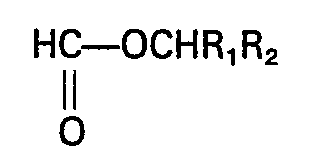
wherein R, and R2 may be the same or different and represent a hydrogen atom or an alkyl group and the groups R, and R2 together contain not more than 5 carbon atoms.
wherein R, and R2 may be the same or different and represent a hydrogen atom or an alkyl group and the groups R, and R2 together contain not more than 5 carbon atoms.
20. A coating composition according to claim 1, characterized in that the ester is
methyl formiate, ethyl formiate or isopropyl formiate.
21. A coating composition according to claim 1, characterized in that the ester is
an ester of formic acid and a bi- or polyvalent hydroxy compound having 2-8 carbon
atoms.
22. A coating composition according to claim 1, characterized in that the ester has
a solubility of 0,2-50 g in 100 g of water having a temperature of 20°C.
23. A coating composition according to claim 1, characterized in that the ester has
a solubility of 0,5-35 g in 100 g of water having a temperature of 20°C.
24. A coating composition according to claim 1, characterized in that the ester is
present in an amount such that 0,3-2 equivalents of formiate are present per equivalent
of nitrogen of the amino group-containing curing agent.
25. A coating composition according to claim 1, characterized in that water is present
in an amount of at least 15% by weight.
26. A coating composition according to claim 1, characterized in that water is present
in an amount of at least 25% by weight.
27. A coating composition according to claim 1, characterized in that water is present
in an amount of not more than 80% by weight.
28. A process of coating a substrate with an aqueous composition, characterized in
that use is made of the composition according to any one of the preceding claims 1-27.
Claims for the following Contracting State(s) : ES
1. A process of coating a substrate by applying an aqueous coating composition based
on an organic compound and a curing agent for it onto the substrate and curing the
coating layer at ambient or elevated temperature, characterized in that the organic
compound is a compound having at least 2 acetoacetate groups and the curing agent
is a polyamino amide having an amine number of 60-1000 built up from a mono- and/or
dicarboxylic acid having 2-40 carbon atoms and a polyamine having 2-6 primary amino
groups and 2-20 carbon atoms, and the coating composition further comprises a nitroalkane
having 1-6 carbon atoms, an organic compound occurring in at least 2 tautomeric forms,
and in one of the tautomeric forms a labile hydrogen atom is linked to a carbon atom
and which compound contains at least one carbonyl group or sulphonyl group, and/or
a formic acid ester having a solubility of at least 0,2 g in 100 g of water having
a temperature of 20°C, with the exception of tert.butyl formiate.
2. A process according to claim 1, characterized in that the compound containing acetoacetate
groups is an addition polymer containing acetoacetate groups.
3. A process according to claim 1, characterized in that the polyamino amide is built
up from a saturated aliphatic monocarboxylic acid having 1-24 carbon atoms.
4. A process according to claim 1, characterized in that the polyamino amide is built
up from a dicarboxylic acid having 8-36 carbon atoms.
5. A process according to claim 1, characterized in that the polyamino amide is built
up from a polyamine having 2-3 primary and 0-4 secondary amino groups.
6. A process according to claim 1, characterized in that the polyamino amide is built
up from a polyamine of the formula

wherein the group R, and the n groups R2 may be the same or different and represent an alkylene group having 2-6 carbon atoms and n is a number from 1-6.
wherein the group R, and the n groups R2 may be the same or different and represent an alkylene group having 2-6 carbon atoms and n is a number from 1-6.
7. A process according to claim 1, characterized in that the polyamino amide is built
up from an aliphatic, cycloaliphatic or aromatic amino compound having 2 to 3 exclusively
primary amino groups.
8. A process according to claim 1, characterized in that the polyamino amide has an
amine number of 80-750.
9. A process according to claim 1, characterized in that the polyamino amide has an
amine number of 200-600.
10. A process according to claim 1, characterized in that the polyamino amide is present
as mixture of the polyamino amide and an amino compound in an amount of at least 3
equivalent %.
11. A process according to claim 10, characterized in that the polyamino amide is
present in the unblocked form and the amino compound in the blocked form.
12. A process according to claim 1, characterized in that the compound having at least
2α,β-ethylenically unsaturated carboxylate groups, the polyamino amide and the amino
compound, if any, are present in an amount such that the ratio of the number of equivalents
of ethylenically unsaturated double bonds of the compound having carboxylate groups
to the number of equivalents of amine hydrogen is in the range of 0,3 to 3,0.
13. A process according to claim 12, characterized in that the ratio is in the range
of 1/2 to 2.
14. A process according to claim 1, characterized in that the nitroalkane has 1-4
carbon atoms.
15. A process according to claim 14, characterized in that the nitroalkane is nitroethane
or nitropropane.
16. A process according to claim 1, characterized in that the organic compound which
occurs in at least 2 tautomeric forms is 2,4-pentanedione, methyl acetoacetate or
ethyl acetoacetate or methyl cyanoacetate.
17. A process according to claim 1, characterized in that the ester is an ester of
formic acid and a monovalent alcohol having 1-6 carbon atoms.
18. A process according to claim 1, characterized in that the ester is an ester of
formic acid and a monovalent alcohol having 1-5 carbon atoms.
19. A process according to claim 1 characterized in that the ester is a formic acid
ester of the general formula
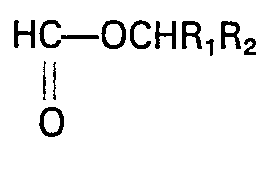
wherein R, and R2 may be the same or different and represent a hydrogen atom or an alkyl group and the groups R, and R2 together contain not more than 5 carbon atoms.
wherein R, and R2 may be the same or different and represent a hydrogen atom or an alkyl group and the groups R, and R2 together contain not more than 5 carbon atoms.
20. A process according to claim 1, characterized in that the ester is methyl formiate,
ethyl formiate or isopropyl formiate.
21. A process according to claim 1, characterized in that the ester is an ester of
formic acid and a bi- or polyvalent hydroxy compound having 2-8 carbon atoms.
22. A process according to claim 1, characterized in that the ester has a solubility
of 0,2-50 g in 100 g of water having a temperature of 20°C.
23. A process according to claim 1, characterized in that the ester has a solubility
of 0,5-35 g in 100 g of water having a temperature of 20°C.
24. A process according to claim 1, characterized in that the ester is present in
an amount such that 0,3-2 equivalents of formiate are present per equivalent of nitrogen
of the amino group-containing curing agent.
25. A process according to claim 1, characterized in that water is present in an amount
of at least 15% by weight.
26. A process according to claim 1, characterized in that water is present in an amount
of at least 25% by weight.
27. A process according to claim 1, characterized in that water is present in an amount
of not more than 80% by weight.
Patentansprüche für folgende(n) Vertragsstaat(en) : AT BE CH DE FR GB IT LI LU NL
SE
1. Wässriges Beschichtungsmittel auf Basis einer organischen Verbindung und eines
Härters für diese, dadurch gekennzeichnet, dass die organische Verbindung eine solche
mit mindestens 2 Acetoacetatgruppen und der Härter ein Polyaminoamid mit einer Aminzahl
von 60-1000 ist, aufgebaut aus einer Mono- undloder Dicarbonsäure mit 2-40 Kohlenstoffatomen
und einem Polyamin mit 2-6 primären Aminogruppen und 2-20 Kohlenstoffatomen, und wobei
das Beschichtungsmittel ausserdem ein Nitroalkan mit 1-6 Kohlenstoffatomen, eine organische
Verbindung, die in mindestens 2 tautomeren Formen auftritt und bei der in einer der
tautomeren Formen ein labiles Wasserstoffatom mit einem Kohlenstoffatom verbunden
ist, und wobei die Verbindung mindestens eine Carbonylgruppe oder Sulfonylgruppe enthält,
undloder einen Ameisensäureester mit einer Löslichkeit von mindestens 0,2 g in 100
g Wasser von 20°C, ausgenommen tert.Butylformat enthält.
2. Beschichtungsmittel nach Anspruch 1, dadurch gekennzeichnet, dass die Acetoacetatgruppen
enthaltende Verbindung ein Additionspolymer ist, das Acetoacetatgruppen enthält.
3. Beschichtungsmittel nach Anspruch 1, dadurch gekennzeichnet, dass das Polyaminoamid
aus einer gesättigten aliphatischen Monocarbonsäure mit 1-24 Kohlenstoffatomen aufgebaut
ist.
4. Beschichtungsmittel nach Anspruch 1, dadurch gekennzeichnet, dass das Polyaminoamid
aus einer Dicarbonsäure mit 8-36 Kohlenstoffatomen aufgebaut ist.
5. Beschichtungsmittel nach Anspruch 1, dadurch gekennzeichnet, dass das Polyaminoamid
aus einem Polyamin mit 2-3 primären und 0-4 sekundären Aminogruppen aufgebaut ist.
6. Beschichtungsmittel nach Anspruch 1, dadurch gekennzeichnet, dass das Polyaminoamid
aus einem Polyamin der Formel

aufgebaut ist, worin die Gruppe R, und die n Gruppen R2 gleich oder verschieden sind und eine Alkylengruppe mit 2-6 Kohlenstoffatomen bedeuten und n eine Zahl von 1-6 ist.
aufgebaut ist, worin die Gruppe R, und die n Gruppen R2 gleich oder verschieden sind und eine Alkylengruppe mit 2-6 Kohlenstoffatomen bedeuten und n eine Zahl von 1-6 ist.
7. Beschichtungsmittel nach Anspruch 1, dadurch gekennzeichnet, dass das Polyaminoamid
aus einer aliphatischen, cycloaliphatischen oder aromatischen Aminoverbindung mit
2 oder 3 ausschliesslich primären Aminogruppen aufgebaut ist.
8. Beschichtungsmittel nach Anspruch 1, dadurch gekennzeichnet, dass das Polyaminoamid
eine Aminzahl von 80-750 hat.
9. Beschichtungsmittel nach Anspruch 1, dadurch gekennzeichnet, dass das Polyaminoamid
eine Anzahl von 200-600 hat.
10. Beschichtungsmittel nach Anspruch 1, dadurch gekennzeichnet, dass das Polyaminoamid
als Mischung des Polyaminoamides und einer Aminoverbindung in einer Menge von mindestens
3 Aequivalentprozent vorliegt.
11. Beschichtungsmittel nach Anspruch 10, dadurch gekennzeichnet, dass das Polyaminoamid
in nichtblockierter und die Aminoverbindung in blockierter Form vorliegt.
12. Beschichtungsmittel nach Anspruch 1, dadurch gekennzeichnet, dass die Verbindung
mindestens zwei a,ß-ethylenisch ungesättigte Carboxylatgruppen hat, das Polyaminoamid
und die gegebenenfalls vorhandene Aminoverbindung in solcher Menge vorliegen, dass
das Verhältnis der Anzahl Aequivalente an ethylenisch ungesättigten Doppelbindungen
der Carboxylatgruppen enthaltenden Verbindung zur Anzahl Aequivalente an Aminwasserstoff
im Bereich von 0,3 bis 3,0 liegt.
13. Beschichtungsmittel nach Anspruch 12, dadurch gekennzeichnet, dass das Verhältnis
im Bereich von 1/2 bis 2 liegt.
14. Beschichtungsmittel nach Anspruch 1, dadurch gekennzeichnet, dass das Nitroalkan
1-4 Kohlenstoffatome hat.
15. Beschichtungsmittel nach Anspruch 14, dadurch gekennzeichnet, dass das Nitroalkan
Nitroethan oder Nitropropan ist.
16. Beschichtungsmittel nach Anspruch 1, dadurch gekennzeichnet, dass die organische
Verbindung, die in mindestens zwei tautomeren Formen auftritt, 2,4-Pentandion, Methylacetoacetat
oder Ethylacetoacetat oder Methylcyanoacetat ist.
17. Beschichtungsmittel nach Anspruch 1, dadurch gekennzeichnet, dass der Ester ein
Ester der Ameisensäure mit einem einwertigen Alkohol ist, der 1-6 Kohlenstoffatome
hat.
18. Beschichtungsmittel nach Anspruch 1, dadurch gekennzeichnet, dass der Ester ein
Ester der Ameisensäure mit einem einwertigen Alkohol ist, der 1-5 Kohlenstoffatome
hat.
19. Bischichtungsmittel nach Anspruch 1, dadurch gekennzeichnet, dass der Ester ein
Ameisensäureester der allgemeinen Formel
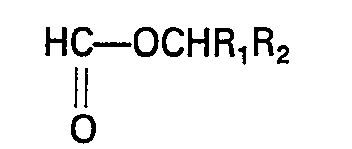
ist, worin R, und R2 gleich oder verschieden sind und ein Wasserstoffatom oder eine Alkylgruppe bedeuten, wobei die Gruppen Ri und R2 zusammen nicht mehr als 5 Kohlenstoffatome enthalten.
ist, worin R, und R2 gleich oder verschieden sind und ein Wasserstoffatom oder eine Alkylgruppe bedeuten, wobei die Gruppen Ri und R2 zusammen nicht mehr als 5 Kohlenstoffatome enthalten.
20. Beschichtungsmittel nach Anspruch 1, dadurch gekennzeichnet, dass der Ester Methylformiat,
Ethylformiat oder Isopropylformiat ist.
21. Beschichtungsmittel nach Anspruch 1, dadurch gekennzeichnet, dass der Ester ein
Ester der Ameisensäure mit einer bi- oder polyvalenten Hydroxyverbindung ist, die
2-8 Kohlenstoffatome enthält.
22. Beschichtungsmittel nach Anspruch 1, dadurch gekennzeichnet, dass der Ester eine
löslichkeit von 0,2 bis 50 g in 100 g Wasser mit einer Temperatur von 20°C hat.
23. Beschichtungsmittel nach Anspruch 1, dadurch gekennzeichnet, dass der Ester eine
Löslichkeit von 0,5 bis 35 g in 100 g Wasser mit einer Temperatur von 20°C hat.
24. Beschichtungsmittel nach Anspruch 1, dadurch gekennzeichnet, dass der Ester in
einer solchen Menge vorhanden ist, dass 0,3 bis 2 Aequivalente Formiat pro Aequivalent
Stickstoff des Aminogruppen enthaltenden Härters vorhanden sind.
25. Beschichtungsmittel nach Anspruch 1, dadurch gekennzeichnet, dass Wasser in einer
Menge von mindestens 15 Gew.% vorhanden ist.
26. Beschichtungsmittel nach Anspruch 1, dadurch gekennzeichnet, dass Wasser in einer
Menge von mindestens 25 Gew.% vorhanden ist.
27. Beschichtungsmittel nach Anspruch 1, dadurch gekennzeichnet, dass Wasser in einer
Menge von nicht mehr als 80 Gew.% vorhanden ist.
28. Verfahren zum Beschichten eines Substrates mit einem wässrigen Mittel, dadurch
gekennzeichnet, dass das Mittel nach einem der vorangehenden Ansprüche 1-27 verwendet
wird.
Patentansprüche für folgende(n) Vertragsstaat(en) : ES
1. Verfahren zum Beschichten eines Substrates durch Auftragen eines wässrigen Beschichtungsmittels
auf Basis einer organischen Verbindung und eines Härters für diese auf ein Substrat
und Härten der Beschichtung bei Umgebungstemperatur oder erhöhter Temperatur, dadurch
gekennzeichnet, dass die organische Verbindung eine solche mit mindestens zwei Acetoacetatgruppen
und der Härter ein Polyaminoamid mit einer Aminzahl von 60-1000 ist, aufgebaut aus
einer Mono- undloder Dicarbonsäure mit 2-40 Kohlenstoffatomen und einem Polyamin mit
2-6 primären Aminogruppen und 2-20 Kohlenstoffatomen, und wobei das Beschichtungsmittel
ausserdem ein Nitroalkan mit 1-6 Kohlenstoffatomen, eine organische Verbindung, die
in mindestens zwei tautomeren Formen auftritt und bei der in einer der tautomeren
Formen ein labiles Wasserstoffatom mit einem Kohlenstoffatom verbunden ist, und wobei
die Verbindung mindestens eine Carbonylgruppe oder Sulfonylgruppe enthält, undloder
einen Ameisensäureester mit einer Löslichkeit von mindestens 0,2 g in 100 g Wasser
von 20°C, ausgenommen tert.Butylformiat enthält.
2. Verfahren nach Anspruch 1, dadurch gekennzeichnet, dass die Acetoacetatgruppen
enthaltende Verbindung ein Additionspolymer ist, das Acetoacetatgruppen enthält.
3. Verfahren nach Anspruch 1, dadurch gekennzeichnet, dass das Polyaminoamid aus einer
gesättigten aliphatischen Monocarbonsäure mit 1-24 Kohlenstoffatomen aufgebaut ist.
4. Verfahren nach Anspruch 1, dadurch gekennzeichnet, dass das Polyaminoamid aus einer
Dicarbonsäure mit 8-36 Kohlenstoffatomen aufgebaut ist.
5. Verfahren nach Anspruch 1, dadurch gekennzeichnet, dass das Polyaminoamid aus einem
Polyamin mit 2-3 primären und 0-4 sekundären Aminogruppen aufgebaut ist.
6. Verfahren nach Anspruch 1, dadurch gekennzeichnet, dass das Polyaminoamid aus einem
Polyamin der Formel

aufgebaut ist, worin die Gruppe R, und die n Gruppen R2 gleich oder verschieden sind und eine Alkylengruppe mit 2-6 Kohlenstoffatomen bedeuten und n eine Zahl von 1-6 ist.
aufgebaut ist, worin die Gruppe R, und die n Gruppen R2 gleich oder verschieden sind und eine Alkylengruppe mit 2-6 Kohlenstoffatomen bedeuten und n eine Zahl von 1-6 ist.
7. Verfahren nach Anspruch 1, dadurch gekennzeichnet, dass das Polyaminoamid aus einer
aliphatischen, cycloaliphatischen oder aromatischen Aminoverbindung mit 2 oder 3 ausschliesslich
primären Aminogruppen aufgebaut ist.
8. Verfahren nach Anspruch 1, dadurch gekennzeichnet, dass das Polyaminoamid eine
Aminzahl von 80-750 hat.
9. Verfahren nach Anspruch 1, dadurch gekennzeichnet, dass das Polyaminoamid eine
Aminzahl von 200-600 hat.
10. Verfahren nach Anspruch 1, dadurch gekennzeichnet, dass das Polyaminoamid als
Mischung des Polyaminoamides und einer Aminoverbindung in einer Menge von mindestens
3 Aequivalentprozent vorliegt.
11. Verfahren nach Anspruch 10, dadurch gekennzeichnet, dass das Polyaminoamid in
nichtblockierter und die Aminoverbindung in blockierter Form vorliegt.
12. Verfahren nach Anspruch 1, dadurch gekennzeichnet, dass die Verbindung mindestens
zwei a,ß- ethylenisch ungesättigte Carboxylatgruppen hat, das Polyaminoamid und die
gegebenenfalls vorhandene Aminoverbindung in solcher Menge vorliegen, dass das Verhältnis
der Anzahl Aequivalente an ethylenisch ungesättigten Doppelbindungen der Carboxylatgruppen
enthaltenden Verbindung zur Anzahl Aequivalente an Aminwasserstoff im Bereich von
0,3 bis 3,0 liegt.
13. Verfahren nach Anspruch 12, dadurch gekennzeichnet, dass das Verhältnis im Bereich
von 1/2 bis 2 liegt.
14. Verfahren nach Anspruch 1, dadurch gekennzeichnet, dass das Nitroalkan 1-4 Kohlenstoffatome
hat.
15. Verfahren nach Anspruch 14, dadurch gekennzeichnet, dass das Nitroalkan Nitroethan
oder Nitropropan ist.
16. Verfahren nach Anspruch 1, dadurch gekennzeichnet, dass die organische Verbindung,
die in mindestens zwei tautomeren Formen auftritt, 2,4-Pentandion, Methylacetoacetat
oder Ethylacetoacetat oder Methylcyanoacetat ist.
17. Verfahren nach Anspruch 1, dadurch gekennzeichnet, dass der Ester ein Ester der
Ameisensäure mit einem einwertigen Alkohol ist, der 1-6 Kohlenstoffatome hat.
18. Verfahren nach Anspruch 1, dadurch gekennzeichnet, dass der Ester ein Ester der
Ameisensäure mit einem einwertigen Alkohol ist, der 1-5 Kohlenstoffatome hat.
19. Verfahren nach Anspruch 1, dadurch gekennzeichnet, dass der Ester ein Ameisensäureester
der allgemeinen Formel
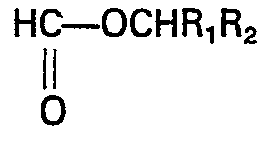
ist, worin R, und R2 gleich oder verschieden sind und ein Wasserstoffatom oder eine Alkylgruppe bedeuten, wobei die Gruppen R1 und R2 zusammen nicht mehr als 5 Kohlenstoffatome enthalten.
ist, worin R, und R2 gleich oder verschieden sind und ein Wasserstoffatom oder eine Alkylgruppe bedeuten, wobei die Gruppen R1 und R2 zusammen nicht mehr als 5 Kohlenstoffatome enthalten.
20. Verfahren nach Anspruch 1, dadurch gekennzeichnet, dass der Ester Methylformiat,
Ethylformiat oder Isopropylformiat ist.
21. Verfahren nach Anspruch 1, dadurch gekennzeichnet, dass der Ester ein Ester der
Ameisensäure mit einer bi- oder polyvalenten hydroxylverbindung ist, die 2-8 Kohlenstoffatome
enthält.
22. Verfahren nach Anspruch 1, dadurch gekennzeichnet, dass der Ester eine Löslichkeit
von 0,2 bis 50 g in 100 g Wasser mit einer Temperatur von 20°C hat.
23. Verfahren nach Anspruch 1, dadurch gekennzeichnet, dass der Ester eine Löslichkeit
von 0,5 bis 35 g in 100 g Wasser mit einer Temperatur von 20°C hat.
24. Verfahren nach Anspruch 1, dadurch gekennzeichnet, dass der Ester in einer solchen
Menge vorhanden ist, dass 0,3 bis 2 Aequivalente Formiat pro Aequivalent Stickstoff
des Aminogruppen enthaltenden Härters vorhanden sind.
25. Verfahren nach Anspruch 1, dadurch gekennzeichnet, dass Wasser in einer Menge
von mindestens 15 Gew.% vorhanden ist.
26. Verfahren nach Anspruch 1, dadurch gekennzeichnet, dass Wasser in einer Menge
von mindestens 25 Gew.% vorhanden ist.
27. Verfahren nach Anspruch 1, dadurch gekennzeichnet, dass Wasser in einer Menge
von nicht mehr als 80 Gew.% vorhanden ist.
Revendications pour l'(les) Etat(s) contractant(s) suivant(s) : AT BE CH DE FR GB
GR IT LI LU NL SE
1. Composition aqueuse de revêtement, à base d'un composé organique et d'un agent
de durcissement pour ce dernier, caractérisée en ce que le composé organique est un
composé comportant au moins 2 groupes acétoacétate, et l'agent de durcissement est
un polyamino-amide ayant un indice d'amine de 60-1000, constitué à partir d'un acide
mono- et/ou dicarboxylique ayant de 2 à 40 atomes de carbone et d'une polyamine ayant
de 2 à 6 groupes amino primaires et de 2 à 20 atomes de carbone, et la composition
de revêtement comprend en outre un nitroalcane ayant de 1 à 6 atomes de carbone, un
composé organique apparaissant sous au moins 2 formes tautomères, et, dans l'une des
formes tautomères, un atome d'hydrogène labile est lié à un atome de carbone, ledit
composé contenant au moins un groupe carbonyle ou sulfonyle et/ou un ester de l'acide
formique ayant une solubilité d'au moins 0,2 g dans 100 g d'eau à une température
de 20°C, à l'exception du formiate de tertbutyle.
2. Composition de revêtement selon la revendication 1, caractérisée en ce que le composé
contenant des groupes acétoacétate est un polymère de polyaddition contenant des groupes
acétoacétate.
3. Composition de revêtement selon la revendication 1, caractérisée en ce que le polyamino-amide
est constitué à partir d'une acide monocarboxylique aliphatique saturé ayant de 1
à 24 atomes de carbone.
4. Composition de revêtement selon la revendication 1, caractérisée en ce que le polyamino-amide
est constitué à partir d'un acide dicarboxylique ayant de 8 à 36 atomes de carbone.
5. Composition de revêtement selon la revendication 1, caractérisée en ce que le polyamino-amide
est constitué à partir d'une polyamine ayant 2-3 groupes amino primaires et 0-4 groupes
amino secondaires.
6. Composition de revêtement selon la revendication 1, caractérisée en ce que le polyamino-amide
les constitué à partir d'une polyamine de formule

dans laquelle de groupe R, et les n groupes R2 peuvent être identiques ou différents et représentent chacun un groupe alkylène ayant de 2 à 6 atomes de carbone, et n est un nombre de 1 à 6.
dans laquelle de groupe R, et les n groupes R2 peuvent être identiques ou différents et représentent chacun un groupe alkylène ayant de 2 à 6 atomes de carbone, et n est un nombre de 1 à 6.
7. Composition de revêtement selon la revendication 1, caractérisée en ce que le polyamino-amide
est constitué à partir d'un composé amino aliphatique, cycloaliphatique ou aromatique,
ayant 2 ou 3 groupes amino exclusivement primaires.
8. Composition de revêtement selon la revendication 1, caractérisée en ce que le polyamino-amide
a un indice d'amine de 80 à 750.
9. Composition de revêtement selon la revendication 1, caractérisée en ce que le polyamino-amide
a un indice d'amine de 200 à 600.
10. Composition de revêtement selon la revendication 1, caractérisée en ce que le
polyamino-amide est présent sous forme d'un mélange du polyamino-amide et d'un composé
amino en une quantité d'au moins 3% équivalents.
11. Composition de revêtement selon la revendication 10, caractérisée en ce que le
polyamino-amide est présent sous forme non bloquée et le composé amino sous forme
bloquée.
12. Composition de revêtement selon la revendication 1, caractérisée en ce que le
composé ayant au moins 2 groupes carboxylate à insaturation α,β-éthylénique, le polyamino-amide
et l'éventuel composé amino sont présents en des quantités telles que la proportion
entre d'une part le nombre d'équivalents de doubles liaisons à insaturation éthylénique
du composé comportant des groupes carboxylate, et d'autre part le nombre d'équivalents
d'hydrogène d'amine, soit comprise entre 0,3 et 3,0.
13. Composition de revêtement selon la revendication 12, caractérisée en ce que cette
proportion est comprise entre 1/2 et 2.
14. Composition de revêtement selon la revendication 1, caractérisée en ce que le
nitroalcane possède 1 à 4 atomes de carbone.
15. Composition de revêtement selon la revendication 14, caractérisée en ce que le
nitroalcane est le nitroéthane ou le nitropropane.
16. Composition de revêtement selon la revendication 1, caractérisée en ce que le
composé organique, qui apparaît sous ou moins 2 formes tautomères, est la 2,4-pentanedione,
l'acétoacétate de méthyle ou l'acétoacétate d'éthyle, ou encore le cyanoacétate de
méthyle.
17. Composition de revêtement selon la revendication 1, caractérisée en ce que l'ester
est un ester de l'acide formique et d'un alcool monovalent ayant de 1 à 6 atomes de
carbone.
18. Composition de revêtement selon la revendication 1, caractérisée en ce que l'ester
est un ester de l'acide formique et d'un alcool monovalent ayant de 1 à 5 atomes de
carbone.
19. Composition de revêtement selon la revendication 1, caractérisée en ce que l'ester
est un ester de l'acide formique, de formule générale
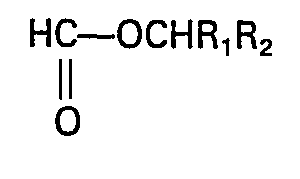
dans laquelle R, est R2 peuvent être identiques ou différents et représentent chacun un atome d'hydrogène ou un groupe alkyle, et les groupes R, et R2, pris ensemble, contiennent au plus 5 atomes de carbone.
dans laquelle R, est R2 peuvent être identiques ou différents et représentent chacun un atome d'hydrogène ou un groupe alkyle, et les groupes R, et R2, pris ensemble, contiennent au plus 5 atomes de carbone.
20. Composition de revêtement selon la revendication 1, caractérisée en ce que l'ester
est le formiate de méthyle, le formiate d'éthyle ou le formiate d'isopropyle.
21. Composition de revêtement selon la revendication 1, caractérisée en ce que l'ester
est un ester de l'acide formique et d'un composé hydroxylé bi- ou polyvalent ayant
de 2 à 8 atomes de carbone.
22. Composition de revêtement selon la revendication 1, caractérisée en ce que l'ester
a une solubilité de 0,2 à 50 g dans 100 g d'eau à 20°C.
23. Composition de revêtement selon la revendication 1, caractérisée en ce que l'ester
a une solubilité de 0,5 à 35 g dans 100 g d'eau à 20°C.
24. Composition de revêtement selon la revendication 1, caractérisée en ce que l'ester
est présent en une quantité telle que l'on ait 0,3 à 2 équivalents de formiate par
équivalent d'azote de l'agent de durcissement contenant des groupes amino.
25. Composition de revêtement selon la revendication 1, caractérisée en ce que l'eau
est présente en une quantité d'au moins 15% en poids.
26. Composition de revêtement selon la revendication 1, caractérisée en ce que l'eau
est présente en une quantité d'au moins 25% en poids.
27. Compositions de revêtement selon la revendication 1, caractérisée en ce que l'eau
est présente en une quantité non supérieure à 80% en poids.
28. Procédé de revêtement d'un substrat par une composition aqueuse, caractérisé en
ce qu'on utilise la composition selon l'une quelconque des revendications précédentes
1 à 27.
Revendications pour l'(les) Etat(s) contractant(s) suivant(s) : ES
1. Procédé de revêtement d'un substrat, par application d'une composition aqueuse
de revêtement, à base d'un composé organique et d'un agent de durcissement pour ce
dernier sur le substrat et durcissement de la courbe de revêtement à température ambiante
ou élevée, caractérisé en ce que le composé organique est un composé comportant au
moins 2 groupes acétoacétate, et l'agent de durcissement est un polyamino-amide ayant
un indice d'amine de 60-1000, constitué à partir d'un acide mono- et/ou dicarboxylique
ayant de 2 à 40 atomes de carbone et d'une polyamine ayant de 2 à 6 groupes amino
primaires et de 2 à 20 atomes de carbone, et la composition de revêtement comprend
en outre un nitroalcane ayant de 1 à 6 atomes de carbone, un composé organique apparaissant
sous au moins 2 formes tautomères, et, dans l'une des formes tautomères, un atome
d'hydrogène labile est lié à un atome de carbone, le composé contenant au moins un
groupe carbonyle ou sulfonyle et/ou un ester de l'acide formique ayant une solubilité
d'au moins 0,2 g dans 100 g d'eau à une température de 20°C, à l'exception du formiate
de tert-butyle.
2. Procédé selon la revendication 1, caractérisé en ce que le composé contenant des
groupes acétoacétate est un polymère de polyaddition contenant des groupes acétoacétate.
3. Procédé selon la revendication 1, caractérisé en ce que le polyamino-amide est
constitué à partir d'un acide monocarboxylique aliphatique saturé ayant de 1 à 24
atomes de carbone.
4. Procédé selon la revendication 1, caractérisé en ce que le polyamino-amide est
constitué à partir d'un acide dicarboxylique ayant de 8 à 36 atomes de carbone.
5. Procédé selon la revendication 1, caractérisé en ce que le polyamino-amide est
constitué à partir d'une polyamine ayant 2-3 groupes amino primaires et 0-4 groupes
amino secondaires.
6. Procédé selon la revendication 1, caractérisé en ce que le polyamino-amide est
constitué à partir d'une polyamine de formule

dans laquelle le groupe R, et les n groupes R2 peuvent être identiques ou différents et représentent chacun un groupe alkylène ayant de 2 à 6 atomes de carbone, et n est un nombre de 1 à 6.
dans laquelle le groupe R, et les n groupes R2 peuvent être identiques ou différents et représentent chacun un groupe alkylène ayant de 2 à 6 atomes de carbone, et n est un nombre de 1 à 6.
7. Procédé selon la revendication 1, caractérisé en ce que le polyamino-amide est
constitué à partir d'un composé amino aliphatique, cycloaliphatique ou aromatique,
ayant 2 ou 3 groupes amino exclusivement primaires.
8. Procédé selon la revendication 1, caractérisé en ce que le polyamino-amide a un
indice d'amine de 80 à 750.
9. Procédé selon la revendication 1, caractérisé en ce que le polyamino-amide a un
indice d'amine de 200 à 600.
10. Procédé selon la revendication 1, caractérisé en ce que le polyamino-amide est
présent sous forme d'un mélange du polyamino-amide et d'un composé amino en une quantité
d'au moins 3% équivalents.
11. Procédé selon la revendication 10, caractérisé en ce que le polyamino-amide est
présent sous forme non bloquée et le composé amino sous forme bloquée.
12. Procédé selon la revendication 1, caractérisé en ce que le composé ayant au moins
2 groupes carboxylate à insaturation a,(3-éthylénique, le polyamino-amide et l'éventuel
composé amino sont présents en des quantités telles que la proportion entre d'une
part le nombre d'équivalents de doubles liaisons à insaturation éthylénique du composé
comportant des groupes carboxylate, et d'autre part le nombre d'équivalents d'hydrogène
d'amine, soit comprise entre 0,3 et 3,0.
13. Procédé selon la revendication 12, caractérisé en ce que cette proportion est
comprise entre 1/2 et 2.
14. Procédé selon la revendication 1, caractérisé en ce que le nitroalcane possède
1 à 4 atomes de carbone.
15. Procédé selon la revendication 14, caractérisé en ce que le nitroalcane est le
nitroéthane ou le nitropropane.
16. Procédé selon la revendication 1, caractérisé en ce que le composé organique,
qui apparaît sous au moins 2 formes tautomères, est la 2,4-pentanedione, l'acétoacétate
de méthyle ou l'acétoacétate d'éthyle, ou encore le cyanoacétate de méthyle.
17. Procédé selon la revendication 1, caractérisé en ce que l'ester est un ester de
l'acide formique et d'un alcool monovalent ayant de 1 à 6 atomes de carbone.
18. Procédé selon la revendication 1, caractérisé en ce que l'ester est un ester de
l'acide formique et d'un alcool monovalent ayant de 1 à 5 atomes de carbone.
19. Procédé selon la revendication 1, caractérisé en ce que l'ester est un ester de
l'acide formique, de formule générale
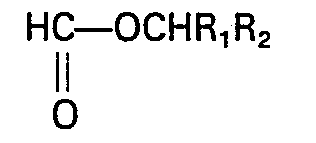
dans laquelle R, est R2 peuvent être identiques ou différents et représentent chacun un atome d'hydrogène ou un groupe alkyle, et les groupes R, et R2, pris ensemble, contiennent au plus 5 atomes de carbone.
dans laquelle R, est R2 peuvent être identiques ou différents et représentent chacun un atome d'hydrogène ou un groupe alkyle, et les groupes R, et R2, pris ensemble, contiennent au plus 5 atomes de carbone.
20. Procédé selon la revendication 1, caractérisé en ce que l'ester est le formiate
de méthyle, le formiate d'éthyle ou le formiate d'isopropyle.
21. Procédé selon la revendication 1, caractérisé en ce que l'ester est un ester de
l'acide formique et d'un composé hydroxylé bi- ou polyvalent ayant de 2 à 8 atomes
de carbone.
22. Procédé selon la revendication 1, caractérisé en ce que l'ester a une solubilité
de 0,2 à 50 g dans 100 g d'eau à 20°C.
23. Procédé selon la revendication 1, caractérisé en ce que l'ester a une solubilité
de 0,5 à 35 g dans 100 g d'eau à 20°C.
24. Procédé selon la revendication 1, caractérisé en ce que l'ester est présent en
une quantité telle que l'on ait 0,3 à 2 équivalents de formiate par équivalent d'azote
de l'agent de durcissement contenant des groupes amino.
25. Procédé selon la revendication 1, caractérisé en ce que l'eau est présente en
une quantité d'au moins 15% en poids.
26. Procédé selon la revendication 1, caractérisé en ce que l'eau est présente en
une quantité d'au moins 25% en poids.
27. Procédé selon la revendication 1, caractérisé en ce que l'eau est présente en
une quantité non supérieure à 80% en poids.