|
(11) | EP 0 272 097 B1 |

| (12) | EUROPEAN PATENT SPECIFICATION |
|
|
| (54) |
Nasal formulations and a process for preparation thereof Nasale Formulierungen und Verfahren zu deren Herstellung Formulations nasales et leur procédé de préparation |
|
|
|||||||||||||||||||||||||||||||
| Note: Within nine months from the publication of the mention of the grant of the European patent, any person may give notice to the European Patent Office of opposition to the European patent granted. Notice of opposition shall be filed in a written reasoned statement. It shall not be deemed to have been filed until the opposition fee has been paid. (Art. 99(1) European Patent Convention). |
[0001] The present invention relates to novel pharmaceutical preparations adapted for intranasal administration and to a process for preparing such preparations.
[0002] While non-invasive medication, such as oral or rectal administration of a drug is undoubtedly most convenient to the patient, parenteral drug delivery is usually regarded as being the most effective. In particular, drugs which are inactivated in or poorly absorbed by the gastrointestinal tract and drugs which are subject to extensive first pass hepatic metabolism following oral administration are usually administered parenterally.
[0003] There are obvious inconveniences associated with parenteral drug administration, such as the need for sterile delivery devices, pain and irritation caused by reiterated injections and the potential risk of infection. Therefore, alternative means of drug delivery, equalling parenteral administration in the sense that first pass metabolism is circumvented, have been sought. One such potentially promising alternative is drug administration via the nasal route. However, just as is the case with other methods for non-invasive medication, the bioavailability of a drug after intranasal administration is largely unpredictable, depending inter alia on the chemical nature of the drug.
[0004] Thus it is known that progesterone and propranolol are absorbed from the nasal cavity in a manner providing blood levels almost equal to intraveneous administration.
[0005] Other examples of intranasal formulations of pharmaceutically active agents with molecular weights up to about 1 kD are known, for example compositions containing ergopeptide alkaloids dissolved in aqueous ethanol administered as aerosols (Swiss Patent No. 636,011), salts of pharmaceutically active amines with fatty acids (Canadian Patent No. 988,852) and catecholamine suspended in a fatty acid (or ester) emulsified with polyoxyethylene (European Patent Publication No. 0 160 501 A).
[0006] Over the last decades a variety of (mainly synthetic) polypetide drugs have been developed. In general, polypeptides have been administered parenterally due to incomplete absorption from and digestive instability in the alimentary canal. This is probably the reason why in particular studies of the nasal delivery of polypeptides have been intensified during recent years. It has been found that while some smaller polypeptides (up to about 10 amino acid residues) may be reasonably well absorbed intranasally from simple aqueous formulations, generally the nasal bioavailability of larger polypeptides becomes both incomplete arid variable, and increasingly so with increasing molecular weight (for review, see L. Illum: Archiv for Pharmaci og Chemi 94 (1987), 127-135).
[0007] With a view to overcoming the disadvantages encountered particularly with nasal delivery compositions containing larger polypeptides, the additional incorporation of a variety of biocompatible absorption promoting agents or so-called enhancers has been devised.
[0008] In this respect reference is made to European Patent Publication No. 0 111 841 A, disclosing the absorption enhancing effect of a bile acid and to U.S. Patent No. 4,476,116, using chelating agents such as EDTA.
[0009] Nasal formulations adapted to insulin delivery would naturally be highly preferred by the insulin dependent diabetic patient to the presently available preparations for parenteral administration provided that the insulin is absorbed to a reasonably effective and constant extent from the nasal cavity. A variety of absorption enhancing agents, mainly surfactants, have been devised for such formulations.
[0010] Ionic as well as non-ionic surfactant enhancers, such as bile acid salts and polyoxyethylene higher alcohol ethers are disclosed in British Patent No. 1,527,505 while the use of a specific polyoxyethylene higher alcohol ether, namely polyoxyethylene-9 lauryl ether is described in: R. Salzman et al., New England J. of Med. 312 (1985), 1078-1084. Other enhancers, for example salts of taurodihydrofusidic acid, are disclosed in U.S. Patent No. 4,548,922.
[0011] The chemical structure of enhancers known heretofore deviate considerably from those of known constituents of cellular membranes, including those of the nasal cavity. This feature could possibly explain their general proneness to cause nasal irritation or even permanent damage to the nasal membrane, particularly during chronic administration. On this background enhancers more akin to other physiologically occurring surfactants, such as phospholipids could be contemplated. However, according to the data disclosed in British Patent No. 1,527,605 (supra) the phospholipids in a commonly supplied long chain lecithin mixture have no detectable absorption promoting effect in insulin containing nasal formulations.
[0012] It has now surprisingly been found that medium chain length phosphatidylcholines and phosphatidylethanolamines substantially promote the intranasal absorption of pharmaceutically active compounds, in particular of polypeptides, without damaging or irritating the nasal mucosa. The intranasal absorption is further enhanced from formulations wherein a fatty oil, for example a vegetable oil, is admixed with the phospolipid.
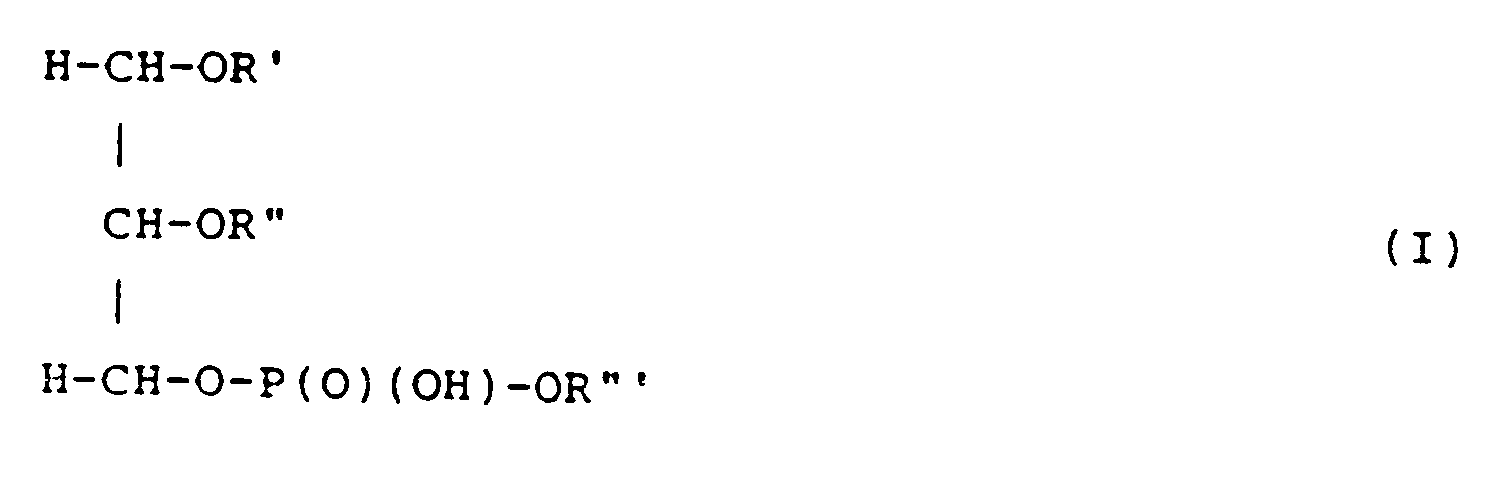
[0013] According to its first aspect the present invention provides a preparation for intranasal administration comprising a pharmaceuticaly active polypeptide and an absorption enhancing system comprising at least one phospholipid of the general formula I
wherein R' and R" are identical or different, each selected from the group consisting of hydrogen, alkyl, alkenyl, alkylcarbonyl, alkenylcarbonyl and alkadienyl-, alkatrienyl- or alkatetraenylcarbonyl containing up to a total of 14 carbon atoms, provided that both R' and R" are not hydrogen, and R"' represents a hydrophilic moiety selected from the group consisting of 2-(trimethylammonio)ethyl, 2-aminoethyl and 2,3-dihydroxypropyl, the content of phospholipid of formula I being at least 0,5 % (w/v); thus comprising phosphatidyl derivatives of choline (lecithins), ethanolamine and glycerol, respectively. Optionally, but preferably, the absorption enhancing system also comprises a fatty oil in admixture with the phospholipid(s).
[0014] According to a second aspect of the present invention there is provided a process for making a preparation for intranasal administration, which method comprises dispersing at least one phospholipid of the general formula I, optionally, but preferably admixed with a fatty oil, in a liquid or solid diluent together with the pharmaceutically active polypeptide either in solution or in a powdery state, which diluent may optionally comprise ancillary pH-buffering, preserving and osmotic pressure controlling agents.
[0015] A preferred subclass of compounds of formula I is compounds, wherein R' and R" are each alkylcarbonyl. A further preferred subclass of compounds of formula I is compounds, wherein R"' represents 2-(trimethylammonio)ethyl, such compounds being known as lecithins. A still further preference is for compounds of formula I, wherein R' and R" each represent alkylcarbonyl or alkyl with from about 4 carbon atoms, preferably not more than 12 carbon atoms. The most preferred subclass of compounds of formula I is compounds wherein R' and R" each represent nonylcarbonyl.
[0016] A preferred preparation of this invention is one containing a mixture of two phospholipids of formula I, preferably in proportions by weight of from 1:10 to 10:1, more preferred from 1:2 to 2:1. One of these two phospholipids may conveniently be a compound wherein R' and R" both are octanoyl, decanoyl or lauroyl. The other of these two phospholipids may conveniently be a compound wherein one of the two substituents R' and R" is hydrogen and the other of the two substituents R' and R" is octanoyl, decanoyl or lauroyl (dodecanoyl).
[0017] Examples of preferred compounds of formula I are:
dioctanoyl L-α-phosphatidylcholine,
dioctyl-O-L-α-phosphatidylcholine,
didecanoyl L-α-phosphatidylcholine,
didecyl-O-L-α-phosphatidylcholine,
decyl-O-L-α-lysophatidylcholine
dilauroyl L-α-phosphatidylcholine,
lauroyl L-α-lysophosphatidylcholine.
[0018] The preparation of a number of compounds of formula I has been described, e.g. by E.C. Robles and D. Van Den Berg: Biochim.Biophys.Acta 187 (1969), 520-526, H.K. Mangold and F. Paltauf (Eds.) in: Ether Lipids, Chapter 3, Acad.Press 1983. Other compounds of formula I can be prepared by analogous methods.
[0019] The fatty oil optionally incorporated into the absorption enhancing system of this invention is preferably a vegetable oil, more preferably soybean oil, peanut oil, coconut oil, maize oil, olive oil, sunflower oil, or mixtures thereof.
[0020] One group of preferred polypeptides is insulin and insulin derivatives, e.g. insulin modified by chemical or enzymatic methods or by recombinant DNA technology, or mixtures of such insulins, proinsulin and glucagon. Other preferred polypeptides are parathyroid hormone, parathyroid hormone antagonist, calcitonin, vasopressin, renin, prolactin, growth hormone, thyroid stimulating hormone, corticotropin, corticotropin-releasing factor, follicle stimulating hormone, luteinizing hormone, chorionic gonadotropin, atrial peptides, interferon, tissue plasminogen activator, gammaglobulins, Factor VII, Factor VIII, growth hormone releasing hormone, luteinizing hormone releasing hormone, somatostatin and cholecystokinins.
[0021] The preparation of this invention may be liquid, e.g. adapted for administration as a spray or a solid, e.g. a powder acceptable for snuffing. Liquid preparations, such as those based on aqueous formulations, will usually include ancillary agents, for example a pH-buffering system, preferably a buffer such as phosphate, citrate or acetate buffers, a preservative and an osmotic pressure controlling agent, e.g. glycerol or sodium chloride. Powder formulations may contain the pharmaceutically active agent and the absorption enhancing system in admixture with nasally acceptable powdery diluents or mixtures thereof, e.g. cellulose or derivatives thereof, for example cellulose ethers or sodium carboxymethylcellulose, starch, a long chain fatty acid or a salt thereof, e.g. aluminum stearate, an organic polymer, e.g. of an acrylic acid derivative or inorganic vehicles, such as talc or diatomaceous earth. Supplementary addition of water-absorbing polymers, for example polyethylene glycol or polyvinyl pyrrolidone may be desirable to improve adhesion of the powder formulation to the nasal mucosa.
[0022] Preferred liquid preparations are those in which the diluent is water. Such preparations may be prepared by dispersing the absorption enhancing system in the aqueous medium containing the pharmaceutically active agent and ancillary agents, the dispersion being conducted by any method usually employed for suspension or emulsification, e.g. ultrasonic treatment. Adjustment of the aqueous phase to neutrality (i.e. to pH in the range from about 6.5 to about 8) may be accomplished in any of the preparatory steps. Preferably, microemulsions are prepared in which the size of the dispersed particles or droplets is of the order of 10 nm, thereby facilitating their passage across the nasal mucosa. Such microemulsions may be sterilized by filtration. The content of phospholipid of formula I and of fatty oil in preferred formulations of the present invention is in the range of from 0.5 to 10%, preferably from 0.5 to 5% (w/v), and 0.01 - 50%, preferably from 0.1 to 10% (w/v), respectively, of the preparation. Due to the fact that proteases and peptidases are associated with the nasal mucosa (see R.E. Stratford and V.H.L. Lee: Int.Journ.Pharmaceutics 30 (1986), 73-82) it may be desirable to incorporate biocompatible protease and peptidase inhibitors into polypeptide containing formulations.
[0023] The concentration of the pharmaceutically active polypeptide in the preparations of this invention will of course depend on the particular polypeptide chosen, on its efficacy, on a comparison of its bioavailability by nasal administration and by other routes of administration, for example parenteral injection, and on the desired frequency of administration combined with the desired single dosage of the formulation. Such pharmacological data can routinely be obtained by the skilled artisan from animal experiments, for example in terms of index values, such as those estimated for insulin preparations in the examples hereinafter provided.
[0024] Taking insulin as an example, its concentration in the preparation of this invention may be in the range of from about 5 to 1000 international units (I.U.) per ml, preferably from 50 to 500 I.U. per ml.
[0025] The insulin preparations of this invention preferably contain bovine, porcine or human insulin.
[0026] An exemplary mode of preparing the insulin preparations of this invention wherein the diluent is water comprises dissolving insulin, for example crystalline zinc insulin, for example the highly purified grade of insulin disclosed in British Patent No. 1,285,023, in water in the presence of an acid, for example hydrochloric acid. An aqueous solution of a preservative, for example phenol, an alkyl phenol, such as cresol, or methyl p-hydroxybenzoate, is prepared separately, optionally also containing an agent rendering the solution isotonic, such as sodium chloride or glycerol. Furthermore, the preservative solution may contain a buffering agent, such as sodium phosphate, sodium citrate, sodium acetate or TRIS (tris(hydroxymethyl)aminomethane) and a protease inhibitor. The resulting preservative solution is then admixed with the acid insulin solution followed by addition of a base, for example a sodium hydroxide solution, to adjust the pH value to neutrality. The phospholipid of formula I, optionally in admixture with the fatty oil, may be added to the insulin solution as a solution or an emulsion which is prepared by dissolving or suspending the phospholipid of formula I in water and, if necessary, subjecting any suspension to an ultrasonic treatment before mixing with the insulin solution. Alternatively the phospholipid solution or emulsion may, if desired, contain the buffering agent and preservative. After mixing, the pH value of the insulin preparation may be readjusted to neutrality. Finally, the resulting insulin solution is made up to the calculated volume by addition of water.
[0027] The preparations of this invention may be used in any dosage dispensing device adapted for intranasal administration. The device should be constructed with a view to ascertaining optimum metering accuracy and compatibility of its constructive elements, such as container, valve and actuator with the nasal formulation and could be based on a mechanical pump system, e.g. that of a metered-dose nebulizer, or on a pressurized aerosol system. The aerosol system requires the propellant to be inert towards the formulation. Suitable propellants may be selected among such gases as fluorocarbons, hydrocarbons, nitrogen and dinitrogen oxide or mixtures thereof.
[0029] The insulin starting material used in Examples 1-12 contained about 20 to 30 µg zinc per mg nitrogen.
[0030] Soybean oil and peanut oil were purified grades corresponding to those of U.S.P. XXI and N.F. XVI, respectively.
Example 1
[0031] 772 mg of human insulin were dissolved in 40 ml of 0.02 M hydrochloric acid and 1.6 g of anhydrous glycerol were added. Furthermore, distilled water was added to 80 ml. The pH value was adjusted to 7.4 with a 0.2 M sodium hydroxide solution. 1.0 g of didecanoyl L-α-phosphatidylcholine was dissolved in 2 ml of ethanol (96%) and were via a hypodermic syringe injected into 10 ml of distilled water. The resulting, turbid solution was subjected to ultrasonic treatment with a high energy ultrasound probe for 10 minutes and the resulting colloid solution was added to the insulin solution with stirring and distilled water was added to 100 ml. This preparation, containing 200 I.U./ml of insulin, was dispensed in a spray suitable for nasal administration and 100 microliters were administered to the nasal cavity of male NZW rabbits. A similar preparation, but without didecanoyl L-α-phosphatidylcholine, was also tested in the rabbits.
[0032] At fixed time intervals, blood samples were obtained from the marginal ear vein and the glucose concentration determined by a hexokinase method.
[0033] The results were:
| Blood glucose in percent of initial level: | |||||
| Minutes after treatment | 0 | 30 | 60 | 90 | 120 |
| Insulin without additive | 100 | 100 | 103 | 99 | 100 |
| Insulin with didecanoyl L-α-phosphatidylcholine | 100 | 56 | 65 | 70 | 81 |
Example 2
[0034] 100 mg of didecanoyl L-α-phosphatidylcholine was dissolved in 100 mg of soy bean oil and the solution was added to 5 ml of 0.01 M sodium phosphate buffer, pH 7.4.
[0035] The mixture was emulsified by ultrasonic treatment; 2 ml of an insulin solution of 400 units per ml were added to the emulsion and pH was adjusted to 7.4 and water added to 10 ml.
[0036] After the nasal application of this preparation in rabbits, the blood glucose concentration is monitored for 120 minutes. The area over the curve, where the single blood glucose values are expressed as per cent of the initial value, is estimated by the triangle method. The index is then calculated according to this formula:
wherein A is the area over curve for the test preparation, D is the dose of test preparation, and the factor 0.053 is an emperically derived factor from a subcutaneous application of a fast acting insulin preparation.
Examples 3-12
[0039] The preparations of Examples 3-6, 8 and 12 were prepared in a manner analogous to that described in Example 1 while the preparations of Example 7 and 9-11 were prepared by the method of Example 2. The following abbreviations are used in the table:
- Phosphatidylcholine:
- PC
- Didecanoyl phosphatidylcholine:
- DDPC
- Dilauryl phosphatidylcholine:
- DLPC
| Example No. | Phospholipid | Vegetable oil | Index |
| 3 | 0.5% lauroyl lysoPC | none | 10.9% |
| 4 | 0.5% myristoyl lysoPC | 3.8% | |
| 5 | 0.5% stearoyl lysoPC | 0.8% | |
| 6 | 0.5% DDPC + 0.2% lauroyl lysoPC | none | 13.9% |
| 7 | 0.5% DDPC + 0.2% lauroyl lysoPC | peanut oil | 21.9% |
| 2% | |||
| 8 | 0.5% didecyl-O-PC | none | 21.9% |
| 9 | 0.5% didecyl-O-PC + 0.5% DDPC | peanut oil | 28.7% |
| 1% | |||
| 10 | 0.5% DDPC | peanut oil | 18.9% |
| 0.5% DLPC | 1% | ||
| 11 | 0.5% DDPC | peanut oil | 14.3% |
| 0.5% dimyristoyl PC | 1% | ||
| 12 | 0.5% DDPC | none | 11% |
The data show the superior absorption enhancing effects of phosphatidylcholines with medium chain length acyl or alkyl groups
Example 13
[0040] 100 mg of didecanoyl L-α-phosphatidylcholine was dissolved in 100 mg of soybean oil and the solution was added to 5 ml of 0.01 M sodium phosphate buffer, pH 7.4 containing 160 mg of glycerol. After emulsification of the mixture by ultrasonic treatment 100 mg of glucagon was added to the emulsion, pH was adjusted to 7.4 and water was added to 10 ml.
Claims for the following Contracting State(s): AT, BE, CH, DE, FR, GB, IT, LI, LU,
NL, SE
1. A preparation for intranasal administration characterized by containing a pharmaceutically
active polypeptide and an absorption enhancing system containing at least one phospholipid
of the general formula I
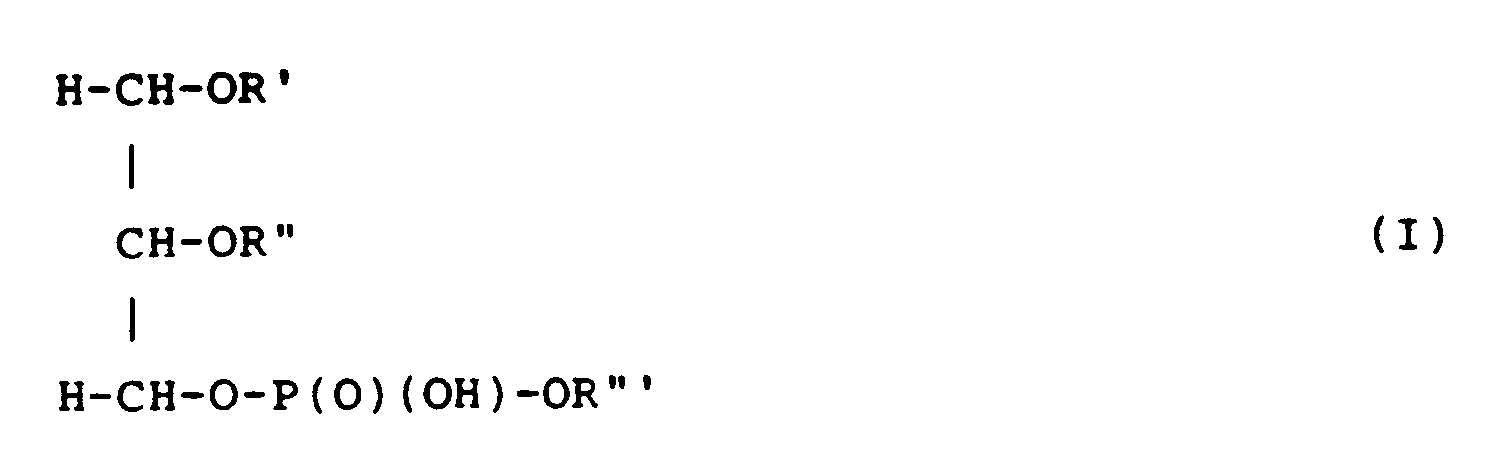
wherein R' and R" are the same or different each representing hydrogen, alkyl, alkenyl, alkylcarbonyl, alkenylcarbonyl, alkadienylcarbonyl, alkatrienylcarbonyl or alkatetraenylcarbonyl containing not more than 14 carbon atoms with the proviso that both R' and R" are not hydrogen, and R"' represents a hydrophilic group selected from the group consisting of 2-(trimethylammonio)ethyl, 2-aminoethyl and 2,3-dihydroxypropyl, the content of phospholipid of formula I being at least 0,5 % (w/v).
wherein R' and R" are the same or different each representing hydrogen, alkyl, alkenyl, alkylcarbonyl, alkenylcarbonyl, alkadienylcarbonyl, alkatrienylcarbonyl or alkatetraenylcarbonyl containing not more than 14 carbon atoms with the proviso that both R' and R" are not hydrogen, and R"' represents a hydrophilic group selected from the group consisting of 2-(trimethylammonio)ethyl, 2-aminoethyl and 2,3-dihydroxypropyl, the content of phospholipid of formula I being at least 0,5 % (w/v).
2. The preparation according to Claim 1, wherein R"' is 2-(trimethylammonio)ethyl.
3. The preparation of Claim 2, wherein each of R' and R" is alkyl or alkylcarbonyl containing
from 4 to 12 carbon atoms, preferably alkylcarbonyl.
4. The preparation of Claim 3, wherein R' and R" each represents nonylcarbonyl.
5. The preparation of Claim 2, wherein either R' or R" is hydrogen.
6. The preparation according to Claim 1, wherein the absorption enhancing system further
contains a fatty oil.
7. The preparation according to Claim 6, wherein the fatty oil is a vegetable oil, preferably
selected from the group consisting of soybean oil, peanut oil, coconut oil, maize
oil, olive oil and sunflower oil.
8. The preparation according to any one of Claims 1 to 7, wherein the content of phospholipid
of formula I is in the range of from 0.5 to 5% (w/v), of the preparation.
9. The preparation according to Claim 6 or 7, wherein the content of fatty oil is in
the range of from 0.01 to 50% (w/v), preferably 0.1-10% (w/v), of the preparation.
10. The preparation according to any one of Claims 1 to 9, wherein the polypeptide is
insulin, an insulin derivative, a mixture of insulin and at least one insulin derivative,
or a mixture of insulin derivatives.
11. The preparation according to Claim 10, wherein the insulin content is in the range
of from 5 to 1000, preferably from 50 to 500, international units per ml of the preparation.
12. The preparation of any one of Claims 1 to 9, wherein the polypeptide is glucagon.
13. A method for making the preparation of Claim 6, 7, 8 or 9, or of Claim 10, 11 or 12
when dependent on Claim 6, 7, 8 or 9, which method comprises dispersing at least one
phospholipid admixed with a fatty oil in a liquid or solid diluent together with the
pharmaceutically active polypeptide either in solution or in a powdery state, which
diluent optionally comprises ancillary pH-buffering, preserving and osmotic pressure
controlling agents.
14. Use of the preparation of Claim 6, 7, 8 or 9, or of Claim 10, 11 or 12 when dependent
on Claim 6, 7, 8 or 9, in a dosage dispensing device adapted for intranasal administration.
15. Use of at least one phospholipid of the general formula I as set out in Claim 1 with
R', R" and R"' as defined therein for the manufacture of a preparation, according
to claim 1, for intranasal administration in which the phospholipid enhances absorption
of a pharmaceutically active polypeptide in the preparation.
Claims for the following Contracting State(s): ES, GR
1. A method of preparing a preparation for intranasal administration which method comprises
preparing a preparation containing a pharmaceutically active polypeptide and an absorption
enhancing system containing at least one phospholipid of the general formula I
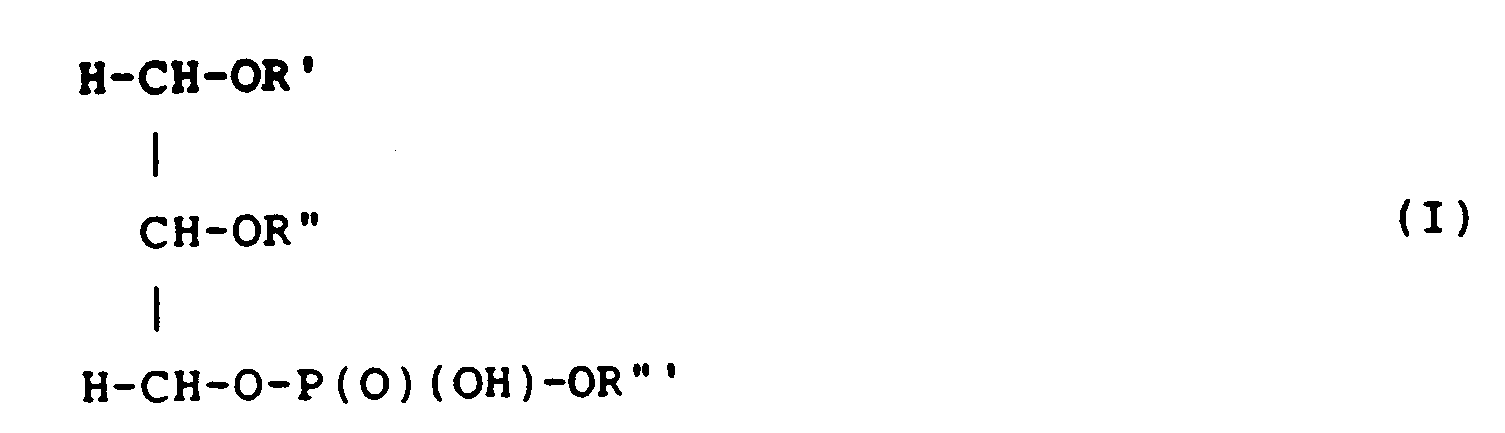
wherein R' and R" are the same or different each representing hydrogen, alkyl, alkenyl, alkylcarbonyl, alkenylcarbonyl, alkadienylcarbonyl, alkatrienylcarbonyl or alkatetraenylcarbonyl containing not more than 14 carbon atoms with the proviso that both R' and R" are not hydrogen, and R"' represents a hydrophilic group selected from the group consisting of 2-(trimethylammonio)ethyl, 2-aminoethyl and 2,3-dihydroxypropyl, the content of phospholipid of formula I being at least 0,5% (w/v).
wherein R' and R" are the same or different each representing hydrogen, alkyl, alkenyl, alkylcarbonyl, alkenylcarbonyl, alkadienylcarbonyl, alkatrienylcarbonyl or alkatetraenylcarbonyl containing not more than 14 carbon atoms with the proviso that both R' and R" are not hydrogen, and R"' represents a hydrophilic group selected from the group consisting of 2-(trimethylammonio)ethyl, 2-aminoethyl and 2,3-dihydroxypropyl, the content of phospholipid of formula I being at least 0,5% (w/v).
2. The method according to Claim 1, wherein R"' is 2-(trimethylammonio)ethyl.
3. The method of Claim 2, wherein each of R' and R" is alkyl or alkylcarbonyl containing
from 4 to 12 carbon atoms, preferably alkylcarbonyl.
4. The method of Claim 3, wherein R' and R" each represents nonylcarbonyl.
5. The method of Claim 2, wherein either R' or R" is hydrogen.
6. The method according to Claim 1, wherein the absorption enhancing system further contains
a fatty oil.
7. The method according to Claim 6, wherein the fatty oil is a vegetable oil, preferably
selected from the group consisting of soybean oil, peanut oil, coconut oil, maize
oil, olive oil and sunflower oil.
8. The method according to any one of Claims 1 to 7, wherein the content of phospholipid
of formula I is in the range of from 0.5-5% (w/v), of the preparation.
9. The method according to Claim 6 or 7, wherein the content of fatty oil is in the range
of from 0.01 to 50% (w/v), preferably 0.1-10% (w/v), of the preparation.
10. The method according to any one of Claims 1 to 9, wherein the polypeptide is insulin,
an insulin derivative, a mixture of insulin and at least one insulin derivative, or
a mixture of insulin derivatives.
11. The preparation according to Claim 10, wherein the insulin content is in the range
of from 5 to 1000, preferably from 50 to 500, international units per ml of the preparation.
12. The preparation of any one of Claims 1 to 9, wherein the polypeptide is glucagon.
13. The method according to Claim 6, 7, 8 or 9, or to Claim 10, 11 or 12 when dependent
on Claim 6, 7, 8 or 9, which method comprises dispersing at least one phospholipid
admixed with a fatty oil in a liquid or solid diluent together with the pharmaceutically
active polypeptide either in solution or in a powdery state, which diluent optionally
comprises ancillary pH-buffering, preserving and osmotic pressure controlling agents.
14. Use of the preparation prepared by the method of Claim 6, 7, 8 or 9, or of Claim 10,
11 or 12 when dependent on Claim 6, 7, 8 or 9, or of Claim 13, in a dosage dispensing
device adapted for intranasal administration.
15. Use of at least one phospholipid of the general formula I as set out in Claim 1 with
R', R" and R"' as defined therein for the manufacture of a preparation, according
to claim 1, for intranasal administration in which the phospholipid enhances absorption
of a pharmaceutically active polypeptide in the preparation.
Revendications pour l'(les) Etat(s) contractant(s) suivant(s): AT, BE, CH, DE, FR,
GB, IT, LI, LU, NL, SE
1. Préparation pour l'administration intranasale caractérisée en ce qu'elle contient
un polypeptide actif pharmaceutiquement et un système facilitant l'absorption contenant
au mains un phospholipide de la formule générale I :
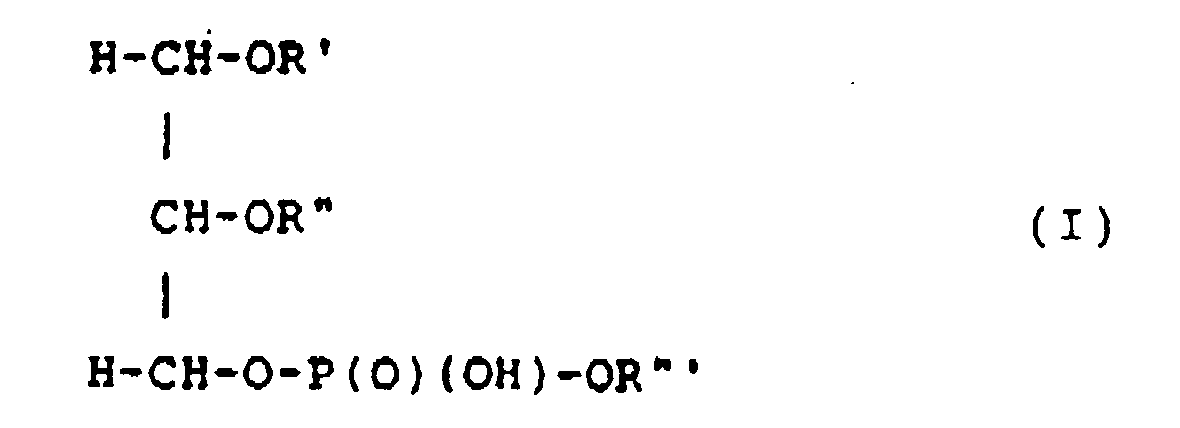
dans laquelle R' et R" sont identiques ou différents représentant chacun l'hydrogène, un alkyle, un alcényle, un alkylcarbonyle, un alcénylcarbonyle, un alcadiénylcarbonyle, un alcatriénylcarbonyle ou un alcatétraénylcarbonyle ne contenant pas plus de 14 atomes de carbone à condition qu'à la fois R' et R" ne soient pas l'hydrogène et que R"' représente un groupe hydrophile choisi parmi le groupe constitué par le 2-(triméthylammonio)éthyle, le 2-aminoéthyle et le 2,3-dihydroxypropyle, la teneur en phospholipide de la formule I étant au moins de 0,5 % (poids/volume).
dans laquelle R' et R" sont identiques ou différents représentant chacun l'hydrogène, un alkyle, un alcényle, un alkylcarbonyle, un alcénylcarbonyle, un alcadiénylcarbonyle, un alcatriénylcarbonyle ou un alcatétraénylcarbonyle ne contenant pas plus de 14 atomes de carbone à condition qu'à la fois R' et R" ne soient pas l'hydrogène et que R"' représente un groupe hydrophile choisi parmi le groupe constitué par le 2-(triméthylammonio)éthyle, le 2-aminoéthyle et le 2,3-dihydroxypropyle, la teneur en phospholipide de la formule I étant au moins de 0,5 % (poids/volume).
2. Préparation selon la revendication 1, dans laquelle R"' est le 2-(triméthylammonio)éthyle.
3. Préparation selon la revendication 2, dans laquelle chacun de R' et de R" est l'alkyle
ou l'alkylcarbonyle contenant de 4 à 12 atomes de carbone, de préférence l'alkylcarbonyle.
4. Préparation selon la revendication 3, dans laquelle R' et R" représentent chacun le
nonylcarbonyle.
5. Préparation selon la revendication 2, dans laquelle soit R' soit R" est l'hydrogène.
6. Préparation selon la revendication 1, dans laquelle le système améliorant l'absorption
contient de plus une huile grasse.
7. Préparation selon la revendication 6, dans laquelle l'huile grasse est une huile végétale,
de préférence choisie dans le groupe constitué par l'huile de soja, l'huile d'arachide,
l'huile de noix de coco, l'huile de maïs, l'huile d'olive et l'huile de tournesol.
8. Préparation selon l'une quelconque des revendications 1 à 7, dans laquelle la teneur
en phospholipide de la formule I est dans la plage de 0,5 à 5 % (poids/volume) de
la préparation.
9. Préparation selon la revendication 6 ou 7, dans laquelle la teneur en huile grasse
se situe dans la plage allant de 0,01 à 50 % (poids/volume), de préférence 0,1-10%
(poids/volume) de la préparation.
10. Préparation selon l'une quelconque des revendications 1 à 9, dans laquelle le polypeptide
est l'insuline, un dérivé d'insuline, un mélange d'insuline et au moins un dérivé
d'insuline ou un mélange de dérivés d'insuline.
11. Préparation selon la revendication 10, dans laquelle la teneur en insuline se situe
dans la plage allant de 5 à 1 000, de préférence de 50 à 500, l'unité internationale
par ml de la préparation.
12. Préparation selon l'une quelconque des revendications 1 à 9, dans laquelle le polypeptide
est le glucagon.
13. Procédé pour la réalisation de la préparation de la revendication 6, 7, 8 ou 9 ou
de la revendication 10, 11 ou 12 lorsqu'il y a dépendance avec la revendication 6,
7, 8 ou 9, lequel procédé comprend la mise en dispersion au moins d'un phospholipide
auquel on a ajouté et mélangé une huile grasse dans un diluant liquide ou solide conjointement
avec le polypeptide actif pharmaceutiquement soit en solution, soit à l'état de poudre,
lequel diluant comprend facultativement un tampon de pH auxiliaire, des agents de
conservation et de régulation de pression osmotique.
14. Utilisation de la préparation de la revendication 6, 7, 8 ou 9 ou de la revendication
10, 11 ou 12 lorsqu'il y a dépendance avec la revendication 6, 7, 8 ou 9 dans un dispositif
de distribution dosée apte à l'administration intranasale.
15. Utilisation d'au moins un phospholipide de formule générale I telle que définie dans
la revendication 1 avec R', R" et R"' tels que définis dans celle-ci pour la fabrication
d'une préparation, selon la revendication 1, pour l'administration intranasale dans
laquelle le phospholipide facilite l'absorption d'un polypeptide actif pharmaceutiquement
dans la préparation.
Revendications pour l'(les) Etat(s) contractant(s) suivant(s): ES, GR
1. Procédé destiné à réaliser une préparation pour l'administration intranasale, lequel
procédé comprend les étapes consistant à réaliser une préparation contenant un polypeptide
actif pharmaceutiquement et un système améliorant l'absorption contenant au moins
un phospholipide de formule générale I
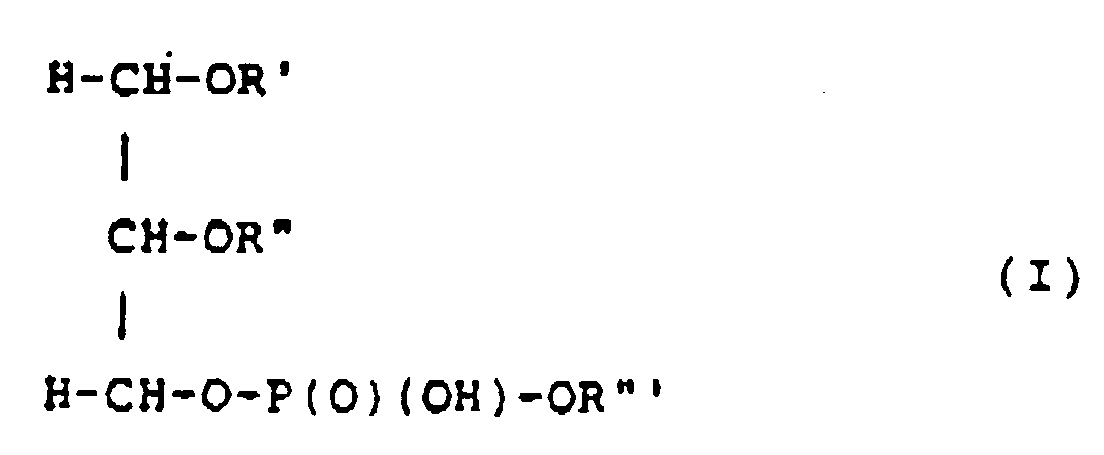
dans laquelle R' et R" sont identiques ou différents représentant chacun l'hydrogène, un alkyle, un alcényle, un alkylcarbonyle, un alcénylcarbonyle, un alcadiénylcarbonyle, un alcatriénylcarbonyle ou un alcatétraénylcarbonyle ne contenant pas plus de 14 atomes de carbone à condition qu'à la fois R' et R" ne soient pas l'hydrogène et que R"' représente un groupe hydrophile choisi parmi le groupe constitué par le 2-(triméthylammonio)éthyle, le 2-aminoéthyle et le 2,3-dihydroxypropyle, la teneur en phospholipide de la formule I étant au moins de 0,5 % (poids/volume).
dans laquelle R' et R" sont identiques ou différents représentant chacun l'hydrogène, un alkyle, un alcényle, un alkylcarbonyle, un alcénylcarbonyle, un alcadiénylcarbonyle, un alcatriénylcarbonyle ou un alcatétraénylcarbonyle ne contenant pas plus de 14 atomes de carbone à condition qu'à la fois R' et R" ne soient pas l'hydrogène et que R"' représente un groupe hydrophile choisi parmi le groupe constitué par le 2-(triméthylammonio)éthyle, le 2-aminoéthyle et le 2,3-dihydroxypropyle, la teneur en phospholipide de la formule I étant au moins de 0,5 % (poids/volume).
2. Procédé selon la revendication 1, dans lequel R"' est le 2-(triméthylammonio)éthyle.
3. Procédé selon la revendication 2, dans lequel chacun de R' et de R" est l'alkyle ou
l'alkylcarbonyle contenant de 4 à 12 atomes de carbone, de préférence l'alkylcarbonyle.
4. Procédé selon la revendication 3, dans lequel R' et R" représentent chacun le nonylcarbonyle.
5. Procédé selon la revendication 2, dans lequel soit R' soit R" est l'hydrogène.
6. Procédé selon la revendication 1, dans lequel le système améliorant l'absorption contient
de plus une huile grasse.
7. Procédé selon la revendication 6, dans lequel l'huile grasse est une huile végétale,
de préférence choisie dans le groupe constitué par l'huile de soja, l'huile d'arachide,
l'huile de noix de coco, l'huile de maïs, l'huile d'olive et l'huile de tournesol.
8. Procédé selon l'une quelconque des revendications 1 à 7, dans lequel la teneur en
phospholipide de la formule 1 est dans la plage de 0,5 à 5 % (poids/volume) de la
préparation.
9. Procédé selon la revendication 6 ou 7, dans lequel la teneur en huile grasse se situe
dans la plage allant de 0,01 à 50 % (poids/volume), de préférence 0,1-10% (poids/volume)
de la préparation.
10. Procédé selon l'une quelconque des revendications 1 à 9, dans lequel le polypeptide
est l'insuline, un dérivé d'insuline, un mélange d'insuline et au moins un dérivé
d'insuline ou un mélange de dérivés d'insuline.
11. Préparation selon la revendication 10, dans laquelle la teneur en insuline se situe
dans la plage allant de 5 à 1 000, de préférence de 50 à 500 unités internationales
par ml de la préparation.
12. Préparation selon l'une quelconque des revendications 1 à 9, dans laquelle le polypeptide
est le glucagon.
13. Procédé selon la revendication 6, 7, 8 ou 9 ou la revendication 10, 11 ou 12 lorsqu'il
y a dépendance avec la revendication 6, 7, 8 ou 9, lequel procédé comprend la mise
en dispersion au moins d'un phospholipide auquel on a ajouté et mélangé une huile
grasse dans un diluant liquide ou solide conjointement avec le polypeptide actif pharmaceutiquement
soit en solution, soit à l'état de poudre, lequel diluant comprend facultativement
un tampon de pH auxiliaire, des agents de conservation et de régulation de pression
osmotique.
14. Utilisation de la préparation réalisée selon le procédé de la revendication 6, 7,
8 ou 9 ou de la revendication 10, 11 ou 12 lorsqu'il y a dépendance avec la revendication
6, 7, 8 ou 9 dans un dispositif de distribution dosée apte à l'administration intranasale.
15. Utilisation d'au moins un phospholipide de formule générale I telle que définie dans
la revendication 1 avec R', R" et R"' tels que définis dans celle-ci pour la fabrication
d'une préparation, selon la revendication 1, pour l'administration intranasale dans
laquelle le phospholipide facilite l'absorption d'un polypeptide actif pharmaceutiquement
dans la préparation.
Patentansprüche für folgende(n) Vertragsstaat(en): AT, BE, CH, DE, FR, GB, IT, LI,
LU, NL, SE
1. Zubereitung für intranasale Applikation, dadurch gekennzeichnet, daß sie ein pharmazeutisch
wirksames Polypeptid und ein die Absorption verstärkendes System enthält, das wenigstens
ein Phospholipid der allgemeinen Formel I
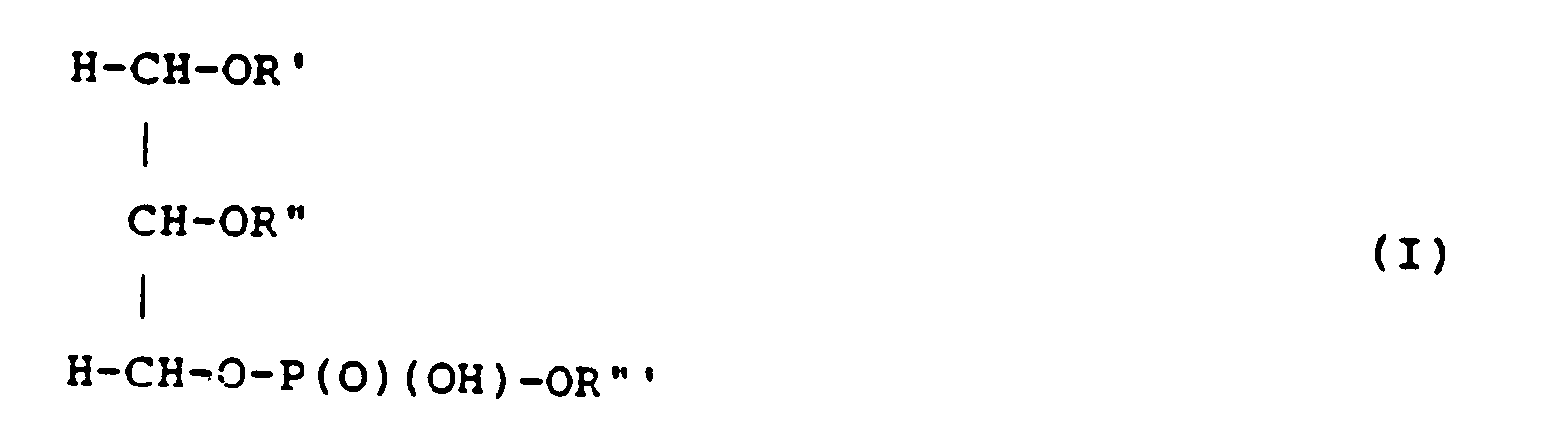
enthält, in der R' und R'' identisch oder verschieden sind, die jeweils Wasserstoff, Alkyl, Alkenyl, Alkylcarbonyl, Alkenylcarbonyl, Alkadienylcarbonyl, Alkatrienylcarbonyl oder Alkatetraenylcarbonyl, enthaltend nicht mehr als 14 Kohlenstoffatome, darstellen, mit der Maßgabe, daß R' und R'' nicht beide Wasserstoff sind, und R''' eine hydrophile Gruppe darstellt, ausgewählt aus der Gruppe, die aus 2-(Trimethylammonio)ethyl, 2-Aminoethyl und 2,3-Dihydroxypropyl besteht, wobei der Gehalt an Phospholipid der Formel I wenigstens 0,5 % (w/v) beträgt.
enthält, in der R' und R'' identisch oder verschieden sind, die jeweils Wasserstoff, Alkyl, Alkenyl, Alkylcarbonyl, Alkenylcarbonyl, Alkadienylcarbonyl, Alkatrienylcarbonyl oder Alkatetraenylcarbonyl, enthaltend nicht mehr als 14 Kohlenstoffatome, darstellen, mit der Maßgabe, daß R' und R'' nicht beide Wasserstoff sind, und R''' eine hydrophile Gruppe darstellt, ausgewählt aus der Gruppe, die aus 2-(Trimethylammonio)ethyl, 2-Aminoethyl und 2,3-Dihydroxypropyl besteht, wobei der Gehalt an Phospholipid der Formel I wenigstens 0,5 % (w/v) beträgt.
2. Zubereitung nach Anspruch 1, dadurch gekennzeichnet, daß R''' 2-(Trimethylammonio)ethyl
ist.
3. Zuberteitung nach Anspruch 2, dadurch gekennzeichnet, daß R' und R'' jeweils Alkyl
oder Alkylcarbonyl sind, enthaltend von 4 bis 12 Kohlenstoffatome, vorzugsweise Alkylcarbonyl.
4. Zubereitung nach Anspruch 3, dadurch gekennzeichnet, daß R' und R'' jeweils Nonylcarbonyl
darstellen.
5. Zubereitung nach Anspruch 2, dadurch gekennzeichnet, daß entweder R' oder R'' Wasserstoff
ist.
6. Zubereitung nach Anspruch 1, dadurch gekennzeichnet, daß das die Absorption verstärkende
System außerdem ein Fettöl enthält.
7. Zubereitung nach Anspruch 6, dadurch gekennzeichnet, daß das Fettöl ein Pflanzenöl
ist, vorzugsweise ausgewählt aus der Gruppe, die aus Sojabohnenöl, Erdnußöl, Kokosnußöl,
Maisöl, Olivenöl und Sonnenblumenöl besteht.
8. Zubereitung nach einem der Ansprüche 5 bis 7, dadurch gekennzeichnet, daß der Gehalt
an Phospholipid der Formel I im Bereich von 0,5 bis 5 % (w/v) der Zubereitung liegt.
9. Zubereitung nach Anspruch 6 oder 7, dadurch gekennzeichnet, daß der Gehalt an Fettöl
im Bereich von 0,01 bis 50 % (w/v), vorzugsweise 0,1-10 % (w/v), der Zubereitung liegt.
10. Zubereitung nach einem der Ansprüche 1 bis 9, dadurch gekennzeichnet, daß das Polypeptid
insulin, ein Insulinderivat, eine Mischung von Insulin und wenigstens einem Insulinderivat
oder eine Mischung von Insulinderivaten ist.
11. Zubereitung nach Anspruch 10, dadurch gekennzeichnet, daß der Insulingehalt im Bereich
von 5 bis 1000, vorzugsweise von 50 bis 500, Internationalen Einheiten pro ml der
Zubereitung liegt.
12. Zubereitung nach einem der Ansprüche 1 bis 9, dadurch gekennzeichnet, daß das Polypeptid
Glucagon ist.
13. Verfahren zur Herstellung der Zubereitung nach Anspruch 6, 7, 8 oder 9 oder nach Anspruch
10, 11 oder 12, sofern abhängig von Anspruch 6, 7, 8 oder 9, dadurch gekennzeichnet,
daß das Verfahren das Dispergieren wenigstens eines Phospholipids, vermischt mit einem
Fettöl, in einem flüssigen oder festen Verdünnungsmittel zusammen mit dem pharmazeutisch
wirksamen Polypeptid entweder in Lösung oder in einem pulverförmigen Zustand umfaßt,
wobei das Verdünnungsmittel fakultativ den pH-Wert puffernde, konservierende und den
osmotischen Druck steuernde Hilfssubstanzen umfaßt.
14. Verwendung der Zubereitung nach Anspruch 6, 7, 8 oder 9 oder nach Anspruch 10, 11
oder 12, sofern abhängig von Anspruch 6, 7, 8 oder 9, in einer Dosierabgabeeinrichtung,
die für intranasale Applikation geeignet ist.
15. Verwendung wenigstens eines Phospholipids der allgemeinen Formel I, wie in Anspruch
1 dargestellt, mit R, R'' und R''', wie dort definiert, für die Herstellung einer
Zubereitung gemäß Anspruch 1 für intranasale Applikation, bei der das Phospholipid
die Absorption eines pharmazeutisch wirksamen Polypeptids in der Zubereitung verstärkt.
Patentansprüche für folgende(n) Vertragsstaat(en): ES, GR
1. Verfahren zur Herstellung einer Zubereitung für intranasale Applikation, wobei dieses
Verfahren die Herstellung einer Zubereitung umfaßt, die ein pharmazeutisch wirksames
Polypeptid und ein die Absorption verstärkendes System enthält, welches wenigstens
ein Phospholipid der allgemeinen Formel I
enthält, in der R' und R'' identisch oder verschieden sind, die jeweils Wasserstoff, Alkyl, Alkenyl, Alkylcarbonyl, Alkenylcarbonyl, Alkadienylcarbonyl, Alkatrienylcarbonyl oder Alkatetraenylcarbonyl, enthaltend nicht mehr als 14 Kohlenstoffatome, darstellen mit der Maßgabe, daß R' und R'' nicht beide Wasserstoff sind, und R''' eine hydrophile Gruppe darstellt, ausgewählt aus der Gruppe, die aus 2-(Trimethylammonio)ethyl, 2-Aminoethyl und 2,3-Dihydroxypropyl besteht, wobei der Gehalt an Phospholipid der Formel I wenigstens 0,5 % (w/v) beträgt.
enthält, in der R' und R'' identisch oder verschieden sind, die jeweils Wasserstoff, Alkyl, Alkenyl, Alkylcarbonyl, Alkenylcarbonyl, Alkadienylcarbonyl, Alkatrienylcarbonyl oder Alkatetraenylcarbonyl, enthaltend nicht mehr als 14 Kohlenstoffatome, darstellen mit der Maßgabe, daß R' und R'' nicht beide Wasserstoff sind, und R''' eine hydrophile Gruppe darstellt, ausgewählt aus der Gruppe, die aus 2-(Trimethylammonio)ethyl, 2-Aminoethyl und 2,3-Dihydroxypropyl besteht, wobei der Gehalt an Phospholipid der Formel I wenigstens 0,5 % (w/v) beträgt.
2. Verfahren nach Anspruch 1, dadurch gekennzeichnet, daß R''' 2-(Trimethylammonio)ethyl
ist.
3. Verfahren nach Anspruch 2, dadurch gekennzeichnet, daß R' und R'' jeweils Alkyl oder
Alkylcarbonyl sind, enthaltend von 4 bis 12 Kohlenstoffatome, vorzugsweise Alkylcarbonyl.
4. Verfahren nach Anspruch 3, dadurch gekennzeichnet, daß R' und R'' jeweils Nonylcarbonyl
darstellen.
5. Verfahren nach Anspruch 2, dadurch gekennzeichnet, daß entweder R' oder R'' Wasserstoff
ist.
6. Verfahren nach Anspruch 1, dadurch gekennzeichnet, daß das die Absorption verstärkende
System außerdem ein Fettöl enthält.
7. Verfahren nach Anspruch 6, dadurch gekennzeichnet, daß das Fettöl ein Pflanzenöl ist,
vorzugsweise ausgewählt aus der Gruppe, die aus Sojabohnenöl, Erdnußöl, Kokosnußöl,
Maisöl, Olivenöl und Sonnenblumenöl besteht.
8. Verfahren nach einem der Ansprüche 5 bis 7, dadurch gekennzeichnet, daß der Gehalt
an Phospholipid der Formel I im Bereich von 0,5 bis 5 % (w/v) der Zubereitung liegt.
9. Verfahren nach Anspruch 6 oder 7, dadurch gekennzeichnet, daß der Gehalt an Fettöl
im Bereich von 0,01 bis 50 % (w/v), vorzugsweise 0,1-10 % (w/v), der Zubereitung liegt.
10. Verfahren nach einem der Ansprüche 1 bis 9, dadurch gekennzeichnet, daß das Polypeptid
Insulin, ein Insulinderivat, eine Mischung von Insulin und wenigstens einem Insulinderivat
oder eine Mischung von Insulinderivaten ist.
11. Verfahren nach Anspruch 10, dadurch gekennzeichnet, daß der Insulingehalt im Bereich
von 5 bis 1000, vorzugsweise von 50 bis 500, Internationalen Einheiten pro ml der
Zubereitung liegt.
12. Verfahren nach einem der Ansprüche 1 bis 9, dadurch gekennzeichnet, daß das Polypeptid
Glucagon ist.
13. Verfahren nach Anspruch 6, 7, 8 oder 9 oder nach Anspruch 10, 11 oder 12, sofern abhängig
von Anspruch 6, 7, 8 oder 9, dadurch gekennzeichnet, daß das Verfahren das Dispergieren
wenigstens eines Phospholipids, vermischt mit einem Fettöl, in einen flüssigen oder
festen Verdünnungsmittel zusammen mit dem pharmazeutisch wirksamen Polypeptid entweder
in Lösung oder in einem pulverförmigen Zustand umfaßt, wobei das Verdünnungsmittel
fakultativ den pH-Wert puffernde, konservierende und den osmotischen Druck steuernde
Hilfssubstanzen umfaßt.
14. Verwendung der Zubereitung, hergestellt nach dem Verfahren nach Anspruch 6, 7, 8 oder
9 oder nach Anspruch 10, 11 oder 12, sofern abhängig von Anspruch 6, 7, 8 oder 9,
oder nach Anspruch 13, in einer Dosierabgabeeinrichtung, die für intranasale Applikation
geeignet ist.
15. Verwendung wenigstens eines Phospholipids der allgemeinen Formel I, wie in Anspruch
1 dargestellt, mit R, R'' und R''', wie dort definiert, für die Herstellung einer
Zubereitung gemäß Anspruch 1 für intranasale Applikation, bei der das Phospholipid
die Absorption eines pharmazeutisch wirksamen Polypeptids in der Zubereitung verstärkt.