|
(11) | EP 0 276 670 B1 |

| (12) | EUROPEAN PATENT SPECIFICATION |
|
|
| (54) |
High-speed supply independent level shifter Schnelle, versorgungsunabhängige Strompegelschaltung Circuit rapide décaleur de tension, indépendant de l'alimentation |
|
|
|||||||||||||||||||||||||||||||
| Note: Within nine months from the publication of the mention of the grant of the European patent, any person may give notice to the European Patent Office of opposition to the European patent granted. Notice of opposition shall be filed in a written reasoned statement. It shall not be deemed to have been filed until the opposition fee has been paid. (Art. 99(1) European Patent Convention). |
BACKGROUND OF THE INVENTION
[0001] This invention relates generally to level shifting circuitry and more particularly to the problems of level shifting in high-speed operational amplifiers and other feedback amplifiers, particularly as incorporated into analog integrated circuits.
[0002] Level shifting is a general requirement in feedback amplifiers with large common mode input ranges and large output voltage swings. FIG. 1 illustrates, in block diagram form, a typical operational amplifier or feedback amplifier. A desired differential signal Vid and a common mode signal Vicm are applied to an input stage. The input stage is conventionally biased relative to a supply voltage or other reference voltage Vref2 by appropriate bias circuitry, such as a current source. The potential V across the input stage must be maintained so as to meet the minimum voltage requirements for the input stage to operate.
[0003] The differential outputs of the input stage are connected to load circuits and input to a second stage, such as a level shifter. The load circuits are biased at a potential relative to another supply voltage or other voltage reference, Vref1. The potential across the load circuits, V1, is determined by the designer to meet the requirements for proper operation of the load circuits and the second stage. The level shifter has an output which must be at a sufficient potential, V2, relative to voltage reference Vref2 to interface to a third stage circuit (not shown). Thus, the level shifter should provide or absorb a voltage drop so as to produce the desired input potential V1 given the output potential V2. If both polarity-type devices are available in a given technology, a level shifter can be implemented as a common-emitter (source) stage, or as a common base (gate) stage of a polarity type opposite that of the input stage. In this case, the collector-emitter (drain-source) absorbs the difference in potential between the input and output of the level shifter. In a single polarity technology, or in a technology where only one polarity device is of high bandwidth, an alternative means is necessary to drop the required voltage.
[0004] These factors present difficult constraints within which the designer must design the level shifter. In addition, it is desirable for the common mode range to be as close as possible to the power supply voltages. Also, the supply voltages are subject to variations, for example, by design or due to temperature variations. Accordingly, designers conventionally choose a potential V1 that is large enough to compensate for the expected range of such variations. Doing so, however, reduces common mode range and may require trade-offs with respect to output voltage swing.
[0005] Single polarity prior art circuits, as described in radio Fernsehen Elektronik, vol. 27, no. 11, November 1978, pages 687-691, result in non-optimum values of potential V1 that do not adapt to power supply, process and temperature variations in a desirable way. Also, prior art implementations of level shifters typically incorporate components and combinations of components that are non-optimal, particularly for high-speed performance. One such implementation includes the use of lateral PNP transistors, which are too slow for wideband applications. An alternative implementation could use vertical PNP transistors if the fabrication process being used allows for it. This fabrication process is expensive, requiring extra processing and probably resulting in lower yields than less complex technologies. Vertical PNP transistors, in any event, are generally of lower bandwidth than NPN transistors.
[0006] In many fabrication technologies, vertical PNP transistors or p-channel FETs are not available at all. Some prior art level shifters employ Zener diodes but these are noisy, unsuitable for a wide range of power supply voltages, and have a limited common mode range.
[0007] Accordingly, a need remains for a level shifter design that is capable of high-speed operation (at frequencies in excess of 1 GHz), is capable of adjusting in operation to supply, process (i.e., transistor parameters) and temperature variations, is capable of being implemented with a single polarity device, and frees the circuit designer from such tight design constraints.
SUMMARY OF THE INVENTION
[0008] According to the invention there is provided a high-speed level shifting circuit as claimed in claim 1 herein.
[0009] The invention therefore addresses the foregoing problems by implementing a level shifter in a circuit as a floating voltage source whose value is dependent upon the supply voltages. The level shifter is designed, given a required input voltage V2 to the next stage, so that a desired voltage, V1, exists across the drive stage, which is usually a load device or circuit. The level shifter is incorporated in a first current leg between two supply voltages. A second reference current leg is connected in parallel to the first leg. The legs are coupled by means, such as a current mirror, for replicating the reference current in the first current leg. The floating voltage source V3 is designed to provide a desired V1, given V2 as described above, the potential V3 being set in accordance with an additive function, e.g.,
, substantially independent of the supply voltages. Operation of the level shifter can be chosen to be dependent upon device parameters and temperature in such a way that the voltage V1 has a desired functional dependence, thereby compensating for variations in other circuit devices.
[0010] The level shifting circuit of the invention will work over a wide range of supply voltages. Drive stage voltage V1 can be chosen no larger than necessary to maximize common mode voltage on the input and to operate with the smallest possible supply voltages. The circuit can be readily incorporated in bipolar, JFET, MOSFET or MESFET technologies. The circuit can be, and preferably is, implemented with high-speed NPN bipolar or GaAsFET transistors, making it suitable for use in wideband feedback amplifiers and operational amplifiers. The circuit structure can be varied within the scope of the invention to provide a large input impedance and to level shift a voltage or to have a low input impedance and level shift a current. The circuit can be used in a differential configuration for substantial rejection of any power supply signal or noise coupled through the circuit, as it would represent a common mode signal.
[0011] The foregoing and other objects, features and advantages of the invention will become more readily apparent from the following detailed description which proceeds with reference to the drawings.
BRIEF DESCRIPTION OF DRAWINGS
[0013] FIG. 2 is a block diagram illustrating the general principles of a level shifter in accordance with the invention.
[0014] FIG. 3 is a schematic diagram of a bipolar integrated level shifting circuit in accordance with the invention.
[0015] FIG. 4 is a schematic diagram of an alternative embodiment of the floating voltage source and the current mirror portions of the circuit of FIG. 3.
[0016] FIG. 5 is a simplified schematic diagram of a GaAsFET integrated level shifting circuit in accordance with the invention.
[0017] FIG. 6 is a schematic diagram of an alternate embodiment of the circuit of FIG. 5, providing a high impedance input for level shifting a voltage level.
[0018] FIG. 7 is a more detailed schematic diagram of an example of one possible implementation of the circuit of FIG. 6.
[0019] In the figures, both bipolar silicon and GaAsFET embodiments of the invention are shown. Like reference numerals and characters are used consistently throughout the drawings to identify subcircuits and elements of like function. As will be appreciated by those skilled in the art, however, the specific structure and parameters of the like-identified devices will differ from one embodiment to the next.
DETAILED DESCRIPTION
General Arrangement and Operation
[0020] Referring to FIG. 1, a common mode signal source 10 is shown added with differential input signal sources to an input stage, such as a differential amplifier 12. A bias circuit, such as a current source 14, is connected between the input stage and the supply voltage Vref2. A bias potential V exists across the input stage. The input stage has differential outputs 16a, 16b, that are connected to inputs of a second stage, comprising a level shifter 18, and to load circuits 20a, 20b. The load circuits are, in turn, connected to another supply voltage Vref1. The potential V1 across the load circuits must be sufficient to insure proper operation. The second stage has differential outputs 22a, 22b.
[0021] The outputs of either or both the input stage and the level shifter may be single-ended, as shown in FIG. 3. The level shifter output is conventionally coupled to an input of a third stage, such as a common emitter or common source amplifier (not shown). When used in a differential configuration, the level shifter 18 preferably includes two identical single-ended level shifting circuits, as shown in further detail in FIG. 5.
[0022] Output 22 must be at a potential V2 relative to supply voltage Vref2, across the input of the third stage, which is sufficient to properly bias the third stage. The required potentials V1 and V2 are predetermined by the specific designs of the load circuits and third stage circuit. They are treated as predetermined for purposes of this invention, although the designer often has some latitude in designing these circuits to alter their voltage requirements.
[0023] An input signal is input to amplifier 12, amplified and output to the level shifter and load circuits. The level shifter shifts the quiescent DC voltage level of the amplified signal and relays the signal to the third stage (not shown). The level shifter thereby enables the amplifying devices to operate at the desired operating points. This describes the conventional usage of level shifters and is applicable to the usage of level shifters designed in accordance with the invention.
[0024] Referring to FIG. 2, generally showing a level shifter 18 in accordance with the invention, the nomenclature of FIG. 1 is continued. This level shifter includes an active/resistive level shift circuit 24 having a single input 16 and a single output 22. (Alternatively, two such circuits can be used in level shifter 18, as shown in FIG. 5, to provide differential inputs and outputs.) Circuit 24 is coupled in a first current leg 26 between the two supply voltages Vref1 and Vref2 by a first conducting means, which can include a current source as next described, for conduction of a current I1 between the two voltage supplies through the level shift circuit. As further discussed below, the level shift circuit includes a first resistor (resistor R1 in FIGS. 3-7), coupled in series in the first current leg, to provide a voltage drop V5. The current passes through a first intermediate voltage node (node 28 in FIGS. 3-7). Suitable output means connect this node to output 22.
[0025] A second current leg 30 is provided between the two supply voltages, in parallel with the first current leg. This current leg includes a resistor R2 coupled through a second conducting means, which can also include a current source, for conduction of a second current I2 through the resistor and a second intermediate voltage node 32. The second current produces a voltage drop V6 between the first supply voltage Vref1 and node 32 that varies with the difference between the supply voltages.
[0026] Both current legs are coupled by a means, such as a unity gain current mirror (or inverting current amplifier) 34, for establishing a predetermined relationship between the first and second currents through the first and second resistors such that variations in the second current, e.g. due to variations in the supply voltages, are replicated in the first current. The current mirror includes a coupling means 37 (FIGS. 3-7) coupling the first and second conducting means, which is biased by a floating voltage source 36 with a potential V3 relative to the second intermediate voltage node 32. A control conductor 38 (FIGS. 3-7) couples current mirror 34 to intermediate node 32 in the second current leg, preferably through voltage source 36.
[0027] The first and second conducting means each include parallel voltage dropping means (shown in FIGS. 3-7) for providing a voltage drop V4 between the conducting means 37 and the second supply voltage Vref2. As discussed further below, such means can be provided by any suitable combination of diodes, resistors and--in appropriate circuits--the control voltage Vc (Vbe or Vgs) of one or more transistors.
[0028] Pursuant to the basic principles of the invention, given predetermined values required for V1 and V2, the designer selects a value V3 for the floating voltage source in accordance with an additive function, comprising the sum of V1 and V2, less V4. This value is preferably selected to provide a potential V1, that is independent of the supply voltages. Typically, the level shifter includes a first transistor Q1, as further described below, which contributes to this sum an additional Vbe or Vgs. If the level shifter includes a second transistor Q2, as appears in the preferred embodiments below, it adds another Vbe or Vgs to the sum. The current mirror also conventionally includes transistors--a third transistor Q3 in the first current leg and a fourth transistor Q4 in the second current leg. If these transistors are different, they will establish proportional but different currents in each leg. Ideally, the values of currents I1 and I2 and resistors R1 and R2 are chosen to be equal, in which case
, where Vc represents the Vbe or Vgs of transistor Q1 and, optionally, Q2.
Bipolar Silicon Level Shifters
[0029] Referring next to FIG. 3, in a bipolar level shifter 18a the level shift circuit 24a includes a first NPN bipolar transistor Q1 with input 16 coupled to its base. Its collector is connected to the first supply voltage VCC and its emitter to resistor R1, which is coupled to intermediate node 28. A second NPN bipolar transistor Q2 has its base connected to node 28 and its emitter to output 22. Its collector is shown connected to input 16, i.e., to the base of the first transistor Q1. This provides a feedback amplifier having a low impedance shunt input for level shifting a current. As discussed below, the collector of transistor Q2 can alternatively be connected to either the collector or emitter of transistor Q1 to provide a high input impedance voltage level shifter. Capacitors C1, C2 and C3 can be used in level shift circuit 24a but are not essential. For high-speed operation, however, capacitors C1 and C3 are preferably used.
[0030] The level shift circuit 24a is coupled in the first current leg 26a to the second supply voltage VEE through the collector and emitter of transistor Q3, which serves as the first conducting means mentioned above. A transistor Q4 is similarly coupled in the second current leg 30a. The base of transistor Q3 is connected via conductor 37 to the base of transistor Q4. Control conductor 38, in turn, connects conductor 37 to the second current leg at the collector of transistor Q4. Thus connected, transistors Q3 and Q4 function as a current mirror to couple the two current legs together and cause the first current to track or replicate the second current. Preferably, transistors Q3 and Q4 are identical so that the currents
. In this embodiment of the invention, the base-emitter voltages of bipolar transistors Q3 and Q4 provide the voltage drop V4.
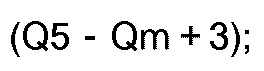
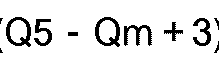
[0031] The second current leg 30a includes a voltage dropping means, i.e., floating voltage source 36a, typically a series of diode-connected transistors Q5 through Qm+3, connected in series with resistor R2. Although preferably located between the resistor and the collector of transistor Q4, the diode-connected transistors can alternatively be connected elsewhere in current leg 30a, e.g. between the resistor and supply voltage VCC, or between transistor Q4 and supply voltage VEE. With conductor 38 connected from collector-to-base on transistor Q4, the diode-connected transistors serve to bias node 32 at potential V3 from conductor 37.
[0032] Analyzing the circuit, it is apparent that
for the first leg 26a, and
for the second leg 30a, where
.
[0033] Equating the two right half sides of the equations for VCC-VEE, and assuming that
, if the resistor values are selected so that
, then
[0034] In a typical circuit design, the load circuits and the input to the third stage each may include a transistor requiring at least one Vbe potential from their respective supply voltages to operate properly. In that case, it would be appropriate, as a minimum, to set
and
, so that
, indicating that the diode string Q5 through Qm+3 requires a total of three diodes.
[0035] Referring to FIG. 4, an alternate biasing circuit is shown for creating current I1. In this Figure, level shift circuit 24a is omitted for convenience, but is assumed to be the same as that of FIG. 3. In this embodiment, two additional resistors R3 and R4 are optionally connected between the second supply voltage, VEE, and the emitters of transistors Q3 and Q4, respectively. A transistor Q5 is connected as an emitter-follower buffer, with its base and emitter providing control conductor 38, and its collector connected to the first supply voltage VCC. The string of diode-connected transistors is re-identified as Q6 through Qm+3.
[0036] The analysis of the circuit is similar to that of the previous circuit. The current mirror establishes
, where c is a proportionality constant, if
and the emitter areas of transistors Q3 and Q4 are related by
. (As those skilled in the art will understand, R3 must also satisfy the bias requirements of transistor Q3 to avoid operating in the saturation region.) It can then be shown that
If the circuit values are selected so that
, then it follows that
As mentioned above, V2 is constrained by the next stage and a desired V1 is selected by the designer. If
and
, then
, which calls for three transistors, i.e., two diode-connected transistors and an emitter-follower transistor Q5.
GaAsFET Level Shifters
[0037] Referring to FIG. 5, a level shifter 18c is implemented in GasAsFET technology. This figure shows a differential implementation of the invention. Although this figure is rearranged relative to FIGS. 3 and 4, the structural similarity is apparent. Instead of a single, first current leg, the differential implementation uses two first current legs 26a, 26b having, respectively, differential inputs 16a, 16b with a potential V1 relative to the first supply voltage VDD and differential outputs 22a, 22b at a potential V2 relative to the second supply voltage VSS.
[0038] The components in each of these current legs are identified with the same reference numerals and letters used in FIGS. 3 and 4, supplemented by the subscripts a-b to correspond to the particular leg in which they are used. Thus, instead of a single transistor Q1 and resistor R1, current leg 26a includes a transistor Q1a and resistor R1a while current leg 26b includes a transistor Q1b and resistor R1b. Likewise, instead of single transistors Q2 and Q4, each of the differential current legs includes a transistor Q2a, Q4a, and transistor Q2b, Q4b, respectively. The currents in these two legs are identified as I1a and I1b, respectively.
[0039] Since transistors Q4a and Q4b are depletion-mode FET devices, a voltage dropping means 40a, 40b is usually required in each current leg between supply voltage VSS and the sources of transistors Q4a and Q4b, respectively. A similar voltage dropping means 42 is connected in the source of transistor Q3. These voltage dropping means preferably take the form of a string of diodes but can include resistive elements as an alternative or in combination with diodes to provide the proper bias in the source of transistors Q3, Q4a and Q4b.
[0040] Referring to the second current leg, 30c, a resistor R2 is provided as in the circuits discussed above, and connected to the drain of transistor Q3. Connected between intermediate voltage node 32 and conductor 37, to provide a floating voltage source 36c in series with resistor R2, are a buffer amplifier 44 and a voltage source 46, which provides potential V3. The buffer amplifier 44 is an ideal device, having substantially no voltage drop between node 32 and voltage source 46. Voltage source 46 thus defines substantially the entire voltage drop between node 32 and conductor 37. Conductor 37 interconnects the gates of current mirror transistors Q3, Q4a, Q4b. Parenthetically beneath the identification of each of the current mirror transistors is an indication of the gate width of each transistor. Transistor Q3 has a gate width W3 and transistors Q4a and Q4b each have a gate width of W4. The gate widths of transistors Q4a and Q4b will ordinarily be selected to be equal, as will the values of resistors R1a, R1b and voltage dropping means 40a, 40b and the gate widths of transistors Q1a and Q1b, so that currents I1a and I1b are equal. For simplicity, it is also preferable to have the gate widths of all of the transistors equal.
[0042] The analysis of the circuit shown in FIG. 5 is essentially the same as that of the foregoing figures. If the second current legs 26a and 26b are substantially identical, the analysis is equally applicable to both. Transistors Q1 and Q2 form a feedback amplifier which provides a floating voltage source whose value is
. The current gain of this circuit is nearly unity. It is, therefore, suitable for level shifting a current from one stage to another stage. Transistors Q3, Q4a and Q4b form a current mirror with current
. If transistor widths
and
, then
. V2 is constrained by the circuit connected to output nodes 22a, 22b and V1 is a desired bias voltage which allows the load circuit connected to nodes 16a, 16b to operate properly with power supply, temperature and process variations, but as small as possible to maximize parameters such as common mode range and dynamic range. Potential V3 of voltage source 46 is chosen in conjunction with the FET gate widths and potential V4 to produce the desired potential V1 given potential V2. It can be shown that potential
. Potential V3 is preferably defined in terms of the pinch-off voltage of the GaAsFETs and sometimes in terms of diode voltages.
[0043] Operation of this circuit is substantially immune to noise and aberrations in the supply voltages, and undesired temperature and process variations. By defining the form of the voltage source for potential V3 in terms of potentials V1 and V2, with the latter potentials defined by the circuits to which the level shifter interfaces, temperature and process variations in these circuits can be compensated for in operation of the level shifting circuit of the invention.
[0044] In the differential configuration shown in FIG. 5, if power supply abberations or noise are coupled through the circuit, such signals will be substantially rejected since they constitute a common mode signal.
[0045] FIG. 6 shows an alternate embodiment of the circuit of FIG. 5. For simplicity, FIG. 6 shows a single-ended level shifter. The components and arrangement of this circuit are essentially the same as those FIG. 5, so only the differences are discussed. In this embodiment, the drain of transistor Q2 is not connected to input 16, but to supply voltage VDD. Alternatively, the drain of transistor Q2 can be returned to the source of transistor Q1, as indicated by dashed line 50. This circuit can still be used to produce the desired potential V1 given potential V2. In this embodiment the level shifter has a high input impedance and a low output impedance, thus level shifting a voltage rather than a current, with an amplifier(s) with approximately unity voltage gain. In many situations this may be the preferred embodiment.
[0046] It is also possible for the output voltage to be taken directly from node 28. In this variation, transistor Q2 could be omitted altogether and node 28 connected directly to output node 22.
[0047] FIG. 7 shows a more detailed realization of the circuits of FIGS. 5 and 6. As much as possible, the same identifications are used in this figure as in the prior figures. This is supplemented by an indication of actual values employed in an operative example of the circuit, where the load circuit requires a potential
and the input to the next stage requires potential
. VTO is a parameter relating to the pinchoff voltage of a GaAsFET device and includes process and temperature dependencies of the device.
[0048] Referring to the right side of FIG. 7, the level shift circuit 24 and current leg 26e are structured substantially as described above. The principal differences are that the output signal, from the source of transistor Q2, is dropped through a string of six diodes 52 before passing to the output node 22. Current source 49 is provided by a GasFET having its source connected to its gate at potential VSS. In current leg 26e, the voltage dropping means 40 is provided by a string of three diodes in the source of transistor Q4. In addition to transistor Q4, another transistor Q8 is connected in the drain of transistor Q4.
[0049] Referring to the second current leg 30e on the left side of FIG. 7, voltage dropping means 42 is likewise provided by a string of three diodes and a transistor Q7 is connected in the drain of transistor Q3. Transistors Q7 and Q8 are used, with transistors Q3 and Q4, respectively, to form a cascode current mirror. This enhances the accuracy of the current mirror in replicating current I1 from current I2. The gates of transistors Q7 and Q8 are interconnected by a conductor 54. This conductor is, in turn, connected through a diode 56 to control conductor 37 in a biasing current leg 58. This current leg extends between supply voltages VDD and VSS and includes a current source-connected GaAsFET 60 connected at its gate and source to supply voltage VSS. This current leg also includes a string 62 of two diodes and a string 64 of eight diodes connected in series with a source follower buffer transistor 66 connected in series to supply voltage VDD. This subcircuit serves as a level shifter for biasing the transistors connected to the diode strings at conductors 37, 54 and 68. All of the transistors in this circuit are biased to operate in the saturation or high gain region.
[0050] A portion of this circuit, indicated in dashed lines, forms a reference voltage source 70. This subcircuit includes a current source 72 provided by two transistors connected in series to VDD and having their gates coupled to the source 74 of the second transistor from VDD. The source is also coupled to the gate of source follower buffer 66. The reference voltage is provided by a subcircuit 76 which provides a defined voltage drop, in this example, of 2.3[VTO] between node 68 and node 78. Node 68 is connected to this circuit at the gate of a first transistor 80, which has its drain coupled to supply voltage VDD through a transistor 82 and has its source connected to the gate of a third transistor 84. The source of transistor 80 is also coupled to a current source 86, in the same form as current source 72, having the gates of the two transistors coupled to supply voltage VSS. Transistor 84 has its drain coupled through a transistor 88 to the source 74 of current source 72. The source of transistor 84 is connected to node 78 and to the gates of transistors 88 and 82. Transistors 82, 88 cascode transistors 80, 84, respectively. This arrangement provides a negative feedback loop around transistors 80, 84 and 66 which provides a stable 2.3[VTO] voltage drop from the gate of transistor 80 to node 78.
[0051] A string of three diodes 90 is connected between node 78 and a current source 92, like source 86, connected to supply voltage VSS. This string of diodes effectively nullifies the voltage drop across diodes 56, 62 so that the voltage drop from node 68 to node 78 also appears between node 94 and conductor 37. Node 94 is connected to a gate of a transistor Q9, which has its source coupled to conductor 37 through a resistor R5. The potential across this transistor and resistor provides a portion of the potential V3 that is needed to operate level shifter 18e in accordance with the invention so as to meet the requirements specified above for potentials V1 and V2.
[0052] An additional portion of potential V3 is provided by a potential replicating circuit 100. This subcircuit includes a transistor Q10 having its gate coupled to node 32 in current leg 30e. The drain of transistor Q10 is coupled through a cascode transistor 102 to supply voltage VDD. The source of transistor Q10 is connected to the gate of transistor 102. This pair of transistors also serves as a high impedance buffer amplifier 44. The source of transistor Q10 is coupled to the drain of transistor Q9 through a second resistor R6.
[0053] A pair of transistors 104, 106 is connected in series between supply voltage VDD and node 78. The gate of transistor 104 is connected to the source of transistor Q10. The gate of transistor 106 is connected to the drain of transistor Q9, so that the gates of transistors 104 and 106 are separated by the potential across resistor R6. These two transistors form a buffer amplifier having zero voltage drop between the gate and source of transistor 106.
[0054] The current flowing through transistor Q9 and resistor R5 is the same as that flowing through transistor Q10 and resistor R6. By making transistors Q9 and Q10 identical and setting the values of resistors R5 and R6 equal, transistors Q10 and resistor R6 provide a voltage drop from node 32 to the drain of transistor Q9 which is identical to the voltage drop from the gate of transistor Q9 to conductor 37. The total potential from node 32 to conductor 37 is thus
, when VD is the voltage drop across a diode. This is the potential V3 that was determined above as being necessary to meet the requirements for potentials V1 and V2.
[0055] Having illustrated and described the principles of my invention in a preferred embodiment and alternatives thereof, it should be readily apparent to those skilled in the art that the invention can be modified in arrangement and detail without departing from such principles. I claim all modifications coming within the scope of the accompanying claims.
1. A high-speed level shifting circuit comprising first and second resistors (R1,R2; R1a,R1b,R2) each having two ends, a first transistor (Q1; Q1a,Q1b) having a collector/drain electrode, an emitter/source electrode and a control electrode
and a current mirror circuit having a first active element (Q3; Q4a, Q4b), a second active element (Q4; Q3) and a control conductor (37), said collector/drain electrode of said first transistor
(Q1; Q1a,Q1b) being coupled to a first supply voltage (VCC; VDD), said emitter/source electrode of said first transistor being coupled to one end
of said first resistor (R1; R1a,R1b) and said control electrode of said first transistor being coupled to an input (16,
16a, 16b) and said control electrode of said first transistor being coupled to an
input (16, 16a, 16b) for receiving an input signal, the other end of said first resistor
(R1; R1a,R1b) forming a first intermediate voltage node (28; 28a,28b) from which an output may
be derived and being coupled to a second supply voltage (VEE; VSS) via said first active element (Q3; Q4a,Q4b) of said current mirror, one end of said second resistor (R2,R2) being coupled to said first supply voltage (VCC; VDD) and the other end of said second resistor forming a second intermediate voltage
node (32) and being coupled to said control conductor (37) of said current mirror
via circuit means (36a, 36b, 36c, 36d, 36e) characterised in that said circuit means
comprises a floating voltage source (36a, 36b, 36c) providing a reference potential
(V3) selected in accordance with an additive function comprising the sum of the voltage
(V1) between said input and said first supply voltage (VCC; VDD) and the voltage (

) between said first intermediate voltage node (28, 28a, 28b) and said second supply voltage (VEE; VSS) less the voltage (V4) between said control conductor (37) and said second supply voltage whereby the voltage level (V1) at said input with reference to said first supply voltage (VCC; VDD) is at a desired level for a given output potential.
) between said first intermediate voltage node (28, 28a, 28b) and said second supply voltage (VEE; VSS) less the voltage (V4) between said control conductor (37) and said second supply voltage whereby the voltage level (V1) at said input with reference to said first supply voltage (VCC; VDD) is at a desired level for a given output potential.
2. A high-speed level shifting circuit according to claim 1 in which the values of reference
potential V3, the first and second resistors (R1,R2) and the first and second active elements
(Q3,Q4) are such that the voltage (V1) between said input and said first supply voltage (VCC; VDD) is substantially independent of the first and second supply voltages (VCC; VEE; VDD; VSS).
3. A high-speed level shifting circuit according to claim 1 or 2 in which the current
mirror includes:
a first transistor (Q3) having first and second controlled electrodes connected in series with a junction of the first resistor (R1) and said node (28);
a second transistor (Q4) having first and second controlled electrodes connected in series with the biasing means (
); and
the first and second transistors both having their control electrodes interconnected through the floating voltage source to the second end (32) of the second intermediate voltage node (32) so that any variations in voltage at that point due to variations in either or both of the first and second supply voltages are transmitted to the control electrodes of the first and second transistors to proportionally control the output signal and second resistor currents and thereby cause variations of the second resistor current to be replicated in the output signal current to compensate for said supply voltage variations.
a first transistor (Q3) having first and second controlled electrodes connected in series with a junction of the first resistor (R1) and said node (28);
a second transistor (Q4) having first and second controlled electrodes connected in series with the biasing means (
); and
the first and second transistors both having their control electrodes interconnected through the floating voltage source to the second end (32) of the second intermediate voltage node (32) so that any variations in voltage at that point due to variations in either or both of the first and second supply voltages are transmitted to the control electrodes of the first and second transistors to proportionally control the output signal and second resistor currents and thereby cause variations of the second resistor current to be replicated in the output signal current to compensate for said supply voltage variations.
4. A high-speed level shifter according to claims 1 to 3 in which the current mirror
is arranged such that the output signal current is equal to the product of a proportionality
constant c times the second resistor current;
the voltage potential (V4) between said control conductor (37) and said second supply voltage (VEE; VSS) is provided by third and fourth resistors coupled in series with the first and second transistors, respectively and having values R3 and R4, respectively, such that
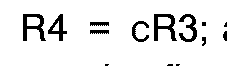
; and
the first and second resistors have values R1 and R2 respectively, proportioned such that
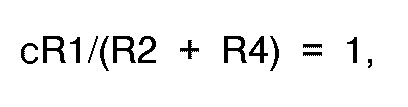
whereby operation of the level shifting circuit is substantially independent of said variations in the first and second supply voltages.
the voltage potential (V4) between said control conductor (37) and said second supply voltage (VEE; VSS) is provided by third and fourth resistors coupled in series with the first and second transistors, respectively and having values R3 and R4, respectively, such that
; and
the first and second resistors have values R1 and R2 respectively, proportioned such that
whereby operation of the level shifting circuit is substantially independent of said variations in the first and second supply voltages.
5. A high-speed level shifting circuit according to claim 1-4 in which there is provided
a buffer (44) having an input connected to the second intermediate voltage node (32)
and an output coupled to said control conductor (37) through the floating voltage
source (V3).
6. A high-speed level shifting circuit according to claim 3 in which the first and second
transistors have equal gate widths
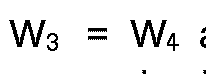
and the first and second resistors have equal values

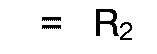
so that the output signal and second resistor currents are equal, reference potential V3 being determined independently of said gate widths and resistor values.
and the first and second resistors have equal values
so that the output signal and second resistor currents are equal, reference potential V3 being determined independently of said gate widths and resistor values.
7. A high-speed level shifting circuit according to claim 3 in which the transistors
are bipolar NPN transistors and the voltage drop V4 is provided by at least the base-emitter voltages Vbe of the first and second transistors.
8. A high-speed level shifting circuit according to claim 7 in which the voltage drop
V4 is further caused by a resistor (R3,R4) connected between the second supply voltage
VEE and the emitter of each of the first and second transistors (Q3,Q4).
9. A high-speed level shifting circuit according to claim 3 in which the transistors
are field effect transistors and the voltage drop V4 is provided by a diode (42,40) connected between the second supply voltage (VEE)
and the source of each of the first and second transistors (Q3,Q4).
10. A high-speed level shifting circuit according to claim any preceding claim having
a feedback current amplifier with approximately unity gain which includes a further
transistor (Q2) having a control electrode thereof connected to the first intermediate
voltage node (28), a first controlled electrode connected to one of the electrodes
of the input transistor (Q1), and a second controlled electrode forming a signal output
(22), said floating voltage source (V3) including a gate-source or base-emitter voltage drop VC2 across the further transistor (Q2).
11. A high-speed level shifting circuit according to claim 10 in which the further transistor
(Q2) has its first controlled electrode connected to the control electrode of the
first input transistor (Q1) to provide a shunt input to the amplifier for level shifting
a current.
12. A high-speed level shifting circuit according to claim 10 in which the further transistor
(Q2) has its first controlled electrode connected to one of the controlled electrodes
of the input transistor to provide a high impedance input to the amplifier for level
shifting a voltage.
13. A high-speed level shifting circuit according to claim 1 in which the reference arrangement
comprises a buffered floating voltage source having an input connected to the second
intermediate voltage node (32) and an output connected to said control conductor.
14. A high-speed level shifting circuit according to claim 13 in which said floating voltage
source includes a voltage follower buffer (66) in series with a voltage dropping subcircuit
(64,62) including a resistor and/or a diode and having a voltage drop equal to V3.
15. A method of high-speed level shifting an electrical signal independently of first
and second supply voltages (VCC,VEE) comprising forming an input emitter-follower or source-follower transistor (Q1)
for receiving an input signal (Iin) having a collector/drain electrode coupled to
a first supply voltage (Vcc) and an emitter/source electrode coupled to one end of a resistor (R1), the second
end of the first resistor (R1) being coupled to a second supply voltage (Vee) via
a first active element (Q3) of a current mirror circuit, the current mirror circuit
also comprising a second active element (Q4) and a control conductor (37);
a second resistor (R2) with one end coupled to the first supply voltage (Vcc) and a second end coupled via circuit means (Qm+3...Q5) to the control conductor (37) of the current mirror, the junction (28) of the first resistor (R1) with the current mirror (Q3) forming a first intermediate voltage node from which an output may be derived, characterised in that said circuit means comprises a floating voltage source (36a, 36b, 36c) providing a reference potential (V3), and the values of the first (R1) and second (R2) resistors and the reference potential (V3) are selected so that the floating potential (V3) equals the sum of the collector-to-base or drain-to-gate voltage (V1) of the input transistor, the first intermediate voltage node-to-second reference voltage potential, and the base-to-emitter or gate-to-source voltage (Vc1) of the input transistor less the voltage potential (V4) between the control conductor (37) of the current mirror (Q3, Q4) and the second supply voltage (Vee).
a second resistor (R2) with one end coupled to the first supply voltage (Vcc) and a second end coupled via circuit means (Qm+3...Q5) to the control conductor (37) of the current mirror, the junction (28) of the first resistor (R1) with the current mirror (Q3) forming a first intermediate voltage node from which an output may be derived, characterised in that said circuit means comprises a floating voltage source (36a, 36b, 36c) providing a reference potential (V3), and the values of the first (R1) and second (R2) resistors and the reference potential (V3) are selected so that the floating potential (V3) equals the sum of the collector-to-base or drain-to-gate voltage (V1) of the input transistor, the first intermediate voltage node-to-second reference voltage potential, and the base-to-emitter or gate-to-source voltage (Vc1) of the input transistor less the voltage potential (V4) between the control conductor (37) of the current mirror (Q3, Q4) and the second supply voltage (Vee).
16. A method of high-speed level shifting an electrical signal according to claim 15 in
which the current mirror, includes two transistors (Q3,Q4) having control electrodes,
coupled together and to a second intermediate voltage node (32) for controlling the
output signal current (Iout) in accordance with a voltage at the second intermediate
voltage node which varies with the supply voltages.
17. A method of high-speed level shifting according to claim 16 in which at least one
of potentials V1 and V2 required by the load circuit and subsequent stage is dependent on process parameters
and temperature variations within a defined range, including selecting a subcircuit
defining potential V3 which is equivalently dependent on process parameters and temperature variations
such that the parameters and variations are substantially compensated.
18. A method of high-speed level shifting according to claim 16 including selecting the
output signal (Iout) and second resistor currents to be equal, the first and second
resistors to be equal.
19. A method of high-speed level shifting according to claim 18 including outputting the
output signal through a further transistor (Q2).
20. A method of high-speed level shifting according to claim 16 including selecting potential
V1 to be no larger than necessary to maximize common mode range of the input signal.
1. Schnelle Pegelwechselschaltung mit ersten und zweiten Widerständen (R1, R2; R1a, R1b, R2), von denen jeder zwei Enden aufweist, einem ersten Transistor (Q1; Q1a, Q1b) mit einer Kollektor-Drain-Elektrode, einer Emitter-Source-Elektrode und einer Steuerelektrode
und einer Stromspiegelschaltng mit einem ersten aktiven Element (Q3; Q4a, Q4b), einem zweiten aktiven Element (Q4; Q3) und einem Steuerleiter (37), wobei die Kollektor-Drain-Elektrode des ersten Transistors
(Q1; Q1a, Q1b) mit einer ersten Speisespannung (VCC; VDD) gekoppelt ist, wobei die Emitter-Source-Elektrode des ersten Transistors mit einem
Ende des ersten Widerstands (R1; R1a, R1b) gekoppelt ist und wobei die Steuerelektrode des ersten Transistors mit einem Eingang
(16, 16a, 16b) gekoppelt ist und wobei die Steuerelektrode des ersten Transistors
mit einem Eingang (16, 16a, 16b) zum Empfang eines Eingangssignals gekoppelt ist,
wobei das andere Ende des ersten Widerstands (R1; R1a, R1b) einen ersten zwischenliegenden Spannungsknoten (28; 28a, 28b) bildet und von dem
eine Ausgabe abgeleitet werden kann und der über das erste aktive Element (Q3; Q4a, Q4b) des Stromspiegels mit einer zweiten Speisespannung (VEE; VSS) gekoppelt ist, wobei ein Ende des zweiten Widerstands (R2, R2) mit der ersten Speisespannung (VCC; VDD) gekoppelt ist und wobei das andere Ende des zweiten Widerstands einen zweiten zwischenliegenden
Spannungsknoten (32) bildet und das über die Schaltkreiseinrichtung (36a, 36b, 36c,
36d, 36e) mit dem Steuerleiter (37) des Stromspiegels gekoppelt ist, dadurch gekennzeichnet,
daß die Schaltkreiseinrichtung eine Schwebespannungsquelle (36a, 36b, 36c) umfaßt,
die ein Bezugspotential (V3) vorsieht, das gemäß einer additiven Funktion ausgewählt
wird, umfassend die Summe der Spannung (V1) zwischen dem Eingang und der ersten Speisespannung (VCC; VDD) und der Spannung (

) zwischen dem ersten zwischenliegenden Spannungsknoten (28, 28a, 28b) und der zweiten Speisespannung (VEE; VSS), abzüglich der Spannung (V4) zwischen dem Steuerleiter (37) und der zweiten Speisespannung, wobei der Spannungspegel (V1) an dem Eingang in bezug auf die erste Speisespannung (VCC; VDD) sich auf einem für ein gegebenes Ausgangspotential gewünschten Pegel befindet.
) zwischen dem ersten zwischenliegenden Spannungsknoten (28, 28a, 28b) und der zweiten Speisespannung (VEE; VSS), abzüglich der Spannung (V4) zwischen dem Steuerleiter (37) und der zweiten Speisespannung, wobei der Spannungspegel (V1) an dem Eingang in bezug auf die erste Speisespannung (VCC; VDD) sich auf einem für ein gegebenes Ausgangspotential gewünschten Pegel befindet.
2. Schnelle Pegelwechselschaltung nach Anspruch 1, wobei die Werte für das Bezugspotential
V3, die ersten und zweiten Widerstände (R1, R2) und das erste und zweite aktive Element
(Q3, Q4) so sind, daß die Spannung (V1) zwischen dem Eingang und der ersten Speisespannung (VCC; VDD) im wesentlichen unabhängig von der ersten und der zweiten Speisespannung (VCC; VEE; VDD; VSS) ist.
3. Schnelle Pegelwechselschaltung nach Anspruch 1 oder 2, wobei der Stromspiegel folgendes
umfaßt:
einen ersten Transistor (Q3) mit einer ersten und zweiten gesteuerten Elektrode, die in Reihe mit einer Verbindungsstelle des ersten Widerstands (R1) und des Knotens (28) geschaltet sind;
einen zweiten Transistor (Q4) mit einer ersten und zweiten gesteuerten Elektrode, die in Reihe mit der Vorspannungseinrichtung (
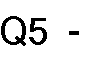
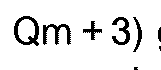
) geschaltet sind; und
wobei die Steuerelektroden des ersten und zweiten Transistors jeweils durch die Schwebespannunsquelle mit dem zweiten Ende (32) des zweiten zwischenliegenden Steuerknotens (32) miteinander verbunden sind, so daß jegliche Spannungsabweichungen an dieser Stelle, aufgrund von Abweichungen in der ersten und/oder der zweiten Speisespannung, zu den Steuerelektroden des ersten und des zweiten Transistors übertragen werden, um so das Ausgangssignal und die zweiten Widerstandsströme proportional zu steuern und um dadurch zu bewirken, daß Abweichungen des zweiten Widerstandsstroms in dem Ausgangssignalstrom wiederholt werden, um diese Speisespannungsabweichungen auszugleichen.
einen ersten Transistor (Q3) mit einer ersten und zweiten gesteuerten Elektrode, die in Reihe mit einer Verbindungsstelle des ersten Widerstands (R1) und des Knotens (28) geschaltet sind;
einen zweiten Transistor (Q4) mit einer ersten und zweiten gesteuerten Elektrode, die in Reihe mit der Vorspannungseinrichtung (
) geschaltet sind; und
wobei die Steuerelektroden des ersten und zweiten Transistors jeweils durch die Schwebespannunsquelle mit dem zweiten Ende (32) des zweiten zwischenliegenden Steuerknotens (32) miteinander verbunden sind, so daß jegliche Spannungsabweichungen an dieser Stelle, aufgrund von Abweichungen in der ersten und/oder der zweiten Speisespannung, zu den Steuerelektroden des ersten und des zweiten Transistors übertragen werden, um so das Ausgangssignal und die zweiten Widerstandsströme proportional zu steuern und um dadurch zu bewirken, daß Abweichungen des zweiten Widerstandsstroms in dem Ausgangssignalstrom wiederholt werden, um diese Speisespannungsabweichungen auszugleichen.
4. Schnelle Pegelwechselschaltung nach den Ansprüchen 1 bis 3, wobei der Stromspiegel
so angeordnet ist, daß der Ausgangssignalstrom gleich dem Produkt einer Proportionalitätskonstanten
c mal dem zweiten Widerstandsstrom ist;
wobei das Spannungspotential (V4) zwischen dem Steuerleiter (37) und der zweiten Speisespannung (VEE; VSS) durch dritte und vierte Widerstände vorgesehen ist, welche entsprechend in Reihe mit dem ersten und zweiten Transistor geschaltet sind und welche die Werte R3 bzw. R4 aufweisen, so daß
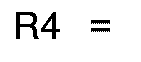
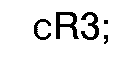
; und
wobei der erste und zweite Widerstand die Werte R1 und R2 aufweisen, die so proportioniert sind, daß
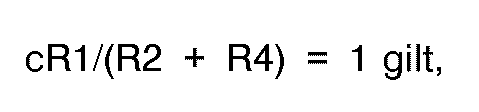
wodurch die Operation der Pegelwechselschaltung im wesentlichen unabhängig von den Abweichungen der ersten und zweiten Speisespannungen ist.
wobei das Spannungspotential (V4) zwischen dem Steuerleiter (37) und der zweiten Speisespannung (VEE; VSS) durch dritte und vierte Widerstände vorgesehen ist, welche entsprechend in Reihe mit dem ersten und zweiten Transistor geschaltet sind und welche die Werte R3 bzw. R4 aufweisen, so daß
; und
wobei der erste und zweite Widerstand die Werte R1 und R2 aufweisen, die so proportioniert sind, daß
wodurch die Operation der Pegelwechselschaltung im wesentlichen unabhängig von den Abweichungen der ersten und zweiten Speisespannungen ist.
5. Schnelle Pegelwechselschaltung nach den Ansprüchen 1-4, wobei ein Puffer (44) vorgesehen
ist, der einen Eingang aufweist, der mit dem zweiten zwischenliegenden Spannungsknoten
(32) verbunden ist und der einen Ausgang aufweist, der durch die Schwebespannungsquelle
(V3) mit dem Steuerleiter (37) gekoppelt ist.
6. Schnelle Pegelwechselschaltung nach Anspruch 3, wobei der erste und der zweite Transistor
die gleichen Torbreiten
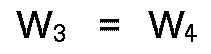
aufweisen und wobei der erste und der zweite Widerstand die gleichen Werte
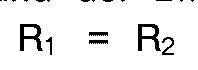
aufweisen, so daß das Ausgangssignal und die zweiten Widerstandsströme gleich sind, wobei das Bezugspotential V3 unabhängig von den Torbreiten und den Widerstandswerten bestimmt wird.
aufweisen und wobei der erste und der zweite Widerstand die gleichen Werte
aufweisen, so daß das Ausgangssignal und die zweiten Widerstandsströme gleich sind, wobei das Bezugspotential V3 unabhängig von den Torbreiten und den Widerstandswerten bestimmt wird.
7. Schnelle Pegelwechselschaltung nach Anspruch 3, wobei die Transistoren bipolare NPN-Transistoren
darstellen und wobei der Spannungsabfall V4 mindestens durch die Basis-Emitter-Spannungen Vbe des ersten und des zweiten Transistors geschaffen wird.
8. Schnelle Pegelwechselschaltung nach Anspruch 7, wobei der Spannungsabfall V4 ferner durch einen Widerstand (R3, R4) bewirkt wird, der zwischen die zweite Speisespannung
VEE und den Emitter jedes der ersten und zweiten Transistoren (Q3, Q4) geschaltet
ist.
9. Schnelle Pegelwechselschaltung nach Anspruch 3, wobei die Transistoren Feldeffekttransistoren
darstellen und wobei der Spannungsabfall V4 durch eine Diode (42, 40) geschaffen wird, welche zwischen die zweite Speisespannung
(VEE) und die Source jedes der ersten und zweiten Transistoren (Q3, Q4) geschaltet
ist.
10. Schnelle Pegelwechselschaltung nach einem der vorstehenden Ansprüche, mit einem rückgekoppelten
Stromverstärker mit einer ungefähren Verstärkung von Eins, welcher einen weiteren
Transistor (Q2) umfaßt, dessen Steuerelektrode mit dem ersten zwischenliegenden Spannungsknoten
(28) verbunden ist, wobei eine erste gesteuerte Elektrode mit einer der Elektroden
des Eingangstransistors (Q1) verbunden ist und wobei eine zweite gesteuerte Elektrode
eine Signalausgabe (22) bildet, wobei die Schwebespannungsquelle (V3) einen Gate-Source- oder Basis-Emitter-Spannungsabfall Vc2 an dem weiteren Transistor (Q2) aufweist.
11. Schnelle Pegelwechselschaltung nach Anspruch 10, wobei die erste gesteuerte Elektrode
des weiteren Transistors (Q2) mit der Steuerelektrode des ersten Eingangstransistors
(Q1) verbunden ist, um einen Nebenschlußeingang zu dem Verstärker für einen Pegelwechsel
eines Stroms vorzusehen.
12. Schnelle Pegelwechselschaltung nach Anspruch 10, wobei die erste gesteuerte Elektrode
des weiteren Transistors (Q2) mit einer der gesteuerten Elektroden des Eingangstransistors
verbunden ist, um für einen Pegelwechsel einer Spannung einen hohen Impedanzeingang
vorzusehen.
13. Schnelle Pegelwechselschaltung nach Anspruch 1, wobei die Bezugsanordnung eine gepufferte
Schwebespannungsquelle umfaßt, deren Eingang mit dem zweiten zwischenliegenden Spannungsknoten
(32) verbunden ist und deren Ausgang mit dem Steuerleiter verbunden ist.
14. Schnelle Pegelwechselschaltung nach Anspruch 13, wobei die Schwebespannungsquelle
einen Spannungsfolgerpuffer (66) aufweist, der sich in Reihenschaltung mit einer Spannungsabfallteilschaltung
(64, 62) befindet, umfassend einen Widerstand und/oder eine Diode und mit einem Spannungsabfall,
der V3 gleicht.
15. Verfahren des schnellen Pegelwechsels eines elektrischen Signals unabhängig von der
ersten und der zweiten Speisespannung (VCC, VEE), umfassend die Gestaltung eines Eingangs-Emitterfolger- oder eines Sourcefolgertransistors
(Q1) zum Empfang eines Eingangssignals (Iin) mit einer Kollektor-Drain-Elektrode,
die mit einer ersten Speisespannung (VCC) gekoppelt ist und mit einer Emitter-Source-Elektrode, die mit einem Ende eines Widerstands
(R1) gekoppelt ist, wobei das andere Ende des ersten Widerstands (R1) über ein erstes
aktives Element (Q3) einer Stromspiegelschaltung mit einer zweiten Speisespannung
(Vee) gekoppelt ist, wobei die Stromspiegelschaltung ferner ein zweites aktives Element
(Q4) und einen Steuerleiter (37) umfaßt;
mit einem zweiten Widerstand (R2), dessen eines Ende mit der ersten Speisespannung (VCC) gekoppelt ist und dessen zweites Ende über die Schaltkreiseinrichtung (Qm+3...Q5) mit dem Steuerleiter (37) des Stromspiegels gekoppelt ist, wobei die Verbindungsstelle (28) des ersten Widerstands (R1) mit dem Stromspiegel (Q3) einen ersten zwischenliegenden Spannungsknoten bildet, von dem eine Ausgabe abgeleitet werden kann, dadurch gekennzeichnet, daß die Schaltkreiseinrichtung eine Schwebespannungsquelle (36a, 36b, 36c) umfaßt, die ein Bezugspotential (V3) vorsieht und wobei die Werte des ersten (R1) und des zweiten (R2) Widerstands und des Bezugspotentials (V3) so ausgewählt werden, daß das Schwebepotential (V3) gleich der Summe der Kollektor-Basis- oder der Drain-Gate-Spannung (V1) des Eingangstransistors, des ersten zwischenliegenden Spannungsknotens zu dem zweiten Bezugsspannunspotential und der Basis-Emitter- oder Gate-Source-Spannung (Vc1) des Eingangstransistors abzüglich des Spannungspotentials (V4) zwischen dem Steuerleiter (37) des Stromspiegels (Q3, Q4) und der zweiten Speisespannung (Vee) ist.
mit einem zweiten Widerstand (R2), dessen eines Ende mit der ersten Speisespannung (VCC) gekoppelt ist und dessen zweites Ende über die Schaltkreiseinrichtung (Qm+3...Q5) mit dem Steuerleiter (37) des Stromspiegels gekoppelt ist, wobei die Verbindungsstelle (28) des ersten Widerstands (R1) mit dem Stromspiegel (Q3) einen ersten zwischenliegenden Spannungsknoten bildet, von dem eine Ausgabe abgeleitet werden kann, dadurch gekennzeichnet, daß die Schaltkreiseinrichtung eine Schwebespannungsquelle (36a, 36b, 36c) umfaßt, die ein Bezugspotential (V3) vorsieht und wobei die Werte des ersten (R1) und des zweiten (R2) Widerstands und des Bezugspotentials (V3) so ausgewählt werden, daß das Schwebepotential (V3) gleich der Summe der Kollektor-Basis- oder der Drain-Gate-Spannung (V1) des Eingangstransistors, des ersten zwischenliegenden Spannungsknotens zu dem zweiten Bezugsspannunspotential und der Basis-Emitter- oder Gate-Source-Spannung (Vc1) des Eingangstransistors abzüglich des Spannungspotentials (V4) zwischen dem Steuerleiter (37) des Stromspiegels (Q3, Q4) und der zweiten Speisespannung (Vee) ist.
16. Verfahren des schnellen Pegelwechsels eines elektrischen Signals nach Anspruch 15,
wobei der Stromspiegel zwei Transistoren (Q3, Q4) mit Steuerelektroden umfaßt, die
miteinander und mit einem zweiten zwischenliegenden Spannungsknoten (32) verbunden
sind, zur Steuerung des Ausgangssignalstroms (Iout) in Übereinstimmung mit einer Spannung
an dem zweiten zwischenliegenden Spannungsknoten, welche sich mit den Speisespannungen
ändert.
17. Verfahren des schnellen Pegelwechsels nach Anspruch 16, wobei mindestens eins der
von dem Verbraucherkreis verlangten Potentiale V1 und V2 und die folgende Stufe von Verfahrensparametern und Temperaturschwankungen innerhalb
eines festgelegten Bereichs abhängen, umfassend die Auswahl eines teilschaltungsdefinierenden
Potentials V3, welches äquivalent von Verfahrensparametern und Temperaturschwankungen abhängt,
so daß die Parameter und die Schwankungen im wesentlichen ausgeglichen werden.
18. Verfahren des schnellen Pegelwechsels nach Anspruch 16, umfassend die Auswahl des
Ausgangssignals (Iout) und der zweiten Widerstandsströme mit gleicher Höhe, wobei
sich der erste und der zweite Widerstand gleichen.
19. Verfahren des schnellen Pegelwechsels nach Anspruch 18, umfassend die Ausgabe des
Ausgangssignals durch einen weiteren Transistor (Q2).
20. Verfahren des schnellen Pegelwechsels nach Anspruch 16, umfassend der Auswahl des
Potentials V1, so daß dieses nicht größer ist, als dies zur Maximierung eines gewöhnlichen Modusbereichs
des Eingangssignals notwendig ist.
1. Circuit de décalage de niveau à grande vitesse comprenant une première et une deuxième
résistances (R1,R2 ; R1a,R1b,R2) ayant chacune deux extrémités, un premier transistor (Q1 ; Q1a,Q1b) ayant une électrode de collecteur/drain, une électrode d'émetteur/source et une
électrode de commande, et un circuit de miroir de courant ayant un premier élément
actif (Q3 ;Q4a,Q4b), un deuxième élément actif (Q4 ; Q3) et un conducteur de commande (37), ladite électrode de collecteur/drain dudit premier
transistor (Q1 ; Q1a,Q1b) étant couplée à une première tension d'alimentation (VCC ; VDD), ladite électrode d'émetteur/source dudit premier transistor étant couplée à une
extrémité de ladite première résistance (R1 ; R1a,R1b) et ladite électrode de commande dudit premier transistor étant couplée à une entrée
(16,16a,16b) pour recevoir un signal d'entrée, l'autre extrémité de ladite première
résistance (R1 ; R1a,R1b) formant un premier noeud de tension intermédiaire (28; 28a,28b) à partir duquel
une sortie peut être dérivée et étant couplée à une deuxième tension d'alimentation
(VEE ; VSS) par l'intermédiaire du dit premier élément actif (Q3 ; Q4a,Q4b) dudit miroir de courant, une extrémité de ladite deuxième résistance (R2,R2) étant couplée à ladite première tension d'alimentation (VCC ; VDD) et l'autre extrémité de ladite deuxième résistance formant un deuxième noeud de
tension intermédiaire (32) et étant couplée audit conducteur de commande (37) dudit
miroir de courant par des éléments de circuit (36a,36b,36c,36d,36e),caractérisé en
ce que lesdits éléments de circuit comprennent une source de tension flottante (36a,36b,36c)
fournissant un potentiel de référence (V3) choisi conformément à une fonction additive formant la somme de la tension (V1) entre ladite entrée et ladite première tension d'alimentation (VCC ; VDD) et de la tension (

) entre le dit premier noeud de tension intermédiaire (28,28a,28b) et ladite deuxième tension d'alimentation (VEE : VSS), moins la tension (V4) entre ledit conducteur de commande (37) et ladite deuxième tension d'alimentation, de sorte que le niveau de tension (V1) à ladite entrée, avec référence à ladite première tension d'alimentation (VCC ; VDD), est à un niveau désiré pour un potentiel de sortie donné.
) entre le dit premier noeud de tension intermédiaire (28,28a,28b) et ladite deuxième tension d'alimentation (VEE : VSS), moins la tension (V4) entre ledit conducteur de commande (37) et ladite deuxième tension d'alimentation, de sorte que le niveau de tension (V1) à ladite entrée, avec référence à ladite première tension d'alimentation (VCC ; VDD), est à un niveau désiré pour un potentiel de sortie donné.
2. Circuit de décalage de niveau à grande vitesse suivant la revendication 1, dans lequel
les valeurs du potentiel de référence (V3), des première et deuxième résistances (R1,R2) et des premier et deuxième éléments
actifs (Q3,Q4) sont telles que la tension (V1) entre ladite entrée et ladite première tension d'alimention (VCC ; VDD) est sensiblement indépendante des première et deuxième tensions d'alimentation (VCC ; VEE ; VDD; VSS).
3. Circuit de décalage de niveau à grande vitesse suivant la revendication 1 ou 2, dans
lequel le miroir de courant comprend :
un premier transistor (Q3) ayant une première et une deuxième électrodes commandées connectées en série avec une jonction de la première résistance (R1) et dudit noeud (28) ;
un deuxième transistor (Q4) ayant une première et une deuxième électrodes commandées connectées en série avec les moyens de polarisation (
) ; et
les premier et deuxième transistors ayant tous deux leurs électrodes de commande interconnectées par l'intermédiaire de la source de tension flottante à la deuxième extrémité (32) du deuxième noeud de tension intermédiaire (32), de sorte que toutes les variations de tension à ce point, dues à des variations de l'une quelconque des première et deuxième tensions d'alimentation ou des deux, sont transmises aux électrodes de commande des premier et deuxième transistors pour commander proportionnellement les courants du signal de sortie et de la deuxième résistance afin que les variations du courant de la deuxième résistance se reflètent dans le courant du signal de sortie de manière à compenser lesdites variations de la tension d'alimentation.
un premier transistor (Q3) ayant une première et une deuxième électrodes commandées connectées en série avec une jonction de la première résistance (R1) et dudit noeud (28) ;
un deuxième transistor (Q4) ayant une première et une deuxième électrodes commandées connectées en série avec les moyens de polarisation (
) ; et
les premier et deuxième transistors ayant tous deux leurs électrodes de commande interconnectées par l'intermédiaire de la source de tension flottante à la deuxième extrémité (32) du deuxième noeud de tension intermédiaire (32), de sorte que toutes les variations de tension à ce point, dues à des variations de l'une quelconque des première et deuxième tensions d'alimentation ou des deux, sont transmises aux électrodes de commande des premier et deuxième transistors pour commander proportionnellement les courants du signal de sortie et de la deuxième résistance afin que les variations du courant de la deuxième résistance se reflètent dans le courant du signal de sortie de manière à compenser lesdites variations de la tension d'alimentation.
4. Dispositif de décalage de niveau à grande vitesse suivant les revendications 1 à 3,
dans lequel le miroir de courant est agencé d'une manière telle que le courant du
signal de sortie est égal au produit d'une constante de proportionnalité c multipliée
par le courant de la deuxième résistance ;
la tension (V4) entre ledit conducteur de commande (37) et ladite deuxième tension d'alimentation (VEE ; VSS) est engendrée par une troisième et une quatrième résistances couplées en série avec les premier et deuxième transistors, respectivement, et ayant des valeurs R3 et R4, respectivement, telles que
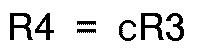
; et
les première et deuxième résistances ont des valeurs R1 et R2, respectivement, ayant un rapport tel que
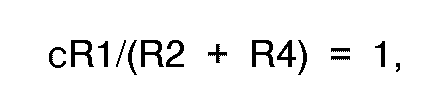
de sorte que le fonctionnement du circuit de décalage de niveau est sensiblement indépendant desdites variations des première et deuxième tensions d'alimentation.
la tension (V4) entre ledit conducteur de commande (37) et ladite deuxième tension d'alimentation (VEE ; VSS) est engendrée par une troisième et une quatrième résistances couplées en série avec les premier et deuxième transistors, respectivement, et ayant des valeurs R3 et R4, respectivement, telles que
; et
les première et deuxième résistances ont des valeurs R1 et R2, respectivement, ayant un rapport tel que
de sorte que le fonctionnement du circuit de décalage de niveau est sensiblement indépendant desdites variations des première et deuxième tensions d'alimentation.
5. Circuit de décalage de niveau à grande vitesse suivant les revendications 1 à 4, dans
lequel il est prévu un tampon (44) ayant une entrée connectée au deuxième noeud de
tension intermédiaire (32) et une sortie couplée audit conducteur de commande (37)
par l'intermédiaire de la source de tension flottante (V3).
6. Circuit de décalage de niveau à grande vitesse suivant la revendication 3,dans lequel
les premier et deuxième transistors ont des largeurs de porte égales
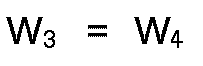
et les première et deuxième résistances ont des valeurs égales
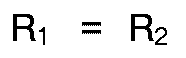
de sorte que les courants du signal de sortie et de la deuxième résistance sont égaux, le potentiel de référence (V3) étant déterminé indépendamment desdites largeurs de porte et desdites valeurs de résistance.
et les première et deuxième résistances ont des valeurs égales
de sorte que les courants du signal de sortie et de la deuxième résistance sont égaux, le potentiel de référence (V3) étant déterminé indépendamment desdites largeurs de porte et desdites valeurs de résistance.
7. Circuit de décalage de niveau à grande vitesse suivant la revendication 4, dans lequel
les transistors sont des transistors NPN bipolaires et la chute de tension (V4) est engendrée par au moins les tensions base-émetteur Vbe des premier et deuxième transistors.
8. Circuit de décalage de niveau à grande vitesse suivant la revendication 7, dans lequel
la chute de tension (V4) est en outre engendrée par une résistance (R3,R4) connectée entre la deuxième tension
d'alimentation (VEE) et l'émetteur de chacun des premier et deuxième transistors (Q3,Q4).
9. Circuit de décalage de niveau à grande vitesse suivant la revendication 3, dans lequel
les transistors sont des transistors à effet de champ et la chute de tension (V4) est engendrée par une diode (42,40) connectée entre la deuxième tension d'alimentation
(VEE) et la source de chacun des premier et deuxième transistors (Q3, Q4).
10. Circuit de décalage de niveau à grande vitesse suivant une quelconque des revendications
précédentes comprenant un amplificateur de courant de réaction ayant un gain voisin
de l'unité,qui comprend un autre transistor (Q2) qui a une électrode de commande connectée
au premier noeud de tension intermédiaire (28), une première électrode commandée connectée
à une des électrodes du transistor d'entrée (Q1) et une deuxième électrode commandée
formant une sortie de signal (22), ladite source de tension flottante (V3) incluant une chute de tension grille-source ou base-émetteur (VC2) aux bornes de l'autre transistor (Q2).
11. Circuit de décalage de niveau à grande vitesse suivant la revendication 10, dans lequel
ledit autre transistor (Q2) a sa première électrode commandée connectée à l'électrode
de commande du premier transistor d'entrée (Q1) pour fournir une entrée en parallèle
à l'amplificateur, pour le décalage de niveau d'un courant.
12. Circuit de décalage de niveau à grande vitesse suivant la revendication 10, dans lequel
la première électrode commandée dudit autre transistor (Q2) est connectée à une des
électrodes commandées du transistor d'entrée, pour fournir une entrée de forte impédance
à l'amplificateur, pour le décalage de niveau d'une tension.
13. Circuit de décalage de niveau à grande vitesse suivant la revendication 1, dans lequel
l'agencement de référence comprend une source de tension flottante en tampon ayant
une entrée connectée au deuxième noeud de tension intermédiaire (32) et une sortie
connectée au dit conducteur de commande.
14. Circuit de décalage de niveau à grande vitesse suivant la revendication 13,dans lequel
ladite source de tension flottante comprend un tampon suiveur de tension (66) en série
avec un sous-circuit de chute de tension (64,62) incluant une résistance et/ou une
diode et ayant une chute de tension égale à V3.
15. Procédé de décalage de niveau à grande vitesse d'un signal électrique indépendamment
d'une première et d'une deuxième tensions d'alimentation (VCC,VEE), qui comprend la formation d'un transistor d'entrée à charge d'émetteur ou à charge
de source (Q1) pour recevoir un signal d'entrée (Iin), ayant une électrode de collecteur/drain couplée à une première tension d'alimentation
(VCC) et une électrode d'émetteur/source couplée à une extrémité d'une résistance (R1),
la deuxième extrémité de la première résistance (R1) étant couplée à une deuxième
tension d'alimentation (VEE) par l'intermédiaire d'un premier élément actif (Q3) d'un circuit de miroir de courant
, le circuit de miroir de courant comprenant également un deuxième élément actif (Q4)
et un conducteur de commande (37) ; une deuxième résistance (R2) dont une première
extrémité est couplée à la première tension d'alimentation (VCC) et une deuxième extrémité est couplée par des éléments de circuit (Qm+3...Q5) au conducteur de commande (37) du miroir de courant, la jonction (28) de la première
résistance (R1) avec le miroir de courant (Q3) formant un premier noeud de tension
intermédiaire à partir duquel une sortie peut être dérivée, caractérisé en ce que
lesdits éléments de circuit comprennent une source de tension flottante (36a,36b,
36c) fournissant un potentiel de référence (V3), et les valeurs des première (R1)
et deuxième (R2) résistances et du potentiel de référence (V3) sont choisies de sorte
que le potentiel flottant (V3) est égal à la somme de la tension (V1) entre collecteur
et base ou entre drain et grille du transistor d'entrée, de la tension entre le premier
noeud de tension intermédiaire et ladite deuxième tension de référence,et de la tension
(Vc1) entre base et émetteur ou entre grille et source du transistor d'entrée, moins la
tension (V4) entre le conducteur de commande (37) du miroir de courant (Q3,Q4) et la deuxième
tension d'alimentation (VEE).
16. Procédé de décalage de niveau à grande vitesse d'un signal électrique suivant la revendication
15, dans lequel le miroir de courant comprend deux transistors (Q3,Q4) ayant des électrodes
de commande, couplées l'une à l'autre et à un deuxième nooeud de tension intermédiaire
(32), pour commander le courant de signal de sortie (Iout) en fonction d'une tension
, au deuxième noeud de tension intermédiaire, qui varie avec les tensions d'alimentation.
17. Procédé de décalage de niveau à grande vitesse suivant la revendication 16, dans lequel
au moins un des potentiels V1 et V2 requis par le circuit de charge et un étage subséquent dépend des variations de paramètres
de traitement et de la température dans une plage définie, comprenant la sélection
d'un sous-circuit qui définit un potentiel V3 qui dépend de façon équivalente des variations des paramètres de traitement et de
la température, de sorte que les variations des paramètres et de la température sont
sensiblement compensées.
18. Procédé de décalage de niveau à grande vitesse suivant la revendication 16, qui comprend
la sélection des courants de signal de sortie (Iout) et de la deuxième résistance
à des valeurs égales, et des première et deuxième résistances à des valeurs égales.
19. Procédé de décalage de niveau à grande vitesse suivant la revendication 18, qui comprend
l'émission du signal de sortie par l'intermédiaire d'un autre transistor (Q2).
20. Procédé de décalage de niveau à grande vitesse suivant la revendication 16, qui comprend
la sélection du potentiel V1 à une valeur non supérieure à ce qui est nécessaire pour maximiser la plage de mode
commun du signal d'entrée.