| (19) |
 |
|
(11) |
EP 0 278 590 B2 |
| (12) |
NEW EUROPEAN PATENT SPECIFICATION |
| (45) |
Date of publication and mentionof the opposition decision: |
|
30.03.1994 Bulletin 1994/13 |
| (45) |
Mention of the grant of the patent: |
|
12.06.1991 Bulletin 1991/24 |
| (22) |
Date of filing: 08.01.1988 |
|
|
| (54) |
Droplet deposition apparatus
Vorrichtung zum Niederschlagen von Tröpfchen
Dispositif de dépôt de gouttelettes
|
| (84) |
Designated Contracting States: |
|
AT CH DE ES FR GB GR IT LI NL SE |
| (30) |
Priority: |
10.01.1987 GB 8700533
10.01.1987 GB 8700531
|
| (43) |
Date of publication of application: |
|
17.08.1988 Bulletin 1988/33 |
| (73) |
Proprietor: XAAR LIMITED |
|
Cambridge CB4 4FD (GB) |
|
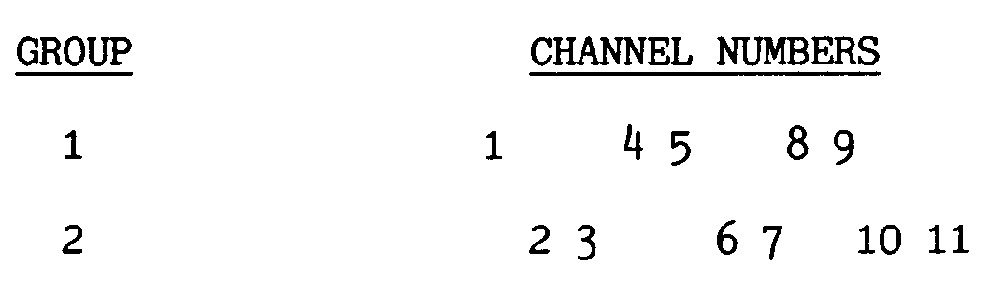
| (72) |
Inventors: |
|
- Michaelis, Alan John
Chicago, Illinois 60606 (US)
- Paton, Anthony David
Longstanton St. Michael, Cambridge (GB)
- Temple, Stephen
Cambridge CB3 OLN (GB)
- Bartky, Walter Scott
Chicago, Illinois 60640 (US)
|
| (74) |
Representative: Coleman, Stanley et al |
|
Amberley
Totteridge Green
GB-London N20 8PE
GB-London N20 8PE (GB) |
| (56) |
References cited: :
GB-A- 2 098 134
|
JP-B-61 045 542
|
|
| |
|
|
- IBM TECHNICAL DISCLOSURE BULLETIN, vol. 23, no. 10, March 1981, page 4438, Armonk,
New York, US; C.S. TSAO: "Drop-on-demand ink jet nozzle array with two nozzles/piezoelectric
crystal"
- IBM TECHNICAL DISCLOSURE BULLETIN, vol. 22, no. 6, November 1979, pages 2527-2529,
Armonk, New York, US; K.K. SHIH: "Application of GMO as an active element to printing
mechanism"
|
|
| |
|
[0001] This invention relates to pulsed droplet deposition apparatus and more particularly
to such apparatus including a plurality of droplet deposition channels. Typical of
this kind of apparatus are multi-channel pulsed droplet ink jet printers, often also
referred to as "drop-on-demand" ink jet printers.
[0002] An existing technology for the production of multi-channel drop-on-demand ink jet
printers is known from, for example, US-A-3,179,042; GB-A-2 007 162 and GB-A-2 106
039. These patent specifications disclose thermally operated printheads which, in
response to an electrical input signal, generate a heat pulse in selected ink channels
to develop a vapour bubble in the ink of those selected channels. This in turn generates
a pressure pulse having the pressure and time characteristics appropriate for the
ejection of an ink droplet through a nozzle at the end of the channel.
[0003] Thermally operated printheads of this nature possess a number of significant disadvantages.
First, the thermal mode of operation is inefficient and typically requires 10 to 100
times the energy to produce an ink droplet as compared with known piezo-electric printheads.
Second, difficulties are found in providing the very high levels of reliability and
extended lifetimes which are necessary in an ink jet printhead. For example, thermally
operated printheads have a tendency for ink deposits to form on the heating electrodes.
Such deposits have an insulating effect sufficient to increase substantially the electrical
pulse magnitude necessary to eject an ink droplet. Thermal stress cracks and element
burn-out, as well as cavitation erosion, have also proved difficult to eliminate.
Third, only ink specifically developed to tolerate thermal cycling can be used and
suitable ink formulations often proved to be of low optical density compared with
conventional inks.
[0004] Attempts have been made to produce multi-channel ink jet printers using piezo-electric
actuators and reference is made in this connection to US-A-4,525,728; US-A-4,549,191
and US-A-4,584,590 and IBM Technical Disclosure Bulletin Vol. 23 No. 10 March 1981.
Piezo-electric actuators have the advantage, compared with thermal processes, of low
energy requirement. However, the existing proposals have not achieved the levels of
printing resolution that are desired. A prime influence upon printing resolution is
the number of channels, and thus nozzles, per unit length in the direction transverse
to paper movement relative to the head. Existing piezo-electric printhead technology
as exemplified by the prior art referenced above, is capable of achieving a maximum
channel density of around 1 to 2 channels per mm. In terms of effective resolution,
and by this is meant the density at which the droplets can be deposited upon paper,
such nozzle density is for many applications insufficient. It does not, for example,
enable a transverse line to be printed with ink droplets that are indistinguishable
by the eye at normal reading distance.
[0005] Effective resolution can be increased, for example, by angling the printhead in the
plane of the paper so as to decrease the inter-channel spacing in the transverse direction.
However, this necessitates sophisticated control logic and the use of delay circuitry
to ensure that all droplets associated with a particular print line are deposited
on the paper in a single transverse line (or sufficiently close to the line to be
indistinguishable therefrom by the eye). An alternative approach is to provide for
movement of the printhead. As will be understood, this introduces significant mechanical
and control complexities, and is not felt to be advantageous. A third approach to
increasing effective resolution is to provide two or more banks of channels which
are mutually spaced in the direction of paper movement but which cooperate to print
a single transverse line. With only two such banks it may be possible to configure
the nozzles of both channels in a common print line. With more banks, a significant
nozzle spacing is built up in the direction of paper movement and delay circuitry
is required to provide for the time spaced actuation of the channels necessary to
enable droplets to be deposited on a single transverse line. The provision of delay
circuitry adds to manufacturing costs by an amount which typically increases with
the amount of delay required.
[0006] It is useful to note at this point that colour printing would typically require four
banks of channels even if each bank provided in itself sufficient single colour resolution.
Where a multiplicity of banks is required to produce the desired resolution for a
single colour, it will be understood that colour applications compound the problems
outlined above.
[0007] The advantages of decreasing the inter-channel spacing in the direction transverse
to relative paper movement should now be apparent. In many cases, typically where
colour printing is required, there are further advantages in reducing the inter-channel
spacing along the direction of paper movement (that is to say between banks). This
reduces the bulk dimensions of the printhead but more importantly reduces the time
delays necessary as described above.
[0008] Broadly, it is an object of this invention to provide improved multi-channel pulse
droplet deposition apparatus operating at low energy levels and providing relatively
large numbers of channels per unit length whether transverse to or parallel with the
direction of paper movement, or both. It is a further object of this invention to
provide such apparatus which is economic in manufacture.
[0009] In JP-B-61 45542 there is disclosed a multi-channel array, electrically pulsed droplet
deposition apparatus, comprising parallel channels disposed side by side and having
respective side walls which extend in the lengthwise direction of the channels and
separate one from the next of the channels, a series of nozzles disposed at the spacing
of the channels and respectively communicating with said channels, connection means
for connecting the channels with a source of droplet deposition liquid and electrically
actuable means comprising poled piezoelectric means which form a substantial part
at least of a channel separating side wall of each channel and which upon selection
of any one of said channels, are actuated to effect transverse displacement of the
wall of said selected channel containing said poled piezoelectric means.
[0010] Manufacture of the apparatus disclosed in this patent involves forming the interchannel
walls separately from the body of the apparatus and then mounting them in fluid light
fashion in the apparatus. The mounting of the interchannel walls requires the use
of flexible joints along opposite edges of those walls to allow flexure but inhibit
shear along said wall edges. Such joints aside from being difficult to achieve without
high rates of rejection are prone to failure. Also, the achievable channel density
would be comparable with the densities achievable by other prior art piezoelectrically
operated structures referred to earlier and the apparatus is therefore not capable
of the resolution needed for many desired printing applications.
[0011] The present invention consists in apparatus of the kind disclosed in JP-B-61 45542
which is characterised in that said poled piezoelectric means of said selected channel
comprise a part which is of uniform piezoelectric material and electrodes are disposed
in relation to said part so as to apply thereto an electric field to effect displacement
of said part in shear mode transversely to said selected channel to cause pressure
change in said selected channel and thereby effect droplet ejection therefrom.
[0012] The use of interchannel walls having respective parts of uniform piezoelectric material
which are displaceable in shear mode transversely to the corresponding channels enables
the employment of much improved manufacturing techniques which are suitable for commercial
production of array apparatus having substantially higher channel densities than have
hitherto been achieved with piezoelectrically actuated printheads. Thus, for example,
from a sheet of thickness poled piezoelectric material it is possible either simultaneously
or in a limited number of repetitive operations to form grooves at high densities
defining the droplet liquid channels. Such grooves thus are bounded by interchannel
walls of uniform piezoelectric material which can be simultaneously coated with electrode
material which in turn can be coated with insulation and the grooves can then be closed
by a top sheet after which a nozzle plate can be mounted and nozzles formed therein
in register with the channels. Voltages applied to the electrodes on opposite sides
of walls of either or both of the interchannel of the channel selected for actuation
then effect wall deflection transversely in shear mode to effect droplet ejection
from the selected channel. Thus channel formation, electrode deposition, electrode
insulating and channel closure are all parallel operations as is highly desirable
for commercial production. This can be achieved not only where the original sheet
of piezoelectric material is poled in its thickness direction but also if it is poled
in the plane thereof.
[0013] The invention further consists in a method of making a multi-channel array pulsed
droplet deposition apparatus, characterised by the steps of forming a base wall with
a layer of piezo-electric material, forming a multiplicity of parallel grooves in
said base wall which extend through said layer of piezo-electric material to afford
walls of uniform, poled piezo-electric material between successive of said grooves,
pairs of opposing walls defining between them elongate liquid channels, locating electrodes
in relation to said walls so that an electric field can be applied to effect displacement
of said walls transversely to said liquid channels, connecting electrical drive circuit
means to said electrodes, securing a top wall to said walls of said piezo-electric
material to close said liquid channels, providing nozzles and liquid supply means
for said liquid channels.
[0014] The invention will now be described, by way of example, with reference to the accompanying,
diagrammatic drawings, in which:-
- FIGURE 1(a)
- is a schematic perspective view of a generalised form of multi-channel pulsed droplet
deposition apparatus, namely, a drop-on-demand ink-jet array printhead, according
to the invention, with parts (particularly a cover plate) omitted to reveal structural
details;
- FIGURE 1(b)
- is a cross-sectional view taken normal to the axes of the channels of the generalised
printer illustrated in Figure 1(a);
- FIGURE 1(c)
- is a sectional plan view taken on the line 1(c)-1(c) of Figure 1(b);
- FIGURE 2(a)
- is a fragmentary cross-sectional view similar to that of Figure 1(b) but to a larger
scale and showing a specific printhead according to the invention;
- FIGURE 2(b)
- is a fragmentary sectional plan view of the printer of Figure 2(a) illustrating electrical
connections thereof;
- FIGURE 2(c)
- is a view similar to Figure 2(a) of a modified form of the embodiment of Figures 2(a)
and 2(b),
- FIGURE 2(d)
- shows voltage waveforms employed for ejecting droplets from the printhead of Figures
2(a) and 2(b) or that of Figure 2(c);
- FIGURE 3(a)
- is a cross-sectional view showing a further specific form of printhead according to
the invention providing a two dimensional array of channels;
- FIGURE 3(b)
- is a fragmentary sectional plan view of the printhead of Figure 3(a) illustrating
electrical connections thereof;
- FIGURE 3(c)
- shows voltage wave forms for operating the printhead of Figures 3(a) and 3(b);
- FIGURE 4
- is a cross-sectional view similar to Figures 2(a) and 3(a) showing a further embodiment
of the invention;
- FIGURE 5
- is a sectional plan view of a modification applicable to the embodiments of Figures
2(a) and 2(b), Figures 3(a) and 3(b), Figures 4 and 6;
- FIGURE 6
- is a cross sectional view similar to Figures 2(a) and 3(a) illustrating a further
embodiment of the invention; and
- FIGURE 7
- is a series of graphs illustrating the effect of compliance changes on pressure changes
in neighbouring channels.
[0015] In the drawings, like parts have been accorded the same numerical references.
[0016] Referring first to Figures 1(a), 1(b) and 1(c), a planar high-density array, drop-on-demand
ink jet printer comprises a printhead 10 formed with a multiplicity of parallel ink
channels 2, nine only of which are shown and the longitudinal axes of which are disposed
in a plane.
[0017] By "high-density array" in this context is meant an array in which the ink channel
density along a line intersecting the channel axes perpendicularly, is at least two
per millimetre. The channels 2 contain ink 4 and terminate at corresponding ends thereof
in a nozzle plate 5 in which are formed nozzles 6, one for each channel. Ink droplets
7 are ejected on demand from the channels 2 and deposited on a print line 8 of a print
surface 9 between which and the printhead 10 there is relative motion normal to the
plane of the channel axes.
[0018] The printhead 10 has a planar base part 20 in which the channels 2 are cut or otherwise
formed so as to extend in parallel rearwardly from the nozzle plate 5. The channels
2 are long and narrow with a rectangular cross-section and have opposite side walls
11 which extend the length of the channels. The side walls 11 are displaceable transversely
relatively to the channel axes along substantially the whole of the length thereof,
as later described, to cause changes of pressure in the ink in the channels to effect
droplet ejection from the nozzles. The channels 2 connect at their ends remote from
the nozzles, with a transverse channel 13 which in turn connects with an ink reservoir
(not shown) by way of pipe 14. Electrical connections (not shown) for activating the
channel side walls 11 are made to an LSI chip 16 on the base part 20. By designing
the working parts for the multiplicity of parallel channels of the printhead in a
planar configuration, the manufacture of printheads with very large numbers of parallel
print channels can be performed in a sequence of parallel operations, as hereinafter
described, working on jigs supporting a large number of base parts at one time.
[0019] High density of packing of the ink channels 2 and, therefore, of the nozzles 6 is
achieved in that the ink channels 2 are rectangular in the cross-section thereof normal
to the channel axes and the side walls 11 which form the longer edge of each channel
cross-section extend normal to the plane containing the channel axes. The aspect ratio
of the channel cross-sections i.e. the ratio of the dimensions normal and parallel
to the plane of the channel axes, is substantial, typically 3 to 30. The channels
particularly are separated by transversely displaceable side walls 11 which are electrically
actuated to effect printing.
[0020] In certain prior art arrays, see for example United States Patents 4,525,728 (Koto),
4,549,191 (Fukuchi and Ushioda) and 4,584,590 (Fishbeck and Wright), the channels
employ droplet ejection actuators not in walls between the channels thereof but in
the top walls bounding the respective channels. The use of such "roof" actuators limits
the channel density, even after optimisation, to 1 to 2 channels per millimetre. With
channels having displaceable side walls and high aspect ratio cross-sections disposed
with their longer dimension perpendicular to the plane of the channel axes it is possible
to provide printheads of linear density greater than, and indeed substantially greater
than, 2 per millimetre. This represents a substantial advance in the competitive pursuit
for low cost per channel, high resolution array printheads not subject to the disadvantages
referred to of thermal bubble operated devices.
[0021] In the embodiments of the invention herein described acoustic waves are employed
in conjunction with electrically actuated displaceable walls which are long, that
is they extend the whole or substantially the whole length of the channels from the
nozzles 6 to the ink supply manifold. When actuated (as will be seen), the displaceable
side walls 11 on one or both sides of a channel compress the ink in the channel. This
pressure is dissipated by an acoustic pressure wave travelling from the nozzle. The
condensation of the wave acts, for the period of travel of the wave along the length
of the channel, as a distributed source the length of the channel which feeds ink
under pressure out of the nozzles to expel a drop.
[0022] Where a channel and the long narrow actuator, provided by the whole or a part of
a side wall 11 extending the length thereof, is combined with an acoustic pump in
this way, the volume displacement of the actuator can be distributed so that the wall
displacement is small at any section. Typically the actuator wall has an aspect ratio,
i.e. the ratio of its width between channels to its height, of 3-30 or more. At the
same time the layout is a planar parallel channel configuration, suitable for manufacture
in quantity.
[0023] In practice the length of the channel along which the acoustic wave travels is limited
(only) by the period suitable for drop expulsion, and by the growth of viscous boundary
layers in the ink channel. Typically, the length of the channel will be more than
30 and preferably more than about 100 times its width in the channel plane.
[0024] When the linear density of the channels in a planar array is increased, it is the
result of reducing both the narrow section dimension parallel to the plane of the
channel axes and the thickness dimension in the same plane of the common displaceable
walls. This causes reduced compliance (CI) of the ink in the channels and increased
compliance (CW) of the displaceable walls between channels.
[0025] High density of channels consequently means that the compliance of the wall between
ink channels is an important aspect of the printhead design, which has not been considered
in prior art systems.
[0026] The wall compliance, for example, may affect the velocity of sound in the ink along
a channel, causing the acoustic velocity to be lower in magnitude than for the ink
solvent alone. At the same time, when the displaceable side walls 11 are actuated,
the pressure in the ink in the actuated channels is lower with more compliant walls
than would be the case with less compliant walls. Additionally, due to compliance,
some change in pressure is generated in neighbouring channels which are not actuated.
Means to compensate for what might otherwise be a disadvantage of a printhead with
displaceable walls are discussed below.
[0027] The embodiments of the invention illustrated in Figures 2(a), 2(b), 3(a), 3(b) and
4 show different possible ways of constructing and of operating the transversely displaceable,
inter-channel side walls 11. These will be considered in turn.
[0028] In Figures 2(a) and 2(b) a printhead is shown which because of its ease of manufacture
and electromechanical efficiency is a preferred embodiment of the invention. The array
incorporates displaceable side walls 11 in the form of shear mode actuators 15, 17,
19, 21 and 23 sandwiched between base and top walls 25 and 27 and each formed of upper
and lower wall parts 29 and 31 of uniform piezoelectric material which, as indicated
by arrows 33 and 35, are poled in opposite senses normal to the plane containing the
channel axes. Typically, the distance between adjacent side walls is 0.05mm and the
height of said side wall 0.30mm. The length of each channel is typically 10mm or more.
Electrodes 37, 39, 41, 43 and 45 respectively cover all inner walls of the respective
channels 2. Thus, when a voltage is applied to the electrode of a particular channel,
say electrode 41 of the channel 2 between shear mode actuators 19 and 21, whilst the
electrodes 39 and 43 of the channels 2 on either side of that of electrode 41 are
held to ground, an electric field is applied in opposite senses to the actuators 19
and 21. By virtue of the opposite poling of the upper and lower wall parts 29 and
31 of each actuator, these are deflected in shear mode into the channel 2 therebetween
into chevron form as indicated by broken lines 47 and 49. A pressure is thus applied
to the ink 4 in the channel 2 between the actuators 19 and 21 which causes an acoustic
pressure wave to travel along the length of the channel and eject an ink droplet 7
therefrom. Alternative configurations of shear mode wall actuators which can be employed
are considered in co-pending application No. 88300144.8 (EP-A-0277703), the contents
of which are incorporated herein by reference.
[0029] It will be seen from Figure 2(b) that the electrodes 37 to 45, each specific to a
channel, are individually connected to the chip 16, to which are also connected a
clock line 51 data line 53, voltage line 55 and ground line 57. The channels 2 are
arranged in first and second groups of alternate channels and successive clock pulses
supplied from clock line 51 enable the first and second groups to be actuated in sequence.
The data in the form of multi-bit words appearing on data line 53 determines which
of the channels in each of the groups are to be activated and causes, by the circuitry
of the chip 16, the electrode of each of those channels in the currently active group
to have the voltage V of the voltage line 55 applied to it. The voltage signal actuates
both of the actuable side walls of the selected channel; consequently every sidewall
is available to operate the channels in each group of alternate channels. The electrodes
of the channels in the same group which are not to be activated and the electrodes
of all channels belonging to the other group are held to ground.
[0030] Figure 2(d) shows two different voltage waveforms which can be used for drop expulsion.
In the mode of operation using the first of these waveforms, the electrode of the
activated channel is energised by the application of a positive voltage V for a period
L/a, where L is the channel length and "a" is the velocity of sound in the ink. The
voltage is then allowed to fall relatively slowly to zero. The acoustic wave which
travels along the channel from the nozzle end thereof during the period L/a of application
of the voltage V causes condensation of the liquid pressure and expels a drop from
the nozzle of that channel whilst the negative pressure in adjacent channels causes
a rearward movement of the meniscus. Thereafter, as the voltage signal slowly falls
to zero the actuated channel walls return to their original positions whilst the original
position of the ink meniscus in the nozzle is restored by liquid feed to the channel
from the ink reservoir.
[0031] In the mode of operation employing the second of the waveforms shown in Figure 2(d),
a negative voltage V is relatively gradually applied, as shown over a period L/a,
to the side walls of the actuated channel, this rate of application being less than
will cause drop ejection from the channel. The voltage is now held for a period of
about 2L/a when the residual wave pressure in the activated channel, because of flow
of ink thereto from the adjacent channels, becomes positive. The voltage V is then
instantaneously removed so that the pressure in the channel is increased and a droplet
is ejected as the walls thereof are rapidly restored to their original positions.
In this mode of operation some of the initial energy is retained in the acoustic pressure
waves to assist droplet ejection. Also, the side wall elasticity, which resists the
actuator movement during application of the voltage provides energy to generate droplet
expulsion following removal of the voltage signal. Wall compliance coupled with the
ink further helps to eject the ink droplet during travel of the acoustic wave.
[0032] In certain circumstances it may not be appropriate to have a nozzle plate directly
abutting the channel ends. Where, for example, two banked arrays of channels are required
to print on a single line or where two side-by-side array modules are required to
produce constant drop spacing across the module boundary, it may be necessary to have
short connecting passages between each channel and its associated nozzle. It is believed
important that the volume of any said connecting passage should be 10% or less of
the volume of the channel.
[0033] Referring now to Figure 2(c), the embodiment of the invention herein illustrated
differs from that of Figures 2(a) and 2(b) inasmuch as the upper and lower wall parts
29 and 31 of side walls 11 taper from the adjoining top wall 27 and base wall 25.
The width - transversely to the channels - of the roots of the wall parts 29 and 31
is wider than in the case of the previous embodiment whereas the tips are narrower.
So this feature is one way of reducing the compliance of the wall actuators 15-23
or, equally, reducing the mean width that would be occupied by the walls for the same
compliance. It will be apparent that the electrical arrangements for operating the
embodiment of Figure 2(c) are the same as illustrated in and described with reference
to Figure 2(b).
[0034] The constructions illustrated in Figures 2(a), 2(b) and 2(c) can be further modified
and operated differently from the mode of operation described. To this end, alternate
actuators, say, actuators 15, 19, 23 are made active by having electrodes applied
thereto whilst the remaining actuators 17 and 21 are kept inactive either by being
de-poled or by not having electrodes applied thereto. With such an arrangement, the
electrical arrangement and method of operation is the same as that described below
for Figures 3(a) and 3(b).
[0035] It will be observed that in Figures 2(a) and 2(c) the nozzles of alternate channels
are slightly offset perpendicularly of the plane of channel axes. This is to compensate
for the time difference in droplet ejection from the nozzles of first and second groups
of nozzles so that the droplets from both groups are deposited in predetermined locations,
suitably on a rectilinear printline.
[0036] The method of manufacture of the embodiments of the invention illustrated in Figures
2(a), 2(b) and 2(c) involves poling each of two sheets of piezo-electric ceramic material
in the direction normal to the sheet and laminating the sheets respectively to the
base and top walls 25 and 27 which are of inactive material, suitably, glass. The
direction of poling is in both cases towards the glass. Parallel grooves are then
cut in the sheets of piezo-electric ceramic material by rotating, parallel, diamond
cutting discs or by laser cutting. These grooves extend through to the top or base
wall, as the case may be, such grooves each providing half a channel of the finished
printhead. In the case of the version illustrated in Figure 2(c), the grooves are
cut by laser or by profiled cutting discs. The parallel grooves are arranged to open
to one end of the corresponding ceramic sheet but stop short of the other end. At
the inner groove ends a transverse groove is cut to form an ink manifold. A hole is
now drilled in a side of one of the ceramic sheets to receive the pipe 14 for the
connection of the ink manifold with an ink reservoir. The exposed areas of the piezo-electric
ceramic material and adjoining top or bottom wall surfaces are coated in known manner
with metal in a metal vapour deposition stage to form electrodes. In the case where
electrodes are not applied to all channel walls, selective metal coating is effected
by masking. The metal on the top surfaces of the side walls, that is to say the surfaces
disposed parallel to the channel axes, is now removed and those surfaces of the respective
halves of the structure are then bonded together to form the channels 2 between the
integral side walls 11 so formed. At a suitable stage in the manufacturing procedure,
a passivating insulator layer is applied over the electrode coating in the channels.
The nozzle plate 5 is then secured in position at one end of the channels whilst,
at the other end of the channels the electrical connections are made to the chip 16
from the electrodes coating side wall surfaces of the channels. The chip 16 is positioned
in a recess cut in one of the ceramic sheets rearwards of the cross channel 13 in
the other of the ceramic sheets.
[0037] A method of manufacture of the embodiments of Figures 1 and 2 above uses operations
working simultaneously on large numbers of parallel channels in an array plane. As
explained above this enables production costs per channel to be reduced.
[0038] In certain product configurations, however, it may be convenient to assemble the
arrays using a sandwich construction. For example, where multiple banks of channels
are assembled in a single printhead, each layer of the "sandwich" may provide one
or two channels of each bank. Embodiments showing each method of working are described
in this document but it will be understood that each method can be adapted to any
of the constructions described.
[0039] With reference to Figures 3(a) and 3(b), there will now be described an embodiment
which exemplifies the sandwich form of construction in a multiple bank printhead.
As shown in Figure 3(a), inactive layers 61 alternate with layers of piezo-electric
material 63 in a sandwich construction. The piezo-electric material is poled in the
thickness direction, that is to say in the direction of arrow 65. The stack of layers
is closed by a top inactive layer 69 and a bottom inactive layer 71. A series of parallel
grooves 73 are cut in the lower surface of each inactive layer 61 and of the top inactive
layer 69. Similarly, a series of parallel grooves 75 is cut in the top surface of
each inactive layer 61 and in the top surface of inactive bottom wall 71. It will
be understood that in this way, rectangular channels 77 are formed which are bounded
on three sides by inactive material and on the fourth side by piezo-electric material.
[0040] Within each channel 77, a central electrode strip 79 is deposited on the facing surface
of the piezo-electric material. Further electrodes 81 are established on each piezo-electric
layer surface at the lands of inactive material intermediate the channels. In one
example, the electrodes 81 are all connected to ground.
[0041] The channels 77 can be regarded as grouped into pairs in the vertical array direction.
The channels of each pair are then divided by a common displaceable side wall formed
by the intervening piezo-electric layer. The central electrode 79 for both channels
of the pair are interconnected and it will be seen that the application of a positive
or negative voltage to these electrodes will establish an electric field transverse
to the direction of poling of the piezo-electric material which will deflect upwards
or downards as appropriate to increase pressure in the selected channel.
[0042] In this configuration, where channels are grouped into pairs sharing the common actuating
wall that divides them, there is more than one way of assigning channels into groups.
One option is to assign, by analogy with the previously described embodiment, all
even numbered channels in one vertical line to one group and all odd numbered channels
to the other group. This meets the requirement that both channels of one pair are
never simultaneously called upon to eject a droplet. This requirement can be met in
other ways, however, and there is some advantage in a scheme in which each group of
channels is formed from alternately left and right hand channels of successive channel
pairs.
For example:
[0043]
[0044] An advantage of this scheme is that if, for example, channels 2 and 3 are actuated
simultaneously, they will apply equal and opposite pressure to the inactive wall between
them. The simultaneous actuation of two such neighbouring channels 2 and 3 does not
of course happen every time, but the event is sufficiently common for the described
advantage to be significant.
[0045] The nozzles for the channels 77 are not shown in the drawings. If necessary, an offset
can be introduced between alternate channels in a vertical direction to compensate
for the time difference between drop ejection from the channels of the two groups.
The spatial offset will be in the direction of relative movement between the print
surface and the described array; this direction may be a vertical, horizontal or oblique.
[0046] Figure 3(b) shows how the electrodes are connected at the channel ends remote from
the nozzles, in the case of electrodes 81, by way of conductors 78 to ground and in
the case of electrodes 79 by way of conductors 80 to the power chip 16. The chip has
voltage lines 82,83 and 84 of +V, -V and zero respectively connected thereto as well
as clock line 87 and data line 89.
[0047] Because one actuator operates a pair of channels and this pair is isolated by inactive
layers 61 on either side from the operation of the other channels in the vertical
array, the description is now confined to the operation of an adjacent pair of channels
marked A and B operated by the actuator therebetween and isolated by the inactive
walls on opposite sides thereof. The signals which operate these channels are initiated
by a 2 bit data word supplied in a particular print cycle via the data track 87 to
the drive circuit chip 16. This in turn generates one of four voltage pulse waveforms
of voltage range
±V and applies them to the actuator via track 80.
[0048] The 2 bit data word causes the drive circuit chip to produce one of four voltage
signals depending on whether the channel pair is to print from both, the upper, lower
or neither channel. The four alternative voltage signals are illustrated in Figure
3(c) and are supplied to those of the alternatives of the channels to be actuated
in the first or second group of channels, the clock pulses from line 87 determining
which group is to be operational at any particular instant.
[0049] When only the first channel A is to generate a drop, the signal (i) is generated.
This comprises a voltage pulse of magnitude V applied for two consecutive periods
L/a and then restored to zero. The response of the actuator and the travelling pressure
waves in the ink channels in response to the signal (i) is now considered, the description
being limited to the lossless (zero viscosity) case.
[0050] When the voltage pulse V is applied to the actuator in the pair of channels A,B the
resulting displacement generates instantaneously at time zero a positive unit pressure
(+p) in one channel, channel A and an equal negative unit pressure (-p) in the other
channel, channel B. These pressures are dissipated by travelling acoustic step pressure
waves which propagate along the channel from the ends. A drop is consequently expelled
in time L/a from the nozzle aperture of channel A: at the same time ink flows from
the back of this channel round into the channel B: and the ink meniscus in the nozzle
in the channel B is also drawn inward. After period L/a the pressure in channel A
after expelling a drop is a negative pressure and the pressure in channel B is a positive
pressure of magnitude depending on the reflection co-efficient of the pressure waves
at the channel ends and the acoustic wave attenuation.
[0051] In the second period, since the actuator wall remains displaced during the second
period L/a, the travelling pressure waves continue to propagate in each channel. The
ink meniscus in the first channel is now drawn inward and at the same time ink flows
into the channel at the back end from the second channel due to the prevailing negative
pressure. Meanwhile ink flows out refilling the aperture in the second channel and
from its back end so that after period 2L/a the pressures again become +ve in the
first channel and -ve in the second.
[0052] The ink meniscus in the aperture of the first channel has now withdrawn by approximately
the volume of one drop from its initial condition due to the expulsion of a drop.
The ink meniscus in the aperture of the second channel after receding has returned
after period 2L/a to its initial position.
[0053] At the time 2L/a the voltage signal is cancelled and the actuator returns to its
rest position. This substantially extinguishes the pressures in each channel and arrests
the expulsion of further ink from either aperture. The wave form in Figure 3(c)(i)
therefore expels an ink drop only from the first channel. After the refill period
T the ink is drawn back to equilibrium by surface tension so that the ink has recovered
its datum position in each channel and further printing may proceed.
[0054] Waveform (ii) is that used to expel a drop only from the second channel B. This involves
application of a negative voltage pulse for period 2L/a and works identically with
the application of the signal in Figure 2(a) and does not require full description.
[0055] Waveform (iii) is that used to expel drops from the apertures in both channels. The
waveform is simply the two previous waveforms (i) and (ii) applied one after the other,
and is complete after period 4L/a. The trivial case that no drop is expelled from
either channel when no actuation signal is applied is shown for completeness as waveform
(iv). The period L/a is comparatively short so that the refill period T has greater
significance in defining the minimum period of the print cycles than the period L/a
of the travelling waveform.
[0056] Referring now to Figure 4, there is illustrated an embodiment which operates broadly
in the same way as is described in connection with Figures 2(a) and 2(c), and therefore
uses the electrical arrangement of Figure 2(b), but employs shear mode actuators generally
of the form discussed in relation to Figure 3(a). The actuators comprise wall parts
97 and 99 which are each of uniform piezoelectric material and which are provided
in every wall of the array between the top and bottom walls 27 and 25 which, suitably,
are of glass. The electrodes take the form of two stiff metal, suitably, tungsten
blocks 95. One block 95 is provided at the tip of the actuator wall part 97 extending
from top wall 27 and the other at the tip of actuator wall part 99 extending from
bottom wall 25. Electrodes 103 and 105 (equivalent to electrodes 81 of Figure 3(a))
are located, as to electrodes 103, between the wall parts 97 and top wall 27 and,
as to electrodes 105, between wall parts 99 and bottom wall 25. The poling direction
of the wall parts 99 and 97 is parallel with the bottom and top walls and is indicated
by arrow 107. Accordingly, the electric field applied to the poled wall parts is normal
to the bottom and top walls 25 and 27. The electrode connections are made at the ends
of the channels remote from the nozzles 6 by three point connections via connectors
109, 110. As shown, connectors 109 connect a line at potential zero to electrodes
103 and 105 of one actuator wall and to the blocks 95 of an adjacent actuator wall
connectors 110 connect a line at potential V to electrodes 103 and 105 of one actuator
wall and also to blocks 95 in the next adjacent actuator wall.
[0057] The channels 2 are, as in the case of Figure 2(a) and 2(b) arranged in first and
second group of alternate channels, the electrical connections providing as described
for that embodiment for switching of voltage V or zero to selected channels of each
group in order to operate both side walls of each actuated channel.
[0058] The manufacture of the embodiment of Figure 4 is performed in the array plane in
a generally similar fashion to that of the embodiments of Figures 2(a) and 2(c). First
each of the bottom and top walls 25 and 27 has applied thereto a layer of metal comprising
the electrodes 105 and 103 using a masking technique to limit metal deposition to
the places required. A layer of piezo-electric ceramic poled in the direction of arrows
107 is then bonded to each of the bottom and top walls. To each of said piezo-electric
layers is then bonded a plate of tungsten or other suitable stiff metal. Parallel
grooves are cut into each of the two multi-layered structures so formed and a transverse
groove is formed to unite common ends of the channel grooves. The surfaces of the
metal plates parallel with the bottom and top walls are then bonded together to form
the channels 2. The nozzle plate 5 is thereafter secured at one end of the channels
and at the other end thereof the three point electrical connectors are attached and
leads are taken therefrom as before described to the chip.
[0059] It is convenient at this stage to compare the embodiments so far described. Aside
from the constructional variations, the embodiments can be grouped into two broad
classes according to the manner in which selected channels are energised.
[0060] In the first class, comprising the embodiments of Figures 2 and 4, every wall in
the channel array is displaceable and the necessary pressure change in each selected
channel is brought about through transverse displacement of both side walls of the
channel. This is the so-called "every line active" mode, (ELA) and provides a number
of advantages. In the example of Figure 2, with the opposing electrodes of both side
walls in each channel remaining at the same potential, a common electrode can be formed
for each channel by plating all internal surfaces of the channel. In manufacturing
terms, this is considerably simpler than forming separate electrodes on opposing side
walls of the channel. A further advantage is that with both walls participating in
droplet ejection from a channel, maximum use is made of the piezo-electric material
available in the printhead, and the actuation energy is lowered.
[0061] An alternative mode of wall actuation is where each channel has one displaceable
side wall, the other side wall remaining fixed or inactive. This is the so-called
"alternate lines active" mode (ALA). It is exemplified by the embodiment of Figure
3 and by the described modification to the Figure 2 embodiment in which alternate
actuating walls are rendered inactive by, for example, de-poling. As with the ELA
mode, the ALA mode can be driven in a unipolar manner, that is to say with connections
to a ground and one voltage rail, or bipolar, with ground, +V and -V rails. Unipolar
drive circuitry is simpler but the number of track connectors in the ALA mode is reduced
if a bipolar drive arrangement is used.
[0062] It will be recognised that a particular wall construction can usually be driven in
either of the ELA or ALA modes and a design choice will be made depending upon the
circumstances.
[0063] It has been mentioned previously that the compliance of the walls between channels
becomes an increasingly important factor as channel density is increased. By "compliance"
is meant here the mean displacement in response to ink pressure. The relative compliance
of the wall as compared to the compliance of the ink affects operation of the printhead
in a number of related ways. The electro-mechanical coupling efficiency is critically
affected by the compliances, so also is the degree of cross-talk between neighbouring
channels. In terms of energy efficiency, it is important to match the compliance of
the ink (CI) with the compliance of wall (CW) and to optimise these with regard to
other channel parameters, particularly the nozzle.
[0064] Energy efficiency is not, however, the only design criterion of importance to compliance
considerations. It is found that cross-talk between channels increases markedly as
relative wall compliance increases. Clearly, it is important that an ink droplet should
be ejected from only those channels that are selected and the pressure generated in
neighbouring channels through cross-talk must be kept safely below the levels associated
with drop ejection.
[0065] Prior to the making of this invention, the problem of cross talk was a factor regarded
as placing an upper limit upon channel density. It is interesting to note, for example,
that the array disclosed in IBM Technical Disclosure Bulletin Vo.23 No.10 March 1981
was shown having a wall thickness between actuator-sharing chamber pairs which is
still greater than that of the wall accommodating the actuator. This was a method
of reducing cross talk.
[0066] Certain methods have been described earlier in this document for reducing wall compliance.
The shape of each wall can be varied to increase stiffness and the thickness and nature
of the electrode layer applied to the walls can also usefully be varied to increase
stiffness. It is also practical to coat each actuating wall with a rigid insulator
such as silicon carbide or tungsten carbide which are both about thirteen times as
stiff as PZT. A still further option to stiffen the actuator walls is to corrugate
them so that the channels are not straight, but slightly sinuous. This modification
is illustrated in Figure 5 which shows in schematic form, actuating walls 11 of sinuous
form arranged so that the channel 2 between them remains of constant width. Such methods
are particularly applicable to actuators which deform in shear mode, since flexural
rigidity is increased independently. There is thus no material increase in the voltage
required to produce a required displacement in shear mode.
[0067] As an alternative to reducing wall compliance, this invention proposes techniques
for increasing the compliance of the ink. One such technique will now be described
with reference to Figure 6. In its operating characteristics, this embodiment is very
similar to that of Figure 2(a). However, the channels in this case extend a significant
distance into the glass substrate. As will be apparent from the Figure 6, alternate
channels are extended into the bottom wall 25 and top wall 27 respectively. This construction
is achieved simply by increasing the depth of cut of the disc, laser device or other
cutting system used to produce the channel in the piezo-electric sheet so as to cut
a slot not only in the sheet itself but also in the underlying glass substrate.
[0068] By extending each channel laterally in this way the compliance of the ink CI is increased
with the same effect upon the ratio CI/CW as is achieved by stiffening the walls.
It will be understood that methods spoken of as increasing relative wall compliance
may be used to reduce mean wall thickness for the same compliance and therefore produce
a printhead design of increased linear channel density.
[0069] The influence of the ratio CI/CW is described with reference to Figure 7. This is
a graphical representation of the fluid pressure arising in neighbouring channels
upon energisation of a single channel P
o when both side walls are energised. The notation employed is that P₋₁ and P₁ represent
immediate neighbour channels, P₋₂ and P₂ next following channels, and so on. In the
theoretical case of entirely rigid walls, CI/CW is infinite. As shown in Figure 7(a)
a positive pressure at +2 arbitrary units is produced in channel P
o and negative pressures of -1 in neighbouring channels P₋₁ and P₁. There is zero pressure
change in channels P₋₂ and P₂, which are of course the immediately adjacent channels
in the group containing P
o, so as would be expected there is no cross-talk. Figures 7(b) to 7(d) illustrate
the effect of varying CI/CW to assumed values of, respectively, 18,8,3 and 1. It will
be seen that as the ratio CI/CW decreases, that is to say with the walls becoming
increasingly compliant in relative terms, the relative pressure increases in group
neighbour channels P₋₂ and P₂. The influence of compliance is also to reduce the pressure
P
o and energy stored in the ink and to increase energy stored in the walls. It will
be recognised that size and velocity of a droplet being ejected from say the P₂ channel
is reduced particularly if channels P
o and P₄ are actuated simultaneously. It should be noted, however, that the cross-talk
effect is substantially restricted to immediate group neighbours, even at a wall compliance
equal to the compliance of the ink. This somewhat surprising result enables high density
arrays to be produced with the problem of cross-talk remaining of manageable proportion.
[0070] A still further method of compensation will be explained with reference to Figure
6. If extended channel 254 of Figure 5 is actuated, a positive pressure P will result
in a negative pressure -P/a in the physically neighbouring channels 253 and 255. The
group neighbour channels 252 and 256 will be subject, to negative pressures -P/b.
Now, upon suitable choice of material, dimension and the like, it can be arranged
that the cantilever beam substrate portions lying between channel 254 and its group
neighbours 252 and 256, will deform under the action of the pressure differential
between channels, so as to generate a pressure +P/b and compensate the negative pressure
-P/b. In this way the problem of cross-talk can be eliminated, thereby removing the
disadvantage that may be considered to arise from an array with compliant walls. A
design configuration can accordingly be selected which is based on considerations
of channel density and energy efficiency without regard to interchannel cross-talk
within a group of channels.
[0071] It should be understood that this invention has been described by way of example
and a wide variety of modifications are possible without departing from the scope
of the claims. With regard to piezo-electric material, for example, PZT is preferred
although it would be possible to use other ceramic materials such as barium titanate.
The piezo-electric material may be used as a layer upon a substrate of which glass
has been described as an example but for which numerous alternatives will appear to
the skilled man. Alternatively, blocks of piezo-electric material can be employed
in place of the described layered or laminate structures with the piezo-electric walls
then being integral with the supporting base wall. An advantage of the structure in
which a piezo-electric side wall is mounted upon a glass or other electrically insulated
substrate is that electrical cross talk between channels of the array is reduced as
is the problem of stray fields causing unwanted distortion of a base wall formed of
piezo-electric material.
[0072] It should be understood that the channels or apparatus according to this invention
whilst parallel, need not have their axes lying precisely in a common plane. It has
been described how offset channels can offer advantages. Generally, the parallel channels
should be spaced in an array direction. In apparatus affording a two-dimensional array
of channels, it should be noted that the array direction need not necessarily be normal
to the direction of relative movement. Indeed, the advantages have been explained
of increasing channel density in an array direction which is parallel to the direction
of relative movement of the print surface.
[0073] The specific description of this invention has been confined largely to pulsed droplet
ink jet printers. Whilst references have been made to "paper", it should be understood
that this term has been used generically to cover a variety of possible print surfaces.
More generally, the invention embraces other forms of pulsed droplet deposition apparatus.
For example, such apparatus may be used for depositing photo-resist, sealant, etchant,
dilutent, photo-developer, dye and the like.
1. A multi-channel array, electrically pulsed droplet deposition apparatus, comprising
parallel channels (2) disposed side by side and having respective side walls (11,15,17,19,21,23,61,63,95,97,99)
which extend in the lengthwise direction of the channels and separate one from the
next of the channels, a series of nozzles (6) disposed at the spacing of the channels
and respectively communicating with said channels, connection means (13,14) for connecting
the channels with a source of droplet deposition liquid and electrically actuable
poled piezoelectric means (15,17,19,21,23,63,97,99) which form a substantial part
at least of a channel separating side wall of each channel and which upon selection
of any one of said channels, are actuated to effect transverse displacement of the
wall (11) of said selected channel containing said poled piezoelectric means, characterised
in that said poled piezoelectric means of said selected channel comprise a part which
is of uniform piezoelectric material and electrodes (37,39,41,43,45,79,81,95,103,105)
are disposed in relation to said part so as to apply thereto an electric field to
effect displacement of said part in shear mode transversely to said selected channel
to cause pressure change in said selected channel and thereby effect droplet ejection
therefrom.
2. Apparatus as claimed in Claim 1, characterised in that substantially every actuable
channel separating side wall (15,17,19,21,23,95,97,99) is common to two adjacent channels.
3. Apparatus as claimed in Claim 2, characterised in that every actuable channel separating
side wall is displaceable transversely in opposite senses to actuate the channels
on opposite sides thereof.
4. Apparatus as claimed in any preceding claim, characterised in that said poled piezoelectric
means comprise a part which is of uniform piezoelectric material incorporated in each
channel separating side wall.
5. Apparatus as claimed in Claim 4, characterised in that each channel separating side
wall (11,15,17,19,21,23,95,97,99) is provided with electrodes (37,39,41,43,45,95,103,105)
to effect transverse displacement thereof in shear mode.
6. Apparatus according to Claim 5, characterised in that the compliance of the channel
separating side walls is such that the magnitude of the pressure changes arising in
neighbouring channels as a result of side wall compliance on actuation of a selected
channel represents a significant proportion of the magnitude of the pressure change
in the selected channel.
7. Apparatus according to Claim 6, characterised in that each electrically actuable means
serves on selected actuation of any channel to effect transverse displacement of at
least part of both side walls of the channel one toward the other.
8. Apparatus according to Claim 7, characterised in that said electrically actuable piezo-electric
means forms at least part of each channel separating side wall and common electrodes
(37, 39, 41, 43, 45) are provided one for each channel for applying a field to the
piezo-electric material of each of the channel separating side walls.
9. Apparatus according to Claim 8, characterised in that each said common electrode comprises
an electrode layer covering substantially all internal surfaces of the corresponding
channel.
10. Apparatus according to Claim 3, characterised in that said piezolectric means comprises
two parts each of uniform piezoelectric material disposed in respective regions (29,
31) coextensive longitudinally of the channel and mutually spaced normal to said array
direction, the direction of poling with respect to the applied electric field in each
region being such that the said wall part (17, 19, 21, 23) undergoes deformation generally
to chevron form.
11. Apparatus according to Claim 10, characterised in that said regions are substantially
contiguous.
12. Apparatus according to Claim 10, characterised in that said regions are connected
through an inactive wall part.
13. Apparatus according to any one of Claims 3 to 12, characterised in that the length
of each channel is at least 30 times greater than the mean dimension of the channel
in the array direction.
14. Apparatus according to Claim 13, characterised in that the length of each channel
is at least about 100 times greater than the mean dimension of the channel in the
array direction.
15. Apparatus as claimed in any one of Claims 3 to 14, characterised in that, in the cross
section of said channels, the extent of said transversely displaceable side walls
in the direction normal to said array direction is substantially greater than the
mean dimension of said channels in said array direction.
16. Apparatus according to Claim 15, characterised in that said extent of said transversely
displaceable side walls is from 3 to 30 times greater than said dimension of the channels.
17. Apparatus according to any one of Claims 3 to 16, characterised in that, in the cross
section of said side walls, the extent of said side walls in the direction normal
to said array direction is substantially greater than the mean dimension of said side
walls in said array direction.
18. Apparatus according to Claim 17, characterised in that said extent of the side walls
is from 3 to 30 times greater than said dimension of the side walls.
19. Apparatus according to Claim 17, characterised in that each sidewall (29, 31) is shaped
to reduce the mean displacement thereof in the array direction in response to pressure
difference between the channels adjacent the side wall, compared with a rectangular
cylindrical side wall of the same mean dimension in the array direction.
20. Apparatus according to Claim 19, characterised in that the dimension of each sidewall
in the array direction reduces in the direction towards the mid-height of the channel
cross section.
21. Apparatus according to Claim 19, characterised in that said side walls (11) are sinuous
in a plane containing both the channel lengths and said array direction.
22. Apparatus according to Claim 17, characterised in that each sidewall (15, 17, 19,
21, 23, 31, 33) is provided with means to reduce the mean displacement thereof in
the array direction in response to pressure difference between the channels adjacent
the side wall, compared with a rectangular cylindrical side wall of the same mean
dimension in the array direction.
23. Apparatus according to Claim 22, characterised in that said means comprises a surface
layer provided on the piezo-electric means of a material stiffer than the piezo-electric
means to reduce the compliance of the piezo-electric means in flexure to pressure
in the channel without substantially affecting the compliance of the piezo-electric
means in shear.
24. Apparatus according to Claim 23, characterised in that said surface layer comprises
insulating material applied over said electrodes.
25. Apparatus according to Claim 23, characterised in that said electrodes are made of
a thickness greater than that required for electrical functioning thereof.
26. Apparatus according to any one of Claims 3 to 25, characterised in that said channel
side walls (11) extend between top and bottom walls (27, 25) common to the array.
27. Apparatus according to Claim 26, characterised in that said side walls are rigidly
connected to said top and bottom walls to inhibit rotational movement of sections
of the side walls relative to the top and bottom walls.
28. Apparatus according to Claim 26 or Claim 27, characterised in that said electrically
actuable means comprises piezo-electric material extending substantially from the
top to the bottom wall over said substantial part at least of the said channel separating
side wall.
29. Apparatus according to Claim 28, characterised in that said top and bottom walls are
formed of electrically insulating material.
30. Apparatus according to any one of Claims 26 to 29, characterised in that each channel
(2) is formed with a communicating channel extension (251-258) in either or both of
the top and bottom walls (27, 25).
31. Apparatus according to Claim 30, characterised in that substantially all channel extensions
are formed in the same one of the top and bottom walls.
32. Apparatus according to Claim 30, characterised in that the channel extensions of successive
channels are formed alternately in the top and bottom walls.
33. Apparatus according to any one of the preceding claims, characterised in that said
nozzles communicate substantially directly with the respective channels.
34. Apparatus according to any one of the preceding claims, characterised in that each
channel contains in a quiescent state a volume of liquid V and for each channel there
are provided connecting means for connecting the channel with the respective nozzle,
the internal liquid volume defined by each said connecting means being less than 0.1
V.
35. Apparatus according to Claim 33, characterised in that said transversely displaceable
side wall part extends from the location in each channel at which the channel communicates
with the corresponding nozzle (6).
36. Apparatus as claimed in Claim 1, characterised in that said channels are arranged
in pairs with the two channels (2, 77) of each pair being assigned respectively to
a first and a second group of said channels and having a longitudinal side wall (15,
19, 23, 63) which divides the channels of the pair, and electrically actuable means
(15, 19, 23, 37, 39, 41, 43, 45, 16, 79, 81) in said side wall adapted in respective
time alternating first and second operating modes, upon selection of any channel in
respectively the first or second group of channels, to effect transverse displacement
in the appropriate sense of at least part of the side wall which divides the pair
of channels including the selected channel, so as to cause a change of pressure in
the selected channel to effect droplet ejection from the nozzle communicating therewith,
the nozzles (6) communicating with the channels of the first group of channels being
offset in the direction of relative movement of said surface on which droplets are
to be deposited, with respect to the nozzles communicating with the channels of the
second group of channels, by an amount commensurate with the time spacing between
said first and second operating modes.
37. Apparatus according to Claim 36, characterised in that each channel of a channel pair
is separated from the adjacent channel of the next succeeding pair by a fixed longitudinal
wall (17, 21, 61).
38. Apparatus according to Claim 36, characterised in that each channel of a channel pair
is separated from the adjacent channel of the next pair by a displaceable longitudinal
side wall (17, 21), the electrically actuable means being adapted upon selection of
a channel to effect transverse displacement mutually toward one another of opposite
side walls of the selected channel.
39. Apparatus according to Claim 36, characterised in that each channel communicates with
a respective channel extension (251-258) projecting transversely from the channel
and providing a volume not bounded by the corresponding side wall.
40. Apparatus according to Claim 38, characterised in that each channel communicates with
a respective channel extension (251-258) with the channel extensions (251, 253, 257)
of the first and the channel extensions (252, 254, 256, 258) of the second groups
of channels projecting in respective opposite directions.
41. Apparatus according to Claim 40, characterised in that the channel extensions of each
group of channels project through a common substrate and portions (148) of the substrate
defined between adjacent channel extensions of each group are displaceable to effect
pressure transfer between said adjacent channel extensions.
42. Apparatus according to Claim 40, characterised in that the channel extensions associated
with each group of channels extend within a common substrate and define cantilever
substrate portions (148) lying between adjacent channel extensions of the group.
43. Apparatus according to Claim 42, characterised in that the two substrate portions
bounding the channel extension of any channel are adapted to deflect under the action
of a pressure change in said channel to compensate in the group neighbouring channels
of said channel for pressure changes arising from compliant sidewall deformation.
44. Apparatus according to any one of Claims 39 to 43, characterised in that the volume
of each channel extension (251-258) is greater than the volume of the corresponding
channel.
45. Apparatus according to any one of Claims 39 to 43, characterised in that each channel
extension (251-258) has a bounding surface which is generally coplanar with a longitudinal
side wall surface of the corresponding channel.
46. Apparatus as claimed in Claim 1, characterised in that successive channels (2) of
said parallel channels are assigned alternately to a first and a second group of said
channels, said parallel channels having longitudinal side walls (15, 17, 19, 21, 23)
each serving to divide one channel from the next and electrically actuable means (15,
17, 19, 21, 23, 37, 39, 41, 43, 45, 16) are provided which are adapted in respective
time alternating first and second operating modes, upon selection of any channel in
respectively the first or second group of channels, to effect transverse displacement
in the appropriate sense of at least part of both side walls associated with the selected
channel, so as to cause a change of pressure in the selected channel to effect droplet
ejection from the nozzle communicating therewith.
47. Apparatus according to Claim 46, characterised in that the nozzles (6) communicating
with the channels of the first group of channels are offset with respect to the nozzles
(6) communicating with the channels of the second group, by an amount commensurate
with the time spacing between said first and second operating modes.
48. Apparatus according to Claim 46 or Claim 47, characterised in that successive channels
are offset alternately in opposite senses along a direction normal both to the length
of the channels and the direction in which the channels are spaced.
49. Apparatus according to Claim 48, characterised in that the channels are formed in
a body and the body portions bounded by any channel and neighbouring channels of the
same group as said channel are adapted to deflect under the action of a pressure change
in said channel to compensate in said neighbouring channels for pressure changes arising
through compliant deformation of side walls.
50. Apparatus as claimed in Claim 1, comprising a top wall (27), a bottom wall (25), side
walls (11) extending between and normal to said top and bottom walls to define therewith
a multiplicity of parallel channels (2) having respective longitudinal axes thereof
disposed in a plane, respective nozzles (6) provided at corresponding points of said
channels for ejection of droplets of liquid from said channels and respective connection
means (13) for connecting said channels to a liquid source for affording replenishment
of droplets ejected from said channels, characterised in that at least some of said
side walls are formed substantially wholly from piezo-electric material and have respective
wall parts (29, 31) of uniform, piezoelectric material adjacent said top and bottom
walls with electrodes (37, 39, 41, 43, 45) disposed on opposite surfaces of each of
said wall parts extending parallel with said channels and normal to said plane to
afford an electric field normal to said surfaces thereby to effect shear mode deflection
of said wall parts in respective opposite senses transversely to the channels and
generally parallel to said plane, thereby to effect droplet ejection from said channels.
51. Apparatus as claimed in Claim 50, characterised in that substantially every side wall
(11) is displaceable and said electrodes are adapted to be energised in a first mode
of operation to effect transverse displacement mutually towards one another of opposite
side walls of selected channels of a first series of channels to cause droplet ejection
from said selected channels of said first series of channels whilst in a second mode
of operation transverse displacement mutually towards one another is effected of opposite
side walls of selected channels of a second series of channels respective channels
of which alternate with the channels of said first series to cause droplet ejection
from said selected channels of said second series.
52. Apparatus according to Claim 51, characterised in that the nozzles (6) of said first
series of channels have their axes parallel and disposed in a first plane and the
nozzles (6) of said second series have their axes parallel and disposed in a second
plane parallel with and spaced from said first plane by an amount to compensate for
the time difference in droplet ejection from said first and second series of channels
so that deposited droplets are disposed in predetermined manner.
53. Apparatus as claimed in Claim 1, and in which said parallel channels (2) have longitudinal
axes disposed in a plane and respective cross-sections extending normal to said plane
and of regular form, characterised in that respective walls (63) of piezo-electric
material form corresponding sides of said channels extending normal to said plane
of said channel axes and are poled in the direction parallel to said plane and electrodes
(79, 81) are disposed on each of said walls of piezo-electric material to provide
for an electric field therein normal to said direction of poling to cause deflection
of said wall of piezo-electric material transversely to the axis of the channel of
which it forms a side to effect droplet ejection therefrom.
54. Apparatus as claimed in Claim 53, characterised in that said channels are arranged
in successive pairs (77) and between the channels of each pair is a wall (63) of piezo-electric
material which is poled in the direction normal to the plane of the channel axes and
provides a common side wall of the corresponding pair of channels which extends normal
to the plane of the axes of the channels and said electrodes (79, 81) are disposed
in relation to each of said walls of piezo-electric material to effect transverse
deflection of said wall into one of the channels of which the wall is part in a first
mode of operation and transverse deflection of said wall in a second mode of operation
into the other of the channels of which said wall forms part.
55. Apparatus as claimed in Claim 53, characterised in that all side walls of said channels
which extend normal to said plane at least partly comprise parts of uniform piezo-electric
material (97, 99) extending throughout the wall length and poled in a direction parallel
with said plane and transversely to said channel axes, said electrodes (95, 103, 105)
are disposed on each of said side walls to provide for an electric field therein normal
to said direction of poling, and means (109, 110) for energising said electrodes are
provided which in a first mode of operation effect transverse deflection of opposite
side walls of channels of a first series of channels with the deflected side walls
of said channels of said series of channels moving mutually towards one another to
cause droplet ejection from said channels of said first series of channels whose opposite
side walls are deflected and in a second mode of operation transverse deflection is
effected of opposite side walls of channels of a second series of channels respective
channels of which alternate with the channels of said first series with the deflected
side walls of said second series of channels moving mutually towards one another to
cause droplet ejection from said channels of said second series whose side walls are
deflected.
56. Apparatus as claimed in Claim 55, characterised in that all of said side walls which
extend normal to said plane comprise a central inactive wall part (95) and outer wall
parts (97, 99) of uniform piezo-electric material respectively poled in directions
parallel with said plane and transversely to said channel axes.
57. Apparatus according to any one of the preceding claims, characterised in that each
displaceable side wall is first displaced in one sense and secondly displaced in an
opposite sense to effect ejection of a droplet for the associated channel.
58. Apparatus as claimed in any preceding claim, characterised in that said parallel channels
are disposed in the array direction at a density of two or more channels per millimetre.
59. A method of making a multi-channel array pulsed droplet deposition apparatus, characterised
by the steps of
(a) forming a base wall with a layer of piezo-electric material,
(b) forming a multiplicity of parallel grooves in said base wall which extend through
said layer of piezo-electric material to afford walls of uniform, poled piezo-electric
material between successive of said grooves, pairs of opposing walls defining between
them elongate liquid channels,
(c) locating electrodes in relation to said walls so that an electric field can be
applied to effect displacement of said walls transversely to said liquid channels,
(d) connecting electrical drive circuit means to said electrodes,
(e) securing a top wall to said walls of said piezo-electric material to close said
liquid channels,
(f) providing nozzles and liquid supply means for said liquid channels.
60. The method as claimed in Claim 59, further characterised by the steps of:
(a) forming a top wall with a layer of piezo-electric material,
(b) forming a multiplicity of parallel grooves in the top wall which extends through
said layer of piezo-electric material to afford walls of uniform, poled piezo-electric
material between successive grooves,
(c) locating electrodes in relation to said walls so that an electric field can be
applied to effect displacement of said walls transversely to said liquid channels,
and
(d) securing the top wall by securing the piezo-electric walls of said top wall to
the piezo-electric walls of the base wall.
61. The method as claimed in Claim 59, characterised in that the step of locating electrodes
comprises the deposition of an electrically conducting layer over substantially all
surfaces of said grooves.
62. The method of any one of Claims 59 to 61, characterised in that the base wall comprises
an electrically insulating substrate and a surface layer of piezo-electric material
and the step of forming grooves comprises extending at least certain of said grooves
a substantial distance into said substrate.
63. The method of Claim 62, characterised in that alternate grooves are extended into
said substrate.
1. Eine elektrisch gepulste Vorrichtung zum Niederschlagen von Tröpfchen in Vielkanal-Gruppierung
mit parallelen Kanälen (2), die Seite an Seite angeordnet sind und jeweils Seitenwände
(11, 15, 17, 19, 21, 23, 61, 63, 95, 97, 99) haben, die sich in Längsrichtung der
Kanäle erstrecken und einen Kanal von dem nächsten trennen, mit einer Reihe von Düsen
(6), die an dem Abstand der Kanäle angeordnet sind und jeweils mit den Kanälen in
Verbindung stehen, mit Verbindungsmitteln (13, 14), um die Kanäle mit einer Quelle
für die Tröpfchenniederschlagflüssigkeit zu verbinden, und mit elektrisch betätigbaren,
gepolten piezo-elektrischen Mitteln (15, 17, 19, 21, 23, 63, 97, 99), die einen wesentlichen
Teil zumindest einer kanaltrennenden Seitenwand jedes Kanals bilden und welche bei
Auswahl irgendeines der Kanäle betätigt werden, um eine transversale Verschiebung
der Wand (11) des ausgewählten Kanals zu bewirken, der diese gepolten piezo-elektrischen
Mittel enthält, dadurch gekennzeichnet, daß diese gepolten piezo-elektrischen Mittel des ausgewählten Kanals einen Abschnitt,
der aus gleichförmigem piezo-elektrischen Material ist, und Elektroden (37, 39, 41,
43, 45, 79, 81, 95, 103, 105) aufweisen, die in Bezug auf diesen Abschnitt so angeordnet
sind, daß ein elektrisches Feld daran angelegt wird, um die Verschiebung dieses Abschnitts
im Schubschwing- bzw. Scherschwingmodus quer zum ausgewählten Kanal zu bewirken, um
eine Druckveränderung im ausgewählten Kanal zu verursachen und dadurch einen Tröpfchenausstoß
zu bewirken.
2. Vorrichtung nach Anspruch 1, dadurch gekennzeichnet, daß im wesentlichen jede bewegbare
kanaltrennende Seitenwand (15, 17, 19, 21, 23, 95, 97, 99) für zwei benachbarte Kanäle
gemeinsam ist.
3. Vorrichtung nach Anspruch 2, dadurch gekennzeichnet, daß jede bewegbare kanaltrennende
Seitenwand in entgegengesetzten Richtungen transversal verschiebbar ist, um die Kanäle
auf seinen gegenüberliegenden Seiten zu betätigen.
4. Vorrichtung nach einem der vorhergehenden Ansprüche, dadurch gekennzeichnet, daß die
gepolten piezo-elektrischen Mittel einen Abschnitt aufweisen, der aus gleichförmigem
piezoelektrischem Material ist und in jede kanaltrennende Seitenwand integriert ist.
5. Vorrichtung nach Anspruch 4, dadurch gekennzeichnet, daß jede kanaltrennende Seitenwand
(11, 15, 17, 19, 21, 23, 95, 97, 99) mit Elektroden (37, 39, 41, 43, 45, 95, 103,
105) versehen ist, um deren transversale Verschiebung im Schubschwing- bzw. Scherschwingmodus
zu bewirken.
6. Vorrichtung nach Anspruch 5, dadurch gekennzeichnet, daß die Compliance der kanaltrennenden
Seitenwände derart ist, daß die Größe der Druckveränderungen die in den benachbarten
Kanälen als Ergebnis der Seitenwand-Compliance bei Betätigung eines ausgewählten Kanals
auftreten, einen bedeutenden Beitrag zur Größe der Druckänderung in dem ausgewählten
Kanal darstellt.
7. Vorrichtung nach Anspruch 6, dadurch gekennzeichnet, daß jedes elektrisch betätigbare
Mittel bei ausgewählter Betätigung eines beliebigen Kanals dazu dient, eine transversale
Verschiebung zumindest eines Teils beider Seitenwände des Kanals aufeinander zu zu
bewirken.
8. Vorrichtung nach Anspruch 7, dadurch gekennzeichnet, daß die elektrisch betätigbaren
piezo-elektrische Mittel zumindest einen Teil jeder kanaltrennenden Seitenwand bilden
und gemeinsame Elektroden (37, 39, 41, 43, 45), jeweils eine für jeden Kanal, vorgesehen
sind, um ein Feld an das piezo-elektrische Material jeder kanaltrennenden Seitenwand
anzulegen.
9. Vorrichtung nach Anspruch 8, dadurch gekennzeichnet, daß jede gemeinsame Elektrode
eine Elektrodenschicht umfaßt, die im wesentlichen alle inneren Oberflächen des betreffenden
Kanals bedeckt.
10. Vorrichtung nach Anspruch 3, dadurch gekennzeichnet, daß die piezo-elektrischen Mittel
zwei Teile aus jeweils gleichförmigem piezo-elektrischem Material umfassen, die in
entsprechenden Bereichen (29, 31) mit gleichen Abmessungen in Längsrichtung des Kanals
angeordnet und gegenseitig normal zur Richtung der Gruppierung beabstanded sind, wobei
die Polungsrichtung im Hinblick auf das angelegte elektrische Feld in jedem Bereich
derart ist, daß das Seitenwandteil (17, 19, 21, 23) einer Verformung, im allgemeinen
zur Chevron-Form, unterzogen wird.
11. Vorrichtung nach Anspruch 10, dadurch gekennzeichnet, daß die Bereiche im wesentlichen
aneinander anstoßen.
12. Vorrichtung nach Anspruch 10, dadurch gekennzeichnet, daß die Bereiche über einen
inaktiven Wandteil verbunden sind.
13. Vorrichtung nach einem der Ansprüche 3 bis 12, dadurch gekennzeichnet, daß die Länge
eines jeden Kanals zumindest 30 mal größer ist als die mittlere Abmessung des Kanals
in der Gruppierungs-Richtung.
14. Vorrichtung nach Anspruch 13, dadurch gekennzeichnet, daß die Länge eines jeden Kanals
zumindest ungefähr 100 mal größer ist als die mittlere Abmessung des Kanals in der
Gruppierungs-Richtung.
15. Vorrichtung nach einem der Ansprüche 3 bis 14, dadurch gekennzeichnet, daß die Ausdehnung
der transversal auslenkbaren Seitenwände im Querschnitt der Kanäle in der Richtung
normal zur Gruppierungs-Richtung wesentlich größer ist als die mittlere Abmessung
der Kanäle in der Gruppierungs-Richtung.
16. Vorrichtung nach Anspruch 15, dadurch gekennzeichnet, daß die Erstreckung der transversal
auslenkbaren Seitenwände 3 bis 30 mal größer ist als die Abmessung der Kanäle.
17. Vorrichtung nach einem der Ansprüche 3 bis 16, dadurch gekennzeichnet, daß die Erstreckung
der Seitenwände im Querschnitt der Seitenwände in der Richtung normal zur Gruppierungs-Richtung
wessentlich größer ist als die mittlere Abmessung der Seitenwände in der Gruppierungs-Richtung.
18. Vorrichtung nach Anspruch 17, dadurch gekennzeichnet, daß die Erstreckung der Seitenwände
3 bis 30 mal größer ist als die Abmessung der Seitenwände.
19. Vorrichtung nach Anspruch 17, dadurch gekennzeichnet, daß jede Seitenwand (29, 31)
so geformt ist, daß ihre mittlere Auslenkung in der Gruppierungs-Richtung in Abhängigkeit
von der Druckdifferenz zwischen den zu der Seitenwand benachbarten Kanälen, verglichen
mit einer rechtwinkligen, zylindrischen Seitenwand mit der gleichen mittleren Abmessung
in der Gruppierungs-Richtung, reduziert ist.
20. Vorrichtung nach Anspruch 19, dadurch gekennzeichnet, daß sich die Abmessung jeder
Seitenwand in der Gruppierungs-Richtung in Richtung auf die Mittelhöhe des Kanalquerschnitts
verringert.
21. Vorrichtung nach Anspruch 19, dadurch gekennzeichnet, daß die Seitenwände (11) in
einer sowohl die Kanallängen als auch die Gruppierungs-Richtung enthaltenen Ebene
wellenförmig gebogen sind.
22. Vorrichtung nach Anspruch 17, dadurch gekennzeichnet, daß jede Seitenwand (15, 17,
19, 21, 23, 31, 33) mit Mitteln versehen ist, um ihre mittlere Auslenkung in Gruppierungs-Richtung
in Abhängigkeit von der Druckdifferenz zwischen den zu der Seitenwand benachbarten
Kanälen, verglichen mit einer rechtwinkligen zylindrischen Seitenwand der gleichen
mittleren Abmessung in der Gruppierungs-Richtung, zu reduzieren.
23. Vorrichtung nach Anspruch 22, dadurch gekennzeichnet, daß die Mittel eine auf den
piezo-elektrischen Mitteln vorgesehene Oberflächenschicht aus einem Matrial aufweisen,
das steifer ist als die piezo-elektrischen Mittel, um die Compliance der piezo-elektrischen
Mittel bei einer Durchbiegung unter Druck in dem Kanal zu reduzieren, ohne im wesentlichen
die Compliance des piezo-elektrischen Mittels bei Scherung zu beeinflussen.
24. Vorrichtung nach Anspruch 23, dadurch gekennzeichnet, daß die Oberflächenschicht isolierendes
Material umfaßt, das über die Elektroden aufgebracht ist.
25. Vorrichtung nach Anspruch 23, dadurch gekennzeichnet, daß die Elektroden mit einer
Dicke hergestellt sind, die größer ist als die, die für ihre elektrische Funktion
benötigt wird.
26. Vorrichtung nach einem der Ansprüche 3 bis 25, dadurch gekennzeichnet, daß sich die
Kanalseitenwände (11) zwischen oberen und unteren Wänden (27, 25) erstrecken, die
der Gruppierung gemeinsam sind.
27. Vorrichtung nach Anspruch 26, dadurch gekennzeichnet, daß die Seitenwände starr mit
den oberen und unteren Wänden verbunden sind, um eine Rotationsbewegung von Bereichen
der Seitenwände relativ zu den oberen und unteren Wänden zu unterbinden.
28. Vorrichtung nach einem der Ansprüche 26 oder 27, dadurch gekennzeichnet, daß die elektrisch
betätigbaren Mittel piezo-elektrisches Material umfassen, das sich im wesentlichen
von der oberen zu der unteren Wand über den wesentlichen Teil zumindest der kanaltrennenden
Seitenwand erstreckt.
29. Vorrichtung nach Anspruch 28, dadurch gekennzeichnet, daß die oberen und unteren Wände
aus einem elektrisch isolierenden Material gebildet sind.
30. Vorichtung nach einem der Ansprüche 26 bis 29, dadurch gekennzeichnet, daß jeder Kanal
(2) mit einer kommunizierenden Kanalverlängerung (251 bis 258) in einer oder beiden
der oberen und unteren Wände (27, 25) ausgebildet ist.
31. Vorrichtung nach Anspruch 30, dadurch gekennzeichnet, daß im wesentlichen alle Kanalverlängerungen
entweder in der oberen oder in den unteren Wänden ausgebildet sind.
32. Vorrichtung nach Anspruch 30, dadurch gekennzeichnet, daß die Kanalverlängerungen
der aufeinander folgenden Kanäle abwechselnd in den oberen und den unteren Wänden
ausgebildet sind.
33. Vorrichtung nach einem der vorstehenden Ansprüche, dadurch gekennzeichnet, daß die
Düsen im wesentlichen unmittelbar mit den betreffenden Kanälen verbunden sind.
34. Vorrichtung nach einem der vorstehenden Ansprüche, dadurch gekennzeichnet, daß jeder
Kanal im Ruhe-Zustand ein Flüssigkeitsvolumen V enthält und für jeden Kanal Verbindungsmittel
vorgesehen sind, um den Kanal mit der zugeordneten Düse zu verbinden, wobei das innere
Flüssigkeitsvolumen, das durch jedes Verbindungsmittel bestimmt ist, kleiner ist als
0,1 V.
35. Vorrichtung nach Anspruch 33, dadurch gekennzeichnet, daß sich das transversal verschiebbare
Seitenwandteil von der Stelle in jedem Kanal erstreckt, an welcher der Kanal mit der
zugehörigen Düse (6) kommuniziert.
36. Vorrichtung nach Anspruch 1, dadurch gekennzeichnet, daß die Kanäle in Paaren angeordnet
sind. wobei die beiden Kanäle (2, 77) jedes Paares jeweils einer ersten und einer
zweiten Gruppe von Kanälen zugeordnet sind und eine longitudinale Seitenwand (15,
19, 23, 63) haben, die die Kanäle des Paares unterteilt, und die elektrisch betätigbaren
Mittel (15, 19, 23, 37, 39, 41, 43, 45, 16, 79, 81) in dieser Seitenwand an jeweilige
zeitlich wechselnde erste und zweite Betriebsmodi bei Auswahl eines beiliebigen Kanals
in der jeweils ersten oder zweiten Gruppe von Kanälen angepaßt sind, um eine transversale
Verschiebung in dem geeigneten Sinne zumindest eines Teiles der Seitenwand zu bewirken,
der das Paar von Kanälen einschließlich des ausgewählten Kanals unterteilt, so daß
eine Druckänderung in dem ausgewählten Kanal verursacht wird, um den Ausstoß eines
Tröpfchens aus der Düse, die damit in Verbindung steht, zu bewirken, wobei die Düsen
(6), die mit den Kanälen der ersten Gruppe von Kanälen in Verbindung stehen, in der
Richtung der relativen Bewegung der Oberfläche, auf der die Tropfen niederzuschlagen
sind, in Bezug auf die Düsen, die mit den Kanälen der zweiten Gruppen von Kanälen
in Verbindung stehen, um einen Betrag versetzt sind, der dem zeitlichen Abstand zwischen
dem ersten und dem zweiten Betriebsmodus entspricht.
37. Vorrichtung nach Anspruch 36, dadurch gekennzeichnet, daß jeder Kanal eines Kanalpaares
von dem benachbarten Kanal des nächsten folgenden Paares durch eine feste longitudinale
Wand (17, 21, 61) getrennt wird.
38. Vorrichtung nach Anspruch 36, dadurch gekennzeichnet, daß jeder Kanal eines Kanalpaares
von dem benachbarten Kanal des nächsten Paares durch eine bewegliche longitudinale
Seitenwand (17, 21) getrennt ist, wobei die elektrisch betätigbaren Mittel bei Auswahl
eines Kanals angepaßt sind, um eine gegenseitige transversale Verschiebung von gegenüberliegenden
Seitenwänden des ausgewählten Kanales aufeinander zu bewirken.
39. Vorrichtung nach Anspruch 36, dadurch gekennzeichnet, daß jeder Kanal mit einer jeweiligen
Kanalverlängerung (251 bis 258) in Verbindung steht, die transversal von dem Kanal
vorsteht und ein Volumen bildet, das nicht durch die entsprechende Seitenwand begrenzt
ist.
40. Vorrichtung nach Anspruch 38, dadurch gekennzeichnet, daß jeder Kanal mit einer jeweiligen
Kanalverlängerung (251 bis 258) verbunden ist, wobei sich die Kanalverlängerungen
(251, 253, 257) der ersten und die Kanalverlängerungen (252, 254, 256, 258) der zweiten
Gruppe von Kanälen in jeweils entgegengesetzte Richtungen erstrecken.
41. Vorrichtung nach Anspruch 40, dadurch gekennzeichnet, daß die Kanalverlängerungen
von jeder Gruppe von Kanälen durch ein gemeinsames Substrat vorstehen und Teile (148)
des Substrates, die zwischen benachbarten Kanalverlängerungen einer jeden Gruppe definiert
sind, beweglich sind, um eine Druckübertragung zwischen den benachbarten Kanalverlängerungen
zu bewirken.
42. Vorrichtung nach Anspruch 40, dadurch gekennzeichnet, daß sich die Kanalverlängerungen,
die jeder Gruppe von Kanälen zugeordnet sind, innerhalb eines gemeinsamen Substrates
erstrecken und überhängende bzw. freitragende Substratteile (148) definieren, die
zwischen benachbarten Kanalverlängerungen der Gruppe liegen.
43. Vorrichtung nach Anspruch 42, dadurch gekennzeichnet, daß die beiden Substratteile,
die die Kanalverlängerung eines jeden Kanales begrenzen, angepaßt sind, um sich unter
der Wirkung einer Druckänderung in dem Kanal zu biegen, um in den gruppenbenachbarten
Kanälen des Kanals Druckänderungen zu kompensieren, die durch elastisch nachgiebige
Seitenwanddeformation entstehen.
44. Vorrichtung nach einem der Ansprüche 39 bis 43, dadurch gekennzeichnet, daß das Volumen
jeder Kanalverlängerung (251 bis 258) größer ist als das Volumen des entsprechenden
Kanals.
45. Vorrichtung nach einem der Ansprüche 39 bis 43, dadurch gekennzeichnet, daß jede Kanalverlängerung
(251 bis 258) eine begrenzende Oberfläche hat, die im allgemeinen in der gleichen
Ebene mit einer Oberfläche einer longitudinalen Seitenwand des entsprechenden Kanals
liegt.
46. Vorrichtung nach Anspruch 1, dadurch gekennzeichnet, daß aufeinanderfolgende Kanäle
(2) der parallelen Kanäle abwechselnd einer ersten und einer zweiten Gruppe der Kanäle
zugeordnet sind, wobei die parallelen Kanäle longitudinale Seitenwände (15, 17, 19,
21, 23) haben, die jede dazu dienen, einen Kanal von dem nächsten zu trennen, und
elektrisch betätigbare Mittel (15, 17, 19, 21, 23, 37, 39, 41, 43, 45, 16) vorgesehen
sind, die bei Auswahl eines Kanales aus jeweils der ersten oder zweiten Gruppe von
Kanälen in jeweils zeitlich abwechselnden ersten und zweiten Betriebsmodi angepaßt
sind, um die transversale Verschiebung von zumindest einem Teil der beiden Seitenwände,
die dem ausgewählten Kanal zugeordnet sind, im geeigneten Sinn zu verursachen, so
daß eine Druckänderung in dem ausgewählten Kanal bewirkt wird, um den Ausstoß eines
Tropfens aus der damit in Verbindung stehenden Düse zu bewirken.
47. Vorrichtung nach Anspruch 46, dadurch gekennzeichnet, daß die Düsen (6), die mit den
Kanälen der ersten Gruppe von Kanälen in Verbindung stehen, in Bezug auf die Düsen
(6), die mit den Kanälen der zweiten Guppe in Verbindung stehen, um eine Strecke versetzt
sind, die dem Zeitabstand zwischen dem ersten und dem zweiten Betriebsmodus entspricht.
48. Vorrichtung nach einem der Ansprüche 46 oder 47, dadurch gekennzeichnet, daß aufeinanderfolgende
Kanäle abwechselnd in entgegengesetztem Sinne entlang einer Richtung senkrecht sowohl
zu der Länge der Kanäle als auch zu der Richtung, in der die Kanäle beabstandet sind,
versetzt sind.
49. Vorrichtung nach Anspruch 48, dadurch gekennzeichnet, daß die Kanäle in einem Körper
gebildet sind und die Teile des Körpers, die von irgendeinem Kanal und benachbarten
Kanälen der gleichen Gruppe wie dieser Kanal begrenzt sind, angepaßt sind, um sich
unter Einwirkung einer Druckänderung in dem Kanal zu verbiegen, um in den benachbarten
Kanälen Druckänderungen zu kompensieren, die durch elastisch nachgiebige Deformation
der Seitenwände entstehen.
50. Vorrichtung nach Anspruch 1, mit einer oberen Wand (27), einer unteren Wand (25),
Seitenwänden (11), die sich zwischen und normal zu der oberen und der unteren Wand
erstrecken, um damit eine Vielzahl von parallelen Kanälen (2) zu definieren, deren
jeweilige Längsachsen in einer Ebene angeordnet sind, mit jeweiligen Düsen (6), die
an entsprechenden Punkten der Kanäle zum Ausstoßen von Flüssigkeitströpfchen aus den
Kanälen vorgesehen sind, und mit jeweiligen Verbindungsmitteln (13) zum Anschluß der
Kanäle an eine Flüssigkeitsquelle, um die Wiederauffüllung der von den Kanälen ausgestoßenen
Tröpfchen zu erlauben, dadurch gekennzeichnet, daß zumindest einige der Seitenwände
im wesentlichen gänzlich aus piezo-elektrischem Material gebildet sind und jeweilige
Wandteile (29, 31) aus gleichförmigem piezo-elektrischem Material benachbart zu den
oberen und unteren Wänden haben, mit Elektroden (37, 39, 41, 43, 45), die an entgegengesetzten
Oberflächen jedes der Wandteile vorgesehen sind, die sich parallel zu den Kanälen
und normal zu der Ebene erstrecken, um ein elektrisches Feld normal zu den Oberflächen
zu ermöglichen, um dadurch eine Scher- bzw. Schubmodus-Auslenkung der Wandteile in
jeweils entgegengesetztem Sinn transversal zu den Kanälen und im allgemeinen parallel
zu der Ebene zu erlauben, um dadurch den Tröpfchenausstoß aus den Kanälen zu bewirken.
51. Vorrichtung nach Anspruch 50, dadurch gekennzeichnet, daß im wesentlichen jede Seitenwand
(11) auslenkbar ist und die Elektroden angepaßt sind, um in einem ersten Betriebsmodus
erregt zu weren, um eine transversale gegenseitige Auslenkung von gegenüberliegenden
Seitenwänden der ausgewählten Kanäle einer ersten Reihe von Kanälen aufeinander zu
zu bewirken, um den Ausstoß von Tröpfchen aus den ausgewählten Kanälen der ersten
Reihe von Kanälen zu verursachen, während in einem zweiten Betriebsmodus eine transversale
gegenseitige Auslenkung von gegenüberliegenden Seitenwänden von ausgewählten Kanälen
einer zweiten Reihe von Kanälen aufeinander zu verursacht wird, deren jeweilige Kanäle
sich mit den Kanälen der ersten Reihe abwechseln, um einen Tröpfchenausstoß aus den
ausgewählten Kanälen der zweiten Reihe zu bewirken.
52. Vorrichtung nach Anspruch 51, dadurch gekennzeichnet, daß die Achsen der Düsen (6)
der ersten Reihe von Kanälen parallel und in einer ersten Ebene angeordnet sind, und
daß die Achsen der Düsen (6) der zweiten Reihe parallel und in einer zweiten Ebene
parallel zu und um einer Strecke beabstandet von der ersten Ebene sind, um die Zeitdifferenz
im Tröpfchenausstoß von der ersten und der zweiten Reihe von Kanälen zu kompensieren,
so daß niedergeschlagene Tröpfchen in einer vorbestimmten Weise angeordnet werden.
53. Vorrichtung nach Anspruch 1, bei der die parallelen Kanäle (2) in einer Ebene angeordnete
Längsachsen und jeweils Querschnitte, die sich senkrecht zu dieser Ebene und mit regelmäßiger
Form erstrecken, dadurch gekennzeichnet, daß jeweilige Wände (63) aus piezo-elektrischem
Material entsprechende Seiten der Kanäle, die sich normal zu der Ebene der Kanalachsen
erstrecken, bilden und in der Richtung parallel zu der Ebene gepolt sind, und Elektroden
(79, 81) an jeder der Wände aus piezo-elektrischem Material angeordnet sind, um darin
ein elektrisches Feld vorzusehen, das normal zu der Richtung der Polung ist, um eine
Auslenkung der Wand aus piezo-elektrischem Material transversal zu der Achse des Kanals,
von dem sie eine Seite bildet, zu verursachen, um einen Tröpfchenausstoß daraus zu
bewirken.
54. Vorrichtung nach Anspruch 53, dadurch gekennzeichnet, daß die Kanäle in aufeinanderfolgenden
Paaren (77) angeordnet sind und zwischen den Kanälen jedes Paares eine Wand (63) aus
piezo-elektrischem Material vorhanden ist, die in der Richtung normal zu der Ebene
der Kanalachsen gepolt ist und eine gemeinsame Seitenwand für das entsprechende Paar
von Kanälen ergibt, die sich normal zu der Ebene der Achsen der Kanäle erstreckt,
und daß die Elektroden (79, 81) in Bezug auf jede der Wände aus piezo-elektrischem
Material angeordnet sind, um im ersten Betriebsmodus eine transversale Auslenkung
der Wand in einen der Kanäle, von dem die Wand ein Teil ist, und eine transversale
Auslenkung der Wand in einem zweiten Betriebsmodus in den anderen der Kanäle, von
dem die Wand einen Wand in einem zweiten Betriebsmodus in den anderen der Kanäle,
von dem die Wand einen Teil bildet, zu bewirken.
55. Vorrichtung nach Anspruch 53, dadurch gekennzeichnet, daß alle Seitenwände der Kanäle,
die sich normal zu der Ebene erstrecken, zumindest teilweise Teile aus gleichförmigem
piezo-elektrischen Material (97, 99) aufweisen, die sich über die gesamte Länge der
Wand erstrecken und in einer Richtung parallel zu der Ebene und transversal zu den
Kanalachsen gepolt ist, daß die Elektroden (95, 103, 105) auf jeder der Seitenwände
angeordnet sind, um ein elektrisches Feld darin vorzusehen, das normal zu der Richtung
der Polung ist, daß Mittel (109, 110) zur Erregung der Elektroden vorgesehen sind,
die in einem ersten Betriebsmodus eine transversale Auslenkung der gegenüberliegenden
Seitenwänden von Kanälen einer ersten Reihe von Kanälen bewirken, wobei sich die ausgelenkten
Seitenwände der Kanäle der Reihen von Kanälen gegenseitig aufeinander zu bewegen,
um einen Tröpfchenausstoß aus den Kanälen der ersten Reihe von Kanälen zu bewirken,
deren gegenüberliegende Seitenwände ausgelenkt werden, und daß in einem zweiten Betriebsmodus
die transversale Auslenkung der gegenüberliegenden Seitenwände von Kanälen einer zweiten
Reihe von Kanälen bewirkt wird, deren jeweilige Kanäle sich mit den Kanälen der ersten
Reihe abwechseln, wobei die ausgelenkten Seitenwände der zweiten Reihe von Kanälen
sich gegenseitig aufeinander zu bewegen, um einen Tröpfchenausstoß aus den Kanälen
der zweiten Reihe, deren Seitenwände ausgelenkt werden, zu bewirken.
56. Vorrichtung nach Anspruch 55, dadurch gekennzeichnet, daß alle Seitenwände, die sich
normal zu der Ebene erstrecken, ein zentrales inaktives Wandteil (95) und äußere Wandteile
(97, 99) aus gleichförmigem piezo-elektrischem Material, die jeweils in parallelen
Richtungen zu der Ebene und transversal zu den Kanälachsen gepolt ist, aufweisen.
57. Vorrichtung nach einem der vorhergehenden Ansprüche, dadurch gekennzeichnet, daß jede
verschiebbare Seitenwand zuerst in eine und dann in eine Gegenrichtung verschoben
wird, um den Ausstoß eines Tröpfchens für den zugeordneten Kanal zu bewirken.
58. Vorrichtung nach einem der vorstehenden Ansprüche, dadurch gekennzeichnet, daß die
parallelen Kanäle in der Gruppierungs-Richtung mit einer Dichte von zwei oder mehr
Kanälen pro Millimeter angeordnet sind.
59. Verfahren zur Herstellung einer gepulsten Vorrichtung zum Niederschlagen von Tröpfchen,
gekennzeichnet durch die folgenden Schritte:
a) eine Basiswand wird mit einer Schicht aus piezo-elektrischem Material gebildet,
b) eine Vielzahl von parallelen Gräben wird in der Basiswand gebildet, die sich durch
die Schicht aus piezo-elektrischem Material erstrecken, um Wände aus gleichförmigem,
gepoltem piezo-elektrischem Material zwischen aufeinanderfolgenden Gräben zu ergeben,
wobei Paare von gegenüberliegenden Wänden zwischen sich längserstreckende Flüssigkeitskanäle
definieren,
c) Elektroden werden in Relation zu den Wänden so angeordnet, daß ein elektrisches
Feld angelegt werden kann, um eine Auslenkung der Seitenwände transversal zu den Flüssigkeitskanälen
zu verursachen,
d) eine elektrische Aktivierungsschaltung wird mit den Elektroden verbunden,
e) eine obere Wand wird an den Wänden aus dem piezo-elektrischen Material angebracht,
um die Flüssigkeitskanäle zu schließen,
f) Düsen und Mittel für die Speisung der Flüssigkeitskanäle mit Flüssigkeit werden
vorgesehen.
60. Verfahren nach Anspruch 59, gekennzeichnet durch die folgenden weiteren Schritte:
a) eine obere Wand mit einer Schicht aus piezo-elektrischem Material wird gebildet,
b) eine Vielzahl von parallelen Gräben, die sich durch die Schicht aus piezo-elektrischem
Material erstreckt, wird in der oberen Wand gebildet, um Wände aus gleichförmigem,
gepoltem piezo-elektrischem Material zwischen aufeinanderfolgenden Gräben zu ergeben,
c) Elektroden werden in Relation zu den Seitenwänden so angeordnet, daß ein elektrisches
Feld angelegt werden kann, um eine Auslenkung der Wände transversal zu den Flüssigkeitskanälen
zu verursachen, und
d) die obere Wand wird befestigt, indem die piezo-elektrischen Wände der oberen Wand
an den piezo-elektrischen Wänden der Basiswand angebracht werden.
61. Verfahren nach Anspruch 59, dadurch gekennzeichnet, daß der Schritt zur Anordnung
der Elektroden das Abscheiden einer elektrisch leitenden Schicht auf im wesentlichen
allen Oberflächen der Gräben beinhaltet. der Elektroden das Abscheiden einer elektrisch
leitenden Schicht auf im wesentlichen allen Oberflächen der Gräben beinhaltet.
62. Verfahren nach einem der Ansprüche 59 bis 61, dadurch gekennzeichnet, daß die Basiswand
ein elektrisch isolierendes Substrat und eine Oberflächen-Schicht aus piezo-elektrischem
Material aufweist, und daß der Schritt zur Bildung der Gräben die Erstreckung zumindest
bestimmter Gräben über eine beträchtliche Strecke in das Substrat umfaßt.
63. Verfahren nach Anspruch 62, dadurch gekennzeichnet, daß abwechselnde Gräben in das
Substrat erstreckt bzw. verlängert werden.
1. Appareil de dépôt de gouttelettes électriquement pulsées à agencement de canaux multiples,
comprenant des canaux parallèles (2) disposés côte à côte et ayant des parois latérales
respectives (11,15,17,19,21,23, 61,63,95,97,99) qui s'étendent dans la direction longitudinale
des canaux et séparent un canal du suivant, une série de buses (6) disposées à l'espacement
des canaux et qui communiquent respectivement avec lesdits canaux, des moyens de connexion
(13,14) pour relier les canaux à une source de liquide pour dépôt de gouttelettes,
et des moyens piézoélectriques polarisés électriquement actionnables (15,17,19,21,23,63,97,99)
qui forment une partie substantielle au moins d'une paroi latérale de séparation de
canal de chaque canal et qui sont actionnés, lors de la sélection d'un quelconque
desdits canaux, de manière à engendrer un déplacement transversal de la paroi (11)
dudit canal choisi contenant lesdits moyens piézoélectrique polarisés, caractérisé
en ce que lesdits moyens piézoélectriques polarisés dudit canal choisi comprennent
une partie qui est en matière piézoélectrique uniforme et des électrodes (37, 39,41,43,45,79,81,95,103,105)
sont disposées en relation à ladite partie de façon à appliquer un champ électrique
à celle-ci pour effectuer un déplacement de ladite partie en mode de cisaillement
transversalement audit canal choisi, afin de provoquer un changement de pression dans
ledit canal choisi et d'effectuer ainsi une éjection de gouttelette à partir de ce
canal.
2. Appareil suivant la revendication 1, caractérisé en ce que sensiblement chaque paroi
latérale actionnable de séparation de canal (15,17,19,21,23,95,97,99) est commune
à deux canaux adjacents.
3. Appareil suivant la revendication 2, caractérisé en ce que chaque paroi latérale actionnable
de séparation de canal est déplaçable transversalement dans des sens opposés, pour
actionner les canaux situés sur ses côtés opposés.
4. Appareil suivant une quelconque des revendications précédentes, caractérisé en ce
que lesdits moyens piézoélectriques polarisés comprennent une partie qui est en matière
piézoélectrique uniforme incorporée dans chaque paroi latérale de séparation de canal.
5. Appareil suivant la revendication 4, caractérisé en ce que chaque paroi latérale de
séparation de canal (11,15,17,19,21,23,95,97,99) comporte des électrodes (37,39,41,43,45,95,103,105)
pour effectuer son déplacement transversal en mode de cisaillement.
6. Appareil suivant la revendication 5, caractérisé en ce que la déformabilité des parois
latérales de séparation de canal est telle que la grandeur des variations de pression
se produisant dans des canaux voisins comme résultat de la déformabilité des parois
latérales lors de la commande d'un canal choisi représente une proportion notable
de la grandeur de la variation de pression dans le canal choisi.
7. Appareil suivant la revendication 6, caractérisé en ce que chacun des moyens électriquement
actionnables sert,lors de la commande sélective d'un canal quelconque, à effectuer
un déplacement transversal d'au moins une partie des deux parois latérales du canal,
l'une vers l'autre.
8. Appareil suivant la revendication 7, careactérisé en ce que lesdits moyens piézoélectriques
électriquement actionnables forment au moins une partie de chaque paroi latérale de
séparation de canal, et des électrodes communes (37,39,41,43,45) sont prévues, une
pour chaque canal, afin d'appliquer un champ à la matière piézoélectrique de chacune
des parois latérales de séparation de canal.
9. Appareil suivant la revendication 8, caractérisé en ce que chaque dite électrode commune
comprend une couche d'électrode recouvrant sensiblement toutes les surfaces intérieures
du canal correspondant.
10. Appareil suivant la revendication 3, caractérisé en ce que lesdits moyens piézoélectriques
comprennent deux parties, chacune en matière piézoélectrique uniforme, disposées dans
des régions respectives (29,31) coextensives dans la direction longitudinale du canal
et mutuellement espacées perpendiculairement à ladite direction d'agencement ou de
succession des canaux, la direction de polarisation par rapport au champ électrique
appliqué dans chaque région étant telle que ladite partie de paroi (17,19,21,23) subit
une déformation sensiblement en forme de chevron.
11. Appareil suivant la revendication 10, caractérisé en ce que lesdites régions sont
sensiblement contiguës.
12. Appareil suivant la revendication 10, caractérisé en ce que lesdites régions sont
connectées par l'intermédiaire d'une partie deparoi inactive.
13. Appareil suivant l'une quelconque des revendications 3 à 12, caractérisé en ce que
la longueur de chaque canal est au moins trente fois plus grande que la dimension
moyenne du canal dans la direction de succession des canaux.
14. Appareil suivant la revendication 13, caractérisé en ce que la longueur de chaque
canal est au moins environ cent fois plus grande que la dimension moyenne du canal
dans la direction de succession des canaux.
15. Appareil suivant l'une quelconque des revendications 3 à 14, caractérisé en ce que,
dans la section transversale desdits canaux, l'étendue desdites parois latérales transversalement
déplaçables dans la direction perpendiculaire à ladite direction de succession des
canaux est sensiblement plus grande que la dimension moyenne des dits canaux dans
ladite direction de succession des canaux.
16. Appareil suivant la revendication 15, caractérisé en ce que ladite étendue desdites
parois latérales transversalement déplaçables est de 3 à 30 fois plus grande que ladite
dimension des canaux.
17. Appareil suivant l'une quelconque des revendications 3 à 16, caractérisé en ce que,
dans la section transversale desdites parois latérales, l'étendue des dites parois
latérales dans la direction perpendiculaire à ladite direction de succession des canaux
est sensiblement plus grande que la dimension moyenne desdites parois latérales dans
ladite direction de succession des canaux.
18. Appareil suivant la revendication 17, caractérisé en ce que ladite étendue des parois
latérales est de 3 à 30 fois plus grande que ladite dimension des parois latérales.
19. Appareil suivant la revendication 17, caractérisé en ce que chaque paroi latérale
(29,31) présente une configuration telle que son déplacement moyen dans la direction
de succession des canaux, en réponse à une différence de pression entre les canaux
adjacents à la paroi latérale, est diminué comparativement à celui d'une paroi latérale
cylindrique rectangulaire de même dimension moyenne dans la direction de succession
des canaux.
20. Appareil suivant la revendication 19, caractérisé en ce que la dimension de chaque-
paroi latérale dans la direction de succession des canaux diminue en direction du
milieu de la hauteur de la section transversale du canal.
21. Appareil suivant la revendication 19, caractérisé en ce que lesdites parois latérales
(11) sont sinueuses dans un plan contenant à la fois les longueurs des canaux et ladite
direction de succession des canaux.
22. Appareil suivant la revendication 17, caractérisé en ce que chaque paroi latérale
(15,17,19,21, 23,31,33) comporte des moyens de réduction de son déplacement moyen
dans la direction de succession des canaux, en réponse à une différence de pression
entre les canaux adjacents à la paroi latérale, comparativement à une paroi latérale
cylindrique rectangulaire de même dimension moyenne dans la direction de succession
des canaux.
23. Appareil suivant la revendication 22, caractérisé en ce que lesdits moyens comprennent
une couche de surface, prévue sur les moyens piézoélectriques, en une matière plus
rigide que les moyens piézoélectriques, de manière à réduire la déformabilité des
moyens piézoélectriques en flexion sous l'effet de la pression dans le canal, sans
affecter sensiblement la déformabilité des moyens piézoélectriques en cisaillement.
24. Appareil suivant la revendication 23, caractérisé en ce que ladite couche de surface
comprend une matière isolante appliquée sur lesdites électrodes.
25. Appareil suivant la revendication 23, caractérisé en ce que lesdites électrodes ont
une épaisseur plus grande que celle qui est requise pour leur fonctionnement électrique.
26. Appareil suivant l'une quelconque des revendications 3 à 25, caractérisé en ce que
lesdites parois latérales de canal (11) s'étendent entre des parois supérieure et
inférieure (27,25) communes à l'ensemble des canaux.
27. Appareil suivant la revendication 26, caractérisé en ce que lesdites parois latérales
sont rigidement reliées auxdites parois supérieure et inférieure de manière à empêcher
un mouvement de rotation de sections des parois latérales par rapport aux parois supérieure
et inférieure.
28. Appareil suivant la revendication 26 ou la revendication 27, caractérisé en ce que
lesdits moyens électriquement actionnables comprennent une matière piézoélectrique
s'étendant sensiblement de la paroi supérieure à la paroi inférieure sur ladite partie
substantielle au moins de ladite paroi latérale de séparation de canal.
29. Appareil suivant la revendication 28, caractérisé en ce que lesdites parois supérieure
et inférieure sont constituées d'une matière électriquement isolante.
30. Appareil suivant l'une quelconque des revendications 26 à 29, caractérisé en ce que
chaque canal (2) comporte un prolongement de canal en communication (251-258) ménagé
dans l'une ou l'autre des parois supérieure et inférieure (27,25) ou dans les deux.
31. Appareil suivant la revendication 30, caractérisé en ce que sensiblement tous les
prolongements de canal sont formés dans la même paroi parmi les parois supérieure
et inférieure.
32. Appareil suivant la revendication 30, caractérisé en ce que les prolongements de canal
de canaux successifs sont formés alternativement dans les parois supérieure et inférieure.
33. Appareil suivant l'une quelconque des revendications précédentes, caractérisé en ce
que lesdites buses communiquent sensiblement directement avec les canaux respectifs.
34. Appareil suivant l'une quelconque des revendications précédentes, caractérisé en ce
que chaque canal contient, à un état de repos, un volume de liquide V et, pour chaque
canal, il est prévu des moyens de connexion pour faire communiquer le canal avec la
buse respective, le volume de liquide interne défini par chacun desdits moyens de
connexion étant inférieur à 0,1 V.
35. Appareil suivant la revendication 33, caractérisé en ce que ladite partie de paroi
latérale transversalement déplaçable s'étend à partir de l'endroit, dans chaque canal,
auquel le canal communique avec la buse correspondante (6).
36. Appareil suivant la revendication 1, caractérisé en ce que lesdits canaux sont agencés
en paires, les deux canaux (2,77) de chaque paire étant affectés respectivement à
un premier et un deuxième groupes dedits canaux et ayant une paroi latérale longitudinale
(15,19,23, 63) qui divise les canaux de la paire, et des moyens électriquement actionnables
(15,19,23,37,39,41,43,45,16,79,81) dans ladite paroi latérale prévus pour alterner
à des instants respectifs entre un premier et un deuxième modes de fonctionnement,
lors de la sélection d'un canal quelconque respectivement du premier ou du deuxième
groupe de canaux, de manière à effectuer un déplacement transversal dans le sens approprié
d'au moins une partie de la paroi latérale qui divise la paire de canaux comprenant
le canal choisi, afin d'engendrer un changement de pression dans le canal choisi pour
effectuer une éjection de gouttelette à la buse communiquant avec ce dernier, les
buses (6) qui communiquent avec les canaux du premier groupe de canaux étant décalées,
dans la direction de mouvement relatif de ladite surface sur laquelle les gouttelettes
doivent être déposées, par rapport aux buses qui communiquent avec les canaux du deuxième
groupe de canaux, d'une quantité correspondant à l'intervalle de temps entre lesdits
premier et deuxième modes de fonctionnement.
37. Appareil suivant la revendication 36, caractérisé en ce que chaque canal d'une paire
de canaux est séparé du canal adjacent de la paire suivante par une paroi longitudinale
fixe (17,21,61).
38. Appareil suivant la revendication 36, caractérisé en ce que chaque canal d'une paire
de canaux est séparé du canal adjacent de la paire suivante par une paroi latérale
longitudinale déplaçable (17,21), les moyens électriquement actionnables étant prévus,
lors de la sélection d'un canal, de manière à effectuer un déplacement transversal
des parois latérales opposées du canal choisi, mutuellement l'une vers l'autre.
39. Appareil suivant la revendication 36, caractérisé en ce que chaque canal communique
avec un prolongement de canal respectif (251-258) faisant saillie transversalement
à partir du canal et définissant un volume nondélimité par la paroi latérale correspondante.
40. Appareil suivant la revendication 38, caractérisé en ce que chaque canal communique
avec un prolongement de canal respectif (251-258), les prolongements de canaux (251,253,257)
du premier groupe et les prolongements de canaux (252,254,256,258) du deuxième groupe
de canaux faisant saillie dans des directions reespectives opposées.
41. Appareil suivant la revendication 40, caractérisé en ce que les prolongements de canaux
de chaque groupe de canaux font saillie à travers un substrat commun, et des parois
(148) du substrat définies entre les prolongements de canaux adjacents de chaque groupe
de canaux sont déplaçables pour effectuer un transfert de pression entre lesdits prolongements
de canaux adjacents.
42. Appareil suivant la revendication 40, caractérisé en ce que les prolongements de canaux
associés à chaque groupe de canaux s'étendent dans un substrat commun et définissent
des parties de substrat en porte-à-faux (148) se trouvant entre des prolongements
de canaux adjacents du groupe.
43. Appareil suivant la revendication 42, caractérisé en ce que les deux parties de substrat
délimitant le prolongement de canal d'un canal quelconque sont prévues pour fléchir
sous l'action d'un changement de pression dans ledit canal, afin de compenser, dans
les canaux voisins dudit canal dans le groupe, les changements de pression résultant
de la déformation de la paroi latérale déformable.
44. Appareil suivant l'une quelconque des revendications 39 à 43, caractérisé en ce que
le volume de chaque prolongement de canal (251-258) est plus grand que le volume du
canal correspondant.
45. Appareil suivant l'une quelconque des revendications 39 à 43, caractérisé en ce que
chaque prolongement de canal (251-258) présente une surface de délimitation qui est
sensiblement dans le même plan qu'une surface de paroi latérale longitudinale du canal
correspondant.
46. Appareil suivant la revendication 1, caractérisé en ce que les canaux successifs (2)
desdits canaux parallèles sont affectés alternativement à un premier et un deuxième
groupes dedits canaux, lesdits canaux parallèles ayant des parois latérales longitudinales
(15, 17,19,21,23) servant chacune à séparer un canal du suivant, et des moyens électriquement
actionnables (15,17,19,21, 23,37,39,41,43,45,16) sont prévus et permettent, dans un
premier et un deuxième modes de fonctionnement alternant à des moments respectifs,
lors de la sélection d'un canal quelconque du premier ou du deuxième groupes de canaux
respectivement, d'effectuer un déplacement transversal dans le sens approprié d'au
moins une partie des deux parois latérales associées au canal choisi, afin d'engendrer
un changement de pression dans le canal choisi pour effectuer l'éjection d'une gouttelette
à la buse en communication avec ce canal.
47. Appareil suivant la revendication 46, caractérisé en ce que les buses (6) en communication
avec les canaux du premier groupe de canaux sont décalées par rapport aux buses (6)
en communication avec les canaux du deuxième groupe, d'une quantité correspondant
à l'intervalle de temps entre lesdits premier et deuxième modes de fonctionnement.
48. Appareil suivant la revendication 46 ou la revendication 47, caractérisé en ce que
les canaux successifs sont décalés alternativement dans des sens opposés le long d'une
direction perpendiculaire à la fois à la longueur des canaux et à la direction dans
laquelle les canaux sont espacés.
49. Appareil suivant la revendication 48, caractérisé en ce que les canaux sont formés
dans un corps, et les parties du corps délimitées par un canal quelconque et les canaux
voisins appartenant au même groupe que ledit canal sont prévues pour fléchir sous
l'action d'un changement de pression dans ledit canal, afin de compenser, dans lesdits
canaux voisins, les changements de pression résultant d'une déformation élastique
des parois latérales.
50. Appareil suivant la revendication 1, comprenant une paroi supérieure (27), une paroi
inférieure (25), des parois latérales (11) s'étendant entre lesdites parois supérieure
et inférieure et perpendiculairement à celles-ci pour définir avec elles une multiplicité
de canaux parallèles (2) dont les axes longitudinaux respectifs sont disposés dans
un plan, des buses respectives (6) prévues à des points correspondants desdits canaux
pour l'éjection de gouttelettes de liquide à partir desdits canaux, et des moyens
de connexion respectifs (13) pour relier lesdits canaux à une source de liquide afin
de permettre le remplacement des gouttelettes éjectées desdits canaux, caractérisé
en ce qu'au moins certaines desdites parois latérales sont constituées sensiblement
entièrement d'une matière piézoélectrique et comportent des parties de paroi respectives
(29,31) en matière piézoélectrique uniforme adjacentes auxdites parois supérieure
et inférieure, des électrodes (37,39,41,43,45) étant disposées sur des surfaces opposées
de chacune desdites parties de paroi s'étendant parallèlement auxdits canaux et perpendiculairement
audit plan pour engendrer un champ électrique perpendiculaire auxdites surfaces afin
de produire une déflexion en mode de cisaillement desdites parties de paroi dans des
sens opposés respectifs transversalement aux canaux et sensiblement parallèlement
audits plans, de manière à effectuer une éjection de gouttelettes à partir desdits
canaux.
51. Appareil suivant la revendication 50, caractérisé en ce que sensiblement chaque paroi
latérale (11) est déplaçable et lesdites électrodes sont prévues pour être excitées
dans un premier mode de fonctionnement de manière à effectuer un déplacement transversal
des parois latérales opposées de canaux choisis d'une première série de canaux, mutuellement
l'une vers l'autre, afin de provoquer une éjection de gouttelettes à partir desdits
canaux choisis de ladite première série de canaux, tandis que, dans un deuxième mode
de fonctionnement, on effectue un déplacement transversal des parois latérales opposées
de canaux choisis d'une deuxième série de canaux, mutuellement l'une vers l'autre,
les canaux respectifs de la deuxième série alternant avec les canaux de ladite première
série afin de provoquer une éjection de gouttelettes à partir desdits canaux choisis
de ladite deuxième série.
52. Appareil suivant la revendication 51, caractérisé en ce que les buses (6) de ladite
première série de canaux ont leurs axes parallèles et disposés dans un premier plan,
et les buses (6) de ladite deuxième série ont leurs axes parallèles et disposés. dans
un deuxième plan parallèle audit premier plan et espacé de celui-ci d'une valeur qui
compense la différence de temps dans l'éjection de gouttelettes à partir de ladite
première série et de ladite deuxième série de canaux, de sorte que les gouttelettes
déposées sont disposées d'une manière prédéterminée.
53. Appareil suivant la revendication 1, et dans lequel lesdits canaux parallèles (2)
ont des axes longitudinaux disposés dans un plan et des sections transversales respectives
perpendiculaires audit plan et de forme régulière, caractérisé en ce que les parois
respectives (63) en matière piézoélectrique forment des côtés correspondants desdits
canaux s'étendant perpendiculairement audit plan desdits axes de canaux et sont polarisées
dans la direction parallèle audit plan, et des électrodes (79,81) sont disposées sur
chacune desdites parois en matière piézoélectrique pour engendrer dans celles-ci un
champ électrique perpendiculaire à ladite direction de polarisation, afin de provoquer
une déflexion de la dite paroi en matière piézoélectrique transversalement à l'axe
du canal dont elles constituent un côté, pour effectuer une éjection de gouttelette
de ce canal.
54. Appareil suivant la revendication 53, caractérisé en ce que lesdits canaux sont agencés
en paires successives (77) et, entre les canaux de chaque paire, est prévue une paroi
(63) en matière piézoélectrique qui est polarisée dans la direction perpendiculaire
au plan des axes des canaux et qui constitue une paroi latérale commune de la paire
correspondante de canaux qui s'étend perpendiculairement. au plan des axes des canaux,
et les dites électrodes (79,81) sont disposées, par rapport à chacune desdites parois
en matière piézoélectrique, de façon à engendrer une déflexion transversale de ladite
paroi vers l'intérieur d'un des canaux dont la paroi fait partie, dans un premier
mode de fonctionnement, et une déflexion transversale de ladite paroi vers l'intérieur
de l'autre des canaux dont ladite paroi fait partie, dans un deuxième mode de fonctionnement.
55. Appareil suivant la revendication 53, caractérisé en ce que toutes les parois latérales
desdits canaux qui sont perpendiculaires audit plan sont au moins partiellement constituées
de parties de matière piézoélectrique uniforme (97,99) s'étendant sur toute la longueur
de paroi et polarisées dans une direction parallèle audit plan et transversalement
auxdits axes de canaux, lesdites électrodes (95,103,105) sont disposées sur chacune
desdites parois latérales pour engendrer dans celles-ci un champ électrique perpendiculaire
à ladite direction de polarisation, et des moyens (109,110) d'excitation desdites
électrodes sont prévus et, dans un premier mode de fonctionnement, ils engendrent
une déflexion transversale des parois latérales opposées de canaux d'une première
série de canaux, les parois latérales fléchies desdits canaux de ladite série de canaux
se déplaçant mutuellement l'une vers l'autre afin de provoquer une éjection de gouttelettes
à partir desdits canaux de ladite première série de canaux dont les parois latérales
opposées sont fléchies et, dans un deuxième mode de fonctionnement, ils engendrent
une déflexion transversale de parois latérales opposées de canaux d'une deuxième série
de canaux dont les canaux respectifs alternent avec les canaux de ladite première
série, les parois latérales fléchies de ladite deuxième série de canaux se déplaçant
mutuellement l'une vers l'autre, afin de provoquer une éjection de gouttelettes à
partir desdits canaux de ladite deuxième série dont les parois latérales sont fléchies.
56. Appareil suivant la revendication 55, caractérisé en ce que toutes lesdites parois
latérales qui sont perpendiculaires audit plan comprennent une partie de paroi centrale
inactive (95) et des parties de paroi extérieures (97,99) en matière piézoélectrique
uniforme respectivement polarisées dans des directions parallèles audit plan et transversalement
auxdits axes de canaux.
57. Appareil suivant l'une quelconque des revendications précédentes, caractérisé en ce
que chaque paroi latérale déplaçable est d'abord déplacée dans un premier sens et
ensuite déplacée dans un sens opposé pour effectuer l'éjection d'une gouttelette à
partir du canal associé.
58. Appareil suivant l'une quelconque des revendications précédentes, caractérisé en ce
que lesdits canaux parallèles sont disposés, dans la direction de succession des canaux,
à une densité de deux canaux ou plus par millimètre.
59. Méthode de fabrication d'un appareil de dépôt de gouttelettes pulsées à agencement
de canaux multiples, caractérisée par les étapes de
(a) préparation d'une paroi de base comportant une couche de matière piézoélectrique,
(b) formation d'une multiplicité de rainures par rallèles, dans ladite paroi de base,
qui s'étendent à travers ladite couche de matière piézoélectrique, de manière à laisser
des parois en matière piézoélectrique polarisée uniforme entre des rainures successives,
les paires de parois opposées définissant entre elles des canaux de liquide allongés,
(c) positionnement d'électrodes, par rapport aux dites parois, de sorte qu'un champ
électrique peut être appliqué pour produire le déplacement desdites parois transversalement
aux dits canaux de liquide,
(d) raccordement d'un circuit de commande électrique auxdites électrodes,
(e) fixation d'une paroi supérieure auxdites parois en matière piézoélectrique, pour
fermer lesdits canaux de liquide,
(f) installation de buses et de moyens d'amenée de liquide pour lesdits canaux de
liquide.
60. Méthode suivant la revendication 59, caractérisée en outre par les étapes de :
(a) préparation d'une paroi supérieure comportant une couche de matière piézoélectrique,
(b) formation d'une multiplicité de rainures parallèles dans la paroi supérieure,
qui s'étendent à travers ladite couche de matière piézoélectrique de manière à laisser
des parois de matière piézoélectrique polarisée uniforme entre les rainures successives,
(c) positionnement d'électrodes, par rapport aux dites parois, de sorte qu' un champ
électrique peut être appliqué pour effectuer le déplacement desdites parois transversalement
auxdits canaux de liquide, et
(d) fixation de la paroi supérieure par fixation des parois piézoélectriques de ladite
paroi supérieure aux parois piézoélectriques de la paroi de base.
61. Méthode suivant la revendication 59, caractérisée en ce que l'opération de positionnement
d'électrodes comprend le dépôt d'une couche électriquement conductrice sensiblement
sur toutes les surfaces desdites rainures.
62. Méthode suivant l'une quelconque des revendications 59 à 61, caractérisée en ce que
la paroi de base comprend un substrat électriquement isolant et une couche de surface
en matière piézoélectrique, et l'opération de formation de rainures comprend l'extension
d'au moins certaines desdites rainures à une distance substantielle dans ledit substrat.
63. Méthode suivant la revendication 62, caractérisée en ce que des rainures alternées
sont prolongées dans ledit substrat.