|
(11) | EP 0 280 801 B1 |

| (12) | EUROPEAN PATENT SPECIFICATION |
|
|
| (54) |
Colorless transparent polyimide shaped articles and process for their production Farblose transparente Polyimid-Formkörper und Verfahren zu deren Herstellung Articles en polyimide incolore transparent et leur procédé de production |
|
|
||||||||||||||||||||||||||||
| Note: Within nine months from the publication of the mention of the grant of the European patent, any person may give notice to the European Patent Office of opposition to the European patent granted. Notice of opposition shall be filed in a written reasoned statement. It shall not be deemed to have been filed until the opposition fee has been paid. (Art. 99(1) European Patent Convention). |
[0001] The present invention relates to colorless transparent polyimide shaped articles for use as, for example, a liquid crystalline oriented film, and to a process for producing the same.
[0002] Liquid crystalline oriented films are required to have good transparency and superior electrical and mechanical properties. Polyimide films satisfying these requirements find extensive use as the liquid crystalline oriented films. The polyimide films have excellent electrical and mechanical properties and also have good transparency, but the transparency is a colored transparency. Therefore, there has been a need for polyamides free from such coloration.
[0003] For this purpose, various polyamides have hitherto been proposed. Of such polyimides, the aromatic polyimide having a recurring unit shown below has a small degree of coloration and high transparency and is useful as an excellent polimide oriented film, as disclosed in Japanese Patent Application (OPI) No. 91430/83 (the term "OPI" as used herein refers to a published unexamined Japanese patent application):
wherein R₁, R₂, R₃ and R₄, which may be the same or different, each represents a hydrogen atom, a lower alkyl group, a lower alkoxy group, a chlorine atom or a bromine atom; R₅ and R₆, which may be the same or different, each represents a hydrogen atom, a methyl group, an ethyl group, a trifluoromethyl group or a trichloromethyl group; and Ar represents a residue of an aromatic tetracarboxylic acid.
[0004] Although the above-described polyimide oriented film has excellent transparency, it is still colored yellow and has not been proved to be entirely satisfactory for use as a liquid crystalline oriented film.
[0005] As a result of a series of studies on the cause of coloration or polyimide films, it has been found that the coloration of a polyimide depends greatly upon the combination of an aromatic tetracarboxylic acid dianhydride and a diamino compound used as starting material for the polyimide.
[0006] FR-A-2578545 discloses polyimides obtained by imidization from aromatic meta-diamines and bisphenylenene tetracarboxylic acid dianhydride and optionally other anhydrides such as diphenylsulfone tetracarboxylic acid anhydride and shaped colorless transparent articles made therefrom.
[0007] An object of the present invention is to provide a colorless transparent polyamide shaped article free from coloration; and to provide a process for producing such a polyimide shaped article.
[0008] As a result of a series of studies on the cause of coloration of polyimide films, we have now found that the coloration of a polyimide depends greatly upon the particular combination of an aromatic tetracarboxylic acid dianhydride and a diamino compound used as starting materials for the polyimide. It has been also found that 3,3',4,4'-diphenylsulfone tetracarboxylic acid dianhydride is especially effective to improve colorless transparency of polyimide films, and a combination of this compound and other anhydrides with an aromatic diamine having an amino group at the m-position thereof can lead to the formation of an almost completely colorless transparent polyimide shaped article.
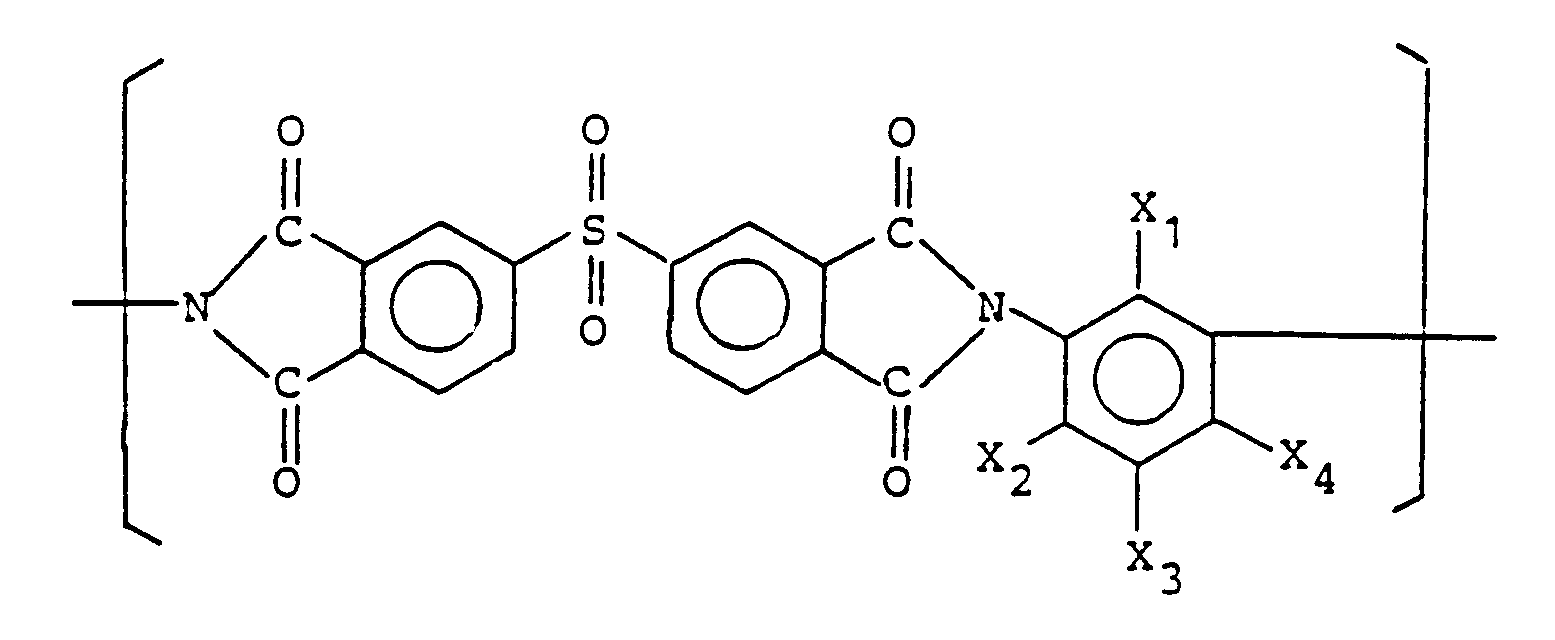
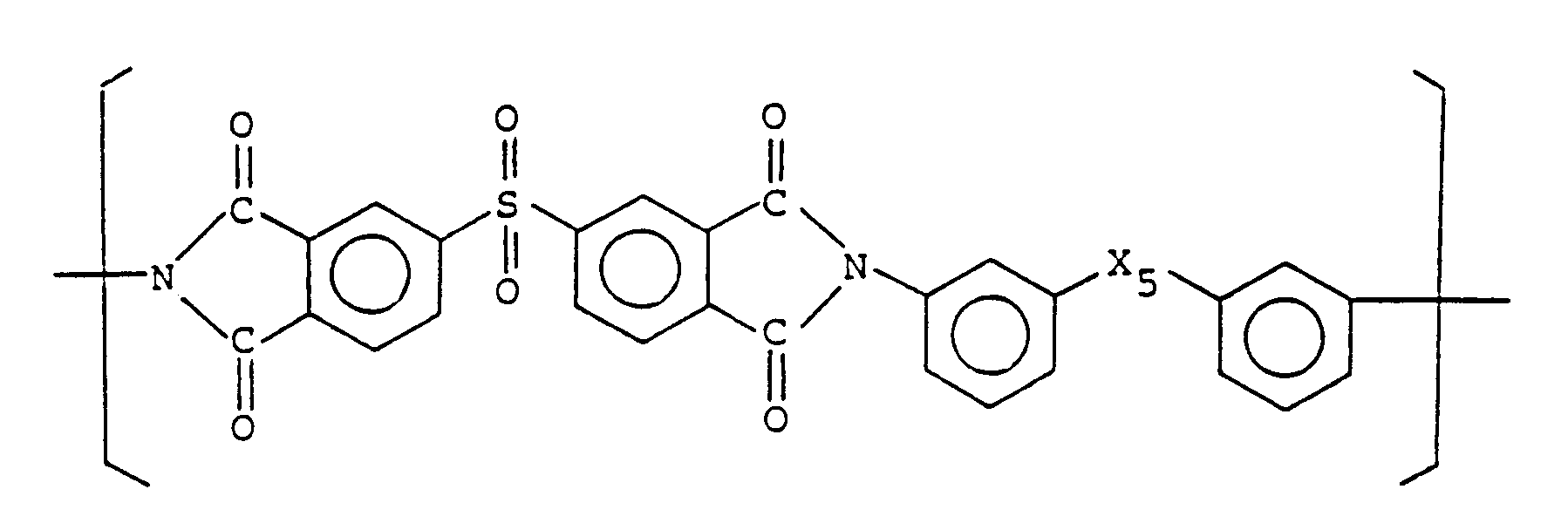
[0009] The colorless transparent polyimide shaped article according to the present invention comprises at least one of the recurring units represented by formula (I), (II) and (III) shown below, wherein the content of the at least one recurring unit of formula (II) and/or (III) is at least 70 mol% but not including polyimides containing units of formula (I) only.
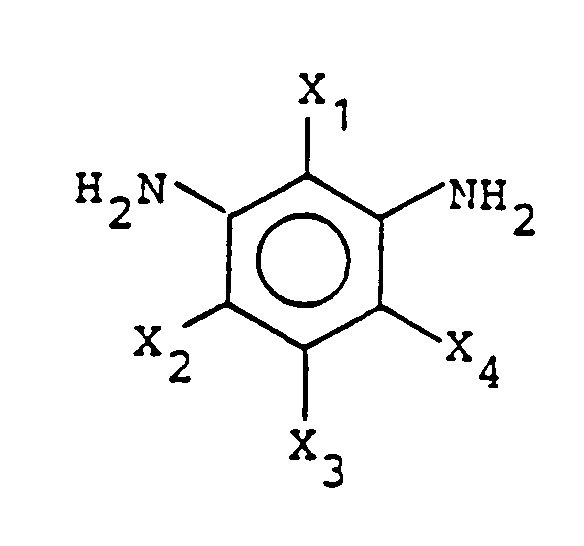
[0010] Formula (I) is represented by
wherein X₁, X₂, X₃ and X₄, which may be the same or different, each represents -H, -CH₃, -C₂H₅, -NO₂, -F, -COOH or -Cℓ.
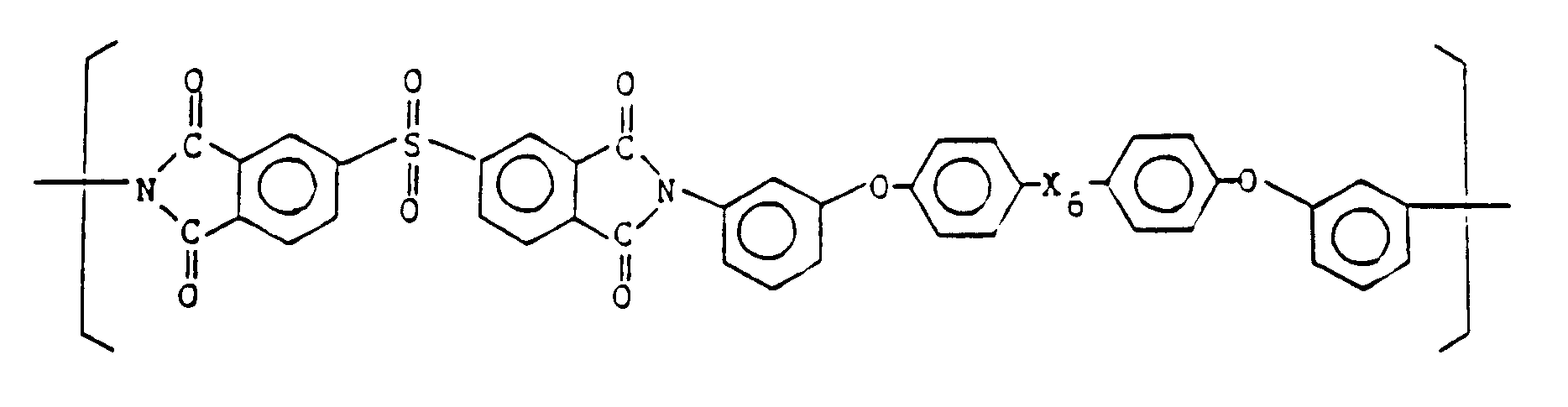
[0012] Formula (III) is represented by
wherein X₆ represents -SO₂-, -C(CH₃)₂- or -C(CF₃)₂-. The shaped article has a transmittance of visible light (500 nm) through a polyimide film having a thickness of 50 ± 5 µm of 85% or more and a yellowness index of the polyimide film of 20 or less.
[0013] The process for producing a colorless transparent polyimide according to the present invention comprises :
preparing a solution of
(A) a polimide precursor obtained by reacting a diamino compound comprising at least one of diamines represented by formulae (IV), (V) and (VI) shown below wherein the amount of V and/or VI in said diamino compound is at least 70 mol %, with a tetracarboxylic acid compound comprising at least 70 mol % of a tetracarboxylic acid dianhydride represented by formula (VII) shown below, dissolved in (B) at least one organic polar solvent which is dimethylacetamide, dimethylformamide, bis(2-methoxyethyl) ether, cresol or a halogenated phenol;
forming a shaped article of the polyimide precursor from the organic polar solvent solution of the polyimide precursor; and
imidizing the resulting shaped article of the polyimide precursor.
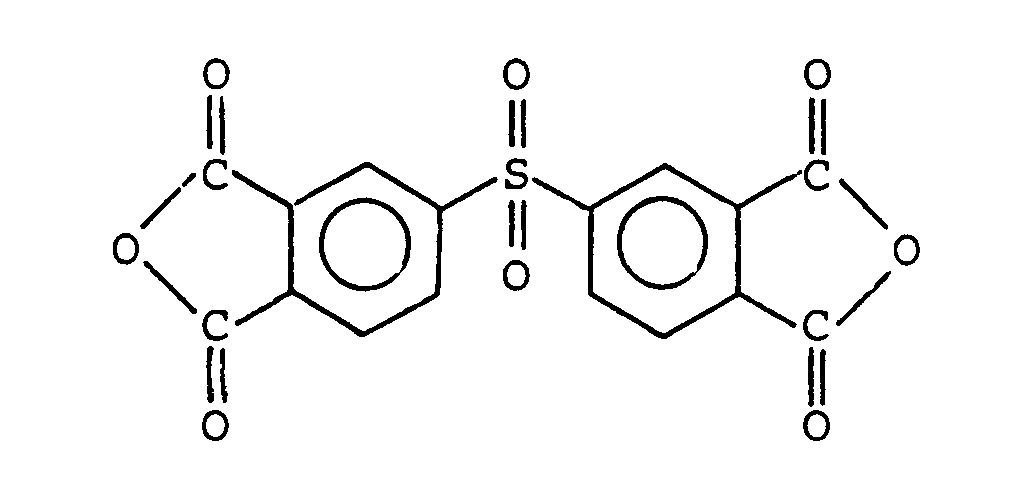
[0018] The colorless transparent polimide shaped article according to the present invention can be obtained by reacting 3,3ʹ,4,4ʹ-diphenylsulfonetetracarboxylic acid dianhydride represented by the above-described formula (VII) with an aromatic diamine having amino groups at the m-position thereof as represented by the above-described formula (IV), (V) or (VI).
[0019] Typical examples of the aromatic diamines having amino groups at the m-position are shown below.
[0020] These aromatic diamines may be used either individually or in appropriate combinations thereof.
[0021] The tetracarboxylic acid dianhydride which can be reacted with the aromatic diamine having amino groups at the m-position includes not only 3,3ʹ4,4ʹ-diphenylsulfonetetracarboxylic acid dianhydride of the above-described formula (VII) but also derivatives of 3,3ʹ,4,4ʹ-diphenylsulfonetetracarboxylic acid such as esters, amides, halides, monohydride, etc. (hereinafter inclusively referred to as "tetracarboxylic acid compound"). Of these tetracarboxylic acid compounds, use of a dianhydride of formula (VII) provides good results.
[0022] By admixing the 3,3ʹ,4,4ʹ,-diphenylsulfonetetracarboxylic acid dianhydride and the aromatic diamine having amino groups at the m-position and reacting them, a colorless transparent polyimide shaped article having recurring units represented by the above-described formulae (I), (II) and (III) as a main component can be obtained.
[0023] The colorless transparency of the polyimide shaped article becomes higher as the content of recurring units of formulae (I) to (III) increases. Hence, so long as the content of the diphenylsulfonetetracarboxylic acid dianhydride of formula (VII) falls within the above-described range, other aromatic tetracarboxylic acid dianhydrides than the diphenylsulfonetetracarboxylic acid dianhydride and other diamino compounds than the aromatic diamino compound having amino groups at the m-position may be employed. The content of recurring units of formulae (I) to (III) is preferably 95 mol% or more.
[0024] Examples of the other aromatic tetracarboxylic acid dianhydrides include pyromellitic dianhydride, 3,3ʹ,4,4ʹ-biphenyltetracarboxylic acid dianhydride, 2,3ʹ,3,4ʹ-biphenyltetracarboxylic acid dianhydride, 3,3ʹ4,4ʹ-benzophenonetetracarboxylic acid dianhydride, 3,3ʹ,4,4ʹ-diphenylethertetracarboxylic acid dianhydride, 2,2-bis(3,4-dicarboxyphenyl)hexafluoropropane dianhydride, 2,3,6,7-naphthalenetetracarboxylic acid dianhydride, 1,2,5,6-naphthalenetetracarboxylic acid dianhydride, 1,4,5,8-naphthalenetetracarboxylic acid dianhydride and derivatives thereof (e.g., esters). These aromatic tetracarboxylic acid dianhydrides may be used either alone or in combinations.
[0025] Examples of the other diamino compounds include 4,4ʹ-diaminodiphenylether, 3,4ʹ-diaminodiphenylether, 4,4ʹ-diaminodiphenylsulfone, 4,4ʹ-diaminodiphenylmethane, 4,4ʹ-diaminobenzophenone, 4,4ʹ-diaminodiphenylpropane, p-phenylenediamine, benzidine, 3,3ʹ-dimethylbenzidine, 4,4ʹ-diaminodiphenyl thioether, 3,3ʹ-dimethoxy-4,4ʹ-diaminodiphenylmethane, 3,3ʹ-dimethyl-4,4ʹ-diaminodiphenylmethane, 2,2-bis(4-aminophenyl)propane, bis[4-(4-aminophenoxy)phenyl]sulfone, 2,2-bis[4-(4-aminophenoxy)phenyl]propane and 2,2-bis[4-(4-aminophenoxy)phenyl]hexafluoropropane. These diamino compounds may be used either alone or in combinations.
[0026] The colorless transparent polyimide shaped article according to the present invention can be obtained, for example, by polymerizing the aromatic tetracarboxylic acid dianhydride and diamino compound described above in an organic polar solvent at a temperature of 80°C or less to form a polyamide acid (polyamide procursor) solution, forming a shaped article of the desired shape from the polyamide acid solution, and removing the organic polar solvent by evaporation in air or in inert gas at a temperature of from 50 to 350°C under atmospheric or reduced pressure and simultaneously dehydrocyclizing the polyamide acid to a polyimide. It can also be obtained by a chemical imidization method comprising solvent removal and imidization of the polyamide acid using, for example, a benzene solution of pyridine and acetic anhydride.
[0027] Examples of the organic polar solvents which can be used in the above-described polymerization preferably include N,N-dimethylformamide, N,N-dimethylacetamide, diglyme[bis(2-methoxyethyl)ether],cresol, halogenated phenols, and the like, with N,N-dimethylacetamide being particularly preferred. These organic polar solvents may be used either individually or in mixtures. It should be noted, however, that use of N-methyl-2-pyrrolidone as the organic polar solvent is preferably avoided. N-methyl-2-pyrrolidone partly decomposes upon heating in the case of heating the shaped article of the polyamide acid solution to dehydrocyclize the polyamide acid to a polyamide; the decomposition product of N-methyl-2-pyrrolidone remains in the polyimide and looks blackish brown to cause coloration of the final polyimide shaped article to yellowish brown. On the contrary, since the organic polar solvents enumerated above as preferred examples volatilize before they are decomposed by heating, they do not cause coloration of the final polyamide shaped article as is encountered with N-methyl-2-pyrrolidone. That is, production of colorless transparent polyimide shaped articles can first be achieved by the use of the above-illustrated organic polar solvents, which is one of the features of the present invention.
[0028] Nevertheless, the above-described disadvantage associated with N-methyl-2-pyrrolidone, when used as a polymerization solvent, may be eliminated if it is replaced, after synthesis of polyamide acid, with the above-enumerated preferred solvents in which the produced polyamide acid is dissolved. In this case, the above-enumerated preferred solvents serve as diluting solvents. Thus, the polyamide acid may be prepared by using a polymerization solvent and a diluting solvent which are the different type and then dissolving the polyamide acid produced in the different diluting solvent by solvent replacement.
[0029] The above-illustrated preferred organic polar solvents may be partly replaced with a poor or good solvent, for example, ethanol, toluene, benzene, xylene, dioxane, tetrahydrofuran, nitrobenzene, etc., so long as it does not impair the transparency of the polymer. The amount of such an additional solvent should be selected so as not to adversely affect the solubility of the resulting polyamide acid and is desirably limited to 40% by weight or less based on the total solvents used.
[0030] In the preparation of the colorless transparent polyimide shaped article, the polyamide acid solution preferably has a logarithmic viscosity in the range of from 0.3 to 5.0, and more preferably from 0.4 to 2.0, as measured in N,N-dimethylacetamide at a concentration of 0.5 g/100 m at 30°C. If the logarithmic viscosity of the polyamide acid solution is too low, the mechanical strength of the resulting polyimide shaped article becomes undesirably low. On the other hand, if the logarithmic viscosity is too high, it is difficult to cast the polyamide acid solution in shaping it into a desired form. From the standpoint of workability, the polyamide acid solution preferably has a concentration of from 5 to 30% by weight, and more preferably from 15 to 25% by weight.
[0031] The logarithmic viscosity is calculated in accordance with equation:
The viscosity in the equation is measured by a capillary viscometer.
[0032] The method for shaping the polyamide acid solution differs depending on the shape of the desired shaped product. For example, in the preparation of a polyimide film, the polyamide acid solution is cast on a mirror surface of a glass plate, a stainless steel plate, or the like to a fixed thickness, and then gradually heated to a temperature of from 100 to 350°C to effect dehydrocyclization and imidization of the polyamide acid. The removal of the organic polar solvent from the polyamide acid solution and the heating for the imidization of the polyamide acid may be carried out successively. These steps may be carried out under reduced pressure or in an inert gas atmosphere. The characteristic properties of the resulting polyimide film can be improved by finally heating it to about 400°C for a short period of time. Another method for forming a polyimide film comprises casting the polyamide acid solution on a glass plate or the like, drying it by heating at a temperature of from 100 to 150°C for a period of from 30 to 120 minutes to form a film, and immersing the film, e.g., in a benzene solution of pyridine and acetic anhydride thereby to remove the solvent and imidize the polyamide to a polyimide.
[0033] The polyimide film thus produced is nearly completely colorless transparent. It has highly satisfactory transparency even with an increased thickness because of its freedom from coloration in yellow or yellowish brown as in the conventional polyamide films.
[0034] The proces for producing a polyimide shaped article according to the present invention is not limited to the above-described film formation, and can be applied to formation of other shaped articles, such as plastic lenses. In such applications, thermal imidization or chemical imidization can be selected appropriately to imidize the polyamide acid.
[0035] In imidizing the polyamide acid solution to obtain a polyimide, the resulting polyimide preferably has a logarithmic viscosity (measured at 30°C in 97% sulfuric acid at a concentration of 0.5 g/dℓ) falling within the range of from 0.3 to 4.0, and more preferably at least 0.4, from the standpoints of its characteristic properties.
[0036] Unlike the conventional polyimide shaped articles, the polimide shaped article according to the present invention has nearly completely colorless transparency and a very high degree of transparency. The terminology "nearly colorless transparent" as used in the present invention means that a transmittance of visible light (500 nm) through a polyimide film having a thickness of 50 ± 5 µm is at least 85%, and a yellowness index of the film is 20 or less. The transmittance can be measured in accordance with ASTM D-1003, and the yellowness index, in accordance with JIS K-7103.
[0037] As described above, the polyimide shaped articles according to the present invention, which are obtained from a combination of diphenylsulfonetetracarboxylic acid dianhydride and a specific aromatic diamine having amino groups at the m-position, are not colored yellow or yellowish brown as in the prior art and are nearly completely colorless transparent, thus having a very high degree of transparency. They can be used, therefore, as thick liquid crystalline oriented films as well as base films for solar cells, base material for polarizing films, coating materials for special aerospace components, such as solar cells and heat control systems, optical materials requiring heat resistance, and coating materials for such optical materials. In addition, since they have a refractive index of 1.7 or higher which is the highest among polymers, they are also useful as plastic lenses or coating materials for lenses.
[0038] The present invention will now be explained in greater detail by reference to the following Examples and Comparative Examples, but it should be understood that the present invention is not limited thereto. In the Table given hereinafter, the following abbreviations are used.
- DPSA:
- 3,3ʹ,4,4ʹ-Diphenylsulfon etetracarboxylic acid dianhydride
- s-BPDA:
- 3,3ʹ,4,4ʹ-Biphenyltetracarboxylic acid dianhydride
- 3,3ʹ-DDE:
- 3,3ʹ-Diaminodiphenylether
- 3,3ʹ-DDS:
- 3,3ʹ-Diaminodiphenylsulfone
- 3,3ʹ-DPE:
- 3,3ʹ-Diaminodiphenyl thioether
- 3,3ʹ-DDM:
- 3,3ʹ-Diaminodiphenylmethane
- 3,3ʹ-DBP:
- 3,3ʹ-Diaminobenzophenone
- 1,4,3-BAPB:
- 1,4-Bis(3-aminophenoxy)benzene
- 1,3,3-BAPB:
- 1,3-Bis(3-aminophenoxy)benzene
- 3,3ʹ-BAPS:
- Bis[4-(3-aminophenoxy)phenyl]sulfone
- 3,3ʹ-BAPP:
- 2,2-Bis[4-(3-aminophenoxy)phenyl]propane
- 3,3ʹ-BAPF:
- 2,2-Bis[4-(3-aminophenoxy)phenyl]hexafluoropropane
- 4,4ʹ-DDE:
- 4,4ʹ-Diaminodiphenylether
- 4,4ʹ-BAPP:
- 2,2-Bis[4-(4-aminophenoxy)phenyl]propane
- DMAc:
- N,N-Dimethylacetamide
- Diglyme:
- Bis(2-methoxyethyl)ether
- NMP:
- N-Methyl-2-pyrrolidone
EXAMPLES 1 TO 15 AND COMPARATIVE EXAMPLES 1 TO 3
[0039] Each of the solvents and each of the diamino compounds shown in the Table below were charged in a 1-liter separable flask and well mixed at room temperature until the diamino compound was completely dissolved. The amount of the solvent used was such that the concentration of the diamino compound and each of the aromatic tetracarboxylic acid anhydride shown in the Table became 20% by weight.
[0040] The aromatic tetracarboxylic acid dianhydride shown in the Table was gradually added to the flask while inhibiting a temperature rise due to exothermic reaction. The monomer mixture was allowed to react at room temperature for 4 hours while stirring to prepare a polyamide acid solution having a logarithmic viscosity as shown in the Table below.
[0041] The resulting polyamide acid solution was cast on a glass plate to form a film, and the film was heated in a hot air dryer at 120°C for 60 minutes, further at 180°C for 60 minutes, and then at 250°C for 6 hours to imidize the film and to form a polyimide film having a thickness of 50 ± 5 µm. The infared absorption spectrum of the resulting film showed no absorbtion inherent to amide acid but had an absorption characteristic of an imido group in the vicinity of 1,780 cm⁻¹.
[0042] The thus obtained polyimide film was analysed as to its yellowness index and transmittance to visible light (500 nm). The results obtained are shown in the Table below.
[0043] The yellowness index was measured with an SM color computer manufactured by Suga Testing Instrument Co., Ltd. Larger yellowness indices indicate higher degrees of yellowness. The transmittance was measured with a spectrophotometer manufactured by Shimazu Corporation. Larger transmittance values show higher degrees of transparency.
[0044] In the Table, Examples 1 to 10 show the use of aromatic diamines having amino groups at the m-position. Example 11 shows the combined use of 3,3',4,4'-diphenylsulfonetetracarboxylic acid dianhydride (DPSA) and another tetracarboxylic acid dianhydride. Example 12 shows the combined use of the diamine having amino groups at the m-position (3,3'-DDE) and another diamine (4,4'-DDE). Examples 13 to 15 show the use of diglyme in place of N,N-diemethylacetamide as a solvent.
[0045] As is apparent from the Table, all the polyimide films obtained in Examples 1 to 15 have a yellowness index of 20 or less and a transmittance of 85% or more, and are therefore nearly completely colorless transparent. On the contrary, in Comparative Example 1 (the film described in Japanese Patent Application (OPI) No. 91430/83), in which a diamino compound having amino groups at the p-position, not m-position, was used, the film has a larger yellowness index and a lower transmittance than in the Examples. It can be seen that the particularly large yellowness index shows yellow coloration of the film. In Comparative Example 2, in which not only the diamino compound but the tetracarboxylic acid used are out of the scope of the present invention, the yellowness index is further larger. In Comparative Example 3, in which N-methyl-2-pyrrolidone is used as a solvent, the film has far larger yellowness index and lower transmittance than those of Comparative Examples 1 and 2, and is colored yellowish brown.
1. A colorless transparent polyimide shaped article comprising as a main component at
least one recurring unit selected from a recurring unit represented by formula (I)
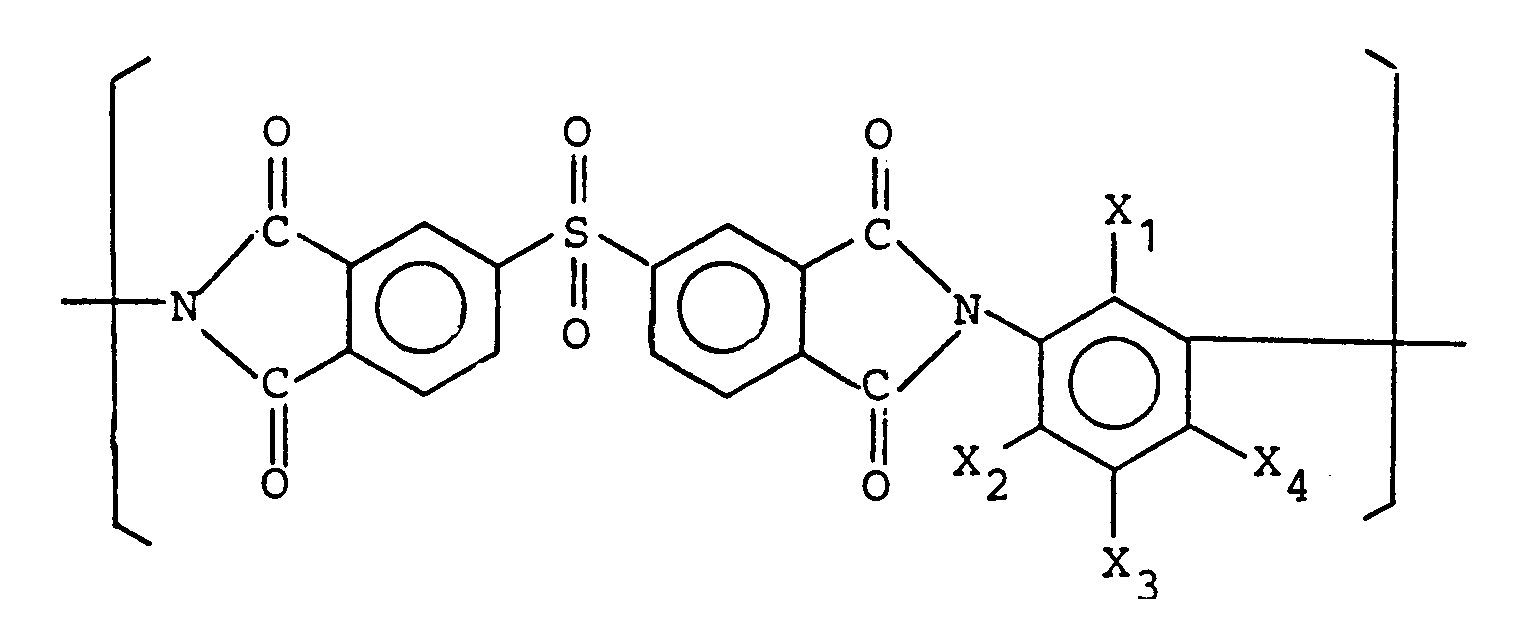
wherein X₁, X₂, X₃ and X₄, which may be the same or different, each represents -H, -CH₃, -C₂H₅, -NO₂, -F, -COOH or -Cℓ;
a recurring unit represented by formula (II)
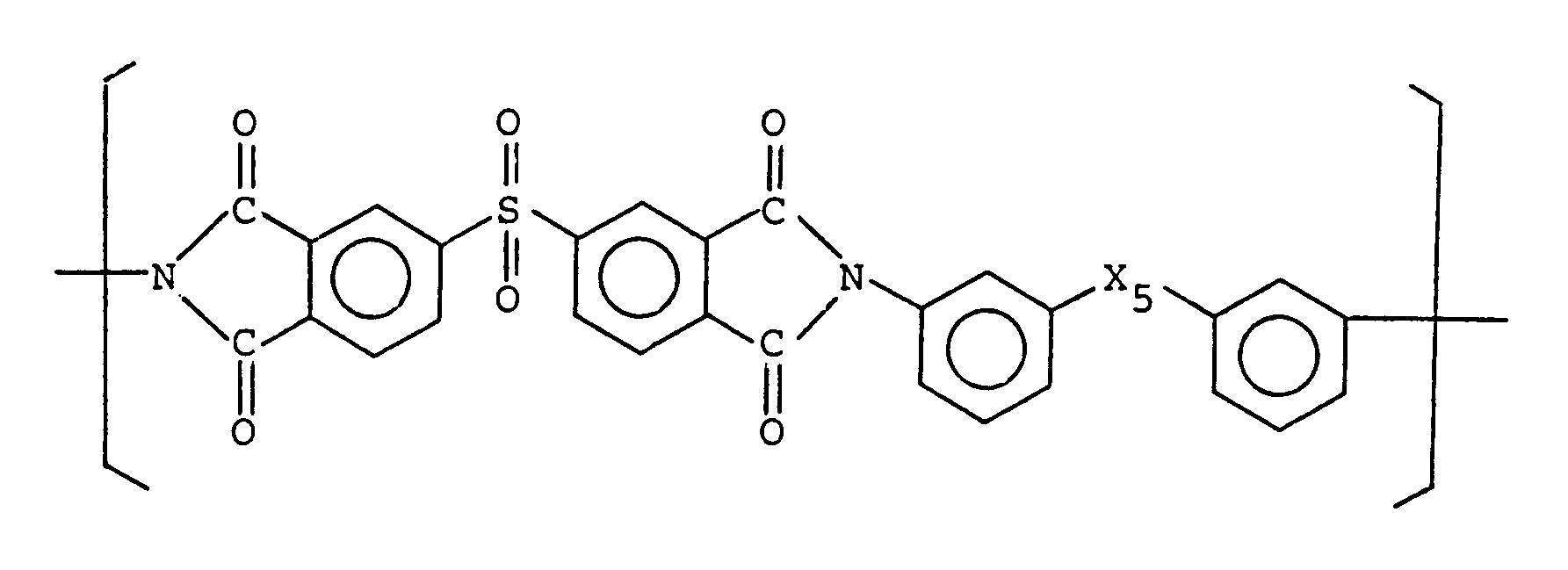
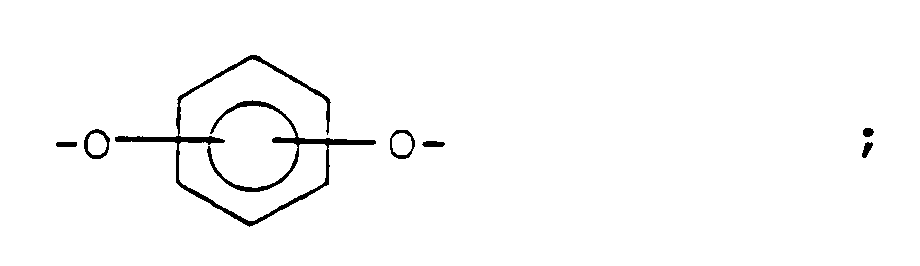
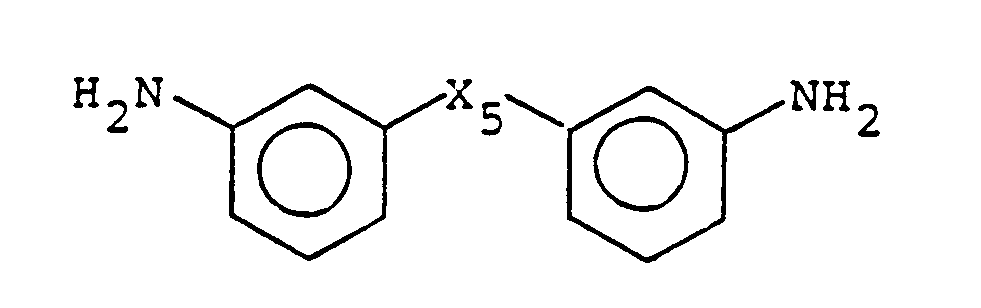
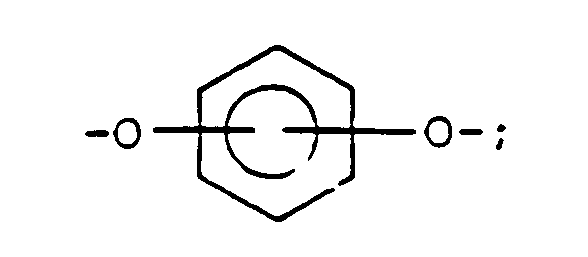
wherein X₅ represents -O-, -SO₂-, -CH₂-, -S-, -CO- or
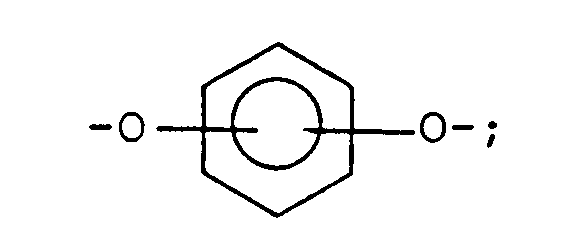
and
a recurring unit represented by formula (III)
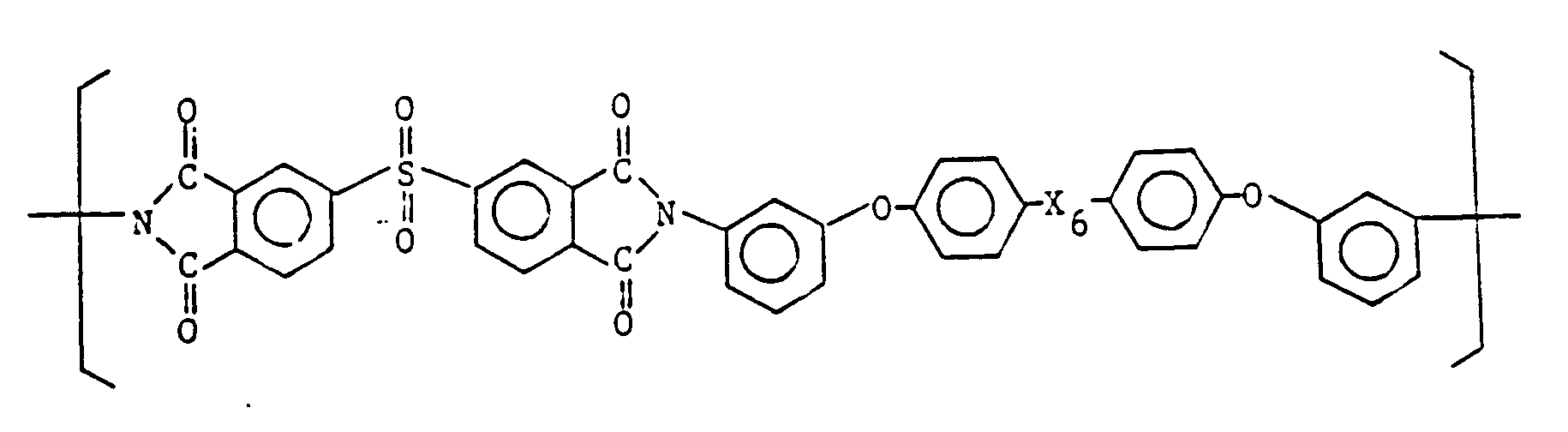
wherein X₆ represents -SO₂-, -C(CH₃)₂- or C(CF₃)₂-;
and wherein the content of the at least one recurring unit of formulae (II) and/or (III) is at least 70 mol %, but not including polyimides containing units of formula (I) only, and the shaped article has a transmittance of visible light (500 nm) through a polyimide film having a thickness of 50 ± 5 µm of 85% or more and a yellowness index of the polyimide film of 20 or less.
wherein X₁, X₂, X₃ and X₄, which may be the same or different, each represents -H, -CH₃, -C₂H₅, -NO₂, -F, -COOH or -Cℓ;
a recurring unit represented by formula (II)
wherein X₅ represents -O-, -SO₂-, -CH₂-, -S-, -CO- or
and
a recurring unit represented by formula (III)
wherein X₆ represents -SO₂-, -C(CH₃)₂- or C(CF₃)₂-;
and wherein the content of the at least one recurring unit of formulae (II) and/or (III) is at least 70 mol %, but not including polyimides containing units of formula (I) only, and the shaped article has a transmittance of visible light (500 nm) through a polyimide film having a thickness of 50 ± 5 µm of 85% or more and a yellowness index of the polyimide film of 20 or less.
2. A colorless transparent polyimide shaped article as claimed in Claim 1, wherein the
content of the at least one recurring unit of formulae (II) and/or (III) is at least
95 mol%.
3. A colorless transparent polyimide shaped article as claimed in Claim 1 or 2, wherein
X₅ and/or X₆ are -SO₂-.
4. A process for producing a colorless transparent polyimide shaped article as claimed
in any preceding claim, which comprises
preparing a solution of
(A) a polyimide precursor obtained by reacting a diamino compound comprising at least one diamine having amino groups at the m-position thereof selected from a diamine represented by formula (IV)
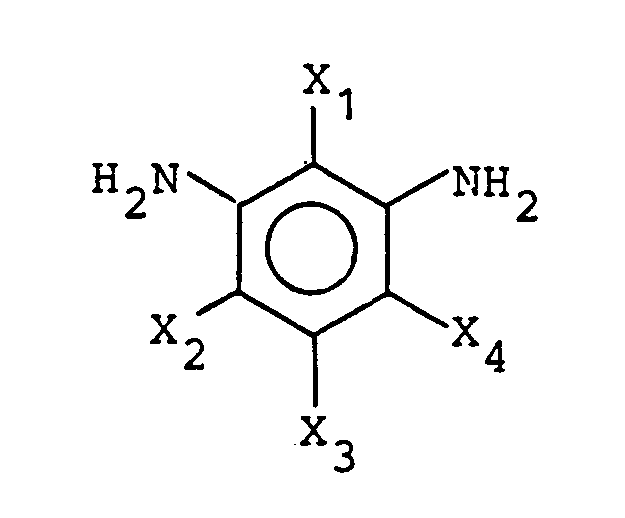
wherein X₁, X₂, X₃ and X₄, which may be the same or different, each represents -H, -CH₃, -C₂H₅, -NO₂, -F, -COOH or -Cℓ;
a diamine represented by formula (V)
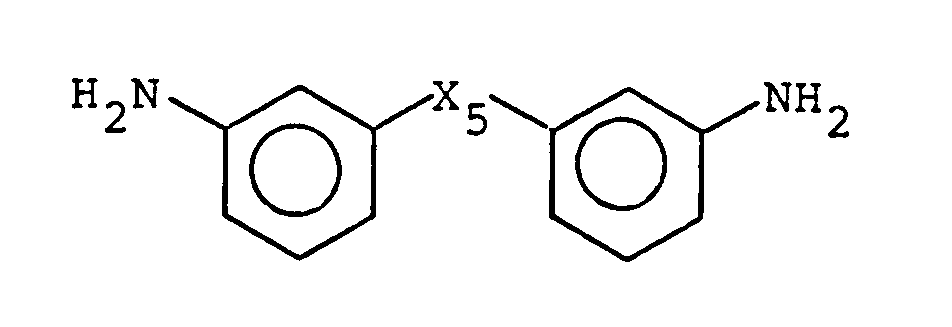
wherein X₅ represents -O-, -SO₂-, -CH₂-, -S-, -CO- or
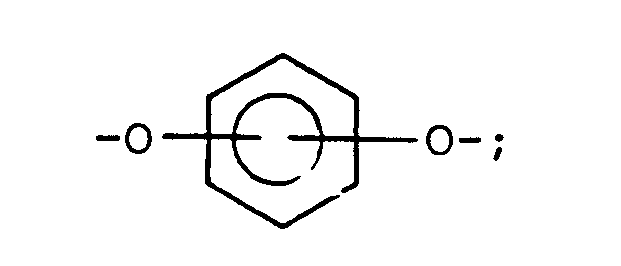
and
a diamine represented by formula (VI)
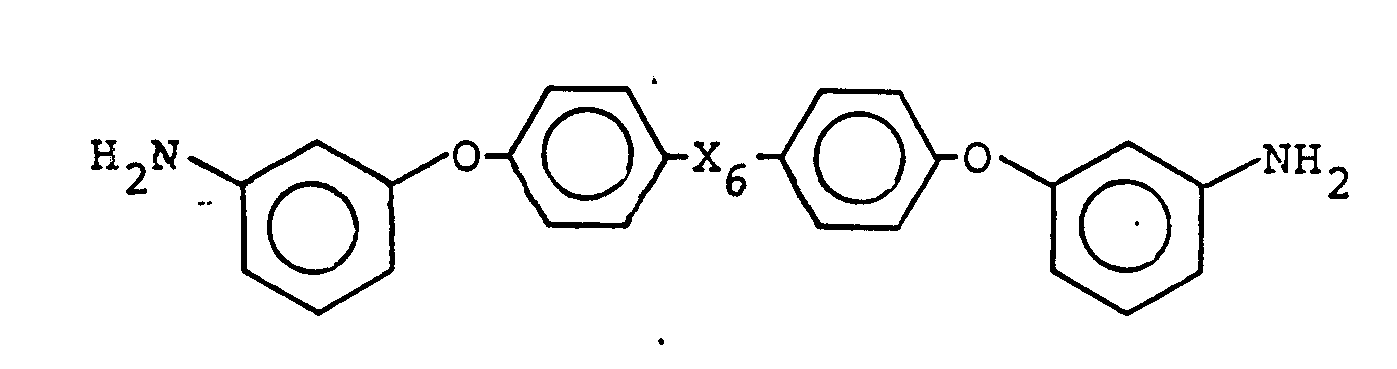
wherein X₆ represents -SO₂-, -C(CH₃)₂ or -C(CF₃)₂-; wherein the content of V and/or VI in said diamino compound is at least 70 mol % with a tetracarboxylic acid compound comprising at least 70 mol % of a tetracarboxylic acid dianhydride represented by formula (VII)
dissolved in (B) at least one organic polar solvent which is N,N-dimethylacetamide, N,N-dimethylformamide, bis(2-methoxyethyl) ether, cresol or a halogenated phenol;
forming a shaped article of the polyamide precursor from the organic polar solvent solution of the polyimide precursor; and
imidizing the resulting shaped article of the polyimide precursor.
preparing a solution of
(A) a polyimide precursor obtained by reacting a diamino compound comprising at least one diamine having amino groups at the m-position thereof selected from a diamine represented by formula (IV)
wherein X₁, X₂, X₃ and X₄, which may be the same or different, each represents -H, -CH₃, -C₂H₅, -NO₂, -F, -COOH or -Cℓ;
a diamine represented by formula (V)
wherein X₅ represents -O-, -SO₂-, -CH₂-, -S-, -CO- or
and
a diamine represented by formula (VI)
wherein X₆ represents -SO₂-, -C(CH₃)₂ or -C(CF₃)₂-; wherein the content of V and/or VI in said diamino compound is at least 70 mol % with a tetracarboxylic acid compound comprising at least 70 mol % of a tetracarboxylic acid dianhydride represented by formula (VII)
dissolved in (B) at least one organic polar solvent which is N,N-dimethylacetamide, N,N-dimethylformamide, bis(2-methoxyethyl) ether, cresol or a halogenated phenol;
forming a shaped article of the polyamide precursor from the organic polar solvent solution of the polyimide precursor; and
imidizing the resulting shaped article of the polyimide precursor.
5. A process as claimed in Claim 4, wherein the polymerisation reaction is carried out
at a temperature of 80°C or less.
6. A process as claimed in Claim 4 or 5, wherein the polyamide precursor solution has
a logarithmic viscosity of from 0.3 to 5.0 measured in N,N-dimethylacetamide at a
concentration of 0.5 g/100 ml.
7. A process as claimed in Claim 4, 5 or 6, wherein the polyamide precursor solution
has a concentration of from 5 to 30 % by weight.
8. A process as claimed in any of Claims 4 to 7, wherein the organic polar solvent is
N,N-dimethylacetamide.
9. A process as claimed in any of Claims 4 to 8, wherein the polyimide precursor shaped
article is imidized by dehydrocyclizing the polyamide acid.
10. A process as claimed in any of Claims 4 to 8, wherein the polyimide precursor shaped
article is imidized by solvent removal and chemical imidization of the polyamide acid.
1. Article formé en polyimide incolore transparent comprenant, à titre de composant principal
au moins un motif récurrent choisi parmi motif récurrent représenté par la formule
(I)
dans laquelle X₁, X₂, X₃ et X₄, qui peuvent être identiques ou différents, représentent chacun -H, -CH₃, -C₂H₅, -NO₂, -F, -COOH ou -Cl;
un motif récurrent représenté par la formule (II)
dans laquelle X₅ représente -O-, -SO₂-, -CH₂-, -S-, -CO- ou
et
un motif récurrent représenté par la formule (III)
dans laquelle X₆ représente -SO₂-, -C(CH₃)₂- ou -C(CF₃)₂-
et dans laquelle la teneur en ledit motif récurrent au moins unique de formule (II) et/ou (III) est d'au moins 70 mole %, mais ne comprenant pas de polyimides contenant des motifs de la formule (I) uniquement, et l'article formé présente une transmittance de la lumière visible (500 nm) à travers une pellicule de polyimide ayant une épaisseur de 50 ± 5 µm de 85 % ou plus et un indice de jaunissement de la pellicule de polyimide de 20 ou moins.
dans laquelle X₁, X₂, X₃ et X₄, qui peuvent être identiques ou différents, représentent chacun -H, -CH₃, -C₂H₅, -NO₂, -F, -COOH ou -Cl;
un motif récurrent représenté par la formule (II)
dans laquelle X₅ représente -O-, -SO₂-, -CH₂-, -S-, -CO- ou
et
un motif récurrent représenté par la formule (III)
dans laquelle X₆ représente -SO₂-, -C(CH₃)₂- ou -C(CF₃)₂-
et dans laquelle la teneur en ledit motif récurrent au moins unique de formule (II) et/ou (III) est d'au moins 70 mole %, mais ne comprenant pas de polyimides contenant des motifs de la formule (I) uniquement, et l'article formé présente une transmittance de la lumière visible (500 nm) à travers une pellicule de polyimide ayant une épaisseur de 50 ± 5 µm de 85 % ou plus et un indice de jaunissement de la pellicule de polyimide de 20 ou moins.
2. Article en polyimide incolore transparent tel que revendiqué dans la revendication
1, dans lequel la teneur en motif récurrent au moins unique de formule (II) et/ou
(III) est d'au moins 95 mole %.
3. Article en polyimide incolore transparent tel que revendiqué dans l'une des revendications
1 ou 2, dans lequel X₅ et/ou X₆ sont -SO₂-.
4. Procédé de fabrication d'un article en polyimide incolore transparent, tel que revendiqué
dans l'une quelconque des revendications précédentes, qui comprend :
la préparation d'une solution de
(A) un précurseur de polyimide, obtenu en faisant réagir un composé diamino comprenant au moins une diamine ayant des groupes amines en position m, choisi parmi une diamine représentée par la formule (IV)
dans laquelle X₁, X₂, X₃ et X₄, qui peuvent être identiques ou différents, représentent chacun -H, -CH₃, -C₂H₅, -NO₂, -F, -COOH ou -Cl;
une diamine représentée par la formule (V)
dans laquelle X₅ représente -O-, -SO₂-, -CH₂-, -S-, -CO- ou
et
une diamine représentée par la formule (VI)
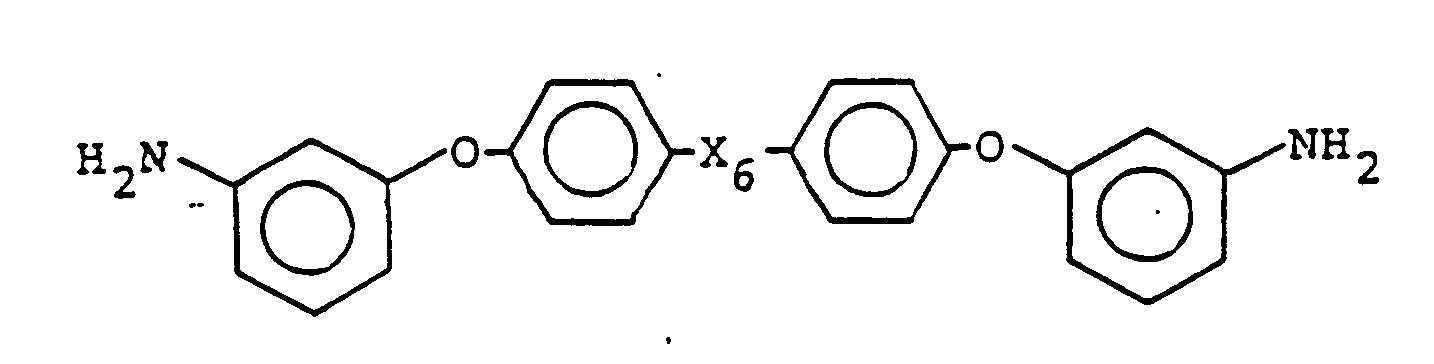
dans laquelle X₆ représente -SO₂-, -C(CH₃)₂- ou -C(CF₃)₂-; dans laquelle la teneur de V et/ou VI en ce composé diamino est d'au moins 70 mole % avec un composé d'acide tétracarboxylique comprenant au moins 70 mole % d'un dianhydride d'acide tétracarboxylique représenté par la formule (VII)
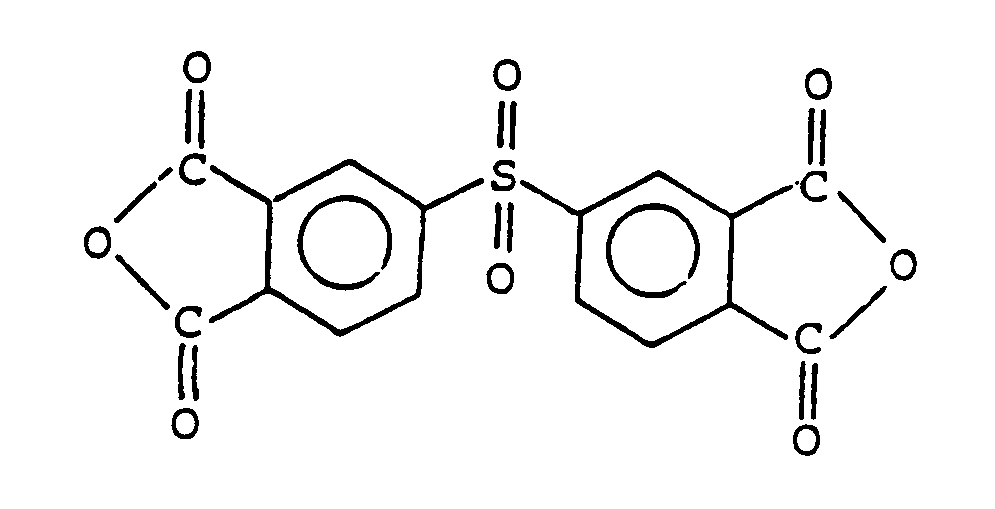
dissous dans
(B) au moins un solvant organique polaire qui est le N, N-diméthylacétamide, le N, N-diméthylformamide, l'éther de bis 2-méthoxyéthyle, le crésol ou un phénol halogéné;
la mise en forme d'articles en précurseur de polyimide à partir de la solution du précurseur de polyimide dans le solvant organique polaire; et l'imidization de l'article résultant en précurseur de polyimide.
la préparation d'une solution de
(A) un précurseur de polyimide, obtenu en faisant réagir un composé diamino comprenant au moins une diamine ayant des groupes amines en position m, choisi parmi une diamine représentée par la formule (IV)
dans laquelle X₁, X₂, X₃ et X₄, qui peuvent être identiques ou différents, représentent chacun -H, -CH₃, -C₂H₅, -NO₂, -F, -COOH ou -Cl;
une diamine représentée par la formule (V)
dans laquelle X₅ représente -O-, -SO₂-, -CH₂-, -S-, -CO- ou
et
une diamine représentée par la formule (VI)
dans laquelle X₆ représente -SO₂-, -C(CH₃)₂- ou -C(CF₃)₂-; dans laquelle la teneur de V et/ou VI en ce composé diamino est d'au moins 70 mole % avec un composé d'acide tétracarboxylique comprenant au moins 70 mole % d'un dianhydride d'acide tétracarboxylique représenté par la formule (VII)
dissous dans
(B) au moins un solvant organique polaire qui est le N, N-diméthylacétamide, le N, N-diméthylformamide, l'éther de bis 2-méthoxyéthyle, le crésol ou un phénol halogéné;
la mise en forme d'articles en précurseur de polyimide à partir de la solution du précurseur de polyimide dans le solvant organique polaire; et l'imidization de l'article résultant en précurseur de polyimide.
5. Procédé tel que revendiqué dans la revendication 4, dans lequel la réaction de polymérisation
est effectuée à la température de 80° C ou en dessous.
6. Procédé tel que revendiqué dans la revendication 4 ou la revendication 5, dans lequel
la solution du précurseur de polyimide présente une viscosité logarithmique pouvant
aller de 0,3 à 5,0 mesurée dans le N, N-diméthylacétamide à la concentration de 0,5
g / 100 ml.
7. Procédé tel que revendiqué dans l'une des revendications 4, 5 ou 6, dans lequel la
solution du précurseur de polyimide se présente à une concentration comprise entre
5 et 30 % en poids.
8. Procédé tel que revendiqué dans l'une quelconque des revendications 4 à 7, dans lequel
le solvant organique polaire est le N, N-diméthylacétamide.
9. Procédé tel que revendiqué dans l'une quelconque des revendications 4 à 8, dans lequel
l'article formé dans le précurseur de polyimide est imidisé par déshydrocyclisation
de l'article polyamide.
10. Procédé tel que revendiqué dans l'une quelconque des revendications 4 à 8, dans lequel
l'article en précurseur de polyimide est imidisé par extraction du solvant et imidization
chimique de l'acide polyamide.
1. Farbloser, durchsichtiger Formgegenstand aus Polyimid, der als einen Hauptbestandteil
mindestens eine sich wiederholende Einheit, ausgewählt aus einer sich wiederholenden
Einheit der Formel (I)
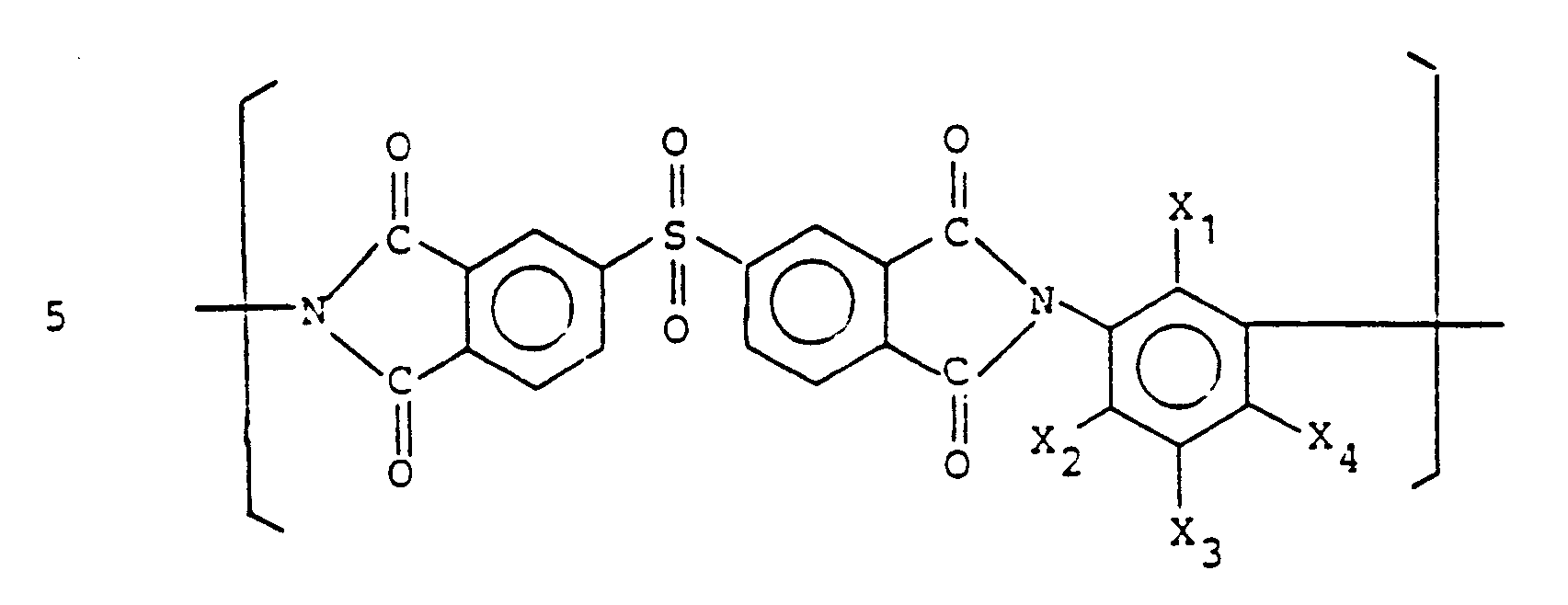
worin X₁, X₂, X₃ und X₄ gleich oder verschieden sein können und jeweils -H, -CH₃, -C₂H₅, -NO₂, -F, -COOH oder -Cl bedeuten;
einer sich wiederholenden Einheit der Formel (II)
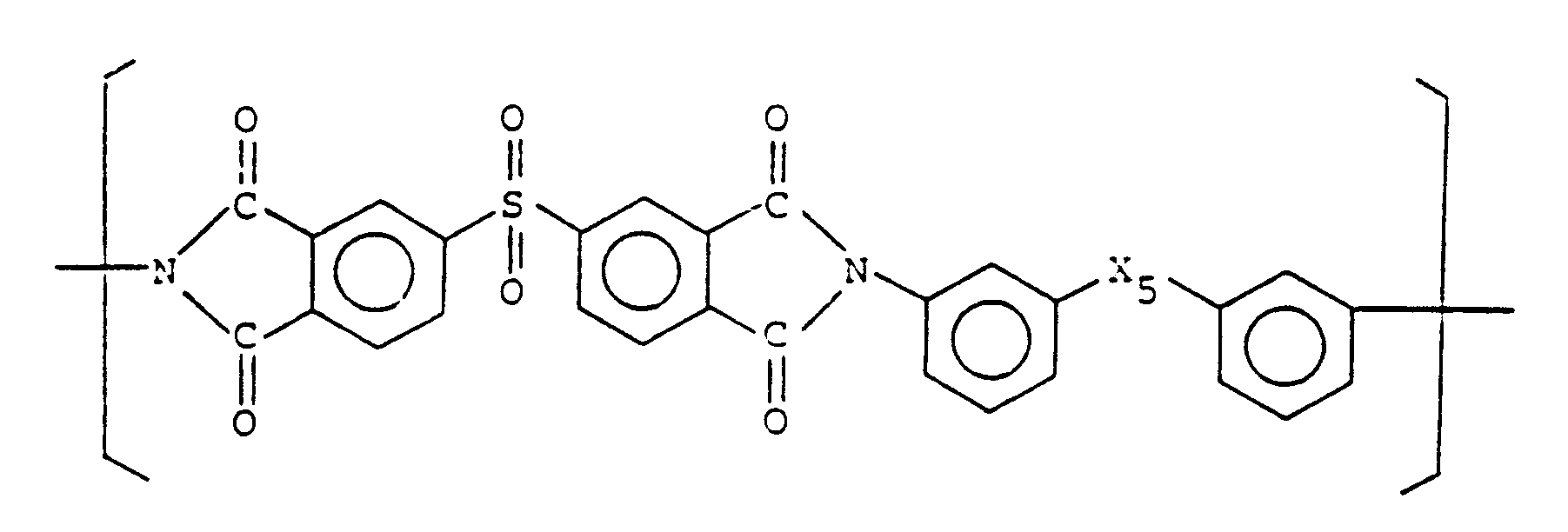
worin X₅ -O-, -SO₂-, -CH₂-, -S-, -CO- oder
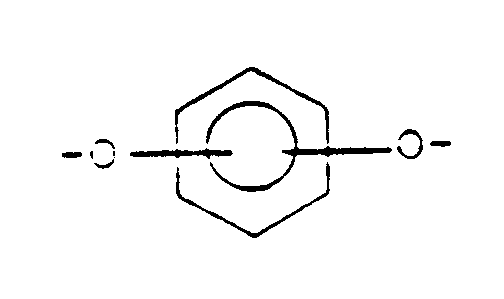
bedeutet und
einer sich wiederholenden Einheit der Formel (III)
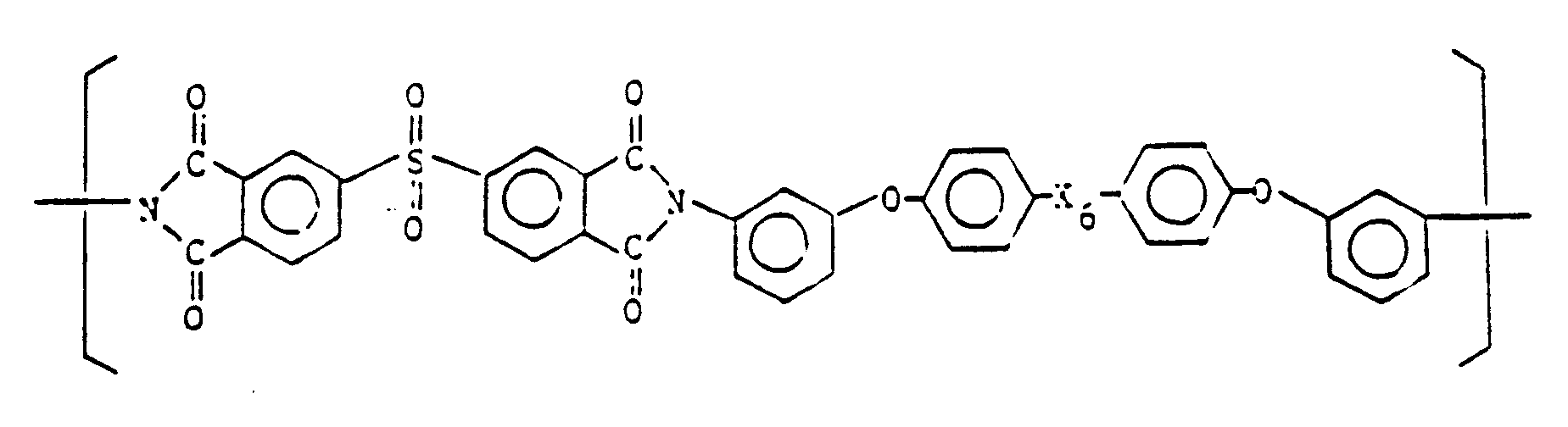
worin X₆ -SO₂-, -C(CH₃)₂- oder C(CF₃)₂- bedeutet, umfaßt,
und worin der Anteil der mindestens einen sich wiederholenden Einheit der Formeln (II) und/oder (III) mindestens 70 Mol-% beträgt, wobei nur Einheiten der Formel (I) enthaltende Polyimide nicht eingeschlossen sind, und der Formgegenstand eine Durchlässigkeit für sichtbares Licht (500 nm) durch einen Polyimidfilm einer Dicke von 50 ± 5 µm von mindestens 85 % und einen Gelbheitsindex des Polyimidfilms von 20 oder weniger aufweist.
worin X₁, X₂, X₃ und X₄ gleich oder verschieden sein können und jeweils -H, -CH₃, -C₂H₅, -NO₂, -F, -COOH oder -Cl bedeuten;
einer sich wiederholenden Einheit der Formel (II)
worin X₅ -O-, -SO₂-, -CH₂-, -S-, -CO- oder
bedeutet und
einer sich wiederholenden Einheit der Formel (III)
worin X₆ -SO₂-, -C(CH₃)₂- oder C(CF₃)₂- bedeutet, umfaßt,
und worin der Anteil der mindestens einen sich wiederholenden Einheit der Formeln (II) und/oder (III) mindestens 70 Mol-% beträgt, wobei nur Einheiten der Formel (I) enthaltende Polyimide nicht eingeschlossen sind, und der Formgegenstand eine Durchlässigkeit für sichtbares Licht (500 nm) durch einen Polyimidfilm einer Dicke von 50 ± 5 µm von mindestens 85 % und einen Gelbheitsindex des Polyimidfilms von 20 oder weniger aufweist.
2. Farbloser, durchsichtiger Formgegenstand aus Polyimid nach Anspruch 1, worin der Gehalt
der mindestens einen sich wiederholenden Einheit der Formeln (II) und/oder (III) mindestens
95 Mol-% beträgt.
3. Farbloser, durchsichtiger Formgegenstand aus Polyimid nach Anspruch 1 oder 2, worin
X₅ und/oder X₆ -SO₂- bedeuten.
4. Verfahren zur Herstellung eines farblosen, durchsichtigen Formgegenstands aus Polyimid
nach einem der vorhergehenden Ansprüche, umfassend das Herstellen einer Lösung aus
(A) einem Polyimidvorläufer, erhalten durch Umsetzung einer Diaminoverbindung, umfassend mindestens ein an der m-Position Aminogruppen aufweisendes Diamin, ausgewählt aus einem Diamin der Formel (IV)
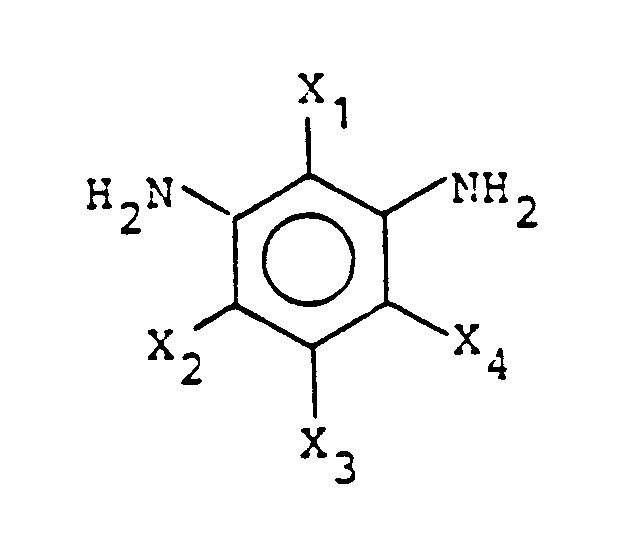
worin X₁, X₂, X₃ und X₄ gleich oder verschieden sein können und jeweils -H, -CH₃, -C₂H₅, -NO₂, -F, -COOH oder -Cl bedeuten;
einem Diamin der Formel (V)
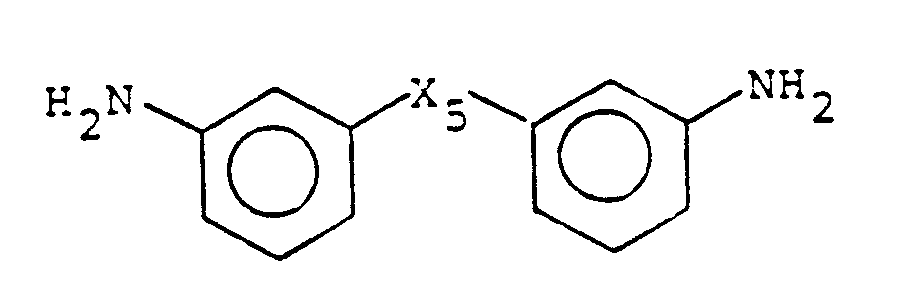
worin X₅ -O-, -SO₂-, -CH₂-, -S-, -CO- oder
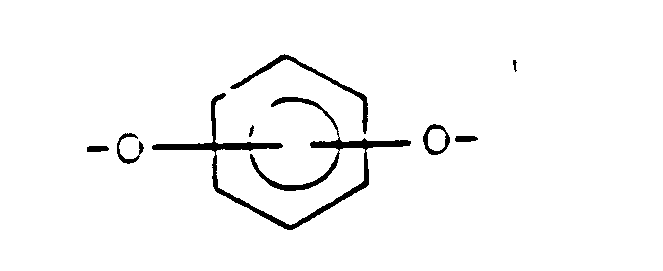
bedeutet; und
einem Diamin der Formel (VI)
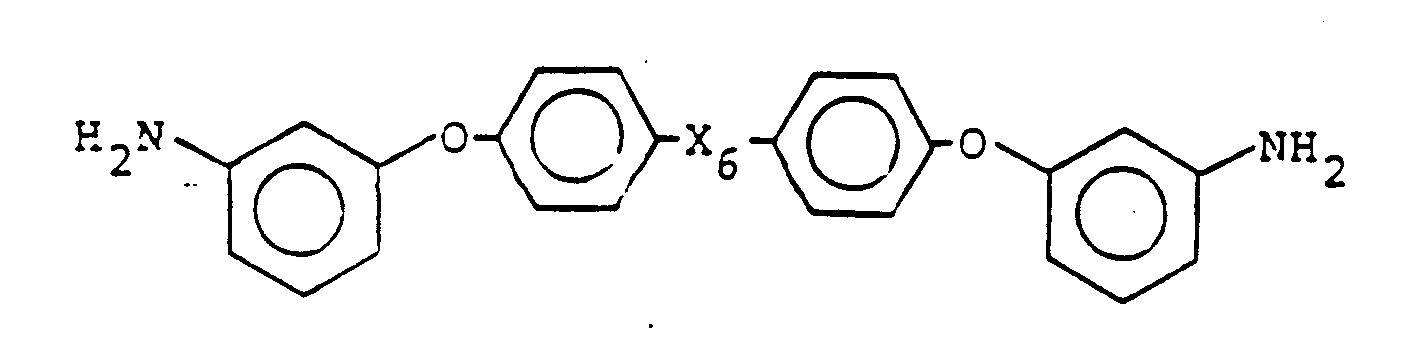
worin X₆ -SO₂-, -C(CH₃)₂ oder -C(CF₃)₂- bedeutet;
wobei der Anteil von V und/oder VI in der Diaminverbindung mindestens 70 Mol-% beträgt, mit einer Tetracarbonsäureverbindung, die mindestens 70 Mol-% eines Tetracarbonsäuredianhydrids der Formel (VII) enthält,
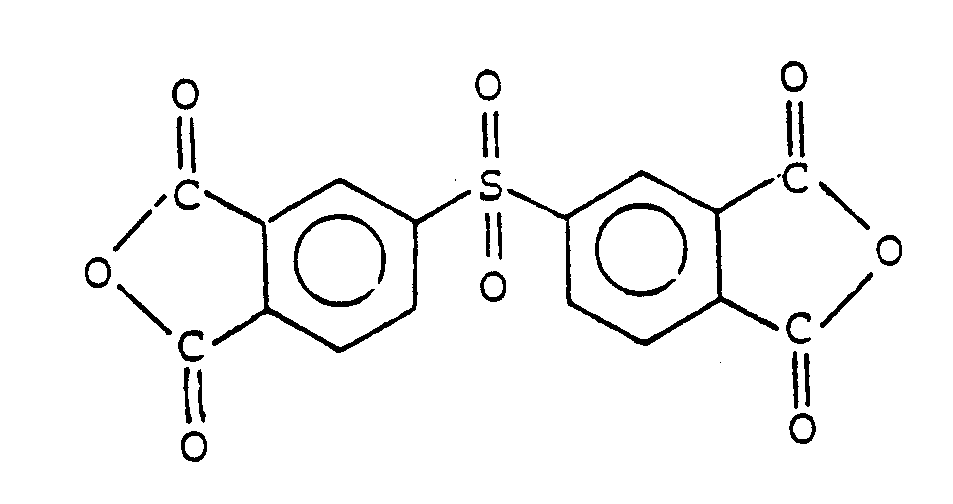
gelöst in (B) mindestens einem organischen,
polaren Lösungsmittel,
ausgewählt aus N,N-Dimethylacetamid, N,N-Dimethylformamid, Bis(2-methoxyethyl)ether, Cresol oder einem halogenierten Phenol;
Herstellen eines Formgegenstands aus dem Polyimidvorläufer aus der Lösung des Polyimidvorläufers in dem organischen, polaren Lösungsmittel; und
Imidisieren des resultierende Formgegenstand aus dem Polyimidvorläufer.
(A) einem Polyimidvorläufer, erhalten durch Umsetzung einer Diaminoverbindung, umfassend mindestens ein an der m-Position Aminogruppen aufweisendes Diamin, ausgewählt aus einem Diamin der Formel (IV)
worin X₁, X₂, X₃ und X₄ gleich oder verschieden sein können und jeweils -H, -CH₃, -C₂H₅, -NO₂, -F, -COOH oder -Cl bedeuten;
einem Diamin der Formel (V)
worin X₅ -O-, -SO₂-, -CH₂-, -S-, -CO- oder
bedeutet; und
einem Diamin der Formel (VI)
worin X₆ -SO₂-, -C(CH₃)₂ oder -C(CF₃)₂- bedeutet;
wobei der Anteil von V und/oder VI in der Diaminverbindung mindestens 70 Mol-% beträgt, mit einer Tetracarbonsäureverbindung, die mindestens 70 Mol-% eines Tetracarbonsäuredianhydrids der Formel (VII) enthält,
gelöst in (B) mindestens einem organischen,
polaren Lösungsmittel,
ausgewählt aus N,N-Dimethylacetamid, N,N-Dimethylformamid, Bis(2-methoxyethyl)ether, Cresol oder einem halogenierten Phenol;
Herstellen eines Formgegenstands aus dem Polyimidvorläufer aus der Lösung des Polyimidvorläufers in dem organischen, polaren Lösungsmittel; und
Imidisieren des resultierende Formgegenstand aus dem Polyimidvorläufer.
5. Verfahren nach Anspruch 4, wobei die Polymerisationsreaktion bei einer Temperatur
von 80° C oder weniger durchgeführt wird.
6. Verfahren nach Anspruch 4 oder 5, wobei die Polyimidvorläuferlösung eine logarithmische
Viskosität von 0,3 bis 5,0, gemessen in N,N-Dimethylacetamid bei einer Konzentration
von 0,5 g/100 ml, aufweist.
7. Verfahren nach Anspruch 4, 5 oder 6, wobei die Polyimidvorläuferlösung eine Konzentration
von 5 bis 30 Gew.-% aufweist.
8. Verfahren nach einem der Ansprüche 4 bis 7, wobei das organische, polare Lösungsmittel
N,N-Dimethylacetamid ist.
9. Verfahren nach einem der Ansprüche 4 bis 8, wobei der Formgegenstand aus dem Polyimidvorläufer
durch die Dehydrozyklisierung der Polyamidsäure imidisiert wird.
10. Verfahren nach einem der Ansprüche 4 bis 8, wobei der Formgegenstand aus dem Polyimidvorläufer
durch Lösungsmittelentfernung und chemische Imidisierung der Polyamidsäure imidisiert
wird.