|
(11) | EP 0 285 991 A1 |

| (12) | EUROPEAN PATENT APPLICATION |
|
|
|
|
|||||||||||||||||||||||||||
| (54) | Silver halide photographic material |
| (57) A silver halide photographic material containing a novel surfactant is disclosed.
The surfactant enables uniform coating of hydrophilic colloidal layers without causing
any adverse effects on photographic characteristics. The surfactant can also be used
as a good dispersion medium for polymer latices in hydrophilic colloids thereby enabling
uniform coating of such colloids. As a result, a silver halide photographic material
having improved film properties in such aspects as scratch resistance, dimensional
stability and flexibility can be produced. |
BACKGROUND OF THE INVENTION
[0001] The present invention relates to a silver halide photographic material containing a new surfactant. More particularly, the present invention relates to a silver halide photographic material containing a new surfactant that not only enables uniform coating of a low-viscosity coating solution without causing problems such as cissing and uneven finish but which also serves as a good dispersant for polymer latices, as well as providing improved film properties.
[0002] Photographic materials generally comprise a photographic support coated with a plurality of photographic constituent layers including hydrophilic colloids. The photographic constituent layers include undercoats, intermediate layers, light-sensitive layers, surface protective layers, etc., and in the manufacture of photographic materials these layers are containing hydrophilic colloids such as gelatin often coated in superposition on supports. To this end, coating solutions are required to be such that they can be applied uniformly and rapidly to form thin films without causing any troubles such as cissing and uneven finish. With a view to meeting this requirement, the addition of surfactants to coating solutions has been attempted and many compounds have been proposed as such surfactants. Some of the surfactants so far proposed along with this line are described in Japanese Patent Publication Nos. 5331/1970, 50969/1984, Japanese Unexamined Published Application No. 3219/1976, and Belgian Patent Nos. 708347 and 723690. Surfactants are also indispensable as dispersants in hydrophilic colloidal solutions having dispersed therein organic solvents for hydrophobic photographic addenda such as couplers, uv absorbers and brighteners, or hydrophobic synthetic polymers such as poly acrylic esters (such polymers are hereinafter referred to as "polymer latex" or "polymer latices").
[0003] Surfactants for use in photographic materials should not adversely affect their photographic characteristics such as sensitivity, fogging and gradation or otherwise impair the desired developability (i.e., effective wetting of film surfaces and the absence of attachment of bubbles). However, most of the surfactants in common use do not have sufficient wetting property to achieve uniform coating of hydrophilic colloidal solutions. If these surfactants are used as dispersants for photographic addenda, troubles such as bubble attachment and cissing will occur extensively. Furthermore, the coating solutions employing these surfactants have undesirably high viscosities. If it is desired to improve the film properties of hydrophilic colloidal layers by incorporating polymer latices, such factors as the scratch resistance, dimensional stability and flexibility of the colloidal layers must be considered. Polymer latices tend to agglomerate in gelatin and the resulting adverse effects on dispersion stability and coating efficiency have always been a concern. As a consequence, even if the prior art surfactants are incorporated in photographic coating solutions, they cannot be uniformly applied and, furthermore, the light-sensitive materials are plagued by uneven finish after development.
SUMMARY OF THE INVENTION
[0004] Under the circumstances described above, the present inventors conducted extensive studies on surfactants suitable for use in photographic materials and found that by using a novel surfactant having a certain kind of substituent introduced thereinto the aforementioned problems could be solved without adversely affecting photographic characteristics. The present invention has been accomplished on the basis of this finding.
[0005] An object, therefore, of the present invention is to provide a silver halide photographic material having good developability which contains a coating aid or a dispersant for a lipophilic photographic additive that is sufficiently reduced in viscosity to avoid substantial adverse effects on photographic characteristics such as speed, fogging and gradation.
[0006] Another object of the present invention is to provide a silver halide photographic material that allows a dispersion of polymer latex in a hydrophilic colloid to be uniformly applied without causing aggregation of latex particles and which yet ensures improvements in film properties such as scratch resistance, dimensional stability and flexibility.
[0007] A further object of the present invention is to provide a silver halide photographic material that has uniform coatings of hydrophilic colloidal layers.
[0008] These objects of the present invention can be attained by a silver halide photographic material having one or more photographic constituent layers on a support, at least one of said photographic constituent layers containing at least one of the surfactants represented by the following formulas (I), (II) or (III)
where R and R¹ are each a hydrogen atom, or an alkyl, alkenyl hydroxyalkyl or hydroxylalkenyl group each having 1 - 20 carbon atoms; R² is -OR³ or -NHR³ (where R³ is of the same meaning as R or R¹); M is a hydrogen atom, a cation or R⁴ (where R⁴ is of the same meaning as R or R¹); and n is an integer of 1 - 4;
where R⁵ is an alkyl having 4-22 carbon atoms or alkenyl group having 4 - 22 carbon atoms; R⁶ is -OM [M is of the same meaning as M in formula (1)], -NH₂ or an alkoxy group having 1 - 6 carbon atoms; R⁷, R⁸ and R⁹ are each an alkyl group having 1 - 6 carbon atoms, an aralkyl group or an alkylsulfonic acid group; and X is an anion.
DETAILED DESCRIPTION OF THE INVENTION
[0009] The alkyl group having 1 - 20 carbon atoms as signified by R and R¹ in formula (I) is exemplified by, for example, methyl, ethyl, propyl, butyl, t-butyl, octyl, decyl, dodecyl and octadecyl. The alkenyl group having 1 - 20 carbon atoms as signified by R and R¹ is exemplified by, for example, propenyl, butenyl, octenyl and dodecenyl. The hydroxylalkyl and hydroxyalkenyl groups having 1 - 20 carbon atoms as signified by R and R¹ are exemplified by hydroxy groups of the alkyls and alkenyls listed above. In formula (I), R² denotes -OR³ or -NHR³, where R³ is of the same meaning as R and R¹; M in formula (I) denotes a cation such as sodium, potassium, calcium, triethylammonium or ammonium, or R⁴ which has the same meaning as R and R¹.
[0010] The alkyl group having 4 - 22 carbon atoms as signified by R⁵ in formulas (II) and (III) is exemplified by, for example, butyl, t-butyl, octyl, decyl and octadecyl. The alkenyl group having 4 - 22 carbon atoms as signified by R⁵ is exemplified by, for example, butenyl, octenyl and dodecenyl. The alkyl group having 1 - 6 carbon atoms as represented by each of R⁷, R⁸ and R⁹ is exemplified by, for example, methyl, ethyl, propyl, butyl, pentyl, t-pentyl and cyclohexyl. The aralkyl group also represented by each of R⁷, R⁸ and R⁹ is exemplified by, for example, methylbenzene and ethylbenene. The alkylsulfonic acid group represented by each of R⁷, R⁸ and R⁹ is exemplified by sulfonic acid groups of the above listed alkyls having 1 - 6 carbon atoms. The anion signified by X is exemplified by, for example, SO₃⁻, Cl⁻, F⁻, Br⁻, I⁻, and
[0011] Eleven specific examples of the surfactant that can be employed in the present invention are listed below under Compound Nos. 1 - 11, to which the present invention is by no means limited:
[0012] The compounds of formulas (I), (II) and (III) for use in the present invention can be synthesized by various known those disclosed in Japanese Unexamined Published Patent application Nos. 176377/1984, 85354/1986 and 183362/1986.
[0013] These surfactants may be incorporated in various photographic coating solutions in amounts of 0.01 - 50 g per kg of the solution. Satisfactory results can usually be attained by incorporating them in amounts of 0.05 - 5 g per kg of the coating solution. The surfactants are preferably added in the form of solutions in methanol or some other water-miscible solvents.
[0014] The surfactants for use in the present invention may be incorporated in the coating solutions for any hydrophilic colloidal layers such as undercoats, interlayers, light-sensitive layers, surface protective layers and other photographic layers that make up the silver halide photographic material of the present invention. The hydrophilic colloidal layers may or may not be light-sensitive layers.
[0015] The surfactants described above are also useful as dispersants for helping lipophilic materials, such as couplers, alkylhydroquinones, uv absorbers and sensitizing dyes, to be incorporated in photographic materials.
[0016] These lipophilic materials are first dissolved in slightly water-soluble organic solvents having high boiling points, then dispersed finely and stably in aqueous solutions of hydrophilic colloids in the presence of the surfactants described above, and the resulting dispersion is directly used as a coating solution. Alternatively, the dispersion may be added to coating solutions for photographic emulsions or other photographic additives.
[0017] The surfactants for use in the present invention have proved to be entirely harmless to photographic characteristics even if they are incorporated in photographic emulsions in large quantities. These surfactants may be used in combination with conventional surfactants including anionic, cationic, nonionic and amphoteric surfactants. The surfactants within the scope of the present invention may be incorporated in the same hydrophilic colloidal layer, or they may be incorporated in separate hydrophilic colloidal layers. Illustrative surfactants that can be used in combination with the surfactants of the present invention are listed in Oda and Teramura, "Kaimenkasseizai no Gosei to Sonooyo (Synthesis and Applications of Surfactants)", 1964, Maki Shoten.
[0018] The surfactants within the scope of the present invention are used after they are incorporated in various hydrophilic colloidal coating compositions that are commonly employed in the photographic field. Besides most popular gelatin, hydrophilic colloids include cellulosic derivatives, polyvinyl alcohol, polyvinylpyrrolidone, polyacrylamide and other synthetic polymers which may be used either on their own or as admixtures.
[0019] The surfactants within the scope of the present invention are preferably incorporated in a silver halide photographic material together with a polymer latex. The polymer latex can be readily prepared by redispersing a variety of polymers that are obtained by emulsion polymerization, solution polymerization or bulk polymerization. Among these polymerization methods, emulsion polymerization is preferred. Emulsion polymerization may be performed at a reaction temperature of 20 - 180°C, preferably 40 - 100°C, using water in addition to a hydrophobic vinyl monomer in an amount of 10 - 50 wt% of water, as well as a polymerization initiator and an emulsifier in respective amounts of 0.05 - 5 wt% and 0.1 - 20 wt% of the monomer.
[0020] In carrying out the mulsion polymerization, a surfactant within the scope of the present invention may be employed as a dispersion stabilizer. In addition, great latitude is allowed for the selection of polymerization initiator, concentrations, reaction temperature and time, etc. according to the specific purpose. If a surfactant within the scope of the present invention is to be employed in emulsion polymerization, its amount may be part or all of the quality of the surfactant to be incorporated in a photographic coating solution according to the present invention.
[0021] Polymer latices can be synthesized without using emulsifiers but the latter is preferably used in order to produce polymer latices that are stable with time and which have good miscibility with hydrophilic colloids.
[0022] In producing the polymer latices suitable for use in the present invention, the surfactants within the scope of the present invention may be replaced by, or used in combination with, other surfactants which may be anionic, cationic, amphoteric or nonionic, or emulsifiers such as water-soluble polymers.
[0023] Examples of the polymerization initiator that can be used in the production of the polymer latices suitable for use in the present invention include persulfates such as potassium persulfate, ammonium persulfate and sodium persulfate, water-soluble azo compounds such as sodium 4,4ʹ-azobis-4-cyanovalerate and 2,2ʹ-azobis(2-aminodipropane)hydrochloride, and hydrogen peroxide.
[0024] The polymer latices suitable for use in the present invention have molecular weights in the range of from 2,000 to 1,000,000, preferably from 5,000 - 500,000. The latex particles preferably have sizes within the range of 0.01 - 1 µm, with the range of 0.01 - 0.5 µm being more preferred.
[0025] Any polymerizable ethylenically unsaturated monomers may be used to produce polymer latices, and hydrophobic vinyl monomers are preferred. Preferred examples of such hydrophobic vinyl monomers include acrylic acid esters, methacrylic acid ester, vinyl acetate, styrene, vinyl chloride, vinylidene chloride and butadiene.
[0026] The polymer latices are preferably used in amounts of no more than 80 wt%, more preferably 5 - 80 wt%, of the hydrophilic colloid. The latices are preferably coated in amounts of from about 0.01 to about 5.0 g, more preferably from about 0.1 to about 1.0 g, per square meter of the hydrophilic colloidal layer.
[0027] Gelatin is most popular as the hydrophilic colloid which is used to form the hydrophilic colloidal layers in the photographic material of the present invention. Other suitable examples include cellulosic derivatives, polyvinyl alcohol, polyvinylpyrrolidone, polyacrylamide, and other synthetic polymers which may be used either on their own or as admixtures. These hydrophilic colloids may have water-insoluble polymers such as polyalkyl acrylates or polyalkyl methacrylates dispersed therein.
[0028] The photographic material of the present invention employs silver chloride, silver bromide, silver iodide, silver chlorobromide, silver iodobromide, silver chloroiodobromide, and any other silver halides that are commonly employed in conventional photographic materials.
[0029] Direct positive photographic emulsions having silver halide grains the surface of which is prefogged as by light, reducing materials or noble metal salt, or internal latent image forming photographic emulsions which impart positive image by surface development, may also be used.
[0030] Silver halide emulsions may be sensitized by standard procedures, as by chemical sensitization with sulfur compounds, selenium compounds or noble metal compounds, or by spectral sensitization with sensitizing dyes.
[0031] Coating solutions that are used to form photographic constituent layers in the photographic material of the present invention may contain photographic hardeners including inorganic hardeners such as chrome alum and chromium acetate, and organic hardeners such as formaldehyde, mucochloric acid, activated halogen compounds, activated vinyl compounds, and ethyleneimide compounds.
[0032] The photographic material of the present invention may also contain various emulsion stabilizers and antifoggants such as azaindene compounds and phenyl mercaptotetrazole. It may further contain the various other additives that are necessary to manufacture photographic materials such as surface modifiers (e.g., silicone, fluorine-containing compounds and aliphatic acid esters), color couplers for use in color light-sensitive materials, dyes such as filter dyes and anti-irradiation dyes, and plasticizers.
[0033] The silver halide photographic material of the present invention may be used in various applications such as ordinary black-and-white photography (e.g., X-ray films and printing films), and ordinary multi-layered color photography (e.g., color reversal films, color negative films and color positive films).
[0034] Supports for use with the photographic material of the present invention include cellulose esters, plastic films such as polycarbonate and polyethylene terephthalate, paper, and glass.
[0035] The term "photographic constituent layers" as used herein covers both light-sensitive and non-light-sensitive layers. Specific examples of the light-sensitive layers are silver halide emulsion layers, and those of non-light-sensitive layers include undercoats, interlayers, protective layers, and anti-halation layers. The silver halide photographic material of the present invention comprises a support and at least one light-sensitive layer coated on at least one surface of the support, with one or more non-light-sensitive layers being usually disposed in an appropriate manner.
[0036] The following examples are provided for the purpose of further illustrating the present invention but are in no way to be taken as limiting. Unless otherwise noted, all percents appearing hereunder are on a weight basis.
EXAMPLE 1
[0037] High-sensitivity contrasty emulsions containing 6% gelation and 6% AgBrI (1.5 mol% AgI) were prepared. To these emulsions, 0.01 g of sodium dodecylbenzenesulfonate and 2% aqueous solutions of compound No. 2 or 5 were added. The concentrations of the aqueous solutions were adjusted in such a way that the amount of each compound would be in the range of 0.01 - 0.5 g per kg of emulsion. To the emulsions containing compound No. 2, 150 g of polyethyl acrylate latex (20 wt% solids) was also added. The so prepared emulsions were coated on subbed triacetyl cellulose supports and dried.
[0038] As Table 1 shows, the addition of compound No. 5 was effective in reducing the occurrence of cissing and no cissing took place when the compound was added in an amount of 0.25 g per kg of emulsion. As the addition of compound No. 2 increased, the occurrence of cissing decreased markedly even in the presence of the polymer latex and no cissing took place when the compound was incorporated in an amount of 0.25 g per kg of emulsion.
[0039] It was also interesting to note that in spite of the use of high-sensitivity contrasty emulsions, the light-sensitive materials prepared had good photographic characteristics with little or no fogging.
EXAMPLE 2
[0040] Polyethylene terephthalate supports with a subbing layer on both sides were coated on one side with an anti-halation layer containing a water-soluble magenta dye, gelatin and an ethyl acrylate polymer prepared according to Recipe (1) given below. In a separate step, a contrasty silver halide emulsion containing 4.5 wt% gelatin, 9.5 mol% AgBr, 80 mol% AgCl and 0.5 mol% AgI was prepared and ripened; to this emulsion, 3-carboxymethyl-5-[2-(3-ethyl-thiazolinyliden)ethylidene]rhodanine, 4-hydroxy-1,3,3a,7-tetrazaindene, mucochloric acid, polyoxyethylene nonyl phenyl ether containing 50 ethylene oxide groups, and N-(γ-di-ethylaminopropyl)-Nʹ-phenylurea were added in commonly employed amounts. The mixture was divided into two equal portions. The first portion was further divided into four equal portions, to which 200 ml per kg of emulsion of dispersions of ethyl acrylate polymers prepared according to Recipes (1) to (4) given below was added and mixed well with stirring. No such dispersion was added to the second portion. The so prepared emulsion samples were applied to the supports on the side where no anti-halation layer was formed so as to give silver deposits of 55 ± 5 mg per 100 m².
Recipe (1)
[0041] To 12 liters of distilled water, 3 kg of ethyl acrylate, 100 g of compound No. 2 of the present invention (as a dis persant) and 2 g of compound No. 1 were added and an emulsion was formed by stirring at 500 - 800 rpm. Then, 0.15 g of potassium persulfate (polymerization initiator) was added and the mixture was heated at 90 - 100°C with stirring. The reaction continued for 6 hours was sufficient to complete the polymerization. To remove the residual monomer present in a small amount, steam distillation was effected for 1 hour, thereby producing the desired stable aqueous dispersion of ethyl acrylate polymer. The particles of solid vinyl polymer in this dispersion had sizes of from about 0.02 to about 0.1 µm and most of them were spherical particles with a uniform size of about 0.05 µm.
Recipe (2)
[0042] Same as Recipe (1) except that compound No. 2 was replaced by anionic surfactant (a) shown below:
Recipe (3)
[0043] Same as Recipe (1) except that compound No. 2 was replaced by anionic surfactant (b) shown below:
Recipe (4)
[0044] Same as Recipe (1) except that compound No. 2 was replaced by sodium dodecylbenzenesulfonate (hereunder abbreviated as SDS).
[0045] Protective layers were formed on the applied emulsion coatings by applying coating solutions prepared by adding compound No. 4, surfactant (a), surfactant (b) or SDS to a 6% aqueous gelatin solution in an amount of 100 mg per kg of the gelatin solution. These coating solutions were applied to give a dry thickness of 1 µm. For the combinations of emulsion and protective coatings formed, see Table 2 below.
[0046] The so prepared film samples were exposed to light under a tungsten lamp through an optical wedge in combination with a 150-line magenta contact screen especially used for exposure of half the area of each sample. The exposed samples were developed with Developer I or II (for their recipes, see Table 3 below) at 25°C for a period of 2 minutes.
[0047] The latex stability, sensitivity, halftone quality and scratch resistance of each sample were evaluated by the following methods. Sensitivity: The reciprocal of the exposure giving (Optical density 1.5 + fog density), in relative values with the value for control being taken as 100)
Latex stability: KNO₃ was added to 40 ml of the polymer latex in an amount of 0.29 g or 0.5 g and the mixture was left for 3 hours. The state of the mixture was visually checked by the following criteria:
A, no change; B, became turbid; C, aggregated; D, slurry formed
Halftone quality: Areas of 50% halftone were observed with an optical microscope at magnification of 100 and visual checking was made by the following four criteria:
A, excellent; B, acceptable for practical purposes; C, poor; D, very poor
Scratch resistance: The samples developed by the scheme described above were fixed and rinsed with water. The surface of the films in the rinse water was scratched with a metal stylus under load and the minimum load that was required to damage the film (i.e., scratch resistance) was measured.
[0048] As Table 4 shows, the light-sensitive materials containing the polymer latex in combination with compound No. 4 or both compound Nos. 2 and 4 had substantially the same values of sensitivity (100 - 101 and 98 - 99) whether they were developed with Developer (I) or (II) having different ionic strengths. This indicates the small dependency of the two compounds on the type of developer. The samples were also rated A in terms of halftone quality. The stability of the polymer latex prepared by emulsion polymerization with compound No. 2 within the scope of the present invention was rated A in the presence of an electrolyte. The addition of this latex also contributed to a scratch resistance of as high as 70 g with little change occurring in sensitivity. The comparative samples were rated B, C or D in terms of polymer latex stability. The quality of the halftone image obtained with these comparative samples as a result of lithographic development was also poor and rated B, C or D. The scratch resistance of the comparative samples was at low levels of 53 - 57 g.
EXAMPLE 3
[0049] A multi-layered color photographic material was prepared by coating a triacetyl cellulose film base with the layers indicated below, the first layer being the closest to the base. Couplers and uv absorbers were dispersed with the aid of compound No. 2 serving as a surfactant.
First layer: Anti-halation layer (HC-1) Gelatin layer containing black colloidal silver, with gelatin content of 2.2 g/m²
Second layer: Intermediate layer (I.L.) Couplers and uv absorbers were dispersed with the aid of compound No. 2 serving as a surfactant. Gelatin layer containing an emulsified dispersion of 2,5-di-t-octylhydroquinone, with gelatin content of 1.2 g/m²
Third layer: Less red-sensitive silver halide emulsion layer (RL-1) containing the following components:
Monodispersed core/shell emulsion (Emulsion I) made of AgBrI (6 mol% AgI) grains with an average size (r) of 0.45 µm (silver deposit, 1.8 g/m²)
Sensitizing dye I in an amount of 6 × 10⁻⁵ moles per mole of silver;
Sensitizing dye II in an amount of 1.0 × 10⁻⁵ moles per mole of silver;
Cyan coupler (C-1) in an amount of 0.06 moles per mole of silver;
Colored cyan coupler (CC-1) in an amount of 0.003 moles per mole of silver;
DIR compound (D-1) in an amount of 0.0015 moles per mole of silver;
DIR compound (D-2) in an amount of 0.002 moles per mole of silver;
Gelatin in an amount of 1.4 g/m²
Fourth layer: Highly red-sensitive silver halide emulsion layer (RH-1) containing the following components:
Monodispersed core/shell emulsion (Emulsion II) made of AgBrI (7.0 mol% AgI) grains with an average size (r) of 0.5 µm (silver deposit, 1.3 g/m²);
Sensitizing dye I in an amount of 3 × 10⁻⁵ moles per mole of silver;
Sensitizing dye II in an amount of 1.0 × 10⁻⁵ mole per mole of silver;
Cyan coupler (C-1) in an amount of 0.02 moles per mole of silver;
Colored cyan coupler (CC-1) in an amount of 0.0015 moles per mole of silver;
DIR compound (D-2) in an amount of 0.001 mole per mole of silver;
Gelatin in an amount of 1.0 g/m²
Fifth layer: Intermediate layer (I.L) Gelatin layer same as the second layer, with gelatin content of 1.0 g/m²
Sixth layer: Less green-sensitive silver halide emulsion layer (GL-1) containing the following components:
Emulsion I with silver deposit of 1.5/m² Sensitizing dye III in an amount of 2.5 × 10⁻⁵ moles per mole of silver;
Sensitizing dye IV in an amount of 1.2 × 10⁻⁵ moles per mole of silver. Magenta coupler (M-1) in an amount of 0.05 moles per mole of silver;
Colored magenta coupler (CM-1) in an amount of 0.009 moles per mole of silver;
DIR compound (D-1) in an amount of 0.0010 mole per mole of silver;
DIR compound (D-3) in an amount of 0.0030 moles per mole of silver;
Gelatin in an amount of 2.0 g/m²
Seventh layer: Highly green-sensitive silver halide emulsion layer (GH-1) containing the following components: Emulsion II with silver deposit of 1.4 g/m²;
Sensitizing dye III in an amount of 1.5 × 10⁻⁵ moles per mole of silver;
Sensitizing dye IV in an amount of 1.0 × 10⁻⁵ moles per mole of silver;
Magenta coupler (M-1) in an amount of 0.020 moles per mole of silver;
Colored magenta coupler (CM-1) in an amount of 0.002 moles per mole of silver;
DIR compound (D-3) in an amount of 0.0010 mole per mole of silver;
Gelatin in an amount of 1.8 g/m²
Eighth layer: Yellow filter layer (YC-1) Gelatin layer containing yellow colloidal silver and an emulsified dispersion of 2,5-di-t-octylhydroquinone, with gelatin content of 1.5 g/m²
Ninth layer: Less blue-sensitive silver halide emulsion layer (BL-1) containing the following components:
Monodispersed core/shell emulsion (Emulsion III) made of AgBrI (6 mol% AgI) grains with an average size (r) of 0.48 µm (silver deposit, 0.9 g/m²)
Sensitizing dye V in an amount of 1.3 × 10⁻⁵ moles per mole of silver;
Yellow coupler (Y-1) in an amount of 0.29 moles per mole of silver;
Gelatin in an amount of 1.9 g/m²
Tenth layer: Highly blue-sensitive silver halide emulsion layer (BH-1) containing the following components:
Monodispersed core/shell emulsion (Emulsion IV) made of AgBrI (15 mol% AgI) grains with an average size (r) of 0.8 µm (silver deposit, 0.5 g/m²);
Sensitizing dye V in an amount of 1.0 × 10⁻⁵ moles per mole of silver;
Yellow coupler (Y-1) in an amount of 0.08 moles per mole of silver;
DIR compound (D-2) in an amount of 0.0015 moles per mole of silver;
Gelatin in an amount of 1.6 g/m²
Eleventh layer: First protective layer (Pro-1) Gelatin layer containing AgBrI (15 mol% AgI) grains with an average size of 0.07 µm (silver deposit, 0.5 g/m²) and uv absorbers UV-1 and UV-2, with gelatin content of 1.2 g/m²
Twelfth layer: Second protective layer (Pro-2) Gelatin layer containing the following components: Polymethyl methacrylate particles (1.5 µm in dia.);
Ethyl methacrylate/methyl methacrylate/methacrylic acid copolymer particles (av. size = 2.5 µm);
in an amount of 10 mg/m²;
and formaldehyde scavenger (HS-1) Gelatin content, 1.2 g/m²
[0050] Besides the components mentioned above, each layer incorporated a gelatin hardener (H-1), a polyethyl acrylate latex, and a surfactant.
[0051] The compounds incorporated in the respective layers are identified below:
Sensitizing dye I: Anhydro-5,5ʹ-dichloro-9-ethyl-3,3ʹ-di-(3-sulfopropyl)thiacarbocyanine hydroxide
Sensitizing dye II: Anhydro-9-ethyl-3,3ʹ-di-(3-sulfopropyl)-4,5,4ʹ,5ʹ-dibenzothiacarbocyanine hydroxide
Sensitizing dye III: Anhydro-5,5ʹ-diphenyl-9-ethyl-3,3ʹ-di-(3-sulfopropyl)oxacarbocyanine hydroxide
Sensitizing dye IV: Anhydro-9-ethyl-3,3ʹ-di-(3-sulfopropyl)-5, 6,5ʹ,6ʹ-dibenzoxacarbocyanine hydroxide
Sensitizing dye V: Anhydro-3,3ʹ-di-(3-sulfopropyl)-4,5-benzo-5ʹ-methoxythiacyanine
First back layer: Stearic acid 20 mg/m²
Diacetyl cellulose 10 mg/m²
Surfactant within the scope of the present invention
(compound No. 11) 10 mg/m²
Second back layer: Diacetyl cellulose 50 mg/m²
Stearic acid 10 mg/m²
Silica matting agent (av. particle size, 3 µm) 50 mg/m²
Surfactant within the scope of the present invention
(compound No. 1) 6 mg/m²
[0052] The prepared sample was satisfactory in that the surface of each emulsion coating was completely smooth with no cissing or uneven finish. This sample was exposed to white light through an optical wedge and subjected to color photographic processing according to the scheme shown below. Color formation was effective, with a fog density of 0.02 and a sensitivity of 100.
[0053] A comparative sample was prepared using SDS (sodium dodecylbenzenesulfonate) instead of compounds within the scope of the present invention. The characteristics of this comparative sample (fog density, 0.03; sensitivity, 100) were inferior to those of the sample of the present invention.
Processing scheme (38°C)
[0054] Color development 3 min and 15 sec
Bleaching 6 min and 30 sec
Washing 3 min and 15 sec
Fixing 6 min and 30 sec
Washing 3 min and 15 sec
Stabilizing 1 min and 30 sec
Drying
Color developer
[0056] 4-Amino-3-methyl-N-ethyl-N-(β-hydroxyethyl)aniline sulfate 4.75 g
Anhydrous sodium sulfite 4.25 g
Hydroxylamine 1/2 sulfate 2.0 g
Anhydrous potassium carbonate 37.3 g
Sodium bromide 1.3 g
Nitrilotriacetic acid trisodium salt (monohydrate) 2.5 g
Potassium hydroxide 1.0 g
Water to make 1,000 ml
Bleaching solution
[0057] Ethylenediaminetetraacetic acid iron ammonium salt 100.0 g
Ethylenediaminetetraacetic acid diammonium salt 10.0 g
Ammonium bromide 150.0 g
Glacial acetic acid 10.0 ml
Water to make 1,000 ml
pH adjusted with aqueous ammonia to 6.0
Fixing solution
[0058] Sodium thiosulfate 175.0 g
Anhydrous sodium sulfite 8.5 g
Sodium metasulfite 2.3 g
Water to make 1,000 ml
pH adjusted with acetic acid to 6.0
Stabilizing solution
[0059] Formaldehyde (37% aq. sol.) 1.5 ml
Konidax (product of Konishiroku Photo Industry Co., Ltd.) 7.5 ml
Water to make 1,000 ml
[0060] The novel surfactant proposed by the present invention enables the formation of very uniform coatings of hydrophilic colloidal layers not only at low coating speeds but also at high speeds (≧70 m/min). Coating operations can be accomplished without causing any uneven finish or cissing. The surfactant will not affect photographic characteristics in any adverse way. Using the novel surfactant in combination with a polymer latex, a photographic material can be produced without causing any uneven finish or cissing. The photographic quality, especially the film properties, are not affected in any adverse way; for instance, the half-tone quality of a light-sensitive material for printing will not deteriorate.
1. A silver halide photographic material having one or more photographic constituent
layers on a support, at least one of said photographic constituent layers containing
at least one of the surfactants represented by the following formulas (I), (II) or
(III)
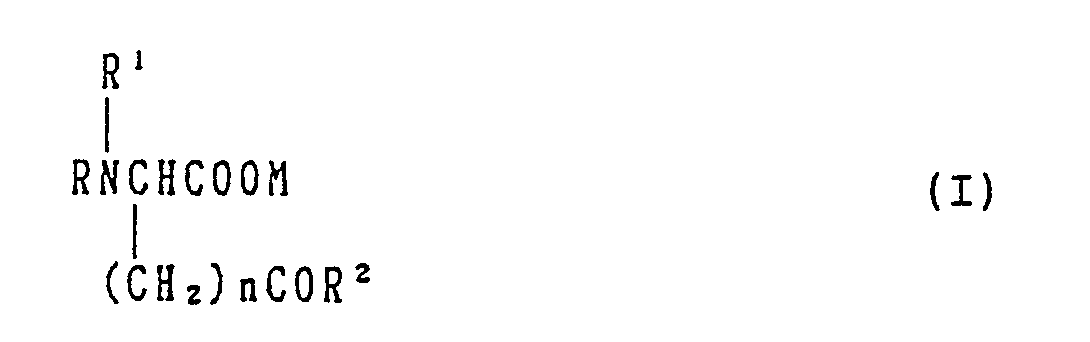
where R and R¹ are each a hydrogen atom, or an alkyl, alkenyl, hydroxyalkyl or hydroxylalkenyl group each having 1 - 20 carbon atoms; R² is -OR³ or -NHR³ (where R³ is of the same meaning as R or R¹); M is a hydrogen atom, a cation or R⁴ (where R⁴ is of the same meaning as R or R¹); and n is an integer of 1 - 4;
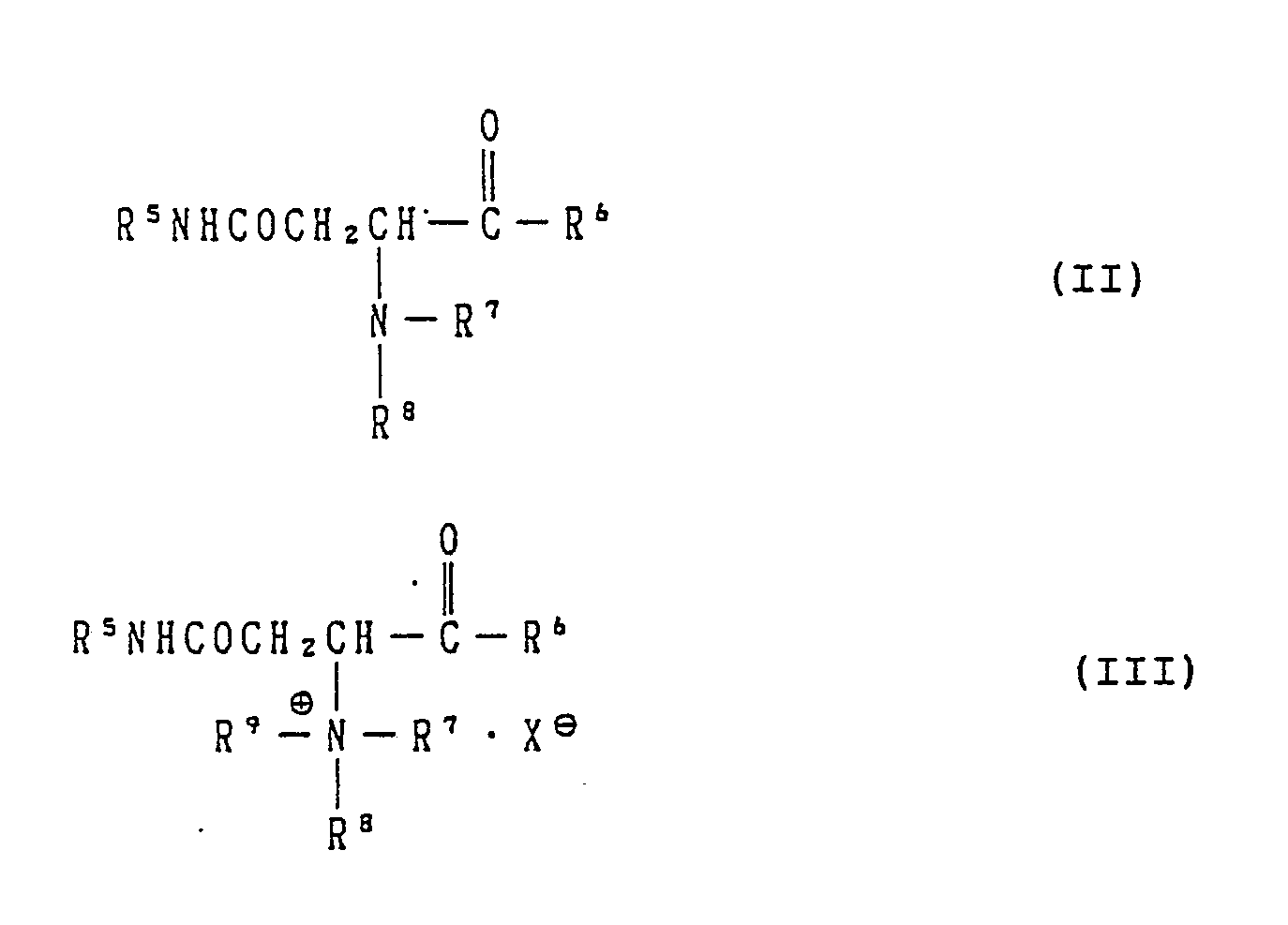
where R⁵ is an alkyl or alkenyl group each having 4 - 22 carbon atoms; R⁶ is -OM [M is of the same meaning as M in formula (1)], -NH₂ or an alkoxy group having 1 - 6 carbon atoms; R⁷, R⁸ and R⁹ are each an alkyl group having 1 - 6 carbon atoms, an aralkyl group or an alkylsulfonic acid group; and X is an anion.
where R and R¹ are each a hydrogen atom, or an alkyl, alkenyl, hydroxyalkyl or hydroxylalkenyl group each having 1 - 20 carbon atoms; R² is -OR³ or -NHR³ (where R³ is of the same meaning as R or R¹); M is a hydrogen atom, a cation or R⁴ (where R⁴ is of the same meaning as R or R¹); and n is an integer of 1 - 4;
where R⁵ is an alkyl or alkenyl group each having 4 - 22 carbon atoms; R⁶ is -OM [M is of the same meaning as M in formula (1)], -NH₂ or an alkoxy group having 1 - 6 carbon atoms; R⁷, R⁸ and R⁹ are each an alkyl group having 1 - 6 carbon atoms, an aralkyl group or an alkylsulfonic acid group; and X is an anion.
2. A silver halide photographic material according to claim 1 wherein said surfactant
is incorporated in a coating solution used to form one or more of said photographic
constituent layers in an amount of 0.01 - 50 g per kg of the coating solution.
3. A silver halide photographic material according to claim 2 wherein said surfactant
is incorporated in a coating solution used to form one or more of said photographic
constituent layers in an amount of 0.05 - 5 g per kg of the coating solution.
4. A silver halide photographic material according to claim 1 wherein said surfactant
is added as a solution in a water-miscible solvent.
5. A silver halide photographic material according to claim 4 wherein said water-miscible
solvent is methanol.
6. A silver halide photographic material according to claim 1 which further contains
a polymer latex.