|
(11) | EP 0 297 916 A1 |

| (12) | EUROPEAN PATENT APPLICATION |
|
|
|
|
|||||||||||||||||||||||||||
| (54) | Control of corrosion in aqueous systems |
| (57) A method and composition for inhibiting the corrosion of metal surfaces in contact
with the system water of aqueous systems are disclosed, which use a combination of
at least one 2,5-dihydroxybenzene sulfonic acid and its water soluble salts and at
least one amine selected from neutralizing amines and hydroxylamines. |
[0001] This invention relates to the addition of oxygen scavengers to aqueous solutions to reduce the corrosion of metals that are in contact with the solutions.
[0002] In processes using aqueous solutions, corrosion of metal surfaces may occur at various locations including feed lines, heaters, steam lines, process tanks and return lines. The presence of dissolved gases such as carbon dioxide and oxygen in the water can be a principal factor influencing this corrosion, particularly where iron and steel are materials of construction.
[0003] In boilers, carbonate or bicarbonate compounds are frequently added to make the feedwater alkaline. The materials can decompose at boiler operating conditions to produce carbon dioxide with the steam such that there is increased corrosion of steam lines and steam condensate return lines. Neutralizing amines react with carbon dioxide in the condensate and are well known in the boiler water condensate art as additives customarily used to reduce corrosion due to carbon dioxide. See eg. H. H. Uhlig, et al. "Corrosion and Corrosion Control," page 291, John Wiley & Sons, Inc. (1985). The corrosion of the iron and steel pipes, boilers, and economizers of conventional boiler systems in oxygenated conditions is also a well known problem; and controlling the presence of oxygen in boiler systems, particularly in the feed water section, has received considerable attention. Oxygen removal may be partially accomplished by either vacuum or thermal deaeration, or both. Complete removal of oxygen cannot be effected by these means, however, and further removal by use of a chemical scavenging agent, such as sodium sulfite, is a well-known practice.
[0004] In recent times, the use of low pressure boilers (operating below about 150 psig) has been increasingly supplemented by use of boilers operating at moderate pressure (operating between about 150 psig and about 600 psig) and high pressure (operating above about 600 psig). As boiler operating temperatures and pressures have increased there has been particular interest in the performance of oxygen scavengers at these operating conditions. For example, use of sulphites at elevated temperatures and pressures may cause an increase in solids, and formation of sulfur dioxide and hydrogen sulfide, both of which can be a source of corrosion. Scavengers such as hydrazine, hydroquinone, and certain hydroxylamines have been found to perform satisfactorily in some circumstances. In other circumstances, the efficiency with which the scavenging proceeds has not been optimal. There is thus a continuing need for alternative oxygen scavengers which can be effectively used at elevated temperatures and pressures.
[0005] Despite the toxicity of hydrazine, much recent research has concerned development of corrosion inhibitors using hydrazine together with various organic products. Other work has focused on hydroxylamines. US-A-4,067,690 discloses that hydroxylamine and certain derivatives thereof are highly effective oxygen scavengers in boiler water. The hydroxylamines may be catalyzed with any of a number of well-known catalysts used in sodium sulfite or hydrazine boiler water treatment. Alkali metal hydroxide, water soluble metal salts, hydroquinone, and benzoquinone are also useful catalysts. US-A-4,350,606 discloses that the use of a hydroxylamine compound and a volatile, neutralizing amine such as cyclohexylamine, morpholine, diethylaminoethanol, dimethylpropanolamine, or 2-amino-2-methyl-1-propanol, inhibits corrosion in boiler systems caused by carbon dioxide and oxygen.
[0006] Hydroquinone and some related compounds including quinones and substituted aromatics have also been used in corrosion inhibition.
[0007] According to the present invention there is provided a method of inhibiting the corrosion of a metal surface in contact with the system water of an aqueous system comprising incorporating in the system water, as oxygen scavenger,
(a) at least one 2,5-dihydroxybenzene sulfonic acid or a water soluble salt thereof; and
(b) at least one amine which is a neutralizing amine or a hydroxylamine.
[0008] Addition of 2,5-dihydroxybenzene sulfonic acid (C₆H₆O₅S) and/or its water soluble salts together with either a neutralizing amine or hydroxylamine, or both, to the system water of aqueous systems, for example boiler system water, inhibits the corrosion of metal in contact with the system by removing oxygen dissolved therein. The present invention surprisingly promotes the rapid scavenging of oxygen in aqueous systems, such as boiler water systems, containing dissolved air and/or oxygen. The invention is especially suited for aqueous systems such as boiler water systems consisting essentially of water containing dissolved oxygen. Indeed, the efficiency of oxygen scavenging achieved by using the combined additives, and the effectiveness of the additives at conditions found within boiler systems, makes boiler system use particularly advantageous.
[0009] The corrosion inhibiting agents used in this invention include 2,5-dihydroxybenzene sulfonic acid having the structural formula:
and/or its water soluble salts.
[0010] Metal salts of the sulfonate are preferred, with potassium and sodium being the preferred cations, potassium the most preferred. Accordingly, the preferred agents of this invention include potassium hydroquinone-2-sulfonate (C₆H₅O₅SK) having the general structural formula:
[0011] The compounds (2,5-dihydroxybenzene sulfonic acid and its water soluble salts) will be referred to throughout this specification as "hydroquinone sulfonates".
[0012] We have found that use of hydroquinone sulfonates along with certain classes of amines, namely neutralizing amines and hydroxylamines, promotes oxygen scavenging even at moderate temperatures.
[0013] The use of hydroquinone sulfonate-amine combinations as oxygen scavengers may be practiced in various water systems, such as recirculating heating systems. However, they are particularly suited for use as oxygen scavenging additives to boiler related systems, such as, for example, boiler feedwater and boiler water. One suggested use is for treatment of water in a dormant boiler or boiler lay-up. In boiler water systems, corrosion may occur in feed lines, heaters, economizers, boilers, steam lines, and return lines; and the invention is intended for broad use in any boiler water system (i.e. at pressures in the range of 0 to 2000 psig or higher). Indeed, inasmuch as hydroquinone-sulfonate combinations are deemed to perform effectively at higher pressures and temperatures, they are considered particularly suited for boiler water systems operating at temperatures in the range of about 298°F to about 706°F and at pressures in the range of about 50 psig to 3200 psig. The metal surfaces exposed to these conditions are generally iron and steel.
[0014] Practice of the invention will become further apparent from the following non-limiting examples.
EXAMPLE I
[0015] The oxygen scavenging activity of potassium hydroquinone-2-sulfonate in combination with cyclohexylamine, a neutralizing amine, was evaluated in the test apparatus depicted schematically in Fig. 1. The apparatus (10) comprises a peristaltic pump (11) which is used for circulating water throughout the system, pump inlet tubing (12) and pump outlet tubing (13). A polyethylene fill-bottle (14) is connected with the inlet tubing (12) and is used to feed system water into the apparatus. A valve (15), which may be selectively opened and closed, is provided between the fill bottle (14) and the inlet tubing (12) and is used to control flow therebetween. A temperature measurement chamber (16) is positioned within the pump inlet tubing (12) and contains a thermometer (17) used for monitoring the water temperature. The system water is drawn through the inlet tubing (12), into the pump (11) and then is pumped via the pump outlet tubing (13) into a glass sampling chamber (18). The sampling chamber (18) contains a pH probe (19) and a dissolved oxygen probe (20). The pH probe (19) is operably connected to a pH meter (21) used for displaying and monitoring the system water pH; and the dissolved oxygen probe (20) is operably connected to a dissolved oxygen meter (22) used for displaying and monitoring the system water dissolved oxygen level, as well as to a recorder (23) used for continuously recording the dissolved oxygen level in the system water. Tubing (24) is provided for directing system water from the glass sampling chamber (18) to the one liter stainless steel preheat reactor (25), known in the laboratory as a "Parr vessel." A glass chemical inlet chamber (26) is positioned within the tubing (24) and may be fitted with a rubber septum (not shown) through which a chemical solution of oxygen scavenger may be injected. The preheat reactor (25) contains a heating element (not shown) which may be activated to preheat the system water. Water forced out of the preheat reactor (25) by operation of the pump (11) is directed through tubing (27) to a two liter stainless steel heating reactor (28) where the system water is heated to its highest temperature. A heating element and a thermostat (not shown) are provided for maintaining the water temperature in the heating reactor (28) relatively constant. The water from the heating reactor (28) passes through tubing (29) into a water cooled heat exchanger (30) which cools the system water to a range of about 55°F to 60°F. System water from the heat exchanger (30) is then recirculated into the pump inlet tubing (12). Thus, while the system water may be heated to elevated temperatures in the preheat reactor (25) and the heating reactor (28), the recirculated water passing through the pump and into the sampling chamber (18) may be kept at a relatively constant temperature conducive to accurate probe operation. The full capacity of the apparatus (10) is about 4.5 liters while the pumping rate of pump (11) is about 0.5 liter per minute.
[0016] The oxygen scavenging activity of potassium hydroquinone-2-sulfonate, cyclohexylamine, and a combination thereof were each investigated at system water conditions of 30°C. In each run, distilled water saturated with oxygen (about 8.5 ppm) and containing about 10 ppm carbon dioxide was fed into the system through the polyethylene fill bottle (14). The system was filled to its capacity with water to the substantial exclusion of air, and the water was heated, using only the heating reactor (28), until a steady state was achieved at which the temperature of system water leaving the heating reactor (28) as controlled by the thermostat therein was about 30°C, and the temperature of the system water leaving the heat exchanger as measured by thermometer (17) was from about 55°F to 60°F. During this initial period, gas was allowed to exit from the system through the fill bottle (14) and the chemical inlet chamber (26); and the dissolved oxygen level in the circulating water was allowed to equilibrate. Recirculation continued in each run until the oxygen level in the system water remained constant for at least 30 minutes. Once the initial reading was established, the system was closed to the atmosphere and the composition to be evaluated as an oxygen scavenger was injected through the rubber septum fitted in the chemical inlet chamber (26). Recycling continued for 20 minutes, during which time the oxygen level in the sampling chamber (18) was monitored. The results of the three runs are given in Table I below. The dosage of potassium hydroquinone-2-sulfonate, where used, was 7 ppm per 1 ppm dissolved oxygen. The dosage of cyclohexylamine, where used, was 200 ppm.
TABLE I
The pH of the water prior to the addition of the addiyives was about 5.8| Time (Minutes) | Dissolved Oxygen Levels in ppm O₂, after adding | ||
| Potassium Hydroquinone 2-Sulfonate (7 ppm per 1 ppm O₂) | Cyclohexylamine (200 ppm) | Cyclohexylamine (200 ppm) plus Potassium Hydroquinone-2-Sulfonate (7ppm per 1 ppm O₂) | |
| 0 | 6.6 | 6.9 | 6.9 |
| 5 | 6.6 | 6.9 | 1.8 |
| 10 | 6.6 | 6.9 | 1.4 |
| 15 | 6.6 | 6.9 | 1.3 |
| 20 | 6.6 | 6.9 | 1.3 |
EXAMPLE II
[0017] Another run was made in accordance with the procedure of Example I, and using a combination of hydroquinone-2-sulfonate and diethylaminoethanol, another neutralizing amine. The results of this run are given in Table II below.
TABLE II
| Time (Minutes) | Dissolved Oxygen Levels in ppm O₂, after adding |
| Diethylaminoethanol (200 ppm) plus Potassium Hydroquinone-2-Sulfonate (7 ppm per 1 ppm O₂) | |
| 0 | 6.6 |
| 5 | 3.9 |
| 10 | 1.8 |
| 15 | 1.4 |
| 20 | 1.2 |
EXAMPLE III
[0018] A run was performed in accordance with the procedure of Example I, and using a combination of hydroquinone-2-sulfonate and morpholine, a neutralizing amine. The results of this run are shown in Table III below.
TABLE III
| Time (Minutes) | Dissolved Oxygen Levels in ppm O₂, after adding |
| Morpholine (200 ppm) plus Potassium Hydroquinone-2-Sulfonate (7 ppm per 1 ppm O₂) | |
| 0 | 6.5 |
| 5 | 5.9 |
| 10 | 5.0 |
| 15 | 4.3 |
| 20 | 4.2 |
EXAMPLE IV
[0019] Another test was made in accordance with the procedure of Example I, and using a combination of hydroquinone-2-sulfonate and 2-amino-2-methyl-1-propanol, another neutralizing amine. The test results are given in Table IV below. The dosage of potassium hydroquinone-2-sulfonate, where used, was 14 ppm per 1 ppm dissolved oxygen. The dosage of 2-amino-2-methyl-1-propanol, where used, was 200 ppm.
TABLE IV
| Time (Minutes) | Dissolved Oxygen Levels in ppm O₂, after adding | |
| Potassium Hydroquinone 2-Sulfonate (14 ppm per 1 ppm O₂) | 2-Amino-2-Metyl-1-Propanol (200 ppm) plus Potassium Hydroquinone-2-Sulfonate (14 ppm per 1 ppm O₂) | |
| 0 | 6.1 | 6.6 |
| 5 | 6.1 | 2.6 |
| 10 | 6.1 | 1.4 |
| 15 | 6.1 | 1.2 |
| 20 | 6.1 | 1.0 |
EXAMPLE V
[0020] A run was conducted in accordance with the procedure of Example I, and employing a combination of hydroquinone-2-sulfonate and dimethylpropanolamine, a neutralizing amine. The results of this run are illustrated in Table V below.
TABLE V
| Time (Minutes) | Dissolved Oxygen Levels in ppm O₂, after adding |
| Dimethylpropanolamine (200 ppm) plus Potassium Hydroquinone-2-Sulfonate (14 ppm per 1 ppm O₂) | |
| 0 | 6.9 |
| 5 | 4.7 |
| 10 | 3.4 |
| 15 | 2.9 |
| 20 | 2.7 |
EXAMPLE VI
[0021] Another test was performed in accordance with the procedure of Example I, and using a combination of hydroquinone-2-sulfonate, cyclohexylamine, and diethylaminoethanol. The results of this test are given in Table VI below.
TABLE VI
| Time (Minutes) | Dissolved Oxygen Levels in ppm O₂, after adding |
| Cyclohexylamine (100 ppm), Dimethylaminoethanol (100 ppm), plus Potassium Hydroquinone-2-Sulfonate (14 ppm per 1 ppm O₂) | |
| 0 | 6.3 |
| 5 | 1.3 |
| 10 | 0.8 |
| 15 | 0.7 |
| 20 | 0.6 |
[0022] It is evident from Tables I-VI that the combinations of potassium hydroquinone-2-sulfonate and neutralizing amines were surprisingly effective. Indeed, neither neutralizing amine alone, nor potassium hydroquinone-2-sulfonate alone, appeared to be effective oxygen scavengers. While the exact mechanism of the scavenging reacton achieved by the combination of hydroquinone sulfonates and neutralizing amines is not certain, it is believed that the neutralizing amines provide a catalytic effect in the reaction of hydroquinone sulfonates with oxygen, making the removal of oxygen faster, even at relatively low temperature. Preferred neutralizing amines for use in this invention include, in addition to cyclohexylamine and diethylaminoethanol, morpholine, dimethylpropanolamine, methoxypropylamine, and 2-amino-2-methyl-1-propanol.
[0023] In addition to inhibiting corrosion due to oxygen, the presence of neutralizing amines will provide protection against carbon dioxide induced corrosion.
[0024] The amounts of neutralizing amines and hydroquinone sulfonates used for treating any particular aqueous system can vary considerably according to such factors as the amount of oxygen and carbon dioxide in the system and the exposure of the system to atmospheric oxygen. The amounts of neutralizing amines and hydroquinone sulfonate used are those effective to promote substantially more rapid oxygen scavenging than that provided by either component alone. Generally, for the neutralizing amine and the hydroquinone sulfonate to effectively interact in accordance with this invention, the weight ratio of neutralizing amine to hydroquinone sulfonate added to the system water is between about 0.1:1 and 100:1, preferably from about 0.5:1 to about 50:1, and especially from about 1:1 to about 20:1. Where the neutralizing amine and hydroquinone sulfonate are added as the sole oxygen scavenger, the combined amount of neutralizing amine and hydroquinone sulfonate added to the system is generally between about 0.01 parts per million (ppm) and about 5,000 ppm; preferably from about 1 ppm to about 600 ppm; and especially from about 5 ppm to about 300 ppm.
EXAMPLE VII
[0025] The oxygen scavenging activity of diethylhydroxylamine, both alone and in combination with potassium hydroquinone-2-sulfonate, was evaluated in accordance with the procedure of Example I. The results of these runs are presented in Table VII below. The dosages used in these tests were 7 ppm of scavenger composition per 1 ppm O₂ (by weight). The weight ratio of diethylhydroxylamine to potassium hydroquinone-2-sulfonate in the combination was 9:1.
TABLE VII
The pH in these runs was about 8.5.| Time (Minutes) | Dissolved Oxygen Levels in ppm O₂, after adding | ||
| Potassium Hydroquinone 2-Sulfonate (7 ppm per 1 ppm O₂) | Diethylhydroxylamine (7 ppm per 1 ppm O₂) | Diethylhydroxylamine plus Potassium Hydroquinone-2-Sulfonate (9:1, 7 ppm per 1 ppm O₂) | |
| 0 | 6.6 | 7.0 | 7.3 |
| 5 | 6.6 | 5.5 | 4.7 |
| 10 | 6.6 | 5.2 | 2.3 |
| 15 | 6.6 | 5.2 | 1.7 |
| 20 | 6.6 | 5.2 | 1.7 |
[0026] It is evident from Table VII that the combination of potassium hydroquinone-2-sulfonate and the hydroxylamine was surprisingly effective. The exact mechanism of the scavenging reaction achieved by this combination is not certain. However, because of the relatively small amount of hydroquinone sulfonate used, it is believed that the hydroquinone sulfonates provide a catalytic effect in the reaction of hydroxylamines with oxygen, making the removal of oxygen faster, even at relatively low temperatures. Preferred hydroxylamines include diethylhydroxylamine and hydroxylamine itself (NH₂OH).
[0027] The amounts of hydroxylamines and hydroquinone sulfonates used for treating any particular aqueous system can also vary considerably according to such factors as the amount of oxygen in the system, and exposure of the system to atmosphere oxygen. The amounts of hydroxylamines and hydroquinone sulfonate used are those effective to promote substantially morerapid oxygen scavenging than provided by either component alone. Generally, for the hydroxylamine and the hydroquinone sulfonate to effectively interact in accordance with this invention, the weight ratio of hydroxylamine to hydroquinone sulfonate added to the system water is between about 0.01:1 and 500:1; preferably from about 0.1:1 to about 100:1; and especially from about 0.3:1 to about 20:1. Where the hydroxylamine and hydroquinone sulfonate are added as the sole oxygen scavenger, the combined amount of hydroxylamine and hydroquinone sulfonate added to the system is generally between about 0.01 ppm and 3,000 ppm; preferably from about 1 ppm to about 500 ppm; and especially from about 2 ppm to about 250 ppm.
[0028] Hydroxylamines preferred for use in this invention include those having the general formula:
in which R₁, R₂ and R₃ are the same or different and are selected from the group consisting of hydrogen, lower alkyl, and aryl; and water soluble salts of these hydroxylamines. The lower alkyl group may generally have from 1 to 8 carbon atoms and the aryl group may be, for example, phenyl, benzyl, and tolyl. Suitable hydroxylamine compounds include hydroxylamine; N,N-diethylhydroxylamine; hydroxylamine hydrochloride; hydroxylammonium acid sulfate; hydroxylamine phosphate; N-ethylhydroxylamine; N-isopropylhydroxylamine; N,N-dimethylhydroxylamine; O-methylhydroxylamine; N-hexylhydroxylamine; O-hexylhydroxylamine; N-heptylhydroxylamine: N,N-dipropylhydroxylamine; O-methyl N,N-diethylhydroxylamine; N-octylhydroxylamine; O-ethyl N,N-dimethylhydroxylamine; N,N-diethylhydroxylamine hydrochloride; N-methyl-N-ethylhydroxylamine; O-methyl N-propylhydroxylamine; N-methyl N-propylhydroxylamine; O-methylhydroxylamine phosphate; N-butylhydroxylamine; O-pentylhydroxylamine; N-benzylhydroxylamine; O-benzylhydroxylamine; and N,N-diethylhydroxylamine acetate. N,N-diethylhydroxylamine, hydroxylamine, hydroxylamine hydrochloride, and hydroxylammonium acid sulfate are preferred and N,N-diethylhydroxylamine is especially preferred. Also suitable for use in this invention are compounds, which upon being added to the aqueous system, yield hydroxylamines.
EXAMPLE VIII
[0029] For comparison, the scavenging effectiveness of hydrazine was also evaluated at pH of about 8.5 using the method of Example I. The results of this run are presented in Table VIII below. The dosage used in this test was about 3 ppm per 1 ppm O₂.
TABLE VIII
| Time (Minutes) | Dissolved Oxygen Levels in ppm O₂, after adding |
| Hydrazine | |
| 0 | 6.6 |
| 5 | 6.6 |
| 10 | 6.4 |
| 15 | 6.4 |
| 20 | 6.3 |
[0030] It is evident that the use of the hydroquinone sulfonate in combination with hydroxylamine provided comparatively more rapid scavenging than hydrazine.
EXAMPLE IX
[0031] To test the suitability of using diethylhydroxylamine salt of hydroquinone-2-sulfonic acid at boiler feedwater conditions, runs using this additive were made using the apparatus described in Example I, but heating the water via the preheat reactor (25) and the heating reactor (28) to about 190°F. Monitoring of dissolved oxygen was continued for 30 minutes following the addition of the additive. The results for diethylhydroxylamine salt of hydroquinone-2-sulfonic acid, along with those for potassium hydroquinone-2-sulfonate and diethylhydroxylamine, at a pH of 8.5, are given in Table IX.
TABLE IX
| Time (Minutes) | Dissolved Oxygen Levels in ppm O₂, after adding | |||
| Potassium Hydroquinone-2-Sulfonate | Diethylhydroxylamine | Diethylhydroxylamine Salt of Hydroquinone-2-Sulfonic Acid | ||
| 2 moles per mole O₂ | 2.5 moles per mole O₂ | 0.8 moles per mole O₂ | 1.6 moles per mole O₂ | |
| 0 | 4.7 | 3.7 | 5.5 | 4.0 |
| 5 | 3.6 | 3.0 | 4.0 | 3.1 |
| 10 | 3.0 | 2.4 | 2.3 | 1.2 |
| 15 | 2.8 | 2.2 | 1.3 | 0.7 |
| 20 | 2.3 | 1.8 | 1.2 | 0.6 |
| 30 | 2.2 | 1.4 | 1.1 | 0.5 |
[0032] It is evident from Table IX that diethylhydroxlamine salt of hydroquinone-2-sulfonic acid is an effective oxygen scavenger at relatively high temperatures.
EXAMPLE X
[0033] For comparison, the oxygen scavenging effectiveness of hydrazine was evaluated at a pH of 8.5 using the method of Example IX. The results of this test are presented in Table X below. The dosage used in this test was 2 moles of hydrazine per mole oxygen.
TABLE X
| Time (Minutes) | Dissolved Oxygen Levels in ppm O₂, after adding |
| Hydrazine | |
| 0 | 3.3 |
| 5 | 2.9 |
| 10 | 2.6 |
| 15 | 2.4 |
| 20 | 2.2 |
| 30 | 1.9 |
[0034] It is apparent that the use of the diethylhydroxylamine salt of hydroquinone-2-sulfonic acid provided comparatively more rapid scavenging of oxygen than hydrazine on a mole for mole basis.
[0035] The process of this invention for inhibiting corrosion of metal surfaces in contact with the system water of an aqueous system by scavenging oxygen from the system water comprises adding in the aqueous solution effective amounts of at least one hydroquinone sulfonate with at least one amine selected from the group consisting of neutralizing amines and hydroxylamines. However, hydroquinone sulfonates may be added in accordance with this invention in combination with both neutralizing amines and hydroxylamines. This embodiment is considered particularly effective in providing rapid oxygen scavenging; and it also generally provides protection against carbon dioxide induced corrosion. When hydroquinone sulfonate is added with both neutralizing amine and hydroxylamine, the preferred total dosage range for all components is generally from about 0.01 ppm to about 8,000 ppm, with the most preferred dosage range being generally from about 2 ppm to about 300 ppm.
[0036] As noted above, preferred salts of 2,5-dihydroxybenzene sulfonic acid include metal salts of the sulfonate, with potassium and sodium being the preferred cations, potassium the most preferred. Another preferred group of salts are the hydroxylamine salts of 2,5-dihydroxybenzene sulfonic acid, and the neutralizing amine salts of 2,5-dihydroxybenzene sulfonic acid. These salts can advantageously provide both the hydroquinone sulfonate and amine components of the instant invention.
[0037] Use of the combination scavengers of this invention is not confined to low, moderate or high pressure boiler systems, but may be utilized in a wide variety of other systems where aqueous solutions containing dissolved air and/or oxygen are in contact with metal surfaces. The precise dosage used in each system will be somewhat dependent on the particular system and the water characteristics therein. The preferred system water (which may contain small amounts of certain additives normally used in systems such as boiler water systems for control of corrosion, scaling, sedimentation, pH, hardness and the like) consists essentially of water containing dissolved oxygen. In systems where addition is made to an aqueous solution which will not be further aerated before it contacts the metal surfaces to be protected, a weight ratio of the oxygen scavenger component (i.e. the hydroquinone sulfonate plus the hydroxylamine) to oxygen dissolved in the aqueous solution is preferably between about 0.1:1 to about 100:1; most preferably between about 1:1 and about 20:1. The use of hydroquinone sulfonate in combination with neutralizing amines and/or hydroxylamines, and especially in combination with neutralizing amines, provides scavenging at relatively low pH and temperature conditions. It is generally economical, however, especially where the systems are not operated at elevated temperatures, that the system water have a pH greater than about 7 as oxygen scavenging proceeds; preferably between about 8.5 and about 12.0; most preferably from about 9 to about 11. The system water temperature preferably reaches at least about 60°F during oxygen scavenging, for example, a range of about 60°F to about 706°F. Most preferably, the scavengers are used in systems where the water temperature reaches the range of about 80°F to about 490°F during oxygen scavenging. Boiler feedwater is generally also treated with alkali, which may be introduced separately or in combination with the oxygen scavenger to provide a suitable alkaline pH.
[0038] The components may be added separately or in the form of a composition, at any location, where they will be effectively mixed with the system water being treated.
[0039] In accordance with this invention, corrosion inhibiting compositions can be prepared which comprise a hydroquinone sulfonate and at least one amine selected from the group consisting of neutralizing amines and hydroxylamines. The compositions can, of course, contain both a neutralizing amine and a hydroxylamine. Suitable weight ratios of amines to the hydroquinone sulfonate in the compositions of the invention are generally the same as those described above as suitable for use in the process.
[0040] The compositions employed in the process of this invention can typically be added to the system water by feeding the treatment compounds as an aqueous feed solution. Feed solutions, when used, preferably contain 1 to 60 percent by weight of the combination; most preferably 5 to 40 weight percent thereof. Where, as in many boiler systems, make-up water is added to the aqueous solution, calibrated injectors can be employed to deliver predetermined amounts of the combination, periodically or continuously, to the aqueous solution via the make-up water line. While the scavengers may be added at locations throughout the system, the addition is preferably made at a location where there is little opportunity for additional aeration of the solution before it contacts the metal components to be protected. For example, in boiler systems, addition is preferably made to the feedwater at a location where the feedwater will not be exposed to substantial aeration before it enters the boiler. Examples of such locations might include the storage section of the deaerator, the feedwater line itself, or depending upon the boiler system design, through return condensate lines or make-up water lines.
1. A method of inhibiting the corrosion of a metal surface in contact with the system
water of an aqueous system comprising incorporating in the system water, as oxygen
scavenger,
(a) at least one 2,5-dihyroxybenzene sulfonic acid or a water soluble salt thereof; and
(b) at least one amine which is a neutralizing amine or a hydroxylamine.
2. A method according to claim 1 wherein component (b) comprises a hydroxylamine compound
having the formula:
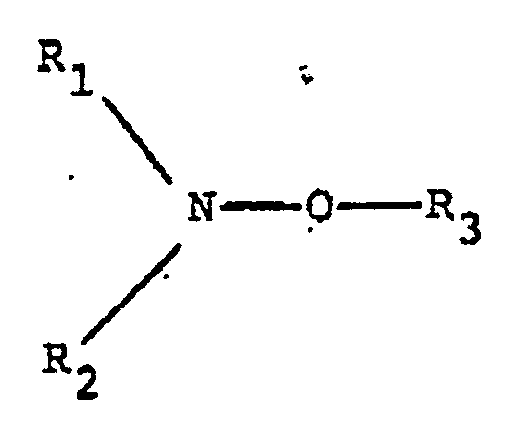
wherein R₁, R₂, and R₃ are the same or different and represent hydrogen, lower alkyl or aryl.
wherein R₁, R₂, and R₃ are the same or different and represent hydrogen, lower alkyl or aryl.
3. A method according to claim 1 or 2 wherein the weight ratio of the hydroxylamine
to component (a) is from 0.01:1 to 500:1.
4. A method according to any one of claims 1 to 3 wherein component (b) also comprises
a neutralizing amine in a weight ratio to component (a) of from 0.1:1 to 100:1.
5. A method according to claim 4 wherein the combined amount of component (a) and
component (b) is from 0.01 ppm to 8,000 ppm.
6. A method according to any one of claims 1 to 5 wherein component (b) comprises
a neutralizing amine which is cyclohexylamine, diethylaminoethanol, morpholine, dimethylpropanolamine,
methoxypropylamine, or 2-amino-2-methyl-1-propanol.
7. A method according to claim 6 wherein the weight ratio of neutralizing amine to
component (a) is from 0.1:1 to 100:1.
8. A method according to any one of the preceding claims wherein component (a) comprises
a metal salt of the sulfonate.
9. A method according to any one of claims 1 to 8 wherein component (a) and neutralizing
amine or hydroxylamine are added as the sole oxygen scavenger, and the combined amount
of component (a) and neutralizing amine or hydroxylamine is from 0.01 ppm to 5,000
ppm.
10. A method according to any one of claims 1 to 9 wherein addition is made to system
water which will not be further aerated before it contacts the metal surfaces, the
weight ratio of component (a) to oxygen dissolved in the system water being from 0.1:1
to 100:1.
11. A method according to any one of the preceding claims wherein the pH of the system
water is maintained above 7.
12. A method according to any one of the preceding claims wherein the temperature
of the system water reaches 60°F to 706°F.
13. A method according to any one of the preceding claims wherein a hydroxylamine
salt of 2,5-dihydroxybenzene sulfonic acid is added.
14. A method according to claim 13 wherein diethylhydroxylamine salt of 2,5-dihydroxybenzene
sulfonic acid is added.
15. A method according to any one of the preceding claims wherein a neutralizing amine
salt of 2,5-dihydroxy-benzene sulfonic acid is added.
16. A method according to any one of the preceding claims wherein the aqueous system
is a boiler water of a boiler system operating at 50 to 3200 psig pressure and a temperature
of 298°F to 706°F.
17. A composition suitable for addition to an aqueous solution to inhibit the corrosion
of metal surfaces in contact therewith, comprising:
(a) at least one 2,5-dihydroxybenzene sulfonic acid or a water soluble salt thereof; and
(b) at least one amine which is a neutralizing amine or a hydroxylamine.
18. A composition according to claim 17 wherein component (b) comprises a hydroxylamine
compound having the formula:
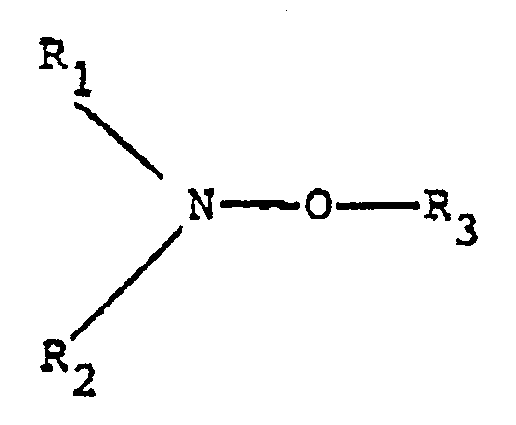
wherein R₁, R₂, and R₃ are the same or different and represent hydrogen, lower alkyl or aryl; and wherein the weight ratio of said hydroxylamine to component (a) is from 0.01:1 to 500:1.
wherein R₁, R₂, and R₃ are the same or different and represent hydrogen, lower alkyl or aryl; and wherein the weight ratio of said hydroxylamine to component (a) is from 0.01:1 to 500:1.
19. A composition according to claim 18 wherein component (b) also comprises a neutralizing
amine in a weight ratio to component (a) of from 0.1:1 to 100:1.
20. A composition according to any one of claims 17 to 19 wherein component (b) comprises
a neutralizing amine which is cyclohexylamine, diethylaminoethanol, morpholine, dimethylpropanolamine,
methoxypropylamine, or 2-amino-2-methyl-1-propanol; and wherein the weight ratio of
said neutralizing amine to component (a) is from 0.01:1 to 100:1.
21. A composition according to any one of claims 17 to 20 wherein component (a) comprises
a metal salt of the sulfonate.
22. A composition according to claim 21 wherein component (a) comprises potassium
hydroquinone-2-sulfonate.