|
(11) | EP 0 304 662 B1 |

| (12) | EUROPEAN PATENT SPECIFICATION |
|
|
| (54) |
Damping solution for lithographic printing plate and method using it Feuchtwasserlösung für Flachdruckplatten und Anwendung Solution de mouillage par plaque lithographique et emploi |
|
|
|||||||||||||||||||||||||||||||
| Note: Within nine months from the publication of the mention of the grant of the European patent, any person may give notice to the European Patent Office of opposition to the European patent granted. Notice of opposition shall be filed in a written reasoned statement. It shall not be deemed to have been filed until the opposition fee has been paid. (Art. 99(1) European Patent Convention). |
[0001] This invention relates to a plate surface treating composition for lithographic printing plates, especially to a damping solution and furthermore, to a method of printing using this damping solution.
[0002] Lithographic printing is carried out by feeding both water and colored ink to the printing plate surface to allow the image portions to receive preferentially the colored ink and the non-image portions preferentially water and then transferring the ink deposited on image portions onto a substrate such as paper for example. Therefore, in order to obtain a print of good quality, it is necessary that oleophilicity of the image portions and hydrophilicity of the non-image portions are both strong enough so that when water and ink are applied, the image portions may receive sufficient amount of ink while the non-image portions may completely repel the ink. For this purpose, various methods for rendering the non-image portions insensitive to oil have been studied according to the type of printing plate materials and the printing methods.
[0003] That is, hitherto, as lithographic printing plate materials, there are presensitized plate (PS plate) with a support of metals such as aluminum, plate materials obtained by electrophotographic process (such as electro fax), so-called master papers comprising a paper as a substrate coated with a pigment together with a binder and photographic printing plate materials using silver salts as disclosed in Japanese Patent Kokoku No. 48-30562. Plate making methods and printing methods using solutions to render the non-image portions insensitive to oil and damping solution suitable to each of these materials have been studied and developed.
[0004] Lithographic printing plates which utilize transfer silver images per se obtained by silver complex diffusion transfer process as ink-receptive portions are disclosed in Japanese Patent Kokoku No. 48-30562 and Japanese Patent Kokai Nos. 53-21602, 54-103104 and 56-9750 and well known.
[0005] In order to prevent stain of non-image portions in such lithographic printing plates, it is known to be very effective to carry out printing with a damping solution containing inorganic fine particles of 0.1 µm or less in average particle size such as colloidal silica. (See, for example, Japanese Patent Kokai Nos. 48-45305 and 59-31193). However, in general, inorganic fine particles such as colloidal silica and colloidal alumina are adsorbed onto the surface of lithographic printing plate to form a hydrophilic layer on the surface, resulting in increase of hydrophilicity, but they cannot fully attain the prevention of staining due to printing ink which is desired most for lithographic printing plates and besides they suffer from the severe problem that they damage the ink-receptivity of the transfer silver image portions.
[0006] Japanese Patent Kokai No. 59-31193 has proposed to solve the defects of the inorganic fine particles by combination of them with a compound such as ethylene glycol monoalkyl ether. It is true that the compound shown in this patent can provide prints of high ink density without causing stain of non-image portions even when amount of the inorganic fine particles is reduced under some conditions, but the object has not yet been sufficiently accomplished and it is utterly difficult to use damping solution free from inorganic fine particles.
[0007] For example, when the lithographic printing plates as mentioned above are used for high speed offset rotary printing, even the damping solution described in the above patent results in practically severe stains.
[0008] Another method to prevent stain in the non-image portions is to contain fine particles of 2-10 µm in average particle size in a silver halide emulsion layer and/or an undercoat layer. (See, for example, Japanese Patent Kokai No. 51-13940, 51-16803 and 57-46785). It is considered that such fine particles form fine irregularities on the surface of printing layer and thus improve water retention of the damping solution due to so-called sandblasting effect and furthermore increase adhesion strength of transfer silver image to improve printing endurance. However, according to this method of using such fine particles, in case of using the particles in a small amount, both the water retention effect and the adhesion strength of transfer silver image are insufficient and even if they are used in a large amount, staining can be prevented only to a certain extent. Combination of the method of using the fine particles in the photographic layer with the method of using damping solution containing inorganic fine particles can further improve the staining, but cannot prevent it to an acceptable level and besides damage ink-receptivity of transfer silver image portions.
SUMMARY OF THE INVENTION
[0009] Accordingly, an object of this invention is to provide a damping composition which can solve the above mentioned problems and can prevent very effectively the staining of non-image portions with high reproducibility against changes in construction and conditions for production and storage and which can provide a large number of good prints with high ink density.
[0010] Another object of this invention is to provide a damping composition which can effectively prevent staining also in offset rotary printing and is suitable for applying to printing plates made using silver salt photographic process.
[0011] Still another object of this invention is to provide a printing method which can solve the problems such as staining of non-image portions, inferior ink-receptivity and adhesion of transfer silver image in lithographic printing plates made by silver complex diffusion transfer process and makes it possible to perform high speed offset rotary printing.
DESCRIPTION OF THE INVENTION
[0012] The above objects have been accomplished by a damping composition for lithographic printing plates which contains inorganic fine particles having an average particle size of 0.1 µm or less and which further contains a polymer represented by the following general formula (I):
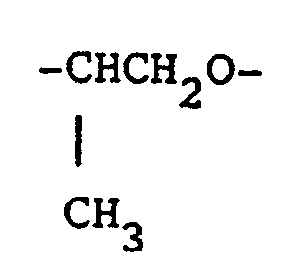
(wherein Z comprises propylene oxide
which occupies at least 50% by weight of the polymer and the polymer has a mean molecular weight of at least 600).
[0013] The polymer represented by the above formula (I) which is contained in the damping solution of this invention includes the polymers represented by the following formula (IA):
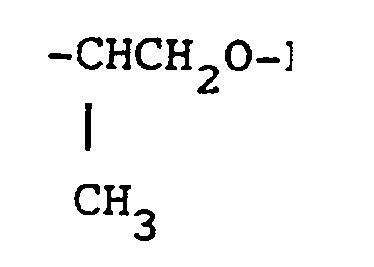
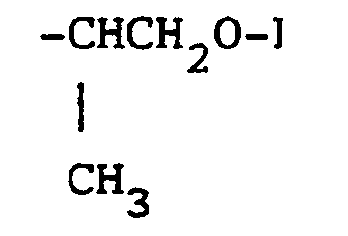
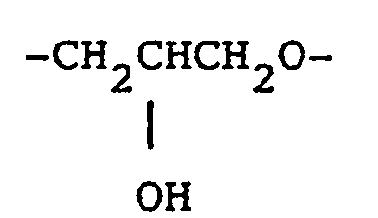
(wherein one of A and B is
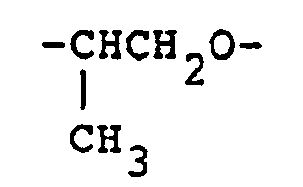
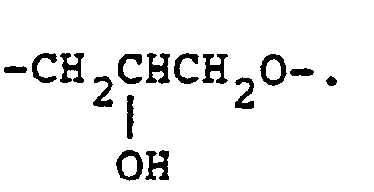
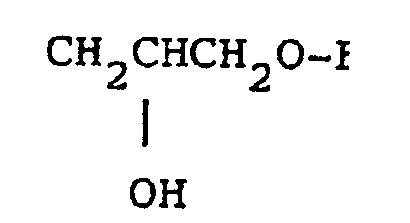
unit and another is ―CH₂CH₂O― or ―CH₂CHCH₂O― unit; a, b, c, d and e each represents mol number of each constituting unit and d and e may be 0; mean molecular weight of the polymer is at least 600; and proportion of
unit in the polymer is at least 50% by weight).
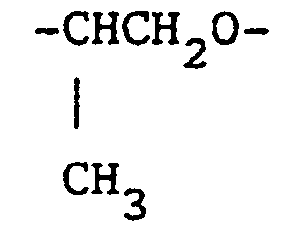
[0014] That is, the polymers of the formula (IA) have
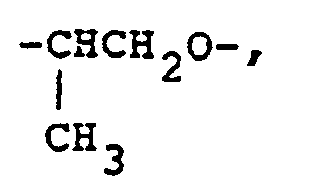
(referred to as "PO" hereinafter) unit and ―CH₂CH₂O― (referred to as "EO" hereinafter) unit and/or
(referred to as "GO" hereinafter) unit and have a molecular weight of at least 600, preferably at least 1,000. Upper limit is generally about 5,000, but the molecular weight may exceed this upper limit.
[0015] The PO unit occupies at least 50% by weight, preferably at least 60% by weight and especially preferably at least 70% by weight of the polymer.
[0016] When PO unit constitutes A in the formula (IA), B comprises at least one of EO unit and GO unit and when PO unit constitutes B, A comprises at least one of EO unit and GO unit.
[0017] Especially preferred polymers among those of the formula (IA) are block polymers represented by the following formula (Ia).
(wherein a denotes an integer of 9-60 and b and c denote an integer of more than 1 and the PO unit occupies at least 50% by weight of the polymer).
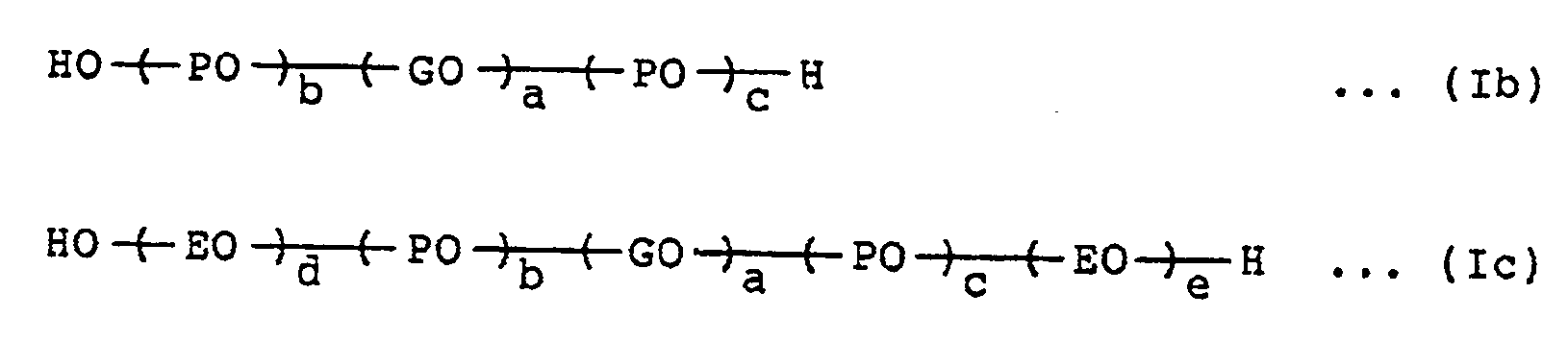
[0018] The polymers of the formula (IA) include block polymers of the following formulas (Ib) and (Ic) as preferable polymers.
(wherein a denotes an integer of 1 or 2 or more, b, c, d and e each denotes an integer of more than 1 and b+c denotes a mol number necessary for the PO unit being at least 50% by weight of the polymer having a mean molecular weight of at least 600).
[0019] The polymers represented by the formula (I) contained in the damping solution of this invention further include polymers of the following formula (IB).
(wherein m and n each denotes a mol number necessary for the block polymer having a mean molecular weight of at least 600 and further denotes a mol number necessary for
being 50-100% by weight).
[0021] The fine particles used in this invention are inorganic fine particles having an average particle size of 0.1 µm or less such as colloidal silica and colloidal alumina.
[0022] Amount of the fine particles used is about 10⁻⁴ g -about 5 g per 1 liter of the solution used. Amount of the compound of the formula (I) is about 0.1 g -about 50 g per 1 liter of the solution used. These ranges are preferred ones and, if necessary, amounts outside these ranges may also be employed.
[0023] According to another embodiment of this invention, it has been found preferable to make a printing plate by silver complex diffusion transfer process from a light sensitive lithographic printing plate material containing fine powders having an average particle size of 2-10 µm in at least one layer and then to effect printing with this printing plate using a damping solution containing the polymer of the formula (I). In this case, of course, it is more preferred to use a damping solution containing the polymer of the formula (I) and inorganic fine particles having an average particle size of 0.1 µm or less.
[0024] Typical construction of light sensitive lithographic printing plate material used in this invention, plate making method and printing method with the obtained printing plate are as follows: That is, a light sensitive material comprising a support and an undercoat layer serving also as anti-halation layer, a silver halide emulsion layer and a physical development nuclei layer coated on the support in succession is exposed imagewise and then subjected to development treatment, whereby the silver halide of latent image portion is converted to blackened silver and simultaneously the silver halide of non-latent image portion is dissolved by the action of a silver halide complexing agent contained in the development processing solution and diffused to the surface of the light sensitive material. The thus dissolved and diffused silver complex is precipitated as a silver image on the physical development nuclei in the surface layer by reducing action of developing agent. If necessary, in order to enhance the ink-receptivity of the resulting silver image, the silver image is subjected to a treatment to render it sensitive to oil subsequent to the development and then, the printing plate obtained is mounted on an offset printing machine and printing is carried out using a damping solution and an oily printing ink.
[0025] The light sensitive lithographic printing plate material used preferably in this invention contains fine powders of 2-10 µm in average particle size in at least one of the above mentioned silver halide emulsion layer, undercoat layer and the like. Examples of such fine powders are titanium oxide, zinc oxide, barium sulfate, silica, talc, zieklite and various starches. Especially preferred is silica. Amount of the fine powder is about 5% -about 50% by weight.
[0026] Various gelatins may be used as hydrophilic polymers used in the undercoat layer of the light sensitive lithographic printing plate material used in this invention. A part of the gelatin may be replaced with a hydrophilic gelatin described in Japanese Patent Kokoku No. 55-100554, sodium alginate, PVA, PVP or the like. The undercoat layer may also serve as an anti-halation layer and, if necessary, may further contain various active agents, hardeners and additives normally used in this field.
[0027] As the light sensitive silver halide emulsion layer, there may be used any ones known in this field and preferred is as described in Japanese Patent Kokai No. 49-55402.
[0028] As the physical development nuclei layer, there may be also used any ones such as, for example, described in Japanese Patent Kokoku No. 48-30562 and Japanese Patent Kokai Nos. 49-55402 and 53-21602.
[0029] Generally, the light sensitive material which has been exposed imagewise is treated with an alkaline developer and then, if necessary, subjected to plate making treatments such as treatments with a neutralizing solution, a fixing solution and etch solution (solution to render the non-image portions insensitive to oil). As the developer, there may be used any ones such as the ordinary photographic alkali developer containing a developing agent such as hydroquinone, so-called alkaline activating developer containing substantially no developing agent (the developing agent being contained in the light sensitive material) and the like. Further, these developers may contain compounds as required for respective purposes (such as, for example, those disclosed in Japanese Patent Kokoku No. 51-486 and Japanese Patent Kokai No. 52-150105).
[0030] The damping solution used in this invention can be improved in its activity for treatment by adding thereto conventionally known substances. As such substances, mention may be made of, for example, gum arabic, carboxymethyl cellulose, sodium alginate, polyvinyl pyrroridone, polyvinylimidazole, polyvinylmethyl ether - maleic anhydride copolymers, carboxymethyl starch, ammonium alginate, alginic acid oxidized cellulose, methyl cellulose, sulfates (e.g., sodium sulfate and ammonium sulfate), phosphoric acid, nitric acid, zincic acid, tannic acid and salts thereof, polyol compounds having at least 2 hydroxy groups (e.g., polyethylene glycol, ethylene glycol, propylene glycol, glycerol, diethylene glycol and hexylene glycol), organic weak acids (e.g., citric acid, succinic acid, tartaric acid, adipic acid, ascorbic acid and propionic acid), polyacrylic acid, ammonium bichromate, chrome alum, alginic acid propylene glycol ester and aminopolycarboxylic acid salts (e.g., sodium ethylenediaminetetraacetate). At least one of them may be used.
Example 1
[0032] A matting layer containing silica particles of 5 µ in average particle size was provided on one side of a both surface polyethylene coated paper of 135 g/m². On another side of this paper which had been subjected to corona discharge treatment was provided an anti-halation layer (gelatin 3.5 g/m²) containing carbon black and 1-phenyl-3-pyrazolidone in an amount of 0.2 g/m² and on this layer was coated an orthochromatically sensitized high speed silver chloride emulsion (gelatin 1.0 g/m²) containing silica particles of 7 µ in average particle size and 0.1 g/m² of 1-phenyl-8-pyrazolidone at a coverage of 1.2 g/m² in terms of silver nitrate.
[0033] These anti-halation layer and emulsion layer contained formalin as a hardener. The resulting light sensitive material was dried and then heated to 50°C and thereafter, on the emulsion layer was coated a palladium sulfide sol prepared by the following method.
Solution A:
Solution B:
[0037] Solution A and solution B were mixed with stirring and purified by passing through a column packed with an ion exchange resin prepared for production of pure water after 80 minutes. To the mixture was added the following solution C to obtain a coating composition (adjusted to pH 4).
Solution C
[0039] The resulting light sensitive lithographic printing plate material was exposed imagewise by a process camera having an image reversal mechanism and then subjected to development with the following silver complex diffusion transfer developer at 30°C for 1 minute.
Transfer developer:
[0041] After the development, the material was passed through a pair of squeeze rollers to remove excess developer, then immediately treated with a neutralizer of the following composition at 25°C for 20 seconds, again passed through the squeeze rollers to remove excess liquid and dried at room temperature.
Neutralizer:
[0043] The thus obtained lithographic printing plate was mounted on an offset printing machine, then applied with the following etch solution all over the surface and printing was run using the following damping solution.
Etch solution:
Damping solution (used):
[0046] The printing machine employed was A.B. Dick 350CD (trademark of an offset printing machine supplied by A.B. Dick Co.). The printing endurance of the resulting printing plate was evaluated in terms of the number of copies delivered before the printing became impossible owing to the occurrence of scumming and rated in accordance with the following criteria.
[0047] The printing ink used was "F Gloss Kon-ai" supplied by Dainippon Ink & Chemicals Co. which was liable to cause scumming when used with conventional offset printing plate.
[0048] Ink density was evaluated and expressed in accordance with the following criteria.
- X:
- Ink density was low and printed image was dull.
- Δ:
- Ink density was high, but printed image was dull.
- O:
- Ink density was high and printed image was clear.
[0049] Printing plates tested were printing plate A made by subjecting to the above mentioned heating to 50°C after coating of emulsion for 3 days, printing plate B made by subjecting to the heating for 6 days and printing plate C made by subjecting to the heating for 12 days.
[0050] Damping solutions to be tested were prepared from the above mentioned damping solution by adding thereto colloidal silica, the polymer of the formula (Ia) (a = 36 mols, b + c = 4 mols) and comparative compound (ethylene glycol monobutyl ether) in the following amounts (ml/20 ℓ of damping solution).
Example 2
[0052] In this example the printing plate B made in Example 1 was used and printing was carried out using a high speed offset rotary printing machine provided with a continuous damping solution feeding device and offset rotary printing ink (WEBLEX HIGHMARK SS supplied by Dainichi Seika Kogyo Co.).
[0053] Plate making and printing were effected in the same manner as in Example 1 except that damping solution used contained the colloidal silica (20% aqueous solution), the compounds of the formula (Ia) enumerated below and the comparative compounds enumerated below in such amounts as shown in Table 2.
[0054] Evaluation of stain was according to the following criteria.
- X:
- Dense stain occurred on the whole surface.
- Δ:
- Light stain occurred partly or on the whole surface.
- O:
- No stain occurred.
[0055] Compounds of the formula (Ia) and comparative compounds used in the damping solutions are as follows. (Numeral for a, b and c mean mol number.)
[0056] The results are shown in Table 2. (The amounts used are ml/20 liter of the used damping solution.)
Example 3
[0057] Amount of colloidal silica used was changed to examine permissibility of colloidal silica. That is, Example 2 was repeated with changing amount of colloidal silica in damping solutions 12-17 to 20 ml, 10 ml and 5 ml. The resulting prints were high ink density with no stains.
Example 4
[0058] Example 2 was repeated using the compounds of the formulas (Ib) and (Ic) shown in the following table to obtain the similar results as in Example 2.
Example 5
[0059] Example 2 was repeated using NEWS Z supplied by Dainippon Ink & Chemical Co. as offset rotary printing ink. The similar results were obtained.
Example 6
[0060] Example 1 was repeated except that polymer of the formula (IB) (where m = 36 mols and n = 4 mols) was used in place of the polymer of the formula (Ia) in the damping solution. There were obtained the similar results to those obtained in Example 1.
Example 7
[0061] Example 2 was repeated except that the following compounds (11)-(16) as polymer of the formula (IB) were used in place of the compounds (1)-(6) used as polymer of the formula (Ia) in the damping solution. There were obtained the similar results to those in Example 2.
Example 8
[0062] A matting layer containing silica particles of 5 µ in average particle size was provided on one side of a both surface polyethylene coated paper of 135 g/m². On another side of this paper which had been subjected to corona discharge treatment was provided an anti-halation layer (gelatin 3.5 g/m²) containing carbon black, 0.2 g/m² of 1-phenyl-3-pyrazolidone and 0.6 g/m² of silica powder having an average particle size of 7 µm and on this layer was coated an orthochromatically sensitized high speed silver chloride emulsion (gelatin 1.0 g/m²) containing 0.1 g/m² of 1-phenyl-3-pyrazolidone at a coverage of 1.2 g/m² in terms of silver nitrate.
[0063] These anti-halation layer and emulsion layer contained formalin as a hardener. The resulting light sensitive material was dried and then heated to 50°C and thereafter, on the emulsion layer was coated a palladium sulfide sol prepared by the following method.
Preparation of palladium sulfide sol:
Solution A:
Solution B:
[0066] Solution A and solution B were mixed with stirring and purified by passing through a column packed with an ion exchange resin prepared for production of pure water after 80 minutes. To the mixture was added the following solution C to obtain a coating composition (adjusted to pH 4).
Solution C
[0068] The resulting light sensitive lithographic printing plate material was exposed imagewise by a process camera having a image reversal mechanism and then subjected to development with the following silver complex diffusion transfer developer at 30°C for 30 seconds.
Transfer developer:
[0070] After the development, the material was passed through a pair of squeeze rollers to remove excess developer, then immediately treated with a neutralizer of the following composition at 25°C for 20 seconds, again passed through the squeeze rollers to remove excess liquid and dried at room temperature.
Neutralizer:
[0072] The resulting printing plate was called printing plate A and a printing plate made in the same manner as above except that the silica powders in the anti-halation layer was omitted was called printing plate B.
[0073] The thus obtained lithographic printing plate was mounted on an offset printing machine, then applied with the following etch solution all over the surface and printing was run using the following damping solution.
Etch solution
Damping solution:
[0076] Printing was carried out using a high speed offset rotary printing machine provided with a continuous damping solution feeding device and offset rotary printing ink (WEBLEX HIGHMARK SS supplied by Dainichi Seika Kogyo Co.).
[0077] Further, printing was effected in the same manner as above except that damping solution used contained the colloidal silica (20% aqueous solution), the compounds of the formula (Ia) enumerated below and the comparative compounds enumerated below in such amounts as shown in Table 3.
[0078] Evaluation of stain was according to the following criteria.
- X:
- Dense stain occurred on the whole surface.
- Δ:
- Light stain occurred partly or on the whole surface.
- O:
- No stain occurred.
[0079] Ink density was evaluated according to the following criteria.
- X:
- Ink density was low and printed image was dull.
- Δ:
- Ink density was high, but printed image was dull.
- O:
- Ink density was high and printed image was clear.
[0080] Compounds of the formula (Ia) and comparative compounds used in the damping solutions are as follows. (Numeral for a, b and c mean mol number.)
[0081] The results are shown in Table 3. (The amounts used are ml/20 liter of the used damping solution.)
Example 9
[0082] Example 8 was repeated with addition of 150 ml of the polymers of the formulas (Ib) and (Ic) shown in the following table to the damping solution 24. There were obtained printing plates free from staining and good in ink receptivity.
Example 10
[0083] Example 9 was repeated except that the polymers of the formula (IB) shown in the following table were used. The similar results to those in Example 9 were obtained.
Example 11
1. A damping solution for lithographic printing plates which contains inorganic fine
particles having an average particle size of 0.1 µm or less and a polymer having a
mean molecular weight of at least 600 and represented by the following formula (I):
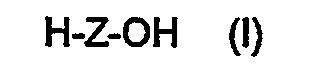
wherein Z comprises propylene oxide
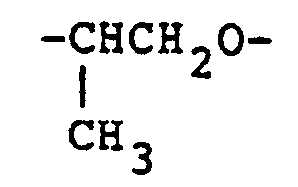
which occupies at least 50% by weight of the polymer.
wherein Z comprises propylene oxide
which occupies at least 50% by weight of the polymer.
2. A damping solution according to claim 1 wherein the polymer is represented by the
following formula (IA):

wherein one of A and B is
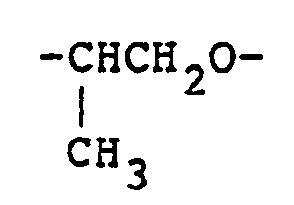
unit and another is ―CH₂CH₂O― or
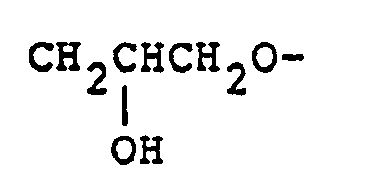
unit; a, b, c, d and e each represents mol number of each unit and d and e may be 0; and proportion of the
unit in the polymer is at least 50% by weight.
wherein one of A and B is
unit and another is ―CH₂CH₂O― or
unit; a, b, c, d and e each represents mol number of each unit and d and e may be 0; and proportion of the
unit in the polymer is at least 50% by weight.
3. A damping solution according to claim 2 wherein the polymer is represented by the
following formula (Ia):

wherein a represents an integer of 9-60, b and c each represents an integer of more than 1 and PO unit occupies at least 50% by weight of the polymer and PO denotes
EO denotes ―CH₂CH₂O― and GO denotes
wherein a represents an integer of 9-60, b and c each represents an integer of more than 1 and PO unit occupies at least 50% by weight of the polymer and PO denotes
EO denotes ―CH₂CH₂O― and GO denotes
4. A damping solution according to claim 2 wherein the polymer is a block polymer
represented by the following formula (Ib) or (Ic):
wherein a represents an integer of 1 or 2 or more, b, c, d and e each represents an integer of more than 1 and b + c represents a mol number necessary for the PO unit being at least 50% by weight of the polymer.
wherein a represents an integer of 1 or 2 or more, b, c, d and e each represents an integer of more than 1 and b + c represents a mol number necessary for the PO unit being at least 50% by weight of the polymer.
5. A damping solution according to claim 1 wherein the polymer is represented by the
following formula (IB):

wherein m and n each represents a mol number necessary for the polymer having a mean molecular weight of at least 600 and necessary for
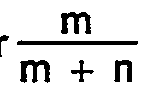
being 50-100% by weight.
wherein m and n each represents a mol number necessary for the polymer having a mean molecular weight of at least 600 and necessary for
being 50-100% by weight.
6. A damping solution according to claim 1 wherein the amount of the polymer is about
0.1 g -about 50 g for 1 liter of the damping solution.
7. A damping solution according to claim 1 wherein the amount of the inorganic fine
particles is about 10⁻⁴ g -about 5 g for 1 liter of the solution.
8. A damping solution according to claim 1 wherein the inorganic fine particles are
colloidal silica or colloidal alumina.
9. A method of printing with a lithographic printing plate using the damping solution
according to claim 1.
10. A method of printing with a lithographic printing plate made by silver complex
diffusion transfer process from a light sensitive material including a support and
at least one photographic layer containing fine powders of 2-10 µm in average particle
size, using the damping solution according to claim 1.
1. Anfeuchtelösung für lithografische Druckplatten, enthaltend anorganische Feinpartikel
mit einer Durchschnittsteilchengrösse von 0,1 µm oder weniger und ein Polymer mit
einem Durchschnittsmolekulargewicht von mindestens 600, das durch die folgende Formel
(I) dargestellt ist:
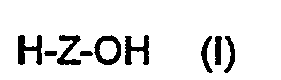
in der Z Propylenoxid
enthält, das mindestens 50 Gew.% des Polymeren besetzt.
in der Z Propylenoxid
enthält, das mindestens 50 Gew.% des Polymeren besetzt.
2. Anfeuchtelösung nach Anspruch 1, in der das Polymer durch die nachfolgende Formel
(IA) dargestellt ist:

in der entweder die A- oder die B-Einheit die
Einheit ist und die andere die CH₂CH₂O― oder
Einheit; a, b, c, d und e stellen jeweils die Molzahl jeder Einheit dar und d und e können 0 sein; und der Anteil der
Einheit in dem Polymeren beträgt mindestens 50 Gew.%
in der entweder die A- oder die B-Einheit die
Einheit ist und die andere die CH₂CH₂O― oder
Einheit; a, b, c, d und e stellen jeweils die Molzahl jeder Einheit dar und d und e können 0 sein; und der Anteil der
Einheit in dem Polymeren beträgt mindestens 50 Gew.%
3. Anfeuchtelösung nach Anspruch 2, in der das Polymer durch die l'lachfolgende Formel
(Ia) dargestellt ist:

in der a eine ganze Zahl von 9 bis 60 ist, und sowohl b wie auch c eine ganze Zahl ist, die grösser als 1 ist, und die PO-Einheit mindestens 50 Gew.% des Polymeren besetzt und PO
bedeutet, EO ―CH₂CH₂O― bedeutet und GO
bedeutet.
in der a eine ganze Zahl von 9 bis 60 ist, und sowohl b wie auch c eine ganze Zahl ist, die grösser als 1 ist, und die PO-Einheit mindestens 50 Gew.% des Polymeren besetzt und PO
bedeutet, EO ―CH₂CH₂O― bedeutet und GO
bedeutet.
4. Anfeuchtelösung nach Anspruch 2, in der das Polymer ein Blockpolymer ist, das durch
die nachfolgenden Formeln (Ib) oder (Ic) dargestellt ist:

in der a eine ganze Zahl von 1 oder 2 oder mehr bedeutet, sowohl b wie c, d und e jeweils eine ganze Zahl von mehr als 1 bedeuten, und b + c die für die PO-Einheit, die mindestens 50 Gew.% des Polymeren ausmacht, erforderliche Molzahl bedeutet.
in der a eine ganze Zahl von 1 oder 2 oder mehr bedeutet, sowohl b wie c, d und e jeweils eine ganze Zahl von mehr als 1 bedeuten, und b + c die für die PO-Einheit, die mindestens 50 Gew.% des Polymeren ausmacht, erforderliche Molzahl bedeutet.
5. Anfeuchtelösung nach Anspruch 1, in der das Polymer durch die nachfolgende Formel
(IB) dargestellt ist:
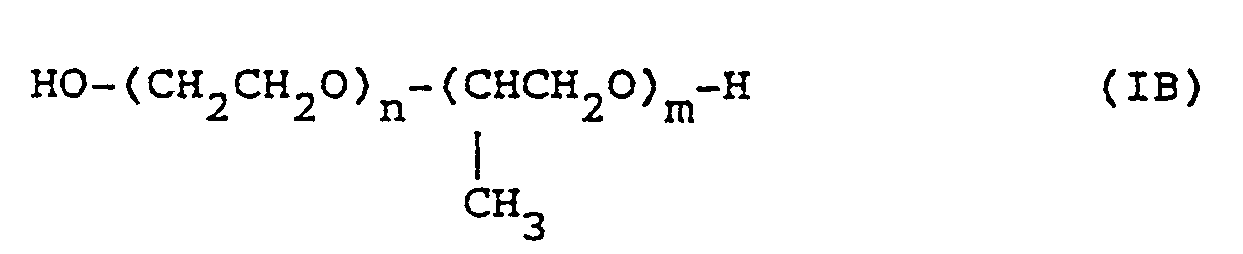
in der sowohl m wie auch n jeweils die Molzahl darstellen, die notwendig für ein Polymer mit dem Durchschnittsmolekulargewicht von mindestens 600 ist und notwendig dafür ist, dass
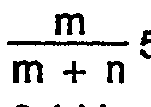
50 bis 100 Gew.% beträgt.
in der sowohl m wie auch n jeweils die Molzahl darstellen, die notwendig für ein Polymer mit dem Durchschnittsmolekulargewicht von mindestens 600 ist und notwendig dafür ist, dass
50 bis 100 Gew.% beträgt.
6. Anfeuchtelösung nach Anspruch 1, in der die Polymermenge etwa 0,1 bis etwa 50 g
pro Liter Anfeuchtelösung beträgt.
7. Anfeuchtelösung nach Anspruch 1, in der die Menge an anorganischen Feinpartikeln
etwa 10⁻⁴ bis etwa 5 g/l Lösung beträgt.
8. Anfeuchtelösung nach Anspruch 1, in der die anorganischen Feinpartikeln kolloidales
Siliziumdioxid oder kolloidales Aluminiumoxid sind.
9. Verfahren zum Drucken mit einer lithografischen Druckplatte unter Verwendung der
Anfeuchtelösung nach Anspruch 1.
10. Verfahren zum Drucken mit einer lithografischen Druckplatte, die durch ein Silberkomplex-Diffusionsübertragungsverfahren
aus einem lichtempfindlichen Material hergestellt worden ist, welches einen Träger
und mindestens eine fotografische Schicht, die feine Pulver von 2 bis 10 µm Durchschnittsteilchengrösse
enthält, umfasst, wobei die Anfeuchtelösung nach Anspruch 1 verwendet wird.
1. Solution de mouillage pour plaques lithographiques qui contient de fines particules
inorganiques ayant une granulométrie moyenne de 0,1 µm ou moins et un polymère ayant
un poids moléculaire moyen d'au moins 600 et représenté par la formule (I) suivante:
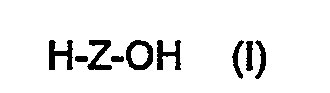
dans laquelle Z comprend l'oxyde de propylène
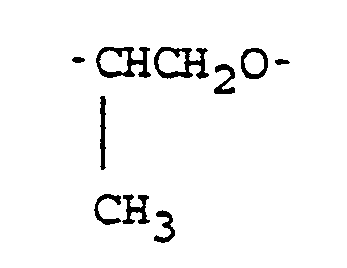
qui constitue au moins 50% en poids du polymère.
dans laquelle Z comprend l'oxyde de propylène
qui constitue au moins 50% en poids du polymère.
2. Solution de mouillage selon la revendication 1, dans laquelle le polymère est représenté
par la formule (IA) suivante:

dans laquelle l'un parmi A et B est une unité
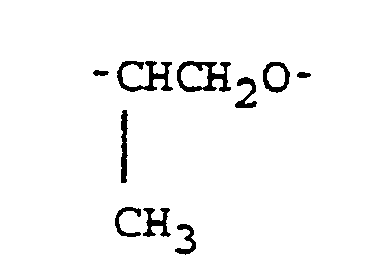
et l'autre est une unité ―CH₂CH₂O― ou
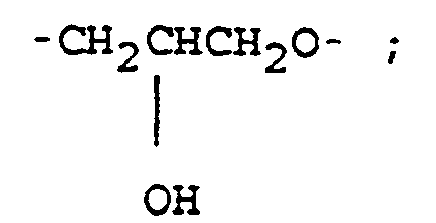
a, b, c, d et e représentent chacun le nombre de moles de chaque unité et d et e peuvent être égaux à 0; et la proportion de l'unité
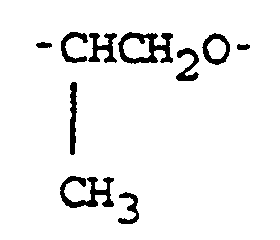
dans le polymère est d'au moins 50% en poids.
dans laquelle l'un parmi A et B est une unité
et l'autre est une unité ―CH₂CH₂O― ou
a, b, c, d et e représentent chacun le nombre de moles de chaque unité et d et e peuvent être égaux à 0; et la proportion de l'unité
dans le polymère est d'au moins 50% en poids.
3. Solution de mouillage selon la revendication 2, dans laquelle le polymère est représenté
par la formule (Ia) suivante:

dans laquelle a représente un nombre entier de 9 à 60, b et c représentent chacun un nombre entier supérieur à 1 et l'unité PO constitue au moins 50% en poids du polymère et PO désigne
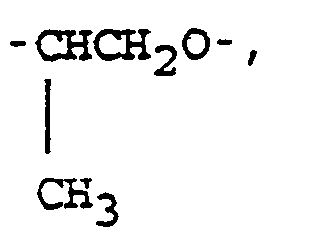
EO désigne ―CH₂CH₂O― et GO désigne
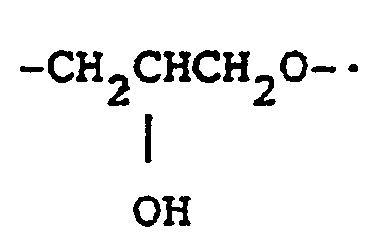
dans laquelle a représente un nombre entier de 9 à 60, b et c représentent chacun un nombre entier supérieur à 1 et l'unité PO constitue au moins 50% en poids du polymère et PO désigne
EO désigne ―CH₂CH₂O― et GO désigne
4. Solution de mouillage selon la revendication 2, dans laquelle le polymère est un
polymère séquencé représenté par la formule (Ib) ou (Ic) suivant:

dans laquelle a représente un nombre entier égal à 1, 2 ou plus, b, c, d et e représentent chacun un nombre entier supérieur à 1 et b + c représente le nombre de moles nécessaire pour que l'unité PO constitue au moins 50% en poids du polymère.
dans laquelle a représente un nombre entier égal à 1, 2 ou plus, b, c, d et e représentent chacun un nombre entier supérieur à 1 et b + c représente le nombre de moles nécessaire pour que l'unité PO constitue au moins 50% en poids du polymère.
5. Solution de mouillage selon la revendication 1, dans laquelle le polymère est représenté
par la formule (IB) suivante:

dans laquelle m et n représentent chacun le nombre de moles nécessaire pour que le polymère ait un poids moléculaire moyen d'au moins 600 et pour que
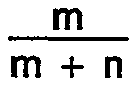
soit égal à 50-100% en poids.
dans laquelle m et n représentent chacun le nombre de moles nécessaire pour que le polymère ait un poids moléculaire moyen d'au moins 600 et pour que
soit égal à 50-100% en poids.
6. Solution de mouillage selon la revendication 1, dans laquelle la quantité de polymère
est d'environ 0,1 g à environ 50 g par litre de solution de mouillage.
7. Solution de mouillage selon la revendication 1, dans laquelle la quantité de fines
particules inorganiques est d'environ 10⁻⁴ g à environ 5 g par litre de solution.
8. Solution de mouillage selon la revendication 1, dans laquelle les fines particules
inorganiques sont de la silite colloïdale ou de l'alumine colloïdale.
9. Procédé d'impression avec une plaque lithographique, utilisant la solution de mouillage
selon la revendication 1.
10. Procédé d'impression avec une plaque lithographique obtenue par un processus de
diffusion-transfert de complexe d'argent à partir d'un matériau sensible à la lumière
comprenant un support et au moins une couche photographique contenant de fines poudres
de granulométrie moyenne de 2 à 10 µm, utilisant la solution de mouillage selon la
revendication 1.