|
(11) | EP 0 310 097 B1 |

| (12) | EUROPEAN PATENT SPECIFICATION |
|
|
| (54) |
Thermoplastic resin composition Thermoplastische Harzzusammensetzung Composition de résine thermoplastique |
|
|
|||||||||||||||||||||||||||||||
| Note: Within nine months from the publication of the mention of the grant of the European patent, any person may give notice to the European Patent Office of opposition to the European patent granted. Notice of opposition shall be filed in a written reasoned statement. It shall not be deemed to have been filed until the opposition fee has been paid. (Art. 99(1) European Patent Convention). |
FIELD OF THE INVENTION
[0001] The present invention relates to a thermoplastic resin composition comprising a polyether imide resin and an aromatic polyester-polyorganosiloxane block copolymer, which is excellent in impact resistance, heat resistance, mechanical strength, moldability, fluidity, etc.
DISCUSSION OF THE RELATED ART
[0002] Polyether imide resins are excellent in heat resistance, mechanical strength, etc. Moreover, they have recently been noted as resins having an excellent processability, and their application is being broadened.
[0003] The polyether imide resins, however, are insufficient in impact resistance, and particularly when an impact is given to a notched test specimen of the resin, the strength of the test specimen is extremely low. Therefore, special care should be taken in determining the shape of a molded article of the resin.
[0004] As methods for improving the impact resistance of polyether imide resins, there have been disclosed a method of blending polyolefin fluoride (published in Jap. Offic. Pat. Gaz. No. 60-501006), a method of blending a polyacrylate elastomer (Jap. Pat. Appln. Kokai (Laid-Open) No. 60-127361), a method of blending a styrene-butadiene block copolymer (Jap. Pat. Appln. Kokai (Laid-Open) No. 60-156753, a method of blending a rubber-modified vinyl aromatic polymer (publicized in Jap. Offic. Pat. Gaz. No. 60-501010), etc. All of these methods, however, have defects, for example, low compatibility of each blended polymer with polyether imide resins, and low weather resistance and heat resistance of the resulting blends. Therefore, according to these methods, polyether imide resins cannot be improved in their impact resistance while retaining their advantages sufficiently.
[0005] US-A-4 387 193 discloses blends of (a) a polyether imide and (b) an organopolysiloxane-polycarbonate block copolymer exhibiting a good combination of impact strength and flexural properties.
SUMMARY OF THE INVENTION
[0006] The present invention is intended to improve the impact resistance of a polyether imide resin while keeping its intrinsic excellent heat resistance and mechanical strength intact.
[0007] In order to achieve the above object, the present inventors have devoted themselves to research and consequently found that by blending an aromatic polyester-polyorganosiloxane block copolymer with a polyether imide resin, there can be obtained a resin composition which is good in compatibility of the resin components with each other, gives a molded article free from exfoliation, has a greatly improved impact resistance, and is excellent in heat resistance and mechanical strength as well in processability and fluidity, whereby the present invention has been accomplished.
DETAILED DESCRIPTION OF PREFERRED EMBODIMENTS
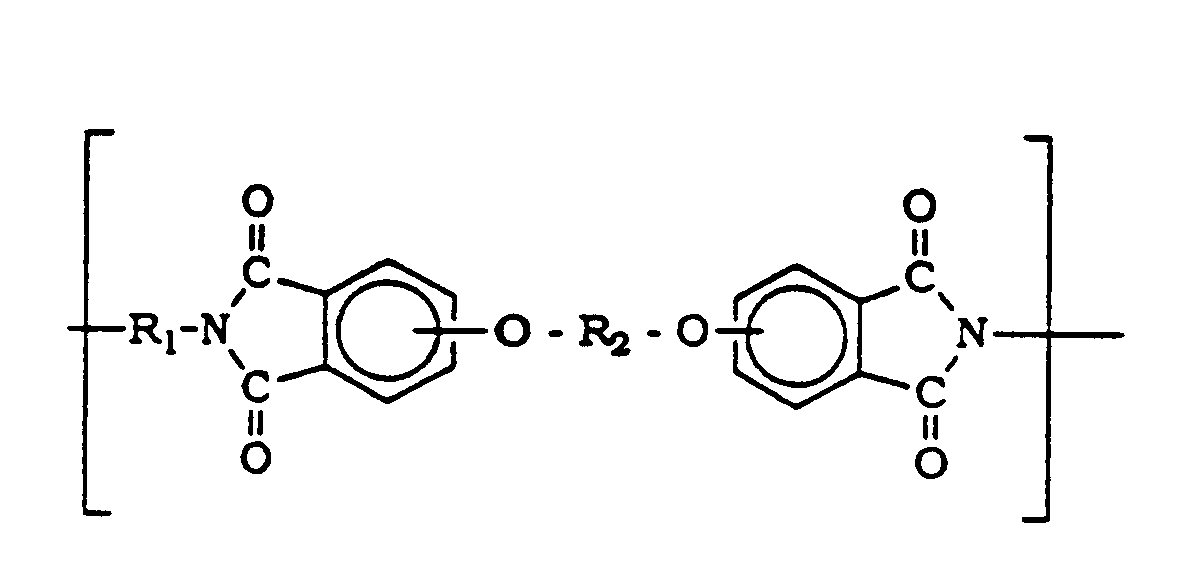
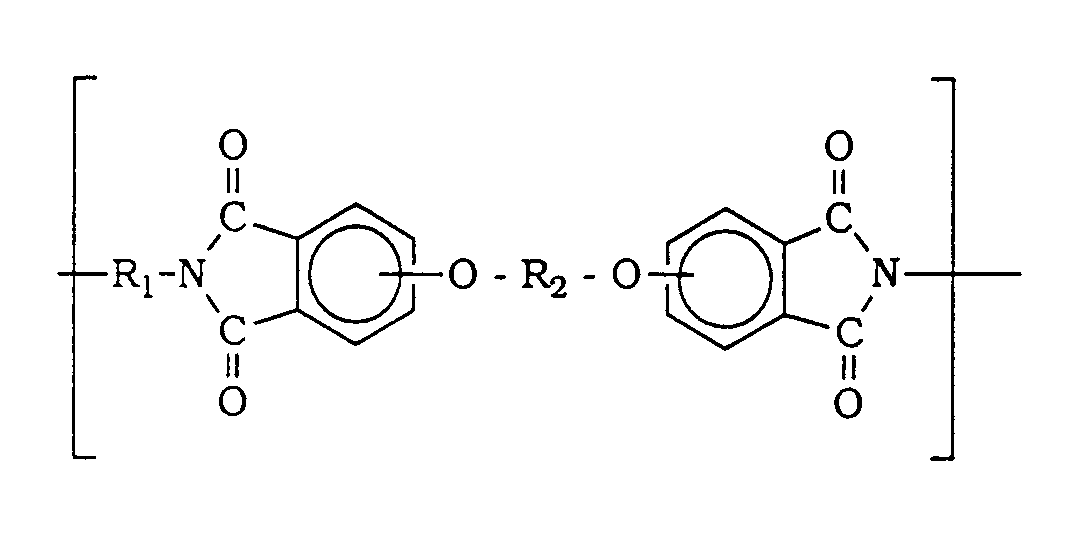
[0008] The subject matter of the present invention therefore is a thermoplastic resin composition comprising a polyether imide resin (A) consisting of recurring units represented by the formula:
wherein R₁ and R₂ independently represent divalent organic groups, and an aromatic polyester-polyorganosiloxane block copolymer(B), consisting of polyester segments and polyorganosiloxane segments in proportions of 9:1 to 1:9, said polyester segments having a number average molecular weight of 1800 or more and comprising as its main constituent, an aromatic polyester (I) comprising an aromatic dicarboxylic acid(s) and a dihydric phenol(s), an aromatic polyester (II) comprising an aromatic dicarboxylic acid(s) and a lower aliphatic diol(s) or an alicyclic diol(s), an aromatic polyester (III) comprising an aromatic hydroxycarboxylic acid(s), or an aromatic polyester (IV) comprising two or more copolymers selected from (I), (II) and (III), and said polyorganosiloxane segments having a number average molecular weight of 700 or more,
the weight ratio of A to B (A/B) being 1/9 to 9/1.
[0009] In the composition of the present invention, the weight ratio between the two components, i.e.,A/B, is 1/9 to 9/1. When the weight ratio is outside this range, the heat resistance and impact resistance characteristic of the composition of the present invention would be impaired. Therefore, such a ratio is not desirable.
[0010] The divalent organic groups represented by R₁ and R₂ include, for example, substituted and unsubstituted phenylene groups, and groups represented by the formula:
in which Z is an oxygen atom, a sulfur atom,
or an alkylene group having 5 or less carbon atoms.
[0011] The substituents on the phenylene group are lower alkyl groups, halogenated lower alkyl groups, or halogen atoms, , including, for example, methyl group, ethyl group, bromomethyl group, chlorine atom and bromine atom.
[0012] The alkylene group having 5 or less carbon atoms includes, for example, methylene group, ethylene group, 2,2-propylene group, 1,2-butylene group, 2,2-butylene group, 2,2-pentene group, 3,3-pentene group, and 1,1- or 2,2-dimethylethylene group.
[0014] The aromatic polyester-polyorganosiloxane block copolymer (B) used in the present invention is a block copolymer of an aromatic polyester and a polyorganosiloxane.
[0015] This aromatic polyester-polyorganosiloxane block copolymer (B) consists of units of the aromatic polyester and units of the polyorganosiloxane, and the weight ratio of the aromatic polyester to the polyorganosiloxane is 9:1 to 1:9. The number average molecular weight of aromatic polyester segment is 1800 or more. When it is less than 1800, the function of the aromatic polyester segment as a segment compatible with the polyether imide tends to be deteriorated, resulting in deterioration of physical properties of the composition. Therefore, such a number average molecular weight is not desirable. The number average molecular weight of polyorganosiloxane segment is 700 or more. When it is less than 700, the elasticity tends to be lowered, resulting in deterioration of physical properties of the composition. Therefore, such a number average molecular weight is not desirable.
[0016] The aromatic polyester is one which comprises, as its main constituent, an aromatic polyester (I) comprising an aromatic dicarboxylic acid(s) and a dihydric phenol(s), an aromatic polyester (II) comprising an aromatic dicarboxylic acid(s) and a lower aliphatic diol(s) or an alicyclic diol(s), an aromatic polyester (III) comprising an aromatic hydroxycarboxylic acid(s), or an aromatic polyester (IV) comprising two or more copolymers selected from (I), (II) and (III).
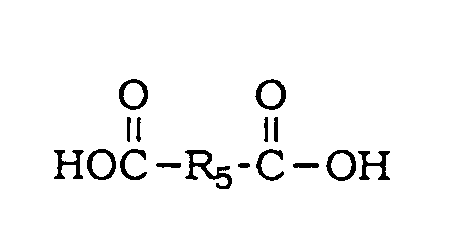
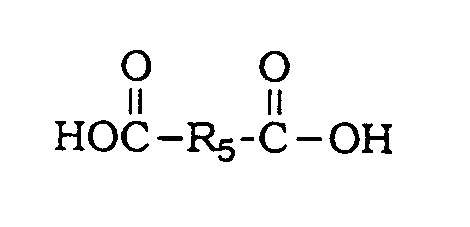
[0017] The aromatic dicarboxylic acid(s) used in the present invention is represented by the formula;
wherein R₅ is a substituted or unsubstituted phenylene group, a group represented by the formula
(in which Z is a direct link, -CH₂ or
or a naphthylene group. The substituent on the phenylene group includes, for example, chlorine atom, bromine atom, and methyl group. The substituted phenylene groups can have 1 to 4 substituents in number. The aromatic dicarboxylic acid(s) for making up the aromatic polyester includes, for example, terephthalic acid, isophthalic acid, diphenyl-m,m′-dicarboxylic acid, diphenyl-p,p′-dicarboxylic acid, diphenylmethane-m,m′-dicarboxylic acid, diphenylmethane-p,p′-dicarboxylic acid, benzophenone-4,4′-dicarboxylic acid, and naphthalenedicarboxylic acid. These compounds can be used alone or as a mixture thereof. Aliphatic dicarboxylic acids such as adipic acid, and sebacic acid, may be used in a small amount in admixture with the aromatic dicarboxylic acid.
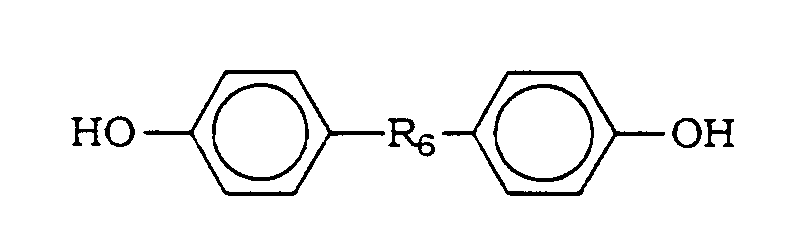
[0018] The dihydric phenol(s) includes, for example, hydroquinone, resorcinol, dihydroxynaphthalene, biphenol, 1,8-dihydroxyanthraquinone, and dihydric phenols represented by the formula
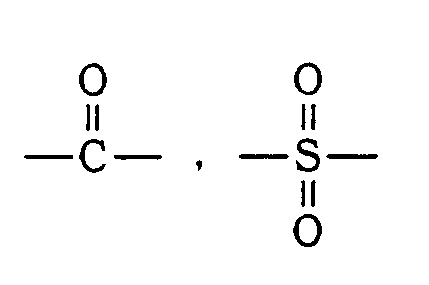
(wherein R₆ is an oxygen atom, a sulfur atom,
or an alkylene group having 5 or less carbon atoms which is optionally substituted by halogen atoms), such as 2,2-bis(4-hydroxyphenyl)propane (bisphenol A), 4,4′-dihydroxydiphenylsulfone, 4,4′-dihydroxydiphenyl ether, 4,4′-dihydroxydiphenyl sulfide, 4,4′-dihydroxydiphenyl ketone, 4,4′-dihydroxydiphenylmethane, 1,1-bis(4-hydroxyphenyl)ethane, 1,1-bis(4-hydroxyphenyl)-2-butane, and 1,1-bis(4-hydroxyphenyl)-2,2,2-trichloro-ethane. These compounds may be used alone or as a mixture thereof.
[0019] The lower aliphatic diol(s) or the alicyclic diol(s) is represented by the formula:
HO-R₇-OH
wherein R₇ is a lower alkylene group or an alicyclic alkylene group. Preferable examples of the lower aliphatic diol(s) are alkylene diols having 2 to 6 carbon atoms, for example, ethylene glycol, propylene glycol, 1,4-butanediol, 1,5-pentanediol, and 1,6-hexanediol. Preferable examples of the alicyclic diol(s) are alicyclic diols having 15 or less carbon atoms, for example, cyclohexanediol and cyclohexanedimethanol. These lower aliphatic diols or alicyclic diols may be used alone or as a mixture thereof. Among them, ethylene glycol, 1,4-butandiol, or cyclohexanedimethanol is preferred.
[0020] The aromatic hydroxycarboxylic acid(s) includes, for example, m-hydroxybenzoic acid, p-hydroxybenzoic acid, 1-hydroxy-6-naphthoic acid, 2-(4-hydroxyphenyl)-2-(4′-carboxyphenyl)-propane, and 4-hydroxyphenyl-4'-carboxyphenyl ether. These compounds may be used alone or as a mixture thereof.
[0021] As preferable aromatic polyester segments, there may be exemplified aromatic polyesters comprising terephthalic acid and 1,4-butanediol, aromatic polyesters comprising a terephthalic acid-isophthalic acid mixture and 2,2-bis(4-hydroxyphenyl)propane, as well as aromatic polyesters which exhibit the behaviour of a liquid crystal like copolymers of p-hydroxybenzoic acid and 6-hydroxy-2-naphthoic acid, copolymers of p-hydroxybenzoic acid, 2,6-naphthalenedicarboxylic acid and 2,6-naphthalenediol, and copolymers of p-hydroxybenzoic acid, 2,6-naphthalenedicarboxylic acid, resorcinol and isophthalic acid.
[0022] The polyorganosiloxane includes polydimethylsiloxanes, polydiphenylsiloxanes, polymethylphenylsiloxanes, poly(dimethylsiloxane-diphenylsiloxane)s, etc., and is preferably a polydimethylsiloxane.
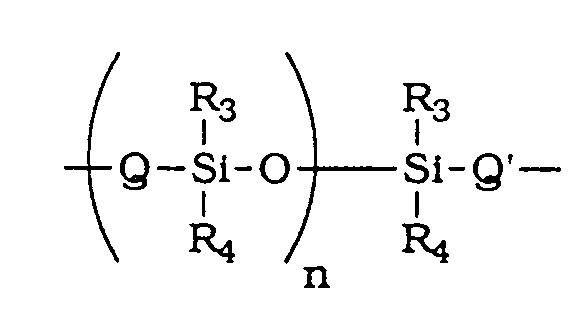
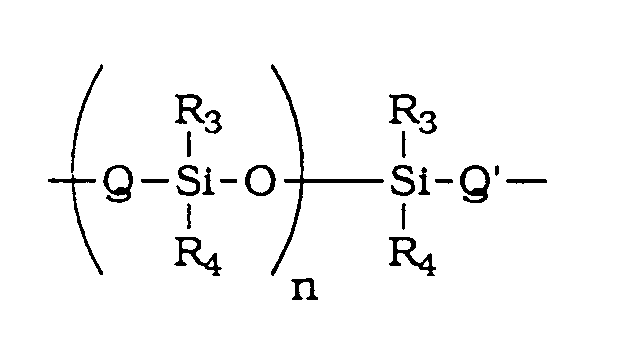
[0023] In the polyorganosiloxane segment which is represented by the formula:
wherein R₃ and R₄ are independently a methyl group or a phenyl group, Q and Q′ are independently a divalent organic group, and n is an integer of 10 or more, Q which is the binding portion to the aromatic polyester segment, is an oxygen atom,
or -O-R₉- (in which R₈ and R₉ are independently a lower alkylene group or a lower alkylene ether group), and Q′ is an oxygen atom,
or -R₉-O- (in which R₈ and R₉ are as defined above). The lower alkylene groups represented by R₈ and R₉ are alkylene groups having 2 to 6 carbon atoms, for example, ethylene group, trimethylene group, tetramethylene group, pentamethylene group, hexamethylene group, 1,2-butylene group, 1,3-butylene group, 2,3-butylene group, and 1,1- or 2,2-dimethylethylene group. The lower alkylene ether group includes
etc., and is preferably (̵CH₂)₃-O-(CH₂)₂ or a trimethylene ether group.
[0024] The polyether imide resin (A) and the aromatic polyester-polyorganosiloxane block copolymer (B) used in the present invention can be produced, for example, in the following ways.
[0025] The polyether imide resin (A) can be produced according to the method described, for example, in the specifications of U.S. Patents 3847867, 3847869, 3850885, 3852242, and 3855178.
[0026] The aromatic polyester-polyorganosiloxane block copolymer can be produced by a method properly selected from for example, conventional melt condensation polymerization, solution condensation polymerization, and interfacial condensation polymerization methods, depending on the constituents of the aromatic polyester and the functional group of the polyorganosiloxane.
[0027] For example, a block copolymer of a polydimethylsiloxane having an alkylamine group at the end and an aromatic polyester can be produced by a method according to ACS. polym prop (1983) or 30th National SAMPE Symposium March 19-21, 1985. A block copolymer of a polydimethylsiloxane having a dimethylamine group at the end and an aromatic polyester can be produced by a method according to Ind. Eng. Chem. Prod. Res. Develop., Vol. 12, No. 4, 1973, TRANSACTIONS OF THE SOCIETY OF RHEOLOGY 21:2, 273-290, Applied Polymer Symposium No. 22, 143-156 (1973), or 30th National SAMPE Symposium March 19-21, 1985. The aromatic polyester-polyorganosiloxane block copolymer can be produced also by a method comprising reacting a polyorganosiloxane having a diol group at the end, an aromatic dicarboxylic acid dihalide and a dihydric phenol with one another at 50°C or lower in an organic halogenated solvent such as chloroform by the use of a tertiary amine such as pyridine as a dehydrochlorinating agent, or a method comprising subjecting monomers for making up an aromatic polyester or an aromatic polyester and a polyorganosiloxane having a diol group at each end represented by the formula:
wherein R₃ and R₄ are independently a methyl group or a phenyl group, X and X′ are independently a lower alkylene group or a lower alkylene ether group or a direct linkage, and n is an integer of 10 or more to melt condensation polymerization in the presence of a catalyst for ester interchange. Any of the methods described above may be used.
[0028] The thermoplastic resin composition of the present invention can be prepared by the use of the polyether imide resin (A) and the aromatic polyester-polyorganosiloxane block copolymer (B), for example, in the following manner.
[0029] The component (A) and the component (B) are mechanically mixed in a predetermined ratio in a conventional apparatus such as Banbury mixer, extruder, or the like, and extruded into pellets.
[0030] In this case, stabilizers, plasticizers, lubricants, flame retarders, pigments, or fillers may, if necessary, be incorporated in addition to the components (A) and (B).
EXAMPLES
[0032] Of properties of the compositions evaluated in the examples, Izod impact strength was 1/8-inch notched Izod impact strength measured at 23°C in accordance with ASTM D256, and thermal deformation temperature was measured in accordance with ASTM D648.
Synthetic Example 1
[0033] Into a reactor equipped with a stirrer were charged 0.5 kg of a polydimethylsiloxane having a diol group at each end (number average molecular weight: 3200) represented by the formula:
0.16 kg of terephthalic acid chloride and 0.16 kg of isophthalic acid chloride, and 6.0 kg of chloroform was added to obtain a homogeneous solution. In a mixed solvent of 2.0 kg of chloroform and 0.3 kg of pyridine was dissolved 0.32 kg of bisphenol A to obtain a homogeneous solution, which was then added to the above-mentioned solution which had been cooled to 0°C. After stirring for 7 to 8 hours, the reaction solution was taken out, washed with diluted hydrochloric acid and water, and poured into methanol to carry out reprecipitation, and the precipitate formed was dried to obtain 0.95 g of an aromatic polyester-polyorganosiloxane block copolymer (S-1) (number average molecular weight: 45000).
Synthetic Example 2
[0034] By the same method as in Synthetic Example 1, except that the amounts of the polydimethylsiloxane having a diol group at each end (number average molecular weight: 3200), terephthalic acid chloride, isophthalic acid chloride, bisphenol A and pyridine were changed to 0.3 kg, 0.21 kg, 0.21 kg, 0.45 kg and 0.37 kg, respectively, 0.95 kg of an aromatic polyester-polyorganosiloxane block copolymer (S-2) (number average molecular weight: 50000) was obtained.
Synthetic Example 3
[0035] By the same method as in Synthetic Example 1, except that the amounts of the polydimethylsiloxane having a diol group at each end (number average molecular weight: 3200), terephthalic acid chloride, isophthalic acid chloride, bisphenol A and pyridine were changed to 0.1 kg, 0.27 kg, 0.27 kg, 0.59 kg and 0.49 kg, respectively, 0.95 kg of an aromatic polyester-polyorganosiloxane block copolymer (S-3) (number average molecular weight: 49000) was obtained.
Synthetic Example 4
[0036] By the same method as in Synthetic Example 1, except that the amounts of the polydimethylsiloxane having a diol group at each end (number average molecular weight: 3200), terephthalic acid chloride, isophthalic acid chloride, bisphenol A and pyridine were changed to 0.7 kg, 0.11 kg, 0.11 kg, 0.19 kg and 0.16 kg, respectively, 0.95 kg of an aromatic polyester-polyorganosiloxane block copolymer (S-4) (number average molecular weight: 42000) was obtained.
Synthetic Example 5
[0037] By the same method as in Synthetic Example 1, except that the amounts of the polydimethylsiloxane having a diol group at each end (number average molecular weight: 3200), terephthalic acid chloride, isophthalic acid chloride, bisphenol A and pyridine were changed to 0.9 kg, 0.06 kg, 0.06 kg, 0.07 kg and 0.06 kg, respectively, 0.95 kg of an aromatic polyester-polyorganosiloxane block copolymer (S-5) (number average molecular weight: 47000) was obtained.
Synthetic Example 6
[0038] By the same method as in Synthetic Example 1, except that 0.5 kg of a polydimethylsiloxane having a diol group at each end (number average molecular weight: 1800) of the formula shown in Synthetic Example 1 was used in place of the polydimethylsiloxane used in Synthetic Example 1 and that each of the amounts of terephthalic acid chloride and isophthalic acid chloride was changed to 0.17 kg, 0.95 kg of an aromatic polyesterpolyorganosiloxane block copolymer (S-6) (number average molecular weight: 50000) was obtained.
Synthetic Example 7
[0039] By the same method as in Synthetic Example 1, except that 0.5 kg a polydimethylsiloxane having a diol group at each end (number average molecular weight: 5600) of the formula shown in Synthetic Example 1 was used in place of the polydimethylsiloxane used in Synthetic Example 1 and that each of the amounts of terephthalic acid chloride and isophthalic acid chloride was changed to 0.15 kg, 0.95 kg of an aromatic polyester-polyorganosiloxane block copolymer (S-7) (number average molecular weight: 45000) was obtained.
Synthetic Example 8
[0040] Into a reactor equipped with a stirrer were charged 0.1 kg of the sane polydimethylsiloxane having a diol group at each end (number average molecular weight: 3200) as used in Synthetic Exanple 1, 0.034 kg of p-acetoxybenzoic acid, 0.032 kg of 1-acetoxy-6-naphthoic acid and 0.006 kg of terephthalic acid, and 50 ppm of tetrabutyl titanate was added as a catalyst. The resulting mixture was heated under nitrogen at 230°C for 3 hours and then heated to 300°C over a period of 30 minutes, and the pressure was reduced to 20 mbar (15 mmHg). After heating at 300°C at 20 mbar (15 mmHg) for 1 hour, the pressure was reduced to 0.67 mbar (0.5 mmHg) and the mixture was heated for another 1 hour. The reaction product was extracted from the reaction mixture to obtain an aromatic polyester-polyorganosiloxane block copolymer (S-8).
Synthetic Example 9
[0041] By the same method as in Synthetic Example 8, except that the amount of p-acetoxybenzoic acid was changed to 0.033 kg and that 0.042 kg of 2,6-naphthalenedicarboxylic acid and 0.049 kg of 2,6-diacetoxynaphthalene were used in place of 1-acetoxy-6-naphthoic acid, an aromatic polyester-polyorganosiloxane block copolymer (S-9) was obtained.
Synthetic Example 10
[0042] By the same method as in Synthetic Example 8, except that the amount of p-acetoxybenzoic acid was changed to 0.033 kg and that 0.042 kg of 2,6-naphthalenedicarboxylic acid, 0.039 kg of resorcinol diacetate and 0.006 kg of isophthalic acid were used in place of 1-acetoxy-6-naphthoic acid and terephthalic acid, an aromatic polyester-polyorganosiloxane block copolymer (S-10) was obtained.
Synthetic Example 11
[0043] Into a reactor equipped with a high-speed stirrer were charged 20 liters of water, 0.35 kg of sodium hydroxide and 0.94 kg of bisphenol A to obtain a solution. Subsequently, in the reactor was placed a solution separately prepared by dissolving 0.51 kg of terephthalic acid chloride, 0.51 kg of isophthalic acid chloride and 1.79 kg of a polydimethylsiloxane having a propylamine group at each end (number average molecular weight: 2000) represented by the formula:
(wherein m is an integer of 10 or more) in 14 liters of water, and the reaction was carried out at 15°C for 4 hours.
[0044] After completion of the reaction, the organic layer was washed with diluted hydrochloric acid and water, followed by reprecipitation with methanol. The polymer precipitated was dried in vacuo at 80°C for 12 hours to obtain 3.2 kg of an aromatic polyester-polyorganosiloxane block copolymer (S-11). The number average molecular weight of the block copolymer was 36000.
Synthetic Examples 12 and 13
[0045] By the same method as in Synthetic Example 11, except that sodium hydroxide, bisphenol A, terephthalic acid chloride, isophthalic acid chloride, and the polydimethylsiloxane having a propylamine group at each end (number average molecular weight: 2000) of the formula shown in Synthetic Example 11 were used in each set of their respective amounts shown below, 2.3 kg of an aromatic polyester-polyorganosiloxane block copolymer (S-12) and 2.6 kg of an aromatic polyester-polyorganosiloxane block copolymer (S-13) were obtained. The number average molecular weights of the block copolymers S-12 and S-13 were 33000 and 41000, respectively.
| S-12 | S-13 | |
| Sodium hydroxide (kg) | 0.45 | 0.14 |
| Bisphenol A (kg) | 1.05 | 0.33 |
| Terephthalic acid chloride (kg) | 0.51 | 0.26 |
| Isophthalic acid chloride (kg) | 0.51 | 0.26 |
| Polydimethylsiloxane having a propylamine group at each end (kg) | 0.77 | 2.09 |
Synthetic Example 14
[0046] Into a reactor equipped with a stirrer were charged 0.388 kg of dimethyl terephthalate, 0.36 kg of 1,4-butanediol and 0.44 kg of a polydimethylsiloxane having a propanol group at each end (number average molecular weight: 1800) represented by the formula:
wherein m is an integer of 10 or more, and 10 ml of a 1% solution of butyl titanate [Ti(OC₄H₉)₄] in butanol was added as a catalyst. The resulting mixture was heated from 150°C to 250°C with stirring under nitrogen over a period of 4 hours. Subsequently, the pressure was gradually reduced to 0.67 mbar (0.5 mmHg) at 250°C over a period of 2 hours. The mixture was continuously stirred at 250°C at 0.67 mbar (0.5 mmHg) for another 3 hours, after which the reaction was terminated to obtain 0.85 kg of an aromatic polyester-polyorganosiloxane block copolymer (S-14). The number average molecular weight of the block copolymer was 31000.
Examples 1 to 35
[0047] Commercially available polyether imide resin (A) (ULTEM® 1000, mfd. by General Electric Co.) and each of the various aromatic polyester-polyorganosiloxane block copolymers (B) (S-1 to S-14) obtained in Synthetic Examples 1 to 14 were mixed in an extruder in each ratio shown in Table 1, and shaped into pellets under usual conditions. Some of the pellets were injection-molded into test pieces having a size predetermined for each test. Using the two kinds of the test pieces thus obtained, Izod impact strength and thermal deformation temperature were measured. The results obtained are shown in Table 1.
Comparative Example 1
[0048] The same commercially available polyether imide resin as used in Example 1 was extruded into pellets and then injection-molded under the same conditions as in Example 1 to obtain test pieces. Evaluations were carried out in the same manner as in Example 1. The results obtained are shown in Table 1.
Comparative Example 2
[0049] A composition was prepared in the same manner as in Example 1, except that the same commercially available polyether imide resin as used in Example 1 and an aromatic polyester obtained by the synthetic method described below were used in the ratio shown in Table 1. The composition was extruded into pellets and then injection-molded under the same conditions as in Example 1 to obtain test pieces. Evaluations were carried out in the same manner as in Example 1. The results obtained are shown in Table 1.
Synthetic method of the aromatic polyester:
[0050] By the same method as in Synthetic Example 1, except that the amounts of bisphenol A, terephthalic acid chloride, isophthalic acid chloride and pyridine were changed to 0.5 kg, 0.22 kg, 0.22 kg and 0.39 kg, respectively and that the polydimethylsiloxane having a diol group at each end was omitted, 0.95 kg of the aromatic polyester was obtained. The number average molecular weight of the polyester was 25000.
Comparative Example 3
[0051] A composition was prepared in the same manner as in Example 1, except that the same commercially available polyether imide resin as used in Example 1 and commercially available polycarbonate-polydimethylsiloxane block copolymer (LR 3320, mfd. by General Electric Co.) were used in the ratio shown in Table 1. The composition was extruded into pellets and injection-molded under the same conditions as in Example 1 to obtain test pieces. Evaluations were carried out in the same manner as in Example 1. The results obtained are shown in Table 1.
1. A thermoplastic resin composition comprising a polyether imide resin (A) consisting
of recurring units represented by the formula:
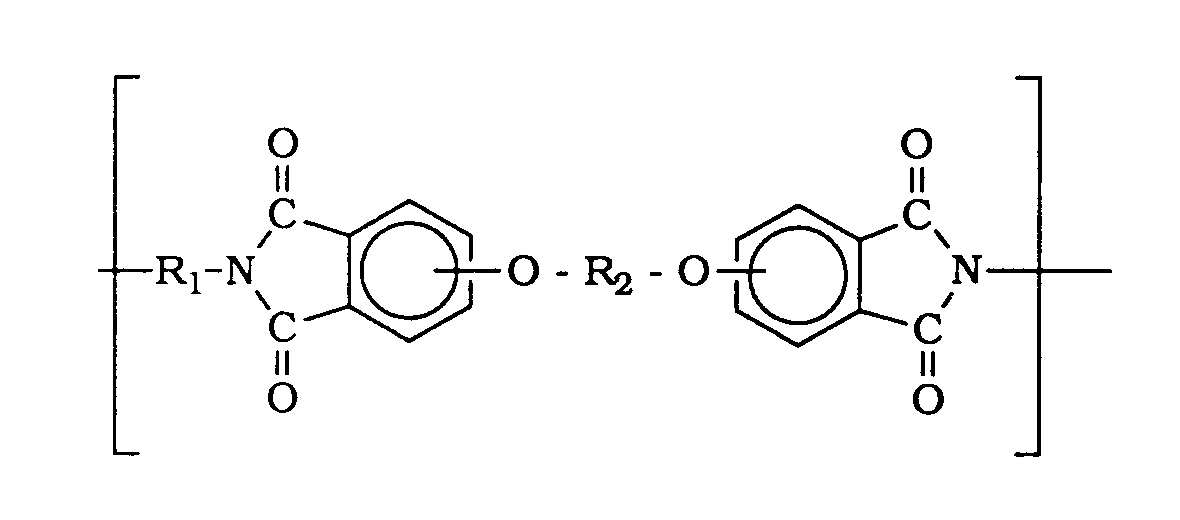
wherein R₁ and R₂ independently represent divalent organic groups, and an aromatic polyester-polyorganosiloxane block copolymer (B), consisting of polyester segments and polyorganosiloxane segments in proportions of 9:1 to 1:9, said polyester segments having a number average molecular weight of 1800 or more and comprising as its main constituent, an aromatic polyester (I) comprising an aromatic dicarboxylic acid(s) and a dihydric phenol(s), an aromatic polyester (II) comprising an aromatic dicarboxylic acid(s) and a lower aliphatic diol(s) or an alicyclic diol(s), an aromatic polyester (III) comprising an aromatic hydroxycarboxylic acid(s), or an aromatic polyester (IV) comprising two or more copolymers selected from (I), (II) and (III), and said polyorganosiloxane segments having a number average molecular weight of 700 or more,
the weight ratio of A to B (A/B) being 1/9 to 9/1.
wherein R₁ and R₂ independently represent divalent organic groups, and an aromatic polyester-polyorganosiloxane block copolymer (B), consisting of polyester segments and polyorganosiloxane segments in proportions of 9:1 to 1:9, said polyester segments having a number average molecular weight of 1800 or more and comprising as its main constituent, an aromatic polyester (I) comprising an aromatic dicarboxylic acid(s) and a dihydric phenol(s), an aromatic polyester (II) comprising an aromatic dicarboxylic acid(s) and a lower aliphatic diol(s) or an alicyclic diol(s), an aromatic polyester (III) comprising an aromatic hydroxycarboxylic acid(s), or an aromatic polyester (IV) comprising two or more copolymers selected from (I), (II) and (III), and said polyorganosiloxane segments having a number average molecular weight of 700 or more,
the weight ratio of A to B (A/B) being 1/9 to 9/1.
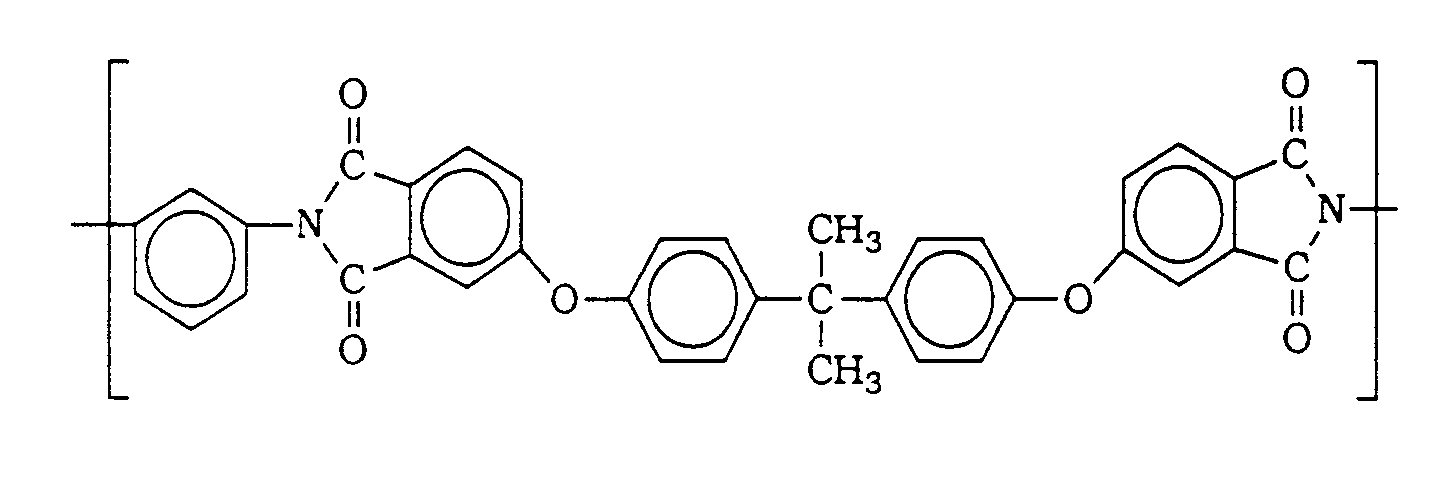
2. The thermoplastic resin composition according to Claim 1, wherein the polyether imide
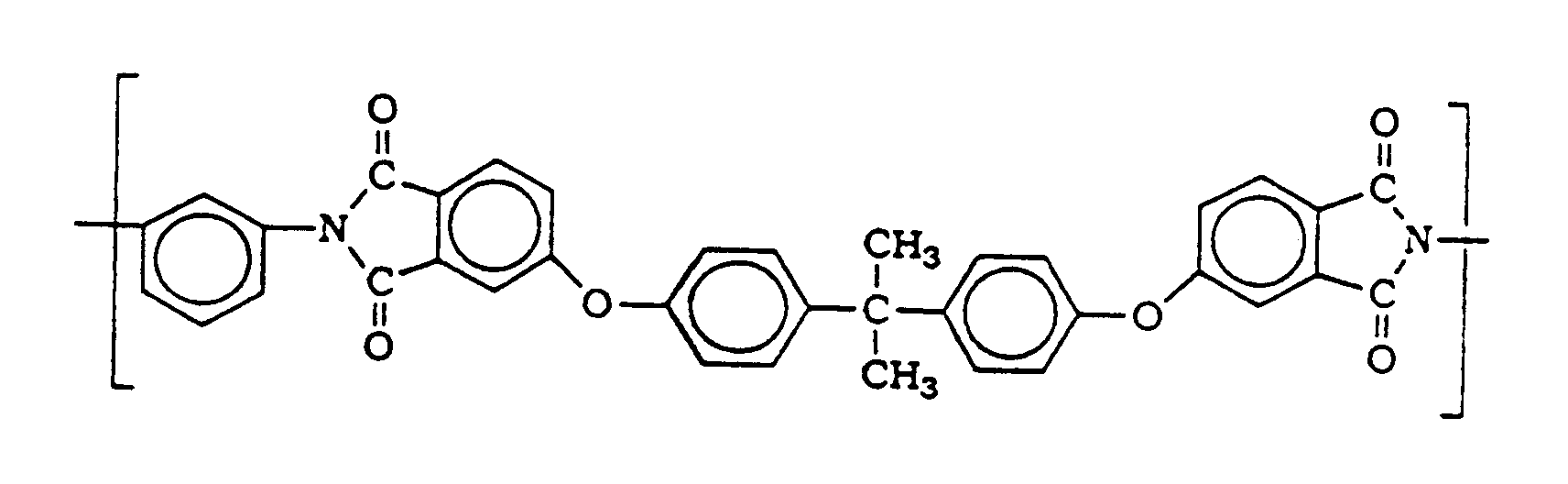
resin (A) consists of recurring units represented by the formula:
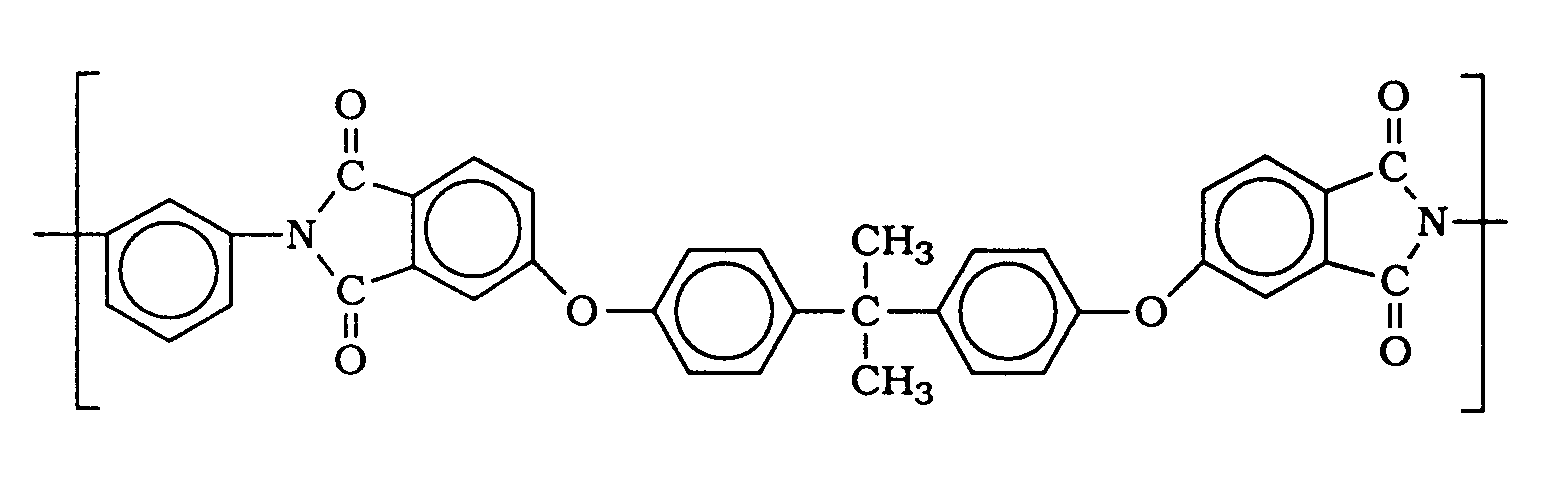
3. The thermoplastic resin composition according to Claim 1, wherein the polyorganosiloxane
segments are represented by the general formula:
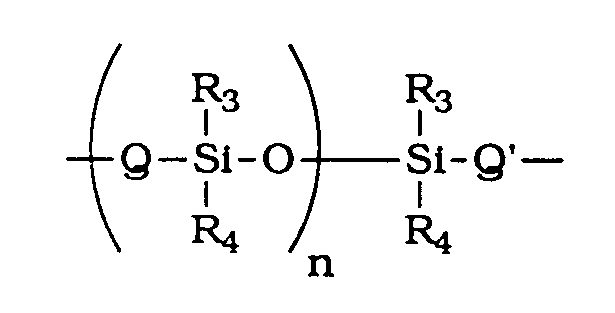
wherein R₃ and R₄ are independently a methyl group or a phenyl group, Q and Q' are independently a divalent organic group, and n is an integer of 10 or more.
wherein R₃ and R₄ are independently a methyl group or a phenyl group, Q and Q' are independently a divalent organic group, and n is an integer of 10 or more.
4. The thermoplastic resin composition according to Claim 3, wherein in the aromatic
polyester-polyorganosiloxane block copolymer (B), the aromatic dicarboxylic acid(s)
constituting the aromatic polyester is represented by the formula:
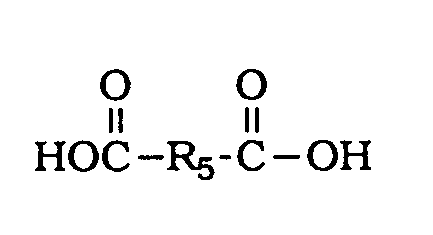
wherein R₅ is a substituted or unsubstituted phenylene group, and the dihydric phenol(s) constituting the aromatic polyester is represented by the formula:
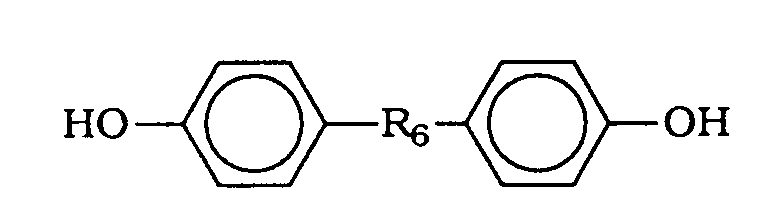
wherein R₆ is an oxygen atom, a sulfur atom,
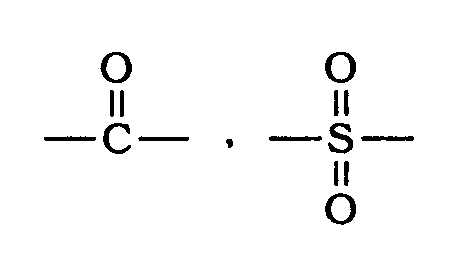
or an alkylene group having 5 or less carbon atoms.
wherein R₅ is a substituted or unsubstituted phenylene group, and the dihydric phenol(s) constituting the aromatic polyester is represented by the formula:
wherein R₆ is an oxygen atom, a sulfur atom,
or an alkylene group having 5 or less carbon atoms.
5. The thermoplastic resin composition according to Claim 4, wherein in the aromatic
polyester-polyorganosiloxane block copolymer (B), the aromatic dicarboxylic acid(s)
constituting the aromatic polyester is terephthalic acid and/or isophthalic acid,
and the dihydric phenol(s) constituting the aromatic polyester is 2,2-bis(4-hydroxyphenyl)
propane.
6. The thermoplastic resin composition according to Claim 3, wherein in the aromatic
polyester-polyorganosiloxane block copolymer (B), the aromatic dicarboxylic acid(s)
constituting the aromatic polyester is represented by the formula:
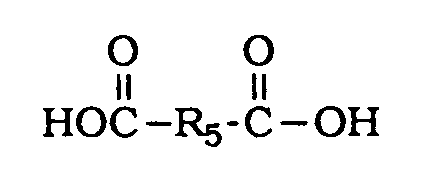
wherein R₅ is a substituted or unsubstituted phenylene group, and the lower aliphatic diol(s) or the alicyclic diol(s) constituting the aromatic polyester is represented by the formula:
HO-R₇-OH
wherein R₇ is a lower alkylene group or an alicyclic alkylene group.
wherein R₅ is a substituted or unsubstituted phenylene group, and the lower aliphatic diol(s) or the alicyclic diol(s) constituting the aromatic polyester is represented by the formula:
HO-R₇-OH
wherein R₇ is a lower alkylene group or an alicyclic alkylene group.
7. The thermoplastic resin composition according to Claim 6, wherein the aromatic dicarboxylic
acid(s) constituting the aromatic polyester is terephthalic acid and/or isophthalic
acid, and the lower aliphatic diol(s) constituting the aromatic polyester is ethylene
glycol and/or 1,4-butanediol and/or cyclohexanedimethanol.
8. The thermoplastic resin composition according to Claim 3, wherein in the aromatic
polyester-polyorganosiloxane block copolymer (B), the aromatic polyester is a polyester
which exhibits the behaviour of a liquid crystal.
9. The thermoplastic resin composition according to Claim 8, wherein in the aromatic
polyester-polyorganosiloxane block copolymer (B), the aromatic polyester is a copolymer
of p-hydroxybenzoic acid and 6-hydroxy-2-naphthoic acid.
10. The thermoplastic resin composition according to Claim 8, wherein in the aromatic
polyester-polyorganosiloxane block copolymer (B), the aromatic polyester is a copolymer
of p-hydroxybenzoic acid, 2,6-naphthalene-dicarboxylic acid and 2,6-naphthalenediol.
11. The thermoplastic resin composition according to Claim 8, wherein in the aromatic
polyester-polyorganosiloxane block copolymer (B), the aromatic polyester is a copolymer
of p-hydroxybenzoic acid, 2,6-naphthalene-dicarboxylic acid, resorcinol and isophthalic
acid.
12. The thermoplastic resin composition according to Claim 3, wherein in the aromatic
polyester-polyorganosiloxane block copolymer(B), the polyorganosiloxane is a polydimethylsiloxane.
13. The thermoplastic resin composition according to Claim 3, wherein in the polyorganosiloxane
segment in the aromatic polyester-polyorganosiloxane block copolymer (B) which is
represented by the formula:
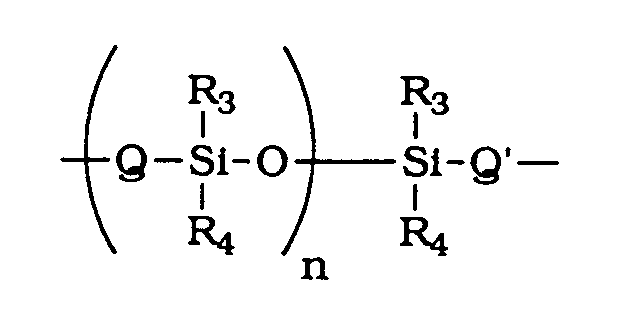
Q is an oxygen atom,
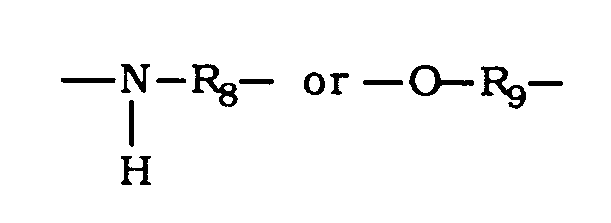
wherein each of R₈ and R₉ is a lower alkylene group or a lower alkylene ether group: and Q' is an oxygen atom,
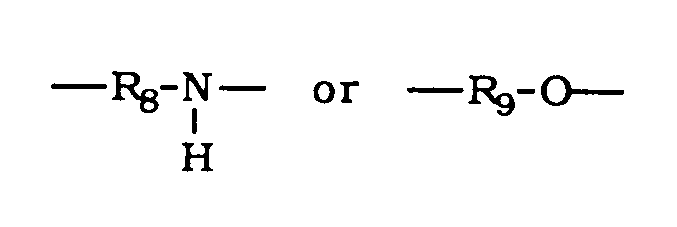
wherein R₈ and R₉ are defined above.
Q is an oxygen atom,
wherein each of R₈ and R₉ is a lower alkylene group or a lower alkylene ether group: and Q' is an oxygen atom,
wherein R₈ and R₉ are defined above.
1. Une composition de résine thermoplastique comprenant une résine polyéther-imide (A)
composée de motifs récurrents représentés par la formule :
où R₁ et R₂ représentent indépendamment des groupes organiques divalents, et un copolymère séquencé polyester aromatique-polyorganosiloxane (a), composé de segments de polyester et de segments de polyorganosiloxane en des proportions de 9:1 à 1:9, lesdits segments de polyester ayant un poids moléculaire moyen en nombre de 1800 ou plus et comprenant, comme principal constituant, un polyester aromatique (I) comprenant un ou plusieurs acides dicarboxyliques aromatiques et un ou plusieurs diphénols, un polyester aromatique (II) comprenant un ou plusieurs acides dicarboxyliques aromatiques et un ou plusieurs diols aliphatiques inférieurs ou un ou plusieurs diols alicycliques, un polyester aromatique (III) comprenant un ou plusieurs acides hydroxycarboxyliques aromatiques, ou un polyester aromatique (IV) comprenant deux ou plusieurs copolymères choisis parmi (I), (II) et (III), et lesdits segments de polyorganosiloxane ayant un poids moléculaire moyen en nombre de 700 ou plus,
le rapport en poids de A à a (A/B) étant de 1/9 à 9/1.
où R₁ et R₂ représentent indépendamment des groupes organiques divalents, et un copolymère séquencé polyester aromatique-polyorganosiloxane (a), composé de segments de polyester et de segments de polyorganosiloxane en des proportions de 9:1 à 1:9, lesdits segments de polyester ayant un poids moléculaire moyen en nombre de 1800 ou plus et comprenant, comme principal constituant, un polyester aromatique (I) comprenant un ou plusieurs acides dicarboxyliques aromatiques et un ou plusieurs diphénols, un polyester aromatique (II) comprenant un ou plusieurs acides dicarboxyliques aromatiques et un ou plusieurs diols aliphatiques inférieurs ou un ou plusieurs diols alicycliques, un polyester aromatique (III) comprenant un ou plusieurs acides hydroxycarboxyliques aromatiques, ou un polyester aromatique (IV) comprenant deux ou plusieurs copolymères choisis parmi (I), (II) et (III), et lesdits segments de polyorganosiloxane ayant un poids moléculaire moyen en nombre de 700 ou plus,
le rapport en poids de A à a (A/B) étant de 1/9 à 9/1.
2. La composition de résine thermoplastique selon la revendication 1, dans laquelle la
résine polyéther-imide (A) se compose de motifs récurrents représentés par la formule
:
3. La composition de résine thermoplastique selon la revendication 1, dans laquelle les
segments de polyorganosiloxane sont représentés par la formule générale :
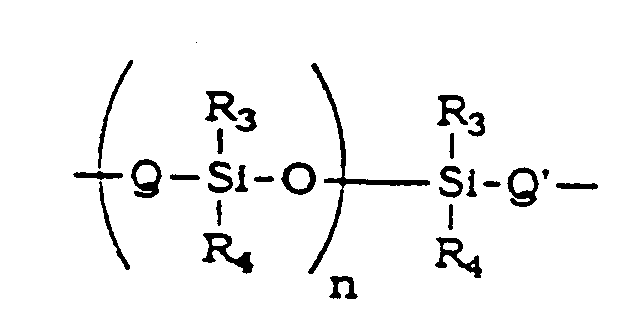
où R₃ et R₄ sont indépendamment un groupe méthyle ou un groupe phényle, Q et Q' sont indépendamment un groupe organique divalent et n est un nombre entier de 10 ou plus.
où R₃ et R₄ sont indépendamment un groupe méthyle ou un groupe phényle, Q et Q' sont indépendamment un groupe organique divalent et n est un nombre entier de 10 ou plus.
4. La composition de résine thermoplastique selon la revendication 3, dans laquelle,
dans le copolymère séquencé polyester aromatique-polyorganosiloxane (B), le ou les
acides dicarboxyliques aromatiques constituant le polyester aromatique sont représentés
par la formule :
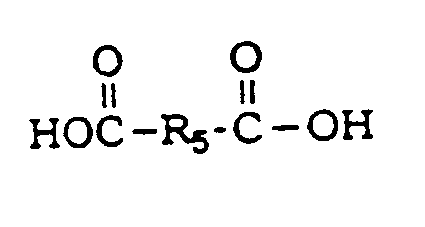
où R₅ est un groupe phénylène substitué ou non substitué, et le ou les diphénols constituant le polyester aromatique sont représentés par la formule :
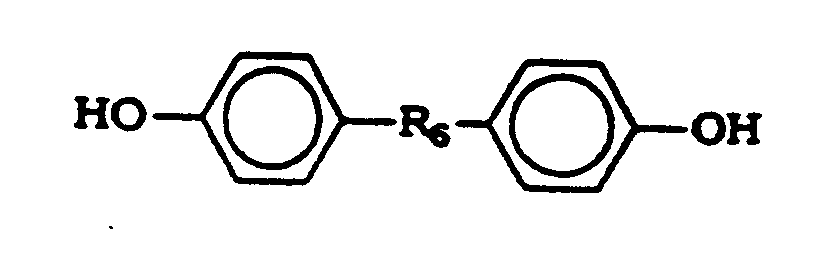
où R₆ est un atome d'oxygène, un atome de soufre,
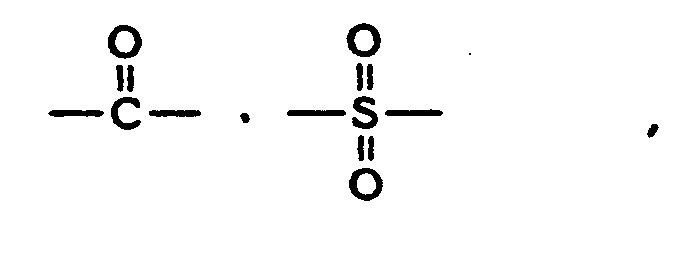
ou un groupe alkylène ayant 5 atomes de carbone ou moins.
où R₅ est un groupe phénylène substitué ou non substitué, et le ou les diphénols constituant le polyester aromatique sont représentés par la formule :
où R₆ est un atome d'oxygène, un atome de soufre,
ou un groupe alkylène ayant 5 atomes de carbone ou moins.
5. La composition de résine thermoplastique selon la revendication 4, dans laquelle,
dans le copolymère séquencé polyester aromatique-polyorganosiloxane (B), le ou les
acides dicarboxyliques aromatiques constituant le polyester aromatique sont l'acide
téréphtalique et/ou l'acide isophtalique, et le diphénol constituant le polyester
aromatique est le 2, 2-bis(4-hydroxyphényl)propane.
6. La composition de résine thermoplastique selon la revendication 3, dans laquelle,
dans le copolymère séquencé polyester aromatique-polyorganosiloxane (B), le ou les
acides dicarboxyliques aromatiques constituant le polyester aromatique sont représentés
par la formule :
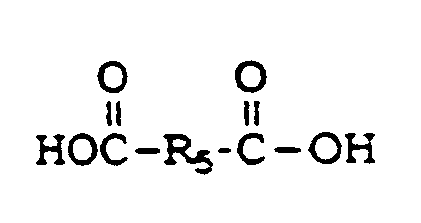
où R₅ est un groupe phénylène substitué ou non substitué, et le ou les diols aliphatiques inférieurs ou les diols alicycliques constituant le polyester aromatique sont représentés par la formule :
HO-R₇OH
où R₇ est un groupe alkylène inférieur ou un groupe alkylène alicyclique.
où R₅ est un groupe phénylène substitué ou non substitué, et le ou les diols aliphatiques inférieurs ou les diols alicycliques constituant le polyester aromatique sont représentés par la formule :
HO-R₇OH
où R₇ est un groupe alkylène inférieur ou un groupe alkylène alicyclique.
7. La composition de résine thermoplastique selon la revendication 6, dans laquelle le
ou les acides dicarboxyliques aromatiques constituant le polyester aromatique sont
l'acide téréphtalique et/ou l'acide isophtalique, et le ou les diols aliphatiques
inférieurs constituant le polyester aromatique sont l'éthylène-glycol et/ou le 1,4-butanediol
et/ou le cyclohexanediméthanol.
8. La composition de résine thermoplastique selon la revendication 3, dans laquelle,
dans le copolymère séquencé polyester aromatique-polyorganosiloxane (B), le polyester
aromatique est un polyester qui présente le comportement d'un cristal liquide.
9. La composition de résine thermoplastique selon la revendication 8, dans laquelle,
dans le copolymère séquencé polyester aromatique-polyorganosiloxane (B), le polyester
aromatique est un copolymère d'acide p-hydroxybenzoïque et d'acide 6-hydroxy-2-naphtoïque.
10. La composition de résine thermoplastique selon la revendication 8, dans laquelle,
dans le copolymère séquencé polyester aromatique-polyorganosiloxane (B), le polyester
aromatique est un copolymère d'acide p-hydroxybenzoïque, d'acide 2,6-naphtalène-dicarboxylique
et de 2,6-naphtalènediol.
11. La composition de résine thermoplastique selon la revendication 8, dans laquelle,
dans le copolymère séquencé polyester aromatique-polyorganosiloxane (B), le polyester
aromatique est un copolymère d'acide p-hydroxybenzoïque, d'acide 2,6-naphtalène-dicarboxylique,
de résorcinol et d'acide isophtalique.
12. La composition de résine thermoplastique selon la revendication 3, dans laquelle,
dans le copolymère séquencé polyester aromatique-polyorganosiloxane (B), le polyorganosiloxane
est un polydiméthylsiloxane.
13. La composition de résine thermoplastique selon la revendication 3, dans laquelle,
dans le segment de polyorganosiloxane du copolymère séquencé polyester aromatique-polyorganosiloxane
(B), qui est représenté par la formule :
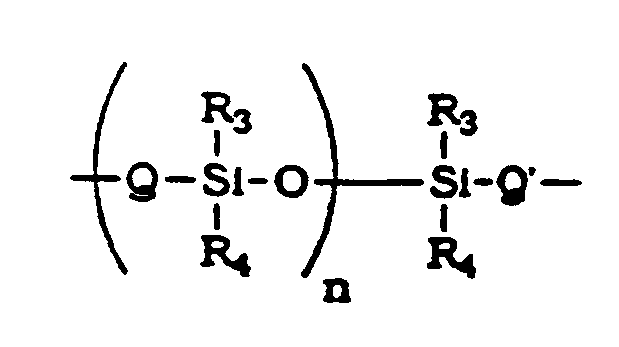
Q est un atome d'oxygène,
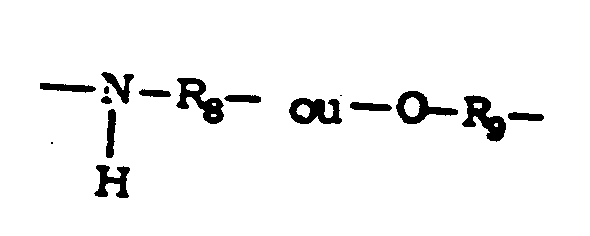
où chacun de R₈ et R₉ est un groupe alkylène inférieur ou un groupe éther d'alkylène inférieur ; et Q' est un atome d'oxygènè,
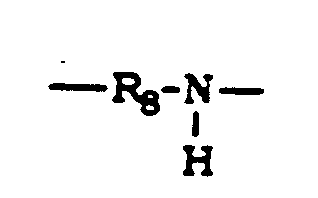
ou -R₉ -O-, où R₈ et R₉ sont tels que définis ci-dessus.
Q est un atome d'oxygène,
où chacun de R₈ et R₉ est un groupe alkylène inférieur ou un groupe éther d'alkylène inférieur ; et Q' est un atome d'oxygènè,
ou -R₉ -O-, où R₈ et R₉ sont tels que définis ci-dessus.
1. Thermoplastische Harzzusammensetzung, umfassend ein Polyetherimidharz (A), das aus
wiederkehrenden Einheiten der Formel
worin R₁ und R₂ unabhängig voneinander zweiwertige organische Gruppen bedeuten, besteht, und
ein aromatischer Polyester-Polyorganosiloxan-Blockcopolymer (B), das aus Polyestersegmenten und Polyorganosiloxansegmenten in Verhältnissen von 9:1 bis 1:9 besteht, wobei die Polyestersegmente ein zahlenmittleres Molekulargewicht von 1800 oder mehr besitzen und als deren Hauptbestandteil einen aromatischen Polyester (I), der eine aromatische Dicarbonsäure (n) und ein zweiwertiges Phenol (e) umfasst, einen aromatischen Polyester(II), der eine aromatische Dicarbonsäure (n) und ein niederes aliphatisches Diol (e) oder ein alizyklisches Diol (e) umfasst, einen aromatischen Polyester (III), der eine aromatische Hydroxycarbonsäure (n) umfasst, oder einen aromatischen Polyester (IV), der zwei oder mehrere aus (I) (III) und (III) gewählte Copolymere umfasst, umfassen, und wobei die Polyorganosiloxansegmente ein zahlenmittleres Molekulargewicht von 700 oder mehr besitzen, wobei das Gewichtsverhältnis von A zu B (A/B) 1/9 bis 9/1 beträgt.
worin R₁ und R₂ unabhängig voneinander zweiwertige organische Gruppen bedeuten, besteht, und
ein aromatischer Polyester-Polyorganosiloxan-Blockcopolymer (B), das aus Polyestersegmenten und Polyorganosiloxansegmenten in Verhältnissen von 9:1 bis 1:9 besteht, wobei die Polyestersegmente ein zahlenmittleres Molekulargewicht von 1800 oder mehr besitzen und als deren Hauptbestandteil einen aromatischen Polyester (I), der eine aromatische Dicarbonsäure (n) und ein zweiwertiges Phenol (e) umfasst, einen aromatischen Polyester(II), der eine aromatische Dicarbonsäure (n) und ein niederes aliphatisches Diol (e) oder ein alizyklisches Diol (e) umfasst, einen aromatischen Polyester (III), der eine aromatische Hydroxycarbonsäure (n) umfasst, oder einen aromatischen Polyester (IV), der zwei oder mehrere aus (I) (III) und (III) gewählte Copolymere umfasst, umfassen, und wobei die Polyorganosiloxansegmente ein zahlenmittleres Molekulargewicht von 700 oder mehr besitzen, wobei das Gewichtsverhältnis von A zu B (A/B) 1/9 bis 9/1 beträgt.
2. Thermoplastische Harzzusammensetzung nach Anspruch 1, wobei das Polyetherimidharz
(A) aus wiederkehrenden Einheiten der Formel
besteht.
besteht.
3. Thermoplastische Harzzusammensetzung nach Anspruch 1, wobei die Polyorganosiloxansegmente
durch die allgemeine Formel
angegeben werden, worin R₃ und R₄ unabhangig voneinander eine Methylgruppe oder eine Phenylgruppe bedeuten, Q und Q' unabhängigvoneinander eine zweiwertige organische Gruppe bedeuten und n eine ganze Zahl von 10 oder mehr ist.
angegeben werden, worin R₃ und R₄ unabhangig voneinander eine Methylgruppe oder eine Phenylgruppe bedeuten, Q und Q' unabhängigvoneinander eine zweiwertige organische Gruppe bedeuten und n eine ganze Zahl von 10 oder mehr ist.
4. Thermoplastische Harzzusammensetzung nach Anspruch 3, wobei in dem aromatischer Polyester-Polyorganosiloxan-Blockcopolymer(B)
die den aromatischen Polyester aufbauende Dicarbonsäure(n) der Formel
entspricht, worin R₅ eine substituierte oder unsubstituierte Phenylengruppe bedeutet, und das den aromatischen Polyester aufbauende zweiwertige Phenol (e) der Formel:
entspricht, worin R₆ ein Sauerstoffatom, Schwefelatom,
oder eine Alkylengruppe mit 5 oder weniger Kohlenstoffatomen bedeutet.
entspricht, worin R₅ eine substituierte oder unsubstituierte Phenylengruppe bedeutet, und das den aromatischen Polyester aufbauende zweiwertige Phenol (e) der Formel:
entspricht, worin R₆ ein Sauerstoffatom, Schwefelatom,
oder eine Alkylengruppe mit 5 oder weniger Kohlenstoffatomen bedeutet.
5. Thermoplastische Harzzusammensetzung nach Anspruch 4, wobei in dem aromatischer Polyester-Polyorganosiloxan-Blockcopolymer
(B) die den aromatischen Polyester aufbauende Dicarbonsäure (n) Terephthalsaure und/oder
lsophthalsäure ist und das den aromatischen Polyester aufbauende Zweiwertige Phenol
(e) 2,2-Bis(4-hydroxyphenyl)propan ist.
6. Thermoplastische Harzzusammensetzung nach Anspruch 3, wobei in dem aromatischer Polyester-Polyorganosiloxan
Blockcopolymer(B) die den aromatischen Polyester aufbauende aromatische Dicarbonsäure(n)
der Formel
entspricht, worin R₅ eine substituierte oder unsubstituierte Phenylengruppe bedeutet, und das den aromatischen Polyester aufbauende niedere aliphatische Diol (e) oder das alizyklische Diol (e) der Formel
HO-R₇-OH
entspricht, worin R₇ eine nieder Alkylengruppe oder eine alizyklische Alkylengruppe bedeutet.
entspricht, worin R₅ eine substituierte oder unsubstituierte Phenylengruppe bedeutet, und das den aromatischen Polyester aufbauende niedere aliphatische Diol (e) oder das alizyklische Diol (e) der Formel
HO-R₇-OH
entspricht, worin R₇ eine nieder Alkylengruppe oder eine alizyklische Alkylengruppe bedeutet.
7. Thermoplastische Harzzusammensetzung nach Anspruch 6, wobei die den aromatischen Polyester
aufbauende aromatische Dicarbonsäure (n) Terephthalsäure und/oder Isophthalsäure ist,
und das den aromatischen Polyester aufbauende aliphatische Diol (e) Ethylenglykol
und/oder 1,4-Butandiol und/oder Cyclohexandimethanol ist.
8. Thermoplastische Harzzusammensetzung nach Anspruch 3, wobei in dem aromatischer Polyester-Polyorganosiloxan-Blockcopolymer
(B) der aromatische Polyester ein Polyester ist, der das Verhalten eines Flüssigkristalls
zeigt.
9. Thermoplastische Harzzusammensetzung nach Anspruch 8, wobei In dem aromatischer Polyester-Polyorganosiloxan-Blockcopolymer
(B) der aromatische Polyester ein Copolymer aus p-Hydroxybenzoesäure und 6-Hydroxy-2-naphtoesäure
ist.
10. Thermoplastische Harzzusammensetzung nach Anspruch 8, wobei in dem aromatischer Polyester-Polyorganosiloxan-Blockcopolymer
(B) der aromatische Polyester ein Copolymer aus p-Hydroxybenzoesäure, 2,6-Naphtalindicarbonsäure
und 2,6-Naphtalindiol ist.
11. Thermoplastische Harzzusammensetzung nach Anspruch 8, wobei in dem aromatischer Polyester-Polyorganosiloxan-Blockcopolymer
(B) der aromatische Polyester ein Copolymer aus p-Hydroxybenzoesäure, 2,6-Naphtalindicarbonsäure,
Resorcinol und Isophthalsäure ist.
12. Thermoplastische Harzzusammensetzung nach Anspruch 3, wobei in dem aromatischer Polyester-Polyorganosiloxan-Blockcopolymer
(B) das Polyorganosiloxan ein Polydimethylsiloxan ist.
13. Thermoplastische Harzzusammensetzung nach Anspruch 3, wobei in dem Polyorganosiloxansegment
in dem aromatischer Polyester-Polyorganosiloxan-Blockcopolymer (B) das der Formel
entspricht, Q ein Sauerstoffatom,
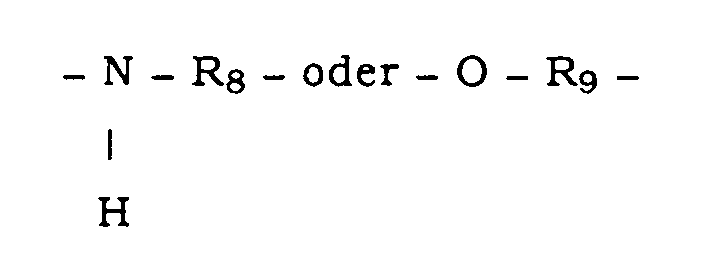
bedeutet, worin R₈ und R₉ jeweils eine niedere Alkylengruppe oder eine niedere Alkylenethergruppe darstellt: und Q' ein Sauerstoffatom,
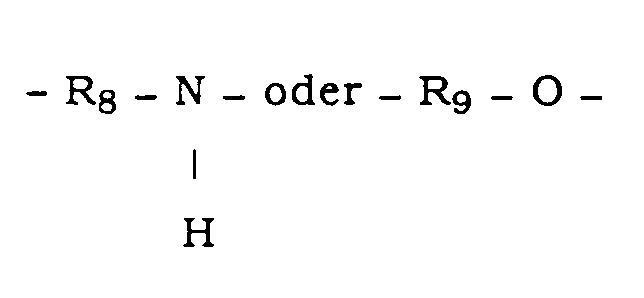
bedeutet, worin R₈ und R₉ wie oben definiert sind.
entspricht, Q ein Sauerstoffatom,
bedeutet, worin R₈ und R₉ jeweils eine niedere Alkylengruppe oder eine niedere Alkylenethergruppe darstellt: und Q' ein Sauerstoffatom,
bedeutet, worin R₈ und R₉ wie oben definiert sind.