|
(11) | EP 0 310 307 B1 |

| (12) | EUROPEAN PATENT SPECIFICATION |
|
|
| (54) |
Current voltage converter circuit Strom-Spannungswandler Convertisseur courant tension |
|
|
|||||||||||||||||||||||||||||||
| Note: Within nine months from the publication of the mention of the grant of the European patent, any person may give notice to the European Patent Office of opposition to the European patent granted. Notice of opposition shall be filed in a written reasoned statement. It shall not be deemed to have been filed until the opposition fee has been paid. (Art. 99(1) European Patent Convention). |
[0001] The present invention relates to a current-voltage converter circuit which processes currents output from photodiodes used as light-receiving devices in, for instance, the optical heads of optical disc apparatus.
[0002] In the case of the optical head used in an optical disc apparatus, the reflected light from an optical disc is detected by using a plurality of photodiodes. The output currents from these photodiodes are converted into voltages by a current-voltage converter circuit and, by the suitable combination of these voltages, a focussing signal for focussing an objective lens, a tracking signal for tracking the optical disc and an information signal are produced. Here, the bandwidths of the focussing signal and the tracking signal are 0 - 20 kHz, and the bandwidth of the information signal has a broad bandwidth of 0 - several MHz.
[0003] U.S. 3,733,514 discloses a wideband amplifier with separate signal paths for low and high frequency portions of the signal. In addition JP-A-62-15909 shows a photodetector circuit in which the current output of the detector is converted into a voltage.
[0004] In the conventional optical disc current-voltage circuit, the output currents of first and second current sources, which are composed of photodiodes, are respectively supplied to first and second operational amplifier circuits, and converted into voltage values. The output voltages of the first and second operational amplifiers respectively, produce low-pass signals V₁ and V₂ via first and second low-pass filters. The focussing signal and the tracking signal are produced from low-pass signals V₁ and V₂. Also, the output voltage of the first and second operational amplifiers are combined by a synthesizer circuit, and an information signal V₃ is produced.
[0005] However, in the above conventional circuit, the output currents of the first and second current sources which include 0 - several MHz signal are directly converted into voltage values by the first and second operational amplifier circuits. Therefore, it is necessary for the first and second operational amplifier circuits to possess broadband characteristics, and the operational amplifier of the synthesizer circuit which combine these output voltages must also have a broadband characteristic. Moreover, since the output currents of the current sources are directly converted into voltages, at least one operational amplifier circuit having broadband characteristics is required for each current source. Generally, the operational amplifiers having broadband characteristics are relatively expensive. Thus there was a problem in that, as the number of current sources increased, the circuit production cost became increasingly expensive.
[0006] It is an object of the present invention to provide a current-voltage converter circuit which can reduce the number of operational amplifier circuits required to have broadband characteristics and can thus reduce the production cost of the circuit.
[0007] According to one aspect of the present invention, there is provided a current-voltage converter circuit, comprising,
a plurality of current sources each producing a current having a low-pass signal component and a high-pass signal comprising;
band split means for splitting the current output from each of the plurality of current sources into the corresponding low-pass signal components and high-pass signal components;
first conversion means for converting each of the low-pass signal components into a corresponding output signal having an associated voltage; and
second conversion means for converting the output signals from the first conversion means, and the high-pass signal components into a second output signal having a prescribed voltage different from any of the associated voltages, respectively.
[0008] These and other objects and advantages of the present invention will become more apparent and more readily appreciated from the following detailed description of the presently preferred exemplary embodiments, taken in conjunction with the accompanying drawings of which:
Figure 1 is a schematic view showing an optical disc apparatus in which a current-voltage converter circuit according to the present invention is applied:
Figure 2 is a circuit diagram showing an embodiment of the present invention; and
Figures 3 and 4 are illustrations of the operational characteristics of the operational amplifiers shown in Figure 2.
[0009] The following is an explanation of an embodiment of the present invention with reference to the drawings.
[0010] Figure 1 shows an optical disc apparatus in which a current-voltage converter circuit 10 according to the present invention is applied. An optical disc 11 is attached to a turntable 13, which is connected to a motor 12. Optical disc 11 has a spiral track or concentric circular tracks. An optical head 14 is disposed in face-to-face relation with optical disc 11. Optical head 14 may be moved in either radial direction of the disc 11. Optical head 14 has a laser 15. On the output side of laser 15, a collimator lens 16 is disposed. On the output side of lens 16, a beam splitter 17 is provided. Between beam splitter 17 and optical disc 11, a quarter-wave plate 18 is interposed. Between quarter-wave plate 18 and disc 11, an objective lens 19 is disposed. Objective lens 19 is positioned coaxial with a voice coil 20. When voice coil 20 is excited, lens 19 moves along its optical axis. On the other side of beam splitter 17, away from optical disc 11, a cylindrical lens 21, a condenser lens 22 and an optical sensor 23 are disposed coaxial with one another. The output terminals of optical sensor 23 are connected to current-voltage circuit 10.
[0011] Current-voltage converter circuit 10 is shown in FIGURE 2 in detail. Optical sensor 23 functions as current sources PD₁ and PD₁ ′. One end of each of current sources PD₁ and PD₁ ′, which are for instance composed of photodiodes, is grounded, and the other ends are connected to the inverting input terminals of operational amplifiers A₁ and A₁ ′, respectively, via resistors R₁ and R₁ ′. The noninverting input terminals of operational amplifiers A₁ and A₁ ′ are grounded, and their output terminals are connected to their inverting input terminals via resistors R₃ and R₃ ′.
[0012] The other ends of current sources PD₁ and PD₁ ′ are connected to the inverting input terminal of an operational amplifier A₂; via respective series circuits comprising condensers C and C′ and resistors R₂ and R₂′ . The noninverting input terminal of opertational amplifier A₂ is grounded, and its output terminal is connected to its inverting input terminal via resistor R₄.
[0013] One end of each of resistors R₅ and R₅′ is respectively connected to the output terminals of operational amplifiers A₁ and A₁ ′, and the other ends of resistors R₅ and R₅′ are connected to the inverting input terminal of an operational amplifier A₃. The noninverting input terminal of operational amplifier A₃ is grounded, while the output terminal of operational amplifier A₃ is connected to its inverting input terminal via resistor R₆ and to the inverting input terminal of operational amplifier A₂ via resistor R₇.
[0014] In the above circuit, the output currents I₁ and I₁′ of current sources PD₁ and PD₁′ are designed to be split into their respective low-pass signal components I₁₁ and I₁₁′ and high-pass signal components I₁₂ and I₁₂′ by the band-splitting filters composed of resistors R₁ , R₁′, R₂ and R₂′ and condensers C and C′. Here, I₁₁ and I₁₂ have the following relationship.
[0016] Therefore, output voltage V₁ (the low-pass signal component) of operational amplifier A₁ becomes
and output voltage V₁′ (the low-pass signal component) of operational amplifier A₁′ also has the same relationship. The tracking signal and focussing signal are produced from output voltages V₁ and V₁′ .
[0017] Also, output voltages V₁ and V₁′ of operational amplifiers A₁ and A₁′ are combined by operational amplifier A₃, and this combined signal and the high-pass signal components split off by the band-spiitting filters are current voltage converted by operational amplifier A₂. Here, when R₃= R₃′= R₅= R₅′, the output voltage V₃ of operational amplifier A₃ is
Therefore, when R₇= R₆, output voltage V₂ of operational amplifier A₂ is
[0018] Consequently, the total of the input currents is exhibited in output voltage V₂ of operational amplifier A₂ as a current-voltage converted output over the whole bandwidth, and this is used as the information signal.
[0019] The voltage V₂ of operational amplifier A₂ can be obtained by following another calculations.
Here, when (R₆/R₇)·(R₃/R₅) = 1, (R₆/R₇)·(R₃′/R₅′) = 1, the output voltage V₂ is
[0020] Therefore, when [R₆/R₇)·(R₃/R₅) = 1, (R₆/R₇)·(R₃′/R₅′) = 1, the output voltage V₂ of operational amplifier A₂ is obtained as an output voltage having a conversion gain distributed uniformly over the whole bandwidth of operational amplifier A₂. The conversion gain of operational amplifier A₂ is suitably selected by the value of R₃.
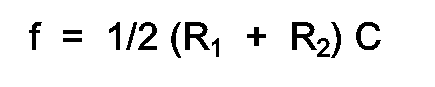
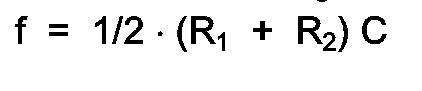
[0021] Resistors R₁ and R₂ and condenser C are selected so as to a frequency f to define the band split frequency as defined by the following relation which is lower than a maximum frequency defining the bandwidth of the first operational amplifier:
by the above mentioned selection of resistors R₁ and R₂ and condenser C, a voltage reasonably uniform is output from operational amplifiers A₁.
[0022] The relationships between resisotrs R₁′, R₂′ and condenser C′ and the output voltage of operational amplifier A₁′ are the same as above.
[0023] FIGURE 3 shows the frequency curve of output voltages V₁ and V₁′ of operational amplifiers A₁ and A₁′, and FIGURE 4 shows output voltage V₂ of operational amplifier A₂.
[0024] In this way, a broadband conversion characteristic is only required for operational amplifier A₂ and operational amplifiers A₁, A₁′and A₃ need only perform current-voltage conversion and amplification in low-pass frequency bands such as shown in FIGURE 3. For this reason, if resistors R₁, R₁′, R₂ and R₂′ and condensers C and C′ are suitably selected, it is possible to use relatively low-cost operational amplifiers for operational amplifiers A₁, A₁′ and A₃.
[0025] In the above embodiment, the output currents of current sources PD₁ and PD₁′ are split into low-pass signal components and high-pass signal components by band-splitting filters composed of resistors R₁, R₁′, R₂ and R₂′ and condensers C and C′. The low-pass signal components are current-voltage converted by operational amplifiers A₁ and A₁′. Then, the output voltages of operational amplifiers A₁ and A₁′ which have been combined by operational amplifier A₃, and the band-split high-pass signal components are current-voltage converted by operational amplifier A₂ which has a broadband characteristic. Therefore, since it is no longer necessary to have the same number of operational amplifiers which have broadband characteristics as the number of current sources, as was the case in prior art, it is possible to reduce the number of operational amplifiers with broadband characteristics, and thus the production cost of circuits can be reduced.
[0026] In the above embodiment, the case of two current sources has been described, but the present invention is not limited to this and can be applied to cases in which the numbers of current sources are increased. Also, the greater the number of current sources, the greater the effect of the present invention.
[0027] As described above, in the present invention, a current-voltage converter circuit can be provided which can reduce the number of high-cost operational amplifier circuits with broadband characteristics and, moreover, can correctly perform current-voltage conversion. This is achieved by splitting the output currents output from a plurality of current sources into low-pass signal components and high-pass signal components using a band-splitting means and performing the current-voltage conversion of these low-pass signal components using a first current-voltage conversion means, and then performing current-voltage conversion on the output signals of the first current-voltage conversion means and the split-off high-pass signal components using a second current-voltage conversion means.
1. A current-voltage converter circuit (10), comprising,
a plurality of current sources (PD₁, PD₁′) each producing a current having a low-pass signal component and a high-pass signal comprising;
band split means (R₁, R₂, C, R₁′, R₂′, C′) for splitting the current output from each of the plurality of current sources (PD₁, PD₁′) into the corresponding low-pass signal components and high-pass signal components;
first conversion means (A₁, R₃, A₁′, R₃′) for converting each of the low-pass signal components into a corresponding output signal having an associated voltage (V₁ or V₁′); and
second conversion means (A₂, R₄) for converting the output signals from the first conversion means (A₁, R₃, A₁′, R₃′) and the high-pass signal components into a second output signal having a prescribed voltage (V₂) different from any of the associated voltages (V₁, V₁′), respectively.
a plurality of current sources (PD₁, PD₁′) each producing a current having a low-pass signal component and a high-pass signal comprising;
band split means (R₁, R₂, C, R₁′, R₂′, C′) for splitting the current output from each of the plurality of current sources (PD₁, PD₁′) into the corresponding low-pass signal components and high-pass signal components;
first conversion means (A₁, R₃, A₁′, R₃′) for converting each of the low-pass signal components into a corresponding output signal having an associated voltage (V₁ or V₁′); and
second conversion means (A₂, R₄) for converting the output signals from the first conversion means (A₁, R₃, A₁′, R₃′) and the high-pass signal components into a second output signal having a prescribed voltage (V₂) different from any of the associated voltages (V₁, V₁′), respectively.
2. A circuit according to claim 1 wherein each current source means includes an optical
sensor (23).
3. A circuit according to claim 2 wherein the optical sensor includes a photodiode (PD₁).
4. A circuit according to any of claims 1, 2 or 3 wherein the band split means includes:
first resistors (R1, R₁′) connected in series with each of the current sources (PD₁, PD₁′), respectively; and
series circuits each comprising a condenser (C or C′) and a second resistor (R₂ or R₂′) connected in parallel with each of the current sources (PD₁, PD₁′).
first resistors (R1, R₁′) connected in series with each of the current sources (PD₁, PD₁′), respectively; and
series circuits each comprising a condenser (C or C′) and a second resistor (R₂ or R₂′) connected in parallel with each of the current sources (PD₁, PD₁′).
5. A circuit according to claim 4 wherein the first conversion means includes first operational
amplifiers (A₁, A₁′) corresponding to each of the current sources (PD₁, PD₁′), each
of the first operational amplifiers (A₁, A₁′) having an inverting input terminal connected
to the first resistor (R₁ or R₁′) of the corresponding current sources (PD₁, PD₁′),
a grounded non-inverting input terminal, and an output terminal a third resistor (R₃
or R₃′) being connected between the inverting input terminal and the output terminal
so as to produce one of the associated voltages (V₁, V₁′) at the output.
6. A circuit according to claim 4 wherein the second conversion means includes a second
operational amplifier (A₂) having an inverting input terminal connected to the series
circuits, a grounded non-inverting input terminal, and an output terminal, a fourth
resistor (R₄) being connected between the inverting input terminal and the output
terminal so as to produce the prescribed voltage (V₂) at the output.
7. A circuit according to claim 6 further comprising third amplifier means whose input
is connected to the output terminal of each of the first operational amplifiers (A₁,
A₁′) so as to combine the voltages output from each of the first operational amplifiers
(A₁, A₁′), the output of the third operational amplifier (A₃) being connected to the
input of the second operational amplifier (A₂).
8. A circuit according to claim 7 wherein the third amplifier means includes:
a third operational amplifier (A₃) having an inverting input terminal, a grounded non-inverting input terminal and an output terminal;
fifth resistors (R₅, R₅′) connected between the output terminal means of each of the first operational amplifiers (A₁, A₁′), respectively, and the inverting input terminal of the third operational amplifier (A₃);
a sixth resistor (R₆) connected between the inverting input terminal of the third operational amplifier (A₃) and the output terminal of the third operational amplifier (S₃); and
a seventh resistor (R₁) connected between the output terminal of the third operational amplifier (A₃) and the inverting input terminal of the second operational amplifier (A₂).
a third operational amplifier (A₃) having an inverting input terminal, a grounded non-inverting input terminal and an output terminal;
fifth resistors (R₅, R₅′) connected between the output terminal means of each of the first operational amplifiers (A₁, A₁′), respectively, and the inverting input terminal of the third operational amplifier (A₃);
a sixth resistor (R₆) connected between the inverting input terminal of the third operational amplifier (A₃) and the output terminal of the third operational amplifier (S₃); and
a seventh resistor (R₁) connected between the output terminal of the third operational amplifier (A₃) and the inverting input terminal of the second operational amplifier (A₂).
9. A circuit according to claim 8 wherein the third, fifth, sixth and seventh resistors
R₃, R₅, R₆ and R₇ have values defined by the following relation:

10. A circuit according to claim 5 wherein the first and second resistors R₁ R₁′ and R₂
R₂′ and the condenser C C′ are selected so as to define a band split frequency f which
lower than a maximum frequency defining the bandwidth of the first operational amplifier
(A₁ A1′), in accordance with the relation:
1. Strom-Spannungs-Wandlerschaltung (10) mit
eine Anzahl von Stromquellen (PD₁, PD₁′), von denen jede einen Strom erzeugt, der eine Tiefpaß-Signalkomponente und ein Hochpaß-Signal aufweist;
Bandteilermitteln (R₁, R₂, C, R₁′, R₂′, C′) zur Teilung der Stromausgabe von jeder der Anzahl der Stromquellen (PD₁, PD₁′) in die entsprechenden Tiefpaß-Signalkomponenten und Hochpaß-Signalkomponenten;
ersten Umwandlungsmitteln (A₁, R₃, A₁′, R₃′) zum Umwandeln jeder Tiefpaß-Signalkomponente in ein entsprechendes Ausgabesignal, das eine zugehörige Spannung (V₁ oder V₁′) hat; und
zweiten Umwandlungsmitteln (A₂, R₄) zum Umwandeln der Ausgabesignale aus den ersten Umwandlungsmitteln (A₁, R₃, A₁′, R₃′) und der Hochpaß-Signalkomponenten in ein zweites Ausgabesignal, das eine vorgegebene Spannung (V₂) hat, die sich jeweils von jeder anderen zugehörigen Spannung (V₁, V₁′) unterscheidet.
eine Anzahl von Stromquellen (PD₁, PD₁′), von denen jede einen Strom erzeugt, der eine Tiefpaß-Signalkomponente und ein Hochpaß-Signal aufweist;
Bandteilermitteln (R₁, R₂, C, R₁′, R₂′, C′) zur Teilung der Stromausgabe von jeder der Anzahl der Stromquellen (PD₁, PD₁′) in die entsprechenden Tiefpaß-Signalkomponenten und Hochpaß-Signalkomponenten;
ersten Umwandlungsmitteln (A₁, R₃, A₁′, R₃′) zum Umwandeln jeder Tiefpaß-Signalkomponente in ein entsprechendes Ausgabesignal, das eine zugehörige Spannung (V₁ oder V₁′) hat; und
zweiten Umwandlungsmitteln (A₂, R₄) zum Umwandeln der Ausgabesignale aus den ersten Umwandlungsmitteln (A₁, R₃, A₁′, R₃′) und der Hochpaß-Signalkomponenten in ein zweites Ausgabesignal, das eine vorgegebene Spannung (V₂) hat, die sich jeweils von jeder anderen zugehörigen Spannung (V₁, V₁′) unterscheidet.
2. Schaltung nach Anspruch 1, wobei jede Stromquelle einen optischen Sensor (23) aufweist.
3. Schaltung nach Anspruch 2, wobei der optische Sensor eine Photodiode (PD₁) umfaßt.
4. Schaltung nach einem der Ansprüche 1, 2 oder 3, wobei das Bandteilermittel umfaßt:
erste Widerstände (R₁, R₁′), die mit jeder Stromquelle (PD₁, PD₁′) jeweils in Reihe geschaltet sind, und
Reihenschaltungen, die jeweils einen Kondensator (C oder C′) und einen zweiten Widerstand (R₂ oder R₂′) aufweisen, die parallel zu jeder der Stromquellen (PD₁, PD₁′) liegen.
erste Widerstände (R₁, R₁′), die mit jeder Stromquelle (PD₁, PD₁′) jeweils in Reihe geschaltet sind, und
Reihenschaltungen, die jeweils einen Kondensator (C oder C′) und einen zweiten Widerstand (R₂ oder R₂′) aufweisen, die parallel zu jeder der Stromquellen (PD₁, PD₁′) liegen.
5. Schaltung nach Anspruch 4, wobei das erste Umwandlungsmittel erste Operationsverstärker
(A₁, A₁′) aufweist, die jeder Stromquelle (PD₁, PD₁′) zugehörig sind, wobei jeder
erste Operationsverstärker (A₁, A₁′) jeweils mit einem invertierenden Eingang an den
ersten Widerstand (R₁, R₁′) der entsprechenden Stromquelle (PD₁) PD₁′) angeschlossen
ist und einen geerdeten, nicht-invertierende Eingang hat und einen Ausgang, der an
einen dritten Widerstand (R₃ oder R₃′) angeschlossen ist, der zwischen dem invertierenden
Eingang und dem Ausgang liegt, um eine der zugehörigen Spannungen (V₁, V₁′) am Ausgang
zu liefern.
6. Schaltung nach Anspruch 4, wobei das zweite Umwandlungsmittel einen zweiten Operationsverstärker
(A₂) aufweist, der mit einem invertierenden Eingang an die Serienschaltungen angeschlossen
ist, der einen geerdeten nicht-invertierenden Eingang besitzt und der einen Ausgang
hat, wobei ein vierter Widerstand (R₄) zwischen dem invertierenden Eingang und dem
Ausgang liegt, um die vorgegebene Spannung (V₂) am Ausgang zu erzeugen.
7. Schaltung nach Anspruch 6, ferner mit einem dritten Verstärkermittel, dessen Eingang
an den Ausgang jedes ersten Operationsverstärker (A₁, A₁′) angeschlossen ist, um die
Spannungsausgaben von jedem der ersten Operationsverstärker (A₁, A₁′) zusammenzufassen,
wobei der Ausgang des dritten Operationsverstärkers (A₃) mit dem Eingang des zweiten
Operationsverstärkers (A₂) verbunden ist.
8. Schaltung nach Anspruch 7, wobei das dritte Verstärkermittel aufweist:
einen dritten Operationsverstärker (A₃), der einen invertierenden Eingang, einen geerdeten nicht-invertierenden Eingang und einen Ausgang aufweist;
fünfte Widerstände (R₅, R₅′), die zwischen die Ausgänge der ersten Operationsverstärker (A₁, A₁′) und den invertierenden Eingang des dritten Operationsverstärkers (A₃) gelegt sind;
einen sechsten Widerstand (R₆), der zwischen dem invertierenden Eingang des dritten Operationsverstärkers (A₃) und dem Ausgang des dritten Operationsverstärkers (A₃) gelegt ist; und
einen siebenten Widerstand (R₇), der zwischen dem Ausgang des dritten Operationsverstärkers (A₃) und dem invertierenden Eingang des zweiten Operationsverstärkers (A₂) liegt.
einen dritten Operationsverstärker (A₃), der einen invertierenden Eingang, einen geerdeten nicht-invertierenden Eingang und einen Ausgang aufweist;
fünfte Widerstände (R₅, R₅′), die zwischen die Ausgänge der ersten Operationsverstärker (A₁, A₁′) und den invertierenden Eingang des dritten Operationsverstärkers (A₃) gelegt sind;
einen sechsten Widerstand (R₆), der zwischen dem invertierenden Eingang des dritten Operationsverstärkers (A₃) und dem Ausgang des dritten Operationsverstärkers (A₃) gelegt ist; und
einen siebenten Widerstand (R₇), der zwischen dem Ausgang des dritten Operationsverstärkers (A₃) und dem invertierenden Eingang des zweiten Operationsverstärkers (A₂) liegt.
9. Schaltung nach Anspruch 8, wobei die dritten, fünften, sechsten und siebenten Widerstände
R₃, R₅, R₆ und R₇ Werte haben, die durch die folgende Beziehung definiert sind:

10. Schaltung nach Anspruch 5, wobei die ersten und zweiten Widerstände R₁, R₁′ und R₂,
R₂′ und der Kondensator C, C′ so ausgewählt sind, daß sie eine Bandteilerfrequenz
f ergeben, die kleiner als die maximale Frequenz ist, die die Bandbreite des ersten
Operationsverstärkers (A₁, A₁′) bildet, und zwar gemäß der Beziehung:
1. Circuit convertisseur intensité/tension (10) comprenant,
une pluralité de sources d'intensité (PD₁, PD₁′) chacune de ces sources produisant une intensité ayant une composante signal passe-bas et une composante signal passe-haut comprenant;
un moyen diviseur de bande (R₁, R₂, C, R₁′, R₂′, C′) pour diviser la sortie d'intensité de chacune des sources d'intensité de la pluralité de sources d'intensité (PD₁, PD₁′) en composantes de signal passe-bas et en composantes de signal passe-haut;
un premier moyen de conversion (A₁, R₃, A₁′, R₃′) pour convertir chacune des composantes de signal passe-bas en signal de sortie correspondant ayant une tension associée (V₁ ou V₁′); et
un second moyen de conversion (A₂, R₄) pour convertir les signaux de sortie du premier moyen de conversion (A₁, R₃, A₁′, R₃′) et les composantes de signal passe-haut en un second signal de sortie ayant une tension déterminée (V₂) différente de l'une quelconque des tensions associées (V₁, V₁′) respectivement.
une pluralité de sources d'intensité (PD₁, PD₁′) chacune de ces sources produisant une intensité ayant une composante signal passe-bas et une composante signal passe-haut comprenant;
un moyen diviseur de bande (R₁, R₂, C, R₁′, R₂′, C′) pour diviser la sortie d'intensité de chacune des sources d'intensité de la pluralité de sources d'intensité (PD₁, PD₁′) en composantes de signal passe-bas et en composantes de signal passe-haut;
un premier moyen de conversion (A₁, R₃, A₁′, R₃′) pour convertir chacune des composantes de signal passe-bas en signal de sortie correspondant ayant une tension associée (V₁ ou V₁′); et
un second moyen de conversion (A₂, R₄) pour convertir les signaux de sortie du premier moyen de conversion (A₁, R₃, A₁′, R₃′) et les composantes de signal passe-haut en un second signal de sortie ayant une tension déterminée (V₂) différente de l'une quelconque des tensions associées (V₁, V₁′) respectivement.
2. Circuit selon la revendication 1, dans lequel chaque moyen à sources d'intensités
comporte un capteur optique (23).
3. Circuit selon la revendication 2, dans lequel le capteur optique comporte une diode
photoélectrique (PD₁).
4. Circuit selon l'une quelconque des revendications 1, 2 ou 3, dans lequel le moyen
diviseur de bande comporte:
des premières résistances (R₁, R₁′) branchées en série avec chacune des sources d'intensités (PD₁, PD₁′) respectivement; et
des circuits en série comprenant un condensateur (<<C>> ou <<C′>>) et une seconde résistance (R₂ ou R₂′) branchée en parallèle avec chacun des sources d'intensité (PD₁, PD₁′).
des premières résistances (R₁, R₁′) branchées en série avec chacune des sources d'intensités (PD₁, PD₁′) respectivement; et
des circuits en série comprenant un condensateur (<<C>> ou <<C′>>) et une seconde résistance (R₂ ou R₂′) branchée en parallèle avec chacun des sources d'intensité (PD₁, PD₁′).
5. Circuit selon la revendication 4, dans lequel le premier moyen de conversion comporte
des premiers amplificateurs opérationnels (A₁, A₁′) correspondant à chacune des sources
d'intensité (PD₁, PD₁′), chacune des premiers amplificateurs opérationnels (A₁, A₁′)
ayant une borne d'entrée inverseuse branchée à une première résistance (R₁ ou R₁′)
des sources d'intensité correspondantes (PD₁, PD₁′) une borne d'entrée non inverseuse
reliée à la terre et une borne de sortie, une troisième résistance (R₃ ou R₃′) étant
branchée entre la borne d'entrée inverseuse et la borne de sortie pour produire une
des tensions de sortie associées (V₁, V₁′).
6. Circuit selon la revendication 4, dans , lequel le second moyen de conversion comporte
un second amplificateur opérationnel (A₂) ayant une borne d'entrée inverseuse branchée
aux circuits en série, une borne d'entrée non inverseuse reliée à la terre et une
borne de sortie, une quatrième résistance (R₄) étant branchée entre la borne d'entrée
inverseuse et la borne de sortie pour produire la tension de sortie déterminée (V₂).
7. Circuit selon la revendication 6, qui comprend en outre un troisième moyen d'amplification
dont l'entrée est branchée sur la borne de sortie de chacun des amplificateurs opérationnels
(A₁, A₁′) pour combiner les tensions de sortie produites par chacun des amplificateurs
opérationnels (A₁, A₁′), la sortie du troisième amplificateur opérationnel (A₃) étant
branchée à l'entrée du second amplificateur opérationnel (A₂).
8. Circuit selon la revendication 7, dans lequel le troisième moyen d'amplification comporte:
un troisième amplificateur opérationnel (A₃) ayant une borne d'entrée inverseuse, une borne d'entrée non inverseuse reliée à la terre et une borne de sortie.
des cinquièmes résistances (R₅, R₅′) branchées entre le moyen à bornes de sorties de chacun des premiers amplificateurs opérationnels (A₁, A₁′) respectivement, et la borne d'entrée inverseuse du troisième amplificateur opérationnel (A₃);
une sixième résistance (R₆) branchée entre la borne d'entrée inverseuse du troisième amplificateur opérationnel (A₃) et la borne de sortie du troisième amplificateur opérationnel (A₃); et
une septième résistance (R₇) branchée entre la borne de sortie du troisième amplificateur opérationnel (A₃) et la borne d'entrée inverseuse du second amplificateur opérationnel (A₂).
un troisième amplificateur opérationnel (A₃) ayant une borne d'entrée inverseuse, une borne d'entrée non inverseuse reliée à la terre et une borne de sortie.
des cinquièmes résistances (R₅, R₅′) branchées entre le moyen à bornes de sorties de chacun des premiers amplificateurs opérationnels (A₁, A₁′) respectivement, et la borne d'entrée inverseuse du troisième amplificateur opérationnel (A₃);
une sixième résistance (R₆) branchée entre la borne d'entrée inverseuse du troisième amplificateur opérationnel (A₃) et la borne de sortie du troisième amplificateur opérationnel (A₃); et
une septième résistance (R₇) branchée entre la borne de sortie du troisième amplificateur opérationnel (A₃) et la borne d'entrée inverseuse du second amplificateur opérationnel (A₂).
9. Circuit selon la revendication 8, dans lequel la troisième, la cinquième, la sixième
et la septième résistance R₃, R₅, R₆ et R₇ ont des valeurs définies par la relation
suivante:

10. Circuit selon la revendication 5, dans lequel les premières et les secondes résistances
R₁ R₁′ et R₂ R₂′ et le condensateur <<C>> ou <<C′>> sont sélectionnés de manière à
définir une fréquence de division de bande <<f>> qui est inférieure à la fréquence
maximale qui définit la largeur de bande du premier amplificateur opérationnel (A₁
A₁′) selon la relation suivante:
