|
(11) | EP 0 310 648 B1 |

| (12) | EUROPEAN PATENT SPECIFICATION |
|
|
| (54) |
CONDENSATION PRODUCTS OF 2,2,4-TRIMETHYL-1,2-DIHYDRO-QUINOLINE AND OXO COMPOUNDS AND DERIVATIVES THEREOF KONDENSATIONSPRODUKTE AUS 2,2,4-TRIMETHYL-1,2-DIHYDRO-CHINOLIN UND OXOVERBINDUNGEN UND DERIVATE DARAUS PRODUITS DE CONDENSATION DE COMPOSES DE 2,2,4-TRIMETHYL-1,2-DIHYDRO-QUINOLEINE ET OXO ET LEURS DERIVES |
|
|
|||||||||||||||||||||||||||||||
|
||||||||||||||||||||||||||||||||
| Note: Within nine months from the publication of the mention of the grant of the European patent, any person may give notice to the European Patent Office of opposition to the European patent granted. Notice of opposition shall be filed in a written reasoned statement. It shall not be deemed to have been filed until the opposition fee has been paid. (Art. 99(1) European Patent Convention). |
[0001] The present invention relates to new condensation products of 2,2,4-trimethyl-1,2-dihydro-quinoline with oxo compounds and derivatives of the same as well as a process for the preparation thereof and fodders and fodder premixes containing said compounds as well as pharmaceutical compositions containing as active ingredient the new compounds.
[0002] In the last decades, the significance of the use of antioxidants has increased all over the world in various fields and consequently the use of antioxidants has been widely spread. Antioxidants are most often used in the rubber industry and in the plastics industry; in these fields the most important requirement is the effectiveness of the antioxidants; additional very important factors are their compatibility and their low tendency to migrate. The use of antioxidants in agriculture, the food industry and recently in veterinary science and human therapy has increased significantly. In the rubber and plastics industries several amine and phenol type antioxidants are used while, for the stabilization of fodders, practically only 6-ethoxy-1,2-dihydro-2,2,4-tri-methyl-quinoline (EMQ) and 2,6-di-tertiary butyl-hydroxy-toluene (BHT) have been used. Antioxidants suitable for the stabilization of fodder mixtures have to meet several essential requirements simultaneously, such as having a wide spectrum of effect and low toxicity (optionally zero toxicity). The last point is considered in the recommendation of WHO/FAO Nutrition Meeting Series No. 40 A, B, C, WHO/FOD AU 67.29, according to which only antioxidants should be used for the mentioned purposes whose LD₅₀ value exceeds 5 g/kg body weight. It is known that neither EMQ nor BHT meets this requirement. Inspite of this fact these two compounds have been widely accepted according to the present state of the art. These two compounds are the best in meeting the said complex requirements.
[0003] 6,6'-methylene-bis(2,2,4-trimethyl-1,2-dihydro-quinoline) is used in human therapy due to its radiosensibilizing properties but has not proved really suitable for the stabilization of fodders as, due to the extreme sensibility of its methylene group, it often causes a colourization in the fatty tissue of animals.
[0004] The antioxidant activity of 6,6'-ethylidene-bis(2,2,4-trimethyl-1, 2-dihydro-quinoline) (called XAX-M) is suitable, its toxicity is low, but upon oxidation the ethylidene group is also oxidized and has a certain colourizing effect.
[0005] A further disadvantage of XAX-M prepared according to Hungarian patent specification No. 162,358 is that the product is not homogeneous chemically, but according to page 4 of the Hungarian patent specification its polycondensation degree, i.e. the number of dihydro-quinoline units, changes depending upon the reaction conditions. The products obtained by acetaldehyde or higher aldehyde condensation form a mixture of condensed molecules containing 2 to 4 dihydroquinoline units. A uniform composition cannot easily be ensured, although this is required by the user. No economic practical process has to far been found for its production. DOS 35 40 105 relates to the same product and to its property of increasing the coccidiostatic activity of known coccidiostatics.
[0006] The present invention was aimed at finding a new compound having not only the good antioxidant activity of the known dihydro-quinoline derivatives, but also having a chemically homogeneous structure, being suitable for human and veterinary use, increasing the activity of coccidiostatics and showing low toxicity. The new compounds should be capable of economic preparation in high purity.
[0007] We have now found that new compounds meeting the above requirements can be prepared if 2,2,4-trimethyl-1,2-dihydro-quinoline is condensed under special reaction conditions with lower ketones and if desired the obtained compounds are sulfonated and/or acylated.
[0008] According to the present invention new compounds of the general Formula (I)
and acid addition salts thereof are prepared - wherein
R¹ stands for optionally substituted C₁₋₄ alkyl and
R² stands for optionally substituted C₁₋₂ alkyl,
X stands for hydrogen or SO₃Me - wherein
- Me
- stands for hydrogen, alkali or alkaline earth metal ion, and
[0009] The new compounds can be prepared by condensing acetoanil (2,2,4-trimethyl-1,2-dihydro-quinoline) or salts thereof with an oxo derivative of the general Formula R¹R²CO - wherein R¹ and R² are as defined above, in the presence of 1-5 %, preferably 2-3 %; nitrogen containing base as a co-catalyst, preferably triethanol amine, pyridine or aniline and in the presence of a mineral acid, preferably 0.9-2.5 moles, preferably 1.25-1.75 moles, hydrochloric acid as a catalyst related to the dihydro quinoline in a solvent and if desired converting the obtained product to an acid addition salt or setting free the free base from the salt and if desired sulfonating and/or acylating the obtained base e.g. with sulfuric acid or oleum.
[0010] The acid addition salts can be formed with an acid, such as hydrochloric acid, hydrogen bromide or sulfuric acid, preferably hydrochloric acid.
[0011] In the meaning of R¹, the alkyl groups can be straight or branched and can stand for an optionally substituted C₁₋₄ alkyl, preferably methyl, ethyl, n-propyl, isopropyl, n-butyl, isobutyl, sec.butyl, preferably methyl, ethyl or isobutyl. The substituents can be selected from hydroxyl, halogen, C₁₋₄ alkoxy, carboxyl and C₁₋₄ alkoxy-carbonyl. R² may preferably stand for C₁₋₂ alkyl, preferably methyl, ethyl, which can be substituted with the same groups as given for R¹. X preferably stands for hydrogen or SO₃Me, wherein Me stands for an alkali or alkaline earth metal ion, preferably sodium, potassium or calcium ion. Y preferably stands for hydrogen or an acyl group, preferably acetyl, formyl, benzoyl, particularly acetyl.
[0012] Surprisingly the use of a nitrogen containing base results in a quick condensation and thus the formation of side products is eliminated.
[0013] In the course of condensation the reaction medium is preferably the ketone itself in an amount of 0-40 % containing preferably 10-20 % of water.
[0014] Sulfonation can be carried out by methods known per se using oleum or sulfuric acid. Acylation can be performed with known acylating agents such as acetic anhydride, acetyl chloride, benzoyl chloride, formyl chloride etc.
[0015] The reaction mixture can be worked up by filtering the salt, preferably the hydrochloride, and by centrifuging and converting it into a free base. A product of a purity higher than 95 % may be obtained. According to another method the product is worked up together with the mother liquor, whereafter the unreacted starting material is distilled off in vacuo and thus a product of 60-80 % purity may be obtained. It shows that a pure product is obtained without crystallization. The reaction is carried out at a temperature ranging from room temperature to the boiling point of the mixture, optionally under pressure.
[0016] As a ketone, preferably acetone, methyl ethyl ketone or methyl isobutyl ketone, particulary acetone is used. The molar ratio of ketone to acetoanil generally ranges from 0.5 mole to a several fold excess. Preferably a 10 fold excess is used.
[0017] The other starting material used according to the invention is 2,2,4-trimethyl-1,2-dihydro-quinoine and this compound is known from Bayer, J. Prakt. Chem. 2/33, 401/1886, and Combes, Bull. Soc. Chim. Fr. 49, 89 (1888).
[0018] The ketone condensation products of the invention are novel compounds. Due to their chemical structure they do not show a colourizing effect and can be used widely as an antioxidant in industry, particulary in the food and fodder industries as well as in the field of therapy and veterinary science. The property of the new compounds in increasing the activity of known coccidiostatics is particularly significant.
[0019] We have found for instance that 2,2-di(2',2',4'-trimethyl-1',2'-dihydroquinolin-6'-yl)-propane shows an excellent rubber antiageing activity and does not cause colouration. Similarly 2,2-di(2',2',4'-trimethyl-1',2'-dihydro-quinoline)-butane can be used as a non-colourizing rubber antiageing agent as it dissolves extremely well in rubber mixtures and can be incorporated even at 5 % into products in contact with food.
[0020] 2,2-di(2',2'-dimethyl-4'-sodium-methane sulfonate-1',2'-dihydroquinolin-6'-yl)-propane is readily soluble in water and can consequently be used for injections in human therapy. The compound prevents detrimental free radical reactions. This is significant in the case of poisoning, radiation injuries and disturbances of the circulation. In veterinary therapy, encelophalomalatia in poultry can be treated by administering the compound in drinking water.
[0021] Of the tested new antioxidant active ingredients, the toxicity of 2,2-di(2',2',4'-trimethyl-1',2'-dihydro-quinoline)-propane is very low and it can be usefully applied in the fodder and food industries and for therapeutic purposes and for stabilizing substances as well as in animal fodders, especially as antioxidants in poultry, rabbit and pig fodders and in increasing the activity of cocciodiostatics. Even under extreme conditions (in the presence of iron, copper compounds or halides) no decolourization occurs in nutrient or in fatty tissues.
[0022] In order to prove the coccidiostatic activity increasing effect of the compound according to Example 3 it was compared with SalinomycinR and Monensin. The infectedness of the animals was evaluated by 0, 1, 2, 3 crosses (+, ++, +++). The oocysta index is the sum of the crosses related to the total number of the animals.
Table 1
| Diet | oocysta index | death | body weight | standard deviation |
| Infected control | 30/10 | 2 | 145 | 41 |
| Compound according to Example 3, 60 ppm 0 Salinomyinx | 10/10 | - | 165 | 31 |
| Compound according to Example 3, 30 ppm | 30/10 | 3 | 141 | 27 |
| Compound according to Example 3, Salinomycin, 120 ppm, 30 ppm | 0/10 | - | 126 | 20 |
| Compound according to Example 3, Salinomycin, 120 ppm, 15 ppm | 0/10 | - | 141 | 20 |
| Compound according to Example 3, Monensinxx, 120 ppm, 30 ppm | 0/10 | - | 144 | 25 |
| x Hoechst | ||||
| xx Eli Lilly |
[0023] The table shows that in the case of SalinomycinR the compound of Example 3 in a dose of 15 ppm and in the case of Monensin the compound of Example 3 at a dose of 30 ppm gives the same protection as the known compounds administered per se at a dose recommended by the manufacturer.
[0024] The oocysta index is determined by a known method: the oocystas are counted microscopically. 25 visual fields are tested at the same time. If the number of the oocystas counted per field is below 1, then the value is marked by ⁺, if it is between 1-10, it is marked by ⁺⁺, above 10 the value is marked by ⁺⁺⁺.
Antioxidant activity
1. Description of the method
[0026] Under thermostatic conditions a uniform stream of air is passed through samples containing and not containing antioxidant. The change of Lea-number with time is measured.
2. Used materials
[0027] Glycerel trioleate purum C₅₇H₁₀₄O₆ LOBA FEINCHEMIE
K.J. p. a.
Chloroform
Glacial acetic acid
Na₂S₂O₃ 0.002 N solution
Starch indicator
3. Test method
[0028] 30 g of glycerol trioleate in which 20 mg (0.02 %) test-antioxidant had been dissolved are weighed into four thermostated test cuvettes. The cuvettes are maintained at 70 oC and air is passed through the test oil at a velocity of 9.6-10 l/hour. A sample is taken every hour from the control and every 4 hour from the antioxidant samples and the Lea-number is measured as follows:
[0029] To about 1 g sample, 30 ml of a solution of a 1:1 chloroform and glacial acetic acid and 1 g solid potassium iodide is added, it is boiled for 60 sec, rapidly cooled and 15 ml of a 5 % aqueous potassium iodide solution is added.
[0030] It is titrated with 0.002 N Na₂S₂O₃ solution in the presence of a starch indicator. The results are calculated according to the formula:
4. Results
4/1. control
[0031]
| Time (h) | 1 | 2 | 3 | 4 | 5 | 6 | 7 | 8 | 9 | 10 | 11 | 12 |
| Lea number | 12.4 | 24.9 | 21.6 | 24.3 | 38.4 | 37.3 | 52.4 | 63.3 | 80.0 | 85.3 | 108 | 111 |
4/2. Samples
[0032]
| Time (h) | 4 | 8 | 12 | 16 | 20 | 24 | 28 | 31 | 34 |
| MTDQ comparative 6,6'-methylene-bis-derivative (Melting point 156 oC) | 17.1 | 22.2 | 26.0 | 29.2 | 32.4 | 42.5 | 55.1 | 73.3 | 95.7 |
| 80 % material according to Example 2 | 20.2 | 19.3 | 18.6 | 25.2 | 29.4 | 36.6 | 44.5 | 58.4 | 64.9 |
| 98 % material according to Example 4 | 16.3 | 19.4 | 21.0 | 23.5 | 38.5 | 32.0 | 39.1 | 46.3 | 60.8 |
| acetyl derivative according to Example 7 | 16.9 | 23.2 | 27.8 | 33.0 | 42.6 | 69.2 | 103.5 |
In the case of X=SO₃Na a watersoluble antioxidant is obtained, which is tested in the following heterogeneous system:
30 ml water neutralized with 1 ml phosphate buffer of pH=7.
20 g glycerol trioleate, 1.5 g 30 % fatty alcohol sulphonate.
20 g of the tested antioxidant agent are added to the emulsion thus prepared. The amount of the antioxidant and the Lea numbers are related to the oil content.
| Lea number/time | 0 | 2 | 4 | 6 | 8 | 10 | 12 |
| Control | 2.8 | 6.6 | 9.0 | 26.9 | 72.9 | 124.1 | 267.3 |
| SO⁻₃Na⁺-derivative | 2.8 | 3.7 | 6.1 | 10.9 | 28.0 | 45.0 | 93.7 |
| Glutathion | 2.8 | 3.3 | 4.7 | 9.1 | 16.3 | 34.1 | 51.6 |
| L-ascorbic acid | 2.8 | 8.8 | 32.6 | 69.6 | 103.0 | 132.0 | 193.0 |
EXAMPLES
Example 1
[0033] To a four necked flask equipped with a stirrer, a thermometer, a feeding funnel and a reflux, 150 parts by weight of acetone containing 10 % water, 105 parts by weight of acetoanil and 2.5 parts by weight of pyridine are added and 100 parts by weight of concentrated hydrochloric acid is added dropwise. The mixture is heated to boiling point and stirred for 22 hours at this temperature. The mixture is cooled, whereafter 110 parts by weight of 40 % sodium hydroxide is added. The mixture is stirred under boiling, acetone is separated and 40 parts by weight of unreacted acetoanil are distilled off in vacuo. The bottom product is (60 parts by weight) of 2,2-di(2',2',4'-trimethyl-1',2'-dihydro-quinol-6'-yl)-propane of 80 % purity. Melting point: 125-135 oC.
Example 2
[0034] To an autoclave which can be heated by steam and cooled by water and equipped with a theremometer, stirrer and a feeding opening, 100 parts by weight of acetonanil, 2 parts by weight of triethanol amine, 280 parts by weight of anhydrous acetone and 106 parts by weight of concentrated hydrochloric acid are added. The equipment is closed and the content is stirred under pressure for 12 hours at 72-75 oC, then it is cooled to 40 oC and neutralized by adding 100 parts by weight of 40 % sodium hydroxide solution. The aqueous layer is removed and from the organic layer acetone is removed, whereafter acetoanil is distilled off in vacuo. Yield: 62 parts by weight of 76 % 2,2-di(2',2',4'-trimethyl-1',2'-dihydro-quinol-6'-yl)-propane. Melting point: 120-135 oC.
Example 3
[0035] From the antioxidant according to Example 1 and 2 a product is obtained in a good yield which can be recrystallized from benzene and then from isopropanol and which melts at 156 oC, is completely white and the purity of which is 96 % according to HPLC chromatography. The product shows a biological activity similar to that of the product of purity 80 %. By evaporating the mother liquor an excellent rubber ageing inhibitor is obtained.
Example 4
[0036] One may proceed according to Example 1 but acetone is replaced by methyl ethyl ketone. Yield: 45 parts by weight of 2,2-di(2',2',4'-trimethyl-1',2'-dihydro-quinol-6'-yi)-butane, purity: 55 %. After recrystallization from hexane followed by isopropanol a product of purity 96-97 % is obtained melting at 117-118 oC. The product is an excellent antioxidant and its synergistic effect makes a 80 % saving possible when used together with coccidiostatics. From the mother liquor a non-colourizing antioxidant for the rubber industry can be obtained.
Example 5
[0037] One may proceed as disclosed in Example 1 but as a ketone methyl isobutyl ketone is used. Yield: 20 % 2,2-di(2',2',4'-trimethyl-1',2'-dihydroquinol-6'-yl)-isohexane. Purity: 50 %, melting point after recrystallization: 120-126 oC. The product can be used similarly to the product in Example 4.
Example 6
[0038] 100 parts by weight of a 96 % product according to Example 3 are dissolved in 400 parts by weight of 96 % sulfuric acid, whereafter the mixture is slowly heated to 80 oC and the reaction is performed for 2-3 hours at this temperature. The sulfonated product is added dropwise to a mixture of 1000 parts by weight of water and 1000 parts by weight of ice and the precipitated sulfonic acid is filtered. It is recrystallized from hot water in the form of free acid and then converted to its sodium salt. The thus obtained colourless crystalline product is dried to constant weight. Yield: 105 parts by weight.
Analysis of the product dried at 120 oC:
C 55.1 % (54.91); H (5.4 % (5.42); N 4.56 % (4.75); 0 16.34 % (16.27) S 10.9 % (10.85); Na 7.7 % (7.8).
The product is suitable for therapeutical purposes.
Example 7
[0039] The product of Example 3 is used. 100 parts by weight of this product are dissolved in 600 parts by weight of acetic anhydride and the solution is heated for 2 hours under reflux. Acetic acid and the excess of the anhydride are distilled off from the crude product and it is recrystallized from 600 parts by weight of hot acetone. Yield: 114 parts by weight, melting point: 120-121 oC, and the product is obtained in the form of pale yellow crystals.
1. Compounds of the general Formula I
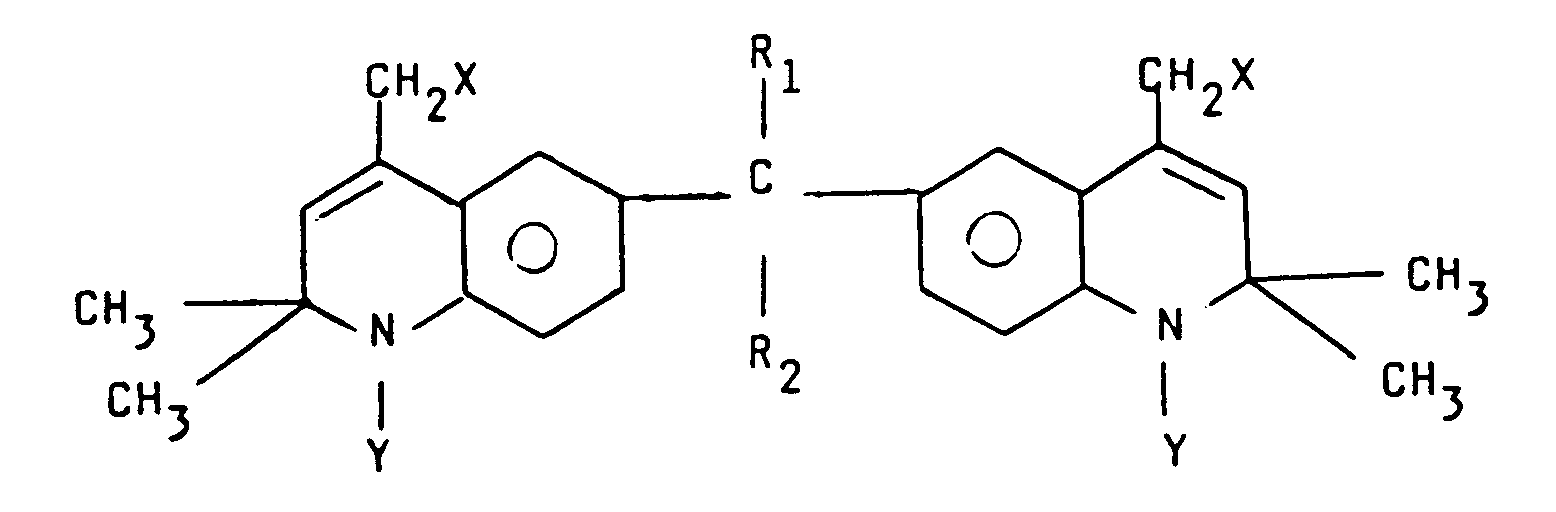
and acid addition salts thereof - wherein
R¹ stands for optionally substituted C₁₋₄ alkyl and
R² stands for optionally substituted C₁₋₂ alkyl,
X stands for hydrogen or SO₃Me - wherein
Me stands for hydrogen or alkali or alkaline earth metal ion, Y stands for hydrogen or acyl.
and acid addition salts thereof - wherein
R¹ stands for optionally substituted C₁₋₄ alkyl and
R² stands for optionally substituted C₁₋₂ alkyl,
X stands for hydrogen or SO₃Me - wherein
Me stands for hydrogen or alkali or alkaline earth metal ion, Y stands for hydrogen or acyl.
2. Compounds as claimed in Claim 1
R¹ stands for optionally substituted C₁₋₄ alkyl and
R² stands for optionally substituted C₁₋₂ alkyl,
X stands for hydrogen and
Y stands for hydrogen.
R¹ stands for optionally substituted C₁₋₄ alkyl and
R² stands for optionally substituted C₁₋₂ alkyl,
X stands for hydrogen and
Y stands for hydrogen.
3. Process for the preparation of the compounds of the general Formula I and acid addition
salts thereof, which comprises condensing 2,2,4-trimethyl-1,2-dihydro-quinoline or a salt threof with a ketone of
the general Formula R₁R₂CO - wherein R₁ and R₂ are as stated above - in the presence
of a catalyst, such as mineral acid (preferably hydrochloric acid), and of a co-catalyst,
such as nitrogen-containing base, preferably triethanol amine, pyridine or aniline,
in a solvent and if desired converting the thus obtained product to an acid addition
salt or setting free the base from the salt and if desired sulfonating and/or acylating
the obtained base.
4. Process as claimed in Claim 3, which comprises performing the condensation in 0-40
%, preferably 10-20 %, of the ketone.
5. Process as claimed in Claim 3, which comprises using the acid, preferably hydrochloric
acid, in a molar ratio of 0.9-2.5 mole, preferably 1.25-1.75 mole compared to the
weight of dihydroquinoline.
6. Pharmaceutical composition comprising as active ingredient a compound as claimed in
Claim 1 or claim 2.
7. Fodder or fodder premix for the treatment of coccidiosis, which comprises a compound
as claimed in claim 1 or Claim 2 next to ionophoric polyether antibiotics or salts
thereof, preferably sodium salts.
8. A method of preserving substances against oxidation, e.g. rubbers, plastics, foods,
fodders or pharmaceutical or veterinary compositions, which comprises incorporating
a compound as claimed in claim 1 or claim 2 into the substance.
9. Substances, e.g. rubbers, plastics, foods, fodders or pharmaceutical or veterinary
substances, including a compound as claimed in claim 1 or claim 2.
10. Use of the compounds of claim 1 or claim 2 in the preparation of a medicament for
treating poisoning, poultry encelophalomalatia, radiation injuries and circulation
disorders or in the preparation of a medicament having coccidiostatic activity and
also containing a coccidiostatic agent.
1. Verbindungen der allgemeinen Formel I
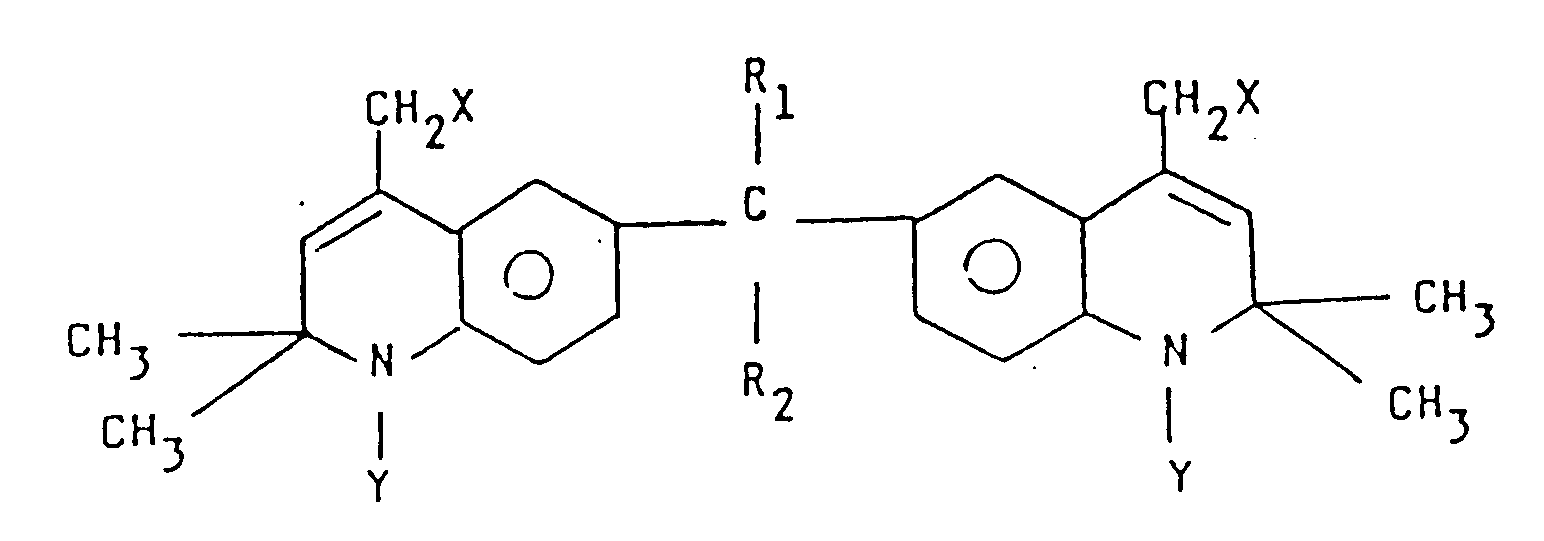
und säureadditionssalze davon, wobei
R¹ für gegebenenfalls substituiertes C₁₋₄ Alkyl und
R² für gegebenenfalls substituiertes C₁₋₂ Alkyl,
X für Wasserstoff oder SO₃Me steht, wobei
Me für Wasserstoff oder ein Alkali- oder Erdalkalimetallion steht,
Y für Wasserstoff oder Acyl steht.
und säureadditionssalze davon, wobei
R¹ für gegebenenfalls substituiertes C₁₋₄ Alkyl und
R² für gegebenenfalls substituiertes C₁₋₂ Alkyl,
X für Wasserstoff oder SO₃Me steht, wobei
Me für Wasserstoff oder ein Alkali- oder Erdalkalimetallion steht,
Y für Wasserstoff oder Acyl steht.
2. Verbindungen nach Anspruch 1 worin
R¹ für gegebenenfalls substituiertes C₁₋₄ Alkyl und
R² für gegebenenfalls substituiertes C₁₋₂ Alkyl steht,
X für Wasserstoff steht, und
Y für Wasserstoff steht.
R¹ für gegebenenfalls substituiertes C₁₋₄ Alkyl und
R² für gegebenenfalls substituiertes C₁₋₂ Alkyl steht,
X für Wasserstoff steht, und
Y für Wasserstoff steht.
3. Verfahren zur Herstellung der Verbindungen der allgemeinen Formel I und der Säureadditionssalze
davon, das umfaßt die Kondensation von 2,2,4-Trimethyl-1,2-dihydrochinolin oder eines
Salzes davon mit einem Keton der allgemeinen Formel R₁R₂CO, wobei R₁ und R₂ wie oben
definiert sind, in der Gegenwart eines Katalysators wie einer Mineralsäure (vorzugsweise
Chlorwasserstoffsäure) und eines Cokatalysators wie einer stickstoffhaltigen Base,
vorzugsweise Triethanolamin, Pyridin oder Anilin, in einem Lösungsmittel, und, wenn
gewünscht, Umwandlung des so erhaltenen Produkts in ein Säureadditionssalz oder Freisetzung
der Base aus dem Salz und, wenn gewünscht, Sulfonierung und/oder Acelierung der erhaltenen
Base.
4. Verfahren nach Anspruch 3, das die Durchführung der Kondensation in 0-40 %, vorzugsweise
10-20 % des Ketons umfaßt.
5. Verfahren nach Anspruch 3, das die Verwendung der Säure, vorzugsweise Chlorwasserstoffsäure,
in einem molaren Verhältnis von 0.9-2.5 Mol, vorzugsweise 1.25-1.75 Mol im Verhältnis
zu dem Gewicht von des Dihydrochinolins umfaßt.
6. Pharmazeutische Zusammensetzung, umfassend als aktiven Inhaltsstoff eine Verbindung
nach Anspruch 1 oder 2.
7. Futtermittel oder Futtermittelvormischung zur Behandlung von Coccidiose, das eine
Verbindung nach Anspruch 1 oder Anspruch 2 neben ionophoren Polyetherantibiotika oder
Salze davon, vorzugsweise Natriumsalze, umfaßt.
8. Verfahren zur Konservierung von Substanzen gegen Oxidation, e.g. Gummi, Kunststoffe,
Nahrungsmittel, Futtermittel oder pharmazeutische oder tiermedizinische Zusammensetzungen,
das das Untermengen einer Verbindung nach Anspruch 1 oder 2 in die Substanz umfaßt.
9. Substanzen, e.g. Gummi, Kunststoffe, Nahrungsmittel, Futtermittel oder pharmazeutische
oder tiermedizinische Substanzen, beinhaltend eine Verbindung nach Anspruch 1 oder
Anspruch 2.
10. Verwendung der Verbindungen nach Anspruch 1 oder Anspruch 2 zur Herstellung eines
Medikaments zur Behandlung von Vergiftungen, Geflügelencelophalomalatia, Strahlungsverletzungen
und Kreislaufschwächen oder zur Herstellung eines Medikaments mit coccidiostatischer
Aktivität, das auch ein coccidiostatisches Mittel enthält.
1. Composés de formule générale 1 :
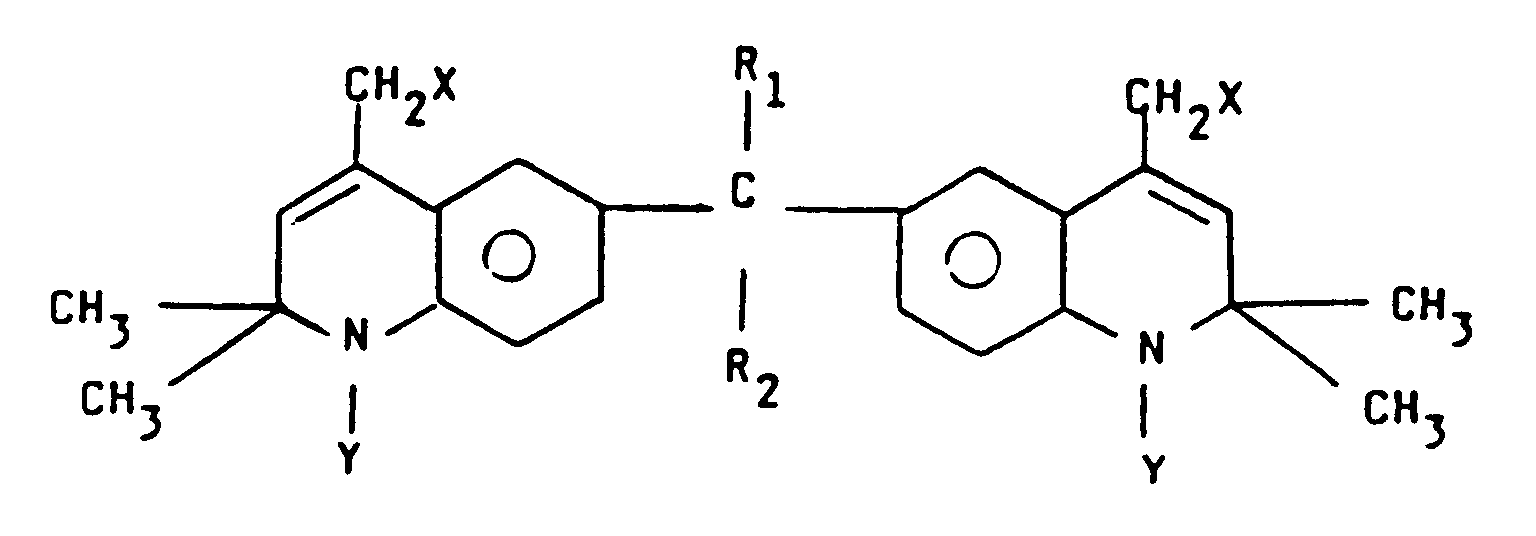
et leurs sels d'addition d'acide, dans laquelle :
R₁ est un groupe alkyle en C₁₋₄ éventuellement substitué et
R₂ est un groupe alkyle en C₁₋₂ éventuellement substitué,
X est un atome d'hydrogène ou un groupe SO₃Me, où Me est un atome d'hydrogène ou un on de métal alcalin ou alcalinoterreux,
Y est un atome d'hydrogène ou un groupe acyle.
et leurs sels d'addition d'acide, dans laquelle :
R₁ est un groupe alkyle en C₁₋₄ éventuellement substitué et
R₂ est un groupe alkyle en C₁₋₂ éventuellement substitué,
X est un atome d'hydrogène ou un groupe SO₃Me, où Me est un atome d'hydrogène ou un on de métal alcalin ou alcalinoterreux,
Y est un atome d'hydrogène ou un groupe acyle.
2. Composés suivant la revendication 1, dans lesquels:
R₁ est un groupe alkyle en C₁₋₄ éventuellement substitué et
R₂ est un groupe alkyle en C₁₋₂ éventuellement substitué,
X est un atome d'hydrogène et
Y est un atome d'hydrogène.
R₁ est un groupe alkyle en C₁₋₄ éventuellement substitué et
R₂ est un groupe alkyle en C₁₋₂ éventuellement substitué,
X est un atome d'hydrogène et
Y est un atome d'hydrogène.
3. Procédé pour la préparation des composés de formule générale l et de leurs sels d'addition
d'acide, qui comprend la condensation de la 2,2,4-triméthyl-1,2-dihydroquinoléine
ou d'un sel de celle-ci, avec une cétone de formule générale R₁R₂CO dans laquelle
R₁ et R₂ sont tels que définis plus haut, en présence d'un catalyseur, comme un acide
minéral (de préférence l'acide chlorhydriquel et d'un co-catalyseur, comme une base
contenant de l'azote, de préférence la triéthanolamine, la pyridine ou l'aniline,
dans un solvant, et si cela est désiré, la conversion du produit ainsi obtenu en un
sel d'addition d'acide ou la libération de la base libre à partir du sel et si cela
est désiré, la sulfonation et/ou l'aculation de la base obtenue.
4. Procédé suivant la revendication 3, qui comprend la réalisation de la condensation
avec 0 à 40%, de préférence 10 à 20% de la cétone.
5. Procédé suivant la revendication 3, qui comprend l'utilisation de l'acide, de préférence
l'acide chlorhydrique, selon un rapport molaire de 0,9 à 2,5 mole, de préférence de
1,25 à 1,75 mole par rapport au poids de la dihydroquinoléine.
6. Composition pharmaceutique comprenant en tant que composant actif, un composé suivant
la revendication 1 ou la revendication 2.
7. Fourrage ou prémélange de fourrage pour le traitement de la coccidiose, qui comprend
un composé suivant la revendication 1 ou la revendication 2, avec des antibiotiques
de type polyéther ionophores ou des sels de ceux-ci, de préférence les sels de sodium.
8. Méthode pour préserver des substances contre l'oxydation, telles que caoutchoucs,
matières plastiques aliments, fourrages ou compositions pharmaceutiques ou vétérinaires,
qui comprend l'incorporation d'un composé suivant la revendication 1 ou la revendication
2 dans la substance.
9. Substances, telles que caoutchoucs, matières plastiques aliments, fourrages ou compositions
pharmaceutiques ou vétérinaires, comprenant un composé suivant la revendication 1
ou la revendication 2.
10. Utilisation des composés suivant la revendication 1 ou la revendication 2 dans la
préparation d'un médicament pour le traitement d'un empoisonnement, de l'encéphalomalacie
de la volaille, des blessures par irradiation et des troubles de la circulation ou
dans la préparation d'un médicament ayant une activité coccidiostatique et contenant
aussi un agent coccidiostatique.