|
(11) | EP 0 316 118 B2 |

| (12) | NEW EUROPEAN PATENT SPECIFICATION |
|
|
| (54) |
Electrode for a vacuum breaker Elektrode für einen Vakuumschalter Elektrode pour un interrupteur sous vide |
|
|
|||||||||||||||||||||||||||||||
BACKGROUND OF THE INVENTION
[0001] This invention concerns a vacuum breaker, and more particuiariy its electrode structure having spirai slots which magnetically drive an arc.
[0002] Figs. 1A and 1B are respectively a plan view and a profile view (partially showing a cross-section) showing an electrode of a conventional vacuum breaker as disclosed in, for example, Japanese Patent Application Lain-Open No. 30174/80.
[0003] This electrode comprises a generally disk-shaped member 10 including a central flat part 1 having contact function and peripheral tapered parts 2 shaped like the vanes of a windmill which have a current-breaking function.
[0004] From the flat part 1 to the outer rim of the tapered parts 2, there are several spiral slots 3 extending outwards and inclined at an angle to the radial direction of the electrode.
[0005] The electrode further comprises an electrode rod 5 connected to the center of the the rear surface (lower surface as seen in Fig. 1B) of the disk-shaped member 10.
[0006] In the vacuum breaker having the electrodes described above, when a pair of electrodes of which the fiat parts 1 are in contact are separated, an arc is set up between the flat parts 1. This arc is driven owing to the current path formed of the electrode, and driven outwards along the electrode's radial direction. The arc so driven reaches the spiral slot 3. and moves along it. At this point, the arc is subject to a composite force composed of the circumferential direction force and radial direction force, and thus rotates the eiectrode surface. When this occurs, the arc rotates over the whole surface of the electrode, and there is thus no local heating of the electrode.
[0007] By increasing the length of the electrode in the circumferential direction, or the diameter of the electrode, increasing the area over which the current flows, the current-breaking capacity of the vacuum breaker can be increased. The width or shape of the spiral slot 3 may also affect the current-breaking capacity. In the reference mentioned above, it is stipulated that for vacuum breakers with a current rating of 8 KA or more, the width of the spiral slot should be at least 0.5 mm.
[0008] In conventional vacuum breakers of the above type, however, it was found that the breaking capacity did not increase linearly with the diameter of the electrode. This was a major obstacle in making vacuum breakers more compact.
[0009] The effects of slot width are discussed in a dissertation by Dipl. -Ing. Friedrich-Wilhelm Behrens entitled "The influence of electrode geometry on the disconnection behaviour of vacuum power switches". The document was submitted on 30th January 1984 to the Faculty for Engineering and Electrical Engineering of the Carolo-Wilhelmina Technical University in Brunswick.
[0010] Under heading 6. 1.2b of the document, when using electrodes having 1mm wide slots, investigations intended to determine the limit disconnection current strength as a function of electrode diameter showed that clogging of the slots reduced the disconnection capacity. This was confirmed by repeating the experiment using electrodes having slot widths of 3mm and 5 mm. It was found that even though enlarging the slot has a negative effect on the quenching properties, the disconnection current strength could be increased using electrodes having wider slots because they were less prone to clogging.
[0011] Figure 31b reproduces and compares the ascertained limit disconnection current strengths for electrodes of 60mm diameter. This illustration gives for three slot widths of 1mm, 3mm, and 5mm the three associated maximum current breaking capabilities. It should however be noted that the Figure shows that the limit disconnection current strength was initially reduced as the slot - width was increased from 1mm to 3mm. Thus this document does not provide information giving a general relationship between the two parameters of slot width and breaking capacity. Neither does it permit optimum slot widths to be selected for a required current breaking capacity.
SUMMARY OF THE INVENTION
[0012] This invention was conceived to solve the above problems. It improves the breaking performance without increasing the diameter of the electrode, and it also aims to provide an electrode for a vacuum breaker with stable breaking performance over all ranges of breaking current.
[0013] In accordance with the present invention there is provided an electrode for a vacuum circuit breaker; said electrode comprising:
[0014] a central flat part serving to establish electrical contact, tapered parts providing a current-breaking function and spiral slots formed in said electrode and inclined with respect to the radial direction; characterised in that the width (L) of at least one of the spiral slots in millimetres is predetermined and defined by the formula 0.0608 x I where I is the rated circuit breaking current (KA) multiplied by the factor (1 + DC component fraction) and the width (L) lies in the range 0.0608 x I x 0.8 to 0.0608 x I x 1.2 but not including an electrode of 60mm outside diameter with a slot width of 1mm, 3mm or 5mm thus derived.
[0015] In another aspect of this invention, a spiral slot has a maximum width Lmax on the outer circumference of the electrode, gradually becoming narrower toward the center, and reaches a minimum width Lmin on the final edge.
[0016] The width of the spiral slot of the electrode is optimized for the required breaking current, and it is thus possible to further improve the breaking performance using conventional electrode diameters.
[0017] In addition, by making the spiral slot width gradually decrease toward the center, stable operation is possible over a wide range of breaking currents.
BRIEF DESCRIPTION OF DRAWINGS
[0018] Figs. 1A and 1B are plan and profile views showing the electrode structure of a conventional vacuum breaker.
[0019] Figs. 2A and 2E are plan and profile views of an electrode in the vacuum breaker of an embodiment of this invention.
[0020] Fig. 3 is a diagram showing the relation of the width of the spiral slot of the electrode to the maximum circuit-breaking current.
[0021] Fig. 4 is a diagram showing the relation between the deviation from the optimum value of spiral slot width of the electrode, and breaking performance.
[0023] Figs. 8A and 8B are plan and profile views of the electrode structure of An electrode for a vacuum breaker in another embodiment of this invention.
DETAILED DESCRIPTION OF THE EMBODIMENTS
[0025] Preferred embodiments of the electrode for a vacuum breaker according to the invention will be described with reference to the figures.
[0026] Figs. 2A and 2B show one embodiment of the electrode for the vacuum breaker of this invention. As illustrated, the electrode comprises a generally disk-shaped member 10 including a flat part 1 with a contact function, there being a recess 4 in the center. The disk-shaped member 10 further includes tapered parts 2 with a breaking function. Several elongated cuts 6 extend along spiral lines centered on the center of the disk-shaped member 10. In the embodiment illustrated, the spiral slots are circular arcs. The elongated cuts are hereinafter called spiral slots. The spiral slots 6 extend, at any part thereof, at an angle to the radial direction of the electrode from the flat part to the outer circumference of the tapered parts 2.
[0027] In the vacuum breaker having the electrodes described above, when a pair of electrodes of which the flat parts 1 are in contact are separated, an arc is set up between them. This arc then rotates over the electrode surface along the spiral slot 6 in the flat part 1 and tapered parts 2.
[0028] When the rotation speed of this arc was observed by an optical device with a high speed camera, it was found that the speed was closely related to the width L of the spiral slot 6 of the electrode. If the width L is too small, the arc jumps over the spiral slot 6 easily, and the force to rotate the arc in the circumferential direction is not strong enough. If on the other hand the width L is too large, the arc takes too long to jump over the spiral slot 6. In both cases, the rotation speed of the arc was too slow. As the magnitude of the speed was related to performance, it was thus established that the width L of the spiral slot 6 has an optimum value.
[0029] The maximum performance for various spiral slot widths L was measured, and the relation between spiral slot width and breaking current shown in Fig. 3 was obtained. From this figure, it was found that the optimum value of the width L of the spiral slot 6 for different values of breaking current is given by:
where I is the rated breaking current (KA) multiplied by the factor (1 + D.C. component fraction).
[0030] The variation of performance was examined with respect to variation of spiral slot width L. From Fig. 3, for example, a spiral slot width of 2.5 mm was taken as optimum for a maximum breaking current of 40 KA. Various electrodes with spiral slot widths differing from this width by± 10%, - 35% and +40% were fabricated, and the maximum breaking current was measured. Fig. 4 shows the results of this measurement. It was found from this figure that for electrodes with a spiral slot width differing by no more than ±10% from the reference optimum width, the performance was not affected; however, when the difference was -35% or +40%, the performance declined.
[0031] The electrode should therefore have spiral slots with dimension and shape which give the best breaking performance depending on the breaking current: and further, any deviation from this optimum value should be within such limits as to ensure that the electrode gives approximately 90% of its ideal performance. From Fig. 4, it was found that the lower limit for the width was 80% of the optimum value, and the upper limit was 120% of this value.
[0034] The permissible values of spiral slot width lie within the minimum and maximum values Lmin, Lmax given by Equations 1 and 2.
[0035] For a vacuum breaker with a rated breaking current of 25 KA and D.C. component fraction of 0.5, the minimum width Lmin of the spiral slot 6 is:
The maximum width Lmax is:
The D.C component fraction lies in the range 0 ∼ 1.
[0036] In the above embodiment, the flat part 1 and tapered parts 2 is made of the same material. But they may be made of different materials. As in Figs. 5A and 5B, for example, the flat part 1 may be made of a contact material A with high breakdown voltage and low surge, and the tapered parts 2 may be made of a circuit breaking contact material B with a high current rating.
[0037] In the above embodiment, the spiral slots 6 extend from the tapered parts 2 to the flat parts 1. But the spiral slots 6 may alternatively present only on the tapered parts 2, as shown in Figs. 6A and 6B, and Figs. 7A and 7B.
[0038] By optimizing the width of the spiral slot in the flat part 1 and tapered parts 2, or in the tapered parts 2 alone, which drives the arc depending on the breaking current. the breaking capacity may be increased and a more compact vacuum breaker can be obtained.
[0039] Although the width of the spiral slot can thus be optimized to the breaking current as described above, it is generally recognized that the vacuum breaker can perform not only at one current value but also at other current values. In other words, for a vacuum breaker with a certain current rating must nevertheless be able to break the circuit at lesser current values, and must have a stable operation over the whole range of breaking currents. In order that it can cope with the full range of breaking currents, it has been formed desirable that the width of the spiral slot should have a gradual variation. More specifically, the width of the slot should be decreased gradually toward the inner extremity. If for instant a breaker having a current rating of 25 KA is required to operate effectively down to 10 KA, the siot should have a width Lmin given below:
[0040] As shown is Figs. 8A and 8B, if therefore the width L1 of the spiral slot 7 in the flat part 1 and the tapered parts 2 in the center of the electrode is Lmin, becoming wider towards the outside, and the width L2 on the edge of the electrode is Lmax (= 2.7 mm for the 25 KA grade device described above), the electrode will have stable breaking performance over the whole range of breaking currents.
[0041] In this embodiment of the invention, several spiral slots 7 were provided with widths ranging continuously from 0.5 mm or more to the optimum value for the breaking current. The rotation speed of the arc can thus be increased, the breaking performance of the electrode can be further improved, and the latter can be stabilized over the whole range of breaking currents.
[0042] In the embodiment of Figs. 8A and 8B, the flat part 1 and tapered parts 2 are made of the same material. They may however be made of different materials; as in Figs. 9A and 98, for example, the flat part 1 may be made of a high breakdown voltage, low surge electrode material, while the tapered parts 2 may be made of a high breaking performance material.
[0043] Also, the spiral slot 7 may be provided only in the tapered parts 2 of an electrode wherein flat part 1 and tapered parts 2 are made of the same material as in Figs. 10A and 10B, or of an electrode wherein they are made of different materials as in Figs. 11A and 11B.
[0044] Thus, by providing the electrode with a spiral slot which drives the arc magnetically, and of which the dimensions are optimized for the required breaking current, as shown in Figs. 9A and 9B to Figs. 11A and 11B, its current-oreaking performance can not only be improved, but can also be stabiiized over a wide range of breaking currents.
1. An electrode for a vacuum circuit breaker; said electrode comprising:
a central flat part (1) serving to establish electrical contact, tapered parts (2) providing a current-breaking function and spiral slots (6,7) formed in said electrode and inclined with respect to the radial direction; characterised in that the width (L) of at least one of the spiral slots (6,7) in millimetres is predetermined and defined by the formula 0.0608 x I where I is the rated circuit breaking current (KA) multiplied by the factor (1 + DC component fraction) and the width (L) lies in the range 0.0608 x I x 0.8 to 0.0608 x I x 1.2 but not including an electrode of 60mm outside diameter with a slot width of 1mm, 3mm or 5mm thus derived.
a central flat part (1) serving to establish electrical contact, tapered parts (2) providing a current-breaking function and spiral slots (6,7) formed in said electrode and inclined with respect to the radial direction; characterised in that the width (L) of at least one of the spiral slots (6,7) in millimetres is predetermined and defined by the formula 0.0608 x I where I is the rated circuit breaking current (KA) multiplied by the factor (1 + DC component fraction) and the width (L) lies in the range 0.0608 x I x 0.8 to 0.0608 x I x 1.2 but not including an electrode of 60mm outside diameter with a slot width of 1mm, 3mm or 5mm thus derived.
2. An electrode for a vacuum breaker as set forth in claim 1, wherein the dimension and
shapes of the spiral slots (6,7) are the same.
3. An electrode for a vacuum breaker as set forth in claim 1, wherein the dimensions
and shapes of several spiral slots (6,7) are the same.
4. An electrode for a vacuum breaker as set forth in any one of claims 1 to 3, wherein
said spiral slots (6,7) are formed only in said peripheral tapered parts (2).
5. An electrode for a vacuum breaker as set forth in any one of claims 1 to 4, wherein
said central flat part (1) and said peripheral tapered parts (2) are made of the same
material.
6. An electrode for a vacuum breaker as set forth in any one of claims 1 to 4, wherein
said central flat part (1) and said peripheral tapered parts (2) are made of different
materials.
7. An electrode as set forth in any one of claims 1 to 6, wherein the width of said at
least one spiral slot (6,7) is a maximum on the outer edge of one of said peripheral
tapered parts (2) and gradually decreases towards the centre to a minimum.
8. An electrode as set forth in claim 7, wherein the minimum width Lmin of said spiral slot (6,7) conforms to the condition;

1. Elektrode für einen Vakuum-Leistungsschalter, welche aufweist:
ein zentrales flaches Teil (1), das zur Herstellung eines elektrischen Kontaktes dient, sich verjüngende Teile (2), die eine Stromunterbrechungsfunktion besitzen und spiralig verlaufende Schlitze (7), die in der Elektrode ausgebildet und in bezug auf die Radialrichtung geneigt sind,
dadurch gekennzeichnet,
daß die Breite (L) wenigstens eines der spiralig verlaufenden Schlitze (6,7) in Millimetern vorbestimmt und definiert ist durch die Formel
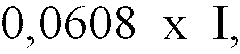
worin I der Unterbrechungsnennstrom (KA) ist, multipliziert mit dem Faktor (1 + Gleichstromkomponenten-Bruchteil), und die breite (L) im Bereich 0,0608 x I x 0,8 bis 0,0608 x I x 1,2 liegt, aber nicht eine Elektrode von 60 mm Außendurchmesser mit einer so abgeleiteten Schlitzbreite von 1 mm, 3 mm oder 5 mm einschließt.
ein zentrales flaches Teil (1), das zur Herstellung eines elektrischen Kontaktes dient, sich verjüngende Teile (2), die eine Stromunterbrechungsfunktion besitzen und spiralig verlaufende Schlitze (7), die in der Elektrode ausgebildet und in bezug auf die Radialrichtung geneigt sind,
dadurch gekennzeichnet,
daß die Breite (L) wenigstens eines der spiralig verlaufenden Schlitze (6,7) in Millimetern vorbestimmt und definiert ist durch die Formel
worin I der Unterbrechungsnennstrom (KA) ist, multipliziert mit dem Faktor (1 + Gleichstromkomponenten-Bruchteil), und die breite (L) im Bereich 0,0608 x I x 0,8 bis 0,0608 x I x 1,2 liegt, aber nicht eine Elektrode von 60 mm Außendurchmesser mit einer so abgeleiteten Schlitzbreite von 1 mm, 3 mm oder 5 mm einschließt.
2. Elektrode für einen Vakuum-Leistungsschalter nach Anspruch 1,
worin die Abmessungen und Formen der spiralig verlaufenden Schlitze (6,7) dieselben sind.
worin die Abmessungen und Formen der spiralig verlaufenden Schlitze (6,7) dieselben sind.
3. Elektrode für einen Vakuum-Leistungschalter nach Anspruch 1,
worin die Abmessungen und Formen von mehreren spiralig verlaufenden Schlitzen (6,7) dieselben sind.
worin die Abmessungen und Formen von mehreren spiralig verlaufenden Schlitzen (6,7) dieselben sind.
4. Elektrode für einen Vakuum-Leistungsschalter nach einem der Ansprüche 1 bis 3,
worin die spiralig verlaufenden Schlitze (6,7) nur in den peripheren sich verjüngenden Teilen (2) ausgebildet sind.
worin die spiralig verlaufenden Schlitze (6,7) nur in den peripheren sich verjüngenden Teilen (2) ausgebildet sind.
5. Elektrode für einen Vakuum-Leistungsschalter nach einem der Ansprüche 1 bis 4,
worin der zentrale flache Teil (1) und die peripheren sich verjüngenden Teile (2) aus demselben Material bestehen.
worin der zentrale flache Teil (1) und die peripheren sich verjüngenden Teile (2) aus demselben Material bestehen.
6. Elektrode für einen Vakuum-Leistungsschalter nach einem der Ansprüche 1 bis 4,
worin der zentrale flache Teil (1) und die peripheren sich verjüngenden Teile (2) aus unterschiedlichen Materialien bestehen.
worin der zentrale flache Teil (1) und die peripheren sich verjüngenden Teile (2) aus unterschiedlichen Materialien bestehen.
7. Elektrode nach einem der Ansprüche 1 bis 6,
worin die Breite des mindestens einen spiralig verlaufenden Schlitzes (6,7) an der Außenkante eines der pheripheren sich verjüngenden Teile (2) am größten ist und allmählich zur Mitte hin auf einen geringsten Wert abnimmt.
worin die Breite des mindestens einen spiralig verlaufenden Schlitzes (6,7) an der Außenkante eines der pheripheren sich verjüngenden Teile (2) am größten ist und allmählich zur Mitte hin auf einen geringsten Wert abnimmt.
8. Elektrode nach Anspruch 7,
worin die geringste Breite Lmin des spiralig verlaufenden Schlitzes (6,7) der Bedingung

genügt.
worin die geringste Breite Lmin des spiralig verlaufenden Schlitzes (6,7) der Bedingung
genügt.
1. Electrode pour interrupteur sous vide, ladite électrode comprenant :
une partie centrale plane (1) servant à établir le contact électrique, des parties coniques (2) assurant une fonction de coupure de courant et des fentes spiralées (6,7) formées dans ladite électrode et inclinées par rapport à la direction radiale, caractérisée en ce que la largeur (L) d'au moins une des fentes spiralées (6,7), en millimètres, est prédéterminée et définie par la formule 0,0608 x 1, dans laquelle I est le courant de déclenchement nominal (KA) multiplié par le facteur (1+ fraction de la composante de courant continu) et la largeur (L) se situe dans la plage 0,0608 x I x 0,8 à 0,0608 x I x 1,2 mais excluant une électrode de 60 mm de diamètre externe avec une largeur de fente ainsi obtenue de 1 mm, 3 mm ou 5 mm.
une partie centrale plane (1) servant à établir le contact électrique, des parties coniques (2) assurant une fonction de coupure de courant et des fentes spiralées (6,7) formées dans ladite électrode et inclinées par rapport à la direction radiale, caractérisée en ce que la largeur (L) d'au moins une des fentes spiralées (6,7), en millimètres, est prédéterminée et définie par la formule 0,0608 x 1, dans laquelle I est le courant de déclenchement nominal (KA) multiplié par le facteur (1+ fraction de la composante de courant continu) et la largeur (L) se situe dans la plage 0,0608 x I x 0,8 à 0,0608 x I x 1,2 mais excluant une électrode de 60 mm de diamètre externe avec une largeur de fente ainsi obtenue de 1 mm, 3 mm ou 5 mm.
2. Electrode pour interrupteur sous vide selon la revendication 1, dans laquelle les
dimensions et formes des fentes spiralées (6,7) sont les mêmes.
3. Electrode pour interrupteur sous vide selon la revendication 1, dans laquelle les
dimensions et formes de plusieurs fentes spiralées (6,7) sont les mêmes.
4. Electrode pour interrupteur sous vide selon l'une quelconque des revendications 1
à 3, dans laquelle lesdites fentes spiralées (6,7) sont formées uniquement dans lesdites
parties périphériques coniques (2).
5. Electrode pour interrupteur sous vide selon l'une quelconque des revendications 1
à 4, dans laquelle ladite partie centrale plane (1) et lesdites parties périphériques
coniques (2) sont fabriquées à partir du même matériau.
6. Electrode pour interrupteur sous vide selon l'une quelconque des revendications 1
à 4, dans laquelle ladite partie centrale plane (1) et lesdites parties périphériques
coniques (2) sont fabriquées à partir de matériaux différents.
7. Electrode pour interrupteur sous vide selon l'une quelconque des revendications 1
à 6, dans laquelle la largeur de ladite au moins une fente spiralée (6,7) est maximale
sur le côté externe desdites parties périphériques coniques (2) et décroît graduellement
en direction du centre jusqu'à un maximum.
8. Electrode pour interrupteur sous vide selon la revendication 7, dans laquelle la largeur
minimale (Lmin) de ladite fente spiralée (6,7) satisfait à la condition :
