| (19) |
 |
|
(11) |
EP 0 318 042 B1 |
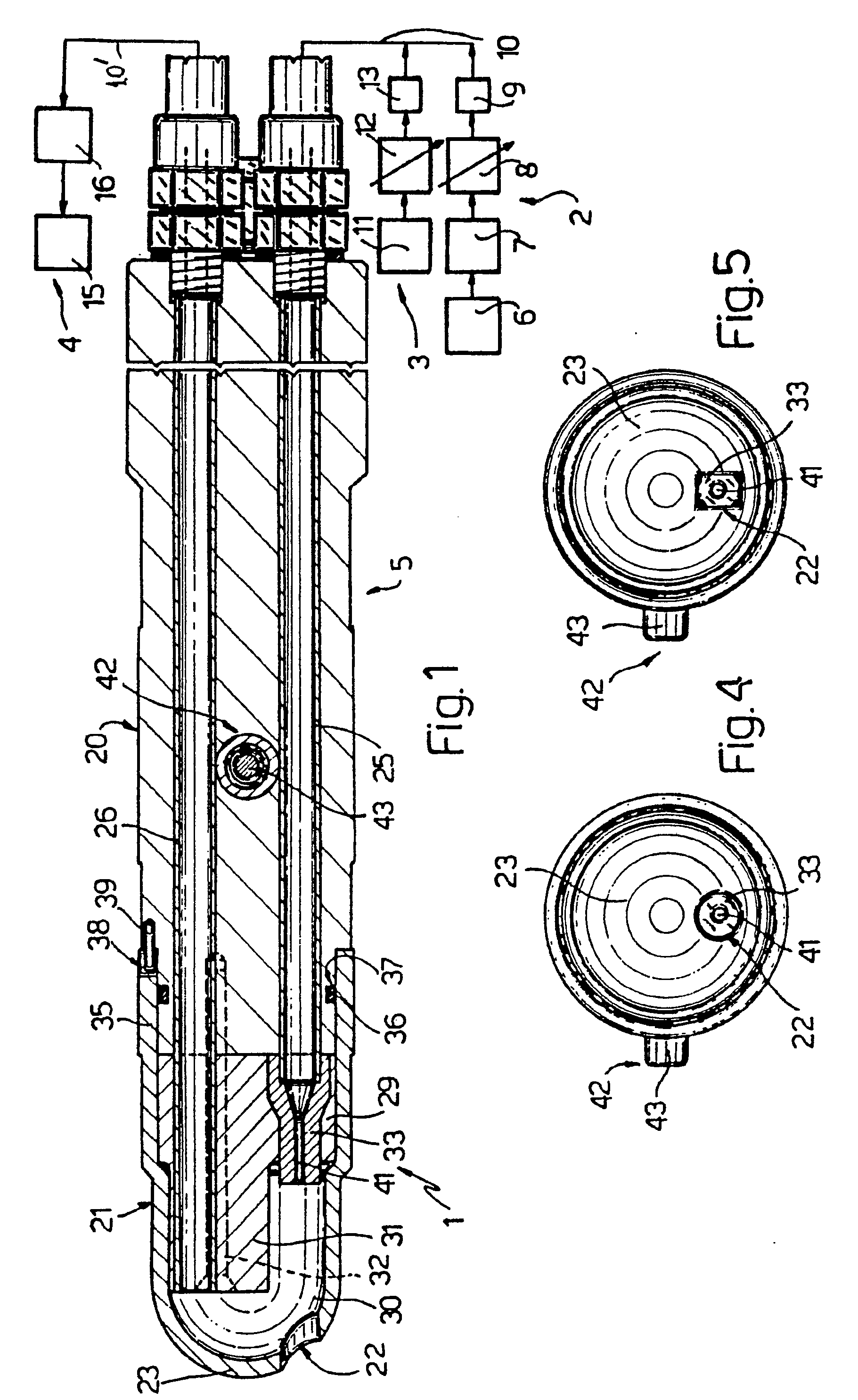
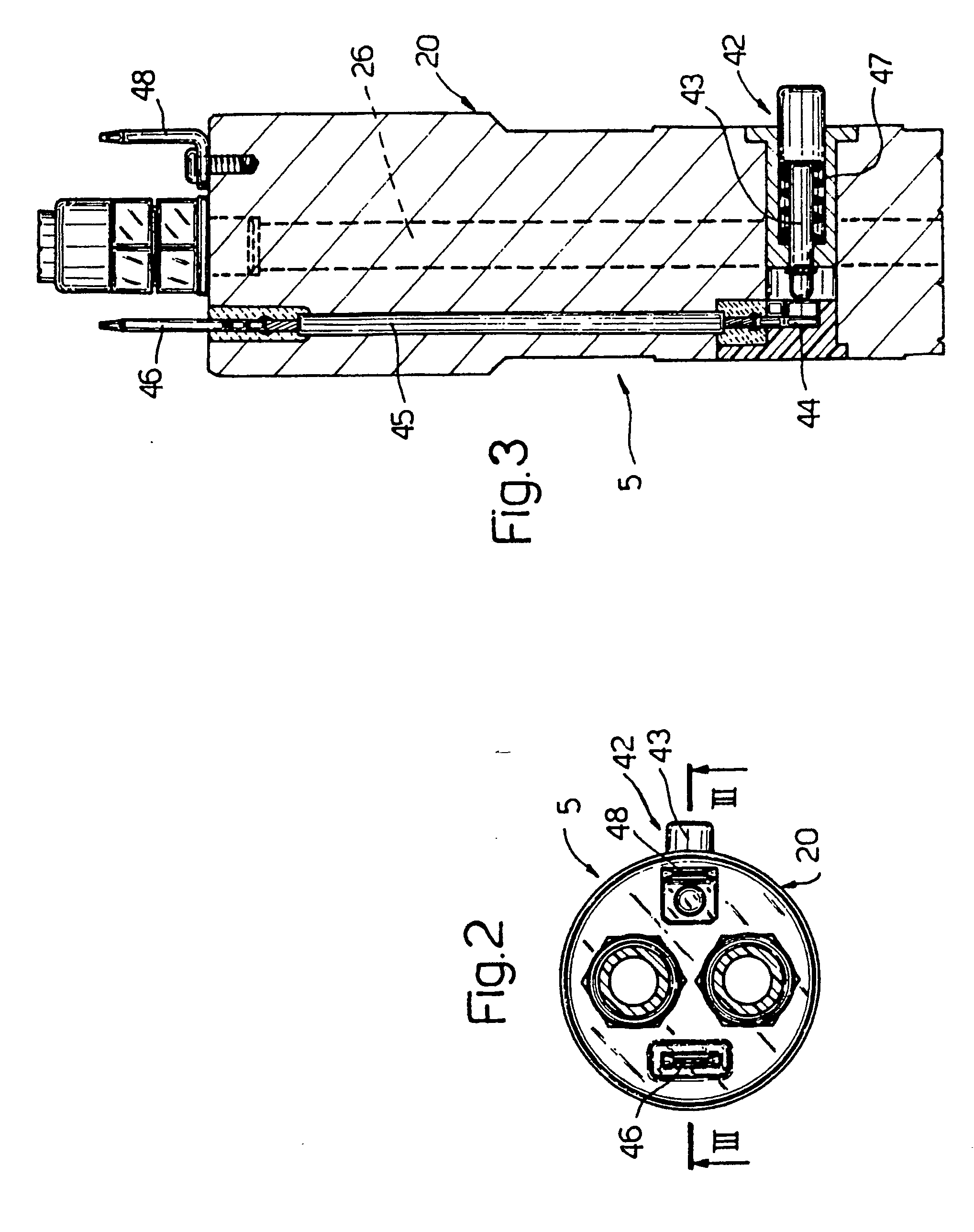
| (12) |
EUROPEAN PATENT SPECIFICATION |
| (45) |
Mention of the grant of the patent: |
|
17.07.1991 Bulletin 1991/29 |
| (22) |
Date of filing: 25.11.1988 |
|
| (51) |
International Patent Classification (IPC)5: A61B 17/32 |
|
| (54) |
Adjustable apparatus for removing surface portions of human tissue
Einstellbare Vorrichtung zum Entfernen von Oberflächenteilen des menschlichen Gewebes
Dispositif réglable pour éliminer des portions superficielles de tissu humain
|
| (84) |
Designated Contracting States: |
|
AT BE CH DE ES FR GB GR IT LI LU NL SE |
| (30) |
Priority: |
27.11.1987 IT 5384587 U
|
| (43) |
Date of publication of application: |
|
31.05.1989 Bulletin 1989/22 |
| (73) |
Proprietors: |
|
- Molinari, Lorenzo
I-10146 Torino (IT)
- Ginebri, Otello
I-10100 Torino (IT)
|
|
| (72) |
Inventor: |
|
- Molinari, Lorenzo
I-10146 Torino (IT)
|
| (74) |
Representative: Boggio, Luigi et al |
|
STUDIO TORTA S.r.l.,
Via Viotti, 9
10121 Torino
10121 Torino (IT) |
| (56) |
References cited: :
EP-A- 0 258 901
US-A- 1 752 664
US-A- 4 488 330
US-A- 4 757 814
|
IT-A- 1 184 922
US-A- 3 085 573
US-A- 4 560 373
|
|
| |
|
|
|
|
| |
|
| Note: Within nine months from the publication of the mention of the grant of the European
patent, any person may give notice to the European Patent Office of opposition to
the European patent
granted. Notice of opposition shall be filed in a written reasoned statement. It shall
not be deemed to
have been filed until the opposition fee has been paid. (Art. 99(1) European Patent
Convention).
|
[0001] The present invention relates to hand tools and apparatus for controlled removal
of surface portions of human tissue. More particularly, the present invention relates
to a hand tool for removing surface portions of human tissue by superficial abrasion
caused by a stream of a mixture of air with at least one granular abrasive substance
striking on the surface of the tissus to be removed, the said tool comprising an elongated
manipulative body housing a supply tube for the said mixture and a collection tube
for the purpose of sucking-in both the said mixture and the removed portions of the
said tissue, and an operating head secured to the said manipulative body at the distal
end thereof and housing the terminal portions of the said tubes, the said head being
provided with a throughhole intemally communicating with the free ends of said terminal
portions so that, by keeping in contact the said throughhole with the said surface,
the said mixture is caused to strike the said surface.
[0002] It is known from the US-A-4,560,373 a surgical nozzle apparatus for performing such
operations as dissection, resection and cutting of undesired tissue by means of a
jet of pressurized fluid, thus replacing the conventional knives. The jet is supplied
through an injection tube which is coaxial with a suction nozzle, both housed in an
elongated body of a hand tool, whereas a collection pipe departing from the nozzle
is not housed in this body. Therefore this tool results rather cumbersome and unadapted
to create a fluid stream for the abrasion of the superficial portion of the tissue.
[0003] The object of the present invention is that of providing for removal of surface layers
of human tissue in an adjustable manner, which will be easy to use and does not require
for its construction the use of high technology components.
[0004] The said object is achieved by the hand tool according to the invention, which is
characterized by the fact that the said throughhole is provided in a wall portion
inclined with respect to the longitudinal axis of the said head and is offset with
respect to the said axis, and that the said throughhole is aligned with the terminal
portion of the said supply tube.
[0005] For a better understanding of the present invention a preferred embodiment is described
hereinafter purely by way of non-limitative example and with reference to the attached
drawings, in which :
Figure 1 is a schematic partially sectioned view of apparatus formed according to
the present invention ;
Figure 2 is a side view from the right of a detail of Figure 1 ;
Figure 3 is a section taken on the line III-111 of Figure 2;
Figure 4 is a side view from the left of the above-mentioned detail of Figure 1 ;
and
Figure 5 is a side view from the left of an equivalent form to the detail of Figure
4.
[0006] With particular reference to Figure 1, apparatus for controlled removal of portions
of human tissue by the controlled application of abrasive substances is generally
indicated with the reference numeral 1.
[0007] The pre-eminent utilisation of the apparatus 1 is envisaged for effecting abrasions
of different extent and depth of portions of human skin.
[0008] Purely by way of non-limitative example, the apparatus 1 could be utilised for removing
portions of human tissue in such a way as to obtain aesthetic improvements in the
following cases : hypotrophic or hypertrophic sunken scars consequent on surgical
operations or recent or old burns, or of various nature both recent and of old date
(for example scarring resulting from acne) ; cheloids ; hyperpigmentated cutaneous
dyschromia; senile lentigo, gravidic or oestroprogestinic chloasma, post inflammatory
melanodermy or melandoermy from photo sensitising agents, etc ; small surface roughnesses
on the face ; tears both of the "striae cutis rubrae" type and of the pearly type
etc.
[0009] The apparatus 1 essentially comprises :
pressurised fluid generator means 2, conveniently generating compressed air;
abrasive substance supply means 3, supplying, for example, microcrystals of quartz,
metal, dust or derivatives of aluminium (for example corundum), possibly having different
grain size diameters ;
suction means 4; and
a tool 5 constituting the instrument manipulated by the medical operator to remove
the said portions of tissue.
[0010] The pressurised fluid generator means 2 are essentially constituted by a compressor
6 which maintains under pressure air contained within a reservoir 7, a pressure regulator
8 connected in series with an output from the reservoir 7, and a solenoid valve 9
which allows the air under pressure to flow out along the duct 10.
[0011] The supply means 3 comprise a reservoir 11 connected to the duct 10 by means of a
flow regulator 12 and a solenoid valve 13.
[0012] The suction means 4 are essentially constituted by a suction duct 10', a suction
pump 15, and a collection reservoir 16 connected thereto.
[0013] The tool 5 has a substantially cylindrical structure and is constituted by a cylindrical
body 20 surmonted by a bell-like element 21 having a bottom wall 23 delimited by a
pair of spherical surfaces. A portion of the bottom wall 23, inclined with respect
to the longitudinal axis of the element 21, is provided with a throughhole 22, which
is thus disposed offset from the axis of the element 21. In use, the wall 23 is laid
over the surface of the tissue to be subjected to treatment in such a way that the
hole 22 faces the specific region in which the said tissue portions must be removed.
Through this hole 22 the said abrasive substances transit under the thrust of the
compressed air provided by the pressurised fluid generator means 2, causing removal
of the portions of tissue in the amout desired by the operator.
[0014] The cylindrical body 20, conveniently made of electrically conductive material, houses
two longitudinal parallel tubes 25, 26 which have respective first ends connected
to the duct 10 and the suction duct 10' respectively, and respective second ends,
opposite the first ends, which open into a chamber 30 essentially delimited by the
bell-like element 21, by a block 31 fixed to the body 20 by means of a screw 32 and
supporting the second end of the tube 26, and by a nozzle 33 maintained in position
around the second end of the tube 26 by the block 31.
[0015] It is seen in particular that the block 31 has a substantially cylindrical structure
and a first end surface which engages a head surface of the body 20 and an opposite
base surface defining, with the respective surface of the bottom wall 23 of the element
21, a portion of the chamber 30 in the form of a spherical cap. Moreover, it is seen
that the block 31 has a recessed portion 29 housing the said nozzle 33. In this way
the distance between the nozzle 33 and the hole 22 is greater than the distance between
this latter and the tube 26, and this makes the suction action exerted by the pump
15 particularly effective.
[0016] Given the notable abrasion which the said reducing substances can exert on the internal
surfaces of the element 21 and the tubes 25, 26 and on the nozzle 33, particularly
strong materials have been used for the production of these components, for example
tungsten steel for the element 21, special steel for the tubes 25, 26 and cemented
carbides, for example tungsten carbide and others, known as "WIDIA" (registered trade
mark) for the nozzle 33.
[0017] The rim of the side wall 35 of the bell 21 establishes a sealed coupling with a corresponding
facing surface of the body 20 by means of an elastic ring 36 housed within an annular
groove 37 in the body 20. Further, the element 21 establishes with this body 20 an
unequivocal angular coupling by reason of its seat 38 which engages a respective peg
39 extending peripherally in the longitudinal direction of the body 20. The reason
for this is to maintain the throughhole 22 and a duct 41 of the nozzle 33 on the same
axis for the purpose of permitting the abrasive substances to strike, in use, with
greater effectiveness against the surfaces of the tissue subjected to treatment.
[0018] With particular reference to Figure 3, it is seen that the cylindrical body 20 supports
an electric switch 42, essentially constituted by a conductive pin 43 and a conductive
plate 44 connected, by means of a cable 45, to an electrical connector 46 fixed at
the end of the body 20 on the end opposite that supporting the bell- shape element
21. In particular, the pin 43 is mounted transversely with respect to the body 20
and is movable, against the action exerted by a coil spring 47, between a rest position
in which electrical contactwith the plate 44 is not established and a working position
in which such electrical contact is established. It is further observed that the body
20 has a further electrical connector 48 fixed thereto defining, with the connector
46 mentioned above, the terminals of the push button 84, the function of which is
that of causing, in a manner not illustrated, the solenoid valves 9 and 13 and the
suction pump 15 to be enabled.
[0019] Finally with particular reference to Figure 4, it is seen that the throughhole 22
has in plan a circular section. In another possible equivalent embodiment adapted
for example, to particular working conditions, this hole could have a rectangular
section (Figure 5). In use, the abrasive substances, in the required quantity adjusted
by means of the flow regulator 12, are conveyed by the air under pressure, also predetermined
by means of the pressure stat 8, from the duct 10 to the throughhole 22 by the tube
25, the nozzle 33 and the chamber 30.
[0020] The delivery of the abrasive substances takes place under the control of the operator
who preliminarily positions the tool 5 in such a way that the throughhole 22 faces
the region to be subjected to treatment, after which he presses the pushbutton 42
to cause excitation of the solenoid valves 9 and 13 and supply to the suction pump
15.
[0021] These substances strike the region of tissue facing the hole 22 causing an amount
of abrasion desired by the operator and consequently removing surface portions of
this tissue. Subsequently the abrasive substances and the portions of tissue removed
which lie over the above-mentioned zone are sucked by the pump 15 through the tube
26 and conveyed to the interior of the reservoir 16.
[0022] The apparatus formed according to the present invention has numerous advantages.
[0023] First of all, and of fundamental importance, is the possibility of adjusting the
pressure of the air and the quantity of abrasive substances utilised, being able in
this way to obtain an abrasion of the tissue by a desired amount
[0024] Alignement of the exit duct of the abrasive substances with the hole 22 makes the
action of these substances particularly effective, whilst the suction exerted by the
pump 15 is likewise efficient because of the positioning of the end of the tube 26
close proximity to the hole 22. The abrasive substances are therefore almost entirely
recovered thus avoiding any unwanted dispersion.
[0025] Replacement of the element 21 in the case of the necessity of utilising a hole 22
of different shape or size from that mounted on the tool 5 is particularly simple
and immediate.
[0026] Control of the functioning operation of the apparatus 1 by the pushbutton 42 supported
directly on the tool 5 makes the apparatus particularly manageable.
[0027] The particular shape and hemisphere of the head portion of the element 21 facilitates
positioning of the hole 22 even over zones which are difficult to gain access to (wrinkles
at the root of the nose etc) allowing the apparatus to be used over a wide range of
use.
[0028] It is further seen that the treatment which the apparatus is able to perform is gentle
and produces a massage of the treated zone, likewise encouraging the circulation of
blook and the lymphatic circulation, essential for the reconstruction of the cutaneous
tissue.
[0029] Finally, it is clear that the apparatus 1 described above can have modifications
and variations introduced thereto without departing from the present invention.
1. A hand tool for removing surface portions of human tissue by superficial abrasion
caused by a stream of a mixture of air with at least one granular abrasive substance
striking on the surface of the tissue to be removed, the said tool comprising an elongated
manipulative body (20) housing a supply tube (25, 33) for the said mixture and a collection
tube (26) for the purpose of sucking-in both the said mixture and the removed portions
of the said tissue, and an operating head (21) secured to the said manipulative body
(20) at the distal end thereof and housing the terminal portions (33) of the said
tubes (25, 33 ; 26), the said head (21) being provided with a throughhole (22) internally
communicating with the free ends of said terminal portions (33) so that, by keeping
in contact the said throughhole (22) with the said surface, the said mixture is caused
to strike the said surface, characterized by the fact that the said throughhole (22)
is provided in a wall portion (23) inclined with respect to said longitudinal axis
of the said head (21) and is offset with respect to the said axis, and that the said
throughhole (22) is aligned with the terminal portion (33) of the said supply tube
(25, 33).
2. A hand tool according to Claim 1, characterized by the fact that the terminal portion
of the said supply tube (25, 33) includes a nozzle adapted to convey the said mixture
toward the said throughhole (22).
3. A hand tool according to Claim 2, characterized by the fact that the distance between
the free end of the said nozzle and the said throughhole (22) is greater than the
distance between this latter and the free end of the terminal portion of the said
collection tube (26).
4. A hand tool according to Claim 2 or Claim 3, characterized by the fact that the
said nozzle is made of material particularly resistant to abrasion by the said abrasive
substance.
5. A hand tool according to Claim 4, characterized by the fact that the material of
which the said nozzle is formed is a compound of cemented carbides with a predominance
of tungsten carbides.
6. A hand tool according to any preceeding Claim, characterized by the fact that the
said tubes (25, 33 ; 26) are rectilinear and parallel to each other, and that the
said body (20) has an essentially cylindrical shape and houses the remaining portions
(25, 26) of said tubes, the said head being formed of a bell-shaped element (21) which
closes the said body (20) and which carries the said throughhole (22).
7. A hand tool according to Claim 6, characterized by the fact that the said bell-shaped
body (21) establishes kith the said body (20) an unequivocal angular coupling and
fluid-tight seal.
8. A hand tool according to Claim 7, characterized by the fact that between the said
body (20) and the said bell-shaped element (21) there is interposed a resilient sealing
ring (36).
9. A hand tool according to Claim 7 or Claim 8, characterized by the fact that the
said body (20) and the said bell-shaped element (21) have respective coupling means
(39, 38) cooperating with one another to establish the said unequivocal angular coupling.
10. Apparatus for removing surface portions of human tissue by superficial abrasion
caused by a stream of a mixture of air with at least one granular abrasive substance
striking on the surface of the tissue to be removed, comprising a hand tool (5) to
be applied to the said surface, first supply means (2) for supplying the said air,
second supply means (3) for supplying the said abrasive substances, suction means
(4), and duct means (10,10') for conveying the said mixture from the said supply means
(2, 3) through the said tool (5) to the said suction means (4), the said tool comprising
a manipulative body (20) housing a supply tube (25, 33) for conveying the said mixture
and a collection tube (26) for the purpose of sucking-in both the said mixture and
the removed portions of the said tissue, and an operating head (21) secured to the
said manipulative body (20) at the distal end thereof and housing the terminal portions
(33) of the said tubes (25, 33; 26), the said head (21) being provided with a throughhole
(22) internally communicating with the free ends of said terminal portions (33) so
that, by keeping in contact the said throughhole (22) with the said surface, the said
mixture is caused to strike the said surface, characterized by the fact that the free
ends of the other portions of the said tubes (25, 33 ; 26) are connected to the said
duct means (10,10') and that the said throughhole (22) is provided in a wall portion
(23) inclined with respect to the longitudinal axis of the said head (21) and is offset
with respect to the said axis, the said throughhole (22) being aligned with the terminal
portion (33) of the said supply tube (25, 33).
11. Apparatus according to Claim 10, characterized by the fact that the said first
supply means (2) include a pressurized airgeneratormeans (6), and the said suction
means (4) include a suction pump (15) and a collection reservoir (16) connected thereto
for collecting the said removed portions of tissue.
12. Apparatus according to Claim 11, characterized by the fact that the said pressurized
air generator means (6), the said second supply means (3), and the said suction means
(4) include respective electrical means for enabling operation, and by the fact that
the said tool (5) supports a push button (42) adapted to control the said operation
enabling means.
13. Apparatus according to Claim 12, characterized by the fact that the said electrical
operation means of the said pressurized air generator means (6) and of the said second
supply means (3) are essentially consituted by respective solenoid valves (9, 13).
14. Apparatus according to any preceeding Claim, characterized by the fact that the
said abrasive substances are preferably constituted by quartz crystals and/or metal
powders and/or aluminium derivatives such as corundum.
1. Handwerkzeug zum Entfernen von Oberflächenteilen menschlichen Gewebes durch Oberflächenabrieb
mittels eines strömenden Gemisches aus Luft und zumindest einem körnigen Scheuermittel,
welches auf die Oberfläche des zu entfernenden Gewebes auftrifft, wobei dieses Werkzeug
einen langgestreckten Griffkörper (20) mit einem darin untergebrachten Zufuhrrohr
(25, 33) fürdas erwähnte Gemisch und mit einem darin untergebrachten Sammelrohr (26)
zum Einsaugen des erwähnten Gemisches und der entfernten Teile des erwähnten Gewebes
und einen am Griffkörper (20) an dessen distalem Ende festgelegten Arbeitskopf (21)
mit darin untergebrachten Endbereichen (33) der Rohre (25, 33; 26) aufweist und der
Arbeitskopf (21) einen im Inneren mit den freien Enden der erwähnten Endbereiche (33)
in solcher Weise kommunizierenden Durchlaß (22) aufweist, daß bei Kontakt des erwähnten
Durchlasses (22) mit der erwähnten Oberfläche bewirkt wird, daß das erwähnte Gemisch
auf die erwähnte Oberfläche auftrifft, dadurch gekennzeichnet, daß der Durchlaß (22)
in einem zur Längsachse des Arbeitskopfes (21) geneigten Wandbereich (23) des Arbeitskopfes
vorgesehen und gegenüber der erwähnten Achse versetzt ist und daß der Durchlaß (22)
mit dem Endbereich (33) des Zufuhrrohres (25, 33) fluchtet.
2. Handwerkzeug nach Anspruch 1, dadurch gekennzeichnet, daß der Endbereich des Zufuhrrohres
(25, 33) eine Düse aufweist, welche das erwähnte Gemisch gegen den erwähnten Durchlaß
(22) fördert.
3. Handwerkzeug nach Anspruch 2, dadurch gekennzeichnet, daß der Abstand zwischen
dem freien Ende der Düse und dem Durchlaß (22) größer ist als der Abstand zwischen
diesem Durchlaß und dem freien Ende des Endbereiches des Sammelrohres (26).
4. Handwerkzeug nach Anspruch 2 oder Anspruch 3, dadurch gekennzeichnet, daß die Düse
aus einem gegenüber dem Scheuermittel besonders abriebfesten Material gefertigt ist.
5. Handwerkzeug nach Anspruch 4, dadurch gekennzeichnet, daß das Material, aus welchem
die Düse gefertigt ist, ein Material aus ausgefällten Carbiden, darunter vorwiegend
Wolframcarbiden, ist.
6. Handwerkzeug nach irgendeinem vorhergehenden Anspruch, dadurch gekennzeichnet,
daß die erwähnten Rohre (25, 33 ; 26) geradlinig und parallel zueinander verlaufen
und daß der Griffkörper (20) im wesentlichen zylindrische Form besitzt und die übrigen
Teile (25, 26) der erwähnten Rohre aufnimmt, wobei der Arbeitskopf von einem glockenförmigen
Teil (21) gebildet ist, welcher den Griffkörper (20) abschließt und den erwähnten
Durchlaß (22) aufweist.
7. Handwerkzeug nach Anspruch 6, dadurch gekennzeichnet, daß der glockenförmige Teil
(21) mit dem Griffkörper (20) eine eindeutige Winkelkupplung und flüssigkeitsdichte
Abdichtung bildet.
8. Handwerkzeug nach Anspruch 7, dadurch gekennzeichnet, daß zwischen dem Griffteil
(20) und dem glockenförmigen Teil (21) ein elastischer Dichtring (36) angeordnet ist.
9. Handwerkzeug nach Anspruch 7 oder nach Anspruch 8, dadurch gekennzeichnet, daß
der Griffkörper (20) und derglockenförmige Teil (21) mit zugehörigen Kupplungsorganen
(39, 38) ausgestattet sind, welche miteinander so zusammenwirken, daß sich die eindeutige
(verdrehsichere) Winkelkupplung ergibt
10. Vorrichtung zum Entfernen von Oberflächenteilen menschlichen Gewebes durch Oberflächenabrieb
mittels eines strömenden Gemisches aus Luft und zumindest einem körnigen Scheuermittel,
welches auf die Oberfläche des zu entfernenden Gewebes auftrifft, mit einem an die
erwähnte Oberfläche anzulegenden Handwerkzeug (5), einer ersten Zufuhreinrichtung
(2) zum Zuführen der Luft, einer zweiten Zufuhreinrichtung (3) zum Zuführen des Scheuermittels,
einer Absaugeinrichtung (4) und Leitungen (10, 10') zum Fördern des erwähnten Gemisches
von den Zufuhreinrichtungen (2, 3) und durch das erwähnte Handwerkzeug (5) zur erwähnten
Absaugeinrichtung (4), wobei das Handwerkzeug einen Griffkörper (20) mit einem darin
untergebrachten Zufuhrrohr (25, 33) zum Zuführen des erwähnten Gemisches und mit einem
darin untergebrachten Sammelrohr (26) zum Einsaugen des erwähnten Gemisches und der
entfernten Teile des erwähnten Gewebes und einen am Griffkörper (20) an dessen distalem
Ende festgelegten Arbeitskopf (21) mit darin untergebrachten Endbereichen (33) der
Rohre (25, 33 ; 26) aufweist und derArbeitskopf einen im Inneren mit den freien Enden
der erwähnten Endbereiche (33) in solcher Weise kommunizierenden Durchlaß (22) aufweist,
daß bei Kontakt des erwähnten Durchlasses (22) mit der erwähnten Oberfläche bewirkt
wird, daß das erwähnte Gemisch auf die erwähnte Oberfläche auftrifft, dadurch gekennzeichnet,
daß die freien Enden der anderen Bereiche der erwähnten Rohre (25, 33; 26) an die
erwähnten Leitungen (10, 10') angeschlossen sind und daß der Durchlaß (22) in einem
zur Längsachse des Arbeitskopfes (21) geneigten Wandbereich (23) des Arbeitskopfes
vorgesehen und gegenüber der erwähnten Achse versetzt ist, wobei der Durchlaß (22)
mit dem Endbereich (33) des Zufuhrrohes (25, 33) fluchtet.
11. Vorrichtung nach Anspruch 10, dadurch gekennzeichnet, daß die erste Zufuhreinrichtung
(2) einen Druckluftgenerator (6) aufweist und die Absaugeinrichtung (4) eine Saugpumpe
(15) und einen daran angeschlossenen Auffangbehälter (16) zum Auffangen der erwähnten
entfernten Gewebeteile aufweist.
12. Vorrichtung nach Anspruch 11, dadurch gekennzeichnet, daß der Druckluftgenerator
(6), die zweite Zufuhreinrichtung (3) und die Absaugeinrichtung (4) je für sich mit
eine Betätigung ermöglichenden elektrischen Einrichtungen ausgestattet sind und daß
das Handwerkzeug (5) einen Druckknopf (42) aufweist, welcher die erwähnten Einrichtungen
zur Betätigung steuert.
13. Vorrichtung nach Anspruch 12, dadurch gekennzeichnet, daß die elektrischen Betätigungseinrichtungen
für den Druckluftgenerator (6) und für die zweite Zufuhreinrichtung (3) im wesentlichen
von zugehörigen Magnetventilen (9, 13) gebildet sind.
14. Vorrichtung nach irgendeinem vorhergehenden Anspruch, dadurch gekennzeichnet,
daß die Scheuermittel vorzugsweise von Quarzkristallen und- /oder Metallpulvern und/oderAluminiumderivaten
wie Korund gebildet sind.
1. Outil à main pour éliminer des portions de surface de tissus humains par abrasion
superficielle causée par un jet d'un mélange d'air avec plus ou moins une substance
granulaire abrasive frappant la surface du tissu à éliminer, cet outil à main comprenant
un corps allongé pour la manipulation renfermant un tube d'amenée (25, 33) pour le
mélange et un tube de collection (26) pour aspirer le mélange et les parties éliminées
du tissus, et une tête d'opération (21) fixée au corps de manipulation (20) à son
extrémité distale, et renfermant les parties terminales (33) des tubes (25, 33, 26),
cette tête (21) présentant un perçage (22) communiquant de façon interne avec les
extrémités libres des parties terminales (33) en sorte que, en maintenant le contact
du perçage (22) avec la surface, le mélange va frapper la surface, caractérisée en
ce que le perçage (22) est réalisé dans une partie de paroi (23) inclinée par rapport
à l'axe longitudinal de la tête (21), et est décalé par rapport à cet axe, et en ce
que le perçage (22) est aligné avec la partie terminale (33) du tube d'amenée (25,
33).
2. Outil à main selon la revendication 1, caractérisé en ce que la partie terminale
du tube d'amenée (25, 33) contient une buse destinée à convoyer le mélange en direction
du perçage (22).
3. Outil à main selon la revendication 2, caractérisé en ce que la distance entre
l'extrémité libre de la buse et le perçage (22) est plus grande que la distance entre
ce dernier et l'extrémité libre de la partie terminale du tube de collection (26).
4. Outil à main selon la revendication 2 ou 3, caractérisé en ce que la buse est faite
dans un matériau particulièrement résistant à l'abrasion par la substance abrasive.
5. Outil à main selon la revendication 4, caractérisé en ce que le matériau dans lequel
est formé la buse est un composé de carbures cémantés avec une prédominance de carbures
de tungstène.
6. Outil à main selon l'une des revendications précédentes, caractérisé en ce que
les tubes (23, 33, 26) sont rectilignes et parallèles entre eux, et en ce que le corps
(20) a une forme essentiellement cylindrique et renferme les parties restantes (25,
26) des tubes, la tête ayant la forme d'un organe (21) en forme de cloche qui ferme
le corps (20) et qui porte le perçage (22).
7. Outil à main selon la revendication 6, caractérisé en ce que le corps en forme
de cloche (21) établit avec le corps (20) un couplage angulaire non-équivoque et un
joint étanche.
8. Outil à main selon la revendication 7, caractérisé en ce qu'entre le corps (20)
et l'organe en forme de cloche (21) est interposé un joint d'étanchéité annulaire
élastique (36).
9. Outil à main selon la revendication 7 ou 8, caractérisé en ce que le corps (20)
et l'organe en forme de cloche (21) présente des moyens de couplage respectifs (39,
38) coopérant l'un avec l'autre pour établir le couplage angulaire non-équivoque.
10. Appareil pour éliminer des portions de surface de tissus humains par abrasion
superficielle causée par un jet d'un mélange d'air avec au moins une substance granulaire
abrasive frappant la surface du tissu à éliminer, comprenant un outil à main (5) appliqué
sur la surface, des premiers moyens d'amenée (2) pour amener l'air, des deuxièmes
moyens d'amenée (3) pour amener la substance abrasive, des moyens de succion (4) et
des moyens de transport (10, 10') pour convoyer le mélange depuis les moyens d'amenée
(2, 3) à travers l'outil (5) aux moyens de succion (4), cet outil à main comprenant
un corps pour la manipulation renfermant un tube d'amenée (25, 33) pour convoyer le
mélange et un tube de collection (26) pour aspirer le mélange et les parties éliminées
du tissus, et une tête d'opération (21) fixée au corps de manipulation (20) à son
extrémité distale, et renfermant les parties terminales (33) des tubes (25, 33, 26),
cette tête (21) présentant un perçage (22) communiquant de façon interne avec les
extrémités libres des parties terminales (33) en sorte que, en maintenant le contact
du perçage (22) avec la surface, le mélange va frapper la surface, caractérisée en
ce que les extrémités libres des autres parties des tubes (25, 33) sont connectées
aux moyens de transport (10, 10') et en ce que le perçage (22) est réalisé dans une
partie de paroi (23) inclinée par rapport à l'axe longitudinal de la tête (21) et
est décalé par rapport à cet axe, et en ce que le perçage (22) est aligné avec la
partie terminale (33) du tube d'amenée (25, 33).
11. Appareil selon la revendication 10, caractérisé en ce que les premiers moyens
d'amenée (2) comprennent des moyens de génération d'air comprimé (6) et les moyens
de succion (4) comprennent une pompe à succion (15) et un réservoir de collection
(16) qui est connecté pour collecter les portions de tissus éliminées.
12. Appareil selon la revendication 11, caractérisé par le fait que les moyens de
génération d'air comprimé (6), les deuxième moyens d'amenée (3) et les moyens de succion
(4) comprennent des moyens électriques respectifs pour les faire fonctionner et en
ce que l'outil (5) comprend un bouton poussoir (42) permettant le contrôle des moyens
d'actionnement.
13. Appareil selon la revendication 12, caractérisé par le fait que les moyens d'actionnement
électriques des moyens de génération d'air comprimé (6) et des deuxièmes moyens d'amenée
(3) sont essentiellement constitués de valves solénoïdes respectives (9.13).
14. Appareil selon l'une des revendications précédentes, caractérisé en ce que les
substances abrasives sont de préférence constituées par des cristaux de quartz et/ou
des poudres métalliques et/ou des dérivés d'aluminium tel que le corundum.