|
(11) | EP 0 322 892 B1 |

| (12) | EUROPEAN PATENT SPECIFICATION |
|
|
| (54) |
Freeze-dried pharmaceutical preparations for parenteral use Gefriergetrocknete pharmazeutische Zubereitung für die parenterale Anwendung Préparation pharmaceutique lyophilisée pour l'usage parentéral |
|
|
|||||||||||||||||||||||||||||||
| Note: Within nine months from the publication of the mention of the grant of the European patent, any person may give notice to the European Patent Office of opposition to the European patent granted. Notice of opposition shall be filed in a written reasoned statement. It shall not be deemed to have been filed until the opposition fee has been paid. (Art. 99(1) European Patent Convention). |
[0001] This invention relates to freeze-dried pharmaceutical preparations containing antibacterial quinolinecarboxylic acid derivatives which are characterized by their excellent stability against light and heat and are readily soluble.
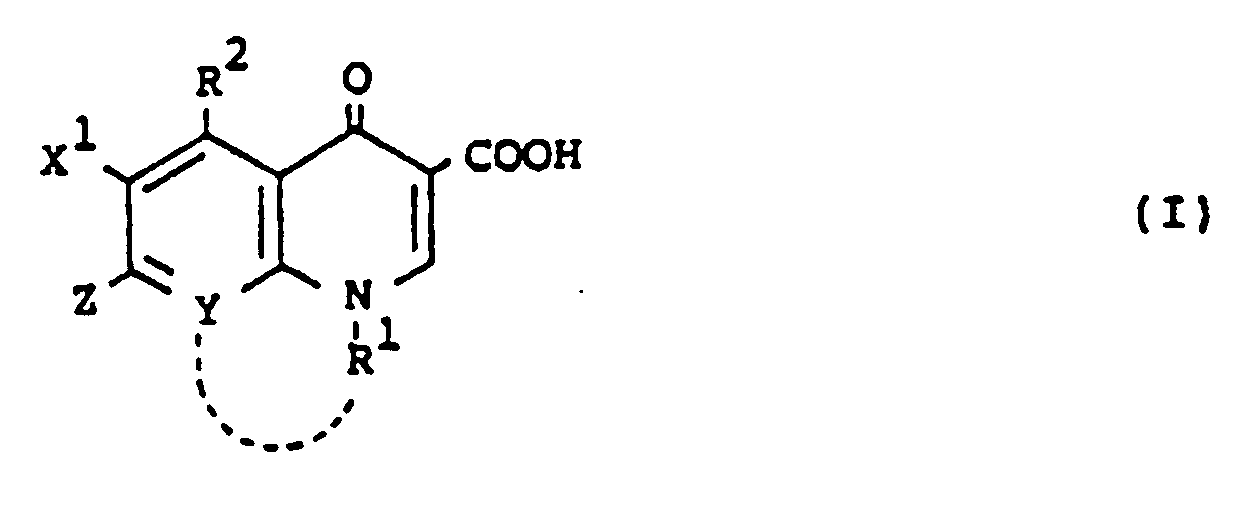
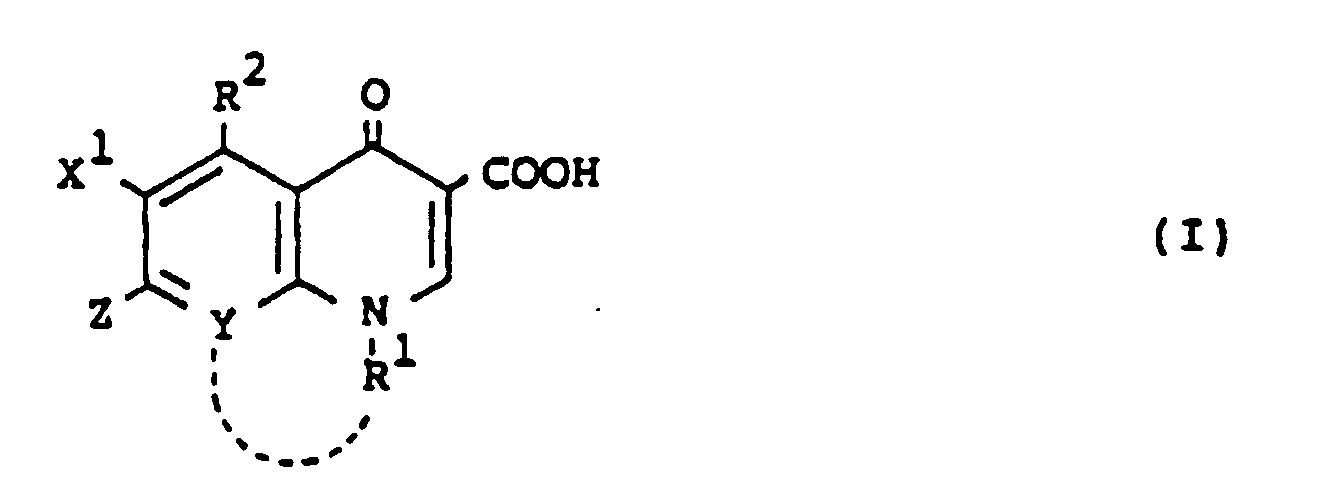
[0002] In this invention, the objective compounds have the following general formula (I),
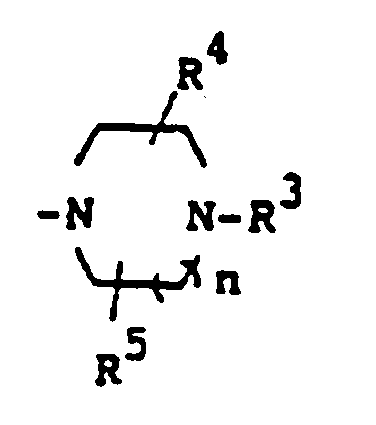
wherein R¹ represents a cycloalkyl group having 3 to 6 carbon atoms, straight or branched lower (hereinafter "lower" means 1-3 carbon atoms) alkyl group, haloalkyl group, alkenyl group, hydroxyalkyl group, lower alkylamino group or phenyl group which may be substituted, R² represents a hydrogen atom, halogen atom, nitro group or amino group, X¹ represents a halogen atom, Y represents a =CX²- (wherein X² represents a halogen atom, alkyl group or alkoxy group, or X² and R¹ work together to be -O-CH₂CH(CH₃)-, -CH₂CH₂CH(CH₃)- or -CH₂CH(CH₃)-), Z represents
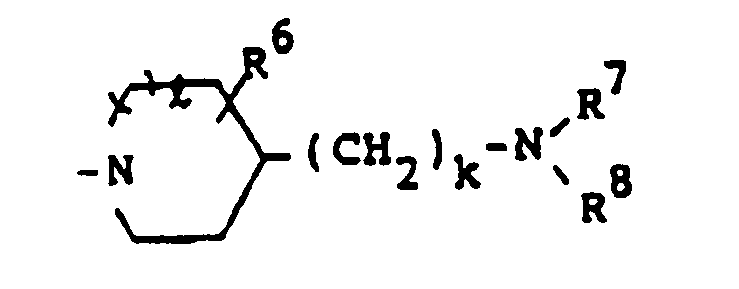
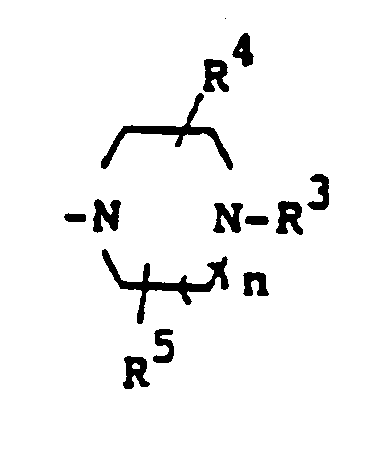
(wherein n is 1 or 2, R³ represents a hydrogen atom or lower alkyl group, R⁴ and R⁵ each represent independently a hydrogen atom, lower alkyl group, aminoalkyl group, hydroxyalkyl group or phenyl group) or
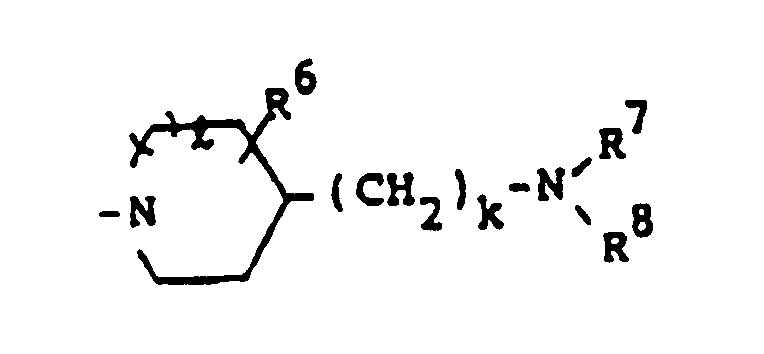
(wherein k is 0 or 1, ℓ is 0, 1 or 2, R⁶ represents a hydrogen atom, halogen atom, lower alkyl group or hydroxy group, R⁷ represents a hydrogen atom, lower alkyl group, haloalkyl group or hydroxyalkyl group, R⁸ represents a hydrogen atom or lower alkyl group); the hydrates or the pharmaceutically acceptable acid addition or alkali salts thereof. It has been known that most of these compounds have relatively low solubility in water. There have been a variety of studies to improve the solubility. For instance, a solution of antibacterial quinolinecarboxylic acid derivatives could be prepared by adding lactic acid or the like (JP-A- 60-94910 which corresponds to EP-A-0 138 018) or alkali (JP-A- 61-180771 which corresponds to EP-A-0 187 315). While, even after the dissolution of the compounds in water was achieved, it was difficult to develop a stable pharmaceutical solution proper for parenteral use, because the solution easily discolored under exposure to light or by heating and formed some decomposed materials. Therefore, a pharmaceutical solution containing antibacterial quinolinecarboxylic acid derivative proper for parenteral use has not been provided by the conventional manner.
[0003] The present inventors have extensively studied on stable pharmaceutical preparations containing antibacterial quinolinecarboxylic acid derivatives which are stable against light or heat and finally reached to the present invention.
[0004] That is, the present inventors prepared, for the first time, freeze-dried pharmaceutical preparations containing antibacterial quinolinecarboxylic acid derivatives and found such freeze-dried pharmaceutical preparations are extremely stable against either light or heat and have good solubility in water for parenteral use. Thus, the preparations of the present invention have solved the problems hitherto known.
[0005] The freeze-dried pharmaceutical preparations of the present invention can be prepared as follows.
[0006] The quinolinecarboxylic acid derivative is dissolved by adding acid, alkali and/or water, immediately followed by refrigeration under -40 °C. It is then freeze-dried under a vacuous pressure using vacuum pump to give a fine cake.
[0007] The acid is preferably lactic acid, acetic acid or hydrochloric acid, and the alkali is preferably sodium hydroxide or potassium hydroxide. The concentration of quinolinecarboxylic acid derivative in the solution to be refrigerated may be within a range from 0.1 to 30 w/v%, preferably from 5 to 15 w/v%. If the concentration is less than 0.1 w/v%, the volume of the solution becomes to be large and a large vessel or a large injector will be required, which brings an inconvenience for use. On the other hand, if the concentration is higher than 30 w/v%, freeze-drying becomes difficult since the solution cannot be freezed easily by the refrigeration.
[0008] The solution may be sterilized by filtration through a membrane filter (pore size 0.22 µm) and then be filled into vials. The solution in vials is cooled to below -40 °C. As a general procedure, the vials are directly cooled by contacting with a refrigerant so as to obtain a rapid cooling. The cooling condition can be selected according to the ability of refrigerant and/or refrigerator, but no limitation is needed with respect to the cooling condition. Whatever condition to refrigerate below -40 °C is applicable.
[0009] The freeze-drying can be performed according to a general procedure under a vacuous pressure using vacuum pump and mild elevation of temperature. As for the freeze-drying method, the conventional heat shock method or a method characterized by adding a solvent can also be applied. After drying is completed, the vials are sealed, for example, with rubber stopper.
[0010] The freeze-dried pharmaceutical preparations of the present invention may be added with some medically usable adjuvants such as excipients, adjuvant to give the isotonicity, pH adjuster, stabilizer, solubilizer, buffering agents and preservatives. The excipients or the adjuvant to give the isotonicity may be xylitol, D-sorbitol, D-mannitol, fructose, glucose, sucrose, lactose, gelatin. The pH adjuster may also be lactic acid, acetic acid, hydrochloric acid, sodium hydroxide or potassium hydroxide.
[0011] The following examples illustrate the preferred embodiments of the present invention,
In the following examples, quinolinecarboxylic acid derivatives used are 6,8-difluoro-1-(2-fluoroethyl)-1,4-dihydro-7-(4-methyl-1-piperazinyl)-4-oxo-3-quinolinecarboxylic acid (hereinafter referred to as AM-833), 9-fluoro-2,3-dihydro-3-methyl-10-(4-methyl-1-piperazinyl)-7-oxo-7H-pyrido[1,2,3-de][1,4]-benzoxazine-6-carboxylic acid (hereinafter referred to as OFLX), 7-(3-amino-1-pyrrolidinyl)-8-chloro-1-cyclopropyl-6-fluoro-1,4-dihydro-4-oxo-3-quinolinecarboxylic acid (hereinafter referred to as AM-1091), 1-ethyl-6,8-difluoro-1,4-dihydro-7-(3-methyl-1-piperazinyl)-4-oxo-3-quinolinecarboxylic acid (hereinafter referred to as NY-198), 7-(3-amino-1-pyrrolidinyl)-1-(2,4-difluorophenyl)-6-fluoro-1,4-dihydro-4-oxo-1,8-naphthyridine-3-carboxylic acid p-toluenesulfonic acid hydrate (hereinafter referred to as T-3262).
Example 1
[0012] 10 g of powdered AM-833 was dissolved in 50 ml of 1 M lactic acid, the pH was adjusted to 4.5 with 1 N sodium hydroxide solution, and filled with distilled water for injection to 100 ml. This solution was filtered through a membrane filter (pore size 0.22 µm) and each 2 ml of the filtrate was filled into the clean and sterilized vials. These vials were refrigerated by cooling to -42 °C, and dried under the vacuous pressure. The temperature of the shelf was kept at -20 °C during the initial stage (upto 22 hours) of drying. Under the vacuous pressure, the temperature was elevated to 20 °C and kept for 24 hours, and it was further elevated to 40 °C and kept for 6 hours to give the freeze-dried pharmaceutical preparation containing AM-833.
Example 2
[0013] 15 g of powdered AM-833 was dissolved in 75 ml of 1 M lactic acid, pH was adjusted to 4.0 with 1 M sodium hydroxide solution, and filled with distilled water for injection to 100 ml. This solution was filtered through a membrane filter (pore size 0.22 µm), and each 1.33 ml of the filtrate was filled into the clean and sterilized vials. These vials were refrigerated by cooling to -40 °C, and dried under the vacuous pressure in a similar manner as example 1 to give the freeze-dried pharmaceutical preparation containing AM-833.
Example 3
[0014] 10 g of powdered AM-833 and 10 g of glucose were dissolved in 50 ml of 1 M lactic acid, pH was adjusted to 4.5 with 1 M sodium hydroxide solution, and filled with distilled water for injection to 100 ml. This solution was filtered through a membrane filter (pore size 0.22 µm), and each 2 ml of the filtrate was filled into the clean and sterilized vials. These vials were refrigerated by cooling to -40 °C. The temperature was elevated to -10 °C, and kept for 5 hours, Then, it was cooled again to -40 °C and dried under the vacuous pressure. The temperature of the shelf was kept at -20 °C during the initial stage (upto 66 hours) of drying. Under the vacuous pressure, the temperature was elevated to 20 °C and kept for 5 hours to give the freeze-dried pharmaceutical preparation containing AM-833.
Example 4
[0015] 10 g of powdered AM-833 was dissolved in 55 ml of 1 N sodium hydroxide solution, and the pH was adjusted to 10.1 with 1 M lactic acid, and filled with distilled water for injection to 100 ml. This solution was filtered through a membrane filter (pore size 0.22 µm), and each 2 ml of the filtrate was filled into the clean and sterilized vials. These vials were refrigerated by cooling to -44 °C and dried under the vacuous pressure. The temperature of the shelf was kept at -20 °C during the initial stage (upto 22 hours) of drying. Under the vacuous pressure, the temperature was elevated to 20 °C and kept for 26 hours, and it was further elevated to 40 °C and kept for 20 hours to give the freeze-dried pharmaceutical preparation containing AM-833.
Example 5
[0016] 5 g of powdered OFLX was dissolved in 25 ml of 1 M lactic acid and filled with distilled water for injection to 100 ml. This solution was filtered through a membrane filter (pore size 0.22 µm), and each 2 ml of the filtrate was filled into the clean and sterilized vials. These vials were cooled to -40 °C and dried under the vacuous pressure in a similar manner as example 1 to give the freeze-dried pharmaceutical preparation containing OFLX.
Example 6
[0017] 5 g of powdered AM-1091 was dissolved in distilled water for injection and made up to 100 ml with that. This solution was filtered through a membrane filter (pore size 0.22 µm), and each 2 ml of the filtrate was filled into the clean and sterilized vials. These vials were refrigerated by cooling to -40 °C and dried under the vacuous pressure. The temperature of the shelf was kept at -20 °C during the initial stage (upto 5 hours) of drying. Subsequently, the temperature was elevated to 20 °C and kept for 63 hours for drying under the vacuous pressure to give the freeze-dried pharmaceutical preparation containing AM-1091.
Example 7
[0018] 5 g of powdered AM-1091 was dissolved in 25 ml of 1 N sodium hydroxide solution and filled with distilled water for injection to 100 ml. This solution was filtered through a membrane filter (pore size 0.22 µm), and each 2 ml of the filtrate was filled into the clean and sterilized vials. These vials were refrigerated by cooling to -40 °C. The temperature was elevated to -10°C and kept for 5 hours. Then, it was cooled again to -40 °C, and dried under the vacuous pressure. The temperature of the shelf was kept at -20 °C during the initial stage (upto 6 hours) of drying. Subsequently, the temperature was elevated to 20 °C and kept for 21 hours for drying under the vacuous pressure to give the freeze-dried pharmaceutical preparation containing AM-1091.
Example 8
[0019] 1 g of powdered NY-198 was dissolved in 20 ml of acetic acid and filled with distilled water for injection to 50 ml. This solution was filtered through a membrane filter (pore size 0.22 µm), and each 2 ml of the filtrate was filled into the clean and sterilized vials. These vials were refrigerated by cooling to -40 °C and dried under the vacuous pressure in a similar manner as example 14 to give the freeze-dried pharmaceutical preparation containing NY-198.
Stability test
[0020] The freeze-dried pharmaceutical preparations obtained were evaluated by the stability test, under the light (fluorescence lamp, 1,200,000 Lux·hours) and heat (50 °C, 3 months) as compared with the solution prepared by using same components.
[0021] Results are shown in table 1. These freeze-dried pharmaceutical preparations of the present invention have excellent properties, particularly with respect to stability as compared with those of the solutions.
Table 1
| Result of the stability of the freeze-dried pharmaceutical preparations of this inventions and the solutions | ||||
| Examples No. | light (fluorescence lamp) | heat (50 °C, 3 months) | ||
| freeze-dried | solution | freeze-dried | solution | |
| 1 | no changes | yellowish | no changes | yellowish |
| 5 | no changes | slightly yellowish | no changes | no changes |
| 6 | no changes | precipitate of light brown | no changes | no changes |
| 8 | no changes | slightly brown | no changes | no changes |
Claims for the following Contracting State(s): BE, CH, DE, FR, GB, IT, LI, NL, SE
1. A freeze-dried pharmaceutical preparation containing the compound of the following
formula (I),
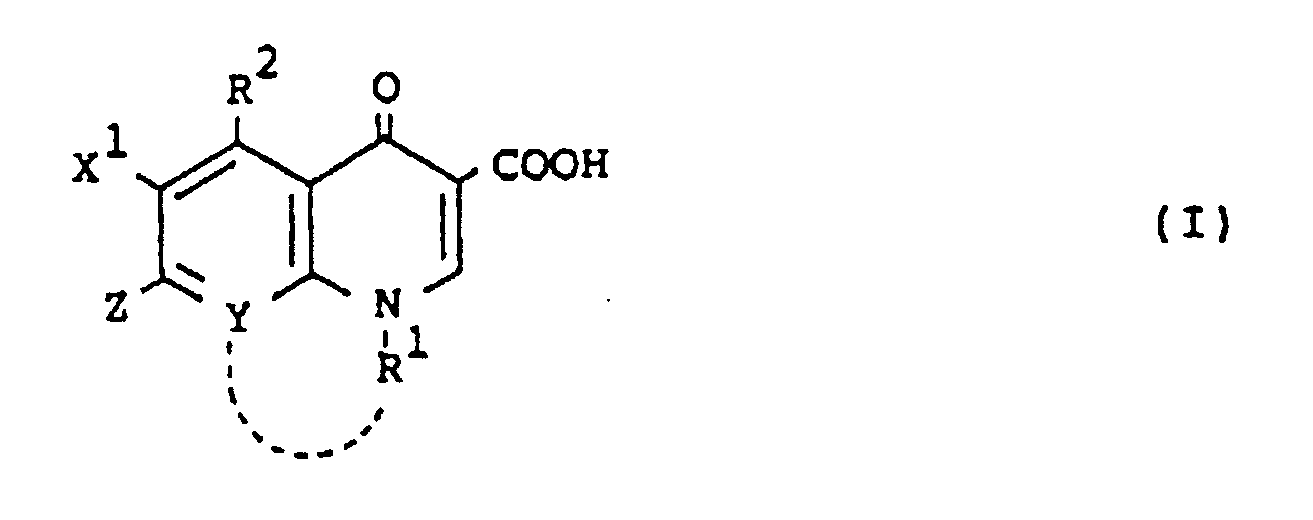
wherein R¹ represents a cycloalkyl group having 3 to 6 carbon atoms, straight or branched lower alkyl group, haloalkyl group, alkenyl group. hydroxyalkyl group, lower alkylamino group or phenyl group which may be substituted, R² represents a hydrogen atom, halogen atom, nitro group or amino group, X¹ represents a halogen atom, Y represents =CX²- (wherein X² represents a halogen atom, alkyl group or alkoxy group, or X² and R¹ work together to be -O-CH₂CH(CH₃)-, -CH₂CH₂CH(CH₃)- or -CH₂CH(CH₃)-), Z represents
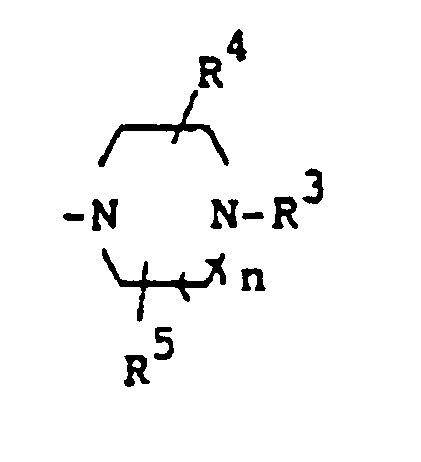
(wherein n is 1 or 2, R³ represents a hydrogen atom or lower alkyl group, R⁴ and R⁵ each represent independently a hydrogen atom, lower alkyl group, aminoalkyl group, hydroxyalkyl group or phenyl group) or
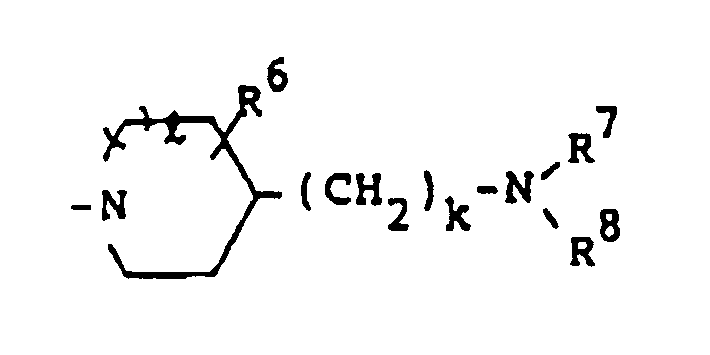
(wherein k is 0 or 1, ℓ is 0, 1 or 2, R⁶ represents a hydrogen atom, halogen atom, lower alkyl group or hydroxy group, R⁷ represents a hydrogen atom, lower alkyl group, haloalkyl group or hydroxyalkyl group, R⁸ represents a hydrogen atom or lower alkyl group); the hydrates or the pharmaceutically acceptable acid addition or alkali salts thereof.
wherein R¹ represents a cycloalkyl group having 3 to 6 carbon atoms, straight or branched lower alkyl group, haloalkyl group, alkenyl group. hydroxyalkyl group, lower alkylamino group or phenyl group which may be substituted, R² represents a hydrogen atom, halogen atom, nitro group or amino group, X¹ represents a halogen atom, Y represents =CX²- (wherein X² represents a halogen atom, alkyl group or alkoxy group, or X² and R¹ work together to be -O-CH₂CH(CH₃)-, -CH₂CH₂CH(CH₃)- or -CH₂CH(CH₃)-), Z represents
(wherein n is 1 or 2, R³ represents a hydrogen atom or lower alkyl group, R⁴ and R⁵ each represent independently a hydrogen atom, lower alkyl group, aminoalkyl group, hydroxyalkyl group or phenyl group) or
(wherein k is 0 or 1, ℓ is 0, 1 or 2, R⁶ represents a hydrogen atom, halogen atom, lower alkyl group or hydroxy group, R⁷ represents a hydrogen atom, lower alkyl group, haloalkyl group or hydroxyalkyl group, R⁸ represents a hydrogen atom or lower alkyl group); the hydrates or the pharmaceutically acceptable acid addition or alkali salts thereof.
2. A freeze-dried pharmaceutical preparation as claimed in Claim 1, in which the compound
is 6,8-difluoro-1-(2-fluoroethyl)-1,4-dihydro-7-(4-methyl-1-piperazinyl)-4-oxo-3-quinolinecarboxylic
acid.
3. A freeze-dried pharmaceutical preparation as claimed in Claim 1, in which the compound
is 9-fluoro-2,3-dihydro-3-methyl-10-(4-methyl-1-piperazinyl)-7-oxo-7H-pyrido[1,2,3-de][1,4]-benzoxazine-6-carboxylic
acid.
4. A freeze-dried pharmaceutical preparation as claimed in Claim 1, in which the compound
is 7-(3-amino-1-pyrrolidinyl)-8-chloro-1-cyclopropyl-6-fluoro-1,4-dihydro-4-oxo-3-quinolinecarboxylic
acid.
5. A freeze-dried pharmaceutical preparation as claimed in Claim 1, in which the compound
is 1-ethyl-6,8-difluoro-1,4-dihydro-7-(3-methyl-1-piperazinyl)-4-oxo-3-quinolinecarboxylic
acid.
6. A method for preparing the freeze-dried pharmaceutical preparation as claimed in Claim
1, which comprises dissolving the above-mentioned compound in water containing acid
or alkali, followed by freeze-drying the solution.
7. A method of claim 6, wherein the acid is hydrochloric acid, lactic acid or acetic
acid.
8. A method of claim 6, wherein the alkali is sodium hydroxide or potassium hydroxide.
Claims for the following Contracting State(s): ES
1. A method for preparing a freeze-dried pharmaceutical preparation containing the compound
of the following formula (I),
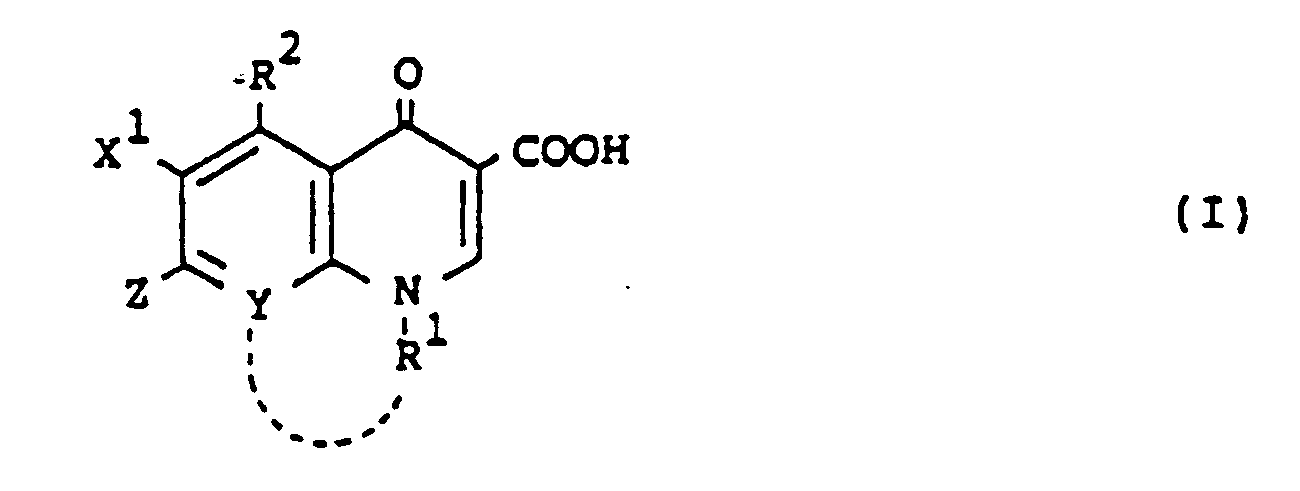
wherein R¹ represents a cycloalkyl group having 3 to 6 carbon atoms, straight or branched lower alkyl group, haloalkyl group, alkenyl group, hydroxyalkyl group, lower alkylamino group or phenyl group which may be substituted, R² represents a hydrogen atom, halogen atom, nitro group or amino group, X¹ represents a halogen atom, Y represents =CX²- (wherein X² represents a halogen atom, alkyl group or alkoxy group, or X² and R¹ work together to be -O-CH₂CH(CH₃)-, -CH₂CH₂CH(CH₃)- or -CH₂CH(CH₃)-), Z represents
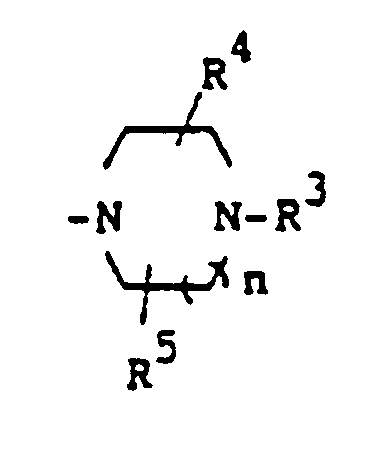
(wherein n is 1 or 2, R³ represents a hydrogen atom or lower alkyl group, R⁴ and R⁵ each represent independently a hydrogen atom, lower alkyl group, aminoalkyl group, hydroxyalkyl group or phenyl group) or
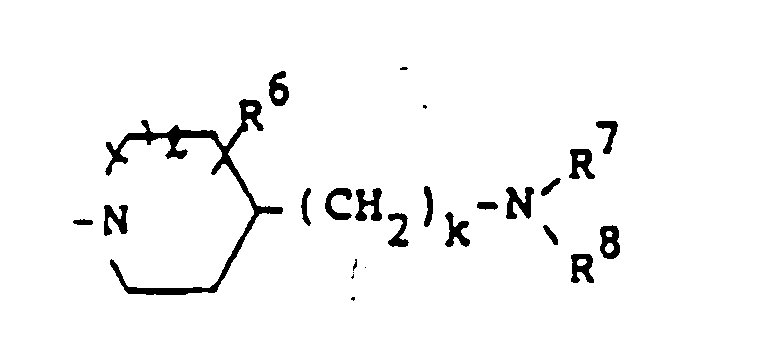
(wherein k is 0 or 1, ℓ is 0, 1 or 2, R⁶ represents a hydrogen atom, halogen atom, lower alkyl group or hydroxy group, R⁷ represents a hydrogen atom, lower alkyl group, haloalkyl group or hydroxyalkyl group, R⁸ represents a hydrogen atom or lower alkyl group); the hydrates or the pharmaceutically acceptable acid addition or alkali salts thereof which comprises dissolving the above-mentioned compound or its hydrates or salts in water containing acid or alkali, followed by freeze-drying the solution.
wherein R¹ represents a cycloalkyl group having 3 to 6 carbon atoms, straight or branched lower alkyl group, haloalkyl group, alkenyl group, hydroxyalkyl group, lower alkylamino group or phenyl group which may be substituted, R² represents a hydrogen atom, halogen atom, nitro group or amino group, X¹ represents a halogen atom, Y represents =CX²- (wherein X² represents a halogen atom, alkyl group or alkoxy group, or X² and R¹ work together to be -O-CH₂CH(CH₃)-, -CH₂CH₂CH(CH₃)- or -CH₂CH(CH₃)-), Z represents
(wherein n is 1 or 2, R³ represents a hydrogen atom or lower alkyl group, R⁴ and R⁵ each represent independently a hydrogen atom, lower alkyl group, aminoalkyl group, hydroxyalkyl group or phenyl group) or
(wherein k is 0 or 1, ℓ is 0, 1 or 2, R⁶ represents a hydrogen atom, halogen atom, lower alkyl group or hydroxy group, R⁷ represents a hydrogen atom, lower alkyl group, haloalkyl group or hydroxyalkyl group, R⁸ represents a hydrogen atom or lower alkyl group); the hydrates or the pharmaceutically acceptable acid addition or alkali salts thereof which comprises dissolving the above-mentioned compound or its hydrates or salts in water containing acid or alkali, followed by freeze-drying the solution.
2. A method of claim 1, wherein the acid is hydrochloric acid, lactic acid or acetic
acid.
3. A method of claim 1, wherein the alkali is sodium hydroxide or potassium hydroxide.
4. The method according to any one of claims 1 to 3 wherein the compound used is 6,8-difluoro-1-(2-fluoroethyl)-1,4-dihydro-7-(4-methyl-1-piperazinyl)-4-oxo-3-quinolinecarboxylic
acid.
5. The method according to any one of claims 1 to 3 wherein the compound used is 9-fluoro-2,3-dihydro-3-methyl-10-(4-methyl-1-piperazinyl)-7-oxo-7H-pyrido[1,2,3-de][1,4]-benzoxazine-6-carboxylic
acid.
6. The method according to any one of claims 1 to 3 wherein the compound used is 7-(3-amino-1-pyrrolidinyl)-8-chloro-1-cyclopropyl-6-fluoro-1,4-dihydro-4-oxo-3-quinolinecarboxylic
acid.
7. The method according to any one of claims 1 to 3 wherein the compound used is 1-ethyl-6,8-difluoro-1,4-dihydro-7-(3-methyl-1-piperazinyl)-4-oxo-3-quinolinecarboxylic
acid.
Revendications pour l'(les) Etat(s) contractant(s) suivant(s): BE, CH, DE, FR, GB,
IT, LI, NL, SE
1. Préparation pharmaceutique lyophilisée contenant le composé de formule (I) suivante
:
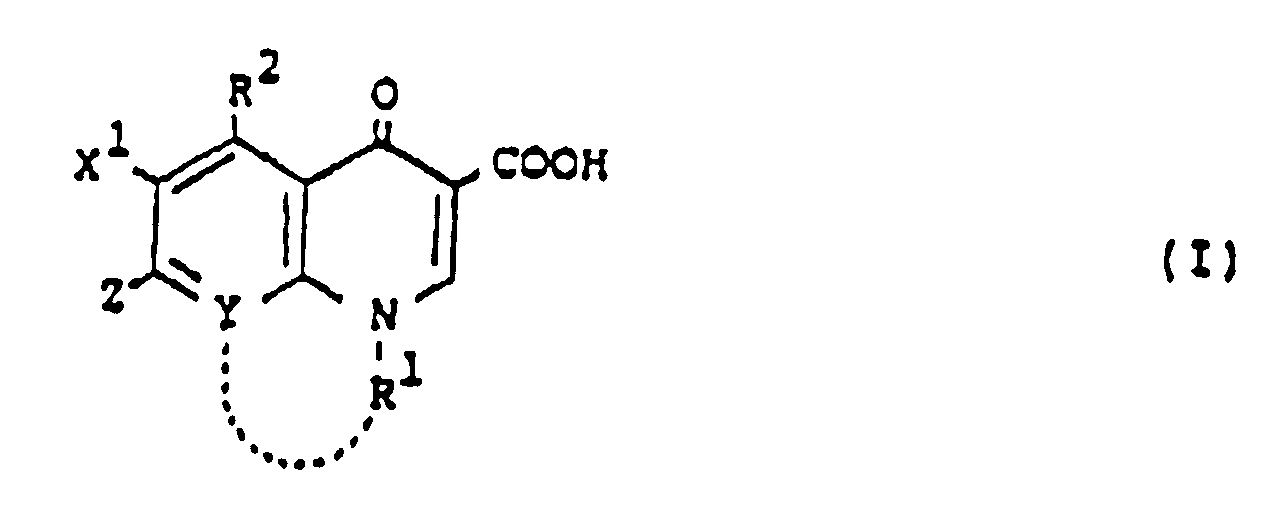
dans laquelle R¹ représente un groupe cycloalkyle ayant 3 à 6 atomes de carbone, un groupe alkyle inférieur linéaire ou ramifié, un groupe haloalkyle, un groupe alcényle, un groupe hydroxyalkyle, un groupe alkylamino inférieur ou un groupe phényle qui peut être substitué, R² représente un atome d'hydrogène, un atome d'halogène, un groupe nitro ou un groupe amino, X¹ représente un atome d'halogène, Y représente =CX²- (dans lequel X² représente un atome d'halogène, un groupe alkyle ou un groupe alkoxy, ou bien X² et R¹ conjointement constituent le groupe -O-CH₂CH(CH₃)-, -CH₂CH₂CH(CH₃)- ou -CH₂CH(CH₃)-), Z représente :
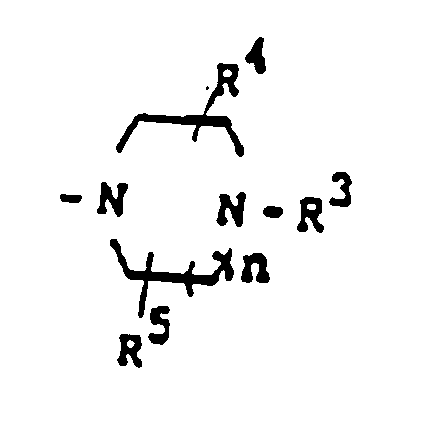
(dans laquelle formule n est 1 ou 2, R³ représente un atome d'hydrogène ou un groupe alkyle inférieur, R⁴ et R⁵ représentent chacun indépendamment un atome d'hydrogène, un groupe alkyle inférieur, un groupe alkylamino, un groupe hydroxyalkyle ou un groupe phényle) ou :
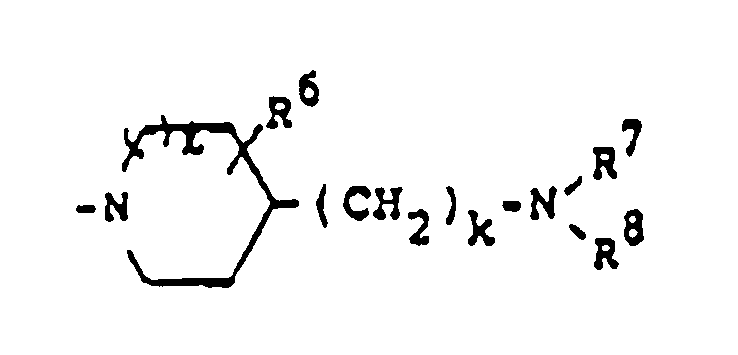
(dans laquelle formule k est 0 ou à 1, ℓ est 0, 1 ou 2, R⁶ représente un atome d'hydrogène, un atome d'halogène, un groupe alkyle inférieur ou un groupe hydroxy, R⁷ représente un atome d'hydrogène, un groupe alkyle inférieur, un groupe haloalkyle ou un groupe hydroxyalkyle, R⁸ représente un atome d'hydrogène ou un groupe alkyle inférieur); les hydrates ou les sels d'addition acides ou les sels alcalins pharmaceutiquement acceptables de ces composés.
dans laquelle R¹ représente un groupe cycloalkyle ayant 3 à 6 atomes de carbone, un groupe alkyle inférieur linéaire ou ramifié, un groupe haloalkyle, un groupe alcényle, un groupe hydroxyalkyle, un groupe alkylamino inférieur ou un groupe phényle qui peut être substitué, R² représente un atome d'hydrogène, un atome d'halogène, un groupe nitro ou un groupe amino, X¹ représente un atome d'halogène, Y représente =CX²- (dans lequel X² représente un atome d'halogène, un groupe alkyle ou un groupe alkoxy, ou bien X² et R¹ conjointement constituent le groupe -O-CH₂CH(CH₃)-, -CH₂CH₂CH(CH₃)- ou -CH₂CH(CH₃)-), Z représente :
(dans laquelle formule n est 1 ou 2, R³ représente un atome d'hydrogène ou un groupe alkyle inférieur, R⁴ et R⁵ représentent chacun indépendamment un atome d'hydrogène, un groupe alkyle inférieur, un groupe alkylamino, un groupe hydroxyalkyle ou un groupe phényle) ou :
(dans laquelle formule k est 0 ou à 1, ℓ est 0, 1 ou 2, R⁶ représente un atome d'hydrogène, un atome d'halogène, un groupe alkyle inférieur ou un groupe hydroxy, R⁷ représente un atome d'hydrogène, un groupe alkyle inférieur, un groupe haloalkyle ou un groupe hydroxyalkyle, R⁸ représente un atome d'hydrogène ou un groupe alkyle inférieur); les hydrates ou les sels d'addition acides ou les sels alcalins pharmaceutiquement acceptables de ces composés.
2. Préparation pharmaceutique lyophilisée selon la revendication 1, dans laquelle le
composé est l'acide 6,8-difluoro-1-(2-fluoréthyl)-1,4-dihydro-7-(4-méthyl-1-pipérazinyl)-4-oxo-3-quinoléine
carboxylique.
3. Préparation pharmaceutique lyophilisée selon la revendication 1, dans laquelle le
composé est l'acide 9-fluoro-2,3-dihydro-3-méthyl-10-(4-méthyl-1-pipérazinyl)-7-oxo-7H-pyrido
[1,2,3-de][1,4]-benzoxazine-6-carboxylique.
4. Préparation pharmaceutique lyophilisée selon la revendication 1, dans laquelle le
composé est l'acide 7-(3-amino-1-pyrrolidinyl)-8-chloro-1-cyclopropyl-6- fluoro-1,4-dihydro-4-oxo-3-quinoléine
carboxylique.
5. Préparation pharmaceutique lyophilisée selon la revendication 1, dans laquelle le
composé est l'acide 1-éthyl-6,8-difluoro-1,4-dihydro-7-(3-méthyl-1-pipérazinyl)-4-oxo-3-quinoléine
carboxylique.
6. Procédé de préparation de la préparation pharmaceutique lyophilisée selon la revendication
1, qui consiste à dissoudre le composé précité dans de l'eau contenant un acide ou
un alcali, l'opération étant suivie d'une lyophilisation de la solution.
7. Procédé selon la revendication 6, dans lequel l'acide est l'acide chlorhydrique, l'acide
lactique ou l'acide acétique.
8. Procédé selon la revendication 6, dans lequel l'alcali est l'hydroxyde de sodium ou
l'hydroxyde de potassium.
Revendications pour l'(les) Etat(s) contractant(s) suivant(s): ES
1. Procédé d'une préparation pharmaceutique lyophilisée contenant le composé de formule
(I) suivante :
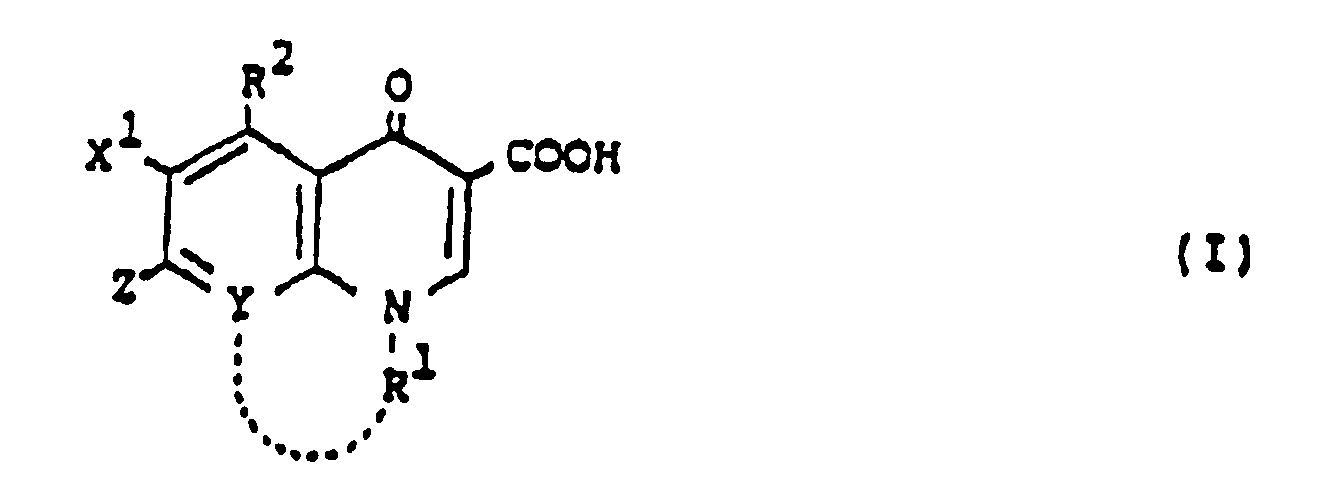
dans laquelle R¹ représente un groupe cycloalkyle ayant 3 à 6 atomes de carbone, un groupe alkyle inférieur linéaire ou ramifié, un groupe haloalkyle, un groupe alcényle, un groupe hydroxyalkyle, un groupe alkylamino inférieur ou un groupe phényle qui peut être substitué, R² représente un atome d'hydrogène, un atome d'halogène, un groupe nitro ou un groupe amino, X¹ représente un atome d'halogène, Y représente =CX²- (dans lequel X² représente un atome d'halogène, un groupe alkyle ou un groupe alkoxy, ou bien X² et R¹ conjointement constituent le groupe -O-CH₂CH(CH₃)-, -CH₂CH₂CH(CH₃)- ou -CH₂CH(CH₃)-), Z représente :
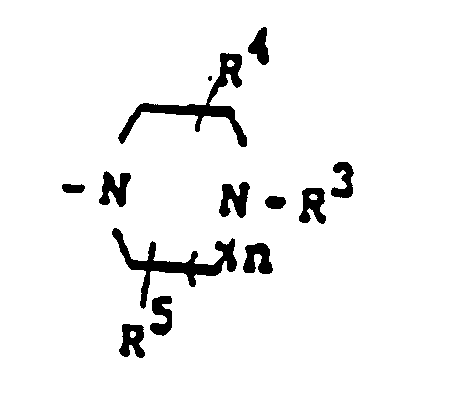
(dans laquelle formule n est 1 ou 2, R³ représente un atome d'hydrogène ou un groupe alkyle inférieur, R⁴ et R⁵ représentent chacun indépendamment un atome d'hydrogène, un groupe alkyle inférieur, un groupe alkylamino, un groupe hydroxyalkyle ou un groupe phényle) ou :
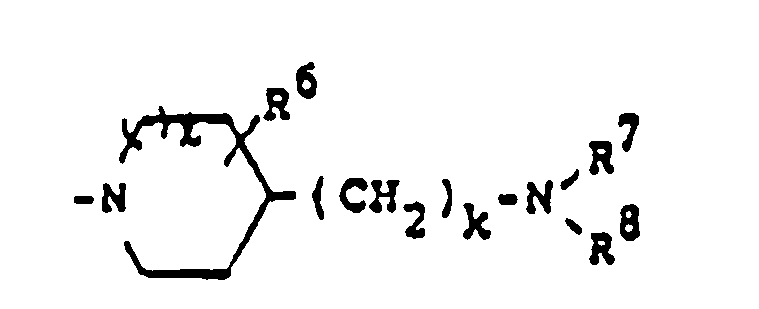
(dans laquelle formule k est 0 ou à 1, ℓ est 0, 1 ou 2, R⁶ représente un atome d'hydrogène, un atome d'halogène, un groupe alkyle inférieur ou un groupe hydroxy, R⁷ représente un atome d'hydrogène, un groupe alkyle inférieur, un groupe haloalkyle ou un groupe hydroxyalkyle, R⁸ représente un atome d'hydrogène ou un groupe alkyle inférieur); les hydrates ou les sels d'addition acides ou les sels alcalins pharmaceutiquement acceptables de ces composés qui consiste à dissoudre le composé précité ou leurs hydrates et leurs sels dans de l'eau contenant un acide ou un alcali, l'opération étant suivie d'une lyophilisation de la solution.
dans laquelle R¹ représente un groupe cycloalkyle ayant 3 à 6 atomes de carbone, un groupe alkyle inférieur linéaire ou ramifié, un groupe haloalkyle, un groupe alcényle, un groupe hydroxyalkyle, un groupe alkylamino inférieur ou un groupe phényle qui peut être substitué, R² représente un atome d'hydrogène, un atome d'halogène, un groupe nitro ou un groupe amino, X¹ représente un atome d'halogène, Y représente =CX²- (dans lequel X² représente un atome d'halogène, un groupe alkyle ou un groupe alkoxy, ou bien X² et R¹ conjointement constituent le groupe -O-CH₂CH(CH₃)-, -CH₂CH₂CH(CH₃)- ou -CH₂CH(CH₃)-), Z représente :
(dans laquelle formule n est 1 ou 2, R³ représente un atome d'hydrogène ou un groupe alkyle inférieur, R⁴ et R⁵ représentent chacun indépendamment un atome d'hydrogène, un groupe alkyle inférieur, un groupe alkylamino, un groupe hydroxyalkyle ou un groupe phényle) ou :
(dans laquelle formule k est 0 ou à 1, ℓ est 0, 1 ou 2, R⁶ représente un atome d'hydrogène, un atome d'halogène, un groupe alkyle inférieur ou un groupe hydroxy, R⁷ représente un atome d'hydrogène, un groupe alkyle inférieur, un groupe haloalkyle ou un groupe hydroxyalkyle, R⁸ représente un atome d'hydrogène ou un groupe alkyle inférieur); les hydrates ou les sels d'addition acides ou les sels alcalins pharmaceutiquement acceptables de ces composés qui consiste à dissoudre le composé précité ou leurs hydrates et leurs sels dans de l'eau contenant un acide ou un alcali, l'opération étant suivie d'une lyophilisation de la solution.
2. Procédé selon la revendication 1, dans lequel l'acide est l'acide chlorhydrique, l'acide
lactique ou l'acide acétique.
3. Procédé selon la revendication 1, dans lequel l'alcali est l'hydroxyde de sodium ou
l'hydroxyde de potassium.
4. Préparation selon l'une quelconque des revendications 1 à 3, dans laquelle le composé
utilisé est l'acide 6,8-difluoro-1-(2-fluoréthyl)-1,4-dihydro-7-(4-méthyl-1-pipérazinyl)-4-oxo-3-quinoléine
carboxylique.
5. Préparation selon l'une quelconque des revendications 1 à 3, dans laquelle le composé
utilisé est l'acide 9-fluoro-2,3-dihydro-3-méthyl-10-(4-méthyl-1-pipérazinyl)-7-oxo-7H-pyrido
[1,2,3-de][1,4] benzoxazine-6-carboxylique.
6. Préparation selon l'une quelconque des revendications 1 à 3, dans laquelle le composé
utilisé est l'acide 7-(3-amino-1-pyrrolidinyl)-8-chloro-1-cyclopropyl-6- fluoro-1,4-dihydro-4-oxo-3-quinoléine
carboxylique.
7. Préparation selon l'une quelconque des revendications 1 à 3, dans laquelle le composé
utilisé est l'acide 1-éthyl-6,8-difluoro-1,4-dihydro-7-(3-méthyl-1-pipérazinyl)-4-oxo-3-quinoléine
carboxylique.
Patentansprüche für folgende(n) Vertragsstaat(en): BE, CH, DE, FR, GB, IT, LI, NL,
SE
1. Gefriergetrocknetes Arzneimittel, enthaltend die Verbindung der folgenden Formel (I)
in der R¹ einen Cycloalkylrest mit 3 bis 6 Kohlenstoffatomen, einen geradkettigen oder verzweigten Niederalkylrest, einen Haloalkylrest, einen Alkenylrest, einen Hydroxyalkylrest, einen Niederalkylaminorest oder eine gegebenenfalls substituierte Phenylgruppe darstellt, R² ein Wasserstoffatom, ein Halogenatom, eine Nitrogruppe oder eine Aminogruppe bedeutet, X¹ ein Halogenatom darstellt, Y den Rest =CX²- bedeutet (wobei X² ein Halogenatom, einen Alkylrest oder einen Alkoxyrest darstellt, oder X₂ und R¹ zusammen die Gruppe -O-CH₂CH(CH₃)-, -CH₂CH₂CH(CH₃)- oder -CH₂CH(CH₃)- bilden), Z den Rest
darstellt (wobei n den Wert 1 oder 2 hat, R³ ein Wasserstoffatom oder einen Niederalkylrest darstellt, R⁴ und R⁵ jeweils unabhängig voneinander ein Wasserstoffatom, einen Niederalkylrest, einen Aminoalkylrest, einen Hydroxyalkylrest oder eine Phenylgruppe bedeuten) oder den Rest
darstellt (wobei k den Wert 0 oder 1 hat, 1 den Wert 0, 1 oder 2 hat, R⁶ ein Wasserstoffatom, ein Halogenatom, einen Niederalkylrest oder eine Hydroxylgruppe bedeutet, R⁷ ein Wasserstoffatom, einen Niederalkylrest, einen Haloalkylrest oder einen Hydroxyalkylrest darstellt, R⁸ ein Wasserstoffatom oder einen Niederalkylrest bedeutet); die Hydrate oder die pharmazeutisch verträglichen Säureadditions- oder Alkalisalze davon.
in der R¹ einen Cycloalkylrest mit 3 bis 6 Kohlenstoffatomen, einen geradkettigen oder verzweigten Niederalkylrest, einen Haloalkylrest, einen Alkenylrest, einen Hydroxyalkylrest, einen Niederalkylaminorest oder eine gegebenenfalls substituierte Phenylgruppe darstellt, R² ein Wasserstoffatom, ein Halogenatom, eine Nitrogruppe oder eine Aminogruppe bedeutet, X¹ ein Halogenatom darstellt, Y den Rest =CX²- bedeutet (wobei X² ein Halogenatom, einen Alkylrest oder einen Alkoxyrest darstellt, oder X₂ und R¹ zusammen die Gruppe -O-CH₂CH(CH₃)-, -CH₂CH₂CH(CH₃)- oder -CH₂CH(CH₃)- bilden), Z den Rest
darstellt (wobei n den Wert 1 oder 2 hat, R³ ein Wasserstoffatom oder einen Niederalkylrest darstellt, R⁴ und R⁵ jeweils unabhängig voneinander ein Wasserstoffatom, einen Niederalkylrest, einen Aminoalkylrest, einen Hydroxyalkylrest oder eine Phenylgruppe bedeuten) oder den Rest
darstellt (wobei k den Wert 0 oder 1 hat, 1 den Wert 0, 1 oder 2 hat, R⁶ ein Wasserstoffatom, ein Halogenatom, einen Niederalkylrest oder eine Hydroxylgruppe bedeutet, R⁷ ein Wasserstoffatom, einen Niederalkylrest, einen Haloalkylrest oder einen Hydroxyalkylrest darstellt, R⁸ ein Wasserstoffatom oder einen Niederalkylrest bedeutet); die Hydrate oder die pharmazeutisch verträglichen Säureadditions- oder Alkalisalze davon.
2. Gefriergetrocknetes Arzneimittel nach Anspruch 1, in der die Verbindung 6,8-Difluor-1-(2-fluorethyl)-1,4-dihydro-7-(4-methyl-1-piperazinyl)-4-oxo-3-chinolincarbonsäure
ist.
3. Gefriergetrocknetes Arzneimittel nach Anspruch 1, wobei die Verbindung 9-Fluor-2,3-dihydro-3-methyl-10-(4-methyl-1-piperazinyl)-7-oxo-7H-pyrido[1,2,3-de][1,4]-benzoxazin-6-carbonsäure
ist.
4. Gefriergetrocknetes Arzneimittel nach Anspruch 1, wobei die Verbindung 7-(3-Amino-1-pyrrolidinyl)-8-chloro-1-cyclopropyl-6-fluor-1,4-dihydro-4-oxo-3-chinolincarbonsäure
ist.
5. Gefriergetrocknetes Arzneimittel nach Anspruch 1, wobei die Verbindung 1-Ethyl-6,8-difluor-1,4-dihydro-7-(3-methyl-1-piperazinyl)-4-oxo-3-chinolincarbonsäure
ist.
6. Verfahren zur Herstellung des gefriergetrockneten Arzneimittels nach Anspruch 1, umfassend
das Auflösen der vorstehend genannten Verbindung in Wasser, das eine Säure oder Base
enthält, gefolgt von der Gefriertrocknung der Lösung.
7. Verfahren nach Anspruch 6, wobei die Säure Salzsäure, Milchsäure oder Essigsäure ist.
8. Verfahren nach Anspruch 6, wobei die Base Natriumhydroxid oder Kaliumhydroxid ist.
Patentansprüche für folgende(n) Vertragsstaat(en): ES
1. Verfahren zur Herstellung eines gefriergetrockneten Arzneimittels, enthaltend die
Verbindung der folgenden Formel (I)
in der R¹ einen Cycloalkylrest mit 3 bis 6 Kohlenstoffatomen, einen geradkettigen oder verzweigten Niederalkylrest, einen Haloalkylrest, einen Alkenylrest, einen Hydroxyalkylrest, einen Niederalkylaminorest oder eine gegebenenfalls substituierte Phenylgruppe darstellt, R² ein Wasserstoffatom, ein Halogenatom, eine Nitrogruppe oder eine Aminogruppe bedeutet, X¹ ein Halogenatom darstellt, Y den Rest =CX²- bedeutet (wobei X² ein Halogenatom, einen Alkylrest oder einen Alkoxyrest darstellt, oder X₂ und R¹ zusammen die Gruppe -O-CH₂CH(CH₃)-, -CH₂CH₂CH(CH₃)- oder -CH₂CH(CH₃)- bilden), Z den Rest
darstellt (wobei n den Wert 1 oder 2 hat, R³ ein Wasserstoffatom oder einen Niederalkylrest darstellt, R⁴ und R⁵ jeweils unabhängig voneinander ein Wasserstoffatom, einen Niederalkylrest, einen Aminoalkylrest, einen Hydroxyalkylrest oder eine Phenylgruppe bedeuten) oder den Rest
darstellt (wobei k den Wert 0 oder 1 hat, 1 den Wert 0, 1 oder 2 hat, R⁶ ein Wasserstoffatom, ein Halogenatom, einen Niederalkylrest oder eine Hydroxylgruppe bedeutet, R⁷ ein Wasserstoffatom, einen Niederalkylrest, einen Haloalkylrest oder einen Hydroxyalkylrest darstellt, R⁸ ein Wasserstoffatom oder einen Niederalkylrest bedeutet); die Hydrate oder die pharmazeutisch verträglichen Säureadditions- oder Alkalisalze davon, umfassend das Lösen der vorstehend genannten Verbindung oder ihrer Hydrate oder Salze in Wasser, das eine Säure oder Base enthält, gefolgt von der Gefriertrocknung der Lösung.
in der R¹ einen Cycloalkylrest mit 3 bis 6 Kohlenstoffatomen, einen geradkettigen oder verzweigten Niederalkylrest, einen Haloalkylrest, einen Alkenylrest, einen Hydroxyalkylrest, einen Niederalkylaminorest oder eine gegebenenfalls substituierte Phenylgruppe darstellt, R² ein Wasserstoffatom, ein Halogenatom, eine Nitrogruppe oder eine Aminogruppe bedeutet, X¹ ein Halogenatom darstellt, Y den Rest =CX²- bedeutet (wobei X² ein Halogenatom, einen Alkylrest oder einen Alkoxyrest darstellt, oder X₂ und R¹ zusammen die Gruppe -O-CH₂CH(CH₃)-, -CH₂CH₂CH(CH₃)- oder -CH₂CH(CH₃)- bilden), Z den Rest
darstellt (wobei n den Wert 1 oder 2 hat, R³ ein Wasserstoffatom oder einen Niederalkylrest darstellt, R⁴ und R⁵ jeweils unabhängig voneinander ein Wasserstoffatom, einen Niederalkylrest, einen Aminoalkylrest, einen Hydroxyalkylrest oder eine Phenylgruppe bedeuten) oder den Rest
darstellt (wobei k den Wert 0 oder 1 hat, 1 den Wert 0, 1 oder 2 hat, R⁶ ein Wasserstoffatom, ein Halogenatom, einen Niederalkylrest oder eine Hydroxylgruppe bedeutet, R⁷ ein Wasserstoffatom, einen Niederalkylrest, einen Haloalkylrest oder einen Hydroxyalkylrest darstellt, R⁸ ein Wasserstoffatom oder einen Niederalkylrest bedeutet); die Hydrate oder die pharmazeutisch verträglichen Säureadditions- oder Alkalisalze davon, umfassend das Lösen der vorstehend genannten Verbindung oder ihrer Hydrate oder Salze in Wasser, das eine Säure oder Base enthält, gefolgt von der Gefriertrocknung der Lösung.
2. Verfahren nach Anspruch 1, wobei die Säure Salzsäure, Milchsäure oder Essigsäure ist.
3. Verfahren nach Anspruch 1, wobei die Base Natriumhydroxid oder Kaliumhydroxid ist.
4. Verfahren nach einem der Ansprüche 1 bis 3, wobei die verwendete Verbindung 6,8-Difluor-1-(2-fluorethyl)-1,4-dihydro-7-(4-methyl-1-piperazinyl)-4-oxo-3-chinolincarbonsäure
ist.
5. Verfahren nach einem der Ansprüche 1 bis 3, wobei die verwendete Verbindung 9-Fluor-2,3-dihydro-3-methyl-10-(4-methyl-1-piperazinyl)-7-oxo-7H-pyrido[1,2,3-de][1,4]-benzoxazin-6-carbonsäure
ist.
6. Verfahren nach einem der Ansprüche 1 bis 3, wobei die verwendete Verbindung 7-(3-Amino-1-pyrrolidinyl)-8-chlor-1-cyclopropyl-6-fluor-1,4-dihydro-4-oxo-3-chinolincarbonsäure
ist.
7. Verfahren nach einem der Ansprüche 1 bis 3, wobei die verwendete Verbindung 1-Ethyl-6,8-difluor-1,4-dihydro-7-(3-methyl-1-piperazinyl)-4-oxo-3-chinolincarbonsäure
ist.