|
(11) | EP 0 325 060 B1 |

| (12) | EUROPEAN PATENT SPECIFICATION |
|
|
| (54) |
Aromatic sulfideamide polymer and method for producing the same Aromatisches Sulfidamid-Polymer und Verfahren zu dessen Herstellung Polythioétheramide aromatique |
|
|
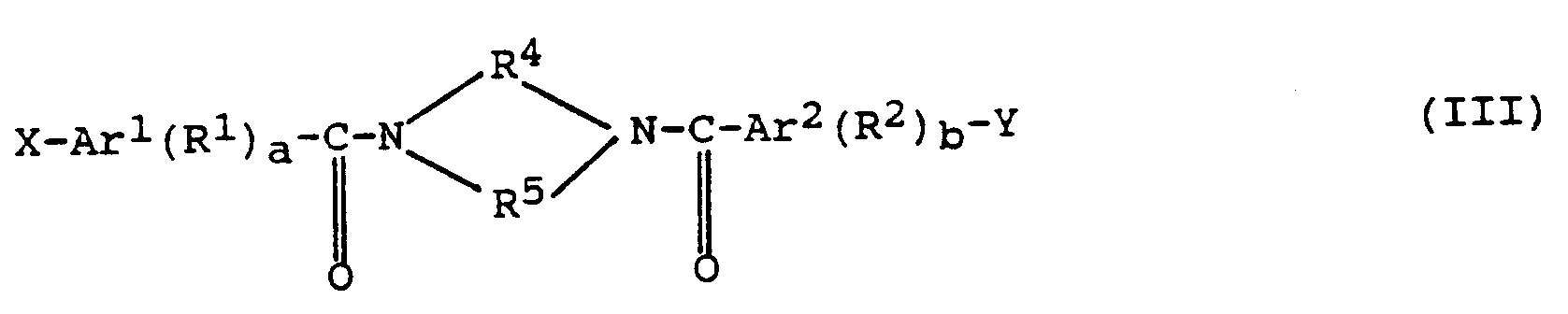
|||||||||||||||||||||||||||||||
| Note: Within nine months from the publication of the mention of the grant of the European patent, any person may give notice to the European Patent Office of opposition to the European patent granted. Notice of opposition shall be filed in a written reasoned statement. It shall not be deemed to have been filed until the opposition fee has been paid. (Art. 99(1) European Patent Convention). |
[0001] This invention relates to a novel crystalline aromatic sulfideamide polymer and a process for production of the novel polymer. The polymers according to the invention have a chemical structure in which phenylene and alkylene groups are alternately bonded via an amide group and a thioether group. The polymers are useful as materials for producing articles exhibiting improved properties such as excellent resistance to high temperatures, flame-retardant properties, resistance to solvents, good mechanical properties, good fabricability, etc.
[0002] Polyphenylene sulfide which is a polymeric compound comprising phenylene groups linked to each other via a thioether group is well known in the art. This polymer has such properties as good flame-retardancy, low moisture absorption, high dimensional stability, etc. However, since this type of polymer exhibits a relatively low heat distortion temperature (HDT) of 260°C (GF 40%; i.e. containing 40% glass fibers) and a crystalline melting point (Tm) of 281°C, its usefulness in applications where high resistance to heat is required is inevitably limited. Consequently there has been a demand in the art for the development of polyphenylene sulfide materials having further crystalline melting points.
[0003] A polymer substance containing thioether, phenylene and amide groups in the macromolecular backbone, i.e. a polymer of aromatic polythioether amide, and a process for production thereof are described in JP-A-60-226528. This polymer substance presents some problems in practice because it has a rather low softening point, is soluble in organic solvents such as dimethyl sulfoxide of N-methyl-2-pyrrolidone and exhibits poor resistance to chemicals. Additionally the synthesis of thiol group-containing monomers to be used in the preparation of the polymer is so expensive that production of the polymer is not feasible from an economic point of view. It is also possible to synthesize a similar polymer from an amide group-containing aromatic dihalide compound and a sulfidizing agent. However, there are problems, such as that the resulting aromatic sulfideamide polymer itself has a too high melting point to be melt processed in the neat stage.
[0004] The article (hereafter Daccord) by G. Daccord and B. Sillion, Die Makromolekulane Chemise, 1983, 184, p.1861-1867, at page 1862 describes polymers 7a and 7b which are made from aliphatic dicarboxylic acids and aromatic amines which bear sulphide groups.
[0005] The polymers of the present invention use cyclic nitrogen compounds in place of the aliphatic dicarboxylic acids of Daccord. These polymers have particularly advantageous thermal properties.
[0006] An object of the present invention, therefore, is to provide a novel aromatic sulfideamide polymer substance comprising a commercially available, inexpensive aliphatic moiety in the repeating units and which is improved in terms of resistance to high temperatures, resistance to solvents and mechanical properties, and good fabricability.
[0007] A further object of the present invention is to provide a process for production of such a novel polymer substance.
[0008] According to one aspect of the present invention, there is provided a novel aromatic sulfideamide polymer which consists of from 1 to 99 mol% of repeating units represented by the following formula (I) :
and from 99 to 1 mol% of repeating units represented by the formula (II):
-[Ar³(R³)c-S]- (II)
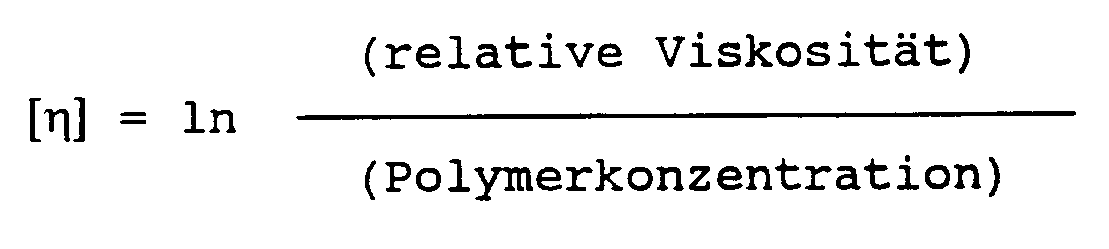
in these formulae Ar¹, Ar² and Ar³ which may be the same or different, each represent an aromatic ring; R¹, R² and R³, which may be the same or different, each represent an alkyl group having 1 to 20 carbon atoms, a cycloalkyl group having 3 to 20 carbon atoms, an aryl group having 6 to 20 carbon atoms, an alkoxy group having 1 to 20 carbon atoms, an acyl group having 2 to 20 carbon atoms or an arylalkyl group having 7 to 20 carbon atoms; a, b and c, which may be the same or different, each represent an integer of from 0 to 4; and R⁴ and R⁵, which may be the same or different, each represent an alkylene group having 1 to 20 carbon atoms, said polymer preferably having a logarithmic viscosity [η] of 0.02 to 2.00, as determined by measuring the relative viscosity of polymer dissolved in concentrated sulfuric acid at 30°C and at a polymer concentration of 0.5 g/100 ml or the relative viscosity of polymer dissolved in α-chloronaphthalene at 210°C and at a polymer concentration of 0.1 g/100 ml and computing the result in accordance with the equation:
[0009] According to another aspect of the present invention, there is provided a process for production of an aromatic sulfideamide polymer compound or compounds, which comprises sulfidizing an amide group-containing dihalide compound or compounds having the following general formula (III) and an aromatic dihalide compound of the following formula (IV) with a sulfidizing agent in an organic polar solvent;
X-Ar³(R³)c-Y (IV)
in these formulae Ar¹, Ar² and Ar³, which may be the same or different, each represent an aromatic ring; R¹, R² and R³, which may be the same or different, each represent an alkyl group having 1 to 20 carbon atoms, a cycloalkyl group having 3 to 20 carbon atoms, an aryl group having 6 to 20 carbon atoms, an alkoxy group having 1 to 20 carbon atoms, an acyl group having 2 to 20 carbon atoms or an arylalkyl group having 7 to 20 carbon atoms; a, b and c, which may be the same or different, each represent an integer of from 0 to 4; R⁴ and R⁵, which may be the same or different, each represent an alkylene group having 1 to 20 carbon atoms; and X and Y, which may be the same or different, each represent a halogen; so as to form a polymer compound consisting of the following repeating unit (V):
in these formulae Ar¹ through Ar³ , R¹ through R⁵ and a, b and c, are as defined above and the ratio of p/q ranges from 99/1 to 1/99.
[0010] The accompanying Fig. 1 shows an IR spectrum (wave length: about 400 - 4000 cm⁻¹) of the polymer obtained in Example 1.
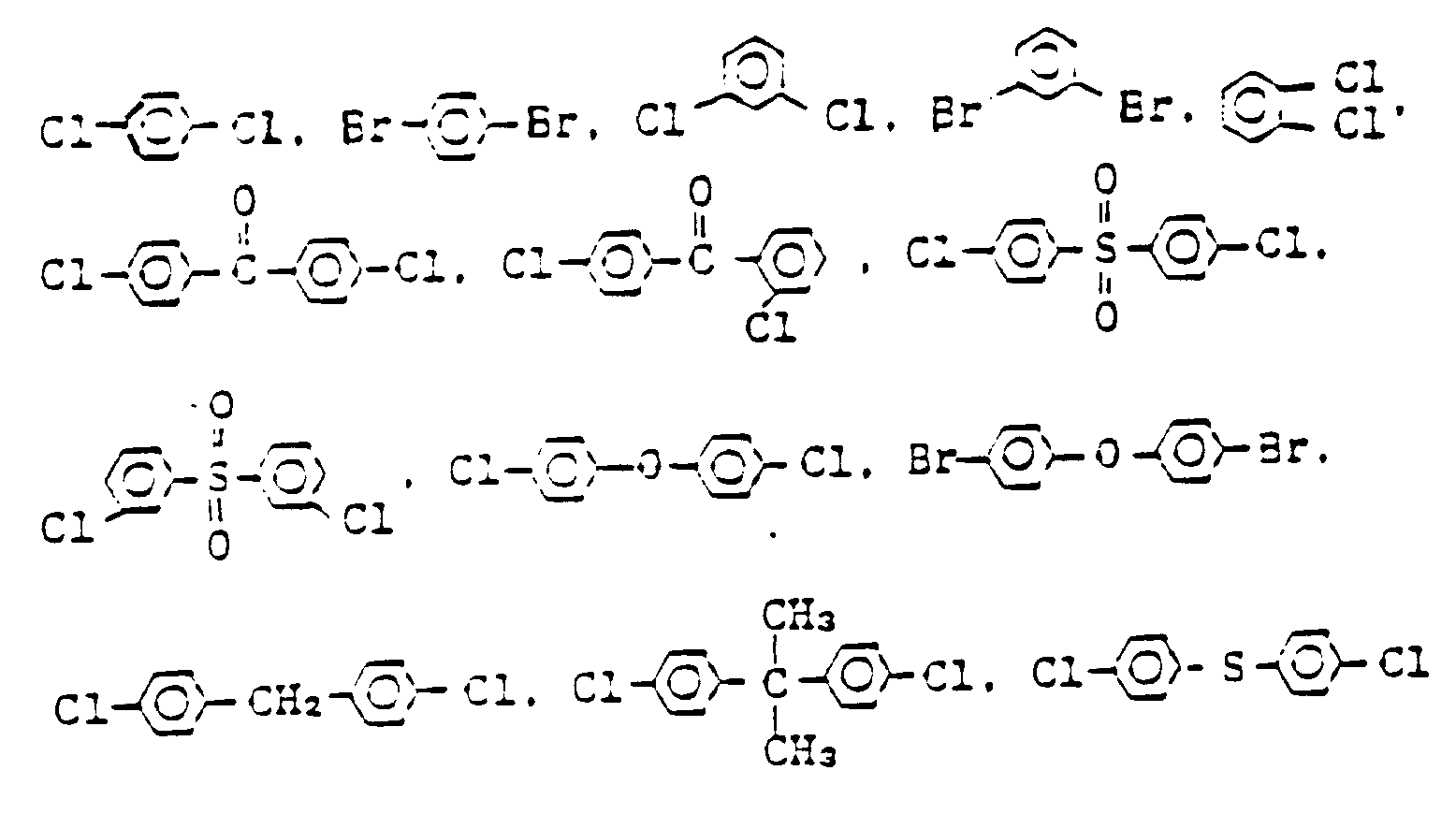
[0012] Examples of groups Ar¹, Ar² and Ar³, in the aromatic dihalide compounds which may be used in the invention include:
where Z represents -O-, -S-, -SO₂-, -CO-, -CH₂- or -C(CH3)₂-. The groups may be the same or different in one compound.
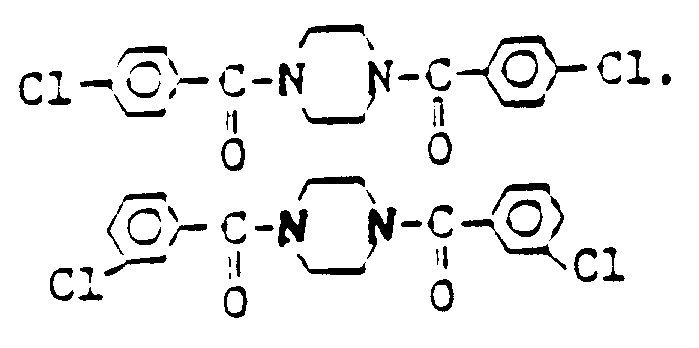
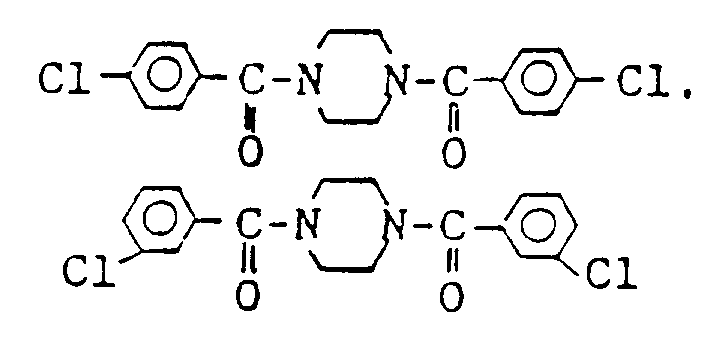
[0013] Example of particularly preferred dihalide compounds (III) for use in the present invention include:
[0014] It is preferred that the amide group-containing dihalide compounds contain bonds at the para positions, if it is mainly desired to improve the thermal resistance properties of the product polymers. On the other hand, if it is desired to improve the solubility and molding properties of the sulfideamide polymer products, the dihalide compounds may contain bonds at the meta positions and/or at the ortho positions, or may be branched.
[0015] The amide group-containing dihalide compounds may be synthesized by the conventional amide linkage formation technique. A typical example of synthesis is a process in which a corresponding halogen-containing aromatic carbonyl chloride is reacted with a corresponding diamine.
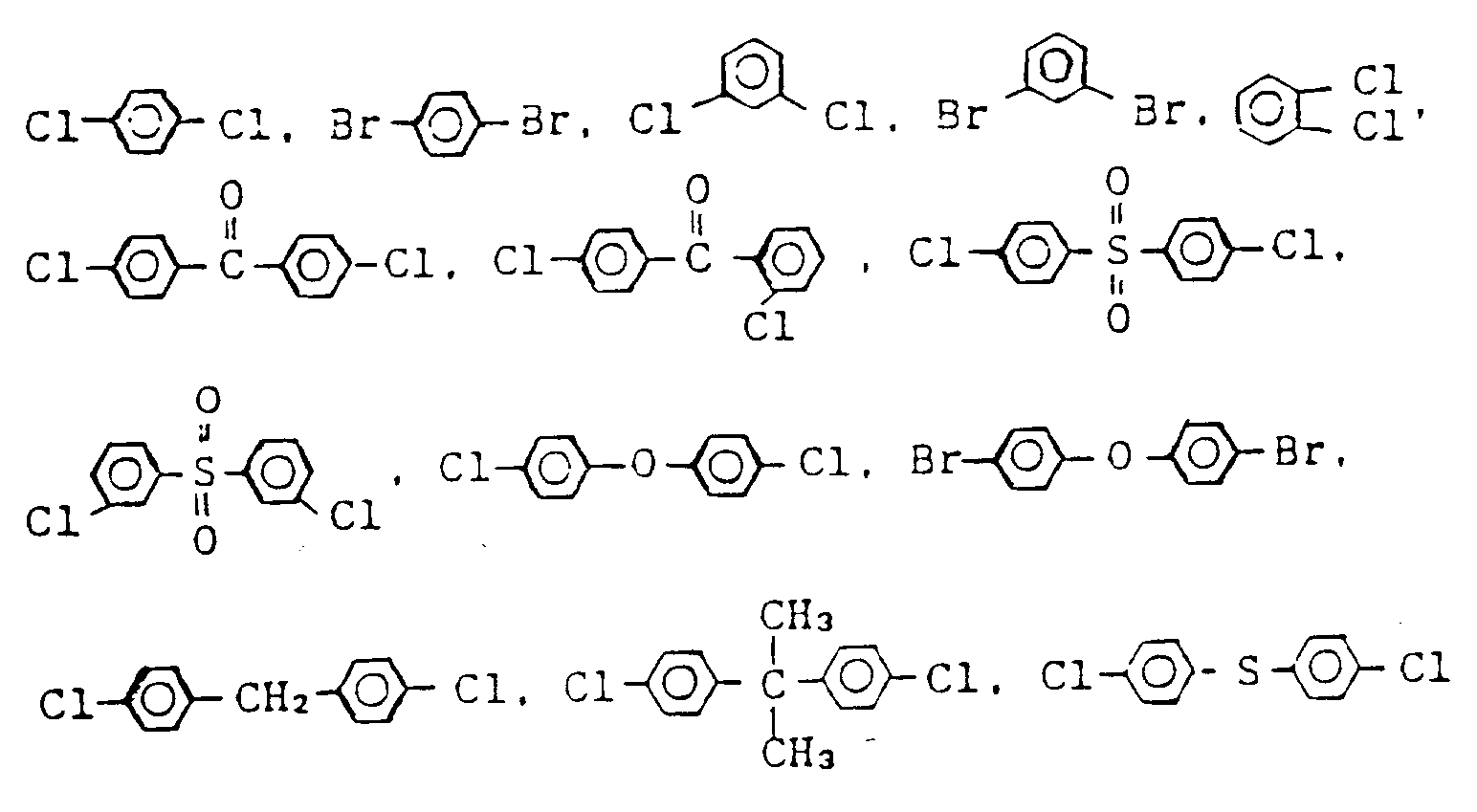
[0016] Examples of particularly preferred dihalide compounds (IV) which may be used in the invention include
and mixtures thereof.
[0017] Generally, the present process for production of aromatic sulfideamide polymers comprises sulfidizing the amide group-containing dihalide compound (III) and the aromatic dihalide compound (IV) with a sulfidizing agent in an organic polar solvent. In practice of the process, for example, the amide group-containing compound (III) and the other dihalide compound (IV) may be simultaneously sulfidized, or the amide group-containing compound (III) and the other dihalide compound (IV) may be separately sulfidized and then brought together into a reaction system where they are allowed to further react with each other, or the amide group-containing compound (III) may be first sulfidized in a reaction system and then the other dihalide compound (IV) being added together with an appropriate amount of additional sulfidizing agent to the system (or vice versa) for further reaction.
[0018] The organic polar solvents used in the process of the present invention are preferably aprotic and those which are stable in the presence of alkalis at elevated temperatures. Examples of the preferred solvents include N,N-dimethyl acetamide (DMA), N-ethyl-2-pyrrolidone, hexamethyl phosphoric triamide (HMPA), dimethyl sulfoxide (DMSO), N-methyl-2-pyrrolidone (NMP), and 1,3-dimethyl imidazolidinone.
[0019] The sulfidizing agents which may be used in the process include alkali metal sulfides, combinations of hydrogen sulfide with alkali metal bases, and combinations of alkali metal hydrosulfides with alkali metal bases. The alkali metal sulfides and hydrosulfides may be used as hydrates (from 0.5 to 10 molar equivalents). The sulfidizing agents may be prepared in situ prior to introduction of the dihalide compounds of the general formulae (III) and (IV) into the reaction system. Of course, the sulfidizing agent may be prepared outside the reaction system and then introduced to the system. It is preferred that, before the sulfidizing agent is introduced for commencement of the polymerization in the reaction system, the content of water in the system should be reduced to a level of less than 2.5 molar equivalents per equivalent of the sulfidizing agent to be introduced.
[0020] Among the available sulfidizing agents, sodium sulfide, sodium hydrosulfide in conjunction with sodium hydroxide, and hydrogen sulfide in conjunction with sodium hydroxide are preferred.
[0021] In the polymerization, a phase transfer catalyst such as a crown-ether compound, phosphor salt or an ammonium salt compound and/or an assistant such as an alkali metal carboxylate may be used to effectively increase the molecular weight of the resulting polymer.
[0022] The polymerization is effected at a temperature of about 150 - 300°C, preferably 180 - 280°C, for a period of about 0.5 - 24 hours, preferably 1 - 12 hours.
[0023] The preferred molar ratio of the dihalide compounds (III) and the compound (IV) to the sulfidizing agent used in the present process ranges from 0.9:1.0 to 1.1:1.0.
[0024] The quantity of solvent used in the process may be such that the reaction system will contain 7 - 50%, preferably 10 - 40%, by weight of the product polymer upon completion of the polymerization. The process preferably comprises the step of recovering the product polymer e.g. by conventional methods, such as vacuum distillation, flash-off, and re-precipitation with organic solvents or water. The isolated product polymer may be washed with any suitable organic solvent or water and then dried.
[0025] Generally, the aromatic sulfideamide copolymers according to the present invention have a logarithmic viscosity in the range of 0.02 to 2.00, as measured at a concentration of 0.5 g/100 ml in concentrated sulfuric acid at a temperature of 30°C or at a concentration of 0.1 g/100 ml in α-chloronaphthalene at 210°C. Polymers having viscosities of 0.05 to 2.00 are preferred. The process preferably comprises a step of thermally treating the polymers in an oxidative atmosphere such as air or oxygen-enriched air so as to structurally modify the polymer and hence to improve its physical and chemical properties e.g. so that the polymer is advantageously chain-extended and/or cross-inked and/or branched.
[0026] Where the polymers are molded or otherwise shaped, they may contain various filler materials. Examples of suitable filler materials include (a) fiber fillers, such as glass fibers, carbon fibers, boron fibers, aramid fibers, alumina fibers, etc. and (b) inorganic fillers, such as mica, talc, clay, graphite, carbon black, silica, asbestos, molybdenum disulfide, magnesium oxide, calcium oxide, etc.
[0027] As shown in the following examples, the polymers described herein exhibit, on IR analysis, absorptions around 1090 cm⁻¹ (caused by thioether linkages), around 1640 cm⁻¹ (caused by carbonyl groups in amide linkages) and around 1540 cm⁻¹ (caused by amino groups in amide linkages). These IR data confirm that the polymers described herein have the structural repeating units (I) and (II).
[0029] Since most of the polymers according to the invention are only soluble in some special solvents such as concentrated sulfuric acid or α-chloronaphthalene, and are only sparingly soluble or insoluble in common organic solvents, it is not readily possible to determine the average molecular weight of the present polymers by a conventional method. Hence, the logarithmic viscosity value [η] of a polymer is herein employed as a measure of the molecular weight of that polymer. The logarithmic viscosity value [η] is obtained by measuring the relative viscosity of the polymer dissolved in concentrated sulfuric acid at 30°C and at a polymer concentration of 0.5 g/100 ml or the relative viscosity of the polymer dissolved in α-chloronaphthalene at 210°C and at a polymer concentration of 0.1 g/100 ml and calculating the result in accordance with the equation:
Example 1. This is a comparative example.
[0030] A 500 ml autoclave was charged with Na₂S·2.7H₂O (80 m moles) and N-methyl-2-pyrrolidone (NMP; 150 ml) and heated to a temperature of 200°C with stirring so as to dehydrate the mixture. By this dehydration, 2.19 g of water containing 3.95% of NMP was distilled off. After cooling the reaction system down to 100°C, a dichloride
(60 mmoles) and
(20 mmoles) were added together with an additional 50 ml of NMP. The system was shielded and heated to 250°C. At this temperature, the polymerization was allowed to proceed for 6 hours.
[0031] At the end of the polymerization period, the system was cooled and methanol was added to precipitate out the product polymer. The mixture was filtered. The filter cake was repeatedly washed with warm water and filtered and then washed with methanol and dried to give a light gray powdery polymer product (21.3 g; corresponding to a yield of 90.8%).
[0032] The infra-red absorption spectrum of the polymer showed absorptions at 1092 cm⁻¹ (thioether linkage) and 3400, 1622 and 1536 cm⁻¹ (amide linkage, respectively) (see Fig. 1).
[0033] Results of the elemental analysis, thermal analysis and solubility test are listed below:
| Found (wt%): | C 67.1, | H 6.1, | N 7.0, | S 10.7 |
| Theoretical (wt%): | C 67.6, | H 6.0, | N 7.2, | S 10.9 |
[0034] The polymer showed a decomposition temperature of 437°C but did not show a definite melting point.
[0035] The polymer was soluble in concentrated sulfuric acid but was sparingly soluble in an NMP/LiCl (95/5 by weight) mixture. It had a logarithmic viscosity of 0.14
(0.5 g/100ml in H₂SO₄ at 30°C).
Example 2. This is a comparison example.
[0036] A 500 ml autoclave was charged with Na₂S·2.7H₂O (58 mmoles) and N-methyl-2-pyrrolidone (NMP; 150 ml) and heated to a temperature of 200°C with stirring so as to dehydrate the mixture. By this dehydration 1.63 g of water containing 4.81% of NMP was distilled off. After cooling the reaction system down to 110°C,
(60 mmoles) was added together with an additional 50 ml of NMP. The system was shielded and heated to 250°C. At this temperature, the polymerization was allowed to proceed for 2 hours.
[0037] Similarly, a 1000 ml autoclave was charged with Na₂S·2.7H₂O (182 m moles) and N-methyl-2-pyrrolidone (NMP; 300 ml) and heated to 200°C with stirring so as to dehydrate the mixture. By this dehydration 5.34 g of water containing 3.76% of NMP was distilled off. Then the system was cooled down to 98°C and, then,
(180 mmoles) was introduced together with the polymer slurry resulting from the first polymerization and an additional 100 ml of NMP into the polymerized slurry contained in the reactor. Then the reactor was again shielded and heated to 250 C. The mixture was allowed to react for a further 6 hours at this temperature.
[0038] At the end of the period, the system was cooled and methanol was added to precipitate out the product polymer. The mixture was filtered. The filter cake was repeatedly washed with warm water and filtered and then washed with methanol and dried to give a light gray powdery polymer product (64.9 g; 92.3% yield).
[0039] Results of the IR spectrometry, elemental analysis, thermal analysis, solubility test and logarithmic viscosity measurement are shown below:
IR: 1090 cm⁻¹ (thioether linkage), 3390; 1620; and 1538 cm⁻¹ (amide linkage)
| Elemental analysis: | ||||
| Found (wt%): | C 67.5, | H 5.8, | N 7.2, | S 10.8 |
| Theoretical (wt%): | C 67.6, | H 6.0, | N 7.2, | S 10.9 |
[0041] The polymer was soluble in concentrated sulfuric acid but sparingly soluble in NMP/LiCl (95/5 by weight). It had a logarithmic viscosity of 0.15 (0.5 g/100 ml in H₂SO₄ at 30°C).
[0042] The polymer showed properties except for the decomposition temperature similar to those of the polymer produced in Example 1. It is believed that the significantly increased decomposition temperature of the polymer of Example 2 is due to its being a block copolymer.
Example 3
[0043] Polymerization was performed as described in Example 1 except that the dihalide compounds were substituted by:
Yield: 12.4 g (97.2%)
IR: 1085 cm⁻¹ (thioether linkage), 1640 cm⁻¹ (carbonyl linkage)
| Elemental analysis: | ||||
| Found (wt%): | C 66.6, | H 4.5, | N 4.1, | S 20.1 |
| Theoretical (wt%): | C 66.7, | H 4.3, | N 4.3, | S 19.7 |
[0045] The polymer was insoluble in an NMP/LiCl (95/5 by weight) mixture and slightly soluble in concentrated sulfuric acid.
Example 4
[0047] The procedure of Example 1 was repeated except that the dihalide compouds were substituted by:
Yield: 18.6 g (95.5%)
IR: 1084 cm⁻¹ (thioether linkage), 1640 cm⁻¹ (carbonyl linkage)
| Elemental analysis: | ||||
| Found (wt%): | C 67.3, | H 5.0, | N 7.6, | S 10.9 |
| Theoretical (wt%): | C 67.5, | H 4.9, | N 7.5, | S 11.4 |
[0050] As above shown, although the simple aromatic sulfideamide polymers alone are not melt-processable, the corresponding copolymers containing a comonomer component such as a dihalobenzene may have such a reduced melting point that they are melt processable.
Example 5. This is a comparison example.
[0051] The procedure of Example 1 was repeated except that the dihalide compounds were substituted by:
Yield: 21.9 g (97.8%)
IR: 1088 cm-¹ (thioether linkage), 3360; 1630; 1540 cm-¹ (amide linkage)
The decomposition temperature was 465°C with no definite melting point observed.
[0052] The polymer was soluble in concentrated sulfuric acid, but sparingly soluble in an NMP/LiCl (95/5 by weight) mixture.
[0054] From the above description, it will be appreciated that the present invention provides a novel class of aromatic sulfideamide copolymers which may be synthesized from readily commercially available materials by a simple procedure. It is expected that the novel copolymers will find use in a wide range of applications as engineering plastics because of their excellent heat resistance and processability properties and other useful properties.
1. An aromatic sulfideamide polymer which consists of from 1 to 99 mol% of repeating
units represented by the following formula (I):

and from 99 to 1 mol% of repeating units represented by the formula (II):
-[Ar³(R³)c-S]- (II)
wherein Ar¹, Ar² and Ar³, which may be the same or different, each represent an aromatic ring; R¹, R² and R³, which may be the same or different, each represent an alkyl group having 1 to 20 carbon atoms, a cycloalkyl group having 3 to 20 carbon atoms, an aryl group having 6 to 20 carbon atoms, an alkoxy group having 1 to 20 carbon atoms, an acyl group having 2 to 20 carbon atoms or an arylalkyl group having 7 to 20 carbon atoms; a, b and c, which may be the same or different, each represent an integer of from 0 to 4; and R⁴ and R⁵, which may be the same or different, each represent an alkylene group having 1 to 20 carbon atoms.
and from 99 to 1 mol% of repeating units represented by the formula (II):
-[Ar³(R³)c-S]- (II)
wherein Ar¹, Ar² and Ar³, which may be the same or different, each represent an aromatic ring; R¹, R² and R³, which may be the same or different, each represent an alkyl group having 1 to 20 carbon atoms, a cycloalkyl group having 3 to 20 carbon atoms, an aryl group having 6 to 20 carbon atoms, an alkoxy group having 1 to 20 carbon atoms, an acyl group having 2 to 20 carbon atoms or an arylalkyl group having 7 to 20 carbon atoms; a, b and c, which may be the same or different, each represent an integer of from 0 to 4; and R⁴ and R⁵, which may be the same or different, each represent an alkylene group having 1 to 20 carbon atoms.
2. A polymer as claimed in Claim 1 in which the groups Ar¹, Ar² and Ar³ are each selected
from

where Z represents -O-, -S-, -SO₂-, -CO-, -CH₂- or -C(CH₃)₂-.
where Z represents -O-, -S-, -SO₂-, -CO-, -CH₂- or -C(CH₃)₂-.
3. A polymer as claimed in Claim 1 or Claim 2 which has a logarithmic viscosity [η] of
0.02 to 2.00, preferably 0.05 to 2.00, as determined by measuring the relative viscosity
of the polymer dissolved in concentrated sulfuric acid at 30°C and at a polymer concentration
of 0.5 g/100 ml or the relative viscosity of the polymer dissolved in α-chloronaphthalene
at 210°C and at a polymer concentration of 0.1 g/100 ml and computing the result in
accordance with the equation:

4. A polymer as claimed in Claim 1, 2 or 3 which is cross-linked or chain extended or
branched or any combination thereof by heating under an oxidative atmosphere.
5. A process for production of an aromatic sulfideamide polymer, which comprises sulfidizing
an amide group-containing dihalide compound or compounds having the following general
formula (III) and an aromatic dihalide compound of the following formula (IV) with
a sulfidizing agent in an organic polar solvent

X-Ar³(R³)c-Y (IV)
wherein Ar¹, Ar² and Ar³, which may be the same or different, each represent an aromatic ring; R¹, R² and R³, which may be the same or different, each represent an alkyl group having 1 to 20 carbon atoms, a cycloalkyl group having 3 to 20 carbon atoms, an aryl group having 6 to 20 carbon atoms, an alkoxy group having 1 to 20 carbon atoms, an acyl group having 2 to 20 carbon atoms or an arylalkyl group having 7 to 20 carbon atoms; a, b and c, which may be the same or different, each represent an integer of from 0 to 4; R⁴ and R⁵, which may be the same or different, each represent an alkylene group having 1 to 20 carbon atoms; and X and Y, which may be the same or different, each represent a halogen; so as to form a polymer consisting of the following repeating unit (V):

wherein Ar¹ through Ar³, R¹, R², R³, R⁴ and R⁵ and a, b and c, are as defined above and the ratio of p/q ranges from 99/1 to 1/99.
X-Ar³(R³)c-Y (IV)
wherein Ar¹, Ar² and Ar³, which may be the same or different, each represent an aromatic ring; R¹, R² and R³, which may be the same or different, each represent an alkyl group having 1 to 20 carbon atoms, a cycloalkyl group having 3 to 20 carbon atoms, an aryl group having 6 to 20 carbon atoms, an alkoxy group having 1 to 20 carbon atoms, an acyl group having 2 to 20 carbon atoms or an arylalkyl group having 7 to 20 carbon atoms; a, b and c, which may be the same or different, each represent an integer of from 0 to 4; R⁴ and R⁵, which may be the same or different, each represent an alkylene group having 1 to 20 carbon atoms; and X and Y, which may be the same or different, each represent a halogen; so as to form a polymer consisting of the following repeating unit (V):
wherein Ar¹ through Ar³, R¹, R², R³, R⁴ and R⁵ and a, b and c, are as defined above and the ratio of p/q ranges from 99/1 to 1/99.
6. A process as claimed in Claim 5 in which groups Ar¹, Ar² and Ar³ are each selected
from

where Z represents -O-, -S-, -SO₂-, -CO-, -CH₂- or -C(CH₃)₂-.
where Z represents -O-, -S-, -SO₂-, -CO-, -CH₂- or -C(CH₃)₂-.
7. A process as claimed in Claim 5 or Claim 6 in which the amide group-containing dihalide
compound (III) is selected from:
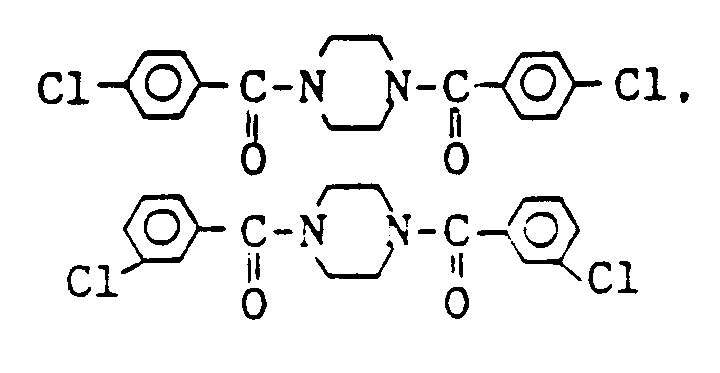
and the mixtures thereof.
and the mixtures thereof.
8. A process as claimed in Claim 5, 6 or 7 in which the aromatic dihalide compound (IV)
is selected from
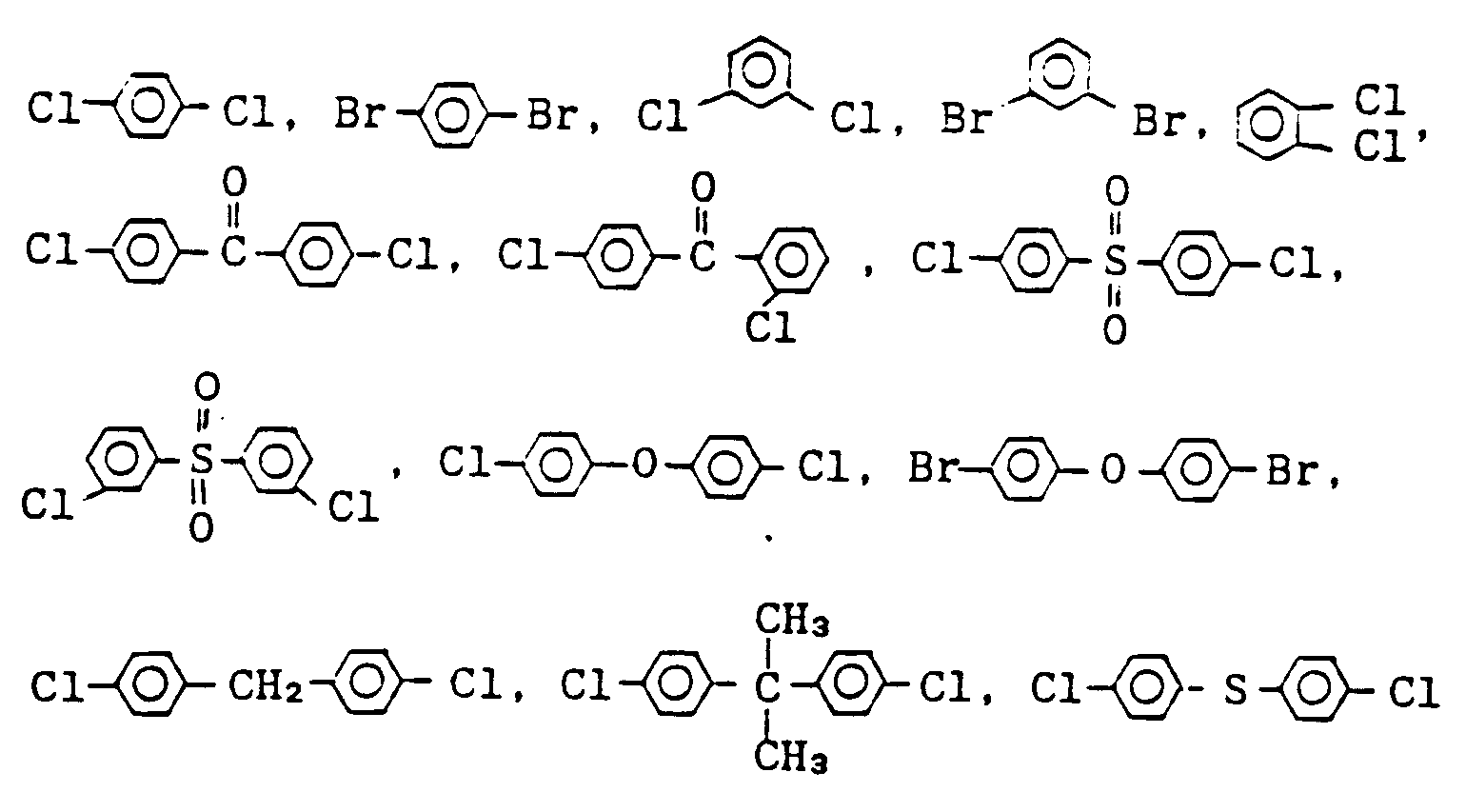
and mixtures thereof.
and mixtures thereof.
9. A process as claimed in Claim 5, 6, 7 or 8 in which the amide group-containing compound
(III) and the compound (IV) are simultaneously sulfidized.
10. A process as claimed in any one of Claims 5 to 8 in which the aide group-containing
compound (III) and the compound (IV) are separately sulfidized and then brought together
into a reaction system where they are allowed to further react with each other.
11. A process as claimed in any one of Claims 5 to 8 in which the amide group-containing
compound (III) is first sulfidized in a reaction system and then the compound (IV)
is added together with an appropriate amount of additional sulfidizing agent to the
system, or vice versa, for further reaction.
12. A process as claimed in any one of Claims 5 to 11 in which the organic solvent is
aprotic.
13. A process as claimed in Claim 12 in which the solvent is selected from N,N-dimethyl
acetamide, N-ethyl-2-pyrrolidone, hexamethyl phosphoric triamide, dimethyl-sulfoxide,
N-methyl-2-pyrrolidone, and 1,3-dimethyl imidazoline.
14. A process as claimed in any one of Claims 5 to 13 in which the sulfidizing agent is
selected from sodium sulfide, a combination of sodium hydrosulfide and sodium hydroxide,
and a combination of hydrogen sulfide and sodium hydroxide.
15. A composition comprising an aromatic sulfideamide polymer as claimed in any one of
Claims 1 to 4 or produced by a process as claimed in any one of Claims 5 to 14 and
one or more conventional additives.
1. Aromatisches Sulfidamid-Polymer, welches aus 1 bis 99 Mol% Repetiereinheiten, die
durch die folgende Formel (I) dargestellt sind:
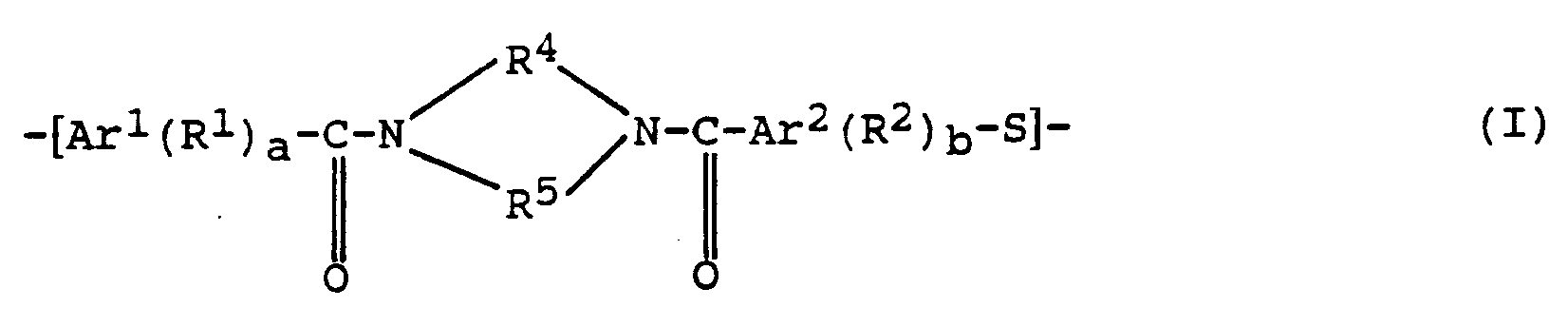
und aus 99 bis 1 Mol% Repetiereinheiten, die durch die Formel (II) dargestellt sind:
-[Ar³(R³)c-S]- (II)
besteht, worin Ar¹, Ar² und Ar³, die gleich oder verschieden sein können, jeweils einen aromatischen Ring bedeuten; R¹, R² und R³, die gleich oder verschieden sein können, jeweils eine Alkylgruppe mit 1 bis 20 Kohlenstoffatomen, eine Cycloalkylgruppe mit 3 bis 20 Kohlenstoffatomen, eine Arylgruppe mit 6 bis 20 Kohlenstoffatomen, eine Alkoxygruppe mit 1 bis 20 Kohlenstoffatomen, eine Acylgruppe mit 2 bis 20 Kohlenstoffatomen oder eine Arylalkylgruppe mit 7 bis 20 Kohlenstoffatomen bedeuten; a, b und c, die gleich oder verschieden sein können, jeweils eine ganze Zahl von 0 bis 4 bedeuten; und R⁴ und R⁵, die gleich oder verschieden sein können, jeweils eine Alkylengruppe mit 1 bis 20 Kohlenstoffatomen bedeuten.
und aus 99 bis 1 Mol% Repetiereinheiten, die durch die Formel (II) dargestellt sind:
-[Ar³(R³)c-S]- (II)
besteht, worin Ar¹, Ar² und Ar³, die gleich oder verschieden sein können, jeweils einen aromatischen Ring bedeuten; R¹, R² und R³, die gleich oder verschieden sein können, jeweils eine Alkylgruppe mit 1 bis 20 Kohlenstoffatomen, eine Cycloalkylgruppe mit 3 bis 20 Kohlenstoffatomen, eine Arylgruppe mit 6 bis 20 Kohlenstoffatomen, eine Alkoxygruppe mit 1 bis 20 Kohlenstoffatomen, eine Acylgruppe mit 2 bis 20 Kohlenstoffatomen oder eine Arylalkylgruppe mit 7 bis 20 Kohlenstoffatomen bedeuten; a, b und c, die gleich oder verschieden sein können, jeweils eine ganze Zahl von 0 bis 4 bedeuten; und R⁴ und R⁵, die gleich oder verschieden sein können, jeweils eine Alkylengruppe mit 1 bis 20 Kohlenstoffatomen bedeuten.
2. Polymer nach Anspruch 1, in welchem die Gruppen Ar¹, Ar² und Ar³ jeweils gewählt werden
aus

worin Z -O-, -S-, -SO₂-, -CO-, -CH₂- oder -C(CH₃)₂- bedeutet.
worin Z -O-, -S-, -SO₂-, -CO-, -CH₂- oder -C(CH₃)₂- bedeutet.
3. Polymer nach Anspruch 1 oder Anspruch 2, welches eine logarithmische Viskosität [η]
von 0,02 bis 2,00, vorzugsweise 0,05 bis 2,00 hat, bestimmt durch Messen der relativen
Viskosität des in konzentrierter Schwefelsäure gelösten Polymers bei 30°C und bei
einer Polymerkonzentration von 0,5 g/100 ml oder der relativen Viskosität des in α-Chlornaphthalin
gelösten Polymers bei 210°C und bei einer Polymerkonzentration von 0,1 g/100 ml und
Berechnen des Ergebnisses gemäß der Gleichung:
4. Polymer nach Anspruch 1, 2 oder 3, welches durch Erwärmen unter einer oxidierenden
Atmosphäre vernetzt oder kettenverlängert oder verzweigt oder irgendeine Kombination
davon ist.
5. Verfahren zur Herstellung eines aromatischen Sulfidamid-Polymers, welches das Sulfidieren
einer amidgruppenhaltigen Dihalogenidverbindung oder von Verbindungen mit der folgenden
allgemeinen Formel (III) und einer aromatischen Dihalogenidverbindung der folgenden
Formel (IV) mit einem sulfidierenden Mittel in einem organischen polaren Lösungsmittel
umfaßt
X-Ar³(R³)c-Y (IV)
worin Ar¹, Ar² und Ar³, welche gleich oder verschieden sein können, jeweils einen aromatischen Ring bedeuten, R¹, R² und R³, die gleich oder verschieden sein können, jeweils eine Alkylgruppe mit 1 bis 20 Kohlenstoffatomen, eine Cycloalkylgruppe mit 3 bis 20 Kohlenstoffatomen, eine Arylgruppe mit 6 bis 20 Kohlenstoffatomen, eine Alkoxygruppe mit 1 bis 20 Kohlenstoffatomen, eine Acylgruppe mit 2 bis 20 Kohlenstoffatomen oder eine Arylalkylgruppe mit 7 bis 20 Kohlenstoffatomen bedeuten; a, b und c, die gleich oder verschieden sein können, jeweils eine ganze Zahl von 0 bis 4 bedeuten; R⁴ und R⁵, die gleich oder verschieden sein können, jeweils eine Alkylengruppe mit 1 bis 20 Kohlenstoffatomen bedeuten; und X und Y, die gleich oder verschieden sein können, jeweils ein Halogen bedeuten; so daß ein Polymer gebildet wird, das aus der folgenden Repetiereinheit (V) besteht:

worin Ar¹ bis Ar³, R¹, R², R³, R⁴ und R⁵ und a, b und c wie oben definiert sind und das Verhältnis von p/q im Bereich von 99/1 bis 1/99 liegt.
X-Ar³(R³)c-Y (IV)
worin Ar¹, Ar² und Ar³, welche gleich oder verschieden sein können, jeweils einen aromatischen Ring bedeuten, R¹, R² und R³, die gleich oder verschieden sein können, jeweils eine Alkylgruppe mit 1 bis 20 Kohlenstoffatomen, eine Cycloalkylgruppe mit 3 bis 20 Kohlenstoffatomen, eine Arylgruppe mit 6 bis 20 Kohlenstoffatomen, eine Alkoxygruppe mit 1 bis 20 Kohlenstoffatomen, eine Acylgruppe mit 2 bis 20 Kohlenstoffatomen oder eine Arylalkylgruppe mit 7 bis 20 Kohlenstoffatomen bedeuten; a, b und c, die gleich oder verschieden sein können, jeweils eine ganze Zahl von 0 bis 4 bedeuten; R⁴ und R⁵, die gleich oder verschieden sein können, jeweils eine Alkylengruppe mit 1 bis 20 Kohlenstoffatomen bedeuten; und X und Y, die gleich oder verschieden sein können, jeweils ein Halogen bedeuten; so daß ein Polymer gebildet wird, das aus der folgenden Repetiereinheit (V) besteht:
worin Ar¹ bis Ar³, R¹, R², R³, R⁴ und R⁵ und a, b und c wie oben definiert sind und das Verhältnis von p/q im Bereich von 99/1 bis 1/99 liegt.
6. Verfahren nach Anspruch 5, in welchem die Gruppen Ar¹, Ar² und Ar³ jeweils gewählt
werden aus

worin Z -O-, -S-, -SO₂-, -CO-, -CH₂- oder -C(CH₃)₂- bedeutet.
worin Z -O-, -S-, -SO₂-, -CO-, -CH₂- oder -C(CH₃)₂- bedeutet.
7. Verfahren nach Anspruch 5 oder Anspruch 6, in welchem die amidgruppenhaltige Dihalogenidverbindung
(III) gewählt wird aus:
und den Gemischen davon.
und den Gemischen davon.
8. Verfahren nach Anspruch 5, 6 oder 7, in welchem die aromatische Dihalogenidverbindung
(IV) gewählt wird aus
und und Gemischen davon.
und und Gemischen davon.
9. Verfahren nach Anspruch 5, 6, 7 oder 8, in welchem die amidgruppenhaltige Verbindung
(III) und die Verbindung (IV) gleichzeitig sulfidiert werden.
10. Verfahren nach einem der Ansprüche 5 bis 8, in welchem die amidgruppenhaltige Verbindung
(III) und die Verbindung (IV) getrennt sulfidiert werden und dann in einem Reaktionssystem
zusammengebracht werden, wo sie weiter miteinander reagieren gelassen werden.
11. Verfahren nach einem der Ansprüche 5 bis 8, in welchem die amidgruppenhaltige Verbindung
(III) zuerst in einem Reaktionssystem sulfidiert wird und dann die Verbindung (IV)
zusammen mit einer geeigneten Menge von zusätzlichem sulfidierenden Mittel zu dem
System zugegeben wird, oder umgekehrt, zur weiteren Reaktion.
12. Verfahren nach einem der Ansprüche 5 bis 11, in welchem das organische Lösungsmittel
aprotisch ist.
13. Verfahren nach Anspruch 12, in welchem das Lösungsmittel gewählt wird aus N,N-Dimethylacetamid,
N-Ethyl-2-pyrrolidon, Hexamethylphosphorsäuretriamid, Dimethylsulfoxid, N-Methyl-2-pyrrolidon
und 1,3-Dimethylimidazolin.
14. Verfahren nach einem der Ansprüche 5 bis 13, in welchem das sulfidierende Mittel gewählt
wird aus Natriumsulfid, einer Kombination aus Natriumhydrogensulfid und Natriumhydroxid
und einer Kombination aus Schwefelwasserstoff und Natriumhydroxid.
15. Zusammensetzung umfassend ein aromatisches Sulfidamid-Polymer nach einem der Ansprüche
1 bis 4, oder hergestellt durch ein Verfahren nach einem der Ansprüche 5 bis 14, und
ein oder mehrere herkömmliche Additive.
1. Polythioétheramide aromatique qui comprend de 1 à 99 mol% de motifs récurrents représentés
par la formule suivante (I) :

et de 99 à 1 mol% de motifs récurrents représentès par la formule (II) :
-[Ar³ (R³)c - S]- (II)
dans lesquelles Ar¹, Ar² et Ar³, qui peuvent être identiques ou différents, représentent chacun un cycle aromatique; R¹, R² et R³, qui peuvent être identiques ou différents, représentent chacun un groupe alkyle ayant de 1 à 20 atomes de carbone, un groupe cycloalkyle ayant de 3 à 20 atomes de carbone, un groupe aryle ayant de 6 à 20 atomes de carbone, un groupe alkoxy ayant de 1 à 20 atomes de carbone, un groupe acyle ayant de 2 à 20 atomes de carbone ou un groupe arylalkyle ayant de 7 à 20 atomes de carbone ; a, b et c, qui peuvent être identiques ou différents, représentent chacun un entier compris entre 0 et 4 ; et R⁴ et R⁵, qui peuvent être identiques ou différents, représentent chacun un groupe alkylène ayant de 1 à 20 atomes de carbone.
et de 99 à 1 mol% de motifs récurrents représentès par la formule (II) :
-[Ar³ (R³)c - S]- (II)
dans lesquelles Ar¹, Ar² et Ar³, qui peuvent être identiques ou différents, représentent chacun un cycle aromatique; R¹, R² et R³, qui peuvent être identiques ou différents, représentent chacun un groupe alkyle ayant de 1 à 20 atomes de carbone, un groupe cycloalkyle ayant de 3 à 20 atomes de carbone, un groupe aryle ayant de 6 à 20 atomes de carbone, un groupe alkoxy ayant de 1 à 20 atomes de carbone, un groupe acyle ayant de 2 à 20 atomes de carbone ou un groupe arylalkyle ayant de 7 à 20 atomes de carbone ; a, b et c, qui peuvent être identiques ou différents, représentent chacun un entier compris entre 0 et 4 ; et R⁴ et R⁵, qui peuvent être identiques ou différents, représentent chacun un groupe alkylène ayant de 1 à 20 atomes de carbone.
2. Polymère selon la revendication 1 dans lequel les groupes Ar¹, Ar² et Ar³ sont chacun
choisis parmi

Z représentant -O-, -S-, -SO₂ -, -CO-, -CH₂- ou -C(CH₃)₂-
Z représentant -O-, -S-, -SO₂ -, -CO-, -CH₂- ou -C(CH₃)₂-
3. Polymère selon la revendication 1 ou 2 qui a une viscosité logarithmique [η] comprise
entre 0,02 et 2,00, de préférence entre 0,05 et 2,00, déterminée en mesurant la viscosité
relative du polymère dissous dans de l'acide sulfurique concentré à 30°C et à une
concentration de polymère de 0,5 g/100 ml ou la viscosité relative du polymère dissous
dans du α-chloronaphtalène à 210°C et à une concentration de polymère de 0,1 g/100
ml et en calculant le résultat conformément à l'équation:

4. Polymère selon la revendication 1, 2 ou 3 qui est réticulé ou à chaîne allongée ou
ramifié ou toute combinaison de ces derniers par chauffage sous une atmosphère oxydante.
5. Procédé de préparation d'un polythioétheramide aromatique, qui comprend la sulfuration
d'un composé dihalogénure à groupe amide ou de composés ayant la formule générale
III et d'un composé dihalogénure aromatique de la formule suivante (IV) avec un agent
de sulfuration dans un solvant organique polaire

X-Ar³ (R³)c-Y (IV)
dans lesquelles Ar¹, Ar² et Ar³, qui peuvent être identiques ou différents, représentent chacun un cycle aromatique; R¹, R² et R³, qui peuvent être identiques ou différents, représentent chacun un groupe alkyle ayant de 1 à 20 atomes de carbone, un groupe cycloalkyle ayant de 3 à 20 atomes de carbone, un groupe aryle ayant de 6 à 20 atomes de carbone, un groupe alkoxy ayant de 1 à 20 atomes de carbone, un groupe acyle ayant de 2 à 20 atomes de carbone ou un groupe arylalkyle ayant de 7 à 20 atomes de carbone; a, b et c, qui peuvent être identiques ou différents, représentent chacun un entier compris entre 0 et 4; R⁴ et R⁵, qui peuvent être identiques ou différents, représentent chacun un groupe alkylène ayant de 1 à 20 atomes de carbone ; et X et Y, qui peuvent être identiques ou différents, représentent chacun un atome d'halogène ; de telle façon à former un polymère comprenant le motif récurrent suivant (V) :

dans lequel Ar¹ à Ar³, R¹, R², R³, R⁴ et R⁵ et a, b et c, sont comme définis ci-dessus et le rapport p/q est compris entre 99/1 et 1/99.
X-Ar³ (R³)c-Y (IV)
dans lesquelles Ar¹, Ar² et Ar³, qui peuvent être identiques ou différents, représentent chacun un cycle aromatique; R¹, R² et R³, qui peuvent être identiques ou différents, représentent chacun un groupe alkyle ayant de 1 à 20 atomes de carbone, un groupe cycloalkyle ayant de 3 à 20 atomes de carbone, un groupe aryle ayant de 6 à 20 atomes de carbone, un groupe alkoxy ayant de 1 à 20 atomes de carbone, un groupe acyle ayant de 2 à 20 atomes de carbone ou un groupe arylalkyle ayant de 7 à 20 atomes de carbone; a, b et c, qui peuvent être identiques ou différents, représentent chacun un entier compris entre 0 et 4; R⁴ et R⁵, qui peuvent être identiques ou différents, représentent chacun un groupe alkylène ayant de 1 à 20 atomes de carbone ; et X et Y, qui peuvent être identiques ou différents, représentent chacun un atome d'halogène ; de telle façon à former un polymère comprenant le motif récurrent suivant (V) :
dans lequel Ar¹ à Ar³, R¹, R², R³, R⁴ et R⁵ et a, b et c, sont comme définis ci-dessus et le rapport p/q est compris entre 99/1 et 1/99.
6. Procédé selon la revendication 5, dans lequel les groupes Ar¹, Ar², et Ar³ sont chacun
choisis parmi

Z représentant -O-, -S-, -SO₂-, -CO-, -CH₂- ou -C(CH₃)₂-.
Z représentant -O-, -S-, -SO₂-, -CO-, -CH₂- ou -C(CH₃)₂-.
7. Procédé selon la revendication 5 ou la revendication 6, dans laquelle le composé dihalogénure
à groupe amide (III) est choisi parmi
et les mélanges de ces derniers.
et les mélanges de ces derniers.
8. Procédé selon la revendication 5, 6 ou 7 dans laquelle le composé dihalogénure aromatique
(IV) est choisi parmi
et les mélanges de ces derniers.
et les mélanges de ces derniers.
9. Procédé selon la revendication 5, 6, 7 ou 8 dans lequel le composé à groupe amide
(III) et le composé (IV) sont simultanément sulfurés.
10. Procédé selon l'une quelconque des revendications 5 à 8 dans lequel on sulfurise séparément
le composé à groupe amide (III) et le composé (IV) et on les réunit ensuite dans un
système réactionnel dans lequel ils peuvent ensuite réagir l'un avec l'autre.
11. Procédé selon l'une quelconque des revendications 5 à 8 dans lequel le composé à groupe
amide (III) est d'abord sulfuré dans un système réactionnel et ensuite le composé
(IV) est ajouté au système avec une quantité appropriée d'un agent supplémentaire
de sulfuration, ou vice versa, pour réaction supplémentaire.
12. Procédé selon l'une quelconque des revendications 5 à 11 dans lequel le solvant organique
est aprotique.
13. Procédé selon la revendication 12 dans lequel le solvant est choisi parmi le N,N-diméthyl
acétamide, la N-éthyl-2-pyrrolidone l'hexaméthyl phosphorique triamide, le diméthylsulfoxide,
la N-méthyl-2-pyrrolidone, la 1,3-diméthylimidazoline.
14. Procédé selon l'une quelconque des revendications 5 à 13 dans lequel l'agent de sulfuration
est choisi parmi le sulfure de sodium, une combinaison d'hydrosulfure de sodium et
d'hydroxyde de sodium, et une combinaison de sulfure d'hydrogène et d'hydroxyde de
sodium.
15. Composition comprenant un polythioétheramide aromatique selon l'une quelconque des
revendications 1 à 9 ou produit par un procédé selon l'une quelconque des revendications
5 à 14 et un ou plusieurs additif(s) classique(s).