|
(11) | EP 0 336 759 A1 |

| (12) | EUROPEAN PATENT APPLICATION |
|
|
|
|
|||||||||||||||||||||||||||
|
||||||||||||||||||||||||||||
| (54) | Imidazole derivatives |
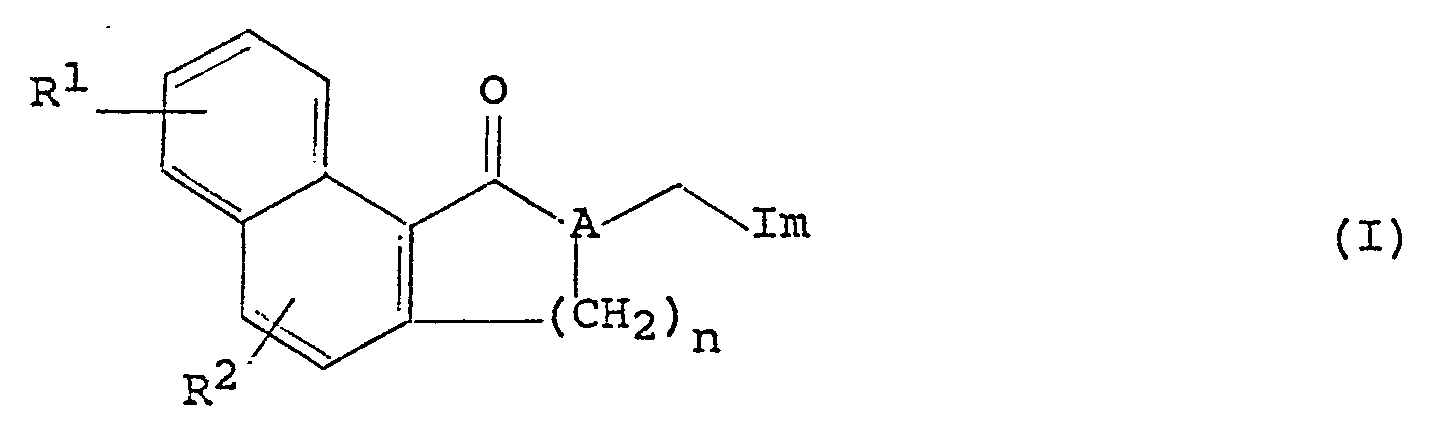
| (57) The invention relates to imidazole derivatives of the general formula (I)
wherein Im represents an imidazolyl group of formula: A represents the group CH or a nitrogen atom; R¹ and R², which may be the same or different, and may be attached to either the same or different fused rings of the naphthalene moiety, each represents a hydrogen atom, a halogen atom, or a hydroxy, C₁₋₄alkoxy, C₁₋₄alkyl or C₁₋₄alkylthio group, and one of R¹ and R² may also represent a group -NR³R⁴ (wherein R³ and R⁴, which may be the same or different, each represents a hydrogen atom or a C₁₋₄alkyl group, or together with the nitrogen atom to which they are attached form a saturated 5 to 7 membered ring); n represents 1, 2 or 3; one of the groups represented by R⁵, R⁶ and R⁷, is a hydrogen atom or a C₁₋₆alkyl, C₃₋₇cycloalkyl, C₃₋₆alkenyl, phenyl or phenylC₁₋₃alkyl group, and each of the other two groups, which may be the same or different, represents a hydrogen atom or a C₁₋₆alkyl group; and physiologically acceptable salts and solvates thereof. The compounds are potent and selective antagonists of the effect of 5-HT at 5-HT₃ receptors and are useful, for example, in the treatment of psychotic disorders, anxiety, and nausea and vomiting. |
[0001] This invention relates to imidazole derivatives, to processes for their preparation, to pharmaceutical compositions containing them and to their medical use.
[0002] In particular the invention relates to compounds which are potent and selective antagonists of 5-hydroxytryptamine (5-HT) at 5-HT receptors of the type located on terminals of primary afferent nerves. Receptors of this type are now designated as 5-HT₃ receptors and are also present in the central nervous system. 5-HT occurs widely in the neuronal pathways in the central nervous system and disturbance of these 5-HT containing pathways is known to alter behavioural syndromes such as mood, psychomotor activity, appetite and memory.
[0004] Thus for example published UK Patent Specification No. 2153821A and published European Patent Specifications Nos. 191562, 219193 and 210840 disclose 3-imidazolylmethyltetrahydrocarbazolones which may be represented by the general formula:
wherein R¹ represents a hydrogen atom or a group selected from C₁₋₁₀alkyl, C₃₋₆alkenyl, C₃₋₁₀alkynl, C₃₋₇cycloalkyl, C₃₋₇cycloalkylC₁₋₄alkyl, phenyl or phenylC₁₋₃alkyl, and in the case where Q represents a hydrogen atom, R¹ may also represent -CO₂R⁵, -COR⁵, -CONR⁵R⁶ or -SO₂R⁵ (wherein R⁵ and R⁶, which may be the same or different, each represents a hydrogen atom, a C₁₋₆alkyl or C₃₋₇cycloalkyl group, or a phenyl or phenylC₁₋₄alkyl group, in which the phenyl group is optionally substituted by one or more C₁₋₄alkyl, C₁₋₄alkoxy or hydroxy groups or halogen atoms, with the proviso that R⁵ does not represent a hydrogen atom when R¹ represents a group -CO₂R⁵ or -SO₂R⁵);
one of the groups represented by R², R³ and R⁴ is a hydrogen atom or a C₁₋₆ alkyl, C₃₋₇ cycloalkyl, C₂₋₆ alkenyl, or phenylC₁₋₃alkyl group, and each of the other two groups, which may be the same or different, represents a hydrogen atom or a C₁₋₆ alkyl group;
Q represents a hydrogen atom or a halogen atom or a hydroxy, C₁₋₄alkoxy, phenylC₁₋₃alkoxy or C₁₋₆ alkyl group or a group -NR⁷R⁸ or -CONR⁷R⁸ (wherein R⁷ and R⁸, which may be the same or different, each represents a hydrogen atom or a C₁₋₄ alkyl or C₃₋₄ alkenyl group, or together with the nitrogen atom to which they are attached form a saturated 5 to 7 membered ring);
and physiologically acceptable salts and solvates thereof.
[0005] Furthermore, published European Patent Specification No. 242973 disclosed ketone derivatives which may be represented by the general formula:
wherein Im represents an imidazolyl group of formula:
R¹ represents a hydrogen atom or a C₁₋₆alkyl, C₃₋₆alkenyl, C₃₋₁₀alkynyl, C₃₋₇cycloalkyl, C₃₋₇cycloalkylC₁₋₄alkyl, phenyl or phenylC₁₋₃alkyl group;
R² represents a hydrogen atom or a C₁₋₆alkyl, C₃₋₆alkenyl, C₃₋₇cycloalkyl, phenyl or phenylC₁₋₃alkyl group;
A-B represents the group R³R⁴C-CH₂ or R³C=CH;
R³ and R⁴, which may be the same or different, each represents a hydrogen atom or a C₁₋₆alkyl group;
one of the groups represented by R⁵,R⁶ and R⁷, is a hydrogen atom or a C₁₋₆alkyl, C₃₋₇cycloalkyl, C₃₋₆alkenyl, phenyl or phenylC₁₋₃alkyl group, and each of the other two groups, which may be the same or different, represents a hydrogen atom or a C₁₋₆alkyl group;
and physiologically acceptable salts and solvates thereof.
[0006] We have now found a novel group of compounds which differ in structure from those described previously, and which are potent antagonists of the effect of 5-HT at 5-HT₃ receptors.
[0007] Thus, the present invention provides a compound of the general formula (I):
wherein Im represents an imidazolyl group of formula :
A represents the group CH or a nitrogen atom;
R¹ and R², which may be the same or different, and may be attached to either the same or different fused rings of the naphthalene moiety, each represents a hydrogen atom, a halogen atom, or a hydroxy, C₁₋₄alkoxy, C₁₋₄alkyl or C₁₋₄alkylthio group, and one of R¹ and R² may also represent a group -NR³R⁴ (wherein R³ and R⁴, which may be the same or different, each represents a hydrogen atom or a C₁₋₄alkyl group, or together with the nitrogen atom to which they are attached form a saturated 5 to 7 membered ring);
n represents 1, 2 or 3;
one of the groups represented by R⁵,R⁶ and R⁷, is a hydrogen atom or a C₁₋₆alkyl, C₃₋₇cycloalkyl, C₃₋₆alkenyl, phenyl or phenylC₁₋₃alkyl group, and each of the other two groups, which may be the same or different, represents a hydrogen atom or a C₁₋₆alkyl group; and physiologically acceptable salts and solvates thereof.
[0008] According to one aspect, the invention provides compounds of formula (I) wherein X represents the group CH.
[0009] According to another aspect, the invention provides compounds of formula (I) wherein X represents a nitrogen atom.
[0010] Suitable physiologically acceptable salts of the compounds of general formula (I) include acid addition salts formed with organic or inorganic acids for example, hydrochlorides, hydrobromides, sulphates, alkyl- or arylsulphonates (e.g. methanesulphonates or p-toluenesulphonates), phosphates, acetates, citrates, succinates, tartrates, fumarates and maleates. The solvates may, for example, be hydrates.
[0011] It will be appreciated that when A represents the group CH, the carbon atom of this group is asymmetric and may exist in the R- or S-configuration. Furthermore, depending on the nature of the substituents R¹, R², R⁵, R⁶ and R⁷, centres of optical and geometric isomerism may occur elsewhere in the molecule.
[0012] All optical isomers of compounds of general formula (I) and their mixtures including the racemic mixtures thereof, and all the geometric isomers of compounds of formula (I), are embraced by the invention.
[0013] Referring to the general formula (I), an alkyl group as such or as part of a group may be a straight chain or branched chain alkyl group, for example, methyl, ethyl, propyl, prop-2-yl, butyl or but-2-yl, and, in the case of R⁵, R⁶ and R⁷, pentyl, pent-3-yl or hexyl. A C₁₋₄alkoxy group may be, for example, a methoxy group. A halogen atom may be, for example, a fluorine, chlorine or bromine atom. An alkenyl group may be, for example, a propenyl or butenyl group. It will be appreciated that when R⁶ represents a C₃₋₆alkenyl group, the double bond may not be adjacent to the nitrogen atom. A phenylC₁₋₃alkyl group may be, for example, a benzyl, phenethyl or 3-phenylpropyl group. A cycloalkyl group may be, for example, a cyclopropyl, cyclobutyl, cyclopentyl, cyclohexyl or cycloheptyl group.
[0014] A preferred class of compounds of formula (I) is that in which R⁵, R⁶ and R⁷ each independently represents a hydrogen atom or a C₁₋₆alkyl group, more particularly a hydrogen atom or a C₁₋₃alkyl (e.g. methyl) group.
[0015] A particularly preferred class of compounds of general formula (I) is that wherein R⁵ and R⁶ each represent a hydrogen atom and R⁷ represents a C₁₋₆alkyl (e.g. methyl) group.
[0016] A further preferred class of compounds of general formula (I) is that wherein n represents 2.
[0017] Another preferred class of compounds of general formula (I) is that wherein R¹ and R² each represent a hydrogen atom.
[0018] Yet another preferred class of compounds of general formula (I) is that wherein A represents a nitrogen atom.
[0019] Particularly preferred compounds according to the invention are 1,2-dihydro-3-[(5-methyl-1H-imidazol-4-yl)methyl]-4(3H)-phenanthrenone and 3,4-dihydro-2-[(5-methyl-1H-imidazol-4-yl)methyl]-benz[h]isoquinolin-1(2H)-one and their physiologically acceptable salts and solvates.
[0020] The potent and selective antagonism of 5-HT at 5-HT₃ receptors by compounds of the invention has been demonstrated by their ability to inhibit 3-(5-methyl-1H-imidazol-4-yl)-1-[1-(methyl-t₃)-1H-indol-3-yl]-1-propanone binding in rat entorhinal cortex homogenates (following the general procedure described by G. Kilpatrick et al. in Nature, 1987, 330, 746), and/or by their ability to inhibit the 5-HT-induced depolarisation of the rat isolated vagus nerve preparation.
[0021] Compounds of formula (I), which antagonise the effect of 5-HT at 5-HT₃ receptors, are useful in the treatment of conditions such as psychotic disorders (e.g. schizophrenia and mania); anxiety; and nausea and vomiting, particularly that associated with cancer chemotherapy and radiotherapy. Compounds of formula (I) are also useful in the treatment of gastric stasis; symptoms of gastrointestinal dysfunction such as occur with dyspepsia, peptic ulcer, reflux oesophagitis, flatulence and irritable bowel syndrome; migraine; and pain. Compounds of formula (I) may also be used in the treatment of dependency on drugs and substances of abuse, depression, and dementia and other cognitive disorders.
[0022] According to another aspect, the invention provides a method of treatment of a human or animal subject suffering from a psychotic disorder such as schizophrenia or mania; or from anxiety; nausea or vomiting; gastric stasis; symptoms of gastrointestinal dysfunction such as dyspepsia, reflux oesophagitis, peptic ulcer, flatulence and irritable bowel syndrome; migraine; pain; dependency on drugs and substances of abuse; depression; or dementia or another cognitive disorder, which comprises administering an effective amount of a compound of formula (I) or a physiologically acceptable salt or solvate thereof.
[0023] Accordingly, the invention also provides a pharmaceutical composition which comprises at least one compound selected from compounds of the general formula (I), and their physiologically acceptable salts and solvates (e.g. hydrates), for use in human or veterinary medicine, and formulated for administration by any convenient route.
[0024] Such compositions may be formulated in conventional manner using one or more physiologically acceptable carriers and/or excipients.
[0025] Thus the compounds according to the invention may be formulated for oral, buccal, parenteral or rectal administration or in a form suitable for administration by inhalation or insufflation (either through the mouth or nose).
[0026] For oral administration, the pharmaceutical compositions may take the form of, for example, tablets or capsules prepared by conventional means with pharmaceutically acceptable excipients such as binding agents (e.g. pregelatinised maize starch, polyvinylpyrrolidone or hydroxylpropyl methylcellulose); fillers (e.g. lactose, microcrystalline cellulose or calcium hydrogen phosphate); lubricants (e.g. magnesium stearate, talc or silica); disintegrants (e.g. potato starch or sodium starch glycollate); or wetting agents (e.g. sodium lauryl sulphate). The tablets may be coated by methods well known in the art. Liquid preparations for oral administration may take the form of, for example, solutions, syrups or suspensions, or they may be presented as a dry product for constitution with water or other suitable vehicle before use. Such liquid preparations may be prepared by conventional means with pharmaceutically acceptable additives such as suspending agents (e.g. sorbitol syrup, cellulose derivatives or hydrogenated edible fats); emulsifying agents (e.g. lecithin or acacia); non-aqueous vehicles (e.g. almond oil, oily esters, ethyl alcohol or fractionated vegetable oils); and preservatives (e.g. methyl or propyl-p-hydroxybenzoates or sorbic acid). The preparations may also contain buffer salts, flavouring, colouring and sweetening agents as appropriate.
[0027] Preparations for oral administration may be suitably formulated to give controlled release of the active compound.
[0028] For buccal administration the compositions may take the form of tablets or lozenges formulated in conventional manner.
[0029] The compounds of the invention may be formulated for parenteral administration by bolus injection or continuous infusion. Formulations for injection may be presented in unit dosage form e.g. in ampoules or in multi-dose containers, with an added preservative. The compositions may take such forms as suspensions, solutions or emulsions in oily or aqueous vehicles, and may contain formulatory agents such as suspending, stabilising and/or dispersing agents. Alternatively, the active ingredient may be in powder form for constitution with a suitable vehicle, e.g. sterile pyrogen-free water, before use.
[0030] The compounds of the invention may also be formulated in rectal compositions such as suppositories or retention enemas, e.g. containing conventional suppository bases such as cocoa butter or other glycerides.
[0031] In addition to the formulations described previously, the compounds of the invention may also be formulated as depot preparations. Such long acting formulations may be administered by implantation (for example subcutaneously or intramuscularly) or by intramuscular injection. Thus, for example, the compounds of the invention may be formulated with suitable polymeric or hydrophobic materials (for example as an emulsion in an acceptable oil) or ion exchange resins, or as sparingly soluble derivatives, for example, as a sparingly soluble salt.
[0032] For administration by inhalation the compounds according to the invention are conveniently delivered in the form of an aerosol spray presentation from pressurised packs or a nebuliser, with the use of a suitable propellant, e.g. dichlorodifluoromethane, trichlorofluoromethane, dichlorotetrafluoroethane, carbon dioxide or other suitable gas. In the case of a pressurised aerosol the dosage unit may be determined by providing a valve to deliver a metered amount. Capsules and cartridges of e.g. gelatin for use in an inhaler or insufflator may be formulated containing a powder mix of a compound of the invention and a suitable powder base such as lactose or starch.
[0033] For intranasal administration, the compounds according to the invention may be formulated as solutions for administration via a suitable metered or unit dose device or alternatively as a powder mix with a suitable carrier for administration using a suitable delivery device.
[0034] The compounds of formula (I) may also be administered in combination with other therapeutic agents. Thus, for example, in the treatment of gastric stasis, symptoms of gastrointestinal dysfunction and nausea and vomiting, the compounds of formula (I) may be administered in combination with antisecretory agents such as histamine H₂-receptor antagonists (e.g. ranitidine, sufotidine, 1-methyl-5-[[3-[3-(1-piperidinylmethyl)phenoxy]propyl]amino]-1H-1,2,4-triazole-3-methanol, cimetidine, famotidine, nizatidine or roxatidine) or H⁺K⁺ATPase inhibitors (e.g. omeprazole). In the treatment of nausea and vomiting, compounds of formula (I) may also be administered in combination with dexamethasone.
[0035] A proposed dose of the compounds of the invention for administration to man (of approximately 70kg body weight) is 0.001 to 100mg, preferably 0.01 to 50mg, more preferably 0.1 to 20mg of the active ingredient per unit dose expressed as the weight of free base, which could be administered, for example, 1 to 4 times per day. It will be appreciated that it may be necessary to make routine variations to the dosage, depending on the age and condition of the patient. The dosage will also depend on the route of administration.
[0036] Compounds of general formula (I) and physiologically acceptable salts or solvates thereof may be prepared by the general methods outlined hereinafter. In the following description, the groups R¹ to R⁷, n, A and Im are as defined for compounds of general formula (I) unless otherwise stated.
[0037] According to a first general process (A), a compound of general formula (I) wherein A represents the group CH may be prepared by hydrogenating a compound of formula (II):
or a protected derivative thereof, followed where necessary by removal of any protecting groups.
[0038] Hydrogenation according to general process (A) may be effected using conventional procedures, for example using hydrogen in the presence of a noble metal catalyst (e.g. palladium, Raney nickel, platinum or rhodium). The catalyst may be supported on, for example, charcoal or alumina, or alternatively a homogeneous catalyst such as tris(triphenylphosphine)rhodium chloride may be used. The hydrogenation will generally be effected in a solvent such as an alcohol (e.g. methanol or ethanol), an ether (e.g. dioxan), or an ester (e.g. ethyl acetate), or in a mixture of an alcohol and either a hydrocarbon (e.g. toluene) or a halogenated hydrocarbon (e.g. dichloromethane), at a temperature in the range -20 to +100°C, preferably 0 to 50°C, and at a pressure of from 1 to 10 atmospheres.
[0039] Compounds of formula (II) are novel compounds and constitute a further aspect of the invention.
[0040] According to another general process (B), a compound of general formula (I) may be prepared by reacting a compound of formula (III) :
or a protected derivative thereof, with a compound of formula (IV) :
LCH₂-Im (IV)
or a protected derivative thereof,wherein L represents a leaving atom or group such as a halogen atom (e.g. chlorine, bromine or iodine), an acyloxy group (e.g. trifluoroacetyloxy or acetoxy), or a sulphonyloxy group (e.g. trifluoromethanesulphonyloxy, p-toluenesulphonyloxy or methanesulphonyloxy), in the presence of a base, followed where necessary by removal of any protecting groups.
[0041] Suitable bases include alkali metal hydrides (e.g. sodium hydride), alkali metal carbonates (e.g. sodium carbonate), alkali metal amides (e.g. sodium amide or lithium diisopropylamide), alkali metal alkoxides (e.g. potassium t-butoxide) or alkali metal hydroxides (e.g.sodium or potassium hydroxide). The reaction may conveniently be carried out in an inert solvent such as an ether (e.g. dimethoxyethane, diglyme or tetrahydrofuran), a substituted amide (e.g. dimethylformamide or N-methylpyrrolidone), an aromatic hydrocarbon (e.g. toluene), a ketone (e.g. acetone) or dimethyl sulphoxide, and at a temperature of -80 to +100°C, preferably -80 to +50°C.
[0042] According to another general process (C), a compound of general formula (I) may be converted into another compound of formula (I) using conventional techniques. Such conventional techniques include hydrogenation, alkylation, and acid-catalysed cleavage using protection and deprotection where necessary.
[0043] Thus, according to one embodiment of the interconversion process (C), hydrogenation may be used to convert an alkenyl substituent into an alkyl substituent. Hydrogenation according to general process (C) may be effected using conventional procedures, for example as described above for general process (A).
[0044] The term 'alkylation' according to general process (C) includes the introduction of other groups such as cycloalkyl, alkenyl or phenalkyl groups.
[0045] Thus, for example, a compound of formula (I) in which R¹ and/or R² represents a C₁₋₄alkoxy group may be prepared by alkylating the corresponding compound in which R¹ and/or R² represents a hydroxyl group,or a compound of formula (I) in which R⁶ represents a C₁₋₆alkyl, C₃₋₇cycloalkyl, C₃₋₆alkenyl or phenylC₁₋₃alkyl group may be prepared by alkylating the corresponding compound of formula (I) in which R⁶ represents a hydrogen atom.
[0046] The above alkylation reactions may be effected using conventional procedures, for example as described in published European Patent specification No. 242973. Thus the reactions may be effected using an appropriate alkylating agent of formula R⁸G (where R⁸ is the group to be introduced and G is a leaving atom or group), preferably in the presence of a base.
[0047] According to a yet further embodiment of general process (C), a compound of formula (I) in which R¹ and/or R² represents a hydroxyl group may be prepared from the corresponding compound of formula (I) in which R¹ and/or R² represents a C₁₋₄alkoxy group, by acid-catalysed cleavage. The reaction may be effected using a Lewis acid such as boron tribromide or aluminium trichloride, in a solvent such as a halogenated hydrocarbon (e.g. dichloromethane). The reaction temperature may conveniently be in the range -80 to +100°C.
[0048] It should be appreciated that in the above transformations it may be necessary or desirable to protect any sensitive groups in the molecule of the compound in question to avoid undesirable side reactions. For example, it may be necessary to protect the imidazole nitrogen atom, for example with an arylmethyl (e.g. trityl), arylmethoxymethyl (e.g. phenylmethoxymethyl), alkyl (e.g. t-butyl), alkoxymethyl (e.g. methoxymethyl), acyl (e.g. benzyloxycarbonyl) or a sulphonyl (e.g. N,N-dimethylaminosulphonyl or p-toluenesulphonyl) group. When R¹ and/or R² represents a hydroxyl group it may be necessary to protect the hydroxyl group, for example with an arylmethyl (e.g. benzyl or trityl) group.
[0049] Thus according to another general process (D), a compound of general formula (I) may be prepared by the removal of any protecting groups from a protected form of a compound of formula (I). Deprotection may be effected using conventional techniques such as those described in 'Protective Groups in Organic Synthesis' by T. W. Greene (John Wiley and Sons, 1981).
[0050] For example, an arylmethoxymethyl N-protecting group may be cleaved by hydrogenolysis in the presence of a catalyst (e.g. palladium on charcoal). A trityl group may be cleaved by acid hydrolysis (e.g. using dilute hydrochloric or acetic acid). An alkoxyalkyl group may be removed using a mineral acid (e.g. dilute hydrochloric acid). An acyl group may be removed by hydrolysis under acidic or basic conditions (e.g. using hydrogen bromide or sodium hydroxide). A sulphonyl group may be removed by alkaline hydrolysis. An arylmethyl OH-protecting group may be cleaved under acidic conditions (e.g. with dilute acetic acid, hydrobromic acid or boron tribromide) or by hydrogenolysis in the presence of a catalyst (e.g. palladium on charcoal).
[0051] Compounds of formula (II) may be prepared, for example, by condensing a compound of formula (III) wherein A represents the group CH, or a protected derivative thereof, with a compound of formula (V):
OHC-Im (V)
or a protected derivative thereof, in the presence of a base, followed where necessary by removal of any protecting groups. The reaction may conveniently be effected using an alkali metal hydroxide (e.g. sodium or potassium hydroxide) in an alcohol (e.g. methanol or ethanol) or water, or mixtures thereof, or using an alkali metal alkoxide (e.g. sodium ethoxide or potassium t-butoxide) in the corresponding alcohol (e.g. ethanol or t-butanol) or in an inert solvent such as an ether (e.g. tetrahydrofuran), and at a temperature of 0 to 100°C.
[0053] Compounds of formulae (IV) and (V) and protected derivatives thereof, are either known, or may be prepared, for example, by the methods described in German Offenlegungsschrift No. 3740352.
[0054] Where it is desired to isolate a compound of the invention as a salt, for example a physiologically acceptable salt, this may be achieved by reacting the compound of formula (I) in the form of the free base with an appropriate acid, preferably with an equivalent amount, in a suitable solvent such as an alcohol (e.g. ethanol or methanol), an aqueous alcohol (e.g. aqueous ethanol), a halogenated hydrocarbon (e.g. dichloromethane), an ester (e.g. ethyl acetate) or an ether (e.g. tetrahydrofuran).
[0055] Physiologically acceptable salts may also be prepared from other salts, including other physiologically acceptable salts, of the compound of formula (I) using conventional methods.
[0056] Individual enantiomers of the compounds of the invention may be obtained by resolution of a mixture of enantiomers (e.g. a racemic mixture) using conventional means, such as an optically active resolving acid; see for example 'Stereochemistry of Carbon Compounds' by E.L.Eliel (McGraw Hill, 1962) and 'Tables of Resolving Agents' by S. H. Wilen.
[0057] The methods described above for preparing the compounds of the invention may be used for the introduction of the desired groups at any stage in the stepwise formation of the required compounds, and it will be appreciated that these methods can be combined in different ways in such multi-stage processes. The sequence of the reactions in multi-stage processes should of course be chosen so that the reaction conditions used do not affect groups in the molecule which are desired in the final product.
[0058] The invention is further illustrated by the following Examples. All temperatures are in °C. Flash column chromatography (FCC) was carried out on silica (Merck 9385). Organic extracts were dried, where indicated, over sodium sulphate. The following abbreviations are used: DMF - dimethylformamide; THF - tetrahydrofuran.
Example 1
1,2-Dihydro-3-[(5-methyl-1H-imidazol-4-yl)methyl]-4(3H)-phenanthrenone maleate
(i) 1,2-Dihydro-3-[[5-methyl-1-(triphenylmethyl)-1H-imidazol-4-yl]-methylene]-4(3H)-phenanthrenone
[0059] A solution of potassium hydroxide (0.25g) in methanol (5mℓ) was added to a solution of 1,2-dihydro-4(3H)-phenanthrenone (0.5g) and 5-methyl-1-(triphenylmethyl)-1H-imidazole-4-carboxaldehyde (0.9g) in methanol (20mℓ). The mixture was kept at 23° for 5 days after which time a solid had separated. This was filtered off, washed with ethanol and purified by FCC eluting firstly with hexane/dichloromethane (1:1) and then with dichloromethane to give the title compound (0.86g), m.p. 145-148° (decomp.).
(ii) 1,2-Dihydro-3-[(5-methyl-1H-imidazol-4-yl)methyl]-4(3H)-phenanthrenone maleate
[0060] A solution of 1,2-dihydro-3-[[5-methyl-1-(triphenylmethyl)-1H-imidazol-4-yl]methylene]-4(3H)-phenanthrenone (0.5g) in a mixture of THF (15mℓ), acetic acid (5mℓ) and water (5mℓ) was heated on a steam bath for 45 min. 0.5M Hydrochloric acid (25mℓ) was added and the mixture was extracted with ether (2x15mℓ; discarded). The aqueous solution was basified with solid potassium carbonate and the mixture was extracted with dichloromethane (3x15mℓ). The dried extracts were evaporated and the residue (0.21g) was dissolved in ethanol (25mℓ) and hydrogenated at room temperature and atmospheric pressure over a stirred suspension of 10% palladium on carbon (0.05g) for 1.5h. The solution was filtered and the filtrate evaporated to give a gum which was purified by FCC eluting firstly with ethyl acetate and then with ethyl acetate/methanol (3:1) to give the free base of the title compound as a gum (0.13g). This was dissolved in methanol (20mℓ) containing maleic acid (50mg) and the solution was evaporated to give a gum which on trituration with ether gave the title compound as a solid (0.11g), m.p. 133-134°.
| Water Analysis Found : 0.31% w/w ≡ 0.07 mol H₂O. | ||||
| Analysis | Found: | C,67.4; | H,5.5; | N,6.7; |
| C₁₉H₁₈N₂O.C₄H₄O₄.0.07H₂O | requires | C,67.8; | H,5.5; | N,6.9%. |
Example 2
3,4-Dihydro-2-[(5-methyl-1H-imidazol-4-yl)methyl]-benz[h]isoquinolin-1(2H)-one maleate
[0061] A solution of 3,4-dihydrobenz[h]isoquinolin-1(2H)-one (408mg) in dry DMF (8mℓ) was added dropwise under nitrogen to a stirred suspension of sodium hydride (78% dispersion in oil; 80mg) in dry DMF (2mℓ) and stirring was continued at room temperature for 2h. A solution of 4-(chloromethyl)-5-methyl-1-(triphenylmethyl)-1H-imidazole (1.50g) in dry THF (10mℓ) was added dropwise and the cloudy solution was stirred at room temperature for 18h. A mixture of acetic acid (15mℓ), water (15mℓ) and THF (5mℓ) was added and the mixture was heated under reflux for 1.5h, cooled, evaporated and treated with 1N hydrochloric acid (50mℓ). The resultant suspension was extracted with ethyl acetate (2x50mℓ; discarded), basified with 2N sodium carbonate (to pH 10) and extracted with ethyl acetate (3x60mℓ). The combined, dried organic extracts were evaporated to give a powder (ca. 400mg) which was dissolved in hot methanol (50mℓ), adsorbed onto silica gel (Merck 7734; 1.5g) and applied onto a flash column. Elution with dichloromethane: ethanol :0.88ammonia solution (100:10:1) afforded the free base of the title compound as a powder (270mg). This was dissolved in hot ethanol (50mℓ), treated with a solution of maleic acid (110mg) in ethanol (3mℓ), and the solution was evaporated. The residual oil was triturated with hexane (100mℓ) to give the title compound (290mg) as a solid, m.p. 111-113°.
| Water Analysis Found: 0.90% w/w ≡ 0.20 mol H₂O | ||||
| Analysis | Found: | C,64.2; | H,5.3; | N,9.9; |
| C₁₈H₁₇N₃O.C₄H₄O₄.020 H₂O | requires | C,64.3; | H,5.3; | N,10.2%. |
[0062] The following examples illustrate pharmaceutical formulations according to the invention. The term "active ingredient" is used herein to represent a compound of formula (I).
TABLETS FOR ORAL ADMINISTRATION
[0064] The tablets may be film coated with suitable film forming materials, such as hydroxypropyl methylcellulose, using standard techniques. Alternatively the tablets may be sugar coated.
[0065] Tablets of other strengths may be prepared by altering the ratio of active ingredient to excipients or the compression weight and using punches to suit.
Direct Compression Tablet
[0066]
| mg/tablet | |
| Active Ingredient | 0.50 |
| Calcium Hydrogen Phosphate BP* | 87.25 |
| Croscarmellose Sodium NF | 1.80 |
| Magnesium Stearate BP | 0.45 |
| Compression weight | 90.00 |
| * of a grade suitable for direct compression. |
[0067] The active ingredient is passed through a 60 mesh sieve, blended with the calcium hydrogen phosphate, croscarmellose sodium and magnesium stearate. The resultant mix is compressed into tablets using a Manesty F3 tablet machine fitted with 5.5mm, flat bevelled edge punches.
INJECTION FOR INTRAVENOUS ADMINISTRATION
[0068]
| mg/mℓ | ||
| Active ingredient | 0.05 | 1.0 |
| Sodium Chloride BP | as required | as required |
| Water for Injection BP to | 1.0mℓ | 1.0mℓ |
[0069] Sodium chloride may be added to adjust the tonicity of the solution and the pH may be adjusted, using acid or alkali, to that of optimum stability and/or facilitate solution of the active ingredient. Alternatively, suitable buffer salts may be used.
[0070] The solution is prepared, clarified and filled into appropriate size ampoules sealed by fusion of the glass. The injection is sterilised by heating in an autoclave using one of the acceptable cycles. Alternatively, the solution may be sterilised by filtration and filled into sterile ampoules under aseptic conditions. The solution may be packed under an inert atmosphere of nitrogen or other suitable gas.
1. Compounds of the general formula (I)

wherein Im represents an imidazolyl group of formula:

A represents the group CH or a nitrogen atom;
R¹ and R², which may be the same or different, and may be attached to either the same or different fused rings of the naphthalene moiety, each represents a hydrogen atom, a halogen atom, or a hydroxy, C₁₋₄alkoxy, C₁₋₄alkyl or C₁₋₄alkylthio group, and one of R¹ and R² may also represent a group -NR³R⁴ (wherein R³ and R⁴, which may be the same or different, each represents a hydrogen atom or a C₁₋₄alkyl group, or together with the nitrogen atom to which they are attached form a saturated 5 to 7 membered ring);
n represents 1, 2 or 3;
one of the groups represented by R⁵,R⁶ and R⁷, is a hydrogen atom or a C₁₋₆alkyl, C₃₋₇cycloalkyl, C₃₋₆alkenyl, phenyl or phenylC₁₋₃alkyl group, and each of the other two groups, which may be the same or different, represents a hydrogen atom or a C₁₋₆alkyl group;
and physiologically acceptable salts and solvates thereof.
wherein Im represents an imidazolyl group of formula:
A represents the group CH or a nitrogen atom;
R¹ and R², which may be the same or different, and may be attached to either the same or different fused rings of the naphthalene moiety, each represents a hydrogen atom, a halogen atom, or a hydroxy, C₁₋₄alkoxy, C₁₋₄alkyl or C₁₋₄alkylthio group, and one of R¹ and R² may also represent a group -NR³R⁴ (wherein R³ and R⁴, which may be the same or different, each represents a hydrogen atom or a C₁₋₄alkyl group, or together with the nitrogen atom to which they are attached form a saturated 5 to 7 membered ring);
n represents 1, 2 or 3;
one of the groups represented by R⁵,R⁶ and R⁷, is a hydrogen atom or a C₁₋₆alkyl, C₃₋₇cycloalkyl, C₃₋₆alkenyl, phenyl or phenylC₁₋₃alkyl group, and each of the other two groups, which may be the same or different, represents a hydrogen atom or a C₁₋₆alkyl group;
and physiologically acceptable salts and solvates thereof.
2. Compounds as claimed in Claim 1 in which R⁵, R⁶ and R⁷ each independently represent
a hydrogem atom or a C₁₋₃alkyl group.
3. Compounds as claimed in Claim 1 in which R⁵ and R⁶ represent a hydrogen atom and
R⁷ represents a C₁₋₆alkyl group.
4. Compounds as claimed in any of Claims 1 to 3 in which n is 2.
5. Compounds as claimed in any of Claims 1 to 4 in which R¹ and R² each represent
a hydrogen atom.
6. Compounds as claimed in any of Claims 1 to 5 in which A represents a nitrogen atom.
7. 1,2-Dihydro-3-[(5-methyl-1H-imidazol-4-yl)methyl]-4(3H)-phenanthrenone;
3,4-dihydro-2-[(5-methyl-1H-imidazol-4-yl)methyl]-benz[h]isoquinolin-1(2H)-one;
and physiologically acceptable salts and solvates thereof.
3,4-dihydro-2-[(5-methyl-1H-imidazol-4-yl)methyl]-benz[h]isoquinolin-1(2H)-one;
and physiologically acceptable salts and solvates thereof.
8. A process for the preparation of compounds of general formula (I) as defined in
any of Claims 1 to 7 or a physiologically acceptable salt or solvate thereof, which
comprises:
(A) for the preparation of a compound of formula (I) in which A represents the group CH, hydrogenating a compound of formula (II)
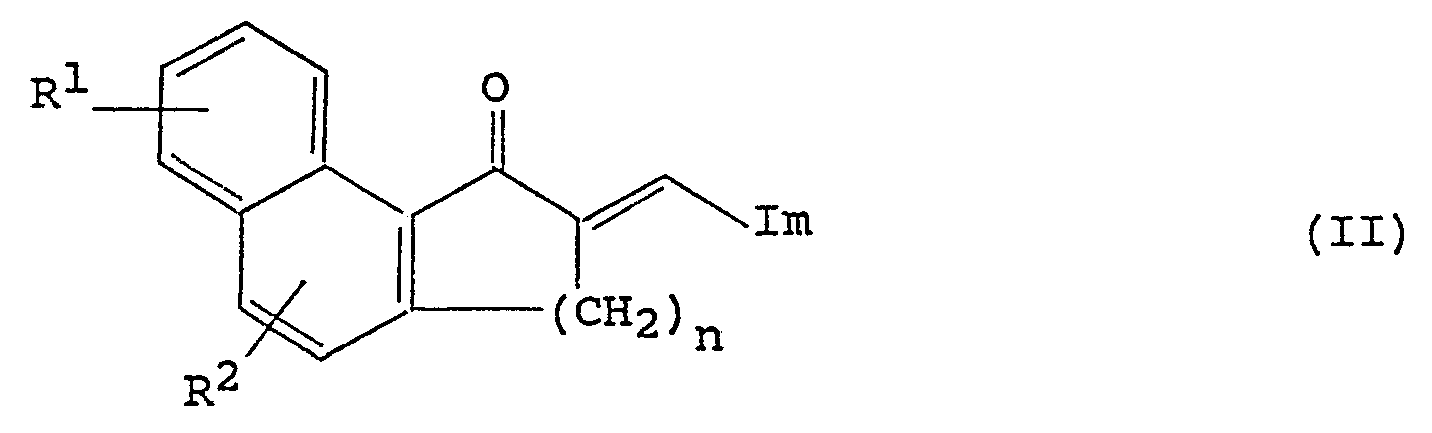
or a protected derivative thereof, followed if necessary by removal of any protecting groups present; or
(B) reacting a compound of formula (III)
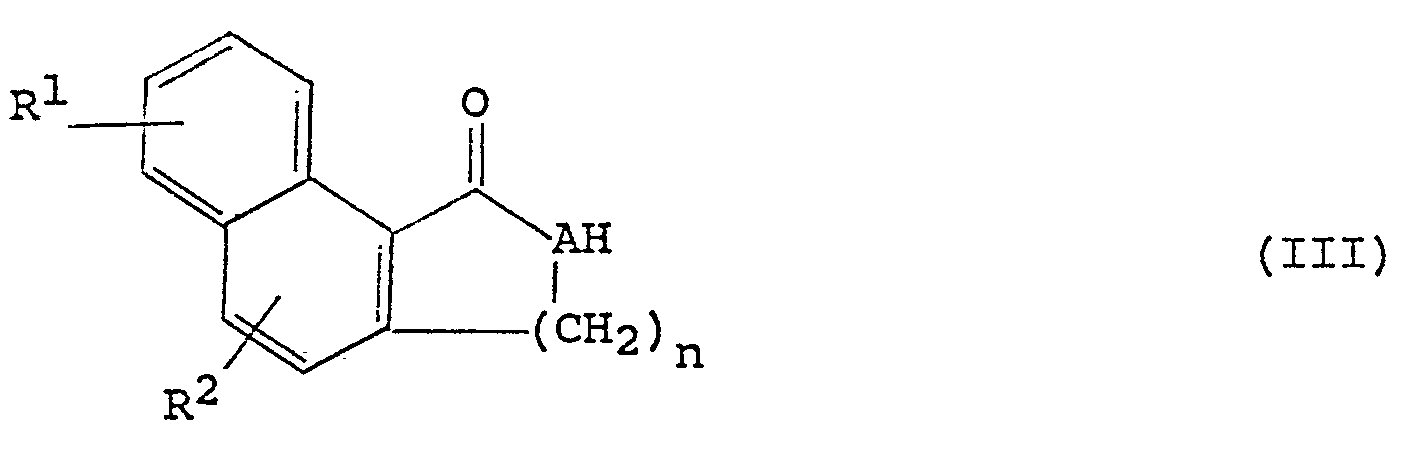
or a protected derivative thereof, with a compound of formula (IV)
LCH₂-Im (IV)
or a protected derivative thereof, wherein L represents a leaving atom or group, in the presence of a base, followed, if necessary by removal of any protecting groups present; or
(C) converting a compound of general formula (I) into another compound of formula (I) using conventional techniques; or
(D) removing protecting group(s) from a protected form of a compound of formula (I);
and when the compound of formula (I) is obtained as a mixture of enantiomers, optionally resolving the mixture to obtain the desired enantiomer;
and/or where the compound of formula (I) is in the form of a free base, optionally converting the free base into a salt.
(A) for the preparation of a compound of formula (I) in which A represents the group CH, hydrogenating a compound of formula (II)
or a protected derivative thereof, followed if necessary by removal of any protecting groups present; or
(B) reacting a compound of formula (III)
or a protected derivative thereof, with a compound of formula (IV)
LCH₂-Im (IV)
or a protected derivative thereof, wherein L represents a leaving atom or group, in the presence of a base, followed, if necessary by removal of any protecting groups present; or
(C) converting a compound of general formula (I) into another compound of formula (I) using conventional techniques; or
(D) removing protecting group(s) from a protected form of a compound of formula (I);
and when the compound of formula (I) is obtained as a mixture of enantiomers, optionally resolving the mixture to obtain the desired enantiomer;
and/or where the compound of formula (I) is in the form of a free base, optionally converting the free base into a salt.
9. A pharmaceutical composition comprising at least one compound of general formula
(I) as defined in Claim 1 or a physiologically acceptable salt or solvate thereof
together with at least one physiologically acceptable carrier or excipient.
10. A compound of formula (I) as defined in any of Claims 1 to 7 or a physiologically
acceptable salt or solvate thereof for use as an active therapeutic agent.
Claims for the following Contracting State(s): ES,GR
1. A process for the preparation of compounds of the general formula (I)
wherein Im represents an imidazolyl group of formula:
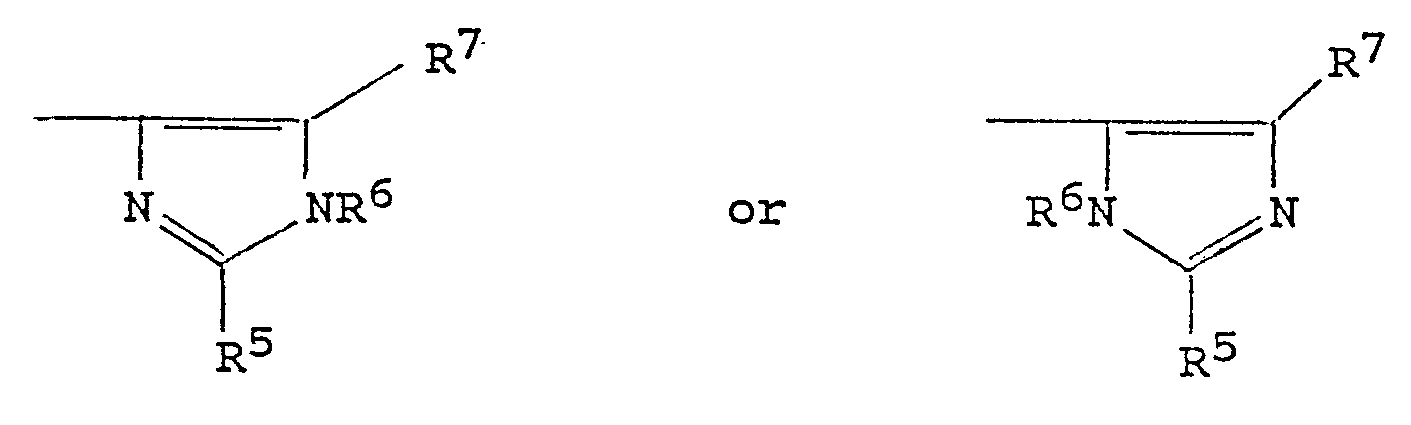
A represents the group CH or a nitrogen atom;
R¹ and R², which may be the same or different, and may be attached to either the same or different fused rings of the naphthalene moiety, each represents a hydrogen atom, a halogen atom, or a hydroxy, C₁₋₄alkoxy, C₁₋₄alkyl or C₁₋₄alkylthio group, and one of R¹ and R² may also represent a group -NR³R⁴ (wherein R³ and R⁴, which may be the same or different, each represents a hydrogen atom or a C₁₋₄alkyl group, or together with the nitrogen atom to which they are attached form a saturated 5 to 7 membered ring);
n represents 1, 2 or 3;
one of the groups represented by R⁵, R⁶ and R⁷, is a hydrogen atom or a C₁₋₆alkyl, C₃₋₇cycloalkyl, C₃₋₆alkenyl, phenyl or phenylC₁₋₃alkyl group, and each of the other two groups, which may be the same or different, represents a hydrogen atom or a C₁₋₆alkyl group;
and physiologically acceptable salts and solvates thereof, which comprises:
(A) for the preparation of a compound of formula (I) in which A represents the group CH, hydrogenating a compound of formula (II)

or a protected derivative thereof, followed if necessary by removal of any protecting groups present; or
(B) reacting a compound of formula (III)
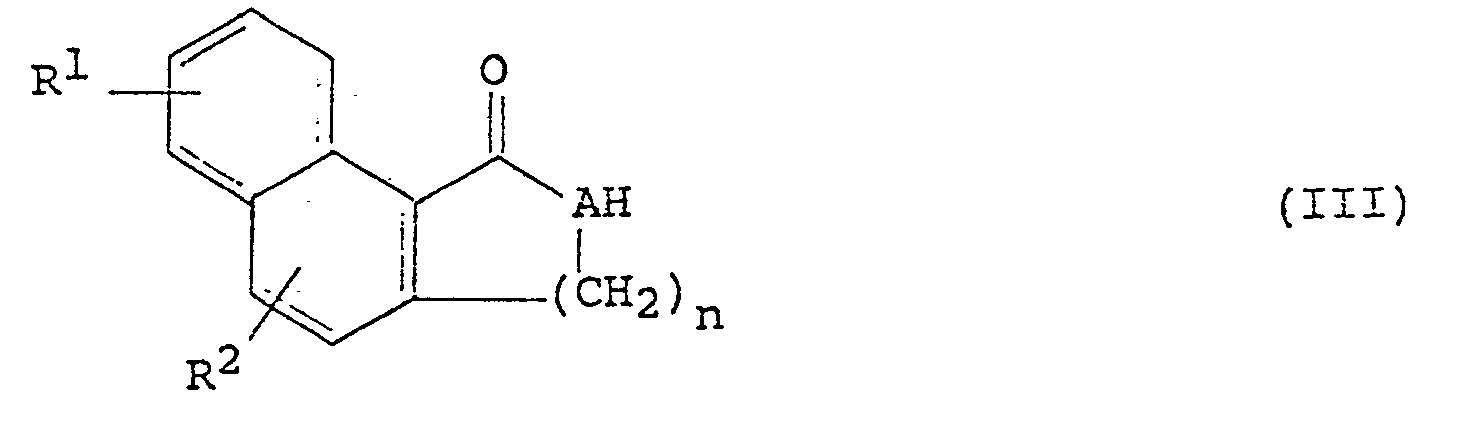
or a protected derivative thereof, with a compound of formula (IV)
LCH₂-Im (IV)
or a protected derivative thereof, wherein L represents a leaving atom or group, in the presence of a base, followed, if necessary by removal of any protecting groups present; or
(C) converting a compound of general formula (I) into another compound of formula (I) using conventional techniques; or
(D) removing protecting group(s) from a protected form of a compound of formula (I);
and when the compound of formula (I) is obtained as a mixture of enantiomers, optionally resolving the mixture to obtain the desired enantiomer;
and/or where the compound of formula (I) is in the form of a free base, optionally converting the free base into a salt.
wherein Im represents an imidazolyl group of formula:
A represents the group CH or a nitrogen atom;
R¹ and R², which may be the same or different, and may be attached to either the same or different fused rings of the naphthalene moiety, each represents a hydrogen atom, a halogen atom, or a hydroxy, C₁₋₄alkoxy, C₁₋₄alkyl or C₁₋₄alkylthio group, and one of R¹ and R² may also represent a group -NR³R⁴ (wherein R³ and R⁴, which may be the same or different, each represents a hydrogen atom or a C₁₋₄alkyl group, or together with the nitrogen atom to which they are attached form a saturated 5 to 7 membered ring);
n represents 1, 2 or 3;
one of the groups represented by R⁵, R⁶ and R⁷, is a hydrogen atom or a C₁₋₆alkyl, C₃₋₇cycloalkyl, C₃₋₆alkenyl, phenyl or phenylC₁₋₃alkyl group, and each of the other two groups, which may be the same or different, represents a hydrogen atom or a C₁₋₆alkyl group;
and physiologically acceptable salts and solvates thereof, which comprises:
(A) for the preparation of a compound of formula (I) in which A represents the group CH, hydrogenating a compound of formula (II)
or a protected derivative thereof, followed if necessary by removal of any protecting groups present; or
(B) reacting a compound of formula (III)
or a protected derivative thereof, with a compound of formula (IV)
LCH₂-Im (IV)
or a protected derivative thereof, wherein L represents a leaving atom or group, in the presence of a base, followed, if necessary by removal of any protecting groups present; or
(C) converting a compound of general formula (I) into another compound of formula (I) using conventional techniques; or
(D) removing protecting group(s) from a protected form of a compound of formula (I);
and when the compound of formula (I) is obtained as a mixture of enantiomers, optionally resolving the mixture to obtain the desired enantiomer;
and/or where the compound of formula (I) is in the form of a free base, optionally converting the free base into a salt.
2. A process as claimed in Claim 1 for the preparation of compounds in which R⁵, R⁶
and R⁷ each independently represent a hydrogem atom or a C₁₋₃alkyl group.
3. A process as claimed in Claim 1 for the preparation of compounds in which R⁵ and
R⁶ represent a hydrogen atom and R⁷ represents a C₁₋₆alkyl group.
4. A process as claimed in any of Claims 1 to 3 for the preparation of compounds in
which n is 2.
5. A process as claimed in any of Claims 1 to 4 for the preparation of compounds in
which R¹ and R² each represent a hydrogen atom.
6. A process as claimed in any of Claims 1 to 5 in which A represents a nitrogen atom.
7. A process as claimed in Claim 1 for the preparation of a compound selected from:
1,2-Dihydro-3-[(5-methyl- 1H-imidazol-4-yl)methyl]-4(3H)-phenanthrenone;
3,4-dihydro-2-[(5-methyl-1H-imidazol-4-yl)methyl]-benz[h]isoquinolin-1(2H)-one;
and physiologically acceptable salts and solvates thereof.
3,4-dihydro-2-[(5-methyl-1H-imidazol-4-yl)methyl]-benz[h]isoquinolin-1(2H)-one;
and physiologically acceptable salts and solvates thereof.