|
(11) | EP 0 337 628 B1 |

| (12) | EUROPEAN PATENT SPECIFICATION |
|
|
| (54) |
3-Substituted-2-oxindole-1-carboxamides for suppressing T-cell function 3-Substituierte 2-Oxindol-1-carboxamid-Derivate zur Hemmung der Aktivität der T-Zellen Dérivés du 2-oxindole-1-carboxamide substitués en position 3, utilisés pour supprimer l'activité des cellules T |
|
|
|||||||||||||||||||||||||||||||
| Note: Within nine months from the publication of the mention of the grant of the European patent, any person may give notice to the European Patent Office of opposition to the European patent granted. Notice of opposition shall be filed in a written reasoned statement. It shall not be deemed to have been filed until the opposition fee has been paid. (Art. 99(1) European Patent Convention). |
Description
[0001] This invention relates to the use of certain 3 - substituted - 2 - oxindole - -1 - carboxamides and the pharmaceutically - acceptable base salts thereof for the preparation of a pharmaceutical composition for treating T-cell mediated autoimmune disorders. Such autoimmune disorders can be systemic or organ specific and include, but are not limited to, multiple sclerosis, systemic lupus erythematosus (SLE), type I diabetes, myasthenia gravis and chronic liver disease. The use of such compounds and salts comprise administering an effective amount thereof to a mammal.
[0002] Certain 3 - substituted - 2 - oxindole - 1 - car - boxamides of the formula
and the pharmaceutically - acceptable base salts thereof wherein, inter alia, X is H, CI or F; Y is H or Cl; and R is benzyl or thienyl are disclosed and claimed in U.S. 4,556,672 which is assigned to the assignee hereof. That patent discloses that those compounds, in addition to being useful as antiin - flammatory and analgesic agents, are inhibitors of both cyclooxygenase (CO) and lipoxygenase (LO).
[0003] Certain autoimmune disorders of the systemic and organ specific type such as type I diabetes, chronic liver disease and myasthenia gravis, among others, are described in Autoimmunity: Basic Concepts; Systemic and Selected Organ Specific Diseases, Cruse, J.M. and Lewis, Jr., R.E., Eds., S. Karger, New York, 1985 at pages 51 - 71. The role of T-cell dysfunction and certain autoimmune disorders of the systemic and organ specific type such as systemic lupus erythematosus (SLE), among others, are disclosed in Bellanti, Joseph A., Immunology III, W.B. Saun - ders Co., Philadelphia (1985), Chapter 20, Part C., pages 409 - 446.
[0004] In European Patent Application No 89303049.4 (EP - A - 0337627) entitled "3 - Substituted - 2 - Oxindole - -1- Carboxamides As Inhibitors of Interleukin - Biosynthesis" which is assigned to the assignee hereof, it is disclosed that the com - pounds of this invention do not inhibit lipoxygenase in the presence of serum.
[0005] It has been reported that lipoxygenase metabolites play a role in T-lymphocyte mitogenesis. Bailey, J.M., et al., Cellular Immunol - ogy, 67, 112 -120 (1982); and Kelly, J.P., et al., J. Immunology, 122, 1563-1571 (1979). Further, certain inhibitors of cyclooxygenase have been reported to increase cell-mediated immunity, certain lipoxygenase inhibitors have been reported to inhibit cell - mediated immunity and certain cyclooxygenase and lipoxygenase inhibitors have been found to enhance cell - mediated immunity at lower concentrations and inhibit such immunity at higher concentrations. Leung, K.H., et al., Int. J. Immunopharmac., 4, 195-204 (1982).
[0006] Aspirin has been reported to suppress blas - togenesis of lymphocytes. Crout, J.E., et al., N. E. J. Med., 292, 221 - 223 (1975). Further, IL - has been reported to augment T-cell activation and lymphokine release. See, Hanna, N. and Wood D. D., Adv. Inflammation Res., Vol. 12 (1988) at 11 - 14 and references cited therein.
[0007] Until the invention herein, there was no report of use or intent to use the compounds or salts of this invention for the preparation of a pharmaceu - tical composition to suppress T-cell function independent of lipoxygenase inhibition for the treatment of T-cell mediated autoimmune disorders, nor any appreciation of their role in such treatments.
[0008] It has been found that certain 3 - substituted - 2 - oxindole - -1- carboxamides of the formula
and the pharmaceutically - acceptable base salts thereof wherein X is H, CI or F; Y is H or Cl; and R is benzyl or thienyl suppress T-cell function independent of their lipoxygenase inhibiting activity and, thus, are useful for the preparation of a pharmaceutical composition for treating T-cell me - diated autoimmune disorders. Such autoimmune disorders can be systemic or organ specific and include, but are not limited to, multiple sclerosis, systemic lupus erythematosus (SLE), type I diabetes, myasthenia gravis and chronic liver disease.
[0009] The methods of using the compounds and their pharmaceutically - acceptable base salts comprise administering to a mammal an effective amount of such compounds. Administration can comprise any known method for therapeutically providing a compound to a mammal such as by oral or parenteral administration as defined hereinbelow.
[0010] The compounds used according this invention which are of the formula
and the pharmaceutically - acceptable base salts thereof wherein X is H, CI or F; Y is H or Cl; and R is benzyl or thienyl and the preparation thereof are disclosed in U.S. 4,556,672 . This invention con - cerns a new use for such compounds which com - prises their use for the preparation of a pharmaceutical composition for treating T-cell mediated autoimmune disorders which can be either systemic or organ specific.
[0011] For the uses described above, the preferred compounds are those where the compound em - ployed is of the formula above wherein X is Cl, Y is H and R is thienyl; those wherein X is F, Y is CI and R is thienyl; that wherein X is F, Y is CI and R is 2 - thienyl and that wherein X is H, Y is CI and R is benzyl. Particularly preferred is the compound wherein X is Cl, Y is H and R is 2 - thienyl.
[0012] As disclosed in U.S. 4,556,672, the compounds of this invention hereinabove described are acidic and form base salts. All such base salts are within the scope of this invention and can be formed as taught by that patent. Such suitable salts, within the scope of this invention, include both the organic and inorganic types and include, but are not limited to, the salts formed with ammonia, organic amines, alkali metal hydroxides, alkali metal carbonates, alkali metal bicarbonates, alkali metal hydrides, al - kali metal alkoxides, alkaline earth metal hydroxides, alkaline earth metal carbonates, alkaline earth metal hydrides and alkaline earth metal alkoxides. Representative examples of bases which form such base salts include ammonia, primary amines, such as n - propylamine, n - butylamine, aniline, cyclohexylamine, benzylamine, p - toluidine, ethanolamine and glucamine; secondary amines, such as diethylamine, diethanolamine, N - methyl - glucamine, N-methylaniline, morpholine, pyr - rolidine and piperidine; tertiary amines, such as triethylamine, triethanolamine, N,N - dimethylaniline, N - ethylpiperidine and N - methylmorpholine; hydroxides, such as sodium hydroxide; alkoxides such as sodium ethoxide and potassium methoxide; hydrides such as calcium hydride and sodium hydride; and carbonates such as potassium carbonate and sodium carbonate. Preferred salts are those of sodium, potassium, ammonium, ethanolamine, diethanolamine and triethanolamine. Particularly preferred are the so - dium salts.
[0013] The solvates such as the hemihydrates and monohydrates of the compounds hereinabove de - scribed can also be used for the claimed use.
[0014] The methods of administration comprise ad - ministering the invention compounds and the pharmaceutically - acceptable base salts thereof to a mammal. Such compounds and their salts can be administered to said mammal either alone or, preferably, in combination with pharmaceutically - acceptable carriers or diluents in a pharmaceutical composition, according to standard pharmaceutical practice. Such administration can be oral or parenteral. Parenteral administration as used herein includes, but is not limited to, intravenous, in - tramuscular, intraperitoneal, subcutaneous, trans - dermal and topical administration. However, while it is generally preferred to administer such com - pounds and their salts orally, parenteral admin - istration may be preferable in treating certain dis - orders such as chronic liver disease.
[0015] In general, these compounds and their salts are most desirably administered in doses ranging from 40 mg up to 200 mg per day for oral admin - istration and from 1 mg up to 200 mg per day for parenteral administration, although variations will still necessarily occur depending upon the weight of the subject being treated. The appropriate dose for suppressing T-cell function in a mammal and for treatment of T-cell mediated autoimmune disorders with the compounds and their salts of this invention will be readily determined by those skilled in the art of prescribing and/or administering such compounds. Nevertheless, it is still to be appreciated that other variations may also occur in this respect, depending upon the species of mammal being treated and its individual response to said medicament, as well as on the particular type of pharmaceutical formulation chosen and the time period and interval at which such administration is carried out. In some instances, dosage levels below the lower limit of the aforesaid range may be more than adequate, while in other cases still larger doses may be employed without causing any harmful or deleterious side effects to occur, provided that such higher dose levels are first divided into several smaller doses that are to be administered throughout the day.
[0016] For purposes of oral administration, tablets containing excipients such as sodium citrate, cal - cium carbonate and dicalcium phosphate may be employed along with various disintegrants such as starch and preferably potato or tapioca starch, al - ginic acid and certain complex silicates, together with binding agents such as polyvinylpyrrolidone, sucrose, gelatin and acacia. Additionally, lubricating agents such as, but not limited to, magnesium stearate, sodium lauryl sulfate and talc are often very useful for tableting purposes. Solid composi - tions of a similar type may also be employed as fillers in soft elastic and hard -filled gelatin capsules; preferred materials in this connection also include, by way of example, lactose or milk sugar as well as high molecular weight polyethylene glycols. When aqueous suspensions and/or elixirs are desired for oral administration, the essential active ingredient may be combined with various sweetening or flavoring agents, coloring matter or dyes and, if so desired, emulsifying and/or suspending agents, together with diluents such as water, ethanol, propylene glycol, glycerin and various combinations thereof.
[0017] Although the preferred mode of administration of the compounds of this invention or their pharmaceutically - acceptable base salts is oral, they may be administered parenterally as well.
[0018] For purposes of parenteral administration, so - lutions of these particular compounds in sesame or peanut oil or in aqueous propylene glycol may be employed, as well as sterile aqueous solutions of the corresponding water soluble base salts previously enumerated. Such aqueous solutions should be suitably buffered if necessary, and the liquid diluent rendered isotonic with sufficient saline or glucose. These particular aqueous solutions are especially suitable for intravenous, intramuscular and subcutaneous injection purposes. In this con - nection, the sterile aqueous media employed are readily obtained by standard techniques well known to those skilled in the art. For instance, distilled water is ordinarily used as the liquid diluent and the final preparation is passed through a suitable bacterial filter such as a sintered glass filter or a diatomaceous-earth or unglazed porcelain filter. Preferred filters of this type include the Berkefeld, the Chamberland and the Asbestos Disk - Metal Seitz filter, wherein the fluid is sucked into a sterile container with the aid of a suction pump. Needless to say, the necessary steps should be taken throughout the preparation of these injectable solutions to insure that the final products are obtained in a sterile condition. For purposes of transdermal administration, the dosage form of the particular compound may include, by way of example, solutions, lotions, ointments, creams, gels, suppositories, rate-limiting sustained release formulations and devices therefor. Such dosage forms comprise the particular compound and may include ethanol, water, penetration enhancer and inert carriers such as gel - producing materials, mineral oil, emulsifying agents, benzyl alcohol and the like. Specific transdermal flux en - hancing compositions are disclosed in EP-A-0271983 which is assigned to the assignee of this invention.
[0019] For purposes of topical administration, the dosage form of the particular compound may in - clude, by way of example and not of limitation, solutions, lotions, ointments, creams and gels.
[0020] The ability of the compounds to suppress T-cell function is demonstrated by the procedure of Kunkel, S.L., et al., J. Clin. Invest., 74, 514-524 (1984) which is described below.
[0021] Female CBA/J mice (The Jackson Laboratory, Bar Harbor, Maine) are maintained under standard care and given food and water ad libitum. Eggs are isolated from the livers of mice which have been previously infected with 200 cercariae of Schistosome mansoni by the method of Coker and von Lichtenberg, Proc. Soc. Exp. Biol. Med., 92, 359 - 364 (1956). The isolated schistosome eggs are suspended to 4,000/ml in sterile physiological saline and induction of pulmonary egg granulomas is accomplished vial tail vein injection of 2000 eggs per mouse. The compound under study is admin - istered daily to the mouse via intraperitoneal in - jection after egg embolization. Dosages range from 0 to 100 mg/kg in an appropriate solvent. Mice are killed at 4, 8 and 16 days post egg challenge and the lungs are inflated with 10% buffered formalin, removed, prepared for histological section and stained with hematoxylin and eosin. The pulmonary granuloma areas are measured from sections using an Omicron alpha image analyzer (Bausch and Lomb Inc., Rochester, New York) with the data being fed into an attached computer. A minimum of 20 granulomas are measured from each lung and the granulomas from at least five mice per compound/dosage are measured.
1. The use of a compound of the formula
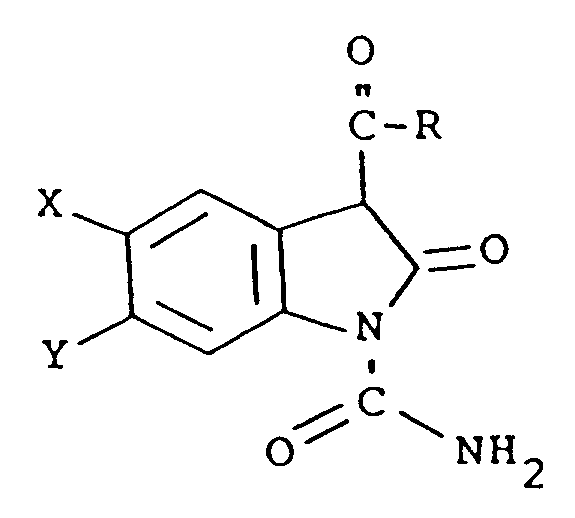
or a pharmaceutically - acceptable base salt thereof, wherein X is H, CI or F; Y is H or Cl; and R is benzyl or thienyl, for the preparation of a pharmaceutical composition for the treat - ment of a T-cell mediated autoimmune disorder in a mammal.
or a pharmaceutically - acceptable base salt thereof, wherein X is H, CI or F; Y is H or Cl; and R is benzyl or thienyl, for the preparation of a pharmaceutical composition for the treat - ment of a T-cell mediated autoimmune disorder in a mammal.
2. Use as claimed in claim 1 wherein the autoimmune disorder is a systemic autoimmune
disorder.
3. Use as claimed in claim 2 wherein the systemic autoimmune disorder is multiple
sclero - sis or systemic lupus erythematosus.
4. Use as claimed in claim 1 wherein the autoimmune disorder is an organ specific
autoimmune disorder.
5. Use as claimed in claim 4 wherein the organ specific autoimmune disorder is type
I diabetes, myasthenia gravis or chronic liver disease.
6. Use as claimed in any one of claims 1 to 5 wherein, in said compound, X is Cl;
Y is H and R is 2-thienyl.
7. Use as claimed in any one of claims 1 to 5 wherein, in said compound, X is F; Y
is CI and R is 2-thienyl.
8. Use as claimed in any one of claims 1 to 5 wherein, in said compound, X is H; Y
is CI and R is benzyl.
9. Use as claimed in any one of the preceding claims wherein the pharmaceutical composition
is suitable for oral or parenteral administration.
1. Die Verwendung einer Verbindung der Formel
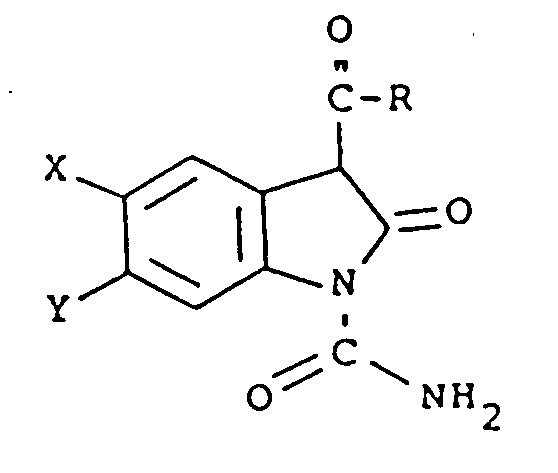
oder eines pharmazeutisch annehmbaren Basensalzes davon, worin X H, CI oder F ist; Y H oder CI ist; und R Benzyl oder Thienyl ist, zur Herstellung einer pharmazeutischen Zusam - mensetzung für die Behandlung einer T-Zellen vermittelten Autoimmunstörung beim Säugetier.
oder eines pharmazeutisch annehmbaren Basensalzes davon, worin X H, CI oder F ist; Y H oder CI ist; und R Benzyl oder Thienyl ist, zur Herstellung einer pharmazeutischen Zusam - mensetzung für die Behandlung einer T-Zellen vermittelten Autoimmunstörung beim Säugetier.
2. Verwendung nach Anspruch 1, wobei die Au - toimmunstörung eine systemische Autoim
- munstörung ist.
3. Verwendung nach Anspruch 2, wobei die systemische Autoimmunstörung Multiple Sklerose
oder systemischer Lupus erythematosus ist.
4. Verwendung nach Anspruch 1, wobei die Au - toimmunstörung eine organischspezifische
Autoimmunstörung ist.
5. Verwendung nach Anspruch 4, wobei die organspezifische Autoimmunstörung Typ I Diabetes,
Myasthenia Gravis oder die chronische Lebererkrankung ist.
6. Verwendung nach einem der Ansprüche 1 bis 5, wobei bei der Verbindung X CI ist,
Y H ist und R 2-Thienyl ist.
7. Verwendung nach einem der Ansprüche 1 bis 5, wobei bei der Verbindung X F ist,
Y CI ist und R 2-Thienyl ist.
8. Verwendung nach einem der Ansprüche 1 bis 5, wobei bei der Verbindung X H ist,
Y CI ist und R Benzyl ist.
9. Verwendung nach einem der vorhergehenden Ansprüche, wobei die pharmazeutische Zu
- sammensetzung für die orale oder parenterale Verabreichung geeignet ist.
1. Utilisation d'un composé de formule
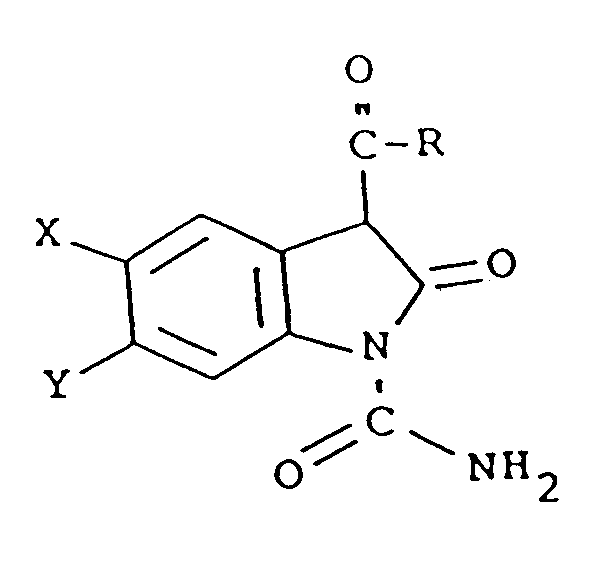
ou d'un de ses sels de bases pharmaceuti - quement acceptables, formule dans laquelle X représente H, CI ou F ; Y représente H ou CI ; et R représente un groupe benzyle ou thiényle, pour la préparation d'une composition pharmaceutique destinée au traitement d'une maladie auto - immune à médiation par les lym - phocytes T chez un mammifère.
ou d'un de ses sels de bases pharmaceuti - quement acceptables, formule dans laquelle X représente H, CI ou F ; Y représente H ou CI ; et R représente un groupe benzyle ou thiényle, pour la préparation d'une composition pharmaceutique destinée au traitement d'une maladie auto - immune à médiation par les lym - phocytes T chez un mammifère.
2. Utilisation suivant la revendication 1, dans laquelle la maladie auto-immune est
une ma - ladie auto - immune systémique.
3. Utilisation suivant la revendication 2, dans laquelle la maladie auto-immune systémique
est la sclérose en plaques ou le lupus érythé - mateux aigu disséminé.
4. Utilisation suivant la revendication 1, dans laquelle la maladie auto-immune est
une ma - ladie auto - immune spécifique d'un organe.
5. Utilisation suivant la revendication 4, dans laquelle la maladie auto-immune spécifique
d'un organe est le diabète de type I, la myas - thénie grave ou l'hépatite chronique.
6. Utilisation suivant l'une quelconque des revendications 1 à 5, dans laquelle, dans
le composé, X représente CI ; Y représente H et R représente un groupe 2-thiényle.
7. Utilisation suivant l'une quelconque des revendications 1 à 5, dans laquelle, dans
le composé, X représente F ; Y représente CI et R représente un groupe 2-thiényle.
8. Utilisation suivant l'une quelconque des revendications 1 à 5, dans laquelle, dans
le composé, X représente H ; Y représente CI et R représente un groupe benzyle.
9. Utilisation suivant l'une quelconque des revendications précédentes, dans laquelle
la composition pharmaceutique convient à une administration orale ou parentérale.