|
(11) | EP 0 342 989 B1 |

| (12) | EUROPEAN PATENT SPECIFICATION |
|
|
| (54) |
Polymaleimide compounds and process for the preparation thereof Polymaleimid-Verbindungen und Verfahren zu ihrer Herstellung Composés polymaléimiques et procédé pour leur préparation |
|
|
|||||||||||||||||||||||||||||||
| Note: Within nine months from the publication of the mention of the grant of the European patent, any person may give notice to the European Patent Office of opposition to the European patent granted. Notice of opposition shall be filed in a written reasoned statement. It shall not be deemed to have been filed until the opposition fee has been paid. (Art. 99(1) European Patent Convention). |
a) Field of the Invention:
[0001] This invention relates to polymaleimide compounds useful as raw materials for addition-type polyimides and also to a process for preparing the polymaleimide compounds. More specifically, the process comprises reacting specific aromatic amine resins with maleic anhydride.
[0002] Polymaleimides obtained from conventional bismaleimides such as N,N′-(4,4′-methylenediphenylene)bismaleimide are known to exhibit excellent heat resistance. These polyimides are produced by polymerizing bismaleimide or by copolymerizing bismaleimide compounds with amines. These polyimides are used widely for impregnating varnishes, laminates, and molded and otherwise formed articles.
[0003] Conventional bismaleimide compounds generally have high melting points. Therefore, it has been necessary to use them in the form of solutions. Moreover, conventional bismaleimide compounds have poor solubility in general-purpose organic solvents, and thus special solvents having a high boiling point and hygroscopicity such as N-methylpyrrolidone or N,N-dimethylacetamide must be employed. Impregnating varnishes prepared by dissolving bismaleimide compounds in such solvents are expensive due to the high price of the solvent. In addition, the solvent tends to remain in prepregs formed from the varnishes, which is a major cause of considerable reduction in the performance of the resulting laminates.
[0004] Thus, it is desirable to provide maleimide compounds having solubility in general-purpose organic solvents, as well as heat resistance in the fields of matrix resins for heat-resistant composite materials and heat-resistant molding materials. It is also desirable to develop maleimide compounds useful as raw materials for producing thermosetting resins that retain excellent dimensional stability in a manner similar to electrical-insulating molded articles of thermosetting resins derived from conventional bismaleimide compounds which exhibit superior impact resistance, flexibility and toughness.
[0005] DE-A-2230874 discloses oligomers possessing imide groups, e.g. of formula (A):
EP-A-0,311,387 (published after the priority date of the present application) discloses oligomers of formula (A) wherein n=o. Both documents disclose the use of such oligomers for the preparation of resins.
[0006] Preferred embodiments of the present invention overcome the problems and disadvantages of the prior art by providing polymaleimide compounds that exhibit superior properties than prior art maleimide compounds.
[0007] Preferred embodiments may provide polymaleimide compounds having high solubilities in organic solvents, excellent heat resistance and superb molding processability.
[0008] Preferred embodiments may provide a polymaleimide compound that has application as a thermosetting resin, which upon copolymerization with an amine and post-curing, gives a hardened product having high flexural strength and excellent impact resistance, flexibility and toughness.
[0009] In another aspect the invention provides a process for preparing the polymaleimide compounds.
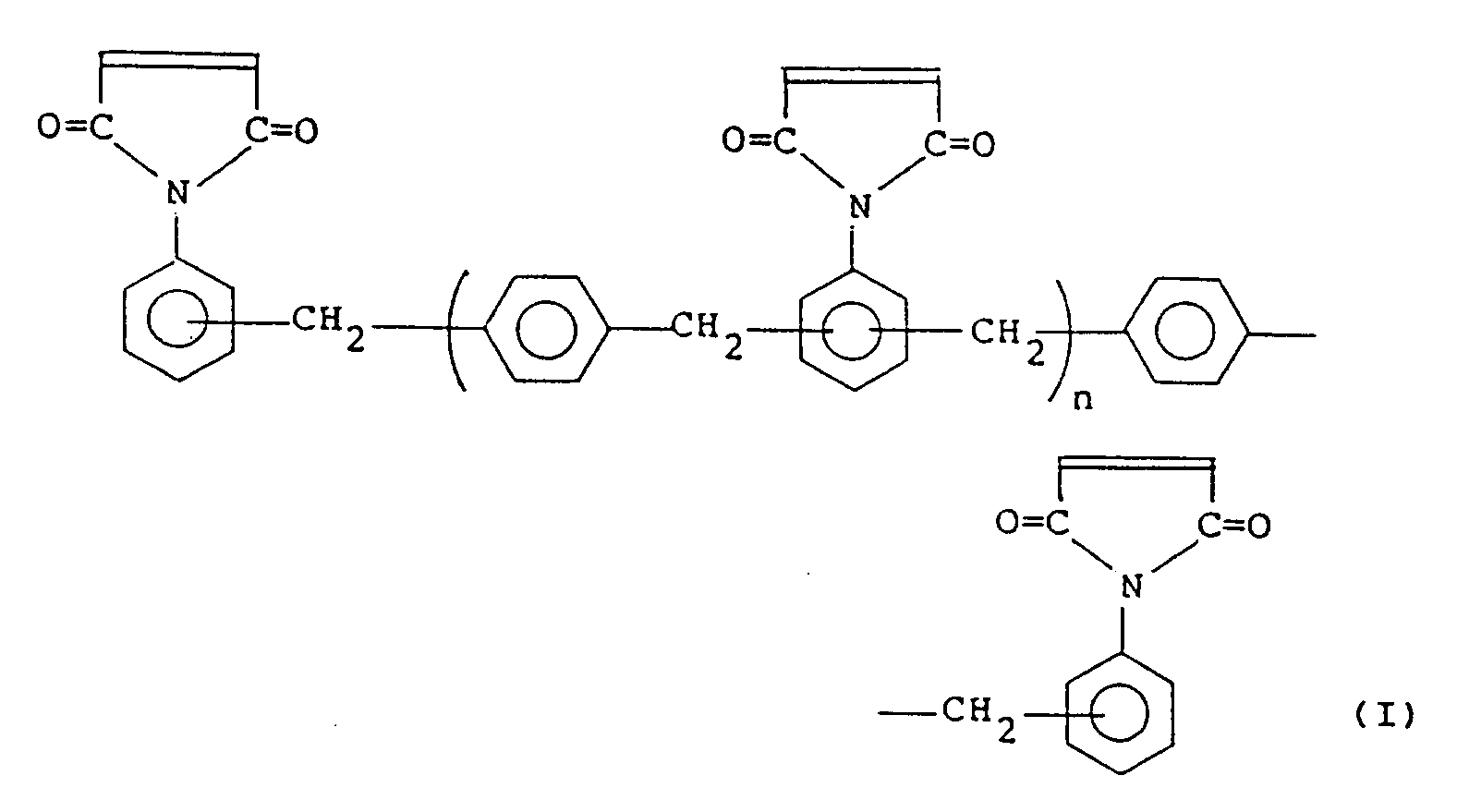
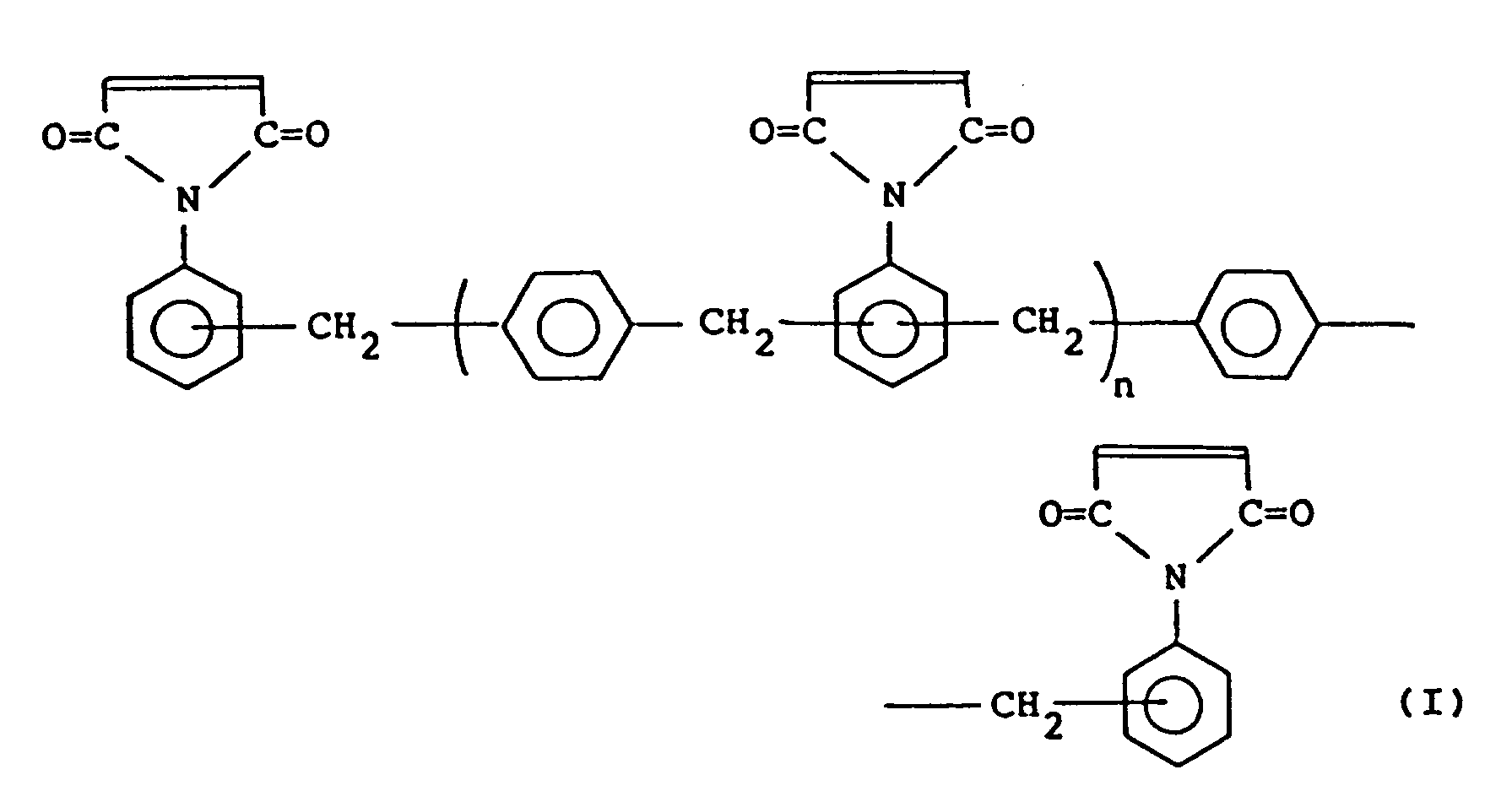
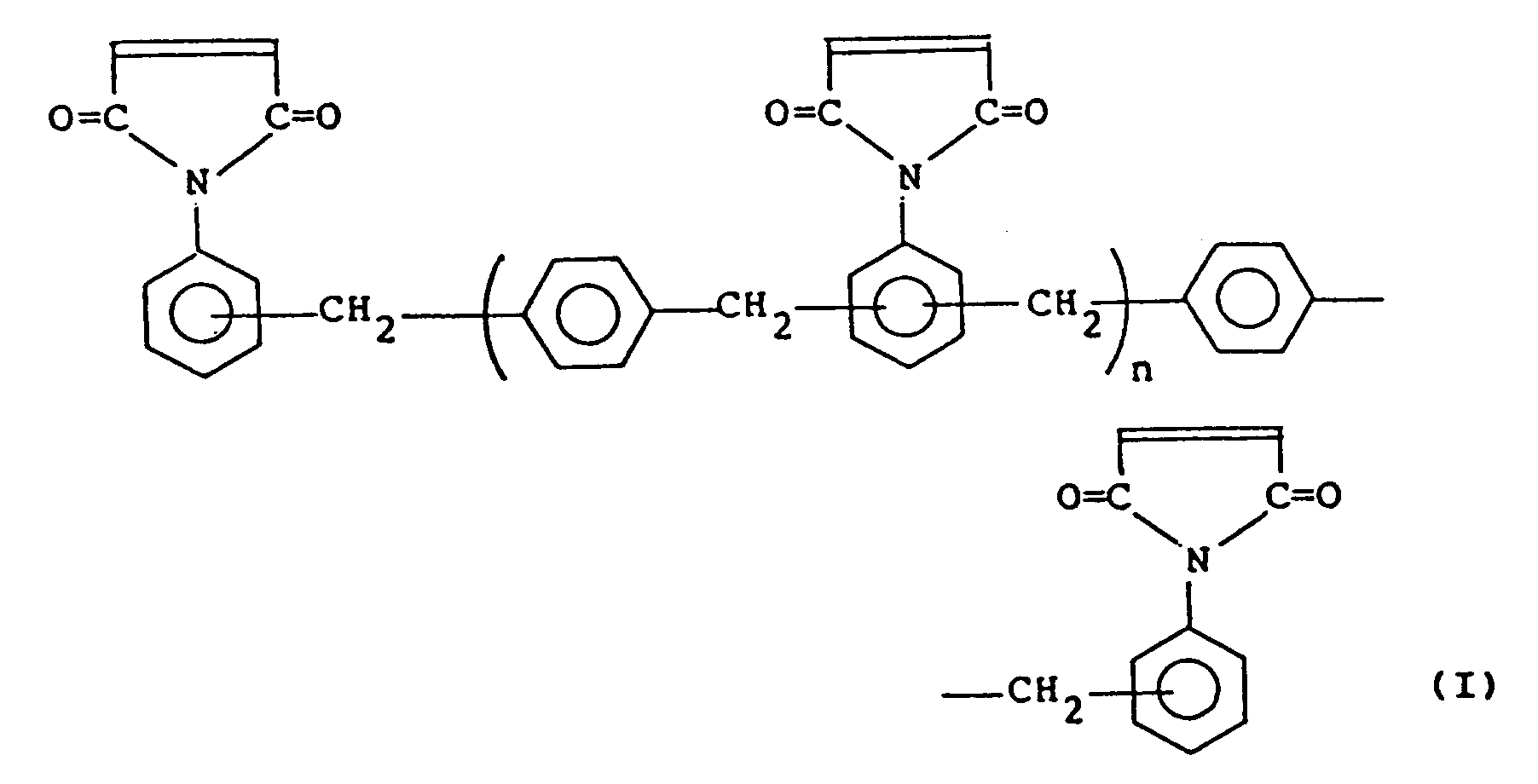
[0010] The invention provides a polymaleimide compound represented by the formula (I):
wherein n represents an integer of from 0 to 50.
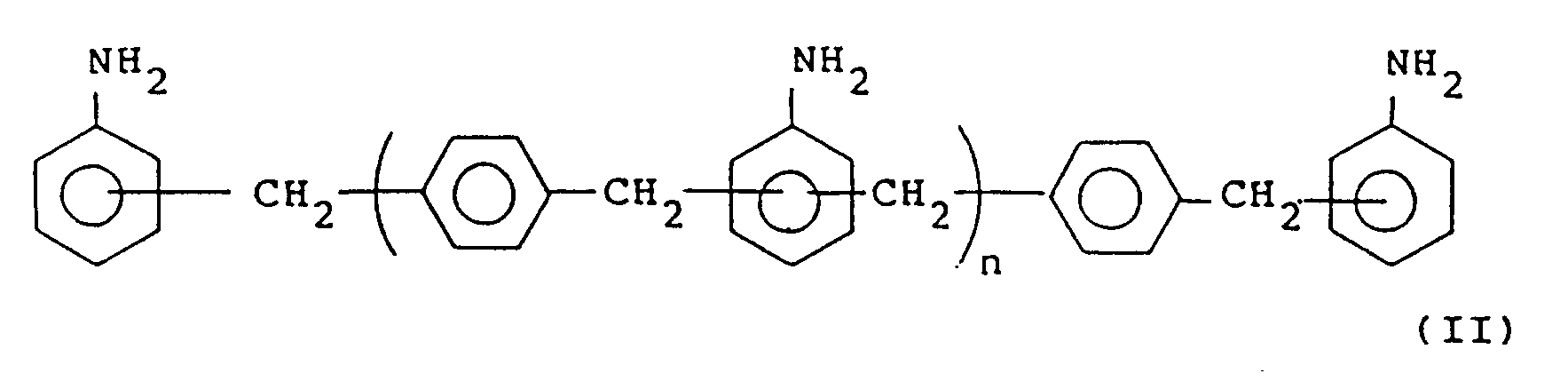
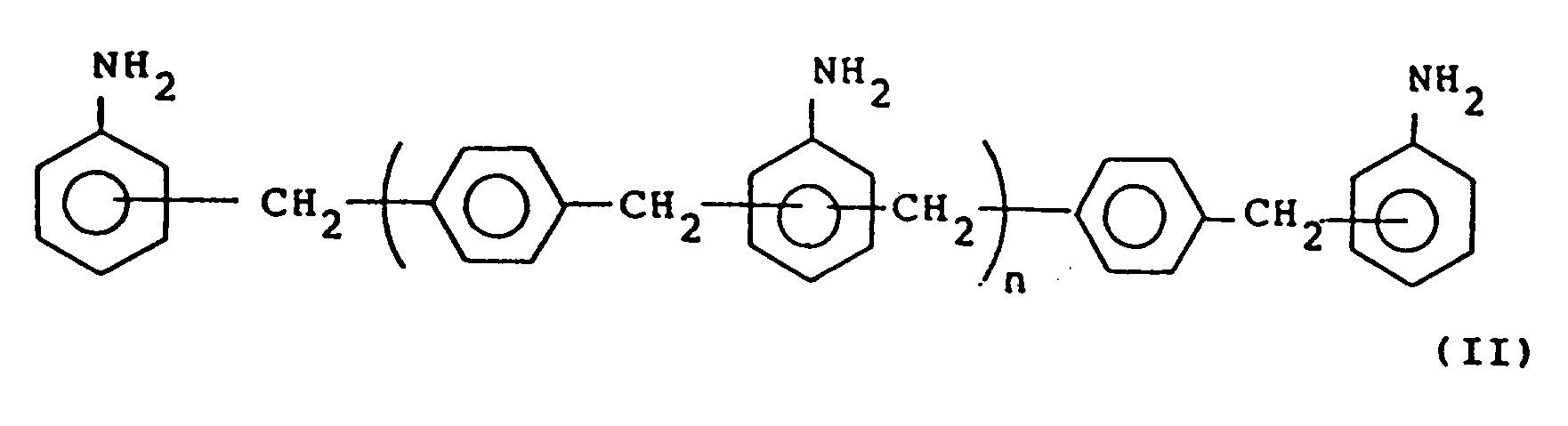
[0011] The invention also provides a process for preparing a polymaleimide compound represented by the formula (I), comprising reacting maleic anhydride and an aromatic amine compound represented by the formula (II):
wherein n has the same meaning as defined above.
[0012] The accompanying drawings, which are incorporated in and constitute a part of this specification, ilustrate several exemplary embodiments of the invention and together with the description, serve to explain the principles of the invention.
[0013] In the accompanying drawings:
FIG. 1 is a diagram showing the results of an IR analysis of the polymaleimide compound obtained in Example 1 : and
FIG. 2 is a diagram illustrating the results of an IR analysis of a polymaleamic acid obtained in Example 2.
[0015] As an example of the melting points and heat resistances of polymaleimide compounds of the invention, the 5% weight loss temperatures of several polymaleimide compounds of this invention will be compared to the weight loss temperature of conventional N,N′-(4,4′-methylenediphenylene)bismaleimide and are set forth in Table 3. Conventional bismaleimide compounds generally have high melting points, generally 150°C or higher. N,N′-(4,4′-methylenediphenylene)bismaleimide was found to have a melting point of from about 156°C to about 158°C. In contrast, the melting points of polymaleimide compounds according to this invention are lower, generally from about 50°C to about 200°C, particularly from about 80°C to about 160°C, preferably from about 80°C to about 130°C. Polymaleimide compounds have such low melting points that they can be polymerized in a molten state without a solvent. It is hence possible to use prepolymer melts directly as impregnating varnishes to produce laminates. Even when molded articles are produced by compression molding, transfer molding or a similar method, these polymaleimide compounds are absolutely free of the problem of remaining solvent and thus their application field can be broadened to attain efficient work and save energy.
[0016] The 5% weight loss temperatures in air of the polymaleimide compounds of the invention are all as high as at least 400°C. Thus, their heat resistance properties are fully satisfactory.
[0017] As set forth in Table 4 the solubilities of the polymaleimide compounds of the invention in 1,2-dichloroethane, acetone and methyl ethyl ketone range from 35 wt.% to 50 wt.% at 25°C and are considerably higher compared to those of the conventional bismaleimides, particularly N,N′-(4,4′-methylenediphenylene)bismaleimide. It is a characteristic feature of the polymaleimide compounds of this invention that a solvent having a high boiling point and hygroscopicity such as N,N-dimethylacetamide or N,N-dimethylformamide which has been indispensable in conventional maleimide compounds, can be replaced by a volatile solvent having a low boiling point. It is hence possible to reduce the problem of the remaining solvent which causes reduction of the performance of laminates or molded articles. Such a solvent is also preferred for improving work efficiency and attaining energy saving. The polymaleimide compounds of this invention have numerous applications in various fields of industry such as electrical insulating materials, heat-resistant adhesives, and paints.
[0018] Polyimides obtained from the polymaleimide compounds of this invention have excellent heat resistance as demonstrated in Table 5, namely, due to their high flexural strength and high moduli of flexural elasticity, heat distortion temperatures of at least 290°C and thermal decomposition initiation temperatures of at least 340°C.
[0019] The present process for preparing the polymaleimide compounds of the invention is set forth below.
[0020] The present inventors developed a process for preparing an aromatic amine compound employed in the present invention. The process is described in Japanese Patent Application Nos. 252517/1987 and 282048/1987.
[0021] The aromatic amine compound employed as a raw material is a compound represented by the formula (II). This compound can be produced industrially with ease by reacting aniline with (a) a bishalogenomethyl derivative represented by the following formula (III):
wherein X represents a halogen atom or with (b) an aralkyl alcohol derivative represented by the following formula (IV):
wherein R is selected from the group consisting of a hydrogen atom, an acyl group and a lower alkyl group having not more than 4 carbon atoms.
[0022] Exemplary suitable bishalogenomethyl derivatives useful in preparing the aromatic amine compound include α,α′-dichloro-p-xylene, α,α′-dibromo-p-xylene, α,α′-difluoro-p-xylene, and α,α′-diiodo-p-xylene.
[0023] The term "aralkyl alcohol derivative" includes, for example, α,α′-dihydroxy-p-xylene, α,α′-diacetoxy-p-xylene, α,α′-dipropionoxy-p-xylene, α,α′-di-n-butyloxy-p-xylene, α,α′-dimethoxy-p-xylene, α,α′-diethoxy-p-xylene, α,α′-diisopropoxy-p-xylene, α,α′-di-n-propoxy-p-xylene, α,α′-di-n-butoxy-p-xylene, α,α′-di-sec-butoxy-p-xylene, and α,α′-diisobutoxy-p-xylene.
[0024] The aromatic amine compound can be prepared by a condensation reaction of a bishalogenomethyl derivative of the formula (III) or the aralkyl alcohol derivative of the formula (IV) with aniline in a molar ratio of bishalogenomethyl derivative or aralkyl alcohol derivative to aniline of about 1 to 1-15 at from about 170 to about 240°C for from about 10 to about 40 hours in the presence of an acid catalyst such as hydrochloric acid.
[0025] After completion of the reaction, the reaction mixture is preferably neutralized with an alkali such as caustic soda and then washed with water. In some instances, it is preferable to drive out excess aniline under reduced pressure.
[0026] The aromatic amine resin represented by the formula (II) and maleic anhydride are reacted in an organic solvent to form a polymaleamic acid represented by the following formula (V):
wherein n represents an integer of from 0 to 50. Maleic anhydride may be employed in an amount of from about 0.8 to about 2.0 equivalents, preferably from about 1 to about 1.5 equivalents per equivalent of amino groups in the aromatic amine resin. Exemplary suitable reaction solvents for use in the above reaction include halogenated hydrocarbons such as chloroform, methylene chloride, dichloroethane and trichloroethylene; ketones such as acetone, methyl ethyl ketone, cyclohexanone and diisopropyl ketone; ethers such as diethyl ether, tetrahydrofuran, dioxane and 2-methoxyethanol; aromatic compounds such as benzene, toluene and chlorobenzene; aprotic polar solvents such as acetonitrile, N,N-dimethylformamide, N,N-dimethylacetamide, dimethylsulfoxide, N-methyl-pyrrolidone and 1,3-dimethyl-2-imidazolidinone. Although no particular limitation is imposed on the amount of the solvent to be used, it is generally sufficient to employ a solvent in an amount of from about 1 to about 10 times by weight of the sum of the raw materials.
[0027] The polymaleamic acid is then cyclized and dehydrated to form a polymaleimide compound represented by the formula (I). This cyclization and dehydration reaction can be conducted by any known process in which acetic anhydride is used as a dehydrating agent and the reaction is carried out in the presence of a base and a catalyst in an organic solvent (Japanese Patent Publications 23250/1971, 40231/1974 and 52660/1984). No particular limitation is imposed on the upper limit of the amount of acetic anhydride to be used in the cyclization and dehydration reaction. However, it is generally used in an amount of from about 1 to about 4 times equivalents per equivalent of the amino groups in the aromatic amino compound.
[0028] Exemplary suitable catalysts include alkaline earth metal oxides, iron(II,III), nickel(II), manganese(II,III), copper(I,II) and cobalt(II,III) carbonates, sulfates, phosphates and acetates. Preferably, nickel(II) acetate, cobalt(II) acetate and/or magnesium oxide are employed. Although these catalysts exhibit sufficient effects when used singly, they may also be used in combination. The catalyst is preferably used in an amount of from about 5 x 10⁻⁴ to about 0.1 mole per mole of the amino groups in the aromatic amine compound.
[0029] Exemplary suitable bases useful in the practice of the above process include alkali metal acetates and tertiary amines. Preferably sodium acetate, potassium acetate, trimethylamine, triethylamine, tributylamine and the like are employed. The base may be used in an amount of from about 0.05 to about 1.1 equivalents per equivalent of amino groups in the aromatic amine compound.
[0030] No other particular limitations are imposed on the process of this invention. It is not essential for the preparation of the polymaleimide compound to isolate the polymaleamic acid formed as an intermediate in the first step. The cyclization and dehydration reaction can be carried out in the same solvent. The reaction temperature ranges from about 20°C to about 150°C, preferably from about 20°C to about 80°C, and the reaction time ranges from about 0.5 hour to about 9 hours. Upon pouring the reaction mixture into water or methanol after completion of the reaction, the intended product can be obtained in the form of crystals.
[0031] The molecular weight of the polymaleimide compound ranges from about 400 to about 15,000, and has a melting point of from about 50°C to about 200°C. Depending on the number of n in the formula (1), the polymaleimide compound of this invention has a distribution of n, which can be chosen as desired. For example, as will also become apparent from examples subsequently described, the polymaleimide compound may be a mixture of from about 5% to about 100%, preferably from about 5% to about 85% of the polymaleimide compound having the formula (I) where n is 0 (n=0) and from about 80% to about 1% of at least one polymaleimide compound having the formula (I) wherein n is at least 3 (n≧3). The percentages can be measured by high performance liquid chromatography.
[0032] The polymaleimide compounds of this invention are organic-solvent-soluble polymaleimides having melting points lower than conventional bismaleimides such as N,N′-(4,4′-methylenediphenylene)bismaleimide. Further, the solubilities of the polymaleimide compounds in general-purpose organic solvents are very high. The low-melting-point and solvent-soluble polymaleimide compounds can be polymerized in a molten state. When a solvent is employed, a general-purpose organic solvent may be used. The polymaleimide compounds of the invention overcome the problem of remaining solvent, causes deterioration of laminates and/or molded articles, and improves flexibility and results in much efficient work.
[0033] The invention will be further clarified by the following examples, which are intended to be purely exemplary of the invention.
Synthesis Example 1:
[0034] 111.6 g (1.2 moles) of aniline and 70.0 g (0.4 moles) of α,α′-dichloro-p-xylene were charged in a reactor equipped with a stirrer and a thermometer. While feeding nitrogen gas through the reactor, the contents were heated. Although exothermic heat was recognized from the internal temperature of about 30°C, the contents were heated and maintained at 85-100°C for 3 hours (first step reaction). Further heating was conducted at 190-200°C for 20 hours (second step reaction). The reactor was then cooled to lower its internal temperature to 95°C, followed by addition of 230 g of a 15% aqueous solution of caustic soda. The resultant mixture was stirred and neutralized. After allowing the thus-prepared mixture to stand, the lower layer, namely, the water layer was separated and removed. Then, 300 g of saturated saline were added to the remaining organic layer to wash it, followed by separation and removal of a water layer. The resulting organic solution was heated and dehydrated under a nitrogen gas stream and then filtered under pressure to remove inorganic salts and the like. The organic solution thus obtained was concentrated in a vacuum of 2-3 mmHg, thereby recovering 48.5 g of unreacted aniline. The residue was removed and 100 g of an aromatic amine compound having a pale yellowish brown color were produced.
[0035] The aromatic amine compound was analyzed by high-performance liquid chromatography (GPC column method). The aromatic amine compound of the formula (II) was found to have the following composition:
| Area % | |
| n=0 | 27.8 |
| n=1 | 19.2 |
| n=2 | 14.0 |
| n=3 | 11.8 |
| n≧4 | 27.2 |
[0036] The GPC column method was conducted under the following conditions:
- Columns:
- "Shodex GPC-A-802" (trade name) x 2
- Mobile phase:
- Tetrahydrofuran
(flow rate: 1 mℓ/min) - Detector:
- RI (REFRACTIVE INDEX) DETECTOR manufactured by Japan Analytical Industry Co., Ltd.
[0037] The amine equivalent of the compound as measured by the perchloric acid-glacial acetic acid method was 0.65 equivalent per 100 g of the compound, while its softening point as measured by a ring and ball softening point measuring apparatus in accordance with JIS-K-2548 was 64°C. Its average molecular weight was 880.
Synthesis Example 2:
[0038] 111.6 g (1.2 moles) of aniline, 66.5 g (0.4 mole) of α,α′-dimethoxy-p-xylene and as a catalyst, 62.6 g (0.6 mole) of a 35% aqueous solution of hydrochloric acid were charged in a reactor equipped with a stirrer, a thermometer and a Dean-Stark azeotropic distillation trap. The contents were heated while feeding nitrogen gas through the reactor. From the internal temperature of about 110°C, water distilled to the trap was removed from the system. When heated further, distillation of methanol was observed from about 130°C. While distilling out the resulting methanol, heating of the contents was continued. After the temperature reached 170°C, the contents were maintained at the same temperature for 3 hours. Evolution of methanol ceased substantially, and the contents were thereafter continuously heated to react at 190-200°C for 12 hours. The reactor was then cooled to lower the internal temperature to 95°C, followed by addition of 168 g of a 15% aqueous solution of caustic soda. The resultant mixture was stirred and neutralized. After allowing the thus-prepared mixture to stand, the lower layer, namely, the water layer was separated and removed. Then, 300 g of saturated saline were added to the remaining organic layer to wash it, followed by the separation and removal of a water layer. The resulting organic solution was heated and dehydrated under a nitrogen gas stream and then filtered under pressure to remove inorganic salts and the like. The organic solution thus obtained was concentrated in a vacuum of 2-3 mmHg, thereby recovering 51.9 g of unreacted aniline. The residue was taken out to obtain 94.5 g of an aromatic amine compound having a pale yellowish brown color.
[0039] The composition of the aromatic amine compound obtained as described above was analyzed by high-performance liquid chromatography. As a result, the aromatic amine compound of the formula (II) was found to have the following composition:
| Area % | |
| n=0 | 28 |
| n=1 | 16.8 |
| n=2 | 10.5 |
| n=3 | 7.8 |
| n≧4 | 36.9 |
[0040] The amine equivalent of the compound as measured by the perchloric acid-glacial acetic acid method was 0.578 equivalent per 100 g of the resin, while its softening point as measured by a ring and ball softening point measuring apparatus in accordance with JIS-K-2548 was 68°C. Its average molecular weight was 960.
Synthesis Examples 3-5:
[0041] Aromatic amine compounds represented by the formula (II) were prepared in similar manners as in Synthesis Examples 1 and 2 except that the amount of aniline, the amount and kind of the bishalogenomethyl derivative and aralkyl alcohol represented by the formulae (III) and (IV) respectively, the kind and amount of the catalyst, and the reaction conditions set forth Table 1 were employed.
Example 1:
[0042] In a reaction flask fitted with a stirrer and a thermometer, 35.8 g (0.358 mole) of maleic anhydride and 40 g of acetone were charged and the maleic anhydride was dissolved in the acetone. Upon dropwise addition of a solution formed by dissolving 50 g of the aromatic amine compound (amine equivalent: 0.65 eq/100 g) obtained in Synthesis Example 1 in 50 g of acetone, crystals were formed. The resulting mixture was stirred at 25°C for 3 hours. Thereafter, 8.5 g of triethylamine were added, followed by stirring at 25°C for 30 minutes. Subsequent to the addition of 0.35 g of magnesium(III) oxide and 0.035 g of cobalt acetate tetrahydrate, 45.5 g of acetic anhydride were charged. The thus-prepared mixture was stirred at 50-55°C for 3 hours. After cooling the reaction mixture to 25°C, it was added dropwise under stirring to 1 ℓ of water. Crystals thus formed were collected by filtration, washed with water and then dried, thereby obtaining a polymaleimide compound as brown crystals.
[0043] The composition of the polymaleimide compound obtained as described above was analyzed by high-performance liquid chromatography. As a result, the polymaleimide compound of the formula (I) was found to have the following composition:
| Area % | |
| n=0 | 25 |
| n=1 | 23 |
| n=2 | 17 |
| n≧3 | 35 |
Example 2:
[0047] In a reaction flask fitted with a stirrer and a thermometer, 35.2 g (0.352 mole) of maleic anhydride and 35 g of acetone were charged and the maleic anhydride was dissolved in the acetone. A solution which was formed by dissolving 50 g of the aromatic amine compound (amine equivalent: 0.64 eq/100 g) obtained in Synthesis Example 3 was added dropwise into 50 g of acetone, and the resultant mixture was stirred at 25°C for 3 hours. Crystals thus formed were collected by filtration, washed and then dried, thereby obtaining a polymaleamic acid as yellow crystals.
[0049] Further, the results of an IR analysis of the polymaleamic acid are diagrammatically shown in FIG. 2.
[0050] Fifty-seven grams of the polymaleamic acid thus obtained were suspended in 120 g of acetone, followed by the addition of 6.1 g of triethylamine. The resultant mixture was stirred at room temperature for 30 minutes. Thereafter, 0.25 g of magnesium(II) oxide and 0.025 g of cobalt oxide tetrahydrate were added and 30 g of acetic anhydride were charged. The thus-prepared mixture was stirred at 50-55°C for 3 hours. After cooling, the reaction mixture was added dropwise under stirring into 1 ℓ of water. Crystals thus formed were collected by filtration, washed and then dried, thereby obtaining a polymaleimide compound as brown crystals.
[0051] The composition of the polymaleimide compound obtained as described above was analyzed by high-performance liquid chromatography. As a result, the polymaleimide compound of the formula (I) was found to have the following composition:
| Area % | |
| n=0 | 77.8 |
| n=1 | 17.1 |
| n=2 | 2.6 |
| n≧3 | 2.5 |
- Yield:
- 51 g (97%)
- Melting point:
- 80-140°C
- IR (KBr, cm⁻¹):
- 1770 and 1710 (imido bonds)
Examples 3-5:
[0052] In a similar manner to Examples 1 and 2, the aromatic amine compound obtained in the above synthesis examples were separately reacted with maleic anhydride to obtain polymaleimide compounds represented by the formula (I).
[0053] The kinds and amounts of the aromatic amine compounds used, the amounts of maleic anhydride employed, and the yields and compositions of the thus-obtained polymaleimide compounds are given in Table 2.
[0054] The melting points and 5% weight loss temperatures of the polymaleimide compounds obtained in Examples 1, 3 and 4 and those of a known bismaleimide compound are shown in Table 3, while their solubilities in various solvents are given in Table 4.
Application Examples:
[0055] The polymaleimide compound obtained in each of the foregoing examples and 4,4′-diaminodiphenylmethane were charged at the corresponding make-up weight ratio given in Table 5 into a stainless steel vessel equipped with a stirrer, a reflux condenser and a nitrogen gas inlet tube. The compounds were heated, molten and reacted at 180°C for 20 minutes. After defoaming the reaction mixture at 150°C under reduced pressure (10-15 mmHg) for 30 minutes, the reaction mixture was cooled to room temperature to obtain a resin composition in a form solidified like transparent brown glass.
[0056] While heating the composition into a melt, it was filled in molds that had been heated to 180°C. The composition was maintained at 50 kg/cm² and 200°C for 30 minutes, thereby compression-molding the same. The resulting moldings were removed from the molds, followed by post curing for 4 hours in an oven of 250°C to obtain as test pieces hardened products of 127 mm long, 12.7 mm wide and 6.4 mm thick.
[0057] The heat distortion temperature of one of the test pieces was measured in accordance with ASTM-D-648, while another one of the test pieces was subjected to a bending test in accordance with ASTM-D-790. In addition, the thermal decomposition initiation temperature of one of the test pieces was also conducted at a heating rate of 10°C/min in air. The results are shown in Table 5 - Application Examples.
[0058] Other embodiments of the invention will be apparent to those skilled in the art from consideration of the specification and practice of the invention disclosed herein. It is intended that the specification and examples be considered as exemplary only, with a true scope and spirit of the invention being by the following claims.
1. A polymaleimide compound represented by the following formula (I):
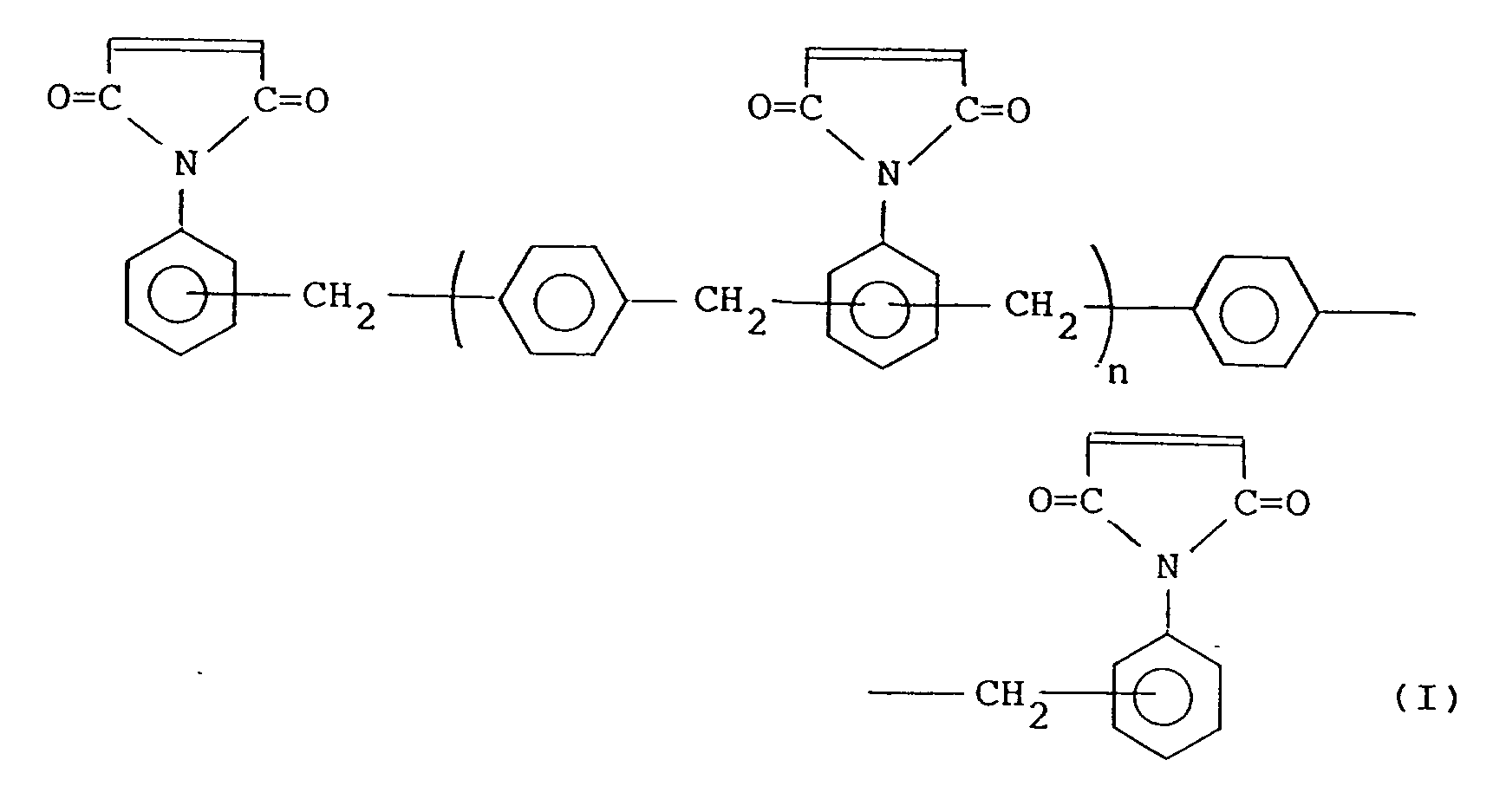
wherein n represents an integer of from 0 to 50.
wherein n represents an integer of from 0 to 50.
2. The polymaleimide compound of claim 1 wherein said compound has a molecular weight
of from 400 to 15,000 and a melting point of from 50°C to 200°C.
3. The polymaleimide compound of claim 2 wherein the melting point is from 70°C to 160°C.
4. A process for the preparing of a polymaleimide compound comprising reacting an aromatic
amine compound of the formula (II):
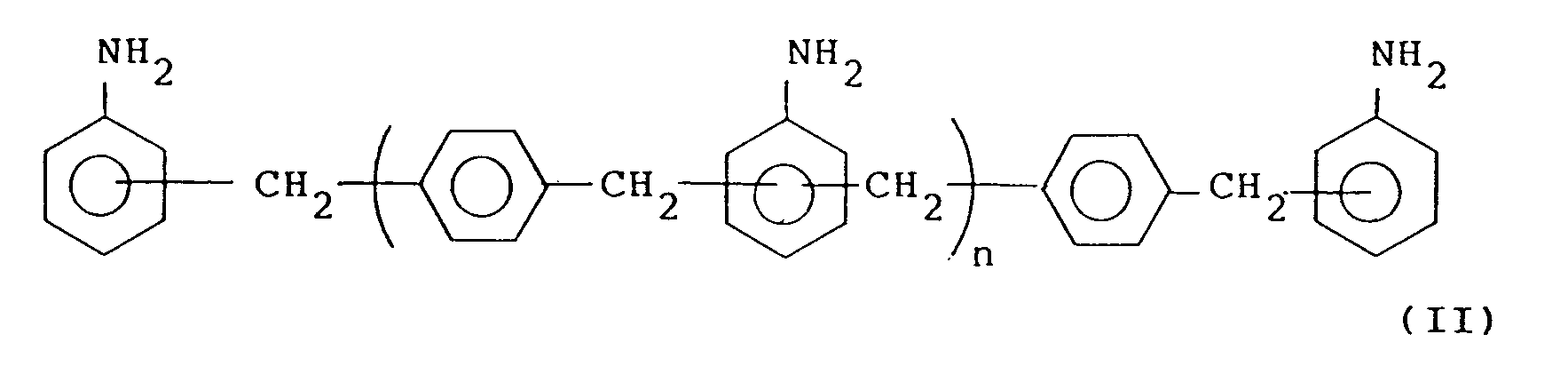
wherein n represents an integer of from 0 to 50, with maleic anhydride to form a polymaleimide compound of the formula (I):
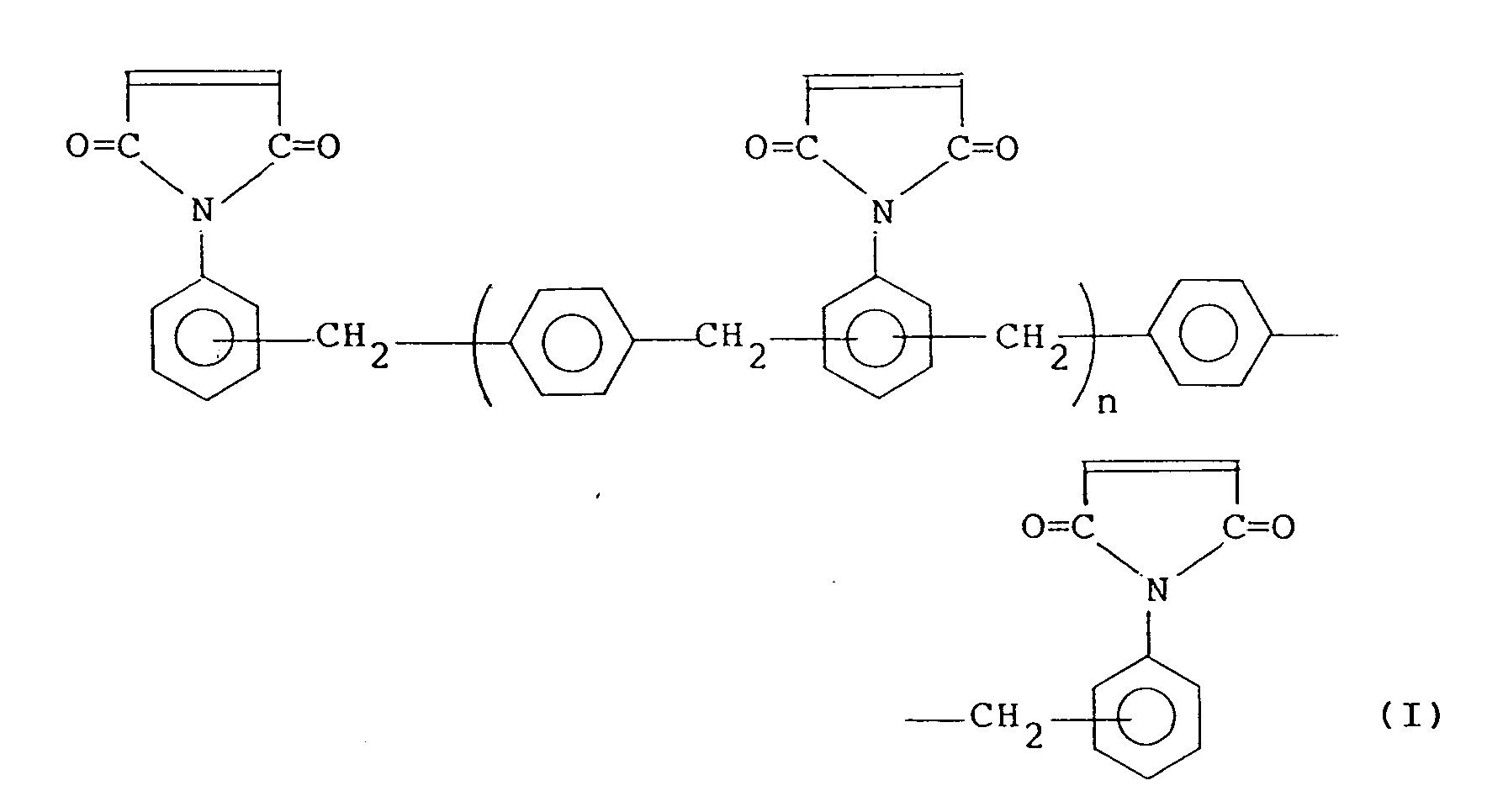
wherein n represents an integer of from 0 to 50.
wherein n represents an integer of from 0 to 50, with maleic anhydride to form a polymaleimide compound of the formula (I):
wherein n represents an integer of from 0 to 50.
5. The process of claim 4 wherein said aromatic amine compound and said maleic anhydride
are reacted in from 1 to 10 parts by weight of an organic solvent per part by weight
of the sum of said aromatic amine compound and maleic anhydride to form a polymaleamic
acid; and then said polymaleamic acid is cyclized and dehydrated in the presence of
acetic anhydride, a base and a catalyst.
6. The process of claim 5 wherein maleic anhydride is present in an amount of from 1
to 1.5 equivalents per equivalent of amino groups present in said aromatic amine compound.
7. The process of claim 5 or 6 wherein acetic anhydride is present in an amount of from
1 to 4 equivalents per equivalent of amino groups in said aromatic amine compound.
8. The process of claim 5, 6 or 7 wherein said catalyst is selected from the group consisting
of the oxides of alkaline earth metals and the carbonates, sulfates, phosphates and
acetates of iron(II,III), nickel(II), manganese(II,III), copper(I,II) and cobalt(II,III).
9. The process of claim 5, 6, 7 or 8 wherein said base is selected from the group consisting
of an alkali metal acetate and a tertiary amine.
10. The process of claim 5, 6, 7 or 8 wherein said base is selected from the group consisting
of sodium acetate, potassium acetate, trimethylamine, triethylamine, and tributylamine.
11. The process of claim 9 or 10 wherein said base is present in an amount of from 0.05
to 1.1 equivalents per equivalent of amino groups in said aromatic amine compound.
12. The process of any of claim 5-11 wherein said polymaleamic acid is cyclized and dehydrated
at a temperature of from 20°C to 150°C.
13. The process of any of claim 4-12 wherein said aromatic amine compound is prepared
by reacting aniline with a compound selected from the group consisting of (a) a bishalogenomethyl
derivative represented by the formula (III):

wherein X represents a halogen atom and (b) an aralkyl alcohol derivative represented by the formula (IV):

wherein R is selected from the group consisting of a hydrogen atom, an acyl group and a lower alkyl group having no more than 4 carbon atoms.
wherein X represents a halogen atom and (b) an aralkyl alcohol derivative represented by the formula (IV):
wherein R is selected from the group consisting of a hydrogen atom, an acyl group and a lower alkyl group having no more than 4 carbon atoms.
14. The process of claim 13 wherein aniline is present in a molar ratio of from 1 to 15
moles of aniline per mole of the compound selected from the group consisting of a
bishalogenomethyl derivative and an aralkyl alcohol derivative, said catalyst is an
acid catalyst and said reaction is carried out at a temperature of from 170 to 240°C.
1. Polymaleimid-Verbindung, die durch die folgende Formel (I)
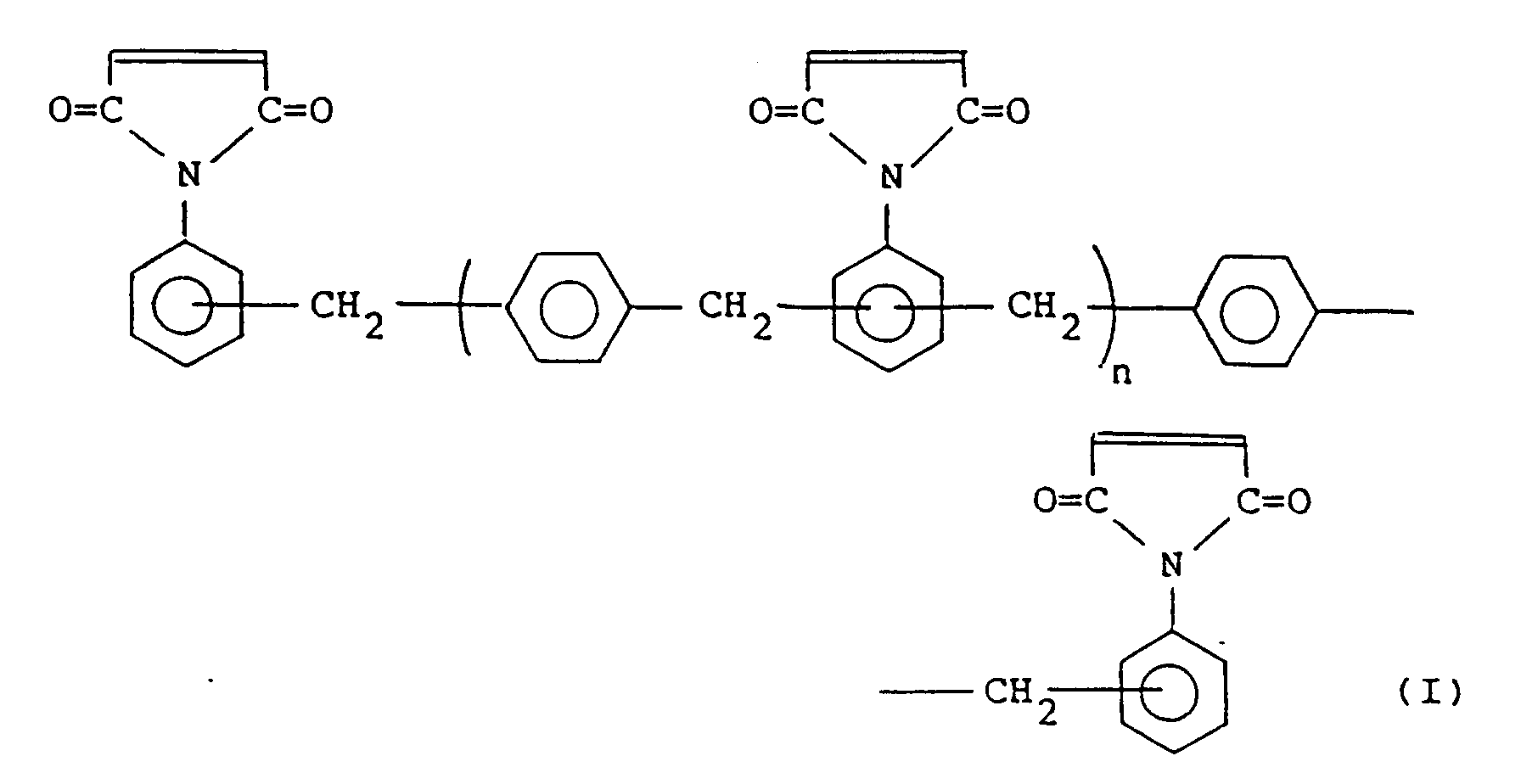
repräsentiert wird, worin n eine ganze Zahl von 0 bis 50 darstellt.
repräsentiert wird, worin n eine ganze Zahl von 0 bis 50 darstellt.
2. Polymaleimid-Verbindung nach Anspruch 1, worin die besagte Verbindung ein Molekulargewicht
von 400 bis 15.000 und einen Schmelzpunkt von 50° C bis 200° C aufweist.
3. Polymaleimid-Verbindung nach Anspruch 2, worin der Schmelz-Punkt von 70° C bis 160°
C beträgt.
4. Verfahren zur Herstellung einer Polymaleimid-Verbindung, umfassend die Reaktion einer
aromatischen Amin-Verbindung der Formel (II) :
worin n eine ganze Zahl von 0 bis 50 darstellt, mit Maleinsäureanhydrid unter Bildung einer Polymaleimid-Verbindung der Formel (I):
worin n eine ganze Zahl von 0 bis 50 darstellt.
worin n eine ganze Zahl von 0 bis 50 darstellt, mit Maleinsäureanhydrid unter Bildung einer Polymaleimid-Verbindung der Formel (I):
worin n eine ganze Zahl von 0 bis 50 darstellt.
5. Verfahren nach Anspruch 4, worin die besagte aromatische Amin-Verbindung und das besagte
Maleinsäureanhydrid in 1 bis 10 Gewichtsteilen eines organischen Lösungsmittels pro
Gewichtsteil der Summe der besagten aromatischen Aminverbindung und des Maleinsäureanhydrids
unter Bildung einer Polymaleimid-Verbindung umgesetzt werden und dann die besagte
Polymaleimidsäure cyclisiert und in Anwesenheit von Essigsäureanhydrid, einer Base
und eines Katalysators dehydratisiert wird.
6. Verfahren nach Anspruch 5, bei dem Maleinsäureanhydrid in einer Menge von 1 bis 1,5
Äquivalenten pro Äquivalent der in besagter aromatischer Aminverbindung vorhandenen
Aminogruppen vorhanden ist.
7. Verfahren nach Anspruch 5 oder 6, bei dem das Essigsäureanhydrid in einer Menqe von
1 bis 4 Äquivalenten pro Äquivalent der in der besagten aromatischen Aminoverbindung
vorhandenen Aminogruppen vorhanden ist.
8. Verfahren nach Anspruch 5, 6 oder 7, worin der besagte Katalysator ausgewählt ist
aus der Gruppe bestehend aus Oxiden der Erdalkalimetalle und der Carbonate, Sulfate,
Phosphate und Acetate von Eisen (II, III), Nickel (II), Mangan (II, III), Kupfer (I,
II) und Cobalt (II, III).
9. Verfahren nach den Ansprüchen 5, 6, 7 oder 8, worin die besagte Base ausgewählt ist
aus der Gruppe bestehend aus einem Alkalimetallacetat und einem tertieren Amin.
10. Verfahren nach Anspruch 5, 6, 7 oder 8, worin die besagte Base ausgewählt ist aus
der Gruppe bestehend aus Natriumacetat, Kaliumacetat, Trimethylamin, Triethylamin
und Tributylamin.
11. Verfahren nach Anspruch 9 oder 10, worin die besagte Base in einer Menge von 0,05
bis 1,1 Äquivalenten pro Äquivalent der Aminogruppen der besagten aromatischen Aminverbindung
vorhanden ist.
12. Verfahren nach einem der Ansprüche 5 bis 11, worin die besagte Polymaleamidsäure bei
einer Temperatur von 20° C bis 150° C cyclisiert und dehydratisiert wird.
13. Verfahren nach einem der Ansprüche 4 bis 12, worin die besagte aromatische Amin-Verbindung
hergestellt wird durch Reaktion von Anilin mit einer Verbindung ausgewählt aus der
Gruppe bestehend aus (a), einem Bishalogenmethyl-Derivat, welches durch die Formel
III:

repräsentiert wird, worin X ein Halogenatom darstellt und (b) einem Aralkylalkohol-Derivat, welches durch die Formel (IV):

repräsentiert wird, worin R ausgewählt ist aus der Gruppe bestehend aus einem Wasserstoffatom, einer Acylgruppe und einer niederen Alkylgruppe mit nicht mehr als 4 Kohlenstoffatomen.
repräsentiert wird, worin X ein Halogenatom darstellt und (b) einem Aralkylalkohol-Derivat, welches durch die Formel (IV):
repräsentiert wird, worin R ausgewählt ist aus der Gruppe bestehend aus einem Wasserstoffatom, einer Acylgruppe und einer niederen Alkylgruppe mit nicht mehr als 4 Kohlenstoffatomen.
14. Verfahren nach Anspruch 13, worin das Anilin in einem molaren Anteil von 1 bis 15
Mol Anilin pro Mol der Verbindung,ausgewählt aus der Gruppe bestehend aus einem Bishalogenmethyl-Derivat
und einem Aralkylalkohol-Derivat, wobei besagter Katalysator ein Säurekatalysator
ist und die besagte Reaktion bei einer Temperatur von 170 bis 240° C durchgeführt
wird, vorhanden ist.
1. Composé polymaléimidique représenté par la formule (I) suivante :
dans laquelle n représente un entier de 0 à 50.
dans laquelle n représente un entier de 0 à 50.
2. Composé polymaléimidique selon la revendication 1, où ledit composé a un poids moléculaire
de 400 à 15 000 et un point de fusion de 50°C à 200°C.
3. Composé polymaléimidique selon la revendication 2, où le point de fusion est de 70°C
à 160°C.
4. Procédé pour préparer un composé polymaléimidique, comprenant la réaction d'un composé
amine aromatique de formule (II) :
dans laquelle n représente un entier de 0 à 50, avec l'anhydride maléique pour former un composé polymaléimidique de formule (I) :
dans laquelle n représente un entier de 0 à 50.
dans laquelle n représente un entier de 0 à 50, avec l'anhydride maléique pour former un composé polymaléimidique de formule (I) :
dans laquelle n représente un entier de 0 à 50.
5. Procédé selon la revendication 4, où ledit composé amine aromatique et ledit anhydride
maléique sont mis à réagir dans 1 à 10 parties en poids d'un solvant organique par
partie en poids de la somme dudit composé amine aromatique et dudit anhydride maléique,
pour former un acide polymaléamique ; puis ledit acide polymaléamique est cyclisé
et déshydraté en présence d'anhydride acétique, d'une base et d'un catalyseur.
6. Procédé selon la revendication 5, où l'anhydride maléique est présent en une quantité
de 1 à 1,5 équivalent par équivalent des groupes amino présents dans ledit composé
amine aromatique.
7. Procédé selon la revendication 5 ou 6, où l'anhydride acétique est présent en une
quantité de 1 à 4 équivalents par équivalent des groupes amino dans ledit composé
amine aromatique.
8. Procédé selon la revendication 5, 6 ou 7, où ledit catalyseur est choisi dans le groupe
constitué par les oxydes des métaux alcalino-terreux et les carbonates, sulfates,
phosphates et acétates de fer(II, III), nickel(II), manganèse(II, III), cuivre(I,
II) et cobalt(II, III).
9. Procédé selon la revendication 5, 6, 7 ou 8, où ladite base est choisie dans le groupe
constitué par un acétate de métal alcalin et une amine tertiaire.
10. Procédé selon la revendication 5, 6, 7 ou 8, où ladite base est choisie dans le groupe
constitué par l'acétate de sodium, l'acétate de potassium, la triméthylamine, la triéthylamine
et la tributylamine.
11. Procédé selon la revendication 9 ou 10, où ladite base est présente en une quantité
de 0,05 à 1,1 équivalent par équivalent des groupes amino dans ledit composé amine
aromatique.
12. Procédé selon l'une quelconque des revendications 5 à 11, où ledit acide polymaléamique
est cyclisé et déshydraté à une température de 20°C à 150°C.
13. Procédé selon l'une quelconque des revendications 4 à 12, où ledit composé amine aromatique
est préparé par réaction de l'aniline avec un composé choisi dans le groupe constitué
par (a) un dérivé bishalogénométhylique représenté par la formule (III) :

dans laquelle X représente un atome d'halogène, et (b) un dérivé d'alcool aralkylique représenté par la formule (IV) ;

dans laquelle R est choisi dans le groupe constitué par un atome d'hydrogène, un groupe acyle et un groupe alkyle inférieur n'ayant pas plus de 4 atomes de carbone.
dans laquelle X représente un atome d'halogène, et (b) un dérivé d'alcool aralkylique représenté par la formule (IV) ;
dans laquelle R est choisi dans le groupe constitué par un atome d'hydrogène, un groupe acyle et un groupe alkyle inférieur n'ayant pas plus de 4 atomes de carbone.
14. Procédé selon la revendication 13, où l'aniline est présente dans un rapport molaire
de 1 à 15 moles d'aniline par mole du composé choisi dans le groupe constitué par
un dérivé bishalogénométhylique et un dérivé d'alcool aralkylique, ledit catalyseur
est un catalyseur acide et ladite réaction est effectuée à une température de 170
à 240°C.