| (19) |
 |
|
(11) |
EP 0 349 308 B1 |
| (12) |
EUROPEAN PATENT SPECIFICATION |
| (45) |
Mention of the grant of the patent: |
|
31.08.1994 Bulletin 1994/35 |
| (22) |
Date of filing: 29.06.1989 |
|
|
| (54) |
Improved last
Leisten
Forme modifiée
|
| (84) |
Designated Contracting States: |
|
DE ES FR IT NL |
| (30) |
Priority: |
30.06.1988 GB 8815560
|
| (43) |
Date of publication of application: |
|
03.01.1990 Bulletin 1990/01 |
| (73) |
Proprietor: GEO. J. COX LIMITED |
|
Wellingborough
Northants, NN8 1LG (GB) |
|
| (72) |
Inventors: |
|
- Waterfield, Adam Pierce Macleod
Kettering
Northants. NN14 4BG (GB)
- Waterfield, Norman Richard
Wellingborough
Northants NN9 7TD (GB)
- Chapman, David Arthur
Northants NN10 9NB (GB)
- Andrews, Thomas Keith
Norhthampton NN3 3SZ (GB)
- Humphrey, Brian
Northants NN15 7EG (GB)
|
| (74) |
Representative: Wain, Christopher Paul et al |
|
A.A. THORNTON & CO.
Northumberland House
303-306 High Holborn
London WC1V 7LE
London WC1V 7LE (GB) |
| (56) |
References cited: :
CH-A- 387 487
GB-A- 969 603
|
DE-B- 1 176 520
US-A- 3 187 358
|
|
| |
|
|
|
|
| |
|
| Note: Within nine months from the publication of the mention of the grant of the European
patent, any person may give notice to the European Patent Office of opposition to
the European patent
granted. Notice of opposition shall be filed in a written reasoned statement. It shall
not be deemed to
have been filed until the opposition fee has been paid. (Art. 99(1) European Patent
Convention).
|
[0001] The present invention relates to lasts, and in particular to a last having a detachable
toe-end portion. The invention also relates to a method of making footwear using a
last of this type.
[0002] It is known to manufacture shoes (which term includes all items of footwear made
on a last) by shaping the leather or other material around a last. In the case of
narrow toed shoes, the last must come almost to a point at the toe-end. Such lasts
are easily damaged and may soon need re-modelling. This is expensive and inconvenient.
[0003] Since the last must be removed from the finished shoe, the overall shape of the last
must be such that removal is not made impossible or difficult. For example, the toe
piece must not project from the last in an outstanding manner.
[0004] It is an object of the invention to provide a last which overcomes the above disadvantages.
[0005] It is known to provide lasts having detachable toe portions. Examples are illustrated
in GB-A-969603 and DE-A-1176520. In both of these examples the join between the toe
portion and the main body portion is in the region of the ball of the foot. In GB-A-969603
it is proposed to provide lasts for shoes of different width fittings using the same
last main body portion and in DE-A-1176520, it is proposed to provide a variety of
different toe shapes, attachable to the same main body portion. It is also known to
provide lasts having hinged toe portions, and an example is shown in US 3187358. The
problem remains that the foreparts of such lasts, whether detachable or not, tend
to become damaged after prolonged use.
[0006] This problem could be overcome to some extent by an arrangement described in CH-A-387487
in which it is proposed to provide a last with an extension spike for use in manufacturing
pointed shoes, which remains in the finished shoe. During manufacture, the spike is
butted up to the end of the last, after the inside and lining have been placed over
the last, and then the shoe outer is constructed.
[0007] A further problem with all of the aforementioned lasts is the accurate positioning
of the insole so that it is correctly aligned in the finished shoe. The present invention
is based on the realisation that this further problem can be overcome by securing
the insole to a detachable toe portion of the last which will remain in the finished
shoe.
[0008] A first aspect of the present invention provides a method of manufacturing footwear
using a last comprising a main body portion and a toe portion which is detachably
connected to the main body portion, the method comprising assembling the last by connecting
the toe portion and the main body portion, building the footwear around the assembled
last and removing the main body portion of the last leaving the toe portion in the
finished footwear; characterised in that a recess is provided in the toe portion and
a forward portion of the insole of the footwear is inserted in the recess.
[0009] The present invention also provides a last comprising a main body portion, a toe
portion, and means for detachably connecting said body and toe portions; the body
and toe portions being detachable in such a manner that the main body portion may
be withdrawn from the lasted footwear while the toe portion remains in place in the
finished footwear; characterised in that the toe portion has a recess for insertion
of a forward portion of an insole.
[0010] The provision of an aperture in the toe portion allows very accurate location of
the insole on the last.
[0011] Instead of the insole being inserted in a recess in the toe portion, the toe portion
may have an integral insole portion.
[0012] In one preferred embodiment of the invention, the toe portion has an upper surface
at an area of connection of the toe and main body portions, extending above an upper
surface of an adjacent part of the main body portion.
[0013] In an alternative arrangement, exclusively for use in shoes of welted construction,
the toe portion is provided with an integrally moulded rib to match that on a ribbed
insole, the insole extending over the body portion of the last and having a front
extension portion to locate within an aperture of the toe portion.
[0014] Embodiments of the invention will now be more particularly described by way of example
and with reference to the accompanying drawings, in which:
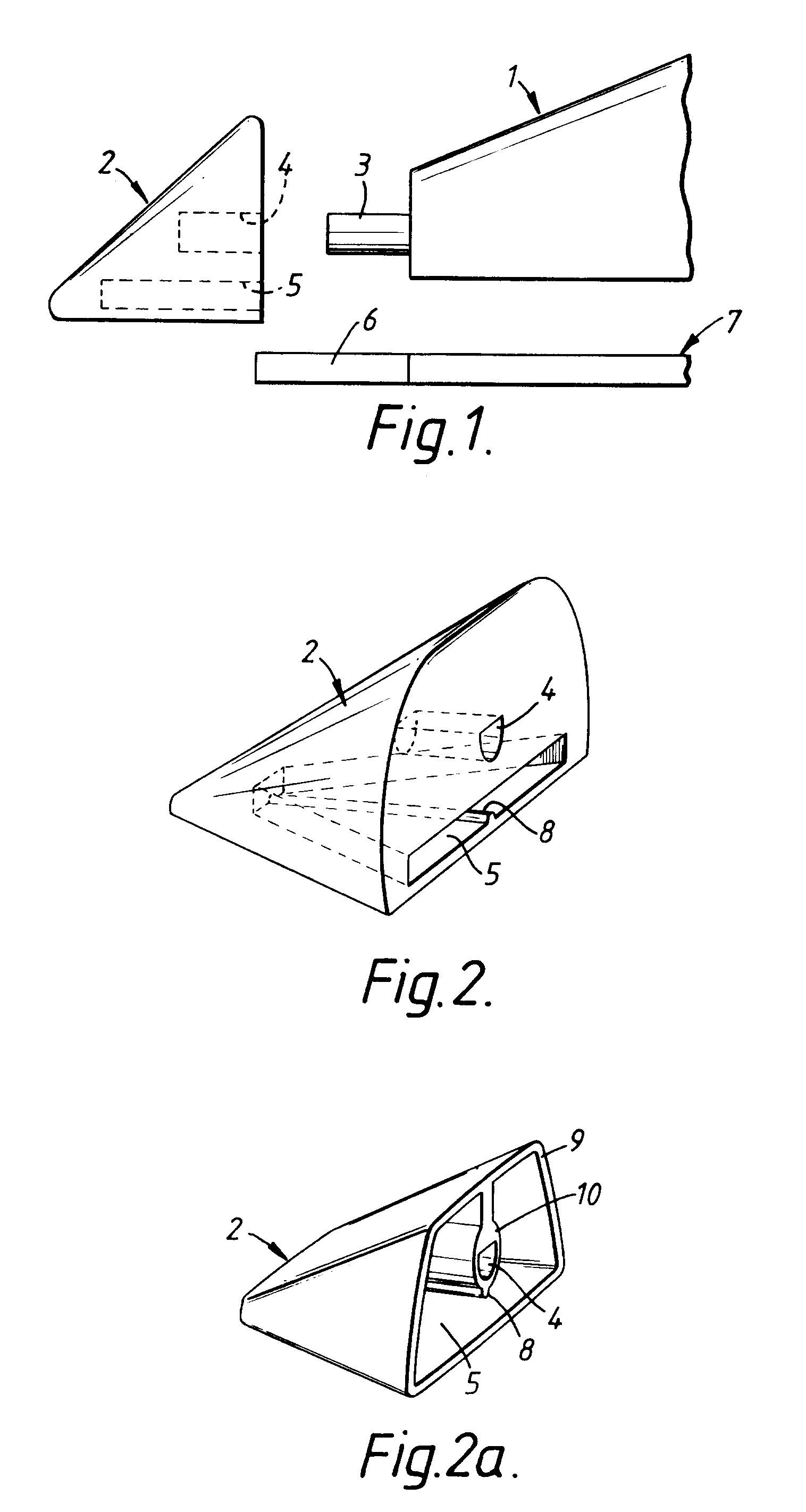
Figure 1 is a schematic side view of part of an insole, a last and a toe piece embodying
the invention, shown in separated condition;
Figure 2 is a perspective view of the toe piece of the last illustrated in Figure
1;
Figure 2a is a perspective view of an alternative, preferred embodiment of toe piece;
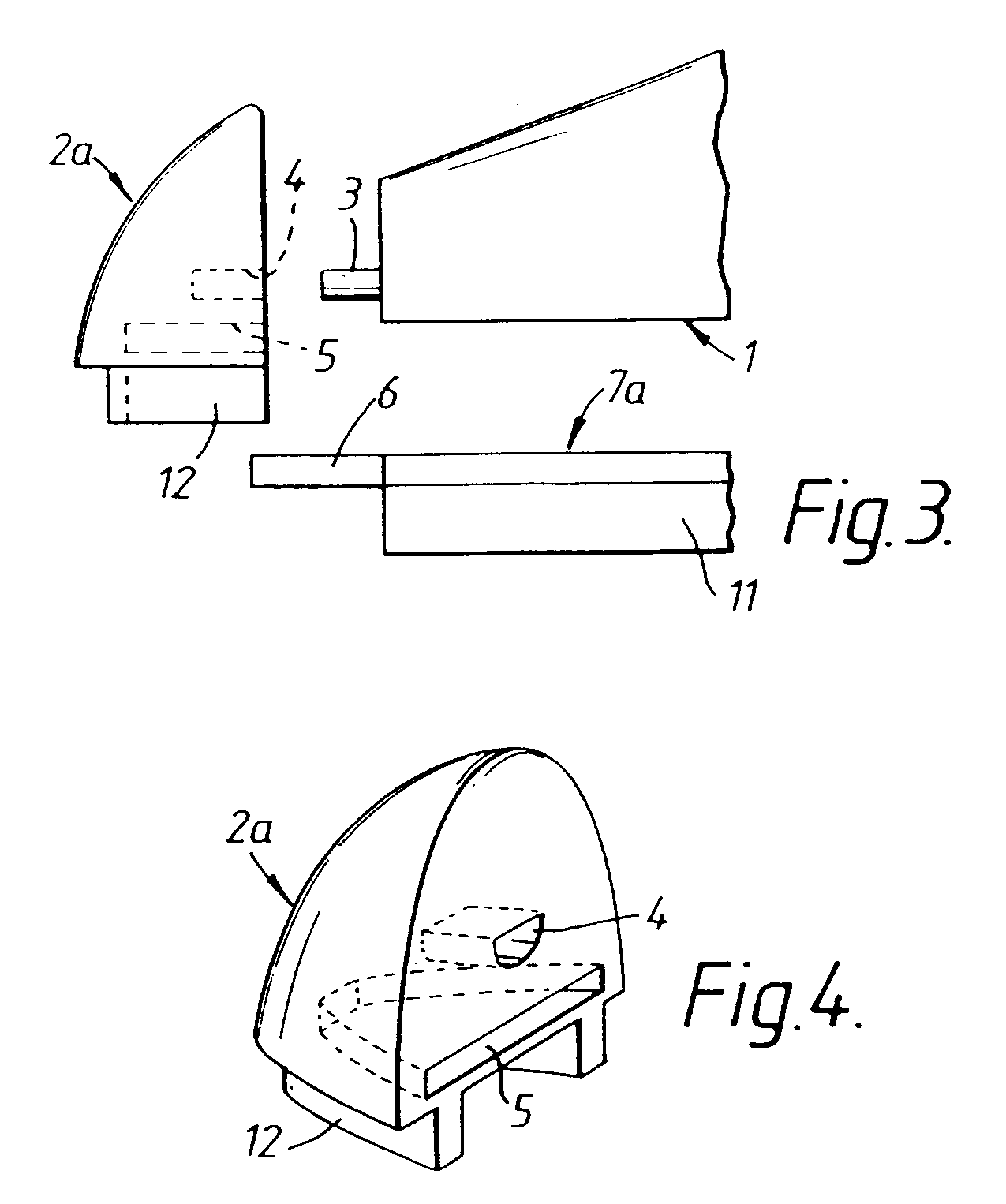
Figure 3 is a schematic side elevation of part of an insole, a last and a toe piece,
for use in welted footwear;
Figure 4 is a perspective view of a toe piece of the last illustrated in Figure 3;
Figure 5 is a schematic side elevation of part of an insole, last and toe piece for
use in welted footwear; and
Figure 6 is a perspective view of the toe piece of the last illustrated in Figure
5.
[0015] Referring now to the drawings, there is shown a main last body portion 1, and a toe
portion 2. The portions are detachably connected by means of peg 3 on the body portion
1 engaging into blind hole 4 in the toe portion 2. The shoe is built around the assembled
last, and then only the main body portion 1 is removed. The toe portion 2 remains
in place. If so desired it may be coated with adhesive so that it adheres to the upper,
although this may not be strictly necessary.
[0016] In the embodiments shown in Figures 1 to 4 the toe portion 2 is provided with a shaped
recess 5 positioned below the blind hole 4 to accommodate a correspondingly tapered
shaped toe-end 6 of the insole 7, thereby enabling the insole 7 to be accurately aligned
with the toe portion 2. Alignment and security of fit of the tapered insole toe-end
6 are assisted by the provision of a central ridge 8 within the toe portion recess
5. Accurate alignment is imperative, as a small misalignment will adversely affect
toe-lasting and subsequent operations. Furthermore, there should only be need for
supplementary attachment of the insole to the last at the heel.
[0017] In some cases where the toe shape is very extreme, the excess material that forms
the lasting allowance at the toe is trimmed, leaving no material for adhesion to the
sole at the toe. This can lead to separation at the toe in wear. The separable toe
portion provides material to which the upper may be lasted, and which remains in the
shoe.
[0018] Complex toe shapes may be produced using the last embodying the present invention,
since the toe portion of the last need not be removable from the finished shoe. As
shown in the Figures, the toe of the finished shoe will have a concave appearance.
This could not be achieved if the entire last had to be removed.
[0019] Finally, each body portion of the last may be used with one of a selection of toe
portions, thereby allowing a number of alternatives of the shoe to be produced.
[0020] Referring now to Figures 3 to 6, there are shown variants in which the toe portion
2a or 2b is integral with a toe "insole" portion.
[0021] In Figures 3 to 6, the toe "insole" is ribbed for use in welted shoe manufacture.
[0022] The main insole 7a is provided with a rib 11 extending around the insole 7 adjacent
to its periphery. A rib 12 integral with the toe portion 2a of the last continues
the line of the insole ribs 11 to the point of the complete insole. This is of particular
benefit in the welted construction of footwear on lasts with a narrow toe, where there
is considerable difficulty in achieving a uniform rib all around the toe.
[0023] The toe portion 2a and body portion of the last are joined by peg 3 and hole 4 as
in the embodiment of Figure 1. Furthermore in Figures 3 and 4 the insole 7a is joined
to the toe portion 2a by means of a recess 5 which engages a tapered end 6 of insole
7a.
[0024] Any movement of the insole at toe-lasting is obviated and a substantially perfectly
uniform rib around the toe is created.
[0025] The embodiment of toe portion 2 illustrated in Figure 2a is of a hollow construction
designed to minimise use of material during production. The blind hole 4 is formed
by a cylindrical annulus 10 projecting within a shell 9 of the toe piece 2, and the
recess 5 simply comprises a gap between the annulus 10 and shell 9.
[0026] An important feature of the peg 3 and blind hole 4 in this and other embodiments
is that, for security of fitment of the toe piece 2 to the body portion 1 of the last,
and to prevent relative rotation therebetween, the peg is not completely circular.
For this reason, the hole 4 is illustrated throughout as having a substantially D-shaped
cross-section, and it is intended that the peg be of similar cross-section and substantially
close-fitting therein. However other shapes may be envisaged.
[0027] The toe-portion fits sufficiently firmly to the last to allow a practical single
lasting operation of the upper, and detaches when the last is subsequently removed,
remaining in the finished shoe.
[0028] The process allows a variety of shapes to be utilised with the same body portion
of the last, particularly, but not exclusively, convex shapes, which would not be
possible by conventional methods of construction which necessitate the ability to
remove that part of the last that forms the toe shape (it being an integral part of
a single piece last). Careful choice of toe shape and body portion will allow a large
number of, if not all, sizes of footwear produced to share a single size of toe portion.
In some cases, the toe piece may comprise an integral part of the insole, and the
whole may be moulded as one piece.
1. A method of manufacturing footwear using a last comprising a main body portion (1)
and a toe portion (2) which is detachably connected to the main body portion (1),
the method comprising assembling the last by connecting the toe portion and the main
body portion, building the footwear around the assembled last and removing the main
body portion of the last leaving the toe portion in the finished footwear; characterised
in that a recess (5) is provided in the toe portion and a forward portion (6) of the
insole (7) of the footwear is inserted in the recess.
2. A method of manufacturing footwear using a last comprising a main body portion (1)
and a toe portion (2) which is detachably connected to the main body portion (1),
the method comprising assembling the last by connecting the toe portion and the main
body portion, building the footwear around the assembled last and removing the main
body portion of the last leaving the toe portion in the finished footwear; characterised
in that the toe portion is integrally formed with an insole portion.
3. A method of manufacturing footwear as claimed in claim 1 or 2 including the step of
coating the toe portion (2) of the last with adhesive so that it adheres to the upper
of the footwear.
4. A last comprising a main body portion (1), a toe portion (2), and means (3,4) for
detachably connecting said body and toe portions; the body and toe portions being
detachable in such a manner that the main body portion may be withdrawn from the lasted
footwear while the toe portion remains in place in the finished footwear; characterised
in that the toe portion has a recess (5) for insertion of a forward portion of an
insole (7).
5. A last as claimed in claim 4, wherein the connecting means comprises a peg (3) extending
from the body portion (1) and a cooperating aperture (4) in the toe portion (2).
6. A last as claimed in claim 5, wherein the peg (3) and aperture (4) are non-circular.
7. An assembly comprising a footwear insole portion and a last, the last comprising a
main body portion (1), a toe portion (2), and means (3,4) for detachably connecting
said body and toe portions; the body and toe portions being detachable in such a manner
that the main body portion may be withdrawn from the lasted footwear while the toe
portion remains in place in the finished footwear; characterised in that the toe portion
and insole portion are integrally formed.
8. An assembly comprising a last as claimed in any of claims 4 to 6 and an insole inserted
into the toe portion.
9. A last as claimed in claim 4,5 or 6 in which the recess (5) is provided with an internal
ridge (8) to grip the forward extension (6) of an insole (7).
10. A last or assembly as claimed in any of claims 4 to 9 for use in footwear of welted
construction, wherein the toe portion is provided with an integrally moulded rib (8)
to match that on a ribbed insole (7).
11. An assembly comprising a last as claimed in claim 10 and a ribbed insole (7) which
extends over the body portion of the last and has a front extension portion to locate
within the recess of the toe portion (2).
12. A last or assembly as claimed in any of claims 4 to 11 in which said toe portion (2)
has an upper surface at an area of connection of said portions, extending above an
upper surface of an adjacent part of the main body portion (1).
13. An item of footwear built around a last including a toe portion which remains in the
finished footwear and further including an insole, characterised in that the toe portion
has a recess into which a forward portion of the insole is inserted.
14. An item of footwear built around a last including a toe portion which remains in the
finished footwear and further including an insole, characterised in that the toe portion
is integrally formed with an insole portion.
1. Verfahren zur Herstellung von Schuhen unter Verwendung eines Leisten, der einen Hauptkörperabschnitt
(1) und einen Zehenabschnitt (2) umfaßt, der lösbar mit dem Hauptkörperabschnitt (1)
verbunden ist, wobei das Verfahren das Zusammensetzen des Leisten durch Verbindung
des Zehenabschnitts mit dem Hauptkörperabschnitt umfaßt, das Bauen der Schuhe um den
zusammengesetzten Leisten herum sowie das Entfernen des Hauptkörperabschnitts des
Leisten, wobei der Zehenabschnitt in den fertiggestellten Schuhen verbleibt; dadurch gekennzeichnet, daß eine Aussparung (5) in dem Zehenabschnitt vorhanden ist und ein vorderer Abschnitt
(6) der Brandsohle (7) der Schuhe in die Aussparung eingeführt wird.
2. Verfahren zur Herstellung von Schuhen unter Verwendung eines Leisten, der einen Hauptkörperabschnitt
(1) und einen Zehenabschnitt (2) umfaßt, der lösbar mit dem Hauptkörperabschnitt (1)
verbunden ist, wobei das Verfahren das Zusammensetzen des Leisten durch Verbindung
des Zehenabschnitts mit dem Hauptkörperabschnitt umfaßt, das Bauen des Schuhs um den
zusammengesetzten Leisten herum sowie das Entfernen des Hauptkörperabschnitts des
Leisten, wobei der Zehenabschnitt in den fertiggestellten Schuhen verbleibt; dadurch gekennzeichnet, daß der Zehenabschnitt integral mit einem Brandsohlenabschnitt ausgeformt ist.
3. Verfahren zur Herstellung von Schuhen nach Anspruch 1 oder 2, das den Schritt des
Beschichtens des Zehenabschnitts (2) des Leisten mit Klebstoff einschließt, so daß
er am Schaft des Schuhs haftet.
4. Leisten, der einen Hauptkörperabschnitt (1), einen Zehenabschnitt (2) und eine Einrichtung
(3,4) zum lösbaren Verbinden des Körper- und des Zehenabschnitts umfaßt; wobei der
Körper- und der Zehenabschnitt so lösbar sind, daß der Hauptkörperabschnitt aus den
auf dem Leisten befindlichen Schuhen herausgezogen werden kann, während der Zehenabschnitt
in den fertiggestellten Schuhen verbleibt; dadurch gekennzeichnet, daß der Zehenabschnitt eine Aussparung (5) zum Einführen eines vorderen Abschnitts
einer Brandsohle (7) aufweist.
5. Leisten nach Anspruch 4, wobei die Verbindungseinrichtung einen Stift (3) umfaßt,
der sich von dem Körperabschnitt (1) erstreckt, sowie eine damit zusammenwirkende
Öffnung (4) in dem Zehenabschnitt (2).
6. Leisten nach Anspruch 5, wobei der Stift (3) und die Öffnung (4) nicht kreisförmig
sind.
7. Baugruppe, die einen Schuh-Brandsohlenabschnitt sowie einen Leisten umfaßt, wobei
der Leisten einen Hauptkörperabschnitt (1), einen Zehenabschnitt (2) und eine Einrichtung
(3,4) zum lösbaren Verbinden des Körper- und des Zehenabschnitts umfaßt; wobei der
Körper- und der Zehenabschnitt so lösbar sind, daß der Hauptkörperabschnitt aus den
auf dem Leisten befindlichen Schuhen herausgezogen werden kann, während der Zehenabschnitt
in den fertiggestellten Schuhen verbleibt; dadurch gekennzeichnet, daß der Zehenabschnitt und der Brandsohlenabschnitt integral ausgeformt sind.
8. Baugruppe, die einen Leisten nach einem der Ansprüche 4 bis 6 sowie eine in den Zehenabschnitt
eingeführte Brandsohle umfaßt.
9. Leisten nach Anspruch 4, 5 oder 6, wobei die Aussparung (5) mit einem Innensteg (8)
versehen ist, der die vordere Verlängerung (6) einer Brandsohle (7) festklemmt.
10. Leisten oder Baugruppe nach einem der Ansprüche 4 bis 9 zum Einsatz in Schuhen mit
rahmengenähtem Aufbau, wobei der Zehenabschnitt mit einer integral geformten Rippe
(8) versehen ist, die der auf einer gerippten Brandsohle (7) entspricht.
11. Baugruppe, die wenigstens einen Leisten nach Anspruch 10 sowie eine gerippte Brandsohle
(7) umfaßt, die sich über den Körperabschnitt des Leisten erstreckt und einen vorderen
Verlängerungsabschnitt aufweist, der in der Aussparung des Zehenabschnitts (2) angebracht
wird.
12. Leisten oder Baugruppe nach einem der Ansprüche 4 bis 11, wobei der Zehenabschnitt
(2) eine Oberseite in einem Bereich der Verbindung der Abschnitte aufweist, die sich
über eine Oberseite eines angrenzenden Teils des Hauptkörperabschnitts (1) hinaus
erstreckt.
13. Schuhartikel, der um einen Leisten herum gebaut wird, der einen Zehenabschnitt enthält,
der in dem fertiggestellten Schuh verbleibt, und der des weiteren eine Brandsohle
enthält, dadurch gekennzeichnet, daß der Zehenabschnitt eine Aussparung aufweist, in die ein vorderer Abschnitt der
Brandsohle eingeführt wird.
14. Schuhartikel, der um einen Leisten herum gebaut wird, der einen Zehenabschnitt enthält,
der in dem fertiggestellten Schuh verbleibt, und der des weiteren eine Brandsohle
enthält, dadurch gekennzeichnet, daß der Zehenabschnitt integral mit einem Brandsohlenabschnitt ausgeformt ist.
1. Procédé de fabrication de chaussures utilisant une forme qui comprend une portion
corps principal (1) et une portion bout (2) qui est assemblée de façon détachable
à la portion corps principal (1), le procédé consistant à assembler la forme en assemblant
la portion bout et la portion corps principal, construire la chaussure autour de la
forme assemblée et enlever la portion corps principal de la forme en laissant la portion
bout dans la chaussure finie ; caractérisé en ce qu'une cavité (5) est prévue dans
la portion bout et une portion avant (6) de la première (7) de la chaussure est insérée
dans la cavité.
2. Procédé de fabrication de chaussures utilisant une forme qui comprend une portion
corps principal (1) et une porcion bout (2) qui est assemblée de façon détachable
à la portion corps principal (1), le procédé consistant à assembler la forme en assemblant
la portion bout et la portion corps principal, construire la chaussure autour de la
forme assemblée et enlever la portion corps principal de la forme en laissant la portion
bout dans la chaussure finie ; caractérisé en ce que la portion bout est formée d'un
seul tenant avec une portion de la première.
3. Procédé de fabrication selon la revendication 1 ou 2, comprenant la phase consistant
à enduire la portion bout (2) de la forme d'un adhésif de manière qu'elle adhère à
la tige de la chaussure.
4. Forme comprenant une portion corps principal (1), une portion bout (2) et des moyens
(3, 4) servant à assembler lesdites portions corps et bout de façon détachable ; les
portions corps et bout pouvant être détachées de telle manière que la portion corps
principal puisse être retirée de la chaussure montée, tandis que la portion bout reste
en place dans la chaussure finie ; caractérisée en ce que la portion bout présente
une cavité (5) destinée à l'insertion d'une portion avant d'une première (7).
5. Forme selon la revendication 4, dans laquelle les moyens d'assemblage comprennent
un tenon (3) qui fait saillie sur la portion corps (1) et une ouverture (4) ménagée
dans la portion bout (2) et coopérant avec le tenon.
6. Forme selon la revendication 5, dans laquelle le tenon (3) et l'ouverture (4) sont
non circulaires.
7. Ensemble comprenant une portion première de chaussure et une forme, la forme comprenant
une portion corps principal (1), une portion bout (2), et des moyens (3, 4) servant
à assembler les portions corps et bout de façon détachable, les portions corps et
bout pouvant être détachées de telle manière que la portion corps principal puisse
être retirée de la chaussure montée tandis que la portion bout reste en place dans
la chaussure finie ; caractérisé en ce que la portion bout et une portion de la première
sont formées en une seule pièce.
8. Ensemble comprenant une forme selon une quelconque des revendications 4 à 6, et une
première insérée dans la portion bout.
9. Forme selon la revendication 4, 5 ou 6, dans laquelle la cavité (5) est munie d'une
crête intérieure (8) destinée à serrer le prolongement avant (6) d'une première (7).
10. Forme ou ensemble selon une quelconque des revendications 4 à 9, destiné à être utilisé
dans une chaussure du type à trépointe, dans laquelle la portion bout est munie d'une
nervure (8) venue de moulage pour s'accoupler à celle d'une première incisée (7).
11. Ensemble comprenant une forme selon la revendication 10 et une première incisée (7)
qui s'étend sur la portion corps de la forme et présente une portion prolongatrice
avant qui se loge dans la cavité de la portion bout (2).
12. Forme ou ensemble selon une quelconque des revendications 4 à 11, dans lequel ladite
portion bout (2) présente une surface supérieure et une zone d'assemblage desdites
portions, qui s'étend au-dessus d'une surface supérieure d'une partie adjacente de
la portion corps principal (1).
13. Article chaussant construit autour d'une forme, comprenant une portion bout qui reste
dans la chaussure finie et comprenant en outre une première, caractérisé en ce que
la portion bout présente une cavité dans laquelle une portion avant de la première
est insérée.
14. Article chaussant construit autour d'une forme, comprenant une portion bout qui reste
dans la chaussure finie et comprenant en outre une première, caractérisé en ce que
la portion bout est formée d'un seul tenant avec une portion de la première.