| (19) |
 |
|
(11) |
EP 0 349 311 B1 |
| (12) |
EUROPEAN PATENT SPECIFICATION |
| (45) |
Mention of the grant of the patent: |
|
12.03.1997 Bulletin 1997/11 |
| (22) |
Date of filing: 29.06.1989 |
|
| (51) |
International Patent Classification (IPC)6: D21H 21/02
// (D21H17/69, 17:68, 17:45, 17:67) |
|
| (54) |
Pitch control
Pechkontrolle
Contrôle de la poix
|
| (84) |
Designated Contracting States: |
|
AT BE CH DE ES FR GR IT LI LU NL SE |
| (30) |
Priority: |
29.06.1988 GB 8815515
|
| (43) |
Date of publication of application: |
|
03.01.1990 Bulletin 1990/01 |
| (73) |
Proprietor: ECC INTERNATIONAL LIMITED |
|
Theale
Reading
Berkshire RG7 4SA (GB) |
|
| (72) |
Inventors: |
|
- Rogan, Keith Robert
Bugle
St. Austell, PL26 8PW (GB)
- Adams, John Michael
Ruan Highlanes
Truro TR2 5NR (GB)
|
| (74) |
Representative: Bull, Michael Alan et al |
|
Haseltine Lake & Co.
Hazlitt House
28 Southampton Buildings
Chancery Lane
London WC2A 1AT
London WC2A 1AT (GB) |
| (56) |
References cited: :
EP-A- 0 058 622
WO-A-89/06294
GB-A- 1 228 538
|
EP-A- 0 245 553
FR-A- 874 759
US-A- 3 801 433
|
|
| |
|
|
- ABSTRACT BULLETIN OF THE INSTITUTE OF PAPER CHEMISTRY. vol. 51, no. 3,September 1980,
APPLETON US page 355 F.ENDO: "PITCH TROUBLE INHIBITOR."
|
|
| |
|
| Note: Within nine months from the publication of the mention of the grant of the European
patent, any person may give notice to the European Patent Office of opposition to
the European patent
granted. Notice of opposition shall be filed in a written reasoned statement. It shall
not be deemed to
have been filed until the opposition fee has been paid. (Art. 99(1) European Patent
Convention).
|
[0001] This invention relates to coated inorganic particulate material suitable for incorporation
in cellulose pulp compositions to reduce the adverse effects of the deposition of
pitch contained therein in the manufacture of paper or board, and to a process for
manufacturing paper or board.
[0002] Pitch is the name given by paper manufacturers to the substance derived from wood
resins which accumulates on the wire mesh belts, or "wires", of paper making machines
and on the rolls and dewatering felts. The pitch deposits are sticky and can block
holes in the wire and reduce the absorptive capacity of the felt. They can pick fibres
from the formed paper web, often causing holes or weak areas, and occasionally appear
in the paper wet as brown lumps.
[0003] Pitch may be extracted from wood and mechanical or chemical paper pulps by means
of organic solvents. The pitch consists predominantly of fatty acids, fatty esters,
resin acids and unsaponifiable material such as sterols, waxes and higher alcohols.
Both hardwoods and softwoods contain fatty acids, fatty acid esters and unsaponifiable
materials, but only softwoods contain significant amounts of resin acids. This latter
material occurs in wood mainly in the ray cells and resin canals or ducts. Softwoods
or gymnosperms such as pine or spruce therefore in general cause more serious pitch
problems than hardwoods such as birch, maple, oak and poplar. The softwood species
Pinus Strobus L. is particularly rich in resin. The process by which the paper pulp is prepared is
also important. The wood may be reduced to pulp by mechanical grinding alone or with
the aid of a chemical cooking process. The two most important chemical processes are
the sulphite process in which ground wood is cooked in an acid solution of calcium
bisulphite saturated with sulphur dioxide, and the sulphate or Kraft process in which
the cooking is performed in an alkali solution comprising caustic soda, sodium sulphide
and sodium hydrosulphide. When pulp is prepared by the sulphate process the pitch
problem is less severe than when the pulp is prepared by the mechanical or sulphite
processes because in the sulphate process the cooking solution is alkaline and most
of the pitch-forming material is removed by saponification.
[0004] Two methods are commonly used for controlling pitch in paper making. In the first
method an absorbent material is introduced which will adsorb the pitch in the form
of small particles, generally smaller than about 2 micrometers in diameter. Adsorbent
materials commonly used for this purpose include talc and diatomaceous silica. In
the second method the pitch is chemically dispersed so that it remains in suspension
in process water and is removed with the waste water from the paper making process.
[0005] Our GB-A- 1375161 describes the use, as a pitch control agent in paper making, of
a clay pigment which has been coated with an organic material which adheres strongly
to the clay pigment and which renders the surface of the particles of the clay pigment
oleophilic.
Inter alia, the organic material may be an alkyl pyridinium salt or a quaternary ammonium salt
and the dose rate of the organic material on the dry clay pigment is preferably in
the range of from 0.5% to 5% by weight.
[0006] GB-A- 1228538 relates to kaolinites modified with inorganic gels to improve their
dispersibility in organic systems.
[0007] EP-A-0245553 describes the treatment of clays with cationic polyelectrolytes to prepare
high bulking pigments.
[0008] WO-A-89/06294 (citable under Article 54(3) EPC) describes a method of reducing pitch
in pulping and papermaking in which there is added to a pitch-containing furnish a
composite substance which is prepared by irreversibly adsorbing a water-soluble cationic
polymer onto an essentially water-insoluble particulate substrate.
[0009] According to a first aspect of the present invention (for the designated states AT,
BE, CH, DE, FR, IT, LU, NL, SE), there is provided the use, as an agent for controlling
the deposition of pitch in a paper making process, of a coated inorganic particulate
material which comprises a clay mineral coated with (a) a cationic polyelectrolyte
which is a water-soluble substituted polyolefin containing quaternary ammonium groups,
said cationic polyelectrolyte being present in an amount of from 0.01 to 1.5% by weight
based on the weight of the dry clay mineral or with (b) an inorganic gel which adheres
to the clay and which renders the surface of the particles of clay hydrophobic.
[0010] According to a first aspect of the present invention (for the designated states ES,
GR), there is provided the use, as an agent for controlling the deposition of pitch
in a paper making process, of a coated inorganic particulate material which comprises
a clay mineral coated with (a) a cationic polyelectrolyte which is a water-soluble
substituted polyolefin containing quaternary ammonium groups, or with (b) an inorganic
gel which adheres to the clay and which renders the surface of the particles of clay
hydrophobic. The cationic polyelectrolyte is preferably present in an amount of from
0.01 to 1.5% by weight based on the weight of the dry clay mineral.
[0011] According to another aspect of the present invention, there is provided a process
for controlling the deposition of pitch in a paper-making process, wherein there is
incorporated into the paper-making composition a coated inorganic particulate material
which comprises a clay mineral coated with an inorganic gel which adheres to the clay
and which renders the surface of the particles of clay hydrophobic.
[0012] A cationic polyelectrolyte is believed to render the surface of the clay mineral
hydrophilic.
[0013] The clay is coated with one or other, but not both, of the cationic polyelectrolyte
and inorganic material which adheres to the clay and which renders the surface of
the particles of the clay hydrophobic.
[0014] The clay mineral may be of the kandite group, for example kaolinite, nacrite, dickite
or halloysite and may be in its natural hydrous state or may be calcined or heat treated
at a temperature and for a time sufficient to drive off some or all of its chemically
bound water. Alternatively the clay mineral may be of the smectite group, for example
bentonite, montmorillonite, saponite, hectorite, beidellite or fuller's earth.
[0015] Preferably the clay mineral has a particle size distribution such that the mean particle
diameter is not greater than 1 micrometre and the specific surface area is at least
12 m
2g
-1.
[0016] The cationic polyelectrolyte may have quaternary ammonium groups either in the linear
polymer chain or in branches of the polymer chain. The number average molecular weight
of the cationic polyelectrolye is preferably in the range of from about 1500 to about
500,000.
[0017] It has been found that advantageous results are obtained when the cationic polyelectrolyte
is a poly(diallyl di(hydrogen or lower alkyl)ammonium salt) having a number average
molecular weight in the range of from about 10,000 to 100,000. The lower alkyl groups
which may be the same or different have up to four carbon atoms and are preferably
methyl. The ammonium salt may be, for example, a chloride, bromide, iodide, HSO
4-, CH
3SO
4- or nitrite. Preferably the salt is a chloride. Most preferably the cationic polyelectrolyte
is poly(diallyl dimethyl ammonium chloride).
[0018] Alternatively, the cationic polyelectrolyte may be the product of copolymerising
epichlorohydrin and an aliphatic secondary amine, which product has the formula:-
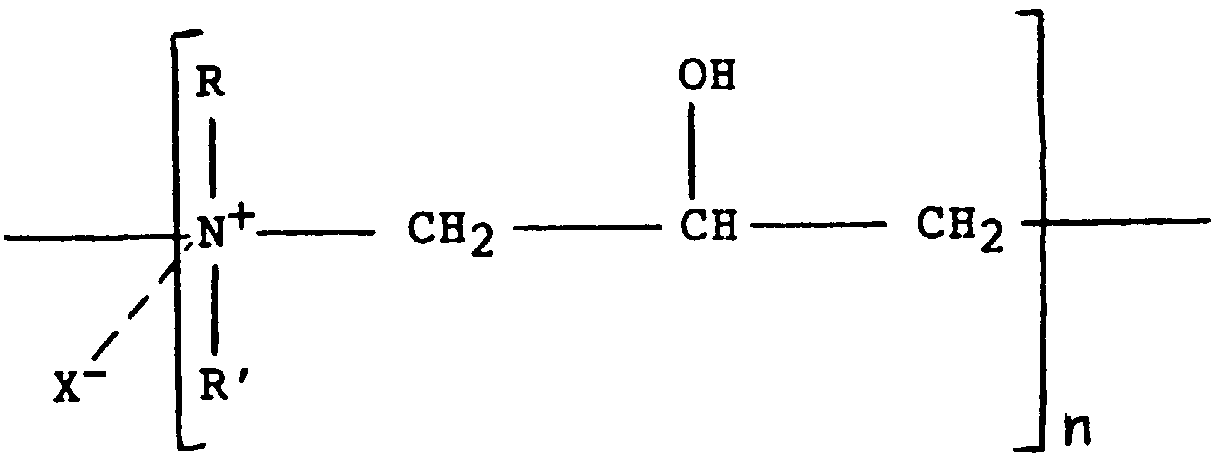
in which R and R', which may be the same or different, are each hydrogen or a lower
alkyl group, preferably having from one to four carbon atoms, preferably methyl or
ethyl and X is Cl
-, Br
-, I
-, HSO
4-, CH
3SO
4- or NO
2-.
[0019] The inorganic material which adheres to the clay and which renders the surface of
the clay particles hydrophobic is an inorganic gel, such as a magnesium silicate gel
which may be prepared by the method described in British Patent Specification No.
1228538, in which the clay mineral is suspended in water and there is added to the
suspension an aqueous solution of sodium metasilicate. The resultant suspension is
stirred and there is then added to the stirred suspension an aqueous solution of magnesium
sulphate and the suspension is again stirred. The pH of the suspension is then reduced
to within the range 6 to 8 with sulphuric acid and the suspension is filtered and
the magnesium silicate coated clay washed twice with deionised water and thermally
dried.
[0020] Other inorganic gels, however, such as aluminium silicate, aluminium hydroxide or
silica may be employed but probably will not be as effective as magnesium silicate
for pitch control purposes.
[0021] The clay mineral which has been coated by one of the methods described above is preferably
added, in a substantially dry state, to the paper mill thin stock and the amount of
the coated clay mineral added is in the range of from 0.5 to 25% by weight based on
the weight of the bone dry wood fibres. The paper mill thin stock is an aqueous suspension
of wood fibres which generally contains from about 0.5 to about 1.0% by weight of
dry wood fibres.
[0022] The invention will now be illustrated by the following Example
EXAMPLE
[0023] Two coated clay minerals were prepared by the following methods:-
1. A calcined kaolinite which had been prepared by heating a fine kaolin clay to a
temperature of 1080°C for 30 minutes was mixed with sufficient water to form a suspension
containing 45% by weight of dry calcined kaolinite and 1% by weight, based on the
weight of dry calcined kaolinite of a poly (diallyl dimethyl ammonium chloride) having
a number average molecular weight of about 30,000 and a cation charge density of 530
coulombs/g. The coated calcined kaolinite thus formed had a particle size distribution
such that the mean particle diameter was 0.75 micrometers and the specific surface
area was 14.1 m2g-1. The suspension was spray dried to produce a product in the form of dry microspheres.
2. 500g of a fine hydrous kaolin clay was suspended in 1.5 litres of water and there
was added to this suspension a solution containing 28.1g of sodium metasilicate in
water. The suspension was stirred for 10 minutes and at the end of this period the
pH of the suspension was found to be 11.8. A solution containing 24.9g of magnesium
sulphate (MgSO4.7H2O) in water was then added and the suspension stirred for 15 minutes. At the end of
this period the pH was found to be 9.7. The pH was reduced to 7.0 by adding a 10%
solution of sulphuric acid. The suspension was then filtered and the magnesium silicate
coated clay was washed twice with deionised water and dried for 16 hours at 90oC.
[0024] There was used as a control a conventional pitch control agent which was a finely
ground talc having a mean particle diameter of 1.65 micrometers and a specific surface
area of 13.6m
2g
-1.
[0025] There was used as a further comparison a pitch control agent in accordance with GB-A-
1375161 which was prepared by coating a hydrous kaolin clay having a particle size
distribution such that 55% by weight consisted of particles having an equivalent spherical
diameter smaller than 2 micrometers with 1% by weight, based on the weight of dry
kaolin, of a primary amine of formula R.NH
2 where R represents a mixture of alkyl groups derived from hydrogenated tallow. The
mean particle diameter was 1.62 micrometers and the specific surface area was 6.5
m
2g
-1.
[0026] Each mineral material was mixed with water to form a suspension containing 1% by
weight of the dry mineral material and to 100g portions of this suspension were added
10cm
3 portions of colloidal solutions in ethanol of a wide range of different quantities
of oleic acid, which is considered to be a realistic model for the type of pitch which
is found in suspension in paper making stock. In each case the mixture was shaken
for 7 1/2 minutes after which a 40 cm
3 sample of the suspension was centrifuged and 20 cm
3 of the supernatant liquid was pipetted into a vial. The water and ethanol were removed
from the sample contained in the vial in a vacuum oven at 60-80
oC and a known volume of a solution containing 0.2 mol.dm
-3 of NaClO
4.H
2O in methanol was added to the vial by pipette. When the oleic acid was fully dissolved
three equal consecutive injections of the resultant solution were made into a high
pressure liquid chromatography column which was maintained at a temperature of 40
oC, the back pressure being 16.2 MPa. For each of the three injections the area of
the characteristic peak for oleic acid was measured and the mean of the three measurements
calculated.
[0027] For each concentration of oleic acid in ethanol a control experiment was performed
by mixing a 10 cm
3 portion of the oleic acid solution with 99g of water. The resultant solution was
treated in accordance with the procedure described above in connection with the samples
containing the mineral material, with the exception of the centrifuging step, and
the mean of three measurements of the characteristic peak for oleic acid was obtained.
[0028] From the two mean results the weight of oleic acid adsorbed by a given weight of
the mineral material was calculated.
[0029] A graph was drawn for each mineral material of the weight of oleic acid adsorbed
per gram of the mineral material against the concentration of oleic acid in each sample
solution and it was found that the weight of oleic acid adsorbed by the mineral material
increased with oleic acid concentration until a ceiling value was reached above which
substantially no further increase was observed.
[0030] The following Table gives the ceiling values of the amount of oleic acid adsorbed
for the three mineral materials. Also given is an approximate cost per tonne of each
of the mineral materials and a value for the cost effectiveness of the mineral material
in terms of the weight of oleic acid adsorbed per unit cost of the adsorbent material.
Table
| Mineral Material |
Mean particle diameter (micrometers) |
Specific surface area (m2g-1) |
Oleic acid adsorbed (mol.tonne-1) |
Cost of mineral material (£.tonne-1) |
Cost effectiveness (m.mol.£-1) |
| Cationic calcined kaolin |
0.75 |
14.1 |
300.0 |
460 |
652 |
| MgSiO3 treated kaolin |
0.43 |
25.2 |
64.5 |
100 |
645 |
| Finely ground talc (control) |
1.65 |
13.6 |
101.2 |
250 |
405 |
| Amine treated kaolin (comparative) |
1.62 |
6.5 |
26.2 |
90 |
291 |
Claims for the following Contracting State(s): AT, BE, CH, DE, FR, IT, LI, LU, NL,
SE
1. The use, as an agent for controlling the deposition of pitch in a paper making process,
of a coated inorganic particulate material which comprises a clay mineral coated with
(a) a cationic polyelectrolyte which is a water-soluble substituted polyolefin containing
quaternary ammonium groups, said cationic polyelectrolyte being present in an amount
of from 0.01 to 1.5% by weight based on the weight of the dry clay mineral or with
(b) an inorganic gel which adheres to the clay and which renders the surface of the
particles of clay hydrophobic.
2. The use according to claim 1, wherein the cationic polyelectrolyte has quaternary
ammonium groups in the linear polymer chain or in branches of the polymer chain.
3. The use according to claim 1 or 2, wherein the number average molecular weight of
the cationic polyelectrolyte is in the range of from 1500 to 500,000.
4. The use according to any preceding claim, wherein the cationic polyelectrolyte is
a poly(diallyl di(hydrogen or lower C1-4 alkyl)ammonium salt) having a number average molecular weight in the range of from
10,000 to 100,000.
5. The use according to claim 4, wherein one or both of the alkyl groups is methyl.
6. The use according to any preceding claim, wherein the cationic polyelectrolyte is
poly(dially dimethyl ammonium chloride).
7. The use according to any one of claims 1 to 3, wherein the cationic polyelectrolyte
is the product of copolymerising epichlorohydrin and an aliphatic secondary amine,
which product has the formula
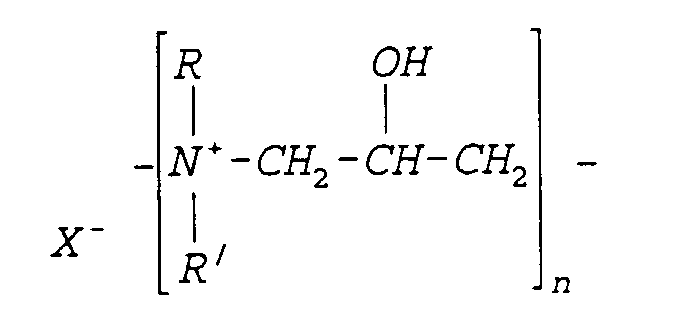
in which R and R', which may be the same or different, are each hydrogen or lower
alkyl and X is Cl
-, Br
-, I
-, HSO
4-, CH
3SO
4- or NO
2-.
8. The use according to any preceding claim, wherein the clay mineral is of the Kandite
group.
9. The use according to any one of claims 1 to 7, wherein the clay mineral is of the
smectite group.
10. The use according to any preceding claim, wherein the clay mineral has a particle
size distribution such that the mean particle diameter is not greater than 1 micrometer.
11. The use according to any preceding claim, wherein the clay mineral has a specific
surface area of at least 12m2.g-1.
12. The use according to claim 1 or any one of claims 8 to 11, wherein the inorganic gel
is a magnesium silicate gel.
13. A process for controlling the deposition of pitch in a paper-making process, wherein
there is incorporated into the paper-making composition a coated inorganic particulate
material which comprises a clay mineral coated with an inorganic gel which adheres
to the clay and which renders the surface of the particles of clay hydrophobic.
14. A process according to claim 13, wherein the inorganic gel is a magnesium silicate
gel.
15. A process according to claim 13 or 14, wherein the coated clay mineral is added to
a paper mill thin stock in a substantially dry state to form the paper making composition.
16. A process according to claim 13, 14 or 15, wherein the amount of coated clay mineral
added to the paper-making composition is in the range of from 0.5% to 25% by weight
based on the dry weight of wood fibres in the paper mill thin stock.
17. A process according to any one of claims 13 to 16, wherein the clay mineral is of
the Kandite group.
18. A process according to any one of claims 13 to 16, wherein the clay mineral is of
the smectite group.
19. A process according to any one of claims 13 to 18, wherein the clay mineral has a
particle size distribution such that the mean particle diameter is not greater than
1 micrometer.
20. A process according to any one of claims 13 to 19, wherein the clay mineral has a
specific surface area of at least 12m2.g-1.
Claims for the following Contracting State(s): ES, GR
1. The use, as an agent for controlling the deposition of pitch in a paper making process,
of a coated inorganic particulate material which comprises a clay mineral coated with
(a) a cationic polyelectrolyte which is a water-soluble substituted polyolefin containing
quaternary ammonium groups, or with (b) an inorganic gel which adheres to the clay
and which renders the surface of the particles of clay hydrophobic.
2. The use according to claim 1, wherein the cationic polyelectrolyte has quaternary
ammonium groups in the linear polymer chain or in branches of the polymer chain.
3. The use according to claim 1 or 2, wherein the cationic polyelectrolyte is used in
an amount of from 0.01 to 1.5% by weight based on the weight of the dry clay mineral
4. The use according to claim 1, 2 or 3, wherein the number average molecular weight
of the cationic polyelectrolyte is in the range of from 1500 to 500,000.
5. The use according to any preceding claim, wherein the cationic polyelectrolyte is
a poly(diallyl di(hydrogen or lower C1-4 alkyl)ammonium salt) having a number average molecular weight in the range of from
10,000 to 100,000.
6. The use according to claim 5, wherein one or both of the alkyl groups is methyl.
7. The use according to any preceding claim, wherein the cationic polyelectrolyte is
poly(dially dimethyl ammonium chloride).
8. The use according to any one of claims 1 to 4, wherein the cationic polyelectrolyte
is the product of copolymerising epichlorohydrin and an aliphatic secondary amine,
which product has the formula
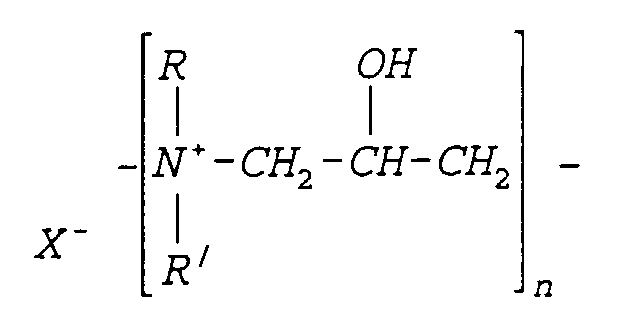
in which R and R', which may be the same or different, are each hydrogen or lower
alkyl and X is Cl
-, Br
-, I
-, HSO
4-, CH
3SO
4- or NO
2-.
9. The use according to any preceding claim, wherein the clay mineral is of the Kandite
group.
10. The use according to any one of claims 1 to 8, wherein the clay mineral is of the
smectite group.
11. The use according to any preceding claim, wherein the clay mineral has a particle
size distribution such that the mean particle diameter is not greater than 1 micrometer.
12. The use according to any preceding claim, wherein the clay mineral has a specific
surface area of at least 12m2.g-1.
13. The use according to claim 1 or any one of claims 9 to 12, wherein the inorganic gel
is a magnesium silicate gel.
14. A process for controlling the deposition of pitch in a paper-making process, wherein
there is incorporated into the paper-making composition a coated inorganic particulate
material which comprises a clay mineral coated with an inorganic gel which adheres
to the clay and which renders the surface of the particles of clay hydrophobic.
15. A process according to claim 14, wherein the inorganic gel is a magnesium silicate
gel.
16. A process according to claim 14 or 15, wherein the coated clay mineral is added to
a paper mill thin stock in a substantially dry state to form the paper making composition.
17. A process according to claim 14, 15 or 16, wherein the amount of coated clay mineral
added to the paper-making composition is in the range of from 0.5% to 25% by weight
based on the dry weight of wood fibres in the paper mill thin stock.
18. A process according to any one of claims 14 to 17, wherein the clay mineral is of
the Kandite group.
19. A process according to any one of claims 14 to 17, wherein the clay mineral is of
the smectite group.
20. A process according to any one of claims 14 to 19, wherein the clay mineral has a
particle size distribution such that the mean particle diameter is not greater than
1 micrometer.
21. A process according to any one of claims 14 to 20, wherein the clay mineral has a
specific surface area of at least 12m2.g-1.
Patentansprüche für folgende(n) Vertragsstaat(en): AT, BE, CH, DE, FR, IT, LI, LU,
NL, SE
1. Verwendung eines beschichteten anorganischen Teilchenmaterials, das ein Tonmineral
enthält, beschichtet mit (a) einem kationischen Polyelektrolyten, der ein wasserlösliches
substituiertes Polyolefin ist, das quartäre Ammoniumgruppen enthält, wobei der kationische
Polyelektrolyt in einer Menge vorhanden ist von 0.01 bis 1.5 Gew.%, bezogen auf das
Trockengewicht des Tonminerals, oder mit (b) einem anorganischen Gel, das an den Ton
haftet und die Oberfläche der Tonteilchen hydrophob macht, als Mittel zur Kontrolle
der Pechablagerung bei der Herstellung von Papier.
2. Verwendung nach Anspruch 1, wobei der kationische Polyelektrolyt quartäre Ammoniumgruppen
in der linearen Polymerkette oder in den Verzweigungen der Polymerkette enthält.
3. Verwendung nach den Ansprüchen 1 oder 2, wobei das mittlere Molekulargewicht des kationischen
Polyelektrolyten im Bereich zwischen 1500 und 500 000 liegt.
4. Verwendung nach einem der vorstehenden Ansprüche, wobei der kationische Polyelektrolyt
ein Poly(diallyldi(H- oder niederes C1-4-Alkyl)ammoniumsalz) ist mit einem mittleren Molekulargewicht im Bereich zwischen
10 000 und 100 000.
5. Verwendung nach Anspruch 4, wobei eine oder beide Alkylgruppen Methyl sind.
6. Verwendung nach einem der vorstehenden Ansprüche, wobei der kationische Polyelektrolyt
Poly(diallyl-dimethyl-ammoniumchlorid) ist.
7. Verwendung nach einem der Ansprüche 1 bis 3, wobei der kationische Polyelektrolyt
das Copolymerisationsprodukt aus Epichlorhydrin und einem aliphatischen sekundären
Amin ist mit der Formel
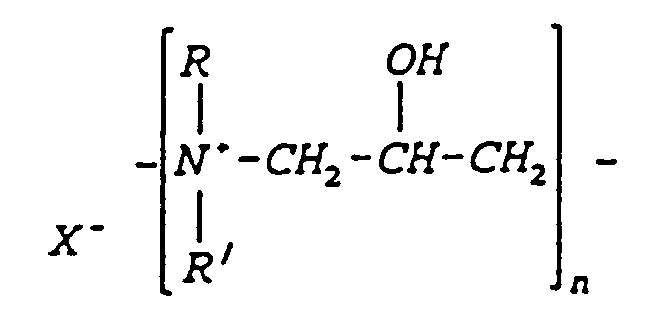
worin R und R' gleich oder verschieden sein können und Wasserstoff oder ein niederes
Alkyl sind, und X Cl
-, Br
-, I
-, HSO
4-, CH
3SO
4- oder NO
2- ist.
8. Verwendung nach einem der vorstehenden Ansprüche, wobei das Tonmineral aus der Kandit-Gruppe
ist.
9. Verwendung nach einem der Ansprüche 1 bis 7, wobei das Tonmineral aus der Smektit-Gruppe
ist.
10. Verwendung nach einem der vorstehenden Ansprüche, wobei das Tonmineral eine Teilchengrößenverteilung
hat mit einem mittleren Teilchendurchmesser nicht größer als 1 Mikrometer.
11. Verwendung nach einem der vorstehenden Ansprüche, wobei das Tonmineral eine spezifische
Oberfläche von mindestens 12 m2g-1 hat.
12. Verwendung nach Anspruch 1 oder einem der Ansprüche 8 bis 11, wobei das anorganische
Gel ein Magnesiumsilicatgel ist.
13. Verfahren zur Kontrolle der Pechablagerung bei der Papierherstellung, wobei in die
Papierrohstoffzusammensetzung ein beschichtetes anorganisches Teilchenmaterial eingemischt
wird, das ein Tonmineral enthält, beschichtet mit einem anorganischen Gel, das an
den Ton haftet und die Oberfläche der Tonteilchen hydrophob macht.
14. Verfahren nach Anspruch 13, wobei das anorganische Gel ein Magnesiumsilicatgel ist.
15. Verfahren nach Anspruch 13 oder 14, wobei das beschichtete Tonmineral dem Papiermühlen-Dünnstoff
in einem im wesentlichen trockenen Zustand zugesetzt wird und die Papierzusammensetzung
gebildet wird.
16. Verfahren nach den Ansprüchen 13, 14 oder 15, wobei die Menge des beschichteten Tonminerals,
die der Papierzusammensetzung zugesetzt wird im Bereich zwischen 0.5 und 25 Gew.%
liegt, bezogen auf das Trockengewicht der Holzfasern in den Papierrohstoffen.
17. Verfahren nach einem der Ansprüche 13 bis 16, wobei das Tonmineral aus der Kandit-Gruppe
ist.
18. Verfahren nach einem der Ansprüche 13 bis 16, wobei das Tonmineral aus der Smektit-Gruppe
ist.
19. Verfahren nach einem der Ansprüche 13 bis 18, wobei das Tonmineral eine Teilchengrößenverteilung
hat mit einem mittleren Teilchendurchmesser nicht größer als 1 Mikrometer.
20. Verfahren nach einem der Ansprüche 13 bis 19, wobei das Tonmineral eine spezifische
Oberfläche von mindestens 12 m2g-1 hat.
Patentansprüche für folgende(n) Vertragsstaat(en): ES, GR
1. Verwendung eines beschichteten anorganischen Teilchenmaterials, das ein Tonmineral
enthält, beschichtet mit (a) einem kationischen Polyelektrolyten, der ein wasserlösliches
substituiertes Polyolefin ist, das quartäre Ammoniumgruppen enthält, oder mit (b)
einem anorganischen Gel, das an den Ton haftet und die Oberfläche der Tonteilchen
hydrophob macht, als Mittel zur Kontrolle der Pechablagerung bei der Herstellung von
Papier.
2. Verwendung nach Anspruch 1, wobei der kationische Polyelektrolyt quartäre Ammoniumgruppen
in der linearen Polymerkette oder in den Verzweigungen der Polymerkette enthält.
3. Verwendung nach den Ansprüchen 1 oder 2, wobei der kationische Polyelektrolyt in einer
Menge verwendet wird von 0.01 bis 1.5 Gew.%, bezogen auf das Trockengewicht des Tonminerals.
4. Verwendung nach den Ansprüchen 1, 2 oder 3, wobei das mittlere Molekulargewicht des
kationischen Polyelektrolyten im Bereich zwischen 1500 und 500 000 liegt.
5. Verwendung nach einem der vorstehenden Ansprüche, wobei der kationische Polyelektrolyt
ein Poly(diallyldi(H- oder niederes C1-4-Alkyl)ammoniumsalz) ist mit einem mittleren Molekulargewicht im Bereich zwischen
10 000 und 100 000.
6. Verwendung nach Anspruch 5, wobei eine oder beide Alkylgruppen Methyl sind.
7. Verwendung nach einem der vorstehenden Ansprüche, wobei der kationische Polyelektrolyt
Poly(diallyl-dimethyl-ammoniumchlorid) ist.
8. Verwendung nach einem der Ansprüche 1 bis 4, wobei der kationische Polyelektrolyt
das Copolymerisationsprodukt aus Epichlorhydrin und einem aliphatischen sekundären
Amin ist mit der Formel
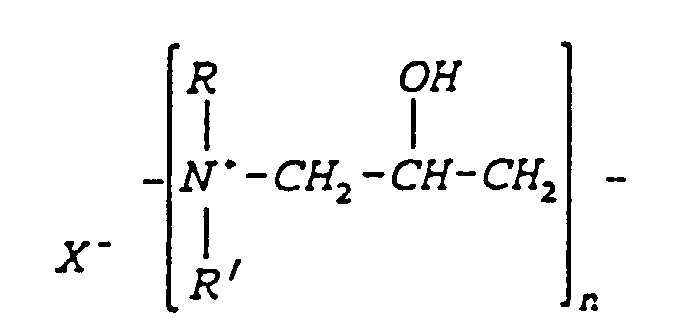
worin R und R' gleich oder verschieden sein können und Wasserstoff oder ein niederes
Alkyl sind, und X Cl
-, Br
-, I
-, HSO
4-, CH
3SO
4- oder NO
2- ist.
9. Verwendung nach einem der vorstehenden Ansprüche, wobei das Tonmineral aus der Kandit-Gruppe
ist.
10. Verwendung nach einem der Ansprüche 1 bis 8, wobei das Tonmineral aus der Smektit-Gruppe
ist.
11. Verwendung nach einem der vorstehenden Ansprüche, wobei das Tonmineral eine Teilchengrößenverteilung
hat mit einem mittleren Teilchendurchmesser nicht größer als 1 Mikrometer.
12. Verwendung nach einem der vorstehenden Ansprüche, wobei das Tonmineral eine spezifische
Oberfläche von mindestens 12 m2g-1 hat.
13. Verwendung nach Anspruch 1 oder einem der Ansprüche 9 bis 13, wobei das anorganische
Gel ein Magnesiumsilicatgel ist.
14. Verfahren zur Kontrolle der Pechablagerung bei der Papierherstellung, wobei in die
Papierrohstoffzusammensetzung ein beschichtetes anorganisches Teilchenmaterial eingemischt
wird, das ein Tonmineral enthält, beschichtet mit einem anorganischen Gel, das an
den Ton haftet und die Oberfläche der Tonteilchen hydrophob macht.
15. Verfahren nach Anspruch 14, wobei das anorganische Gel ein Magnesiumsilicatgel ist.
16. Verfahren nach Anspruch 14 oder 15, wobei das beschichtete Tonmineral dem Papiermühlen-Dünnstoff
in einem im wesentlichen trockenen Zustand zugesetzt wird und die Papierzusammensetzung
gebildet wird.
17. Verfahren nach den Ansprüchen 14, 15 oder 16, wobei die Menge des beschichteten Tonminerals,
daß der Papierzusammensetzung zugesetzt wird im Bereich zwischen 0.5 und 25 Gew.%
liegt, basierend auf dem Trockengewicht der Holzfasern in den Papierrohstoffen.
18. Verfahren nach einem der Ansprüche 14 bis 17, wobei das Tonmineral aus der Kandit-Gruppe
ist.
19. Verfahren nach einem der Ansprüche 14 bis 17, wobei das Tonmineral aus der Smektit-Gruppe
ist.
20. Verfahren nach einem der Ansprüche 14 bis 19, wobei das Tonmineral eine Teilchengrößenverteilung
hat mit einem mittleren Teilchendurchmesser nicht größer als 1 Mikrometer.
21. Verfahren nach einem der Ansprüche 14 bis 20, wobei das Tonmineral eine spezifische
Oberfläche von mindestens 12 m2g-1 hat.
Revendications pour l'(les) Etat(s) contractant(s) suivant(s): AT, BE, CH, DE, FR,
IT, LI, LU, NL, SE
1. Utilisation, en tant qu'agent destiné à contrôler le dépôt de poix au cours d'un processus
de fabrication de papier, d'un matériau particulaire inorganique revêtu qui comprend
un minéral argileux revêtu avec (a) un polyélectrolyte cationique qui est une polyoléfine
substituée soluble dans l'eau contenant des groupes ammonium quaternaire, ledit polyélectrolyte
cationique étant présent en une quantité allant de 0,01 à 1,5 % en poids sur la base
du poids du minéral argileux sec ou avec (b) un gel inorganique qui adhère à l'argile
et rend hydrophobe la surface des particules d'argile.
2. Utilisation selon la revendication 1, dans laquelle le polyélectrolyte cationique
a des groupes ammonium quaternaire dans la chaîne polymère linéaire ou dans les chaînes
latérales de la chaîne polymère.
3. Utilisation selon la revendication 1 ou 2, dans laquelle la masse moléculaire moyenne
en nombre du polyélectrolyte cationique est comprise entre 1500 et 500 000.
4. Utilisation selon l'une quelconque des revendications précédentes, dans laquelle le
polyélectrolyte cationique est un poly(sel de diallyle di (hydrogène ou alkyle inférieur
en C1-C4) ammonium) ayant une masse moléculaire moyenne en nombre dans la gamme de 10 000
à 100 000.
5. Utilisation selon la revendication 4, dans laquelle un ou les deux groupes alkyle
sont le groupe méthyle.
6. Utilisation selon l'une quelconque des revendications précédentes, dans laquelle le
polyélectrolyte cationique est un poly(chlorure de diallyldiméthylammonium).
7. Utilisation selon l'une quelconque des revendications 1 à 3, dans laquelle le polyélectrolyte
cationique est le produit de la copolymérisation d'épichlorhydrine et d'une amine
secondaire aliphatique, ce produit ayant la formule
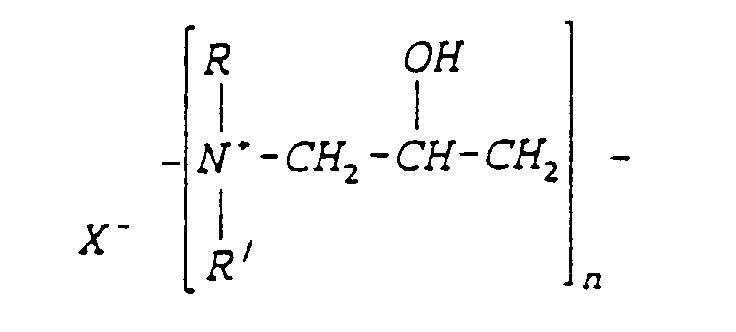
dans laquelle R et R', qui peuvent être identiques ou différents, sont chacun un
atome d'hydrogène ou un groupe alkyle inférieur, et X est Cl
-, Br
-, I
-, HSO
4-, CH
3SO
4- ou NO
2-.
8. Utilisation selon l'une quelconque des revendications précédentes, dans laquelle le
minéral argileux appartient au groupe des kandites.
9. Utilisation selon l'une quelconque des revendications 1 à 7, dans lequel le minéral
argileux appartient au groupe des smectites.
10. Utilisation selon l'une quelconque des revendications précédentes, dans laquelle le
minéral argileux a une distribution granulométrique telle que le diamètre moyen des
particules ne dépasse pas 1 micromètre.
11. Utilisation selon l'une quelconque des revendications précédentes, dans laquelle le
minéral argileux a une surface spécifique d'au moins 12 m2.g-1.
12. Utilisation selon la revendication 1 ou selon l'une quelconque des revendications
8 à 11, dans laquelle le gel inorganique est un gel silicate de magnésium.
13. Procédé pour contrôler le dépôt de poix au cours d'un processus de fabrication de
papier, dans lequel on incorpore dans la composition de pâte à papier un matériau
particulaire inorganique revêtu qui comprend un minéral argileux revêtu avec un gel
inorganique qui adhère à l'argile et rend hydrophobe la surface des particules d'argile.
14. Procédé selon la revendication 13, dans lequel le gel inorganique est un gel silicate
de magnésium.
15. Procédé selon la revendication 13 ou 14, dans lequel le minéral argileux revêtu est
ajouté à une pâte maigre de machine à papier dans un état pratiquement sec pour former
la composition de pâte à papier.
16. Procédé selon la revendication 13, 14 ou 15, dans lequel la quantité de minéral argileux
revêtu ajouté à la composition de pâte à papier est comprise entre 0,5 % et 25 % en
poids, sur la base du poids sec de fibres de bois dans la pâte maigre pour machine
à papier.
17. Procédé selon l'une quelconque des revendications 13 à 16, dans lequel le minéral
argileux appartient au groupe des kandites.
18. Procédé selon l'une quelconque des revendications 13 à 16, dans lequel le minéral
argileux appartient au groupe des smectites.
19. Procédé selon l'une quelconque des revendications 13 à 18, dans lequel le minéral
argileux a une distribution granulométrique telle que le diamètre moyen des particules
ne dépasse pas 1 micromètre.
20. Procédé selon l'une quelconque des revendications 13 à 19, dans lequel le minéral
argileux a une surface spécifique d'au moins 12 m2.g-1.
Revendications pour l'(les) Etat(s) contractant(s) suivant(s): ES, GR
1. Utilisation, en tant qu'agent destiné à contrôler le dépôt de poix au cours d'un processus
de fabrication de papier, d'un matériau particulaire inorganique revêtu qui comprend
un minéral argileux revêtu avec (a) un polyélectrolyte cationique qui est une polyoléfine
substituée soluble dans l'eau contenant des groupes ammonium quaternaire, ou avec
(b) un gel inorganique qui adhère à l'argile et rend hydrophobe la surface des particules
d'argile.
2. Utilisation selon la revendication 1, dans laquelle le polyélectrolyte cationique
a des groupes ammonium quaternaire dans la chaîne polymère linéaire ou dans les chaînes
latérales de la chaîne polymère.
3. Utilisation selon la revendication 1 ou 2, dans laquelle le polyélectrolyte cationique
est utilisé en une quantité allant de 0,01 à 1,5 % en poids sur la base du poids du
minéral argileux sec
4. Utilisation selon la revendication 1, 2 ou 3, dans laquelle la masse moléculaire moyenne
en nombre du polyélectrolyte cationique est comprise entre 1500 et 500 000.
5. Utilisation selon l'une quelconque des revendications précédentes, dans laquelle le
polyélectrolyte cationique est un poly(sel de diallyle di (hydrogène ou alkyle inférieur
en C1-C4) ammonium) ayant une masse moléculaire moyenne en nombre dans la gamme de 10 000
à 100 000.
6. Utilisation selon la revendication 5, dans laquelle un ou les deux groupes alkyle
sont le groupe méthyle.
7. Utilisation selon l'une quelconque des revendications précédentes, dans laquelle le
polyélectrolyte cationique est un poly(chlorure de diallyldiméthylammonium).
8. Utilisation selon l'une quelconque des revendications 1 à 4, dans laquelle le polyélectrolyte
cationique est le produit de la copolymérisation d'épichlorhydrine et d'une amine
secondaire aliphatique, ce produit ayant la formule
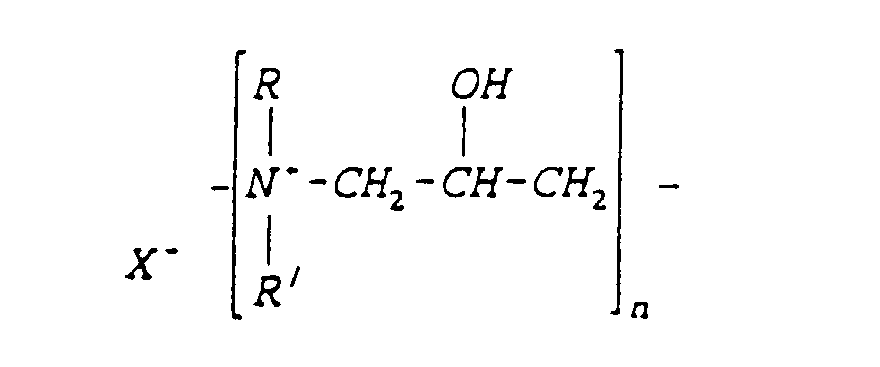
dans laquelle R et R', qui peuvent être identiques ou différents, sont chacun un
atome d'hydrogène ou un groupe alkyle inférieur, et X est Cl
-, Br
-, I
-, HSO
4-, CH
3SO
4- ou NO
2-.
9. Utilisation selon l'une quelconque des revendications précédentes, dans laquelle le
minéral argileux appartient au groupe des kandites.
10. Utilisation selon l'une quelconque des revendications 1 à 8, dans lequel le minéral
argileux appartient au groupe des smectites.
11. Utilisation selon l'une quelconque des revendications précédentes, dans laquelle le
minéral argileux a une distribution granulométrique telle que le diamètre moyen des
particules ne dépasse pas 1 micromètre.
12. Utilisation selon l'une quelconque des revendications précédentes, dans laquelle le
minéral argileux a une surface spécifique d'au moins 12 m2.g-1.
13. Utilisation selon la revendication 1 ou selon l'une quelconque des revendications
9 à 12, dans laquelle le gel inorganique est un gel silicate de magnésium.
14. Procédé pour contrôler le dépôt de poix au cours d'un processus de fabrication de
papier, dans lequel on incorpore dans la composition de pâte à papier un matériau
particulaire inorganique revêtu qui comprend un minéral argileux revêtu avec un gel
inorganique qui adhère à l'argile et rend hydrophobe la surface des particules d'argile.
15. Procédé selon la revendication 14, dans lequel le gel inorganique est un gel silicate
de magnésium.
16. Procédé selon la revendication 14 ou 15, dans lequel le minéral argileux revêtu est
ajouté à une pâte maigre de machine à papier dans un état pratiquement sec pour former
une composition de pâte à papier.
17. Procédé selon la revendication 14, 15 ou 16, dans lequel la quantité de minéral argileux
revêtu ajouté à la composition de pâte à papier est comprise entre 0,5 % et 25 % en
poids, sur la base du poids sec de fibres de bois dans la pâte maigre pour machine
à papier.
18. Procédé selon l'une quelconque des revendications 14 à 17, dans lequel le minéral
argileux appartient au groupe des kandites.
19. Procédé selon l'une quelconque des revendications 14 à 17, dans lequel le minéral
argileux appartient au groupe des smectites.
20. Procédé selon l'une quelconque des revendications 14 à 19, dans lequel le minéral
argileux a une distribution granulométrique telle que le diamètre moyen des particules
ne dépasse pas 1 micromètre.
21. Procédé selon l'une quelconque des revendications 14 à 20, dans lequel le minéral
argileux a une surface spécifique d'au moins 12 m2.g-1.