|
(11) | EP 0 359 169 B1 |

| (12) | EUROPEAN PATENT SPECIFICATION |
|
|
| (54) |
Photographic recording material comprising magenta coupler and a chalcogenazolium salt Photographisches Aufzeichnungsmaterial mit Magenta-Kuppler und einem Chalcogenazoliumsalz Matériau photographique de reproduction comprenant un coupleur magenta et un sel de chalcogénazolium |
|
|
|||||||||||||||||||||||||||||||
| Note: Within nine months from the publication of the mention of the grant of the European patent, any person may give notice to the European Patent Office of opposition to the European patent granted. Notice of opposition shall be filed in a written reasoned statement. It shall not be deemed to have been filed until the opposition fee has been paid. (Art. 99(1) European Patent Convention). |
[0001] This invention relates to photography and more particularly to a photographic recording material containing a magenta dye forming coupler.
[0002] Various types of magenta dye forming couplers are known. One type, examples of which are disclosed in U. S. Patents 3,725,067 and 4,443,536 and in U. K. Patents 1,247,493; 1,252,418 and 1,253,933, includes pyrazolotriazoles which can comprise various substituents, including ballast groups. While such couplers generally provide highly desired photographic results, it has been observed that some pyrazolotriazole couplers have an inhibiting effect upon silver halide development in photographic emulsions, thereby reducing speed and contrast of resulting dye images.
[0003] Accordingly, there is a need to provide a photographic recording material which overcomes the problem of silver halide development inhibition without causing adverse results in photographic properties.
[0004] We have found that certain hydrolyzable chalcogenazolium salts which comprise particular quaternized substituents are capable of overcoming silver halide development inhibition caused by the pyrazolotriazole couplers.
[0005] The present invention provides a photographic recording material comprising a support having thereon a photographic silver halide emulsion layer and a pyrazolotriazole magenta coupler which inhibits silver halide development, said recording material being characterized in that it comprises a hydrolyzable chalcogenazolium salt of a middle chalcogen which salt comprises a quaternizing substituent which has the structural formula I:
-L-T(̵NH-T¹)̵mR¹ (I)
wherein:
L is a divalent linking group;
T is carbonyl or sulfonyl;
T¹ is independently in each occurrence carbonyl or sulfonyl;
R¹ is a hydrocarbon residue or an amino group; and
m is an integer of from 1 to 3.
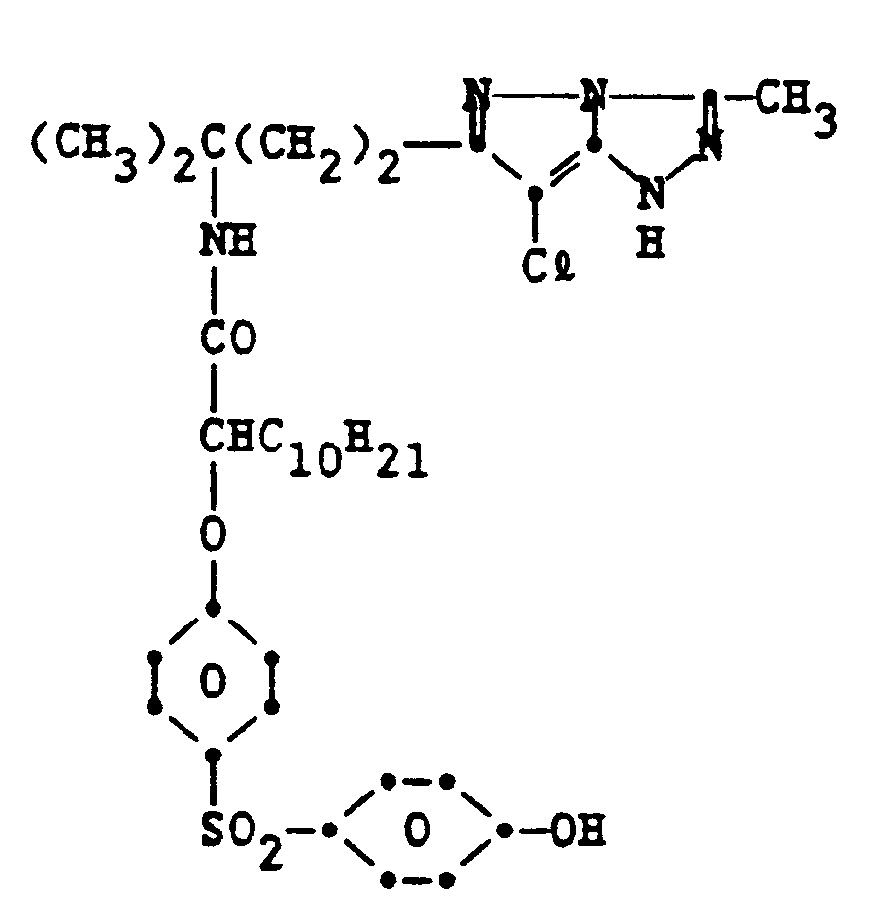
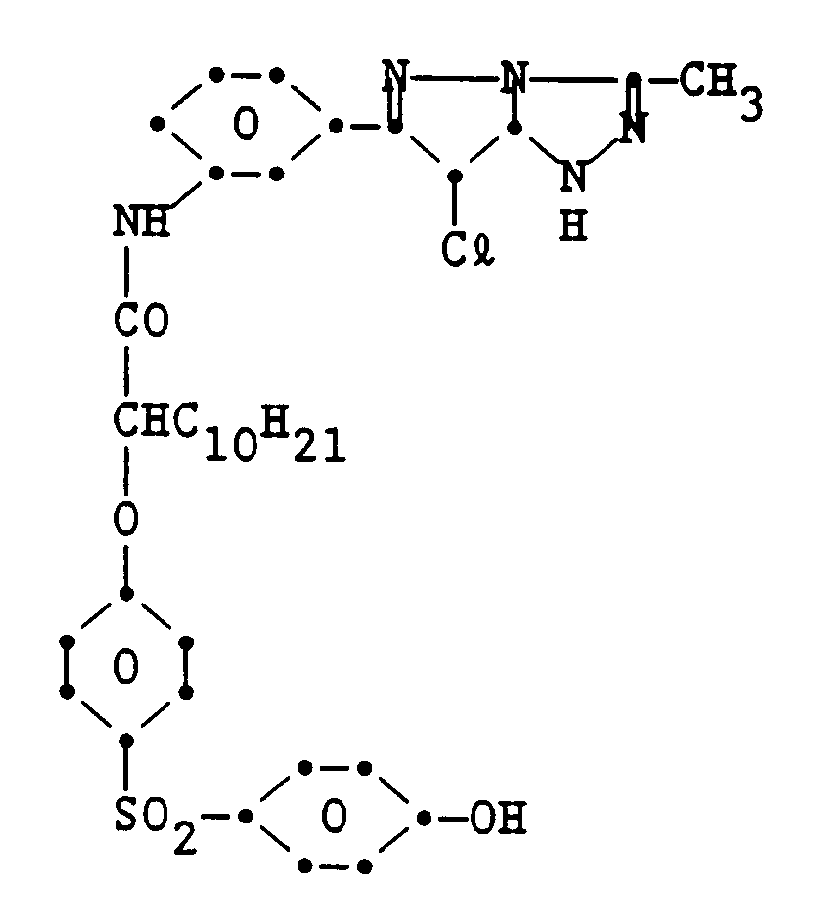
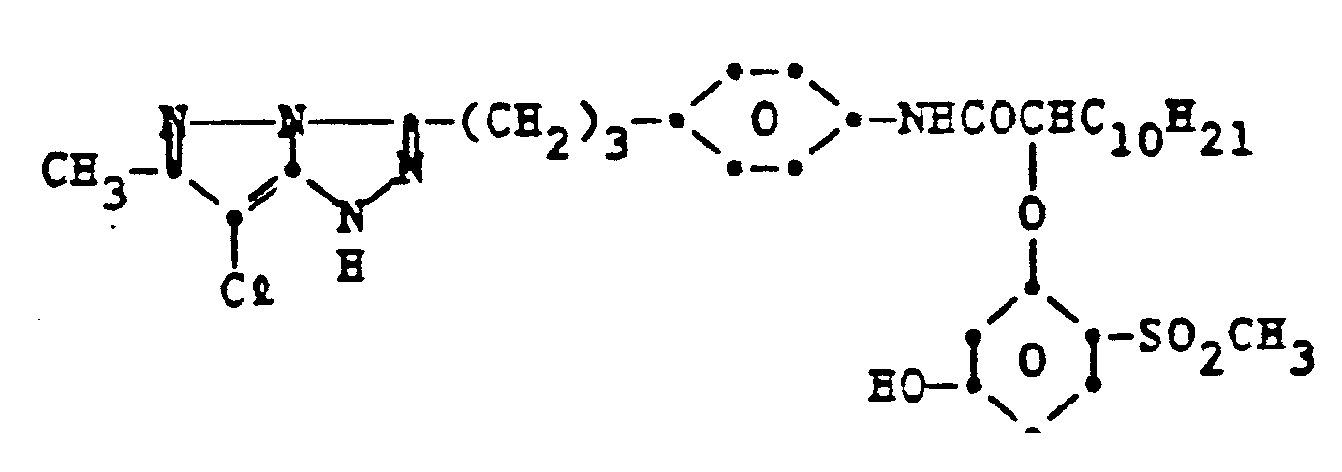
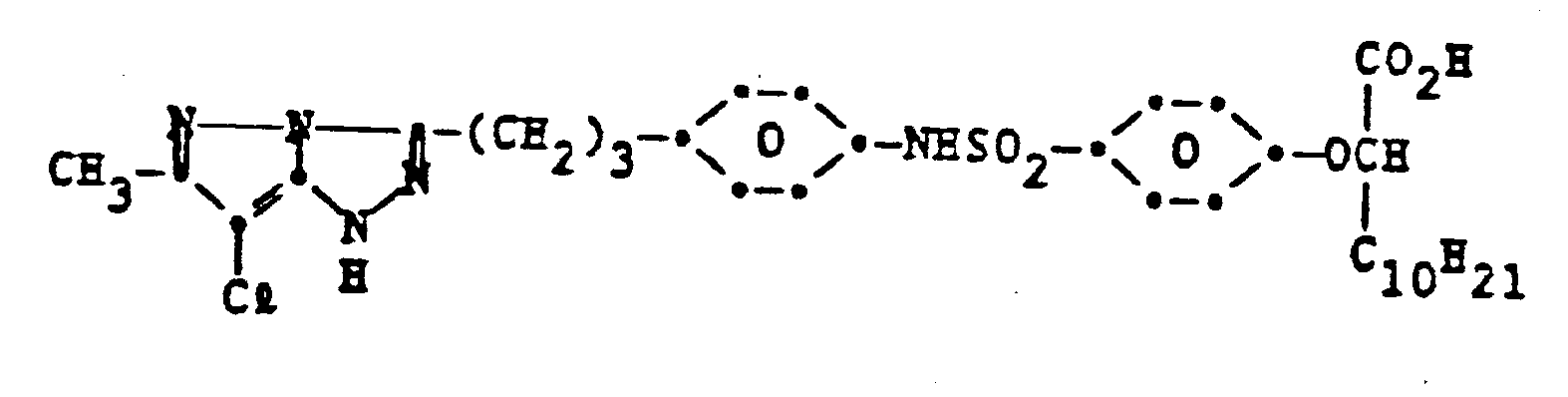
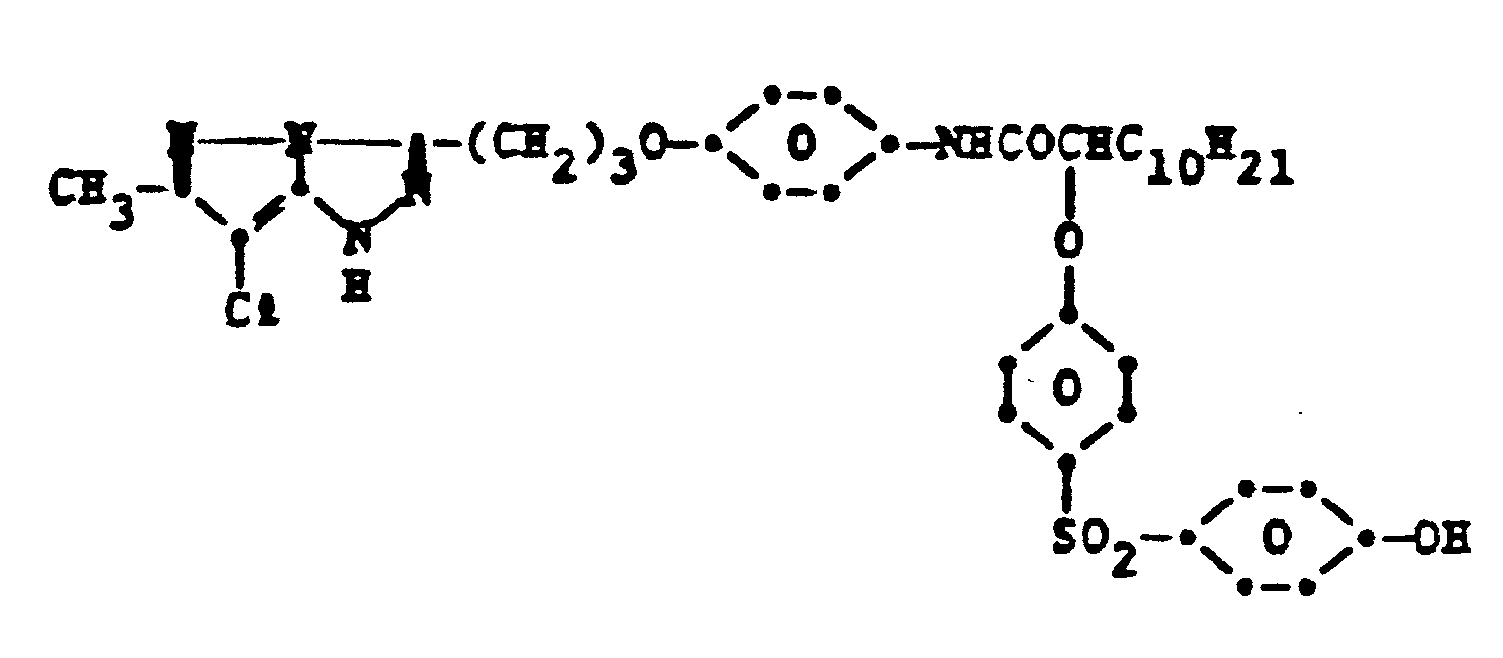
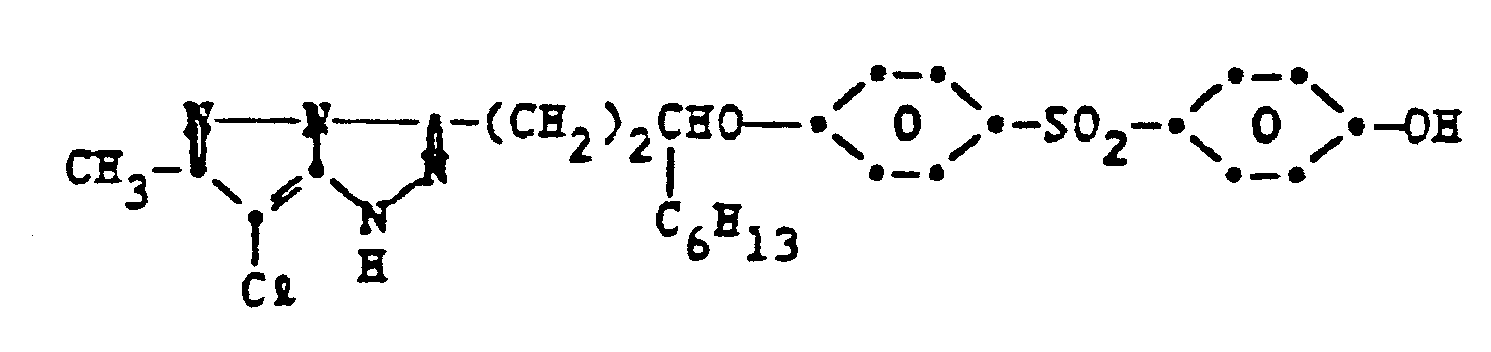
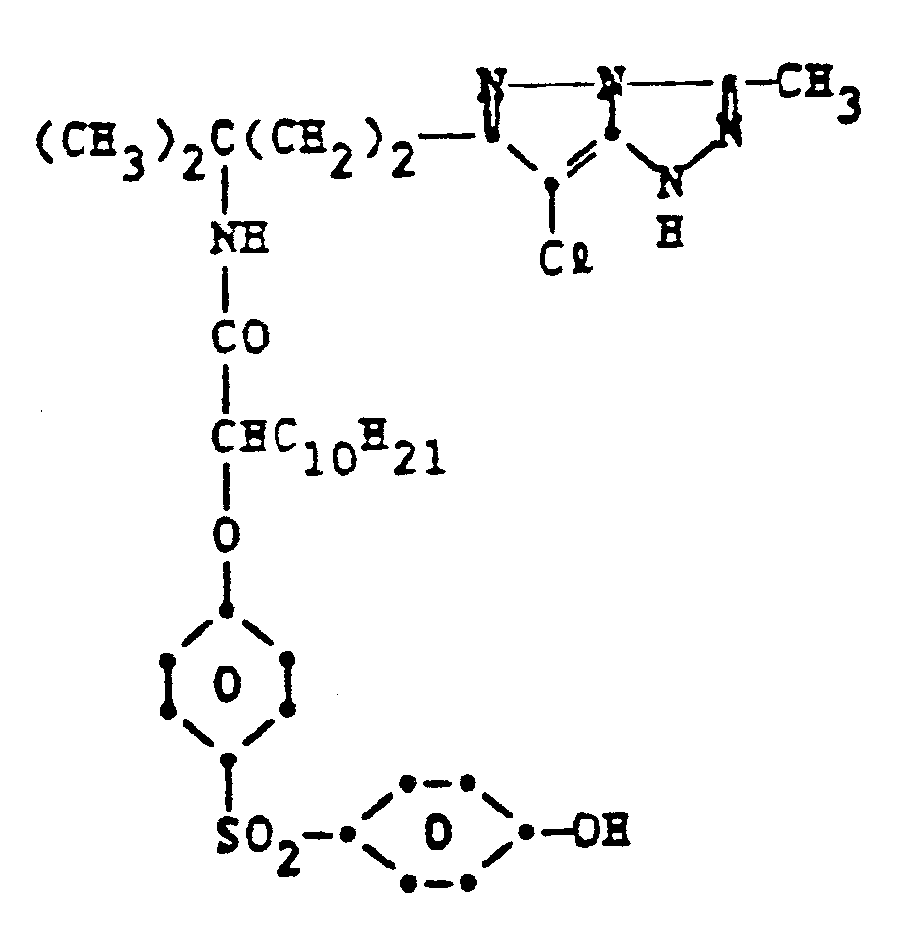
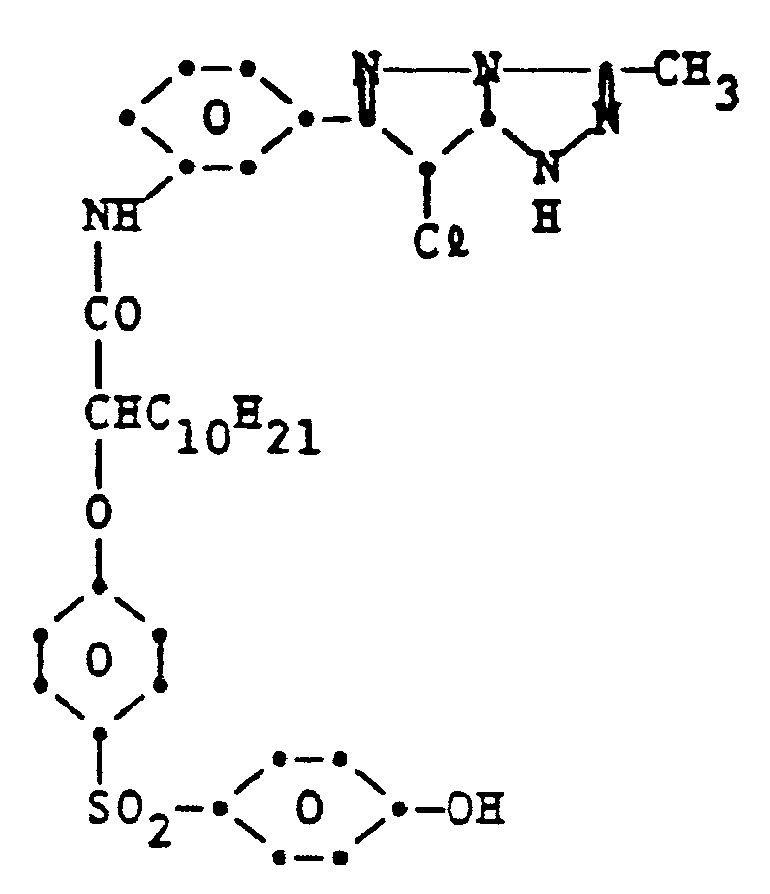
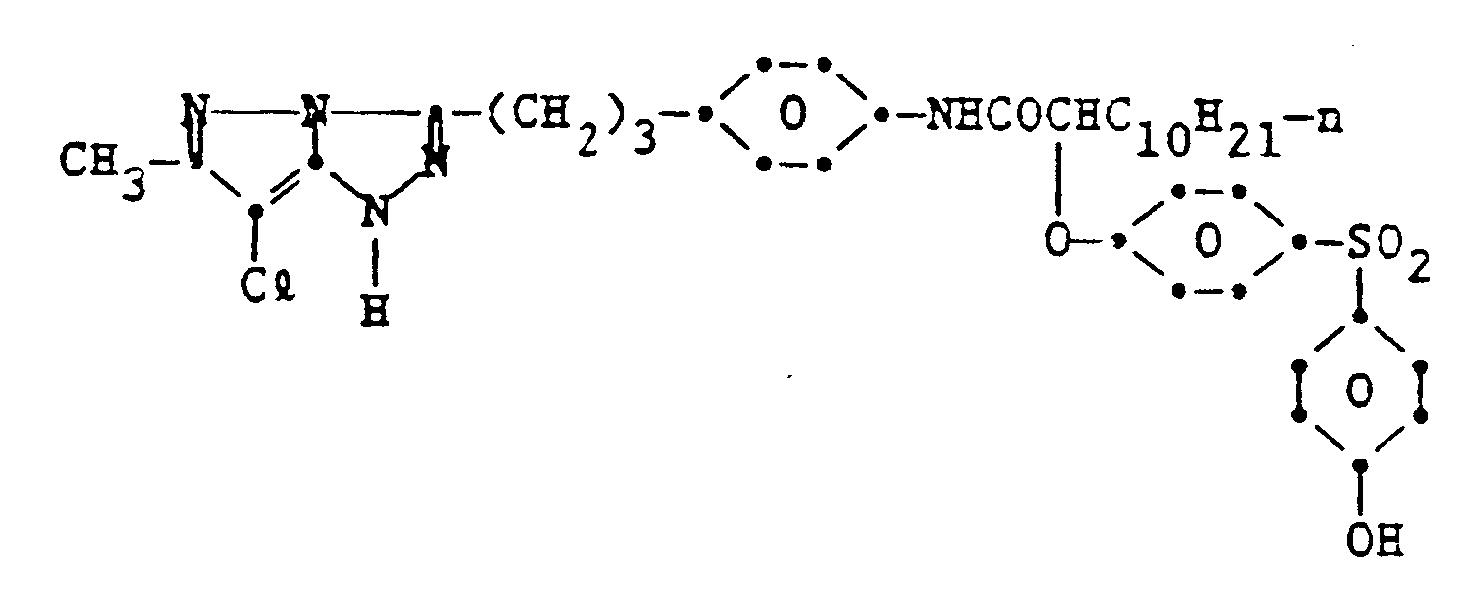
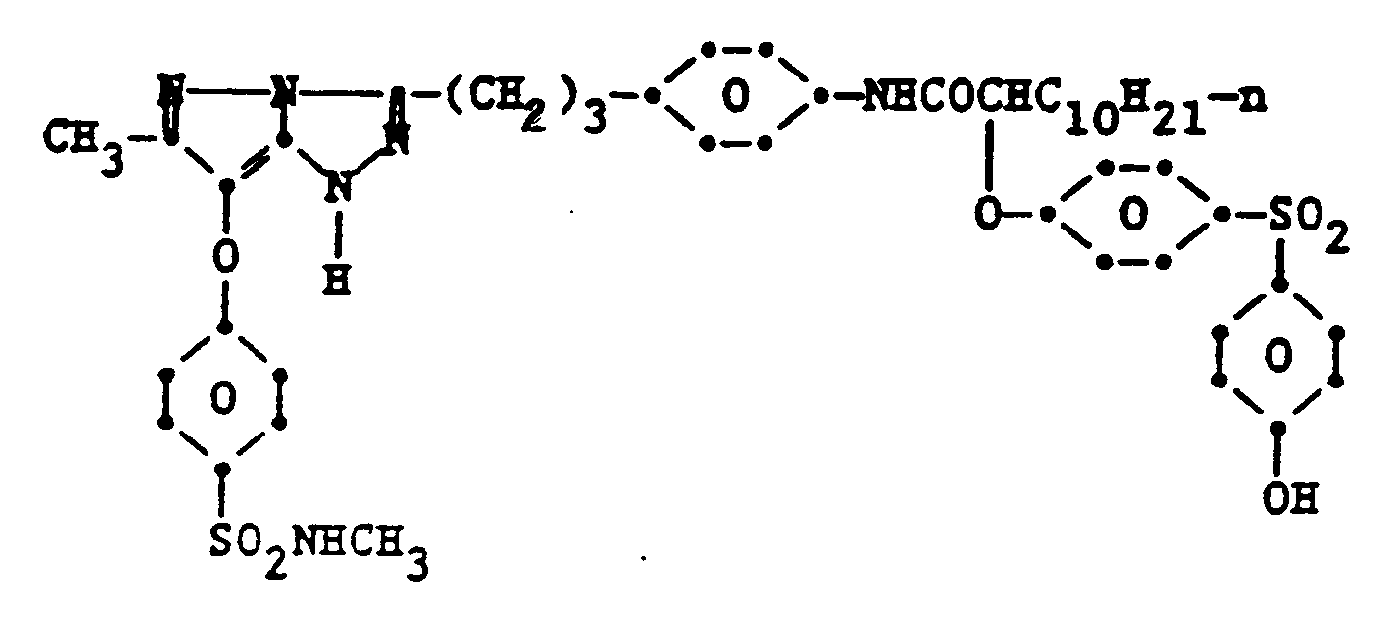
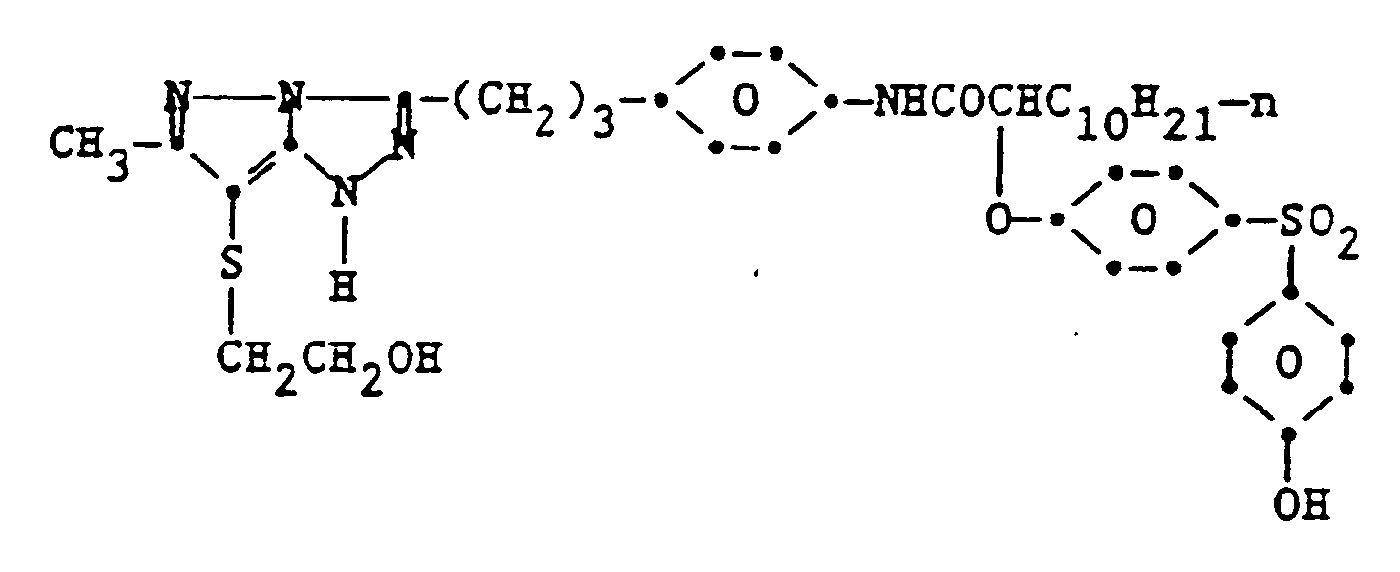
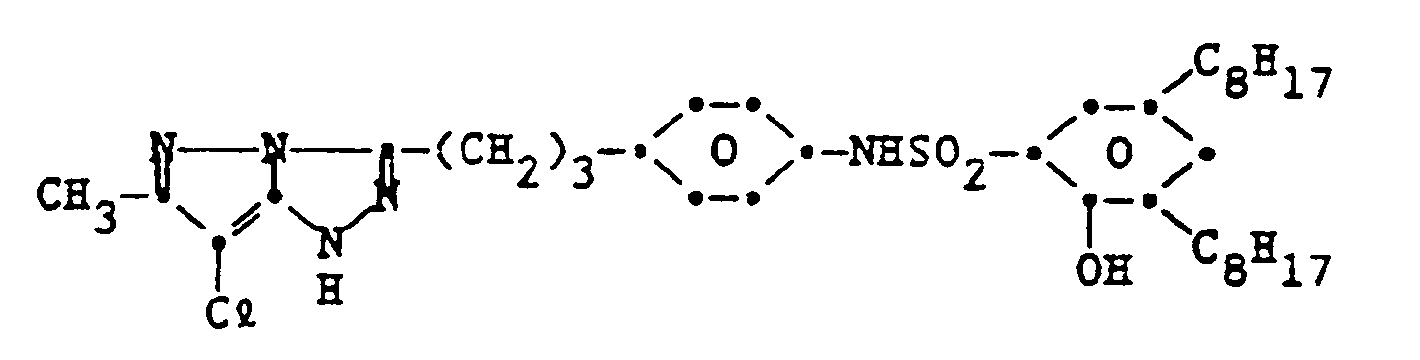
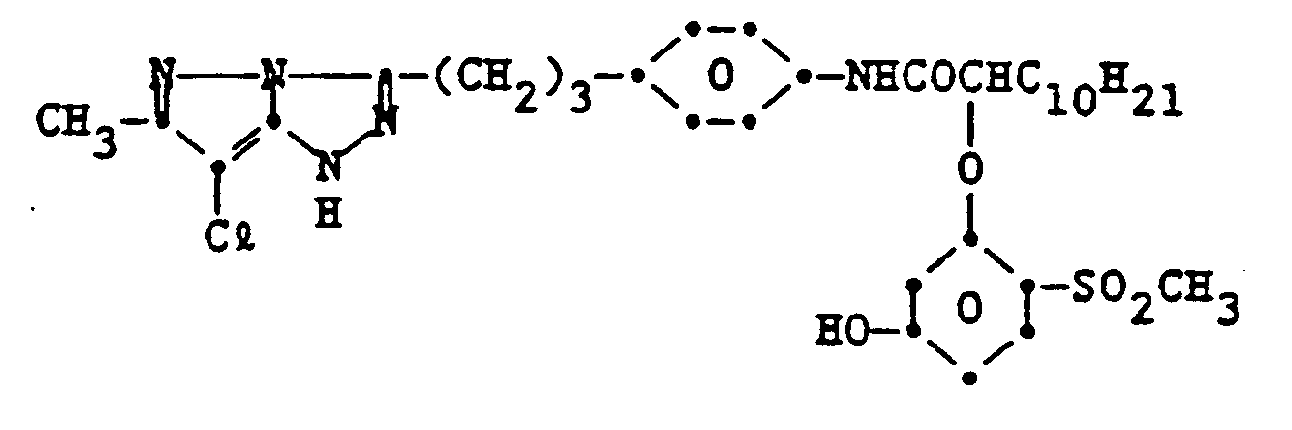
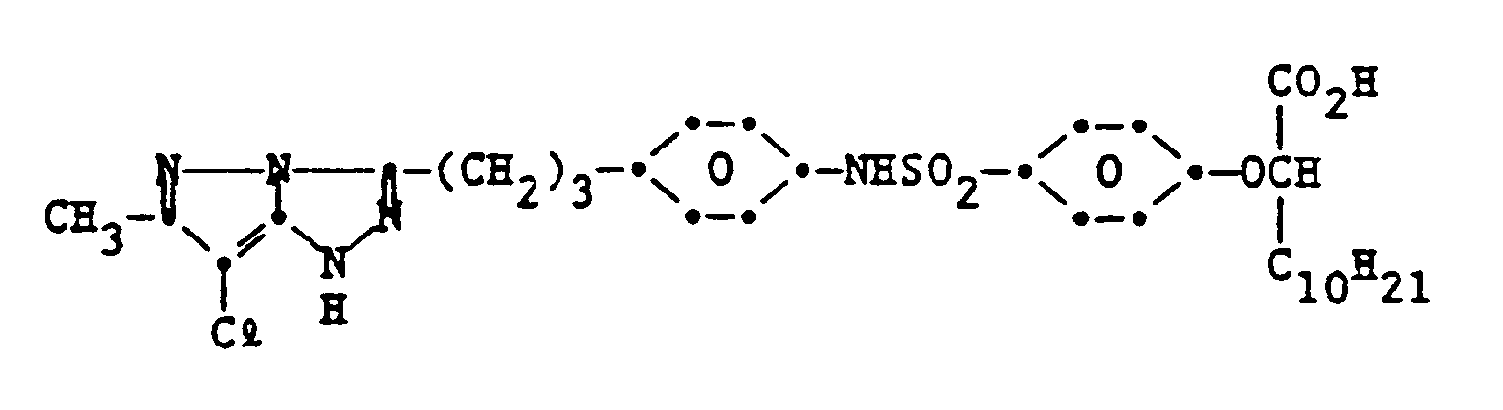
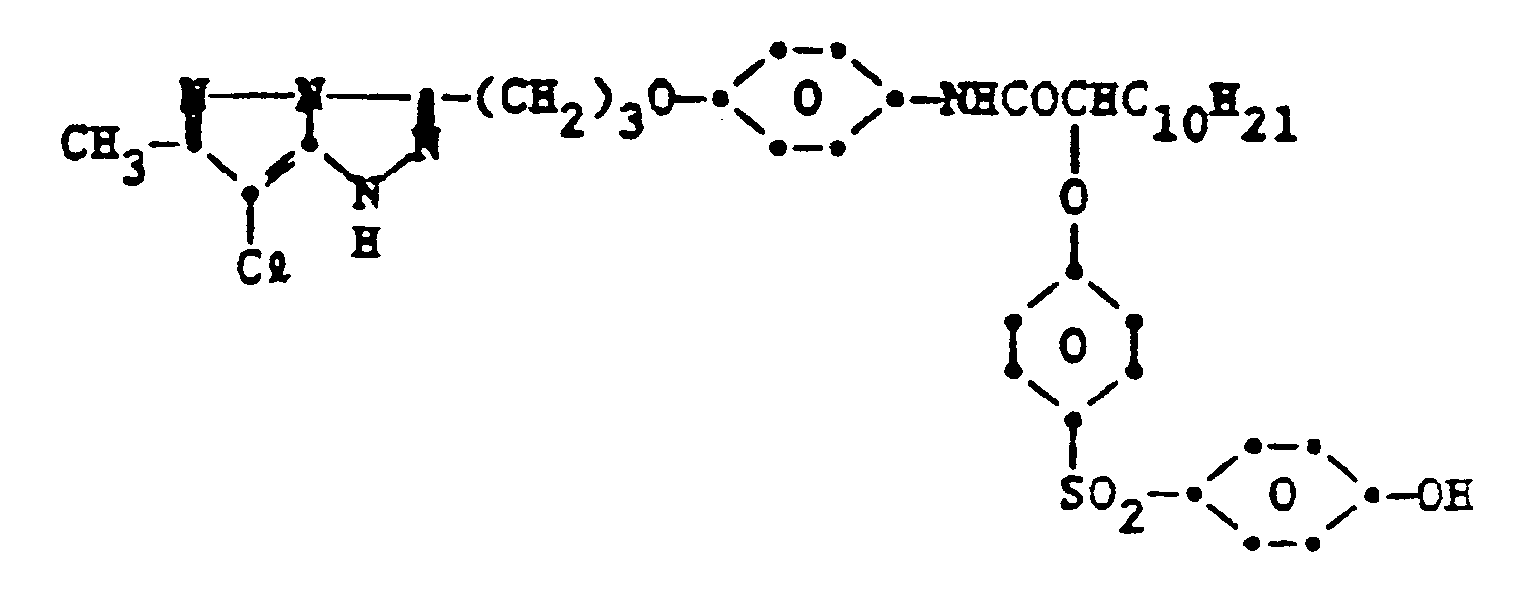
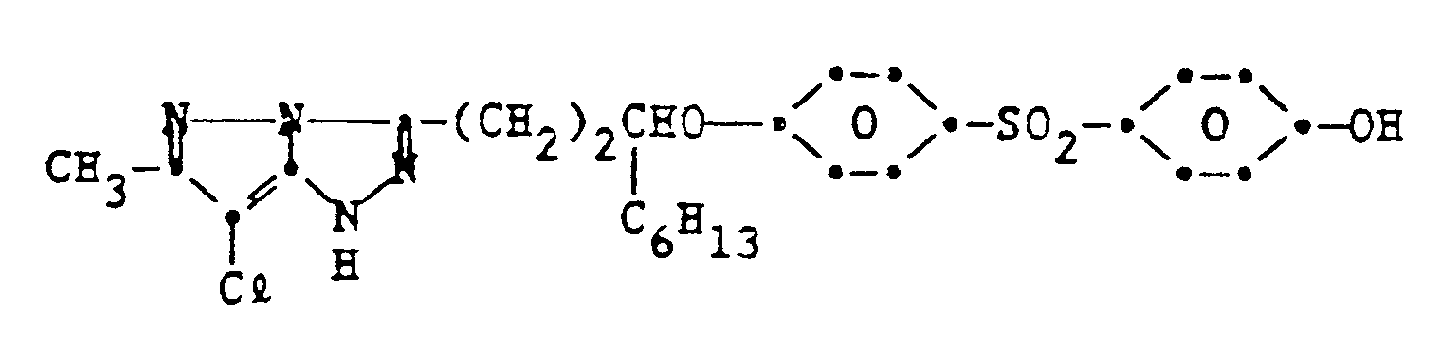
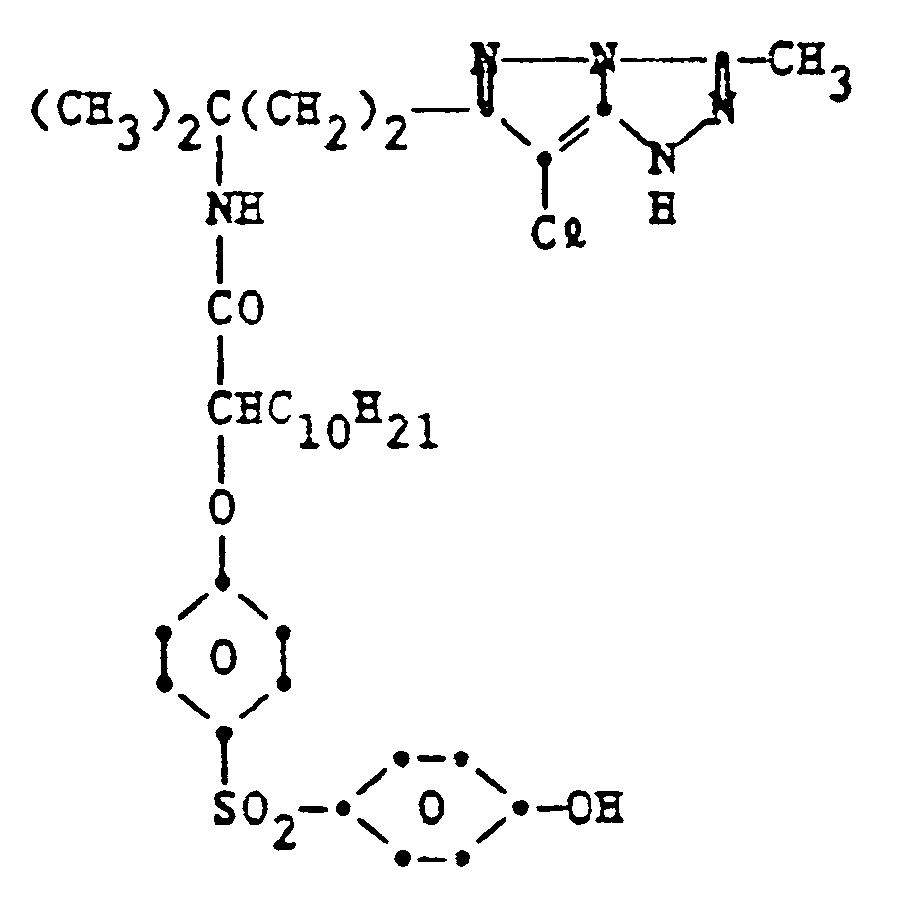
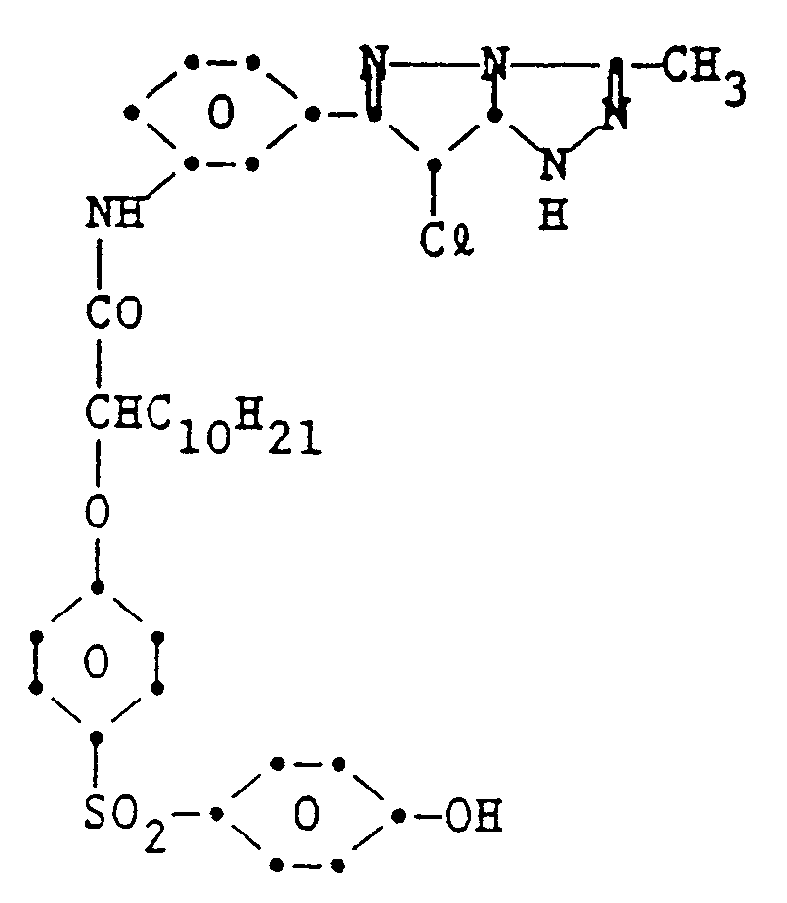
[0006] Pyrazolotriazole couplers which have been found to inhibit silver halide development include the following compounds:
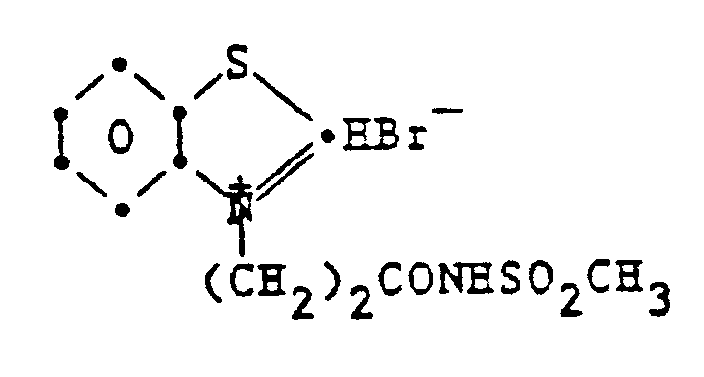
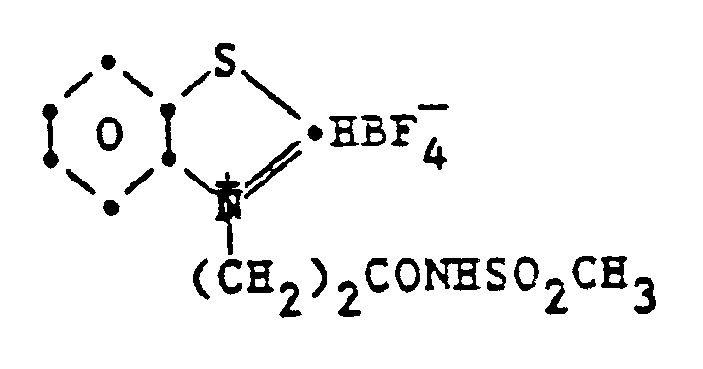
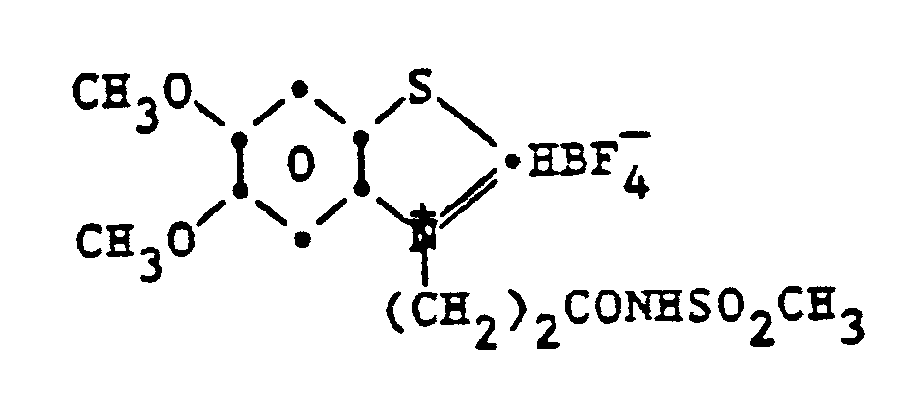
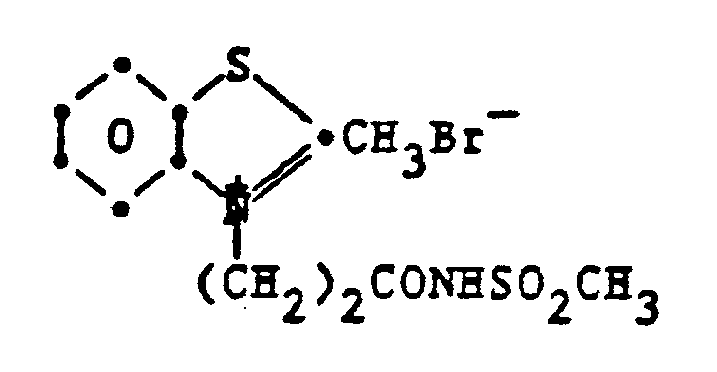
[0007] The quaternized chalcogenazolium salts, which have been found to be effective in reducing silver halide development inhibition caused by particular pyrazolotriazole coupler compounds, are disclosed in U. S. Patent 4,578,348. These salts are capable of undergoing hydrolysis which opens the chalcogenazolium ring between the 2 and 3 positions thereof, that is between the ring chalcogen atom and the carbon atom which lies mediate the ring chalcogen atom and the nitrogen atom. As hydrolyzed, these salts demonstrate the ability to suppress silver halide development inhibition caused by the described couplers.
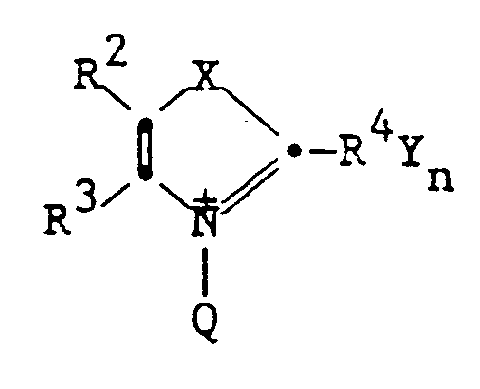
[0008] As a specific illustration, compounds of the following formula II, when hydrolyzed, can be employed as agents to overcome silver halide development inhibition caused by particular pyrazolotriazole couplers:
wherein;
R² and R³ are independently hydrogen; halogen; aliphatic or aromatic hydrocarbon moiety optionally linked through a divalent oxygen or sulfur atom; cyano; amino; amido; sulfonamido; sulfamoyl; ureido; thioureido; hydroxy; -COM or -S(SO)₂M group, wherein M is chosen to complete an aldehyde, ketone, acid, ester, thioester, amide, or salt; or R² and R³ together can represent the atoms which complete a fused ring;
R⁴ is hydrogen, alkyl of from 1 to about 8 carbon atoms or aryl of from 6 to about 10 carbon atoms;
Q represents the quaternizing substituent;
X is a sulfur, selenium or tellurium;
Y represents a charge balancing counter ion; and
n is 0 or 1.
[0009] Preparation of the quaternized chalcogenazolium salts described above is disclosed in U. S. Patent 4,578,348.
[0010] Where R⁴ is hydrogen, ring opening occurs spontaneously after incorporating the chalcogenazolium salt of the above formula in a silver halide emulsion. When the pH of a silver halide emulsion is too low for ring opening hydrolysis, treatment with a base, such as an aqueous alkaline solution of an alkali or an alkaline earth metal, or ammonium hydroxide, can be employed prior to incorporation in a silver halide emulsion.
[0011] Whether prehydrolyzed or spontaneously hydrolyzed in situ, the salts which overcome silver halide development inhibition caused by particular pyrazolotriazole couplers, and which can be derived by hydrolysis of the compounds of formula (II) are represented by formula (III):
wherein:
and R², R³, R⁴, Q, X, Y and n are as previously defined.
[0012] In a specifically preferred form the quaternizing substituent Q, can take the form represented by formula (IV):
-L-T(̵NH-T¹)̵mR¹ (IV)
wherein:
L represents a divalent linking group, such as an optionally substituted divalent hydrocarbon group;
T is carbonyl or sulfony;
T¹ is independently in each occurrence carbonyl or sulfonyl;
R¹ represents an optionally substituted hydrocarbon residue or an amino group; and
m is an integer of from 1 to 3.
[0013] In a preferred embodiment of the invention T is carbonyl and T¹ is sulfonyl. However, either or both of T and T¹ can be either carbonyl or sulfonyl. Further, where m is greater than 1, T¹ can in each occurrence be carbonyl or sulfonyl independently of other occurrences,
L is preferably an alkylene (i.e., alkanediyl) group of from 1 to about 8 carbon atoms. In specifically preferred forms of the invention L is either methylene or ethylene.
[0014] R¹ is preferably a primary or secondary amino group, an alkyl group of from 1 to about 8 carbon atoms (e.g., methyl, ethyl, propyl, i-propyl, n-butyl, i-butyl, t-butyl, neopentyl, or n-octyl), or an aryl group of from 6 to about 10 carbon atoms (e.g., phenyl or naphthyl). When R¹ completes a secondary amine, it can be substituted with an optionally substituted hydrocarbon residue, preferably an alkyl group of from 1 to about 8 carbon atoms or an aryl group of 6 to about 10 carbon atoms, as above described. It is also recognized that R¹ can be chosen, if desired, to complete a bis compound. For example, R¹ can take a form similar to L and the hydrolyzed chalcogenazolium ring linked to L, thereby incorporating a second hydroylzed chalcogenazolium ring into the compound capable of overcoming development inhibition.
[0016] Although preferred values of R⁴ are described above in connection with formulae (II) and (III), it is appreciated that R⁴ can take the form of any other substituent that is compatible with ring opening hydrolysis of the chalcogenazolium salt in the manner indicated. In general, the simpler the form of R⁴, the more easily hydrolysis is accomplished. It is specifically recognized that R⁴ can embrace substituents that do not permit spontaneous hydrolysis of quaternized chalcogenazolium salts in silver halide emulsion coatings.
[0017] X, R² and R³ can together complete any convenient chalcogenazolium nucleus or hydrolyzed chalcogenazolium nucleus, provided the chalcogen atom is a middle chalcogen atom. The middle chalcogen atoms are sulfur, selenium, and tellurium, being designated "middle" chalcogen atoms since they are the atoms in Group VI of the Periodic Table of Elements, except for the highest and lowest in atomic number.
[0018] When X is sulfur or selenium, R² and R³ can take any form found in known thiazolium and selenazolium ring containing nuclei. R² and R³ can individually take the form of hydrogen or halogen atoms; hydrocarbon moieties (e.g., alkyl, aryl, alkaryl, or aralkyl) optionally linked through a divalent oxygen or sulfur atom (e.g., an alkoxy, aryloxy, alkaryloxy, aralkoxy, alkylthio, arylthio, alkarylthio, or aralkylthio group); cyano; an amino group, including primary, secondary, and tertiary amino groups; an amido group (e.g., acetamido and butyramido); a sulfonamido group (e.g., an alkyl or arylsulfonamido group); a sulfamoyl group (e.g., an alkyl or arylsulfamoyl group); a ureido group (e.g., 1-ureido, 3-phenyl-1-ureido, or 3-methyl-1-ureido); a thioureido group (e.g., a thioureido group corresponding to the above exemplary ureido groups); hydroxy; or a -COM or -S(O)₂M group, wherein M is as described above.
[0019] The alkyl groups and the alkyl moeities of other groups preferably contain from 1 to about 8 carbon atoms (e.g., methyl, ethyl, propyl, butyl, amyl, hexyl, or octyl), and most preferably contain from 1 to about 4 carbon atoms and may be further substituted by other groups, such as halogen, cyano, aryl, carboxy, alkylcarbonyl, arylcarbonyl, arylcarbonyl, and aminocarbonyl.
[0020] The aryl groups and the aryl moieties of other groups preferably contain 6 to about 10 carbon atoms (e.g., phenyl or naphthyl) and include substituted or unsubstituted groups. Useful substituents include halogen, cyano, alkyl, carboxy, alkylcarbonyl, arylcarbonyl, alkoxycarbonyl, aryloxycarbonyl, and aminocarbonyl.
[0021] In a preferred form, R² and R³ together form one or more fused carbocyclic aromatic rings - e.g., a benzo or naphtho ring, either of which can be optionally substituted. When X is sulfur or selenium, the salt can be a benzothiazolium salt, a benzoselenazolium salt, an α- or β-naphthothiazolium salt, or an α- or β-naphthoselenazolium salt, such as the quaternized but otherwise unsubstituted salts or the salts in which the fused carbocyclic rings are substituted. Fused carbocyclic ring substituents, when present, can be chosen from among those identified above for R² and R³ as individual substituents. In general, the fused carbocyclic ring substituents, when present, can be chosen from among those present in comparable nuclei in cyanine, merocyanine, and hemicyanine dyes.
[0022] When the middle chalcogen represented by Y is tellurium, R² and R³ together form a carbocyclic aromatic ring, such as a fused benzo or an α- or β-naphtho ring. The fused carbocyclic aromatic rings can be unsubstituted or substituted with aliphatic or aromatic groups comprised of hydrocarbon moieties optionally linked through a divalent oxygen or sulfur atom, amino groups, amido groups, sulfonamido groups, sulfamoyl groups, ureido groups, thioureido groups, hydroxy groups, COM groups, and SO₂M groups, wherein M is chosen to complete an acid, ester, thioester, or salt. Specifically preferred benzo or naphtho ring substituents are alkyl, alkoxy, alkylthio, and hydroxy substituents, where alkyl is preferably of from 1 to 8 carbon atoms, and most preferably of from 1 to 4 carbon atoms.
[0023] Y is included in formulae (II) and (III) to provide electronically neutral compounds. Y can be chosen from a wide range of ions known to be compatible with silver halide emulsions. When the chalcogenazolium salt or the hydrolyzed chalcogenazolium salt is a betaine, no charge balancing counter ion may be required, and n can be zero. In the absence of an ionized substituent, the quaternized chalcogenazolium salt of formula (II) has a single positive charge and R⁴ is an acid anion, such as a halide or p-toluenesulfonate. In the absence of an ionized substituent, the hydrolyzed quaternized chalcogenazolium salt of formula (III) has a single negative charge and Y is a cation, such as that provided by the base employed to effect hydrolysis - e.g., an alkali or alkaline earth metal, or the ammonium cation.
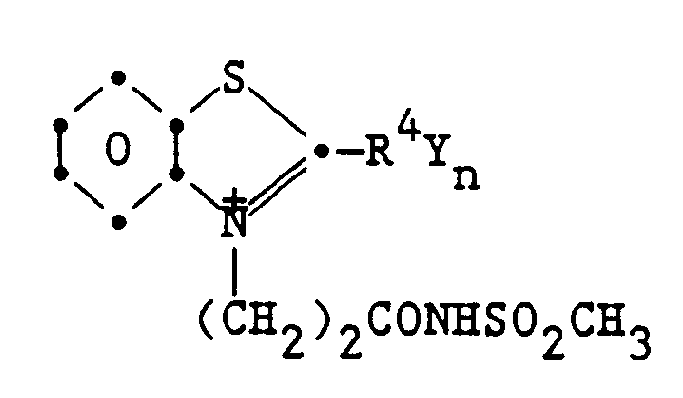
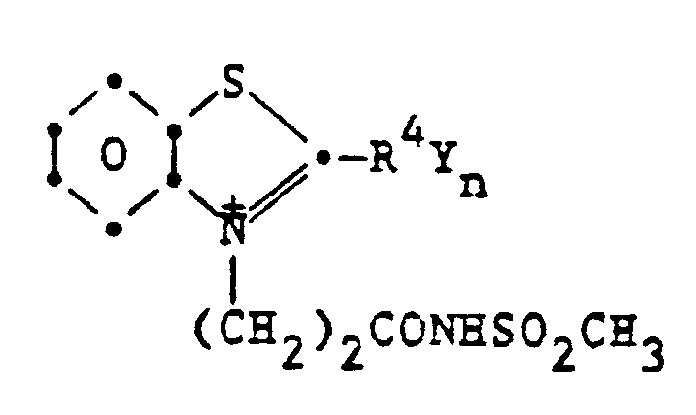
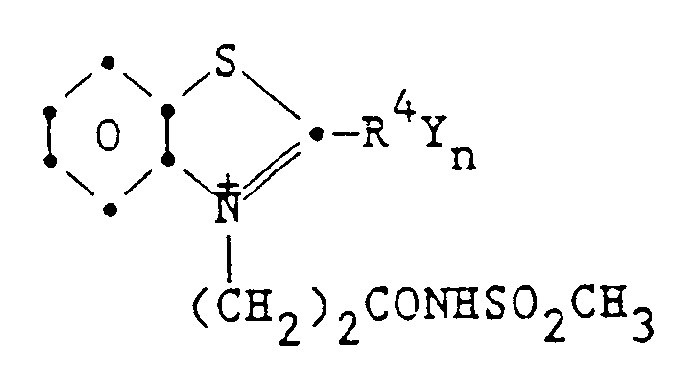
[0024] Preferred chalcogenazolium salts useful in this invention have the structural formula (V):
wherein:
R⁴, Y and n have the definitions noted above.
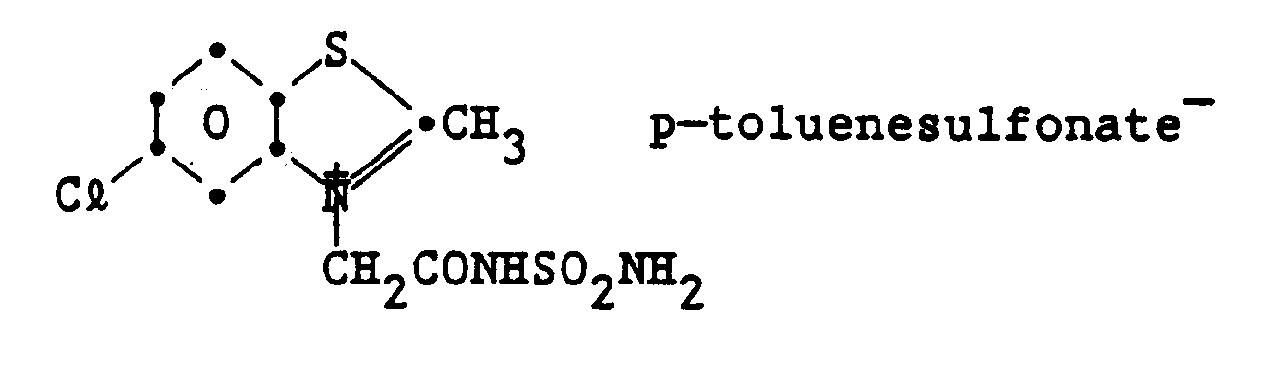
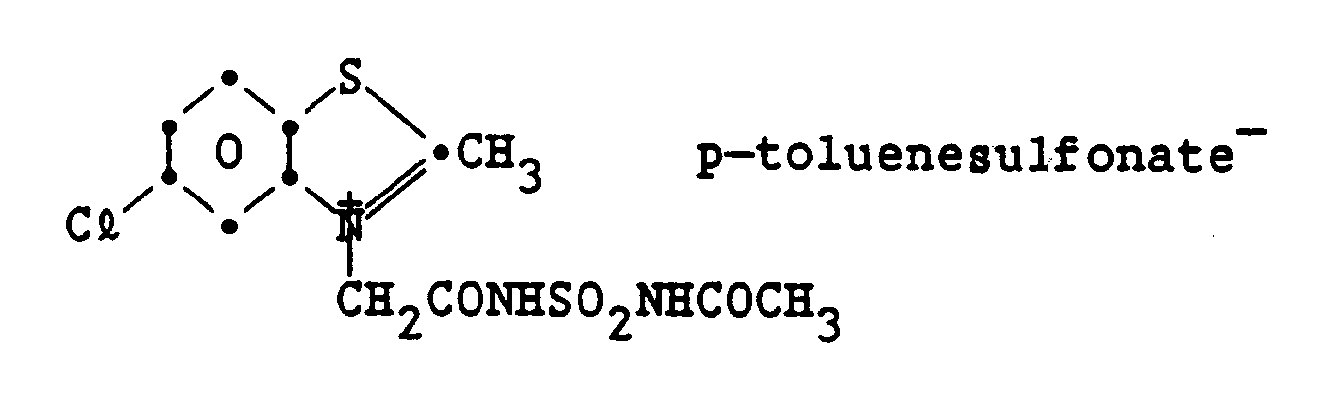
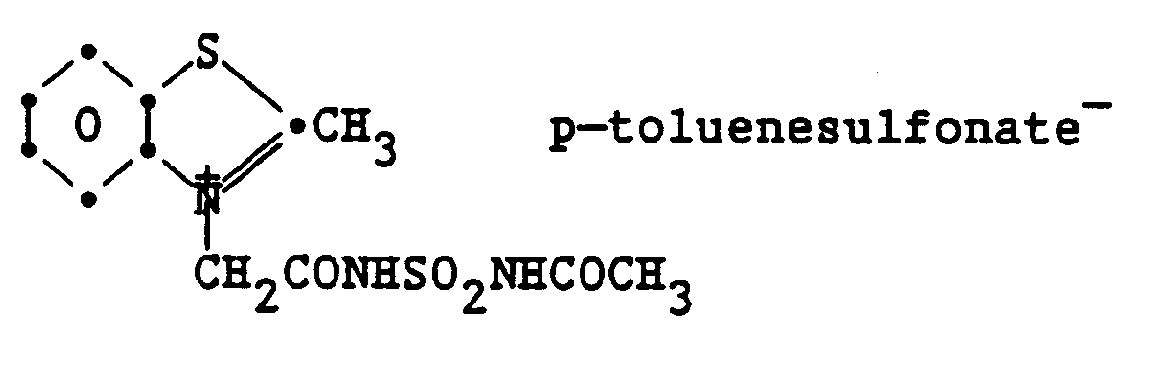
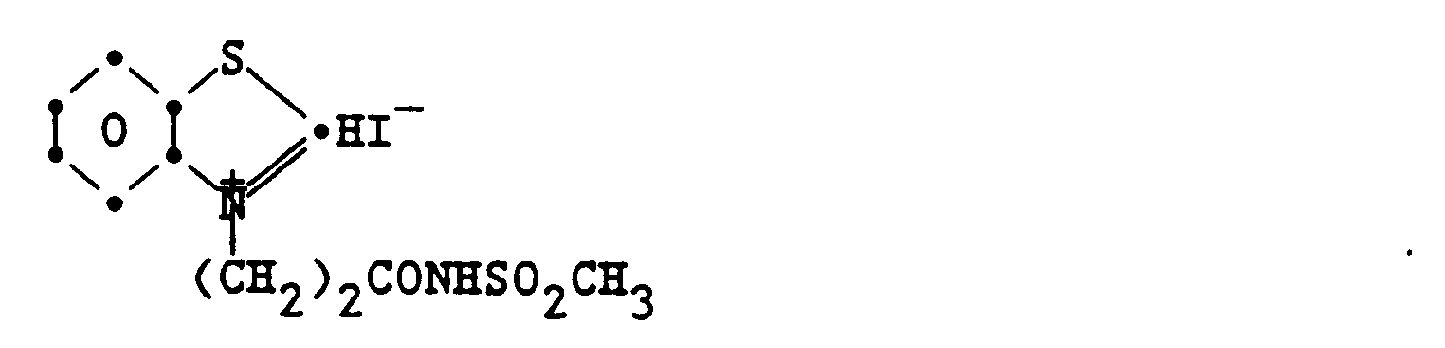
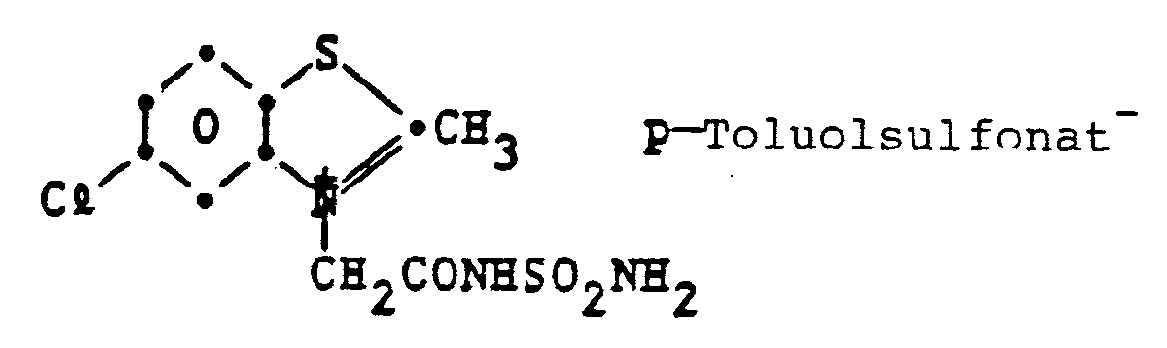
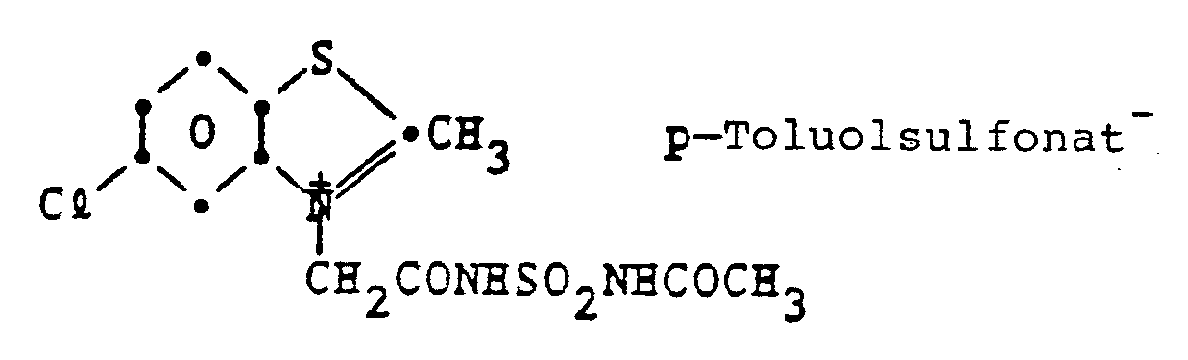
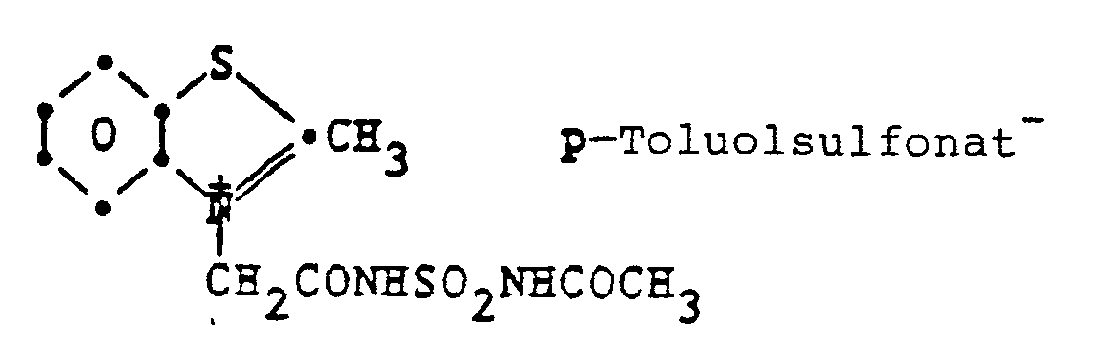
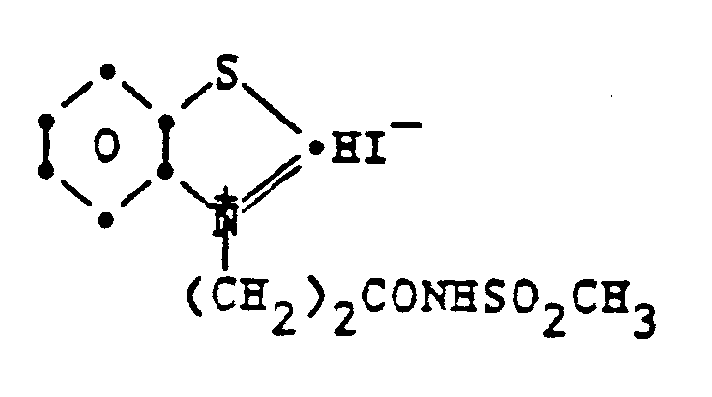
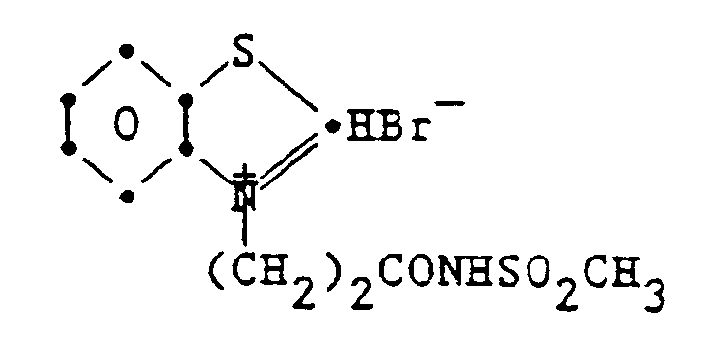
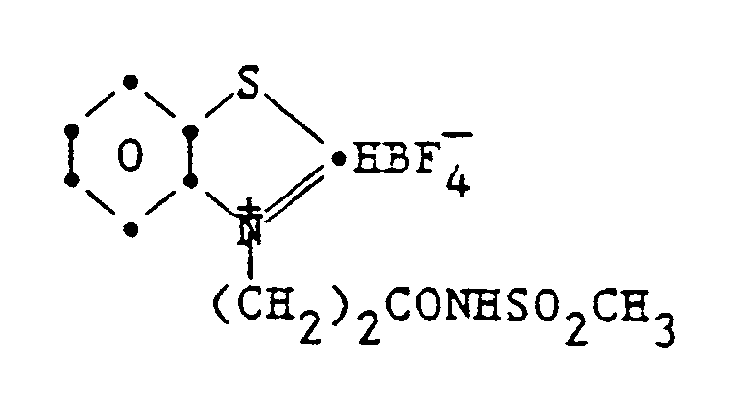
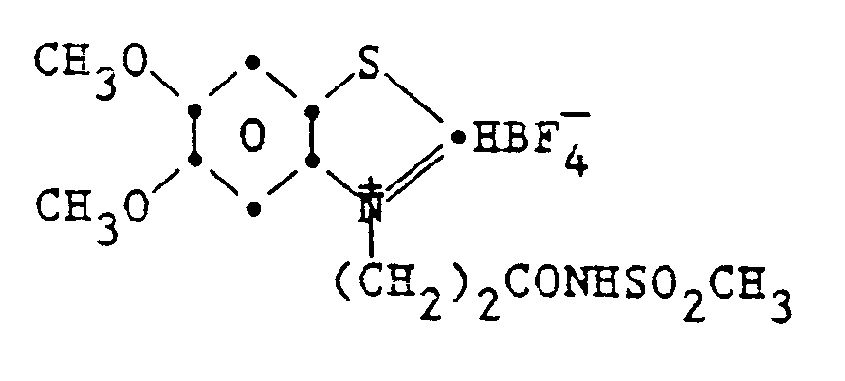
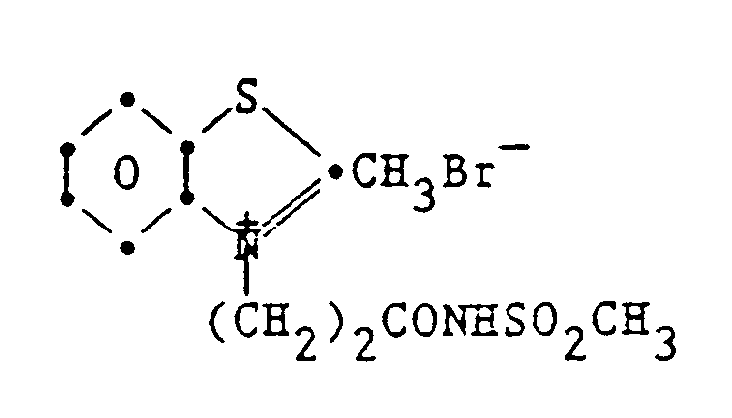
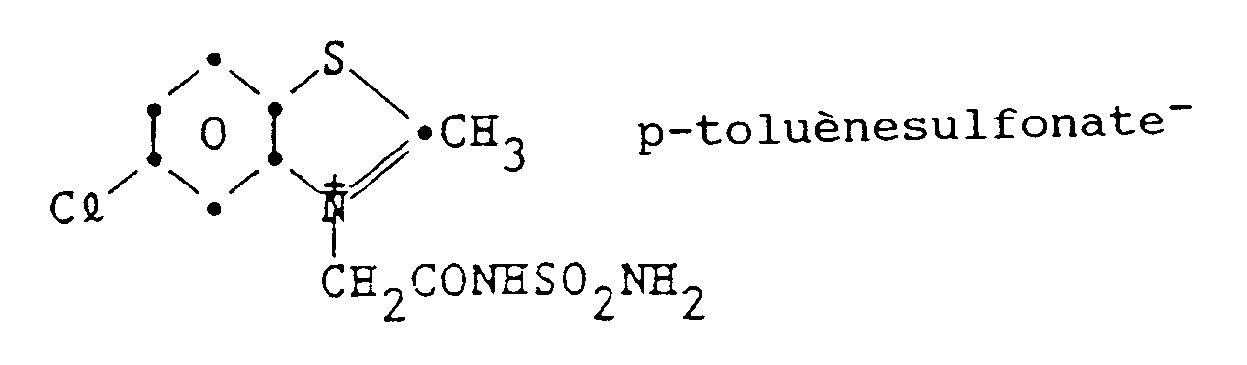
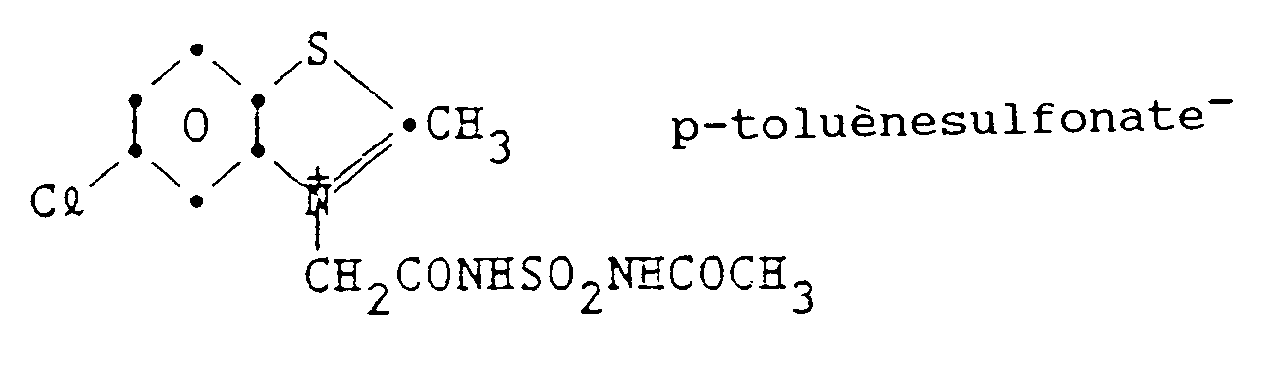
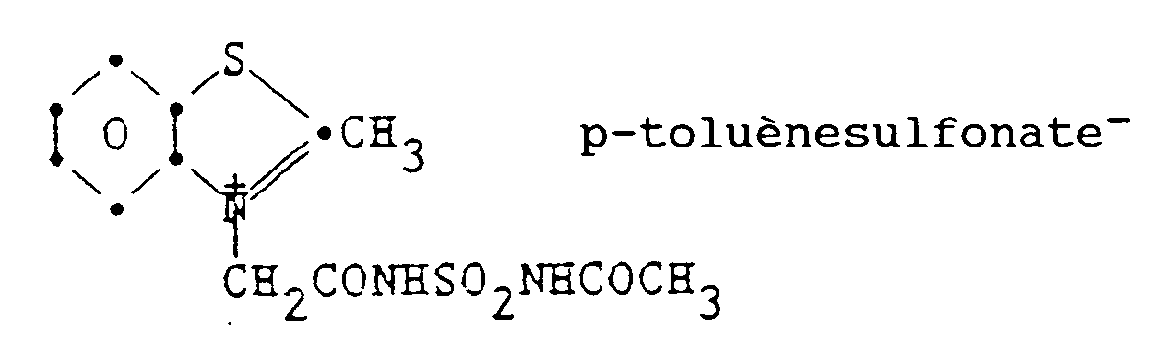
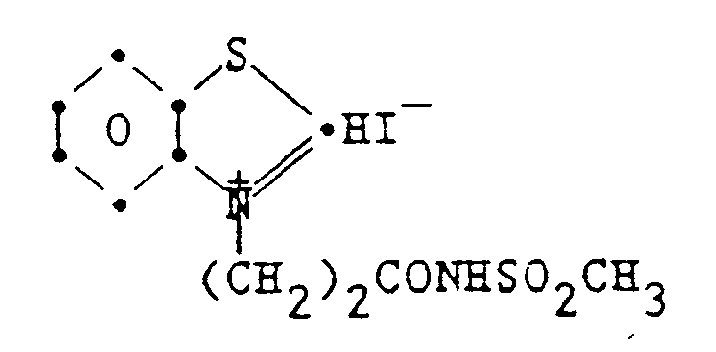
[0025] Particular quaternized chalcogenazolium salts falling within formula (V) include:
PTS = p-toluenesulfonate
PTS = p-toluenesulfonate
PTS = p-toluenesulfonate
[0026] The chalcogenazolium salts described above, while disclosed in U. S. Patent 4,578,348 as being useful for improving speed/fog relationships in photographic recording materials, including color photographic materials, are not recognized as having any utility with respect to overcoming inhibition of silver halide development caused by particular pyrazolotriazole magenta couplers.
[0027] The chalcogenazolium salts can be added to the silver halide emulsion at any time following precipitation of the silver halide grains to just prior to coating. The amount of chalcogenazolium salt which has been found to be effective to prevent silver halide development inhibition by the pyrazolotriazole coupler compound, and which is incorporated in the silver halide layer, is from about 0.01 to about 10 millimoles thereof per mole of silver. The preferred concentration of salt is from about 0.1 to about 2.0 millimoles thereof per mole of silver.
[0028] This invention also relates to a process for reducing silver halide development inhibition in a photographic recording material comprising a pyrazolotriazole magenta coupler which comprises adding to a silver halide emulsion a hydrolyzable chalcogenazolium salt of a middle chalcogen which comprises a quaternizing substituent which has the structural formula:
-L-T(̵NH-T¹)̵mR¹
wherein:
L is a divalent linking group;
T is carbonyl or sulfonyl;
T¹ is independently in each occurrence carbonyl or sulfonyl;
R¹ is a hydrocarbon residue or an amino group; and
m is an integer of from 1 to 3.
[0029] The silver halide emulsions can include silver halide grains of any conventional shape or size. Specifically, the emulsions can include coarse, medium or fine silver halide grains of either regular (e.g., cubic or octahedral) or irregular (e.g. multiply twinned or tabular) crystallographic form.
[0030] High aspect ratio tabular grain emulsions are specifically contemplated, such as those disclosed by Wilgus et al U. S. Patent 4,434,226, Daubendiek et al U. S. Patent 4,414,310, Wey U. S. Patent 4,399,215, solberg et al U. S. Patent 4,433,048, Mignot U. S. Patent 4,386,156, Evans et al U. S. Patent 4,504,570, Maskasky U. S. Patent 4,400,463, Wey et al U. S. Patent 4,414,306, Maskasky U.S. Patents 4,435,501 and 4,643,966 and Daubendiek et al U. S. Patents 4,672,027 and 4,693,964. Also specifically contemplated are those silver bromoiodide grains with a higher molar proportion of iodide in the core of the grain than in the periphery of the grain, such as those described in GB 1,027,146; JA 54/48521; US 4,379,837; US 4,444,877; US 4,665,012; US 4,686,178; US 4,565,778; US 4,728,602; US 4,668,614; US 4,636,461; EP 264,954. The silver halide emulsions can be either monodisperse or plolydisperse as precipitated. The grain size distribution of the emulsions can be controlled by silver halide grain separation techniques or by blending silver halide emulsions of differing grain sizes.
[0031] Sensitizing compounds, such as compounds of copper, thallium, lead, bismuth, cadmium and Group VIII noble metals, can be present during precipitation of the silver halide emulsion, as illustrated by U. S. Patent Nos. 1,195,432; 1,951,933; 2,448,060; 2,628,167; 2,950,972; 3,448,709 and 3,737,313.
[0032] The silver halide emulsions can be either monodispersed or polydispersed as precipitated. The grain size distribution of the emulsions can be controlled by silver halide grain separation techniques or by blending silver halide emulsions of differing grain sizes. The emulsions can include Lippmann emulsions and ammoniacal emulsions, as illustrated by Glafkides, Photographic Chemistry, Vol. 1, Fountain Press, London, 1958, pp. 365-368 and pp. 301-304; excess halide ion ripened emulsions as described by G. F. Duffin, Photographic Emulsion Chemistry, Focal Press Ltd., London, 1966, pp. 60-72; thiocyanate ripened emulsions, as illustrated by U. S. Patent No. 3,320,069; thioether ripened emulsions, as illustrated by U. S. Patent Nos. 3,271,157; 3,574,628 and 3,737,313 or emulsions containing weak silver halide solvents, such as ammonium salts, as illustrated by U. S. Patent No. 3,784,381 and Research Disclosure, No. 134, June 1975, Item 13452.
[0033] The silver halide emulsions can be surface sensitized. Noble metal (e.g., gold), middle chalcogen (e.g., sulfur, selenium, or tellurium), and reduction sensitizers, employed individually or in combination, are specifically contemplated. A preferred method of sensitization is sulfur and gold.
[0034] Typical chemical sensitizers are listed in Research Disclosure, December 1978, Item 17643, Section III.
[0035] The silver halide emulsions can be spectrally sensitized with dyes from a variety of classes, including the polymethine dye class, which includes the cyanines, merocyanines, complex cyanines and merocyanines (i.e., tri-, tetra-, and polynuclear cyanines and merocyanines), oxonols, hemioxonols, styryls, merostyryls, and streptocyanines. Illustrative spectral sensitizing dyes are disclosed in Research Disclosure, Item 17643, cited above, Section IV.
[0036] The silver halide emulsions as well as other layers of the photographic recording materials of this invention can contain as vehicles hydrophilic colloids, employed alone or in combination with other polymeric materials (e.g., lattices). Suitable hydrophilic materials include both naturally occurring substances such as proteins, protein derivatives, cellulose derivatives - e.g., cellulose esters, gelatin - e.g., alkali treated gelatin (cattle, bone, or hide gelatin) or acid treated gelatin (pigskin gelatin), gelatin derivatives - e.g. acetylated gelatin, phthalated gelatin and the like, polysaccharides such as dextran, gum arabic, zein, casein, pectin, collagen derivatives, collodion, agar-agar, arrowroot, and albumin. The vehicles can be hardened by conventional procedures. Further details of the vehicles and hardeners are provided in Research Disclosure, Item 17643, cited above, Sections IX and X.
[0038] A tabular grain silver bromoiodide (4.5 mole % I) emulsion having an equivalent circular diameter of 3.2»m and a thickness of 0.14»m was prepared in the manner described in U. S. Patent 4,433,048 of Solberg et al.
[0039] Portions of the emulsion were then chemically and spectrally sensitized to the green region of the visible spectrum using sodium thiosulfate (2.5 mg/Ag mole), potassium tetrachloroaurate (1.25 mg/Ag mole), sodium thiocyanate (80 mg/Ag mole), a mixture of the green sensitizing dyes anhydro-5-chloro-9-ethyl-5′-phenyl-3′-(3-sulfobutyl)-3-(3-sulfopropyl)oxacarbocyanine hydroxide, sodium salt and anhydro-11-ethyl-1,1′-bis(3-sulfopropyl)naphth[1,2-d]oxazolocarbocyanine hydroxide, sodium salt (0.7 millimole/Ag mole). To portions of the chemically and spectrally sensitized emulsion were added a dispersion of the magenta dye-forming coupler identified above as C-1. To one portion was added 36 mg/Ag mole of the chalcogenazolium salt identified above as S-1. Two coatings comprising the above components were then prepared in the following manner.
[0040] Separate portions of a gelatin subbed cellulose triacetate film support were coated with the above-described coating formulations. The coverages were silver bromoiodide (1.08 g Ag/m²), gelatin (2.15 g/m²), magenta dye-forming coupler (0.57 g/m²). A protective overcoat was then applied comprising gelatin (2.15 g/m²) and the hardener bis-vinyl sulfonyl methyl ether at a concentration of 1.75 percent based on total gelatin.
[0041] The resulting photographic elements were imagewise exposed at 1/100 of a second through a 0 - 4.0 density step tablet plus a Wratten No. 9 filter (Wratten is a trademark of Eastman Kodak Co., U.S.A.) to 600W, 5500 K tungsten light source. Processing was accomplished at 37.7°C in a color process of the type described in the British Journal of Photography Annual 1979, pages 204-206, at a development time of 2 minutes and 15 seconds. Results showed the coating containing chalcogenazolium salt S-1 provided improved relative speed and contrast values.
1. A photographic recording material comprising a support having thereon a photographic
silver halide emulsion layer and a pyrazolotriazole magenta coupler which inhibits
silver halide development, said recording material being characterized in that it
comprises a hydrolyzable chalcogenazolium salt of sulfur, selenium or tellurium which
comprises a quaternizing substituent which has the structural formula:
-L-T(̵NH-T¹)̵mR¹
wherein:
L is a divalent linking group;
T is carbonyl or sulfonyl;
T¹ is independently in each occurrence carbonyl or sulfonyl;
R¹ is a hydrocarbon residue or an amino group; and
m is an integer of from 1 to 3.
-L-T(̵NH-T¹)̵mR¹
wherein:
L is a divalent linking group;
T is carbonyl or sulfonyl;
T¹ is independently in each occurrence carbonyl or sulfonyl;
R¹ is a hydrocarbon residue or an amino group; and
m is an integer of from 1 to 3.
2. The recording material of claim 1 characterized in that the pyrazolotriazole coupler
has one of the following structures:
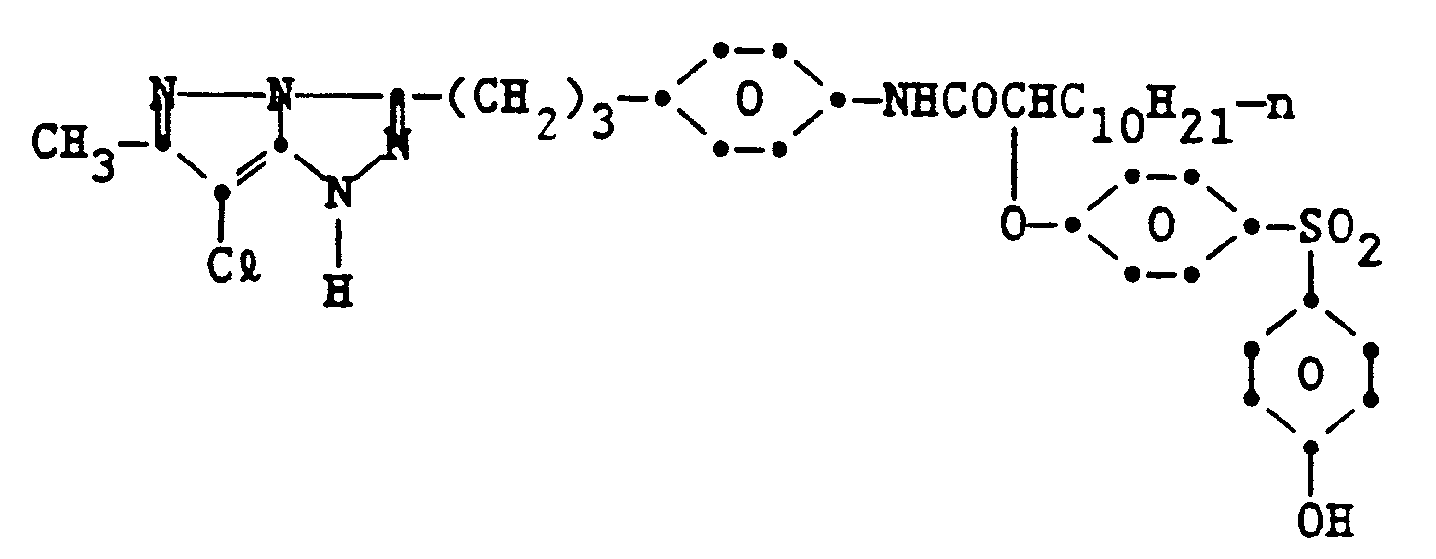
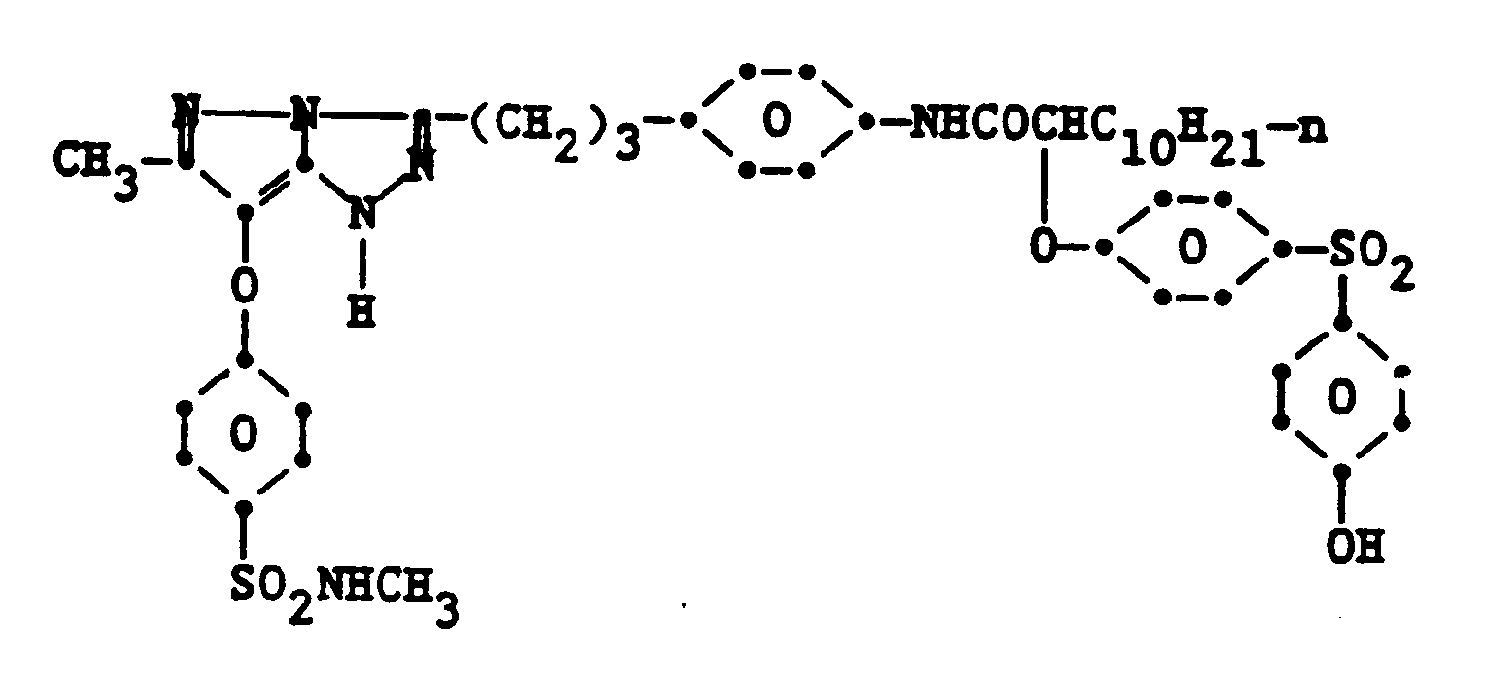
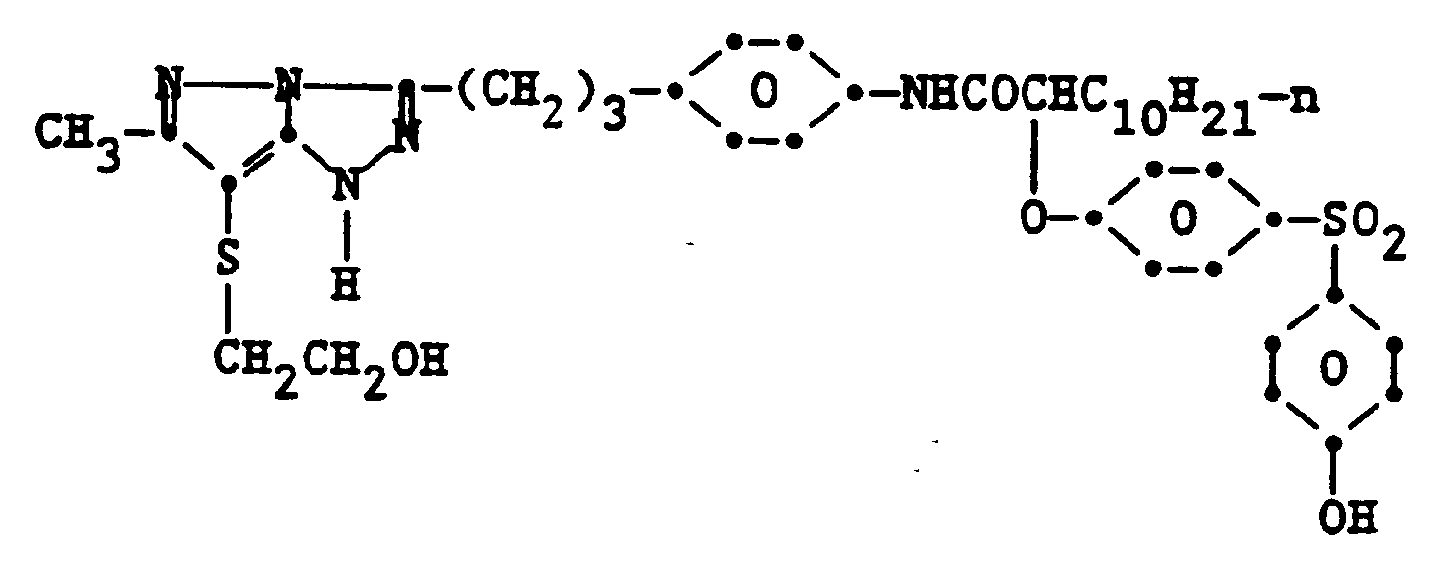
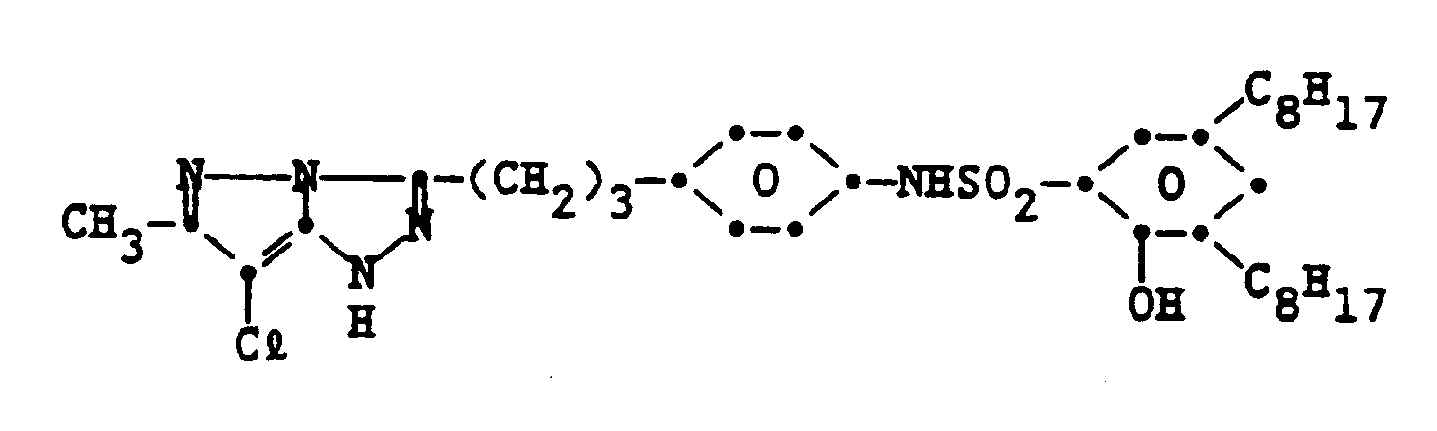
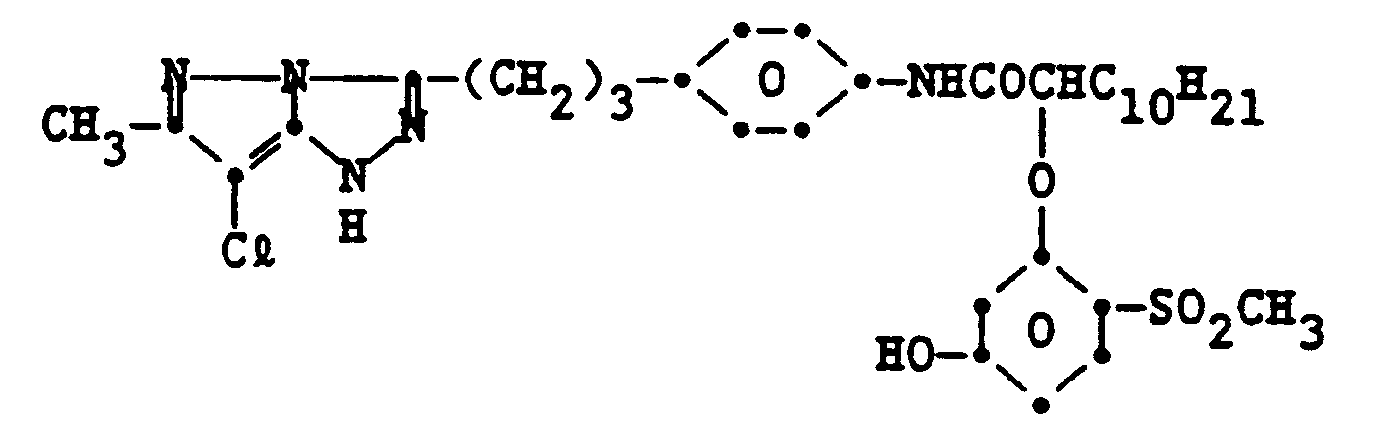
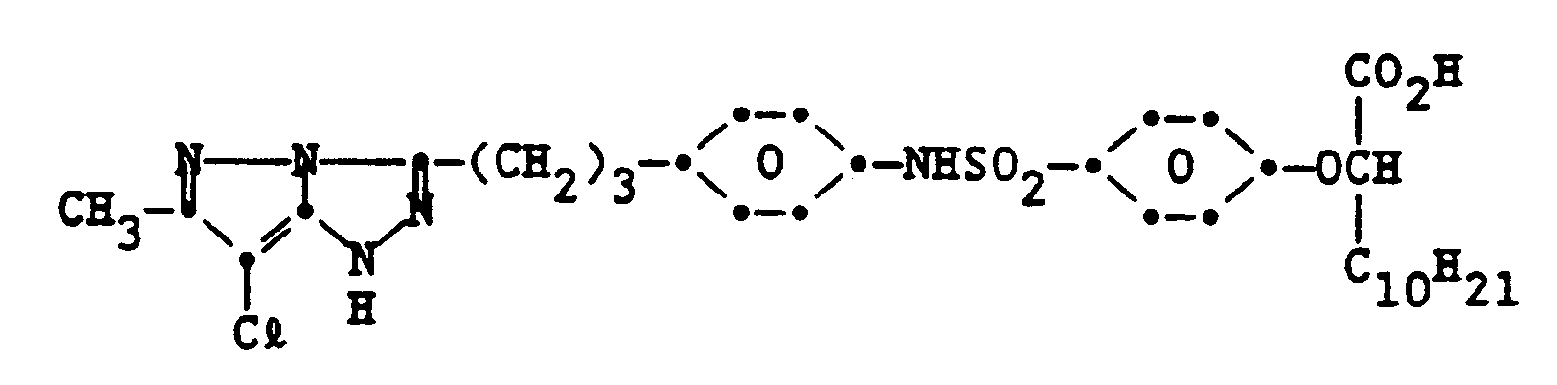
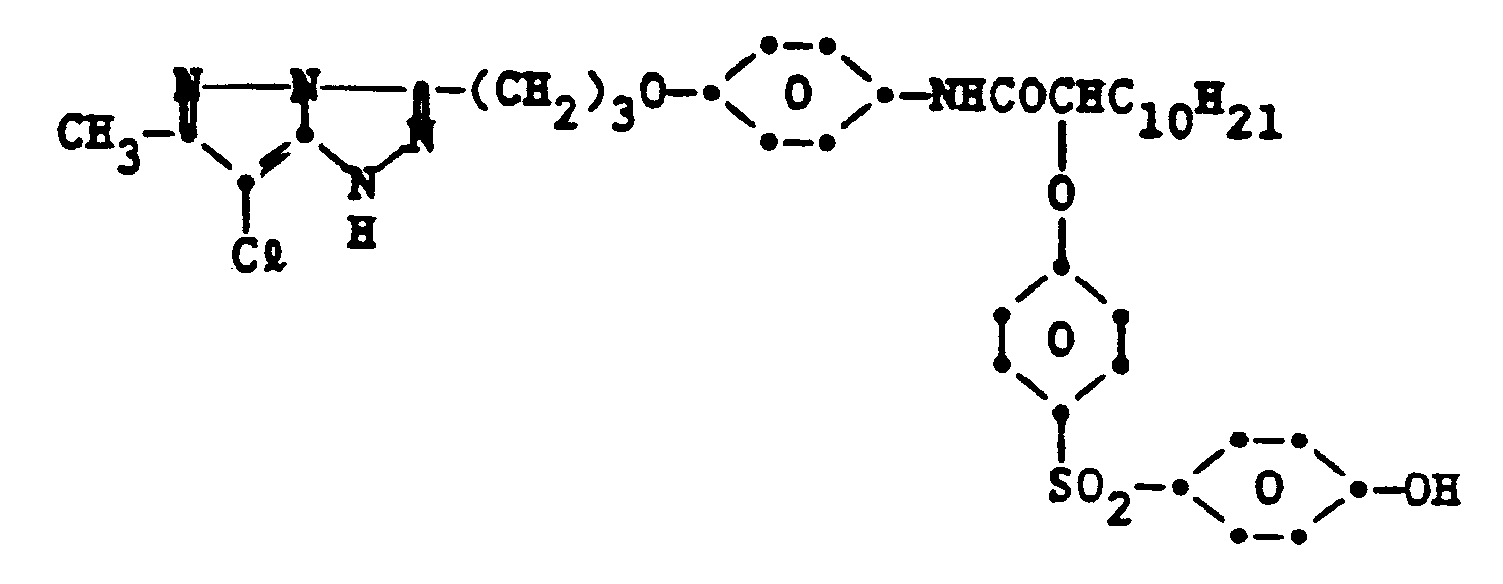
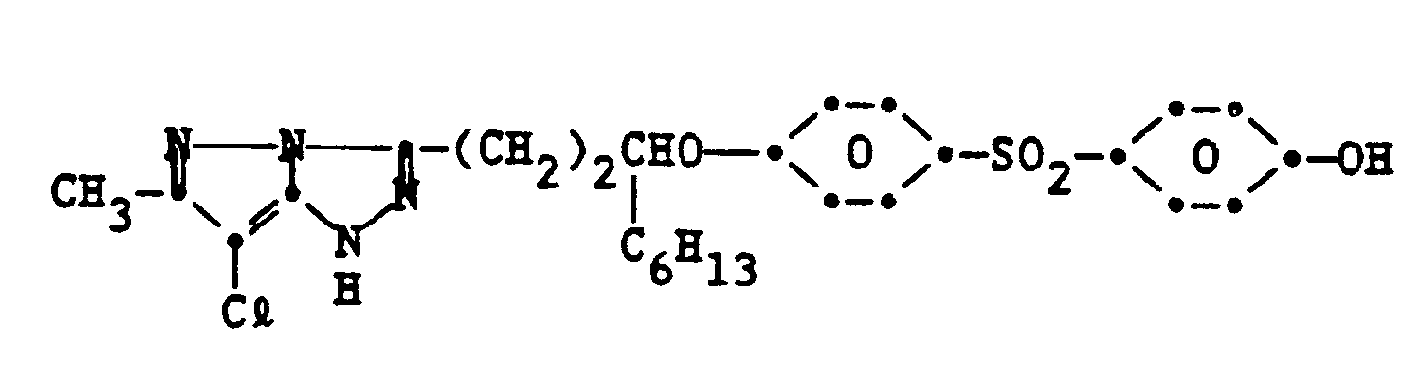
3. The recording material of claim 1 characterized in that the chalcogenazolium salt
has the structural formula:
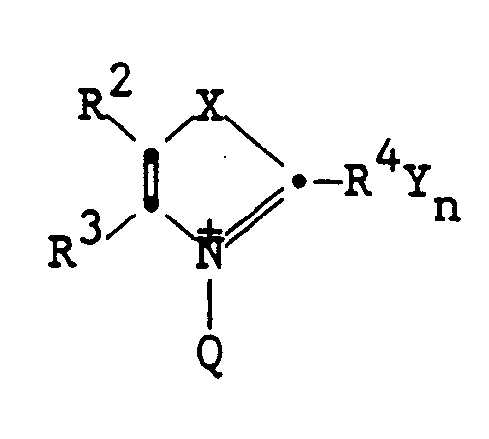
wherein;
R² and R³ are independently hydrogen; halogen; aliphatic or aromatic hydrocarbon moiety optionally linked through a divalent oxygen or sulfur atom; cyano; amino; amido; sulfonamido; sulfamoyl; ureido; thioureido; hydroxy; -COM or -S(SO)₂M group, wherein M is chosen to complete an aldehyde, ketone, acid, ester, thioester, amide, or salt; or R² and R³ together can represent the atoms which complete a fused ring;
R⁴ is hydrogen; alkyl of from 1 to about 8 carbon atoms; or aryl of from 6 to 10 carbon atoms;
Q represents the quaternized substituent;
X is sulfur, selenium or tellurium;
Y represents a charge balancing counter ion; and
n is 0 or 1.
wherein;
R² and R³ are independently hydrogen; halogen; aliphatic or aromatic hydrocarbon moiety optionally linked through a divalent oxygen or sulfur atom; cyano; amino; amido; sulfonamido; sulfamoyl; ureido; thioureido; hydroxy; -COM or -S(SO)₂M group, wherein M is chosen to complete an aldehyde, ketone, acid, ester, thioester, amide, or salt; or R² and R³ together can represent the atoms which complete a fused ring;
R⁴ is hydrogen; alkyl of from 1 to about 8 carbon atoms; or aryl of from 6 to 10 carbon atoms;
Q represents the quaternized substituent;
X is sulfur, selenium or tellurium;
Y represents a charge balancing counter ion; and
n is 0 or 1.
4. The recording material of claim 3 characterized in that R⁴ is hydrogen.
5. The recording material of claim 3 characterized in that quaternizing substituent Q
has the formula:
-L-T(̵NH-T¹)̵mR¹
wherein
L represents an optionally substituted alkylene group having from 1 to 8 carbon atoms;
T is carbonyl or sulfonyl;
T¹ is independently in each occurrence carbonyl or sulfonyl; and
R¹ represents a primary or a secondary amino group or an alkyl group having from 1 to about 8 carbon atoms hydrocarbon residue or an amino group; and
m is an integer of from 1 to 3.
-L-T(̵NH-T¹)̵mR¹
wherein
L represents an optionally substituted alkylene group having from 1 to 8 carbon atoms;
T is carbonyl or sulfonyl;
T¹ is independently in each occurrence carbonyl or sulfonyl; and
R¹ represents a primary or a secondary amino group or an alkyl group having from 1 to about 8 carbon atoms hydrocarbon residue or an amino group; and
m is an integer of from 1 to 3.
6. The recording material of claim 5 characterized in that T is carbonyl and T¹ is sulfonyl.
7. The recording material of claim 5 characterized in that L is methylene or ethylene.
8. The recording material according to claim 5 characterized in that m is 1.
9. The recording material according to claim 3 characterized in that X is sulfur.
10. The recording material of claim 1 characterized in that the chalcogenazolium salt
is present in an amount of from about 0.01 to about 10 millimoles thereof per mole
of silver.
11. The recording material of claim 10 characterized in that the salt is present in an
amount of from about 0.1 to about 2.0 millimoles thereof per mole of silver.
12. The recording material of claim 9 characterized in that the chalcogenazolium salt
has the structural formula:
13. The recording material of claim 10 characterized in that the salt has one of the following
structures:
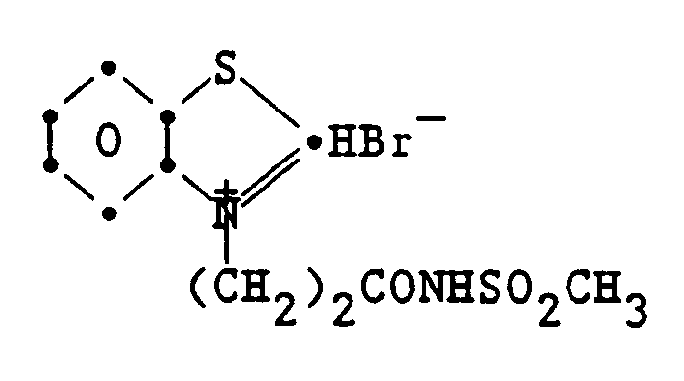
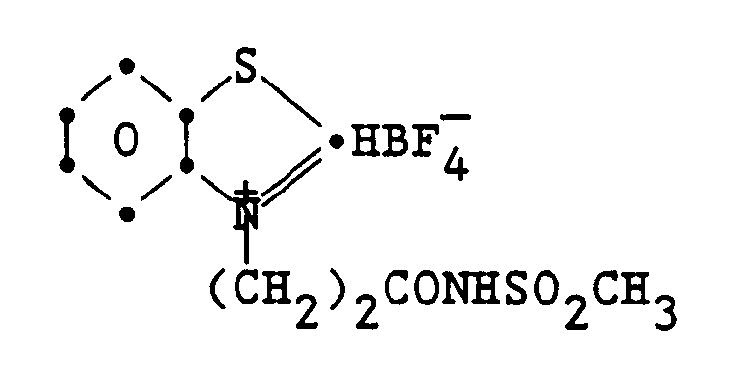
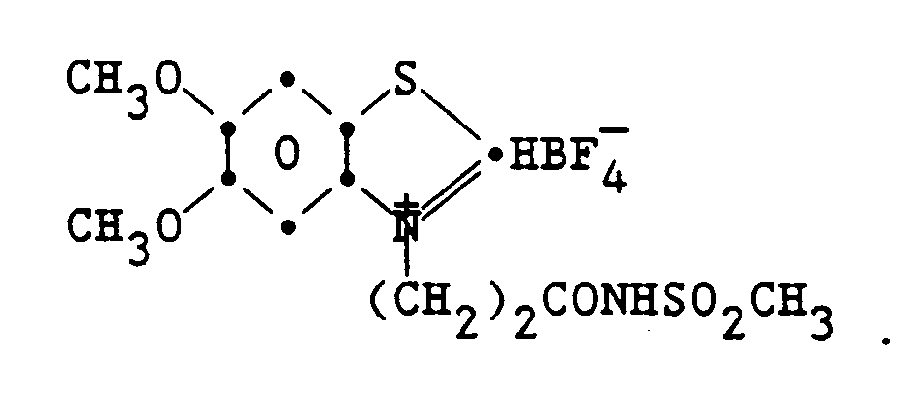
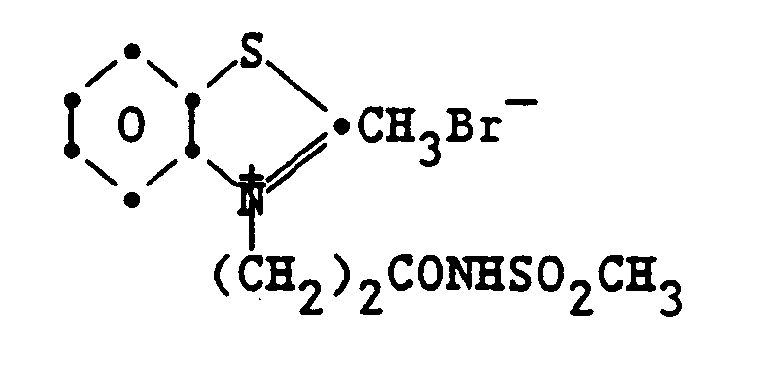
14. The recording material of claim 1 characterized in that the silver halide emulsion
is chemically sensitized.
15. The recording material of claim 14 characterized in that the emulsion is sensitized
with sulfur and gold.
16. A process for reducing silver halide development inhibition in a photographic recording
material comprising a pyrazolotriazole magenta coupler which comprises adding to a
silver halide emulsion from about 0.01 to about 10 millimoles per mole of silver of
a hydrolyzable chalcogenazolium salt of sulfur, selenium or tellurium which comprises
a quaternizing substituent which has the structural formula:
-L-T(̵NH-T¹)̵mR¹
wherein:
L is a divalent linking group;
T is carbonyl or sulfonyl;
T¹ is independently in each occurrence carbonyl or sulfonyl;
R¹ is a hydrocarbon residue or an amino group; and
m is an integer of from 1 to 3.
-L-T(̵NH-T¹)̵mR¹
wherein:
L is a divalent linking group;
T is carbonyl or sulfonyl;
T¹ is independently in each occurrence carbonyl or sulfonyl;
R¹ is a hydrocarbon residue or an amino group; and
m is an integer of from 1 to 3.
17. The process of claim 16 characterized in that from about 0.1 to about 2.0 millimoles
of chalcogenazolium salt are added per mole of silver.
1. Photographisches Aufzeichnungsmaterial mit einem Träger, auf dem sich eine photographische
Silberhalogenidemulsionsschicht und ein Pyrazolotriazol-Purpurrotkuppler, der Silberhalogenidentwicklung
inhibiert, befinden, dadurch gekennzeichnet, daß es ein hydrolisierbares Chalcogenazolium
salz des Schwefels, Selens oder Tellurs aufweist, das einen quaternärisierenden Substituenten
enthält, der die folgende Strukturformel hat:
-L-T(̵NH-T¹)̵mR¹
worin bedeuten:
L eine divalente verbindende Gruppe;
T gleich Carbonyl oder Sulfonyl;
T¹ unabhängig in jedem Falle des Auftretens Carbonyl oder Sulfonyl;
R¹ einen Kohlenwasserstoffrest oder eine Aminogruppe; und
m eine Zahl von 1 bis 3.
-L-T(̵NH-T¹)̵mR¹
worin bedeuten:
L eine divalente verbindende Gruppe;
T gleich Carbonyl oder Sulfonyl;
T¹ unabhängig in jedem Falle des Auftretens Carbonyl oder Sulfonyl;
R¹ einen Kohlenwasserstoffrest oder eine Aminogruppe; und
m eine Zahl von 1 bis 3.
2. Aufzeichnungsmaterial nach Anspruch 1, dadurch gekennzeichnet, daß der Pyrazolotriazolkuppler
eine der folgenden Strukturen aufweist:
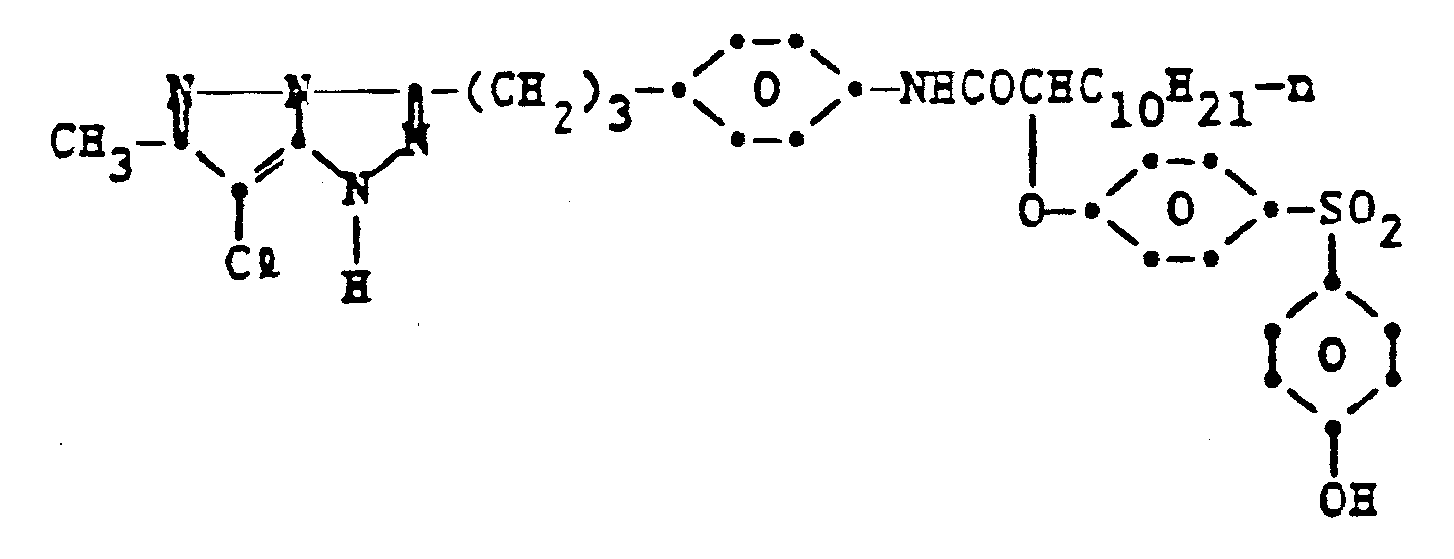
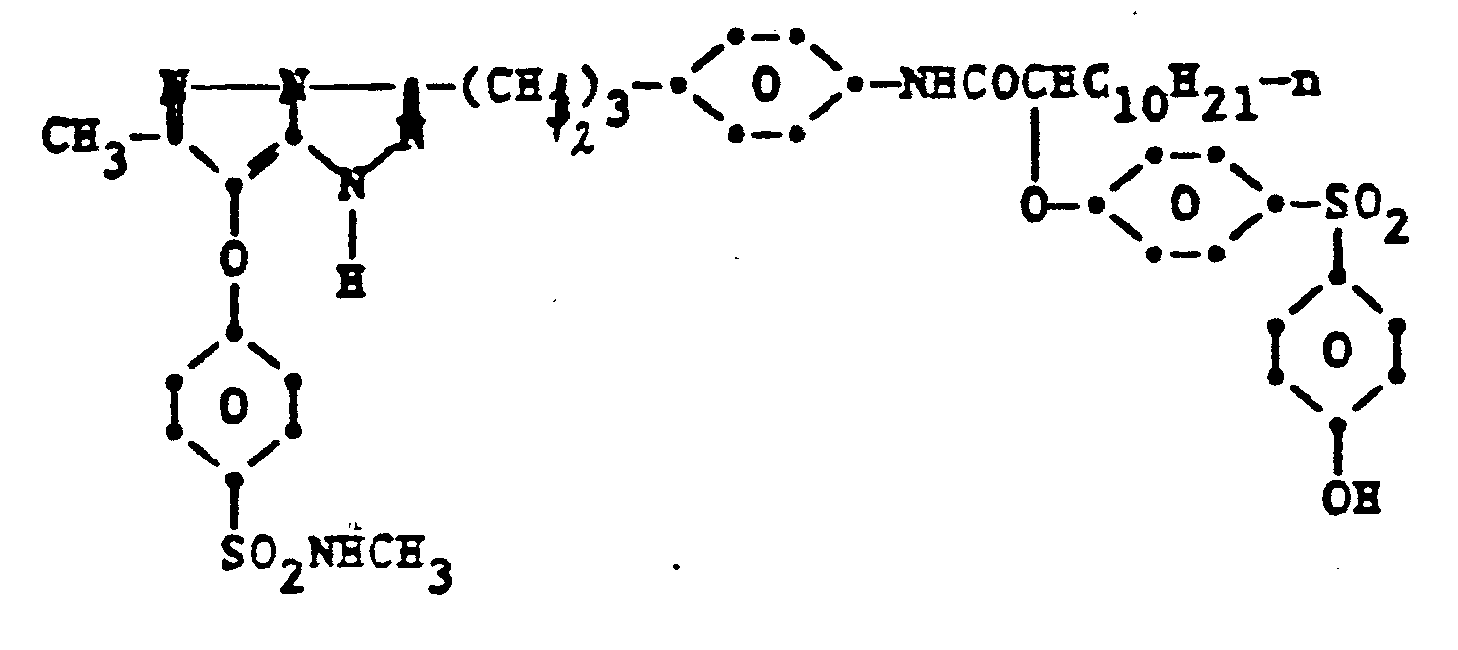
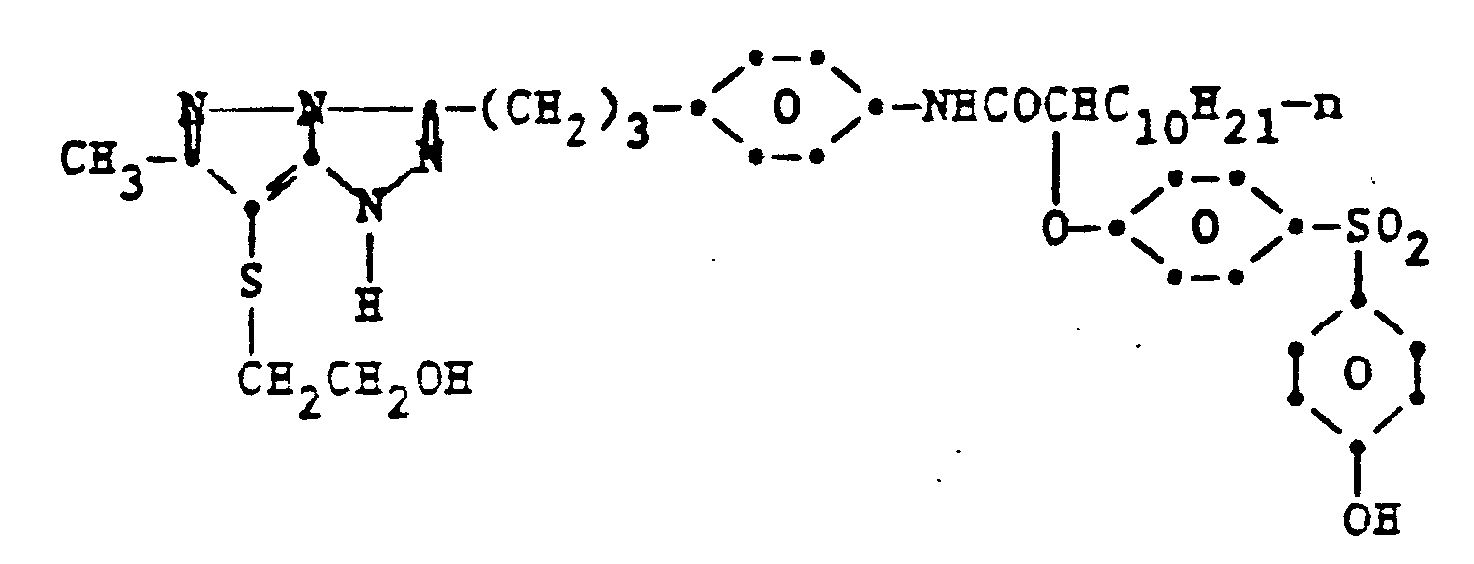
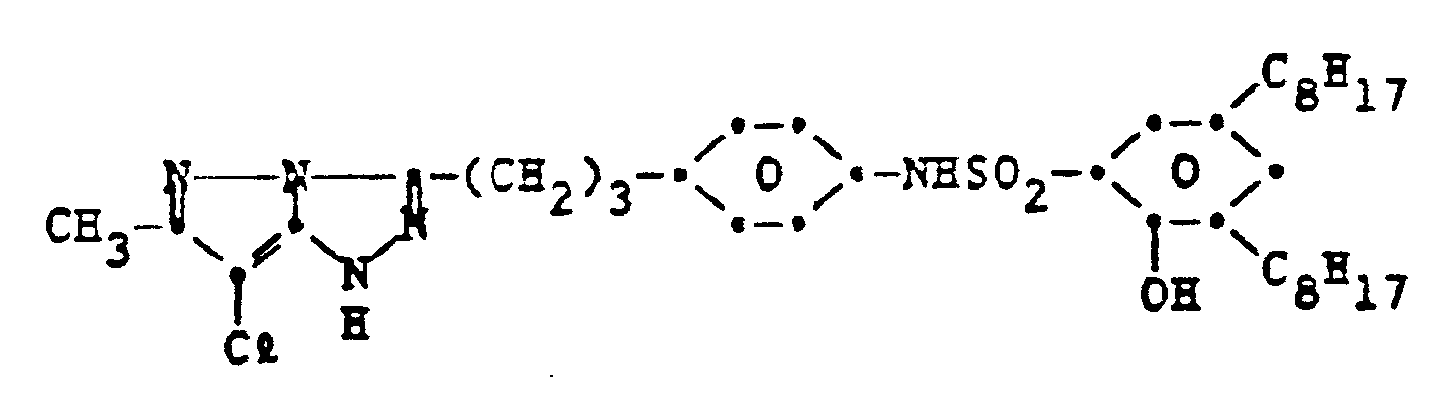
3. Aufzeichnungsmaterial nach Anspruch 1, dadurch gekennzeichnet, daß das Chalcogenazoliumsalz
die folgende Strukturformel hat:
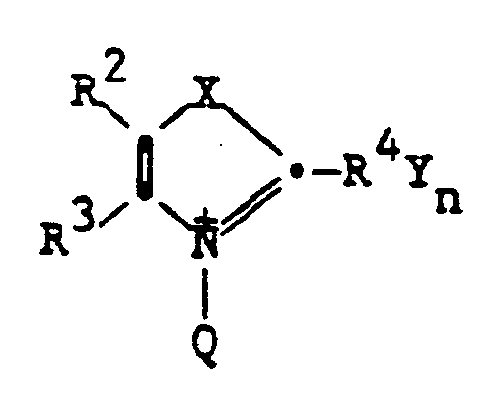
worin bedeuten:
R² und R³ unabhängig voneinander Wasserstoff; Halogen; einen aliphatischen oder aromatischen Kohlenwasserstoffrest, der gegebenenfalls durch ein divalentes Sauerstoff- oder Schwefelatom unterbrochen ist; Cyano; Amino; Amido; Sulfonamido; Sulfamoyl; Ureido; Thioureido; Hydroxy; -COM oder eine -S(SO)₂M-Gruppe, worin M ausgewählt ist, um einen Aldehyd, ein Keton, eine Säure, einen Ester, einen Thioester; ein Amid oder ein Salz zu vervollständigen; oder R² und R³ können gemeinsam für die Atome stehen, die einen ankondensierten Ring vervollständigen;
R⁴ Wasserstoff; Alkyl mit 1 bis etwa 8 Kohlenstoffatomen; oder Aryl mit 6 bis 10 Kohlenstoffatomen;
Q den quaternärisierenden Substituenten;
X gleich Schwefel, Selen oder Tellur;
Y ein Ladungen ausgleichendes Gegenion; und
n gleich 0 oder 1.
worin bedeuten:
R² und R³ unabhängig voneinander Wasserstoff; Halogen; einen aliphatischen oder aromatischen Kohlenwasserstoffrest, der gegebenenfalls durch ein divalentes Sauerstoff- oder Schwefelatom unterbrochen ist; Cyano; Amino; Amido; Sulfonamido; Sulfamoyl; Ureido; Thioureido; Hydroxy; -COM oder eine -S(SO)₂M-Gruppe, worin M ausgewählt ist, um einen Aldehyd, ein Keton, eine Säure, einen Ester, einen Thioester; ein Amid oder ein Salz zu vervollständigen; oder R² und R³ können gemeinsam für die Atome stehen, die einen ankondensierten Ring vervollständigen;
R⁴ Wasserstoff; Alkyl mit 1 bis etwa 8 Kohlenstoffatomen; oder Aryl mit 6 bis 10 Kohlenstoffatomen;
Q den quaternärisierenden Substituenten;
X gleich Schwefel, Selen oder Tellur;
Y ein Ladungen ausgleichendes Gegenion; und
n gleich 0 oder 1.
4. Aufzeichnungsmaterial nach Anspruch 3, dadurch gekennzeichnet, daß R⁴ für Wasserstoff
steht.
5. Aufzeichnungsmaterial nach Anspruch 3, dadurch gekennzeichnet, daß der quaternärisierende
Stubstituent Q die folgende Formel aufweist:
-L-T(̵NH-T¹)̵mR¹
worin bedeuten:
L eine gegebenenfalls substituierte Alkylengruppe mit 1 bis 8 Kohlenstoffatomen;
T gleich Carbonyl oder Sulfonyl;
T¹ unabhängig von jedem Auftreten Carbonyl oder Sulfonyl;
R¹ eine primäre oder eine sekundäre Aminogruppe oder eine Alkylgruppe mit 1 bis etwa 8 Kohlenstoffatomen oder eine Aminogruppe; und
m eine Zahl von 1 bis 3.
-L-T(̵NH-T¹)̵mR¹
worin bedeuten:
L eine gegebenenfalls substituierte Alkylengruppe mit 1 bis 8 Kohlenstoffatomen;
T gleich Carbonyl oder Sulfonyl;
T¹ unabhängig von jedem Auftreten Carbonyl oder Sulfonyl;
R¹ eine primäre oder eine sekundäre Aminogruppe oder eine Alkylgruppe mit 1 bis etwa 8 Kohlenstoffatomen oder eine Aminogruppe; und
m eine Zahl von 1 bis 3.
6. Aufzeichnungsmaterial nach Anspruch 5, dadurch gekennzeichnet, daß T für Carbonyl
steht und T¹ für Sulfonyl.
7. Aufzeichnungsmaterial nach Anspruch 5, dadurch gekennzeichnet, daß L für Methylen
oder Ethylen steht.
8. Aufzeichnungsmaterial nach Anspruch 5, dadurch gekennzeichnet, daß m gleich 1 ist.
9. Aufzeichnungsmaterial nach Anspruch 3, dadurch gekennzeichnet, daß X für Schwefel
steht.
10. Aufzeichnungsmaterial nach Anspruch 1, dadurch gekennzeichnet, daß das Chalcogenazoliumsalz
in einer Menge von etwa 0,01 bis etwa 10 Millimolen pro Mol Silber vorliegt.
11. Aufzeichnungsmaterial nach Anspruch 10, dadurch gekennzeichnet, daß das Salz in einer
Menge von etwa 0,1 bis etwa 2,0 Millimolen pro Mol Silber vorliegt.
12. Aufzeichnungsmaterial nach Anspruch 9, dadurch gekennzeichnet, daß das Chalcogenazoliumsalz
die folgende Strukturformel aufweist:
13. Aufzeichnungsmaterial nach Anspruch 10, dadurch gekennzeichnet, daß das Salz eine
der folgenden Strukturen aufweist:
14. Aufzeichnungsmaterial nach Anspruch 1, dadurch gekennzeichnet, daß die Silberhalogenidemulsion
chemisch sensibilisiert ist.
15. Aufzeichnungsmaterial nach Anspruch 14, dadurch gekennzeichnet, daß die Emulsion mit
Schwefel und Gold sensibilisiert ist.
16. Verfahren zur Verminderung der Silberhalogenid-Entwicklungs-Inhibierung in einem photographischen
Aufzeichnungsmaterial mit einem Pyrazolotriazol-Purpurrotkuppler, bei dem man einer
Silberhalogenidemulsion etwa 0,01 bis etwa 10 Millimole pro Mol Silber eines hydrolisierbaren
Chalcogenazoliumsalzes des Schwefels, Selens oder Tellurs zusetzt, das einen quaternärisierenden
Substituenten aufweist, der die folgende Strukturformel hat:
-L-T(̵NH-T¹)̵mR¹
worin bedeuten:
L eine divalente verbindende Gruppe;
T gleich Carbonyl oder Sulfonyl;
T¹ unabhängig von jedem Auftreten Carbonyl oder Sulfonyl;
R¹ einen Kohlenwasserstoffrest oder eine Aminogruppe; und
m eine Zahl von 1 bis 3.
-L-T(̵NH-T¹)̵mR¹
worin bedeuten:
L eine divalente verbindende Gruppe;
T gleich Carbonyl oder Sulfonyl;
T¹ unabhängig von jedem Auftreten Carbonyl oder Sulfonyl;
R¹ einen Kohlenwasserstoffrest oder eine Aminogruppe; und
m eine Zahl von 1 bis 3.
17. Verfahren nach Anspruch 16, dadurch gekennzeichnet, daß etwa 0,1 bis etwa 2,0 Millimole
des Chalcogenazoliumsalzes pro Mol Silber zugegeben werden.
1. Produit d'enregistrement photographique comprenant un support recouvert d'une couche
d'émulsion aux halogénures d'argent photographique, et un coupleur magenta pyrazolotriazole
qui inhibe le développement des halogénures d'argent, le produit d'enregistrement
étant caractérisé en ce qu'il comprend un sel hydrolysable de chalcogénazolium de
soufre, de sélénium ou de tellure qui comprend un substituant quaternisant de formule
:
-L-T-(NH-T¹)mR¹
où
L est un groupe de liaison divalent ;
T est un groupe carbonyle ou sulfonyle ;
T¹ est indépendamment dans chaque cas un groupe carbonyle ou sulfonyle ;
R¹ est un résidu hydrocarboné ou un groupe amino et m est un entier compris entre 1 et 3.
-L-T-(NH-T¹)mR¹
où
L est un groupe de liaison divalent ;
T est un groupe carbonyle ou sulfonyle ;
T¹ est indépendamment dans chaque cas un groupe carbonyle ou sulfonyle ;
R¹ est un résidu hydrocarboné ou un groupe amino et m est un entier compris entre 1 et 3.
2. Produit d'enregistrement selon la revendication 1 caractérisé en ce que le coupleur
pyrazolotriazole a une des formules suivantes :
3. Produit d'enregistrement selon la revendication 1 caractérisé en ce que le sel de
chalcogénazolium a la formule :
où
R² et R³ sont indépendamment un hydrogène, un halogène, un radical hydrocarboné aliphatique ou aromatique, qui peut être rattaché par un oxygène ou un atome de soufre divalent ; un groupe cyano ; amino ; amido ; sulfonamido ; sulfamyle ; uréido ; thiouréido ; hydroxy ; -COM ou -S(SO)₂M, où M est choisi pour compléter un aldéhyde, une cétone, un acide, un ester, un thioester, un amide, ou un sel ; ou bien R² et R³ peuvent représenter ensemble des atomes qui complètent un noyau condensé ;
R⁴ est un hydrogène, un groupe alkyle ayant de 1 à 8 atomes de carbone ; ou un groupe aryle ayant de 6 à 10 atomes de carbone ;
Q représente le substituant quarternisé ;
X est un atome de soufre, de sélénium ou de tellure ;
Y représente un ion pour équilibrer la charge ionique ; et
n est 0 ou 1.
où
R² et R³ sont indépendamment un hydrogène, un halogène, un radical hydrocarboné aliphatique ou aromatique, qui peut être rattaché par un oxygène ou un atome de soufre divalent ; un groupe cyano ; amino ; amido ; sulfonamido ; sulfamyle ; uréido ; thiouréido ; hydroxy ; -COM ou -S(SO)₂M, où M est choisi pour compléter un aldéhyde, une cétone, un acide, un ester, un thioester, un amide, ou un sel ; ou bien R² et R³ peuvent représenter ensemble des atomes qui complètent un noyau condensé ;
R⁴ est un hydrogène, un groupe alkyle ayant de 1 à 8 atomes de carbone ; ou un groupe aryle ayant de 6 à 10 atomes de carbone ;
Q représente le substituant quarternisé ;
X est un atome de soufre, de sélénium ou de tellure ;
Y représente un ion pour équilibrer la charge ionique ; et
n est 0 ou 1.
4. Produit d'enregistrement selon la revendication 3 caractérisé en ce que R⁴ est un
hydrogène.
5. Produit d'enregistrement selon la revendication 3 caractérisé en ce que le substituant
quaternisant Q a la formule :
-L-T-(NH-T¹-)mR¹
où
L représente un groupe alkylène qui peut être substitué ayant entre 1 et 8 atomes de carbone ;
T est un groupe carbonyle ou sulfonyle ;
T¹ est indépendamment dans chaque cas un groupe carbonyle ou sulfonyle ;
R¹ représente un groupe amino primaire ou secondaire ou un groupe alkyle ayant entre 1 et 8 atomes de carbone ou un groupe amino ; et
n est un entier compris entre 1 et 3.
-L-T-(NH-T¹-)mR¹
où
L représente un groupe alkylène qui peut être substitué ayant entre 1 et 8 atomes de carbone ;
T est un groupe carbonyle ou sulfonyle ;
T¹ est indépendamment dans chaque cas un groupe carbonyle ou sulfonyle ;
R¹ représente un groupe amino primaire ou secondaire ou un groupe alkyle ayant entre 1 et 8 atomes de carbone ou un groupe amino ; et
n est un entier compris entre 1 et 3.
6. Produit d'enregistrement selon la revendication 5 caractérisé en ce que T est un groupe
carbonyle et T¹ est un groupe sulfonyle.
7. Produit d'enregistrement selon la revendication 5 caractérisé en ce que L est méthylène
ou éthylène.
8. Produit d'enregistrement selon la revendication 5 caractérisé en ce que m est 1.
9. Produit d'enregistrement selon la revendication 3 caractérisé en ce que X est un atome
de soufre.
10. Produit d'enregistrement selon la revendication 1 caractérisé en ce que la quantité
de sel de chalcogénazolium est comprise entre environ 0,01 et 10 millimoles par mole
d'argent.
11. Produit d'enregistrement selon la revendication 10 caractérisé en ce que la quantité
de sel est comprise entre 0,1 et 2,0 millimoles par mole d'argent.
12. Produit d'enregistrement selon la revendication 9 caractérisé en ce que le sel de
chalcogénazolium a la formule suivante :
13. Produit d'enregistrement selon la revendication 10 caractérisé en ce que le sel a
l'une des formules suivantes :
14. Produit d'enregistrement selon la revendication 1 caractérisé en ce que l'émulsion
aux halogénures d'argent est sensibilisée chimiquement.
15. Produit d'enregistrement photographique selon la revendication 14 caractérisé en ce
que l'émulsion est sensibilisée avec du soufre ou de l'or.
16. Procédé pour réduire l'inhibition du développement des halogénures d'argent dans un
produit d'enregistrement photographique comprenant un coupleur pyrazolotriazole magenta
lequel consiste à ajouter à une émulsion aux halogénures d'argent, entre 0,01 et 10
millimoles, par mole d'argent, d'un sel hydrolysable de chalcogénazolium, de soufre,
de sélénium ou de tellure qui comprend un substituant quaternisant de formule :
-L-T-(NH-T¹-)mR¹
où
L est un groupe de liaison divalent ;
T est un groupe carbonyle ou sulfonyle ;
T¹ est indépendamment dans chaque cas un groupe carbonyle ou sulfonyle ;
R¹ est un résidu hydrocarboné ou un groupe amino ; et
m est un entier compris entre 1 et 3.
-L-T-(NH-T¹-)mR¹
où
L est un groupe de liaison divalent ;
T est un groupe carbonyle ou sulfonyle ;
T¹ est indépendamment dans chaque cas un groupe carbonyle ou sulfonyle ;
R¹ est un résidu hydrocarboné ou un groupe amino ; et
m est un entier compris entre 1 et 3.
17. Procédé selon la revendication 16 caractérisé en ce que on ajoute entre 0,1 et 2,0
millimoles de sel de chalcogénazolium par mole d'argent.