(57) A composite structure of elastic and viscoelastic components in which dynamic loads
are effectively damped by transmission through the viscoelastic components. The
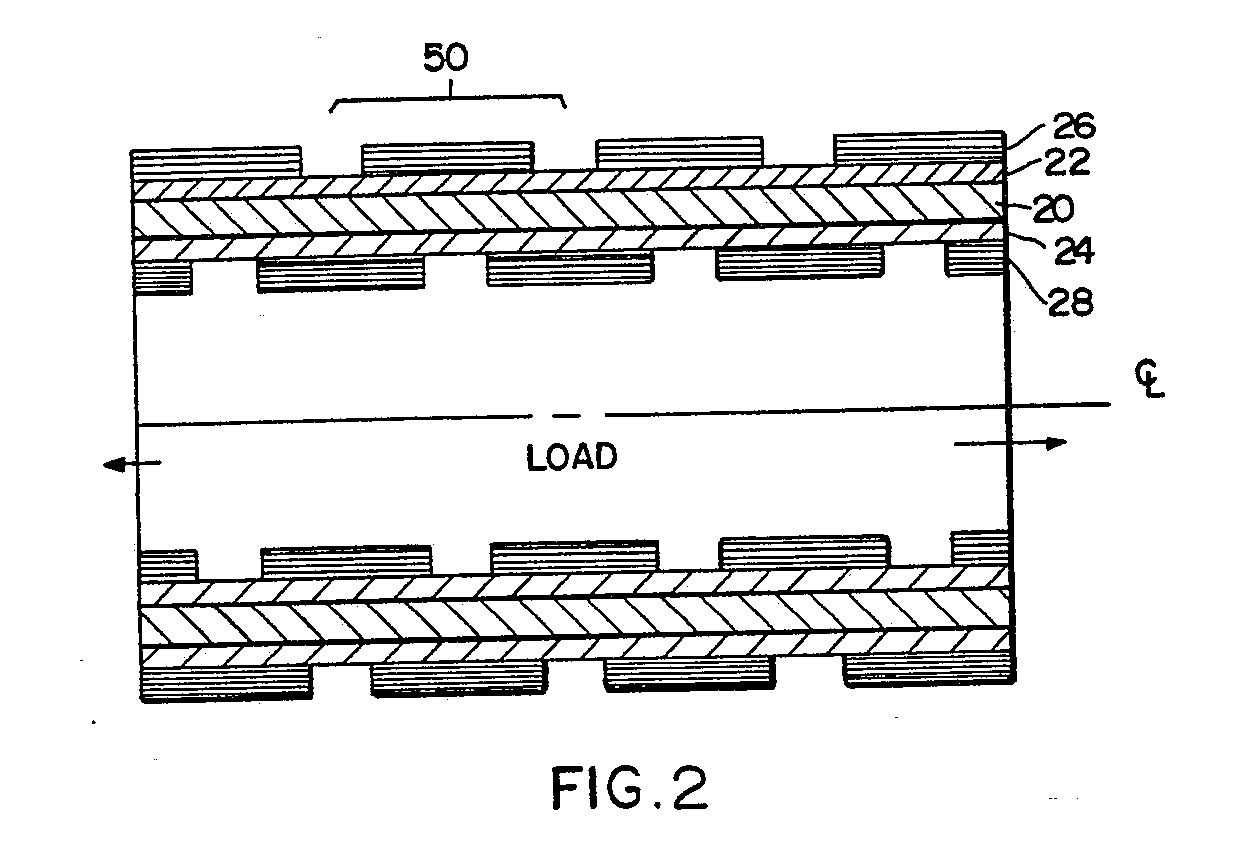
structure includes a viscoelastic layer (20), two segmented elastic layers (26, 28)
having strength and stiffness in a desired loading direction, and two additional
elastic layers (22, 24) having little strength and stiffness in the loading direction.
The segmented layers (26, 28) have alternating segments and gaps and are disposed
one on each side of the viscoelastic layer (20) in such a manner that the gaps of
one segmented layer overlap the segments of the other segmented layer. Dynamic loads
in the loading direction are transmitted back and forth from one segmented layer
(26, 28) to the other, through the additional elastic layers (22, 24) and the viscoelastic
layer (20), which thereby provides a high degree of damping. Static loads in the loading
direction are transmitted through the segmented and the additional elastic layers.
By appropriate selection of elastic materials, the structure can be made suitable
for the damping of axial or torsional loads. In the related method of manufacture,
the viscoelastic and elastic materials are all cured as one structure, but without
degradation of the viscoelastic layer.
|
|
