|
(11) | EP 0 395 258 A1 |

| (12) | EUROPEAN PATENT APPLICATION |
|
|
|
|
|||||||||||||||||||||||||||
| (54) | Process for preparing sulfurized branched alkyl phosphite lubricant additive |
| (57) A lubricant additive which provides improved copper corrosion life to lubricants,
such as gear oils, is prepared by reacting a sulfurized olefin with a branched chain
dialkyl hydrogen phosphite and an amine at a temperature of from 45° to 75°C. |
[0001] This invention relates generally to sulfurized antiwear lubricant additives and more specifically to such additives which provide improved copper corrosion life to lubricants and are prepared by reacting a sulfurized olefin, a branched chain dialkyl hydrogen phosphite and an amine at temperatures of from 45° to 75°C.
[0002] U.S. Patent 4,744,912 discloses antiwear/anticorrosion additives prepared by reacting a sulfurized olefin, a dialkyl hydrogen phosphite and an alkyl primary amine. Both straight and branched chain dialkyl phosphites are disclosed but it is alleged that a high reaction temperature (90°-130°C) is critical for achieving effective anticorrosion properties and examples, which employ only a straight chain dibutyl phosphite, are included to illustrate this.
[0003] U.S. Patent 4,752,416 discloses sulfurized compositions which are prepared from phosphite esters in which one alkyl group must be a straight chain and the other alkyl group must be a branched chain.
[0004] Unexpectedly, we have found that a lubricant additive which provides improved anticorrosion life properties to lubricants can be prepared at temperatures below those alleged to be critical in U.S. Patent 4,744,912 by using a dialkyl hydrogen phosphite in which both alkyl groups have a branched chain.
[0005] In accordance with this invention, there is provided a lubricant additive and its process of preparation comprising reacting a sulfurized olefin with a branched chain dialkyl hydrogen phosphite and an amine at a temperature of from 45° to 75°C. Also provided are lubricants comprising a major amount of an oil of lubricating viscosity and a minor antiwear/anticorrosion amount of such lubricant additive.
[0006] Sulfurized olefins useful in the invention are prepared from aliphatic monoolefins which contain from 2 to 8 carbon atoms, preferably 3 to 6 carbon atoms and most preferably isobutylene. The sulfurized olefins can be prepared as known in the art, for example, as described in U.S. Patents 4,204,969 and 4,563,302. Preferably the sulfurized olefins contain from 40 to 50 weight percent sulfur.
[0007] Suitable dialkyl hydrogen phosphites are those in which the alkyl groups are branched and contain from 3 to 20 carbon atoms and preferably 4 to 8 carbon atoms. Illustrative compounds of this type include di-isopropyl hydrogen phosphite, di-isobutyl hydrogen phosphite, di-secondary-butyl hydrogen phosphite, di-neopentyl hydrogen phosphite, di-(2-ethylhexyl) hydrogen phosphite, di-(2,6-di-methylheptyl) hydrogen phosphite, di-(2-methylheptyl) hydrogen phosphite and di-(2,2,4-trimethylpentyl) hydrogen phosphite. The compounds can be prepared as known in the art, for example, by reacting phosphorus trichloride with a branched chain alkyl alcohol. Such phosphite esters can be represented by the formula:
where R¹ and R² are, independently, branched chain alkyl groups having 3 to 20 carbon atoms.
[0008] The esters having mixed alkyl groups are prepared, for example, by reacting phosphorous acid with the desired mixture of branched chain alcohols.
[0009] The alkyl groups can be substituted with non-hydrocarbon substituents which do not alter the predominantly hydrocarbon character of the groups such as halo, hydroxy, nitro, cyano, alkoxy, or acyl.
[0010] Amines useful in the invention include saturated or unsaturated hydrocarbyl amines represented by the formula:
HNR₃R₄
where R₃ can be hydrogen and R₃ and R₄ can be independently selected from alkyl, cycloalkyl, or alkenyl radicals, including substituted moieties thereof substituted with non-hydrocarbon substituents which do not alter the predominantly hydrocarbon character of the groups such as halo, hydroxy, nitro, cyano, alkoxy, or acyl, having 1 to 30 carbon atoms. Preferred are primary alkyl or alkenyl amines having 4 to 22 carbon atoms such as, for example, n-butylamine, n-hexylamine, n-octylamine, n-dodecylamine, n-octadecylamine, oleylamine, 2-ethyl-n-hexylamine, t-butylamine, and t-octylamine. Mixtures of such amines as well as commercially available mixed amines can also be used such as those derived from natural products, e.g., cocoamine and tallow amine, which comprise various mixtures of amines containing from 12 to 22 carbon atoms, i.e. C₁₂-C₁₄, C₁₆-C₁₈ and C₁₆-C₂₂ mixtures. Cycloalkyl amines preferably have 4 to 6 carbon atoms in the ring. Examples of such compounds include cyclohexylamine, aminomethylcyclohexane, cyclobutyl amine, and cyclopentyl amine.
[0011] The ingredients are reacted in amounts of from 60 to 90 weight percent sulfurized olefin, 5 to 20 weight percent phosphite and 5 to 20 weight percent amine based on the total weight of reactants (preferred 70-85 weight percent sulfurized olefin, 5 to 15 weight percent phosphite and 5 to 15 weight percent amine). The improved products of the invention can be prepared at temperatures of from 45° to 75°C. Higher temperatures are unnecessary. Preferred temperatures range from 50°-65°C. The reaction times will vary, depending upon the temperature and total amount of reactants, from a few minutes to 4 hours or more. Usually times of from 30 minutes to 2 hours are sufficient when using the preferred temperatures.
[0012] The products of the invention are added to lubricant compositions such as lubricating oils and greases in amounts which are effective to provide the necessary antiwear/anticorrosion life properties to the lubricant. In general, amounts of from 0.05 to 20 weight percent, preferred 0.2 to 10 weight percent, based on the weight of lubricant composition are effective. The products are useful in lubricant formulations which also contain conventional oil additive ingredients such as, for example, dispersants such as alkenylsuccinimides, soaps or detergents such as neutral or overbased alkaline earth metal alkylaryl sulfonates, demulsifiers such as poly(oxyethylene-propylene) block polymers, antifoam agents such as polydimethyl silicons or polyethyl-octyl acrylates, antioxidants such as dialkyl diphenyl amines or hindered phenols, metal deactivators such as thiadiazoles, antiwear agents or friction reducers such as sulfurized fatty esters, alkyl phosphates or long chain amides, amines or dimer acid esters, rust or corrosion inhibitors such as benzotriazoles, and viscosity index improvers such as polymethacrylate or ethylene-propylene copolymers.
[0013] The lubricants include a major portion of a base oil of any suitable lubricating viscosity range, such as 50 to 6,000 SUS at 38°C (100°F) and preferably 30 to 250 SUS at 99°C (210°F), which can be either a mineral oil or a synthetic oil such as olefin oligomers or synthetic esters such as the alkyl esters of dicarboxylic acid and fatty acid esters of polyols. The additives of the invention are particularly useful in gear oil formulations. Finished gear oil lubricants generally have viscosities in the range of from 250 to 2,500 SUS at 38°C.
[0014] The additives of the invention are usually formulated and sold as additive concentrates which contain 30 to 70 weight percent additive based on the total weight of concentrate which also can contain 10 to 50 weight percent diluent oil and 0 to 60 weight percent of other conventional oil additive ingredients which preferably include from 1 to 5 weight percent of total concentrate of metal deactivators.
[0015] The invention is further illustrated by, but is not intended to be limited to, the following examples wherein parts are parts by weight unless otherwise indicated.
Example 1
[0016] Sulfurized isobutylene, 123 grams, containing about 46 weight percent sulfur; di-isobutyl hydrogen phosphite, 16.36 grams; C₁₆-C₁₈ mixed primary amine, 20.36 grams; n-octyl amine 1.82 grams; tolyltriazole, 0.18 grams; and #5 process oil, 4.74 grams were mixed and heated with stirring at 63° to 67°C for 30 minutes. Tolyltriazole is a corrosion inhibitor which does not interfere with the reaction.
Example 2
[0017] Example 1 was repeated except that the diisobutyl hydrogen phosphite was replaced with 25.8 grams of di-isooctyl hydrogen phosphite.
[0018] Fully formulated gear oil additives containing the total products of Examples 1 and 2 were prepared which included 3.18 grams of the metal deactivator, 2-alkyldithio-5-mercapto-1,3,4-thiadiazole, an additional 18.16 grams of #5 process oil and other ingredients including anti-wear, demulsifier, defoamer, and rust inhibitor materials. The additives were stored at 55°C. Beginning on the eighth day, samples were removed and evaluated in the ASTM D-130 Copper Corrosion Test along with a similar additive prepared using a reaction product of amine, sulfurized isobutylene and di-n-butyl phosphite, prepared according to the process of Example 1, for comparison purposes. The results are given in Table I below.
TABLE I
| ASTM D-130 | |||
| COPPER CORROSION | |||
| Days Stored at 55°C | Comparison (n-butyl) | Example 1 (isobutyl) | Example 2 (isooctyl) |
| 8 | 1b | 1b | 1b |
| 9 | 1b | 1b | 1b |
| 10 | 1b | 1a | 1a |
| 11 | 2b | 1b | 1b |
| 12 | 2a | 1b | 1b |
| 13 | 2c | 1b | 1b |
| 14 | 2b | 1b | 1b |
| 15 | 2b | 1b | 1b |
| 16 | 2b | 1b | 1b |
| 17 | 2c | 1b | 1b |
| 18 | 2c | 1b | 1b |
| 19 | 2c | 1b | 1b |
| 20 | 2c | 1b | 1b |
| 22 | 3b | 2b | 2c |
| 26 | 2c | 2c | 2c |
[0019] The 55°C temperature accelerates the deterioration of the additive and products giving test results of 1b or better are considered to be stable. The results of the test show that the products prepared from the branched alkyl phosphites gave additives having significantly better copper corrosion test life (20 vs 10 days at 55°C) compared to the straight chain alkyl phosphite product.
Example 3
[0020] Sulfurized isobutylene, 92.25 grams, containing about 46 weight percent sulfur; di-neopentyl hydrogen phosphite, 14.04 grams; C₁₆-C₁₈ mixed primary amine, 15.27 grams; n-octylamine 1.37 grams; tolyltriazole 0.13 grams; and #5 process oil, 3.55 grams were mixed and heated with stirring at 65°C for 30 minutes.
[0021] Fully formulated gear oil additives were prepared using the product of Example 3 and, for comparison purposes, a product made by the process of Example 3 except that the di-neopentyl hydrogen phosphite was replaced with 12.27 grams of di-n-butyl phosphite. The additives contained 2.39 grams of 2-alkyldithio-5-mercapto-1,3,4-thiadiazole and 13.62 grams of additional #5 process oil along with antiwear, demulsifier, defoamer and rust inhibitor materials. The additives were stored at 55°C and evaluated in the ASTM D-130 Copper Corrosion Test. The results are given in Table II below. The product prepared with di-neopentyl phosphite gave a 1b or better result for 21 days vs 9 days for the di-n-butyl phosphite.
TABLE II
| ASTM D-130 | ||
| COPPER CORROSION | ||
| Days Stored at 55°C | Comparison | Example 3 |
| Alkyl Phosphite Used | n-butyl | neo-pentyl |
| Initial | 1b | 1a |
| 8 | 1b | 1a |
| 9 | 1a | 1a |
| 10 | 2c | 1b |
| 11 | 2c | 1b |
| 14 | 3b | 1b |
| 15 | 2b | 1b |
| 16 | 2c | 1b |
| 17 | 2c | 1b |
| 18 | 2c | 1a |
| 19 | 2c | 1b |
| 20 | 3b | 1b |
| 21 | 2c | 1b |
| 22 | 3b | 2c |
| 23 | 3b | 2c |
Example 4
[0022] This example demonstrates the effect of using the products of the invention with different amounts of metal deactivator.
[0023] 4a. Sulfurized isobutylene, 61.5 grams, containing about 46 weight percent sulfur; di-isobutyl hydrogen phosphite, 8.18 grams; C₁₆-C₁₈ mixed primary amine, 10.18 grams; n-octylamine 0.91 grams; tolythiazole, 0.09 grams; and #5 process oil, 2.37 grams were mixed and heated for 30 minutes at 65°C with stirring. A fully formulated gear oil additive was prepared from the product. The additive contained 1.54 weight percent of 2-alkyldithio-5-mercapto-1,3,4-thiadiazole.
[0024] 4b and 4c. The procedure described in Example 4a was repeated to prepare two additives which varied in composition only with respect to metal deactivator content which was 1.04 weight percent in Example 4b and 0.54 weight percent in Example 4c.
[0025] A comparison sample was prepared using di-n-butyl phosphite using the same processing conditions and the same proportions of ingredients to provide an additive concentrate containing 1.54 weight percent metal deactivator. Twice as much sample was prepared compared to Example 4. The additives were stored at 55°C and the results of ASTM D-130 testing of each additive are given in Table III.
TABLE III
| ASTM D-130 | ||||
| COPPER CORROSION | ||||
| Days Stored at 55°C | Comparison | Example 4A | Example 4B | Example 4C |
| Alkyl Phosphite Used | n-butyl | isobutyl | isobutyl | isobutyl |
| Wt. % Metal Deactivator | 1.54 | 1.54 | 1.04 | 0.54 |
| 6 | 1b | 1b | 1a | 1a |
| 7 | 1b | 1a | 1a | 1a |
| 8 | 1b | 1b | 1b | 1b |
| 9 | 1b | 1b | 1b | 2a |
| 10 | 1b | 1b | 1b | 1b |
| 11 | 2c | 1b | 1b | 3b |
| 12 | 2c | 1b | 1b | 3b |
| 13 | 3b | 1b | 1b | 3a |
| 17 | N/R* | 1b | 1b | 3b |
| 20 | N/R | 1b | 1b | 3b |
| *N.R = analysis not run |
[0026] The results reported in Table III show that metal deactivator levels can be significantly reduced, i.e. from 1.54 weight percent to 1.04 weight percent while achieving even better copper corrosion life results and to 0.54 weight percent while achieving at least equivalent copper corrosion life results by using the branched chain dialkyl phosphite additive rather than the straight chain dialkyl phosphite. A better product, therefore, can be obtained at over-all cost savings.
1. A lubricant additive prepared by reacting a sulfurized olefin with a branched chain
dialkyl hydrogen phosphite and an amine at a temperature of from 45° to 75°C.
2. A lubricant additive according to claim 1 wherein the reactants are present in
proportions of from 60 to 90 weight percent sulfurized olefin, from 5 to 20 weight
percent branched chain dialkyl hydrogen phosphite and from 5 to 20 weight percent
amine based on the total weight of said reactants.
3. A lubricant additive according to claim 1 or 2 wherein the sulfurized olefin is
a sulfurized olefin prepared from a aliphatic monoolefin which contains from 2 to
8 carbon atoms, the branched chain dialkyl phosphite is represented by the formula:
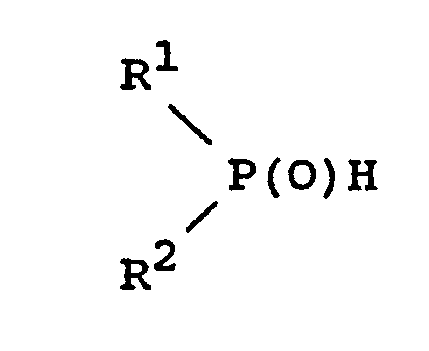
where R¹ and R² are, independently, branched chain alkyl groups having 3 to 20 carbon atoms, and the amine is represented by the formula HNR₃R₄ where R₃ can be hydrogen and R₃ and R₄ can be independently selected from the group consisting of alkyl, cycloalkyl, and alkenyl radicals having 1 to 30 carbon atoms.
where R¹ and R² are, independently, branched chain alkyl groups having 3 to 20 carbon atoms, and the amine is represented by the formula HNR₃R₄ where R₃ can be hydrogen and R₃ and R₄ can be independently selected from the group consisting of alkyl, cycloalkyl, and alkenyl radicals having 1 to 30 carbon atoms.
4. A lubricant additive according to claim 3 wherein the sulfurized olefin is prepared
from isobutylene, the branched chain dialkyl hydrogen phosphite is either di-isobutyl
hydrogen phosphite, di-isooctyl hydrogen phosphite or di-neopentyl hydrogen phosphite,
and the amine comprises a mixture of primary alkyl and alkenyl amines having from
12-22 carbon atoms.
5. A process for preparing a lubricant additive comprising reacting a sulfurized olefin
with a branched chain dialkyl hydrogen phosphite and an amine at a temperature of
from 45° to 75°C.
6. A process according to claim 5 wherein the reactants are present in proportion
of from 60 to 90 weight percent sulfurized olefin, from 5 to 20 weight percent branched
chain dialkyl hydrogen phosphite and from 5 to 20 weight percent amine based on the
total weight of said reactants.
7. A process according to claim 5 or 6 wherein the sulfurized olefin is a sulfurized
olefin prepared from a aliphatic monoolefin which contains from 2 to 8 carbon atoms,
the branched chain dialkyl phosphite is represented by the formula:
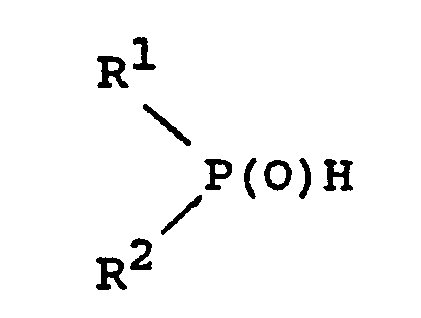
where R¹ and R² are, independently, branched chain alkyl groups having 3 to 20 carbon atoms, and the amine is represented by the formula HNR₃R₄ where R₃ can be hydrogen and R₃ and R₄ can be independently selected from the group consisting of alkyl, cycloalkyl, and alkenyl radicals having 1 to 30 carbon atoms.
where R¹ and R² are, independently, branched chain alkyl groups having 3 to 20 carbon atoms, and the amine is represented by the formula HNR₃R₄ where R₃ can be hydrogen and R₃ and R₄ can be independently selected from the group consisting of alkyl, cycloalkyl, and alkenyl radicals having 1 to 30 carbon atoms.
8. A process according to any of claims 5-7 wherein the temperature is from 50° to
65°C.
9. A lubricant composition comprising a major amount of an oil of lubricating viscosity
and a minor amount of the lubricant additive of any of claims 1-4.
10. A lubricant additive concentrate containing, based on the total weight of concentrate,
from 30 to 70 weight percent of the additive of any of claims 1-4 and from 10 to 50
weight percent of a diluent oil.