|
(11) | EP 0 397 407 B1 |

| (12) | EUROPEAN PATENT SPECIFICATION |
|
|
| (54) |
Lithographic plate finisher Endbearbeitungslösung für lithographische Platten Composition de finissage pour plaque lithographique |
|
|
|||||||||||||||||||||||||||||||
| Note: Within nine months from the publication of the mention of the grant of the European patent, any person may give notice to the European Patent Office of opposition to the European patent granted. Notice of opposition shall be filed in a written reasoned statement. It shall not be deemed to have been filed until the opposition fee has been paid. (Art. 99(1) European Patent Convention). |
BACKGROUND OF THE INVENTION
[0001] The present invention relates to finisher compositions for lithographic printing plates and in particular to emulsion-type or solution-type finisher compositions.
[0002] In the final process of making a lithographic printing plate, "gumming up" is conducted in which a finisher (so-called "gumming solution") is applied onto the surface of the lithographic printing plate in order to protect the non-image areas thereof. Such a gumming up step is performed for various purposes, for instance, for enhancing the hydrophilicity of the non-image areas of the lithographic printing plate; for preventing the deterioration of the printing plate during the storage of the plate prior to printing operations or during the interruption period of the printing operations; for preventing the contamination of the printing plate with the finger or hand grease or ink during handling the plate, which is often observed, for instance, when the plate is mounted to a printing press and hence for preventing the non-image areas of the plate from being made ink receptive; and for preventing possible defects from appearing on the non-image or image areas thereof during handling the same.
[0003] A conventional finisher for lithographic printing plates generally consists of an aqueous solution of gum arabic, cellulose gum or a water-soluble polymeric substance having a carboxyl group in the molecule. The aqueous solution may optionally comprise other additives such as a solvent, a surfactant, a pH-adjusting agent and a preservative.
[0004] However, it has been known that the use of such a conventionally known finisher provides various drawbacks. For instance, when a lithographic printing plate, which as been manufactured by imagewise exposing a presensitized plate for use in making a lithographic printing plate (hereunder referred to as "PS plate") and then developing the plate with an automatic developing machine, is directly desensitized without any pretreatment or a great number of PS plates are processed, the fatigued and deteriorated developer is carried ober to a bath for guming up step and the pH value of the finisher increases, and hence an uneven layer of the finisher is formed on the plate (insufficiency of the surface evenness). As a result, it becomes difficult, during printing, to adhere ink to the image areas to which a thick layer of the finisher is applied. For this reason, it takes a long period of time to obtain printed matters having a desired ink density. On the other hand, it is observed that the hydrophilicity is lowered in the non-image areas to which a thin layer of the finisher is applied. In this case, the non-image areas are easily contaminated and hence cause background contamination of printed matters.
[0005] Japanese patent application publication number JP-A-57-1792 discloses a liquid solution desensitiser for lithographic printing plates, including diazo-type PS plates, comprising an acetylenic alcohol and/or an acetylenic glycolin combination with conventional desensitisers. This combination is said to improve the wettability of the plate surface.
[0006] The inventors of this invention have conducted various studies with a view to overconing the above-mentioned disadvantages of the prior art. They have found out that when the surface of a lithographic printing plate is processed with a finisher composition which comprises an emulsion of a hardly water-soluble solvent, a water-soluble resin and an acetylene compound, not only are the non-image areas of the plate highly desensitized, but also the image areas thereof are not caused any reduction in in receptivity (i.e. incomplete adhesion of ink to the image areas during printing) even if large numbers of PS plates are processed. The present invention has been completed based on this finding.
[0007] The present invention provides a process of preparing a lithographic plate which comprises the steps of, in order, imagewise exposing to light a presensitised plate comprising an aluminium support having a lithographically suitable light-sensitive layer, developing the plate with a developing solution to remove either light-exposed or light-unexposed areas of the light-sensitive layer thereby obtaining a lithographic printing plate having a hydrophilic non-image area and a lipophilic image area and applying to the plate a finisher composition, characterised in that said finisher conposition is an emulsion having an oil phase comprising an organic solvent hardly soluble in water and an aqueous phase comprising water having dissolved therein a water-soluble and film-forming resin, and said finisher composition comprises an acetylene compound selected from an acetylene alcohol an acetylene glycol and an adduct of an alkylene oxide with said acetylene alcohol and/or said acetylene glycol. or acetylene glycol.
DETAILED EXPLANATION OF THE INVENTION
[0008] The finisher composition used in the present invention will hereunder be explained in more detail.
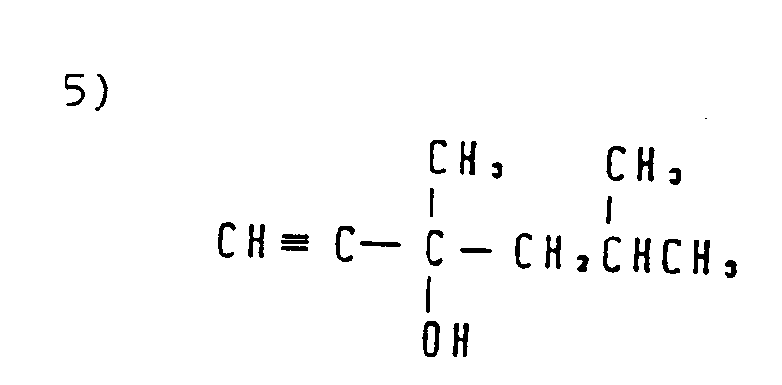
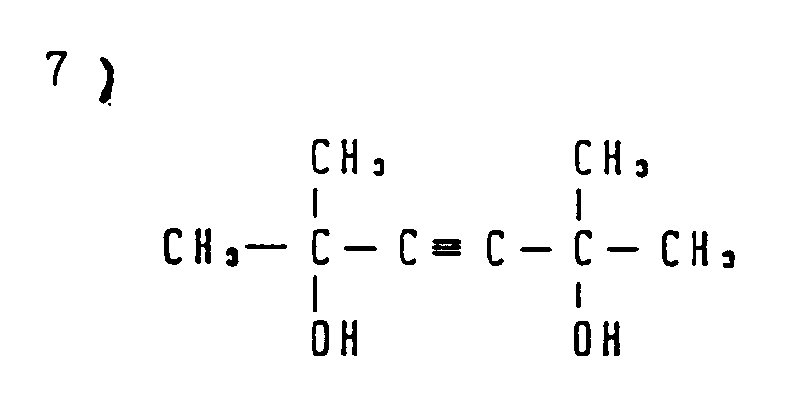
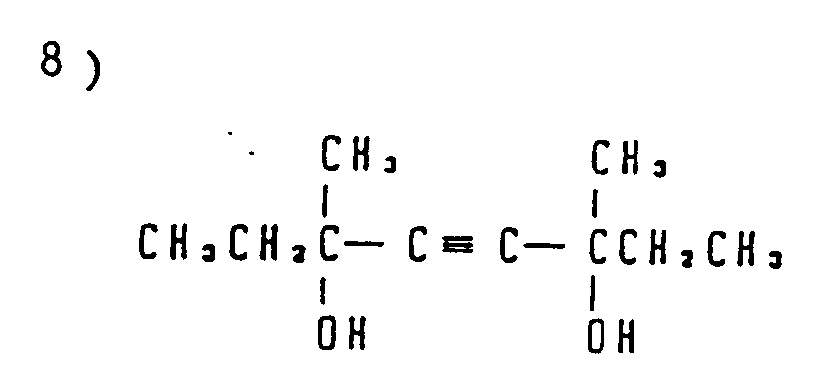
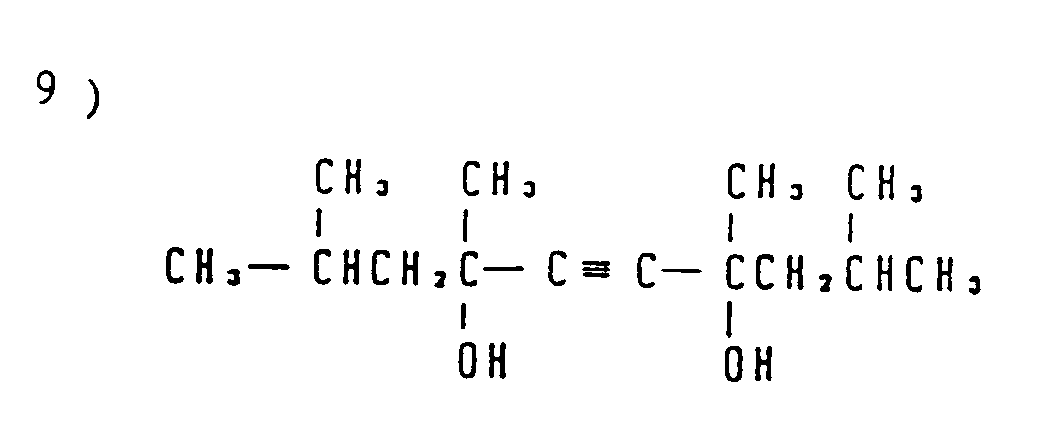
[0009] The acetylene alcohol usable in the present invention is unsaturated alcohols having an acetylene bond in the molecule and specific examples thereof include the following compounds listed below:
1) CH≡CCH₂OH
2) CH≡CCH₂CH₂OH
In addition, the acetylene glycol usable in the present ivention is unsaturated glycols having an acetylene bond in the molecule and specific examples thereof are those listed below:
6) HOCH₂C≡CCH₂OH
[0010] Moreover, an adduct of an alkylene oxide with the acetylene alcohol and/or acetylene glycol is also usable. Examples of the alkylene oxide is preferably ethylene oxide and propylene oxide and particularly preferred is ethylene oxide. The molar number of the alkylene oxide to be added to the alcohol and/or glycol is preferably not more than 30. Preferred examples of the adducts are ethylene oxide adduct of the foregoing compounds 7) and 9) (the molar number of ethylene oxide = 30).
[0011] The finisher composition comprises at least one compound selected from the group consisting of acetylene alcohols, acetylene glycols or alkylene oxide adducts thereof in an amount ranging from 0.01 to 10% by weight, preferably 0.05 to 3% by weight on the basis of the total weight of the finisher composition.
[0012] Specific examples of the preferred water-soluble resins having a film-forming ability are gum arabic, cellulose derivatives such as carboxymethyl cellulose, carboxyethyl cellulose and methyl cellulose and modified products thereof; polyvinyl alcohol and derivatives thereof; polyvinyl pyrrolidone, polyacrylamide and derivatives thereof, acrylic acid copolymers, vinyl methyl ether/maleic anhydride copolymers, vinyl acetate/maleic anhydride copolymers, styrene/maleic anhydride copolymers, roasted dextrin, enzyme-decomposed dextrin and enzyme-decomposed etherified dextrin. The particularly preferred water-soluble resin includes gum arabic, film-forming starches modified with phosphoric acid or its derivatives as described in U.S. Patent No. 4,719,172, film-forming hydroxyalkylated starch as described in U.S. Patent No. 4,762,772 and polybasic acid monoester derivative of starch described in U.S. Patent No. 4,840,875. These water-soluble resins having film-forming ability may be used alone or in combination in the composition of the invention.
[0013] The water-soluble resin is desirably used in an amount ranging from 3 to 25% by weight and preferably 10 to 25% by weight on the basis of the total weight of the finisher composition.
[0014] The finisher composition may further comprise a variety of surfactants such as anionic surfactants and/or nonionic surfactants. Specific examples of anionic surfactants are sulfuric acid ester salts of fatty acid alcohols, phosphoric acid ester salts of fatty acid alcohols, sulfonic acid salts of dibasic fatty acid esters, sulfonic acid salts of fatty acid amides, alkylarylsulfonic acid salts and formaldehyde-condensed naphthalenesulfonic acid salts. On the other hand, specific examples of the nonionic surfactants are polyethylene glycol alkyl ethers, polyethylene glycol alkyl esters, sorbitan alkyl esters and polyoxypropylene polyoxyethylene ethers. These surfactants may be used, alone or as a combination, in the finisher composition. The preferred combinations of surfactants are those described in U.S. Patent Nos. 4,268,613 and 4,348,954. The amount of thereof is not critical, but it preferably ranges from 0.01 to 10% by weight on the basis of the total weight of the composition.
[0015] It is in general advantageous that the finisher composition is used under an acidic condition, i.e., at a pH ranging from 3 to 6. The pH of the composition is adjusted by the addition, to the composition, of a pH-adjusting agent such as a mineral acid, an organic acid or an inorganic salt. The amount of the pH-adjusting agent suitably ranges from 0.01 to 2% by weight on the basis of the total weight of the composition. Specific examples of the organic acids are citric acid, acetic acid, oxalic acid, malonic acid, p-toluenesulfonic acid, tartaric acid, malic acid, lactic acid, levulinic acid and organic sulfonic acids. Specific examples of the useful mineral acids are nitric acid, sulfuric acid and phosphoric acid. Examples of the inorganic salts include water-soluble alkali metal salt and ammonium salt of nitric acid, phosphoric acid, sulfuric acid, molybdic acid, acetic acid, polyphosphoric acid and boric acid, such as sodium nitrate, potassium nitrate, ammonium nitrate, sodium dihydrogen phosphate, disodium hydrogen phosphate, potassium dihydrogen phosphate, dipotassium hydrogen phosphate, ammonium dihydrogen phosphate, diammonium hydrogen phosphate, sodium sulfate, potassium sulfate, ammonium sulfate, sodium molybdate, potassium molybdate, ammonium molybdate, sodium acetate, potassium acetate, ammonium acetate, sodium tripolyphosphate, sodium metaphosphate, sodium pyrophosphate, sodium borate and ammonium borate The pH-adjusting agent may be used, alone or as a combination, in the composition.
[0016] The finisher composition may optionally comprise a wetting agent such as a lower polyhydric alcohol, for instance, glycerin, ethylene glycol or triethylene glycol. The amount of the wetting agent suitably ranges from 0.1 to 5.0% by weight, preferably 0.5 to 3.0% by weight on the basis of the total weight of the composition.
[0017] In addition to the foregoing components, the finisher composition may comprise at least one preservative selected from the group consisting of benzoic acid and its derivatives, phenol, formalin, sodium dehydroacetate, 2-bromo-2-nitro-1,3-propanediol, 4-isothiazoline-3-ones and derivatives thereof in an amount ranging from 0.005 to 2.0% by weight of the composition.
[0018] The finisher composition may further comprise an anti-foaming agent. The preferred examples include organic silicone compounds. The amount thereof preferably ranges from 0.0001 to 0.1% by weight of the protecting composition.
[0019] The finisher composition comprises an organic solvent for preventing the reduction in the ink receptivity of the image areas. Examples of the preferred organic solvents which are hardly soluble in water, are solvents such as petroleum solvents having a boiling point ranging from about 120° C to about 250° C (e.g., solvent naphtha, xylene) and plasticizers having a solidification point not more than 15 ° C and a boiling point not less than 300 ° C (e.g., dibutyl phthalate, dioctyl adipate). Such organic solvents may be added to the present composition in an amount ranging from 0.05 to 5% by weight of the composition.
[0020] The finisher composition used in the present invention is in the form of an emulsion. In particular the emulsion type compositions containing the foregoing organic solvents can provide excellent properties. In this case, a surfactant is preferably added together with organic solvents as disclosed in Japanese Patent Un-examined Publication (hereunder referred to as "J.P. KOKAI") No. Sho 55-105581 (= U.S. Patent No. 4,268,613).
[0021] In the present invention the finisher composition is used for treating lithographic printing plates which are obtained by imagewise exposing, to light, a light-sensitive lithographic plate which comprises an aluminum plate as a substrate and a light-sensitive layer thereon (a PS plate), and then developing the exposed PS plate.
[0022] The PS plates comprise a substrate having a hydrophilic surface and a light-sensitive layer of a lithographically suitable light-sensitive composition applied on the substrate. Examples of such light-sensitive compositions are those comprising diazo compounds; those containing azido compounds as disclosed in British Patent Nos. 1, 235,281 and 1,495,861; those comprising photocross linkable photopolymers as disclosed in U.S. Patent No. 3,860,426; those comprising photopolymerizable photopolymers as disclosed in U.S. Patent Nos. 4,072,528 and 4,072,527; photo-conductive compositions as disclosed in J.P. KOKAI Nos. Sho 56-19063 and Sho 56-29250; and silver halide emulsions as disclosed in J.P. KOKAI Nos. Sho 52-62501 and Sho 56-111852.
[0023] Among these light-sensitive compositions, those comprising diazo compounds are preferably used because of their totally excellent properties. For instance, they are excellent in storability of the light-sensitive layer; developing properties such as developing latitude; properties of images such as quality of images; printing properties such as ink receptivity and wear resistance; and they can be developed with a developer having a low probability of environmental pollution.
[0024] The light-sensitive compositions may be divided into two groups, i.e., negative-working and positive-working ones.
[0025] The negative-working light-sensitive compositions containing diazo compounds comprise light-sensitive diazo compounds and preferably polymeric compounds. As the light-sensitive diazo compounds, conventionally known ones may be employed and examples thereof preferably employed are organic solvent-soluble salts of diazo resins, such as salts of a condensate of p-diazodiphenylamine and formaldehyde or acetaldehyde, with hexafluorophosphoric acid salt, dodecylbenzene sulfonic acid salt or 2-hydroxy-4-methoxybenzophenone-5-sulfonic acid salt.
[0026] Examples of the polymeric compounds which are preferably employed are (meth)acrylic acid copolymers; crotonic acid copolymers; itaconic acid copolymers; maleic acid copolymers; cellulose derivatives having a carboxyl group at a side chain; polyvinyl alcohol derivatives having a carboxyl group at a side chain; hydroxyalkyl (meth)acrylic acid copolymers having a carboxyl group at a side chain as described in U.S. Patent No. 4,123,176; unsaturated polyester resins having a carboxyl group; sulfonamidephenyl (meth) acrylamide copolymers as described in J.P. KOKAI No. Sho 61-275838; and hydroxyphenyl (meth)acrylamide copolymers having a carboxyl group at a side chain as described in U.S. Patent No. 4,731,316.
[0027] As diazo compounds usable in the positive-working light-sensitive compositions, any conventionally known compounds may be used and typical examples thereof are o-quinonediazide compounds, preferably o-naphthoquinonediazide compounds. Among these, preferred are o-naphthoquinonediazide sulfonic acid esters or o-naphthoquinonediazide carboxylic acid esters of a variety of hydroxyl compounds; and o-naphthoquinonediazide sulfonic acid amides or o-naphthoquinonediazide carboxylic acid amides of a variety of aromatic amine compounds. Examples of preferred hydroxyl compounds are resins obtained by condensing phenols with carbonyl group-containing compounds. Examples of such phenols are phenol, cresol, resorcin and pyrogallol and those of the carbonyl group-containing compounds are formaldehyde, benzaldehyde and acetone. Preferred hydroxyl compounds are, for instance, phenol/formaldehyde resins, cresol/formaldehyde resins, pyrogallol/acetone resins, and resorcin/benzaldehyde resins.
[0028] Typical examples of the o-quinonediazide compounds are esters of benzoquinone-(1,2)-diazide sulfonic acid or naphthoquinone-(1,2)-diazide sulfonic acid with phenol/formaldehyde resin or cresol/formaldehyde resin; esters of naphthoquinone-(1,2)-diazide-(2)-5-sulfonic acid with resorcin/benzaldehyde resins as disclosed in J.P. KOKAI No. Sho 56-1044; esters of naphthoquinone-(1,2)-diazide sulfonic acid with pyrogallol/acetone resins as disclosed in U.S. Patent No. 3,635,709; esters of naphthoquinone-(1,2)-diazide-(2)-5-sulfonic acid with resorcin/pyrogallol/acetone copolycondensates as disclosed in J.P. KOKAI No. Sho 55-76346. Other useful o-quinonediazide compounds are those obtained by esterifying polyesters having a hydroxyl group at an end with o-naphthoquinonediazidosulfonyl 1 chloride as disclosed in J.P. KOKAI No. Sho 50-117503; those obtained by esterifying homopolymers of p-hydroxystyrene or copolymers of the monomer and other copolymerizable monomers with o-naphthoquinonediazidosulfonyl chloride as disclosed in J.P. KOKAI No. Sho 50-113305; esters of bisphenol/formaldehyde resins with o-quinonediazidosulfonic acid as disclosed in J.P. KOKAI No. Sho 54-29922; condensates of alkyl acrylates, acryloyloxy alkyl carbonates and hydroxyalkyl acrylates with o-quinonediazidosulfonyl chloride as disclosed in U.S. Patent No. 3,859,099; reaction products of copolymerized products of styrene and phenol derivatives with o-quinonediazidosulfonic acid as disclosed in Japanese Patent Publication for Opposition Purpose (hereunder referred to as "J.P. KOKOKU") No. Sho 49-17481; amides of copolymers of p-aminostyrene with other monomers copolymerizable therewith and o-naphthoquinonediazidos ulfonic acid or o-naphthoquinonediazidocarboxylic acid as disclosed in U.S. Patent No. 3,759,711 ; and ester compounds of polyhydroxy benzophenones with 0-naphthoquinonediazidosulfonyl chloride.
[0029] Although these o-quinonediazido compunds may be used alone, but preferably in combination with an alkali-soluble resin. Examples of such preferred alkali-soluble resins are novolak type phenol resins. The specific examples are phenol/formaldehyde resins, cresol/formaldehyde resins, and phenol/cresol/formaldehyde copolycondensed resins as disclosed in J.P. KOKAI No. Sho 55-57841. Moreover, it is more preferable to use the foregoing phenol resins in combination with condensates of phenol or cresol substituted with alkyl groups having 3 to 8 carbon atoms with formaldehyde such as t-butyl phenol/formaldehyde resins as disclosed in J.P. KOKAI No. Sho 50-125806 (= U.S. Patent No. 4,123,279).
[0030] Further, the light-sensitive composition may optionally comprise alkali-soluble resins other than the aforementioned alkali-soluble novolak type phenol resins. Examples of such alkali-soluble resins are styrene/acrylic acid copolymers; methyl methacrylate/methacrylic acid copolymers; alkali-soluble polyurethane resins; and alkali-soluble vinyl resins and alkali-soluble polybutyral resins as disclosed in J.P. KOKOKU No. Sho 52-28401.
[0031] The amount of these o-quinonediazido compounds preferably ranges from 5 to 80% by weight, and more preferably 10 to 50% by weight on the basis of the total weight of the solid contents of the light-sensitive composition. On the other hand, that of the alkali-soluble resins preferably ranges from 30 to 90% by weight and more preferably 50 to 85% by weight on the basis of the total weight of the solid contents of the light-sensitive composition.
[0032] The light-sensitive layer may be in a monolayer or multi layer structure. In addition, the layer may comprise other additives such as dyes, plasticizers and components which can impart printing out properties to the light-sensitive layer.
[0033] The amount of the light-sensitive layer to be applied to the surface of a substrate preferably ranges from 0.1 to 7 g/m², more preferably 0.5 to 4 g/m² (on dry basis).
[0034] An underlying layer may optionally be applied between the substrate and the light-sensitive layer. The underlying layer is composed of, for instance, a combination of a metal salt with a hydrophilic cellulose as disclosed in J.P. KOKOKU No. Sho 57-16349 (= U.S. Patent No. 3,860,426); polyvinyl phosphonic acids as disclosed in J.P. KOKOKU No. Sho 46-35685 (= U.S. Patent No. 4,153,461); β-alanine as disclosed in J.P. KOKAI No. Sho 60-149491 (=U.S. Patent No. 4,801,527); triethanolamine hydrochloride as disclosed in J.P. KOKOKU No. Sho 60-232998 (= U.S. Patent No. 4,801,527); or a polymer having a sulfonic acid group at a side chain as described in U.S. Patent No. 4, 578,342.
[0035] Examples of substrates suitably for the PS plates are aluminum plates (inclusive of aluminum alloy plates), paper, plastic films such as polyethylene, polypropylene, polyethylene terephthalate, cellulose diacetate, cellulose triacetate, cellulose propionate, polyvinyl acetal and polycarbonate films; and composite substrate comprising metal plates which are laminated with an aluminum foil or to which an aluminum layer is deposited.
[0036] The aluminum plate is preferably surface-roughened for the purposes of enhancing the water retention and of improving the adhesion between the aluminum plate and the light-sensitive layer applied thereon.
[0037] Examples of such surface-roughening treatments include those generally known in the art such as brush graining, ball graining, electrolytic etching, chemical etching, liquid honing, sand blasting and combination thereof. Preferred suface-roughening treatments are those comprising electrolytic etching treatment. As an electrolytic bath usable in the electrolytic etching, there may be used, for instance, aqueous solutions containing acids, alkalis or their salts or aqueous solutions containing organic solvents, in particular electrolytes containing hydrochloric acid, nitric acid or their salts. The surface-roughened aluminum plate is optionally desmutted with an aqueous solution of an acid or an alkali. The aluminum plate thus treated is desirably anodized and preferably anodized in a bath containing sulfuric acid or phosphoric acid. Moreover, it is also possible to perform a sealing treatment and a surface treatment which comprises, for instance, dipping the plate in an aqueous solution of potassium fluorozirconate.
[0038] The method for using the finisher composition of the present invention will hereunder be explained specifically with reference to an example in which a PS plate is used, but the scope of the present invention is not restricted to such a specific embodiment.
[0039] First of all, a PS plate is imagewise exposed to light and then developed to give a lithographic printing plate.
[0040] A developer usable in the foregoing development is an alkaline solution whose principal solvent is water. The developer optionally comprises additives such as organic solvents, anionic surfactants and inorganic salts in addition to an alkaline agent.
[0041] Specific examples of the alkaline agents which are advantageously employed include inorganic alkaline agents such as sodium silicate, potassium silicate, potassium hydroxide, sodium hydroxide, lithium hydroxide, sodium tertiary phosphate, sodium bicarbonate, sodium carbonate, potassium carbonate and ammonium carbonate; or organic alkaline agents such as mono-, di or triethanolamine and propanolamine. These alkaline agents may be used alone or as a combination, and the amount thereof used in the developer preferably ranges from 0.05 to 4% by weight and more preferably 0.1 to 2% by weight.
[0042] Examples of useful organic solvents are alcohols such as n-propyl alcohol and benzyl alcohol; and glycol ethers such as phenyl cellosolve. The organic solvents are added to the developer preferably in an amount ranging from 0.5 to 15% by weight and more preferably 1 to 5% by weight.
[0043] Examples of anionic surfactants include alkylsulfuric acid ester salts such as sodium laurylsulfate; alkylarylsulfonic acid salts such as sodium dodecylbenzenesulfonate; sulfonic acid salts of dibasic fatty acid esters such as sodium di-(2-ethylhexyl)sulfosuccinate; alkylnaphthalenesulfonic acid salts such as sodium n-butylnaphthalene -sulfonate; and polyoxyethylene alkyl(phenol) ether sulfates and in particular alkylnaphthalenesulfonic acid salts such as sodium n-butylnaphthalenesulfonate are suitably used. The amount of the anionic surfactants in the developer preferably ranges from 0.1 to 5% by weight and more preferably 0.5 to 1.5% by weight.
[0044] Examples of inorganic salts are water-soluble alkali metal or alkaline earth metal salts of inorganic acids such as phosphoric acid, silicic acid, carbonic acid and sulfurous acid and, particularly preferred are alkali and alkaline earth metal salts of sulfurous acid. The amount of these inorganic salts in the developer in general ranges from 0.05 to 5% by weight and preferably 0.1 to 1% by weight.
[0045] It is also advantageous that the developer further comprises other additives such as antifoaming agents and lubricants, if necessary.
[0046] The imgewise exposed PS plate can be developed with the foregoing developer in various known manners. Specific examples of methods for developing the imagewise exposed PS plate include a method comprising dipping the PS plate in a developer; a method comprising spraying a developer on the light-sensitive layer of the PS plate through a plurality of nozzles; a method comprising rubbing the light-sensitive layer of the PS plate with a sponge containing a developer; and a method comprising applying a developer to the surface of the light-sensitive layer of the PS plate with a roller.
[0047] The resulting lithographic printing plate thus developed is washed with water, the water is squeezed from the surface of the PS plate, then a proper amount of the finisher composition of the present invention is poured onto the plate surface. Then, the plate surface is rubbed with a sponge so that the protecting composition is uniformly distributed throughout the plate surface. As a result, the non-image areas of the plate surface can be protected and hence the lithographic printing plate can stably stored.
[0048] As a method for applying the finisher composition, for example, the following methods are employed: applying the finisher composition to the resulting lithographic printing plate after the development and water washing by use of an automatic gumming machine; supplying it to the printing plate immediately after the development without water washing; and applying it to the printing plate after water washing with a small amount of water or after rinsing with a rinse solution containing a surfactant such as those described in U.S. Patent No. 4,291,117 by use of an automatic gumming machine. In particular the protecting composition of the present invention is effectively used for gumming treatments carried out immediately after the development.
[0049] The lithographic printing plate is in general washed with water, prior to the printing operation to remove the gum on the plate surface (so-called degumming step) and then printing is performed in a conventional manner. However, the finisher composition of the present invention makes it possible to directly perform the printing operation without carrying out such a degumming step. Moreover, the composition of the present invention further makes it possible to provide acceptable clear printed matters immediately after the initiation of the printing operation without providing a great number of unacceptable printed matters as usually observed in the conventional gumming compositions and to maintain a high hydrophilicity of the non-image areas. Thus, the composition of the present invention can provide good printed matters free of background contamination.
[0050] The present invention will be explained in more detail with reference to the following non-limitative working Examples, and the effects practically achieved by the invention will also be discussed in detail in comparison with Comparative Examples.
[0051] In the following Examples and Comparative Examples, the term "part" means "part by weight" unless otherwise specified.
Example 1 and Comparative Example 1
[0052] 200 Parts of cream dextrin (roasted dextrin) were dissolved in 620 parts of pure water while stirring and heating at 70 °C. Then 100 parts of a gum arabic aqueous solution having a concentration of 14 ° Be were added. Further, 4 parts of phosphoric acid (85%) and 2 parts of magnesium nitrate were dissolved in the solution and then 20 parts of glycerin as a wetting agent were also dissolved therein to give an aqueous phase. Separately, 10 parts of 2-ethyl-1,3-hexanediol, 18 parts of 2,4,7,9-tetramethyl-5-decyne-4,7-diol, 15 parts of polyoxyethylene nonylphenyl ether (available from Kao Atlas Co., Ltd. under the trade name of EMULGEN #903) and sorbitan monooleate (available from Kao Atlas Co., Ltd. under the trade name of SPAN-80) were uniformly mixed and dispersed therein to give an oil phase.
[0053] The aqueous phase prepared above was stirred and heated so that the temperature thereof was held at 40° C, the foregoing oil phase was slowly dropwise added to the aqueous phase to obtain a dispersion. The dispersion was homogenized to give an opaque white emulsion type finisher composition (Ex. 1). On the other hand, the same procedures used above were repeated except that the same amount of sodium dialkylsulfo-succinic acid ester was used in place of 2,4,7,9-tetramethyl-5-decyne-4,7-diol to thus give a finisher composition (Comp. Ex. 1)
[0054] An aluminum plate having a thickness of 0.24 mm was immersed in a 6% aqueous solution of sodium tertiary phosphate maintained at 60 ° C to degrease the plate, washed with water and grained by pouring an aqueous suspension of pumice stone onto the plate surface while the surface was rubbed with a nylon brush. After water washing, the plate was immersed in a 5% aqueous solution of potassium silicate (molar ratio, SiO₂/K₂O, = 2.0) maintained at 65° C for 60 seconds, sufficiently washed with water, and then dried.
[0055] A PS plate was prepared by applying to the surface of the aluminum plate thus treated, a light-sensitive composition which comprised 2.0 parts of 2-hydroxymethyl methacrylate copolymer (prepared as disclosed in Example 1 of British Patent No. 1,505,739), 0.112 part of 2-methoxy-4-hydroxy-5-benzoylbenzenesulfonic acid salt of a condensate of p-diazodiphenylamine with paraformaldehyde, 0.03 part of Oil Blue #603 (available from ORIENT CHEMICAL INDUSTRIES, LTD.), 15 parts of 2-methoxyethanol, 10 parts of methanol and 5.0 parts of ethylene chloride. The coated amount of the light-sensitive composition was 1.5 g/m² (on dry basis). The PS plate was imagewise exposed to light through a negative film carrying half-tone dot images, and then was developed and subjected to gumming up step with an automatic developing machine 800 EII (available from Fuji Photo Film Co., Ltd.) wherein the first bath had been filled with the following developer and the second bath had been filled with the foregoing finisher.
(Composition of Developer)
[0057] When lithographic printing plates were treated at a rate of 10 m²/ℓ , there was observed uneven coating on Sample A obtained using the finisher composition of Comp. Ex. 1, while no uneven coating was observed on Sample B obtained using the finisher composition of Ex. 1. Moreover, when printing was performed with Heidelberg KOR-D printing press in the usual manner, there was observed the presence of a region on a part of the image areas of Sample A, on which a delay of ink adhesion was observed and unacceptable printed matters of not less than 100 were required till acceptable complete printed matters were ensured. On the other hand, Sample B provided clear printed matters after printing only 10 to 20 copies. In addition, the non-image areas of Sample A were contaminated slightly easier than those of Sample B. This clearly shows that the finisher composition of the present invention can provide a lithographic printing plate excellent in ink receptivity of the image areas and in desensitizing ability of the non-image areas.
1. A process of preparing a lithographic plate which comprises the steps of, in order,
imagewise exposing to light a presensitised plate comprising an aluminium support
having a lithographically suitable light-sensitive layer, developing the plate with
a developping solution to remove either light-exposed or light-unexposed areas of
the light-sensitive layer thereby obtaining a lithographic printing plate having a
hydrophilic non-image area and a lipophilic image area and applying to the plate a
finisher composition, characterised in that said finisher composition is an emulsion
having an oil phase comprising an organic solvent hardly soluble in water and an aqueous
phase comprising water having dissolved therein a water-soluble and film-forming resin,
and said finisher composition comprises an acetylene compound selected from an acetylene
alcohol, an acetylene glycol and an adduct of an alkylene oxide with said acetylene
alcohol and/or said acetylene glycol.
2. A process according to Claim 1, wherein said finisher composition comprises at least
one surfactant selected from sulfuric acid ester salts of fatty acid alcohols, phosphoric
acid ester salts of fatty- acid alcohols, sulfonic acid salts of dibasic fatty acid
esters, sulfonic acid salts of fatty acid amides, alkylarylsulfonic acid salts, formaldehyde-condensed
naphthalenesulfonic acid salts, polyethylene glycol alkyl ethers, polyethylene glycol
alkyl esters, sorbitan alkyl esters and polyoxypropylene polyoxyethylene ethers.
3. A process according to Claim 2, wherein the amount of said surfactant is in the range
of from 0.01 to 10% by weight based on the total weight of the finisher composition.
4. A process according to any one of claims 1 to 3, wherein said finisher composition
further comprises a pH-adjusting agent to adjust the pH of the composition ranging
from 3 to 6.
5. A process according to any one of Claims 1 to 4, wherein said finisher composition
further comprises a lower polyhydric alcohol in an amount of from 0.1 to 5% by weight
based on the total weight of the composition.
6. A process according to any one of Claims 1 to 5, wherein said organic solvent is selected
from petroleum solvent having a boiling point ranging from about 120°C to about 250°C
and plasticizers having a solidification point of not more than 15°C and a boiling
point of not less than 300°C, in an amount of from 0.05 to 5% by weight based on the
total weight of the finisher composition.
7. A process according to any one of Claims 1 to 6, wherein said acetylene alcohol is
selected from the compounds listed below:
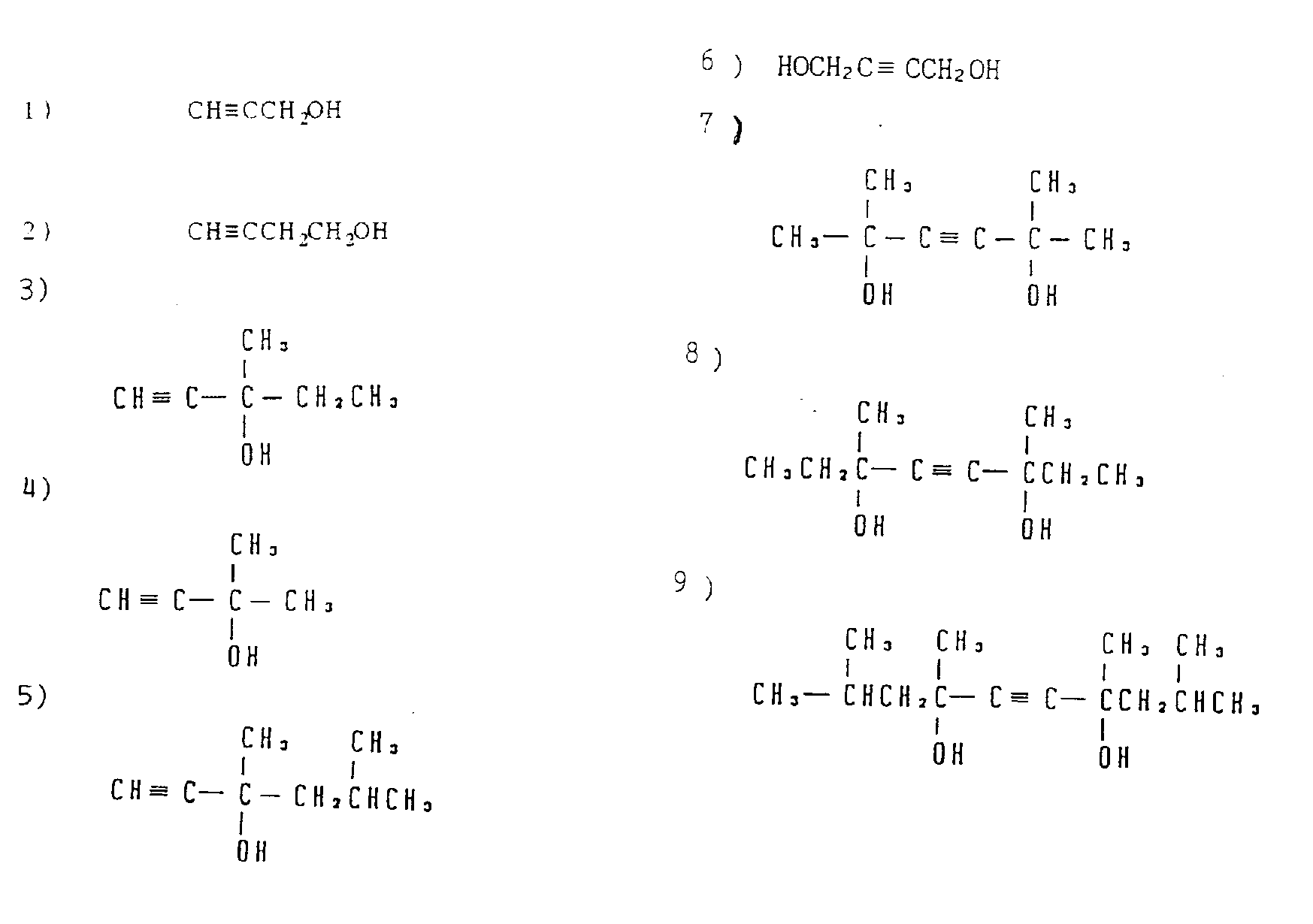
8. A process according to any one of Claims 1 to 7, wherein said alkylene oxide is ethylene
oxide.
9. A process according to any one of Claims 1 to 8, wherein said alkylene oxide is used
in an amount of not more than 30 moles per mole of said acetylene alcohol or acetylene
glycol.
10. A process according to any one of Claims 1 to 9, wherein the amount of said acetylene
alcohol said acetylene glycol or said adduct in said finisher composition ranges from
.01 to 10% by weight on the basis of the total weight of said finisher composition.
11. A process according to Claim 10, wherein the amount of said acetylene alcohol said
acetylene glycol or said adduct in said finisher composition ranges from 0.05 to 3%
by weight on the basis of the total weight of said finisher composition.
12. A process according to any one of Claims 1 to 11, wherein said water-soluble resin
having a film-forming ability is selected from gum arabic, cellulose derivatives and
modified products thereof; polyvinyl alcohol and derivatives thereof, polyvinyl pyrrolidone,
polacrylamide and derivatives thereof, acrylic acid copolymers, vinyl methyl ether/maleic
anhydride copolymers, vinyl acetate/maleic anhydride copolymers, styrene/maleic anhydride
copolymers, roasted dextrin, enzyme-decomposed dextrin and enzyme-decomposed etherified
dextrin.
13. A process according to any one of Claims 1 to 12, wherein the amount of said water-soluble
resin having a film-forming ability ranges from 3 to 25% by weight on the basis of
the total weight of said finisher composition.
14. A process according to Claim 13, wherein the amount of said water-soluble resin having
a film-forming ability ranges from 10 to 25% by weight on the basis of the total weight
of said finisher composition.
15. A process according to any one of Claims 1 to 14, wherein said lithobraphically suitable
light-sensitive layer comprises a light-sensitive diazo resin and a high polymer binder.
16. A process according to any one of Claims 1 to 14, wherein said lithographically suitable
light-sensitive layer comprises an o-naphthoquinone diazide compound and an alkali-soluble
resin.
17. A process according to any one of Claims 1 to 16, wherein said developing solution
is an aqueous alkaline solution comprising an alkali agent and water.
18. A process according to Claim 17 wherein said alkali agent is at least one selected
from sodium silicate, potassium silicate, potassium hydroxide, sodium hydroxide, lithium
hydroxide, sodium tertiary phosphate, sodium bicarbonate, sodium carbonate, potassium
carbonate, ammonium carbonate, mon-, di- and triethanolamines and propanolamine.
19. A process according to Claims 17 or 18 wherein said developing solution further comprises
at least one additive selected from an organic solvent, and anionic surfactant and
an alkali metal salt of sulfurous acid.
1. Verfahren zur Herstellung einer lithographischen Platte, welches der Reihe nach die
Schritte des bildweisen Lichtaussetzens einer einen Aluminiumträger mit einer lithographisch
geeigneten, lichtempfindlichen Schicht umfassenden, vorsensibilisierten Platte, des
Entwickelns der Platte mit einer Entwicklungslösung unter Entfernen entweder dem Licht
ausgesetzter oder dem Licht nicht ausgesetzter Flächen der lichtempfindlichen Schicht,
wodurch eine lithographische Druckplatte mit einer hydrophilen Nichtbildfläche und
einer lipophilen Bildfläche erhalten wird, und des Aufbringens einer Endbehandlungszusammensetzung
auf die Platte umfaßt, dadurch gekennzeichnet, daß die Endbehandlungszusammensetzung
eine Emulsion mit einer Ölphase, welche ein in Wasser schwerlösliches organisches
Lösungsmittel umfaßt, und eine wäßrigen Phase, welche Wasser mit einem darin gelösten
wasserlöslichen und filmbildenden Harz umfaßt, ist, und die Endbehandlungszusammensetzung
eine aus einem Acetylenalkohol, Acetylenglykol und einem Addukt eines Alkylenoxids
mit dem Acetylenalkohol und/oder dem Acetylenglykol ausgewählte Acetylenverbindung
umfaßt.
2. Verfahren gemäß Anspruch 1, bei welchem die Endbehandlungszusammensetzung wenigstens
ein aus Schwefelsäureestersalzen von Fettsäurealkoholen, Phosphorsäureestersalzen
von Fettsäurealkoholen, Sulfonsäuresalzen dibasischer Fettsäureester, Sulfonsäuresalzen
von Fettsäureamiden, Alkylarylsulfonsäuresalzen, mit Formaldehyd kondensierten Naphthalinsulfonsäuresalzen,
Polyethylenglykolalkylethern, Polyethylenglykolalkylestern, Sorbitanalkylestern und
Polyoxypropylen-polyoxyethylenethern ausgewähltes Tensid umfaßt.
3. Verfahren gemäß Anspruch 2, bei welchem die Menge des Tensids im Bereich von 0,01
bis 10 Gew.-% bezogen auf das Gesamtgewicht der Endbehandlungszusammensetzung liegt.
4. Verfahren gemäß einem der Ansprüche 1 bis 3, bei welchem die Endbehandlungszusammensetzung
weiter ein den pH einstellendes Mittel umfaßt, um den pH der Zusammensetzung auf 3
bis 6 reichend einzustellen.
5. Verfahren gemäß einem der Ansprüche 1 bis 4, in welchem die Endbehandlungszusammensetzung
weiter einen niedrigen mehrwertigen Alkohol in einer Menge von 0,1 bis 5 Gew.-% bezogen
auf das Gesamtgewicht der Zusammensetzung umfaßt.
6. Verfahren gemäß einem der Ansprüche 1 bis 5, bei welchem das organische Lösungsmittel
aus einem Petroleumlösungsmittel mit einem von etwa 120°C bis etwa 250°C reichenden
Siedepunkt und Weichmachern mit einem Verfestigungspunkt von nicht mehr als 15°C und
einem Siedepunkt von nicht weniger als 300°C in einer Menge von 0,05 bis 5 Gew.-%
bezogen auf das Gesamtgewicht der Endbehandlungszusammensetzung ausgewählt ist.
7. Verfahren gemäß einem der Ansprüche 1 bis 6, bei welchem der Acetylenalkohol aus den
nachstehend aufgeführten Verbindungen ausgewählt ist:
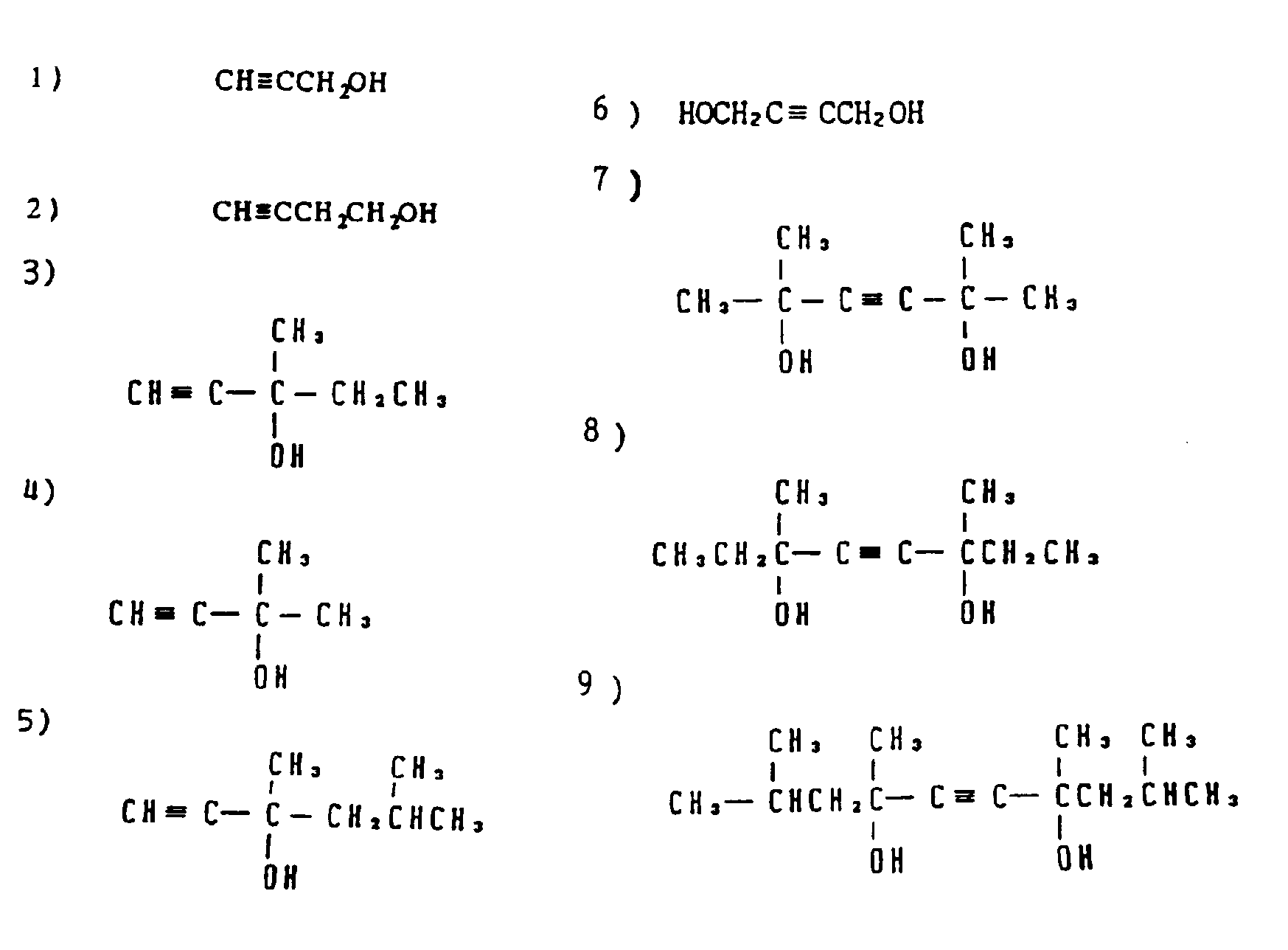
8. Verfahren gemäß einem der Ansprüche 1 bis 7, bei welchem das Alkylenoxid Ethylenoxid
ist.
9. Verfahren gemäß einem der Ansprüche 1 bis 8, bei welchem das Alkylenoxid in einer
Menge von nicht mehr als 30 Mol je Mol des Acetylenalkohols oder Acetylenglykols verwendet
wird.
10. Verfahren gemäß einem der Ansprüche 1 bis 9, bei welchem die Menge des Acetylenalkohols,
des Acetylenglykols oder des Addukts in der Endbehandlungszusammensetzung von 0,01
bis 10 Gew.-% auf der Grundlage des Gesamtgewichts der Endbehandlungszusammensetzung
reicht.
11. Verfahren gemäß Anspruch 10, bei welchem die Menge des Acetylenalkohols, Acetylenglykols
oder des Addukts in der Endbehandlungszusammensetzung von 0,05 bis 3 Gew.-% auf der
Grundlage des Gesamtgewichts der Endbehandlungszusammensetzung reicht.
12. Verfahren gemäß einem der Ansprüche 1 bis 11, bei welchem das wasserlösliche Harz
mit einer filmbildenden Fähigkeit aus Gummi arabicum, Cellulosederivaten und deren
modifizierten Produkten, Polyvinylalkohol und dessen Derivaten, Polyvinylpyrrolidon,
Polyacrylamid und dessen Derivaten, Acrylsäurecopolymeren, Vinylmethylether/Maleinanhydrid-Copolymeren,
Vinylacetat/Maleinanhydrid-Copolymeren, Styrol/Maleinanhydrid-Copolymeren, Röstdextrin,
enzymzersetztem Dextrin und enzymzersetztem verethertem Dextrin ausgewählt ist.
13. Verfahren gemäß einem der Ansprüche 1 bis 12, bei welchem die Menge des wasserlöslichen
Harzes mit einer filmbildenden Fähigkeit von 3 bis 25 Gew.-% auf der Grundlage des
Gesamtgewichts der Endbehandlungszusammensetzung reicht.
14. Verfahren gemäß Anspruch 13, bei welchem die Menge des wasserlöslichen Harzes mit
einer filmbildenden Fähigkeit von 10 bis 25 Gew.-% auf der Grundlage des Gesamtgewichts
der Endbehandlungszusammensetzung reicht.
15. Verfahren gemäß einem der Ansprüche 1 bis 14, bei welchem die lithographisch geeignete,
lichtempfindliche Schicht ein lichtempfindliches Diazoharz und ein hochpolymeres Bindemittel
umfaßt.
16. Verfahren gemäß einem der Ansprüche 1 bis 14, bei welchem die lithographisch geeignete,
lichtempfindliche Schicht eine o-Naphthochinondiazidverbindung und ein alkalilösliches
Harz umfaßt.
17. Verfahren gemäß einem der Ansprüche 1 bis 16, bei welchem die Entwicklungslösung eine
ein alkalisches Mittel und Wasser umfassende wäßrige alkalische Lösung ist.
18. Verfahren gemäß Anspruch 17, bei welchem das alkalische Mittel wenigstens ein aus
Natriumsilikat, Kaliumsilikat, Kaliumhydroxid, Natriumhydroxid, Lithiumhydroxid, Natriumtertiärphosphat,
Natriumbicarbonat, Natriumcarbonat, Kaliumcarbonat, Ammoniumcarbonat, Mono-, Di- und
Triethanolaminen und Propanolamin ausgewähltes ist.
19. Verfahren gemäß den Ansprüchen 17 oder 18, bei welchem die Entwicklungslösung weiter
wenigstens ein aus einem organischen Lösungsmittel und einem anionischen Tensid und
einem Schwefelsäurealkalimetallsalz ausgewähltes Additiv umfaßt.
1. Procédé de préparation d'une plaque lithographique, qui comprend, dans l'ordre, les
étapes qui consistent à exposer à la lumière une plaque présensibilisée comprenant
un support d'aluminium comportant une couche photosensible qui convient en lithographie,
développer la plaque avec une solution de développement pour éliminer ou bien les
zones exposées à la lumière ou bien les zones non exposées à la lumière de la couche
photosensible, pour obtenir une plaque d'impression lithographique présentant une
zone non image hydrophile et une zone image lipophile, et appliquer sur la plaque
une composition de finissage, caractérisé en ce que ladite composition de finissage
est une émulsion possédant une phase huileuse comprenant un solvant organique très
peu soluble dans l'eau et une phase aqueuse comprenant de l'eau dans laquelle est
dissoute une résine hydrosoluble et filmogène, et ladite composition de finissage
comprend un composé d'acétylène choisi parmi un acétylènealcool, un acétylène-glycol
et un composé d'addition d'un oxyde d'alkylène avec ledit acétylène-alcool et/ou ledit
acétylène-glycol.
2. Procédé selon la revendication 1, dans lequel ladite composition de finissage comprend
au moins un tensioactif choisi parmi les esters-sels d'acide sulfurique d'acides-alcools
gras, les esters-sels d'acide phosphorique d'acides-alcools gras, les sels d'acide
sulfonique d'esters de diacides gras, les sels d'acide sulfonique d'amides d'acides
gras, les sels d'acides alkylarylsulfoniques, les sels d'acide naphtalènesulfonique
condensé avec du formaldéhyde, les éthers alkyliques de polyéthylèneglycol, les esters
alkyliques de polyéthylèneglycol, les esters alkyliques de sorbitanne et les éthers
de polyoxypropylène-polyoxyéthylène.
3. Procédé selon la revendication 2, dans lequel la quantité dudit tensioactif est dans
la gamme de 0,01 à 10% en poids, par rapport au poids total de la composition de finissage.
4. Procédé selon l'une quelconque des revendications 1 à 3, dans lequel ladite composition
de finissage comprend en outre un agent d'ajustement du pH qui sert à ajuster le pH
de la composition dans le domaine de 3 à 6.
5. Procédé selon l'une quelconque des revendications 1 à 4, dans lequel ladite composition
de finissage comprend en outre un polyol inférieur, dans une proportion de 0,1 à 5%
en poids, par rapport au poids total de la composition.
6. Procédé selon l'une quelconque des revendications 1 à 5, dans lequel ledit solvant
organique est choisi parmi un solvant de pétrole ayant un point d'ébullition s'échelonnant
d'environ 120°C à environ 250°C et les plastifiants ayant un point de solidification
non supérieur à 15°C et un point d'ébullition non inférieur à 300°C, dans une proportion
de 0,05 à 5% en poids, par rapport au poids total de la composition de finissage.
7. Procédé selon l'une quelconque des revendications 1 à 6, dans lequel ledit acétylène-alcool
est choisi parmi les composés énumérés ci-dessous :
1) CH≡CCH₂OH
2) CH≡CCH₂CH₂OH
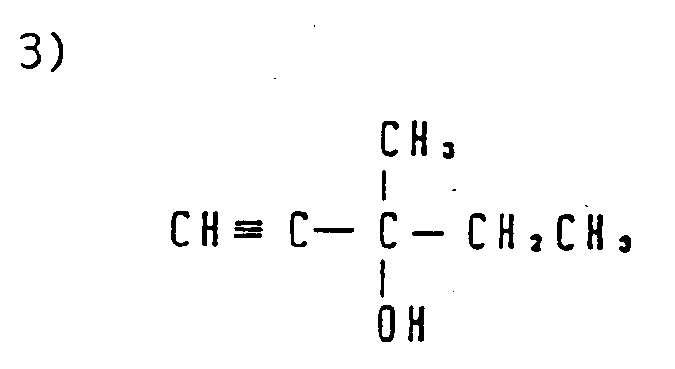
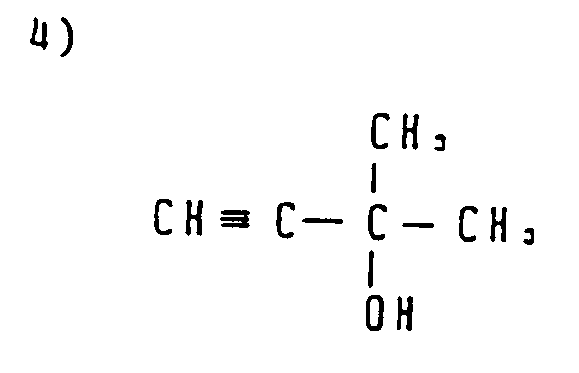
6) HOCH₂C≡CCH₂OH
1) CH≡CCH₂OH
2) CH≡CCH₂CH₂OH
6) HOCH₂C≡CCH₂OH
8. Procédé selon l'une quelconque des revendications 1 à 7, dans lequel ledit oxyde d'alkylène
est l'oxyde d'éthylène.
9. Procédé selon l'une quelconque des revendications 1 à 8, dans lequel ledit oxyde d'alkylène
est utilisé dans une proportion non supérieure à 30 moles par mole dudit acétylène-alcool
ou acétylène-glycol.
10. Procédé selon l'une quelconque des revendications 1 à 9, dans lequel la quantité dudit
acétylène-alcool, dudit acétylène-glycol ou dudit composé d'addition, dans ladite
composition de finissage, s'échelonne de 0,01 à 10% en poids, par rapport au poids
total de ladite composition de finissage.
11. Procédé selon la revendication 10, dans lequel la quantité dudit acétylène-alcool,
dudit acétylène-glycol ou dudit composé d'addition, dans ladite composition de finissage,
s'échelonne de 0,05 à 3% en poids, par rapport au poids total de ladite composition
de finissage.
12. Procédé selon l'une quelconque des revendications 1 à 11, dans lequel ladite résine
hydrosoluble ayant un pouvoir filmogène est choisie parmi la gomme arabique, les dérivés
de cellulose, et leurs produits modifiés; un poly(alcool vinylique) et ses dérivés;
une polyvinylpyrrolidone, un polyacrylamide et leurs dérivés, les copolymères d'acide
acrylique, les copolymères vinylméthyléther/anhydride maléique, les copolymères acétate
de vinyle/anhydride maléique, les copolymères styrène/anhydride maléique, la dextrine
grillée, la dextrine décomposée par une enzyme et la dextrine éthérifiée décomposée
par une enzyme.
13. Procédé selon l'une quelconque des revendications 1 à 12, dans lequel la quantité
de ladite résine hydrosoluble ayant un pouvoir filmogène s'échelonne de 3 à 25% en
poids, par rapport au poids total de ladite composition de finissage.
14. Procédé selon la revendication 13, dans lequel la quantité de ladite résine hydrosoluble
ayant un pouvoir filmogène s'échelonne de 10 à 25% en poids, par rapport au poids
total de ladite composition de finissage.
15. Procédé selon l'une quelconque des revendications 1 à 14, dans lequel ladite couche
photosensible qui convient en lithographie comprend une résine diazoïque photosensible
et un liant haut polymère.
16. Procédé selon l'une quelconque des revendications 1 à 14, dans lequel ladite couche
photosensible qui convient en lithographie comprend un composé diazoture de naphtoquinone
et une résine soluble dans les bases.
17. Procédé selon l'une quelconque des revendications 1 à 16, dans lequel ladite solution
de développement est une solution aqueuse alcaline comprenant un agent basique et
de l'eau.
18. Procédé selon la revendication 17, dans lequel ledit agent basique est au moins un
composé choisi parmi le silicate de sodium, le silicate de potassium, l'hydroxyde
de potassium, l'hydroxyde de sodium, l'hydroxyde de lithium, le phosphate tertiaire
de sodium, le bicarbonate de sodium, le carbonate de sodium, le carbonate de potassium,
le carbonate d'ammonium, les mono-, di- et triéthanolamines et la propanolamine.
19. Procédé selon la revendication 17 ou 18, dans lequel ladite solution de développement
comprend en outre au moins un additif choisi parmi un solvant organique, un tensioactif
anionique et un sel de métal alcalin d'acide sulfureux.