|
(11) | EP 0 405 147 B1 |

| (12) | EUROPEAN PATENT SPECIFICATION |
|
|
| (54) |
Antistatic treatment of polyolefin fibers Antistatische Behandlung von Polyolefinfasern Traitement antistatique de fibres polyoléfiniques |
|
|
|||||||||||||||||||||||||||||||
| Note: Within nine months from the publication of the mention of the grant of the European patent, any person may give notice to the European Patent Office of opposition to the European patent granted. Notice of opposition shall be filed in a written reasoned statement. It shall not be deemed to have been filed until the opposition fee has been paid. (Art. 99(1) European Patent Convention). |
[0001] The present invention relates to polyolefin-containing hydrophobic spun fibers or filaments which are obtainable by a treatment during the processing of the fibers or filaments with an anti-static agent. The invention also relates to a method for imparting anti-static properties and lubricity to the polyolefin-containing hydrophobic fibers or filaments so as to facilitate their processability.
[0002] Products used for personal hygiene, such as catamenial devices, disposable diapers, incontinence pads and the like, have a fluid-absorbent core, usually comprising one or more layers of absorbent material, a layer of hydrophobic material facing and contacting the body that prevents skin contact with the core and tends to isolate any fluids already absorbed in such a core, and a fluid impervious barrier sheet to protect the wearer's clothing from stain or wetting by any absorbed fluids.
[0003] The hydrophobic material may be a nonwoven material produced from conventionally bonded webs of hydrophobic fiber such as polyolefin-containing staple- or spun-bonded webs. During conventional spinning, cutting and carding operations, such hydrophobic fiber, if not specially treated, quickly accumulates a static charge generated by friction, and becomes so difficult to process that carding, for instance, is impossible. It is known, for instance from US-A-3,341,451, that topically applied antistatic agents containing salts of phosphoric acid esters change fiber surface properties sufficiently to facilitate conventional fiber processing, but such known antistatic treatments also make the fiber, web or nonwoven material substantially more hydrophilic than the untreated spun fiber and are difficult to control. It is also taught by the prior art, for instance by US-A-3,423,314, that dimethylpolysiloxane fluids, which are effective lubricants for synthetic fibers, do not provide static protection even when modified with known antistatic agents.
[0004] FR-A-2,259,938 discloses a method for imparting anti-static properties to organic fibers by applying to the fibers poly-diorganosiloxanes having a specified viscosity and having dissolved therein from 0.1 to 30 parts of anti-static phosphorus compounds for every 50 to 100 parts of the poly-diorganosiloxane. The preferred anti-static phosphorus compounds are those which have the general formula (O)P (OH)x Y3-x where Y represents hydrocarbon or oxyhydrocarbon groups and X = 0 if Y is a hydrocarbon group whereas X = 0, 1 or 2 if Y is an oxyhydrocarbon group.
[0005] There is a need for a method for imparting anti-static properties and lubricity to polyolefin-containing hydrophobic fibers or filaments to facilitate carding and other processing without excessively interfering with their hydrophobicity or bonding properties.
[0006] According to the invention there are provided polyolefin-containing hydrophobic spun fibers or filaments which are obtainable by a treatment during the processing of the fibers or filaments with an anti-static agent comprising a neutralized phosphoric acid ester, being characterized in that the fibers or filaments are initially treated with about 0.09%-0.6% (for example 0.09%-0.5%), based on the weight of the fiber, of a first modifier composition comprising from about 70% to 100% by weight of a neutralized phosphoric acid ester having the formula
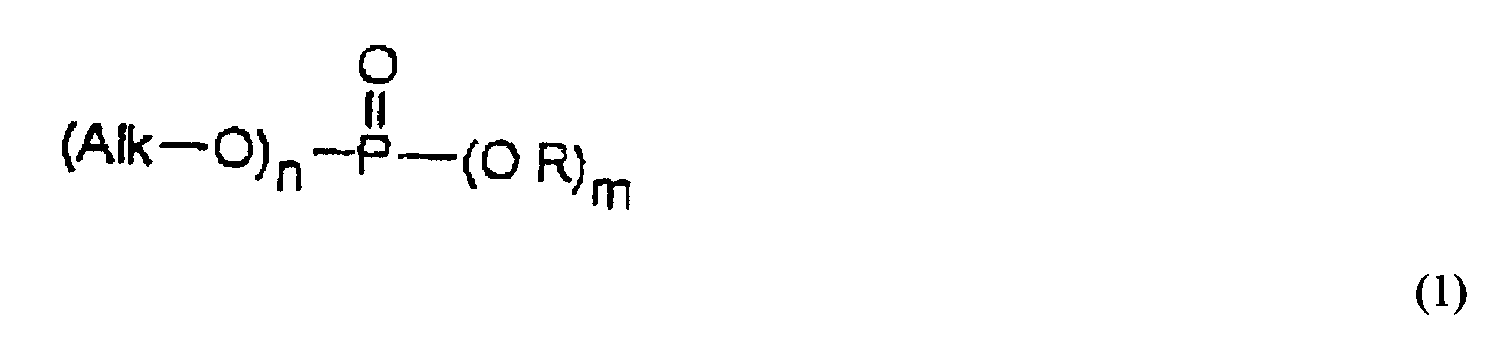
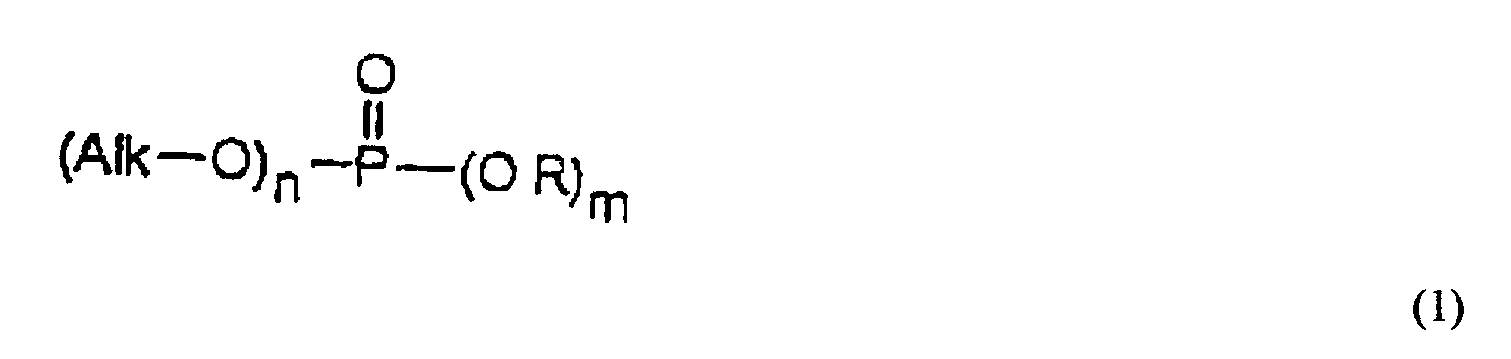
in which Alk is an alkyl group having 1-8 carbon atoms; R is an amine salt group or an alkali metal group, n and m are each a positive number of not less than 1, the sum of which is 3; and from 0 to about 30% by weight of a polysiloxane represented by formula
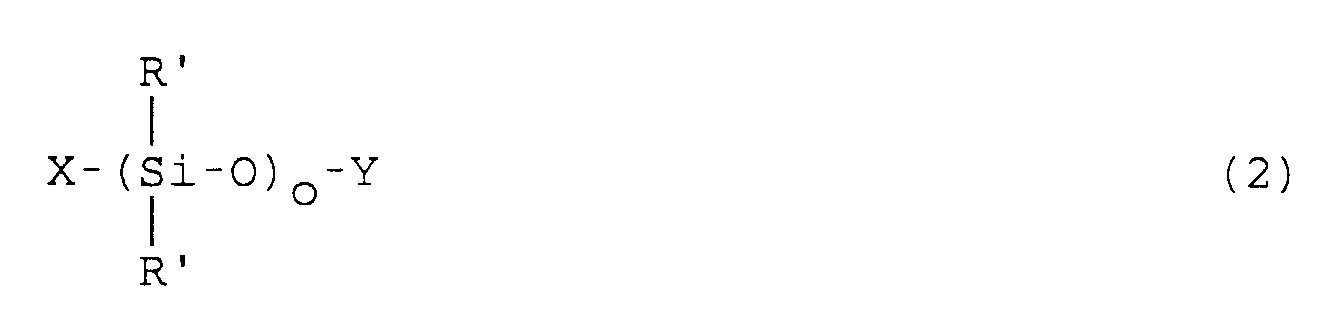
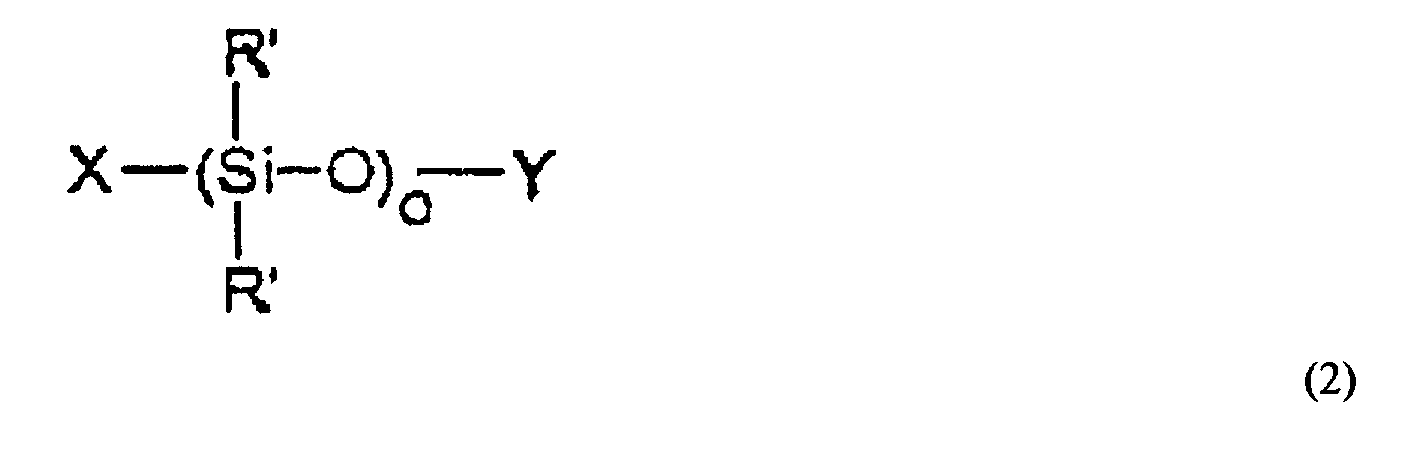
wherein X and Y are individually defined as a hydrophobic chemical end group; each R' is an alkyl group having 1-8 carbon atoms, and 0 is a positive number within the range of about 10-50 or higher; and the fibers or filaments are subsequently treated with about 0.05%-0.30% (for example 0.05%-0.20%), based on the weight of the fiber, of a second modifier composition comprising about 70%-100% by weight of a polysiloxane having the formula (2) and from 0 to about 30% by weight of a neutralized phosphoric acid ester having the formula (1), and after drying, the processing of the fibers or filaments is completed.
[0007] The invention also provides a method for producing such fibers or filaments which comprises treating the fibers or filaments to increase their anti-static properties and lubricity while maintaining their hydrophobic properties, which treatment is as defined above.
[0008] The invention also provides the use of such fibers or filaments for personal hygiene products. Examples of such products are, as mentioned above, catamenial devices, disposable diapers and incontinence pads.
[0009] The invention also provides personal hygiene products having a fluid absorbent core comprising one or more layers of absorbent material, a facing layer of hydrophobic material for contacting the body, and a fluid impervious barrier sheet, characterized in that the hydrophobic material is a web of fibers or filaments in accordance with the invention.
[0011] After the application of the second modifier composition according to the invention, the spun fibers or filaments have the desired level of hydrophobicity, and readily undergo carding and other processing steps required for web formation, including bonding steps. In addition, the nonwoven material made from the treated spun fibers or filaments can be conventionally embossed and calender-printed with various designs and colors, as desired, to increase loft, augment wet strength, and provide easy market identification.
[0012] In the method according to the invention, the modifier compositions can be applied by various conventional procedures to the polyolefin-containing spun fibers or filaments, which include melt-spun staple fiber, filament or fibrillated film of bicomponent or monofilament types. For instance, the fibers or filaments can be drawn over feed wheels partially immersed in baths of the modifier composition, or they can be dipped in the baths, or the compositions can be sprayed on the fibers or filaments.
[0013] The specific proportions of the ingredient of the modifier compositions can easily be varied to achieve the balance of properties desired, including resistance to static formation during crimping of continuous spun fibers or filaments or other processing steps and the final degree of hydrophobicity. Preferably, the application of the first modifier composition should precede and the application of the second modifier composition should follow any conventional crimping step in such processing.
[0014] The method according to the invention is particularly applicable to high speed production of nonwoven materials that use webs obtained from spun bonded or carded staple. The term "processing" in the method according to the invention includes conventional techniques for forming webs from continuous or staple fibers.
[0015] The polyolefin-containing spun fibers or filaments include those made from conventionally blended isotactic polypropylene as well as conventional hydrophobic copolymers of polypropylene with ethylene, 1-butene, 4-methylpentene-1, and the like. The resulting blended and extruded spun melt preferably has a weight average molecular weight varying from about 3 X 10⁵ to about 5 X 10⁵, a molecular weight distribution (Mw/Mn) of about 5.0-8.0, a melt flow rate of about 2.5 to about 4.0 g/10 minutes, and a spin temperature within a range of about 220°C-300°C.
EXAMPLE 1
[0017] A. Polypropylene in flake form and characterized as follows: (crystallinity 60%, MW 3.5 x 10⁵, molecular weight distribution 6.4, and melt flow 3.2 g/10 minutes) is mixed in an impact blender. After thorough blending, the mixture is fed into a 38mm (1.5 inch) extruder and spun through a 210 hole spinnerette at 280°C., air quenched, and stretched at 115°C (4 X) to obtain a 2.22 dtex (2 dpf) circular filament that is then passed over a feed or kiss wheel partly immersed in a tank of first modifier composition consisting of a 50% aqueous solution of Lurol™ AS-Y, a neutralized phosphoric acid/alcohol ester available from George A. Goulston Company of Situate, Mass., contact being of sufficient duration and speed to topically apply about 0.6 wt. % of the dried composition. The resulting continuous filament is crimped at about 100°C. and again passed over a kiss roll and coated (.10 wt %) with a second modifier composition consisting of a 20:1 mixture by weight of a 60% polydimethyl siloxane emulsion commercially available from Union Carbide Corporation, as LE-458HS and a 50% aqueous solution of Lurol AS-Y. After air drying, the coated 2.22 dtex (2.0 dpf) fiber is chopped to 38mm (1.5 inch) length staple and set aside for conventional ASTM Sink Time tests in which a given weight of fiber is loosely packed into a mesh basket and the sink time measured in seconds. The remainder is carded into webs weighing about 23.9g/m² (20 g/yd²), two webs being calendar bonded at 162°C. to obtain test nonwoven material. The test nonwoven is cut into strips of convenient dimensions for carrying out conventional strength and run off tests using syn-urine, available from Jayco Pharmaceuticals of Camp Hill, Pa., as the wetting fluid. Test results, are summarized and reported in Tables I and II.
1. Polyolefin-containing hydrophobic spun fibers or filaments which are obtainable by
a treatment during the processing of the fibers or filaments with an anti-static agent
comprising a neutralized phosphoric acid ester, being characterized in that the fibers
or filaments are initially treated with about 0.09%-0.6%, based on the weight of the
fiber, of a first modifier composition comprising from about 70% to 100% by weight
of a neutralized phosphoric acid ester having the formula
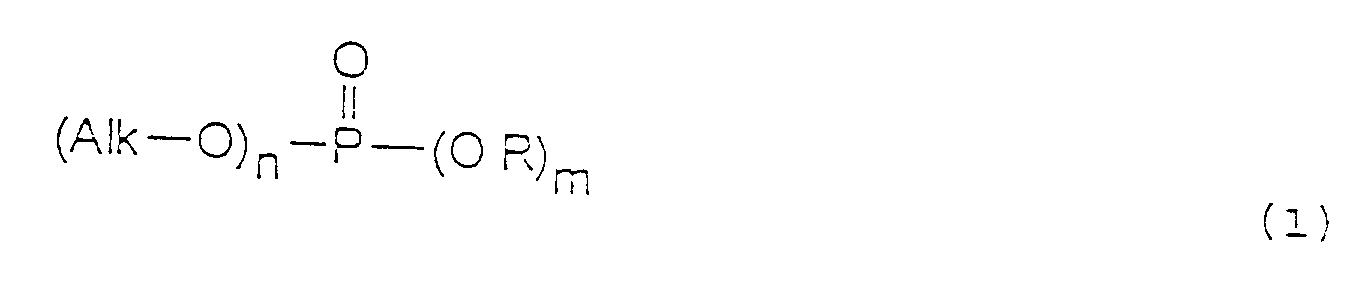
in which Alk is an alkyl group having 1-8 carbon atoms; R is an amine salt group or an alkali metal group, n and m are each a positive number of not less than 1, the sum of which is 3; and from 0 to about 30% by weight of a polysiloxane represented by formula
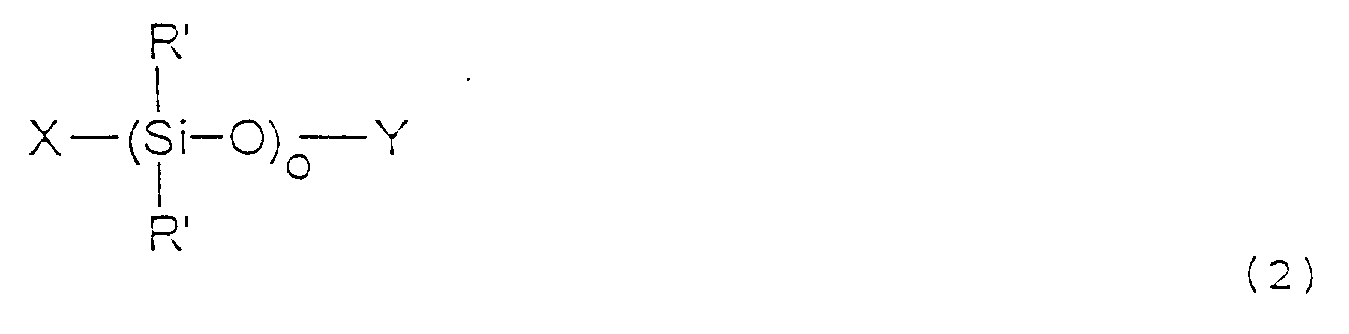
wherein X and Y are individually defined as a hydrophobic chemical end group; each R' is an alkyl group having 1-8 carbon atoms, and 0 is a positive number within the range of about 10-50 or higher; and the fibers or filaments are subsequently treated with about 0.05%-0.30%, based on the weight of the fiber, of a second modifier composition comprising about 70%-100% by weight of a polysiloxane having the formula (2) and from 0 to about 30% by weight of a neutralized phosphoric acid ester having the formula (1), and after drying, the processing of the fibers or filaments is completed.
in which Alk is an alkyl group having 1-8 carbon atoms; R is an amine salt group or an alkali metal group, n and m are each a positive number of not less than 1, the sum of which is 3; and from 0 to about 30% by weight of a polysiloxane represented by formula
wherein X and Y are individually defined as a hydrophobic chemical end group; each R' is an alkyl group having 1-8 carbon atoms, and 0 is a positive number within the range of about 10-50 or higher; and the fibers or filaments are subsequently treated with about 0.05%-0.30%, based on the weight of the fiber, of a second modifier composition comprising about 70%-100% by weight of a polysiloxane having the formula (2) and from 0 to about 30% by weight of a neutralized phosphoric acid ester having the formula (1), and after drying, the processing of the fibers or filaments is completed.
2. Fibers or filaments as claimed in claim 1, further characterized in that X and Y are
alkyl groups having 1-8 carbon atoms.
3. Fibers or filaments as claimed in claim 1 or 2, further characterized in that the
first modifier composition comprises about 100% of a neutralized phosphoric acid ester
having the Formula (1).
4. Fibers or filaments as claimed in any of claims 1-3, further characterized in that
the alkyl groups in formula (1) have 1-4 carbon atoms.
5. Fibers or filaments as claimed in claim 4, further characterized in that the alkyl
group in formula (1) is a methyl group, n is 2, and m is 1.
6. Fibers or filaments as claimed in any of claims 1-5, further characterized in that
the processing of the fibers or filaments includes a crimping step.
7. Fibers or filaments as claimed in claim 6, further characterized in that the application
of the first modifier composition precedes and the application of the second modifier
composition follows the crimping step.
8. Fibers or filaments as claimed in any of claims 1-6, further characterized in that
the amount of the first modifier composition is 0.09%-0.5% and the amount of the second
modifier composition is 0.05%-0.20%, based on the weight of the fiber.
9. A method for treating polyolefin-containing spun fibers or filaments to increase their
anti-static properties and lubricity while maintaining their hydrophobic properties,
in which the fibers or filaments are treated during the processing of the fibers or
filaments with an anti-static agent comprising a neutralized phosphoric acid ester,
being characterized in that the fibers or filaments are initially treated with about
0.09%-0.6%, based on the weight of the fiber, of a first modifier composition comprising
from about 70% to 100% by weight of a neutralized phosphoric acid ester having the
formula

in which Alk is an alkyl group having 1-8 carbon atoms; R is an amine salt group or an alkali metal group, n and m are each a positive number of not less than 1, the sum of which is 3; and from 0 to about 30% by weight of a polysiloxane represented by formula
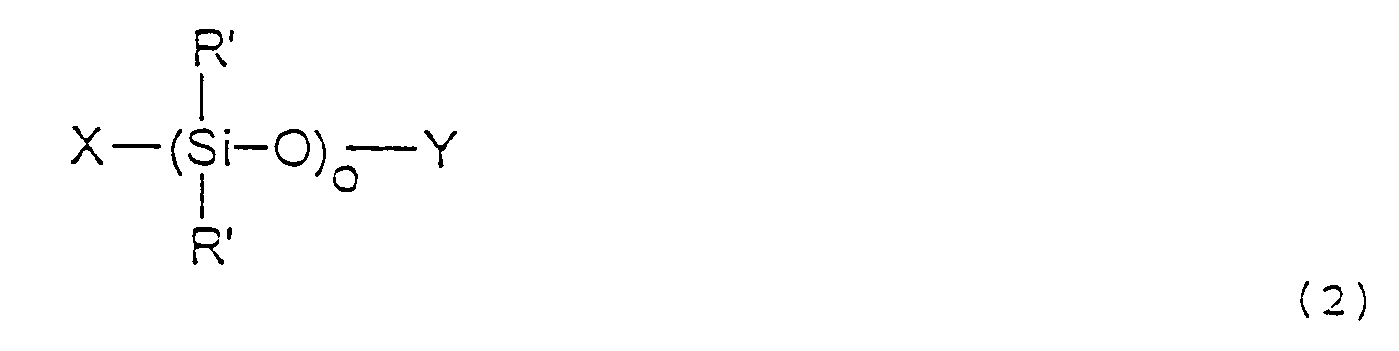
wherein X and Y are individually defined as a hydrophobic chemical end group; each R' is an alkyl group having 1-8 carbon atoms, and 0 is a positive number within the range of about 10-50 or higher; and the fibers or filaments are subsequently treated with about 0.05%-0.30%, based on the weight of the fiber, of a second modifier composition comprising about 70%-100% by weight of a polysiloxane having the formula (2) and from 0 to about 30% by weight of a neutralized phosphoric acid ester having the formula (1), and after drying, the processing of the fibers or filaments is completed.
in which Alk is an alkyl group having 1-8 carbon atoms; R is an amine salt group or an alkali metal group, n and m are each a positive number of not less than 1, the sum of which is 3; and from 0 to about 30% by weight of a polysiloxane represented by formula
wherein X and Y are individually defined as a hydrophobic chemical end group; each R' is an alkyl group having 1-8 carbon atoms, and 0 is a positive number within the range of about 10-50 or higher; and the fibers or filaments are subsequently treated with about 0.05%-0.30%, based on the weight of the fiber, of a second modifier composition comprising about 70%-100% by weight of a polysiloxane having the formula (2) and from 0 to about 30% by weight of a neutralized phosphoric acid ester having the formula (1), and after drying, the processing of the fibers or filaments is completed.
10. A method as claimed in claim 9, further characterised in that X and Y are alkyl groups
having 1-8 carbon atoms.
11. A method as claimed in claim 9 or 10, further characterised in that the first modifier
composition comprises about 100% of a neutralised phosphoric acid ester having the
formula (1).
12. A method as claimed in any of claims 9-11, further characterised in that the alkyl
groups in formula (1) have 1-4 carbon atoms.
13. A method as claimed in claim 12, further characterised in that the alkyl group in
formula (1) is a methyl group, n is 2, and m is 1.
14. A method as claimed in any of claims 9-13, further characterised in that the processing
of the fibers or filaments includes a crimping step.
15. A method as claimed in claim 14, further characterised in that the application of
the first modifier composition precedes and the application of the second modifier
composition follows the crimping step.
16. A method as claimed in any of claims 9-15, further characterised in that the amount
of the first modifier composition is 0.09%-0.5% and the amount of the second modifier
composition is 0.05%-0.20%, based on the weight of the fiber.
17. The use for personal hygiene products of fibers and filaments as claimed in any of
claims 1-8 or produced by the method of any of claims 9-16.
18. The use according to claim 17 wherein the personal hygiene products are catamenial
devices, disposable diapers or incontinence pads.
19. Personal hygiene products having a fluid absorbent core comprising one or more layers
of absorbent material, a facing layer of hydrophobic material for contacting the body,
and a fluid impervious barrier sheet, characterized in that the hydrophobic material
is a web of fibers or filaments as claimed in any of claims 1-8 or produced by the
method of any of claims 9-16.
1. Polyolefin enthaltende, hydrophobe, gesponnene Fasern oder Filamente, erhältlich durch
Behandlung während der Verarbeitung der Fasern oder Filamente mit einem antistatischen
Mittel, umfassend einen neutralisierten Phosphorsäureester, dadurch gekennzeichnet,
daß die Fasern oder Filamente anfänglich mit etwa 0,09 bis 0,6 %, bezogen auf das
Gewicht der Fasern, einer ersten Modifizierungszusammensetzung behandelt werden, umfassend
etwa 70 bis 100 Gew.-% eines neutralisierten Phosphorsäureesters der Formel

worin Alk eine Alkylgruppe mit 1 bis 8 Kohlenstoffatomen darstellt; R eine Aminsalzgruppe oder eine Alkalimetallgruppe bedeutet, n und m jeweils eine positive Zahl von nicht weniger als 1 sind, wovon die Summe 3 ist; und 0 bis etwa 30 Gew.-% eines Polysiloxans, wiedergegeben durch die Formel
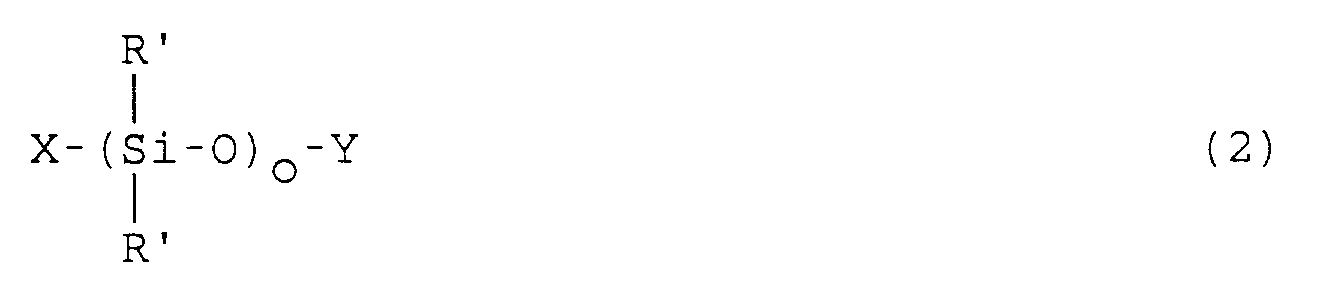
worin X und Y einzeln als eine hydrophobe chemische Endgruppe definiert sind; jeder Rest R' eine Alkylgruppe mit 1 bis 8 Kohlenstoffatomen darstellt und o eine positive Zahl im Bereich von etwa 10 bis 50 oder höher ist; und die Fasern oder Filamente anschließend mit etwa 0,05 bis 0,30 %, bezogen auf das Gewicht der Fasern, einer zweiten Modifizierungszusammensetzung, umfassend etwa 70 bis 100 Gew.-% eines Polysiloxans der Formel (2) und 0 bis etwa 30 Gew.-% eines neutralisierten Phosphorsäureesters der Formel (1) behandelt werden und nach Trocknen die Verarbeitung der Fasern oder Filamente beendet ist.
worin Alk eine Alkylgruppe mit 1 bis 8 Kohlenstoffatomen darstellt; R eine Aminsalzgruppe oder eine Alkalimetallgruppe bedeutet, n und m jeweils eine positive Zahl von nicht weniger als 1 sind, wovon die Summe 3 ist; und 0 bis etwa 30 Gew.-% eines Polysiloxans, wiedergegeben durch die Formel
worin X und Y einzeln als eine hydrophobe chemische Endgruppe definiert sind; jeder Rest R' eine Alkylgruppe mit 1 bis 8 Kohlenstoffatomen darstellt und o eine positive Zahl im Bereich von etwa 10 bis 50 oder höher ist; und die Fasern oder Filamente anschließend mit etwa 0,05 bis 0,30 %, bezogen auf das Gewicht der Fasern, einer zweiten Modifizierungszusammensetzung, umfassend etwa 70 bis 100 Gew.-% eines Polysiloxans der Formel (2) und 0 bis etwa 30 Gew.-% eines neutralisierten Phosphorsäureesters der Formel (1) behandelt werden und nach Trocknen die Verarbeitung der Fasern oder Filamente beendet ist.
2. Fasern oder Filamente nach Anspruch 1, zusätzlich dadurch gekennzeichnet, daß X und
Y Alkylgruppen mit 1 bis 8 Kohlenstoffatomen darstellen.
3. Fasern oder Filamente nach Anspruch 1 oder 2, zusätzlich dadurch gekennzeichnet, daß
die erste Modifizierungszusammensetzung etwa 100 % eines neutralisierten Phosphorsäureesters
der Formel (1) umfaßt.
4. Fasern oder Filamente nach einem der Ansprüche 1 bis 3, zusätzlich dadurch gekennzeichnet,
daß die Alkylgruppen in Formel (1) 1 bis 4 Kohlenstoffatome aufweisen.
5. Fasern oder Filamente nach Anspruch 4, zusätzlich dadurch gekennzeichnet, daß die
Alkylgruppe in Formel (1) eine Methylgruppe ist, n 2 ist und m 1 ist.
6. Fasern oder Filamente nach einem der Ansprüche 1 bis 5, zusätzlich dadurch gekennzeichnet,
daß die Verarbeitung der Fasern oder Filamente einen Kräuselschritt einschließt.
7. Fasern oder Filamente nach Anspruch 6, zusätzlich dadurch gekennzeichnet, daß dem
Kräuselschritt die Anwendung der ersten Modifizierungszusammensetzung vorangeht und
die Anwendung der zweiten Modifizierungszusammensetzung folgt.
8. Fasern oder Filamente nach einem der Ansprüche 1 bis 6, zusätzlich dadurch gekennzeichnet,
daß die Menge der ersten Modifizierungszusammensetzung 0,09 bis 0,5 % und die Menge
der zweiten Modifizierungszusammensetzung 0,05 bis 0,20 %, bezogen auf das Gewicht
der Fasern, ist.
9. Verfahren zur Behandlung von Polyolefin enthaltenden, gesponnenen Fasern oder Filamenten
zur Erhöhung ihrer antistatischen Eigenschaften und Gleitfähigkeit unter Beibehalten
ihrer hydrophoben Eigenschaften, wobei die Fasern oder Filamente während der Verarbeitung
der Fasern oder Filamente mit einem antistatischen Mittel, umfassend einen neutralisierten
Phosphorsäureester, behandelt werden, dadurch gekennzeichnet, daß die Fasern oder
Filamente anfänglich mit etwa 0,09 bis 0,6 %, bezogen auf das Gewicht der Fasern,
einer ersten Modifizierungszusammensetzung behandelt werden, umfassend etwa 70 bis
100 Gew.-% eines neutralisierten Phosphorsäureesters der Formel

worin Alk eine Alkylgruppe mit 1 bis 8 Kohlenstoffatomen darstellt; R eine Aminsalzgruppe oder eine Alkalimetallgruppe bedeutet, n und m jeweils eine positive Zahl von nicht weniger als 1 sind, wovon die Summe 3 ist; und 0 bis etwa 30 Gew.-% eines Polysiloxans, wiedergegeben durch die Formel
worin X und Y einzeln als eine hydrophobe chemische Endgruppe definiert sind; jeder Rest R' eine Alkylgruppe mit 1 bis 8 Kohlenstoffatomen darstellt und o eine positive Zahl im Bereich von etwa 10 bis 50 oder höher ist; und die Fasern oder Filamente anschließend mit etwa 0,05 bis 0,30 %, bezogen auf das Gewicht der Fasern, einer zweiten Modifizierungszusammensetzung, umfassend etwa 70 bis 100 Gew.-% eines Polysiloxans der Formel (2) und 0 bis etwa 30 Gew.-% eines neutralisierten Phosphorsäureesters der Formel (1) behandelt werden und nach Trocknen die Verarbeitung der Fasern oder Filamente beendet ist.
worin Alk eine Alkylgruppe mit 1 bis 8 Kohlenstoffatomen darstellt; R eine Aminsalzgruppe oder eine Alkalimetallgruppe bedeutet, n und m jeweils eine positive Zahl von nicht weniger als 1 sind, wovon die Summe 3 ist; und 0 bis etwa 30 Gew.-% eines Polysiloxans, wiedergegeben durch die Formel
worin X und Y einzeln als eine hydrophobe chemische Endgruppe definiert sind; jeder Rest R' eine Alkylgruppe mit 1 bis 8 Kohlenstoffatomen darstellt und o eine positive Zahl im Bereich von etwa 10 bis 50 oder höher ist; und die Fasern oder Filamente anschließend mit etwa 0,05 bis 0,30 %, bezogen auf das Gewicht der Fasern, einer zweiten Modifizierungszusammensetzung, umfassend etwa 70 bis 100 Gew.-% eines Polysiloxans der Formel (2) und 0 bis etwa 30 Gew.-% eines neutralisierten Phosphorsäureesters der Formel (1) behandelt werden und nach Trocknen die Verarbeitung der Fasern oder Filamente beendet ist.
10. Verfahren nach Anspruch 9, zusätzlich dadurch gekennzeichnet, daß X und Y Alkylgruppen
mit 1 bis 8 Kohlenstoffatomen darstellen.
11. Verfahren nach Anspruch 9 oder 10, zusätzlich dadurch gekennzeichnet, daß die erste
Modifizierungszusammensetzung etwa 100 % eines neutralisierten Phosphorsäureesters
der Formel (1) umfassen.
12. Verfahren nach einem der Ansprüche 9 bis 11, zusätzlich dadurch gekennzeichnet, daß
die Alkylgruppen in Formel (1) 1 bis 4 Kohlenstoffatome aufweisen.
13. Verfahren nach Anspruch 12, zusätzlich dadurch gekennzeichnet, daß die Alkylgruppe
in Formel (1) eine Methylgruppe ist, n 2 ist und m 1 ist.
14. Verfahren nach einem der Ansprüche 9 bis 13, zusätzlich dadurch gekennzeichnet, daß
die Verarbeitung der Fasern oder Filamente einen Kräuselschritt einschließt.
15. Verfahren nach Anspruch 14, zusätzlich dadurch gekennzeichnet, daß dem Kräuselschritt
die Anwendung der ersten Modifizierungszusammensetzung vorangeht und die Anwendung
der zweiten Modifizierungszusammensetzung folgt.
16. Verfahren nach einem der Ansprüche 9 bis 15, zusätzlich dadurch gekennzeichnet, daß
die Menge der ersten Modifizierungszusammensetzung 0,09 bis 0,5 % und die Menge der
zweiten Modifizierungszusammensetzung 0,05 bis 0,20 %, bezogen auf das Gewicht der
Fasern, ist.
17. Verwendung von Fasern oder Filamenten nach einem der Ansprüche 1 bis 8 oder hergestellt
durch das Verfahren nach einem der Ansprüche 9 bis 16 für Körperhygieneprodukte.
18. Verwendung nach Anspruch 17, wobei die Körperhygieneprodukte Menstruationsvorlagen,
Wegwerfwindeln oder Inkontinenzlagen darstellen.
19. Körperhygieneprodukte mit einem flüssigkeitsabsorbierenden Kern, umfassend eine oder
mehrere Schichten Absorptionsmaterial, eine Verkleidungsschicht aus hydrophobem Material
für den Körperkontakt und eine flüssigkeitsundurchlässige Sperrschicht, dadurch gekennzeichnet,
daß das hydrophobe Material ein Vlies aus Fasern oder Filamenten nach einem der Ansprüche
1 bis 8 oder hergestellt durch das Verfahren nach einem der Ansprüche 9 bis 16 ist.
1. Fibres ou filaments étirés hydrophobes, contenant une polyoléfine, qui peuvent être
obtenus par un traitement, pendant la transformation des fibres ou filaments, avec
un agent antistatique comprenant un ester d'acide phosphorique neutralisé, caractérisés
en ce que les fibres ou filaments sont traités initialement avec un pourcentage d'environ
0,09% à 0,6%, basé sur le poids de la fibre, d'une composition d'un premier modificateur
comprenant d'environ 70% à environ 100% en poids d'un ester d'acide phosphorique neutralisé
ayant la formule
dans laquelle Alk est un groupement alkyle ayant de 1 à 8 atomes de carbone, R est un groupement d'un sel d'amine ou un groupement d'un métal alcalin, n et m sont chacun un nombre positif qui n'est pas inférieur à 1, la somme de ces nombres étant égale à 3, et de 0 à 30% en poids d'un polysiloxane représenté par la formule
dans laquelle X et Y sont délinis individuellement comme un groupement terminal chimique hydrophobe, chaque R' est un groupe alkyle ayant de 1 à 8 atomes de carbone et o est un nombre positif compris dans la plage d'environ 10-50 ou supérieur, et les fibres ou filaments sont traités ensuite avec un pourcentage d'environ 0,05% à 0,30%, basé sur le poids de la fibre, d'une composition d'un second modificateur comprenant environ 70%-100% en poids d'un polysiloxane ayant la formule (2) et de 0 à environ 30% en poids d'un ester d'acide phosphorique neutralisé ayant la formule (1), et après séchage le traitement des fibres ou filaments est achevé.
dans laquelle Alk est un groupement alkyle ayant de 1 à 8 atomes de carbone, R est un groupement d'un sel d'amine ou un groupement d'un métal alcalin, n et m sont chacun un nombre positif qui n'est pas inférieur à 1, la somme de ces nombres étant égale à 3, et de 0 à 30% en poids d'un polysiloxane représenté par la formule
dans laquelle X et Y sont délinis individuellement comme un groupement terminal chimique hydrophobe, chaque R' est un groupe alkyle ayant de 1 à 8 atomes de carbone et o est un nombre positif compris dans la plage d'environ 10-50 ou supérieur, et les fibres ou filaments sont traités ensuite avec un pourcentage d'environ 0,05% à 0,30%, basé sur le poids de la fibre, d'une composition d'un second modificateur comprenant environ 70%-100% en poids d'un polysiloxane ayant la formule (2) et de 0 à environ 30% en poids d'un ester d'acide phosphorique neutralisé ayant la formule (1), et après séchage le traitement des fibres ou filaments est achevé.
2. Fibres ou filaments suivant la revendication 1 caractérisés en outre en ce que X et
Y sont des groupes alkyle ayant de 1 à 8 atomes de carbone.
3. Fibres ou filaments suivant l'une quelconque des revendications 1 ou 2 caractérisés
en outre en ce que la composition du premier modificateur comprend environ 100% d'un
ester d'acide phosphorique neutralisé ayant la formule (1).
4. Fibres ou filaments suivant l'une quelconque des revendications 1 à 3 caractérisés
en outre en ce que les groupes aile dans la formule (1) ont de 1 à 4 atomes de carbone.
5. Fibres ou filaments suivant la revendication 4 caractérisés en outre en ce que le
groupe alkyle dans la formule (1) est un groupe méthyle, n est égal à 2 et m est égal
à 1.
6. Fibres ou filaments suivant l'une quelconque des revendications 1 à 5 caractérisés
en outre en ce que la transformation des fibres ou filaments comprend une étape de
crêpage.
7. Fibres ou filaments suivant la revendication 6 caractérisés en outre en ce que l'application
de la composition du premier modificateur précède l'étape de crêpage tandis que l'application
de la composition du second modificateur fait suite à cette étape.
8. Fibres ou filaments suivant l'une quelconque des revendications 1 à 6 caractérisés
en outre en ce que la quantité de la composition du premier modificateur est de 0,09%-0,5%
et la quantité de la composition du second modificateur est de 0,05%-0,20%, les pourcentages
étant basés sur le poids de la fibre.
9. Procédé de traitement de fibres ou filaments étirés contenant une polyoléfine, afin
d'accroître leurs propriétés antistatiques et leur glissance tout en conservant leurs
propriétés hydrophobes, dans lequel les fibres ou filaments sont traités pendant la
transformation des fibres ou filaments, avec un agent antistatique comprenant un ester
d'acide phosphorique neutralisé, caractérisé en ce que les fibres ou filaments sont
traités initialement avec un pourcentage d'environ 0,09% à 0,6%, basé sur le poids
de la fibre, d'une composition d'un premier modificateur comprenant d'environ 70%
à environ 100% en poids d'un ester d'acide phosphorique neutralisé ayant la formule
dans laquelle Alk est un groupement alkyle ayant de 1 à 8 atomes de carbone, R est un groupement d'un sel d'amine ou un groupement d'un métal alcalin, n et m sont chacun un nombre positif qui n'est pas inférieur à 1, la somme de ces nombres étant égale à 3, et de 0 à 30% en poids d'un polysiloxane représenté par la formule
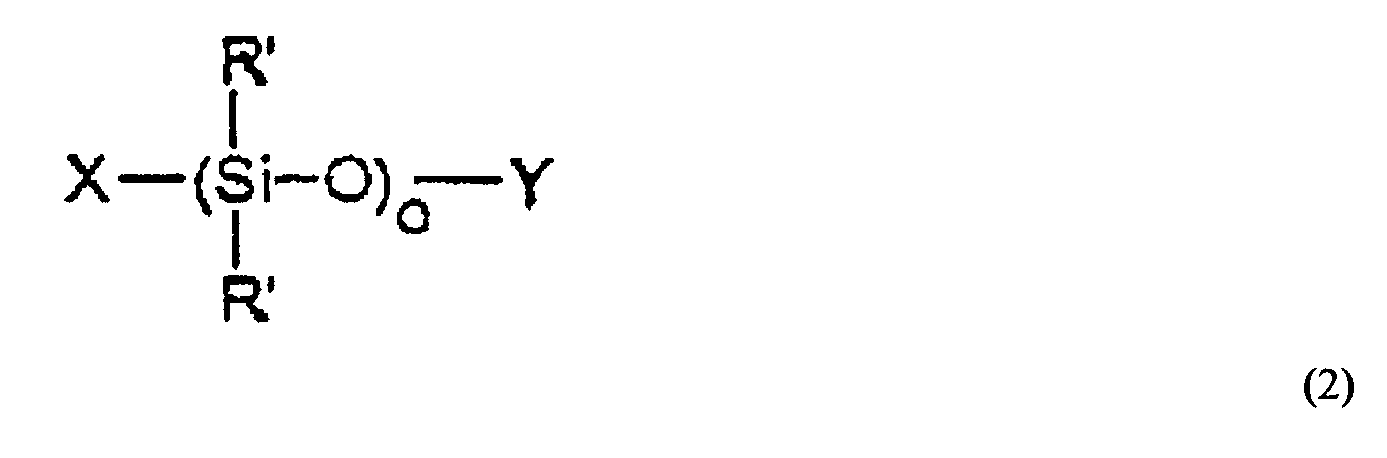
dans laquelle X et Y sont définis individuellement comme un groupement terminal chimique hydrophobe, chaque R' est un groupe alkyle ayant de 1 à 8 atomes de carbone et o est un nombre positif compris dans la plage d'environ 10-50 ou supérieur, et les fibres ou filaments sont traités ensuite avec un pourcentage d'environ 0,05% à 0,30%, basé sur le poids de la fibre, d'une composition d'un second modificateur comprenant environ 70%-100% en poids d'un polysiloxane ayant la formule (2) et de 0 à environ 30% en poids d'un ester d'acide phosphorique neutralisé ayant la formule (1), et après séchage le traitement des fibres ou filaments est achevé.
dans laquelle Alk est un groupement alkyle ayant de 1 à 8 atomes de carbone, R est un groupement d'un sel d'amine ou un groupement d'un métal alcalin, n et m sont chacun un nombre positif qui n'est pas inférieur à 1, la somme de ces nombres étant égale à 3, et de 0 à 30% en poids d'un polysiloxane représenté par la formule
dans laquelle X et Y sont définis individuellement comme un groupement terminal chimique hydrophobe, chaque R' est un groupe alkyle ayant de 1 à 8 atomes de carbone et o est un nombre positif compris dans la plage d'environ 10-50 ou supérieur, et les fibres ou filaments sont traités ensuite avec un pourcentage d'environ 0,05% à 0,30%, basé sur le poids de la fibre, d'une composition d'un second modificateur comprenant environ 70%-100% en poids d'un polysiloxane ayant la formule (2) et de 0 à environ 30% en poids d'un ester d'acide phosphorique neutralisé ayant la formule (1), et après séchage le traitement des fibres ou filaments est achevé.
10. Procédé suivant la revendication 9 caractérisé en outre en ce que X et Y sont des
groupes alkyle ayant de 1 à 8 atomes de carbone.
11. Procédé suivant l'une quelconque des revendications 9 ou 10 caractérisé en outre en
ce que la composition du premier modificateur comprend environ 100% d'un ester d'acide
phosphorique neutralisé ayant la formule (1).
12. Procédé suivant l'une quelconque des revendications 9 à 11 caractérisé en outre en
ce que les groupes alkyle dans la formule (1) ont de 1 à 4 atomes de carbone.
13. Procédé suivant la revendication 12 caractérisé en outre en ce que le groupe alkyle
dans la formule (1) est un groupe méthyle, n est égal à 2 et m est égal à 1.
14. Procédé suivant l'une quelconque des revendications 9 à 13 caractérisé en outre en
ce que la transformation des fibres ou filaments comprend une étape de crêpage.
15. Procédé suivant la revendication 14 caractérisé en outre en ce que l'application de
la composition du premier modificateur précède l'étape de crêpage tandis que l'application
de la composition du second modificateur fait suite à cette étape.
16. Procédé suivant l'une quelconque des revendications 9 à 15 caractérisé en outre en
ce que la quantité de la composition du premier modificateur est de 0,09%-0,5% et
la quantité de la composition du second modificateur est de 0,05%-0,20%, les pourcentages
étant basés sur le poids de la fibre.
17. Utilisation pour des produits d'hygiène personnelle de fibres ou filaments tels que
revendiqués dans l'une quelconque des revendications 1-8 ou produits par le procédé
suivant l'une quelconque des revendications 9-16.
18. Utilisation suivant la revendication 17 et dans lequel les produits d'hygiène personnelle
sont des tampons périodiques, des couches jetables ou des garnitures anti-incontinence.
19. Produits d'hygiène personnelle comportant un coeur absorbant les fluides comprenant
une ou plusieurs couches d'un matériau absorbant, une couche superficielle en matériau
hydrophobe pour venir en contact avec le corps et une feuille barrière imperméable
aux fluides, caractérisés en ce que le matériau hydrophobe est un tissu de fibres
ou filaments tels que revendiqués dans l'une quelconque des revendications 1-8 ou
produits par le procédé suivant l'une quelconque des revendications 9-16.