| (19) |
 |
|
(11) |
EP 0 406 161 B1 |
| (12) |
EUROPEAN PATENT SPECIFICATION |
| (45) |
Mention of the grant of the patent: |
|
22.02.1995 Bulletin 1995/08 |
| (22) |
Date of filing: 12.06.1990 |
|
|
| (54) |
Fluorine and/or silicone containing poly(alkylene-oxide)-block copolymers and contact
lenses thereof
Fluorid und/oder Silikon enthaltende Poly(alkylenoxid)-Block-Copolymere und Kontaktlinsen
Copolymères bloc poly(alkylène-oxyde) contenant du fluor et/ou du silicone et lentilles
de contact
|
| (84) |
Designated Contracting States: |
|
AT BE CH DE DK ES FR GB GR IT LI LU NL SE |
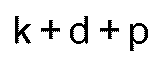
| (30) |
Priority: |
20.06.1989 US 368755
28.02.1990 US 486493
|
| (43) |
Date of publication of application: |
|
02.01.1991 Bulletin 1991/01 |
| (73) |
Proprietor: CIBA-GEIGY AG |
|
4002 Basel (CH) |
|
| (72) |
Inventors: |
|
- Mueller, Karl F.
New York,
New York 10024 (US)
- Plankl, Walter L.
Yorktown Heights,
New York 10598 (US)
|
| (56) |
References cited: :
EP-A- 0 277 771
|
US-A- 4 528 301
|
|
| |
|
|
|
|
| |
|
| Note: Within nine months from the publication of the mention of the grant of the European
patent, any person may give notice to the European Patent Office of opposition to
the European patent
granted. Notice of opposition shall be filed in a written reasoned statement. It shall
not be deemed to
have been filed until the opposition fee has been paid. (Art. 99(1) European Patent
Convention).
|
[0001] Two classes of contact lenses can be distinguished by the way they are fitted to
the eye. In hard lenses the fit is flatter than the cornea itself and the lens rocks
back and forth with each eye lid blink, pumping tear fluid and thereby oxygen, as
well as cell debris under and from under the lens. Hard lenses are preferred whenever
excellent visual acuity is desired and difficult vision corrections are required,
for instance in the case of astigmatism. They are however less comfortable for the
wearer than are soft lenses, the second class of contact lenses. Soft contact lenses
derive their name from their low modulus and draping quality, which allows them to
smoothly cover the cornea surface. They are fitted to match the cornea as closely
as possible and they are not much disturbed by the eyelid. Because of their tight
adherence to the cornea, they have to possess sufficient oxygen permeability to keep
the cornea well supplied with oxygen.
[0002] In the most common soft lens material - ∼ 40% water containing poly-(2-hydroxyethyl
methacrylate) or poly-HEMA - water provides for sufficient oxygen flux to allow poly-HEMA
lenses to be worn on a dally basis. The oxygen permeability O₂.DK of a poly-HEMA hydrogel
with ∼ 40% water is 6.5 barrers, and for hydrogels with higher water content, for
example poly-(N-vinylpyrrolidone) or poly-(vinyl alcohol) copolymers it is ∼ 12.5
at 50% water, 15.5 at 60% water and 25 at 70% water. Such higher water-content hydrogels
allow therefore the manufacture of soft contact lenses for extended wear, up to several
months, subject only to periodic cleaning. Unfortunately, high water content hydrogels
are also very fragile, especially if they are cut very thin, as they often are in
order to increase oxygen flux.
[0003] Another class of soft contact lens materials are polysiloxane rubbers (PDMSi), which
can have O₂.DK values up to 500 barrers. Several polysiloxane based soft contact lens
materials have been described, among them: conventional PDMSi rubbers produced by
a hydrosilation cure; PDMSi-polyurethanes and PDMSi-polyacrylate block copolymers.
All these materials suffer from an inherent lack of wettability and therefore require
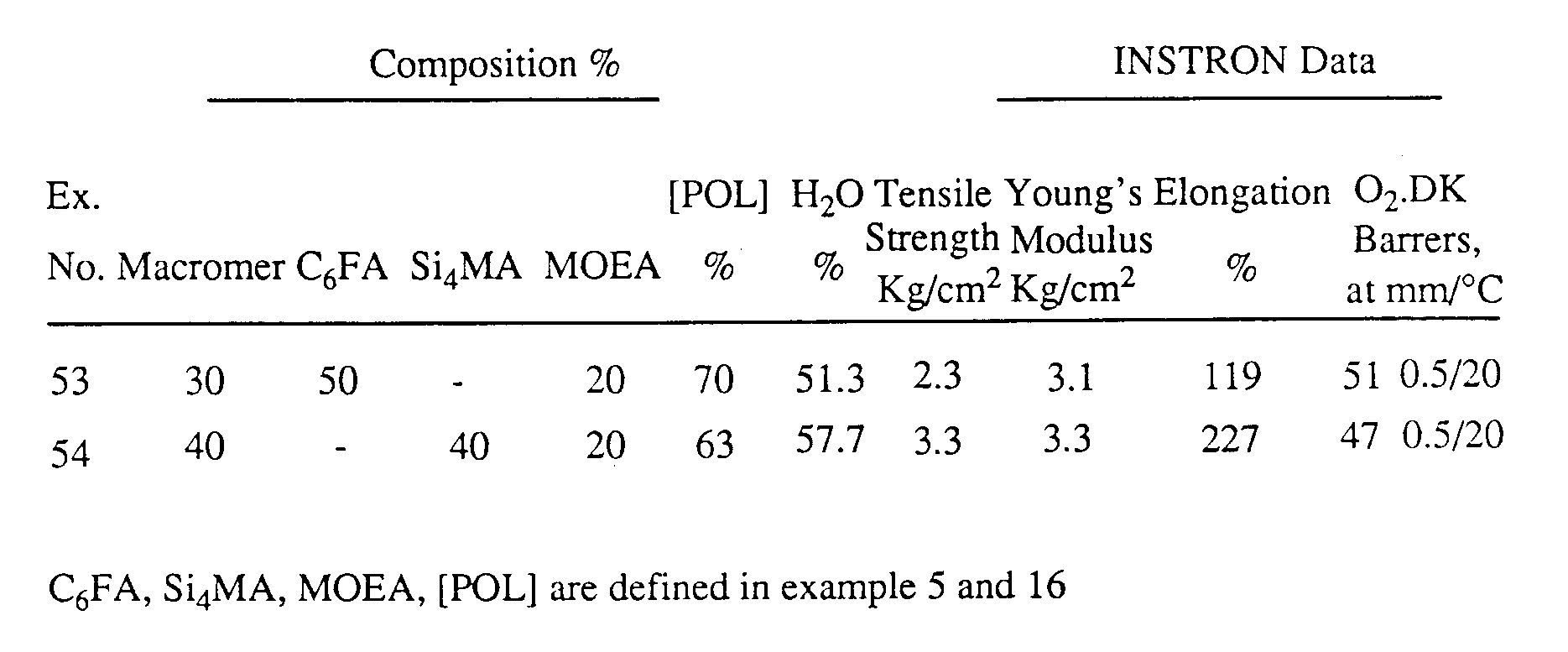
some kind of surface treatment to achieve the wettability required for comfortable
and safe in-eye wear.
[0004] For non-hydrogel, water free contact lens compositions, siloxane units containing
polymers have been used both, for soft contact lenses and hard contact lenses with
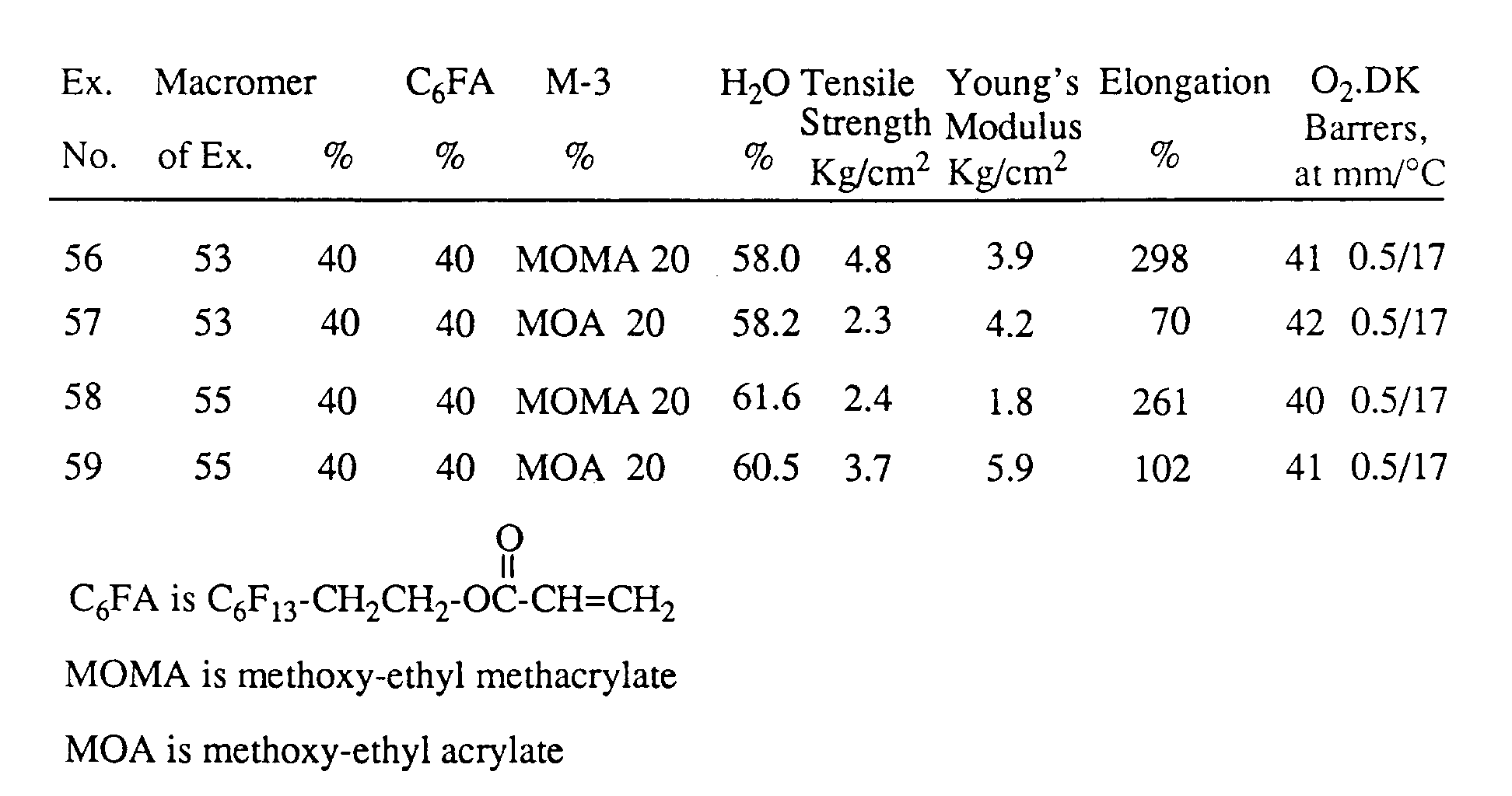
enhanced oxygen permeability; fluorinated groups, which are another group of oxygenflux
enhancing moieties, have only been used in hard contact lens materials although they
would be preferable to siloxane groups in non-hydrogel soft lenses as well because
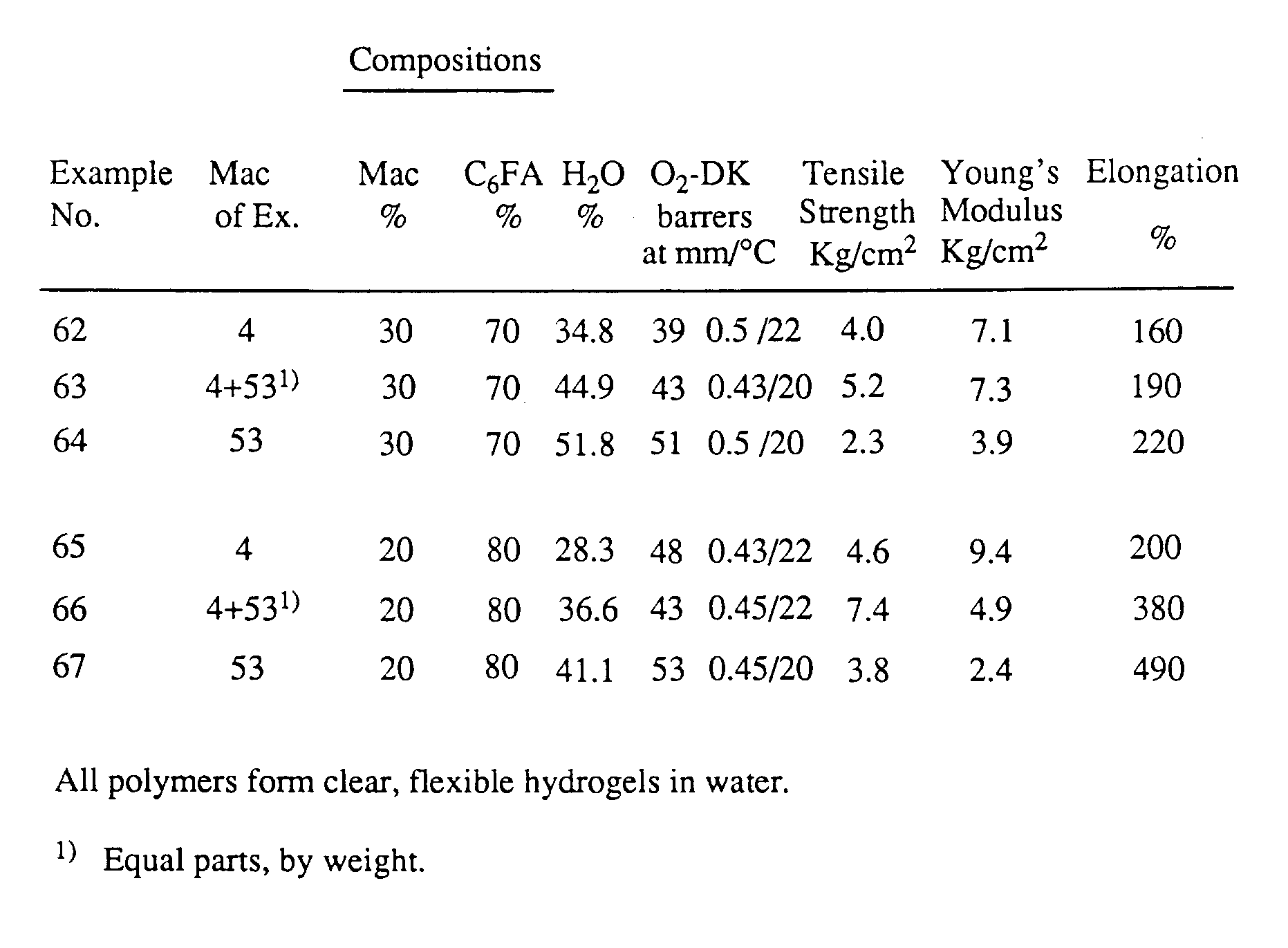
of their low lipophilicity and low protein adsorption tendencies.
[0005] In hydrogel soft contact lens materials on the other hand, siloxane as well as fluorine
has been used to enhance the oxygen permeability and many such silicone or fluorine
containing hydrogels have been described in the literature for use as contact lens
materials. Such silicone and/or fluorine containing hydrogels can possess oxygen permeabilities
3-8 times that of Si- or F-free hydrogels and at the same time retain some of the
good wettability of hydrogels.
[0006] Polysiloxane hydrogels which are water swollen copolymers of 2-hydroxyethyl methacrylate
or N-vinyl-pyrrolidone (NVP) with di- or tri-methacrylate functional poly-(dimethylsiloxane)
have been described in U.S. Patent No. 4,136,250 for use as a drug delivery matrix,
but also for contact lenses. Copolymers of tri-siloxy-hydroxy alkyl methacrylate with
HEMA and/or NVP are described in U.S. Patent Nos. 4,139,692 and 4,139,513, and copolymers
of C₁-C₄-dialkylacrylamides with oligosiloxanyl-silylalkylmethacrylates are described
in U.S. Patent Nos. 4,182,822 and 4,343,927, also for use as oxygen permeable hydrogel
contact lenses. U.S. Patent No. 4,711,943 describes essentially similar Si-containing
acrylic hydrogels.
[0007] Fluorinated hydrogels for use as soft contact lens materials are also known:
[0008] U.S. Patent Nos. 4,433,111 and 4,493,910 describe hydrogels and contact lenses obtained
by copolymerization of 20-40 mol % substituted or unsubstituted acrylamide or methacrylamide;
25-55 mol % N-vinylpyrrolidone (NVP); 5-20% mol % hydroxyalkyl(meth)-acrylate; 1-10
mol % (meth)-acrylic acid, and 1-9 mol % of a perfluoroalkylalkylene(meth)-acrylate;
the perfluoroalkyl groups act to to reduce protein deposition.
[0009] U.S. Patent No. 4,640,965 describes hydrogels and contact lenses obtained by copolymerisation
of hydroxyfluoralkylstyrene (5-60%, by weight), with hydroxyalkyl (meth)-acrylates
or N-vinylpyrrolidone (40-95%, by weight); the hydroxy groups are necessary to attain
the required compatibility.
[0010] U.S. Patent No. 4,638,040 describes the synthesis of 1,3-bis(trifluoroacetoxy)propyl-2-methacrylate
polymers and their use as hydrogel-contact lens materials or as ocular implants after
hydrolysis.
[0011] U.S. Patent No. 4,650,843 describes hydrogel contact lens materials consisting essentially
of copolymers of 50-95% (by weight) of 2-hydroxyethyl-methacrylate and 5-35% (by weight)
of fluorinated methacrylates with up to 5 F-atoms.
[0012] Copolymers of N,N-dimethylacrylamide (DMA) with perfluoroalkylacrylates or methacrylates
are described in European patent application 351 364 for use as oxygen permeable hydrogel
contact lenses.
[0013] In all the cited prior-art is the hydrophilic component based of water-soluble vinyl
monomers, like HEMA, NVP or DMA, which are copolymerized with silicone and/or fluorine
containing monomers or prepolymers. Although a great variety of Si or F containing
hydrogels can be prepared with these hydrophilic monomers, they all possess as hydrophilic
component a carbon-carbon backbone polymer; for the specific requirements of long-term
in-eye use, contact lenses with poly-(ethylene oxide) (PEO) as hydrophilic component
would be preferable since PEO is considered to have better biocompatibility and less
lipid and protein adsorption problems. Less protein adsorption generally means less
discoloration, better wettability and comfort, and generally a longer uselife for
a contact lens.
[0014] Poly-(ethylene oxide) as part of a silicone containing hydrogel is included also
in U.S. Patent No. 4,136,250, in form of dimethacrylate-(PEO)-(PDMSi)-(PEO) block
copolymers, copolymerized with HEMA or NVP; the amount of PEO incorporated into the
polymer is limited due to the presence of the other comonomers. Similar poly-(propylene
oxide)-PDMSi block copolymers are disclosed in U.S. Patent No. 4,740,533 although
this patent is directed toward essentially water free polymers for contact lenses.
[0015] Poly-(ethylene oxide) as part of fluorine containing hydrophilic polymers are also
described: U.S. Patent No. 3,728,151 describes PEO block copolymer with perfluoroalkyl
(- R
f) acrylates and -methacrylates, obtained by chain transfer polymerization with PEO-dithiols;
by virtue of their synthesis method these polymers are linear, non-crosslinked, low
molecular weight polymers of the A-B-A block type; their use is in textile finishing,
where they import anti-soiling and soil-releasing, self-washing properties.
[0016] U.S. Patent No. 4,046,944 describes block copolyurethane-ureas prepared from PEO-diols
and PEO-diamines, bis-perfluoroalkyl substituted butane diols and diisocyanates, also
for use in textile finishing as soil-release agents. This polymer too is not crosslinked
and therefore not a hydrogel, and of limited molecular weight.
[0017] EP-A-277,771 discloses contact lenses comprising a copolymer of an organosilicone
monomer, a fluoroalkyl ester monomer and a hydrophilic monomer, improved by further
addition of a linear polysiloxane oligomeric cross-linking agent with or without neopentylglycol
dimethacrylate. Polyethers having terminal vinyl groups are not disclosed.
[0018] US-A-4,528,301 discloses a contact lens material which is the copolymerization product
of a reaction mixture comprising (1) styrene or a ring substituted styrene, (2) a
vinyl alcohol ester such as vinyl acetate, (3) a polyethylene glycol ester such as
pentaethyleneglycol monomethacrylate, (4) a substituted polysiloxane such as dimethyl
polysiloxane or a substituted silane, and, optionally, (5) a cross-linking agent such
as divinyl benzene. The polyethylene glycol ester is restricted to monoesters such
that polyethers having at least two terminal vinyl groups are not contemplated.
[0019] No PEO and F-containing hydrogels are described in the prior art for use in biomaterials
and contact lenses. This is probably due to the difficulty in making clear compositions
of high molecular weight; since the PEO-hydrophile is a pre-polymeric unit of at least
1,000 MW, the F-containing part of the polymer has to be present in a polymeric form
as well; block-copolymers of this type are clear only if the blocks are sufficiently
short and association between blocks are in size smaller than the wavelenght of light.
PEO and F-blocks are especially difficult to combine into a clear copolymer because
of the inherent incompatibility of their prepolymeric and monomeric precursors and
their very different refraction indices.
[0020] It has now unexpectedly been discovered that crosslinked, clear, wettable and highly
oxygen permeable poly(ethylene oxide) and fluorine or silicone containing polymers
can be prepared, if α,ω-divinyl functionalized PEO-prepolymers are copolymerized with
perfluoralkylacrylates or methacrylates and/or oligosiloxy-silylalkyl acrylates or
methacrylates, optionally in the presence either of a third comonomer or a non-reactive
solvent or solvent mixture, capable of dissolving all monomeric components.
[0021] After synthesis, the polymers can be transformed by equilibration in water into flexible,
clear, wettable and oxygen permeable hydrogels, which are useful in biomedical application,
as oxygen permeable films and coatings and especially as deposit resistant, highly
oxygen permeable contact lenses.
[0022] It has further been discovered, that clear block-copolymers with analogous structures
can also be made with poly-propylene oxide and poly-tetramethylene oxide as polyether
blocks. These block copolymers are strong, flexible, O₂-permeable and, despite a low
(< 5%) water content, highly wettable and are therefore useful in many of the abovementioned
applications.
[0023] The instant invention pertains to copolymers which are oxygen permeable, flexible,
wettable, biocompatible and suitable for use in ophthalmic devices, such as contact
lenses, which copolymers comprise the polymerization product of
(A) 10 to 80% by weight of a vinyl-telechelic polyether, or a mixture thereof,
(B) 90 to 20% by weight of
(B-1) a fluorinated, ethylenically unsaturated monomer, or
(B-2) a silicone-containing ethylenically unsaturated monomer, or a mixture of monomer
(B-1) and monomer (B-2), and
(C) 0 to 60% by weight of an ethylenically unsaturated monomer or mixture of monomers
other than monomer (B-1) or monomer (B-2).
[0024] Another object of the invention are those copolymers which comprise 20 to 80% by
weight of (A) and 80 to 20% by weight of (B) and are otherwise as defined in the preceding
paragraph.
[0025] Copolymers which are valuable subembodiments of the invention are disclosed in claims
2 to 41.
[0026] The vinyl-telechelic polyether (A) preferably has the formula:

wherein PE has a number average molecular weight (MW) of about 500 to about 10000
and preferably has the formula:

wherein n is 1 to 3,
k, d and p are integers from 0 to 300, and the sum of
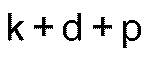
is 7 to 300,
R₁, R₁' and R₁'' are independently of each other hydrogen or methyl, with the proviso
that if n is 3, R₁, R₁' and R₁'' are hydrogen, thus describing the backbones of poly(ethylene
oxide), poly-(propylene oxide) and poly-(butylene oxide), but also block-copolymers
of the aforementioned alkylene oxides,
a is zero or 1,
m is an integer from zero to 2,
ℓ is zero or 1,
R₂ is linear or branched alkylene with 2 to 4 carbon atoms;
Y is
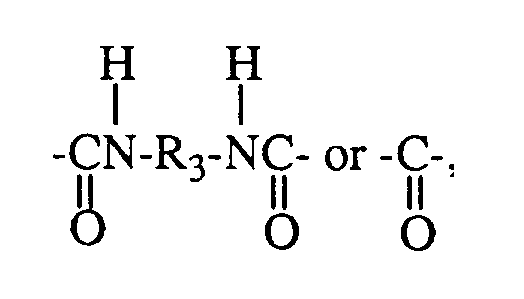
wherein R₃ is a divalent aliphatic group with 2 to 14 carbon atoms, a divalent 5-
or 6-membered cycloaliphatic group with 5 to 15 C-atoms, or an arylene group with
6 to 14 C-atoms, with the proviso, that if Y is
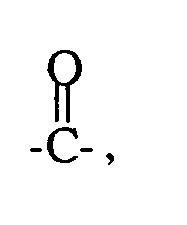
a is 1;
Q is selected from (shown as attached to V):
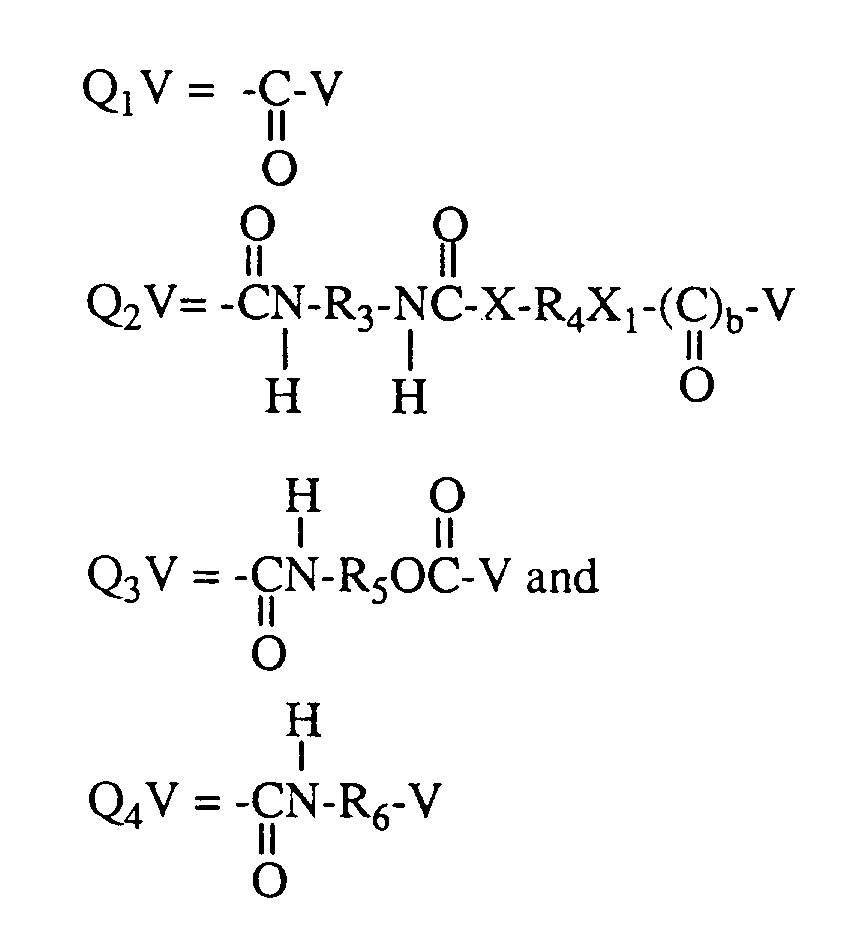
wherein R₄ is alkylene of 2 to 4 carbon atoms,
R₅ is alkylene of 2 to 10 carbon atoms,
R₆ is arylene or alkyl-substituted arylene of 6 to 20 carbon atoms,
X is -O- or -NR₇-, wherein R₇ is alkyl of 1 to 5 carbon atoms,
X₁ is -O-,-NH- or -NR₇-,
b is zero or 1,
V is
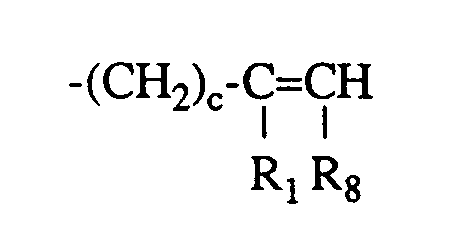
c is zero or 1,
V₁ has same meaning as V, or is H or R₉, when ℓ is zero,
R₈ is H or -COOH, with the proviso that, if R₈ is -COOH, R₁ is H, c is zero, and Q
is Q₁;
R₉ is alkyl of 1 to 18 carbon atoms;
with the further proviso that when Q is Q₂, a is zero;
when Q is Q₂, Q₃ or Q₄, R₈ is H;
when c is 1, b is zero, Q is Q₂ and R₁ and R₈ are H; and
when V₁ is R₉, m is zero.
[0027] The foregoing description for (A) thus includes poly(alkylene oxide) diols and α,ω-diaminoalkyl
poly(alkylene oxides) (a = 1), of about 500 to about 10000 molecular weight, optionally
chain-extended with diisocyanates (m > 0) and endcapped either directly with vinyl
unsaturated isocyanates, preferably 2-isocyanatoethyl methacrylate (IEM) or m-isopropenyl-α,α-dimethylbenzyl
isocyanate (TMI) (Q = Q₃ and Q₄); included are also the same poly-(alkylene oxides)
capped with diisocyanates, followed by reaction with amino- or hydroxy- alkyl acrylates,
-methacrylates, -acrylamides or -methacrylamides, hydroxyalkyl vinyl ether or allyl
alcohol (Q = Q₂);
as well as direct ester or amides (Q = Q₁).
[0028] If less than equivalent molar amounts of capping reactants are used, some of the
vinyltelechelic macromers are terminated by vinyl groups only on one end (V₁ = H or
R₉).
[0029] Thus, the vinyl unsaturated groups are bonded to the poly-(alkyleneoxide) chain ends,
either directly by ester or amide linkages (Q = Q₁); by two urethane or urea linkages
and one ester or amide linkage (Q = Q₂), or by one urethane or urea and one ester
linkage (Q = Q₃), or by a urea linkage alone (Q = Q₄).
[0030] Preferred are poly-(alkylene oxide) vinyl unsaturated prepolymers of structures (A)
where Q is of structure Q₂, Q₃ or Q₄; most preferred are prepolymers (A) where PE
is poly-(ethylene oxide), poly-(propylene oxide) or poly-(ethylene oxide-co-propylene
oxide), and Q is of structures Q₃ or Q₄ and a is 1.
[0031] Preferred vinyl unsaturated groups V are segments of acrylic, methacrylic and styrenic
groups, with methacrylic and styrenic groups being most preferred.
[0032] Preferred groups R₃ are the diradical residues of divalent aliphatic diisocyanates
with 6-12 carbon atoms, of divalent cycloaliphatic diisocyanates with 6-15 carbon
atoms and of divalent aromatic diisocyanates with 6 to 10 carbon atoms.
[0033] Most preferred are the diradical residues of isophorone diisocyanate and of 2,4,4(2,2,4)-trimethylhexane-1,6-diisocyanate.
[0034] Preferred groups R₅ are ethylene, propylene and butylene, with ethylene being most
preferred.
[0035] Preferred groups R₆ are phenylene and alpha, alpha-dimethylbenzylene with alpha,
alpha-dimethylbenzylene being most preferred.
[0036] Useful polyethers PE include: poly-(ethylene oxide) (PEO) diols of 500-10000 MW;
poly-(propylene oxide) (PPO) diols of 500-10000 MW; a poly-(ethylene oxide -co-propylene
oxide) diol of random or block copolymer structure in ratios of PEO:PPO from 1:30
to 30:1 and with 500-10000 MW; poly-(tetra-methylene oxide) (PTMO) diols with 500-10000
MW.
[0037] It is within the scope of the present invention to use not only the di-functional
polyethers of structure (A), but also a great variety of tri- or tetrafunctional poly-ether
alkanols, as they can be easily prepared by alkoxylation of triols, amines or diamines;
tetra-(polyalkylene oxide)-alkanols are for instance known under the tradename TETRONIC
(BASF) and are alkylene oxide adducts to ethylene diamine. Also useful are products
known as ETHOMEEN (AKZO Chemie) surfactants, which are ethylene oxide adducts to C₁-C₁₈
alkyl amines. By amination the corresponding tri- or tetra-amines can be prepared,
for example, the amination products of propylene oxide adducts to glycerol or trimethylol-propane
are available as JEFFAMINE-T from Texaco Chem. Corp. and are also useful in the context
of this invention.
[0038] Also useful in the context of this invention are fluorinated polyethers of MW 600-5000,
for example:
HO-CH₂CF₂O(C₂F₄O)
x(CF₂O)
yCF₂CH₂-OH
wherein
x and y are independently of each other integers from 6 to 50, as for instance described
in U.S. Patent No. 4,440,918.
[0039] Preferred are α,ω-di-(aminopropyl) PEO of 1000-8000 MW; and α,ω -di-(aminopropyl)
PPO of 1000-8000 MW and α,ω-di-(aminopropyl)poly-(ethylene oxide-co-propylene oxide)
of 1000 to 10000 MW. Most preferred are α,ω-di-(aminopropyl)-PEO and α,ω-di-(aminopropyl)-PPO
or α,ω-di-(aminopropyl) (ethylene-co-propylene oxide) of 1000-8000 MW, where the aminopropyl
group -R₂-NH₂ is of structure:
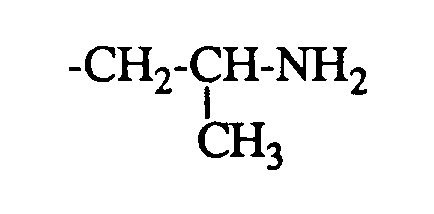
These amino terminated poly(alkylene oxides) are prepared, for example by amination
of the corresponding diols and are commercially available under the tradename JEFFAMINE
from Texaco Chem. Corp.
[0040] Diisocyanates of structure R₃-(NCO)₂ useful to form the prepolymer intermediate before
capping with a reactive vinyl monomer, are aliphatic, cycloaliphatic or aromatic diisocyanates
or mixtures thereof selected from the group consisting of ethylene diisocyanate, 1,2-diisocyanatopropane,
1,3-diisocyanatopropane, 1,6-diisocyanatohexane, 1,2-diisocyanatocyclohexane, 1,3-diisocyanatocyclohexane,
1,4-diisocyanatobenzene, bis(4-isocyanatocyclohexyl)methane, bis (4-isocyanatocyclohexenyl)methane,
bis(4-isocyanatophenyl)-methane, 2,6- and 2,4-toluene diisocyanate; 3,3'-dichloro-4,4'-diisocyanatobiphenyl;
1,5-diisocyanatonaphthalene, hydrogenated toluene diisocyanate; 1-isocyanatomethyl-5-isocyanato-
1,3, 3-trimethylcyclohexane (=isophorone diisocyanate); 2,2,4-(2,4,4)-trimethylhexane-1,6-diisocyanate,
2,2'-diisocyanatodiethyl fumarate; 1,5-diisocyanatol-carboxypentane; 1,2-, 1,3-, 1,6-,
1,7-, 1,8-, 2,7- and 2,3-diisocyanato-naphthalene; 2,4- and 2,7-diisocyanato-1-methylnaphthalene;
4,4'-diisocyanatobiphenyl; 4,4'-diisocyanato3,3'-diisocyanato-6(7)-methylnaphthalene;4,4'-diisocyanato-2,2'-dimethyl
biphenyl; bis-(4-isocyanatophenyl) ethane; and bis(4-isocyanatophenyl) ether.
[0041] The preferred diisocyanates are isophorone diisocyanate, 2,2,4-(2,4,4)-trimethylhexane-1,6-diisocyanate
and 2,4- and 2,6-toluene diisocyanate.
[0042] Unsaturated, polymerizable vinyl compounds of structure V-(CO)
b-X₁R₄XH useful to react with the NCO-capped poly-(alkylene oxides) contain hydroxy
or amino groups and are selected from the groups consisting of acrylic, methacrylic,
acrylamido, methacrylamido, vinyl ether, styrene, allyl, maleate, fumarate and itaconate
moieties. Typical examples include: 2-hydroxyethyl acrylate and methacrylate, 2- and
3-hydroxypropyl acrylate and methacrylate; 4-hydroxybutyl acrylate and methacrylate;
glycerol dimethacrylate; hydroxyethyl maleate and fumarate; 2-hydroxyethyl- and 4-hydroxy-butyl
vinyl ether; N-tert.-butyl-aminoethyl methacrylate, N-(3-hydroxypropyl)-methacrylamide;
vinyl-benzyl alcohol; allyl alcohol.
[0043] Preferred active hydrogen containing vinyl compounds are 2-hydroxyethyl acrylate
and methacrylate and N-tert.-butyl-aminoethyl methacrylate.
[0044] Vinyl unsaturated isocyanates of structure V-COOR₅NCO or V-R₆-NCO useful to make
the vinyl-telechelic poly-(alkylene oxides) in one step include 2-isocyanatoethyl
methacrylate, 2-isocyanatoethyl acrylate, 3-isocyanatopropyl methacrylate, 1-methyl-2-isocyanatoethyl
methacrylate, and 1,1-dimethyl-2-isocyanatoethyl acrylate.
[0045] Such compounds and their preparation are disclosed, for example, in U.S. Patent No.
2,718,516 and British Patent No. 1,252,099.
[0046] Other useful isocyanates include isocyanatoalkyl vinyl ethers, such as 2-isocyanatobutyl
vinyl ether, and styrene isocyanate and m-isopropenyl-alpha, alpha- dimethylbenzyl
isocyanate. Also useful are isocyanates obtained by the reaction of one mole of a
hydroxy- or aminoalkyl acrylate or methacrylate with one mole of a diisocyanate of
structure R₃(NCO)₂. Examples of useful such acrylates and methacrylates include 2-hydroxyethyl
methacrylate, 2-hydroxyethyl acrylate, 3-hydroxypropyl methacrylate, or t-butylaminoethyl
methacrylate; suitable diisocyanates include isophorone diisocyanate, (3,3,4)-trimethylhexane-1,6-diisocyanate,
toluene diisocyanate, diphenylmethane-4,4'-diisocyanate and the like.
[0047] Most preferred are 2-isocyanatoethyl methacrylate and m-isopropenyl-α,α-dimethylbenzyl
isocyanate.
[0048] Vinyl-telechelic polyethers with Q of structure Q₁ are made, for example, by esterification
with acrylic acid, acroyl chloride, acrylic acid anhydride or the methacrylic analog,
or by transesterification with methyl acrylate or methacrylate, or by reaction with
maleic- or itaconic anhydride or fumaroyl chloride.
[0049] The vinyl-telechelic poly-(alkylene oxides) can be used singly or in combination
with each other.
[0050] The fluorinated and/or silicone containing monomers (B) useful for making the novel
polymers of this invention are acrylic or styrenic monomers. Fluorine-containing monomers
(B-1) are vinyl monomers containing at least three fluorine atoms selected from the
group consisting of hexafluoroisopropyl acrylate and methacrylate, perfluorocyclohexyl
acrylate and methacrylate, pentafluorostyrene and the acrylate or methacrylate esters
or amides of the formula

wherein
R
f is -(CF₂)
tCF₂L or -(CF₂CF₂)
qOCF(CF₃)₂
R₁ is hydrogen or methyl,
X is oxygen or -NR₇- wherein R₇ is an alkyl group with 1-5 carbon atoms,
r is an integer from 1-4,
t is an integer from 0-14,
q is an integer from 1-3;
L is hydrogen or fluorine, with the proviso that, when t is 0, L is fluorine; and
W is a direct bond or a divalent group of the structure -NR₇-CO-; -NR₇SO₂-(CH₂)
r-; -NR₇SO₂-; -S-(CH₂)
r-; -NR₇-(CH₂)
r-NR₇SO₂-; or -NHCO-.
[0051] Typical examples are 1,1,2,2-tetrahydroperfluorodecyl acrylate and methacrylate,
1,1,2,2-tetrahydroperfluorooctyl acrylate and methacrylate and 1,1,2,2 tetrahydroperfluorooctyl
methacrylamide or acrylamide.
[0052] Other useful fluorinated monomers include hexafluoroisopropyl acrylate, hexafluoroisopropyl
methacrylate, perfluorocyclohexyl methacrylate, and 2,3,4,5,6-pentafluoro-styrene;
the acrylates and methacrylates of fluoroalkyl substituted amido-alcohols, such as
of C₇F₁₅CON(C₂H₅)C₂H₄OH; of sulfonamido-alcohols, such as of
C₈F₁₇C₂H₄SO₂N(CH₃)-C₄H₈OH and C₈F₁₇SO₂N(C₂H₅)C₂H₄OH; of perfluoroether alcohols, such
as of C₃F₇-O(C₃F₆O)₂CF(CF₃)-CH₂OH or
(CF₃)₂CFO(CF₂CF₂)₂-CH₂CH₂OH; and the acrylates and methacrylates of fluorinated thioether
alcohols of structure CF₃(CF₂)
tCH₂CH₂SCH₂CH₂CH₂OH; acrylates and methacrylates of sulfonamido-amines, such as of
R
fSO₂N(CH₃)CH₂CH₂N(CH₃)(CH₂)₃NH₂ and R
fCH₂SO₂NH(CH₂)₂NH₂; of amidoamines, such as of R
fCONH(CH₂)₂NH₂; as well as the vinyl monomers obtained by reaction of these aforementioned
fluorinated alcohols and amines with 2-isocyanatoethyl acrylate or methacrylate or
m-isopropenyl-1,1-dimethylbenzyl isocyanate.
[0053] Preferred are fluorinated monomers in which X is oxygen, W is a direct bond, R₁ is
hydrogen, r is 2, t is 6 to 10 and L is fluorine; or in which r is 1 or 2, t is 1-4
and L is fluorine, or in which R₁ is methyl, r is 2, t is 4 to 10 and L is fluorine.
[0054] Preferred are hexafluoroisopropyl methacrylate, trifluoroethyl methacrylate, and
1,1,2,2-tetrahydroperfluorooctyl and 1,1,2,2-tetrahydroperfluorodecyl acrylate and
methacrylate, with 1,1,2,2-tetrahydroperfluorooctyl acrylate being most preferred.
[0055] Silicone containing vinyl monomers (B-2) are oligosiloxanyl-silylalkyl acrylates
and methacrylates containing from 2-10 Si-atoms. Typical representatives include:
tris(trimethylsiloxy-silyl)propyl (meth)acrylate, triphenyldimethyl-disiloxanylmethyl
(meth)acrylate, pentamethyl-disiloxanylmethyl acrylate, tert-butyl-tetramethyldisiloxanylethyl
(meth)acrylate, methyl-di(trimethylsiloxy)silylpropyl-glyceryl (meth)acrylate; pentamethyldi-siloxanyl-methyl
methacrylate; heptamethyl-cyclotetrasiloxy methyl methacrylate; heptamethyl-cyclotetrasiloxy-propyl
methacrylate; (trimethylsilyl)-decamethyl-pentasiloxy-propyl methacrylate; undecamethyl
pentasiloxypropyl methacrylate. Preferably the monomer is tris (trimethylsiloxy-silyl)
propyl methacrylate.
[0056] The (B-1) fluorine and/or (B-2) silicone containing monomer units as (B) can be present
in the polymers of this invention in amounts of 20-90%, preferable 40-80%, most preferably
50-70% by weight. When mixtures of (B-1) and (B-2) are used, they are preferably in
a weight ratio of 4:1 to 1:4.
[0057] The monomers (C) which can be present in the polymers of this invention in amounts
from 0-60% can be any copolymerizable vinyl monomer, like an ester or amide of acrylic
or methacrylic acid with from 1-20 carbon atoms in a linear or branched aliphatic,
cycloaliphatic or aromatic group containing ester or amide group, and which may be
interrupted by hetero atoms like sulfur or oxygen; analogous mono- or di-esters of
maleic and itaconic acid; alkyl vinyl ethers with 1 to 10 carbon atoms in the alkyl
group, vinyl esters of C₁ to C₁₂- carboxylic acids; styrene and alkyl substituted
styrene and α-methylstyrene; hydroxyalkyl acrylates, methacrylates, acrylamides and
methacrylamides; alkyl- and dialkyl-amino-alkyl methacrylates and methacrylamides;
hydroxyalkyl vinyl ethers, hydroxyalkyl maleates and itaconates.
[0058] These comonomers are preferably present in amounts of 5-60%, most preferably in amounts
of 10-50% by weight.
[0059] Representative examples include: methyl acrylate, ethyl acrylate, n- and isopropyl
acrylate, cyclohexyl acrylate, trimethyl-cyclohexyl acrylate, phenyl acrylate, benzyl
acrylate and all the corresponding methacrylates; furfuryl acrylate and methacrylate;
methoxy-ethyl-, ethoxy-ethyl-, and ethoxy-ethoxy ethyl acrylate and methacrylate;
2-hydroxyethyl acrylate and methacrylate, 3-hydroxypropyl acrylate, methacrylate and
methacrylamide; glycidyl methacrylate; N,N-dimethylacrylamide; N-isopropyl- acrylamide;
N-vinylacetamide; N-vinyl-pyrrolidone; dimethylamino-ethyl methacrylate and methacrylamide;
acrylic and methacrylic acid, vinyl sulfonic acid, 4-styrene sulfonic acid and 2-methacrylamido-2-methyl-propane-sulfonic
acid and their salts.
[0060] Preferred are methoxy-ethyl acrylate and methoxy-ethyl methacrylate, ethoxy-ethyl
acrylate and ethoxy-ethyl methacrylate; methyl methacrylate; methyl acrylate, 2-hydroxyethyl
methacrylate; N-vinylpyrrolidone; N,N-dimethyl-acrylamide and styrene, and ethoxy-ethoxy-ethyl
acrylate.
[0061] The vinyl-telechelic poly-alkylene oxides (A) may be prepared, either, most easily,
in one step by the reaction of (poly-alkylene oxide) diols or diamines with the halide,
anhydride or lower alkyl ester of acrylic, methacrylic, maleic or itaconic acid, or
an isocyanatoalkyl acrylate or methacrylate or a styrene isocyanate, or alternatively,
in two steps, by reaction with, first, an organic diisocyanate followed by, secondly,
reaction with a hydroxy- or amino functional alkyl acrylate, alkyl methacrylate, alkyl
maleate, alkyl itaconate, alkyl vinyl ether, allyl compound or styrene. Preferably,
the vinyl-telechelic poly-(alkylene oxides) are synthesized by reaction of the poly-(alkylene
oxide) diols or diamines with vinyl-unsaturated isocyanates. For urethane bond formation,
catalysts are used in amounts from 0.01-0.5%. Typical catalysts include stannous octoate
or dibutyltin dilaurate (DBTL), or tert.-amines like triethylamine.
[0062] Copolymerization of the vinyl-telechelic poly-(alkylene oxides) (A) with comonomers
(B) and (C) may be carried out by employing initiators which generate free-radicals
on application of an activating energy as is conventionally used in the polymerization
of ethylenically unsaturated monomers. Included among free-radical initiators are
the conventional thermally activated initiators such as organic peroxides and organic
hydroperoxides. Representative examples of such initiators include benzoyl peroxide,
tertiary-butyl perbenzoate, diisopropyl peroxydicarbonate, cumene hydroperoxide, azobis(isobutyronitrile),
and the like. Generally, from about 0.01 to 5 percent by weight of thermal initiator
is used.
[0063] Preferably, UV-initiated polymerization is carried out, using photoinitiators. Such
initiators are well known and have been described, for example, in polymerization
art, e.g., Chapter II of "Photochemistry" by Calvert and Pitts, John Wiley & Sons
(1966). The preferred initiators are photoinitiators which facilitate polymerization
when the composition is irradiated. Representative examples of such initiators include
acyloin and derivatives thereof, such as benzoin, benzoin methyl ether, benzoin ethyl
ether, benzoin isopropyl ether, benzoin isobutyl ether and α-methylbenzoin; diketones
such as benzil and diacetyl, etc.; ketones such as acetophenone, α,α,α-tribromoacetophenone,
α,α,-diethoxyacetophenone (DEAP), 2-hydroxy-2-methyl-1-phenyl-1-propanone, o-nitro-α,α,α,-tribromoacetophenone,
benzophenone and p,p'-tetramethyldiaminobenzophenone; α-acyloxime esters such as benzil-(O-ethoxycarbonyl)-α-monoxime;
ketone/amine combinations such as benzophenone/N-methyldiethanolamine, benzophenone/tributylamine
and benzophenone/Michler's ketone; and benzil ketals such as benzil dimethyl ketal,
benzil diethyl ketal and 2,5-dichlorobenzil dimethyl ketal. Normally, the photoinitiator
is used in amounts ranging from about 0.01 to 5% by weight of the total oligomeric
composition.
[0064] Preferably, about 0.1 to 1.0% of photoinitiator is used in the polymerizable compositions.
[0065] Polymerization may be carried out in bulk in a conventional manner or in the presence
of a solvent. Especially in case of poly-(ethylene oxide) as (A) building block, cosolvents
are usually required to compatibilize components (A) and (B). The amount of solvent
required depends on the nature and relative amounts of (A) and (B), but also on the
choice of comonomer (C), which can act as a solvent for (A) and (B). Useful solvents
to carry out the polymerization include ketones, like acetone, methyl ethyl ketone,
methyl propyl ketone, methyl isobutyl ketone and cyclohexanone; alcohols like ethanol,
isopropanol or ethyl-cellosolve; ethers like ethylene glycol or diethylene glycol
dimethyl ether; esters like ethyl acetate or isopropyl acetate; dimethyl sulfoxide;
N-methylpyrrolidone; N,N-dimethylformamide; N,N-dimethylacetamide and the like.
[0066] The polymerization is carried out in molds, which can consist of plastics, glass
or metal and can be any shape. For making films and sheets, the molds are preferably
made of glass plates and lined with MYLAR or other polymer films and held together
by clamps, using a spacer of desired thickness. Contact lenses are preferably prepared
in UV-permeable plastic molds.
[0067] After polymerization is complete, the polymer is removed from the mold and any solvent
present is either removed by vacuum drying or extraction with water and with water-soluble
solvents, or water-solvent mixtures. Useful solvents are acetone, ethanol, methanol,
isopropanol and the like. Azeotropic distillation is also a useful procedure to remove
certain solvents. After the solvent is removed the polymer is equilibrated in distilled
water and its water content is determined gravimetrically. All subsequent measurements
are carried out on the water-equilibrated polymers.
[0068] In the following examples bending angle is determined on 2.5 x 0.5 inch 1 mm thick,
cast sheets by determining the angle formed by a 2 inch overhang and the horizontal.
Oxygen permeability is measured with a O₂-Permeometer-Model 201-T (Createch), using
buffered saline (pH = 7) as electrolyte and is expressed in units

Physical-mechanical measurements are carried out with an INSTRON testing apparatus,
model 1123 on 0.6-1 mm thick sheets.
[0069] Water content is expressed as:

Examples 1-25 describe the synthesis of fluorine or silicone containing poly-(ethylene
oxide) block copolymer hydrogels.
[0070] Example 1: Synthesis of Poly-(ethylene oxide)-urethane Dimethacrylate
120 g (0.0358 m) Polyethylene oxide diol (PEO) of MW 3350 are filled into a 500 ml
round bottom flask, equipped with a magnetic stirring bar, gas-inlet tube, thermometer
and heating mantle. The PEO is heated to 80°C and the molten resin is stirred for
2 hours at a vacuum of ≦ 0.05 - 1 mm Hg; the liquid is slowly cooled to 50°C and the
vacuum broken with dry air. 60 g Isopropyl acetate (IPAC) are added and a clear solution
is formed.
[0071] 11.18 g (0.072 m) 2-Isocyanatoethyl methacrylate and 21.8 g isopropyl acetate are
filled into an addition funnel and are slowly added to the PEO solution. 50 g IPAC
are used to rinse the funnel. After addition is complete, 0.071 g dibutyl-tin dilaurate
(DBTL) (0.15 mol %) are added and the mixture is stirred at 50°C under dry air for
three hours or until all NCO has been consumed as determined by IR-analysis. The product
is allowed to cool down and crystallize and 60 g IPAC are added to form a slurry.
The slurry is filtered and dried to a white powder, weighing 128.4 g (98% of theory).
[0072] Example 2: Using the same procedure as described in example 1, a PEO-di(urethanemethacrylate)
is prepared, using poly-(ethylene oxide) diol of 1450 MW.
[0073] Example 3: Synthesis of Si-containing Poly-(ethylene oxide) Block Copolymers
5 g of the PEO-dimethacrylate of example 1 are mixed with 5 g tris-(trimethylsiloxy)-silyl-propyl
methacrylate (Si₄MA), 4 g N-methylpyrrolidone (NMP), 6 g methyl ethyl ketone (MEK)
and 0.4 % benzoin methyl ether (BME) as UV initiator. The solution is degassed by
vacuum which then is broken with dry nitrogen and is filled into a 0.5 mm wide MYLAR
lined glass mold held together by clamps, after which it is finally polymerized by
exposure to UV radiation from a SYLVANIA Black-Lite Blue lamp for 8 hours.
[0074] The clear polymer sheet is removed from the mold and the solvent is exchanged with
water first by immersion for 12 hours in distilled water, followed by one hour boiling
and equilibration for 48 hours.
[0075] A clear, flexible hydrogel is obtained which contains 54.4 % water, has a bending
angle of 58° and an oxygen permeability DK of 52 barrers.
[0076] Example 4: Synthesis of poly-ethylene oxide urea-dimethacrylate from α,ω-di-(1-methyl-aminoethyl)
poly-(ethylene oxide).
[0077] 57.68 g(0.020 m) of a α,ω-di(1-methyl-aminoethyl) poly-(ethylene oxide) of MW 2884
and 57.7 g of anhydrous methyl propyl ketone are charged into a 3-neck round bottomed
flask which has been equipped with a stirrer, nitrogen inlet, condenser, thermometer
and dropping funnel. The solution is stirred at room temperature under dry nitrogen.
Then 6.20 g (0.04 mole) of 2-isocyanatoethyl methacrylate (MW 155) dissolved in 6.2
g of anhydrous methylpropyl ketone are added slowly from the dropping funnel. The
mildly exothermic reaction is maintained at 35°C and below by water bath cooling for
1 hour at which time an IR analysis shows the reaction to be complete.
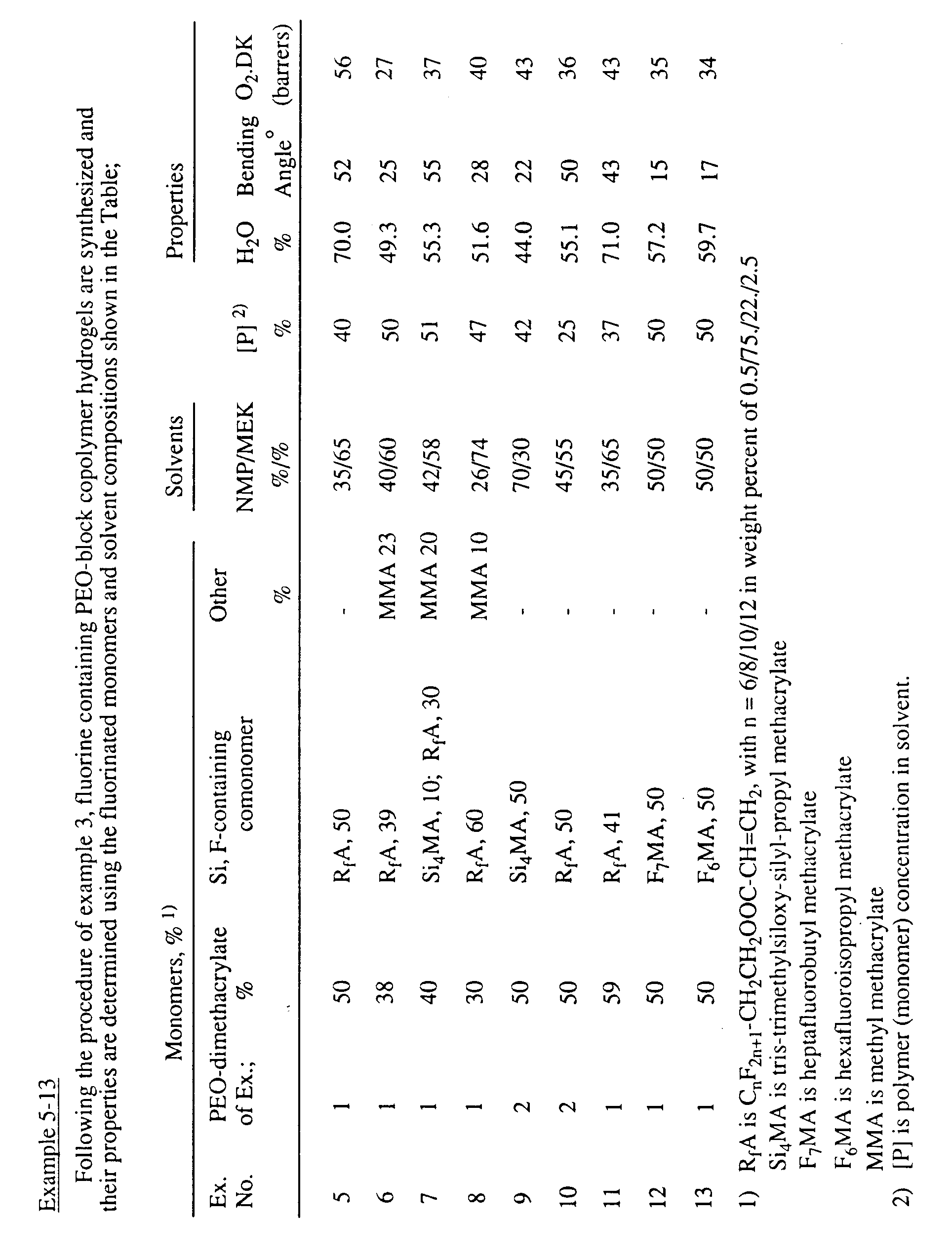
[0078] Example 5-13: Following the procedure of example 3, the PEO-urea dimethacrylate of example 4 is
mixed with various fluorinated comonomers (F.-mon) and other comonomers, using methyl
propyl ketone (MPK) as a solvent. 0.5% Benzoin methyl ether is added. The mixtures
are degassed, filled into 1 mm thick molds and cured for 8 hours by UV. The polymer
sheets are removed from the mold, extracted for 24 hours by swelling in ethanol, boiled
for 1 hour in distilled water followed by equilibration in water.
[0079] Composition and test results are shown in the following table.
[0080] Example 14: Using the procedure of example 3, selected PEO-block copolymers are synthesized in
1 mm wide MYLAR lined molds and their physical-mechanical properties are measured
and reported in the following table.
| Polymer of Ex. |
H₂O % |
Tensile Strength Kg/cm² |
Young's Modulus Kg/cm² |
Elongation % |
| 3 |
54.4 |
6.3 |
13.6 |
106 |
| 6 |
49.3 |
33.0 |
93.4 |
63 |
| 11 |
71.0 |
4.6 |
25.0 |
20 |
| 12 |
57.2 |
25.1 |
106.0 |
29 |
| 13 |
59.7 |
16.6 |
69.4 |
28 |
[0081] Example 15: The hydrolytic stability of PEO-block copolymers is evaluated by aging in pH 7.4
phosphate-buffered saline solution at 80°C for 132 hours and measuring physical properties
before and after aging. The results are shown in the Table.
| Polymer of Example |
|
H₂O % |
Tensile Strength kg/cm² |
Young's Modulus kg/cm² |
Elongation % |
Bending Angle ° |
| 9 |
initial: |
44 |
8.9 |
28 |
65 |
26 |
| aged: |
43 |
7.0 |
26 |
50 |
30 |
| 10 |
initial: |
55 |
2.7 |
17 |
38 |
50 |
| aged: |
56 |
3.0 |
17 |
25 |
50 |
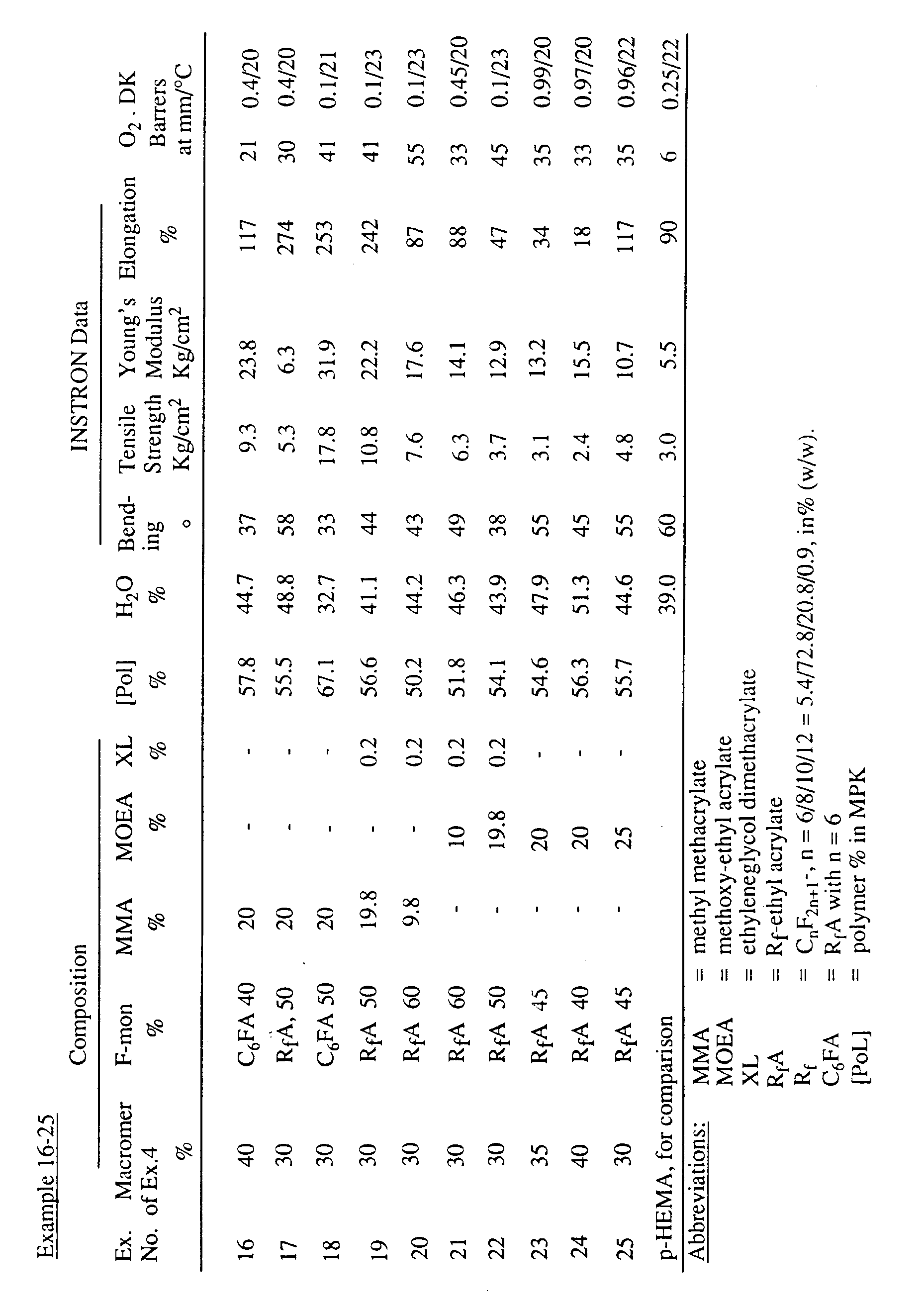
[0082] Example 16-25: Following the procedure of example 3, the PEO-urea dimethacrylate of example 4 is
mixed with various fluorinated comonomers (F.-mon) and other comonomers, using methy-propyl
ketone (MPK) as a solvent.. 0.5% Benzoin methyl ether is added. The mixtures are degassed,
filled into 1 mm thick molds and cured for 8 hours by UV. The polymer sheets are removed
from the mold, extracted for 24 hours by swelling in ethanol, boiled for 1 hour in
distilled water followed by equilibration in water.
[0083] Compositions and test results are shown in the following table.
[0084] Examples 26-50 describe the synthesis of silicone and/or fluorine containing poly-(propylene
oxide) block copolymers.
[0085] Example 26: 41.98 g (0.020 m) α,ω-Bis-(aminopropyl)-poly(propylene oxide) of MW 2099 are charged
into a 3-necked round bottomed flask, equipped with stirrer, nitrogen inlet, condenser,
thermometer and dropping funnel. The liquid is stirred at room temperature under dry
nitrogen while 6.20 g (0.040 m 2-isocyanatoethyl methacrylate (IEM) are slowly added.
The mildly exothermic reaction mixture is maintained at 35° C by water bath cooling
for one hour after which time IR analysis shows the reaction to be complete.
[0086] Example 27: Following the procedure of example 26, a methacrylate terminated poly(propylene oxide)
prepolymer is prepared from α,ω-bis-(1-methyl-amino ethyl)-poly(propylene oxide) of
MW 4408.
[0087] Example 28: The procedure of example 26 is repeated, but using m-isopropenyl-α,α-dimethylbenzyl
isocyanate (TMI) as the vinyl-unsaturated isocyanate.
[0088] Example 29: The procedure of example 27 is repeated, but using m-isopropenyl-α,α,-dimethylbenzyl
isocyanate (TMI) as the vinyl-unsaturated isocyanate.
[0089] Examples 30-32: Synthesis of chain extended, methacrylate-terminated poly- (propylene oxide).
[0090] 100.75 g (0.048 m) of α,ω-Di-(aminopropyl)-poly-(propylene oxide) of MW 2099 are
charged into a 3-necked round bottomed flask which is equipped with a stirrer, nitrogen
inlet, condenser, thermometer and dropping funnel. The liquid is stirred at room temperature
under dry nitrogen. 1.26 g (0.006 m) 2,2,4(2,4,4) Trimethylhexane- 1,6-diisocyanate
(TMDI) are added and the reaction mixture is kept at 28°C for 2 hours, by which time
all NCO-groups are reacted, as determined by IR-analysis, yielding a partially chain
extended prepolymer containing PPO and TMDI in a mol ratio of 8:1. Then 13.03 g (0.084
m) of 2-isocyanatoethyl methacrylate (IEM) (MW 155) are added slowly from the dropping
funnel. The mildly exothermic reaction is maintained at 35°C and below by water bath
cooling for 1 hour, at which time an IR analysis shows the reaction to be complete.
[0091] By the same procedure, chain extended IEM-capped PPO-prepolymers are prepared, containing
PPO and TMDI in mol ratios of
- Example 31:
- 5/1 (PPO/TMDI)
- Example 32:
- 4/1 (PPO/TMDI)
Examples 33-40: Following the procedure of example 3, the poly(propylene oxide)-dimethacrylates
of example 26-32 are mixed and reacted with fluorinated comonomers and other comonomers,
in the presence of methyl-propyl ketone (MPK) as a solvent; 0.4% benzoin methyl ether
(BME) and 8 hours UV-exposure are used for curing. After polymerization, the clear
polymer sheets are removed, boiled in water for one hour to strip off unreacted monomer
and solvent, and equilibrated in distilled water.
[0092] The polymer compositions thus prepared and their properties are shown in the table.
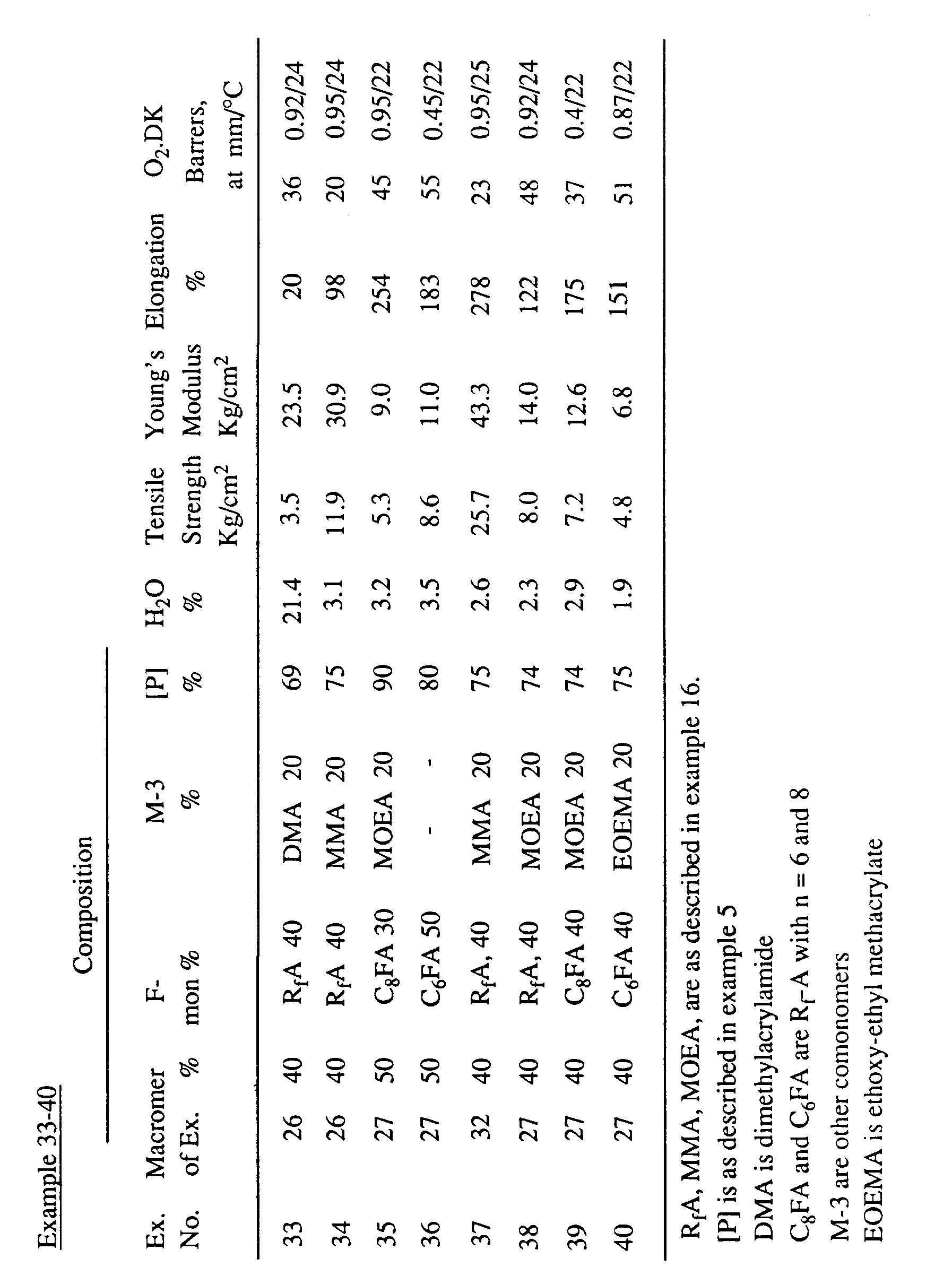
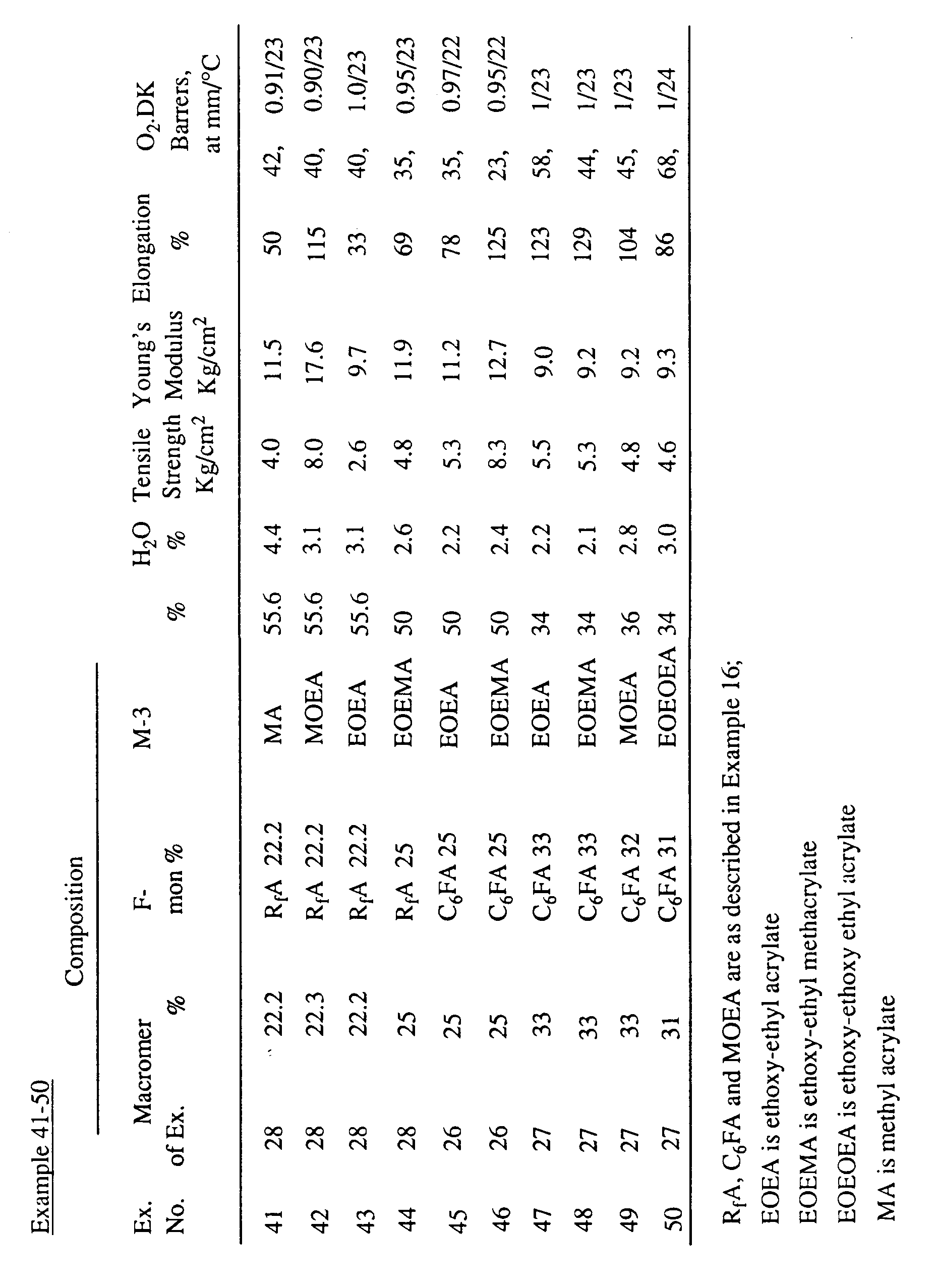
[0093] Example 41-50: Following the procedure of example 3, the poly(propylene oxide)-dimethacrylates of
examples 26, 27 and 28 are mixed and reacted with fluorinated comonomers and other
comonomers, but no solvent is used. To the clear mixtures are added 0.2% benzoin methyl
ether (BME), and 5 hour UV exposure is used for the polymerization step. After polymerization,
the clear polymer sheets are removed from the molds, immersed in boiling water for
one hour and equilibrated in distilled water.
[0094] The polymer compositions thus prepared and their properties are listed in the table.
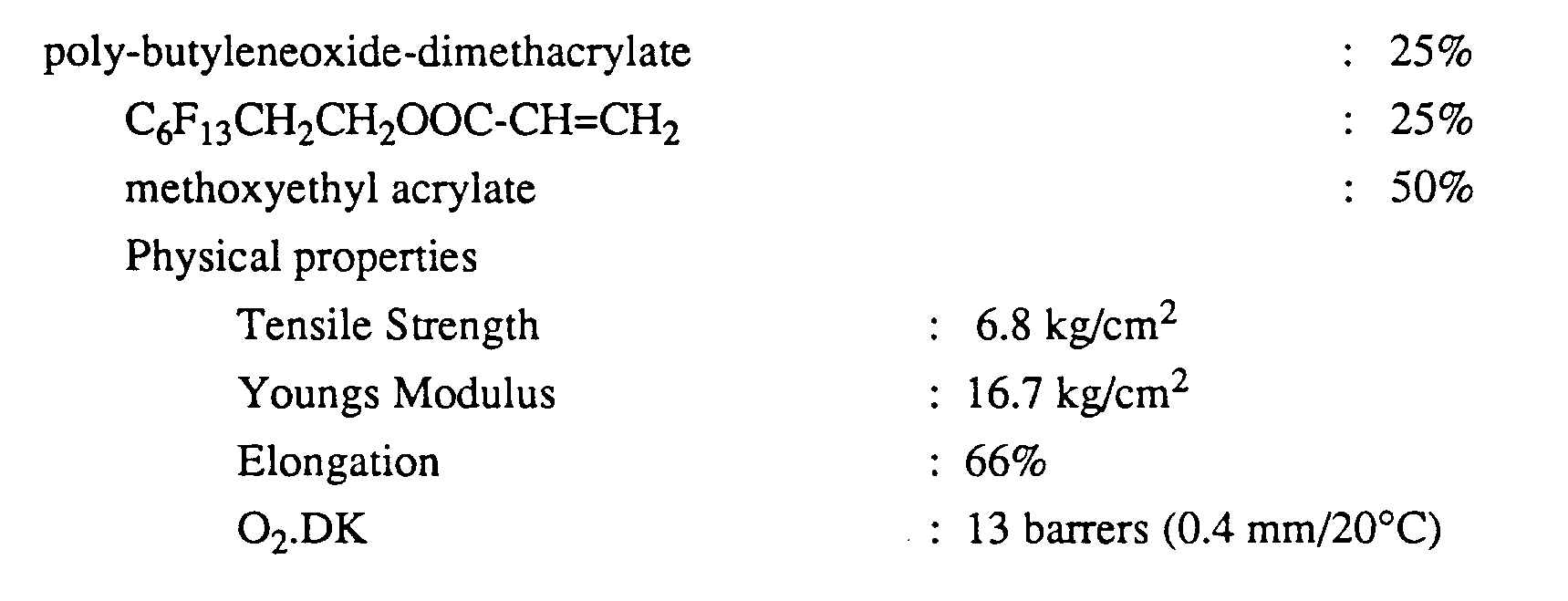
[0095] Example 51: 99.0 g (0.050 m) Poly-(butylene oxide) diol of MW 1980 are charged into a 3-necked
round bottomed flask, equipped with stirrer, nitrogen inlet tube, condenser thermometer
and dropping funnel. 0.03 g Dibutyltin dilaurate are added and the solution is stirred
at room temperature under dry nitrogen while 16.28 g (0.105 m) 2-isocyanatoethyl methacrylate
(IEM) are slowly added. The mildly exothermic reaction mixture is maintained at 35°C
for one hour, after which time IR-analysis shows no free remaining NCO-groups.
[0096] A 0.5 mm thick polymer sheet is cast following the procedure of example 3 and having
the following composition and properties:
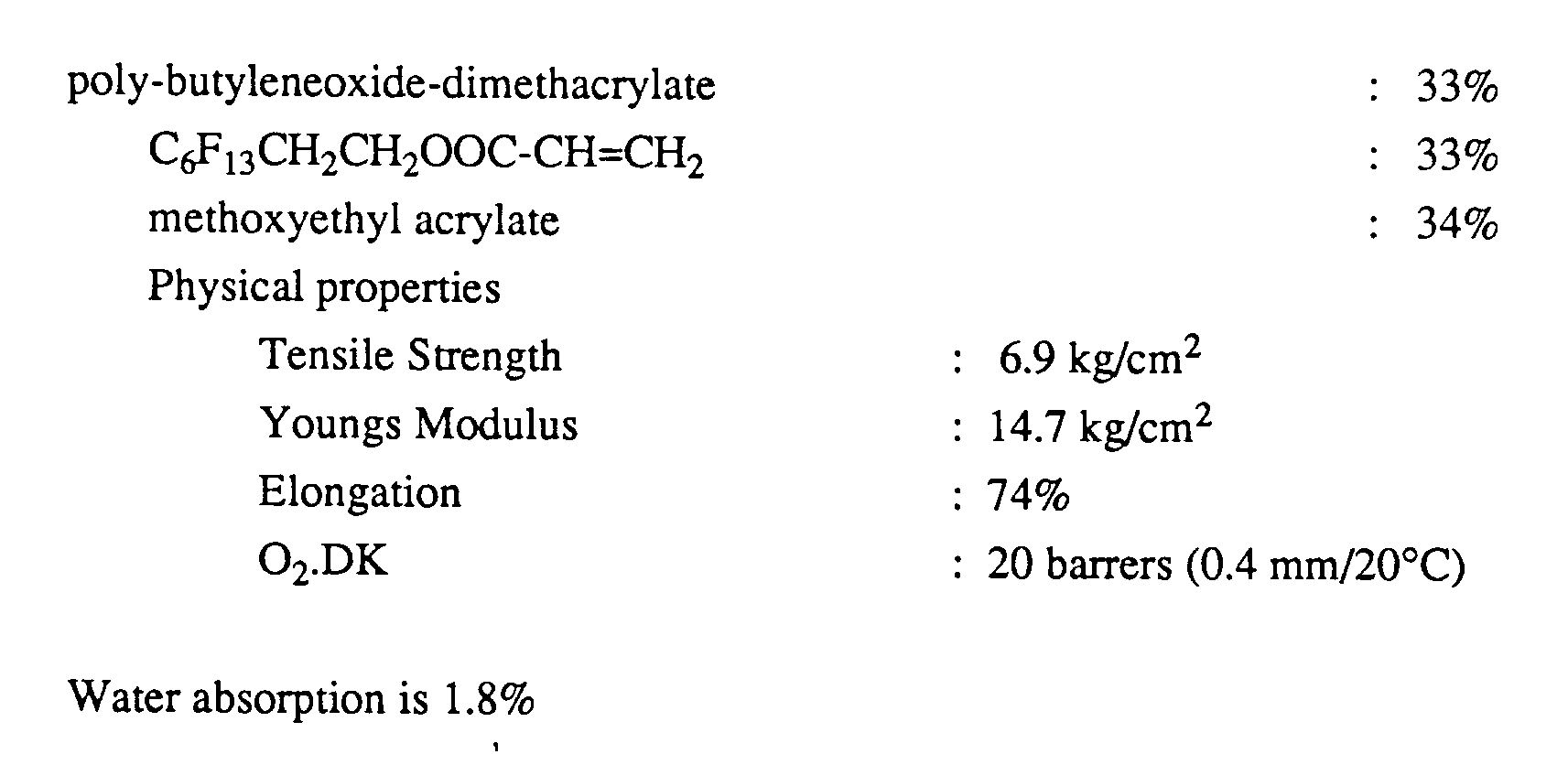
[0097] Example 52: 428.0 g (0.2223 m) Poly-(butylene oxide) diol of MW 1925 are charged into a 3-necked
round bottomed flask, equipped with stirrer, nitrogen inlet tube, condenser thermometer
and dropping funnel. 0.050 g Dibutyltin dilaurate are added and the liquid is stirred
at room temperature under dry nitrogen while 98.7 g (0.447 m) isophorone diisocyanate
(IPDI) are slowly added. The mildly exothermic reaction mixture is maintained at 35°C
for 1 1/3 hour, after which time NCO-titration shows the free remaining NCO-groups
to be one half of their original concentration. 60.3 g (0.463 m) 2-Hydroxyethyl methacrylate
are added to the reaction mixture which is then stirred at 30-35°C for 22 hours, after
which time no free NCO can be detected by IR analysis.
[0098] A 0.5 mm thick polymer sheet is cast following the procedure of example 3 and having
the following composition and properties:
[0099] Example 53 and 54: Synthesis of PEO-di-(urea-methacrylate) copolymers with R
f-ethyl acrylate or tris (trimethylsiloxy)-silyl-propyl methacrylate.
[0100] 59.95 g (0.010 m) α,ω-Di(1-methyl-aminoethyl) poly-(ethylene oxide) of MW 5995 and
59.95 g of anhydrous methyl propyl ketone are charged into a 3-necked round bottomed
flask equipped with a stirrer, nitrogen inlet, condenser, thermometer and dropping
funnel. The solution is stirred at room temperature under dry nitrogen. Then 3.10
g (0.020 mole) of 2-isocyanatoethyl methacrylate (MW 155) dissolved in 3.1 g of anhydrous
methyl propyl ketone are added slowly from the dropping funnel. The mildly exothermic
reaction is maintained at 35°C and below by water bath cooling for 1 hour at which
time IR analysis shows the reaction to be complete.
[0101] Following the procedure of example 3, the PEO-dimethacrylate is reacted with a fluorinated
and a silicone containing comonomer, using methyl-propyl ketone as a solvent. The
clear polymer sheets are worked up as described and tested (C₆FA is C₁₆F₁₃-ethylacrylate;
Si₄MA is tris-(trimethylsiloxy)-silylpropyl methacrylate; [POL] is concentration of
monomer/polymer in methyl propyl ketone).
[0102] Example 55: Synthesis of PEO (MW ∼ 6000) di(urea-alpha-methyl styrene)
59.95 g (0.010 m) of α,ω-Di-(1-methyl-aminoethyl)-poly-(ethylene oxide) of MW 5995
(Jeffamine-ED 6000) and 59.95 g of anhydrous methyl propyl ketone are charged into
a 3-necked round bottomed flask which has been equipped with a stirrer, nitrogen inlet,
condenser, thermometer and dropping funnel. The solution is stirred at room temperature
under dry nitrogen, then 4.02 g (0.020 mole) of m-isopropenyl-alpha,alpha-diamethylbenzyl
isocyanate (MW 201) dissolved in 3.1 g of anhydrous methylpropyl ketone are added
slowly from the dropping funnel. The mildly exothermic reaction is maintained at 35°C
and below by water bath cooling for 1 hour, at which time an IR analysis shows the
reaction to be complete.
[0103] Example 56-59: Following the general procedure of example 3, but using 25% methyl-propyl ketone
as solvent, and using the PEO-macromers of example 53 and 55, fluorinated copolymer
hydrogels are prepared and their properties measured.
[0104] Example 60: The macromer-monomer mixtures of examples 16, 56, 57, 58, and 59 are filled into
poly-propylene contact lens molds, which are exposed to UV radiation from a SYLVANIA
Blacklite-blue lamp for four hours. The molds are opened and the lenses are released
during equilibration in distilled water. Clear, soft and wettable contact lenses are
obtained.
[0105] Example 61: Using the same procedure as described in example 60, contact lenses are prepared
from the PPO-macromer/monomer solutions of example 45 and 47. Clear, soft contact
lenses are obtained.
[0106] Example 62-67: Using the procedure described in example 3, the following compositions are prepared
and their water content and physical properties are determined.
Claims for the following Contracting State(s): AT, BE, CH, LI, DE, DK, FR, GB, GR,
IT, LU, NL, SE
1. A copolymer which is oxygen permeable, flexible, wettable, biocompatible and suitable
for use in ophthalmic devices, such as contact lenses, which copolymer comprises the
polymerization product of
(A) 10 to 80% by weight of a vinyl-telechelic polyether, or a mixture thereof,
(B) 90 to 20% by weight of
(B-1) a fluorinated, ethylenically unsaturated monomer, or
(B-2) a silicone-containing ethylenically unsaturated monomer, or a mixture of monomer
(B-1) and monomer (B-2), and
(C) 0 to 60% by weight of an ethylenically unsaturated monomer or mixture of monomers
other than monomer (B-1) or monomer (B-2).
2. A copolymer according to claim 1 wherein the vinyl-telechelic polyether (A) has the
formula (A):

wherein PE has a number average molecular weight (MW) of about 500 to about 10000
and has the formula:

wherein n is 1 to 3,
k, d and p are integers from 0 to 300, and the sum of
is 7 to 300,
R₁, R₁' and R₁'' are independently of each other hydrogen or methyl, with the proviso
that if n is 3, R₁, R₁' and R₁'' are hydrogen,
a is zero or 1,
m is an integer from zero to 2,
ℓ is zero or 1,
R₂ is linear or branched alkylene with 2 to 4 carbon atoms;
Y is
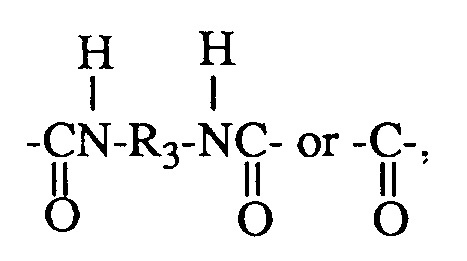
wherein R₃ is a divalent aliphatic group with 2 to 14 carbon atoms, a divalent 5-
or 6-membered cycloaliphatic group with 5 to 15 C-atoms, or an arylene group with
6 to 14 C-atoms, with the proviso, that if Y is
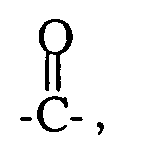
a is 1;
Q is selected from (shown as attached to V):
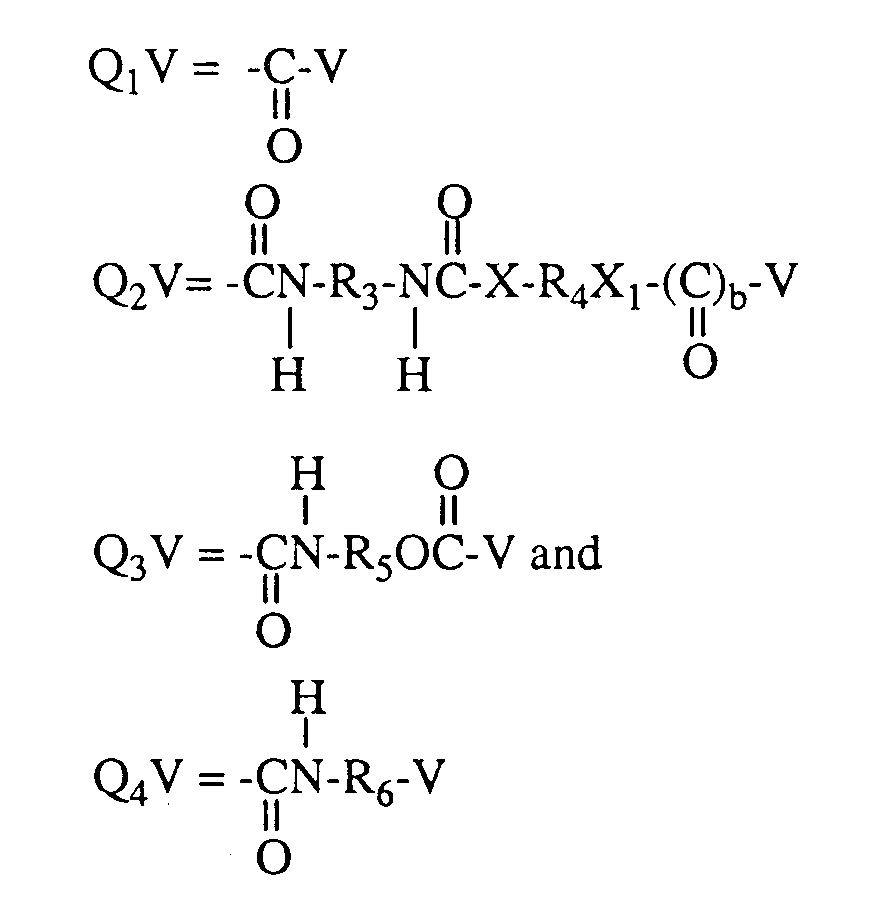
wherein R₄ is alkylene of 2 to 4 carbon atoms,
R₅ is alkylene of 2 to 10 carbon atoms,
R₆ is arylene or alkyl-substituted arylene of 6 to 20 carbon atoms,
X is -O- or -NR₇-, wherein R₇ is alkyl of 1 to 5 carbon atoms,
X₁ is -O-,-NH- or -NR₇-,
b is zero or 1,
V is
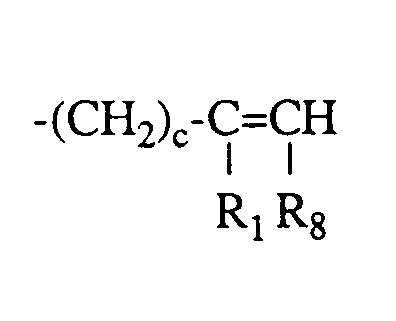
c is zero or 1,
V₁ has same meaning as V, or is H or R₉, when ℓ is zero,
R₈ is H or -COOH, with the proviso that, if R₈ is -COOH, R₁ is H, c is zero, and Q
is Q₁;
R₉ is alkyl of 1 to 18 carbon atoms;
with the further proviso that
when Q is Q₂, a is zero;
when Q is Q₂, Q₃ or Q₄, R₈ is H;
when c is 1, b is zero, Q is Q₂ and R₁ and R₈ are H; and
when V₁ is R₉, m is zero.
3. A copolymer according to claim 2 wherein the polyether PE is a poly(ethylene oxide)
(PEO) of 500-10000 MW, a poly(propylene oxide) (PPO) of 500-10000 MW, a poly(ethylene
oxide-co-propylene oxide) of random or block copolymer structure in ratios of PEO:PPO
from 1:30 to 30:1 of 500-10000 MW, or a poly(tetramethylene oxide) of 500-10000 MW.
4. A copolymer according to claim 3 wherein the polyether PE is a poly(ethylene oxide)
of 1000-8000 MW, or a poly(ethylene oxide-co-propylene oxide) of 1000-10000 MW and
wherein a is 1 and R₂ is
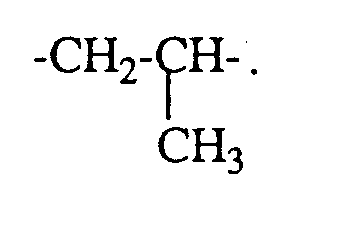
5. A copolymer according to claim 3 wherein the polyether is an poly(propylene oxide)
of 1000-8000 MW, a is 1 and R₂ is
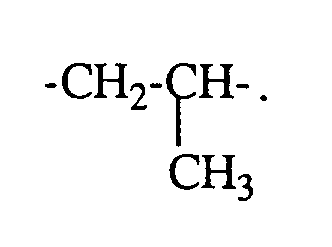
6. A copolymer according to claim 3 wherein QV is Q₂V, wherein in Q₂ R₃ is a divalent
radical obtained by removing the two -NCO groups from a diisocyanate selected from
the group consisting of ethylene diisocyanate, 1,2-diisocyanatopropane, 1,3-diisocyanatopropane,
1,6-diisocyanatohexane, 1,2-diisocyanatocyclohexane, 1,3-diisocyanatocyclohexane,
1,4-diisocyanatobenzene, bis(4-isocyanatocyclohexyl)methane, bis (4-isocyanatocyclohexenyl)methane,
bis(4-isocyanatophenyl)-methane, 2,6- and 2,4-toluene diisocyanate; 3,3'-dichloro-4,4'-diisocyanatobiphenyl;
1,5-diisocyanatonaphthalene, hydrogenated toluene diisocyanate; 1-isocyanatomethyl-5-isocyanato-1,3,
3-trimethylcyclohexane (=isophorone diisocyanate); 2,2,4-(2,4,4)-trimethylhexane-
1,6-diisocyanate, 2,2'-diisocyanatodiethyl fumarate; 1,5-diisocyanato-1-carboxypentane;
1,2-, 1,3-, 1,6-, 1,7-, 1,8-, 2,7- and 2,3-diisocyanatonaphthalene; 2,4- and 2,7-diisocyanato-1-methylnaphthalene;
4,4'-diisocyanatobiphenyl; 4,4'-diisocyanato-3,3'-diisocyanato-6(7)-methylnaphthalene;
4,4'-diisocyanato-2,2'-dimethyl biphenyl; bis-(4-isocyanatophenyl) ethane; and bis(4-isocyanatophenyl)
ether, and V-(CO)b-X₁-R₄-X- is the radical obtained by removing the active hydrogen atom from a hydroxyl
or amino group of a compound selected from the group consisting of 2-hydroxyethyl
acrylate and methacrylate, 2- and 3-hydroxypropyl acrylate and methacrylate; 4-hydroxybutyl
acrylate and methacrylate; glycerol dimethacrylate; hydroxyethyl maleate and fumarate;
2-hydroxyethyl- and 4-hydroxy-butyl vinyl ether; N-tert.-butyl-aminoethyl methacrylate,
N-(3-hydroxypropyl)-methacrylamide; vinyl-benzyl alcohol; and allyl alcohol.
7. A copolymer according to claim 6 wherein diisocyanate is isophorone diisocyanate,
2,2,4-(2,4,4)-trimethylhexane-1,6-diisocyanate, 2,4-toluene diisocyanate or 2,6-toluene
diisocyanate, and the active hydrogen containing vinyl compound is 2-hydroxyethyl
methacrylate, 2-hydroxyethyl acrylate or N-tert. butyl-amino ethyl methacrylate.
8. A copolymer according to claim 3 wherein QV is Q₃V and V-COO-R₅- is the radical obtained
by removing the -NCO group from an isocyanate compound selected from the group consisting
of 2-isocyanatoethyl methacrylate, 2-isocyanatoethyl acrylate, 3-isocyanatopropyl
methacrylate, 1-methyl-2-isocyanatoethyl methacrylate, and 1,1-dimethyl-2-isocyanatoethyl
acrylate.
9. A copolymer according to claim 8 wherein the isocyanate compound is 2-isocyanatoethyl
methacrylate.
10. A copolymer according to claim 3 wherein QV is Q₄V and V-R₆- is the radical obtained
by removing the -NCO group from 2-isocyanatobutyl vinyl ether, styrene isocyanate,
or m-isopropenyl-alpha,alpha-dimethylbenzyl isocyanate.
11. A copolymer according to claim 10 wherein the isocyanate is m-isopropenyl-alpha, alpha-dimethylbenzyl
isocyanate.
12. A copolymer according to claim 4 wherein QV is Q₃V and V-COO-R₅- is the radical obtained
by removing the -NCO group from an isocyanate compound selected from the group consisting
of 2-isocyanatoethyl methacrylate, 2-isocyanatoethyl acrylate, 3-isocyanatopropyl
methacrylate, 1-methyl-2-isocyanatoethyl methacrylate, and 1,1-dimethyl-2-isocyanatoethyl
acrylate.
13. A copolymer according to claim 4 wherein QV is Q₄V and V-R₆- is the radical obtained
by removing the -NCO group from 2-isocyanatobutyl vinyl ether, styrene isocyanate,
or m-isopropenyl-alpha,alpha-dimethylbenzyl isocyanate.
14. A copolymer according to claim 5 wherein QV is Q₃V and V-COO-R₅- is the radical obtained
by removing the -NCO group from an isocyanate compound selected from the group consisting
of 2-isocyanatoethyl methacrylate, 2-isocyanatoethyl acrylate, 3-isocyanatopropyl
methacrylate, 1-methyl-2-isocyanatoethyl methacrylate, and 1,1-dimethyl-2-isocyanatoethyl
acrylate.
15. A copolymer according to claim 5 wherein QV is Q₄V and V-R₆- is the radical obtained
by removing the -NCO group from 2-isocyanatobutyl vinyl ether, styrene isocyanate,
or m-isopropenyl-alpha,alpha-dimethylbenzyl isocyanate.
16. A copolymer according to claim 12, wherein the isocyanate compound is 2-isocyanatoethyl
methacrylate.
17. A copolymer according to claim 13, wherein the isocyanate is m-isopropenyl-alpha,
alpha-dimethyl benzyl isocyanate.
18. A copolymer according to claim 14, wherein the isocyanate is 2-isocyanatoethyl methacrylate.
19. A copolymer according to claim 15, wherein the isocyanate is m-isopropenyl-alpha,
alpha-dimethyl benzyl isocyanate.
20. A copolymer according to claim 2 wherein PE is poly(ethylene oxide), poly(propylene
oxide) or poly(ethylene oxide-co-propylene oxide) and QV is Q₂V, Q₃V or Q₄V.
21. A copolymer according to claim 20 wherein QV is Q₃V or Q₄V and a is 1.
22. A copolymer according to claim 1 wherein (B-1) is a fluorine containing monomer containing
at least three fluorine atoms selected from the group consisting of hexafluoroisopropyl
acrylate and methacrylate, perfluorocyclohexyl acrylate and methacrylate, pentafluorostyrene
and the acrylate or methacrylate esters or amides of the formula

wherein
R
f is -(CF₂)
tCF₂L or -(CF₂CF₂)
qOCF(CF₃)₂,
R₁ is hydrogen or methyl,
X is oxygen or -NR₇- wherein R₇ is an alkyl group with 1-5 carbon atoms,
r is an integer from 1-4,
t is an integer from 0-14,
q is an integer from 1-3;
L is hydrogen or fluorine, with the proviso that, when t is 0, L is fluorine; and
W is a direct bond or a divalent group of the structure -NR₇-CO-; -NR₇SO₂-(CH₂)
r-;-NR₇SO₂-; -S-(CH₂)
r-; -NR₇-(CH₂)
r-NR₇SO₂-; or -NHCO-.
23. A copolymer according to claim 1 wherein (B-1) is a fluorinated monomer selected from
the group consisting of hexafluoroisopropyl acrylate, hexafluoroisopropyl methacrylate
or a compound of structure (I), as defined in claim 22, wherein W is a direct bond
and L is fluorine.
24. A copolymer according to claim 22 wherein X is oxygen, W is a direct bond, R₁ is hydrogen,
r is 2, t is 6 to 10 and L is fluorine; or in which r is 1 or 2, t is 1-4 and L is
fluorine, or in which R₁ is methyl, r is 2, t is 4 to 10 and L is fluorine.
25. A copolymer according to claim 22 wherein r is 1 or 2, t is 1 to 4 and L is fluorine.
26. A copolymer according to claim 22 wherein R is methyl, r is 2 and t is 4 to 10 and
L is fluorine.
27. A copolymer according to claim 1 wherein (B-2) is a silicone-containing vinyl monomer
which is an oligosiloxanyl-silyl-alkyl acrylate or methacrylate containing 2 to 10
silicon atoms.
28. A copolymer according to claim 27 wherein the monomer is selected from the group consisting
of tris(trimethylsiloxy)-silyl-propyl (meth)acrylate, triphenyldimethyl-disiloxanylmethyl
(meth)acrylate, pentamethyl-disiloxanylmethyl acrylate, tert-butyltetramethyldlsiloxanylethyl
(meth)acrylate, methyl-di(trimethylsiloxy)silylpropyl-glyceryl (meth)acrylate; pentamethyldi-siloxanyl-methyl
methacrylate; heptamethyl-cyclotetrasiloxy methyl methacrylate; heptamethyl-cyclotetrasiloxy-propyl
methacrylate; (trimethylsilyl)-decamethyl-pentasiloxy-propyl methacrylate; and undecamethyl
pentasiloxypropyl methacrylate.
29. A copolymer according to claim 28 wherein the monomer is tris(trimethylsiloxy)-silyl-propyl
methacrylate.
30. A copolymer according to claim 1 wherein component (B) is 40 to 80% by weight of said
copolymer.
31. A copolymer according to claim 30 wherein component (B) is 50 to 70% by weight of
said copolymer.
32. A copolymer according to claim 1 wherein component (C) is a monomer selected from
the group consisting of methyl acrylate, ethyl acrylate, n- and isopropyl acrylate,
cyclohexyl acrylate, trimethyl-cyclohexyl acrylate, phenyl acrylate, benzyl acrylate
and the corresponding methacrylates; furfuryl acrylate and methacrylate; methoxy-ethyl-,
ethoxy-ethyl-, and ethoxy-ethoxy ethyl acrylate and methacrylate; 2-hydroxyethyl acrylate
and methacrylate, 3-hydroxypropyl acrylate, methacrylate and methacrylamide; glycidyl
methacrylate; N,N-dimethylacrylamide; N-isopropyl- acrylamide; N-vinylacetamide; N-vinylpyrrolidone;
dimethylamino-ethyl methacrylate and methacrylamide; acrylic and methacrylic acid,
vinyl sulfonic acid, styrene, 4-styrene sulfonic acid and 2-methacrylamido-2-methyl-propane-sulfonic
acid and their salts, and mixtures thereof.
33. A copolymer according to claim 32 wherein monomer is methoxy-ethyl acrylate and methoxy-ethyl
methacrylate, ethoxy-ethyl acrylate and ethoxy-ethyl methacrylate; methyl methacrylate;
methyl acrylate, 2-hydroxyethyl methacrylate; N-vinylpyrrolidone; N,N-dimethyl-acrylamide
and styrene, and ethoxy-ethoxy-ethyl acrylate or mixtures thereof.
34. A copolymer according to claim 1 wherein component (C) is 5 to 60% by weight of said
copolymer.
35. A copolymer according to claim 34 wherein component (C) is 10 to 50% by weight of
said copolymer.
36. A copolymer according to claim 1 which is in the shape of a contact lens.
37. A copolymer according to claim 1 wherein polyether PE is a fluorinated polyether of
MW 600-5000 of structure HO-CH₂CF₂(C₂F₄O)x(CF₂O)yCF₂CH₂-OH, wherein x and y are independently of each other integers from 6 to 50.
38. A copolymer according to claim 4 wherein the amount of component (C) is zero.
39. A copolymer according to claim 4 wherein component (A) is 15-30% by weight of said
copolymer.
40. A copolymer according to claim 5 wherein component (A) is 30-60% by weight of said
copolymer.
41. A copolymer according to claim 38 which is in the shape of a contact lens.
42. A process for the manufacture of a copolymer according to claim 1 characterized in
conventionally copolymerizing the monomer mixture by employing initiators which generate
free-radicals on application of an activating energy.
43. Use of a copolymer according to claim 1 for the manufacture of a contact lens.
44. A contact lens comprising a copolymer as defined in claim 1.
45. A contact lens consisting essentially of a copolymer as defined in claim 1.
Claims for the following Contracting State(s): ES
1. A process for the manufacture of a copolymer which is oxygen permeable, flexible,
wettable, biocompatible and suitable for use in ophthalmic devices, such as contact
lenses, which copolymer comprises the polymerization product of
(A) 10 to 80% by weight of a vinyl-telechelic polyether, or a mixture thereof,
(B) 90 to 20% by weight of
(B-1) a fluorinated, ethylenically unsaturated monomer, or
(B-2) a silicone-containing ethylenically unsaturated monomer, or a mixture of monomer
(B-1) and monomer (B-2), and
(C) 0 to 60% by weight of an ethylenically unsaturated monomer or mixture of monomers
other than monomer (B-1) or monomer (B-2),
characterized in conventionally copolymerizing the monomer mixture by employing initiators
which generate free-radicals on application of an activating energy.
2. A process according to claim 1 wherein the vinyl-telechelic polyether (A) has the
formula (A):

wherein PE has a number average molecular weight (MW) of about 500 to about 10000
and has the formula:

wherein n is 1 to 3,
k, d and p are integers from 0 to 300, and the sum of
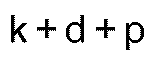
is 7 to 300,
R₁, R₁' and R₁'' are independently of each other hydrogen or methyl, with the proviso
that if n is 3, R₁, R₁' and R₁'' are hydrogen,
a is zero or 1,
m is an integer from zero to 2,
ℓ is zero or 1,
R₂ is linear or branched alkylene with 2 to 4 carbon atoms;
Y is
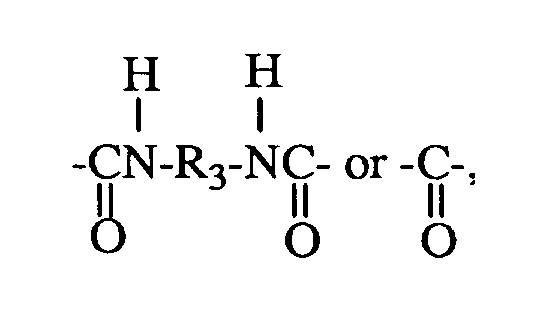
wherein R₃ is a divalent aliphatic group with 2 to 14 carbon atoms, a divalent 5-
or 6-membered cycloaliphatic group with 5 to 15 C-atoms, or an arylene group with
6 to 14 C-atoms, with the proviso, that if Y is
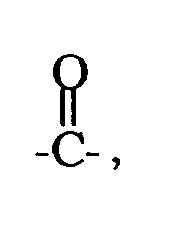
a is 1;
Q is selected from (shown as attached to V):
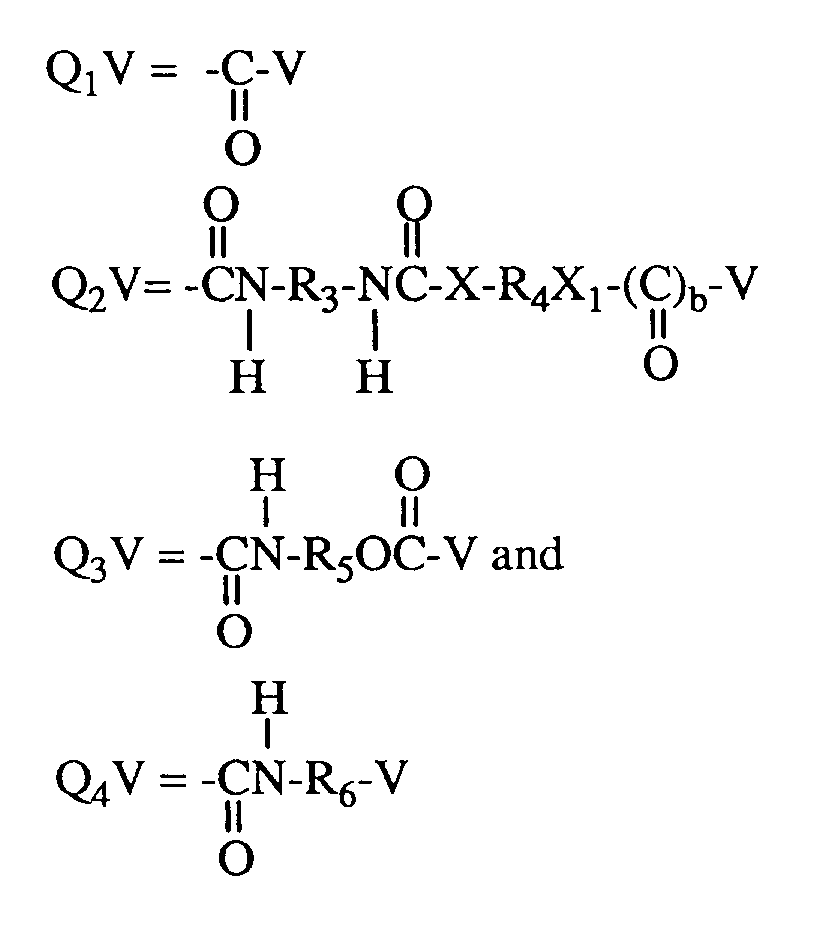
wherein R₄ is alkylene of 2 to 4 carbon atoms,
R₅ is alkylene of 2 to 10 carbon atoms,
R₆ is arylene or alkyl-substituted arylene of 6 to 20 carbon atoms,
X is -O- or -NR₇-, wherein R₇ is alkyl of 1 to 5 carbon atoms,
X₁ is -O-,-NH- or -NR₇-,
b is zero or 1,
V is
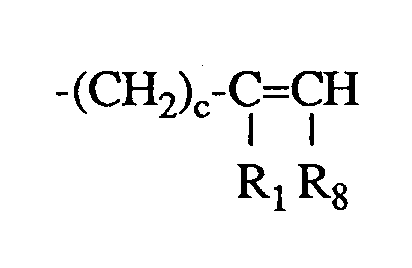
c is zero or 1,
V₁ has same meaning as V, or is H or R₉, when ℓ is zero,
R₈ is H or -COOH, with the proviso that, if R₈ is-COOH, R₁ is H, c is zero, and Q
is Q₁;
R₉ is alkyl of 1 to 18 carbon atoms;
with the further proviso that
when Q is Q₂, a is zero;
when Q is Q₂, Q₃ or Q₄, R₈ is H;
when c is 1, b is zero, Q is Q₂ and R₁ and R₈ are H; and
when V₁ is R₉, m is zero.
3. A process according to claim 2 wherein the polyether PE is a poly(ethylene oxide)
(PEO) of 500-10000 MW, a poly(propylene oxide) (PPO) of 500-10000 MW, a poly(ethylene
oxide-co-propylene oxide) of random or block copolymer structure in ratios of PEO:PPO
from 1:30 to 30:1 of 500-10000 MW, or a poly(tetramethylene oxide) of 500-10000 MW.
4. A process according to claim 3 wherein the polyether PE is a poly(ethylene oxide)
of 1000-8000 MW, or a poly(ethylene oxide-co-propylene oxide) of 1000-10000 MW and
wherein a is 1 and R₂ is
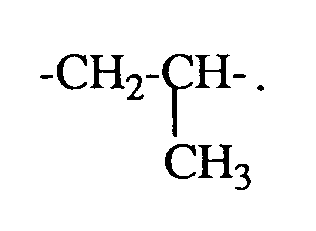
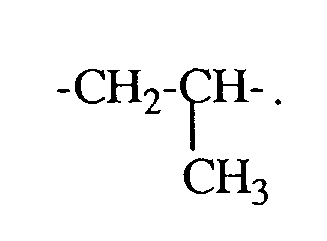
5. A process according to claim 3 wherein the polyether is an poly(propylene oxide) of
1000-8000 MW, a is 1 and R₂ is
6. A process according to claim 3 wherein QV is Q₂V, wherein in Q₂ R₃ is a divalent radical
obtained by removing the two -NCO groups from a diisocyanate selected from the group
consisting of ethylene diisocyanate, 1,2-diisocyanatopropane, 1,3-diisocyanatopropane,
1,6-diisocyanatohexane, 1,2-diisocyanatocyclohexane, 1,3-diisocyanatocyclohexane,
1,4-diisocyanatobenzene, bis(4-isocyanatocyclohexyl)methane, bis (4-isocyanatocyclohexenyl)methane,
bis(4-isocyanatophenyl)-methane, 2,6- and 2,4-toluene diisocyanate; 3,3'-dichloro-4,4'-diisocyanatobiphenyl;
1,5-diisocyanatonaphthalene, hydrogenated toluene diisocyanate; 1-isocyanatomethyl-5-isocyanato-1,3,
3-trimethylcyclohexane (=isophorone diisocyanate); 2,2,4-(2,4,4)-trimethylhexane-1,6-diisocyanate,
2,2'-diisocyanatodiethyl fumarate; 1,5-diisocyanato-1-carboxypentane; 1,2-, 1,3-,
1,6-, 1,7-, 1,8-, 2,7- and 2,3-diisocyanatonaphthalene; 2,4- and 2,7-diisocyanato-1-methylnaphthalene;
4,4'-diisocyanatobiphenyl; 4,4'-diisocyanato-3,3'-diisocyanato-6(7)-methylnaphthalene;
4,4'-diisocyanato-2,2'-dimethyl biphenyl; bis-(4-isocyanatophenyl) ethane; and bis(4-isocyanatophenyl)
ether, and V-(CO)b-X₁-R₄-X- is the radical obtained by removing the active hydrogen atom from a hydroxyl
or amino group of a compound selected from the group consisting of 2-hydroxyethyl
acrylate and methacrylate, 2- and 3-hydroxypropyl acrylate and methacrylate; 4-hydroxybutyl
acrylate and methacrylate; glycerol dimethacrylate; hydroxyethyl maleate and fumarate;
2-hydroxyethyl- and 4-hydroxy-butyl vinyl ether; N-tert.-butyl-aminoethyl methacrylate,
N-(3-hydroxypropyl)-methacrylamide; vinyl-benzyl alcohol; and allyl alcohol.
7. A process according to claim 6 wherein diisocyanate is isophorone diisocyanate, 2,2,4-(2,4,4)-trimethylhexane-1,6-diisocyanate,
2,4-toluene diisocyanate or 2,6-toluene diisocyanate, and the active hydrogen containing
vinyl compound is 2-hydroxyethyl methacrylate, 2-hydroxyethyl acrylate or N-tert.
butyl-amino ethyl methacrylate.
8. A process according to claim 3 wherein QV is Q₃V and V-COO-R₅- is the radical obtained
by removing the -NCO group from an isocyanate compound selected from the group consisting
of 2-isocyanatoethyl methacrylate, 2-isocyanatoethyl acrylate, 3-isocyanatopropyl
methacrylate, 1-methyl-2-isocyanatoethyl methacrylate, and 1,1-dimethyl-2-isocyanatoethyl
acrylate.
9. A process according to claim 8 wherein the isocyanate compound is 2-isocyanatoethyl
methacrylate.
10. A process according to claim 3 wherein QV is Q₄V and V-R₆- is the radical obtained
by removing the -NCO group from 2-isocyanatobutyl vinyl ether, styrene isocyanate,
or m-isopropenyl-alpha,alpha-dimethylbenzyl isocyanate.
11. A process according to claim 10 wherein the isocyanate is m-isopropenyl-alpha, alpha-dimethylbenzyl
isocyanate.
12. A process according to claim 4 wherein QV is Q₃V and V-COO-R₅- is the radical obtained
by removing the -NCO group from an isocyanate compound selected from the group consisting
of 2-isocyanatoethyl methacrylate, 2-isocyanatoethyl acrylate, 3-isocyanatopropyl
methacrylate, 1-methyl-2-isocyanatoethyl methacrylate, and 1,1-dimethyl-2-isocyanatoethyl
acrylate.
13. A process according to claim 4 wherein QV is Q₄V and V-R₆- is the radical obtained
by removing the -NCO group from 2-isocyanatobutyl vinyl ether, styrene isocyanate,
or m-isopropenyl-alpha,alpha-dimethylbenzyl isocyanate.
14. A process according to claim 5 wherein QV is Q₃V and V-COO-R₅- is the radical obtained
by removing the -NCO group from an isocyanate compound selected from the group consisting
of 2-isocyanatoethyl methacrylate, 2-isocyanatoethyl acrylate, 3-isocyanatopropyl
methacrylate, 1-methyl-2-isocyanatoethyl methacrylate, and 1,1-dimethyl-2-isocyanatoethyl
acrylate.
15. A process according to claim 5 wherein QV is Q₄V and V-R₆- is the radical obtained
by removing the -NCO group from 2-isocyanatobutyl vinyl ether, styrene isocyanate,
or m-isopropenyl-alpha,alpha-dimethylbenzyl isocyanate.
16. A process according to claim 12, wherein the isocyanate compound is 2-isocyanatoethyl
methacrylate.
17. A process according to claim 13, wherein the isocyanate is m-isopropenyl-alpha, alpha-dimethyl
benzyl isocyanate.
18. A process according to claim 14, wherein the isocyanate is 2-isocyanatoethyl methacrylate.
19. A process according to claim 15, wherein the isocyanate is m-isopropenyl-alpha, alpha-dimethyl
benzyl isocyanate.
20. A process according to claim 2 wherein PE is poly(ethylene oxide), poly(propylene
oxide) or poly(ethylene oxide-co-propylene oxide) and QV is Q₂V, Q₃V or Q₄V.
21. A process according to claim 20 wherein QV is Q₃ or Q₄V and a is 1.
22. A process according to claim 1 wherein (B-1) is a fluorine containing monomer containing
at least three fluorine atoms selected from the group consisting of hexafluoroisopropyl
acrylate and methacrylate, perfluorocyclohexyl acrylate and methacrylate, pentafluorostyrene
and the acrylate or methacrylate esters or amides of the formula

wherein
R
f is -(CF₂)
tCF₂L or -(CF₂CF₂)
qOCF(CF₃)₂,
R₁ is hydrogen or methyl,
X is oxygen or -NR₇- wherein R₇ is an alkyl group with 1-5 carbon atoms,
r is an integer from 1-4,
t is an integer from 0-14,
q is an integer from 1-3;
L is hydrogen or fluorine, with the proviso that, when t is 0, L is fluorine; and
W is a direct bond or a divalent group of the structure -NR₇-CO-; -NR₇SO₂-(CH₂)
r-;-NR₇SO₂-; -S-(CH₂)
r-; -NR₇-(CH₂)
r-NR₇SO₂-; or -NHCO-.
23. A process according to claim 1 wherein (B-1) is a fluorinated monomer selected from
the group consisting of hexafluoroisopropyl acrylate, hexafluoroisopropyl methacrylate
or a compound of structure (I), as defined in claim 22, wherein W is a direct bond
and L is fluorine.
24. A process according to claim 22 wherein X is oxygen, W is a direct bond, R₁ is hydrogen,
r is 2, t is 6 to 10 and L is fluorine; or in which r is 1 or 2, t is 1-4 and L is
fluorine, or in which R₁ is methyl, r is 2, t is 4 to 10 and L is fluorine.
25. A process according to claim 22 wherein r is 1 or 2, t is 1 to 4 and L is fluorine.
26. A process according to claim 22 wherein R is methyl, r is 2 and t is 4 to 10 and L
is fluorine.
27. A process according to claim 1 wherein (B-2) is a silicone-containing vinyl monomer
which is an oligosiloxanyl-silyl-alkyl acrylate or methacrylate containing 2 to 10
silicon atoms.
28. A process according to claim 27 wherein the monomer is selected from the group consisting
of tris(trimethylsiloxy)-silyl-propyl (meth)acrylate, triphenyldimethyl-disiloxanylmethyl
(meth)acrylate, pentamethyl-disiloxanylmethyl acrylate, tert-butyltetramethyldisiloxanylethyl
(meth)acrylate, methyl-di(trimethylsiloxy)silylpropyl-glyceryl (meth)acrylate; pentamethyldi-siloxanyl-methyl
methacrylate; heptamethyl-cyclotetrasiloxy methyl methacrylate; heptarnethyl-cyclotetrasiloxy-propyl
methacrylate; (trimethylsilyl)-decamethyl-pentasiloxy-propyl methacrylate; and undecamethyl
pentasiloxypropyl methacrylate.
29. A process according to claim 28 wherein the monomer is tris(trimethylsiloxy)silyl-propyl
methacrylate.
30. A process according to claim 1 wherein component (B) is 40 to 80% by weight of said
copolymer.
31. A process according to claim 30 wherein component (B) is 50 to 70% by weight of said
copolymer.
32. A process according to claim 1 wherein component (C) is a monomer selected from the
group consisting of methyl acrylate, ethyl acrylate, n- and isopropyl acrylate, cyclohexyl
acrylate, trimethyl-cyclohexyl acrylate, phenyl acrylate, benzyl acrylate and the
corresponding methacrylates; furfuryl acrylate and methacrylate; methoxy-ethyl-, ethoxy-ethyl-,
and ethoxy-ethoxy ethyl acrylate and methacrylate; 2-hydroxyethyl acrylate and methacrylate,
3-hydroxypropyl acrylate, methacrylate and methacrylamide; glycidyl methacrylate;
N,N-dimethylacrylamide; N-isopropyl- acrylamide; N-vinylacetamide; N-vinylpyrrolidone;
dimethylamino-ethyl methacrylate and methacrylamide; acrylic and methacrylic acid,
vinyl sulfonic acid, styrene, 4-styrene sulfonic acid and 2-methacrylamido-2-methyl-propane-sulfonic
acid and their salts, and mixtures thereof.
33. A process according to claim 32 wherein monomer is methoxy-ethyl acrylate and methoxy-ethyl
methacrylate, ethoxy-ethyl acrylate and ethoxy-ethyl methacrylate; methyl methacrylate;
methyl acrylate, 2-hydroxyethyl methacrylate; N-vinylpyrrolidone; N,N-dimethyl-acrylamide
and styrene, and ethoxy-ethoxy-ethyl acrylate or mixtures thereof.
34. A process according to claim 1 wherein component (C) is 5 to 60% by weight of said
copolymer.
35. A process according to claim 34 wherein component (C) is 10 to 50% by weight of said
copolymer.
36. A process according to claim 1 for the manufacture of a contact lens.
37. A process according to claim 1 wherein polyether PE is a fluorinated polyether of
MW 600-5000 of structure HO-CH₂CF₂(C₂F₄O)x(CF₂O)yCF₂CH₂-OH, wherein x and y are independently of each other integers from 6 to 50.
38. A process according to claim 4 wherein the amount of component (C) is zero.
39. A process according to claim 4 wherein component (A) is 15-30% by weight of said copolymer.
40. A process according to claim 5 wherein component (A) is 30-60% by weight of said copolymer.
41. A process according to claim 38 for the manufacture of a contact lens.
42. Use of a copolymer according to claim 1 for the manufacture of a contact lens.
43. A contact lens comprising a copolymer as defined in claim 1.
44. A contact lens consisting essentially of a copolymer as defined in claim 1.
Patentansprüche für folgende(n) Vertragsstaat(en): AT, BE, CH, LI, DE, DK, FR, GB,
GR, IT, LU, NL, SE
1. Copolymeres, das sauerstoffdurchlässig, elastisch, benetzbar, biokompatibel und zur
Verwendung in ophthalmologischen Vorrichtungen, wie Kontaktlinsen, geeignet ist, dadurch
gekennzeichnet, daß es das Polymerisationsprodukt aus
(A) 10 bis 80 Gew.-% eines Vinyl-telechelen Polyethers oder eines Gemisches daraus,
(B) 90 bis 20 Gew.-% aus
(B-1) einem fluorierten, ethylenisch ungesättigten Monomeren, oder
(B-2) einem Silicon-enthaltenden ethylenisch ungesättigten Monomeren oder einem Gemisch
aus Monomer (B-1) und Monomer (B-2), und
(C) 0 bis 60 Gew.-% eines ethylenisch ungesättigten Monomeren oder eines Gemisches
der Monomeren, ausgenommen Monomeres (B-1) oder Monomeres (B-2), umfaßt.
2. Copolymeres nach Anspruch 1, worin der Vinyltelechele Polyether (A) die Formel (A)
besitzt:

worin PE ein zahlendurchschnittliches Molekulargewicht (MG) von etwa 500 bis etwa
10.000 besitzt und die Formel

besitzt, worin n den Wert 1 bis 3 besitzt,
k, d und p ganze Zahlen von 0 bis 300 sind, und die Summe aus
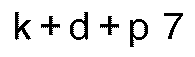
7 bis 300 beträgt,
R₁, R₁' und R₁'' unabhängig voneinander für ein Wasserstoffatom oder eine Methylgruppe
stehen, mit der Maßgabe, daß wenn n den Wert 3 hat, R₁, R₁' und R₁'' Wasserstoff bedeuten,
a den Wert 0 oder 1 besitzt,
m eine ganze Zahl von 0 bis 2 ist,
ℓ den Wert 0 oder 1 besitzt,
R₂ eine lineares oder verzweigtes Alkylen mit 2 bis 4 Kohlenstoffatomen ist,
Y
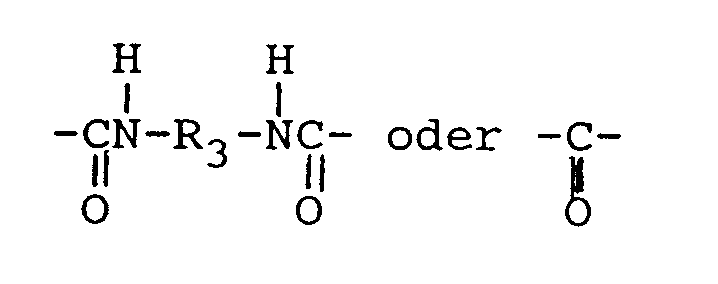
bedeutet, worin R₃ eine zweiwertige aliphatische Gruppe mit 2 bis 14 Kohlenstoffatomen,
eine zweiwertige 5- oder 6-gliedrige cycloaliphatische Gruppe mit 5 bis 15 Kohlenstoffatomen
oder eine Arylengruppe mit 6 bis 14 Kohlenstoffatomen ist, mit der Maßgabe, daß, wenn
Y
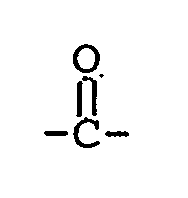
ist, a den Wert 1 hat;
Q ausgewählt ist aus (gezeigt in Bindung an V):
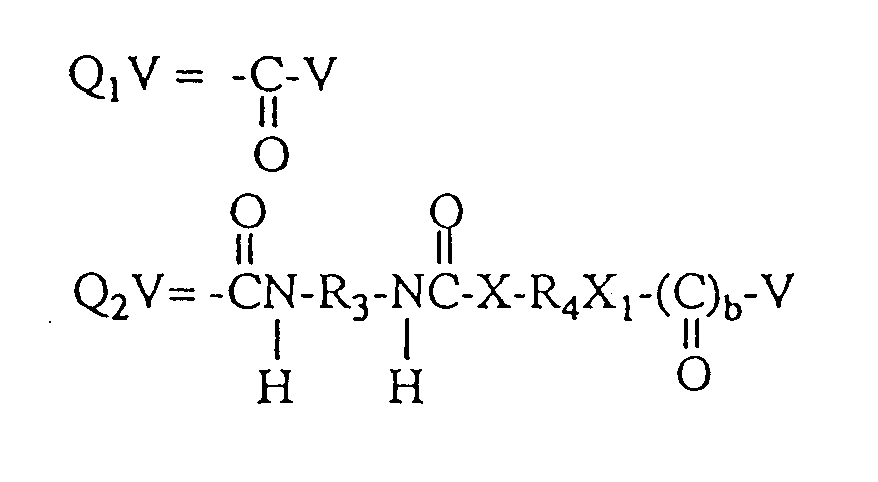
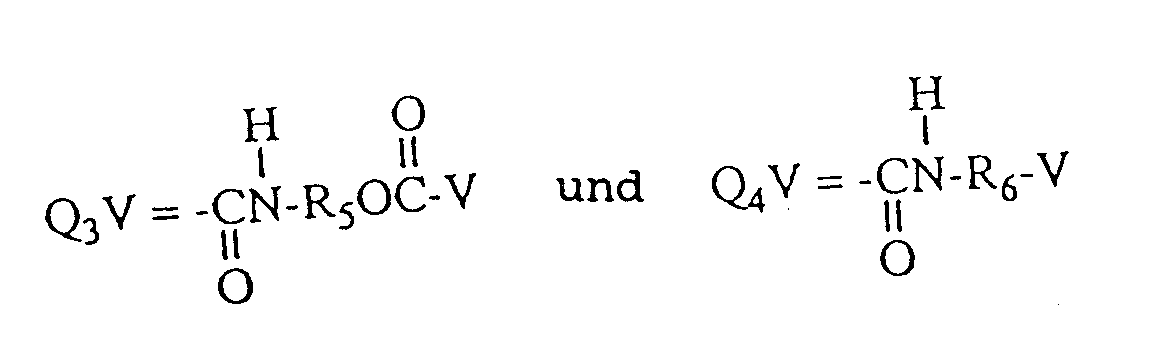
worin R₄ ein Alkylen mit 2 bis 4 Kohlenstoffatomen ist,
R₅ ein Alkylen mit 2 bis 10 Kohlenstoffatomen ist,
R₆ ein Arylen oder ein Alkyl-substituiertes Arylen mit 6 bis 20 Kohlenstoffatomen
ist,
X -O- oder -NR₇- bedeutet, worin R₇ ein Alkyl mit 1 bis 5 Kohlenstoffatomen ist,
X₁ -O-, -NH- oder -NR₇- bedeutet,
b den Wert 0 oder 1 besitzt,
V
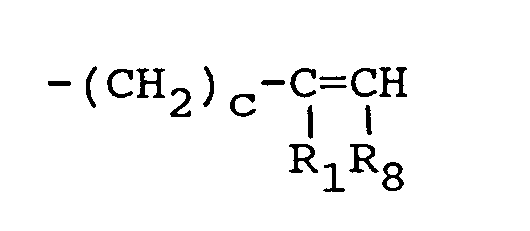
bedeutet,
c den Wert 0 oder 1 besitzt,
V₁ die gleiche Bedeutung wie V besitzt, oder für H oder R₉ steht, wenn ℓ den Wert
0 hat,
R₈ für H oder -COOH steht, mit der Maßgabe, daß, wenn R₈ -COOH ist, R₁ H, c 0 und
Q Q₁ bedeutet,
R₉ ein Alkyl mit 1 bis 18 Kohlenstoffatomen ist;
mit der weiteren Maßgabe, daß, wenn Q Q₂ ist, a für 0 steht;
wenn Q Q₂, Q₃ oder Q₄ ist, R₈ für H steht;
wenn c 1 bedeutet, b 0 ist, Q Q₂ ist und R₁ und R₈ H bedeuten; und
wenn V₁ R₉ ist, m den Wert 0 hat.
3. Copolymeres nach Anspruch 2, worin der Polyether PE ein Poly(ethylenoxid) (PEO) mit
einem Molekulargewicht von 500 bis 10.000, ein Poly(propylenoxid) (PPO) mit einem
Molekulargewicht von 500 bis 10.000, ein Poly(ethylenoxidcopropylenoxid) mit einer
Zufalls- oder Blockcopolymerstruktur in den Verhältnissen von PEO:PPO von 1:30 bis
30:1 mit einem Molekulargewicht von 500 bis 10.000 oder ein Poly(tetramethylenoxid)
mit einem Molekulargewicht von 500 bis 10.000 ist.
4. Copolymeres nach Anspruch 3, worin der Polyether PE ein Poly(ethylenoxid) mit einem
Molekulargewicht von 1000 bis 8000 oder ein Poly(ethylenoxidcopropylenoxid) mit einem
Molekulargewicht von 1000 bis 10.000 ist, und worin a den Wert 1 und R₂
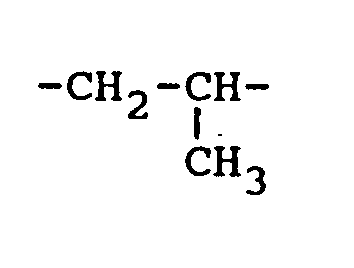
bedeutet.
5. Copolymeres nach Anspruch 3, worin der Polyether ein Poly(propylenoxid) mit einem
Molekulargewicht von 1000 bis 8000 ist, a den Wert 1 hat und R₂ für
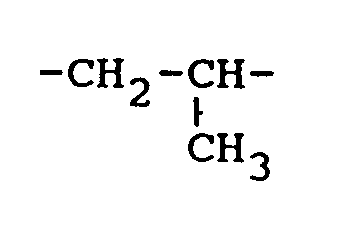
steht.
6. Copolymeres nach Anspruch 3, worin QV Q₂V ist, worin in Q₂ R₃ ein zweiwertiger Rest
ist, erhalten durch Entfernen der zwei NCO-Gruppen aus einem Diisocyanat, ausgewählt
aus der Gruppe bestehend aus Ethylendiisocyanat, 1,2-Diisocyanatopropan, 1,3-Diisocyanatopropan,
1,6-Diisocyanatohexan, 1,2-Diisocyanatocyclohexan, 1,3-Diisocyanatocyclohexan, 1,4-Diisocyanatobenzol,
Bis-(4-isocyanatocyclohexyl)methan, Bis-(4-isocyanatocyclohexenyl)methan, Bis-(4-isocyanatophenyl)methan,
2,6- und 2,4-Toluoldiisocyanat; 3,3'-Dichlor-4,4'-diisocyanatobiphenyl; 1,5-Diisocyanatonaphthalin,
hydriertem Toluoldiisocyanat; 1-Isocyanatomethyl-5-isocyanato-1,3,3-trimethylcyclohexan
(=Isophorondiisocyanat); 2,2,4-(2,4,4)-Trimethylhexan-1,6-diisocyanat, 2,2'-Diisocyanatodiethylfumarat;
1,5-Diisocyanato-1-carboxypentan; 1,2, 1,3-, 1,6-, 1,7-, 1,8-, 2,7- und 2,3-Diisocyanatonaphthalin;
2,4- und 2,7-Diisocyanato-1-methylnaphthalin; 4,4'-Diisocyanatobi-phenyl; 4,4'-Diisocyanato-3,3'-diisocyanato-6(7)-methyl-naphthalin;
4,4'-Diisocyanato-2,2'-dimethylbiphenyl; Bis-(4-isocyanatophenyl)ethan; und Bis-(4-isocyanato-phenyl)ether,
und V-(CO)b-X₁-R₄-X- der Rest, erhalten durch Entfernen des aktiven Wasserstoffatoms aus einer
Hydroxyl- oder Aminogruppe einer Verbindung, ausgewählt aus der Gruppe, bestehend
aus 2-Hydroxyethylacrylat und -methacrylat, 2- und 3-Hydroxypropylacrylat und -methacrylat;
4-Hydroxybutylacrylat und -methacrylat; Glycerindimethacrylat; Hydroyethylmaleat und
-fumarat; 2-Hydroxyethyl- und 4-Hydroxybutylvinylether; N-tert.-Butylaminoethylmethacrylat,
N-(3-Hydroxypropyl)methacrylamid; Vinylbenzylalkohol; und Allylalkohol, ist.
7. Copolymeres nach Anspruch 6, worin das Diisocyanat Isophorondiisocyanat, 2,2,4-(2,4,4)-Trimethylhexan-1,6-diisocyanat,
2,4-Toluoldiisocyanat oder 2,6-Toluoldiisocyanat ist, und die den aktiven Wasserstoff
enthaltende Vinylverbindung 2-Hydroxyethylmethacrylat, 2-Hydroxyethylacrylat oder
N-tert.-Butylaminoethylmethacrylat ist.
8. Copolymeres nach Anspruch 3, worin QV Q₃V ist, und V-COO-R₅- der Rest, erhalten durch
Entfernen der NCO-Gruppe von einer Isocyanatverbindung, ausgewählt aus der Gruppe,
bestehend aus 2-Isocyanatoethylmethacrylat, 2-Isocyanatoethylacrylat, 3-Isocyanatopropylmethacrylat,
1-Methyl-2-isocyanatoethylmethacrylat, und 1,1-Dimethyl-2-isocyanatoethylacrylat,
ist.
9. Copolymeres nach Anspruch 8, worin die Isocyanatverbindung 2-Isocyanatoethylmethacrylat
ist.
10. Copolymeres nach Anspruch 3, worin QV Q₄V ist, und V-R₆- der Rest, erhalten durch
Entfernen der NCO-Gruppe aus 2-Isocyanatobutylvinylether, Styrolisocyanat oder m-Isopropenyl-α,α-dimethylbenzylisocyanat,
ist.
11. Copolymeres nach Anspruch 10, worin das Isocyanat m-Isopropenyl-α,α-dimethylbenzylisocyanat
ist.
12. Copolymeres nach Anspruch 4, worin QV Q₃V ist, und V-COO-R₅- der Rest, erhalten durch
Entfernen der NCO-Gruppe von einer Isocyanatverbindung, ausgewählt aus der Gruppe,
bestehend aus 2-Isocyanatoethylmethacrylat, 2-Isocyanatoethylacrylat, 3-Isocyanatopropylmethacrylat,
1-Methyl-2-isocyanatoethylmethacrylat, und 1,1-Dimethyl-2-isocyanatoethylacrylat,
ist.
13. Copolymeres nach Anspruch 4, worin QV Q₄V ist, und V-R₆- der Rest, erhalten durch
Entfernen der NCO-Gruppe von 2-Isocyanatobutylvinylether, Styrolisocyanat, oder m-Isopropenyl-α,α-dimethylbenzylisocyanat,
ist.
14. Copolymeres nach Anspruch 5, worin QV Q₃V ist, und V-COO-R₅- der Rest, erhalten durch
Entfernen der NCO-Gruppe von einer Isocyanatverbindung, ausgewählt aus der Gruppe,
bestehend aus 2-Isocyanatoethylmethacrylat, 2-Isocyanatoethylacrylat, 3-Isocyanatopropylmethacrylat,
1-Methyl-2-isocyanatoethylmethacrylat und 1,1-Dimethyl-2-isocyanatoethylacrylat, ist.
15. Copolymeres nach Anspruch 5, worin QV Q₄V ist und V-R₆- der Rest, erhalten durch Entfernen
der NCO-Gruppe aus 2-Isocyanatobutylvinylether, Styrolisocyanat oder m-Isopropenyl-α,α-dimethylbenzylisocyanat,
ist.
16. Copolymeres nach Anspruch 12, worin die Isocyanatverbindung 2-Isocyanatoethylmethacrylat
ist.
17. Copolymeres nach Anspruch 13, worin das Isocyanat m-Isopropenyl-α,α-dimethylbenzylisocyanat
ist.
18. Copolymeres nach Anspruch 14, worin das Isocyanat 2-Isocyanatoethylmethacrylat ist.
19. Copolymeres nach Anspruch 15, worin das Isocyanat m-Isopropenyl-α,α-dimethylbenzylisocyanat
ist.
20. Copolymeres nach Anspruch 2, worin das PE Poly-(ethylenoxid), Poly-(propylenoxid)
oder Poly(ethylen-copropylenoxid) ist, und QV Q₂V, Q₃V oder Q₄V ist.
21. Copolymeres nach Anspruch 20, worin QV Q₃V oder Q₄V bedeutet, und a den Wert 1 hat.
22. Copolymeres nach Anspruch 1, worin (B-1) ein Fluor-enthaltendes Monomeres ist, das
mindestens 3 Fluoratome enthält, ausgewählt aus der Gruppe, bestehend aus Hexafluorisopropylacrylat
und -methacrylat, Perfluorcyclohexylacrylat und -methacrylat, Pentafluorstyrol und
den Acrylat- oder Methacrylatestern oder Amiden der Formel

worin
R
f -(CF₂)
tCF₂L oder -(CF₂CF₂)
qOCF(CF₃)₂ bedeutet,
R₁ für ein Wasserstoffatom oder eine Methylgruppe steht,
X für ein Sauerstoffatom oder -NR₇- steht, worin R₇ eine Alkylgruppe mit 1-5 Kohlenstoffatomen
bedeutet,
r eine ganze Zahl von 1-4 ist,
t eine ganze Zahl von 0-14 ist,
q eine ganze Zahl von 1-3 ist;
L für ein Wasserstoff- oder ein Fluoratom steht, mit der Maßgabe, daß, wenn t den
Wert 0 hat, L für ein Fluoratom steht; und W eine direkte Bindung oder eine zweiwertige
Gruppe der Struktur -NR₇-CO-; NR₇SO₂-(CH₂)
r-; -NR₇SO₂-; -S-(CH₂)
r-; -NR₇-(CH₂)
r-NR₇SO₂-, oder -NHCO- ist.
23. Copolymeres nach Anspruch 1, worin (B-1) ein fluoriertes Monomeres, ausgewählt aus
der Gruppe, bestehend aus Hexafluorisopropylacrylat, Hexafluorisopropylmethacrylat
oder eine Verbindung der Struktur (I), wie in Anspruch 22 definiert, worin W eine
direkte Bindung und L ein Fluoratom ist, ist.
24. Copolymeres nach Anspruch 22, worin X ein Sauerstoffatom ist, W eine direkte Bindung
ist, R₁ ein Wasserstoffatom ist, r den Wert 2 besitzt, t den Wert 6 bis 10 besitzt,
und L ein Fluoratom ist; oder worin r den Wert 1 oder 2 besitzt, t den Wert 1 bis
4 besitzt und L ein Fluoratom ist, oder worin R₁ eine Methylgruppe bedeutet, r den
Wert 2 besitzt, t den Wert 4 bis 10 besitzt und L ein Fluoratom ist.
25. Copolymeres nach Anspruch 22, worin r den Wert 1 oder 2 besitzt, t den Wert 1 bis
4 besitzt und L ein Fluoratom ist.
26. Copolymeres nach Anspruch 22, worin R für eine Methylgruppe steht, r den Wert 2 besitzt
und t den Wert 4 bis 10 besitzt und L ein Fluoratom bedeutet.
27. Copolymeres nach Anspruch 1, worin (B-2) ein Silicon-enthaltendes Vinylmonomeres ist,
das ein Oligosiloxanylsilylalkylacrylat oder -methacrylat mit 2 bis 10 Siliciumatomen
ist.
28. Copolymeres nach Anspruch 27, worin das Monomere aus der Gruppe, bestehend aus Tris(trimethylsiloxy)silylproypl(meth)acrylat,
Triphenyldimethyldisiloxanylmethyl(meth)acrylat, Pentamethyldisiloxanylmethylacrylat,
tert.-Butyltetramethyldisiloxanylethyl(meth)acrylat, Methyldi(trimethylsiloxy)silylpropylglyceryl(meth)acrylat;
Pentamethyldisiloxanylmethylmethacrylat; Heptamethylcyclotetrasiloxymethylmethacrylat;
Heptamethylcyclotetrasiloxypropylmethacrylat; (Trimethylsilyl)decamethylpentasiloxypropylmethacrylat;
und Undecamethylpentasiloxypropylmethacrylat, ist.
29. Copolymeres nach Anspruch 28, worin das Monomere Tris(trimethylsiloxy)silylpropylmethacrylat
ist.
30. Copolymeres nach Anspruch 1, worin die Komponente (B) 40 bis 80 Gew.-% des Copolymeren
ausmacht.
31. Copolymeres nach Anspruch 30, worin die Komponente (B) 50 bis 70 Gew.-% des Copolymeren
ausmacht.
32. Copolymeres nach Anspruch 1, worin die Komponente (C) ein Monomeres, ausgewählt aus
der Gruppe, bestehend aus Methylacrylat, Ethylacrylat, n- und Isopropylacrylat, Cyclohexylacrylat,
Trimethylcyclohexylacrylat, Phenylacrylat, Benzylacrylat und den entsprechenden Methacrylaten;
Furfurylacrylat und -methacrylat; Methoxyethyl-, Ethoxyethyl- und Ethoxyethoxyethylacrylat
und -methacrylat; 2-Hydroxyethylacrylat und -methacrylat; 3-Hydroxypropylacrylat,
-methacrylat und -methacrylamid; Glycidylmethacrylat; N,N-Dimethylacrylamid; N-Isopropylacrylamid;
N-Vinylacetamid; N-Vinylpyrrolidon; Dimethylaminoethylmethacrylat und -methacrylamid;
Acryl- und Methacrylsäure, Vinylsulfonsäure, Styrol, 4-Styrolsulfonsäure und 2-Methacrylamido-2-methylpropansulfonsäure
und ihren Salzen und Gemischen davon, ist.
33. Copolymeres nach Anspruch 32, worin das Monomere Methoxyethylacrylat und Methoxyethylmethacrylat,
Ethoxyethylacrylat und Ethoxyethylmethacrylat; Methylmethacrylat; Methylacrylat, 2-Hydroxyethylmethacrylat;
N-Vinylpyrrolidon; N,N-Dimethylacrylamid und Styrol, und Ethoxyethoxyethylacrylat
oder Gemische davon ist.
34. Copolymeres nach Anspruch 1, worin die Komponente (C) 5 bis 60 Gew.-% des Copolymeren
ausmacht.
35. Copolymeres nach Anspruch 34, worin die Komponente (C) 10 bis 50 Gew.-% des Copolymeren
ausmacht.
36. Copolymeres nach Anspruch 1, welches in Form einer Kontaktlinse vorliegt.
37. Copolymeres nach Anspruch 1, worin der Polyether PE ein fluorierter Polyether mit
einem Molekulargewicht von 600 bis 5000 der Struktur HO-CH₂CF₂(C₂F₄O)x(CF₂O)y CF₂CH₂-OH, worin x und y unabhängig voneinander ganze Zahlen von 6 bis 50 sind, ist.
38. Copolymeres nach Anspruch 4, worin die Menge der Komponente (C) 0 beträgt.
39. Copolymeres nach Anspruch 4, worin die Komponente (A) 15 bis 30 Gew.-% des Copolymeren
beträgt.
40. Copolymeres nach Anspruch 5, worin die Komponente (A) 30 bis 60 Gew.-% des Copolymeren
beträgt.
41. Copolymeres nach Anspruch 38, welches in Form einer Kontaktlinse vorliegt.
42. Verfahren zur Herstellung eines Copolymeren nach Anspruch 1, dadurch gekennzeichnet, daß man in an sich bekannter Weise das Monomerengemisch unter Verwendung von Startern,
die freie Radikale bei Anwendung einer Aktivierungsenergie erzeugen, copolymerisiert.
43. Verwendung eines Copolymeren nach Anspruch 1 zur Herstellung einer Kontaktlinse.
44. Kontaktlinse, umfassend ein Copolymeres nach Anspruch 1.
45. Kontaktlinse, bestehend im wesentlichen aus einem Copolymeren nach Anspruch 1.
Patentansprüche für folgende(n) Vertragsstaat(en): ES
1. Verfahren zur Herstellung eines Copolymeren, das sauerstoffdurchlässig, elastisch,
benetzbar, biokompatibel und zur Verwendung in ophthalmologischen Vorrichtungen, wie
Kontaktlinsen, geeignet ist, welches das Polymerisationsprodukt von
(A) 10 bis 80 Gew.-% eines Vinyl-telechelen Polyethers oder eines Gemisches daraus,
(B) 90 bis 20 Gew.-% aus
(B-1) einem fluorierten, ethylenisch ungesättigten Monomeren, oder
(B-2) einem Silicon-enthaltenden ethylenisch ungesättigten Monomeren oder einem Gemisch
aus Monomer (B-1) und Monomer (B-2), und
(C) 0 bis 60 Gew.-% eines ethylenisch ungesättigten Monomeren oder eines Gemisches
der Monomeren, ausgenommen Monomeres (B-1) oder Monomeres (B-2), umfaßt, dadurch gekennzeichnet, daß man in an sich bekannter Weise das Monomerengemisch unter Verwendung von Startern,
die bei Anwendung einer Aktivierungsenergie freie Radikale erzeugen, copolymerisiert.
2. Verfahren nach Anspruch 1, worin der Vinyl-telechele Polyether (A) die Formel (A)
besitzt:

worin PE ein zahlendurchschnittliches Molekulargewicht (MG) von etwa 500 bis etwa
10.000 besitzt und die Formel

besitzt, worin n den Wert 1 bis 3 besitzt,
k, d und p ganze Zahlen von 0 bis 300 sind, und die Summe aus
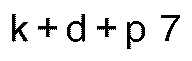
7 bis 300 beträgt,
R₁, R₁' und R₁'' unabhängig voneinander für ein Wasserstoffatom oder eine Methylgruppe
stehen, mit der Maßgabe, daß wenn n den Wert 3 hat, R₁, R₁' und R₁'' Wasserstoff bedeuten,
a den Wert 0 oder 1 besitzt,
m eine ganze Zahl von 0 bis 2 ist,
ℓ den Wert 0 oder 1 besitzt,
R₂ eine lineares oder verzweigtes Alkylen mit 2 bis 4 Kohlenstoffatomen ist, Y
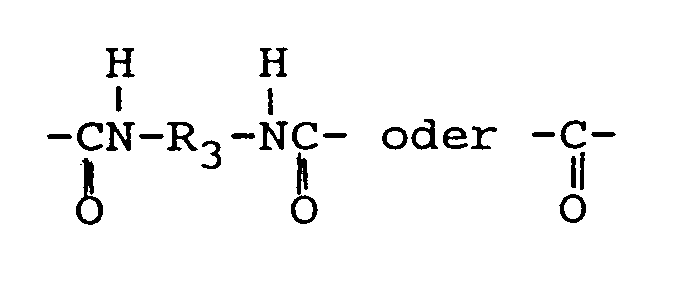
bedeutet, worin R₃ eine zweiwertige aliphatische Gruppe mit 2 bis 14 Kohlenstoffatomen,
eine zweiwertige 5- oder 6-gliedrige cycloaliphatische Gruppe mit 5 bis 15 Kohlenstoffatomen
oder eine Arylengruppe mit 6 bis 14 Kohlenstoffatomen ist, mit der Maßgabe, daß, wenn
Y
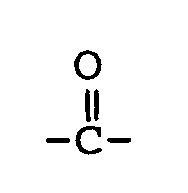
ist, a den Wert 1 hat;
Q ausgewählt ist aus (gezeigt in Bindung an V):
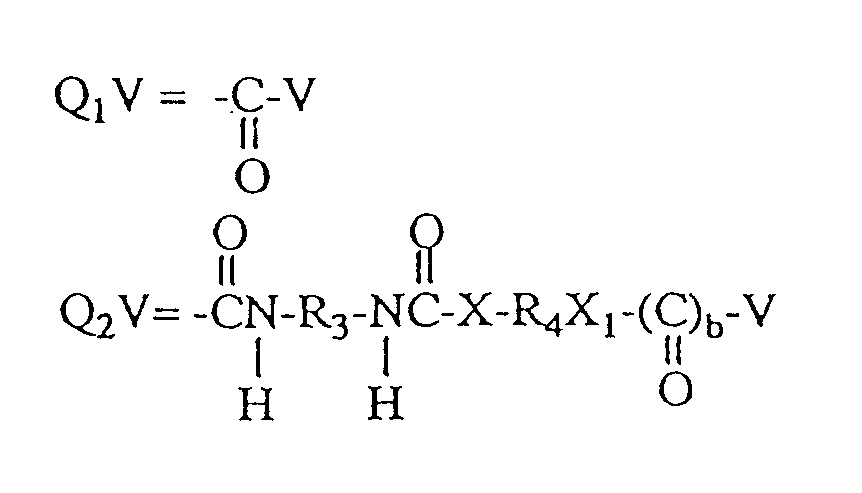
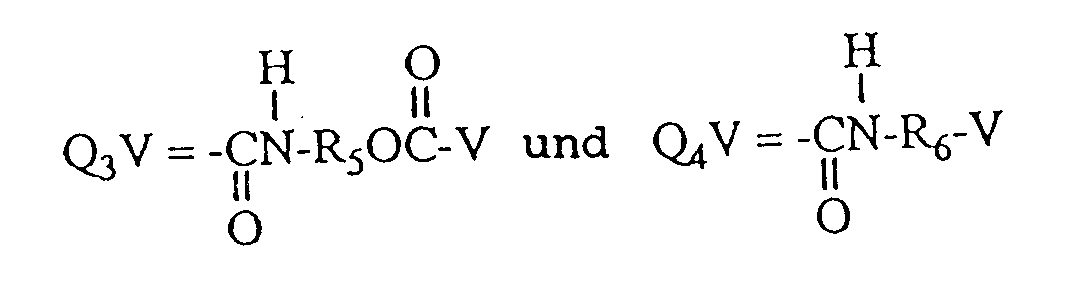
worin R₄ ein Alkylen mit 2 bis 4 Kohlenstoffatomen ist,
R₅ ein Alkylen mit 2 bis 10 Kohlenstoffatomen ist,
R₆ ein Arylen oder ein Alkyl-substituiertes Arylen mit 6 bis 20 Kohlenstoffatomen
ist,
X -O- oder -NR₇- bedeutet, worin R₇ ein Alkyl mit 1 bis 5 Kohlenstoffatomen ist,
X₁ -O-, -NH- oder -NR₇- bedeutet,
b den Wert 0 oder 1 besitzt,
V
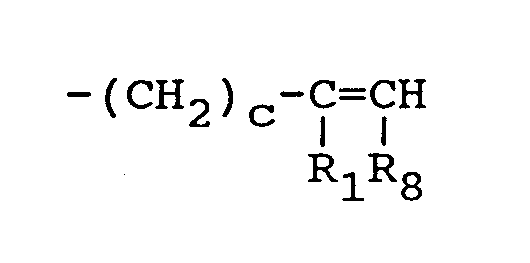
bedeutet,
c den Wert 0 oder 1 besitzt,
V₁ die gleiche Bedeutung wie V besitzt, oder für H oder R₉ steht, wenn ℓ den Wert
0 hat,
R₈ für H oder -COOH steht, mit der Maßgabe, daß, wenn R₈ -COOH ist, R₁ H, c 0 und
Q Q₁ bedeutet,
R₉ ein Alkyl mit 1 bis 18 Kohlenstoffatomen ist; mit der weiteren Maßgabe, daß, wenn
Q Q₂ ist, a für 0 steht;
wenn Q Q₂, Q₃ oder Q₄ ist, R₈ für H steht;
wenn c 1 bedeutet, b 0 ist, Q Q₂ ist und R₁ und R₈ H bedeuten; und
wenn V₁ R₉ ist, m den Wert 0 hat.
3. Verfahren nach Anspruch 2, worin der Polyether PE ein Poly(ethylenoxid) (PEO) mit
einem Molekulargewicht von 500 bis 10.000, ein Poly(propylenoxid) (PPO) mit einem
Molekulargewicht von 500 bis 10.000, ein Poly(ethylenoxidcopropylenoxid) mit einer
Zufalls- oder Blockcopolymerstruktur in den Verhältnissen von PEO:PPO von 1:30 bis
30:1 mit einem Molekulargewicht von 500 bis 10.000 oder ein Poly(tetramethylenoxid)
mit einem Molekulargewicht von 500 bis 10.000 ist.
4. Verfahren nach Anspruch 3, worin der Polyether PE ein Poly(ethylenoxid) mit einem
Molekulargewicht von 1000 bis 8000 oder ein Poly(ethylenoxidcopropylenoxid) mit einem
Molekulargewicht von 1000 bis 10.000 ist, und worin a den Wert 1 und R₂
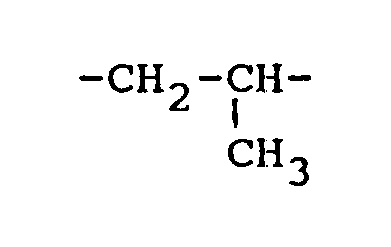
bedeutet.
5. Verfahren nach Anspruch 3, worin der Polyether ein Poly-(propylenoxid) mit einem Molekulargewicht
von 1000 bis 8000 ist, a den Wert 1 hat und R₂ für
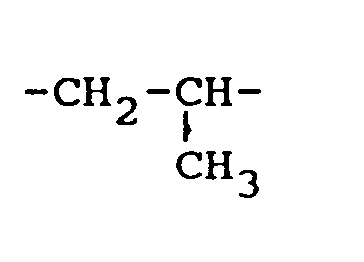
steht.
6. Verfahren nach Anspruch 3, worin QV Q₂V ist, worin in Q₂ R₃ ein zweiwertiger Rest
ist, erhalten durch Entfernen der zwei NCO-Gruppen aus einem Diisocyanat, ausgewählt
aus der Gruppe bestehend aus Ethylendiisocyanat, 1,2-Diisocyanatopropan, 1,3-Diisocyanatopropan,
1,6-Diisocyanatohexan, 1,2-Diisocyanatocyclohexan, 1,3-Diisocyanatocyclohexan, 1,4-Diisocyanatobenzol,
Bis-(4-isocyanatocyclohexyl)methan, Bis-(4-isocyanatocyclohexenyl)methan, Bis-(4-isocyanatophenyl)methan,
2,6- und 2,4-Toluoldiisocyanat; 3,3'-Dichlor-4,4'-diisocyanatobiphenyl; 1,5-Diisocyanatonaphthalin,
hydriertem Toluoldiisocyanat; 1-Isocyanatomethyl-5-isocyanato-1,3,3-trimethylcyclohexan
(=Isophorondiisocyanat); 2,2,4-(2,4,4)-Trimethylhexan-1,6-diisocyanat, 2,2'-Diisocyanatodiethylfumarat;
1,5-Diisocyanato-1-carboxypentan; 1,2-, 1,3-, 1,6-, 1,7-, 1,8-, 2,7- und 2,3-Diisocyanatonaphthalin;
2,4- und 2,7-Diisocyanato-1-methylnaphthalin; 4,4'-Diisocyanatobiphenyl; 4,4'-Diisocyanato-3,3',-diisocyanato-6(7)-methylnaphthalin;
4,4'-Diisocyanato-2,2'-dimethylbiphenyl; Bis-(4-isocyanatophenyl)ethan; und Bis-(4-isocyanatophenyl)ether,
und V-(CO)b-X₁-R₄-X- der Rest, erhalten durch Entfernen des aktiven Wasserstoffatoms aus einer
Hydroxyl- oder Aminogruppe einer Verbindung, ausgewählt aus der Gruppe, bestehend
aus 2-Hydroxyethylacrylat und -methacrylat, 2- und 3-Hydroxypropylacrylat und -methacrylat;
4-Hydroxybutylacrylat und -methacrylat; Glycerindimethacrylat; Hydroyethylmaleat und
-fumarat; 2-Hydroxyethyl- und 4-hydroxybutylvinylether; N-tert.-Butylaminoethylmethacrylat,
N-(3-Hydroxypropyl)methacrylamid; Vinylbenzylalkohol; und Allylalkohol, ist.
7. Verfahren nach Anspruch 6, worin das Diisocyanat Isophorondiisocyanat, 2,2,4-(2,4,4)-Trimethylhexan-1,6-diisocyanat,
2,4-Toluoldiisocyanat oder 2,6-Toluoldiisocyanat ist, und die den aktiven Wasserstoff
enthaltende Vinylverbindung 2-Hydroxyethylmethacrylat, 2-Hydroxyethylacrylat oder
N-tert.-Butylaminoethylmethacrylat ist.
8. Verfahren nach Anspruch 3, worin QV Q₃V ist, und V-COO-R₅- der Rest, erhalten durch
Entfernen der NCO-Gruppe von einer Isocyanatverbindung, ausgewählt aus der Gruppe,
bestehend aus 2-Isocyanatoethylmethacrylat, 2-Isocyanatoethylacrylat, 3-Isocyanatopropylmethacrylat,
1-Methyl-2-isocyanatoethylmethacrylat, und 1,1-Dimethyl-2-isocyanatoethylacrylat ist.
9. Verfahren nach Anspruch 8, worin die Isocyanatverbindung 2-Isocyanatoethylmethacrylat
ist.
10. Verfahren nach Anspruch 3, worin QV Q₄V ist, und V-R₆- der Rest, erhalten durch Entfernen
der NCO-Gruppe aus 2-Isocyanatobutylvinylether, Styrolisocyanat oder m-Isopropenyl-α,α-dimethylbenzylisocyanat,
ist.
11. Verfahren nach Anspruch 10, worin das Isocyanat m-Isopropenyl-α,α-dimethylbenzylisocyanat
ist.
12. Verfahren nach Anspruch 4, worin QV Q₃V ist, und V-COO-R₅- der Rest, erhalten durch
Entfernen der NCO-Gruppe von einer Isocyanatverbindung, ausgewählt aus der Gruppe,
bestehend aus 2-Isocyanatoethylmethacrylat, 2-Isocyanatoethylacrylat, 3-Isocyanatopropylmethacrylat,
1-Methyl2-isocyanatoethylmethacrylat, und 1,1-Dimethyl-2-isocyanatoethylacrylat, ist.
13. Verfahren nach Anspruch 4, worin QV Q₄V ist, und V-R₆- der Rest, erhalten durch Entfernen
der NCO-Gruppe von 2-Isocyanatobutylvinylether, Styrolisocyanat, oder m-Isopropenyl-α,α-dimethylbenzylisocyanat,
ist.
14. Verfahren nach Anspruch 5, worin QV Q₃V ist, und V-COO-R₅- der Rest, erhalten durch
Entfernen der NCO-Gruppe von einer Isocyanatverbindung, ausgewählt aus der Gruppe,
bestehend aus 2-Isocyanatoethylmethacrylat, 2-Isocyanatoethylacrylat, 3-Isocyanatopropylmethacrylat,
1-Methyl-2-isocyanatoethylmethacrylat und 1,1-Dimethyl-2-isocyanatoethylacrylat, ist.
15. Verfahren nach Anspruch 5, worin QV Q₄V ist, und V-R₆- der Rest, erhalten durch Entfernen
der NCO-Gruppe aus 2-Isocyanatobutylvinylether, Styrolisocyanat oder m-Isopropenyl-α,α-dimethylbenzylisocyanat
ist.
16. Verfahren nach Anspruch 12, worin die Isocyanatverbindung 2-Isocyanatoethylmethacrylat
ist.
17. Verfahren nach Anspruch 13, worin das Isocyanat m-Isopropenyl-α,α-dimethylbenzylisocyanat
ist.
18. Verfahren nach Anspruch 14, worin das Isocyanat 2-Isocyanatoethylmethacrylat ist.
19. Verfahren nach Anspruch 15, worin das Isocyanat m-Isopropenyl-α,α-dimethylbenzylisocyanat
ist.
20. Verfahren nach Anspruch 2, worin das PE Poly(ethylenoxid), Poly(propylenoxid) oder
Poly(ethylen-copropylenoxid) ist, und QV Q₂V, Q₃V oder Q₄V ist.
21. Verfahren nach Anspruch 20, worin QV Q₃V oder Q₄V bedeutet, und a den Wert 1 hat.
22. Verfahren nach Anspruch 1, worin (B-1) ein Fluor-enthaltendes Monomeres ist, das mindestens
3 Fluoratome enthält, ausgewählt aus der Gruppe, bestehend aus Hexafluorisopropylacrylat
und -methacrylat, Perfluorcyclohexylacrylat und -methacrylat, Pentafluorstyrol und
den Acrylat- oder Methacrylatestern oder Amiden der Formel

worin
R
f -(CF₂)
tCF₂L oder -(CF₂CF₂)
qOCF(CF₃)₂ bedeutet,
R₁ für ein Wasserstoffatom oder eine Methylgruppe steht,
X für ein Sauerstoffatom oder -NR₇- steht, worin R₇ eine Alkylgruppe mit 1-5 Kohlenstoffatomen
bedeutet,
r eine ganze Zahl von 1-4 ist,
t eine ganze Zahl von 0-14 ist,
q eine ganze Zahl von 1-3 ist;
L für ein Wasserstoff- oder ein Fluoratom steht, mit der Maßgabe, daß, wenn t den
Wert 0 hat, L für ein Fluoratom steht; und W eine direkte Bindung oder eine zweiwertige
Gruppe der Struktur -NR₇-CO-; -NR₇SO₂-(CH₂)
r-; -NR₇SO₂-; -S-(CH₂)
r-; -NR₇-(CH₂)
r-NR₇SO₂-, oder -NHCO- ist.
23. Verfahren nach Anspruch 1, worin (B-1) ein fluoriertes Monomeres, ausgewählt aus der
Gruppe, bestehend aus Hexafluorisopropylacrylat, Hexafluorisopropylmethacrylat oder
eine Verbindung der Struktur (I), wie in Anspruch 22 definiert, worin W eine direkte
Bindung und L ein Fluoratom ist, ist.
24. Verfahren nach Anspruch 22, worin X ein Sauerstoffatom ist, W eine direkte Bindung
ist, R₁ ein Wasserstoffatom ist, r den Wert 2 besitzt, t den Wert 6 bis 10 besitzt,
und L ein Fluoratom ist; oder worin r den Wert 1 oder 2 besitzt, t den Wert 1 bis
4 besitzt und L ein Fluoratom ist, oder worin R₁ eine Methylgruppe bedeutet, r den
Wert 2 besitzt, t den Wert 4 bis 10 besitzt und L ein Fluoratom ist.
25. Verfahren nach Anspruch 22, worin r den Wert 1 oder 2 besitzt, t den Wert 1 bis 4
besitzt und L ein Fluoratom ist.
26. Verfahren nach Anspruch 22, worin R für eine Methylgruppe steht, r den Wert 2 besitzt
und t den Wert 4 bis 10 besitzt und L ein Fluoratom bedeutet.
27. Verfahren nach Anspruch 1, worin (B-2) ein Silicon-enthaltendes Vinylmonomeres ist,
das ein Oligosiloxanylsilylalkylacrylat oder -methacrylat mit 2 bis 10 Siliciumatomen
ist.
28. Verfahren nach Anspruch 27, worin das Monomere aus der Gruppe, bestehend aus Tris(trimethylsiloxy)silylproypl(meth)acrylat,
Triphenyldimethyldisiloxanylmethyl(meth)acrylat, Pentamethyldisiloxanylmethylacrylat,
tert.-Butyltetramethyldisiloxanylethyl(meth)acrylat, Methyldi(trimethylsiloxy)silylpropylglyceryl(meth)acrylat;
Pentamethyldisiloxanylmethylmethacrylat; Heptamethylcyclotetrasiloxymethylmethacrylat;
Heptamethylcyclotetrasiloxypropylmethacrylat; (Trimethylsilyl)decamethylpentasiloxypropylmethacrylat;
und Undecamethylpentasiloxypropylmethacrylat, ist.
29. Verfahren nach Anspruch 28, worin das Monomere Tris(trimethylsiloxy)silylpropylmethacrylat
ist.
30. Verfahren nach Anspruch 1, worin die Komponente (B) 40 bis 80 Gew.-% des Copolymeren
ausmacht.
31. Verfahren nach Anspruch 30, worin die Komponente (B) 50 bis 70 Gew.-% des Copolymeren
ausmacht.
32. Verfahren nach Anspruch 1, worin die Komponente (C) ein Monomeres, ausgewählt aus
der Gruppe, bestehend aus Methylacrylat, Ethylacrylat, n- und Isopropylacrylat, Cyclohexylacrylat,
Trimethylcyclohexylacrylat, Phenylacrylat, Benzylacrylat und den entsprechenden Methacrylaten;
Furfurylacrylat und -methacrylat; Methoxyethyl-, Ethoxyethyl- und Ethoxyethoxyethylacrylat
und -methacrylat; 2-Hydroxyethylacrylat und -methacrylat; 3-Hydroxypropylacrylat,
-methacrylat und -methacrylamid; Glycidylmethacrylat; N,N-Dimethylacrylamid; N-Isopropylacrylamid;
N-Vinylacetamid; N-Vinylpyrrolidon; Dimethylaminoethylmethacrylat und -methacrylamid;
Acryl- und Methacrylsäure, Vinylsulfonsäure, Styrol, 4-Styrolsulfonsäure und 2-Methacrylamido-2-methylpropansulfonsäure
und ihren Salzen und Gemischen davon, ist.
33. Verfahren nach Anspruch 32, worin das Monomere Methoxyethylacrylat und Methoxyethylmethacrylat,
Ethoxyethylacrylat und Ethoxyethylmethacrylat; Methylmethacrylat; Methylacrylat, 2-Hydroxyethylmethacrylat;
N-Vinylpyrrolidon; N,N-Dimethylacrylamid und Styrol, und Ethoxyethoxyethylacrylat
oder Gemische davon ist.
34. Verfahren nach Anspruch 1, worin die Komponente (C) 5 bis 60 Gew.-% des Copolymeren
ausmacht.
35. Verfahren nach Anspruch 34, worin die Komponente (C) 10 bis 50 Gew.-% des Copolymeren
ausmacht.
36. Verfahren nach Anspruch 1, zur Herstellung einer Kontaktlinse.
37. Verfahren nach Anspruch 1, worin der Polyether PE ein fluorierter Polyether mit einem
Molekulargewicht von 600 bis 5000 der Struktur HO-CH₂CF₂(C₂F₄O)x(CF₂O)y-CF₂CH₂-OH, worin x und y unabhängig voneinander ganze Zahlen von 6 bis 50 sind, ist.
38. Verfahren nach Anspruch 4, worin die Menge der Komponente (C) 0 beträgt.
39. Verfahren nach Anspruch 4, worin die Komponente (A) 15 bis 30 Gew.-% des Copolymeren
beträgt.
40. Verfahren nach Anspruch 5, worin die Komponente (A) 30 bis 60 Gew.-% des Copolymeren
beträgt.
41. Verfahren nach Anspruch 38 zur Herstellung einer Kontaktlinse.
42. Verwendung eines Copolymeren nach Anspruch 1 zur Herstellung einer Kontaktlinse.
43. Kontaktlinse, umfassend ein Copolymeres nach Anspruch 1.
44. Kontaktlinse, bestehend im wesentlichen aus einem Copolymeren nach Anspruch 1.
Revendications pour l'(les) Etat(s) contractant(s) suivant(s): AT, BE, CH, LI, DE,
DK, FR, GB, GR, IT, LU, NL, SE
1. Copolymère qui est perméable à l'oxygène, souple, mouillable, biocompatible et convenant
à une utilisation dans des dispositifs ophtalmiques, tels que des lentilles de contact,
ce copolymère comprenant le produit de polymérisation de
(A) 10 à 80 % en poids d'un polyéther téléchélique vinylique, ou un mélange de celui-ci,
(B) 90 à 20 % en poids de
(B-1) un monomère éthyléniquement insaturé fluoré, ou
(B-2) un monomère éthyléniquement insaturé contenant du silicone, ou un mélange de
monomère (B-1) et de monomère (B-2), et
(C) 0 à 60 % en poids d'un monomère éthyléniquement insaturé ou d'un mélange de monomères
autres que le monomère (B-1) ou le monomère (B-2).
2. Copolymère selon la revendication 1, dans lequel le polyéther téléchélique de vinyle
(A) a la formule (A) :

dans laquelle PE a un poids moléculaire moyen (PM) d'environ 500 à environ 10 000
et a la formule :

dans laquelle n est compris entre 1 et 3,
k, d et p sont des nombres entiers de 0 à 300, et la somme
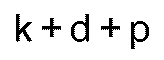
est comprise entre 7 et 300,
R₁, R₁' et R₁'' sont indépendamment les uns des autres des hydrogène ou des méthyles,
à la condition que si n est égal à 3, R₁,
R₁' et R₁'' sont des hydrogène,
a est zéro ou 1,
m est un nombre entier de zéro à 2,
l est zéro ou 1
R₂ est un alkylène linéaire ou ramifié avec 2 à 4 atomes de carbone ;
Y est
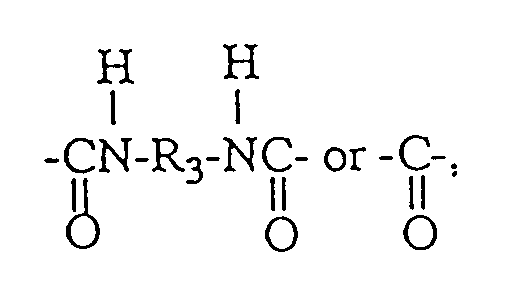
dans lequel R₃ est un groupe aliphatique divalent avec 2 à 14 atomes de carbone,
un groupe cycloaliphatique divalent à 5 ou 6 membres avec 5 à 15 atomes de C, ou un
groupe arylène avec 6 à 14 atomes de C, à la condition que si Y est
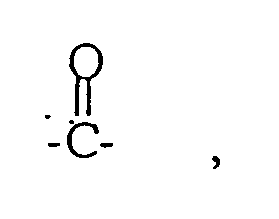
a est égal à 1 ;
Q est choisi parmi (présenté attaché à V)
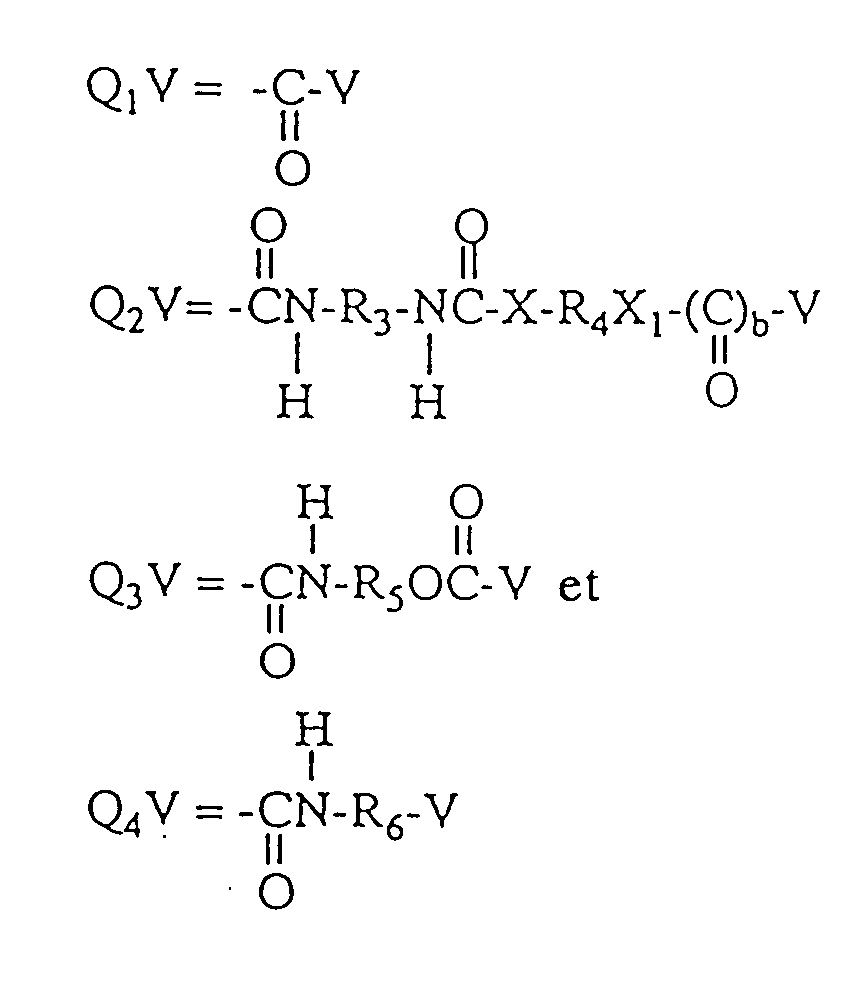
dans lesquels R₄ est un alkylène de 2 à 4 atomes de carbone,
R₅ est un alkylène de 2 à 10 atomes de carbone,
R₆ est un arylène ou un arylène de 6 à 20 atomes de carbone substitué par des alkyles,
X est -O- ou -NR₇-, dans lequel R₇ est un alkyle de 1 à 5 atomes de carbone,
X₁ est -O-, -NH- ou -NR₇-,
b est égal à zéro ou 1
V est
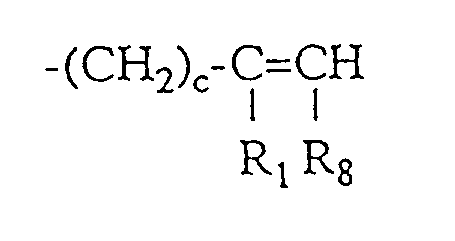
c est égal à zéro ou 1
V₁ a la même signification que V, ou est H ou R₉, quand l est égal à zéro,
R₈ est H ou -COOH, à la condition que, si R₈ est -COOH, R₁ est H, c est égal à zéro,
et Q est Q₁ ;
R₉ est un alkyle de 1 à 18 atomes de carbone ;
avec la condition supplémentaire que
quand Q est Q₂, a est égal à zéro ;
quand Q est Q₂, Q₃ ou Q₄, R₈ est H ;
quand c est égal à 1, b est égal à 0, Q est Q₂ et R₁ et R₈ sont H ; et
quand V₁ est R₉, m est égal à zéro.
3. Copolymère selon la revendication 2, dans lequel le polyéther PE est un poly(oxyde
d'éthylène) (PEO) de PM 500 à 10 000, un poly(oxyde propylène) (PPO) de PM 500 à 10
000, un poly(oxyde d'éthylène-co-oxyde de propylène) de structure copolymère au hasard
ou bloc dans les rapports de PEO:PPO de 1:30 à 30:1 et de PM 500 à 10 000 ou un poly(oxyde
de tétraméthylène) de PM 500 à 10 000.
4. Copolymère selon la revendication 3, dans lequel le polyéther PE est un poly(oxyde
d'éthylène) de PM 1000 à 8000, ou un poly(oxyde d'éthylène-co-oxyde de propylène)
de PM 1000 à 10 000 et dans lequel a est égal à 1 et R₂ est
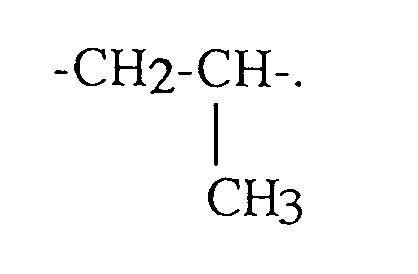
5. Un copolymère selon la revendication 3, dans lequel le polyéther est un poly(oxyde
de propylène) de PM 1000 à 8000, a est égal à 1 et R₂ est
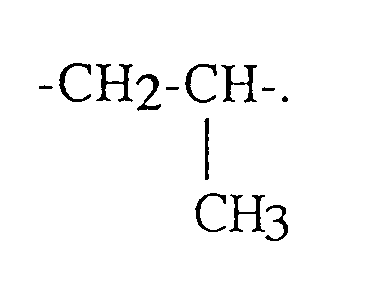
6. Copolymère selon la revendication 3, dans lequel QV est QV₂, dans lequel Q₂R₃ est
un radical divalent obtenu en éliminant les deux groupes -NCO d'un diisocyanate choisi
dans le groupe constitué de diisocyanate d'éthylène, 1,2-diisocyanatopropane, 1,3-diisocyanatopropane,
1,6-diisocyanatohexane, 1,2-diisocyanatocyclohexane, 1,3-diisocyanatocyclohexane,
1,4-diisocyanatobenzène, bis(4-isocyanatocyclohexyl)méthane, bis(4-isocyanatocyclohexényl)méthane,
bis(4-isocyanatophényl)méthane, diisocyanate de 2,6- et 2,4-toluène, 3,3'-dichloro-4,4'-diisocyanatobiphényle
; 1,5-diisocyanatonaphtalène, diisocyanate de toluène hydrogéné ; 1-isocyanatométhyl-5-isocyanato-1,3,3-triméthylcyclohexane
(= diisocyanate d'isophorone) ; 2,2,4-(2,4,4)-triméthylhexane-1,6-diisocyanate, fumarate
de 2,2'-diisocyanatodiéthyle ; 1,5-diisocyanato-1-carboxypentane ; 1,2-, 1,3-, 1,6-,
1,7-, 1,8-, 2,7- et 2,3-diisocyanatonaphtalène ; 2,4- et 2,7-diisocyanato-1-méthylnaphtalène
; 4,4'-diisocyanatobiphényle ; 4,4'-diisocyanato-3,3'-diisocyanato-6(7)-méthylnaphtalène
; 4,4'-diisocyanato-2,2'-diméthylbiphényle ; bis-(4-isocyanatophényl)éthane ; et bis(4-isocyanatophényl)éther,
et V-(CO)b-X₁-R₄-X- est le radical obtenu en éliminant l'atome d'hydrogène actif d'un groupe
hydroxyle ou amino d'un composé choisi dans le groupe constitué d'acrylate et méthacrylate
de 2-hydroxyéthyle, acrylate et méthacrylate de 2- et 3-hydroxypropyle ; acrylate
et méthacrylate de 4-hydroxybutyle; diméthacrylate de glycérol ; maléate et fumarate
d'hydroxyéthyle, éther vinylique de 2-hydroxyéthyle et 4-hydroxy-butyle ; méthacrylate
de N-tert.butylaminoéthyle, N-(3-hydroxypropyl)-méthacrylamide ; alcool vinylbenzylique
; et alcool allylique.
7. Copolymère selon la revendication 6, dans lequel le diisocyanate est le diisocyanate
d'isophorone, le 2,24-(2,4,4)-triméthylhexane-1,6-diisocyanate, le diisocyanate de
2,4-toluène ou le diisocyanate de 2,6-toluène, et le composé vinylique contenant l'hydrogène
actif est le méthacrylate de 2-hydroxyéthyle, l'acrylate de 2-hydroxyéthyle ou le
méthacrylate de N-tert.butylaminoéthyle.
8. Copolymère selon la revendication 3, dans lequel QV est Q₃V et V-COO-R₅- est le radical
obtenu en éliminant le groupe -NCO d'un composé isocyanate choisi parmi le groupe
constitué de méthacrylate de 2-isocyanatoéthyle, acrylate de 2-isocyanatoéthyle, méthacrylate
de 3-isocyanatopropyle, méthacrylate de 1-méthyl-2-isocyanatoéthyle, et acrylate de
1,1-diméthyl-2-isocyanatoéthyle.
9. Copolymère selon la revendication 8, dans lequel le composé isocyanate est le méthacrylate
de 2-isocyanatoéthyle.
10. Copolymère selon la revendication 3, dans lequel QV est Q₄V et V-R₆- est le radical
obtenu en éliminant le groupe -NCO d'un éther vinylique de 2-isocyanatobutyle, d'un
isocyanate de styrène, ou d'un isocyanate de m-isopropényl-alpha,alpha-diméthylbenzyle.
11. Copolymère selon la revendication 10, dans lequel l'isocyanate est l'isocyanate de
m-isopropényl-alpha,alpha-diméthylbenzyle.
12. Copolymère selon la revendication 4, dans lequel QV est Q₃V et V-COO-R₅- est le radical
obtenu en éliminant le groupe -NCO d'un composé isocyanate choisi parmi le groupe
constitué de méthacrylate de 2-isocyanatoéthyle, acrylate de 2-isocyanatoéthyle, méthacrylate
de 3-isocyanatopropyle, méthacrylate de 1-méthyl-2-isocyanatoéthyle, et acrylate de
1,1-diméthyl-2-isocyanatoéthyle.
13. Copolymère selon la revendication 4, dans lequel QV est Q₄V et V-R₆- est le radical
obtenu en éliminant le groupe -NCO d'un éther vinylique de 2-isocyanatobutyle, d'un
isocyanate de styrène, ou d'un isocyanate de m-isopropényl-alpha,alpha-diméthylbenzyle.
14. Copolymère selon la revendication 5, dans lequel QV est Q₃V et V-COO-R₅- est le radical
obtenu en éliminant le groupe -NCO d'un composé isocyanate choisi parmi le groupe
constitué de méthacrylate de 2-isocyanatoéthyle, acrylate de 2-isocyanatoéthyle, méthacrylate
de 3-isocyanatopropyle, méthacrylate de 1-méthyl-2-isocyanatoéthyle, et acrylate de
1,1-diméthyl-2-isocyanatoéthyle.
15. Copolymère selon la revendication 5, dans lequel QV est Q₄V et V-R₆- est le radical
obtenu en éliminant le groupe -NCO d'un éther vinylique de 2-isocyanatobutyle, d'un
isocyanate de styrène, ou d'un isocyanate de m-isopropényl-alpha,alpha-diméthylbenzyle.
16. Copolymère selon la revendication 12, dans lequel le composé isocyanate est le méthacrylate
de 2-isocyanatoéthyle.
17. Copolymère selon la revendication 13, dans lequel l'isocyanate est l'isocyanate de
m-isopropényl-alpha,alpha-diméthylbenzyle.
18. Copolymère selon la revendication 14, dans lequel le composé isocyanate est le méthacrylate
de 2-isocyanatoéthyle.
19. Copolymère selon la revendication 15, dans lequel l'isocyanate est l'isocyanate de
m-isopropényl-alpha,alpha-diméthylbenzyle.
20. Copolymère selon la revendication 2, dans lequel PE est du poly(oxyde d'éthylène),
poly(oxyde de propylène) ou poly(oxyde d'éthylène-co-oxyde de propylène) et QV est
Q₂V, Q₃V ou Q₄V.
21. Copolymère selon la revendication 20, dans lequel QV est Q₃V ou Q₄V et a est égal
à 1.
22. Copolymère selon la revendication 1, dans lequel (B-1) est un monomère contenant du
fluor contenant au moins trois atomes de fluor, choisi dans le groupe constitué de
d'acrylate et de méthacrylate d'hexafluoroisopropyle, d'acrylate et de méthacrylate
de perfluorocyclohexyle, de pentafluorostyrène et des esters ou amides d'acrylate
ou de méthacrylate de formule
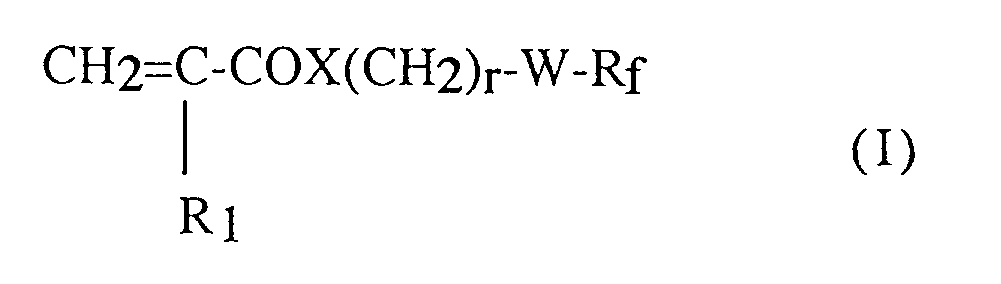
dans laquelle
R
f est -(CF₂)
tCF₂L ou -(CF₂CF₂)
qOCF(CF₃)₂,
R₁ est un hydrogène ou un méthyle,
X est un oxygène ou -NR₇- dans lequel R₇ est un groupe alkyle avec 1 à 5 atomes de
carbone,
r est un nombre entier de 1 à 4,
t est un nombre entier de 0 à 14,
q est un nombre entier de 1 à 3 ;
L est un hydrogène ou un fluor, à la condition que, quand t est égal à 0, L est un
fluor ; et
W est une liaison directe ou un groupe divalent de structure -NR₇-CO- ; -NR₇SO₂-(CH₂)
r- ; -NR₇SO₂- ; -S-(CH₂)
r- ; -NR₇-(CH₂)
r-NR₇SO₂- ; ou -NHCO-.
23. Copolymère selon la revendication 1, dans lequel (B-1) est un monomère fluoré choisi
dans le groupe constitué d'acrylate d'hexafluoroisopropyle, de méthacrylate d'hexafluoroisopropyle
ou un composé de structure (I), comme défini dans la revendication 22, dans lequel
W est une liaison directe et L est un fluor.
24. Copolymère selon la revendication 22, dans lequel X est un oxygène, W est une liaison
directe, R₁ est un hydrogène, r est égal à 2, t est compris entre 6 et 10 et L est
un fluor ; ou dans lequel r est égal à 1 ou 2, t est compris entre 1 et 4 et L est
un fluor, ou dans lesquels R₁ est un méthyle, r est égal à 2, t est compris entre
4 et 10 et L est un fluor.
25. Copolymère selon la revendication 22, dans lequel r est égal à 1 ou 2, t est compris
entre 1 et 4 et L est un fluor.
26. Copolymère selon la revendication 22, dans lequel R est un méthyle, r est égal à 2,
et t est compris entre 4 et 10 et L est un fluor.
27. Copolymère selon la revendication 1, dans lequel (B-2) est un monomère vinylique contenant
du silicone qui est un acrylate ou un méthacrylate d'oligosiloxanyl-silyl-alkyle contenant
de 2 à 10 atomes de silicium.
28. Copolymère selon la revendication 27, dans lequel le monomère est choisi dans le groupe
constitué de (méth)acrylate de tris(triméthylsiloxy)-silylpropyle, (méth)acrylate
de triphényldiméthyl-disiloxanylméthyle, acrylate de pentaméthyldisiloxanylméthyle,
(méth)acrylate de tert-butyltétraméthyldisiloxanyléthyle, (méth)acrylate de méthyldi(triméthylsiloxy)silylpropyle-glycéryle
; méthacrylate de pentaméthyldi-siloxanyl-méthyle, méthacrylate d'heptaméthylcyclotétra-siloxyméthyle,
méthacrylate d'heptaméthylcyclotétrasiloxy-propyle ; méthacrylate de (triméthylsilyl)decaméthyl-pentasiloxy-propyle
; et méthacrylate de undécaméthylpentasiloxypropyle.
29. Copolymère selon la revendication 28, dans lequel le monomère est le méthacrylate
de tris(triméthylsiloxy)-silyl-propyle.
30. Copolymère selon la revendication 1, dans lequel le composant (B) constitue 40 à 80
% en poids dudit copolymère.
31. Copolymère selon la revendication 30, dans lequel le composant (B) constitue 50 à
70 % en poids dudit copolymère.
32. Copolymère selon la revendication 1, dans lequel le composant (C) est choisi dans
le groupe constitué d'acrylate de méthyle, acrylate d'éthyle, acrylate de n- et isopropyle,
acrylate de cyclohexyle, acrylate de triméthyl-cyclohexyle, acrylate de phényle, acrylate
de benzyle et les méthacrylates correspondants ; acrylate et méthacrylate de furfuryle
; acrylate et méthacrylate de méthoxy-éthyl-, d'éthoxy-éthyl-, et d'éthoxy-éthoxy-éthyle
; acrylate et méthacrylate de 2-hydroxyéthyle ; acrylate, méthacrylate et méthylacrylamide
de 3-hydroxypropyle ; méthacrylate de glycidyle ; N,N-diméthylacrylamide ; N-isopropyl-acrylamide
; N-vinylacétamide ; N-vinyl-pyrrolidone ; méthacrylate et méthylacrylamide de diméthylamino-éthyle
; acide acrylique et méthacrylique, acide vinylsulfonique, styrène, acide 4-styrène-sulfonique
et acide 2-méthacrylamido-2-méthyl-propane-sulfonique et leurs sels, et de mélanges
de ceux-ci.
33. Copolymère selon la revendication 32, dans lequel le monomère est l'acrylate de méthoxy-éthyle
et le méthacrylate de méthoxyéthyle, l'acrylate d'éthoxy-éthyle et le méthacrylate
d'éthoxy-éthyle ; le méthacrylate de méthyle ; l'acrylate de méthyle, le méthacrylate
de 2-hydroxyéthyle ; la N-vinylpyrrolidone ; le N,N-diméthylacrylamide et le styrène
et l'acrylate d'éthoxy-éthoxy-éthyle ou des mélanges de ceux-ci.
34. Copolymère selon la revendication 1, dans lequel le composant (C) est compris entre
5 et 60 % en poids dudit copolymère.
35. Copolymère selon la revendication 34, dans lequel le composant (C) est compris entre
10 et 50 % en poids dudit copolymère.
36. Copolymère selon la revendication 1, qui a la forme d'une lentille de contact.
37. Copolymère selon la revendication 1, dans lequel le polyéther PE est un polyéther
fluoré de PM 600 à 5000 de structure HO-CH₂CF₂(C₂F₄O)x(CF₂O)yCF₂CH₂-OH, dans lequel x et y sont indépendamment l'un de l'autre des nombres entiers
de 6 à 50.
38. Copolymère selon la revendication 4, dans lequel la quantité de composant (C) est
égale à zéro.
39. Copolymère selon la revendication 4, dans lequel le composant (A) est compris entre
15 et 30 % en poids dudit copolymère.
40. Copolymère selon la revendication 5, dans lequel le composant (A) est compris entre
30 et 60 % en poids dudit copolymère.
41. Copolymère selon la revendication 38, qui a la forme d'une lentille de contact.
42. Procédé pour la fabrication d'un copolymère selon la revendication 1, caractérisé
par la copolymérisation conventionnelle du mélange de monomères en employant des initiateurs
qui génèrent des radicaux libres après application d'une énergie d'activation.
43. Utilisation d'un copolymère selon la revendication 1 pour la fabrication de lentilles
de contact.
44. Lentille de contact constituée d'un copolymère tel que défini dans la revendication
1.
45. Lentille de contact constituée essentiellement d'un copolymère tel que défini dans
la revendication 1.
Revendications pour l'(les) Etat(s) contractant(s) suivant(s): ES
1. Procédé pour la fabrication d'un copolymère qui est perméable à l'oxygène, souple,
mouillable, biocompatible et convient à une utilisation dans des dispositifs ophtalmiques,
tels que des lentilles de contact, ce copolymère comprenant le produit de polymérisation
de
(A) 10 à 80 % en poids d'un polyéther téléchélique vinylique, ou un mélange de celui-ci,
(B) 90 à 20 % en poids de
(B-1) un monomère éthyléniquement insaturé fluoré, ou
(B-2) un monomère éthyléniquement insaturé contenant du silicone, ou un mélange de
monomère (B-1) et de monomère (B-2), et
(C) 0 à 60 % en poids d'un monomère éthyléniquement insaturé ou d'un mélange de monomères
autres que le monomère (B-1) ou le monomère (B-2),
caractérisé par la copolymérisation conventionnelle du mélange de monomères en employant
des initiateurs qui génèrent des radicaux libres après application d'une énergie d'activation.
2. Procédé selon la revendication 1, dans lequel le polyéther téléchélique vinylique
(A) a la formule (A) :

dans laquelle PE a un poids moléculaire moyen (PM) d'environ 500 à environ 10 000
et a la formule :

dans laquelle n est compris entre 1 et 3,
k, d et p sont des nombres entiers de 0 à 300, et la somme
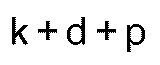
est comprise entre 7 et 300,
R₁, R₁' et R₁'' sont indépendamment les uns des autres des d'hydrogène ou des méthyles,
à la condition que si n est égal à 3, R₁, R₁' et R₁'' sont des hydrogène,
a est zéro ou 1,
m est un nombre entier de zéro à 2,
l est zéro ou 1
R₂ est un alkylène linéaire ou ramifié avec 2 à 4 atomes de carbone ;
Y est
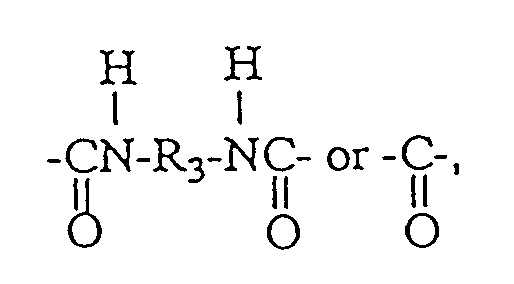
dans lequel R₃ est un groupe aliphatique divalent avec 2 à 14 atomes de carbone,
un groupe cycloaliphatique divalent à 5 ou 6 membres avec 5 à 15 atomes de C, ou un
groupe arylène avec 6 à 14 atomes de C, à la condition que si Y est
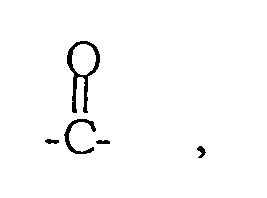
a est égal à 1 ;
Q est choisi parmi (présenté attaché à V)
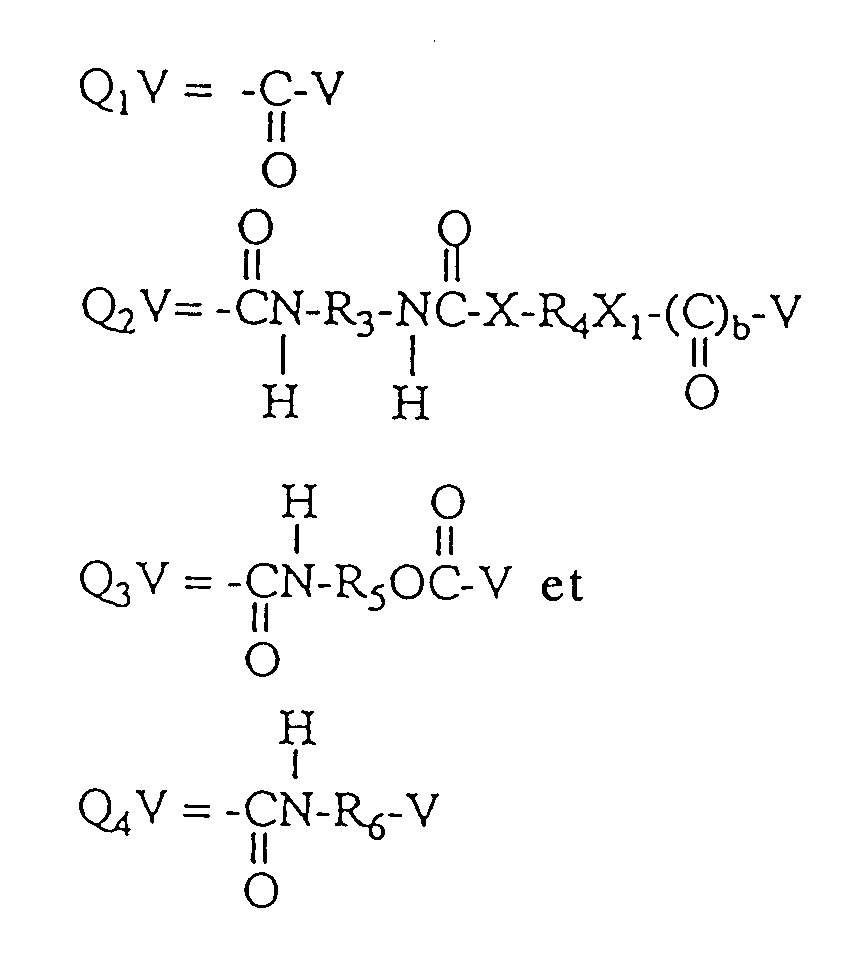
dans lesquels R₄ est un alkylène de 2 à 4 atomes de carbone,
R₅ est un alkylène de 2 à 10 atomes de carbone,
R₆ est un arylène ou un arylène de 6 à 20 atomes de carbone substitué par des alkyles,
X est -O- ou -NR₇-, dans lequel R₇ est un alkyle de 1 à 5 atomes de carbone,
X₁ est -O-, -NH- ou -NR₇-,
b est égal à zéro ou 1
V est
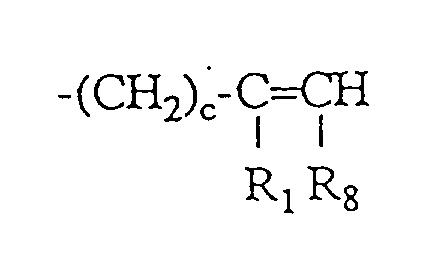
c est égal à zéro ou 1
V₁ a la même signification que V, ou est H ou R₉, quand l est égal à zéro,
R₈ est H ou -COOH, à la condition que, si R₈ est -COOH, R₁ est H, c est égal à zéro,
et Q est Q₁ ;
R₉ est un alkyle de 1 à 18 atomes de carbone ;
avec la condition supplémentaire que quand Q est Q₂, a est égal à zéro ;
quand Q est Q₂, Q₃ ou Q₄, R₈ est H ;
quand c est égal à 1, b est égal à 0, Q est Q₂ et R₁ et R₈ sont H ; et
quand V₁ est R₉, m est égal à zero.
3. Procédé selon la revendication 2, dans lequel le polyéther PE est un poly(oxyde d'éthylène)
(PEO) de PM 500 à 10 000, un poly(oxyde propylène) (PPO) de PM 500 à 10 000, un poly(oxyde
d'éthylène-co-oxyde de propylène) de structure copolymère au hasard ou bloc dans les
rapports de PEO:PPO de 1:30 à 30:1 et de PM 500 à 10 000 ou un poly(oxyde de tétraméthylène)
de PM 500 à 10 000.
4. Procédé selon la revendication 3, dans lequel le polyéther PE est un poly(oxyde d'éthylène)
de PM 1000 à 8000, ou un poly(oxyde d'éthylène-co-oxyde de propylène) de PM 1000 à
10 000 et dans lequel a est égal à 1 et R₂ est
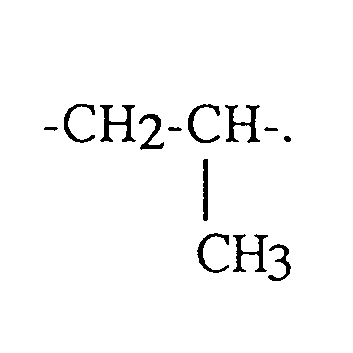
5. Procédé selon la revendication 3, dans lequel le polyéther est un poly(oxyde de propylène)
de PM 1000 à 8000, a est égal à 1 et R₂ est
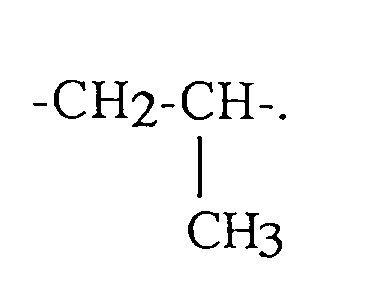
6. Procédé selon la revendication 3, dans lequel QV est QV₂, dans lequel Q₂R₃ est un
radical divalent obtenu en éliminant les deux groupes -NCO d'un diisocyanate choisi
dans le groupe constitué de diisocyanate d'éthylène, 1,2-diisocyanatopropane, 1,3-diisocyanatopropane,
1,6-diisocyanatohexane, 1,2-diisocyanatocyclohexane, 1,3-diisocyanatocyclohexane,
1,4-diisocyanatobenzène, bis(4-isocyanatocyclohexyl)méthane, bis(4-isocyanatocyclohexényl)méthane,
bis(4-isocyanatophényl)méthane, diisocyanate de 2,6- et 2,4-toluène, 3,3'-dichloro-4,4'-diisocyanatobiphényle
; 1,5-diisocyanatonaphtalène, diisocyanate de toluène hydrogéné ; 1-isocyanatométhyl-5-isocyanato-1,3,3-triméthylcyclohexane
(= diisocyanate d'isophorone) ; 2,2,4-(2,4,4)-triméthylhexane-1,6-diisocyanate, fumarate
de 2,2'-diisocyanatodiéthyle ; 1,5-diisocyanato-1-carboxypentane ; 1,2-, 1,3-, 1,6-,
1,7-, 1,8-, 2,7- et 2,3-diisocyanatonaphtalène ; 2,4- et 2,7-diisocyanato-1-méthylnaphtalène
; 4,4'-diisocyanatobiphényle ; 4,4'-diisocyanato-3,3'-diisocyanato-6(7)-méthylnaphtalène
; 4,4'-diisocyanato-2,2'-diméthylbiphényle ; bis-(4-isocyanatophényl)éthane ; et bis(4-isocyanatophényl)éther,
et V-(CO)b-X₁-R₄-X- est le radical obtenu en éliminant l'atome d'hydrogène actif d'un groupe
hydroxyle ou amino d'un compose choisi dans le groupe constitué d'acrylate et méthacrylate
de 2-hydroxyéthyle, acrylate et méthacrylate de 2- et 3-hydroxypropyle ; acrylate
et méthacrylate de 4-hydroxybutyle; diméthacrylate de glycérol ; maléate et fumarate
d'hydroxyéthyle, éther vinylique de 2-hydroxyéthyle et 4-hydroxy-butyle ; méthacrylate
de N-tert.butylaminoéthyle, N-(3-hydroxypropyl)-méthacrylamide ; alcool vinylbenzylique
; et alcool allylique.
7. Procédé selon la revendication 6, dans lequel le diisocyanate est le diisocyanate
d'isophorone, le 2,24-(2,4,4)-triméthylhexane-1,6-diisocyanate, le diisocyanate de
2,4-toluène ou le diisocyanate de 2,6-toluène, et le composé vinylique contenant l'hydrogène
actif est le méthacrylate de 2-hydroxyéthyle, l'acrylate de 2-hydroxyéthyle ou le
méthacrylate de N-tert.butylaminoéthyle.
8. Procédé selon la revendication 3, dans lequel QV est Q₃V et V-COO-R₅- est le radical
obtenu en éliminant le groupe -NCO d'un composé isocyanate choisi parmi le groupe
constitué de méthacrylate de 2-isocyanatoéthyle, acrylate de 2-isocyanatoéthyle, méthacrylate
de 3-isocyanatopropyle, méthacrylate de 1-méthyl-2-isocyanatoéthyle, et acrylate de
1,1-diméthyl-2-isocyanatoéthyle.
9. Procédé selon la revendication 8, dans lequel le composé isocyanate est le méthacrylate
de 2-isocyanatoéthyle.
10. Procédé selon la revendication 3, dans lequel QV est Q₄V et V-R₆- est le radical obtenu
en éliminant le groupe -NCO d'un éther vinylique de 2-isocyanatobutyle, d'un isocyanate
de styrène, ou d'un isocyanate de m-isopropényl-alpha,alpha-diméthylbenzyle.
11. Procédé selon la revendication 10, dans lequel l'isocyanate est l'isocyanate de m-isopropényl-alpha,alpha-diméthylbenzyle.
12. Procédé selon la revendication 4, dans lequel QV est Q₃V et V-COO-R₅- est le radical
obtenu en éliminant le groupe -NCO d'un composé isocyanate choisi parmi le groupe
constitué de méthacrylate de 2-isocyanatoéthyle, acrylate de 2-isocyanatoéthyle, méthacrylate
de 3-isocyanatopropyle, méthacrylate de 1-méthyl-2-isocyanatoéthyle, et acrylate de
1,1-diméthyl-2-isocyanatoéthyle.
13. Procédé selon la revendication 4, dans lequel QV est Q₄V et V-R₆- est le radical obtenu
en éliminant le groupe -NCO d'un éther vinylique de 2-isocyanatobutyle, d'un isocyanate
de styrène, ou d'un isocyanate de m-isopropényl-alpha,alpha-diméthylbenzyle.
14. Procédé selon la revendication 5, dans lequel QV est Q₃V et V-COO-R₅- est le radical
obtenu en éliminant le groupe -NCO d'un composé isocyanate choisi parmi le groupe
constitué de méthacrylate de 2-isocyanatoéthyle, acrylate de 2-isocyanatoéthyle, méthacrylate
de 3-isocyanatopropyle, méthacrylate de 1-méthyl-2-isocyanatoéthyle, et acrylate de
1,1-diméthyl-2-isocyanatoéthyle.
15. Procédé selon la revendication 5, dans lequel QV est Q₄V et V-R₆- est le radical obtenu
en éliminant le groupe -NCO d'un éther vinylique de 2-isocyanatobutyle, d'un isocyanate
de styrène, ou d'un isocyanate de m-isopropényl-alpha,alpha-diméthylbenzyle.
16. Procédé selon la revendication 12, dans lequel le composé isocyanate est le méthacrylate
de 2-isocyanatoéthyle.
17. Procédé selon la revendication 13, dans lequel l'isocyanate est l'isocyanate de m-isopropényl-alpha,alpha-diméthylbenzyle.
18. Procédé selon la revendication 14, dans lequel le composé isocyanate est le méthacrylate
de 2-isocyanatoéthyle.
19. Procédé selon la revendication 15, dans lequel l'isocyanate est l'isocyanate de m-isopropényl-alpha,alpha-diméthylbenzyle.
20. Procédé selon la revendication 2, dans lequel PE est du poly(oxyde d'éthylène), poly(oxyde
de propylène) ou poly(oxyde d'éthylène-co-oxyde de propylène) et QV est Q₂V, Q₃V ou
Q₄V.
21. Procédé selon la revendication 20, dans lequel QV est Q₂V, Q₃V ou Q₄V et a est égal
à 1.
22. Procédé selon la revendication 1, dans lequel (B-1) est un monomère contenant du fluor
contenant au moins trois atomes de fluor, choisi dans le groupe constitué de d'acrylate
et de méthacrylate d'hexafluoroisopropyle, d'acrylate et de méthacrylate de perfluorocyclohexyle,
de pentafluorostyrène et des esters ou amides d'acrylate ou de méthacrylate de formule
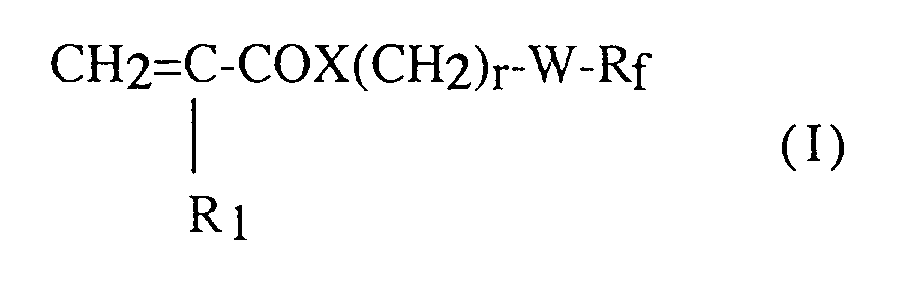
dans laquelle
R
f est -(CF₂)
tCF₂L ou -(CF₂CF₂)
qOCF(CF₃)₂,
R₁ est un hydrogène ou un méthyle,
X est un oxygène ou -NR₇- dans lequel R₇ est un groupe alkyle avec 1 à 5 atomes de
carbone,
r est un nombre entier de 1 à 4,
t est un nombre entier de 0 à 14,
q est un nombre entier de 1 à 3 ;
L est un hydrogène ou un fluor, à la condition que, quand t est égal à 0, L est un
fluor ; et
W est une liaison directe ou un groupe divalent de structure -NR₇-CO- ; -NR₇SO₂-(CH₂)
r- ; -NR₇SO₂- ; -S-(CH₂)
r- ; -NR₇-(CH₂)
r-NR₇SO₂- ; ou -NHCO-.
23. Procédé selon la revendication 1, dans lequel (B-1) est un monomère fluoré choisi
dans le groupe constitué d'acrylate d'hexafluoroisopropyle, de méthacrylate d'hexafluoroisopropyle
ou un composé de structure (I), comme défini dans la revendication 22, dans lequel
W est une liaison directe et L est un fluor.
24. Procédé selon la revendication 22, dans lequel X est un oxygène, W est une liaison
directe, R₁ est un hydrogène, r est égal à 2, t est compris entre 6 et 10 et L est
un fluor ; ou dans lequel r est égal à 1 ou 2, t est compris entre 1 et 4 et L est
un fluor, ou dans lesquels R₁ est un méthyle, r est égal à 2, t est compris entre
4 et 10 et L est un fluor.
25. Procédé selon la revendication 22, dans lequel r est égal à 1 ou 2, t est compris
entre 1 et 4 et L est un fluor.
26. Procédé selon la revendication 22, dans lequel R est un méthyle, r est égal à 2 et
t est compris entre 4 et 10 et L est un fluor.
27. Procédé selon la revendication 1, dans lequel (B-2) est un monomère vinylique contenant
du silicone qui est un acrylate ou un méthacrylate d'oligosiloxanyl-silyl-alkyle contenant
de 2 à 10 atomes de silicium.
28. Procédé selon la revendication 27, dans lequel le monomère est choisi dans le groupe
constitué de (méth)acrylate de tris(triméthylsiloxy)-silylpropyle, (méth)acrylate
de triphényldiméthyl-disiloxanylméthyle, acrylate de pentaméthyldisiloxanylméthyle,
(méth)acrylate de tert-butyl-tétraméthyldisiloxanyléthyle, (méth)acrylate de méthyldi(triméthylsiloxy)silylpropyle-glycéryle
; méthacrylate de pentaméthyldi-siloxanyl-méthyle, méthacrylate d'heptaméthylcyclotétra-siloxyméthyle
; méthacrylate d'heptaméthylcyclotétrasiloxy-propyle ; méthacrylate de (triméthylsilyl)decaméthyl-pentasiloxy-propyle
; et méthacrylate de undécaméthylpentasiloxypropyle.
29. Procédé selon la revendication 28, dans lequel le monomère est le méthacrylate de
tris(triméthylsiloxy)-silyl-propyle.
30. Procédé selon la revendication 1, dans lequel le composant (B) constitue 40 à 80 %
en poids dudit copolymère.
31. Procédé selon la revendication 30, dans lequel le composant (B) constitue 50 à 70
% en poids dudit copolymère.
32. Procédé selon la revendication 1, dans lequel le composant (C) est choisi dans le
groupe constitué d'acrylate de méthyle, acrylate d'éthyle, acrylate de n- et isopropyle,
acrylate de cyclohexyle, acrylate de triméthylcyclohexyle, acrylate de phényle, acrylate
de benzyle et les méthacrylates correspondants ; acrylate et méthacrylate de furfuryle
; acrylate et méthacrylate de méthoxy-éthyl-, d'éthoxy-éthyl-, et d'éthoxy-éthoxy-éthyle
; acrylate et méthacrylate de 2-hydroxyéthyle ; acrylate, méthacrylate et méthylacrylamide
de 3-hydroxypropyle ; méthacrylate de glycidyle ; N,N-diméthylacrylamide ; N-isopropyl-acrylamide
; N-vinylacétamide ; N-vinyl-pyrrolidone ; méthacrylate et méthylacrylamide de diméthylamino-éthyle
; acide acrylique et méthacrylique, acide vinylsulfonique, styrène, acide 4-styrène-sulfonique
et acide 2-méthacrylamido-2-méthyl-propane-sulfonique et leurs sels, et de mélanges
de ceux-ci.
33. Procédé selon la revendication 32, dans lequel le monomère est l'acrylate de méthoxy-éthyle
et le méthacrylate de méthoxy-éthyle, l'acrylate d'éthoxy-éthyle et le méthacrylate
d'éthoxy-éthyle ; le méthacrylate de méthyle ; l'acrylate de méthyle, le méthacrylate
de 2-hydroxyéthyle ; la N-vinylpyrrolidone ; le N,N-diméthylacrylamide et le styrène
et l'acrylate d'éthoxy-éthoxy-éthyle ou des mélanges de ceux-ci.
34. Procédé selon la revendication 1, dans lequel le composant (C) est compris entre 5
et 60 % en poids dudit copolymère.
35. Procédé selon la revendication 34, dans lequel le composant (C) est compris entre
10 et 50 % en poids dudit copolymère.
36. Procédé selon la revendication 1, pour la fabrication d'une lentille de contact.
37. Procédé selon la revendication 1, dans lequel le polyéther PE est un polyéther fluoré
de PM 600 à 5000 de structure HO-CH₂CF₂(C₂F₄O)x(CF₂O)yCF₂CH₂-OH, dans lequel x et y sont indépendamment l'un de l'autre des nombres entiers
de 6 à 50.
38. Procédé selon la revendication 4, dans lequel la quantité de composant (C) est égale
à zéro.
39. Procédé selon la revendication 4, dans lequel le composant (A) est compris entre 15
et 30 % en poids dudit copolymère.
40. Procédé selon la revendication 5, dans lequel le composant (A) est compris entre 30
et 60 % en poids dudit copolymère.
41. Procédé selon la revendication 38, pour la fabrication d'une lentille de contact.
42. Utilisation d'un copolymère selon la revendication 1 pour la fabrication de lentilles
de contact.
43. Lentille de contact constituée d'un copolymère comme défini dans la revendication
1.
44. Lentille de contact constituée essentiellement d'un copolymère comme défini dans la
revendication 1.