|
(11) | EP 0 410 537 A1 |

| (12) | EUROPEAN PATENT APPLICATION |
|
|
|
|
|||||||||||||||||||||||||||
| (54) | Fibrinogen receptor antagonists |
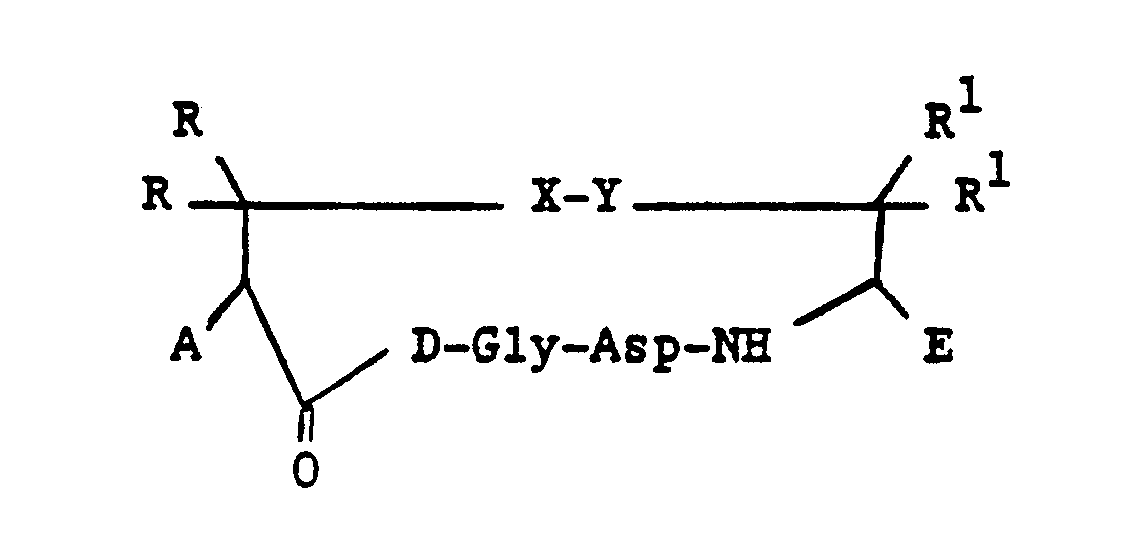
| (57) A fibrinogen receptor antagonist of the formula:
wherein A, R, R¹, D, E and X-Y are preferably defined as follows: A is acylamido; R is H or methyl; R¹ is H or methyl; X-Y is S-S, CH₂-S-S or CH₂CH₂; E is COOH; and D is L-arginine. |
BACKGROUND OF THE INVENTION
[0001] The invention relates generally to modulating cell adhesion and to inhibiting the binding of fibrinogen and other proteins to blood platelets, and inhibiting the aggregation of blood platelets specifically to the IIb/IIIa fibrinogen receptor site. Fibrinogen is a glycoprotein, present in blood plasma, which participates in platelet aggregation and in fibrin formation. Platelets are cell-like anucleated fragments, found in the blood of all mammals, which participate in blood coagulation. Interaction of fibrinogen with the IIb/IIIa receptor site is known to be essential for normal platelet function.
[0002] When a blood vessel is damaged, platelets adhere to the disrupted subendothelial surface. The adherent platelets subsequently release biologically active constituents and aggregate. Aggregation is initiated by the binding of agonists, such as sthrombin, epinephrine, or ADP to specific platelet membrane receptors. Stimulation by agonists results in exposure of latent fibrinogen receptors on the platelet surface, and binding of fibrinogen to the glycoprotein IIb/IIIa complex.
[0003] Attempts have been made to use natural products and synthetic peptides to study the mechanism of platelet aggregation and adhesion.
[0004] Rouslahti and Pierschbacher, Science, 1987, 238, pp. 491-497, describe adhesive proteins such as fibronectin, vitronectin, osteopontin, collagens, thrombospondin, fibrinogen, and von Willebrand factor present in extracellular matrices and in the blood. The proteins contain the tripeptide arginine-glycine-aspartic acid as their cell recognition site. The tripeptides are recognized by at least one member of a family of structurally related receptors, integrins, which are heterodimeric proteins with two membrane-spanning subunits. The authors state that the conformation of the tripeptide sequence in the individual proteins may be critical to recognition specificity.
[0005] Cheresh, Proc. Nat'l. Acad. Sci. USA, 1987, 84, pp. 6471-6475, describes an Arg-Gly-Asp directed adhesion receptor expressed by human endothelial cells that is structurally similar to the IIb/IIIa complex on platelets but antigenically and functionally distinct. The receptor is directly involved in endothelial cell attachment to fibrinogen, von Willebrand factor, and vitronectin.
[0006] Pierschbacher and Rouslahti, J. of Biol. Chem., 1987, 262, 36, pp. 17294-17298 describe stereochemical influence of the sequence Arg-Gly-Asp-Xaa, where Xaa is one of the 20 natural L-amino acids other than Met, Cys, His, Trp or Gly on binding specificity of peptides containing the tripeptide sequence Arg-Gly-Asp. The authors showed that cyclization of the sequence Gly-Pen-Gly-Arg-Gly-Asp-Ser-Pro-Cys-Ala (where Pen is penicillamine), by forming a disulfide bridge between Pen and Cys, rendered the peptide ineffective at inhibiting attachment to fibronectin. In Proc. Nat'l. Acad. Sci. USA, 1984, 81, pp. 5985-5988, the same authors describe variants of the cell recognition site of fibronectin that retain attachment-promoting activity. The tetrapeptide Arg-Gly-Asp-Ser is described as the minimal structure recognized by cells in the large, adhesive glycoprotein fibronectin. Peptides having portions -Arg-Gly-Asp-Ser- are described in U.S. Patent Nos. 4,589,881 and 4,614,517. Peptides having portions -Arg-Gly-Asp-R wherein R is selected from Thr or Cys or other amino acid having the same cell-attachment activity as fibronectin, are described in U.S. Patent No. 4,578,079.
[0007] Ruggeri et al., Proc. Nat'l. Acad. Sci. USA, 1986, 83, pp. 5708-5712, describes a series of synthetic peptides, designed in lengths to 16 residues, that contain the sequence Arg-Gly-Asp-Val, which inhibit fibrinogen binding to platelets.
[0008] While it is known that the tripeptide sequence Arg-Gly-Asp is present in certain polypeptides which can duplicate or inhibit the cell attachment-promoting effects of fibronectin and vitronectin, the tripeptide Arg-Gly-Asp has low activity. There is little understanding of the influence on binding specificity of other amino acids in the polypeptide. Applicants have prepared small cyclic pentapeptides which contain the tripeptide sequence Arg-Gly-Asp which are active platelet aggregation inhibitors.
SUMMARY OF THE INVENTION
[0009] The present invention is a fibrinogen receptor antagonist of the following structure:
wherein:
A is H, acylamido, aminoacylamido or N-methylaminoacylamido;
R and R¹ are independently H, methyl, ethyl or a lower alkyl group having 3 to 5 carbons: X-Y is S-S, CH₂-S, S-CH₂, CH₂CH₂, CH₂CH₂CH₂, CH₂-S-S, CH₂-S-S-CH₂, S-S-CH₂;
[0010] D is an L-isomer of arginine, homo-arginine, guanido aminobutyric acid or guanido aminopropionic acid;
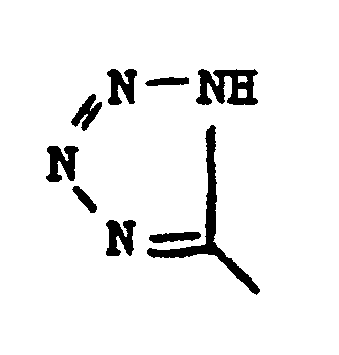
E is H, COOH, CONH₂, CONHR², CONR³R⁴, wherein R² is an alxyl group having 1 to 4 carbon atoms, R³R⁴ is an alkyl group having 1 to 4 carbon atoms or NR³R⁴ is a secondary amino acid,
or
[0011] More preferred compounds are those where:
A is acylamide;
R is H or methyl;
R¹ is H or methyl;
X-Y is S-S, CH₂-S-S or CH₂CH₂;
E is COOH; and
D is L-arginine.
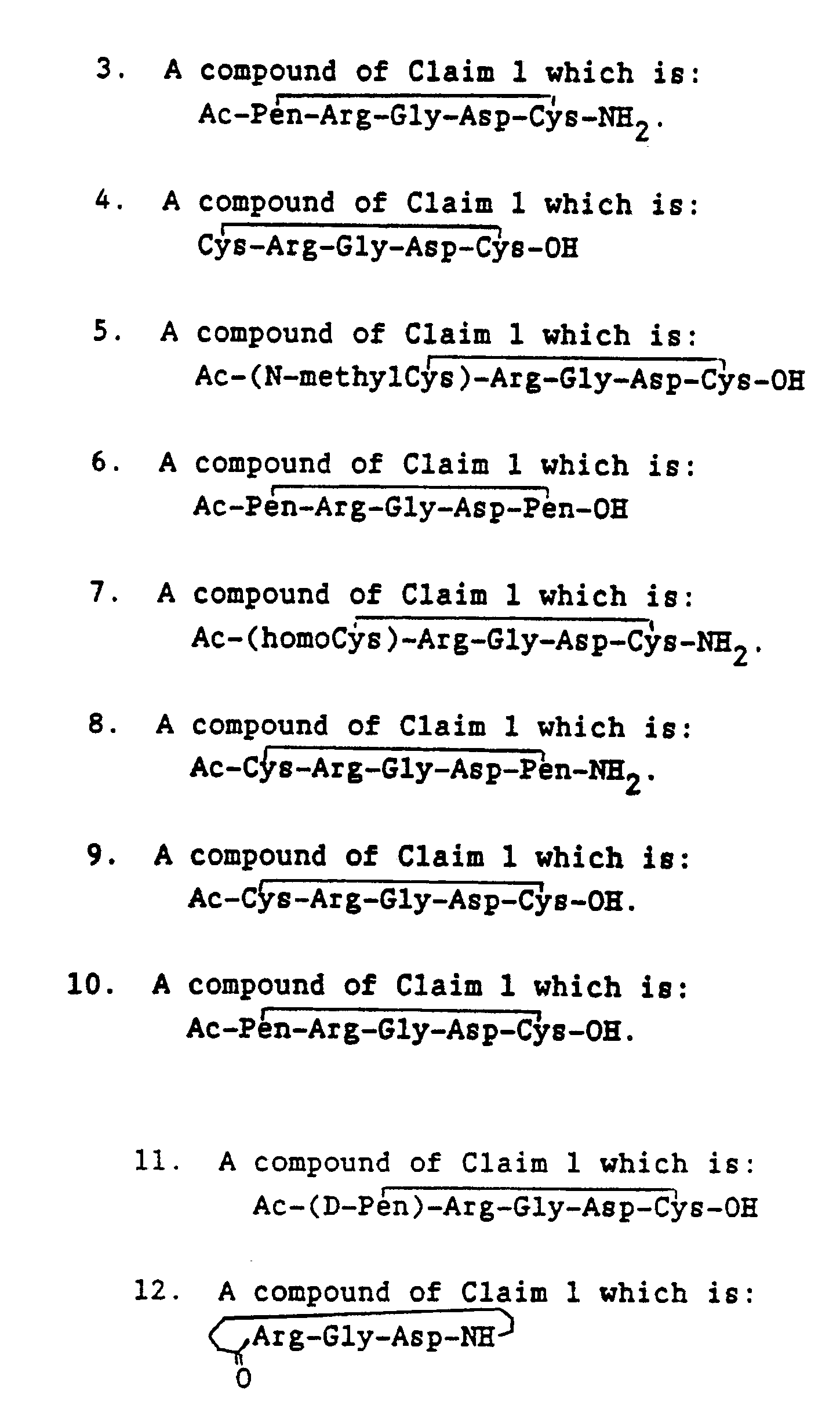
[0014] The most preferred cyclic peptides are those in the acid form, specifically compounds vi, vii, x, xi, xiii, and xv.
[0016] The invention also includes compositions, comprising fibrinogen receptor antagonist peptides of the present invention and one or more pharmacologically acceptable carriers, e.g. saline, at a pharmacologically acceptable pH, e.g. 7.4, which are suitable for continuous intravenous or oral or intravenous bolus administration for promoting inhibition of platelet aggregation.
[0017] The invention also includes methods for inhibiting platelet aggregation which comprise administering to a patient, either by continuous intravenous or oral or intravenous bolus method, an effective amount of a composition of the present invention.
DETAILED DESCRIPTION OF THE INVENTION
[0018] Compounds of the invention are fibrinogen receptor antagonists which inhibit fibrinogen induced platelet aggregation. These compounds are prepared by solid phase synthesis which is well known in the art, or by liquid method well known in the art (Neurath, Hill & Boeder, Eds. "The Proteins" 3rd Edition, Vol. II, Academic Press, 1976).
[0019] The compounds have a relatively short duration of activity which makes them desirable for use in therapeutic treatments where prevention of platelet aggreation over a short period of time is desirable. The compounds are also particularly advantageous because they do not significantly deplete the platelet count.
[0020] Compounds of the invention may be prepared using solid phase peptide synthesis, such as that described by Merrifield, J. Am. Chem. Soc., 85, 2149 (1964), although other equivalent chemical syntheses known in the art can also be used, such as the syntheses of Houghten, Proc. Natl. Acal. Sci., 82, 5132 (1985). Solid-phase synthesis is commenced from the C-terminus of the peptide by coupling a protected amino acid to a suitable resin, as generally set forth in U.S. Patent No. 4,244,946, issued Jan. 21, 1982 to Rivier et al., the disclosure of which is hereby incorporated by reference. Liquid method can be used as described by Neuroth et al. Chapter 2, pp. 106-253 .Examples of synthesis of this general type are set forth in U.S. Patent Nos. 4,305,872 and 4,316,891.
[0021] In synthesizing these polypeptides, the carboxyl terminal amino acid, having its alpha-amino group suitably protected, is coupled to a chloromethylated polystyrene resin or the like. After removal of the alpha-amino protecting group, as by using trifluoroacetic acid in methylene chloride, the next step in the synthesis is ready to proceed. Other standard cleaving reagents and conditions for the removal of specific amino protecting groups may be used, as described in the open literature.
[0022] The remaining alpha-amino- and side-chain-protected amino acids are then coupled by condensation stepwise in the desired order to obtain an intermediate compound connected to the resin.
[0023] The condensation between two amino acids, or an amino acid and a peptide, or a peptide and a peptide can be carried out according to the usual condensation methods such as azide method, mixed acid anhydride method, DCC (dicyclohexyl-carbodiimide) method, BOP (benzotriazole-1-yloxytris (dimethylamino) phosphonium hexafluorophosphate method, active ester method (p-nitrophenyl ester method, N-hydroxysuccinic acid imido ester method, cyanomethyl ester method, etc.), Woodward reagent K method, carbonyldiimidazol method, oxidatin-reduction method. In the case of elongating the peptide chain in the solid phase method, the peptide is attached to an insoluble carrier at the C-terminal amino acid. For insoluble carriers, those which react with the carboxy group of the C-terminal amino acid to form a bond which is readily cleaved later, for example, halomethyl resin such as chloromethyl resin and bromomethyl resin, hydroxymethyl resin, aminomethyl resin, benzhydrylamine resin, and t-alkyloxy-carbonylhydrazide resin can be used.
[0024] Common to chemical syntheses of peptides is the protection of the reactive side-chain groups of the various amino acid moieties with suitable protecting groups at that site until the group is ultimately removed after the chain has been completely assembled. Also common is the protection of the alpha-amino group on an amino acid or a fragment while that entity reacts at the carboxyl group followed by the selective removal of the alpha-amino-protecting group to allow subsequent reaction to take place at that location. Accordingly, it is common that, as a step in the synthesis, an intermediate compound is produced which includes each of the amino acid residues located in the desired sequence in the peptide chain with various of these residues having side-chain protecting groups. These protecting groups are then commonly removed substantially at the same time so as to produce the desired resultant product following purification.
[0025] The applicable protective groups for protecting the alpha-and omega-side chain amino groups are exemplified such as benzyloxycarbonyl(hereinafter abbreviated as Z), isonicotinyloxy- carbonyl (iNOC), 0-chlorobenzyloxycarbonyl [Z(2-Cl)], p-nitrobenzyloxycarbonyl [Z(NO₂)], p-methoxybenzyl- oxycarbonyl [Z(OMe)], t-butoxycarbonyl (Boc), t-amyloxycarbonyl (Aoc), isobornyloxycarbonyl, adamantyloxycarbonyl, 2-(4-biphenyl)-2- propyloxy- carbonyl (Bpoc), 9-fluorenylfethoxycarbonyl (Fmoc), methylsulfonylethoxycarbonyl (Msc), trifluoroacetyl, phthalyl, formyl, 2-nitrophenylsulphenyl (NPS), diphenylphosphinothioyl (Ppt), dimethylphosph- inothioyl (Mpt) and the like.
[0026] As protective groups for carboxy group there can be exemplified, for example, benzyl ester (OBzl), cyclohexyl ester (Chx) 4-nitrobenzyl ester (ONb), t-butyl ester (OBut),4-pyridylmethyl ester (OPic), and the like. It is desirable that specific amino acids such as arginine, cysteine, and serine possessing a functional group other than amino and carboxyl groups are protected by a suitable protective group as occasion demands. For example, the guanidino group in arginine may be protected with nitro, p-toluene-sulfonyl, benzyloxycarbonyl, adamantyloxycarbonyl, p-methoxybenzenesulfonyl, 4-methoxy-2, 6-dimethylbenzenesulfonyl (Mds) 1,3,5-trimethylphenylsulfonyl (Mts), and the like. The thiol group in cysteine may be protected with benzyl, p-methoxybenzyl, triphenylmethyl, acetylaminomethyl, ethylcarbamoyl, 4-methylbenzyl, 2,4,6-trimethylbenzyl (Tmb) etc., and the hydroxyl group in serine can be protected with benzyl, t-butyl, acetyl, tetrahydropyranyl etc.
[0027] Stewart and Young, "Solid Phase Peptide Synthesis", Pierce Chemical Company, Rockford, IL (1984) provides detailed information regarding procedures for preparing peptides. Protection of α-amino groups is described on pages 14-18, and side-chain blockage is described on pages 18-28. A table of protecting groups for amine, hydroxyl and sulfhydryl functions is provided on pages 149-151. These descriptions are hereby incorporated by reference.
[0028] After the desired amino-acid sequence has been completed, the intermediate peptide is removed from the resin support by treatment with a reagent, such as liquid HF, which not only cleaves the peptide from the resin, but also cleaves all the remaining protecting groups from the side chain which do not interfere in the cyclization reaction. Potentially reactive side chains functionalities are protected with blocking groups which are stable to HF. The peptides are cyclized by any one of several known procedures (see Schroder and Lubke, "The Peptides: Methods of Peptide Synthesis" Vol. I, Academic Press, New York (1965) pp. 271-286, the contents of which are hereby incorporated by reference), e.g. by forming a disulfide bridge between the cysteine residues using iodine in AcOH, or air oxidation at pH 8 in dilute NH₄ OAc buffer. The polypeptide can then be purified by gel permeation followed by preparative HPLC, as described in Rivier et al., Peptides: Structure and Biological Function (1979) pp. 125-128.
EXAMPLE 1
[0030] Boc (tert-butylcarbonyl) and PMB (p-methoxybenzyl) protected cysteine is combined with NH₂-MBH ® (4-methylbenzhydrylamine-crosslinked polystyrene resin) to form
[0031] The alpha-amino Boc protecting group is removed (while Cys remains protected by PMB) using trifluoroacetic acid and methylene chloride. The deprotected cysteine is neutralized with diisopropylethylamine in dimethylformamide. Boc-protected Asp (benzyl) (Asp (Bzl)) is then coupled to cysteine mediated by dicyclohexylcarbodiimide, and then deprotected with trifluoroacetic acid and methylene chloride. Asp is then neutralized with diisopropylethylamine. Following this stepwise procedure of coupling with dicyclohexylcarbodiimide, deprotection with trifluoroacetic acid and methylene chloride, and neutralization with diisopropylethylamine, Boc-protected Gly Arg and Cys residues are coupled in succession. Arg is additionally protected with 4-toluenesulfonyl (Arg (Tos)), and the final Cys residue is again additionally protected by p-methoxybenzyl. The final Cys is then acetylated with acetic anhydride.
[0033] Cleavage of the peptide from the resin is achieved using HF/anisole (9:1 (v/v)) to form
Acetyl-C
s-Arg-Gly-Asp-C
s-NH₂
[0034] A cyclic structure is formed by formation of a disulfide bridge between the cysteine residues. The peptide is dissolved in 50-80°4 HOAc:H₂O at room temperature, and the solution stirred during rapid addition of a solution of 12-15 equivalents iodine in AcOH to a final concentration of 2.25 mg/ml of iodine. After 1-2 hours reaction time, excess I₂ and AcOH are removed by rotary evaporation under vacuum and the aqueous solution containing the cyclized peptide is purified using preparative HPLC in 0.1% TFA H₂O-CH₃CN gradient. The final TFA salt product is converted to HOAc salt by passing through ion exchange column BioRad AG3-X4A (acetate cycle). The finished peptide is:
[0035] As an alternative to dissolving the peptide in 50-80% HOAc-H₂O at room temperature, the free SH peptide is dissolved in 1-5% HOAc at a concentration of approximately 2 mg./ml. and made to approximately pH 7-8.5 with concentration NH₄OH. Cyclization is accomplished under brisk stirring (preferably with a small bit of copper wire added to accelerate the reaction) during a period of 1-4 hours at 25°. The reactiion mixture is then concentrated as before
EXAMPLE 2
Synthesis of cyclo (Aha-Arg-Gly-Asp)
[0036] Starting with Boc-Gly-O-pam®, the alpha-amino Boc protecting group is removed using trifluoroacetic acid and methylene chloride. The deprotected glycine is neutralized with diisopropylethylamine and dimethylformamide. Boc-protected Arg (Tos) is then coupled to Gly mediated by 1-hydroxybenzotriazole, and then deprotected with trifluoroacetic acid and methylene chloride. Arg is then neutralized with diisopropylethylamine and dimethylformamide. Boc-protected Aha and Asp (NO₂Bz) are the successively coupled, Aha to Arg and Asp to Aha, following the stepwise procedure of coupling with dicyclohexylcarbodiimide, deprotection with trifluoroacetlc acid and methylene chloride, and neutralization with diisopropylethylamine, to form:
[0039] The linear peptide is treated with N-ethyl-N′-(3-dimethylaminopropyl)carbodiimide, 1-hydroxybenzotriazole, dimethylformamide and N-methylmorpholine to form
cyclo (
-Aha-Arg-Gly)
and finally deprotected with Zn/HOAc or H₂/Pd on charcoal to yield
[0040] The cyclized peptide is purified using gel permeation with 50% aqueous HOAc and HPLC in 0.1% TFA H₂O-CH₃CN gradient. The final TFA salt product is converted to HOAc salt by passing through ion exchange column BioRad AG3-X4A (acetate cycle).
Therapeutic Treatment
[0041] Peptides of the invention may be used for inhibiting integrin protein-complex function relating to cell-attachment activity. They may be administered to patients where inhibition of human or mammalian platelet aggregation or adhesion is desired.
[0042] Polypeptides of the invention are eliminated from circulation rapidly and are particularly useful in inhibiting platelet aggregation in situations where a strong antithrombotic of short duration of effectiveness is needed. Thus, they may find utility in surgery on peripheral arteries (arterial grafts, carotid endarterectomy) and in cardiovascular surgery where manipulation of arteries and organs, and/or the interaction of platelets with artificial surfaces, leads to platelet aggregation and consumption. The aggregated platelets may form thrombi and thromboemboli. Polypeptides of the invention may be administered to these surgical patients to prevent the formation of thrombi and thromboemboli.
[0043] Extracorporeal circulation is routinely used for cardiovascular surgery in order to oxygenate blood. Platelets adhere to surfaces of the extracorporeal circuit. Adhesion is dependent on the interaction between GPIIb/IIIa on the platelet membranes and fibrinogen adsorbed to the surface of the circuit. (Gluszko et al., Amer. J. Physiol., 1987, 252:H, pp 615-621). Platelets released from artificial surfaces show impaired hemostatic function. Polypeptides of the invention may be administered to prevent adhesion.
[0044] Other applications of these polypeptides include prevention of platelet thrombosis, thromboembolism and reocclusion during and after thrombolytic therapy and prevention of platelet thrombosis, thromboembolism and reocclusion after angioplasty of coronary and other arteries and after coronary artery bypass procedures. Polypeptides of the invention may also be used to prevent myocardial infarction.
[0045] These polypeptides may be administered by any convenient means which will result in its delivery into the blood stream in substantial amount including continuous intravenous or bolus injection or oral methods. Compositions of the invention include peptides of the invention and pharmacologically acceptable carriers, e.g. saline, at a pH level e.g. 7 4, suitable for achieving inhibition of platelet aggregation. They may be combined with thrombolytic agents such as plasminogen activators or streptokinase in order to inhibit platelet aggregation. They may also be combined with anticoagulants such as heparin, aspirin or warfarin. Intravenous administration is presently contemplated as the preferred administration route. They are soluble in water, and may therefore be effectively administered in solution.
[0046] In one exemplary application, a suitable amount of peptide is intravenously administered to a heart attack victim undergoing angioplasty. Administration occurs during or several minutes prior to angioplasty, and is in an amount sufficient to inhibit platelet aggregation, e.g. an amount which achieves a steady state plasma concentration of between about 0.05-30 µM per kilo, preferably between about 0.3-3 µM per kilo. When this amount is achieved, an infusion of between about 1-100 ηM per kilo per min., preferably between about 10-30 ηM per kilo per min. is maintained to inhibit platelet aggregation. Should the patient need to undergo bypass surgery, administration may be stopped immediately and will not cause complications during surgery that would be caused by other materials such as aspirin or monoclonal antibodies, the effects of which last hours after cessation of administration.
[0047] The present invention also includes a pharmaceutical composition comprising peptides of the present invention and tissue-type plasminogen activator or streptokinase. The invention also includes a method for promoting thrombolysis and preventing reocclusion in a patient which comprises administering to the patient an effective amount of compositions of the invention.
1. A fibrinogen receptor antagonist compound of the following structure:
wherein:
A is H, acylamido, aminoacylamido or N-methylaminoacylamido;
R and R¹ are independently H, methyl, ethyl or a lower alkyl group having 3 to 4 carbons;
X-Y is S-S, CH₂-S, S-CH₂, CH₂CH₂, CH₂CH₂CH₂, CH₂-S-S, CH₂-S-S-CH₂, S-S-CH₂;
D is an L-isomer of arginine, homo-arginine, guanido aminobutyric acid or guanido aminopropionic acid;
E is H, COOH, CONH₂, CONHR², CONR³R⁴, wherein R² is an alkyl group having 1 to 4 carbon atoms, R³R⁴ is an alkyl group having 1 to 4 carbon atoms or NR³R⁴ is a secondary amino acid, or
wherein:
A is H, acylamido, aminoacylamido or N-methylaminoacylamido;
R and R¹ are independently H, methyl, ethyl or a lower alkyl group having 3 to 4 carbons;
X-Y is S-S, CH₂-S, S-CH₂, CH₂CH₂, CH₂CH₂CH₂, CH₂-S-S, CH₂-S-S-CH₂, S-S-CH₂;
D is an L-isomer of arginine, homo-arginine, guanido aminobutyric acid or guanido aminopropionic acid;
E is H, COOH, CONH₂, CONHR², CONR³R⁴, wherein R² is an alkyl group having 1 to 4 carbon atoms, R³R⁴ is an alkyl group having 1 to 4 carbon atoms or NR³R⁴ is a secondary amino acid, or
2. A compound of Claim 1 wherein:
A is acylamide;
R is H or methyl;
R¹ is H or methyl;
X-Y is S-S, CH₂-S-S or CH₂CH₂;
E is H, COOH;
D is L-arginine.
A is acylamide;
R is H or methyl;
R¹ is H or methyl;
X-Y is S-S, CH₂-S-S or CH₂CH₂;
E is H, COOH;
D is L-arginine.
13. A composition for inhibiting fibrinogen-induced platelet aggregation in a mammal
comprising a peptide of claim 1 and a pharmaceutically acceptable carrier.
14. The use of a compound as claimed in Claim 1 for the manufacture of a medicament
for inhibiting fibrinogen binding to mammalian platelets.