|
(11) | EP 0 433 008 B1 |

| (12) | EUROPEAN PATENT SPECIFICATION |
|
|
| (54) |
Laser interferometric measuring apparatus Laser-interferometrischer Messapparat Appareil de mesure par interférométrie laser |
|
|
|||||||||||||||||||||||||||||||
| Note: Within nine months from the publication of the mention of the grant of the European patent, any person may give notice to the European Patent Office of opposition to the European patent granted. Notice of opposition shall be filed in a written reasoned statement. It shall not be deemed to have been filed until the opposition fee has been paid. (Art. 99(1) European Patent Convention). |
[0001] The present invention relates to a laser interferometric measuring apparatus, and particularly to one that is less affected by disturbance, reasonable in price and highly accurate.
[0002] In order to achieve the resolving power of 0.1 »m or the higher resolving power than that for measurement in a conventional interferometric measuring machine, there is employed a method wherein a gas laser or a semiconductor laser is used as a light source, and its beam is split into a reference beam and a measuring beam and thus measurement (displacement) information is obtained by observing interference fringes and beats after aligning the beam that returns from an object to be measured with the reference beam to be coaxial again.
[0003] All interferometers are based on the type of a Michelson interferometer shown in Fig. 17 in terms of constitutional arrangement. Namely, a beam from light source 20 is split into a reference beam and a measuring beam by beam splitter 21, and the measuring beam that reflects on movable mirror 22 attached on an object to be measured is aligned by beam splitter 21 to be coaxial with the beam reflected on fixed mirror 23, thus, interference fringes are generated. Depending on a method for detecting measurement information, there are two different systems; one is an interference fringe counting system wherein the number of density changes in an interference fringe generated by a returned beam is counted and the other is a heterodyne system wherein a plurality of coherent light having different wavelengths are used to cause a beat and a frequency fluctuation of the beat is detected utilizing a Doppler shift of frequency of the measuring beam caused by the moving speed of the object to be measured.
[0004] Optical arrangement of the former system mentioned above is shown in Fig. 27, and it is described in detail in the known documents written by M. J. Dowhs and K. W. Raihel including detected signals processing. Namely, in the laser-based measuring machine mentioned above, a linearly polarized beam emitted from stabilized laser 1 is split by beam splitter 2 into a reference beam path including λ/8 plate 3 as well as fixed corner-cube 4 and a measuring beam path including movable corner-cube 5. The reference beam split to follow the reference beam path, after passing through λ/8 plate 3 twice, is converted to a circularly polarized beam which is aligned again by beam splitter 2 to be coaxial with a linearly polarized beam of a measuring beam that is split to follow the measuring beam path, and then is separated into two. One of the two beams is further split by polarized beam splitter 6 into two so that the measuring beam becomes separated beams each being in the directions of ±45° against the polarization surface of the measuring beam. Three kinds of separated beams obtained in the aforesaid manner, after they pass through filter 7 and polarization plate 8, are converted to three kinds of interference fringe intensities whose phases which interfere with the movement of movable corner-cube 5 in the arrowed direction are deviated by 90° in succession, and these three kinds of interference fringe intensities enter detector 9 respectively to be converted to three kinds of electric signals each having a phase difference of 90°. After these three kinds of electric signals are amplified by amplifier 10 respectively, they are grouped into two groups each having adjacent two electric signals differing in terms of phase by 90°. A change in the length of measuring beam path is obtained from at least one of electric signals changing with Sin ϑ and Cos ϑ (wherein,
, Lm ... length of measuring beam path, Lr ... length of reference beam path, λ ... wavelength) deviated by 90° in terms of phase and obtained through the input of electric signals of two groups into subtracter 11, and a direction of the change is obtained from both of the electric signals.
[0005] Namely, in this laser-based measuring machine, three kinds of interference fringe signals differing in terms of phase by 90° in succession are obtained through utilization of a principle of polarization of a laser beam, and from the difference of signals between two adjacent and successive interference fringes, the signals which are used for measurement of a change and a direction of the change in the length of a measuring beam path and change with aforesaid Sin ϑ and Cos ϑ. Therefore, influence of disturbance such as a fluctuation in intensity of a laser beam is offset and thereby the center of a signal level is kept constant continually, resulting in less erroneous counting of interference fringes and higher accuracy of measurement. Owing to this, accurate counting of interference fringes is realized even when the disturbance affects the intensity of a counting beam to be changed by about 90%. Furthermore, the interference fringe counting system may use the optical arrangement as shown in Fig. 18 in which a circularly polarized light is used as a light source. In this case, the same interferometric measuring device as that of the latter one of the heterodyne system may be used. Namely, linear polarization emitted from stabilized laser 20A passes through λ/4 phase shifter 24 where it is converted to a circularly polarized beam, and then is split by polarized beam splitter 21 into a reference beam and a measuring beam. The measuring beam reflects on movable mirror 22 and returns to polarized beam splitter 21, during the course of which the measuring beam, when it passes through λ/4 phase shifter 25 twice, is converted to the beam whose polarization directions cross at right angles which is reflected on polarized beam splitter 21. Then, it is reflected on fixed mirror 23 and is aligned to be coaxial with the reference beam which has passed polarized beam splitter 21 after passing through λ/4 phase shifter 25 twice and being converted in terms of polarization direction. Here, no interference is caused because the polarization direction of the reference beam and that of the measuring beam cross at right angles. However, when common polarization component is extracted, through beam splitter 26, by polarizers 27 and 29, interference fringes are generated. The number of density changes in an interference fringe thus generated is detected by detectors 28 and 30, and in this case, polarizers 27 and 29 are arranged so that polarized beams crossing at right angles can be extracted for the purpose of discriminating the moving direction of movable mirror 22.
[0006] Optical system of the latter system mentioned above is shown in Fig. 19, and it is described in detail in the known documents PRECISION ENGINEERING Vol. 5. No. 3 (1983) 111 written by L. J. Wuerz and R. C. Quenelle. Namely, a beam emitted from 2-frequency Zeeman laser 20B generating two circularly polarized beams having respectively frequency f1 and frequency f2 and rotating reversely each other is changed by λ/4 phase shifter 24 to a linearly polarized beam having planes of polarization crossing at right angles each other. After Passing through beam splitter 34 and polarizer 31, a beat (f1 - f2) caused by frequencies f1 and f2 is detected by detector 32. A beam reflected on movable mirror 22 is subjected, due to a Doppler effect, to a frequency change δf corresponding to a moving speed, and thereby the beat detected by detector 33 is based on (
), thus displacement information of an object can be obtained through the comparison subtraction between beat frequencies detected by both detectors 32 and 33. Incidentally, due to polarized beam splitter 35, beam f1 and beam f2 are detected respectively by detector 36 and detector 37 and detected results are inputted in laser synchronization circuit 38.
[0007] In both examples, the resolving power for measurement covering even electrical processing is as extremely high as 0.01 »m, and for the purpose of maintaining this resolving power at a highly accurate level, the frequency of laser light source is stabilized within an accuracy of 10⁻⁶ - 10⁻⁸.
[0008] Further, as an example of how to stabilize detected signals against disturbance in a heterodyne system, there is known a method having an interferometric measuring machine provided with an optical path of a differential type shown in Fig. 20.
[0009] In Fig. 20, a measuring beam takes the path shown with a solid line of polarized beam splitter 21 → λ/4 phase shifter 25·movable mirror (prism) 22 → polarized beam splitter 21 → prism 40 → polarized beam splitter 21 → λ/4 phase shifter 25·movable mirror 22 → polarized beam splitter 21 → mirror 43 → λ/4 phase shifter 25·prism 41 → mirror 43 → polarized beam splitter 21 → prism 39 → polarized beam splitter 21 → exiting.
[0010] A reference beam takes the path shown with a dotted line of polarized beam splitter 21 → prism 39 → polarized beam splitter 21 → mirror 41 → λ/4 phase shifter 25·prism 41 → mirror 43 → polarized beam splitter 21 → λ/4 phase shifter 25·fixed mirror (reflecting mirror) 42 → polarized beam splitter 21 → prism 40 → polarized beam splitter 21 → λ/4 phase shifter 25·fixed mirror 42 → polarized beam splitter 21 → exiting.
[0011] In this way, it is possible to stabilize detected signals remarkably by making the length of an optical path of a reference beam and that of a measuring beam to be the same in an interferometric measuring machine wherein a beam of frequency-stabilized laser is split into a reference beam and a measuring beam, because the disturbance such as a temperature change or the like affects both beams equally.
[0012] As is apparent from Fig. 20, however, a conventional interferometric measuring machine of a differential type is extremely complicated in structure and large in size, and the length of an optical path in measuring prism is markedly long, which acts as a negative factor for enhancing the stability against disturbance.
[0014] Further, as shown in Fig. 21, there is a method wherein a high stability peculiar to an interferometer of a differential type is realized by decreasing the number of optical elements and shortening the length of an optical path in the interferometer as shown in Fig. 21.
[0015] Similarly to the one shown in Fig. 20, the method in Fig. 21 is of a heterodyne system wherein two laser beams having different frequencies (or wavelengths) and linear polarization crossing at right angles are caused to enter polarization shearing plate 50. Then, the beam that is a linearly polarized beam of S component selectively reflects repeatedly and thus takes a separate optical path shifted from the optical path of a P-component beam. In the known example, an amount of the shift is about 12 mm.
[0016] Further, polarization of the S-component beam is converted to a P-component type after it passes through λ/2 phase shifter (λ/2 wavelength plate, λ/2 phase plate) 51, thus, both beams of different wavelengths are caused to enter polarized beam splitter 52 as a P-component. Then, both beams of different wavelengths pass through polarized beam splitter 52 and polarized circularly by λ/4 phase shifter (λ/4 phase plate, λ/4 wavelength plate) 53, and the reference beam and the measuring beam are caused respectively by fixed mirror (reference mirror) 54 and movable mirror (plane mirror) 55 to return taking their same optical paths. Since both returning beams pass through λ/4 phase shifter 53 again, they are converted to S-component polarization and reflect on the surface 52A of the polarized beam splitter. Further, they are caused to return by corner-cube prism (or mirror) 56 to surface 52A of the polarized beam splitter and reflect on that surface to advance respectively to fixed mirror 54 and movable mirror 55 where they reflect, and then are subjected to conversion by means of λ/4 phase shifter 53 and exit polarized beam splitter 52 as P-component. A beam of other wavelength is converted by λ/2 phase shifter 51' and is shifted by polarization shearing plate 50 to the same optical path and is led to a detection optical system.
[0017] The example shown in Fig. 21, compared with one shown in Fig. 20, has less optical elements and has an optical path that is relatively short. Therefore, its stability against disturbance is easily improved and its resolving power for measurement is 1.25 nm.
[0018] EP-A-0,250,306 discloses a similar arrangement to that shown in Fig. 21 except that the arrangement of EP-A-0,250,306 is designed primarily to measure the angle between the surfaces of two mirrors and therefore the two beams are both reflected from both mirrors.
[0019] In both conventional examples in Figs. 20 and 21 mentioned above, the stability against disturbance and measuring accuracy are enhanced as an interferometer of a differential type by making both measurement direction and reference direction to be the same.
[0020] Strictly speaking, however, both of them can not be regarded as a method of a perfectly differential type. The reason is that the reference beam and the measuring beam are not coaxial, being shifted by about several millimeters though they are in the same direction in both conventional examples, and even the portion from the incident point to the fixed mirror which is generally called a common path is not a perfect common optical path. Namely, even in such a common path, the reference beam and the measuring beam are not equally affected by the disturbance such as a temperature change and air flicker, though the difference between them is small.
[0021] Therefore, even in an interferometer of a differential type similar to the conventional examples, it is an important point to shorten an optical path in the interferometer for stabilizing and improving the measurement accuracy.
[0022] In the past, however, a differential type has required an optical path deflected complicatedly, resulting in an incosistency of a long optical path.
[0023] Even the length of a common optical path in Fig. 21 exceeds 200 mm, and it is nearly twice that in an interferometer of a non-differential type in terms of length, which is a problem.
[0024] In view of the situation mentioned above, the object of the invention is to realize an inexpensive and accurate laser interferometric measuring machine wherein the length of an optical path is minimized and the number of optical elements is decreased, thus the accuracy for measurement against disturbance is stably maintained.
[0025] Accordingly the present invention provides a laser interferometric measuring apparatus for measuring the position of an article, comprising:
means for generating a polarized reference beam and, separately, a polarized measuring beam;
optical means for receiving the generated measuring and reference beams from the generating means and outputting them in a measurement direction;
movable reflecting means which are movable in the measurement direction and located at the position of an article, for reflecting the measuring beam from the optical means back along the measurement direction to the optical means;
fixed reflecting means located at a predetermined position in the measurement direction, for reflecting the reference beam from the optical means back along the measurement direction to the optical means; and
detecting means for receiving the measuring and reference beams from the optical means and for comparing the beams to detect the position of the article;
the optical means including a first surface, constructed such that it selectively reflects or transmits beams incident thereon in accordance with their polarization, and at least one second surface constructed such that it completely reflects beams incident thereon,
the first surface and the at least one second surface being inclined at an angle to each other and arranged such that the beams received from the generating means are output to the respective reflecting means and are reflected thereby back to the optical means to be reflected between the first surface and at least one second surface and output for further reflection off the respective reflecting means, and on subsequent receipt of the optical means are output through the first surface to the detecting means; characterised in that:
the first surface and at least one second surface of the optical means are arranged such that beams received by the at least one second surface from the first surface are output by the at least one second surface without reflection off the first surface.
[0026] The optical means may be a corner-cube mirror consisting of two mirrors arranged at right angles to each other or a corner-cube prism having a transmitting surface in addition to the first and second surfaces and said at least one second surface comprises two surfaces at right angles to each other and each at right angles to said first surface.
[0027] There may be a further prism attached to the first surface and the optical means may be adapted to be rotatable about a normal line on the first surface, whereby the direction of the beams entering and leaving the optical means are altered.
[0028] Preferably the apparatus further comprises means for converting the polarizations of the reference and the measuring beams so that said first surface selectively reflects or transmits the beam.
[0029] The present invention may further relate to a laser-based measuring machine wherein a beam emitted from a laser is split by a splitting means into a reference beam and a measuring beam, and after both beams are aligned to be coaxial, they are optically split into 2-phase or 3-phase interference beams whose phases are deviated by 90 degrees, and thereby the change and the direction of the change in the length of measuring optical path are measured based upon electrical signals obtained by detecting aforesaid interference beams.
[0030] As an example of the laser-based measuring machine mentioned above, there is known a laser-based measuring machine of an interference fringe-counting type shown in Fig. 27.
[0031] A conventional laser-based measuring machine of aforesaid type, however, has disadvantage that not only polarized beam splitter 6 needs to be positioned accurately against beam splitter 2 but also each one of three kinds of separate beam paths needs to be provided accurately with filter 7 and polarization plate 8.
[0032] The present invention may provide a laser-based measuring machine of an interference fringe-counting type wherein a plurality of optical elements which split a beam optically into 2-phase or 3-phase interference beams can easily be positioned accurately, another object of the invention is to provide a laser-based measuring machine wherein three kinds of interference fringe signals each differing in terms of phase by 90° which are for obtaining signals which are not affected by disturbance such as a fluctuation in intensity of a laser beam and change with aforesaid Sin ϑ and Cos ϑ are obtained from the signals detected from 2-phase interference beams, and the fourth object of the invention is to offer a laser-based measuring machine wherein it is easy to adjust the phase difference to be 90° accurately between 2-phase interference beams obtained through optical splitting.
[0033] In a laser-based measuring machine where a beam emitted from a laser is split by a splitting means to a reference beam and a measuring beam, and after both beams are aligned to be coaxial, they are split into 2-phase or 3-phase interference beams whose phases are deviated optically by 90 degrees, and thereby a change and the direction of the change in the length of measuring optical path are measured based upon electrical signals obtained by detecting aforesaid interference beams, the present invention is characterised in that a beam-45°-rotating plate is included in a plurality of optical elements mentioned above which split a beam optically into interference beams, and adjacent optical elements in the plural optical elements are in contact each other and they further are solidly cemented totally or partially. Due to the constitution mentioned above, 2-phase interference beams whose phases are deviated by 90° each other are split optically by a plurality of optical elements, and from either one of two kinds of electric signals obtained by detecting the interference beams, three kinds of electric signals whose phases are deviated by 180° from the aforesaid interference beams are obtained. Further, there is a wavelength plate that is used for an interference beam at one side and has retardation of λ/4 and over or a polarized beam splitter positioned downstream the wavelength plate to adjoin it to be rotatable for adjustment around an optical axis for the occasion when 2-phase interference beams whose phases are deviated by 90° are split optically by a plurality of optical elements.
[0034] Namely, in such a laser-based measuring machine, since a beam-45°-rotating plate is included in a plurality of optical elements which split a beam optically into 2-phase or 3-phase interference beams whose phases are deviated by 90° in succession, a beam splitter arranged as a 45° prism that splits the beam wherein a reference beam and a measuring beam are aligned to be coaxial into two can be arranged to be in parallel in terms of its side with a polarized beam splitter formed as a 45° prism used for splitting a laser beam into two laser beams respectively for a reference beam path and for a measuring beam path and further for aligning the reference beam and the measuring beam to be coaxial. Further, since a plurality of optical elements which split optically a beam into 2-phase or 3-phase interference beams whose phases are deviated by 90° in succession, such as a beam-45°-rotating plate and a beam splitter are in contact each other side by side and are cemented totally or partially, these plural optical elements can be arranged easily and a beam can be split accurately into interference beams. Furthermore, when a plurality of optical elements which split a beam optically into interference beams are caused to be one that splits a beam into 2-phase interference beams, the number of a plurality of optical elements can be reduced and such optical elements can easily be positioned and cemented, and when electric signals deviating by 180° in terms of an interference fringe phase are obtained from either one of electric signals obtained through detection of 2-phase interference beams, the phase difference between the two in three kinds of interference fringe signals can exactly be 90°. Further, when a wavelength plate having retardation of λ/4 or more used for interference beam on one side among a plurality of optical elements which split a beam optically into 2-phase interference beams or a polarized beam splitter positioned downstream the wavelength plate to adjoin it is caused to be rotatable for adjustment around an optical axis, it is possible to make easily a phase of a 2-phase interference beam thus obtained to be 90° accurately, allowing a plurality of optical elements to be positioned and cemented more easily.
[0035] The invention will be further described by way of non-limitative example with reference to the accompanying drawings, in which:―
Fig. 1 shows basic constitution of a laser interferometric measuring machine of the invention, Fig. 2 (A) is a front view of a corner-cube prism, Fig. 2 (B) is a side view thereof, Fig. 3 is a cross-sectional view of a corner-cube mirror, Fig. 4 is an illustration of the second example of the invention, and Fig. 5 is an illustrative drawing of a corner-cube prism separated in the direction perpendicular to the drawing, then shifted and viewed from the movable mirror side. Fig. 6 shows the fourth example of the invention wherein a corner-cube prism is set to an angle of 45 degrees and a reflecting prism is rotatable, Fig. 7 is an illustration wherein the prism is rotated to an angle of 180 degrees and measurement direction and beam-entering direction form an angle of 90 degrees, and Figs. 8 and 9 represent an illustrative diagram showing how the measurement direction and beam-entering direction form 90 degrees accurately. Fig. 10 shows an example wherein a compensating prism is used, Fig. 11 shows an example related to the shape of a prism cemented, Fig. 12 shows an example summarizing the invention, Fig. 13 shows an example wherein a corner-cube prism is used only in place of a movable mirror and Fig. 14 is an illustration of the example wherein corner-cube mirrors are used both in place of a fixed mirror and a movable mirror. Fig. 15 is an illustration of the example wherein a reference beam and a measuring beam, when they exit from a transmission surface of a corner-cube prism, are aligned, and Fig. 16 shows the example of Fig. 15 viewed in the direction marked with an arrow D.
[0036] Fig. 17 is an illustration of a conventional interferometer of a Michelson type, Fig. 18 shows a interferometer of an interference fringe-counting type, Fig. 19 is a basic diagram of an interferometer of a beterodyne type and Figs. 20 and 21 represent an interferometer of a differential type.
[0037] Figs. 22 and 23 represent schematic diagrams showing examples of laser-based measuring machines, Fig. 24 is a diagram showing the relation between an interference beam and a detector, Fig. 25 is a Lissajous's figure of two kinds of interference fringe signals in the case of a phase difference of π/2 radians, Fig. 26 is a Lissajous's figure showing an occasion wherein a phase difference is deviated from π/2 to Δϑ, and Fig. 27 is a schematic diagram showing an example of a conventional measuring machine of an interference fringe-counting type.
[0038] Fig. 1 illustrate the outline of an example of a laser interferometric measuring machine of a heterodyne type based on the invention and Fig. 2(A) is a front view of a corner-cube prism and Fig. 2(B) is a side view thereof.
[0039] When linearly polarized two laser beams L having different wave-length crossing at right angles each other are caused to enter a laser interferometric measuring machine, a beam with S-component wavelength among them is shifted by polarized beam shearing plate 101 and then is converted by λ/2 phase shifter 102 to P-component.
[0040] With regard to corner-cube prism 103 used herein, one of reflecting surfaces thereof is coated (with a vacuum evaporated film) and it forms polarized beam splitting surface 103A with triangular prism 104 attached thereon. Incidentally, other reflecting surfaces thereof may be total reflection surfaces without being coated, but they may also be provided with a metallic reflecting film or with a dielectric reflecting film.
[0041] Two beams having different wavelengths enter aforesaid corner-cube prism 103 as a P-component and are transmitted therethrough. Then, they pass through λ/4 phase shifter 105, and the reference beam and the measuring beam both caused to make one round trip by fixed mirror 106 and movable mirror 107 respectively are converted to S-component in terms of polarization condition. Therefore, the beams capable of passing through when they enter are reflected on polarized beam splitting surface 103A and are caused by fixed mirror 106 and movable mirror 107 respectively to make another one round trip. The returning beams thereof are converted to P-component by λ/4 phase shifter 105 in terms of polarization. These beams, therefore, now pass through polarized beam splitting surface 103A. These transmitted beams become the beams which are coaxial and crossing at right angles linearly polarized by polarized beam shearing plate 109 after passing through another λ/2 phase shifter 108 similarly to the occasion of entering. With regard to these beams, measurement information can be detected by the existing detecting optical system after preparing detecting elements crossing each other at 45 degrees.
[0042] Fig. 3 is a sectional view of a corner-cube mirror. This is a combination of two mirrors 103B and 103C crossing at right angles each other which is substituted for the arrangement of corner-cube prism 103 and triangular prism 104.
[0043] Fig. 4 is a structure diagram of an optical system showing the second example of a laser interferometric measuring machine of the invention.
[0044] In the diagram, both incident beam and exiting beam are caused to be in the same direction by reflecting prism 203 for the purpose of easy operation. It is an example wherein λ/4 phase shifter 202 is provided at the portion of the incident beam as a measuring machine of an interference fringe counting type, and reflecting prism 203 may naturally be substituted by a mirror.
[0045] Laser beam L with a single frequency emitted from frequency-stabilized laser 201 and polarized linearly is circularly polarized by λ/4 phase shifter 202, and then converted repeatedly to P-component and S-component in exactly the same manner as in the heterodyne type, and finally the reference beam and the measuring beam become the beams linearly polarized and crossing at right angles to be detected. In the present example, interference fringes in 3-phase polarization directions are detected through the combination of λ/4 phase shifter 204A and 45 degrees beam rotating plate 204B as well as compound prism (phase separation prism) 204 on which polarized beam splitting surface 204C is formed.
[0046] In the examples in Figs. 1 and 4, the reference beam and the measuring beam are separated by the polarized beam shearing plate and shifted in the direction parallel with a plane of the drawing. The invention, however, is not limited to this.
[0047] Fig. 5 representing the third example shows the reflected beam in corner-cube prism (mirror) 103 viewed from the movable mirror when the beam is separated and shifted in the direction perpendicular to the plane of the drawing. Numbers given to structural members are the same as those in Figs. 1 and 4. When the beams are separated and shifted in such a direction, it is possible to make a corner-cube prism, a fixed mirror and a movable mirror small.
[0048] In the invention shown in Figs. 1, 4 and 5, polarized beam splitter 21 used in a conventional cubic prism shown in Figs. 20 and 21 is not used at all and thereby it is possible to make the length of an optical path in an interferometer shorter than 50 mm. Further, with regard to the main body prism portion (excluding a fixed mirror, a movable mirror and a beam shifter) combined with a corner-cube prism, 4 reflecting surfaces and 5 transmitting surfaces required in the past have been changed to 4 reflecting surfaces including a reflecting prism and 3 transmitting surfaces in an optical system of the invention, and the number of reflecting surfaces can even be two when a mirror is used in place of a reflecting prism.
[0049] Owing to the foregoing, it is possible to reduce remarkably the processing time for optical surfaces including the time required for processing of anti-reflection coating. Further, with regard to the optical element used in main body prism portion, it is possible to make it to be inexpensive and small-sized because there is used no polarized beam splitter employing a conventional cubic prism that is expensive and bulky. When it is possible to make it to be small in size, even when it is affected by disturbance such as a temperature change, it tends to be stable evenly in a short period of time, which enables the measurement accuracy to be improved and stabilized, together with a shortened length of an optical path.
[0050] Further, the sharp decrease of the number of transmitting surfaces, due to the reduced reflected light at transmitting surfaces, can reduce extremely intensity modulation components of stray light superposing on detected signals, thus, the linearity of measurement values can be improved greatly even when the transmitting surface is treated with anti-reflection coating.
[0051] When setting the measuring machine, corner-cube prism (or mirror) 103 in the main body prism portion reflects directly both reference beam and measuring beam, and therefore, an adjustment for aligning optical axes is extremely easy. In the conventional method for using a cubic prism as a polarized beam splitter, a corner-cube prism is provided on the tip of a deflected beam. When setting a main body prism portion, therefore, an adjustment including tilt components and shift components has been required. In the invention, however, an apex of a corner-cube prism serves as an adjustment axis, and therefore, an adjustment for setting a main body prism includes only a shift adjustment of a fixed mirror and a movable mirror, and does not include a tilt adjustment. This leads to easy operation especially when a fixed mirror and a movable mirror are a plane mirror.
[0052] In Fig. 6 showing the fourth example, polarized beam splitting surface 103A is set to make 45 degrees with a measurement direction, and reflecting prism 203 is provided so that it can rotate around an axis perpendicular to the polarized beam splitting surface.
[0053] It is possible, without using other optical elements, to form 90 degrees with a measurement direction and a direction of beam-entering/exiting only by turning beam-shifting portion 300 and reflecting prism 203 to an angle of 180 degrees as shown in Fig. 7. It is naturally possible to change the direction of beam-entering/exiting by dismounting reflecting prism 203 and changing its direction to an angle of 180 degrees, without using a rotating device.
[0054] In this case, however, an ordinary corner-cube prism is made so that the transmission surface is almost perpendicular to a center axis [a straight line making an angle of
with a normal line vector of each reflecting surface] for three reflecting surfaces. Therefore, in a strict sense, when a polarized beam splitting surface that selectively transmits or reflects a beam according to polarization conditions is arranged to make an angle of 45 degrees with center axis Z (as shown in Figs. 6 and 7), an incident angle of a beam to corner-cube prism 103 is not 90 degrees as in Fig. 8, which is not easy to operate.
[0055] When transmission surface 304 of corner-cube prism 103 is inclined to an angle of
and is set to form 45° with polarized beam splitting surface 103A, angles of an entering beam and an exiting beam against corner-cube prism 103 becomes 90 degrees (as shown in Figs. 6 and 7). The external circumference of the corner-cube prism is not naturally coaxial with center axis Z. Therefore, centering around an axis that passes a vertex and makes an angle of 45 degrees with polarized beam splitting surface 103A leads to an easy operation.
[0056] Using an ordinary corner-cube prism is equivalent to providing compensation prism 303 for vertical angle ϑ′ as shown in Fig. 10. In order to avoid repeated reflection between parallel planes, however, it is better that compensation prism 303 is cemented to corner-cube prism 103, if possible. In any event, beams in optical systems in Figs. 6 - 10 are used with an incident angle of about 45 degrees in a corner-cube prism. Therefore, it is better that the reflecting surface is coated with a vacuum-deposited film when glass of a low refractive index (e.g., quartz) is used for the prism.
[0057] In aforesaid example in Fig. 9, an angle of 90 degrees made by an incident beam and an exiting beam is maintained and an incident beam and a measuring beam are kept to be coaxial both by changing an angle made by a transmitting surface and a reflecting surface of a corner-cube prism. An example shown in Fig. 11 is also acceptable.
[0058] In Fig. 11, ordinary corner-cube prism (with a transmitting surface perpendicular to a central axis) 103 is used, and one surface 104 of transmitting surfaces of prism 104 cemented to aforesaid corner-cuble prism is arranged to be parallel with a transmitting surface of corner-cube prism 103. Namely, the condition of ϑ₁ = ϑ is satisfied.
[0059] Further, it is arranged that ϑ₂ made by surface 14B that is not a cemented surface among transmitting surfaces of aforesaid prism 104 cemented and is not parallel to a transmitting surface of corner-cube prism 103 and a cemented surface as well as ϑ made by a transmitting surface of corner-cube prism 103 and a cemented surface are arranged to satisfy the following equation;
(wherein, n represents a refractive index of both a corner-cube prism and a prism cemented thereto).
[0060] Incidentally, since ordinary corner-cube prism 103 is used, an angle ϑ made by a reflecting surface and a transmitting surface of the corner-cube prism is
.
[0061] An example shown in Fig. 11 has an advantage that an unnecessary reflected beam is caused not to be coaxial by changing a vertical angle of a cemented prism while using a conventional corner-cube prism.
[0062] In an example in Fig. 9, on the other hand, due to a reflecting surface of a corner-cube prism that is not in a total reflection mode, it needs reflection-intensifying coating. The reason for this is that the number of reflection made during a period of two round trips of a beam is four, which reduces the intensity of returned beam down to one half or less of the original intensity without reflection-intensifying coating.
[0063] In the example in Fig. 11, on the contrary, the reflection is made at a critical angle to realize total reflection, which does not need reflection-intensifying coating.
[0064] An example summarizing the foregoing is shown in Fig. 12, and with regard to the beam-shift direction, the optical system in Fig. 5 is smaller than that in Fig. 12. When a prism is replaced with a mirror, stray light is reduced, though the optical system becomes less maintainable. In Fig. 13, movable mirror 107 only is replaced with corner-cube prism 107′, while in Fig. 14, fixed mirror 106 and movable mirror 107 are replaced respectively with corner-cube prism 106′ and corner-cube prism 107′.
[0065] In both examples mentioned above, alignment adjustment in setting is easy, which means that both examples are free from the occasion that accuracy for alignment becomes strict as a distance between a main body prism and fixed mirror 106 as well as movable mirror 107 becomes longer. Therefore, both of them are especially useful for measurement of a relatively long distance. Further, it is possible to organize an interferometric measuring machine of an interference fringe-counting type by inserting λ/4 phase shifter 202 in incident portion.
[0066] Next, an explanation will be given for an example shown in Fig. 15 where positions of incident beam and exiting beam on a transmitting surface of a corner-cube prism for both a reference beam and a measuring beam are aligned.
[0067] In Fig. 15, polarized beam splitter 401 is composed of parallel-plate prism 402 and triangular prism 405.
[0068] Aforesaid parallel-plate prism 402 is formed to be trapezoid in terms of a cross-sectional view, and further is formed so that included angle α at each edge of end face 402B among both end faces 402A and 402B facing each other in parallel is 45 degrees. On the most part of aforesaid end face 402A, reflecting surface (total reflecting surface) 403 is formed, while on the mostly half of aforesaid end face 402B, polarized beam split coating 404 is provided.
[0069] Through the manner mentioned above, triangular prism 405 is cemented to parallel-plate prism 402 on which reflecting surface 403 and polarized beam split coating 404 are provided, and aforesaid triangular prism 405 is formed so that its cross section is an equilateral right-angled triangle whose vertical angle is 90 degrees, and its base subtending the vertical angle is cemented to end face 402B of aforesaid parallel-plate prism 402 by means of adhesives.
[0070] A laser beam emitted from an unillustrated light source enters polarized beam splitter 401 as a linearly polarized beam having polarization surfaces crossing at right angles each other, and is split into measuring beam M (polarization direction is shown by the mark ⇔ in the figure) that passes through polarized beam split coating 404 at aforesaid polarized beam splitter 401 and reference beam R (polarization direction is shown with Ⓞ in the figure) that reflects on polarized beam split coating 404 and on reflecting surface 403 and becomes parallel with aforesaid measuring beam M.
[0071] Reference beam R that reflects on polarized beam split coating 404 and on reflecting surface 403 and passes through the transmitting portion where no polarized beam split coating 404 is provided on parallel-plate prism 402 to be emitted is converted in terms of polarization direction by λ/2 phase plate (90-degree rotating plate) 411 cemented to triangular prism of polarized beam splitter 401 so that polarization directions cross at right angles (in the direction of ⇔). After that, reference beam R enters corner-cube prism 103 through prism 104. Polarized beam splitting surface 103A of the corner-cube prism 103 transmits only the beam of polarization direction shown with ⇔ among the beams with polarization directions shown with ⇔ and the polarization direction Ⓞ perpendicular to it. Therefore, aforesaid reference beam R passes through polarized beam splitting surface 103A directly and then is converted to a circularly polarized beam after passing through λ/4 phase plate 105.
[0072] Reference beam R circularly polarized reflects at right angles on fixed mirror 106 and passes through λ/4 phase plate 105 again to be converted to the polarization direction shown with Ⓞ in the figure that is polarization direction reflecting on polarized beam splitting surface 103A. Therefore, reference beam R returning from fixed mirror 106 reflects on polarized beam splitting surface 103A and then advances toward fixed mirror 106 again due to the reflecting surface (or total reflection surface) of corner-cube prism 103.
[0073] In this case, the beam converted by λ/4 phase plate 105 again to circularly polarized beam and reflects on fixed mirror 106 to be a reflected beam returns and passes through λ/4 phase plate 105 to be converted to the polarization direction shown with ⇔ that is a transmission polarization direction of polarized beam splitting surface 103A. Therefore, reference beam R reflected twice on fixed mirror 106 and returned to corner-cube prism 103 passes directly in the direction perpendicular to that of the beam exiting from polarized beam splitter 401 exiting from polarized beam splitting surface 103A and then is reflected and refracted on reflecting surface (or total reflecting surface) 415A of prism 415 in the direction parallel to that of the beam exiting from polarized beam splitter 401, and then returned again to polarized beam splitter 401.
[0074] Reference beam R returned to polarized beam splitter 401 passes through polarized beam split coating 404 and advances directly and exits from polarized beam splitter 401 in the direction parallel to the beam emitted from a light source.
[0075] On the other hand, measuring beam M with polarization direction shown with ⇔ which passes through polarized beam split coating 404 is deflected by aforesaid prism 415 to an angle of 90 degrees, and then passes through polarized beam splitting surface 103A of corner-cube prism 103 and reflected on the reflecting surface of corner-cube prism 103.
[0076] Such measuring beam M passes through aforesaid λ/4 phase plate 105 and thereby is converted to a circularly polarized beam, then reflects at right angles on movable mirror 107 attached on the subject to be measured and passes through λ/4 phase plate 105 again to be converted in terms of polarization direction to the one shown with Ⓞ in the figure. Therefore, the measuring beam is reflected on polarized beam splitting surface 103A and advances again toward movable mirror 107.
[0077] In this case, though the measuring beam passes through λ/4 phase plate 105 and thereby is converted to a circularly polarized beam, it passes through λ/4 phase plate 105 again after being reflected on movable mirror 107 and is converted in terms of polarization direction to the one shown with Ⓞ in the figure. Therefore, the measuring beam passes through polarized beam splitting surface 103A of corner-cube prism 103 and enters λ/2 phase plate (beam-90°-rotating plate) 411 where the measuring beam is converted in terms of polarization direction to the one shown with Ⓞ in the figure.
[0078] Then, the measuring beam passes through the transmission portion which is not provided with polarized beam split coating 404 on parallel-plate prism 402 of polarized beam splitter 401 and is reflected on reflecting surface 403, thus the reflected beam arrives at polarized beam split coating 404 where the reflected beam reflects thereon without entering thereinto because of its polarization direction that is the reflecting direction, and the beam thus reflected is aligned to be coaxial with aforesaid returned reference beam R and exits from polarized beam splitter 401 to enter an unillustrated detector.
[0079] In the arrangement mentioned above, when Fig. 15 is viewed in the direction marked with an arrow D as shown in Fig. 16, a measuring beam (○) and a reference beam (●), when they exit the transmission surface of corner-cube prism 103, are aligned as shown in Fig. 16, resulting in an advantage that corner-cube prism 103 or the like can be of a thin and compact type. Further, each beam can be positioned to be close each other, resulting in a great effect of a differential type and a high stability against fluctuation. Furthermore, due to the advantage of a compact type mentioned above, the length of an optical path can be shortened and thereby the external disturbance such as a temperature change is small and the stability of measurement can be improved.
[0080] Incidentally, reflecting surfaces of aforesaid corner-cube prism other than a surface thereof that transmits or reflects beams of different polarization conditions selectively may be utilized as a total reflection surface as stated above, but they can preferably be provided with a metallic reflecting layer or a dielectric reflecting layer because of occurrence of a phase deviation of S polarized beam and P polarized beam. A metallic reflecting layer (e.g. Al-or Ag-deposited layer) is free from a phase deviation and is fit for practical use, but it has a disadvantage that the reflectance thereof is about 90%, resulting in a slight fall of quantity of light. A dielectric reflecting layer (e.g. titania- and zirconia-laminated layer), on the other hand, is expensive but its reflectance is 100%, which means that it is excellent in terms of efficiency.
[0081] As stated above, a laser interferometric measuring machine of a differential type has been affected by an external disturbance such as a temperature change or the like due to its long optical path and a combination of complicated optical systems employing polarized beam splitters, and thereby the measurement has been unstable and measurement accuracy has not been improved. Owing to the invention, however, it has become possible to offer a laser interferometric measuring machine wherein the length of an optical path in the interferometer is short despite an optical arrangement of a differential type, the number of optical elements is decreased and thereby is stable against disturbance, and measuring accuracy is improved and easy to operate.
[0082] Fig. 22 and Fig. 23 represent schematic diagrams showing respectively examples of laser-based measuring machines of the invention, Fig. 24 is a diagram showing the relation between an interference beam and a detector, Fig. 25 is a Lissajous's figure of two kinds of interference fringe signals in the case of a phase difference of π/2 radians, Fig. 26 is a Lissajous's figure showing an occasion wherein a phase difference is deviated from π/2 to Δϑ.
[0083] In Figs. 22 and 23, each item given the same number as in Fig. 27 has the same function as in Fig. 27. The numeral 12 represents a λ/4 plate, 12A represents a wavelength plate of λ/4 or more, for example of λ/2, 13 is a beam-45°-rotating plate, 14 is a 45°-reflecting plane, 15 is an image-forming lens and 16 is a reflection-amplifier.
[0084] Namely, in the laser-based measuring machine shown in Figs. 22 and 23, a linearly polarized beam from a stabilized laser 1 is circularly polarized by λ/4 plate 12 and the circularly polarized beam is split by polarized beam splitter 6 into a linearly polarized reference beam for a reference beam path and a measuring beam for a measuring beam path both crossing at right angles and then they are aligned to be coaxial, and thereby the reference beam and the measuring beam are polarized equally be polarized beam splitter 16 for obtaining an interference beam, thus it is easy to make both beams equal in terms of intensity and to obtain an interference beam whose interference fringes are clear. Further in the laser-based measuring machine mentioned above, beams aligned to be coaxial by polarized beam splitter 6 are reflected on a 45° mirror plane or on 45° reflecting plane 14 such as a total reflection plane to be deflected, thereby the flexibility of positioning of optical elements which split optically a beam into reference beams is made to be greater. Aforesaid points are the difference between the laser-based measuring machine in Fig. 27 and those in Figs. 22 and 23.
[0085] Further, in the laser-based measuring machine shown in Fig. 22, prism-structure optical elements each being of a disk form, a triangular-side-shaped form, a square form or of a parallelogram form and having beam-45°-rotating plate 13 of optical elements for obtaining 3-phase interference beam whose interference fringe phases are deviated by 90° in succession, beam splitter 2, λ/4 plate 12 for one of two beams separated by beam splitter 2 and polarized beam splitter 6, polarized beam splitter 6 for the other of two beams separated by beam splitter 2 and 45°-reflecting plane 14 for the beam passing through aforesaid polarized beam splitter 6 are caused to be united solidly in a manner that adjacent optical elements are in contact side by side in the sequence of an optical path. Further, in the laser-based measuring machine, beam-rotating plate 13 is arranged so that the side of beam splitter 12 can be positioned to be parallel with that of polarized beam splitter 6 that is for obtaining both reference beam and measuring beam aligned to be coaxial each other. Therefore, positioning of a plurality of optical elements for obtaining optically interference beam with three phases is extremely easy and accurate compared with that in the laser-based measuring machine shown in Fig. 27, thus, it is easy to obtain an interference beam with three phases whose interference fringe phases are deviated by 90° in succession.
[0086] Further, in the laser-based measuring machine shown in Fig. 23, prism-structure optical elements each being of a disk form, a triangular-side-shaped form, a square form or of a parallelogram form and having beam-45°-rotating plate 13 of optical elements for obtaining 2-phase interference beam whose interference fringe phases are deviated by 90° in succession, beam splitter 2, wavelength plate 12A such as a λ/4 plate for one of two beams separated by beam splitter 2 and polarized beam splitter 6, and polarized beam splitter 6 for the other of two beams separated by beam splitter 2 are caused to be united solidly in a manner that adjacent optical elements are in contact side by side in the sequence of an optical path. Compared with a laser-based measuring machine shown in Fig. 1, therefore, it is easier, due to absence of an optical element having 45°-reflecting plane 14, to unite the optical elements, and positioning of image-forming lens 15 for an interference beam and detector 9 is easier because the positioning is only for a 2-phase interference beam.
[0087] In laser-based measuring machines shown in Figs. 22 and 23, interference beams are formed on detector 9 through image-forming lens 15 for the purpose of obtaining clear interference fringes. For that purpose, it is important to determine the positions of image-forming lens 15 and detector against interference beams so that interference fringe portion 17A appearing in interference beam 17 can be covered by detector 9. In this connection, the laser-based measuring machine shown in Fig. 22 requires the positioning of both image-forming lens 15 and detector 9 for each of interference beams of three phases, while the laser-based measuring machine in Fig. 23 requires the positioning for interference beams of only two phases, which means that the latter is easier than the former by time and labor for one phase.
[0088] Further, in the laser-based measuring machine shown in Fig. 23, when the phase difference between interference beams of two phases is exactly 90°, it is possible to obtain interference fringe signals of three phases whose phases are deviated exactly by 90°, because interference fring signals with a difference of 180° are generated by reversal amplifier 16 from signals detected from an interference beam of one phase among them.
[0089] As stated above, it is relatively easy to obtain interference beams whose phases are deviated by 90° in succession in the laser-based measuring machines shown in Figs. 22 and 23, therefore, interference fringe signals which fluctuate with Sin ϑ and Cos ϑ, namely the interference fringe signals whose Lissajous's figure is a form of a circle as shown in Fig. 25 are easily obtained. From such interference fringe signals with Sin ϑ and Cos ϑ, the change or difference between interference fringes in the measuring beam path can also be measured easily and accurately, provided, however, that optical elements for obtaining interference beams by splitting a beam wherein a reference beam and a measuring beam are aligned to be coaxial are united accurately. When optical elements are not united accurately, the phase difference between interference beams obtained is deviated from 90° and thereby interference fringe signals of two phases obtained finally change with Sin ϑ and
, resulting in their Lissajous's figure of an elliptic shape as shown in Fig. From such interference fringe signals with Sin ϑ and
, periodical errors are generated, and therefore it is difficult to measure accurately the change or difference between interference fringes in a measuring beam path.
[0090] In this connection, when wavelength plate 12A having retardation of not less than λ/4 or preferably not less than λ/2 for an optical element splitting a beam optically into interference beams of two phases or polarized beam splitter 6 located downstream thereof is caused to be rotatable around an optical axis for adjustment in the laser-based measuring machine in Fig. 23, it is possible to make the phase difference between interference beams of two phases to be exactly 90° by rotating wavelength plate 12A or polarized beam splitter 6 around an optical axis for adjustment. In the present example, therefore, it is possible to obtain interference fring signals which change with Sin ϑ and Cos ϑ more easily.
[0091] The present invention is not limited to the examples stated above, and it may be the one wherein optical elements in the optical path for obtaining a beam in which a reference beam and a measuring beam are aligned to be coaxial are the same as those in a conventional laser-based measuring machine. Further, in the one wherein a beam is split into interference beams of two phases, it may be the one wherein interference fringe signals of three phases are not generated by a reversal amplifier, because less electric noise is cause when interference beams are guided through an optical fiber or the like to a detector of a measurement processing device.
[0092] In the laser-based measuring machine of the invention, a plurality of optical elements including a beam-45°-rotating plate splitting a beam into interference beams of two phases or three phases are totally or partially united solidly in a manner that adjacent optical elements are in contact side by side. Therefore, a plurality of optical elements can be easily and accurately positioned and thereby interference beams whose phases are deviated by 90° accurately can be easily obtained.
1. A laser interferometric measuring apparatus for measuring the position of an article,
comprising:
means (101,401) for generating a polarized reference beam and, separately, a polarized measuring beam;
optical means for receiving the generated measuring and reference beams from the generating means (101, 401) and outputting them in a measurement direction;
movable reflecting means (107) which are movable in the measurement direction and located at the position of the article, for reflecting the measuring beam from the optical means back along the measurement direction to the optical means;
fixed reflecting means (106) located at a predetermined position in the measurement direction, for reflecting the reference beam from the optical means back along the measurement direction to the optical means; and
detecting means for receiving the measuring and reference beams from the optical means and for comparing the beams to detect the position of the article;
the optical means including a first surface (103A), constructed such that it selectively reflects or transmits beams incident thereon in accordance with their polarization, and at least one second surface constructed such that it completely reflects beams incident thereon,
the first surface and the at least one second surface being inclined at an angle to each other and arranged such that the beams received from the generating means (101, 401) are output to the respective reflecting means (106, 107) and are reflected thereby back to the optical means to be reflected between the first surface and at least one second surface and output for further reflection off the respective reflecting means (106, 107), and on subsequent receipt of the optical means are output through the first surface to the detecting means; characterised in that:
the first surface (103A) and at least one second surface of the optical means are arranged such that beams received by the at least one second surface from the first surface (103A) are output by the at least one second surface without subsequent reflection off the first surface (103A).
means (101,401) for generating a polarized reference beam and, separately, a polarized measuring beam;
optical means for receiving the generated measuring and reference beams from the generating means (101, 401) and outputting them in a measurement direction;
movable reflecting means (107) which are movable in the measurement direction and located at the position of the article, for reflecting the measuring beam from the optical means back along the measurement direction to the optical means;
fixed reflecting means (106) located at a predetermined position in the measurement direction, for reflecting the reference beam from the optical means back along the measurement direction to the optical means; and
detecting means for receiving the measuring and reference beams from the optical means and for comparing the beams to detect the position of the article;
the optical means including a first surface (103A), constructed such that it selectively reflects or transmits beams incident thereon in accordance with their polarization, and at least one second surface constructed such that it completely reflects beams incident thereon,
the first surface and the at least one second surface being inclined at an angle to each other and arranged such that the beams received from the generating means (101, 401) are output to the respective reflecting means (106, 107) and are reflected thereby back to the optical means to be reflected between the first surface and at least one second surface and output for further reflection off the respective reflecting means (106, 107), and on subsequent receipt of the optical means are output through the first surface to the detecting means; characterised in that:
the first surface (103A) and at least one second surface of the optical means are arranged such that beams received by the at least one second surface from the first surface (103A) are output by the at least one second surface without subsequent reflection off the first surface (103A).
2. The apparatus according to claim 1, wherein the generating means (101,401), the optical
means, both reflecting means (106, 107) and the detecting means are arranged such
that the reference and measuring beams are generated by the generating means, transmitted
through the first surface (103A) and output to, respectively, the fixed and the movable
reflecting means, the reference and measuring beams reflected therefrom are, when
incident on the first surface, of such a polarization that they are reflected to the
at least one second surface where they are reflected and output to, respectively,
the fixed and the movable reflecting means, and the reference and the measuring beams
reflected a second time therefrom are reflected on the at least one second surface
to the first surface, whereat they are of such a polarization that they are transmitted
therethrough and to the detecting means.
3. The apparatus according to claim 1, wherein the generating means (101,401), the optical
means, both reflecting means (106, 107) and the detecting means are arranged such
that the reference and the measuring beam are generated by the generating means, transmitted
through the first surface to the at least one second surface where they are reflected
and output to, respectively, the fixed and the movable reflecting means, the reference
and the measuring beams reflected therefrom are reflected by the at least one second
surface to the first surface, whereat they are of such a polarization that they are
reflected therefrom and output to, respectively, the fixed and the movable reflecting
means, and the reference measuring beams reflected therefrom, when incident on the
first reflecting means, are of such a polarization that they are transmitted through
the first surface and to the detecting means.
4. The apparatus according to any one of the preceding claims, further comprising means
(102,411,105) for converting the polarizations of the reference and the measuring
beams so that said first surface selectively reflects or transmits the beam.
5. The apparatus according to any one of the preceding claims, wherein said first surface
(103A) is inclined at 45° to the measurement direction.
6. The apparatus according to any one of the preceding claims, wherein the surfaces of
the optical means, other than the first surface (103A), which reflect the beams are
applied with a metallic reflecting film.
7. The apparatus according to any one of claims 1 to 5, wherein the surfaces of the optical
means, other than the first surface (103A), which reflect the beams are applied with
a dielectric reflecting film.
8. The apparatus according to any one of the preceding claims, wherein said optical means
is a corner-cube mirror consisting of two mirrors arranged at right angles to each
other.
9. The apparatus according to any one of claims 1 to 7, wherein said optical means is
a corner-cube prism having a transmitting surface in addition to the first and second
surfaces and said at least one second surface comprises two surfaces at right angles
to each other and each at right angles to said first surface.
10. The apparatus according to claim 9, the optical means further comprising a prism (104,203)
attached to the first surface (103).
11. The apparatus according to claim 10, wherein the optical means is adapted to be rotatable
about a normal line on the first surface (103A), whereby the direction of the beams
entering and leaving the optical means are altered.
12. The apparatus according to either one of claims 10 or 11, wherein at least one of
the surfaces through which the beams enter or leave the prism (104,203) is parallel
to the transmitting surface of the optical means.
13. The apparatus according to any one of claims 10 to 12, wherein the angle ϑ₂ formed
between, on one hand, one of the surfaces through which the beams enter or leave the
prism (104,203) and which is not parallel to the transmitting surface of the optical
means and, on the other hand, the attached surface of the optical means and the angle
ϑ formed between the transmitting surface of the optical means and the first surface
(103A) to which the second prism is attached satisfy the following relation:

wherein n represents a refractive index of the corner-cube prism and the prism attached thereto.
wherein n represents a refractive index of the corner-cube prism and the prism attached thereto.
14. The apparatus according to any one of claims 9 to 13, wherein the angle ϑ formed between
the reflecting surface and the transmitting surface of the optical means is
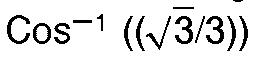
.
.
15. The apparatus according to any one of claims 9 to 14, wherein the optical means further
comprises a compensation prism (303) for changing the direction of the beams transmitted
from or to the transmitting surface of the optical means.
16. The apparatus according to any one of claims 9 to 15, wherein the reference and the
measuring beams output through the transmitting surface pass back through the transmitting
surface at the same point after being reflected by their respective reflecting means.
17. The apparatus according to any one of the preceding claims, further comprising:
first splitting means for splitting a polarized laser beam into the reference and measuring beams;
means (101,401) for combining the measuring and reference beams ultimately transmitted from the optical means into a combined beam;
second splitting means (204) for splitting the combined beam into a plurality of beams by deviating their phase by 90° from each other, the second splitting means comprising a plurality of optical elements including a 45°-beam-rotating plate (204B); and
a detection means for receiving the plurality of beams to detect the position of the article.
first splitting means for splitting a polarized laser beam into the reference and measuring beams;
means (101,401) for combining the measuring and reference beams ultimately transmitted from the optical means into a combined beam;
second splitting means (204) for splitting the combined beam into a plurality of beams by deviating their phase by 90° from each other, the second splitting means comprising a plurality of optical elements including a 45°-beam-rotating plate (204B); and
a detection means for receiving the plurality of beams to detect the position of the article.
18. The apparatus according to claim 17, wherein the plurality of optical elements are
arranged along the optical path so that adjacent optical elements are in contact with
each other.
19. The apparatus according to either one of claims 17 or 18, wherein the plurality of
optical elements are constructed in one unit (204).
20. The apparatus according to any one of claims 17 to 19, wherein the plurality of beams
are two beams which are converted into two electrical signals and wherein a third
electrical signal is obtained by deviating the phase of one of the two electrical
signals by 180°, and the detection means protects the position of the article on the
basis of the three electrical signals.
21. The apparatus according to any one of claims 17 to 19 wherein the plural beams are
two beams and there are provided a wavelength plate having a retardation not less
than λ/4 and polarized beam splitter to deal with one of the two beams, and wherein
either the wavelength plate or the polarized beam splitter is made to be rotatable
around the optical axis.
1. Laser-interferoinetrisches Meßgerät zum Messen der Position eines Gegenstandes mit:
Mittel (101, 401), um einen polarisierten Referenzstrahl und getrennt einen polarisierten Meßstrahl zu erzeugen;
optischem Mittel, uni die erzeugten Meß- und Referenzstrahlen von dem Erzengungsmittel (101, 401) zu empfangen und sie in einer Meßrichtung abzugeben;
Beweglichen Reflexionsmitteln (107), die in der Meßrichtung beweglich und bei der Position des Gegenstandes angeordnet sind, um den Meßstrahl von dem optischen Mittel entlang der Meßrichtung zurück zu dem optischen Mittel zu reflektieren;
fixiertem Reflexionsmittel (106), das bei einer vorbestimmten Position in der Meßrichtung angeordnet ist, uni den Referenzstrahl von dem optischen Mittel entlang der Meßrichtung zurück zu dem optischen Mittel zu reflektieren; und
Feststellungsmittel, um die Meß- und Referenzstrahlen von dem optischen Mittel zu empfangen und um die Strahlen zu vergleichen, um die Position des Gegenstandes festzustellen;
wobei das optische Mittel eine erste Oberfläche (103A), die derart aufgebaut bzw. gestaltet ist, daß sie darauf einfallende Strahlen gemäß ihrer Polarisation selektiv reflektiert oder durchläßt, und mindestens eine zweite Oberfläche einschließt, die derart aufgebaut bzw. gestaltet ist, daß sie darauf einfallende Strahlen vollständig reflektiert,
wobei die erste Oberfläche und die mindestens eine zweite Oberfläche unter einem Winkel gegeneinander geneigt und derart angeordnet sind, daß die von dem Erzeugungsmittel (101, 401) empfangenen Strahlen zu dein jeweiligen Reflexionsmittel (106, 107) abgegeben und dadurch zurück zu dem optischen Mittel reflektiert werden, um zwischen der ersten Oberfläche und der mindestens einen zweiten Oberfläche reflektiert zu werden, und für eine weitere Reflexion von dem jeweiligen Reflexionsmittel (106, 107) abgegeben werden und bei einem nachfolgenden Empfang durch das optische Mittel durch die erste Oberfläche zu den, Feststellungsmittel abgegeben werden; dadurch gekennzeichnet, daß:
die erste Oberfläche (103A) und die mindestens eine zweite Oberfläche des optischen Mittels derart angeordnet sind, daß Strahlen, welche durch die mindestens eine zweite Oberfläche von der ersten Oberfläche (103A) empfangen werden, durch die mindestens eine zweite Oberfläche ohne eine nachfolgende Reflexion von der ersten Oberfläche (103A) abgegeben werden.
Mittel (101, 401), um einen polarisierten Referenzstrahl und getrennt einen polarisierten Meßstrahl zu erzeugen;
optischem Mittel, uni die erzeugten Meß- und Referenzstrahlen von dem Erzengungsmittel (101, 401) zu empfangen und sie in einer Meßrichtung abzugeben;
Beweglichen Reflexionsmitteln (107), die in der Meßrichtung beweglich und bei der Position des Gegenstandes angeordnet sind, um den Meßstrahl von dem optischen Mittel entlang der Meßrichtung zurück zu dem optischen Mittel zu reflektieren;
fixiertem Reflexionsmittel (106), das bei einer vorbestimmten Position in der Meßrichtung angeordnet ist, uni den Referenzstrahl von dem optischen Mittel entlang der Meßrichtung zurück zu dem optischen Mittel zu reflektieren; und
Feststellungsmittel, um die Meß- und Referenzstrahlen von dem optischen Mittel zu empfangen und um die Strahlen zu vergleichen, um die Position des Gegenstandes festzustellen;
wobei das optische Mittel eine erste Oberfläche (103A), die derart aufgebaut bzw. gestaltet ist, daß sie darauf einfallende Strahlen gemäß ihrer Polarisation selektiv reflektiert oder durchläßt, und mindestens eine zweite Oberfläche einschließt, die derart aufgebaut bzw. gestaltet ist, daß sie darauf einfallende Strahlen vollständig reflektiert,
wobei die erste Oberfläche und die mindestens eine zweite Oberfläche unter einem Winkel gegeneinander geneigt und derart angeordnet sind, daß die von dem Erzeugungsmittel (101, 401) empfangenen Strahlen zu dein jeweiligen Reflexionsmittel (106, 107) abgegeben und dadurch zurück zu dem optischen Mittel reflektiert werden, um zwischen der ersten Oberfläche und der mindestens einen zweiten Oberfläche reflektiert zu werden, und für eine weitere Reflexion von dem jeweiligen Reflexionsmittel (106, 107) abgegeben werden und bei einem nachfolgenden Empfang durch das optische Mittel durch die erste Oberfläche zu den, Feststellungsmittel abgegeben werden; dadurch gekennzeichnet, daß:
die erste Oberfläche (103A) und die mindestens eine zweite Oberfläche des optischen Mittels derart angeordnet sind, daß Strahlen, welche durch die mindestens eine zweite Oberfläche von der ersten Oberfläche (103A) empfangen werden, durch die mindestens eine zweite Oberfläche ohne eine nachfolgende Reflexion von der ersten Oberfläche (103A) abgegeben werden.
2. Gerät nach Anspruch 1, worin das Erzeugungsmittel (101, 401), das optische Mittel,
beide Reflexionsmittel (106, 107) und das Feststellungsmittel derart angeordnet sind,
daß die Referenz- und Meßstrahlen durch das Erzeugungsmittel erzengt, durch die erste
Oberfläche (103A) durchgelassen und zu jeweils dem fixierten und den beweglichen Reflexionsmitteln
abgegeben werden, die davon reflektierten Referenz- und Meßstrahlen, wenn sie auf
die erste Oberfläche einfallen, eine derartige Polarisation aufweisen, daß sie zu
der mindestens einen zweiten Oberfläche reflektiert werden, wo sie reflektiert und
zu jeweils dem fixierten und den beweglichen Reflexionsmitteln abgegeben werden, und
die Referenz- und Meßstrahlen, die davon ein zweites Mal reflektiert werden, an der
mindestens einen zweiten Oberfläche zu - der ersten Oberfläche reflektiert werden,
an welcher sie eine derartige Polarisation aufweisen, daß sie dahindurch und zu dem
Feststellungsmittel durchgelassen werden.
3. Gerät nach Anspruch 1, worin das Erzeugungsmittel (101, 401), das optische Mittel,
beide Reflexionsmittel (106, 107) und das Feststellungsmittel derart angeordnet sind,
daß der Referenz- und der Meßstrahl durch das Erzeugungsmittel erzeugt werden, durch
die erste Oberfläche zu der mindestens einen zweiten Oberfläche durchgelassen werden,
wo sie reflektiert und zu jeweils dem fixierten und den beweglichen Reflexionsmitteln
abgegeben werden, die davon reflektierten Referenz- und Meßstrahlen durch die mindestens
eine zweite Oberfläche zu der ersten Oberfläche reflektiert werden, an welcher sie
eine derartige Polarisation aufweisen, daß sie davon reflektiert und zu jeweils dein
fixierten und den beweglichen Reflexionsmitteln reflektiert werden, und die davon
reflektierten Referenz- und Meßstrahlen, wenn sie auf das erste Reflexionsmittel einfallen,
eine derartige Polarisation aufweisen, daß sie durch die erste Oberfläche und zu dem
Feststellungsmittel durchgelassen werden.
4. Gerät nach irgendeinem der vorhergehenden Ansprüche, welches ferner Mittel (102, 411,
105) enthält, um die Polarisationen der Referenz- und der Meßstrahlen so umzuwandeln,
daß die erste Oberfläche den Strahl selektiv reflektiert oder durchläßt.
5. Gerät nach einem der vorhergehenden Ansprüche, worin die erste Oberfläche (103A) um
45° gegen die Meßrichtung geneigt ist.
6. Gerät nach einem der vorhergehenden Ansprüche, worin die von der ersten Oberfläche
(103A) verschiedenen Oberflächen des optischen Mittels, welche die Strahlen reflektieren,
mit einem metallischen Reflexionsfilm versehen sind.
7. Gerät nach einem der Ansprüche 1 bis 5, worin die von der ersten Oberfläche (103A)
verschiedenen Oberflächen des optischen Mittels, welche die Strahlen reflektieren,
mit einem dielektrischen Reflexionsfilm versehen sind.
8. Gerät nach einem der vorhergehenden Ansprüche, worin das optische Mittel ein kubischer
Eckspiegel ist, der aus zwei Spiegeln besteht, die unter einem rechten Winkel zueinander
angeordnet sind.
9. Gerät nach einem der Ansprüche 1 bis 7, worin das optische Mittel ein kubisches Eckprisma
bzw. Tripelprisma ist, das eine durchlässige Oberfläche zusätzlich zu den ersten und
zweiten Oberflächen aufweist, und die mindestens eine zweite Oberfläche zwei Oberflächen
unter einen, rechten Winkel zueinander und jeweils unter einem rechten Winkel zu der
ersten Oberfläche aufweist.
10. Gerät nach Anspruch 9, wobei das optische Mittel ferner ein an der ersten Oberfläche
(103A) angebrachtes bzw. angefügtes Prisma (104, 203) enthält.
11. Gerät nach Anspruch 10, worin das optische Mittel um eine Normale bzw. eine senkrechte
Linie auf der ersten Oberfläche (103A) gedreht werden kann, wodurch die Richtung der
Strahlen, die in das optische Mittel eintreten und es verlassen, geändert wird.
12. Gerät nach einem der Ansprüche 10 oder 11, worin mindestens eine der Oberflächen,
durch welche die Strahlen in das Prisma (104, 203) eintreten oder es verlassen, parallel
zu der durchlässigen Oberfläche des optischen Mittels ist.
13. Gerät nach einem der Ansprüche 10 bis 12, worin der Winkel ϑ₂, der zwischen einerseits
einer der Oberflächen, durch welche die Strahlen in das Prisma (104, 203) eintreten
oder es verlassen und welche zu der durchlässigen Oberfläche des optischen Mittels
nicht parallel ist, und andererseits der angefügten Oberfläche des optischen Mittels
gebildet wird, und der Winkel ϑ, der zwischen der durchlässigen Oberfläche des optischen
Mittels und der ersten Oberfläche (103A), an die das zweite Prisma angebracht bzw.
angefügt ist, gebildet wird, der folgenden Beziehung genügen:

worin n einen Brechungsindex des kubischen Eckprismas bzw. Tripelprismas und des daran angebrachten bzw. angefügten Prismas repräsentiert.
worin n einen Brechungsindex des kubischen Eckprismas bzw. Tripelprismas und des daran angebrachten bzw. angefügten Prismas repräsentiert.
14. Gerät nach einem der Ansprüche 9 bis 13, worin der Winkel ϑ, der zwischen der reflektierenden
Oberfläche und der durchlässigen Oberfläche des optischen Mittels gebildet wird,
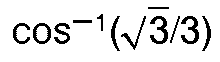
beträgt.
beträgt.
15. Gerät nach einem der Ansprüche 9 bis 14, worin das optische Mittel ferner ein Kompensationsprisma
(303) enthält, um die Richtung der von der oder zu der durchlässigen Oberfläche des
optischen Mittels durchgelassenen Strahlen zu ändern.
16. Gerät nach einem der Ansprüche 9 bis 15, worin die Referenz- und Meßstrahlen, die
durch die durchlässige Oberfläche abgegeben werden, durch die durchlässige Oberfläche
bei dem gleichen Punkt zurücklaufen, nachdem sie durch ihre jeweiligen Reflexionsmittel
reflektiert werden.
17. Gerät nach einem der vorhergehenden Ansprüche, ferner mit:
ersten, Aufspaltungsmittel, um einen polarisierten Laserstrahl in die Referenz- und Meßstrahlen aufzuspalten;
Mittel (101, 401), um die Meß- und Referenzstrahlen, die schließlich von dem optischen Mittel durchgelassen werden, zu einem kombinierten Strahl zusammenzufassen bzw. zu kombinieren;
zweitem Aufspaltungsmittel (204), um den kombinierten Strahl in eine Vielzahl von Strahlen aufzuspalten, indem ihre Phase uni 90° voneinander abgelenkt wird, wobei das zweite Aufspaltungsmittel eine Vielzahl optischer Elemente einschließlich einer Platte (204B), die einen Strahl um 45° dreht, enthält; und
einem Feststellungsmittel, um die Vielzahl von Strahlen zu empfangen, um die Position des Gegenstandes festzustellen.
ersten, Aufspaltungsmittel, um einen polarisierten Laserstrahl in die Referenz- und Meßstrahlen aufzuspalten;
Mittel (101, 401), um die Meß- und Referenzstrahlen, die schließlich von dem optischen Mittel durchgelassen werden, zu einem kombinierten Strahl zusammenzufassen bzw. zu kombinieren;
zweitem Aufspaltungsmittel (204), um den kombinierten Strahl in eine Vielzahl von Strahlen aufzuspalten, indem ihre Phase uni 90° voneinander abgelenkt wird, wobei das zweite Aufspaltungsmittel eine Vielzahl optischer Elemente einschließlich einer Platte (204B), die einen Strahl um 45° dreht, enthält; und
einem Feststellungsmittel, um die Vielzahl von Strahlen zu empfangen, um die Position des Gegenstandes festzustellen.
18. Gerät nach Anspruch 17, worin die Vielzahl optischer Elemente entlang des Strahlengangs
angeordnet sind, so daß benachbarte optische Elemente miteinander in Kontakt stehen.
19. Gerät nach einem der Ansprüche 17 oder 18, worin die Vielzahl optischer Elemente in
einer Einheit (204) aufgebaut sind.
20. Gerät nach einem der Ansprüche 17 bis 19, worin die Vielzahl von Strahlen zwei Strahlen
sind, welche in zwei elektrische Signale umgewandelt werden, und worin ein drittes
elektrisches Signal erhalten wird, indem die Phase von einem der zwei elektrischen
Signale uni 180° abgelenkt wird, und das Feststellungsmittel die Position des Gegenstandes
auf der Grundlage der drei elektrischen Signale sichert.
21. Gerät nach einem der Ansprüche 17 bis 19, worin die mehrfachen Strahlen zwei Strahlen
sind und eine Wellenlängen-Platte mit einer Verzögerung von nicht weniger als λ/4
und ein Polarisationsstrahlteiler vorgesehen sind, um mit einem der zwei Strahlen
zu arbeiten, und worin entweder die Wellenlängen-Platte oder der Polarisationsstrahlteiler
um die optische Achse drehbar vorgesehen ist.
1. Appareil de mesure par interférométrie laser pour mesurer la position d'un article,
comprenant:
des moyens de génération (101, 401) d'un faisceau de référence polarisé et, séparément, un faisceau de mesure polarisé;
des moyens optiques pour recevoir les faisceaux de mesure et de référence générés à partir des moyens de génération (101, 401) et les émettre en sortie dans une direction de mesure;
des moyens de réflexion mobile (107) qui sont mobiles dans la direction de la mesure et situés dans la position de l'article, pour réfléchir le faisceau de mesure provenant des moyens optiques en retour dans la direction de mesure vers les moyens optiques;
des moyens de réflexion (106) fixes situés dans une position prédéterminée dans la direction de mesure, pour réfléchir le faisceau de référence provenant des moyens optiques en retour dans la direction de mesure vers les moyens optiques; et
des moyens de détection pour recevoir les faisceaux de mesure et de référence provenant des moyens optiques et pour comparer les faisceaux et détecter la position de l'article;
les moyens optiques comprenant une première surface (103A) construite de manière qu'elle réfléchisse ou transmette sélectivement les faisceaux incidents qui viennent la frapper en accord avec leur polarisation, et au moins une seconde surface construite de manière qu'elle réfléchisse complètement les faisceaux incidents qui viennent la frapper;
la première surface et la au moins une seconde surface étant inclinées en formant un angle l'une avec l'autre et étant disposées de manière que les faisceaux reçus des moyens de génération (101, 401) soient émis en sortie vers les moyens de réflexion respectifs (106, 107) et soient réfléchis en retour vers les moyens optiques pour être réfléchis entre la première surface et la seconde surface et émis en sortie pour la poursuite de leur réflexion hors des moyens de réflexion (106, 107) respectifs, et après réception subséquente par les moyens optiques sont émis en sortie à travers la première surface vers les moyens de détection; caractérisé en ce que:
la première surface (103A) et la au moins une seconde surface des moyens optiques sont disposées de manière que les faisceaux reçus par la seconde surface et provenant de la première surface (103A) sont émis en sortie par la seconde surface sans réflexion subséquente par la première surface (103A).
des moyens de génération (101, 401) d'un faisceau de référence polarisé et, séparément, un faisceau de mesure polarisé;
des moyens optiques pour recevoir les faisceaux de mesure et de référence générés à partir des moyens de génération (101, 401) et les émettre en sortie dans une direction de mesure;
des moyens de réflexion mobile (107) qui sont mobiles dans la direction de la mesure et situés dans la position de l'article, pour réfléchir le faisceau de mesure provenant des moyens optiques en retour dans la direction de mesure vers les moyens optiques;
des moyens de réflexion (106) fixes situés dans une position prédéterminée dans la direction de mesure, pour réfléchir le faisceau de référence provenant des moyens optiques en retour dans la direction de mesure vers les moyens optiques; et
des moyens de détection pour recevoir les faisceaux de mesure et de référence provenant des moyens optiques et pour comparer les faisceaux et détecter la position de l'article;
les moyens optiques comprenant une première surface (103A) construite de manière qu'elle réfléchisse ou transmette sélectivement les faisceaux incidents qui viennent la frapper en accord avec leur polarisation, et au moins une seconde surface construite de manière qu'elle réfléchisse complètement les faisceaux incidents qui viennent la frapper;
la première surface et la au moins une seconde surface étant inclinées en formant un angle l'une avec l'autre et étant disposées de manière que les faisceaux reçus des moyens de génération (101, 401) soient émis en sortie vers les moyens de réflexion respectifs (106, 107) et soient réfléchis en retour vers les moyens optiques pour être réfléchis entre la première surface et la seconde surface et émis en sortie pour la poursuite de leur réflexion hors des moyens de réflexion (106, 107) respectifs, et après réception subséquente par les moyens optiques sont émis en sortie à travers la première surface vers les moyens de détection; caractérisé en ce que:
la première surface (103A) et la au moins une seconde surface des moyens optiques sont disposées de manière que les faisceaux reçus par la seconde surface et provenant de la première surface (103A) sont émis en sortie par la seconde surface sans réflexion subséquente par la première surface (103A).
2. Appareil selon la revendication 1, dans lequel les moyens de génération (101, 401),
les moyens optiques, les deux moyens de réflexion (106, 107) et les moyens de détection
sont disposés de manière que les faisceaux de mesure et de référence soient générés
par les moyens de génération, transmis à travers la première surface (103A) et émis
en sortie, respectivement, vers les moyens réfléchissants fixes et les moyens réfléchissants
mobiles, les faisceaux de mesure et de référence réfléchis à partir de ces derniers
sont, quand ils sont incidents sur la première surface, d'une polarisation telle qu'ils
sont réfléchis vers la seconde surface où ils sont réfléchis et émis en sortie vers
respectivement les moyens réfléchissants fixes et les moyens réfléchissants mobiles,
et les faisceaux de mesure et de référence réfléchis une seconde fois par eux sont
réfléchis par la seconde surface vers la première surface, leur polarisation étant
telle qu'ils sont transmis à travers cette dernière vers les moyens de détection.
3. Appareil selon la revendication 1, dans lequel les moyens de génération (101, 401),
les moyens optiques, les deux moyens de réflexion (106, 107) et les moyens de détection
sont disposés de manière que les faisceaux de mesure et de référence sont générés
par les moyens de génération, transmis à travers la première surface vers la seconde
surface où ils sont réfléchis et émis en sortie vers, respectivement, les moyens réfléchissants
fixes et les moyens réfléchissants mobiles, les faisceaux de mesure et de référence
réfléchis par ces derniers sont réfléchis par la seconde surface vers la première
surface, et présentent une polarisation telle qu'ils sont réfléchis par cette dernière
et émis en sortie, respectivement, vers les moyens réfléchissants fixes et les moyens
réfléchissants mobiles, et les faisceaux de mesure de référence réfléchis par eux,
quand ils sont incidents sur les premiers moyens réfléchissants, sont d'une polarisation
telle qu'ils sont transmis à travers la première surface et vers les moyens de détection.
4. Appareil selon l'une quelconque des revendications précédentes, comprenant en outre
des moyens (102, 411, 105) pour convertir les polarisations des faisceaux de mesure
et de référence de manière que ladite surface réfléchisse ou transmette sélectivement
le faisceau.
5. Appareil selon l'une quelconque des revendications précédentes, dans lequel ladite
première surface (103A) est inclinée de 45° par rapport à la direction de la mesure.
6. Appareil selon l'une quelconque des revendications précédentes, dans lequel les surfaces
des moyens optiques, autres que la première surface (103A), qui réfléchissent les
faisceaux, sont recouvertes par une pellicule réfléchissante métallique.
7. Appareil selon l'une quelconque des revendications 1 à 5, dans lequel les surfaces
des moyens optiques, autres que la première surface (103A), qui réfléchissent les
faisceaux sont recouvertes d'une pellicule réfléchissante diélectrique.
8. Appareil selon l'une quelconque des revendications précédentes, dans lequel lesdits
moyens optiques sont constitués par un miroir en coin de cube consistant en deux miroirs
disposés à angle droit l'un par rapport à l'autre.
9. Appareil selon l'une quelconque des revendications 1 à 7, dans lequel lesdits moyens
optiques sont constitués par un prisme en coin de cube comprenant une surface de transmission
en plus des première et seconde surfaces et ladite seconde surface comprend deux surfaces
à angle droit l'une par rapport à l'autre et chacune à angle droit par rapport à ladite
première surface.
10. Appareil selon la revendication 9, dans lequel les moyens optiques comprennent en
outre un prisme (104, 203) fixé à la première surface (103).
11. Appareil selon la revendication 10, dans lequel les moyens optiques sont adaptés pour
pouvoir tourner autour d'une ligne normale à la première surface (103A), la direction
des faisceaux qui pénètrent dans et quittent les moyens optiques étant ainsi modifiée.
12. Appareil selon l'une ou l'autre des revendications 10 ou 11, dans lequel l'une au
moins des surfaces par lesquelles les faisceaux pénètrent dans ou quittent le prisme
(104, 203) est parallèle à la surface de transmission des moyens optiques.
13. Appareil selon l'une quelconque des revendications 10 à 12, dans lequel l'angle ϑ₂
formé entre d'une part l'une des surfaces par laquelle les faisceaux pénètrent dans
ou quittent le prisme (104, 203) et qui n'est pas parallèle à la surface de transmission
des moyens optiques et, d'autre part, la surface fixée des moyens optiques et l'angle
ϑ formé entre la surface de transmission des moyens optiques et la première surface
(103A) à laquelle le second prisme est fixé satisfont la relation suivante:

où n représente un indice de réfraction du prisme en coin de cube et du prisme fixé sur lui.
où n représente un indice de réfraction du prisme en coin de cube et du prisme fixé sur lui.
14. Appareil selon l'une quelconque des revendications 9 à 13, dans lequel l'angle ϑ formé
entre la surface réfléchissante et la surface de transmission des moyens optiques
est
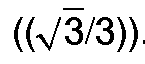
.
.
15. Appareil selon l'une quelconque des revendications 9 à 14, dans lequel les moyens
optiques comprennent en outre un prisme de compensation (303) pour modifier la direction
des faisceaux transmis à partir de ou vers la surface de transmission des moyens optiques.
16. Appareil selon l'une quelconque des revendications 9 à 15, dans lequel les faisceaux
de mesure et de référence émis en sortie par la surface de transmission reviennent
par la surface de transmission au même point après avoir été réfléchis par leurs moyens
réfléchissants respectifs.
17. Appareil selon l'une quelconque des revendications précédentes, comprenant en outre:
des premiers moyens de division pour diviser un faisceau laser polarisé en des faisceaux de mesure et de référence;
des moyens (101, 401) pour combiner les faisceaux de mesure et de référence transmis finalement à partir des moyens optiques en un faisceau combiné;
des seconds moyens de division (204) pour diviser le faisceau combiné en une pluralité de faisceaux en déviant leur phase de 90° les uns par rapport aux autres, les seconds moyens de division comprenant une pluralité d'éléments optiques comportant une plaque (204B) faisant tourner le faisceau sur 45°; et
des moyens de détection pour recevoir la pluralité de faisceaux pour détecter la position de l'article.
des premiers moyens de division pour diviser un faisceau laser polarisé en des faisceaux de mesure et de référence;
des moyens (101, 401) pour combiner les faisceaux de mesure et de référence transmis finalement à partir des moyens optiques en un faisceau combiné;
des seconds moyens de division (204) pour diviser le faisceau combiné en une pluralité de faisceaux en déviant leur phase de 90° les uns par rapport aux autres, les seconds moyens de division comprenant une pluralité d'éléments optiques comportant une plaque (204B) faisant tourner le faisceau sur 45°; et
des moyens de détection pour recevoir la pluralité de faisceaux pour détecter la position de l'article.
18. Appareil selon la revendication 17, dans lequel la pluralité d'éléments optiques sont
disposés le long du parcours optique de manière que les éléments optiques adjacents
soient en contact les uns avec les autres.
19. Appareil selon l'une ou l'autre des revendications 17 ou 18, dans lequel la pluralité
d'éléments optiques sont construits sous forme d'une unique unité (204).
20. Appareil selon l'une quelconque des revendications 17 à 19, dans lequel la pluralité
de faisceaux est constituée par deux faisceaux qui sont convertis en deux signaux
électriques et dans lequel un troisième signal électrique est obtenu par déviation
de la phase de l'un des deux signaux électriques sur 180°, et les moyens de détection
détectent la position de l'article sur la base des trois signaux électriques.
21. Appareil selon l'une quelconque des revendications 17 à 19, dans lequel la pluralité
de faisceaux est constituée par deux faisceaux alors que sont prévus une plaque de
longueur d'onde dont le retard n'est pas inférieur à λ/4 et un diviseur de faisceau
polarisé pour traiter l'un des deux faisceaux, et dans lequel soit la plaque de longueur
d'onde soit le diviseur de faisceau polarisé est monté de façon à pouvoir tourner
autour de l'axe optique.