|
(11) | EP 0 448 029 B1 |

| (12) | EUROPEAN PATENT SPECIFICATION |
|
|
| (54) |
Novel pharmaceutical uses of forskolin derivatives Neue pharmazeutische Verwendungen von Forskolin-Derivaten Nouvelles utilisations pharmaceutiques des dérivés de la forskoline |
|
|
|||||||||||||||||||||||||||||||||||
|
||||||||||||||||||||||||||||||||||||
| Note: Within nine months from the publication of the mention of the grant of the European patent, any person may give notice to the European Patent Office of opposition to the European patent granted. Notice of opposition shall be filed in a written reasoned statement. It shall not be deemed to have been filed until the opposition fee has been paid. (Art. 99(1) European Patent Convention). |
BACKGROUND OF THE INVENTION
Field of the Invention
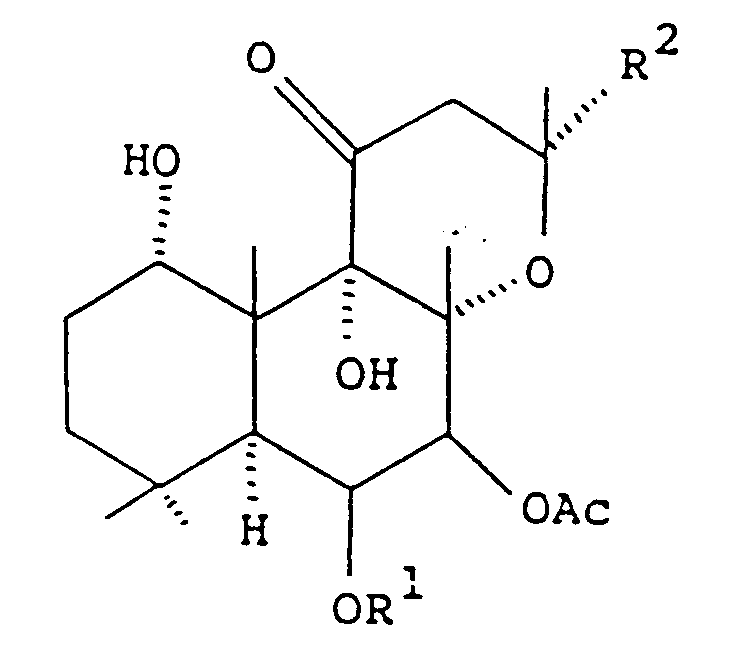
[0001] The present invention relates to novel pharmaceutical use of forskolin derivatives represented by the general formula:
wherein R¹, R² and Ac are as defined later.
Description of the Prior Art
[0002] Forskolin having the above formula wherein R¹ is hydrogen and R² is vinyl group is already known to have ionotropic, hypotensive and adenylate cyclase-stimulating actions (cf. JP-A-52-79015 and Arzneimittelforschung, 31, 1248, 1981).
[0003] The forskolin derivatives used in the present invention are also disclosed in prior art literature, e.g. EP-A-222413. Regarding the pharmaceutical use of the forskolin derivatives, said literature makes mention of their usefulness as "a remedy for chronic cardiac failure, hypotensive agent, and cerebral vasodilator, and in addition as a remedy for diseases, such as glaucoma, asthma, immunity failure, tumor, and digestive system diseases, which are caused by abnormal regulation of cAMP."
[0004] Siegl A.M. et al in MOLECULAR PHARMACOLOGY, vol. 31, no. 3, 1982, pages 680-687 discloses the inhibition of aggregation and stimulation of cyclic AMP generation in intact human platelets by forskolin. A correlation between the effect of forskolin on cyclic AMP levels and the inhibitory effect on platelet aggregation was found.
[0005] De Sourza N.J. et al. in MEDICINAL RESEARCH REVIEWS, vol. 3, no. 2, 1983, pages 201-219 discloses the ability to activate adenylate cyclase of a number of forskolin analogs. However, none of the derivatives displayed potencies greater than forskolin.
[0006] Laurenza A. et. al. in MOLECULAR PHARMACOLOGY, vol. 32, no. 1, 1987, pages 133-139 discloses a stimulation of adenylate cyclase by water-soluble analogs of forskolin. Specifically diacyl analogs of forskolins containing an acetate group at 7β-hydroxyl position which are esterified with heterocyclic amino acids at the 6β-hydroxyl position were shown to be very potent at stimulating adenylate cyclase.
[0007] However, no disclosure has ever been made regarding the pharmaceutical use proposed in the present invention.
SUMMARY OF THE INVENTION
[0008] The present invention relates to a platelet aggregation inhibiting or controlling agent, which contains as active principle a forskolin derivative represented by the formula (I):
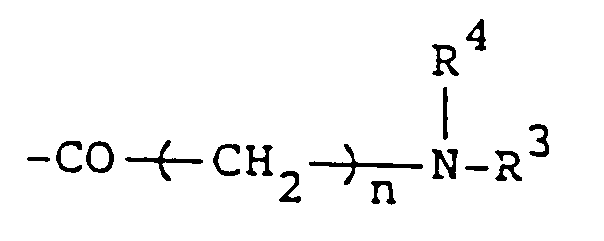
wherein R¹ is a group represented by the formula
(wherein R³ and R⁴ are each hydrogen or lower alkyl group, and n is an integer of 1 to 5); R² represents hydrocarbon group having 2 to 3 carbon atoms; and Ac represents acetyl group, or a physiologically acceptable salt thereof.
DETAILED DESCRIPTION OF THE INVENTION
[0009] With reference to the general formula (I), R³ and R₄ in the formula
represented by R¹ in said formula (I) are each hydrogen or a C₁₋₄ lower alkyl group such as methyl, ethyl, propyl, butyl and the like.
[0010] Examples of the groups represented by R¹ in the general formula (I) are dimethylaminoacetyl group, dimethylaminopropionyl group, dimethylaminobutyryl group, dimethylaminopentanoyl group, dimethylaminohexanoyl group, aminopropionyl group, aminobutyryl group, aminopentanoyl group, aminohexanoyl group.
[0011] Examples of the groups represented by R² include vinyl group, ethyl group and cyclopropyl group.
[0012] As for the forskolin derivatives usable in this invention, they include, for example, 6-(3-dimethylaminopropionyl)forskolin,, 6-(4-dimethylaminobutyryl)forskolin, 6-(5-dimethylaminopentanoyl)forskolin, 6-(6-dimethylaminohexanoyl)forskolin, 6-(3-aminopropionyl)forskolin, 6-(4-aminobutyryl)forskolin, 6-(5-aminopentanoyl)forskolin, 6-(6-aminohexanoyl)forskolin, 14,15-dihydro-6-(3-dimethylaminopropionyl)forskolin, and 14,15-dihydro-6-(4-dimethylaminobutyryl)forskolin. The compounds shown in EP-A-222413 are also usable for the purpose of this invention.
[0013] In use of the compounds of the formula (I) as a platelet aggregation inhibiting agent, they can be applied either singly or by mixing an excipient or carrier in a suitable form of preparation such as injection, granules, finely divided granules, powder, capsule, suppository, eyewash, patch, ointment, spraying agent, etc. The preparations are administered to the mammals either orally or parenterally.
[0014] The excipient and carrier used in the present invention are selected from the pharmaceutically acceptable ones. The kind and composition of such excipient and carrier are decided according to the route and way of administration and other factors. As liquid carrier for instance, there can be used water, alcohols, animal or vegetable oils such as soybean oil, peanut oil, sesame oil, mineral oil, etc., and synthetic oils. As solid carrier, there can be used saccharides such as maltose and sucrose, amino-acids, cellulose derivatives such as hydroxypropyl cellulose, and salts of organic acids such as magnesium stearate.
[0015] In the case of injections, it is generally preferred to use physiological saline, various types of buffer solution, solutions of saccharides such as glucose, inositol, mannitol and xylitol, and glycols such as ethylene glycol and polyethylene glycol.
[0016] The compounds of this invention may also be worked into a freeze-dried preparation by mixing a saccharide such as glucose, inositol, mannitol, xylitol, maltose, sucrose, etc., and/or an excipient such as phenylalanine, and at the time of application, such preparation may be dissolved in a suitable solution for injection, such as sterile water, physiological saline, dextrose solution, electrolyte solution, and amino-acid solution for intravenous injection.
[0017] The content of the compound of the formula (I) in the preparations may vary widely depending on the form of preparation, but usually it is in the range of 0.1 to 100% by weight based on the whole composition. In the case of injections, for instance, it is usually advisable to prepare the solutions so that they contain 0.1 to 5% by weight of a compound (I) of this invention.
[0018] For oral administration, the compounds of this invention, mixed with a solid or liquid carrier such as mentioned above, are worked into such forms of preparation as tablet, capsule, powder, granules, liquid, dry syrup and the like. In the case of capsule, tablet, granules and powder, the content of the compound (I) of this invention in the preparations may range usually from about 0.1 to 100% by weight, the balance being the carrier.
[0019] The dosage of the compound (I) of this invention is decided by giving consideration to age of the patient, his body weight, state of disease, purpose of treatment and other factors, but usually the recommendable therapeutic dose is 0.001 to 30 mg/kg/day in the case of parenteral administration and 0.003 to 300 mg/kg/day in the case of oral administration.
[0020] In case of using the compounds of the formula (I) as a therapeutical agent for cutaneous ulcer, the compound, either singly or mixed with an excipient and/or carrier, is worked into a suitable form of preparation such as powder, spraying agent, emulsion, cream, lotion, ointment or patch (medicated tape, pap, etc.), and the preparation is directly applied to the ulcer surface, preferably the ulcer surface of integument of a mammal. The excipient and carrier used here are selected from the pharmaceutically acceptable ones. The kind and composition thereof are decided according to the route and way of administration and other factors. The content of the compound of this invention in a preparation varies depending on the type (form) of the preparation, but usually it is in the range from 0.001 to 100% by weight based on the whole composition.
[0021] The dosage of the compound is determined by giving consideration to age of the patient, his body weight, state of the disease, purpose of treatment and other factors. Generally, however, the therapeutic dose is 0.001 to 300 mg/kg/day, and the preparation is given once to several times a day as occasion demands.
[0022] The pharmaceutical use of the compounds of this invention will be described below in terms of test examples using 6-(3-dimethylaminopropionyl)forskolin hydrochloride (this compound being hereinafter referred to as NKH-477) among the compounds of this invention.
Test Example 1-1
[0023] The platelet aggregation inhibitory action of NKH-477 was examined on collagen-induced aggregation and ADP-induced aggregation of rabbit blood thrombocyte.
[0024] The male Japanese white rabbits (body weight: 2.4-2.8 kg, procured from Tokyo Experimental Animals Co., Ltd.) were divided into groups of 5. The rabbits were etherized and blood was collected from the carotid artery of each rabbit. A 3.8% sodium citrate solution (final concentration: 0.38%) was added to a portion of blood collected from each group of rabbits to obtain platelet rich plasma (PRP). The remaining portion of blood was centrifuged at 3,000 r.p.m. for 15 minutes to obtain platelet poor plasma (PPP). First, permeability of PRP and PPP was determined by using an aggregometer (RMA-31 mfd. by Rika Denki Kogyo K.K.) and set at 0% and 100%, respectively. Separately from the above operation, 250 »ℓ of PRP was placed in a cuvette and after preliminary heating at 37°C for 2 minutes, 20 »ℓ of specimen was added and incubated under stirring for 2 minutes. Then 10 »ℓ of ADP (Sigma, final conc.: 3 x 10⁻⁶ M) or collagen (Hormon-Chemie, final conc.: 10 »g/ml) was added and the transmission rate was measured. The maximum transmission rate observed in this operation was termed as the maximum aggregation rate. Recording in this operation was conducted on an ink-written recorder (B-381L mfd. by Rika Denki Kogyo K.K.).
[0025] NKH-477 was dissolved in a physiological saline to make concentrations of 10⁻⁸ to 10⁻⁵ M. Forskolin dissolved in ethanol was used as control.
[0026] The results are shown in Table 1-1. It was confirmed that ethanol per se was devoid of platelet aggregation inhibitory action.
Table 1-1
| Platelet aggregation inhibitory action (IC₅₀) | ||
| Collagen-induced aggregation | ADP-induced aggregation | |
| NKH-477 | 3.02 x 10⁻⁷ M | 2.34 x 10⁻⁷ M |
| Forskolin | 3.09 x 10⁻⁶ M | 6.03 x 10⁻⁶ M |
| (Values are the mean. n = 5) | ||
[0027] As seen from the above table, NKH-477 has over 10 times as strong platelet aggregation inhibitory action as forskolin.
Test Example 1-2
[0028] A freeze-dried preparation comprising NKH-477 was dissolved in a physiological saline and administered intravenously to four healthy adults at a rate of 0.8 »g/kg/min for one hour. The degrees of ADP-induced aggregation, epinephrine-induced aggregation and collagen-induced aggregation upon end of administration were measured and compared with those before administration (each figure is the average of measurements on the four subjects). The results are shown in Table 1-2.
Table 1-2
| Before administration | Upon end of administration | Inhibition rate | |
| ADP-induced aggregation | 68.5% | 57.5% | 21.7% |
| Epinephrin-induced aggregation | 47.0% | 31.8% | 39.6% |
| Collagen-induced aggregation | 70.3% | 45.8% | 38.7% |
[0029] The above results attest to the excellent platelet aggregation inhibitory action of NKH-477 in clinical application. This corroborates utility of the compounds of the formula (I) as a platelet aggregation inhibiting agent which is useful for the treatment of the diseases caused by platelet aggregation such as Buerger's disease, arteriostenosis such as arteriosclerosis obliterans, thrombosis, etc., and for the prevention of impairment or relapse of said diseases.
Examples
Formulation Example 1: Freeze-dried injection
[0030] Purified water was added to 30 parts by weight of NKH-477 to make the total amount of the mixture 2,000 parts. After the compound has been dissolved in purified water, the solution was filtered for sterilization by using a Millipore Filter Type GS. 2 g of the filtrate was put into each of the 10-ml vials and freeze-dried to obtain freeze-dried injections containing 30 mg of NKH-477 per vial.
Formulation Example 2: Granules
[0031] 50 parts by weight of NKH-477, 600 parts by weight of lactose, 250 parts by weight of crystalline cellulose and 100 parts by weight of hydroxypropyl cellulose with a low degree of substitution were mixed well and the mixture was compacted by a roll type compactor (Roller Compactor®), then pulverized and passed through a screen designed to allow passage of 16- to 60-mesh powder, thereby obtaining the granules containing 50 mg of NKH-477 in one gram of granule.
Formulation Example 3: Tablet
[0032] 10 parts by weight of NKH-477, 30 parts by weight of potato starch, 150 parts by weight of crystalline lactose, 108 parts by weight of crystalline cellulose and 2 parts of magnesium stearate were mixed by a V type mixer and worked into the tablets each weighing 60 mg and containing 2 mg of NKH-477.
Formulation Example 4: Liquid
[0033] 0.5 g of NKH-477 and 0.2 g of methyl parboxy-benzoate were dissolved in 100 ml of a physiological saline to form a liquid medicine.
Formulation Example 5: Ointment
[0034] 0.1 g of NKH-477 was added to 99.9 g of an official hydrophilic ointment and kneaded well, and 5 g of the mixture was packed in a metallic tube to form tube ointment.
Formulation Example 6: Ointment
[0035] 0.05 g of NKH-477 was added to 99.95 g of official macrogol ointment and kneaded to form an ointment.
Formulation Example 7
1. Use of forskolin derivative, or its physiologically acceptable salt, represented by
the formula:
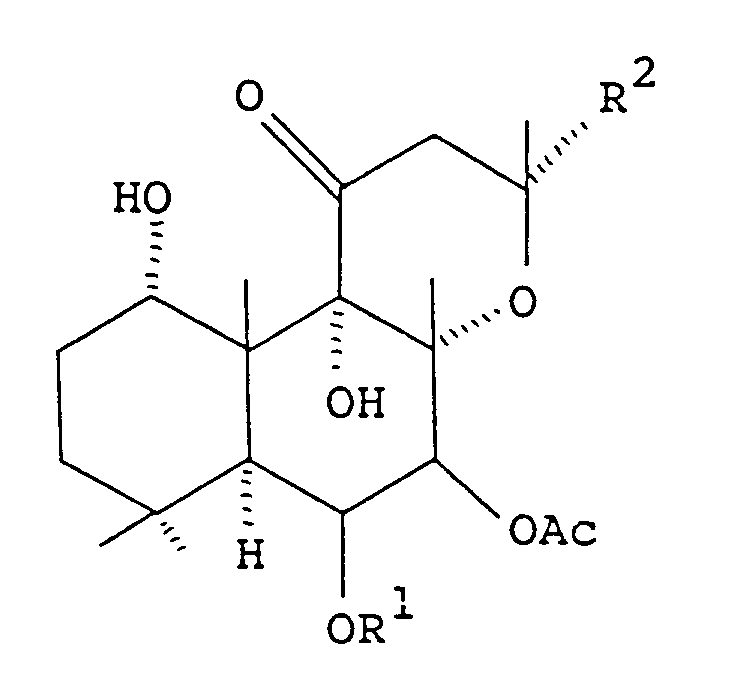
[wherein R¹ is a group represented by the formula
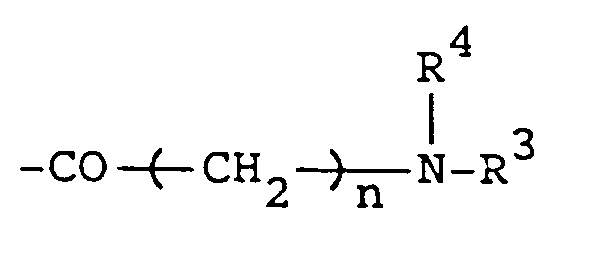
(wherein R³ and R⁴ are each hydrogen or lower alkyl group, and n is an integer of 1 to 5); R² represents hydrocarbon group having 2 to 3 carbon atoms; and Ac represents acetyl group] for the manufacture of a medicament for therapeutic application to a disease caused by platelet aggregation.
[wherein R¹ is a group represented by the formula
(wherein R³ and R⁴ are each hydrogen or lower alkyl group, and n is an integer of 1 to 5); R² represents hydrocarbon group having 2 to 3 carbon atoms; and Ac represents acetyl group] for the manufacture of a medicament for therapeutic application to a disease caused by platelet aggregation.
2. The use according to claim 1, wherein R¹ in the formula is dimethylaminopropionyl
group and R² is vinyl group.
3. The use according to claim 1, wherein the disease caused by platelet aggregation is
thrombosis.
1. Verwendung eines Forskolin-Derivates oder eines physiologisch verträglichen Salzes
davon, das durch die Formel dargestellt wird:
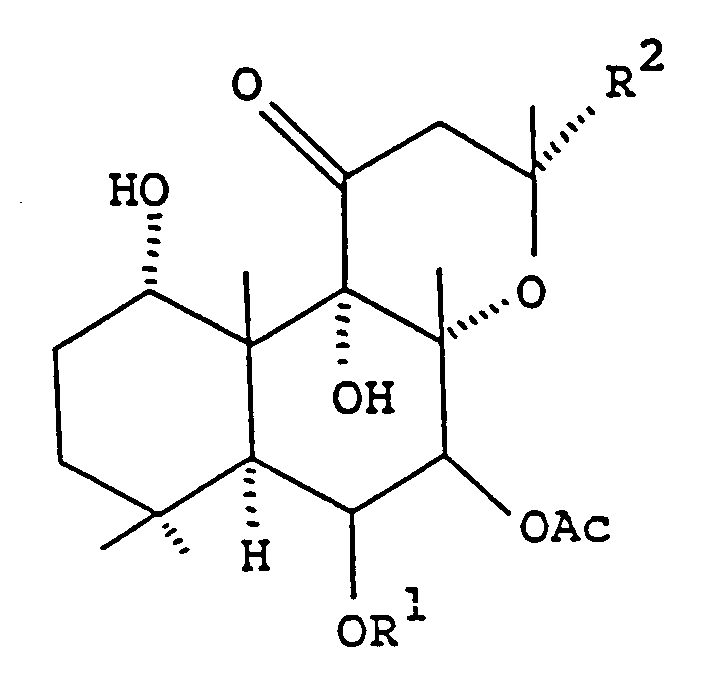
[worin R¹ eine durch die Formel
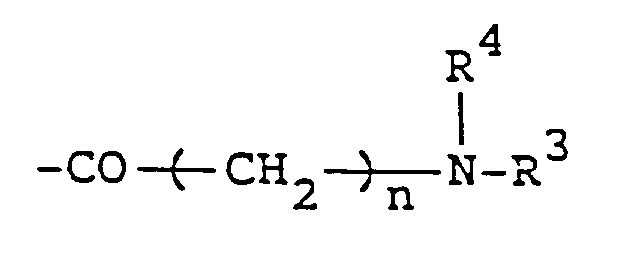
dargestellte Gruppe ist (worin R³ und R⁴ jeweils Wasserstoff oder eine niedere Alkylgruppe sind, und n eine ganze Zahl von 1 bis 5 ist); R² eine Kohlenwasserstoffgruppe mit 2 bis 3 Kohlenstoffatomen ist; und Ac eine Acetylgruppe ist] zur Herstellung eines Medikamentes zur therapeutischen Behandlung einer durch Thrombozytenaggregation verursachten Erkrankung.
[worin R¹ eine durch die Formel
dargestellte Gruppe ist (worin R³ und R⁴ jeweils Wasserstoff oder eine niedere Alkylgruppe sind, und n eine ganze Zahl von 1 bis 5 ist); R² eine Kohlenwasserstoffgruppe mit 2 bis 3 Kohlenstoffatomen ist; und Ac eine Acetylgruppe ist] zur Herstellung eines Medikamentes zur therapeutischen Behandlung einer durch Thrombozytenaggregation verursachten Erkrankung.
2. Verwendung nach Anspruch 1, worin R¹ in der Formel eine Dimethylaminopropionylgruppe
und R² eine Vinylgruppe ist.
3. Verwendung nach Anspruch 1, worin die durch die Thrombozytenaggregation verursachte
Erkrankung eine Thrombose ist.
1. Utilisation d'un dérivé de forskoline ou d'un sel physiologiquement acceptable de
celui-ci, de formule :
[dans laquelle R¹ représente un groupe de formule
(dans laquelle R³ et R⁴ représentent chacun un atome d'hydrogène ou un groupe alkyle inférieur, et n est un entier de 1 à 5) ; R² représente un groupe hydrocarboné comportant de 2 à 3 atomes de carbone ; et Ac représente un groupe acétyle] pour la préparation d'un médicament pour le traitement thérapeutique d'une maladie due à l'agrégation des plaquettes.
[dans laquelle R¹ représente un groupe de formule
(dans laquelle R³ et R⁴ représentent chacun un atome d'hydrogène ou un groupe alkyle inférieur, et n est un entier de 1 à 5) ; R² représente un groupe hydrocarboné comportant de 2 à 3 atomes de carbone ; et Ac représente un groupe acétyle] pour la préparation d'un médicament pour le traitement thérapeutique d'une maladie due à l'agrégation des plaquettes.
2. Utilisation selon la revendication 1, dans laquelle R¹ dans la formule, représente
un groupe diméthylaminopropionyle, et R² représente un groupe vinyle.
3. Utilisation selon la revendication 1, dans laquelle la maladie due à l'agrégation
des plaquettes, est la thrombose.