| (19) |
 |
|
(11) |
EP 0 449 599 B1 |
| (12) |
EUROPEAN PATENT SPECIFICATION |
| (45) |
Mention of the grant of the patent: |
|
01.09.1993 Bulletin 1993/35 |
| (22) |
Date of filing: 26.03.1991 |
|
|
| (54) |
Roll-formed automotive bumper and method of making same
Durch Einrollen geformter Stossfänger und Methode zu seiner Herstellung
Pare-chocs formé par enroulement et procédé pour sa fabrication
|
| (84) |
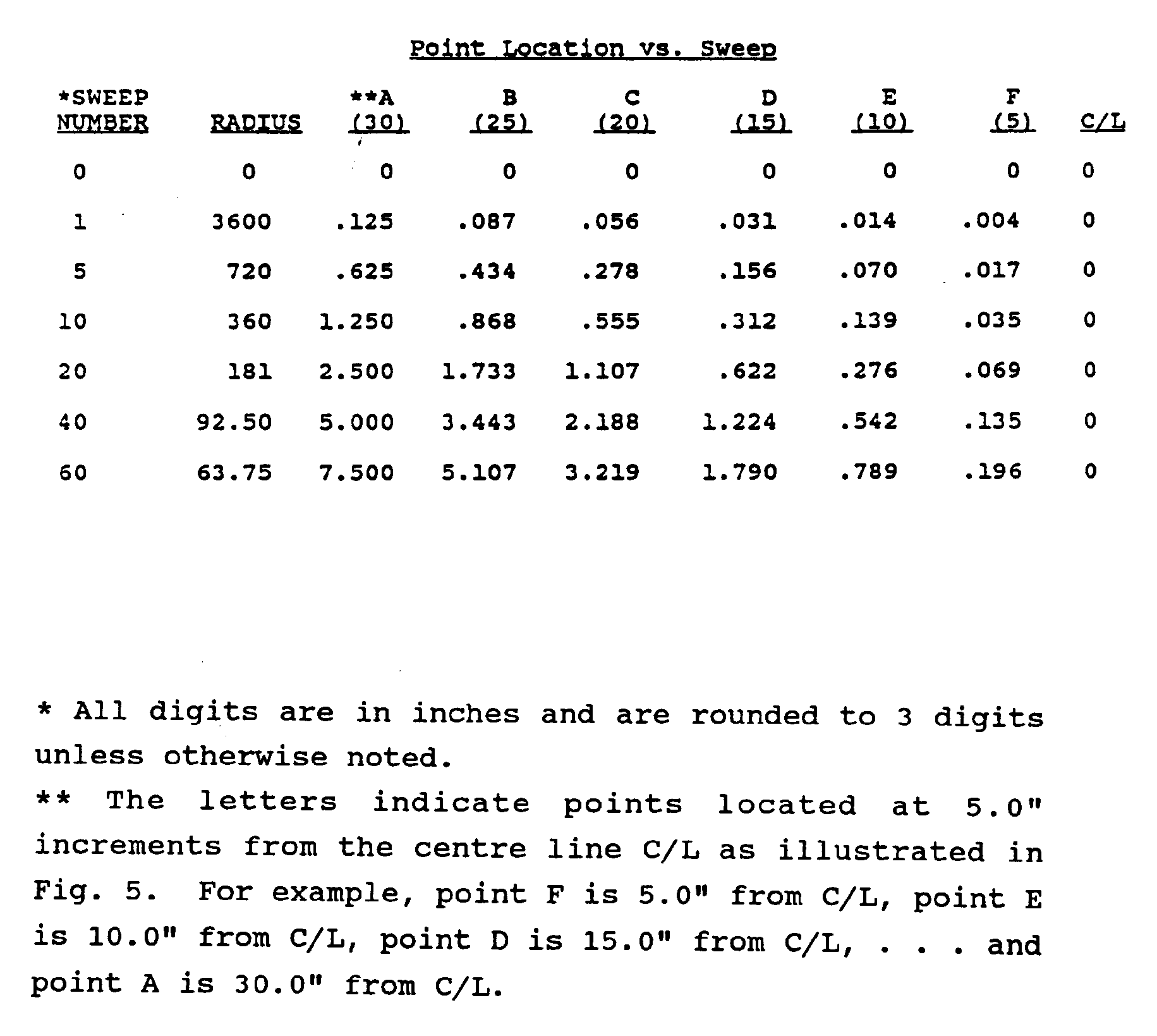
Designated Contracting States: |
|
AT DE ES FR GB IT SE |
| (30) |
Priority: |
26.03.1990 US 499100
|
| (43) |
Date of publication of application: |
|
02.10.1991 Bulletin 1991/40 |
| (73) |
Proprietor: SHAPE CORPORATION |
|
Grand Haven,
Michigan 49417 (US) |
|
| (72) |
Inventors: |
|
- Sturrus, Peter
Grand Haven,
Michigan 49417 (US)
- Heinz, Richard David
Grand Haven,
Michigan 49417 (US)
|
| (74) |
Representative: Robinson, Anthony John Metcalf et al |
|
Kilburn & Strode
30 John Street
London, WC1N 2DD
London, WC1N 2DD (GB) |
| (56) |
References cited: :
DE-A- 146 794
GB-A- 1 498 670
|
DE-A- 2 550 019
|
|
| |
|
|
|
|
| |
|
| Note: Within nine months from the publication of the mention of the grant of the European
patent, any person may give notice to the European Patent Office of opposition to
the European patent
granted. Notice of opposition shall be filed in a written reasoned statement. It shall
not be deemed to
have been filed until the opposition fee has been paid. (Art. 99(1) European Patent
Convention).
|
[0001] This invention relates to automotive bumper bars, and more specifically a roll-formed
tubular bumper made of high strength sheet steel of less than 2.54 mm (.100 inch)
thickness with a high impact resistance, low weight, and relatively low cost of manufacture.
[0002] Automotive bumpers are subject to a variety of design requirements due to consumer
demands, government regulation, and the competitiveness of the industry. Bumpers must
maintain a high level of strength and damage resistance to meet consumer expectation
and government regulation concerning low speed vehicular impact. However, a bumper
must also be of low weight to minimise vehicular dead weight which reduces fuel consumption
and increases suspension requirements. Also, bumpers must have a low manufacturing
cost and high dimensional consistency given the competitiveness of the industry. Thus,
high strength-to-weight ratios and ease of manufacture are critical to the success
of bumper systems.
[0003] These requirements are further complicated by the present aerodynamic design trends
which call for a high degree of sweep across the front of automobiles, such sweep
also contributing to the strength of the bumper and its spring-back characteristics.
[0004] A variety of designs and methods have been tried to improve bumpers. Many have used
new metallic materials (such as aluminium or heat treatable steel alloys) and engineering
resins (such as urethanes and elastomers) with varying degrees of success. However,
many of these new materials suffer from availability and cost problems as well as
special processing problems. In addition, where combinations of materials are used,
assembly time is increased. Further, the automotive industry continues to demand even
higher strength-to-weight ratios.
[0005] A conventional bumper has a C-shape formed of relatively low strength and thick steel.
Many of such C-shaped bumpers are roll-formed (see for example DD-A-146 794) and some
are formed with a sweep at the end of the roll-forming operation by passing them over
mandrels.
[0006] A problem of the traditional, predominant, "C" section bumper is the sudden collapse
experienced during deflection when the horizontal flanges give way. The sudden failure
makes it more difficult to properly trigger the inflation of air bags which are intended
to cushion passengers from secondary impacts during a vehicle crash.
[0007] Lastly, bumper attachment methods have become more critical as bumper strengths increase.
Forces of impact are larger and transferred more directly.
[0008] Thus, it is an intention of this invention to greatly improve strength and reduce
weight over present bumper systems while utilising available materials in a reliable
and cost-efficient process of manufacture.
[0009] It is a further intention of this invention to provide a bumper which provides its
strength and impact resistance over an extended deflection cycle without experiencing
the sudden failure experienced by the prevalent traditional "C" section bumpers.
[0010] It is also an intention of this invention to provide a method of manufacture allowing
a high degree of sweep along the longitudinal length of the bumper, thus allowing
for designs which meet the highly aerodynamic designs called for by modern trends
and also producing a stronger bumper with improved spring-back characteristics.
[0011] It is also an intention of this invention to provide a unique attachment means which
will meet the requirements of such a high strength bumper. To these ends, the present
invention provides an automotive bumper bar and a method of and apparatus for making
such bumper as disclosed in the independent claims 1, 2, 10 22 and 31.
[0012] According to one aspect of the present invention, a bumper bar for a vehicle comprises
a formed sheet of high tensile strength steel of at least 413.7 MPa (60 KSI) and less
than 2.54 mm (.100 inch) thickness, the formed sheet having side edges and being roll-formed
to cause the side edges of the sheet to abut one another, the side edges being connected
together by weld seam to form an integral tube.
[0013] According to a second aspect of the invention, a method of forming a bumper bar for
a vehicle comprises the steps of roll-forming a sheet of high tensile strength steel
having side edges to cause the side edges to abut one another and welding the side
edges together to form an integral tube.
[0014] According to a third aspect of the invention, apparatus for making bumpers comprises
a means for roll-forming a sheet of high tensile strength steel having side edges
to cause the side edges to abut one another, a means for welding the side edges together
to form an integral tube, and a means for forming a sweep in the integral tube.
[0015] The bumper may be made from a variety of high strength steels of varying thickness
and rolled into a variety of tubular cross-sectional shapes.
[0016] The invention solves the aforementioned problems by roll-forming a closed tubular
cross section from high strength sheet steel, for example steel of at least 413.7
MPa (60 KSI) and 2.54 mm (.100 inches) maximum thickness. By forming a closed section,
the strength of the bar is greatly increased. This allows weight reduction by use
of a reduced material thickness. The closed design also improves deflection curves
by avoiding the sudden collapse experienced by traditional "C" section bumpers as
the flanges give way.
[0017] A narrower but important aspect of this invention is the formation of a sweep during
the roll-forming process. This sweep allows for manufacture of a bumper which will
satisfy modern aerodynamic designs and also increase the strength of the bumper and
improve its spring-back characteristics.
[0018] A still narrower aspect of this invention allows for formation of an attachment surface
capable of withstanding the force created by an impact upon the bumper.
[0019] The invention may be carried into practice in various ways but an example of a bumper,
methods of making those bumpers and apparatus for use in the methods, all in accordance
with the present invention, will now be described by way of example with reference
to the accompanying drawings, in which:
Fig. 1 is a front view of a roll-formed bumper,
Fig. 2 is a plan view of the roll-formed bumper with a sweep;
Fig. 2A is an enlarged portion of the plan view of Fig. 2;
Fig. 3 is a cross-sectional view of the bumper in Fig. 1 taken along the plane III-III;
Fig. 4 is a schematic view of roll form apparatus for practising the methods of the
invention;
Fig. 5 is a sketch illustrating the method employed to measure sweep;
Fig. 6 is a perspective, cross-sectional view taken along the plane VI-VI of Fig.
4;
Fig. 7 is a cross-sectional view taken along the plane VII-VII of Fig. 6;
Fig. 8 is a perspective, cross-sectional view taken along the plane VIII-VIII of Fig.
4;
Fig. 9 is a cross-sectional view taken along the plane IX-IX of Fig. 4;
Fig. 10 is a cut-away, schematic view of a side of the sweeping means showing the
sweeping mandrels and anchoring rod;
Fig. 11 is a frontal view of the sweeping station disclosing the mandrels which form
the curvature in the bumper;
Fig. 12 is a schematic view of a section of the roll-form apparatus illustrating the
position of a mandrel at the last two rollers;
Fig. 13 is a view of the back of a modified end of the bumper;
Fig. 14 is a plan view of the modified end of the bumper illustrating the attachment
of the same to a support on a vehicle; and
Fig. 15 is a partial, perspective view of the end of the bumper as disclosed in Figs.
13 and 14.
[0020] A bumper bar 1 in accordance with this invention is shown in Figs. 1, 2, 2A and 3
and has a front side 2, rear side 3, top side 4, and bottom side 5. Front side 2 includes
an indentation 6 having an upper ledge 7, lower ledge 8, and central portion 9. Rear
side 3 also includes an indentation 10 composed of an upper edge 11 and lower edge
12. Indentations 6 and 10 are provided for two reasons. Indentations 6 and 10 contribute
to and thus increase the strength of the bumper 1 and also provide the unique function
of contributing to the movement of the bumper over the sweep forming mandrel as will
be explained hereinafter. Bumper bar 1 is constructed of a sheet of high strength
steel roll-formed to cause its edges to abut one another. The edges are permanently
induction welded by a welded seam 13. The bumper is roll-formed by apparatus schematically
depicted in Fig. 4 using traditional components of a roll-forming apparatus 20 uniquely
modified as will be described hereinafter to produce an unusually high radius sweep
as shown in Fig. 2.
[0021] Sweep, as used in the automotive industry, is the term utilised to describe the curvature
of the bumper. Measurement of sweep may be derived from charts such as shown below
which include the measurements of the distance from a vertical plane "P" located at
the forwardmost point of the bumper and perpendicular to the longitudinal axis of
the car to various points along the bumper as disclosed in Fig. 5. As the following
chart refers to a practical example which is expressed in inches no conversion has
been made. It may be converted to metric dimensions by using the conversion factor:
1 inch equals 25.4 mm.
[0022] Referring to the above chart and Fig. 5, the relative position of various points
can easily be determined. For example, in a No. 5 sweep (i.e. a curvature having a
720'' radius), point A which is 30.0'' from longitudinal centreline (C/L) of the car
is .625'' (the distance "d") rearward of the front plant "P" of the bumper. Similarly,
in a No. 60 sweep (i.e. curvature having a 63.75'' radius), point A is 7.500'' (the
distance "d") rearward of the front plane "P" of the bumper. The sweep on present
day bumpers has been extremely limited by the structural design of such bumpers and
the methods and apparatus of manufacturing the same. As a result, the sweep generally
has been below 30 sweep. Bumpers constructed in accordance with this invention has
fallen within the range of 30-60 sweep which was unheard of in the automotive industry.
[0023] Although bumper bar 1 is formed from a sheet of high strength steel, the specific
grade and type of high strength steel may vary within a range of parameters depending
upon the specific application in question. This range includes two specific parameters
which in accordance with narrow aspects of this invention are important to the invention;
specifically, the tensile strength generally measured in units of MPa or KSI (thousand
pounds of force per square inch) and thickness generally measured in the thousandths
of an inch or in millimetres (mm). In accordance with the more narrow aspects of this
invention, the tensile strength range of presently available steel is from 413.7 to
827.4 MPa (60 to 120 KSI) although higher strength steels might be used as they may
become available, it being understood therefore that the KSI range must be at least
413.7 MPa. The thickness range is from 1.22 to 2.54 mm (.048 to .100 inches), it also
being understood that if higher strength steels above 827.4 MPa (120 KSI) become available,
the thickness may be even less than 1.22 mm (.048 inches). In any event, to obtain
the maximum advantage of the invention, the thickness must be less than 2.54 mm (.100
inches).
[0024] Bumpers have been successfully formed by this invention from steel ordered pursuant
to ASTM A606-85 and ASTM A715-87 designations more specifically discussed hereinafter.
However, experience suggests that the materials need not be limited to these two materials.
Use of even higher strength materials such as Martinsite (an ultra high strength material
of 1035 to 1380 MPa (150-200 KSI) is contemplated. It should be noted that "ASTM"
is a commonly recognised abbreviation for the American Society for Testing and Materials,
and the suffix "85" means that the standard was re-approved in 1985 by the ASTM committee
having jurisdiction over this standard. Details on ASTM specifications and designations
are available through the ASTM society, as is widely known in the industry. Therefore,
only cursory information is included hereinafter.
[0025] "ASTM A606-85" is an ASTM designation calling for a high-strength, low alloy, rolled
steel with improved atmospheric corrosion resistance and a tensile strength of up
to approximately 482.5 MPa (70 KSI). The material is intended for structural use where
savings in weight and added durability are important. Various "types" may be ordered
such as "Type 4", for instance, which has four times the corrosion resistance of plain
carbon steel. Various ordering information is required such as type of rolling (hot
or cold rolled), dimensions (height, width, thickness), special requirement, and etc.
The chemical composition is varied by the steel manufacturer to meet specific strength
and formability requirements of the user.
[0026] "ASTM A715-87" is an ASTM designation calling for a high-strength, low alloy, rolled
steel with improved formability over ASTM A606 materials. The steel is killed to form
fine grain steel and includes various combinations of special micro-alloying elements
such as columbium, titanium, vanadium, zirconium, and other elements. ASTM A715 offers
improved formability as well as improved weldability, and may include tensile strengths
of up to 620 MPa (90 KSI).
[0027] The inventor has also utilised AISI 050WK and AISI 120XF materials successfully.
"AISI" is a commonly recognised abbreviation in the industry for the American Iron
and Steel Institute. AISI specifications are typically cross-referenced to the most
similar ASTM designation, but contain a slightly different classification scheme.
For example, AISI 050WK refers to ASTM A606-85 with the "050" standing for minimum
tensile yield strength (in KSI), the "W" for weatherability, and the "K" for the fact
that the steel is killed. AISI 120XF has no ASTM reference at present, but is similar
to ASTM A715-87 in that AISI 120XF has a high minimum yield strength (120 KSI minimum),
is low alloy ("X"), and killed plus inclusion control ("F"). AISI 120XF may or may
not be supplied as a G60 minimum spangle galvanised sheet.
[0028] As noted, within the above ranges the specific type and grade of high strength steel
may vary depending on the application. The material thickness, chemical composition,
and tensile strength all affect cross-sectional formability and the ability to form
a sweep. The inventor has successfully formed steel having a 1.83 mm (.072") thickness
and a tensile strength of 552-827.5 MPa (80-120 KSI) to a No. 40 sweep from the above
materials. Steel having a 1.83 mm (.072") thickness and a tensile strength of 552
MPa (80 KSI) has successfully been formed to a No. 60 sweep. However, by experience,
we have discovered that in the use of a steel having manganese, a maximum manganese
content of 1.2 percent (1.2%) is preferred in the process of this invention in that
a steel with greater manganese content resulted in a problem of "shelving". Shelving
is a problem which may be experienced in roll-forming wherein the steel will separate
into laminate "shelves" due to the high shear and stress of forming. Shelving is undesirable
since it results in material separation and greatly reduces a bumper bar's strength
and reliability.
[0029] Fig. 4 is schematic showing an example of apparatus for forming the bumper bar 1
and thus illustrates the process in producing the bumper bar. In Fig. 4 reference
numeral 20 designates the overall apparatus which starting from the left side of the
figure includes a steel roll holder 21 which rotatably supports a steel roll 22 which
contains a flat strip S of steel as described above and which extends into a series
of roller assemblies 23, 24, 25, 26, 27, 28, 29, 29A and 29B. These rollers have a
shape that as the strip is passed therethrough the strip of steel is gradually formed
into the form shown in Fig. 3. Although nine such roller assemblies have been shown
for illustration purposes only, the number can be substantially increased and for
some shapes may actually be decreased. Near the end of the apparatus 20 is an induction
welder 30 of any well known type that will weld the two edges 31 and 32 together after
such edges are caused to abut each other as shown in Fig. 9. In welding the abutting
edges the induction welder 30 generates substantial local heat in the area of the
tube near the weld which assists in the sweeping of the tube as will now be described.
[0030] Means is provided downstream of the induction welder 30 for producing the sweep (sweeping)
of the bumper bar 1 as shown in Fig. 2. This sweep producing or sweeping means shown
in Figs. 4, 10 and 11, comprises a sweeping box 33 which includes a series of pairs
of internal and external mandrels (34a and 35a, 34b and 35b, etc.) between which the
tube formed by the rollers 23-29b and induction welder 30 pass. These mandrels have
rounded ends as shown to assist in guiding the tube 1 between them. Each external
mandrel is held by a mandrel frame 36 (Fig. 11) which is anchored at a horizontal
centrepoint by a stabiliser 37. The sweep of the tube may be increased by vertical
adjustments of the sweep adjusters 38a, 38b, 38c, etc. For example, as sweep adjuster
38a is adjusted upward, stabiliser 37a is also raised, thus forcing mandrel frame
36a and external mandrel 35a upward. Obviously, internal mandrel 34a is forced to
follow this movement since the cross-sectional shape of the internal mandrels 34 are
substantially identical to the cross section of the bumper 1. Therefore, as the roller
formed tube passes thereover, it assumes the curvature or sweep of the mandrels.
[0031] The internal mandrels are supported by a support assembly (Fig. 6) which includes
two rods 41 and 42 extending from and secured to a support 43. The location of support
43 is selected to a position where the support 43 can extend downwardly into the tube
as illustrated by Fig. 6. At this position, the steel strip has been rolled to form
the front side 2 and the two top and bottom sides 4 and 5 and wherein the back side
has not yet been formed leaving an opening 14 though which the support 43 extends.
[0032] It should be understood as the steel strip continues to pass through the rollers
27, 28 and 29 downstream of the support 40, it is progressively formed by the rollers
27, 28 and 29 to the shape shown in Fig. 8. Fig. 9 shows the shape of the tube roller
formed to the desired shape with the edges 31 and 32 abutting. As the tube thus formed
passes through the induction welder 30, the edges 31 an 32 are welded together. The
tube then continues through rollers 29a and 29b which push against an internal mandrel
29c (Figs. 9 and 12) which is similar in shape to the inside cross section of bumper
bar 1 (Fig. 9). This allows rollers 29a and 29b to generate sufficient force to force
bumper bar 1 forward across the sweeping box 33 without crushing or deforming the
cross section of bumper bar 1.
[0033] As previously referred to, the indentation in the front side 2 of the bumper bar
1 is provided for two reasons. It gives additional strength to the bumper 1 and also
provides a means for moving the bumper tube over the mandrels 34, 35 and 36. As illustrated
in Fig. 9, the indentation 6 includes the ledges 7 and 8 which are engaged by the
projecting sides 45 and 46 extending radially outwardly from roller 29b. Also, indentation
10 includes ledges 11 and 12 engaged by projecting sides 47 and 48 extending radially
outwardly from rollers 29b. This engagement between the edges formed by ledge 7 and
side 45, ledge 8 and side 46, ledge 11 and side 47 and ledge 12 and side 48 of the
roller assembly 29b, and any of the other roller assemblies upstream thereof wherein
the indentations 6 and 10 have already been formed, drives the bumper bar 1 over the
mandrels 34 and 35 in sweep box 33. This driving force also is created by roller 29a.
[0034] As shown in Fig. 4 there is a cut-off apparatus 50 downstream of the mandrels 34
and 35 for cutting off the bumper bar 1 at its proper length. The bumper bar 1 that
has thus been cut off is ready for further operations such as providing an attachment
means for attaching the bumper bar 1 to the vehicle.
Operation
[0035] Having described the apparatus 20 and the bumper bar 1 that is formed thereby, the
operation of the apparatus 20 and the uniqueness of the bumper bar 1 is evident. The
steel strip S payed off from the roll 22 passes through the roll assemblies to form
the tube as shown in Fig. 9 with the edges 31 and 32 of the steel strip abutting each
other. The induction welder 30 forms the welded seam 13 to form a unitary integral
tube 13 as disclosed in Fig. 10, the tube thus formed being straight.
[0036] It is within the contemplation of the broader aspects of this invention that the
tube thus formed can be utilised as a straight bumper bar having substantial improved
characteristics. It has a substantially higher level of strength and damage resistance
so as to meet consumer expectation and government regulation concerning low speed
vehicular impact. It has also low weight to minimise vehicular dead weight and low
manufacturing costs. The high strength-to-weight ratio and ease of manufacture contribute
to the superiority of the bumper. Such superiority is made possible by forming the
bumper of a high-strength sheet steel, with lower than normal thickness, roll-formed
as described above.
[0037] In accordance with the preferred more narrow aspects of this invention, the tube
formed by the roller assemblies 23-29 and welder 30 is curved or sweeped to produce
a bumper having a sweep of from 0-60. The higher the sweep, the stronger the bumper
and the more spring back of the bumper. Such curvature or sweep is produced by passing
the tube from the induction welder over the curved mandrel pairs 34 and 35, it being
understood that one or more mandrels can be used. The tube is passed over the mandrels
immediately after the weld seam 13 is produced by the induction welder 30. Thus, the
steel is still in a locally heated condition which assists in the ease of curving
or sweeping the tube without adversely affecting the structure. After the sweep is
formed, the bumper bar 1 is cut off by the cut off apparatus 50 (Fig. 4).
[0038] The sweeping of the tube after it leaves the welder 30 is made possible by the unique
support assembly 40 (Figs. 6 and 7) located upstream of several of the roller assemblies
so that the support 43 can extend through the opening 14 and into the tube so as to
support the mandrels downstream by means of the rods 41 and 42.
[0039] The driving of bumper bar 1 through the sweeping box 33 as is made possible by the
rollers 29a and 29b and indentations 6 and 10, the configurations of which generate
sufficient force to force bumper bar 1 through sweeping box 33.
Modification
[0040] The present roll-formed bumper as described above makes possible a novel means for
supporting the bumper on the vehicle. Figs. 13 and 14 show such means which includes
the ends of the bumper 1 being crushed and deformed to provide a flat surface 51 to
which securement means such as a bolt 52 (Fig. 13) can be attached for mounting the
bumper bar 1 to a flat surface on a support such as a bracket 53 extending from the
vehicle.
[0041] More specifically, as shown in Figs. 13, 14 and 15, the flat surface 51 and its orientation
with respect to the support bracket 53 is provided by the crushed or deformed outer
ends of the bumper. As best seen in Fig. 15, the rear side 3 is inclined to the front
side 2 thereby causing the collapsed portions 4a and 5a of sides 4 and 5. Collapsed
side portions 4a and 5a provide the inclined flat surface 51 with a predetermined
orientation allowing the surface 51 located on the plane P-P (Fig. 14) to mateably
butt against a bracket 53 extending from the vehicle. A hole 54 is provided at each
end (only one end is shown) and extends through the front side 2, rear side 3 and
surface 51 and receives attachment bolt 52. The deformed end of the bumper 1 and the
bolt 52 thereby form a structure for attachment of the bumper bar 1 to a part of the
vehicle such as the bracket 53.
1. An automotive bumper bar (1) for mounting at an end of a vehicle for resisting damage
to the vehicle upon the vehicle impacting with an object in a direction along the
longitudinal centreline axis of the vehicle comprising a formed sheet (S) of high
tensile strength steel of at least 413.7 MPa (60 KSI) and less than 2.54 mm (.100
inch) thickness, the formed sheet having side edges (11,12) and being roll-formed
to cause the side edges of the sheet to abut one another, the side edges being connected
together by a weld seam (13) to form an integral tube having a front wall and a rear
wall connected together by sidewalls.
2. An automotive bumper bar (1) for mounting at an end of a vehicle for resisting damage
to the vehicle upon the vehicle impacting with an object in a direction along the
longitudinal centerline axis of the vehicle comprising a sheet (S) of high tensile
strength steel having a thickness of less than 2.54 mm (.100 inch), roll-formed substantially
to form a tube, the said tensile strength being at least 413.7 MPa (60 KSI), the tube
having a sweep and having front and rear walls (2,3) connected together by sidewalls
(4,5), the side walls being connected by a weld seam and the front wall (2) being
shaped to provide means for rollers-to engage and advance the tube when the sweep
is formed therein.
3. A bumper bar according to Claim 2 in which the rear wall (3) is also shaped to provide
ledges (7,8) for rollers to engage and advance the tube when the sweep is formed therein.
4. A bumper bar according to any of claims 1 to 3 wherein the tube has a sweep in a direction
away from the front wall.
5. A bumper bar according to any of claims 2 to 4 wherein the tube has at least a No.
30 sweep.
6. A bumper bar according to Claim 4 or Claim 5 in which the edges which are welded together
are located in the rear wall and in which the tube has an indentation (6) in the front
wall providing means for rollers to advance the tube when the sweep is formed.
7. A bumper bar according to any preceding claim wherein the said high strength steel
has a maximum manganese content of 1.2%.
8. A bumper bar according to any preceding claim wherein the ends of the bar are deformed
to provide a structure (51) for attachment.
9. A bumper bar as claimed in Claim 8 wherein the end portions of the sidewalls (4,5)
and the end portions of the rear wall (3) are deformed such that the said end portions
of the rear wall (3) provide a substantially flat surface for attachment to the vehicle.
10. Apparatus for making bumpers characterised by a means (20) for roll-forming a sheet
(S) of high tensile strength steel having side edges (11,12) to cause the side edges
to abut one another, a means (30) for welding the side edges together to form an integral
tube having a front wall, a rear wall, and side walls connecting the front and rear
walls, and a means (33) for forming a sweep in the integral tube in a direction away
from the front wall.
11. Apparatus according to Claim 10 in which the roll forming means (20) includes a first
roller means (23-29) for forming the tube, and being adapted to form ledges (7,8)
in at least one of the front or rear walls of the tube for engagement by rollers to
advance the tube, second roller means (29A,29B) downstream of the first roller means
and upstream of the means for forming a sweep, the second roller means being shaped
to extend into and engage at least portions of the ledges (7,8) in one of the walls
of the tube, the shape of the second rollers for engaging at least portions of the
ledges being adapted to advance the tube in the means for forming a sweep.
12. Apparatus according to Claim 10 in which the roll forming means (20) includes first
roller means (23-29) for forming the tube; elongated support means extending a distance
upstream of the welding means (30) to a position wherein the side edges are spaced
one from the other, the elongated support means (41,42) supporting the means (33)
for forming a sweep in the integral tube; an anchoring structure (43) supporting the
elongated support means at the said position, the first roller means (23-29) being
located upstream of the means for forming the sweep and shaped to form ledges (7,8)
in one of the front or rear walls of the tube; and second roller means (29A, 29B)
located downstream of the first roller means (23-29) and shaped to engage at least
portions of the ledges to thereby advance the tube into the means for forming a sweep.
13. Apparatus according to Claim 10 in which the roll-forming means (20) includes first
roller means (23-20) for forming the tube,said means for welding being an induction
welder, located upstream of the means for forming a sweep in the integral tube, which
generates heat in the tube which assists the sweep forming means in forming the sweep,
the first rollers being located upstream of the means for forming a sweep and shaped
to form ledges in at least one of the front or rear walls of the tube; and second
roller means (29A,29B) shaped for engaging at least portions of the ledges to thereby
advance the tube into the means for forming a sweep.
14. Apparatus according to Claim 10 in which the means for forming a sweep includes mandrel
means (34) adapted to be received within a tube formed by the roller means; the apparatus
further including an elongated support means (41,42) adapted to extend inside a tube,
formed by said roller means, a distance upstream of the welding means (30) to a position
wherein the side edges are spaced one from the other; the elongated support means
supporting the mandrel means in the integral tube and an anchoring structure (43)
supporting the elongated support means at the said position, and the mandrel means
(34) including a series of short mandrels spaced but connected together.
15. Apparatus according to Claim 10 in which the sweep forming means includes curved external
mandrel means (35) and curved internal mandrel means (34); the apparatus further comprising
support means (41,42) for supporting the internal and external mandrel means in relatively
stationary spaced relationship one from the other to provide a passageway therebetween
for receiving the integral tube therebetween, the support means including an elongated
member (41,42) attached to the internal mandrel means (34) and extending therefrom
to a support member (43) extending through an opening located upstream of the sweep
forming means (33) where the side edges of the sheet are not abutting; means for causing
the integral tube to pass through the passageway while the roll-forming of the sheet
upstream of the external and internal mandrel means takes place and the upstream sheet
connected to the integral tube is being roll-formed, the internal and external mandrel
means being adapted when the tube is passed through the passageway to produce a predetermined
sweep in the tube as determined by the shape of the passageway; and cutting means
(50) located downstream of the sweep forming means (33) for cutting the swept integral
tube at predetermined lengths whereby a series of bumper bars can be continuously
formed in succession during the roll-forming of the sheet upstream of the sweep forming
means.
16. Apparatus according to Claim 15 in which the internal mandrel means (34) and external
mandrel means (35) include a series of short mandrels spaced from each other but connected
together.
17. Apparatus according to Claim 10, Claim 15 or Claim 16 in which the roll-forming means
(20) includes a first roller (23-29) for forming the tube and a second roller (29A,29B)
for gripping the tube and forcing it through the sweep forming means (33).
18. Apparatus according to Claim 10 or Claim 17 in which the first roller means (23-29)
is shaped to form ledges (7,8) in at least one of the front or rear walls of the tube
and the second roller means (29A,29B) is shaped to extend into and engage at least
portions of the ledges, the shape of the second rollers engaging at least portions
of the ledges to advance the tube in the means for forming a sweep (37).
19. Apparatus according to any of Claims 15 to 18 in which inner mandrel means is located
at the second roller means whereby the tube is clamped between the second roller means
(29A,29B) and a straight portion (29C) of the inner mandrel means for forcing the
tube through the sweep forming means.
20. Apparatus according to any of Claims 10 to 14 in which the means (33) for forming
a sweep includes a mandrel means (34,35) over which the tube passes.
21. Apparatus according to Claim 20 in which the mandrel means includes a series of short
mandrels spaced but connected together.
22. A method of forming a bumper bar for a vehicle characterised by the steps of continuously
roll-forming a sheet (S) of high tensile strength steel having side edges (11,12)
to cause the side edges to abut one another and welding the side edges together to
form an integral tube.
23. A method according to Claim 22 comprising: providing a sweep forming means having
curved external mandrel means (35) and curved internal mandrel means (34) spaced from
each other to provide a passageway therebetween for receiving the integral tube therebetween;
passing the integral tube through the passageway while the roll-forming step upstream
of the external and internal mandrel means takes place and the upstream sheet connected
to the integral tube is being roll-formed, and during the said passing step continuously
supporting the external and internal mandrel means in stationary positions, the internal
means being supported by support means having an elongated member (41,42) extending
from the internal mandrel means to a support member (43), the support member being
located upstream of the sweep forming means (33) where the side edges of the strip
are not abutting thereby providing an opening through which the support member (43)
extends for attachment to the elongated member; the step of passing the tube through
the passageway producing a sweep in the tube as determined by the shape of the passageway;
and cutting the swept integral tube into lengths after the sweeping of the tube has
been completed to continuously form in succession a series of bumper bars during the
roll-forming of the sheet upstream of the sweep forming means.
24. A method according to Claim 22 or Claim 23 in which the strip of steel has a thickness
less than 2.54 mm (.100 inch) and a tensile strength of at least 413.7 MPa (60 KSI).
25. A method according to any of Claims 22 to 24 in which the welding step is accomplished
by induction welding to heat the formed tube portions prior to the sweep forming step
whereby the heating of the formed tube portions assists in the sweeping of the tube
portions.
26. A method according to any of Claims 22 to 25 in which the steel strip provided has
a maximum manganese content of 1.2 % and/or the bar is given a sweep of greater than
No. 30 sweep.
27. A method according to any one of Claims 22 to 26 in which a straight internal mandrel
is provided upstream of the curved internal (34) and external (35) mandrels, and prior
to forming the sweep and after the two portions of the strip are formed into the integral
tube, passing the integral tube over the said straight mandrel (29C), and causing
the roller means to engage and act on the integral tube located between the roller
means and straight mandrel (29C) whereby the said formed portions are caused to be
advanced to and through the sweep forming means.
28. A method according to Claim 27 in which the said straight mandrel (29C) is also supported
by the said support means (41,42).
29. A method according to any one of Claims 22 to 28 in which the sheet is roll-formed
by rollers producing two portions with front and rear walls connected together by
sidewalls, at least one of the walls being formed with ledges (7,8), the roller means
being shaped for engaging at least a portion of the ledges to increase the gripping
of the integral tube by the roller means when passing over the straight mandrel (29C).
30. A method according to Claim 29 in which the rollers have protrusions (42,46,47,48)
for engaging the ledges (7,8), and the walls of the indentation are engaged with the
protrusions and the tube is advanced through the sweep forming means by means of the
said engagement.
31. A method of forming a bumper bar for a vehicle comprising the steps of providing a
first roller means (23-29) adapted to form a tube with front and rear walls, one of
said walls having ledges (7,8); providing a sheet of high tensile strength steel having
side edges and continuously passing the sheet through the first roller means (23-29)
to cause a tube to be formed with side edges abutting one another; welding the edges
together to form an integral tube; providing a sweep forming means (33) for forming
a sweep in the tube; providing a second roller means (29A,29B) upstream of the sweep
forming means, the second roller means shaped to extend into and engage at least portions
of the ledges (7,8) in the tube formed by the first roller means, causing the second
roller means to engage the ledges of the tube; and driving the second roller means
to cause the tube to be forced through the sweep forming means thereby forming a sweep
in the integral tube.
1. Kfz-Stoßfänger (1) zum Befestigen an einem Ende eines Fahrzeugs, um zu vermeiden,
daß das Fahrzeug beschädigt wird, wenn das Fahrzeug mit einem Gegenstand in einer
Richtung entlang der Längsmittelachse des Fahrzeugs zusammenprallt, umfassend ein
geformtes Blech (S) aus Stahl mit einer hohen Zugfestigkeit von mindestens 413,7 MPa
(60 KSI) und einer Dicke von weniger als 2,54 mm (0,100 Zoll), wobei das geformte
Blech Seitenkanten (11, 12) aufweist und walzgeformt ist, so daß die Seitenkanten
des Bleches aneinander angrenzen wobei die Seitenkanten durch eine Schweißnaht (13)
verbunden sind, um ein geschlossenes Rohr zu bilden, welches eine Vorderwand und eine
Hinterwand aufweist, die durch Seitenwände miteinander verbunden sind.
2. Kfz-Stoßfänger (1) zum Befestigen an einem Ende eines Fahrzeugs, um zu vermeiden,
daß das Fahrzeug beschädigt wird, wenn es mit einem Gegenstand in einer Richtung entlang
der Längsmittelachse des Fahrzeugs zusammenprallt, umfassend ein geformtes Blech (S)
aus Stahl mit hoher Zugfestigkeit, das eine Dicke von weniger als 2,54 mm (0,100 Zoll)
aufweist, im wesentlichen walzgeformt ist, um ein Rohr zu bilden, wobei die Zugfestigkeit
mindestens 413,7 MPa (60 KSI) beträgt, wobei das Rohr eine Krümmung aufweist und eine
Vorder- und eine Hinterwand (2, 3) aufweist, welche durch Seitenwände (4, 5) miteinander
verbunden sind, wobei die Seitenwände durch eine Schweißnaht verbunden sind und die
Vorderwand (2) ausgebildet ist, um Mittel für Walzen vorzusehen, um mit dem Rohr in
Eingriff zu kommen und es vorzuschieben, wenn darin die Krümmung geformt wird.
3. Ein Stoßfänger nach Anspruch 2, bei welchem die Hinterwand (3) ebenfalls ausgebildet
ist, um Leisten (7, 8) für Walzen vorzusehen, damit diese in das Rohr eingreifen und
es vorschieben, wenn darin die Krümmung geformt wird.
4. Stoßfänger nach einem der Ansprüche 1 bis 3, worin das Rohr eine Krümmung in einer
von der Vorderwand abgekehrten Richtung aufweist.
5. Stoßfänger nach einem der Ansprüche 2 bis 4, worin das Rohr mindestens eine Krümmung
Nr. 30 aufweist.
6. Stoßfänger nach Anspruch 4 oder Anspruch 5, bei welchem die zusammengeschweißten Kanten
in der Hinterwand angeordnet sind und bei welchem das Rohr eine Vertiefung (6) in
der Vorderwand aufweist, um Mittel für Walzen vorzusehen, um das Rohr vorzuschieben,
wenn die Krümmung geformt wird.
7. Stoßfänger nach einem der vorangehenden Ansprüche, worin der hochfeste Stahl einen
maximalen Mangangehalt von 1,2% aufweist.
8. Stoßfänger nach einem der vorangehenden Ansprüche, worin die Enden des Stoßfängers
verformt werden, um eine Befestigungskonstruktion (51) zu schaffen.
9. Stoßfänger nach Anspruch 8, worin die Endabschnitte der Seitenwände (4, 5) und die
Endabschnitte der Hinterwand (3) derart verformt werden, daß die Endabschnitte der
Hinterwand (3) eine im wesentlichen flache Oberfläche zur Befestigung am Fahrzeug
bieten.
10. Vorrichtung zur Herstellung von Stoßfängern, gekennzeichnet durch ein Mittel (20)
zum Walzformen eines Bleches (S) aus Stahl mit einer hohen Zugfestigkeit, welches
Seitenkanten (11, 12) aufweist, um zu bewirken, daß die Seitenkanten aneinander angrenzen,
ein Mittel (30) zum Zusammenschweißen der Seitenkanten, um ein geschlossenes Rohr
zu bilden, welches eine Vorderwand, eine Hinterwand sowie Seitenwände aufweist, welche
die Vorder- und die Hinterwand miteinander verbinden, und ein Mittel (33) zum Formen
einer Krümmung im geschlossenen Rohr in einer von der Vorderwand abgekehrten Richtung.
11. Vorrichtung nach Anspruch 10, bei welcher das Walzformmittel (20) ein erstes Walzenorgan
(23-29) zum Formen des Rohres umfaßt und dazu ausgebildet ist, um Leisten (7, 8) in
zumindest Vorder- oder Hinterwand des Rohres zu formen, damit Walzen darin eingreifen
können, um das Rohr vorzuschieben, ein zweites Walzenorgan (29A, 29B) stromabwärts
vom ersten Walzenorgan und stromaufwärts vom Mittel zum Formen einer Krümmung, wobei
das zweite Walzenorgan ausgebildet ist, um sich bis zu den Leisten (7, 8) in einer
der Wände des Rohres zu erstrecken und zumindest mit Abschnitten davon zum Eingriff
zu kommen, wobei die Form der zweiten Walzen, die zumindest mit Abschnitten der Leisten
zum Eingriff kommen, dergestalt ist, daß das Rohr in das Mittel zum Formen einer Krümmung
vorgeschoben wird.
12. Vorrichtung nach Anspruch 10, bei welcher das Walzformmittel (20) ein erstes Walzenorgan
(23-29) zum Formen des Rohres; ein längliches Stützmittel, welches sich über eine
Strecke stromaufwärts vom Schweißorgan (30) bis zu einer Position erstreckt, worin
die Seitenkanten in einem Abstand voneinander angeordnet sind, wobei das längliche
Stützmittel (41, 42) das Mittel (33) zum Formen einer Krümmung im geschlossenen Rohr
stützt; eine Verankerungskonstruktion (43), welche das längliche Stützmittel in der
genannten Position stützt, wobei das erste Walzenorgan (23-29) stromaufwärts vom Mittel
zum Formen der Krümmung angeordnet ist und ausgebildet ist, um Leisten (7, 8) in Vorder-
oder Hinterwand des Rohres zu formen; und ein zweites Walzenorgan (29A, 29B) umfaßt,
welches stromabwärts vom ersten Walzenorgan (23-29) angeordnet ist und ausgebildet
ist, um zumindest mit Abschnitten der Leisten zum Eingriff zu kommen, um somit das
Rohr in das Mittel zum Formen einer Krümmung vorzuschieben.
13. Vorrichtung nach Anspruch 10, bei welcher das Walzformmittel (20) ein erstes Walzenorgan
(23-29) zum Formen des Rohres umfaßt, wobei das Schweißorgan ein Induktionsschweißgerät
ist, das stromaufwärts vom Mittel zum Formen einer Krümmung im geschlossenen Rohr
angeordnet ist, welches Wärme im Rohr erzeugt, was das krümmungsformende Mittel beim
Formen der Krümmung unterstützt, wobei die ersten Walzen stromaufwärts vom Mittel
zum Formen einer Krümmung angeordnet und ausgebildet sind, um in zumindest Vorder-
oder Hinterwand des Rohres Leisten zu formen; und ein zweites Walzenorgan (29A, 29B),
welches ausgebildet ist, um zumindest mit Abschnitten der Leisten zum Eingriff zu
kommen, um somit das Rohr in das Mittel zum Formen einer Krümmung vorzuschieben.
14. Vorrichtung nach Anspruch 10, bei welcher das Mittel zum Formen einer Krümmung Dornmittel
(34) umfaßt, welche derart ausgebildet sind, daß sie innerhalb eines durch die Walzenmittel
geformten Rohres aufgenommen werden; wobei die Vorrichtung des weiteren ein längliches
Stützmittel (41, 42) umfaßt, welches ausgebildet ist, um sich innerhalb eines durch
die Walzenmittel geformten Rohres entlang einer Strecke stromaufwärts vom Schweißorgan
(30) zu einer Position zu erstrecken, in der die Seitenkanten mit einem Abstand voneinander
angeordnet sind; wobei das längliche Stützmittel das Dornmittel im geschlossenen Rohr
stützt und eine Verankerungskonstruktion (43) das längliche Stützmittel an der genannten
Position stützt, und wobei das Dornmittel (34) eine Reihe kurzer Dorne umfaßt, welche
in einem Abstand voneinander angeordnet jedoch miteinander verbunden sind.
15. Vorrichtung nach Anspruch 10, bei welcher das krümmungsformende Mittel bogenförmige
äußere Dornmittel (35) und bogenförmige innere Dornmittel (34) umfaßt; wobei die Vorrichtung
des weiteren ein Stützmittel (41, 42) zum Stützen der inneren und äußeren Dornmittel
in einer relativ stationären, voneinander entfernten Beziehung umfaßt, um dazwischen
einen Durchgang zum Aufnehmen des geschlossenen Rohres zu schaffen, wobei das Stützmittel
ein längliches Glied (41, 42) umfaßt, welches am inneren Dornmittel (34) befestigt
ist und sich von dort zu einem Stützglied (43) erstreckt, welches sich durch eine
Öffnung, die stromaufwärts von den krümmungsformenden Mitteln (33) angeordnet ist,
erstreckt, wo die Seitenkanten des Bleches nicht aneinander angrenzen; Mittel, die
bewirken, daß das geschlossene Rohr durch den Durchgang hindurchgeführt wird, während
das Walzformen des Bleches stromaufwärts von den äußeren und den inneren Dornmitteln
stattfindet, und das stromaufwärtige Blech, welches mit dem geschlossenen Rohr verbunden
ist, walzgeformt wird, wobei die inneren und äußeren Dornmittel dazu ausgebildet sind,
eine festgelegte Krümmung im Rohr in Abhängigkeit von der Form des Durchgangs zu erzeugen,
wenn das Rohr durch den Durchgang hindurchgeführt wird; und Schneidemittel (50), welche
stromabwärts vom krümmungsformenden Mittel (33) angeordnet sind, zum Abschneiden des
gekrümmten, geschlossenen Rohres in festgelegten Längen, wodurch während des Walzformens
des Bleches stromaufwärts vom krümmungsformenden Mittel eine Reihe Stoßfänger kontinuierlich
hintereinander geformt werden können.
16. Vorrichtung nach Anspruch 15, bei welcher das innere Dornmittel (34) und das äußere
Dornmittel (35) eine Reihe kurzer Dorne umfassen, welche in einem Abstand voneinander
angeordnet jedoch miteinander verbunden sind.
17. Vorrichtung nach Anspruch 10, Anspruch 15 oder Anspruch 16, bei welcher das Walzformmittel
(20) eine erste Walze (23-29) zum Formen des Rohres und eine zweite Walze (29A, 29B)
zum Ergreifen des Rohres und zum Hindurchtreiben desselben durch das krümmungsformende
Mittel (33) umfaßt.
18. Vorrichtung nach Anspruch 10 oder Anspruch 17, bei welcher das erste Walzenorgan (23-29)
ausgebildet ist, um Leisten (7, 8) in zumindest Vorder- oder Hinterwand des Rohres
zu formen, und das zweite Walzenorgan (29A, 29B) ausgebildet ist, um sich zu den Leisten
zu erstrecken und zumindest mit Abschnitten derselben in Eingriff zu kommen, wobei
die Form der zweiten Walzen zumindest mit Abschnitten der Leisten zum Eingriff kommt,
um das Rohr in das Mittel zum Formen einer Krümmung (37) vorzuschieben.
19. Vorrichtung nach einem der Ansprüche 15 bis 18, bei welcher das innere Dornmittel
am zweiten Walzenorgan angeordnet ist, wodurch das Rohr zwischen dem zweiten Walzenorgan
(29A, 29B) und einem geraden Abschnitt (29C) des inneren Dornmittels eingeklemmt wird,
um das Rohr durch das krümmungsformende Mittel durchzutreiben.
20. Vorrichtung nach einem der Ansprüche 10 bis 14, bei welcher das Mittel (33) zum Formen
einer Krümmung ein Dornmittel umfaßt (34, 35), über welches das Rohr hinweggeführt
wird.
21. Vorrichtung nach Anspruch 20, bei welcher das Dornmittel eine Reihe kurzer Dorne umfaßt,
welche in einem Abstand voneinander angeordnet jedoch miteinander verbunden sind.
22. Verfahren zum Formen eines Stoßfängers für ein Fahrzeug, gekennzeichnet durch die
Schritte des kontinuierlichen Walzformens eines Bleches (S) aus Stahl mit hoher Zugfestigkeit,
welches Seitenkanten (11, 12) aufweist, um herbeizuführen, daß die Seitenkanten aneinander
angrenzen, sowie des Zusammenschweißens der Seitenkanten, so daß diese ein geschlossenes
Rohr bilden.
23. Verfahren nach Anspruch 22, umfassend: das Vorsehen eines krümmungsformenden Mittels
mit bogenförmigen äußeren Dornmitteln (35) und bogenförmigen inneren Dornmitteln (34),
welche in einem Abstand voneinander angeordnet sind, um dazwischen einen Durchgang
zum Aufnehmen des geschlossenen Rohres zu schaffen; das Hindurchführen des geschlossenen
Rohres durch den Durchgang, während stromaufwärts von den äußeren und den inneren
Dornmitteln der Walzformschritt stattfindet und das stromaufwärtige Blech, welches
mit dem geschlossenen Rohr verbunden ist, walzgeformt wird, und wobei während diesem
Hindurchführschritt die äußeren und inneren Dornmittel kontinuierlich in stationären
Positionen gestützt werden, wobei die inneren Mittel durch ein Stützmittel mit einem
länglichen Glied (41, 42) gestützt werden, welches sich von den inneren Dornmitteln
zu einem Stützmittel (43) erstreckt, wobei das Stützmittel stromaufwärts vom krümmungsformenden
Mittel (33) angeordnet ist, wo die Seitenkanten des Bandes nicht aneinander angrenzen,
wodurch eine Öffnung geschaffen wird, durch welche sich das Stützglied (43) zur Befestigung
am länglichen Glied erstreckt; der Schritt des Hindurchführens des Rohres durch den
Durchgang, wodurch eine Krümmung im Rohr in Abhängigkeit von der Form des Durchgangs
erzeugt wird; und das Abschneiden des gekrümmten, geschlossenen Rohres in Längen,
nachdem das Krümmen des Rohres abgeschlossen ist, um während des Walzformens des Bleches
stromaufwärts vom krümmungsformenden Mittel eine Reihe Stoßfänger kontinuierlich hintereinander
zu formen.
24. Verfahren nach Anspruch 22 oder Anspruch 23, bei welchem das Stahlband eine Dicke
von weniger als 2,54 mm (0,100 Zoll) und eine Zugfestigkeit von zumindest 413,7 MPa
(60 KSI) aufweist.
25. Verfahren nach einem der Ansprüche 22 bis 24, bei welchem der Schritt des Schweißens
durch Induktionsschweißen erfolgt, um die geformten Rohrteile vor dem Schritt des
Formens der Krümmung zu erwärmen, wobei das Erwärmen der geformten Rohrteile beim
Krümmen der Rohrteile unterstützend wirkt.
26. Verfahren nach einem der Ansprüche 22 bis 25, bei welchem das vorgesehene Stahlband
einen maximalen Mangangehalt von 1,2% aufweist und/oder der Stoßfänger eine Krümmung
erhält, die nicht größer als eine Nr. 30 Krümmung ist.
27. Verfahren nach einem der Ansprüche 22 bis 26, bei welchem ein gerader innerer Dorn
stromaufwärts von den gekrümmten inneren (34) und äußeren (35) Domen vorgesehen ist,
und vor dem Formen der Krümmung und nachdem die zwei Abschnitte des Bandes zu dem
geschlossenen Rohr geformt worden sind, wird das geschlossene Rohr über den geraden
Dorn (29C) hinweggeführt und bewirkt, daß die Walzenmittel mit dem geschlossenen Rohr,
welches sich zwischen den Walzenmitteln und dem geraden Dorn (29C) befindet, zum Eingriff
kommen und darauf einwirken, wodurch verursacht wird, daß die geformten Abschnitte
zum krümmungsformenden Mittel vorgeschoben und durchgeschoben werden.
28. Verfahren nach Anspruch 27, bei welchem der gerade Dorn (29C) ebenfalls durch das
Stützmittel (41, 42) abgestützt wird.
29. Verfahren nach einem der Ansprüche 22 bis 28, bei welchem das Blech durch Walzen walzgeformt
wird, wodurch zwei Abschnitte erzeugt werden, deren Vorder- und Hinterwand durch Seitenwände
miteinander verbunden sind, wobei zumindest eine der Wände mit Leisten (7, 8) ausgebildet
wird, wobei das Walzenorgan ausgebildet ist, um mit zumindest einem Abschnitt der
Leisten in Eingriff zu kommen, um das Ergreifen des geschlossenen Rohres durch das
Walzenorgan beim Passieren über den geraden Dom (29C) zu verstärken.
30. Verfahren nach Anspruch 29, bei welchem die Walzen Vorsprünge (42, 46, 47, 48) aufweisen,
um mit den Leisten (7, 8) zum Eingriff zu kommen, und die Wände der Vertiefung mit
den Vorsprüngen zum Eingriff kommen, und das Rohr durch das krümmungsformende Mittel
mittels dieses Eingreifens vorgeschoben wird.
31. Verfahren zum Formen eines Stoßfängers für ein Fahrzeug, umfassend die Schritte des
Vorsehens eines ersten Walzenorgans (23-29), welches ausgebildet ist, um ein Rohr
mit Vorder- und Hinterwand zu bilden, wobei eine dieser Wände Leisten (7, 8) aufweist;
des Vorsehens eines Bleches aus Stahl mit hoher Zugfestigkeit, welches Seitenkanten
aufweist, wobei das Blech kontinuierlich durch das erste Walzenorgan (23-29) hindurchgeführt
wird, um zu bewirken, daß ein Rohr geformt wird, wobei die Seitenkanten aneinander
angrenzen; des Zusammenschweißens der Kanten, um ein geschlossenes Rohr zu bilden;
des Vorsehens eines krümmungsformenden Mittels (33) zum Formen einer Krümmung im Rohr;
des Vorsehens eines zweiten Walzenorgans (29A, 29B) stromaufwärts von den krümmungsformenden
Mitteln, wobei das zweite Walzenorgan ausgebildet ist, um sich zu den Leisten (7,
8) im Rohr zu erstrecken, welche durch das erste Walzenorgan geformt wurden, und zumindest
mit Abschnitten derselben zum Eingriff zu kommen, um somit zu bewirken, daß das zweite
Walzenorgan mit den Leisten des Rohres zum Eingriff kommt; sowie des Antreibens des
zweiten Walzenorgans, um zu bewirken, daß das Rohr durch das krümmungsformende Mittel
hindurchgetrieben wird, wodurch im geschlossenen Rohr eine Krümmung geformt wird.
1. Pare-chocs d'automobile (1), pour montage à une extrémité d'un véhicule afin de s'opposer
à un dommage pour le véhicule lors de l'impact de ce dernier contre un objet dans
une direction orientée selon l'axe central longitudinal du véhicule, comprenant une
tôle mise en forme (S) constituée d'un acier de grande résistance à la traction d'au
moins 413,7 MPa (60 KSI) et d'une épaisseur inférieure à 2,54 mm ( 0,100 pouce), la
tôle mise en forme comportant des bords latéraux (11, 12) et étant formée par roulage
de façon à obliger les bords latéraux de la tôle à venir buter l'un contre l'autre,
les bords latéraux étant reliés ensemble par un cordon de soudure (13) pour former
un tube unitaire comportant une paroi avant et une paroi arrière reliées ensemble
par des parois latérales.
2. Pare-chocs d'automobile (1), pour montage à une extrémité d'un véhicule afin de s'opposer
à un dommage pour le véhicule lors de l'impact de ce dernier contre un objet dans
une direction orientée selon l'axe central longitudinal du véhicule, comprenant une
tôle (S) constituée d'un acier de grande résistance à la traction ayant une épaisseur
inférieure à 2,54 mm (0,100 pouce), formée par roulage dans l'essentiel pour former
un tube, ladite résistance à la traction étant d'au moins 413,7 MPa (60 KSI), le tube
ayant une courbure et comportant des parois avant et arrière (2, 3) reliées ensemble
par des parois latérales (4, 5), les parois latérales étant liées par un cordon de
soudure et la paroi avant (2) étant profilée pour créer des moyens permettant à des
rouleaux de solliciter et faire avancer le tube quand la courbe est formée dans celui-ci.
3. Pare-chocs selon la revendication 2, dans lequel la paroi arrière (3) est également
profilée de façon à créer des moulures (7, 8) permettant à des rouleaux de solliciter
et faire avancer le tube quand la courbure est formée dans celui-ci.
4. Pare-chocs selon une quelconque des revendications 1 à 3, dans lequel le tube a une
courbure orientée dans une direction en éloignement de la paroi avant.
5. Pare-chocs selon une quelconque des revendications 2 à 4, dans lequel le tube a une
courbure correspondant au moins au N° 30 (normes américaines ).
6. Pare-chocs selon la revendication 4 ou la revendication 5, dans lequel les bords qui
sont soudés ensemble sont situés dans la paroi arrière, et dans lequel le tube comporte
dans la paroi avant une empreinte (6) créant un moyen permettant à des rouleaux de
faire avancer le tube lorsque la courbure est formée.
7. Pare-chocs selon une quelconque des revendications précédentes, dans lequel ledit
acier de haute résistance a une teneur maximale en manganèse de 1,2 %.
8. Pare-chocs selon une quelconque des revendications précédentes, dans lequel les extrémités
du pare-chocs sont déformées de façon à créer une structure (51) pour fixation.
9. Pare-chocs tel que revendiqué dans la revendication 8, dans lequel les parties extrêmes
des parois latérales (4, 5) et les parties extrêmes de la paroi arrière (3) sont déformées
de telle sorte que lesdites parties extrêmes de la paroi arrière (3) forment une surface
sensiblement plane pour fixation sur le véhicule.
10. Machine de fabrication de pare-chocs, caractérisée par un moyen (20) pour former par
roulage une feuille (S) constituée d'un acier de haute résistance à la traction, comportant
des bords latéraux (11, 12), pour faire en sorte que les bords latéraux viennent buter
l'un contre l'autre, un moyen (30) pour souder les bords latéraux ensemble afin de
former un tube unitaire comportant une paroi avant, une paroi arrière et des parois
latérales reliant les parois avant et arrière, ainsi qu'un moyen (33) pour former
dans le tube unitaire une courbure dans une direction en éloignement de la paroi avant.
11. Machine selon la revendication 10, dans laquelle le moyen de formage par roulage (20)
comprend un premier ensemble de rouleaux (23-29) pour mettre en forme le tube, et
adapté pour former des moulures (7, 8) dans au moins une des parois avant ou arrière
du tube en vue d'une sollicitation par des rouleaux pour faire avancer le tube, un
second ensemble de rouleaux (29A, 29B) situé en aval du premier ensemble de rouleaux
et en amont du moyen pour former une courbure, le second ensemble de rouleaux étant
profilé de façon à s'étendre dans et solliciter au moins des parties des moulures
(7, 8) prévues dans une des parois du tube, la forme des seconds rouleaux destinés
à solliciter au moins des parties des moulures étant adaptée pour faire avancer le
tube dans le moyen de formation d'une courbure.
12. Machine selon la revendication 10, dans laquelle le moyen de formage par roulage (20)
comprend un premier ensemble de rouleaux (23-29) pour la mise en forme du tube ; des
moyens allongés formant support, s'étendant sur une certaine distanc en amont du moyen
de soudage (30) jusque dans une position où les bords latéraux sont espacés l'un de
l'autre, les moyens allongés formant support (41, 42) supportant le moyen (33) de
formation d'une courbure dans le tube unitaire ; une structure d'ancrage (43) supportant
les moyens allongés formant support dans ladite position, le premier ensemble de rouleaux
(23-29) étant situé en amont du moyen de formage de courbure et étant profilé pour
former des moulures (7, 8) dans une des parois avant ou arrière du tube ; et un second
ensemble de rouleaux (29A, 29B) situé en aval du premier ensemble de rouleaux (23-29)
et profilé pour solliciter au moins des parties des moulures afin de faire avancer
ainsi le tube jusque dans le moyen de formation d'une courbure.
13. Machine selon la revendication 10, dans laquelle le moyen de formage par roulage (20)
comprend un premier ensemble de rouleaux (23-29) pour la mise en forme du tube, ledit
moyen de soudage étant une soudeuse par induction, située en amont du moyen de formage
d'une courbure dans le tube unitaire et gui produit de la chaleur dans le tube afin
d'assister le moyen de formage de courbure lors de la formation de la courbure, les
premiers rouleaux étant situés en amont du moyen de formage d'une courbure et étant
profilés pour former des moulures dans au moins une des parois avant ou arrière du
tube ; et un second ensemble de rouleaux (29A, 29B) profilé pour solliciter au moins
des parties des moulures afin de faire avancer ainsi le tube jusqu'au moyen de formation
d'une courbure.
14. Machine selon la revendication 10, dans laquelle le moyen de formation d'une courbure
comprend un moyen à mandrins (34) adapté pour être reçu à l'intérieur d'un tube mis
en forme par l'ensemble de rouleaux ; la machine comprenant en outre un moyen allongé
formant support (41, 42) adapté pour s'étendre à l'intérieur d'un tube, mis en forme
par ledit ensemble de rouleaux, sur une certaine distance en amont du moyen de soudage
(30) jusque dans une position où les bords latéraux sont espacés l'un de l'autre ;
le moyen allongé formant support assurant le soutien du moyen à mandrins dans le tube
unitaire et une structure d'ancrage (43) supportant le moyen allongé formant support
dans ladite position, et le moyen à mandrins (34) comportant une série de mandrins
courts, espacés mais reliés ensemble.
15. Machine selon la revendication 10, dans laquelle le moyen de formation de courbure
comprend un ensemble de mandrins externes (35) et un ensemble de mandrins internes
incurvés (34) ; la machine comprenant en outre un moyen porteur (41, 42) pour supporter
les ensembles de mandrins internes et externes dans une relation d'espacement mutuel
relativement stationnaire de façon à créer entre eux un passage destiné à recevoir
le tube unitaire entre eux, le moyen porteur comprenant un élément allongé (41, 42)
fixé sur l'ensemble de mandrins internes (34) et s'étendant à partir de celui-ci jusqu'à
un élément porteur (43) passant à travers une ouverture située en amont du moyen de
formation de courbure (33) où les bords latéraux de la feuille ne butent pas l'un
contre l'autre; un moyen pour faire en sorte que le tube unitaire passe dans le passage
pendant que le formage par roulage de la tôle s'effectue en amont des ensembles de
mandrins externes et internes et que la tôle d'amont reliée au tube unitaire est en
train d'être formée par roulage, les ensembles de mandrins internes et externes étant
adaptés, quand le tube passe dans ledit passage, pour produire une courbure prédéterminée
dans le tube, cette courbure étant déterminée par la forme du passage ; et un moyen
de découpage (50) situé en aval du moyen de formation de courbure (33) pour découper
le tube unitaire incurvé à des longueurs prédéterminées de façon qu'une série de pare-chocs
puissent être formés de façon continue et successivement pendant le formage par roulage
de la tôle en amont du moyen de formation de courbure.
16. Machine selon la revendication 15, dans laquelle l'ensemble de mandrins internes (34)
et l'ensemble de mandrins externes (35) comprennent une série de mandrins courts espacés
l'un de l'autre mais reliés ensemble.
17. Machine selon la revendication 10, la revendication 15 ou la revendication 16, dans
laquelle le moyen de formage par roulage (20) comprend un premier rouleau (23-29)
pour la mise en forme du tube et un second rouleau (29A, 29B) pour saisir le tube
et le pousser à travers le moyen de formage de courbure (33).
18. Machine selon la revendication 10 ou la revendication 17, dans laquelle le premier
ensemble de rouleaux (23-29) est profilé pour former des moulures (7, 8) dans au moins
une des parois avant ou arrière du tube et le second ensemble de rouleaux (29A, 29B)
est profilé pour s'étendre dans et solliciter au moins des parties des moulures, la
forme des seconds rouleaux leur permettant de solliciter au moins des parties des
moulures pour faire avancer le tube dans le moyen de formation d'une courbure (37).
19. Machine selon une quelconque des revendications 15 à 18, dans laquelle un ensemble
de mandrins intérieurs est situé dans le second ensemble de rouleaux de façon que
le tube soit serré entre le second ensemble de rouleaux (29A, 29B) et une partie droite
(29C) de l'ensemble de mandrins intérieurs pour pousser le tube à travers le moyen
de formation de courbure.
20. Machine selon une quelconque des revendications 10 à 14, dans laquelle le moyen (33)
de formation d'une courbure comprend un ensemble de mandrins (34, 35) sur lequel le
tube passe.
21. Machine selon la revendication 20, dans laquelle l'ensemble de mandrins comprend une
série de mandrins courts espacés mais reliés ensemble.
22. Procédé de mise en forme d'un pare-chocs pour un véhicule, caractérisé par les étapes
consistant à mettre en forme par roulage de façon continue une tôle (S) constituée
d'un acier de haute résistance à la traction, comportant des bords latéraux (11, 12),
afin d'obliger les bords latéraux à venir buter l'un contre l'autre et de souder les
bords latéraux ensemble pour former un tube unitaire.
23. Procédé selon la revendication 22, comprenant les étapes consistant à : disposer d'un
moyen de formage de courbure comportant un ensemble de mandrins externes incurvés
(35) et un ensemble de mandrins internes incurvés (34) espacés l'un de l'autre pour
créer entre eux un passage destiné à recevoir le tube unitaire entre eux ; faire passer
le tube unitaire dans le passage pendant que s'effectue l'étape de formage par roulage
en amont des ensembles de mandrins externes et internes et pendant que la tôle d'amont
reliée au tube unitaire est en train d'être formée par roulage, et, pendant ladite
étape de passage, supporter de façon continue les ensembles de mandrins externes et
internes dans des positions stationnaires, les ensembles de mandrins internes étant
supportés par un moyen porteur comportant un élément allongé (41, 42) s'étendant depuis
ledit ensemble de mandrins internes jusqu'à un élément porteur (43), cet élément porteur
étant situé en amont du moyen de formation de courbure (33) alors que les bords latéraux
de la tôle ne viennent pas buter l'un contre l'autre en créant ainsi une ouverture
à travers laquelle passe l'élément porteur (43) pour être fixé sur l'élément allongé
; l'étape consistant à faire passer le tube dans le passage produisant dans le tube
une courbure gui est déterminée par la forme dudit passage ; et découper le tube unitaire
incurvé en longueurs après que l'opération d'incurvation du tube a été terminée de
façon à former en continu et successivement une série de pare-chocs pendant le formage
par roulage de la tôle en amont du moyen de formation de courbure.
24. Procédé selon la revendication 22 ou la revendication 23, dans lequel la bande d'acier
a une épaisseur inférieure à 2,54 mm (0,100 pouce) et une résistance à la traction
d'au moins 413,7 MPa (60 KSI).
25. Procédé selon une quelconque des revendications 22 à 24, dans lequel l'étape de soudage
est effectuée par soudage par induction afin de chauffer les parties du tube mis en
forme avant l'étape de formation de courbure de telle sorte que le chauffage des parties
du tube mis en forme facilite l'opération d'incurvation des parties du tube.
26. Procédé selon une quelconque des revendications 22 à 25, dans lequel la bande d'acier
utilisée a une teneur maximale en manganèse de 1,2 % et/ou la barre est pourvue d'une
courbure supérieure à une valeur N° 30 (normes américaines).
27. Procédé selon une quelconque des revendications 22 à 26, dans lequel un mandrin interne
droit est disposé en amont des mandrins incurvés internes (34) et externes (35), et
avant la formation de la courbure et après que les deux parties de la bande ont été
mises en forme pour constituer le tube unitaire, faire passer le tube unitaire sur
ledit mandrin droit (29C), et faire en sorte que les ensembles de rouleaux sollicitent
et agissent sur le tube unitaire situé entre l'ensemble de rouleaux et le mandrin
droit (29C) de telle sorte que lesdites parties mises en forme soient avancées et
poussées à travers le moyen de formage de courbure.
28. Procédé selon la revendication 27, dans lequel ledit mandrin droit (29C) est également
supporté par ledit moyen porteur (41, 42).
29. Procédé selon une quelconque des revendications 22 à 28, dans lequel la tôle est formée
par roulage au moyen de rouleaux en créant deux parties comportant des parois avant
et arrière reliées ensemble par des parois latérales, au moins une des parois étant
mise en forme avec des moulures (7, 8), les ensembles de rouleaux étant profilés pour
solliciter au moins une partie des moulures afin d'augmenter l'accrochage du tube
unitaire par l'ensemble de rouleaux lors du passage sur le mandrin droit (29C).
30. Procédé selon la revendication 29, dans lequel les rouleaux comportent des saillies
(42, 46, 47, 48) pour solliciter des moulures (7, 8), et les parois de la partie en
forme d'empreintes sont sollicitées par les saillies et le tube est avancé à travers
le moyen de formation de courbure sous l'effet de ladite sollicitation.
31. Procédé de fabrication d'un pare-chocs pour véhicule, comprenant les étapes consistant
à disposer d'un premier ensemble de rouleaux (23-29) adapté pour former un tube avec
des parois avant et arrière, une desdites parois comportant des moulures (7, 8) ;
disposer d'une tôle constituée d'un acier ayant une grande résistance à la traction
et comportant des bords latéraux et faire passer de façon continue la tôle à travers
le premier ensemble de rouleaux (23-29) pour la mise en forme d'un tube comportant
des bords latéraux venant buter l'un contre l'autre ; souder les bords ensemble pour
former un tube unitaire ; disposer d'un moyen de formation de courbure (33) pour former
une courbure sur le tube ; disposer d'un second ensemble de rouleaux (29A, 29B) en
amont du moyen de formation de courbure, le second ensemble de rouleaux étant profilé
pour s'étendre dans et solliciter au moins des parties des moulures (7, 8) dans le
tube mis en forme par le premier ensemble de rouleaux, en faisant en sorte que le
second ensemble de rouleaux sollicite les moulures du tube ; et entraîner le second
ensemble de rouleaux pour pousser le tube à travers le moyen de formation de courbure
afin de créer ainsi une courbure dans le tube unitaire.