|
(11) | EP 0 450 981 B1 |

| (12) | EUROPEAN PATENT SPECIFICATION |
|
|
| (54) |
Preparation of radiation cured solid electrolytes and electrochemical devices employing the same Herstellung von strahlungsvernetzten Festelektrolyten und elektrochemischen Einrichtungen, die diese verwenden Préparation d'électrolytes solides réticulés par radiation et dispositif électrochimique les employant |
|
|
|||||||||||||||||||||||||||||||
| Note: Within nine months from the publication of the mention of the grant of the European patent, any person may give notice to the European Patent Office of opposition to the European patent granted. Notice of opposition shall be filed in a written reasoned statement. It shall not be deemed to have been filed until the opposition fee has been paid. (Art. 99(1) European Patent Convention). |
[0001] The present invention relates to the manufacture of solid state electrochemical devices and, more particularly, solid state electrochemical devices in which the electrolyte is a polymeric network interpenetrated by an ionically conducting liquid phase.
[0002] Solid state electrochemical devices are the subject of intense investigation and development. They are described extensively in the patent literature. See, for example, U.S. Patent 4,303,748 to Armand; 4,589,197 to North; 4,547,440 to Hooper et al. and 4,228,226 to Christiansen. These cells are typically constructed of an alkali metal foil anode, an ionically conducting polymeric electrolyte containing an ionizable alkali metal salt, and a finely divided transition metal oxide as a cathode.
[0003] Ballard et al., U.S. Pat. No. 4,822,761 teaches an electrochemical cell which comprises a conductive anode and cathode capable of mutual electrochemical reaction and separated by a solid electrolyte which comprises a matrix of sheets of atoms having side chains linked to the sheets, which side chains comprise polar groups free from active hydrogen atoms; a polar aprotic solvent dispersed in the matrix; and a highly ionized ammonium or alkali metal salt. The Ballard patent is directed to a matrix which consists of a number of plate-like structures in which the polar aprotic solvent is present in "layers" which interleave these plate-like structures in a 2-dimensional manner.
[0004] Bauer et al., U.S. Patent 4,654,279, describes a cell in which the electrolyte is a two phase interpenetrating network of a mechanically supporting phase of a continuous network of a crosslinked polymer and an interpenetrating conducting liquid polymer phase comprising an alkali metal salt of a complexing liquid polymer which provides continuous paths of high conductivity throughout the matrix. In one embodiment, a liquid complex of a lithium salt and polyethylene oxide is supported by an epoxy, a polymethacrylate, or a polyacrylonitrile matrix.
[0005] The network is formed by preparing a solution of the metal salt, the salt-complexing liquid polymer, and the monomer for the crosslinked supporting phase in a polar solvent. The solvent is evaporated to form a dry layer of a mixture of the remaining materials. The dry layer is then cured.
[0006] Le Mehaute et al., U.S. Patent 4,556,614, discloses a solid electrolyte for an electrochemical cell in which a salt complexing polymer is mixed with a miscible and crosslinkable second polymer. The function of the second polymer is to maintain the complexing polymer in a more highly conductive amorphous state. The is accomplished by forming a solution of the two polymers and an ionizable salt in a solvent, evaporating the solvent, and crosslinking the second polymer. The second polymer is crosslinked by radiation.
[0007] Andre et al., U.S. Patent 4,357,601, generally relates to crosslinked polymeric electrolytes containing heteroatoms. The compositions described in the patent are chemically crosslinked, for example, through the reaction of a polyol and a polyisocyanate.
[0008] Xia et al., "Conductivities of Solid Polymer Electrolyte Complexes of Alkali Salts with Polymers of Methoxypolyethyleneglycol Methacrylates," Solid State Ionics, 14, (1984) 221-24 discloses solid polymeric electroytes of ionizable salts and polymers prepared by polymerizing oligo-oxyethyl methacrylates. Reference is made at the end of the paper to experiments with radiation cross-linking. The polymers ranged from 150,000 to 300,000 in molecular weight.
[0009] EP-A-318161 describes making a solid electrolyte for use in solid-state electrochemical cells, the electrolyte comprising a polymeric network interpenetrated by a liquid electrolyte, and being made by forming a mixture of a liquid radiation-polymerisable compound, a radiation-inert ionically-conducting liquid, and an ionisable alkali metal salt, and subjecting the mixture to actinic radiation to crosslink the radiation-polymerisable material and form the solid matrix containing the conducting liquid. The suggested radiation-polymerisable compounds include the reaction products of polyethylene glycols with (meth)acrylic acid, acrylated epoxies, copolymers of glycidyl ethers and acrylates and vinyl compounds such as N-vinylpyrrolidone.
[0010] The aim herein is to provide new and useful ways of making solid electrolytes, developing the ideas in EP-A-318161 to which reference should be made.
[0011] In accordance with the present invention the electrolyte is formed by preparing a mixture of a liquid comprising a crosslinkable polysiloxane, a radiation inert ionically conducting liquid, and an ionizable ammonium or alkali metal salt, and curing the mixture by exposing it to radiation. In accordance with the preferred embodiments of the invention, the mixture contains a liquid monomeric or prepolymeric radiation polymerizable compound, a crosslinkable polysiloxane, an ionically conducting liquid polyethylene oxide grafted polysiloxane and a lithium salt such as LiCF₃SO₃. The mixture is cured by exposure to ultraviolet or electron beam radiation. Where ultraviolet radiation is used, the mixture will additionally include an ultraviolet initiator.
[0012] The radiation polymerizable electrolyte composition may be coated upon a support or placed in a mold prior to exposure. Exposure of the mixture produces a polymerized or crosslinked (where trifunctional monomers are used) matrix which is interpenetrated in all directions by the radiation inert ionically conducting liquid phase. In accordance with the most typical embodiments of the invention, the radiation polymerizable compounds are preferably low molecular weight polyethylenically unsaturated compounds and still more preferably compounds having at least one heteroatom in the molecule which is capable of forming donor acceptor bonds with an alkali metal cation and having at least two terminal polymerizable ethylenically unsaturated moieties. When polymerized, these compounds form an ionically conductive matrix. The radiation inert liquid is preferably an ionically conductive liquid or a liquid having heteroatoms capable of forming donor acceptor bonds with alkali metal cations. Most preferably, the ionically conducting liquid is a polyethylene oxide grafted polysiloxane. The liquid is free to interpenetrate the matrix in a 3-dimensional fashion to provide continuous paths of conductivity in all directions throughout the matrix.
[0013] The method of the present invention can be used to manufacture anode and cathode half elements as well as electrochemical cells. Anode half elements are prepared by coating the radiation polymerizable electrolyte composition described above on an appropriate anodic material such as lithium metal on nickel or copper foil; and conveying the coated foil member past a radiation source. After exposure, the foil emerges with the ion conductive network adhered to its surface. This not only provides intimate contact between the foil and the electrolyte but it also protects the underlying foil surface from damage during subsequent manufacturing operations in which it is assembled with the cathode element.
[0014] In accordance with one method of the present invention, a method for providing a cathode half element is provided. In this method, a mixture of an active cathode material, an electronic conductor, a liquid monomeric or prepolymeric radiation polymerizable polyethylenically unsaturated compound, a radiation inert, ionically conducting liquid, and optionally an ionizable alkali metal salt is prepared; this mixture is coated on a foil member which functions as a current collector, and exposed to actinic radiation to polymerize the polyethlenically unsaturated compound. In some cases the ionizable alkali metal salt may be omitted from the radiation polymerizable cathode composition to facilitate coating. An excess of an ionically conductive salt may be incorporated in the electrolyte layer which subsequently diffuses into the cathode layer when the cell is assembled.
[0015] The present invention is also useful in manufacturing a completed electrochemical cell. In accordance with one method, anode and cathode half elements prepared by any process may be assembled with a layer of a radiation polymerizable electrolyte composition in accordance with the present invention therebetween, and the assembly may be exposed to radiation to cure the electrolyte layer and thereby adhere the anode and cathode half elements together.
[0016] Other methods may also be used. For example, cured anode and cathode half elements prepared in accordance with the present invention may be assembled using heat and pressure in a conventional manner. Alternatively, a cured anode or cathode half element prepared by any process may be assembled with an uncured anode or cathode half element in accordance with the present invention and the assembly may be exposed to radiation to adhere the two elements together. In accordance with still another method of the present invention, uncured anode and cathode half elements carrying radiation polymerizable compositions in accordance with the present invention may be assembled and the assembly may be exposed to radiation to cure the elements and at the same time secure the cell together. It will also be apparent that a foil member may be coated with a radiation polymerizable electrolyte and cathode compositions in accordance with the present invention, assembled with the foil member forming the anode or the current collector for the cathode, and this assembly may be cured.
[0017] Accordingly, one manifestation of the present invention is a method for forming an interpenetrating polymeric network containing a liquid electrolyte for use in solid state electrochemical cells which comprises forming a mixture of a liquid, monomeric or prepolymeric radiation polymerizable compound, a crosslinkable polysiloxane, a radiation inert ionically conducting liquid, and an ionizable ammonium or alkali metal salt; subjecting said mixture to actinic radiation to thereby crosslink said radiation polymerizable compound and thereby form a solid matrix containing said ionically conducting liquid.
[0018] Another manifestation of the present invention is a method for forming an anode half element which comprises coating an anodic metal foil member with a mixture which includes the aforementioned radiation polymerizable material, a crosslinkable polysiloxane, a radiation inert ionically conducting liquid, and an ionizable alkali metal salt; and subjecting said mixture to actinic radiation to thereby crosslink said radiation polymerizable compound and form a solid matrix containing said ionically conducting liquid.
[0019] The present invention also provides a method for forming a cathode half element which comprises forming a mixture of an active cathode material, an electronic conductor, a liquid monomeric or prepolymeric radiation polymerizable compound, a crosslinkable polysiloxane, a radiation inert ionically conducting liquid, and optionally, an ionizable ammonium or alkali metal salt; coating said mixture on a metal foil member; and exposing said mixture to radiation to cure said radiation polymerizable polyethylenically unsaturated compound and thereby form a polymeric network interpenetrated by said ionically conducting liquid.
[0020] A further method in accordance with the present invention is a method for forming an electrochemical cell which comprises assembling an anode and a cathode half element having a radiation polymerizable electrolyte composition therebetween including a liquid monomeric or prepolymeric radiation polymerizable compound, a crosslinkable polysiloxane, a radiation inert ionically conducting liquid, and an ionizable ammonium or alkali metal salt; and exposing the assembly to radiation to polymerize the radiation polymerizable compound and thereby secure the anode and cathode half elements together via a polymeric network interpenetrated by said ionically conducting liquid.
[0021] Still another method in accordance with the present invention comprises coating an anodic metal foil member with a radiation polymerizable electrolyte composition including a liquid monomeric or prepolymeric radiation polymerizable compound, a crosslinkable polysiloxane, a radiation inert ionically conducting liquid, and an ionizable ammonium or alkali metal salt; overcoating said radiation polymerizable electrolyte composition with a radiation polymerizable cathode composition including an active cathode material, an electronic conductor, a liquid monomeric or prepolymeric radiation polymerizable compound, a radiation inert ionically conducting liquid, and optionally an ionizable ammonium or alkali metal salt; overlaying said radiation polymerizable cathode composition with a foil member functioning as a current collector for said cathode, and exposing the laminate so obtained to radiation to polymerize the radiation polymerizable compound and thereby form an electrochemical cell. This process may be reversed in accordance with which the current collector for the cathode may be coated with a radiation polymerizable cathode composition which is overcoated with the radiation polymerizable electrolyte composition described above. This material is assembled with an anodic metal foil member and exposed to radiation.
Detailed Description of the Invention
[0022] The network which is interpenetrated by the ionically conducting liquid in the present invention may be a conductive matrix in which case it is formed from organic monomers or polymers containing heteroatoms capable of forming donor acceptor bonds with an alkali metal cation; or a non-conductive supportive matrix in which case the aforesaid heteroatoms are not present. Polymeric materials containing silicon and oxygen atoms in the chain, such as polysiloxanes inherently have low Tg and higher conductivity than polymers previously used. These properties allow the supporting matrix to have increased conductivity at low temperatures. The preferred monomers or prepolymers are described below.
[0023] Polyethylenically unsaturated monomeric or prepolymonomeric materials useful in the present invention are preferably compounds having at least one, and more preferably a plurality, of heteroatoms (particularly oxygen and/or nitrogen atoms) capable of forming donor acceptor bonds with an alkali metal cation and are terminated by radiation polymerizable moieties. The polyethylenically unsaturated compounds include a repeating unit selected from
where R′ is hydrogen or a lower alkyl group. These compounds yield a conductive supportive matrix. More specifically they are preferably low molecular weight oligomers of the formulae (I)-(III) below
where n is about 3 to 50 and R is hydrogen or a C1-C3 alkyl group, which are terminated by ethylenically unsaturated moieties or glycidyl moieties represented by A.
[0024] Useful in the present invention are radiation curable polysiloxanes, e.g., polyethylene oxide grafted polysiloxanes. In selecting these monomers, monomers are selected which do not adversely react with the anodic metal which tends to be highly reactive. For example, halogenated monomers are preferably avoided. Monomers which react with the anodic metal, but which react with it very slowly may be used, but are not desirable.
[0025] Preferably, the radiation polymerizable polyethylenically unsaturated compounds have a molecular weight of about 200 to 2,000 and more preferably 200 to 800. Still more preferably they are liquids at temperatures less than 30°C. Examples of radiation curable materials include polyethylene glycol-300 diacrylate (average PEO molecular weight about 300), polyethylene glycol-480 diacrylate (average PEO molecular weight about 480) and the corresponding methacrylates.
[0026] It may be desirable to include a radiation curable comonomer in the composition to reduce the glass transition temperature and improve conductivity of the polymer. Any suitable monoacrylate such as tetrahydrofurfuryl acrylate, tetrahydrofurfuryl methacrylate, methoxypolyethylene glycol monomethacrylate, 2-ethoxyethyl acrylate, 2-methoxyethyl acrylate or cyclohexyl methacrylate may be used for this purpose. Triacrylates such as TMPTA, trimethylolpropane ethoxylated triacrylate (TMPEOTA) or trimethylolpropane propoxy triacrylate may be used to introduce crosslinking of the polymer. There should be sufficient rigidity in the layers maintaining separation of the anode and cathode that the cell does not discharge with handling. Monoacrylates may be used in an amount of about 5 to 50% by weight based on the total amount of radiation polymerizable material. The triacrylates are used in amounts of about 2 to 30% by weight on the same basis.
[0027] The supportive matrix may be formed in whole or in part from the radiation curable compound. Amounts of higher molecular weight PEO may be added to the composition.
[0028] The radiation inert liquids which form the ionically conductive liquid interpenetrating phase can be any low volatile material which remains liquid upon exposure to radiation. Low volatility simplifies manufacture and improves shelf life. Preferably, these materials are characterized by a boiling point greater than about 80°C. Representative examples are propylene carbonate, γ-butryrolactone, 1,3-dioxolane, and 2-methyltetrahydrofuran. Less polar solvents having heteroatoms capable of bonding alkali metal cations are also useful. Polyethylene glycol dimethyl ether (PEGDME) is a preferred example. Glymes such as tetraglyme, hexaglyme, and heptaglyme are also desirable solvents. Liquid polysiloxanes, e.g., polyethylene oxide grafted polysiloxanes are particularly useful for the preparation of a semi-interpenetrating polymeric network wherein the liquid polyethylene oxide grafted polysiloxane is trapped within the matrix, thereby increasing the structural strength and integrity of the matrix.
[0029] The radiation curable mixture preferably contains at least 45% by weight of the radiation inert liquid and about 20 to 55% by weight and preferably 25 to 40% by weight of the radiation polymerizable compound. The exact amount of the radiation polymerizable compound and the radiation inert liquid should be adjusted to provide the optimum combination of strength and conductivity for the particular application. As a general rule, if the mixture contains less than about 20% of the polymerizable compound, the electrolyte will be too weak to maintain electrode separation. If the mixture contains greater than about 55% polymerizable material, the electrolyte exhibits poor conductivity. In those cases in which the electrolyte composition itself or an electrode composition containing the electrolyte is coated on a supporting member, such as a current collector or an electrode half element, the electrolyte often is not required to have the structural integrity of a free standing film. In those applications it is permissible and advantageous to use a higher quantity of the radiation inert liquid because greater conductivity can be achieved, for example it is advantageous to use about 70 to 80% of the radiation inert liquid.
[0030] Ionizable alkaline metal salts useful in this invention include those salts conventionally used in solid state electrochemical cells. Representative examples are sodium, lithium, and ammonium salts of less mobile anions of weak bases having a large anionic radius. Examples may be selected from the group consisting of I⁻, Br⁻, SCN⁻, C10₄⁻, BF₄⁻, PF₆⁻, AsF₆⁻, CF₃COO⁻, CF₃SO₃⁻, etc. Specific examples are LiC1O₄, NaC1O₄, LiF₃CSO₃, and LiBF₄.
[0031] The salt may be used up to an amount which does not exceed its solubility limit in the electrolyte. The amount will therefore vary with the nature of the radiation polymerizable material and the radiation inert liquid solvent. As a general rule, the maximum amount of salt within its solubility limit should be used to maximize the ionic conductivity of the electrolyte. In most applications about 10 to 60 parts salt is used per 100 parts of radiation inert liquid phase.
[0032] The method of the present invention can be used to produce free standing films or electrode half elements. To produce a free standing film, the radiation curable mixture may be poured into a mold or coated onto a surface having a release characteristic such as PTFE and cured by exposure to actinic radiation. The electrolyte film thickness can vary but films about 15 to 100 »m (microns) thick and preferably 20 to 50 »m (microns) thick are useful in many applications. The obtained film can be assembled with cathode and anode half elements prepared by the processes disclosed herein or prepared by other processes and laminated under heat and pressure. A conductive adhesive my be used if necessary.
[0033] Anode half elements are obtained by coating a foil of the anode metal with the radiation curable composition and exposing to radiation. A typical foil is lithium foil or lithium coated foil such as nickel or copper foil having a layer of lithium deposited on its surface. Lithium is preferred because it is very electropositive and light in weight. The radiation curable composition may be coated in any manner. Suitable techniques are rod coating, roll coating, blade coating, etc.
[0034] Coating compositions for cathode half elements include particles of the insertion compound and an electrically conductive material. The cathode half element is obtained by coating a foil member such as nickel foil with the aforesaid composition in a thickness of about 10 to 100 »m (microns) and preferably about 30 to 60 »m (microns), and curing. The cathode composition may be coated by any of the techniques discussed previously, but it is particularly desirable to design an extrudable cathode composition. The radiation curable composition used in the present invention functions as a dispersing medium for the cathode materials. A typical coating formulation for a cathode half element may contain about 50 to 80 parts of the insertion compound, about 2 to 15 parts of a conductive particle such as carbon black and about 15 to 50 parts of the radiation curable composition described above. As previously indicated the ionizable salt can be omitted from the cathode composition if it is able to diffuse into the cathodes after assembly with the electrolyte. It may enhance the extrudability of the cathode composition to omit the salt and rely upon its diffusion within the electrochemical cell to fill the cathode. Also, for extrudability, it may be desirable to use a higher amount of ionically conductive liquid in the cathode composition and less in the electrolyte composition and to rely upon diffusion to balance the concentration when the cell is formed.
[0035] Insertion compounds and electronically conductive materials useful in the present invention are well known in the art. Representative examples of insertion compounds are V₆0₁₃, MoO₂, MnO₂ and TiS₂. Other examples can be found in the aforementioned references. A conductive material is carbon black. Certain conductive polymers (which are characterized by a conjugated network of double bonds) like polypyrol and polyacetyline may also be used for this purpose.
[0036] In accordance with a further embodiment of the invention, the composite cathodic particles described in U.S. Patent 4,576,883 to Hope can be dispersed in the curable composition and coated on a metal foil member as described above.
[0037] In preparing the coating compositions for the cathode half element, a small amount of a volatile solvent and a dispersing agent such as lecithin can be added to disperse the cathodic material in the composition and produce a composition having good coating characteristics.
[0038] The term "actinic radiation" as used herein includes the entire electromagnetic spectrum and electron beam and gamma radiation. It is anticipated, however, based on availability of radiation sources and simplicity of equipment that electron beam and ultraviolet radiation will be used most often. Electron beam and gamma radiation are advantageous because they do not require the presence of a photoinitiator. When a photoinitiator is required, for example when using ultraviolet radiation, initiators selected from among conventional photoinititors may be used. When using electron beam, the beam potential must be sufficiently high to penetrate the electrode layer, the anode or cathode half element, or the cell itself depending upon which manufacturing technique is adopted. Voltages of 175 to 300 KV are generally useful. The beam dosage and the speed with which the element traverses the beam are adjusted to control the degree of crosslinking in an otherwise known manner.
[0039] It will be apparent from the foregoing description that the methods of the present invention can also be used to manufacture a complete electrochemical cell. Cured anode and cathode half elements prepared as above can be laminated together under heat and pressure in an otherwise known manner. Alternatively, however, the electrochemical device can be assembled "wet" and then cured in situ. For example, in accordance with the present invention, a lithium coated foil member can be coated with the radiation polymerizable electrolyte composition and overcoated with the cathode coating composition described previously; or a nickel foil member can be coated with the cathode coating composition described previously and overcoated with the radiation polymerizable electrolyte composition. These structures can be cured by exposure to electron beam or another source of actinic radiation and the current collector or anodic member can be assembled with it. In another embodiment the foil members associated with both the anode and the cathode half elements may be assembled to form the completed cell and this structure may be cured by electron beam as shown in Example 11.
[0040] Thus, in one method a current collector such as a nickel foil member may be coated with a radiation polymerizable cathode composition in accordance with the present invention. This structure is overcoated with a layer of the radiation polymerizable electrolyte composition described above and assembled with an anodic member such as a lithium foil member or a lithium coated nickel or aluminum member. This assembly may be cured by exposure to electron beam to provide an electrochemical cell. The cured electrolyte and cathode compositions adhere to one another as well as to the metal foil members associated with the anode and cathode.
[0041] The process described above can also be reversed. An anodic metal foil member such as lithium coated metal foil can be coated with the radiation polymerizable electrolyte composition described above. The radiation polymerizable cathode composition is coated over the electrolyte composition and a nickel foil member or other current collector is applied to the cathode layer. The assembly is subjected to electron beam radiation to produce an electrochemical cell in accordance with the present invention.
[0042] In another process, the anodic foil member or the current collector may be coated with the appropriate cathode or electrolyte composition and that composition may be cured (e.g., by exposure to radiation when it is radiation curable). The cured composition may be overcoated with the other of the electrolyte or cathode composition thereafter, and the overcoating may be cured or the remaining anodic foil member or current collector may be laminated and then the overcoating cured.
[0043] Other methods for manufacturing anodes, cathodes, or electrochemical cells will also be evident which utilize the radiation polymerizable electrolyte composition of the present invention. It has been found that this composition is effective in bonding the anode and cathode elements together and, at the same time, provides a polymeric matrix interpenetrated by an ionically conductive liquid.
Example 1
[0045] 2g of Dow Corning elastomer DC7150-98 (polyethylene oxide grafted polysiloxane), 2g propylene carbonate, and 0.66g of LiCF₃SO₃ were mixed together to give a clear solution. This solution was coated on aluminum foil and irradiated by electron beam with 5 Megarads at 2.5 m/s (20 ft./min.) to give a clear flexible film having an ionic conductivity in the order of 10⁻⁴ ohm⁻¹ cm⁻¹.
Example 2
Example 3
[0047] Example 1 was repeated except that polyethylene oxide dimethyl ether was used in place of the propylene carbonate. The resulting solution was coated on aluminum foil and irradiated by electron beam with doses of 5 and 10 Megarads to give a clear flexible film.
Examples 4-6
[0048] In Examples 4-6, mixtures were prepared using the procedure of Example 1 except that Dow Corning elastomer DC 7150-104 (a polyethylene oxide grafted polysiloxane) was used in place of the Dow Corning elastomer DC 7150-98. The resulting film from each of Examples 4-6 was a clear flexible film.
Examples 7-10
1. A method of making a solid electrolyte suitable for use in a solid-state electrochemical
cell, comprising
forming a mixture of a crosslinkable polysiloxane, an ionic-conduction liquid and an ionisable ammonium or alkali metal salt, and
subjecting the mixture to actinic radiation to crosslink the polysiloxane and form a solid polymeric matrix constituting a network structure interpenetrated by the ionic-conduction liquid which forms, with the ionisable salt, continuous high-conductivity paths extending in all directions through the polymeric matrix.
forming a mixture of a crosslinkable polysiloxane, an ionic-conduction liquid and an ionisable ammonium or alkali metal salt, and
subjecting the mixture to actinic radiation to crosslink the polysiloxane and form a solid polymeric matrix constituting a network structure interpenetrated by the ionic-conduction liquid which forms, with the ionisable salt, continuous high-conductivity paths extending in all directions through the polymeric matrix.
2. A method of claim 1 wherein said mixture also contains a crosslinkable polyethylenically
unsaturated compound.
3. A method of claim 1 or claim 2 wherein said crosslinkable polysiloxane is a polyethylene
oxide grafted polysiloxane.
4. A method of claim 2 wherein said polyethylenically unsaturated compound includes at
least one heteroatom in the molecule.
5. A method of claim 4 wherein said polyethylenically unsaturated compound includes a
repeating unit selected from the group consisting of

where R′ is hydrogen or a lower alkyl group.
where R′ is hydrogen or a lower alkyl group.
6. A method of claim 2 wherein said polyethylenically unsaturated compound accords with
one of formulas I to III: below,
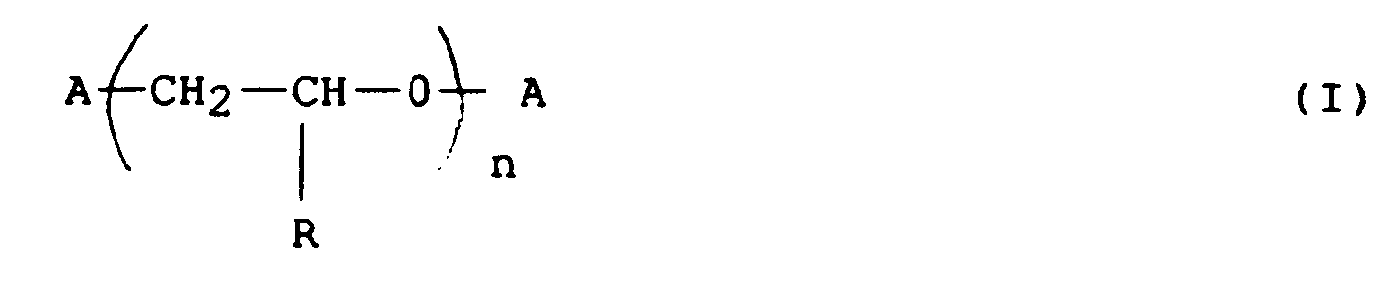
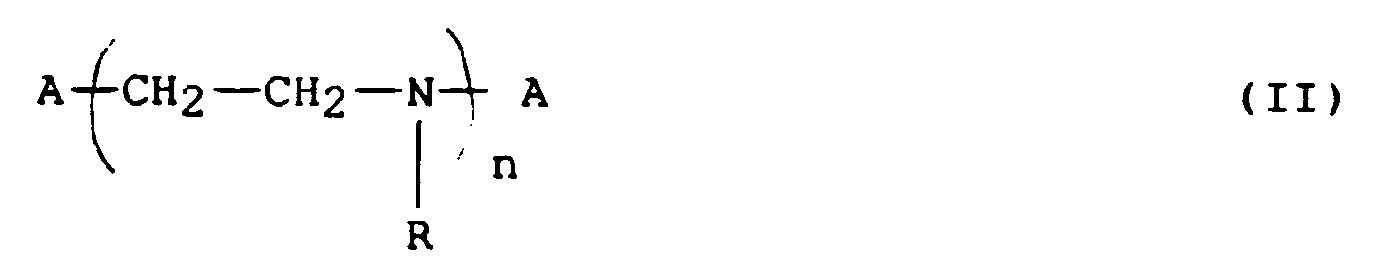

where n is about 3 to 50 and R is hydrogen or a C₁-C₃ alkyl group and A represents an ethylenically unsaturated moiety or a glycidyl moiety.
where n is about 3 to 50 and R is hydrogen or a C₁-C₃ alkyl group and A represents an ethylenically unsaturated moiety or a glycidyl moiety.
7. A method according to any one of claims 2 to 6 wherein said polyethylenically unsaturated
compound is a polyethylene glycol modified to include terminal ethylenically unsaturated
groups.
8. A method of claim 7 wherein said polyethylenically unsaturated compound is polyethylene
glycol diacrylate, polyethylene glycol dimethacrylate, an acrylate functionized polyurethane,
or polyethylene glycol diglycidyl ether.
9. A method according to any one of the preceding claims wherein said ionizable salt
is a salt of a cation selected from the group consisting of lithium, sodium, potassium,
and ammonium cations; and an anion selected from the group consisting of I⁻, Br⁻,
SCN⁻, ClO₄⁻, CFSO₃⁻, BF₄⁻, PF₆⁻, AsF₆⁻, and CF₃COO⁻.
10. A method of claim 9 wherein said ionizable salt is a lithium salt.
11. A method of claim 10 wherein said lithium salt is LiCF₃SO₃.
12. A method according to any one of the preceding claims wherein said ionic-conduction
liquid is selected from the group consisting of polyethylene glycol dimethyl ether,
propylene carbonate, gamma-butyrolactone, 1,3-dioxolane, 2-methyltetrahydrofuran,
tetraglyme, hexaglyme, and heptaglyme, and polyethylene oxide grafted polysiloxane.
13. A method of claim 12 wherein said ionic-conduction liquid is a polyethylene oxide
grafted polysiloxane.
14. A method according to any one of the preceding claims wherein said ionic-conduction
liquid is present in said mixture in an amount of at least 45% by weight.
15. A method of claim 14 wherein said ionic-conduction liquid is present in said mixture
in an amount of at least 70% by weight.
16. A method according to any one of the preceding claims wherein said mixture additionally
contains a radiation curable comonomer.
17. A method of claim 16 wherein said radiation curable comonomer is trimethylolpropane
triacrylate, trimethylolpropane ethoxylated triacrylate or trimethylolpropane propoxy
triacrylate.
18. A method for forming a solid electrolyte comprising a polymeric network structure
containing an ionically conducting liquid for use in solid state electrochemical cells
which comprises forming a mixture of a crosslinkable polyethylenically-unsaturated
compound, a crosslinkable polysiloxane an ionically-conducting liquid, polyethylene-oxide-grafted
polysiloxane, and LiCF₃SO₃, said polyethylenically unsaturated compound being represented
by a formula.

where n is about 3 to 50, R is hydrogen or a C₁-C₃ alkyl group and A represents an ethylenically unsaturated moietyor a glycidyl moiety, and subjecting said mixture to radiation to form a solid matrix through which said ionically conducting, liquid polyethylene oxide grafted polysiloxane interpenetrates to provide continuous paths of high conductivity in all directions.
where n is about 3 to 50, R is hydrogen or a C₁-C₃ alkyl group and A represents an ethylenically unsaturated moietyor a glycidyl moiety, and subjecting said mixture to radiation to form a solid matrix through which said ionically conducting, liquid polyethylene oxide grafted polysiloxane interpenetrates to provide continuous paths of high conductivity in all directions.
19. A method of claim 18 wherein said polyethylene-oxide-grafted polysiloxane is present
in said mixture in an amount of at least 45% by weight.
20. A method of claim 18 or claim 19 wherein said mixture additionally contains trimethylolpropane
triacrylate, trimethylolpropane ethoxylated triacrylate or trimethylolpropane propoxylated
triacrylate.
21. An electrolyte composition obtainable in accordance with any one of claims 1 to 20.
22. An electrochemical device comprising an electrolyte composition according to claim
21 between a cathode and an anode.
1. Verfahren zur Herstellung eines Festelektrolyten, der sich zur Verwendung in einer
elektrochemischen Festkörperzelle eignet, umfassend:
das Bilden eines Gemisches aus einem vernetzbaren Polysiloxan, einer lonenleiterflüssigkeit und einem ionisierbaren Ammonium- oder Alkalimetall-Salz, und
das Aussetzen des Gemischs aktinischer Strahlung, um das Polysiloxan zu vernetzen und eine feste Polymer-Matrix zu bilden, die eine Netzwerk-Struktur aufbaut, die von der lonenleiterflüssigkeit durchdrungen wird, die, zusammen mit dem ionisierbaren Salz, zusammenhängende Bahnen mit hoher Leitfähigkeit bildet, die sich durch die gesamte Polymer-Matrix in alle Richtungen erstrecken.
das Bilden eines Gemisches aus einem vernetzbaren Polysiloxan, einer lonenleiterflüssigkeit und einem ionisierbaren Ammonium- oder Alkalimetall-Salz, und
das Aussetzen des Gemischs aktinischer Strahlung, um das Polysiloxan zu vernetzen und eine feste Polymer-Matrix zu bilden, die eine Netzwerk-Struktur aufbaut, die von der lonenleiterflüssigkeit durchdrungen wird, die, zusammen mit dem ionisierbaren Salz, zusammenhängende Bahnen mit hoher Leitfähigkeit bildet, die sich durch die gesamte Polymer-Matrix in alle Richtungen erstrecken.
2. Verfahren nach Anspruch 1, worin das Gemisch weiters eine vernetzbare polyethylenisch
ungesättigte Verbindung enthält.
3. Verfahren nach Anspruch 1 oder 2, worin das vernetzbare Polysiloxan ein mit Polyethylenoxid
gepfropftes Polysiloxan ist.
4. Verfahren nach Anspruch 2, worin die polyethylenisch ungesättigte Verbindung zumindest
ein Heteroatom im Molekül umfaßt.
5. Verfahren nach Anspruch 2, worin die polyethylenisch ungesättigte Verbindung eine
wiederkehrende Einheit aus der Gruppe
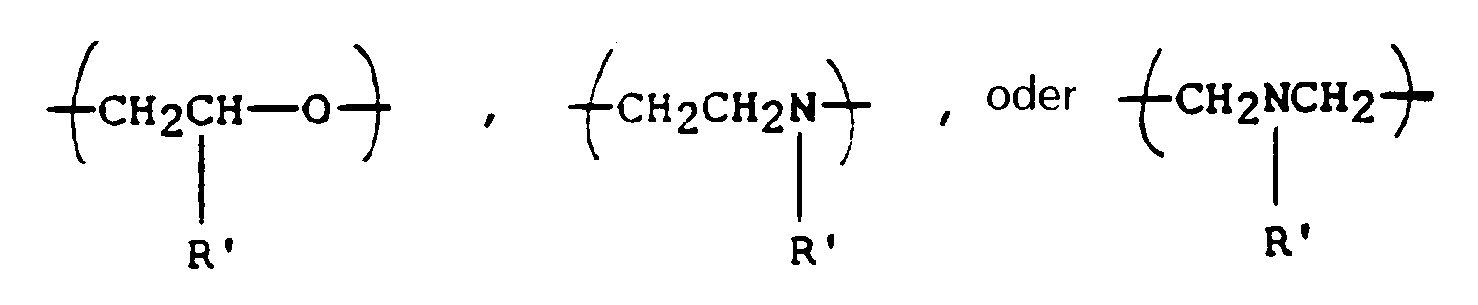
umfaßt, wobei R′ Wasserstoff oder eine Niederalkyl-Gruppe ist.
umfaßt, wobei R′ Wasserstoff oder eine Niederalkyl-Gruppe ist.
6. Verfahren nach Anspruch 2, worin die polyethylenisch ungesättigte Verbindung einer
der nachstehenden Formeln I bis III entspricht:
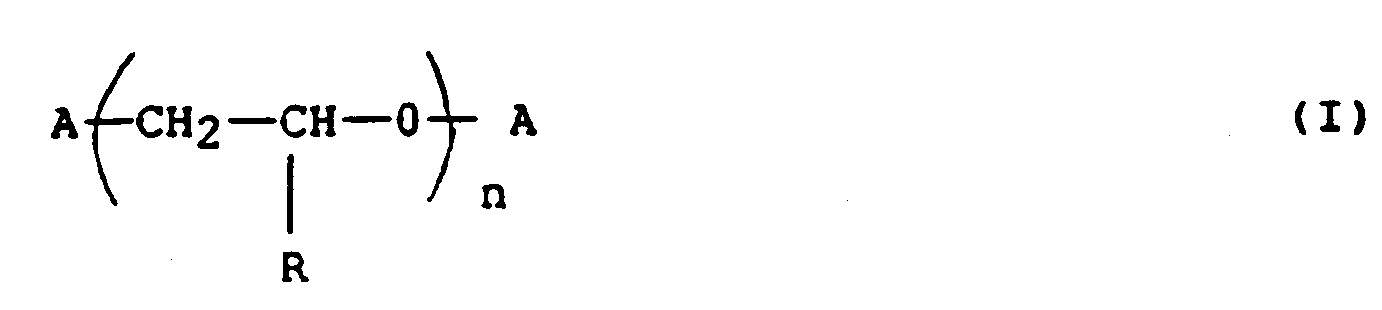


wobei n etwa 3 bis 50 und R Wasserstoff oder eine C₁-C₃-Alkylgruppe ist und A eine ethylenisch ungesättigte Gruppe oder eine Glycidyl-Gruppe darstellt.
wobei n etwa 3 bis 50 und R Wasserstoff oder eine C₁-C₃-Alkylgruppe ist und A eine ethylenisch ungesättigte Gruppe oder eine Glycidyl-Gruppe darstellt.
7. Verfahren nach irgendeinem der Ansprüche 2 - 6, worin die polyethylenisch ungesättigte
Verbindung ein modifiziertes Polyethylenglykol ist, das am Ende polyethylenisch ungesättigte
Gruppen aufweist.
8. Verfahren nach Anspruch 7, worin die polyethylenisch ungesättigte Verbindung Polyethylenglykol-diacrylat,
Polyethylenglykol-dimethacrylat, ein acrylatfunktionalisiertes Polyurethan oder Polyethylenglykol-diglycidylether
ist.
9. Verfahren nach irgendeinem der vorangegangenen Ansprüche, worin das ionisierbare Salz
ein Salz eines Kations, das aus der aus Lithium, Natrium, Kalium und Ammonium-Kationen
bestehenden Gruppe ausgewählt wird, und eines Anions, das aus der aus I⁻, Br⁻, SCN⁻,
ClO₄⁻, CFSO₃⁻, BF₄⁻, PF₆⁻, AsF₆⁻ und CF₃COO⁻ bestehenden Gruppe ausgewählt wird, ist.
10. Verfahren nach Anspruch 9, worin das ionisierbare Salz ein Lithiumsalz ist.
11. Verfahren nach Anspruch 10, worin das Lithiumsalz LiCF₃SO₃ ist.
12. Verfahren nach irgendeinem der vorangegangenen Ansprüche, worin die Ionenleiterflüssigkeit
aus der aus Polyethylenglykol-dimethylether, Propylencarbonat, γ-Butyrolacton, 1,3-Dioxolan,
2-Methyltetrahydrofuran, Tetraglyme, Hexaglyme und Heptaglyme und mit Polyethylenoxid
gepfropftem Polysiloxan bestehenden Gruppe ausgewählt wird.
13. Verfahren nach Anspruch 12, worin die lonenleiterflüssigkeit ein mit Polyethylenoxid
gepfropftes Polysiloxan ist.
14. Verfahren nach irgendeinem der vorangegangenen Ansprüche, worin die lonenleiterflüssigkeit
im Gemisch in einer Menge von zumindest 45 Gew.-% vorliegt.
15. Verfahren nach Anspruch 14, worin die Ionenleiterflüssigkeit im Gemisch in einer Menge
von zumindest 70 Gew.-% vorliegt.
16. Verfahren nach irgendeinem der vorangegangenen Ansprüche, worin das Gemisch zusätzlich
ein strahlungshärtbares Comonomer enthält.
17. Verfahren nach Anspruch 16, worin das strahlungshärtbare Comonomer Trimethylolpropan-triacrylat,
ethoxyliertes Trimethylolpropan-triacrylat oder Trimethylolpropan-propoxytriacrylat
ist.
18. Verfahren zur Herstellung eines Festelektrolyten, der eine eine lonenleiterflüssigkeit
enthaltende polymere Netzwerk-Struktur umfaßt, zur Verwendung in elektrochemischen
Festkörperzellen, das das Bilden eines Gemisches aus einer vernetzbaren polyethylenisch
ungesättigten Verbindung, einem vernetzbaren Polysiloxan, einem ionenleitenden flüssigen,
mit Polyethylenoxid gepfropften Polysiloxan und LiCF₃SO₃ umfaßt, wobei die polyethylenisch
ungesättigte Verbindung durch eine der Formeln

dargestellt wird, wobei n etwa 3 bis 50 und R Wasserstoff oder eine C₁-C₃-Alkylgruppe sind und A eine ethylenisch ungesättigte Gruppe oder eine Glycidyl-Gruppe darstellt, sowie das Aussetzen des Gemisches einer Strahlung, um eine feste Matrix zu bilden, die vom ionenleitenden, flüssigen, mit Polyethylenoxid gepfropften Polysiloxan durchdrungen wird, das dabei in allen Richtungen zusammenhängende Bahnen mit hoher Leitfähigkeit bildet.
dargestellt wird, wobei n etwa 3 bis 50 und R Wasserstoff oder eine C₁-C₃-Alkylgruppe sind und A eine ethylenisch ungesättigte Gruppe oder eine Glycidyl-Gruppe darstellt, sowie das Aussetzen des Gemisches einer Strahlung, um eine feste Matrix zu bilden, die vom ionenleitenden, flüssigen, mit Polyethylenoxid gepfropften Polysiloxan durchdrungen wird, das dabei in allen Richtungen zusammenhängende Bahnen mit hoher Leitfähigkeit bildet.
19. Verfahren nach Anspruch 18, worin das mit Polyethylenoxid gepfropfte Polysiloxan im
Gemisch in einer Menge von zumindest 45 Gew.-% enthalten ist.
20. Verfahren nach Anspruch 18 oder 19, worin das Gemisch zusätzlich Trimethylolpropan-triacrylat,
ethoxyliertes Trimethylolpropan-triacrylat oder propoxyliertes Trimethylolpropan-triacrylat
enthält.
21. Elektrolytzusammensetzung, die nach irgendeinem der Ansprüche 1 - 20 erhalten werden
kann.
22. Elektrochemische Vorrichtung, umfassend eine Elektrolytzusammensetzung nach Anspruch
21 zwischen einer Kathode und einer Anode.
1. Méthode de fabrication d'un électrolyte solide approprié pour utilisation dans une
cellule électrochimique à l'état solide, comprenant
la formation d'un mélange d'un polysiloxane réticulable, d'un liquide à conduction ionique et d'un sel de métal alcali ou d'ammonium ionisable, et
la soumission du mélange à une irradiation actinique pour réticuler le polysiloxane et former une matrice polymérique solide constituant une structure en réseau interpénétrée par le liquide à conduction ionique qui forme, avec le sel ionisable, des chemins continus à conductivité élevée s'étendant dans toutes les directions à travers la matrice polymérique.
la formation d'un mélange d'un polysiloxane réticulable, d'un liquide à conduction ionique et d'un sel de métal alcali ou d'ammonium ionisable, et
la soumission du mélange à une irradiation actinique pour réticuler le polysiloxane et former une matrice polymérique solide constituant une structure en réseau interpénétrée par le liquide à conduction ionique qui forme, avec le sel ionisable, des chemins continus à conductivité élevée s'étendant dans toutes les directions à travers la matrice polymérique.
2. Méthode selon la revendication 1, dans laquelle ledit mélange contient également un
composé insaturé polyéthyléniquement réticulable.
3. Méthode selon la revendication 1 ou 2, dans laquelle ledit polysiloxane réticulable
est un polysiloxane greffé oxyde de polyéthylène.
4. Méthode selon la revendication 2, dans laquelle ledit composé insaturé polyéthyléniquement
inclut au moins un hétéroatome dans la molécule.
5. Méthode selon la revendication 4, dans laquelle ledit composé insaturé polyéthyléniquement
inclut une unité répétante sélectionnée dans le groupe consistant de

où R′ est un hydrogène ou un groupe alkyle inférieur.
où R′ est un hydrogène ou un groupe alkyle inférieur.
6. Méthode selon la revendication 2, dans laquelle ledit composé insaturé polyéthyléniquement
est en accord avec l'une des formules I à III, ci-après,
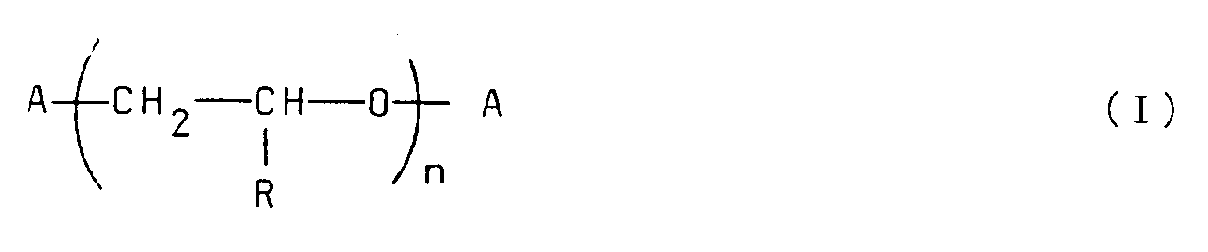


où n vaut environ 3 à 50 et R est un hydrogène ou un groupe alkyle en C₁-C₃ et A représente une moitié insaturée éthyléniquement ou une moitié glycidyle.
où n vaut environ 3 à 50 et R est un hydrogène ou un groupe alkyle en C₁-C₃ et A représente une moitié insaturée éthyléniquement ou une moitié glycidyle.
7. Méthode selon l'une quelconque des revendications 2 à 6, dans laquelle ledit composé
insaturé polyéthyléniquement est un polyéthylène glycol modifié pour inclure des groupes
terminaux éthyléniquement insaturés.
8. Méthode selon la revendication 7, dans laquelle ledit composé insaturé polyéthyléniquement
est le diacrylate de polyéthylène glycol, le diméthacrylate de polyéthylène glycol,
un polyuréthane fonctionnalisé acrylate, ou un polyéthylène glycol diglycidyl éther.
9. Méthode selon l'une quelconque des revendications précédentes, dans laquelle ledit
sel ionisable est un sel d'un cation choisi dans le groupe consistant des cations
lithium, sodium, potassium et ammonium ; et d'un anion choisi dans le groupe consistant
de I⁻, Br⁻, SCN⁻, ClO₄⁻; CFSO₃⁻, BF₄⁻, PF₆⁻, AsF₆⁻, et CF₃COO⁻.
10. Méthode selon la revendication 9, dans laquelle ledit sel ionisable est un sel de
lithium.
11. Méthode selon la revendication 10, dans laquelle le sel de lithium est LiCF₃SO₃.
12. Méthode selon l'une quelconque des revendications précédentes, dans laquelle ledit
liquide à conduction ionique est choisi dans le groupe consistant du polyéthylène
glycol diméthyl éther, du carbonate de propylène, de la gamma-butyrolactone, du 1,3-dioxolane,
du 2-méthyltétrahydrofuranne, du tétraglyme, de l'hexaglyme et de l'heptaglyme, et
du polysiloxane greffé oxyde de polyéthylène.
13. Méthode selon la revendication 12, dans laquelle ledit liquide à conduction ionique
est un polysiloxane greffé oxyde de polyéthylène.
14. Méthode selon l'une quelconque des revendications précédentes, dans laquelle ledit
liquide à conduction ionique est présent dans ledit mélange en une quantité d'au moins
45% en poids.
15. Méthode selon la revendication 14, dans laquelle ledit liquide à conduction ionique
est présent dans ledit mélange en une quantité d'au moins 70% en poids.
16. Méthode selon l'une quelconque des revendications précédentes, dans laquelle ledit
mélange contient additionnellement un comonomère polymérisable par irradiation.
17. Méthode selon la revendication 16, dans laquelle ledit comonomère polymérisable par
irradiation est le triméthylolpropane triacrylate, le triméthylolpropane éthoxylé
triacrylate ou le triméthylolpropane propoxy triacrylate.
18. Méthode pour former un électrolyte solide comprenant une structure de réseau polymérique
contenant un liquide ioniquement conducteur pour utilisation dans des cellules électrochimiques
à l'état solide qui comprend la formation d'un mélange d'un composé insaturé polyéthyléniquement
réticulable, d'un polysiloxane réticulable, d'un liquide conducteur ioniquement, d'un
polysiloxane greffé oxyde de polyéthylène, et de LiCF₃SO₃, ledit composé insaturé
polyéthyléniquement étant représenté par une formule

où n vaut environ 3 à 50, R est un hydrogène ou un groupe alkyle en C₁-C₃ et A représente une moitié insaturée éthyléniquement ou moitié glycidyle, et la soumission dudit mélange à une irradiation pour former une matrice solide à travers laquelle ledit polysiloxane greffé oxyde de polyéthylène liquide, ioniquement conducteur, interpénètre pour fournir des chemins continus de conductivité élevée dans toutes les directions.
où n vaut environ 3 à 50, R est un hydrogène ou un groupe alkyle en C₁-C₃ et A représente une moitié insaturée éthyléniquement ou moitié glycidyle, et la soumission dudit mélange à une irradiation pour former une matrice solide à travers laquelle ledit polysiloxane greffé oxyde de polyéthylène liquide, ioniquement conducteur, interpénètre pour fournir des chemins continus de conductivité élevée dans toutes les directions.
19. Méthode selon la revendication 18, dans laquelle ledit polysiloxane greffé oxyde de
polyéthylène est présent dans ledit mélange en une quantité d'au moins 45% en poids.
20. Méthode selon la revendication 18 ou la revendication 19, dans laquelle ledit mélange
contient additionnellement du triméthylolpropane triacrylate, du triméthylolpropane
éthoxylé triacrylate ou du triméthylolpropane propoxylé triacrylate.
21. Composition d'électrolyte pouvant être obtenue selon l'une quelconque des revendications
1 à 20.
22. Dispositif électrochimique comprenant une composition d'électrolyte selon la revendication
21 entre une cathode et une anode.