| (19) |
 |
|
(11) |
EP 0 452 818 B2 |
| (12) |
NEW EUROPEAN PATENT SPECIFICATION |
| (45) |
Date of publication and mentionof the opposition decision: |
|
01.12.2004 Bulletin 2004/49 |
| (45) |
Mention of the grant of the patent: |
|
06.03.1996 Bulletin 1996/10 |
| (22) |
Date of filing: 11.04.1991 |
|
| (51) |
International Patent Classification (IPC)7: G03G 15/00 |
|
| (54) |
Electrostatic recorder and electrostatic latent image measuring instrument
Elektrostatisches Aufnahmegerät und Instrument zur Messung von elektrostatischen latenten
Bildern
Enregistreur électrostatique et instrument de mesure d'images latentes électrostatiques
|
| (84) |
Designated Contracting States: |
|
DE GB |
| (30) |
Priority: |
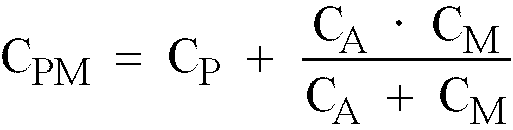
16.04.1990 JP 9766790
|
| (43) |
Date of publication of application: |
|
23.10.1991 Bulletin 1991/43 |
| (73) |
Proprietor: Hitachi, Ltd. |
|
Chiyoda-ku,
Tokyo 101 (JP) |
|
| (72) |
Inventors: |
|
- Miyasaka, Toru
Hitachi-shi, Ibaraki-ken, 316 (JP)
- Umeda, Takao
Mito-shi (JP)
- Nagata, Tetsuya
Hitachi-shi (JP)
- Igawa, Tatsuo
Kitaibaraki-shi (JP)
|
| (74) |
Representative: Beetz & Partner
Patentanwälte |
|
Steinsdorfstrasse 10
80538 München
80538 München (DE) |
| (56) |
References cited: :
EP-A- 0 338 962
JP-A- 2 064 681
JP-A- 63 280 275
US-A- 3 944 354
US-A- 4 625 176
|
WO-A-89/08283
JP-A- 58 115 453
JP-A- 64 033 671
US-A- 4 134 137
|
|
| |
|
|
- PATENT ABSTRACTS OF JAPAN, vol. 6, no. 255 (P-162)[1133], 14th December 1982 & JP-A-57
151 957
- PATENT ABSTRACTS OF JAPAN, vol. 10, no. 132 (P-456)[2189], 16th May 1986 & JP-A-60
254 061
- Journal of Institute of Electrostatics Engineers, 1988, vol.12, pp 210-215, A. Shimada
"Electrostatic Surface Potential Measurements with High Resolution Probe"
- Journal of Institute of Electrostatics Engineers, 1986, vol. 10, pp 217-224, M. Matsui
"Infinitesimal Area Surface Potential Electrometers"
|
|
| |
|
BACKGROUND OF THE INVENTION
[0001] The present invention relates to an electrostatic recorder provided with an electrostatic
latent image measuring instrument, and more particularly to an electrostatic recorder
controlled in accordance with results of measurement of an electrostatic latent image,
and an electrostatic latent image measuring instrument capable of measuring directly
an electrostatic latent image formed on a photosensitive substance.
[0002] In general, the exposure, the development bias and the like have been heretofore
determined at predetermined design values having sufficient allowance, and the fine
adjustment has been made by an operator for every device. An electrostatic recorder
is known that controls an electrostatic charge system, an exposure system and a development
system by means of a fatigue correction program based on the number of printed sheets
as fatigue correction of a photosensitive substance (JP-A-62-27390). Further, an electrostatic
recorder is known that determines the life of a photosensitive substance by the number
of printed sheets and the like (JP-A-62-505).
[0003] In addition, electrostatic images have been measured by methods such as ion motion,
DC amplification, a revolving sector method, an electro-optical effect, electric power
(Kazutoshi Asano: Electric Field and Potential Measuring Method in Electrostatic Engineering,
Journal of Institute of Electrostatic Engineers, 10, pp. 205 - 212 (1986)) and the
like, as a method of measuring an electrostatic latent image.
[0004] JP-A-60-254061 relates to an electrostatic recorder according to the preamble of
claim 1, in which a surface potential sensor is employed to detect the potential of
an electrostatic latent image formed on a photosensitive drum, so as to maintain a
stable record density.
[0005] Since an electrostatic latent image on a photosensitive substance has several hundreds
to several tens µm in size, an electrostatic latent image measuring technique having
sufficiently high resolution is required to measure the distribution of the electrostatic
latent images. In order to improve resolution, the area of a measuring electrode has
to be made small, and the measuring electrode and the photosensitive substance have
to be made come close to each other. Several reports in which an electrostatic latent
image has been measured by using an electrode having a very small measurement area
have been proposed already. (Mitsuru Matsui: Very Small Area Surface Electrometer,
Journal of Institute of Electrostatic Engineers, 10, pp. 217 - 224 (1986)). In a report
it has been proposed to measure the electrostatic latent image by an electron microscope
using a measuring electrode (G. F. Fritz, D.C. Hoesterey and L.E. Brady: Observation
of Xerographic Electrostatic Latent Images with a Scanning Electron Microscope, Appl.
Phys. Lett. 19, pp. 277 - 278 (1971)).
[0006] Since there has been no means for observing an electrostatic latent image in an electrostatic
recorder, it is difficult to carry out the fine adjustment for adapting the device
to an individual photosensitive substance, and it is also difficult to fully demonstrate
the performance of the photosensitive substance in the case of the conventional electrostatic
recorder. Further, it is impossible to accurately grasp the life of a photosensitive
substance since the electrostatic latent image cannot be observed whether the latent
image is present or not.
[0007] Furthermore, no consideration has been given to measurement of an electrostatic latent
image in an electrostatic recorder in the conventional electrostatic latent image
measuring instrument in which the area of a measuring electrode is made small. There
is eccentricity and the like in a photosensitive drum on an electrostatic recorder,
which has made it impossible to have a measuring electrode come close to a photosensitive
substance at a very small distance. Moreover, the electric potential of an electrostatic
latent image on a photosensitive substance sometimes reaches close to 1 KV, thus causing
such a problem that discharge occurs when the measuring electrode is brought close
to the photosensitive substance.
[0008] Further, the above-mentioned conventional devices for measuring an electrostatic
latent image using the electron microscope are incapable of measuring a latent image
on a photosensitive substance of the electrostatic recorder due to special measuring
environment.
SUMMARY OF THE INVENTION
[0009] It is an object of the present invention to provide an electrostatic recorder capable
of carrying out optimum control which is suited to a state of a photosensitive substance.
This object is achieved by an electrostatic recorder according to claim 1.
[0010] The electrostatic recorder of the present invention has a measuring electrode for
measuring an electrostatic latent image that can come close to a photosensitive substance
even in case of eccentricity of the photosensitive substance.
[0011] For this purpose, means are provided for controlling a distance between the measuring
electrode having a very small area and the photosensitive substance to a constant
value.
[0012] Moreover, for the purpose of preventing spark discharge between the measuring electrode
and the photosensitive substance, means can be provided for setting a common electric
potential of a measurement circuit for measuring an electrostatic latent image to
a reference power source potential between the highest potential and the lowest potential
of the electric potential of a measurement object.
[0013] Furthermore, means can be provided for introducing a gas having a high spark starting
potential between the measuring electrode and the photosensitive substance.
[0014] It is possible to detect a state of an electrostatic latent image on the photosensitive
substance by providing electrostatic latent image measuring means. The printing process
and the latent image are optimized by carrying out appropriate control which is suited
to the state of the photosensitive substance. Further, it is also possible to accurately
determine the life of the photosensitive substance because the state of the latent
image is observed.
[0015] It is possible to identify the width of charge pattern formed by an exposure portion
and a non-exposure portion and the state of the electrostatic latent image formed
with repetitive dot pattern which repeats on and off for every several dots to several
tens of dots, and also, the repetitive dot pattern which repeats on and off for every
single dot with each other as an exposure pattern for measuring latent image.
[0016] Since exposure, exposure time, development bias and photosensitive substance heating
time are controlled based on the state of the electrostatic latent image, it becomes
possible to carry out optimum control of the printing process. Further, the life of
the photosensitive substance can be detected accurately from determining the state
of the electrostatic latent image.
[0017] Plural distance measuring means are arranged on concentric circles with the measuring
electrode as the center so that the spacing between the plural distance measuring
means is constant. Therefore, assuming that the photosensitive substance surface is
a plane, the distance between the measuring electrode and the photosensitive substance
surface is given by the mean value measured by the distance measuring means.
[0018] Further, in case that the measurement object of a latent image is a photosensitive
drum, two distance measuring means are adopted and a line connecting these two distance
measuring means is made parallel to the axis of the photosensitive drum whereby the
distance between the photosensitive substance and the measuring electrode is given
by the average of the two distance sensors.
[0019] It is possible to maintain the distance between the measuring electrode and the photosensitive
substance constant by maintaining these mean values constant.
[0020] It is possible to prevent discharge when the distance between the photosensitive
substance and the measuring electrode becomes narrower by setting the common potential
of the latent image measurement circuit to a potential between the highest potential
and the lowest potential of the measurement object, thereby reducing the potential
difference between the measuring electrode and the photosensitive substance. Further,
the output of the measurement circuit becomes very small when the measuring electrode
area is reduced, which causes the output of the measurement circuit to become unreadable
due to ripples and the like of the reference power source. If a battery is used as
the reference voltage, however, a stabilized reference voltage is obtainable.
[0021] Further, a measuring electrode point is surrounded by a first case having an opening
portion in a direction facing the photosensitive substance and a second case having
an opening portion in a direction facing the photosensitive substance and surrounding
the first case, and it is possible to fill the space between the measuring electrode
and the photosensitive substance with a gas having a high spark starting voltage without
releasing the gas having a high spark starting voltage outside the second case by
filling up the first case with the gas having a high spark starting voltage and intaking
the gas having a high spark starting voltage in the first case together with outside
air by means of the second case. Further, it is possible to prevent spark in case
the distance between the measuring electrode and the photosensitive substance becomes
short by filling with a gas having a high spark starting voltage between the measuring
electrode and the photosensitive substance by such a technique as described above.
[0022] In a charge measurement circuit of a direct-current amplification type in which electric
charge induced in a measuring electrode is converted into voltage using a measuring
capacitor, and measurement of electric charge is performed by impedance conversion,
it is assumed that a discharge switch has a two-stage structure comprising a main
discharge switch and a sub-discharge switch. The main discharge switch performs connection
and disconnection between the measuring electrode and the common potential. The sub-discharge
switch supplies a drive voltage for bringing the main discharge switch into a connected
state and the common potential to the main discharge switch at the time of non-measurement
(at the time of spark), and supplies an output obtained by impedance conversion of
a measuring electrode potential output through a buffer amplifier to all terminals
which are not connected to the measuring electrode of the main discharge switch at
the time of measurement. With this, it is possible to eliminate potential difference
between potentials applied to the measuring electrode side of the main discharge switch
and other terminals at the time of measurement, thus making it possible to make the
resistance in open circuit of the whole discharge switch apparently very large. As
a result, it is possible to make the drift generated because of the fact that leakage
current at the time of measurement is accumulated in the measuring capacitor very
small.
[0023] Further, the sub-discharge switch is composed of a first sub-discharge switch which
is closed at the time of measurement only and a second sub-discharge switch which
is closed at the time of non-measurement only, and switching is made from a non-measurement
state (spark state) through a state in which both the first sub-discharge switch and
the second sub-discharge switch are closed.
[0024] Thus a plunging current which is generated when the first sub-discharge switch is
connected can be dumped via the second sub-discharge switch, and unnecessary current
may be prevented from accumulating in the measuring capacitor when the non-measurement
state is changed over to the measurement state.
[0025] Further, it is possible to prevent noises caused by capacity variation between measurement
circuit wirings due to external vibration at the time of measurement by placing the
measurement circuit in a measurement circuit case having a vibration absorbing member.
BRIEF DESCRIPTION OF THE DRAWINGS
[0026]
Fig. 1A, Fig. 1B and Fig. 1 C are trihedral views for explaining an embodiment of
arrangement of respective parts of an electrostatic latent image measuring instrument;
Fig. 2 is a view for explaining an embodiment of structures of an inner case and an
outer case for filling up a gas having a high spark starting voltage in the vicinity
of a measuring electrode;
Fig. 3 is a diagram for explaining an embodiment of a measurement circuit;
Fig. 4 is a diagram showing results of computing a measuring gap vs. an operational
amplifier input voltage for a plurality of electrostatic capacity values of a measuring
capacitor for measurement when photosensitive substance surface potential at the time
of measurement is 1 KV;
Fig. 5A is a graph showing the result of measuring output variation on an experimental
substrate when the non-measurement state (discharge state) is changed over to the
measurement state;
Fig. 5B is a graph showing the result of measurement in case the sub-discharge switch
11 b is closed after the sub-discharge switch 11c has been opened;
Fig. 5C is a graph showing the result when the sub-discharge switch 11c is opened
after the sub-discharge switch 11 b has been closed;
Fig. 6A and Fig. 6B are views for explaining a method of manufacturing a point portion
of a measurement circuit;
Fig. 7 is a diagram for explaining the composition of the extemal portion of a circuit
case;
Fig. 8 is a flow chart of a control program of a precision pulse stage by a distance
sensor output, in which a contact position between a measuring electrode and a photosensitive
substance is detected;
Fig. 9 is a flow chart of a program controlling a precision pulse stage by detecting
a contact position between a measuring electrode and a photosensitive substance;
Fig. 10A, Fig. 10B and Fig. 10C are explanatory views showing states of detecting
contact positions between a measuring electrode and a photosensitive substance;
Fig. 11 is a flow chart of a distance control program for explaining control of the
distance between a measuring electrode and a photosensitive substance;
Fig. 12 is a flow chart of a precision pulse stage control program including contact
position measurement and distance control between a measuring electrode and a photosensitive
substance;
Fig. 13 is a graph showing a result of measuring an electrostatic latent image of
an electrostatic recorder;
Fig. 14 is a diagram for explaining control circuit construction of an electrostatic
recorder in which an electrostatic latent image measuring instrument is incorporated;
Fig. 15 is a flow chart of latent image measurement and device control of an electrostatic
recorder in which an electrostatic latent image measuring instrument is incorporated;
Fig. 16A, Fig. 16B and Fig. 16C are graphs showing results of measuring electrostatic
latent images formed on a photosensitive substance by means of repetition of exposure
and non-exposure for every several dots and repetition of exposure and non-exposure
for every dot; and
Fig. 17 is a graph showing results of computing contrast potentials in a repetition
pattern portion of exposure and non-exposure for every dot or every two dots.
DESCRIPTION OF THE PREFERRED EMBODIMENTS
[0027] Hereinafter, embodiments of the present invention are described with reference to
the drawings, relating to an electrostatic latent image measuring instrument and an
electrostatic recorder including the electrostatic latent image measuring instrument.
[0028] First, an embodiment of an electrostatic latent image measuring instrument capable
of being mounted on an electrostatic recorder will be described with reference to
Fig. 1A thru Fig. 13, and then an electrostatic recorder having the electrostatic
latent image measuring instrument mounted on it will be described with reference to
Fig. 14 and Fig. 15, and lastly, a control method of the printing process will be
described with reference to Fig. 16A thru Fig. 17.
[0029] Fig. 1 A, Fig. 1 B and Fig. 1 C are views for explaining an embodiment of respective
parts of an electrostatic latent image measuring instrument. An electrostatic latent
image measuring instrument 4C has laser type non-contact distance sensors 1 on both
sides of a probe 2, in which a measuring electrode (an electrostatic latent image
measuring sensor portion) is provided at a point portion 3 of the measurement circuit,
and a gas chamber 4 composed of a double case formed of an inner case 4a and an outer
case 4b, which surrounds the measuring electrode is fitted in order to be filled with
a gas having a high discharge starting voltage in the vicinity of the measuring electrode.
An output line 9 from the measurement circuit case 2 is connected to a measurement
circuit controller or A-D converter (both are not shown on the drawings).
[0030] The gas chamber 4 which surrounds the probe 2, laser type non-contact distance sensors
1 and the measuring electrode are fitted onto a precision pulse stage 5. Output lines
8 of the laser type sensors are connected to a computer, and the computer controls
the precision pulse stage 5 based on this output so that the distance from a photosensitive
substance 6 may be maintained constant. A control line 10 from the precision pulse
stage 5 is connected to a pulse stage controller (not shown on the drawings).
[0031] Fig. 2 is a view for explaining an embodiment of a construction of the gas chamber
4 for filling with a gas having a high spark starting voltage in the vicinity of the
measuring electrode. A passage 7a through which SF
6 gas having a high spark starting voltage is supplied via a pressure reducing valve
is formed in the inner case 4a, and a passage 7b connected to an exhaust pump is formed
in the outer case 4b. These passages 7a and 7b are connected to the exhaust pump in
a form of pipes as shown in Fig. 1A. As is understood from the above, it is possible
to fill with the SF
6 gas having a high spark starting voltage in the inner case 4a, and also, to recover
the SF
6 gas so as to prevent the SF
6 gas from leaking to outside of the outer case 4b. In case the electrostatic latent
image measuring instrument is used in an electrostatic recorder, bad influence is
exerted on operations in which discharge of an electric charge device and the like
are utilized if the SF
6 gas having a high spark starting voltage leaks from the instrument. Therefore, such
recovery means of the gas having a high spark starting voltage as described above
is required.
[0032] Fig. 3 is a diagram for explaining an embodiment of a measurement circuit in the
probe 2. A basic principle of the measurement circuit is to convert electric charges
induced in a measuring electrode 3a by having the measuring electrode 3a come close
to the photosensitive substance 6, into voltage by means of a measuring capacitor
12, which is amplified by an amplifier having high input impedance. The output voltage
of this amplifier is influenced very strongly even by inflow of a very small current
from the outside, for it is adapted to measure very small electric charges. Therefore,
the amplifier has a two-stage construction of a buffer amplifier 13a and an amplifier
13b of an amplification factor of 20 times. The voltage induced in the measuring electrode
3a is subjected to impedance conversion of the output voltage in the buffer amplifier
13a (amplifier having an amplification factor of 1), and this voltage is applied to
a shield 14 which surrounds a guard electrode 3b of the measuring electrode 3a, thereby
to keep current inflow from the outside as small as possible. The output of the buffer
amplifier 13a is amplified by the amplifier 13b having an amplification factor of
20, and is output outside the probe 2 at the buffer amplifier output. The amplifier
13b serves the purpose of reducing the influence by extemal noises when an output
signal is sent out of the probe 2, and it is recommended to use an appropriate amplification
factor in accordance with the output voltage of the buffer amplifier 13a.
[0033] When it is assumed that the potential at the surface of the photosensitive substance
6 is V
S and the electrostatic capacity of the photosensitive substance 6 is C
P, an electric charge quantity Q
P existing on the photosensitive substance 6 is:

When the measuring electrode 3a is brought very close to the photosensitive substance
6, the surface potential of the photosensitive substance 6 is lowered. This is due
to the fact that the electrostatic capacity on the surface of the photosensitive substance
6 is varied because the measuring electrode 3a is brought very close thereto. When
it is assumed that an electrostatic capacity of a very small gap between the measuring
electrode 3a and the photosensitive substance 6 is C
A and an electrostatic capacity of the measuring capacitor 12 is C
M, an electrostatic capacity C
PM at the time of measurement is expressed by the following expression:
The surface potential V
SM of the photosensitive substance 6 at the time of measurement when the measuring electrode
3a is very close to the photosensitive substance 6 is given by the following expression:

The detected electrode voltage at this time, viz. the input voltage V
IN of the buffer amplifier 13a is given by the following expression based on th very
small gap between the measuring electrode 3a and the photosensitive substance 6 and
the electrostatic capacity of the capacitor 12 for measurement.

[0034] When the diameter of the measuring electrode 3a is at 50 µm, the measured area is
approximately 1.96 x 10
-3 mm
2. When the photosensitive substance 6 to be measured is an organic photosensitive
substance having a thickness of approximately 20 µm, the dielectric constant of the
photosensitive substance 6 is approximately 4, and the electrostatic capacity C
P of the organic photosensitive substance having the thickness of 20 µm on the measured
area is approximately at 3.5 x 10
-15 F. Further, when the measurement gap is assumed to have a width G (µm), the electrostatic
capacity of the small gap between the measuring electrode 3a and the photosensitive
substance 6 will be C
A = 1.74 x 10
-14/G(F). Fig. 4 shows results of computing input voltages of the buffer amplifier 13a
as a function of the width of the measurement gap and electrostatic capacity of the
measuring capacitor 12 when the surface potential of the photosensitive substance
6 is at 1 KV at the time of measurement. In view of the stability of the output against
noises and the like, of an input voltage of the buffer amplifier 13a of approximately
100mV is required if the surface potential of the photosensitive substance 6 is 1
KV. When it is assumed that the measurement gap is 50 µm wide, the measuring capacitor
12 must have a capacity of several pF and below. If the measuring capacitor 12 has
a capacity of 5 pF, the input, voltage of the buffer amplifier 13a becomes approximately
63 mV if the surface potential of the photosensitive substance 6 is 1 KV.
[0035] In a circuit system of the present embodiment, a discharge switch 11 is required
for discharging the capacitor 12 prior to measurement. Attention should be paid to
the discharge switch 11 so that electrostatic capacity and leakage current are not
generated at the time of measurement. When an ordinary analog switch or relay and
the like is used as the discharge switch 11, rapid drift caused by a leakage current
from a power source line is observed. Furthermore, the measuring electrostatic capacity
is increased by the electrostatic capacity of the discharge switch 11, so that a sufficient
electrode voltage cannot be obtained. Accordingly, the discharge switch 11 is constructed
to have two-step structure including a main discharge switch 11 constituted by photocouplers
and subdischarge switches 11b and 11c constituted by analog switches so that the output
of the buffer amplifier 13a is fed back to all the terminals of photocouplers at the
time of measurement.
[0036] Fig. 5A shows results of measuring output variation on an experimental substrate
when a non-measurement state (spark state) is changed over to a measurement state
in this construction. At the time of mode change-over, a sudden output change of approximately
0.5 mV is observed which is foreseen to be caused by plunging current from the sub-discharge
switch 11b and the sub-discharge switch 11 c. If such voltage rise occurs at the time
of mode changing over, the output is saturated promptly at the time of amplification
in the amplifier 13b on the second stage and sufficient amplification can not be executed.
[0037] Fig. 5B shows results of measurement in case the closing of the sub-discharge switch
11b is delayed with respect to the opening of the sub-discharge switch 11c by means
of a delay circuit. It will be understood from the figure that there is a voltage
rise of 0.05 to 0.5 mV due to the plunging current of the sub-discharge switch 11c,
and one of 0.35 to 0.4 mV due to the plunging current from the sub-discharge switch
11b. Fig. 5C shows the result of delaying the opening of the sub-discharge switch
11c with respect to the closing of the sub-discharge switch 11 b. As described, it
is realized that the influence by the plunging current from the sub-discharge switch
11b may be eliminated by opening the sub-discharge switch 11c after closing the sub-discharge
switch 11b. This is because of the fact that the current generated from the sub-discharge
switch 11b flows to a common power source in a state that both switches are closed.
Accordingly, in the circuit construction of the present embodiment, the sub-discharge
switch is divided into the sub-discharge switch 11b which is closed at the time of
measurement only and the sub-discharge switch 11c which is closed at the time of non-measurement
only, and a delay circuit is provided so that both switches are changed over through
the closed state when the non-measurement state is changed over to the measurement
state.
[0038] Fig. 6A and Fig. 6B are views for explaining a method of manufacturing a point portion
3 of the probe 2. It is preferable that the point portion 3 of the measuring electrode
includes a guard electrode 3b having a sufficient area so that an electrostatic latent
image is not disturbed at the time of measurement, or the surface of the photosensitive
substance 6 is not damaged when the point portion 3 of the measuring electrode comes
into contact with the photosensitive substance 6. The point portion 3 of the measuring
electrode having such a large guard electrode 3b may be manufactured as described
hereunder.
[0039] As to the point portion 3 of the measuring electrode, first, a fine hole having a
diameter which is a little bigger than the diameter of the measuring electrode 3a
is processed in a base material 15 of the point portion of the measuring electrode.
An electric discharge machine and the like may be used for the processing. Next, a
very fine wire 16 with the surface coated for insulation with resin and the like is
inserted, and bonding is performed thereafter with epoxy resin 17 and the like. After
cutting the inserted very fine wire 16 at the surface of the measuring electrode 3a,
flattening is applied to the surface of the measuring electrode 3a with a lathe or
a milling machine and grinding is applied thereto, thereby to smooth the surface of
the measuring electrode 3a. With this, it is possible to manufacture the point portion
3 of the measuring electrode having a sufficiently large area of the guard electrode
3b. Incidentally, Fig. 6B is an enlarged view of a part shown at "A" in Fig. 6A.
[0040] Fig. 7 is a diagram for explaining a circuit composition outside the probe 2. A common
potential of the probe 2 is applied to a reference potential power source 19 at an
intermediate potential between the highest voltage and the lowest voltage of the photosensitive
substance 6, and a measurement signal is applied to a data storage means 21 through
an insulation amplifier 20. The data storage means 21 stores measurement data for
a certain time interval setting to a timing signal from a timing control unit 23.
Further, a photocoupler (p.c) receives a discharge switch control signal 22a from
a timing control unit 23, and transmits this timing signal 22a to the probe 2. The
probe 2 executes measurement operation on the electrostatic latent image based on
the timing signal 22a.
[0041] The reason why the common potential of the probe 2 is set at an intermediate potential
between the maximal voltage and the minimal voltage of the photosensitive substance
6 is to make electric field intensity between the photosensitive substance 6 and the
measuring electrode 3 small to the utmost, so that sparks can be prevented between
the measuring electrode 3a and the photosensitive substance 6.
[0042] A reference potential power source 19 which gives the common potential must have
a very small power source ripple. Therefore, a higher voltage battery and the like
may be used.
[0043] In order to prevent sparks, the above-mentioned SF
6 gas having a high spark starting voltage may be employed, or a bias may be applied
using a reference power source, either one of them or none of them may be used in
some cases in accordance with the electric field intensity generated between the measuring
electrode 3a and the photosensitive substance 6.
[0044] Fig. 8 is a chart for explaining a technique for detecting a contact position between
the measuring electrode 3a and the photosensitive substance 6, and is a flow chart
of a control program for controlling the precision pulse stage 5 by the outputs of
the distance sensors 1.
[0045] First, a set distance H
5 between the measuring electrode 3a and the photosensitive substance 6 is inputted.
Next, distance data L
1 are taken in as a mean value of distances which the distance sensor 1 can measure.
Next, the precision pulse stage 5 equipped with the electrostatic latent image measuring
instrument 4c is advanced by a very short distance (for example, a portion corresponding
to one pulse for advancing the precision pulse stage 5) toward the photosensitive
substance 6. Distance data L
2 are taken in from the distance sensor 1. Next, the difference of these distance data
(L
2 - L
1) is computed, and if this value is found to be smaller than a predetermined value
ΔL, the distance data at that time are stored in a data storage means 21 as a position
H
0 of the photosensitive substance 6 assuming that the output value of the distance
sensors 1 at that time is the distance between the measuring electrode 3a and the
photosensitive substance 6. In case the difference between distance data (L
2 - L
1) is larger than the predetermined value ΔL, the precision pulse stage 5 is advanced
toward the photosensitive substance 6 by replacing L
2 with L
1, and above-mentioned operation is repeated.
[0046] After the contact position between the measuring electrode 3a and the photosensitive
substance 6 is measured, the precision pulse stage 5 is made to retreat. A distance
H between the measuring electrode 3a and the photosensitive substance 6 may be computed
as H = H
L - H
0 from the distance data H
L by the distance sensor 1.
[0047] This operation utilizes a fact that the precision pulse stage 5 stops to advance
even if a pulse is applied to the precision pulse stage 5 when the measuring electrode
3a and the photosensitive substance 6 come into contact with each other. When respective
parts of the electrostatic latent image measuring instrument 4c, the photosensitive
substance 6 are deformed by advancing operation of the precision pulse stage 5, however,
accurate measurement can no longer be made. Accordingly, the driving voltage of the
precision pulse stage 5 in case of distance setting is made smaller than at the time
of distance control, thereby to reduce the driving force and make deformation of respective
parts at the time of contact between the measuring electrode 3a and the photosensitive
substance 6 as small as possible. The above-mentioned value ΔL for the contact determination
may be determined experimentally considering such very small deformation.
[0048] Fig. 9 is a chart for explaining another embodiment for detecting the contact position
between the measuring electrode 3a and the photosensitive substance 6, and is also
a chart for explaining the flow of a control program of the precision pulse stage
5.
[0049] A stress sensor or a distortion sensor is provided at such a position that a distortion
may be generated when the measuring electrode 3a of the electrostatic latent image
measuring instrument 4c comes into contact with the photosensitive substance 6. The
precision pulse stage 5 is made to advance while monitoring the output variation of
this sensor, and distance data of the distance sensors 1 at a position where the distortion
caused by the contact between the measuring electrode 3a and the photosensitive substance
6 is detected are stored in the data storage means 21 as the position H
0 of the photosensitive substance 6.
[0050] After the contact position between the measuring electrode 3a and the photosensitive
substance 6 is measured, the precision pulse stage 5 is made to retreat. The distance
H between the measuring electrode 3a and the photosensitive substance 6 may be computed
as H = H
L - H
0 from the distance data H
L of the distance sensors 1.
[0051] Fig. 10A, Fig. 10B and Fig. 10C are views for explaining the operation for detecting
the contact position between the measuring electrode 3a and the photosensitive substance
6.
[0052] The probe 2 is fitted to the precision pulse stage 5 in a state that the probe 2
is slidable in the stage movement direction. in Fig. 10A, the probe 2 and the photosensitive
substance 6 are made to touch each other at a position where the precision pulse stage
5 has been retreated. In Fig. 10B, the precision pulse stage 5 is made to advance
slowly toward the photosensitive substance 6 side up to the predetermined distance
data position H
0 of the distance sensors 1 so as to push the probe 2 against the photosensitive substance
6. In Fig. 10C, the contact position between the measuring electrode 3a and the photosensitive
substance 6 reaches the predetermined distance data position H
0 of the distance sensors 1 by retreating the precision pulse stage 5 thereafter. Since
the fixing strength of the probe 2 is of importance at this time, the fixing strength
of the probe 2 is arranged to be changed easily.
[0053] Fig. 11 is a chart for explaining an embodiment of distance control between the measuring
electrode 3a and the photosensitive substance 6, and shows the flow of a distance
control program.
[0054] Distance data H
D of the sum or the mean value of distance which can be measured by the distance sensors
1 are loaded and the difference between the distance data H
D and the distance data H
0 of the photosensitive substance 6 is obtained, thereby to compute the distance H
(= H
D - H
0) between the measuring electrode 3a and the photosensitive substance 6. Then, the
precision pulse stage 5 is made to advance or retreat so that the distance H becomes
equal to a distance set value H
S.
[0055] Fig. 12 shows an embodiment of the whole composition of a control program of the
precision pulse stage 5 including measurement of the contact position and control
of the distance between the measuring electrode 3a and the photosensitive substance
6, and is a chart showing the flow of the program.
[0056] Fig. 13 shows the result of measurement of an electrostatic latent image formed on
the photosensitive substance 6. Also, Fig. 13 shows the result of the measurement
of the actual electrostatic latent image by forming an exposure pattern having the
resolution of 300 dpi (dot per inch) in the case d using the electrostatic latent
image measurement instrument. The horizontal axis represents a time (5 microsecond/section)
indicating a movement of the photosensitive substance 6. The vertical axis represents
an electric potential (0.5 v/section) measured by the instrument. It is noted that
the accurate measurement is repeated by two of each exposure and non-exposure in the
order of one-dot, two-dot and four-dot from the loft and of the graph, and also, by
one of each exposure and non-exposure for sight-dot, again one-dot then two-dot as
shown in Fig. 13. This is the result of exposing an organic photosensitive substance
with an LED, and the exposed pattern is a repetition of "8 dots exposure - 8 dots
non-exposure - 4 dots exposure - 4 dots non-exposure - 4 dots exposure - 4 dots non-exposure
- 2 dots exposure - 2 dots non-exposure - 2 dots exposure - 2 dots non-exposure -
1 dot exposure - 1 dot non-exposure - 1 dot exposure - 1 dot non-exposure".
[0057] Fig. 14 is a block diagram of a control circuit of an electrostatic recorder in which
the electrostatic latent image measuring instrument 4c is incorporated.
[0058] To the electrostatic latent image measuring instrument 4c, a precision pulse stage
control unit 28, a gas supply/exhaust mechanism portion 24, a gas supply/exhaust control
unit 27 and a timing control unit 26 are connected, and control of latent image measuring
operation is carried out.
[0059] An output signal of the probe 2 is transmitted to the data storage means 21 through
an insulation amplifier 20 to send a waveform data to data analyzing means 25.
[0060] The operation of the precision pulse stage control unit 28 for controlling the pulse
stage means, the gas supply/exhaust control unit 27 for controlling start and stop
of the gas supply and the timing control unit 23 indicating the timing control of
the respective circuits is made by means of an electrostatic latent image measurement
control unit 30, and the result of analysis by the data analyzing means 25 is sent
to the electrostatic latent image measurement control unit 30 and then sent to a process
control unit 31 of the electrostatic recorder as control information. Incidentally,
an exposure control unit 32 carries out ordinary exposure operation based on an exposure
control signal from the timing control unit 23. A line from the timing control unit
23 to the probe 2 corresponds to the line via photocoupler (P.C) as shown in Fig.
7. Also, a surface potential measuring unit 4d is arranged on the surface of the photosensitive
substance 6 so that it measures an absolute value of an electric potential on the
whole surface thereof.
[0061] Fig. 15 is a flow chart showing latent image measurement and device control of an
electrostatic recorder in which the electrostatic latent image measuring instrument
4c is incorporated.
[0062] First, a photosensitive drum of the electrostatic recorder is stopped, and the distance
between the measuring electrode 3a and the photosensitive substance 6 is set, thus
conducting measurement gap control. Next, a spark preventive portion with a gas having
a high spark starting voltage or a common potential as a reference power source voltage
is operated. The electrostatic recorder is started, and exposure of diagnosis exposure
pattern from an exposure system, switching of the mode of the probe 2 of an electrostatic
latent image from a spark preventive state to a measurement state, and loading of
measurement data to the data storage means 21 are controlled by means of three timing
signals of the timing control unit 26. The measurement data stored in the data storage
means 21 are analyzed by means of the data analyzing means 25, thus controlling exposure,
exposure time, development bias, photosensitive substance heater and the like.
[0063] Measurement and control are repeated until the result of analysis of the latent image
state becomes normal. Further, in case normal latent image measurement results are
unobtainable even if control range of operation of the printing process is exceeded,
the life of the photosensitive substance is determined to be over.
[0064] When the latent image state becomes normal, the photosensitive drum is stopped, the
operation of the spark preventive portion is stopped, distance control is stopped,
and the measuring electrode 3a is removed from the vicinity of the photosensitive
substance 6, thus completing a series of latent image measurement and instrument state
setting operation.
[0065] Further, when the distance is preset, it is also possible to perform control of a
printing process without stopping the printing operation of the electrostatic recorder
by providing an exposure location for measurement and control at a part of the photosensitive
substance during printing.
[0066] The above-mentioned embodiment relates to an electrostatic recorder using the electrostatic
latent image measuring instrument 4c shown in above-mentioned embodiment, and the
operation and the construction described above may be simplified depending on the
construction and the performance of the electrostatic latent image measuring instrument
4c.
[0067] Fig. 16A, Fig. 16B, Fig. 16C and Fig. 17 are diagrams for explaining a control technique
of the exposure system and the development system by an electrostatic latent image.
Here, Fig. 16A shows a characteristic when the exposure or the exposure time are little,
Fig. 16B shows a characteristic when the exposure or the exposure time are appropriate,
and Fig. 16C shows a characteristic when the exposure or the exposure time are much.
[0068] Fig. 16A, Fig. 16B and Fig. 16C show the results of measuring the latent images formed
on the photosensitive substance 6 having a long latent image portion 35a in which
repetition interval of exposure and non-exposure is several dots wide and a short
latent image portion 35b in which repetition interval of exposure and non-exposure
is one dot wide. The electrostatic latent image varies according to the variation
of the exposure or the exposure time as shown in Fig. 16A, Fig. 16B and Fig. 16C.
In order to obtain a beautiful picture image, it is only required to perform control
so that the width 34b of the latent image at the exposure position and the width 34a
of the latent image at the non-exposure position are identical with each other as
shown in Fig. 16B.
[0069] Further, it is also possible to obtain absolute potentials at respective parts of
the latent image by using both the electrostatic latent image measuring instrument
4c and a surface potential measuring means at the same time. In the photosensitive
substance 6, potentials V
RA and V
RD in the exposure region and the non-exposure region measured by the surface potential
measuring means correspond to the output voltages V
A and V
D of the latent image portion 35a having sufficiently wide exposure width of the electrostatic
latent image measuring instrument 4c shown in Fig. 16A, Fig. 16B and Fig. 16C. The
practical maximal potential V
RB and minimal potential V
RC in the latent image portion 35b which is formed by means of an exposure pattern having
a narrow latent image width are obtainable with following expressions from output
voltages V
A, V
B, V
C and V
D of the electrostatic latent image measuring instrument 4c and measured voltages V
RA and V
RD by the surface potential measuring means.


[0070] Fig. 17 shows results of computing contrast potential (difference between the maximal
potential and the minimal potential) in the latent image portions 35a and 35b by repetition
of exposure and non-exposure for every dot or every two dots by means of above-mentioned
operation with the expressions (1) and (2).
[0071] In order to form a beautiful picture image, it is only required that the exposure
or the exposure time takes a position shown at "B" where the potential difference
in the exposure pattern for every dot becomes maximal.
[0072] The above-described embodiment shows a case in which the electrostatic latent image
measuring instrument 4c detects an electrostatic latent image on the photosensitive
substance 6 as a relative variation of a photosensitive substance surface potential
and an exposure. In case the electrostatic latent image measuring instrument 4c is
able to detect an electrostatic latent image on the photosensitive substance 6 as
absolute value variation of the photosensitive substance surface voltage, absolute
voltage value conversion for respective parts of the latent image by computation based
on the expressions (1) and (2) is not required, and also only the electrostatic latent
image measuring instrument 4c (high precision surface potential measuring means) is
required as the measuring means of the electrostatic latent image.
[0073] In the next place, a control technique of development bias by an electrostatic latent
image will be described.
[0074] In case of an inversion phenomenon such as a printer, a fine line is defected to
turn black if the development bias is over the maximal potential V
RB indicated by the output voltage V
B in Fig. 16A, Fig. 16B and Fig. 16C. Further, a fine line is not developed when the
development bias is at the minimal potential V
RC and below indicated by the output voltage V
C in Fig. 16A, Fig. 16B and Fig. 16C. It is possible to develop the electrostatic latent
image of a picture to an extent of a fine line by setting the development bias at
a potential between the maximal potential V
RB and the minimal potential V
RC of the fine line, and the picture image may be formed most beautifully at a potential
near the middle of the maximal potential V
RB and the minimal potential V
RC. By controlling so that the development bias comes near to the middle of the maximal
potential V
RB and the minimal potential V
RC of the electrostatic latent image of a fine line, it is possible to stabilize the
development process regardless of the type and elapsed variation of the photosensitive
substance 6.
[0075] It has been known that a-Si photosensitive substance and the like produce image flowing
of a latent image depending on humidity or temperature. Since it is possible to find
out a state of an electrostatic latent image on the photosensitive substance 6 by
using the electrostatic latent image measuring instrument 4c, it is also possible
to control operation stop of a heater and the like of the photosensitive substance
6.
[0076] Further, since it is possible to know a state of an electrostatic latent image on
the photosensitive substance 6 by using the electrostatic latent image measuring instrument
4c, it is possible to determine the life of the photosensitive substance 6. In practice,
it may be determined that the life of the photosensitive substance 6 has been exhausted
when a sufficient potential difference cannot be applied to the latent image of a
fine line within the control range of the exposure system, when the control range
of the development bias is off state between the maximal potential V
RB and the minimal potential V
RC of the fine line and so forth.
[0077] In case of the photosensitive substance 6 such as a-Si photosensitive substance in
which a latent image produces image flowing depending on humidity and temperature,
above-described life determination may be made at a prescribed temperature and humidity
or when the heater of the photosensitive substance 6 has operated for a sufficient
period of time.
[0078] As explained above, it is possible to measure the latent image state on the photosensitive
substance 6 by using an electrostatic latent image measuring instrument in an electrostatic
recorder. Thus, it is possible to control a printing process rolated to latent image
formation such as exposure, exposure time, development bias and heater for photosensitive
substance under optimum conditions.
[0079] Since means for maintaining the distance between the measuring electrode 3a and the
photosensitive substance 6 constant is provided, the electrostatic latent image can
be measured even if eccentricity is produced in a photosensitive substance 6. Further,
it is possible to control the distance of the measuring electrode 3a portion by means
of a plurality of distance sensors 1.
[0080] Furthermore, it is possible to prevent spark between the measuring electrode 3a and
the photosensitive substance 6 by setting the common potential of the probe 2 at an
intermediate potential between the maximal potential and the minimal potential of
the photosensitive substance 6. Further, it is possible to prevent spark between the
measuring electrode 3a and the photosensitive substance 6 by providing means of filling
with a gas having a high spark starting voltage between the measuring electrode 3a
and the photosensitive substance 6.
[0081] It is possible to reduce a plunging current at the time of switch change-over and
a leakage current at the time of measurement so as to measure an electrostatic latent
image stably by constructing a discharge switch 11 of the probe 2 as shown in Fig.
3.
[0082] It is also possible to measure an electrostatic latent image without having noises
caused by vibration at the time of measuring an electrostatic latent image by supporting
the probe 2 with a vibration absorbing member.
[0083] In the embodiments, the SF
6 gas is used for reducing the electrostatic spark, but a dry air or a dry N
2 gas can be used as well.
1. An electrostatic recorder comprising electrostatic charge means for uniformly charging
a surface of a revolving photosensitive substance (6), exposure and latent image forming
means for carrying out exposure and for forming an electrostatic latent image on the
surface of said photosensitive substance, development means for forming a visible
image, transfer means for transferring said visible image onto a blank, an electrostatic
latent image measuring unit, and control means (21, 25, 30, 31, 23, 32) for varying
control factors related to stages of a printing process from electrostatically charging
the surface of said photosensitive substance (6) by said electrostatic charge means
to transferring the visible image onto a blank by said transfer means in accordance
with the results of measurement of the electrostatic latent image,
characterized in that
the exposure and latent image forming means are arranged to form a dot pattern of
exposed parts having a width of one dot and non-exposed parts on the surface of said
photosensitive substance,
the electrostatic latent image measuring unit is adapted to measure said pattern and
to output signals in accordance with said pattern,
distance control means (1) are provided for maintaining a distance between a measuring
electrode (3a) of the latent image measuring unit and the revolving photosensitive
substance (6) constant, the distance control means being composed of a distance measuring
means (1) and a sensor portion driving means, and
spark prevention means are provided for preventing discharge between a measuring electrode
of the latent image measuring unit and the photosensitive substance (6), said spark
prevention means including a reference power source having a potential between the
highest voltage and the lowest voltage of the photosensitive substance (6), and a
common potential for a measurement circuit (33) is adopted as a reference power source
voltage for the electrostatic latent image measuring unit.
2. An electrostatic recorder according to claim 1, wherein control factors related to
the printing process include exposure, exposure time, electrostatic charge voltage,
development bias, transfer voltage. temperature, humidity and the like.
3. An electrostatic recorder according to claim 1, wherein said electrostatic latent
image measuring unit measures variation of electric charge quantity or of electric
potential from a repetitive dot pattern of the electrostatic latent image, formed
by exposure, along the surface of said photosensitive substance (6) in revolving direction.
4. An electrostatic recorder according to claim 3, wherein said electrostatic latent
image measuring unit measures variation of electric charge quantity or electric potential
from a several-dots pattern and a single dot pattern of said electrostatic latent
image, along the surface of said photosensitive substance (6) in revolving direction.
5. An electrostatic recorder according to claim 3, wherein said control means (21, 25,
30, 31, 23, 32) controls either one of the exposure or the exposure time of an exposure
portion of said repetitive dot pattern so as to form an exposure portion and a non-exposure
portion of identical width in said electrostatic latent image actually formed on said
photosensitive substance.
6. An electrostatic recorder according to claim 2, wherein said control means (21, 25,
30, 31, 23, 32) controls temperature and humidity of said photosensitive substance
(6) until the results of measurement of said electrostatic latent image measured by
said electrostatic latent image measuring unit indicate a predetermined temperature
and humidity.
7. An electrostatic recorder according to claim 4, wherein said electrostatic latent
image measuring unit determines a difference W between the maximum and minimum values
of output voltages measured from said several dots pattern, determines a difference
S between the maximum and minimum values of output voltages measured from said single
dot pattern, and generates a replacement signal for replacing said photosensitive
substance (6) when the value of S/W is smaller than a threshold value.
8. An electrostatic recorder according to claim 4, wherein said control means (21, 25,
30, 31, 23, 32) measures at least one of operation time, temperature and humidity
of said photosensitive substance (6) : and when the measured value is in a predetermined
range, said electrostatic latent image measuring unit determines a difference W between
the maximum and minimum values of output voltages measured from said several dots
pattern, determines a difference S between the maximum and minimum values of output
voltages measured from said single dot pattern, and generates a replacement signal
for replacing said photosensitive substance (6) when the value of S/W is smaller than
a threshold value.
9. An electrostatic recorder according to claim 3, wherein said electrostatic latent
image measuring unit includes a surface potential measuring unit for measuring an
absolute value of the electric potential in a relatively wide area having a width
of several dots along the surface of said photosensitive substance (6) in revolving
direction.
10. An electrostatic recorder according to claims 4 and 9, wherein said surface potential
measuring unit determines a difference V between the electric potentials of the whole
surface of said photosensitive substance (6) at time of exposure and of non-exposure,
respectively; said electrostatic latent image measuring unit determines a difference
W between the maximum and minimum values of output voltages measured from said several-dots
pattern, and determines a difference S between the maximum and minimum values of output
voltages measured from said single dot pattern; and said control means (21, 25, 30,
31, 23, 32) adjusts at least one of exposure and exposure time so as to maximize the
value of V x S/W.
11. An electrostatic recorder according to claims 4 and 9, wherein said surface potential
measuring unit determines a difference V between an electric potential of the whole
surface of said photosensitive substance (6) at time of exposure and of non-exposure,
respectively; said electrostatic latent image measuring unit (4c) determines a difference
W between the maximum and minimum values of output voltages measured from said several
dots pattern, and determines a difference S between the maximum and minimum values
of output voltage measured from said single dot pattern; and said control means (21,
25, 30, 31, 23, 32) adjusts temperature and humidity of said photosensitive substance
(6) until the value of V x S/W reaches a threshold value.
12. An electrostatic recorder according to claims 4 and 9, wherein said surface potential
measuring unit determines an electric potential on the whole surface of said photosensitive
substance (6) at time of exposure and of non-exposure, respectively: said electrostatic
latent image measuring unit determines the maximum and minimum values of output voltages
measured from both said several dots pattern and said single dot pattern; said surface
potential measuring unit determines the maximum potential V1H and the minimum potential V1L of said single dot-pattem of said electrostatic latent image based on the maximum
and minimum values determined from said electrostatic latent image measuring unit,
respectively, and said control means (21, 25, 30, 31, 23, 32) controls a development
bias so as to become smaller than the maximum potential V1H and larger than the minimum potential V1L.
13. An electrostatic recorder according to claims 4 and 9, wherein said surface potential
measuring unit determines a difference V between an electric potential on the whole
surface of said photosensitive substance (6) at time of exposure and of non-exposure,
respectively; and said electrostatic latent image measuring unit determines a difference
W between the maximum and minimum values of output voltages measured from said several
dots pattern, determines a difference S between the maximum and minimum values of
output voltages measured from said single dot pattern, and generates a replacement
signal for replacing said photosensitive substance (6) when the value of V x S/W is
equal or smaller than a threshold value.
14. An electrostatic recorder according to claims 4 and 9, wherein said control means
(21, 25, 30, 31, 23, 32) measures at least one of operation time, temperature and
humidity of said photosensitive substance (6); said surface potential measuring unit
determines a difference V between an electric potential on the whole surface of said
photosensitive substance (6) at time of exposure and of non-exposure, respectively,
when the value measured by said control means is in a predetermined range; and said
electrostatic latent image measuring unit determines a difference W between the maximum
and minimum values of output voltages measured from said several dots pattern and
a difference S between the maximum and minimum values of output voltages measured
from said single dot pattern, and generates a replacement signal for replacing said
photosensitive substance (6) when the value of V x S/W is equal or smaller than a
threshold value.
15. An electrostatic recorder according to claim 3, wherein said electrostatic latent
image measuring unit includes a surface potential measuring unit for measuring an
absolute value of the photosensitive surface voltage of said electrostatic latent
image formed on the surface of said photosensitive substance (6).
16. An electrostatic recorder according to claim 15, wherein said repetitive dot pattern
is a single dot pattern, said electrostatic latent image measuring unit determines
a contrast potential indicative of a difference between the maximum and minimum potential
portions of output voltages measured from said single dot pattern; and said control
means (21, 25, 30, 31, 23, 32) adjusts at least one of exposure and exposure time
so as to maximize said contrast potential.
17. An electrostatic recorder according to claim 15, wherein said repetitive dot pattern
comprises a single dot pattern, said electrostatic latent image measuring unit determines
a contrast potential indicative of a difference between the maximum and minimum potential
portions of output voltages measured from said single dot pattern, and said control
means (21, 25, 30, 31, 23, 32) adjusts temperature and humidity of said photosensitive
substance (6) so that said contrast potential becomes larger than a threshold value.
18. An electrostatic recorder according to claim 16, wherein said electrostatic latent
image measuring unit measures the maximum potential V1H and the minimum potential V1L from said single dot pattern; and said control means (21, 25, 30, 31, 23, 32) adjusts
a development bias so as to be smaller than the maximum potential V1H or larger than the minimum potential V1L.
19. An electrostatic recorder according to claim 15, wherein said electrostatic latent
image measuring unit determines a contrast potential indicative of a difference between
the maximum and minimum potential portions of output voltages measured from said single
dot pattern, and generates a replacement signal for replacing said photosensitive
substance (6) when said contrast potential is equal or smaller than a threshold value.
20. An electrostatic recorder according to claim 18, wherein said control means (21, 25,
30, 31, 23, 32) adjusts temperature and humidity of said photosensitive substance
(6).
21. An electrostatic recorder according to claim 1, wherein said control means (21, 25,
30, 31, 23, 32) include exposure means, data storage means (21) for storing measurement
data of electric charge quantity or electric potential of said electrostatic latent
image, data analyzing means (25) connected to said data storage means (21) for analyzing
measurement data, and timing control means (23) for generating a timing signal to
indicate operation of said respective means, whereby said exposure means is operated
by the timing signal, said electrostatic latent image measuring unit is operated so
as to measure the electric charge quantity or electric potential of the electrostatic
latent image, the measured data are temporarily stored in said data storage means
(21), the measured data are analyzed by said data analyzing means (25), and control
factors related to the printing process are adjusted until the electrostatic latent
image is transferred to a blank based on the result of the analysis.
22. An electrostatic recorder according to claim 1, wherein said electrostatic latent
image measuring unit (4c) includes an electrostatic latent image measuring sensor
portion kept away from the surface of said photosensitive substance (6) by a distance
larger than the eccentricity of said photosensitive substance (6) at a time of non-measurement
of the electrostatic latent image, while kept closely to the surface of said photosensitive
substance (6) by a predetermined distance at a time of measurement of the electrostatic
latent image, thereby maintaining the distance therebetween constant.
23. An electrostatic recorder according to claim 1, wherein there are provided two sets
and more of distance measuring means, and the distance measuring means are arranged
on a circumference with the sensor portion (3a) as the center and arranged so that
a spacing between distance measuring means is constant.
24. An electrostatic recorder according to claim 23, wherein two sets of distance measuring
means are provided and the photosensitive substance (6) is on a revolving drum, which
is arranged so that an axis connecting two sets of distance measuring means and the
revolution axis of the drum are in parallel with each other.
25. An electrostatic recorder according to claim 1, wherein a sum or a mean value of output
values of the distance measuring means is computed, and the measuring electrode driving
means is controlled so that the sum or the mean value becomes constant, thereby to
maintain the distance between the measuring electrode and the photosensitive substance
(6) constant.
26. An electrostatic recorder according to claim 1, comprising means for changing over
the common potential of the measurement circuit (33) between a voltage of one or more
reference power sources and a ground potential.
27. An electrostatic recorder according to claim 1. wherein a reference power source voltage
is adopted as the common potential of the measurement circuit (33) when the distance
between the measuring sensor portion (3a) and the photosensitive substance (6) is
at a predetermined constant value and below. and a ground potential is adopted when
the distance between the measuring sensor portion (3a) and the photosensitive substance
(6) is at a predetermined constant value and above.
28. An electrostatic recorder according to claim 1, wherein a battery is used as a reference
power source.
29. An electrostatic recorder according to claim 1, comprising a mechanism for introducing
a gas between a measuring electrode (3a) of the electrostatic latent image measuring
unit and the photosensitive substance (6).
30. An electrostatic recorder according to claim 29, wherein a measuring electrode (3a)
is surrounded by a first case (4a) having an op ening portion in a direction facing
the photosensitive substance (6), and the first case (4a) is surrounded by a second
case (4b) having an opening portion in a direction facing the photosensitive substance
(6) and having an opening area larger than the first case, and means (7a) for supplying
a gas is connected to the first case (4a) and exhaust means (7b) is connected to the
second case (4b).
31. An electrostatic recorder according to claim 29, wherein sulfur hexafluoride (SF6) is used as a gas to be introduced between the measuring electrode (3a) and the photosensitive
substance (6).
32. An electrostatic recorder accordin g to claim 1, comprising, in an electrostatic latent
image measurement circuit (33) of a direct current amplification type which consists
of a measuring electrode (3a) having a guard electrode (3b) which is made close to
a photosensitive substance (6), a measurement capacitor (12) for converting electric
charges on the photosensitive substance (6) into voltage, a buffer amplifier (13a)
for applying impedance conversion to an output signal, a discharge switch (11) for
removing electric charges of the measurement capacitor prior to measurement, a main
discharge switch (11 a) which changes over connection to disconnection with respect
to a common potential and sub-discharge switches (11b, 11c) which are changed over
so that an output potential of the buffer amplifier (13a) is applied to all terminals
other than those terminals that are connected to the measuring electrode (3a) of the
main discharge switch at the time of measurement in order to reduce leakage current
of the main discharge switch (11a) in a cut-off state.
33. An electrostatic recorder according to claim 32, wherein a switch which is brought
into an open state when all driving terminals are set at the same potential is used
as the main discharge switch (11a).
34. An electrostatic recorder according to claim 32, wherein the sub-discharge switches
(11b, 11c) are composed of a first sub-discharge switch (11b) which is closed only
at the time of measurement and a second sub-discharge switch (11c) which is closed
only at the time of non-measurement.
35. An electrostatic recorder according to claim 34, comprising means for delaying the
operation timing of the first sub-discharge switch (11b) behind the operation timing
of the second sub-discharge switch (11c).
36. An electrostatic recorder according to claim 32, wherein the measurement circuit (33)
is held with a vibration absorbing member in the measurement circuit case.
1. Elektrostatisches Aufzeichnungsgerät mit einer elektrostatischen Ladeeinrichtung zum
gleichförmigen Aufladen einer Oberfläche einer rotierenden lichtempfindlichen Substanz
(6), einer Belichtungseinrichtung und einer Latentbilderzeugungseinrichtung zum Durchführen
der Belichtung und zum Erzeugen eines elektrostatischen Latentbildes auf der Oberfläche
der lichtempfindlichen Substanz, einer Entwicklungseinrichtung zum Bilden eines sichtbaren
Bildes, einer Transfereinrichtung zum Transferieren des sichtbaren Bildes auf einen
Zielgegenstand, einer elektrostatischen Latentbildmesseinheit und einer Steuereinrichtung
(21, 25, 30, 31, 23, 32) zum Verändern von Regelgrößen, die mit den Stufen eines Druckprozesses
vom elektrostatischen Aufladen der Oberfläche der lichtempfindlichen Substanz (6)
durch die elektrostatische Ladeeinrichtung bis zum Transferieren des sichtbaren Bildes
auf einen Zielgegenstand durch die Transfereinrichtung zusammenhängen, in Abhängigkeit
von Ergebnissen der Messung des elektrostatischen Latentbildes,
dadurch gekennzeichnet, dass
die Belichtungseinrichtung und die Latentbilderzeugungseinrichtung so angeordnet sind,
dass sie ein Punktmuster aus belichteten Elementen, die eine Breite von einem Punkt
aufweisen, und
aus nicht belichteten Elementen auf der Oberfläche der lichtempfindlichen Substanz
bilden,
die elektrostatische Latentbildmesseinheit eingerichtet ist, um dieses Muster zu messen
und um dem Muster entsprechende Signale abzugeben,
eine Abstandsregeleinrichtung (1) vorgesehen ist, um den Abstand zwischen einer Messelektrode
(3a) der Latentbildmesseinheit und der rotierenden lichtempfindlichen Substanz (6)
konstant zu halten, wobei die Abstandsregeleinrichtung aus einer Abstandsmesseinrichtung
(1) und einer Sensorabschnitts-Antriebsseinrichtung besteht, und
eine Einrichtung zum Verhindern von Funken zur Vermeidung eines Überschlags zwischen
einer Messelektrode der Latentbildmesseinheit und der lichtempfindlichen Substanz
(6) vorgesehen ist, wobei die Einrichtung zum Verhindern von Funken eine Bezugsspannungsquelle
enthält, die ein Potential zwischen der höchsten und der niedrigsten Spannung der
lichtempfindlichen Substanz (6) aufweist, und ein gemeinsames Potential einer Messschaltung
(33) als eine Bezugsquellenspannung für die elektrostatische Latentbildmesseinheit
verwendet wird.
2. Elektrostatisches Aufzeichnungsgerät nach Anspruch 1, bei dem die mit dem Druckprozess
zusammenhängenden Regelgrößen Belichtung, Belichtungszeit, elektrostatische Ladespannung,
Entwicklungsvorspannung, Transferspannung, Temperatur, Feuchtigkeit und dergleichen
umfassen.
3. Elektrostatisches Aufzeichnungsgerät nach Anspruch 1, bei dem die Latentbildmesseinheit
eine Änderung der elektrischen Ladungsmenge oder des elektrischen Potentials an einem
wiederkehrenden Punktmuster des elektrostatischen Latentbildes misst, das durch Belichtung
entlang der Oberfläche der lichtempfindlichen Substanz (6) in Umdrehungsrichtung gebildet
ist.
4. Elektrostatisches Aufzeichnungsgerät nach Anspruch 3, bei dem die Latentbildmesseinheit
die Änderung der elektrischen Ladungsinenge oder des elektrischen Potentials an einem
Mehrpunktmuster und einem Einzelpunktmuster des elektrostatischen Latentbildes entlang
der Oberfläche der lichtempfindlichen Substanz (6) in Umdrehungsrichtung misst.
5. Elektrostatisches Aufzeichnungsgerät nach Anspruch 3, bei dem die Steuereinrichtung
(21, 25, 30, 31, 23, 32) Belichtung oder Belichtungszeit eines belichteten Abschnitts
des wiederkehrenden Punktmusters so regelt, dass ein belichteter Bereich und ein unbelichteter
Bereich mit gleicher Breite in dem tatsächlich auf der lichtempfindlichen Substanz
gebildeten elektrostatischen Latentbild erzeugt werden.
6. Elektrostatisches Aufzeichnungsgerät nach Ansprach 2, bei dem die Steuereinrichtung
(21, 25, 30, 31, 23, 32) die Temperatur und Feuchtigkeit der lichtempfindlichen Substanz
(6) regelt, bis die von der Latentbildmesseinheit am elektrostatischen Latentbild
gemessenen Ergebnisse eine vorgegebene Temperatur und Feuchtigkeit anzeigen.
7. Elektrostatisches Aufzeichnungsgerät nach Anspruch bei dem die Latentbildmesseinheit
eine Differenz W zwischen Maximalund Minimalwert der am Mehrpunktmuster gemessenen
Ausgangsspannungen bestimmt, eine Differenz S zwischen Maximalund Minimalwert der
am Einpunktmuster gemessenen Ausgangsspannungen bestimm und ein Ersetzungssignal für
das Ersetzen der lichtempfindlichen Substanz (6) erzeugt, wenn der Wert von S/W kleiner
als ein Schwellwert ist.
8. Elektrostatisches Aufzeichnungsgerät nach Anspruch bei dem die Regeleinrichtung (21,
25, 30, 31, 23, 32) wenigstens eine der Größen Betriebsdauer, Temperatur und Feuchtigkeit
der lichtempfindlichen Substanz (6) misst und dass, wenn der gemessene Wert in einem
vorgegebenen Bereich liegt, die Latentbildmesseinheit eine Differenz W zwischen Maximal-
und Minimalwerten der am Mehrpunktmuster gemessenen Ausgangsspannungen bestimmt, eine
Differenz S zwischen Maximal- und Minimalwerten der am Einpunktmuster gemessenen Ausgangsspannungen.
bestimmt und ein Ersetzungssignal für das Ersetzen der lichtempfindlichen Substanz
(6) erzeug, wenn der Wert von S/W kleiner als ein Schwellwert ist.
9. Elektrostatisches Aufzeichnungsgerät nach Anspruch 3, bei dem die Latentbildmesseinheit
eine Oberflächenpotentialmesseinheit zum Messen des Absolutwerts des elektrischen
Potentials in einem relativ breiten Bereich mit einer Breite von mehreren Punkten
entlang der Oberfläche der lichtempfindlichen Substanz (6) in Umdrehungsrichtung umfasst.
10. Elektrostatisches Aufzeichnungsgerät nach Ansprüchen 4 und 9, bei dem die Oberflächenpotentialmesseinheit
eine Differenz V zwischen den elektrischen Potentialen der gesamten Oberfläche der
lichtempfindlichen Substanz (6) bei Belichtung bzw. bei Nichtbelichtung bestimmt;
die Latentbildmesseinheit eine Differenz W zwischen Maximal- und Minimalwert der am
Mehrpunktmuster gemessenen Ausgangsspannungen bestimmt und eine Differenz S zwischen
Maximal- und Minimalwert der am Einpunktmuster gemessenen Ausgangsspannungen bestimmt;
und die Regeleinrichtung (21, 25, 30, 31, 23, 32) Belichtung und/oder Belichtungszeit
so anpasst, dass der Wert von V x S/W maximiert wird.
11. Elektrostatisches Aufzeichnungsgerät nach Ansprüchen 4 und 9, bei dem die Oberflächenpotentialmesseinheit
eine Differenz V zwischen einem elektrischen Potential der gesamten Oberfläche der
lichtempfindlichen Substanz (6) bei Belichtung bzw. bei Nichtbelichtung bestimmt;
die Latentbildmesseinheit (4c) eine Differenz W zwischen Maximal- und Minimalwert
der am Mehrpunktmuster gemessenen Ausgangsspannungen bestimmt und eine Differenz S
zwischen Maximal- und Minimalwert der am Einpunktmuster gemessenen Ausgangsspannungen
bestimmt; und die Regeleinrichtung (21, 25, 30, 31, 23, 32) Temperatur und Feuchtigkeit
der lichtempfindlichen Substanz (6) anpasst, bis der Wert von V x S/W einen Schwellwert
erreicht.
12. Elektrostatisches Aufzeichnungsgerät nach Ansprüchen 4 und 9, dadurch gekennzeichnet, dass die Oberflächenpotentialmesseinheit ein elektrisches Potential auf der gesamten Oberfläche
der lichtempfindlichen Substanz (6) bei Belichtung bzw. bei Nichtbelichtung bestimmt,
die Latentbildmesseinheit Maximal- und Minimalwerte der am Mehrpunktmuster bzw. dem
Einpunktmuster gemessenen Spannungswerte bestimmt; die Oberflächenpotentialmesseinheit
das Maximalpotential V1H und das Minimalpotential V1L des Einpunktmusters des elektrostatischen Latentbildes jeweils anhand der von der
Latentbildmesseinheit gemessenen Maximal- bzw. Minimalwerte bestimmt, und die Regeleinrichtung
(21, 25, 30, 31, 23, 32) eine Entwicklungsvorspannung so regelt, dass sie kleiner
als das Maximalpotential V1H und größer als das Minimalpotential V1L ist.
13. Elektrostatisches Aufzeichnungsgerät nach Ansprüchen 4 und 9, bei dem die Oberflächenpotentialmesseinheit
eine Differenz V zwischen einem elektrischen Potential auf der gesamten Oberfläche
der lichtempfindlichen Substanz (6) bei Belichtung bzw. bei Nichtbelichtung bestimmt;
die Latentbildmesseinheit eine Differenz W zwischen Maximal- und Minimalwert der am
Mehrpunktmuster gemessenen Ausgangsspannungen bestimmt, eire Differenz S zwischen
Maximal- und Minimalwert der am Einpunktmuster gemessenen Ausgangsspannungen bestimmt
und ein Ersetzungssignal für das Ersetzen der lichtempfindlichen Substanz (6) erzeugt,
wenn der Wert von V x S/W gleich oder kleiner als ein Schwellwert ist.
14. Elektrostatisches Aufzeichnungsgerät nach Ansprüchen 4 und 9, bei dem die Regeleinrichtung
(21, 25, 30, 31, 23, 32) wenigstens eine der Größen Betriebsdauer, Temperatur und
Feuchtigkeit der lichtempfindlichen Substanz (6) misst; die Oberflächenpotentialmesseinheit
eine Differenz V zwischen einem elektrischen Potential auf der gesamten Oberfläche
der lichtempfindliche Substanz (6) bei Belichtung bzw. bei Nichtbelichtung bestimmt,
wenn der von der Regeleinrichtung gemessene Wert in einem vorgegebenen Bereich liegt;
und die Latentbildmesseinheit eine Differenz W zwischen Maximal- und Minimalwert der
am Mehrpunktmuster gemessenen Ausgangsspannungen und eine Differenz S zwischen Maximal-
und Minimalwert der am Einpunktmuster gemessenen Ausgangsspannungen bestimmt und ein
Ersetzungssignal zum Ersetzen der lichtempfindlichen Substanz (6) erzeugt, wenn der
Wert von V x S/W gleich oder kleiner als ein Schwellwert ist.
15. Elektrostatisches Aufzeichnungsgerät nach Anspruch 3, bei dem die Latentbildmesseinheit
eine Oberflächenpotentialmesseinheit zum Messen eines Absolutwerts der Spannung des
auf der Oberfläche der lichtempfindlichen Substanz (6) gebildeten elektrostatischen
Latentbildes umfasst.
16. Elektrostatisches Aufzeichnungsgerät nach Anspruch 15, bei dem das wiederkehrende
Punktmuster ein Einpunktmuster ist, die Latentbildmesseinheit ein Kontrastpotenzial
bestimmt, das die Differenz zwischen Maximal- und Minimalpotentialbereichen der am
Einpunktmuster gemessenen Ausgangsspannungen anzeigt; und die Regeleinrichtung (21,
25, 30, 31, 23, 32) Belichtung und/ oder Belichtungszeit anpasst, um das Kontrastpotential
zu maximieren.
17. Elektrostatisches Aufzeichnungsgerät nach Anspruch 15, bei dem das wiederkehrende
Punkmuster ein Einpunktmuster umfasst, die Latentbildmesseinheit ein Kontrastpotential
bestimmt, das die Differenz zwischen Maximal- und Minimalpotentialbereichen der am
Einpunktmuster gemessenen Ausgangsspannungen anzeigt; und die Regeleinrichtung (21,
25, 30, 31, 23, 32) Temperatur und Feuchtigkeit der lichtempfindlichen Substanz (6)
anpasst, sodass das Kontrastpotential größer als ein Schwellwert wird.
18. Elektrostatisches Aufzeichnungsgerät nach Anspruch 16, bei dem die Latentbildmesseinheit
Maximalpotential V1H und Minimalpotential V1L am Einpunktmuster misst; und die Regeleinrichtung (21, 25, 30, 31, 23, 32) eine Entwicklungsvorspannung
so anpasst, dass sie kleiner als das Maximalpotential V1H oder kleiner als das Minimalpotential V1L ist.
19. Elektrostatisches Aufzeichnungsgerät nach Anspruch 15, bei dem die Latentbildmesseinheit
ein Kontrastpotential bestimmt, das eine Differenz zwischen Maximal- und Minimalpotentialbereichen
der am Einpunktmuster gemessenen Ausgangsspannungen anzeigt und ein Ersetzungssignal
für das Ersetzen der lichtempfindlichen Substanz (6) erzeugt, wenn das Kontrastpotential
gleich oder kleiner als ein Schwellwert ist.
20. Elektrostatisches Aufzeichnungsgerät nach Anspruch 18, bei dem die Regeleinrichtung
(21, 25, 30, 31, 23, 32) Temperatur und Feuchtigkeit der lichtempfindlichen Substanz
(6) anpasst.
21. Elektrostatisches Aufzeichnungsgerät nach Anspruch 1, bei dem die Regeleinrichtung
(21, 25, 30, 31, 23, 32) Belichtungseinrichtungen, Datenspeichereinrichtungen (21)
zum Speichern von Messdaten der elektrischen Ladungsmenge oder des elektrischen Potentials
des elektrostatischen Latentbildes, an die Datenspeichereinrichtungen (21) angeschlossene
Datenanalysemittel (25) zum Analysieren der Messdaten, und Ablaufsteuereinrichtungen
(23) zum Erzeugen eines Zeitablaufsignals, das den Betrieb der jeweiligen Einrichtungen
anzeigt, umfasst, sodass die Belichtungseinrichtung durch das Zeitablaufsignal betrieben
wird, die Latentbildmesseinheit betrieben wird, um die elektrische Ladungsmenge oder
das elektrische Potential des elektrostatischen Latentbilds zu messen, die gemessenen
Daten zeitweilig in der Datenspeichereinrichtung (21) gespeichert werden, die gemessenen
Daten durch die Datenanalyseeinrichtung (25) analysiert werden und mit dem Druckprozess
verbundene Regelgrößen angepasst werden, bis das elektrostatische Latentbild auf Grundlage
der Analyseergebnisse auf einen Träger transferiert wird.
22. Elektrostatisches Aufzeichnungsgerät nach Anspruch 1, bei dem die Latentbildmesseinheit
(4c) einen elektrostatischen Latentbildmesssensorabschnitt umfasst, der zur Zeit der
Nichtmessung des elektrostatischen Latentbildes in einem Abstand von der Oberfläche
der lichtempfindlichen Substanz (6) gehalten wird, der größer ist als die Exzentrizität
der lichtempfindlichen Substanz (6), und der zur Zeit der Messung des elektrostatischen
Latentbildes des in einem vorgegebenen Abstand in enger Nachbarschaft zur Oberfläche
der lichtempfindlichen Substanz (5) gehalten wird, wodurch der Abstand zwischen beiden
konstant gehalten wird.
23. Elektrostatisches Aufzeichnungsgerät nach Anspruch 1, bei dem zwei oder mehr Abstandsmesseinrichtungen
vorgesehen sind und die Abstandsmesseinrichtungen auf einem Umkreis mit dem Sensorabschnitt
(3a) als Mittelpunkt so angeordnet sind, dass der Abstand zwischen den Abstandsmesseinrichtungen
konstant ist.
24. Elektrostatisches Aufzeichnungsgerät nach Anspruch 23, bei dem zwei Abstandsmesseinrichtungen
vorgesehen sind und die lichtempfindliche Substanz (6) sich auf einer rotierenden
Trommel befindet, die so angeordnet ist, dass eine Achse, die zwei Abstandsmesseinrichtungen
verbindet, und die Drehachse der Trommel zueinander parallel sind.
25. Elektrostatisches Aufzeichnungsgerät nach Anspruch 1, bei dem eine Summe oder ein
Mittelwert der Ausgabewerte der Abstandsmesseinrichtung berechnet wird uni die Messelektrodenantriebseinrichtung
so gesteuert wird, dass die Summe oder der Mittelwert konstant werden, um so den Abstand
zwischen der Messelektrode und der lichtempfindlichen Substanz (6) konstant zu halten.
26. Elektrostatisches Aufzeichnungsgerät nach Anspruch 1, mit Mitteln zum Umschalten des
gemeinsamen Potentials der Messschaltung (33) zwischen einer Spannung von einer oder
mehreren Bezugsspannungsquellen und einem Massepotential.
27. Elektrostatisches Aufzeichnungsgerät nach Anspruch 1, bei dem eine Bezugsquellenspannung
als gemeinsames Potential der Messschaltung (33) verwendet wird, wenn der Abstand
zwischen dem Messsensorabschnitt (3a) und der lichtempfindlichen Substanz (6) bei
einem vorgegebenen konstanten Wert und darunter liegt, und ein Massepotential verwendet
wird, wenn der Abstand zwischen dem Messsensorabschnitt (3a) und der lichtempfindlichen
Substanz (6) bei einem vorgegebenen konstanten Wert und darüber liegt.
28. Elektrostatisches Aufzeichnungsgerät nach Anspruch 1, bei dem eine Batterie als Referenzspannungsquelle
verwendet wird.
29. Elektrostatisches Aufzeichnungsgerät nach Anspruch 1 mit einem Mechanismus zum Einführen
eines Gases zwischen einer Messelektrode (3a) der Latentbildmesseinheit und der lichtempfindlichen
Substanz (6).
30. Elektrostatisches Aufzeichnungsgerät nach Ansprach 29, bei dem eine Messelektrode
(3a) vor: einem ersten Gehäuse (4a) mit einem der lichtempfindlichen Substanz (6)
zugewandten Öffnungsbereich umgeben ist und das erste Gehäuse (4a) von einem zweiten
Gehäuse (4b) mit einem der lichtempfindlichen Substanz (6) zugewandten Öffnungsbereich
umgeben ist, der größer ist als das erste Gehäuse, und bei dem eine Einrichtung (7a)
zum Zuführen eines Gases an das erste Gehäuse (4a) und eine Absaugeinrichtung (7b)
an das zweite Gehäuse (4b) angeschlossen sind.
31. Elektrostatisches Aufzeichnungsgerät nach Anspruch 29, bei dem Schwefelhexafluorid
(SF6) als zwischen die Messelektrode (3a) und die lichtempfindliche Substanz (6) einzuführendes
Gas verwendet wird.
32. Elektrostatisches Aufzeichnungsgerät nach Anspruch 1, das in einer Latentbildmessschaltung
(33) vom Gleichstromverstärkertyp, die eine Messelektrode (3a) mit einer Schutzelektrode
(3b) umfasst, die nahe an eine lichtempfindliche Substanz (6) gebracht wird, aufweist:
einen Messkondensator (12) zum Umwandeln von elektrischen Ladungen auf der lichtempfindlichen
Substanz (6) in Spannung, einen Pufferverstärker (13a) zum Durchführen einer Impedanzwandlung
an einem Ausgangssignal, einen Entladungsschalter (11) zum Beseitigen von elektrischen
Ladungen des Messkondensators vor der Messung, einen Hauptentladungsschalter (11a),
der zwischen Verbindung und Nichtverbindung mit einem gemeinsamen Potential umschaltet,
und Sub-Entladungsschalter (11b, 11c), die so umgeschaltet werden, dass ein Ausgangspotential
des Pufferverstärkers (13a) an alle Anschlüsse des Hauptentladungsschalters mit Ausnahme
jener angelegt wird, die mit der Messelektrode (3a) während einer Messung verbunden
sind, um einen Leckstrom des Hauptentladungsschalters (11a) in unterbrochenem Zustand
zu verringern.
33. Elektrostatisches Aufzeichnungsgerät nach Anspruch 32, bei dem ein Schalter, der in
offene Stellung gebracht wird, wenn alle Treiberanschlüsse auf dasselbe Potential
gelegt sind, als Hauptentladungsschalter (11a) verwendet wird.
34. Elektrostatisches Aufzeichnungsgerät nach Anspruch 32, bei dem die Sub-Entladungsschalter
(11b, 11c) einen ersten Sub-Entladungsschalter (11b), der nur bei Messung geschlossen
ist, und einem zweiten Sub-Entladungsschalter (11c) umfassen, der nur bei Nichtmessung
geschlossen ist.
35. Elektrostatisches Aufzeichnungsgerät nach Anspruch 32, mit Mitteln zum Hinauszögern
der Betätigung des ersten Sub-Entladungsschalters (11b) bis nach der Betätigung des
zweiten Sub-Entladungsschalters (11c).
36. Elektrostatisches Aufzeichnungsgerät nach Anspruch 32, bei dem die Messschaltung (33)
in einem schwingungsabsorbierenden Element im Messschaltungsgehäuse untergebracht
ist.
1. Enregistreur électrostatique comprenant un dispositif de charge électrostatique pour
charger uniformément une surface d'une substance photosensible en rotation (6), un
dispositif d'exposition et un dispositif de formation d'image latente pour réaliser
une exposition et pour former une image latente électrostatique sur la surface de
ladite substance photosensible, un dispositif de développement pour former une image
visible, un dispositif de transfert pour transférer ladite image visible sur une surface
vierge, une unité de mesure de l'image latente électrostatique, et un dispositif de
commande (21, 25, 30, 31, 23, 32) pour faire varier des facteurs de commande concernant
des étapes d'un processus d'impression en chargeant électrostatiquement la surface
de ladite substance photosensible (6) par ledit dispositif de charge électrostatique
pour transférer l'image visible sur une surface vierge par ledit dispositif de transfert
selon les résultats de mesure de l'image latente électrostatique,
caractérisé en ce que
le dispositif d'exposition et le dispositif de formation d'image latente sont disposés
pour former un motif de point d'éléments exposés ayant une largeur d'un point et d'éléments
non-exposés sur la surface de ladite substance photosensible, l'unité de mesure de
l'image latente électrostatique est adaptée pour mesurer ledit motif et pour émettre
des signaux selon ledit motif,
un dispositif de commande de distance (1) est prévu pour maintenir constante une distance
entre une électrode de mesure (3a) de l'unité de mesure de l'image latente et de la
substance photosensible en rotation (6), le dispositif de commande de distance étant
composé d'un dispositif de mesure de distance (1) et d'un dispositif de commande de
partie de capteur, et
un dispositif de prévention d'étincelle est disposé pour prévenir un décharge entre
une électrode de mesure de l'unité de mesure de l'image latente et une substance photosensible
(6), ledit dispositif de prévention d'étincelle inclut une source d'énergie de référence
ayant un potentiel entre la tension la plus élevée et la tension la moins basse de
la substance photosensible (6), et un potentiel commun d'un circuit de mesure (33)
est adopté comme une tension de source d'énergie de référence pour l'unité de mesure
de l'image latente électrostatique.
2. Enregistreur électrostatique selon la revendication 1, dans lequel des facteurs de
commande concernant le processus d'impression comprennent l'exposition, le temps d'exposition,
la tension de charge électrostatique, la polarisation de développement, la tension
de transfert, la température, l'humidité et autre.
3. Enregistreur électrostatique selon la revendication 1, dans lequel ladite unité de
mesure de l'image latente électrostatique mesure une variation de la quantité de charges
électriques ou du potentiel électrique d'un motif répétitif de point de l'image latente
électrostatique, formée par exposition, le long de la surface de ladite substance
photosensible (6) dans la direction de rotation.
4. Enregistreur électrostatique selon la revendication 3, dans lequel ladite unité de
mesure de l'image latente électrostatique mesure une variation de la quantité de charges
électriques ou du potentiel électrique d'un motif de plusieurs points et d'un motif
de point unique de ladite image latente électrostatique, le long de la surface de
ladite substance photosensible (6) dans la direction de rotation.
5. Enregistreur électrostatique selon la revendication 3, dans lequel ledit dispositif
de commande (21, 25, 30, 31, 23, 32) commande soit l'exposition soit le temps d'exposition
d'une partie d'exposition dudit motif répétitif de point afin de former une partie
d'exposition et une partie de non-exposition de largeur identique dans ladite image
latente électrostatique réellement formée sur ladite substance photosensible.
6. Enregistreur électrostatique selon la revendication 2, dans lequel ledit dispositif
de commande (21, 25, 30, 31, 23, 32) commande la température et l'humidité de ladite
substance photosensible (6) jusqu'à ce que les résultats de la mesure de ladite image
latente électrostatique mesurée par ladite unité de mesure de l'image latente électrostatique
indiquent une température et une humidité prédéterminées.
7. Enregistreur électrostatique selon la revendication 4, dans lequel ladite unité de
mesure de l'image latente électrostatique détermine une différence W entre les valeurs
maximum et minimum des tensions de sortie mesurées à partir dudit motif de plusieurs
points, détermine une différence S entre les valeurs maximum et minimum des tensions
de sortie mesurées à partir dudit motif de point unique, et génère un signal de remplacement
pour remplacer ladite substance photosensible (6) lorsque la valeur de S/W est inférieure
à une valeur de seuil.
8. Enregistreur électrostatique selon la revendication 4, dans lequel ledit dispositif
de commande (21, 25, 30, 31, 23, 32) mesure au moins un paramètre entre le temps de
fonctionnement et la température et l'humidité de ladite substance photosensible (6);
et lorsque la valeur mesurée est dans un intervalle prédéterminé, ladite unité de
mesure de l'image latente électrostatique détermine une différence W entre les valeurs
maximum et minimum des tensions de sortie mesurées à partir dudit motif de plusieurs
points, détermine une différence S entre les valeurs maximum et minimum des tensions
de sortie mesurées à partir dudit motif de point unique, et génère un signal de remplacement
pour remplacer ladite substance photosensible (6) lorsque la valeur de S/W est inférieure
à une valeur de seuil.
9. Enregistreur électrostatique selon la revendication 3, dans lequel ladite unité de
mesure de l'image latente électrostatique comprend une unité de mesure du potentiel
de surface pour mesurer une valeur absolue du potentiel électrique dans une surface
relativement large ayant une largeur de plusieurs points le long de la surface de
ladite substance photosensible (6) dans la direction de révolution.
10. Enregistreur électrostatique selon les revendications 4 et 9, dans lequel ladite unité
de mesure du potentiel de surface détermine une différence V entre les potentiels
électriques de la surface entière de ladite substance photosensible (6) au moment
de l'exposition et de la non-exposition, respectivement; ladite unité de mesure de
l'image latente électrostatique détermine une différence W entre les valeurs maximum
et minimum des tensions de sortie mesurées à partir dudit motif de plusieurs points,
et détermine une différence S entre les valeurs maximum et minimum des tensions de
sortie mesurées à partir dudit motif de point unique ; et ledit dispositif de commande
(21, 25, 30, 31, 23, 32) règle au moins un paramètre entre l'exposition et le temps
d'exposition afin de maximiser la valeur de V x S/W.
11. Enregistreur électrostatique selon les revendications 4 et 9, dans lequel ladite unité
de mesure du potentiel de surface détermine une différence V entre un potentiel électrique
de la surface entière de ladite substance photosensible (6) au moment de l'exposition
et de la non-exposition, respectivement; ladite unité de mesure de l'image latente
électrostatique (4c) détermine une différence W entre les valeurs maximum et minimum
des tensions de sortie mesurées à partir dudit motif de plusieurs points, et détermine
une différence S entre les valeurs maximum et minimum de tensions de sortie mesurées
à partir dudit motif de point unique ; et ledit dispositif de commande (21, 25, 30,
31, 23,32) règle la température et l'humidité de ladite substance photosensible (6)
jusqu'à ce que la valeur de V x S/W atteigne une valeur de seuil.
12. Enregistreur électrostatique selon les revendications 4 et 9, dans lequel ladite unité
de mesure du potentiel de surface détermine un potentiel électrique de la surface
entière de ladite substance photosensible (6) au moment de l'exposition et de la non-exposition,
respectivement ; ladite unité de mesure de l'image latente électrostatique détermine
les valeurs maximum et minimum des tensions de sortie mesurées à la fois à partir
dudit motif de plusieurs points et dudit motif de point unique ; ladite unité de mesure
du potentiel de surface détermine le potentiel maximum V1H et le potentiel minimum V1L dudit motif de point unique de ladite image latente électrostatique sur la base des
valeurs maximum et minimum déterminées par ladite unité de mesure de l'image latente
électrostatique, respectivement, et ledit dispositif de commande (21, 25, 30, 31,
23, 32) commande une polarisation de développement afin de devenir inférieure au potentiel
maximum V1H et supérieure au potentiel minimum V1L.
13. Enregistreur électrostatique selon les revendications 4 et 9, dans lequel ladite unité
de mesure du potentiel de surface détermine une différence V entre un potentiel électrique
sur la surface entière de ladite substance photosensible (6) au moment de l'exposition
et de la non-exposition, respectivement ; et ladite unité de mesure de l'image latente
électrostatique détermine une différence W entre les valeurs maximum et minimum des
tensions de sortie mesurées à partir dudit motif de plusieurs points, détermine une
différence S entre les valeurs maximum et minimum des tensions de sortie mesurées
à partir dudit motif de point unique, et génère un signal de remplacement pour remplacer
ladite substance photosensible (6) lorsque la valeur de V x S /W est égale ou inférieure
à une valeur de seuil.
14. Enregistreur électrostatique selon la revendication 4 ou 9, dans lequel ledit dispositif
de commande (21, 25, 30, 31, 23, 32) mesure au moins un paramètre entre le temps de
fonctionnement, la température et l'humidité de ladite substance photosensible (6)
; ladite unité de mesure du potentiel de surface détermine une différence V entre
un potentiel électrique sur la surface entière de ladite substance photosensible (6)
au moment de l'exposition et de la non-exposition, respectivement, lorsque la valeur
mesurée par ledit dispositif de commande est dans un intervalle prédéterminé ; et
ladite unité de mesure de l'image latente électrostatique détermine une différence
W entre les valeurs maximum et minimum des tensions de sortie mesurées à partir dudit
motif de plusieurs points et une différence S entre les valeurs maximum et minimum
des tensions de sortie mesurées à partir dudit motif de point unique, et génère un
signal de remplacement pour remplacer ladite substance photosensible (6) lorsque la
valeur de V x S/W est égale ou inférieure à une valeur de seuil.
15. Enregistreur électrostatique selon la revendication 3, dans lequel ladite unité de
mesure de l'image latente électrostatique comprend une unité de mesure du potentiel
de surface pour mesurer une valeur absolue de la tension de la surface photosensible
de ladite image latente électrostatique formée sur la surface de ladite substance
photosensible (6).
16. Enregistreur électrostatique selon la revendication 15, dans lequel ledit motif répétitif
de point est un motif de point unique, ladite unité de mesure de l'image latente électrostatique
détermine un potentiel de contraste indicateur d'une différence entre les parties
de potentiel maximum et minimum des tensions de sortie mesurées à partir dudit motif
de point unique, et ledit dispositif de commande (21, 25, 30, 31, 23, 32) règle au
moins un paramètre entre l'exposition et le temps d'exposition afin de maximiser ledit
potentiel de contraste.
17. Enregistreur électrostatique selon la revendication 15, dans lequel ledit motif répétitif
de points comprend un motif de point unique, ladite unité de mesure de l'image latente
électrostatique détermine un potentiel de contraste indicateur d'une différence entre
les parties de potentiel maximum et minimum des tensions de sortie mesurées à partir
dudit motif de point unique, et ledit dispositif de commande (21, 25, 30, 31, 23,
32) règle la température et l'humidité de ladite substance photosensible (6) pour
que ledit potentiel de contraste devienne supérieur à une valeur de seuil.
18. Enregistreur électrostatique selon la revendication 16, dans lequel ladite unité de
mesure de l'image latente électrostatique mesure le potentiel maximum V1H et le potentiel minimum V1L, dudit motif de point unique ; et ledit dispositif de commande (21, 25, 30, 31, 23,
32) règle une polarisation de développement pour qu'elle soit inférieure au potentiel
maximum V1H ou supérieure au potentiel minimum V1L.
19. Enregistreur électrostatique selon la revendication 15, dans lequel ladite unité de
mesure de l'image latente électrostatique détermine un potentiel de contraste indicateur
d'une différence entre des parties du potentiel maximum et minimum des tensions de
sortie mesurées à partir dudit motif de point unique, et génère un signal de remplacement
pour remplacer ladite substance photosensible (6) lorsque ledit potentiel de contraste
est égal ou inférieur à une valeur de seuil.
20. Enregistreur électrostatique selon la revendication 18, dans lequel ledit dispositif
de commande (21, 25, 30, 31, 23, 32) règle la température et l'humidité de ladite
substance photosensible (6).
21. Enregistreur électrostatique selon la revendication 1, dans lequel ledit dispositif
de commande (21, 25, 30, 31, 23, 32) comprend un dispositif de mesure, un dispositif
de stockage de données (21) pour stocker des données de mesure de la quantité de charges
électriques ou du potentiel électrique de ladite image latente électrostatique, un
dispositif d'analyse de données (25) relié audit dispositif de stockage de données
(21) pour analyser des données de mesure, et un dispositif de commande de temporisation
(23) pour générer un signal de temporisation pour indiquer un fonctionnement desdits
dispositifs respectifs, de sorte que ledit dispositif d'exposition est actionné par
le signal de temporisation, ladite unité de mesure de l'image latente électrostatique
est actionnée afin de mesurer la quantité de charges électriques ou le potentiel électrique
de ladite image latente électrostatique, les données mesurées sont temporairement
stockées dans ledit dispositif de stockage de données (21), les données mesurées sont
analysées par ledit dispositif d'analyse de données (25), et des facteurs de commande
concernant le processus d'impression sont réglés jusqu'à ce que l'image latente électrostatique
soit transférée sur une surface vierge sur la base des résultats de l'analyse.
22. Enregistreur électrostatique selon la revendication 1, dans lequel ladite unité de
mesure de l'image latente électrostatique (4c) comprend une partie de capteur de mesure
de l'image latente électrostatique maintenue éloignée de la surface de ladite substance
photosensible (6) d'une distance supérieure à l'excentricité de ladite substance photosensible
(6) au moment de la non-mesure de l'image latente électrostatique, tout en étant maintenue
proche de la surface de ladite substance photosensible (6) d'une distance prédéterminée
au moment de la mesure de l'image latente électrostatique, maintenant ainsi la distance
constante entre eux.
23. Enregistreur électrostatique selon la revendication 1, dans lequel on fournit deux
jeux et plus de dispositifs de mesure de distance, et les dispositifs de mesure de
distance sont disposés sur une circonférence avec la partie de capteur (3a) comme
centre et disposés pour que l'écart entre les dispositifs de mesure de distance soit
constant.
24. Enregistreur électrostatique selon la revendication 23, dans lequel deux jeux de dispositifs
de mesure de distance sont fournis et la substance photosensible (6) est sur un tambour
en rotation, qui est disposé pour qu'un axe reliant les deux jeux de dispositifs de
mesure de distance et l'axe de révolution du tambour soient parallèles l'un à l'autre.
25. Enregistreur électrostatique selon la revendication 1, dans lequel une valeur de somme
ou de moyenne des valeurs de sortie du dispositif de mesure de distance est calculée,
et le dispositif de commande d'électrode de mesure est commandé pour que la valeur
de somme ou de moyenne devienne constante, pour ainsi maintenir constante la distance-entre
l'électrode de mesure et la substance photosensible (6).
26. Enregistreur électrostatique selon la revendication 1, comprenant un dispositif pour
inverser le potentiel commun du circuit de mesure (33) entre une tension d'une ou
plusieurs sources d'énergie de référence et un potentiel de masse.
27. Enregistreur électrostatique selon la revendication 1, dans lequel une tension de
source d'énergie de référence est adoptée comme potentiel commun du circuit de mesure
(33) lorsque la distance entre la partie de capteur de mesure (3a) et la substance
photosensible (6) est à une valeur constante prédéterminée et en dessous, et un potentiel
de masse est adopté lorsque la distance entre la partie de capteur de mesure (3a)
et la substance photosensible (6) est à une valeur constante prédéterminée et au-dessus.
28. Enregistreur électrostatique selon la revendication 1, dans lequel une batterie est
utilisée comme source d'énergie de référence.
29. Enregistreur électrostatique selon la revendication 1, comprenant un mécanisme pour
introduire un gaz entre une électrode de mesure (3a) de l'unité de mesure de l'image
latente électrostatique et la substance photosensible (6).
30. Enregistreur électrostatique selon la revendication 29, dans lequel une électrode
de mesure (3a) est entourée par un premier boîtier (4a) ayant une partie d'ouverture
dans une direction en regard de la substance photosensible (6), et le premier boîtier
(4a) est entouré par un second boîtier (4b) ayant une partie d'ouverture dans une
direction en regard de la substance photosensible (6) et ayant une zone d'ouverture
plus grande que le premier boîtier, et un dispositif (7a) pour fournir un gaz est
relié au premier boîtier (4a) et un dispositif d'échappement (7b) est relié au second
boîtier (4b).
31. Enregistreur électrostatique selon la revendication 29, dans lequel de l'hexafluorure
de soufre (SF6) est utilisé comme gaz à introduire entre l'électrode de mesure (3a) et la substance
photosensible (6).
32. Enregistreur électrostatique selon la revendication 1, comprenant, dans un circuit
de mesure de l'image latente électrostatique (33) du type à amplification de courant
continu qui se compose d'une électrode de mesure (3a) ayant une électrode de garde
(3b) qui est proche de la substance photosensible (6), un condensateur de mesure (12)
pour convertir des charges électriques sur la substance photosensible (6) en tension,
un amplificateur tampon (13a) pour appliquer une conversion d'impédance à un signal
d'entrée, un commutateur de décharge (11) pour enlever les charges électriques du
condensateur de mesure avant la mesure, un commutateur de décharge principal (11a)
qui commute d'une connexion à une déconnexion par rapport à un potentiel commun et
des commutateurs de sous-décharge (11b, 11c) qui commutent pour qu'un potentiel de
sortie de l'amplificateur tampon (13a) soit appliqué à toutes les bornes autres que
les bornes qui sont reliées à l'électrode de mesure (3a) du commutateur principal
de décharge au moment de la mesure afin de réduire le courant de fuite du commutateur
de décharge principal (11a) dans un état de coupure.
33. Enregistreur électrostatique selon la revendication 32, dans lequel un commutateur
qui est mis dans un état ouvert lorsque toutes les bornes de commande sont mises au
même potentiel est utilisé comme commutateur principal de décharge (11a).
34. Enregistreur électrostatique selon la revendication 32, dans lequel les commutateurs
de sous-décharge (11b, 11c) sont composés d'un premier sous-commutateur (11b) qui
n'est fermé qu'au moment de la mesure et d'un second sous-commutateur (11c) qui n'est
fermé qu'au moment de la non-mesure.
35. Enregistreur électrostatique selon la revendication 34, comprenant un dispositif pour
retarder la temporisation de fonctionnement du premier commutateur de sous-décharge
(11b) après la temporisation de fonctionnement du second commutateur de sous-décharge
(11c).
36. Enregistreur électrostatique selon la revendication 32, dans lequel le circuit de
mesure (33) est maintenu avec un élément d'absorption de vibration dans le boîtier
du circuit de mesure.