| (19) |
 |
|
(11) |
EP 0 473 609 B1 |
| (12) |
EUROPEAN PATENT SPECIFICATION |
| (45) |
Mention of the grant of the patent: |
|
14.12.1994 Bulletin 1994/50 |
| (22) |
Date of filing: 05.04.1990 |
|
| (51) |
International Patent Classification (IPC)5: E04C 3/30 |
| (86) |
International application number: |
|
PCT/SE9000/230 |
| (87) |
International publication number: |
|
WO 9012/174 (18.10.1990 Gazette 1990/24) |
|
| (54) |
IMPROVEMENTS IN OR RELATING TO COMPOSITE COLUMNS AND A METHOD OF MANUFACTURING THE
SAME
VERBESSERUNGEN FÜR VERBUNDSTÜTZEN UND VERFAHREN ZUR HERSTELLUNG DERSELBEN
AMELIORATIONS CONCERNANT LES POTEAUX COMPOSITES, ET PROCEDE DE FABRICATION
|
| (84) |
Designated Contracting States: |
|
AT BE CH DE DK ES FR GB IT LI LU NL |
| (30) |
Priority: |
05.04.1989 SE 8901211
|
| (43) |
Date of publication of application: |
|
11.03.1992 Bulletin 1992/11 |
| (73) |
Proprietor: Thor, Jörgen |
|
S-131 31 Nacka (SE) |
|
| (72) |
Inventor: |
|
- Thor, Jörgen
S-131 31 Nacka (SE)
|
| (74) |
Representative: Bjelkstam, Peter |
|
Radjursvägen 11
131 42 Nacka
131 42 Nacka (SE) |
| (56) |
References cited: :
US-A- 901 453
US-A- 965 101
|
US-A- 918 643
US-A- 4 606 167
|
|
| |
|
|
|
|
| |
|
| Note: Within nine months from the publication of the mention of the grant of the European
patent, any person may give notice to the European Patent Office of opposition to
the European patent
granted. Notice of opposition shall be filed in a written reasoned statement. It shall
not be deemed to
have been filed until the opposition fee has been paid. (Art. 99(1) European Patent
Convention).
|
[0001] The present invention relates to an improvement in composite columns comprising a
core in the form of a steel post contained within a steel tube, said core and said
steel tube being intended to coact statically with one another and with concrete cast
therebetween.
[0002] A large number of different types of composite columns are available commercially
in present times. The advantages of composite columns as opposed to purely steel columns
reside in the fact that the composite column will often have smaller dimensions in
cross-section than the purely steel column, and also a higher fire resistance. The
drawbacks with composite columns reside in the necessity of providing expensive devices
to ensure that static coaction is achieved between the steel and the concrete, and
also the necessity of providing complicated devices at the load-application points,
e.g. at each floor structure, so as to ensure that the prevailing load will be distributed
truly throughout the whole cross-section of the composite column.
[0003] A common type of composite column comprises a steel tube filled with concrete For
examples of the type illustrated in the prior art, see references US-A-901,453 and
US-A-4,606,167. When a composite column of this kind is erected to pass through several
floors or stories of a building, the load from the floor beams can be transferred
to the column through connections welded to the steel tube. These connections must
be anchored effectively in the concrete in order to ensure that the concrete will
also participate in taking up the load applied. This can only be achieved with difficulty.
For casting reasons of a technical nature, there is a limit to the number of stories
through which such columns can be extended. Consequently, it is more usual to use
so-called storey-high columns, i.e. columns which extend vertically through the extent
of solely one storey. Such columns are normally provided with robust base and top
plates, which enable loads to be distributed between steel and concrete. One advantage
with storey-high columns is that the floor beams can be extended continuously over
the columns, therewith improving the load bearing capacity of the beams. One drawback
with storey-high columns resides in the necessity to fit the beams with complicated
devices which will enable the load exerted by an overlying column to be transmitted
through the beams without subjecting the beams to compression. Furthermore, erection
work is normally slower in the case of storey-high columns than in the case of columns
which extend through several stories, because when using storey-high columns, it is
necessary to adjust the columns vertically and laterally at each new storey, and to
bolt or weld the columns to underlying beams.
[0004] An object of the present invention is to provide an improved composite column which
eliminates the aforesaid drawbacks of known composite columns. The characteristic
features of the inventive column are set forth in the following Claims.
[0005] The present invention is manifested in a jointing and position-fixating sleeve which
facilitates the work of joining columns together and also guarantees precise positioning
of the steel post within the steel tube before and when casting concrete therein.
Furthermore, the sleeve provides effective static coaction between the steel post
and the steel tube and the concrete cast therebetween. Because of its configuration,
the sleeve also forms a support which enables a floor beam to be layed so that it
continues over the column, while enabling, at the same time, the steel post of the
composite column to project above the plane of the floor beam, for simple and ready
connection of the column above, such as to obviate the need of complicated devices
on the floor beams for transferring the vertical loads from said column above.
[0006] The invention will now be described in more detail with reference to the accompanying
drawings, in which
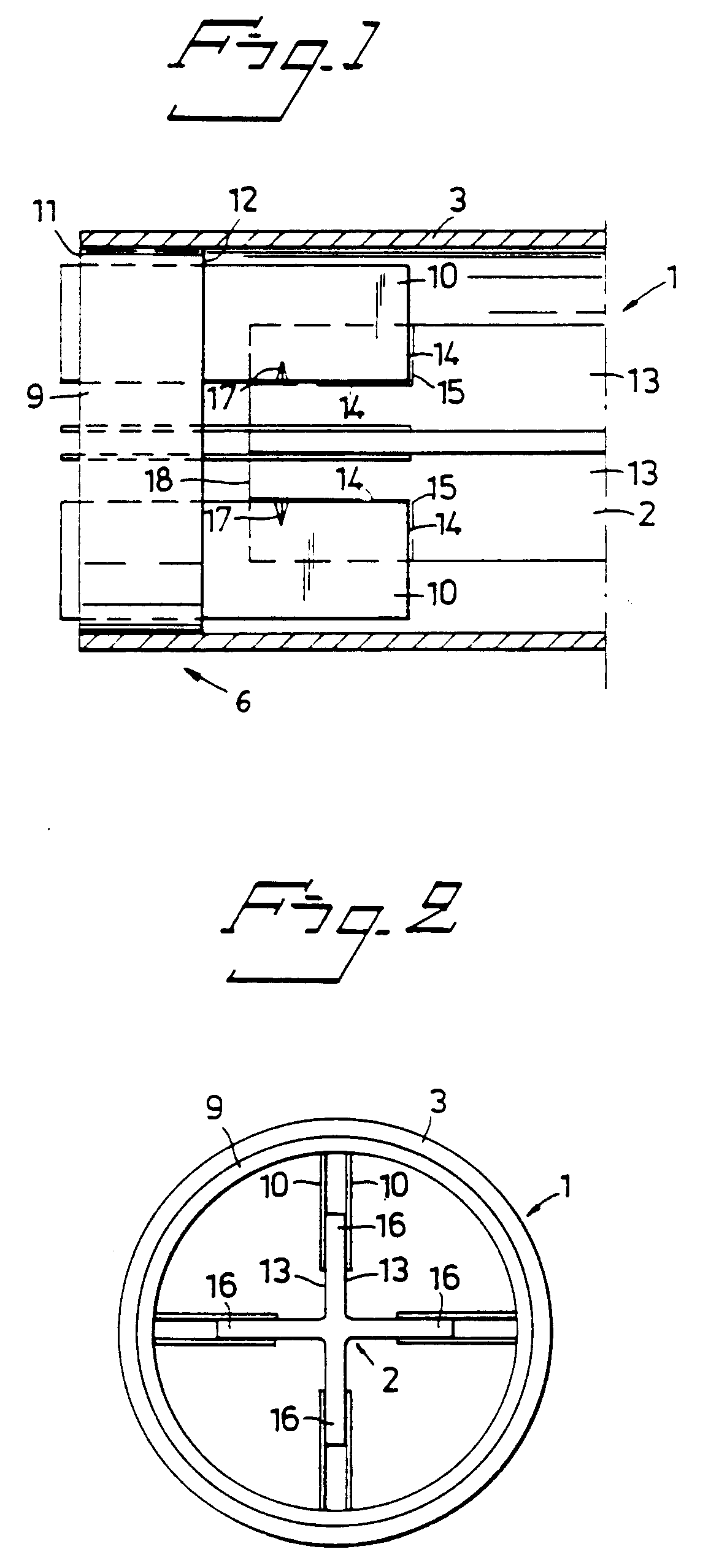
Fig. 1 is a partial, schematic side view in cross-section of a composite column constructed
in accordance with one preferred embodiment of the invention, and more specifically
the base end of the column;
Fig. 2 is an end view of the composite column shown in Fig. 1;
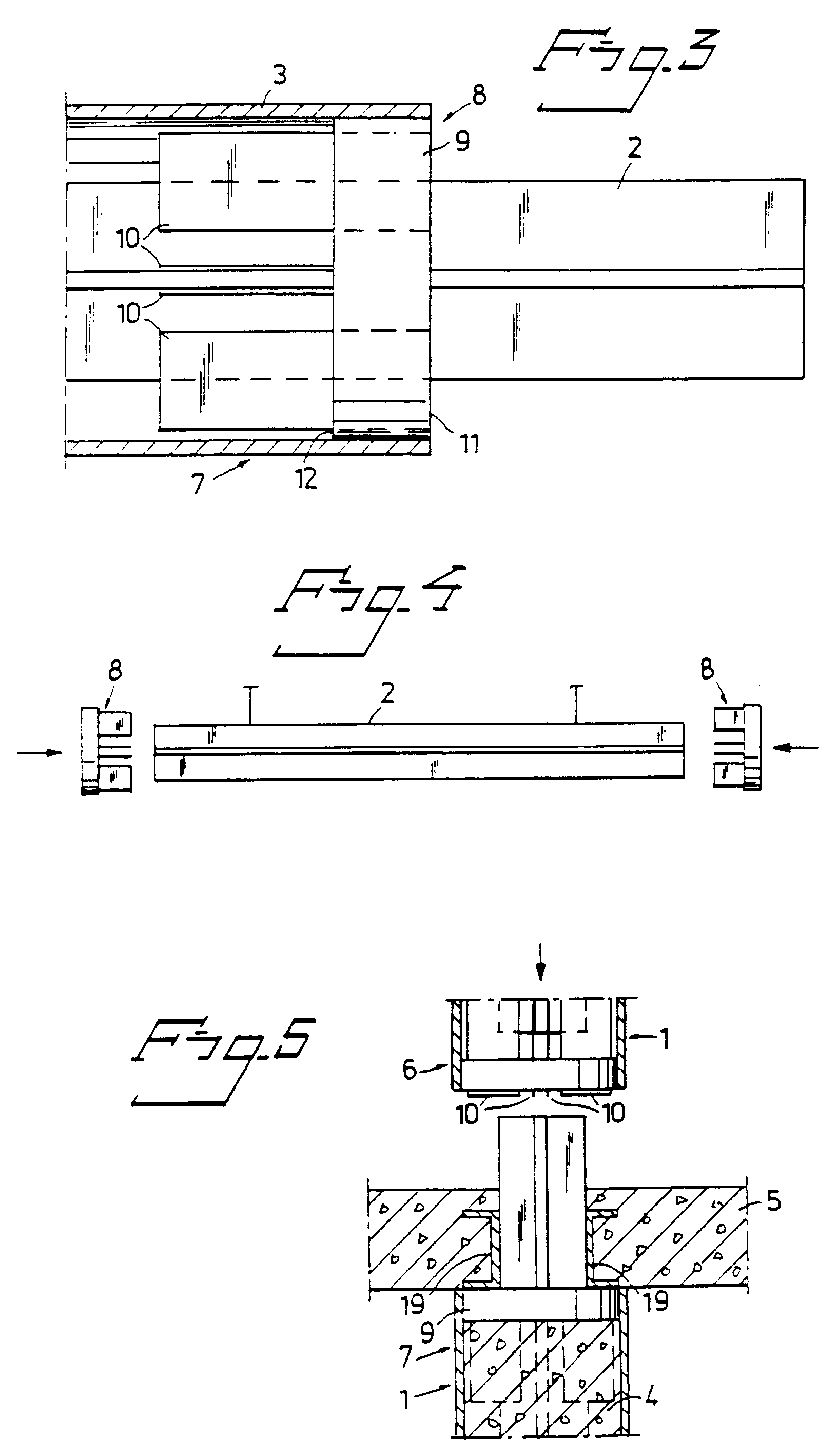
Fig. 3 is a partial, schematic side view in cross-section of the top end of the column
illustrated in Fig. 1;
Fig. 4 illustrates schematically, and in side view, a method of manufacturing a composite
column, and more specifically a manner of mounting to each end of a post of cruciform
cross-section a base ring and top ring each of which functions as jointing and position-fixating
sleeve; and
Fig. 5 is a schematic side view, in cross-section, which illustrates a method of jointing
an upper composite column to an underlying, erected composite column subsequent to
laying a floor comprising beams which rest on the top ring of the bottom column, and
after filling the steel tube with concrete.
[0007] Figs. 1 and 2 illustrate a preferred embodiment of an inventive composite column
1, comprisng a core in the form of a steel post, e.g. a post 2 of cruciform cross-section,
and a steel tube 3 which encircles the post. Subsequent to casting concrete between
these members, said members are intended to coact statically with one another and
with the concrete 4 cast therebetween. The concrete can be cast between said members
either in a separate operation, or in conjunction with casting a concrete floor 5
(Fig. 5), or when using concrete for joining in a prefabricated floor structure. The
ends of the composite column 1, namely its base end 6 and its top end 7, have mounted
thereon a respective jointing and position-fixating sleeve 8 which is operative to
achieve said static coaction and which comprises a ring 9 the outer diameter of which
is at least slightly smaller than the inner diameter of the steel tube 3, and the
inner diameter of which ring 9 is equally as large as or smaller than the inner diameter
of the steel tube 3. The ring 9 has extending therefrom a number, preferably 8, of
pairs of mutually parallel plates or fingers 10, which extend towards the centre of
the ring and which terminate at a given distance therefrom, said plates 10 having
an extension in the longitudinal direction of the ring 9 such that the plates, when
forming a base ring, will project slightly beyond, e.g. about 10 mm, one outer edge
11 of the ring 9, said outer edge facing outwardly in the fitted position of the ring,
whereas the plates 10 extending from the other outer edge 12, which faces inwardly
in the fitted position, project much further from said other edge, e.g. about 80-100
mm, so as to enable effective welding of the end edges 14 of the plates 10 in longitudinal
and/or transversal abutment with the side walls 13 of the cruciform post 2, by means
of a weld 15. The steel tube 3 extends into abutment with respective rings 9 and is
secured in position, e.g. by welding. The position of the cruciform post 2 in the
steel tube 3 is determined exactly by means of the plates 10 on the base and top rings
9, both before and when casting concrete into the tube.
[0008] As will best be seen from Fig. 2, the plates 10 on the jointing and position-fixating
sleeve 8 extend mutually parallel in pairs, in a direction towards the centre of the
sleeve 8 and the ring 9, at a mutual distance apart which corresponds to the thickness
of the legs 16 of the cruciform post 2 used. The plates 10 may be provided with a
slot 17, so as to enable the plates 10 to be deformed more redily and to be adapted
to a cruciform post 2 of smaller dimensions. The jointing and position-fixating sleeves
8 are fitted into the end parts of the steel tube 9, with the cruciform post 2 fixated
by the weld 15 and with plates 10 displaced positionally in the longitudinal direction
of the steel tube 3 such as to form a male and a female end where, in the illustrated
embodiment, the female end is located at the base end 6 of the column 1 and the male
end is located at the top end 7 of said column.
[0009] As will be seen more clearly from Figs. 3 and 5, the top end 7 of the cruciform post
2 projects beyond the outer edge 11 of the top ring 9 through a distance which corresponds
to the depth of distance from the outer edge 11 of the base ring 9 to the end edge
18 of the cruciform post 2 at the female or base end 6 plus the thickness of the floor
5 to be carried. The plates 10 terminate at the top end 7 of the column 1 flush with
the outer edge 11 of the ring, thereby providing a support for the floor beams 19
(Fig. 5). In order to facilitate the erection of an overlying column 1 on an already
erected column, the plates 10 mounted on the sleeve 8 which functions as a base ring
at the base end 6 of the column 1 project slightly downwrds, beyond the outer edge
11 of the base ring 9, as mentioned above. Because the top ring 9 at the top end 7
of the composite column 1 has a greater diameter in relation to the extension of the
cruciform post 2, one or two mutually parallel floor beams 19 can be laid continuously
over and supported by the support formed by the top ring 9 on both sides of the cruciform
post 2, which increases the load bearing capacity and rigidity of the floor beams
19 while enabling, at the same time, the cruciform post 2 to extend continuously above
the floor beams 19 for the purpose of joining the underlying column to the cruciform
post of the overlying column and therewith enabling load to be transmitted from the
overlying column 1 without requiring the provision of complicated and expensive devices
on the beams 19 for transferring the load between the columns.
[0010] Described in the following is an exemplifying method of manufacturing an inventive
composite column 1. A cruciform post 2 of given dimensions is suspended from an overhead
crane or like apparatus, as as to terminate at a given distance from an underlying
support surface. A jointing and position-fixating sleeve 8 which forms a base ring
and a further sleeve which forms a top ring are pressed onto the ends 6, 7 of the
post of cruciform cross-section in a manner to form the aforesaid male and female
configurations, whereafter the post 2 is lowered onto the support surface and rolled
or rotated so as to enable the plates 10 on the rings 9 to be welded onto the sides
13 of the cruciform post 2. When necessary, the plates 10 can be deformed to coincide
with cruciform beams of smaller dimensions, by pressing the plates 10 into abutment
with the walls 13 of the post 2 and welding said plates to said walls, this deformation
of the plates being facilitated by the aforesaid slots 17. The steel tube 3 is then
placed over the cruciform post 2 and welded to the base and top rings. The column
1 can now be erected in position on the building site and filled with concrete, which
can either be carried out separately or when casting a concrete floor or when using
concrete for joining a prefabricated floor structure.
1. A composite column comprising a core in the form of a steel post (2) which is contained
within a steel tube (3), said column components being intended to coact statically
with one another and with concrete (4) cast therebetween, characterized by a jointing and position-fixating sleeve (8) which functions to achieve said static
co-action and which comprises a ring (9) having an outer diameter which is slightly
smaller than the inner diameter of the steel tube (3) and in that from said ring (9)
a number of plates (10) extend a given distance towards the centre of the ring (9),
the extensions of the plates in the axial direction of the ring (9) terminate in at
least one direction externally of the outer edges (11,12) of the ring (9), the sleeve
(8) is fitted to an end (6,7) of the steel post (2) in order to function as a foot
or top ring, and the end edges (14) of the plates (10) are in longitudinal abutment
with and welded to the steel post (2) while the end parts of the steel tube (3) extend
into abutment with the respective ring (9) and are positionally fixated relative thereto.
2. A composite column according to claim 1, characterized in that the steel post (2) in at least one end (7) of the steel tube (3) is permitted,
either to extend through the sleeve (8) and project a first given distance beyond
the steel tube (3), or to extend only partially into the sleeve (8) and terminate
within the steel tube (3) at a distance from the mouth of said end (6) which is equal
to or shorter than said first given distance from the mouth of said end (6) such as
to form a male and a female end.
3. A composite column according to claim 1, characterized in that the plates (10) in the sleeve (8) which functions as a base ring (9) project
slightly beneath the ring (9) so as to facilitate fitting of the column during erection
onto an erected, underlying column (1) and joining said columns together.
4. A method of joining a composite column according to any one of the preceding claims,
characterized in that the sleeve (8) functions as a top ring (9), and forms a support for a floor
beam (19) carried by the column (1) and an adjoining column.
5. A method according to claim 4, characterized in that by virtue of the larger diameter of the top ring (9) in relation to the extension
of the steel post (2), one or two mutually parallel floor beams (19) on both sides
of the steel post (2) extend continuously over the support thus provided, thereby
increasing the load bearing capacity and rigidity of the beams (19), while, at the
same time, the steel post (2) extends above the beams (19) for joining the column
to the steel post (2) of an overlying column (1), and therewith enabling the vertical
load of said overlying columns (1) to be readily taken up by the underlying column.
6. A method of joining a composite column according to claims 2 or 3, characterized in that the steel post (2) at the upper end or male end (7) of the column (1) projects
upwardly to an extent which corresponds to the thickness of an overlying floor and
the depth of the female end (6) of a column (1) to be erected on top of said column.
7. A composite column according to any one of claims 1 to 3, characterized in that the steel post has a cruciform cross-section.
8. A composite column according to claim 7, characterized in that the plates (10) extend in pairs from the inside of the ring (9) towards the
centre thereof, and in that the distance between the plates (10) of one pair corresponds
to the thickness of the respective legs (16) of the cruciform post (2) concerned.
9. A method of manufacturing a composite column according to any one of claims 1-3, 7
and 8, characterized by pressing onto the end part (6,7) of the steel post (2) a sleeve (8) in the form of
a base ring (9) and a further sleeve in the form of a top ring (9); placing the steel
post (2) on a support surface and rolling said post around for the purpose of welding
the plates (10) of the rings (9) onto the steel post (2); and placing the steel tube
(3) over the steel post (2) and welding the tube to the base ring and the top ring,
the column thereby being ready for erection and filling with concrete (4), which can
be effected separately or when casting a concrete floor structure (5) or when using
concrete for joining a prefabricated floor structure (5).
1. Verbundsäule mit einem Kern in der Form eines Stahlpfostens (2), der innerhalb eines
Stahlrohres (3) enthalten ist, wobei die Säulenkomponenten für ein statisches Zusammenwirken
wechselseitig und mit Beton (4) bezweckt sind, der darin vergossen ist,
gekennzeichnet durch eine die Verbindung herstellende und die Position fixierende
Hülse (8), die für das Erreichen des statischen Zusammenwirkens funktioniert und die
einen Ring (9) mit einem Außendurchmesser aufweist, der etwas kleiner ist als der
Innendurchmesser des Stahlrohres (3), wobei von dem Ring (9) eine Anzahl von Platten
(10) über eine vorgegebene Entfernung gegen die Mitte des Ringes (9) verlaufen, wobei
die Plattenverläufe in der axialen Richtung des Ringes (9) wenigstens in einer Richtung
außerhalb der Außenkanten (11, 12) des Ringes (9) enden, die Hülse (8) an ein Ende
(6, 7) des Stahlpfostens (2) angepaßt ist, um als ein Fuß oder ein oberer Ring zu
funktionieren, und die Endkanten (14) der Platten (10) in Längsberührung mit dem Stahlpfosten
(2) und daran angeschweißt sind, während die Endteile des Stahlrohres (3) für eine
Berührung mit dem betreffenden Ring (9) verlaufen und relativ dazu positionsmäßig
befestigt sind.
2. Verbundsäule nach Anspruch 1, dadurch gekennzeichnet, daß der Stahlpfosten (2) in
wenigstens einem Ende (7) des Stahlrohres (3) entweder durch die Hülse (8) hindurch
verlaufen kann und mit einer ersten vorgegebenen Entfernung über das Stahlrohr (3)
vorsteht, oder er nur teilweise in die Hülse (8) hinein verläuft und innerhalb des
Stahlrohres (3) in einer Entfernung von der Mündung des Endes (6) endet, die gleich
oder kleiner ist als die erste vorgegebene Entfernung von der Mündung dieses Endes
(6), sodaß ein äußeres oder ein inneres Ende gebildet wird.
3. Verbundsäule nach Anspruch 1, dadurch gekennzeichnet, daß die Platten (10) in der
Hülse (8), die als ein Basisring (9) funktioniert, etwas unterhalb des Ringes (9)
vorstehen, um das Einpassen der Säule während der Errichtung auf einer errichteten,
darunter liegenden Säule (1) und das Verbinden der Säulen miteinander zu erleichtern.
4. Verfahren zum Verbinden einer Verbundsäule nach einem der vorhergehenden Ansprüche,
dadurch gekennzeichnet, daß die Hülse (8) als ein oberer Ring (9) funktioniert und
eine Stütze für einen Bodenträger (19) bildet, der durch die Säule (1) und eine benachbarte
Säule getragen wird.
5. Verfahren nach Anspruch 4, dadurch gekennzeichnet, daß als Folge des größeren Durchmessers
des oberen Ringes (9) in Bezug zu dem Verlauf des Stahlpfostens (2) ein oder zwei
wechselseitig parallele Bodenträger (19) auf beiden Seiten des Stahlpfostens (2) fortlaufend
über die so vorgesehene Stütze verlaufen, sodaß dadurch die Lasttragekapazität und
die Steifheit der Träger (19) vergrößert wird, während gleichzeitig der Stahlpfosten
(2) oberhalb der Träger (19) für ein Verbinden der Säule mit dem Stahlpfosten (2)
einer darüber liegenden Säule (1) verläuft und damit die Vertikallast der darüber
liegenden Säulen (1) unmittelbar von der darunter liegenden Säule aufgenommen werden
kann.
6. Verfahren zum Verbinden einer Verbundsäule nach den Ansprüchen 2 oder 3, dadurch gekennzeichnet,
daß der Stahlpfosten (2) an dem oberen Ende oder dem äußeren Ende (7) der Säule (1)
nach oben über ein Maß vorsteht, welches der Dicke eines darüber liegenden Bodens
und der Tiefe des inneren Endes (6) einer Säule (1) entspricht, die oben auf der Säule
zu errichten ist.
7. Verbundsäule nach einem der Ansprüche 1 bis 3, dadurch gekennzeichnet, daß der Stahlpfosten
einen Kreuzquerschnitt hat.
8. Verbundsäule nach Anspruch 7, dadurch gekennzeichnet, daß die Platten (10) paarweise
von der Innenseite des Ringes (9) gegen die Mitte davon verlaufen, und daß die Entfernung
zwischen den Platten (10) jedes Paares der Dicke der betreffenden Schenkel (16) des
jeweiligen Kreuzformpfostens (2) entsprechen.
9. Verfahren zum Herstellen einer Verbundsäule nach einem der Ansprüche 1 bis 3, 7 und
8, gekennzeichnet durch das Aufpressen einer Hülse (8) in der Form eines Basisringes
(9) und einer weiteren Hülse in der Form eines oberen Ringes (9) auf den Endteil (6,
7) des Stahlpfostens (2); die Anordnung des Stahlpfostens (2) auf einer Stützfläche
und das Umherrollen des Pfostens für den Zweck eines Anschweißens der Platten (10)
der Ringe (9) an dem Stahlpfosten (2); und eine Anordnung des Stahlrohres (3) über
dem Stahlpfosten (2) und ein Anschweißen des Rohres an den Basisring und an den oberen
Ring, wodurch die Säule für eine Richtung und für ein Füllen mit Beton (4) fertig
ist, was getrennt bewirkt werden kann oder beim Gießen einer Betonbodenstruktur (5)
oder bei Verwendung von Beton für ein Verbinden einer vorgefertigten Bodenstruktur
(5).
1. Un poteau composite, comportant une âme sous la forme d'un poteau en acier (2) qui
est logée à l'intérieur d'un tube en acier (3), les constituants de ladite colonne
étant destinés à coagir statiquement l'un avec l'autre et avec du béton (4) coulé
entre eux, caractérisé par un manchon (8) de liaison et de fixation de position qui
agit pour assurer ladite coaction statique et qui comporte une bague (9) présentant
un diamètre extérieur qui est légèrement inférieur au diamètre intérieur du tube en
acier (3), et en ce que, à partir de ladite bague (9), une pluralité de plaques (10)
s'étendent sur une distance donnée vers le centre de la bague (9), la longueur des
plaques dans la direction axiale de la bague (9) se terminant dans au moins une direction
extérieurement aux bords extérieurs (11, 12) de la bague (9), le manchon (8) est fixé
à une extrémité (6, 7) du poteau en acier (2) de manière à agir comme bague inférieure
ou supérieure, et les bords extrêmes (14) des plaques (10) sont en butée longitudinale
et sont soudés sur le poteau en acier (2), tandis que les parties extrêmes du tube
en acier (3) s'étendent en butée contre la bague respective (9) et sont fixes en position
par rapport à celle-ci.
2. Un poteau composite sur la revendication 1, caractérisé en ce que le poteau en acier
(2), dans au moins une extrémité (7) du tube en acier (3), peut soit traverser le
manchon (8) et faire saillie d'une première distance donnée au-delà du tube en acier
(3), soit s'étendre seulement partiellement dans le manchon (8) et se terminer dans
le tube en acier (3) à une distance par rapport à l'ouverture de ladite extrémité
(6) qui est égale ou inférieure à ladite première distance donnée à partir de l'ouverture
de ladite extrémité (6) de manière à former une extrémité mâle et une extrémité femelle.
3. Un poteau composite sur la revendication 1, caractérisé en ce que les plaques (10),
dans le manchon (8) qui agit comme bague de base (9), font légèrement saillie sous
la bague (9) de manière à faciliter le montage du poteau lors de l'érection sur un
poteau sous-jacent dressé (1) et la jonction desdits poteaux entre eux.
4. Un procédé de jonction d'un poteau composite selon l'une quelconque des revendications
précédentes, caractérisé en ce que le manchon (8) agit en bague supérieure (9) et
forme un support pour une poutre de plancher (19) portée par le poteau (1) et un poteau
adjacent.
5. Un procédé selon la revendication 4, caractérisé en ce que, du fait du diamètre supérieur
de la bague supérieure (9) par rapport à la dimension du poteau en acier (2), deux
ou plus de deux poutres de plancher (19) mutuellement parallèles, des deux côtés du
poteau en acier (2), s'étendent en continu sur le support ainsi fourni, ce qui augmente
ainsi la capacité de support de charge et la rigidité des poutres (19), tandis que,
en même temps, le poteau en acier (2) s'étend au-dessus des poutres (19) pour relier
le poteau au poteau en acier (2) d'un poteau supérieur (1), en permettant ainsi que
la charge verticale desdits poteaux supérieurs (1) soit facilement encaissée par le
poteau inférieur.
6. Un procédé de liaison d'un poteau composite selon la revendication 2 ou 3, caractérisé
en ce que le poteau en acier (2), à l'extrémité supérieure ou l'extrémité mâle (7)
du poteau (1), fait saillie vers le haut sur une distance qui correspond à l'épaisseur
du plancher sous-jacent et à l'épaisseur de l'extrémité femelle (6) d'un poteau (1)
qui doit être dressé sur ledit poteau.
7. Un poteau composite selon l'une quelconque des revendications 1 à 3, caractérisé en
ce que le poteau en acier présente une section droite cruciforme.
8. Un poteau composite selon la revendication 7, caractérisé en ce que les plaques (10)
s'étendent par paires à partir de l'intérieur de la bague (9) vers le centre de celle-ci,
et en ce que la distance entre les plaques (10) d'une paire correspond à l'épaisseur
des branches respectives (16) du poteau cruciforme (2) concerné.
9. Un procédé pour fabriquer un poteau composite selon l'une quelconque des revendications
1-3, 7 et 8, caractérisé par le montage à force, sur la partie extrême (6, 7) du poteau
en acier (2), d'un manchon (8) sous la forme d'une bague de base (9) et d'un autre
manchon sous la forme d'une bague supérieure (9) ; la mise en place du poteau en acier
(2) sur une surface de support et la rotation dudit poteau dans le but de souder les
plaques (10) des bagues (9) sur le poteau en acier (2) ; et la mise en place du tube
en acier (3) par dessus le poteau en acier (2) et le soudage du tube à la bague de
base et à la bague supérieure, le poteau étant ainsi prêt à être dressé et à être
rempli de béton (4), ce qui peut être effectué séparément ou lors du coulage d'une
structure de plancher en béton (5) ou lors de l'utilisation du béton pour relier une
structure de plancher préfabriquée (5).