|
(11) | EP 0 474 580 B1 |

| (12) | EUROPEAN PATENT SPECIFICATION |
|
|
| (54) |
Use of 1-[3-(dimethylamino)propyl]-1-phenylphthalenes for the treatment of cerebrovascular disorders Verwendung von 1-[3-(Dimethylamino)propyl]-1-phenylphthalenen zur Behandlung zerebrovaskulärer Störungen Utilisation des 1-[3-(diméthylamino)propyl]-1-phénylphtalènes pour le traitement des maladies cérébrovasculaires |
|
|
|||||||||||||||||||||||||||||||
| Note: Within nine months from the publication of the mention of the grant of the European patent, any person may give notice to the European Patent Office of opposition to the European patent granted. Notice of opposition shall be filed in a written reasoned statement. It shall not be deemed to have been filed until the opposition fee has been paid. (Art. 99(1) European Patent Convention). |
[0001] The present invention relates to the use of a class of 1-[3-(dimethylamino)propyl]-1-phenylphthalanes for the manufacture of medicaments for the treatment of cognitive disorders or amnesia associated with dementia and of cerebrovascular disorders.
[0002] US patent No. 4,136,193 relates to 1-[3-(dimethylamino)propyl]-1-phenylphthalanes having the general formula
wherein R¹ and R² each are selected from halogen, trifluoromethyl, cyano and R-CO-, wherein R is an alkyl radical with from 1 to 4 C-atoms inclusive, and acid addition salts thereof with pharmaceutically acceptable acids.
[0003] Said compounds are described to be selective, centrally active serotonin (5-hydroxytryptamine; 5-HT) reuptake inhibitors and accordingly to have antidepressant activities. One of the tests used to show such activities was inhibition of ¹⁴C-5-HT uptake in rabbit blood platelets in vitro . The compound of Formula I wherein R¹ is a cyano group and R² is a fluorine atom is the known antidepressant citalopram, the antidepressant activity of which has been reported in several publications, e.g. J. Hyttel, Prog. Neuro-Psychopharmacol. & Biol. Psychiat., 1982, 6, 277-295 and A. Gravem, Acta Psychiatr. Scand., 1987, 75, 478-486. A method of and intermediates for the preparation of citalopram are described in US Patent No 4,650,884 and methods of preparing the individual enantiomers of citalopram are disclosed in US Patent No 4,943,590.
[0004] Biochemical postmortem investigations of patients with Alzheimer's disease have shown hypofunction of the serotonin nervous system in the brain (D.M. Bowen et al., J. Neurochem., 1983 , 41, 266-272). It is also known that depression is one of the major symptoms in Alzheimer's disease, and citalopram has been reported to be effective against depression associated with Alzheimer's disease ( C.G. Gottfries, Psychopharmacology, 1988 , 96 , 45 (Suppl.)). A study of a group of patients with moderate dementia of Alzheimer's type (AD/SDAT) or multi-infarct dementia (MID) has shown significant improvements in emotional lability, motivation, confusion, fear-panic, irritation, reduced mood and restlessness, whereas citalopram did not appear to have effect on intellectual functions (Nyth, A.L. et al. "The effect of citalopram in dementia disorders", presentation at CINP, August 1988; subsequently reported in Nyth, A.L. and Gottfries, C.G., "The clinical efficacy of citalopram in treatment of emotional disturbances in dementia disorders. A nordic multicentre study." Br. J. Psychiat. ,1990, 157 , 894-901). Later controlled studies showed that treatment with citalopram caused no significant improvement on emotional disturbances in patients with vascular dementia (VD, incl. MID) (Nyth, A.L. et al. " The efficacy of citalopram in treatment of emotional disturbances in dementia disorders",ECNP Abstract 1989, Sweden, 79).
[0005] It has also been described that certain 5-HT1A agonists show effect in the treatment of Apoplexia cerebri (Danish Patent Application No 4616/89).
[0006] Cerebrovascular disorders, such as ischemia which are triggered by cerebral infarction, cerebral hemorrhage, cerebral arteriosclerosis, subarachnoid hemorrhage, cerebral thrombosis, cerebral embolism, and other diseases are of increasing importance among the population and there is a great demand for effective and safe drugs for the treatment of such disorders and the sequelae of such disorders. A particular problem is dementia, not only dementia caused by cerebrovascular disorders but also dementia of other genesis.
[0007] Surprisingly, it has now been found that the compounds of the above Formula I show improving effects on cerebrovascular disorders, in particular ischemia, and the brain damage, and the impairment of memory functions in connection therewith. Furthermore, the compounds of the general Formula I have been found to present anti-amnesic effect and to improve cognitive function in elderly depressed patients having concomitant dementia, i.e. not only dementia of cerebrovascular origin, but also dementia as a result of chronic organic reactions, such as neurodegenerative disorders.
[0008] Accordingly, the present invention relates to the use of a compound of the above Formula I for the manufacture of medicaments for the prevention or treatment of cognitive disorders or amnesia associated with dementia and of cerebrovascular disorders.
[0009] Dementia may be senile dementia of any genesis such as neurodegenerative, traumatic, cerebrovascular, anoxic, etc, i.e. dementia of Alzheimer's type, multi-infarct dementia and vascular dementia, etc.
[0010] Cerebrovascular disorders are brain damages caused by cerebral infarction, cerebral hemorrhage, cerebral arteriosclerosis, subarachnoid hemorrhage, cerebral thrombosis, cerebral embolism, or the like, e.g. ischemia, and the psychological and neurological sequelae of such damages.
[0011] The use of the optical isomers of the compounds of general Formula I and their mixtures, including racemic mixtures thereof, is embraced by the invention.
[0012] The compound of general Formula I may be used as the free base or as a pharmacologically acceptable acid addition salt thereof. As acid addition salts such salts formed with organic or inorganic acids may be used. Exemplary of such organic salts are those with maleic, fumaric, benzoic, ascorbic, embonic, succinic, oxalic, bis-methylenesalicylic, methanesulfonic, ethanedisulfonic, acetic, propionic, tartaric, salicylic, citric, gluconic, lactic, malic, mandelic, cinnamic, citraconic, aspartic, stearic, palmitic, itaconic, glycolic, p-amino-benzoic, glutamic, benzene sulfonic and theophylline acetic acids, as well as the 8-halotheophyllines, for example 8-bromo-theophylline. Exemplary of such inorganic salts are those with hydrochloric, hydrobromic, sulfuric, sulfamic, phosphoric and nitric acids.
[0014] In view of the improving effects on cognitive function and on brain damages now found as well as of the known effects on 5-HT uptake, the medicaments obtained in accordance with the present invention are useful in the treatment of senile dementia and cerebrovascular disorders, and the sequelae of cerebrovascular disorders such as psychiatric symptoms, e.g. anxiety, depression, loss of memory, hypobulia, restlessness, dementia, hallucinations, delutions, disturbances of conciousness, hypochondriac tendency, insomnia, excitation, garrulity, hyperkinesia, deliriums, and disturbances of orientation, neurological symptoms, eg. alalia, and hypodynamia, and subjective symptoms, eg headache, dizziness, feeling of numbness, feeling of stiffness in the shoulder, feeling of exhaustion and heavy feeling in the head.
[0017] The medicaments manufactured in accordance with the present invention are particularly useful in the treatment or prevention of ischemia in the brain and especially of cognitive disorders or amnesia caused by ischemia.
[0018] Due to the pharmacological profile the medicaments manufactured in accordance with the present invention are especially useful in elderly patients.
[0019] Citalopram may be prepared by the methods disclosed in US patent No 4,650,884 and the other compounds used in accordance with the invention may be prepared analogueously or by the methods of US patent No. 4,136,193. The individual enantiomers of citalopram may be prepared as described in US patent No. 4,943,590 and enantiomers of the other compounds of Formula I may be prepared by similar methods.
[0020] The acid addition salts of the compounds may be prepared by methods known in the art. The base is reacted with either the calculated amount of acid in a water miscible solvent, such as acetone or ethanol with subsequent isolation of the salt by concentration and cooling or with an excess of the acid in a water immiscible solvent, such as ethylether, ethylacetate or dichloromethane, with the salt separating spontaneously.
[0021] The medicaments prepared in accordance with the invention may be administered in any suitable way and in any suitable form, for example orally in the form of tablets, capsules, powders or syrups, or parenterally in the form of usual sterile solutions for injection.
[0022] The pharmaceutical formulations of the invention may be prepared by conventional methods in the art. For example, tablets may be prepared by mixing the active ingredient with ordinary adjuvants and/or diluents and subsequently compressing the mixture in a conventional tabletting machine. Examples of adjuvants or diluents comprise: Corn starch, potato starch, talcum, magnesium stearate, gelatine, lactose, gums, and the like. Any other adjuvant or additive colourings, aroma, preservatives etc. may be used provided that they are compatible with the active ingredients.
[0023] Solutions for injections may be prepared by dissolving the active ingredient and possible additives in a part of the solvent for injection, preferably sterile water, adjusting the solution to the desired volume, sterilization of the solution and filling in suitable ampules or vials. Any suitable additive conventionally used in the art may be added, such as tonicity agents, preservatives, antioxidants, etc.
[0024] The present compounds and their non-toxic acid addition salts may also be used in combination with other active ingredients, such as neuroleptics, thymoleptics, analgetics etc.
TOXICITY STUDY
[0025] In toxicity studies male and female SD rats ranging in weight from 170 g to 200 g were used one day after fasting. Citalopram was dissolved in water and administered orally, Symptoms were observed for one week after citalopram administration. Even when citalopram was administered at a dose of 350 mg/kg no deaths were observed and accordingly it was obvious that citalopram has a very good safety profile.
PHARMACOLOGICAL TESTS
ISCHEMIA-INDUCED HIPPOCAMPAL DEATH IN GERBILS
[0026] The overall objective of the study was to investigate the effects of citalopram on hippocampal lesions induced by ischemia in Mongolian gerbils.
METHODS
[0027] Test compounds were administered intraperitoneally to Male Mongolian gerbils 30 min before carotid occlusion. Carotid occlusion time was 5 min . Seven days after recovery, the animals were killed, brains removed, sectioned and surviving neurons were counted along CA1 in the hippocampus.
RESULTS
[0028] As is shown in Table 1, citalopram (20 mg/kg) had a weak but non-significant protective effect against neuronal lesions. The higher dose of this compound (40 mg/kg) showed a significant (p < 0.05 ) protective effect against neuronal lesions. Ketamine (100 mg/kg) showed significant (p < 0.01) protective effect.
TABLE 1
| Effects on ischemia induced hippocampal neuronal damage in gerbils | |||||
| Drug | Dose (mg/kg i.p.) | Gerbils used | Survival neurons/mm | ||
| mean | S.E. | p | |||
| Vehicle | - | 10 | 12.8 | 2.6 | |
| Citalopram | 20 | 12 | 38.0 | 18.5 | N.S. |
| Citalopram | 40 | 11 | 95.8 | 27.9 | < 0.05 |
| Ketamine | 100 | 8 | 174.5 | 25.7 | < 0.01 |
| Statistical analysis was carried out according to Dunnett's t-tests vs vehicle group. | |||||
PASSIVE AVOIDANCE IN ISCHEMIC GERBILS
[0029] The test employed was step-down passive avoidance in gerbils treated with test compounds prior to occlusion of carotid arteries followed by acquisition trial (training phase).
METHODS
[0030] Test compounds were administered intraperitoneally to gerbils 30 min prior to carotid occlusion or ketamine was administered intraperitoneally 10 min prior to carotid occlusion. The gerbils were anesthetized with 2% halothane contained in a mixture of 70% nitrogen and 30% oxygen. The right and left common carotid arteries were occluded for 5 min. The gerbils were trained for 5 min in a step-down type passive avoidance chamber (16x16x20 cm) two days after induced ischemia. Each gerbil was placed on a safety platform (6x16x20 cm) in the chamber and received a series of mild foot shocks (0.1 mA for 3 s every 6 s), when the gerbil stepped down to a floor made of metal rods. Gerbils were returned to the safety platform for testing 24 h later and their step-down latencies to the grid floor were recorded (max. 60 s). RESULTS
[0031] Ischemia did not alter step-down latency measured during the training phase. Step-down latency during the training phase was not significantly modified in the gerbils treated with test compound.
Step-down latency in the testing phase was significantly decreased between ischemic control and sham operated gerbils. Citalopram (20 mg/kg) and ketamine (120 mg/kg) significantly increased the latency of ischemic gerbils. But the latency in indeloxazine (40 mg/kg) treated gerbils was not significantly different from that in ischemic control gerbils.
TABLE 2
| Effect on passive avoidance in ischemic gerbils | |||||
| Drug | Dose (mg/kg i.p.) | Number of of gerbils | Ischemic treatment | Step-down latency [log(s)] | |
| Mean | S.E. | ||||
| Saline (sham) | - | 15 | - | 1.471 | 0.075*** |
| Saline (control) | - | 20 | + | 0.953 | 0.116 |
| Citalopram | 20 | 7 | + | 1.386 | 0.083** |
| Indeloxazine | 40 | 6 | + | 1.085 | 0.244 |
| Ketamine | 120 | 9 | + | 1.348 | 0.100* |
| * : p<0.05, | |||||
| **:p<0.01, | |||||
| ***:p<0.001 (vs Saline control, by Student's t-test) |
BRAIN ISCHEMIA-INDUCED DEATH IN MICE
MATERIALS
METHOD
[0033] Test compounds were administered intraperitoneally to the mice 30 min prior to permanent ligation of bilateral common carotid arteries under conscious condition. Surviving mice were observed over 4 h.
RESULTS
[0034] Citalopram (30 mg/kg) significantly prevented ischemia-induced death both 2 h and 4 h after bilateral carotid arterial ligation. Ifenprodil (30 mg/kg), however, did not significantly increase survival rate 4 h after ligation, although it showed significantly increased survival rate 2 h after the ligation.
TABLE 3
| Effect on ischemia-induced death in bilateral carotid arterial ligation (BCAL) in mice | ||||
| Drug | Dose (mg/kg,p.o.) | Number of mice | Survival rate (%) | |
| 2 h after BCAL | 4 h after BCAL | |||
| Saline | - | 30 | 23 | 17 |
| Citalopram | 30 | 30 | 50* | 43* |
| Saline | - | 30 | 13 | 7 |
| Ifenprodil | 30 | 30 | 47** | 20 |
| * : p<0.05, | ||||
| ** : p<0.01 (Chi-square test vs each Saline) |
KCN-INDUCED COMA IN MICE
METHODS
[0035] Male mice (Crj:ICR) weighing 20-30 g were used. The mice were fasted for one day. The drugs, dissolved in saline, were injected intraperitoneally. 30 min after the injection, KCN, dissolved in saline, was injected intravenously at a dose of 1.3 mg/kg. The duration of disappearance of righting reflex was measured as coma time.
RESULTS
[0036] Intraperitonal injection of citalopram significantly reduced coma time at a dose of 10 mg/kg. Indeloxazine at a dose of 20 mg/kg also significantly reduced the coma time.
TABLE 4
| Effects of intraperitoneal injection of citalopram on KCN-induced coma in mice | ||||
| Drug | Dose (mg/kg, i.p.) | Number of mice | Coma time (s) | |
| Mean | S.E. | |||
| Vehicle | - | 16 | 55.9 | 8.8 |
| Citalopram | 1.25 | 15 | 38.5 | 4.2 |
| Citalopram | 2.5 | 15 | 33.2 | 10.0 |
| Citalopram | 5 | 16 | 35.0 | 8.2 |
| Citalopram | 10 | 16 | 27.4 | 6.9* |
| Indeloxazine | 20 | 17 | 13.8 | 3.7** |
| * : P<0.05, | ||||
| ** : P<0.01, Significantly different from values of vehicle control (Dunnett's t-test). |
CARBON DIOXIDE-INDUCED AMNESIA IN RATS (PASSIVE AVOIDANCE TEST)
[0037] The test employed was a one-trial passive avoidance test in rats, using carbon dioxide asphyxiation to induce amnesia.
METHODS
[0038] Female Sprague-Dawley (CD) rats (A. Tick & Son Ltd.) in the body weight range 160-180g were used for the study.
The one-trial passive avoidance apparatus consisted of a 32 x 32 x 32 cm chamber with opaque walls and a metal grid floor. A 6 cm wide , 25 cm long runway protruded from the front wall of the chamber. The runway was illuminated while the chamber was dark. When placed on the runway, a rat could enter the chamber through a 6 x 6 cm opening. A scrambled footshock could be delivered through the metal grid floor of the chamber.
On the first day of the experiment, the rats received three pre-treatment training trials, during which each animal was placed on the end of the runway and the time taken to enter the chamber (the 'step-through' latency) was determined.
On the second day of the experiment, groups of 10 animals were treated p.o. with test compound dissolved in saline or with saline.
[0039] One hour after administration, an acquisition trial was performed. This was similar to a training trial, except that the rats received a footshock of 1.0 mA for 10 s commencing 10 s after entering the chamber. Immediately after the application of the footshock the animals were subjected to amnesic treatment.
Amnesic treatment consisted of placing the rats in a box filled with carbon dioxide until respiratory arrest occurred; the rats were then revived by artificial respiration. 24 Hours after the acquisition trial, a single retrieval trial was given to each rat and the time taken to enter the chamber ('step-through' latency) was recorded for each animal.
If a rat did not enter the chamber within 180 seconds it was taken from the runway.
RESULTS
[0040] There were no significant differences between the time of entry ('step-through' latency) of rats dosed with either vehicle, citalopram or piracetam, thus indicating that at oral doses of 40 or 1000 mg/kg, these compounds did not induce marked muscle incoordination of CNS effects of sufficient magnitude to modify entry times. The amnesic effect of carbon dioxide has been clearly demonstrated in this study. In those rats receiving footshock, but no drug treatment, treatment with carbon dioxide asphyxiation caused a decrase in 'step-through' latency.
Oral administration of citalopram at all doses tested caused dose-related increases in the group mean 'step-through' times, which in most cases were statistically significant when compared to the saline-treated control group using Student's t-test. At the 2 highest doses tested (i.e. 20 and 40 mg/kg), a marked and highly significant increase in time was observed.
As expected, piracetam treatment gave statistically significantly longer 'step-through' latencies.
TABLE 5
| Effects of oral administration of citalopram on carbon dioxide-induced amnesia in rats. | ||||
| Drug | Dose (mg/kg; p.o.) | CO2 Treatment | Number of animals | Latency (s) |
| Saline | - | 10 | 119.6*** | |
| Saline | + | 10 | 0.8 | |
| Citalopram | 5 | + | 10 | 31.2 |
| Citalopram | 10 | + | 10 | 77.2** |
| Citalopram | 20 | + | 10 | 114.3*** |
| Piracetam | 300 | + | 10 | 108.8*** |
| ** : p<0.01, | ||||
| *** : p<0.001, significantly different from values of relevant control group (Students t-test). |
[0041] It appears from the foregoing Ischemia Induced Hippocampal Death Test that the compound according to the invention tested shows improving effect on neuronal lesion. The Passive Avoidance Test in Ischemic gerbils indicates improving effect on memory following to ischemic attack, the Brain Ischemia-Induced Death Test in mice indicate effect on survival rate following to ischemic attack, the KCN-induced Coma test in mice indicates improving effect following to anoxia and the Carbondioxide-Induced Amnesia Test in rats show positive effect on amnesia.
CLINICAL TEST
[0042] In a group of depressed patients having concomitant dementia, it was observed that cognitive functions improved after treatment with compound of the general Formula I but not after treatment with placebo. Accordingly, compounds of general Formula I clinically have memory improving effect in patients having dementia which may not only be of cerebrovascular origin but also may result from chronic organic reactions such as neurodegenerative disorders. This is in contradiction to the earlier study of Nyth et al. mentioned above (Nyth, A.L. et al. " The effect of citalopram in dementia disorders", presentation at CINP, August 1988).
FORMULATION EXAMPLES
[0043] The following examples show typical formulations of the medicaments manufactured in accordance with the invention
1) Tablets containing 100 milligrams of citalopram calculated as the free base:
| Citalopram | 100 mg |
| Lactose | 18 mg |
| Potato starch | 27 mg |
| Saccharose | 58 mg |
| Sorbitol | 3 mg |
| Talcum | 5 mg |
| Gelatine | 2 mg |
| Povidone | 1 mg |
| Magnesium stearate | 0.5 mg |
2) Tablets containing 50 milligrams of citalopram calculated as the free base:
| Citalopram | 50 mg |
| Lactose | 16 mg |
| Potato starch | 45 mg |
| Sacc'harose | 106 mg |
| Sorbitol | 6 mg |
| Talcum | 9 mg |
| Gelatine | 4 mg |
| Povidone | 3 mg |
| Magnesium stearate | 0.6 mg |
3) Syrup containing per milliliter:
| Citalopram | 5.0 mg |
| Sorbitol | 500 mg |
| Tragacanth | 7 mg |
| Glycerol | 50 mg |
| Methyl-paraben | 1 mg |
| Propyl-paraben | 0.1 mg |
| Ethanol | 0.005 ml |
| Water | ad 1 ml |
4) Solution for injection containing per milliliter:
| Citalopram | 50 mg |
| Acetic acid | 17.9 mg |
| Sterile water | ad 1 ml |
5) Solution for injection containing per milliliter:
| Citalopram | 10 mg |
| Sorbitol | 42.9 mg |
| Acetic acid | 0.63 mg |
| Sodium hydroxide | 22 mg |
| Sterile water | ad 1 ml |
1. Use of a 1-[3-(dimethylamino)propyl]-1-phenylphthalane of the general formula
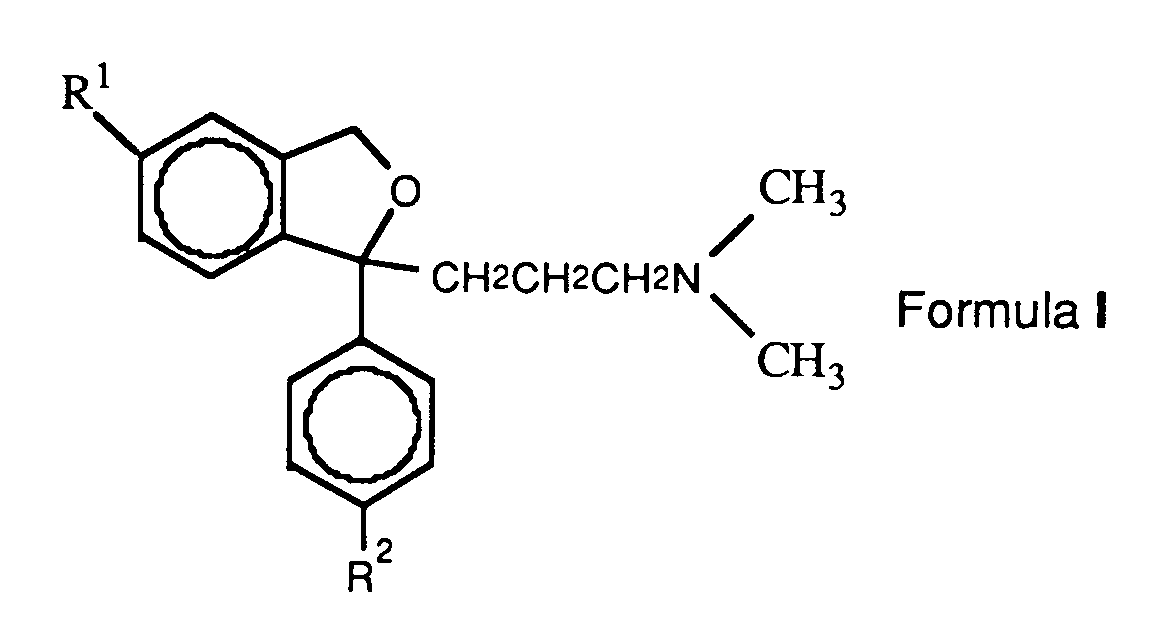
wherein R¹ and R² each are selected from halogen, trifluoromethyl, cyano and R-CO-, wherein R is an alkyl radical with from 1 to 4 C-atoms inclusive, or a pharmaceutically acceptable acid addition salt thereof, for the manufacture of a medicament for the treatment of cognitive disorders or amnesia associated with dementia and of cerebrovascular disorders.
wherein R¹ and R² each are selected from halogen, trifluoromethyl, cyano and R-CO-, wherein R is an alkyl radical with from 1 to 4 C-atoms inclusive, or a pharmaceutically acceptable acid addition salt thereof, for the manufacture of a medicament for the treatment of cognitive disorders or amnesia associated with dementia and of cerebrovascular disorders.
2. Use according to claim 1, characterized in that the medicament is for the treatment of cerebrovascular disorders caused by cerebral
infarction, cerebral hemorrhage, cerebral arteriosclerosis, subarachnoid hemorrhage,
cerebral thrombosis, or cerebral embolism.
3. Use according to claim 2, characterized in that the medicament is for the treatment of ischemia.
4. Use according to claim 3, characterized in that the medicament is for the treatment of amnesia associated with ischemia.
5. Use according to claim 2, characterized in that the medicament is for the treatment of Vascular or Multiinfarct dementia.
6. Use according to claim 1, characterized in that the dementia is a dementia of the Alzheimer's type.
7. Use according to any of claims 1-6, characterized in that the 1-dimethylaminopropyl-1-phenyl-phthalane used is citalopram or a pharmaceutically
acceptable acid addition salt thereof.
1. Verwendung eines 1-[Dimethylamino)propyl]-1-phenylphthalan der allgemeinen Formel,
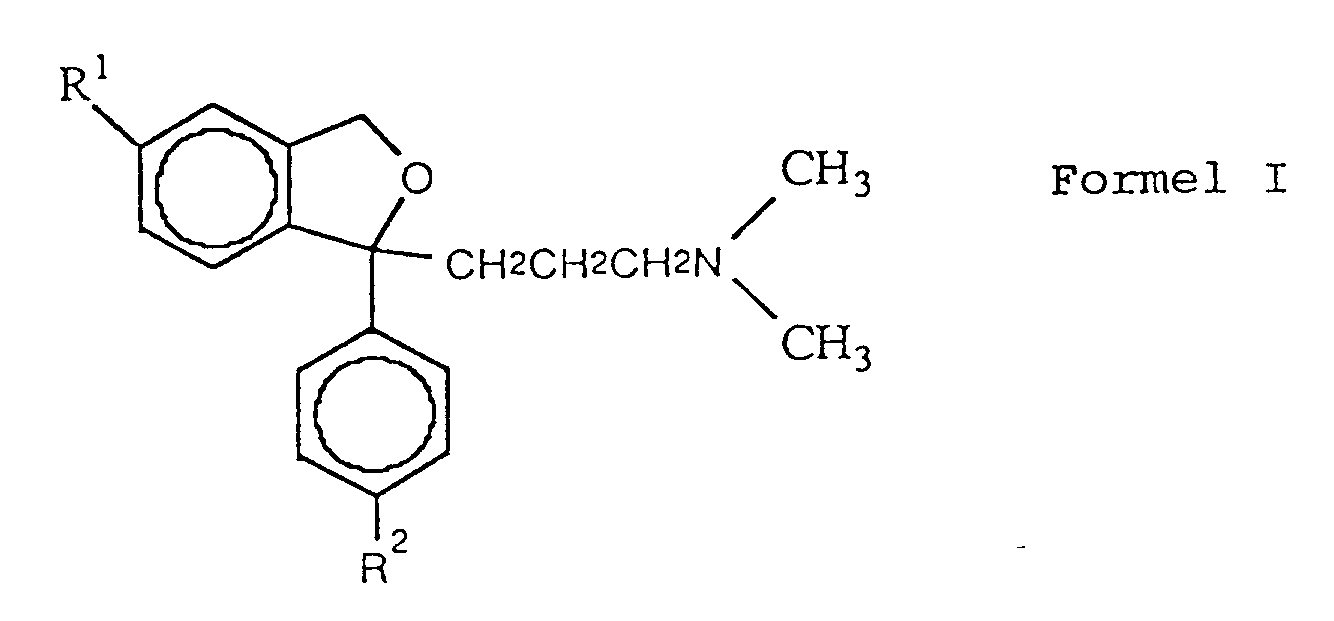
worin sowohl R¹ als auch R² ausgewählt sind aus Halogen, Trifluormethyl, Cyan und R-CO-, worin R ein Alkylrest mit insgesamt von 1 bis 4 C-Atomen ist, oder ein pharmazeutisch verträgliches Säureadditionssalz desselben für die Herstellung eines Medikaments zur Behandlung von Bewusstseinstörungen oder Amnesie im Zusammenhang mit Demenz und zerebrovasculären Störungen.
worin sowohl R¹ als auch R² ausgewählt sind aus Halogen, Trifluormethyl, Cyan und R-CO-, worin R ein Alkylrest mit insgesamt von 1 bis 4 C-Atomen ist, oder ein pharmazeutisch verträgliches Säureadditionssalz desselben für die Herstellung eines Medikaments zur Behandlung von Bewusstseinstörungen oder Amnesie im Zusammenhang mit Demenz und zerebrovasculären Störungen.
2. Verwendung gemäss Anspruch 1, dadurch gekennzeichnet, dass das Medikament für die
Behandlung von zerebrovasculären Störungen ist, welche durch Gehirninfarkt, Gehirnblutung,
zerebrale Arteriosklerose, Subarachnoidalblutung, Cerebralthrombose oder zerebrale
Embolie bewirkt werden.
3. Verwendung gemäss Anspruch 2, dadurch gekennzeichnet, dass das Medikament für die
Behandlung von Ischämie ist.
4. Verwendung gemäss Anspruch 3, dadurch gekennzeichnet, dass das Medikament für die
Behandlung von Amnesie im Zusammenhang mit Ischämie ist.
5. Verwendung gemäss Anspruch 2, dadurch gekennzeichnet, dass das Medikament für die
Behandlung von vaskulärer oder Multiinfarktdemenz ist.
6. Verwendung gemäss Anspruch 1, dadurch gekennzeichnet, dass die Demenz eine Demenz
des Alzheimertyps ist.
7. Verwendung gemäss einem der Ansprüche 1 bis 6, dadurch gekennzeichnet, dass das verwendete
1-Dimethylaminopropyl-1-phenylphthalan Citalopram oder ein pharmazeutisch annehmbares
Säureadditionssalz desselben ist.
1. Utilisation d'une 1-[3(diméthylamino)propyl]-1-phénylphtalane de formule générale
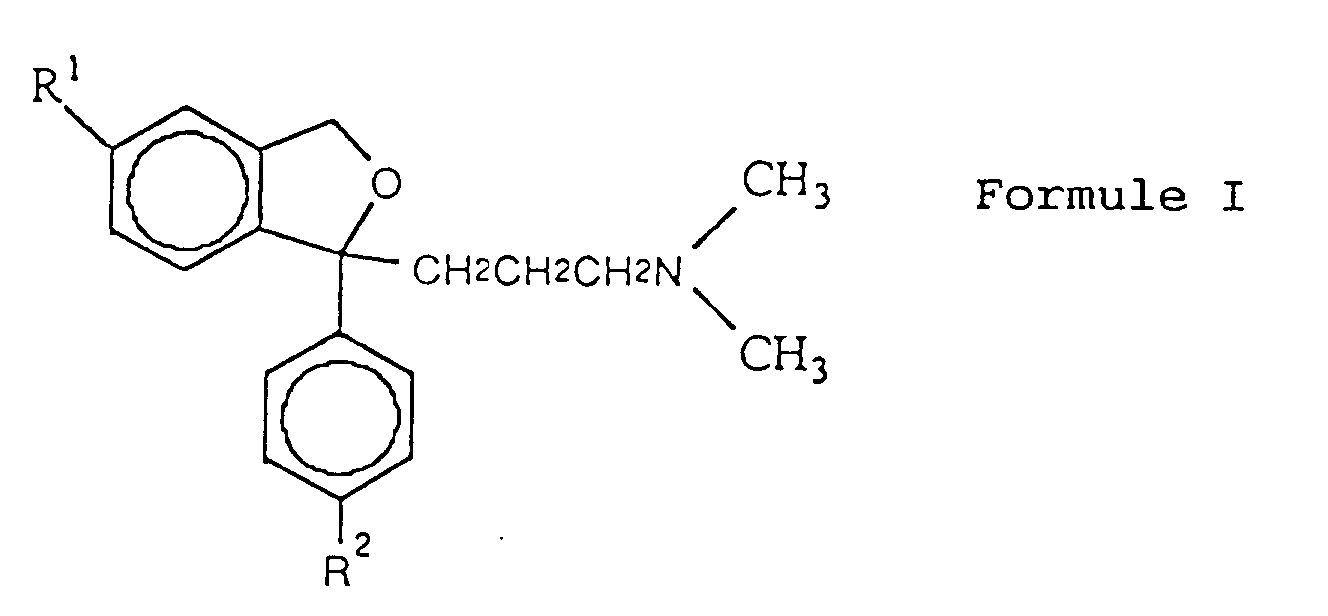
dans laquelle R₁ et R₂ sont chacun sélectionnés parmi l'halogène, le trifluorométhyle, cyano et R-CO-, dans laquelle R est un radical alkyle avec 1 à 4 atomes C inclus, ou son sel d'addition d'acide acceptable pharmaceutiquement, pour la fabrication d'un médicament destiné au traitement de troubles cognitifs ou à l'amnésie associée à la démence et aux troubles cérébrovasculaires.
dans laquelle R₁ et R₂ sont chacun sélectionnés parmi l'halogène, le trifluorométhyle, cyano et R-CO-, dans laquelle R est un radical alkyle avec 1 à 4 atomes C inclus, ou son sel d'addition d'acide acceptable pharmaceutiquement, pour la fabrication d'un médicament destiné au traitement de troubles cognitifs ou à l'amnésie associée à la démence et aux troubles cérébrovasculaires.
2. Utilisation selon la revendication 1, caractérisée en ce que le médicament est destiné
au traitement de troubles cérébrovasculaires provoqués par un infarctus cérébral,
une hémorragie cérébrale, une artériosclérose cérébrale, une hémorragie subarachnoïdienne,
une trombose cérébrale ou une embolie cérébrale.
3. Utilisation selon la revendication 2, caractérisée en ce que le médicament est destiné
au traitement de l'ischémie.
4. Utilisation selon la revendication 3, caractérisée en ce que le médicament est destiné
au traitement de l'amnésie associée à l'ischémie.
5. Utilisation selon la revendication 2, caractérisée en ce que le médicament est destiné
au traitement de la démence liée à un trouble vasculaire ou à des infarctus multiples.
6. Utilisation selon la revendication 1, caractérisée en ce que la démence est une démence
du type Alzheimer.
7. Utilisation selon l'une quelconque des revendications 1 à 6, caractérisée en ce que
la 1-diméthylaminopropyl-1-phényl-phtalane utilisée est le citaloprame ou son sel
d'addition d'acide acceptable pharmaceutiquement.