|
(11) | EP 0 476 474 B1 |

| (12) | EUROPÄISCHE PATENTSCHRIFT |
|
|
| (54) |
4-Amino-3-hydroxy-phthalid, sowie ein Verfahren zu seiner Herstellung 4-Amino-3-hydroxy-phthalide and a method for its preparation Amino-4 hydroxy-3 phtalide ainsi qu'un procédé pour sa préparation |
|
|
|||||||||||||||||||||||||||
| Anmerkung: Innerhalb von neun Monaten nach der Bekanntmachung des Hinweises auf die Erteilung des europäischen Patents kann jedermann beim Europäischen Patentamt gegen das erteilte europäischen Patent Einspruch einlegen. Der Einspruch ist schriftlich einzureichen und zu begründen. Er gilt erst als eingelegt, wenn die Einspruchsgebühr entrichtet worden ist. (Art. 99(1) Europäisches Patentübereinkommen). |
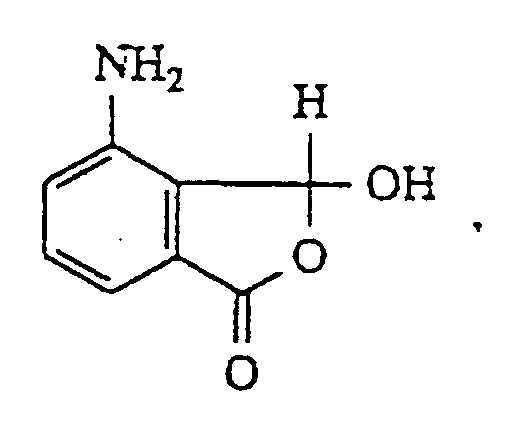
[0001] Die vorliegende Erfindung betrifft 4-Amino-3-hydroxy-phthalid, ein wichtiges Zwischenprodukt zur Synthese von 3-substituierten-5-chinolin-carbonsäuren sowie ein Verfahren zu seiner Herstellung.
[0002] Aus den Publikationen J. Org. Chem. 1988, 53, 223-224; 53, 1199-1202 und J. of Med. Chem., 1988, Vol, 31, Nr. 4,824-830 sind 3-Hydroxyphthalide bekannt, die im Phenylring, gegebenenfalls mehrfach, durch Chlor, Carboxy oder Methoxy substituiert sind.
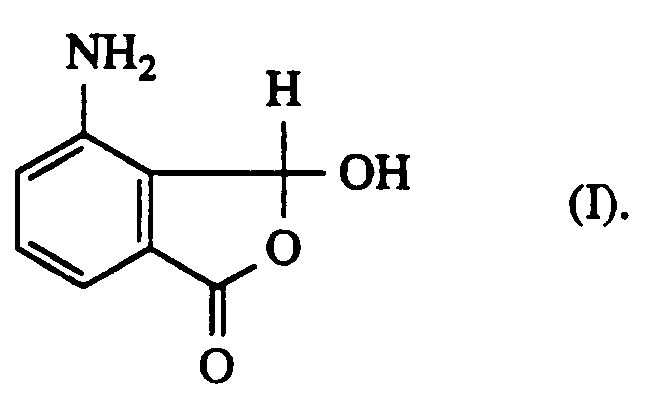
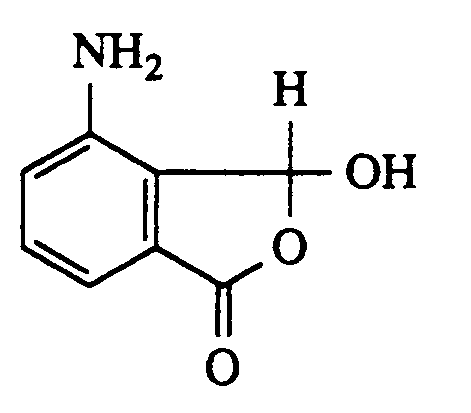
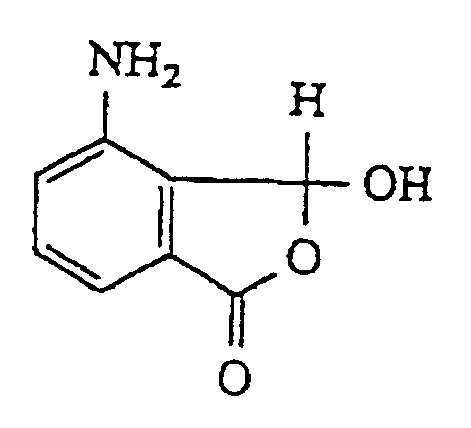
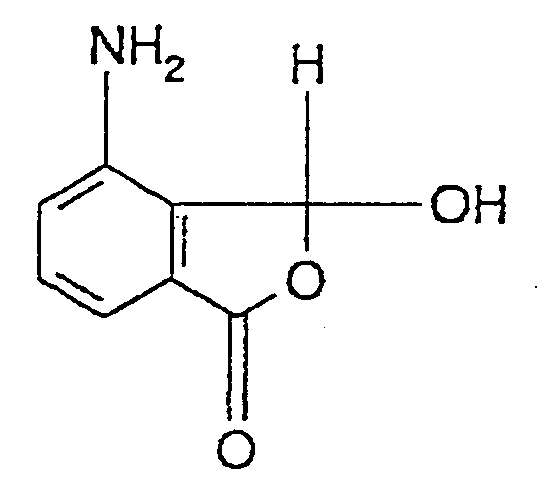
[0003] Gegenstand der vorliegenden Erfindung ist die neue Verbindung 4-Amino-3-hydroxyphthalid der Formel (I).
Die Erfindung betrifft weiterhin ein Verfahren zur Herstellung der Verbindung der Formel (I), dadurch gekennzeichnet, daß man
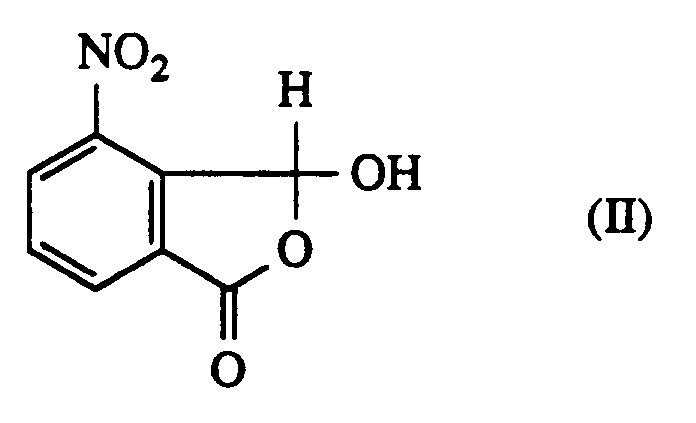
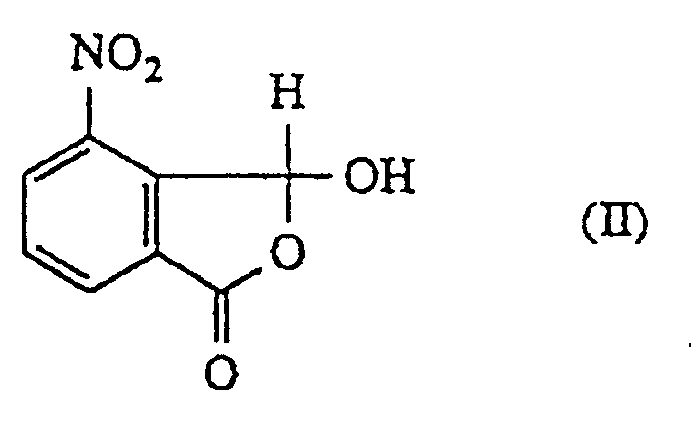
4-Nitro-3-hydroxyphthalid der Formel (II)
in inerten Lösemitteln, bevorzugt durch Hydrierung, in Anwesenheit eines Katalysators, reduziert.
[0004] Das Verfahren kann durch folgendes Formelschema erläutert werden:
Als Lösemittel eignen sich für die Hydrierung alle organischen Lösemittel, die sich unter den Reaktionsbedingungen nicht verändern. Hierzu gehören bevorzugt Alkohole wie Methanol, Ethanol, Propanol oder Isopropanol, oder Ether wie Diethylether, Dioxan, Tetrahydrofuran, Gylkoldimethylether, oder Diethylenglykoldimethylether oder Amide wie Hexamethylphosphorsäuretriamid oder Dimethylformamid, oder Essigsäure sowie Methylenchlorid, Tetrachlorkohlenstoff oder Toluol. Ebenso ist es möglich, Gemische der genannten Lösemittel zu verwenden. Bevorzugt sind Methanol, Ethanol, Propanol oder Tetrahydrofuran.
[0005] Die Hydrierung kann bei Normaldruck oder bei erhöhtem Druck, beispielsweise von 0,5 bis 5 bar, vorzugsweise bei Atmosphärendruck durchgeführt werden.
[0006] Die Reduktion erfolgt in allgemeinen in einem Temperaturbereich von 0°C bis 80°C, im Fall einer Hydrierung vorzugsweise bei Raumtemperatur.
[0007] Als Katalysatoren eignen sich Platin, Palladium, Palladium/Tierkohle, Palladium/Bariumsulfat oder Raney-Nickel. Besonders geeignet ist Palladium/Bariumsulfat.
[0008] Der Katalysator wird in einer Menge von 0,00001 bis 1 mol, bevorzugt von 0,001 bis 0,1 mol, bezogen auf 1 mol der Verbindung der Formel (II) eingesetzt.
[0009] Die Verbindungen der Formel (II) sind bekannt [vgl. T. Watanabe et al., Chem. Pharm. Bull, 20 (10), 2123-2127 (1972)].
[0010] Das vorstehende Herstellungsverfahren ist lediglich zur Verdeutlichung angegeben. Die Herstellung der erfindungsgemäße Verbindung der Formel (I) ist nicht auf dieses Verfahren beschränkt, sondern jede Modifikation dieses Verfahren, beispielsweise die Anwendung literaturbekannnter Nitro-Amino-Reduktionsmethoden, sind in gleicher Weise für die Herstellung der erfindungsgemäßen Verbindung anwendbar.
[0011] Die erfindungsgemäße Verbindung ist ein wertvolles Zwischenprodukt zur direkten Herstellung von teilweise bekannten oder neuen 3-substituierten Chinolin-5-carbonsäuren, die wiederum als Ausgangsstoffe für die entsprechenden 3-substituierten Chinolin-5-aldehyde dienen und somit in der 1,4-Dihydropyridin-Chemie von großer Bedeutung sind.
Herstellungbeispiele
Beispiel 1
4-Amino-3-hydroxyphthalid
[0012]
10 g 3-Hydroxy-4-nitro-phthalid werden in 100 ml Tetrahydrofuran gelöst und nach Zugabe von 1 g Palladium auf Bariumsulfat (5%) bei Atmosphärendruck und 20 - 25°C hydriert. Es wird vom Katalysator abfiltriert und eingeengt. Der Eindampfrückstand wird mit Ether verrührt und abgesaugt. Man erhält 5,8 g (68,5% der Theorie) einer farblosen Substanz vom Schmp. 280-285°C (Zers.).
Beispiel 2
3-Phenyl-chinolin-5-carbonsäure
[0013]
50 g (0,256 mol) 4-Hydroxy-4-nitro-phthalid werden in 380 ml Ethanol mit 5 g Palladium/Bariumsulfat (5%) bei 20°C und 3 bar hydriert. Es wird abgesaugt, das Filtrat wird mit 0,308 mol (38,7 ml) Phenylacetaldehyd versetzt. Es wird 4 Stunden gekocht, wobei die Chinolincarbonsäure ausfällt. Es wird abgekühlt, abgesaugt und mit Ethanol gewaschen. Man erhält 28,3 g (44,3% der Theorie) einer farblosen Verbindung vom Schmp. > 290°C.
Patentansprüche für folgende(n) Vertragsstaat(en): AT, BE, CH, DE, DK, FR, GB, GR,
IT, LI, LU, NL, SE
1. 4-Amino-3-hydroxy-phthalid der Formel
2. Verfahren zur Herstellung von 4-Amino-3-hydroxy-phthalid der Formel
dadurch gekennzeichnet, daß man 4-Nitro-3-hydroxy-phthalid der Formel
in inerten Lösemitteln reduziert.
dadurch gekennzeichnet, daß man 4-Nitro-3-hydroxy-phthalid der Formel
in inerten Lösemitteln reduziert.
3. Verfahren nach Anspruch 2, dadurch gekennzeichnet, daß man 4-Nitro-3-hydroxy-phthalid
in Anwesenheit eines Katalysators hydriert.
4. Verfahren nach Anspruch 2, dadurch gekennzeichnet daß Katalysator Platin, Palladium,
Palladium/Tierkohle, Palladium/Bariumsulfat oder Raney-Nickel einsetzt.
5. Verwendung von 4-Amino-3-hydroxy-phthalid der Formel
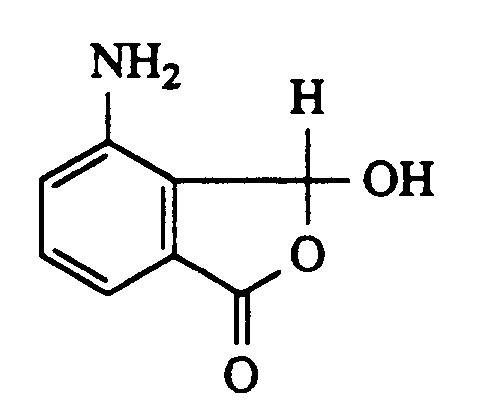
als Zwischenprodukt zur Herstellung von 3-substituierten Chinolin-5-carbonsäuren.
als Zwischenprodukt zur Herstellung von 3-substituierten Chinolin-5-carbonsäuren.
Patentansprüche für folgende(n) Vertragsstaat(en): ES
1. Verfahren zur Herstellung von 4-Amino-3-hydroxy-phthalid der Formel
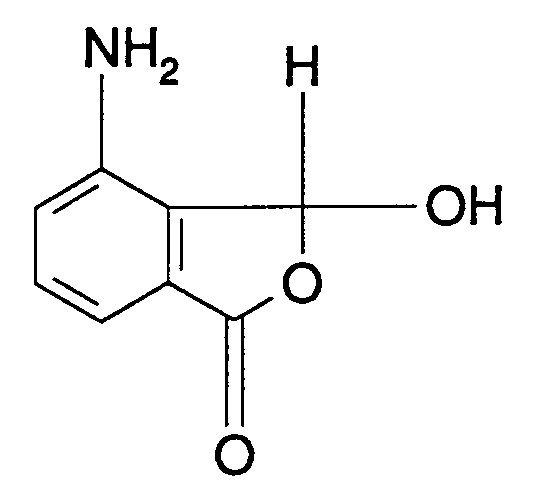
dadurch gekennzeichnet, daß man 4-Nitro-3-hydroxy-phthalid der Formel
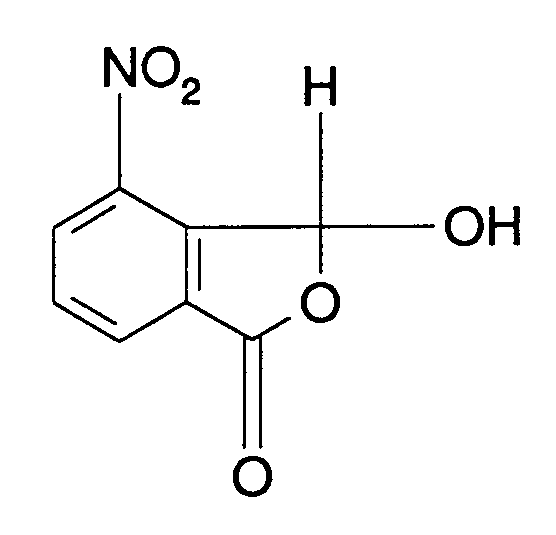
in inerten Lösemitteln reduziert.
dadurch gekennzeichnet, daß man 4-Nitro-3-hydroxy-phthalid der Formel
in inerten Lösemitteln reduziert.
2. Verfahren nach Anspruch 1, dadurch gekennzeichnet, daß man 4-Nitro-3-hydroxy-phthalid
in Abwesenheit eines Katalysators hydriert.
3. Verfahren nach Anspruch 1, dadurch gekennzeichnet, daß man als Katalysator Platin,
Palladium, Palladium/Tierkohle, Palladium/Bariumsulfat oder Raney-Nickel einsetzt.
4. Verwendung von 4-Amino-3-hydroxy-phthalid der Formel
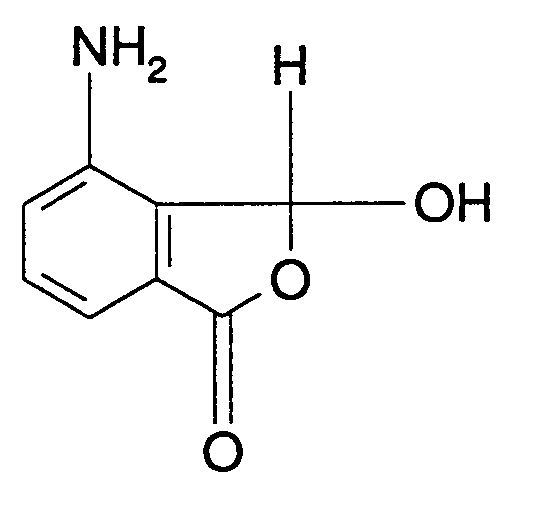
als Zwischenprodukt zur Herstellung von 3-substitutierten Chinolin-5-carbonsäuren.
als Zwischenprodukt zur Herstellung von 3-substitutierten Chinolin-5-carbonsäuren.
Claims for the following Contracting State(s): AT, BE, CH, DE, DK, FR, GB, GR, IT,
LI, LU, NL, SE
1. 4-Amino-3-hydroxyphthalide of the formula
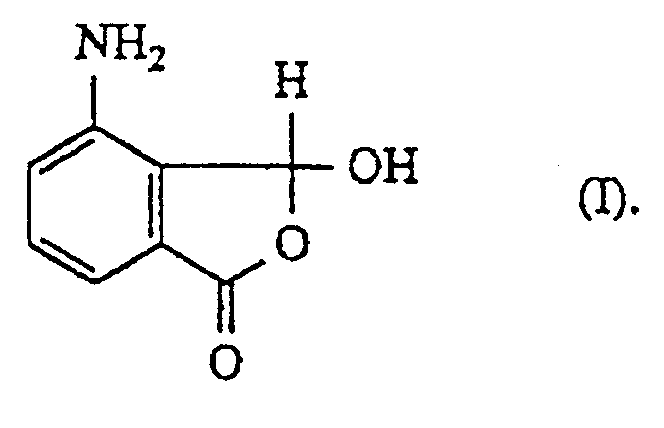
2. Process for the preparation of 4-amino-3-hydroxyphthalide of the formula
characterized in that 4-nitro-3-hydroxyphthalide of the formula
is reduced in inert solvents.
characterized in that 4-nitro-3-hydroxyphthalide of the formula
is reduced in inert solvents.
3. Process according to Claim 2, characterized in that 4-nitro-3-hydroxyphthalide is
hydrogenated in the presence of a catalyst.
4. Process according to Claim 2, characterized in that the catalyst employed is platinum,
palladium, palladium/animal charcoal, palladium/barium sulphate or Raney nickel.
5. Use of 4-amino-3-hydroxyphthalide of the formula
as intermediate for the preparation of 3-substituted 5-quinolinecarboxylic acids.
as intermediate for the preparation of 3-substituted 5-quinolinecarboxylic acids.
Claims for the following Contracting State(s): ES
1. Process for the preparation of 4-amino-3-hydroxyphthalide of the formula
characterized in that 4-nitro-3-hydroxyphthalide of the formula
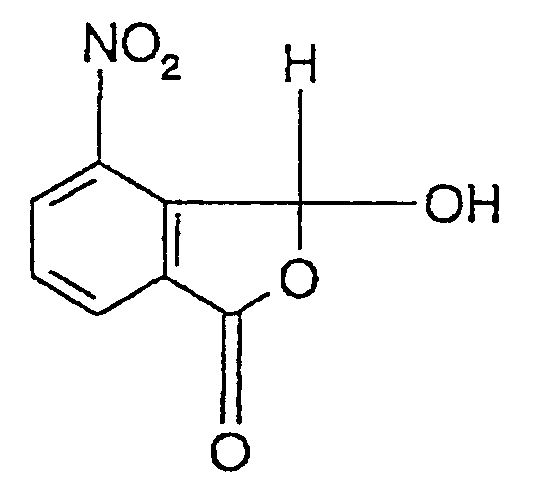
is reduced in inert solvents.
characterized in that 4-nitro-3-hydroxyphthalide of the formula
is reduced in inert solvents.
2. Process according to Claim 1, characterized in that 4-nitro-3-hydroxyphthalide is
hydrogenated in the presence of a catalyst.
3. Process according to Claim 1, characterized in that the catalyst employed is platinum,
palladium, palladium/animal charcoal, palladium/barium sulphate or Raney nickel.
4. Use of 4-amino-3-hydroxyphthalide of the formula
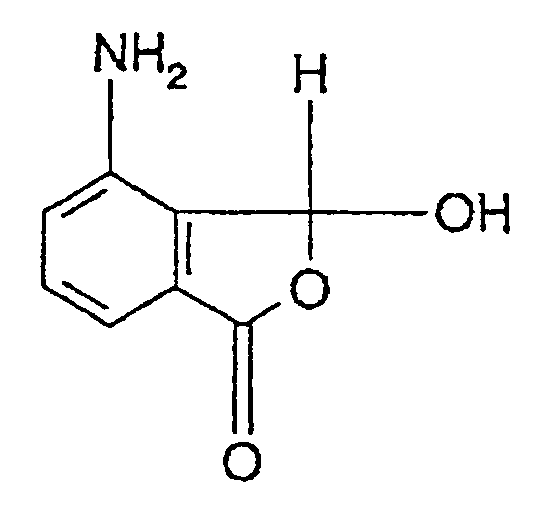
as intermediate for the preparation of 3-substituted 5-quinolinecarboxylic acids.
as intermediate for the preparation of 3-substituted 5-quinolinecarboxylic acids.
Revendications pour l'(les) Etat(s) contractant(s) suivant(s): AT, BE, CH, DE, DK,
FR, GB, GR, IT, LI, LU, NL, SE
1. Le 4-amino-3-hydroxyphtalide de formule
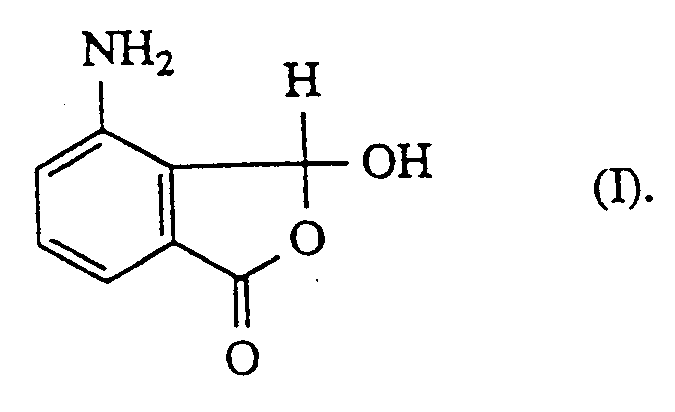
2. Procédé de production du 4-amino-3-hydroxyphtalide de formule
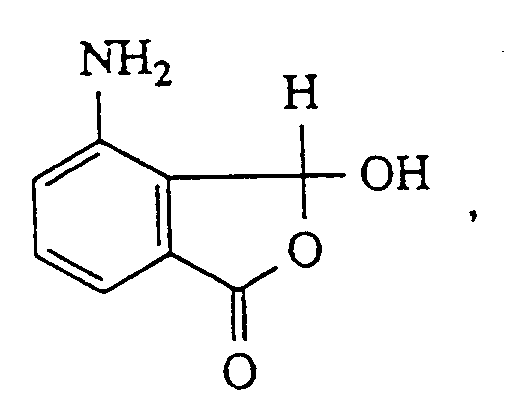
caractérisé en ce qu'on réduit le 4-nitro-3-hydroxyphtalide de formule
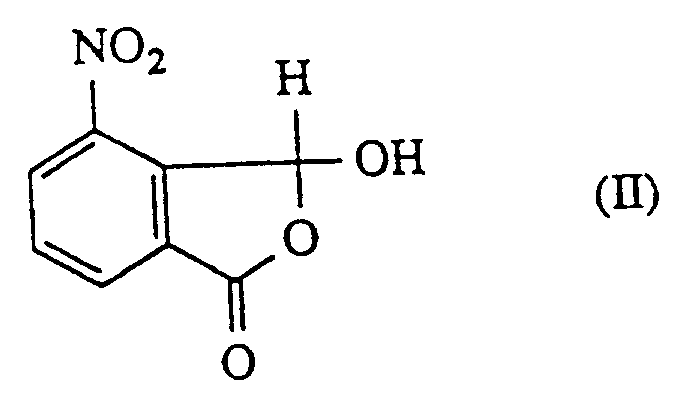
dans des solvants inertes.
caractérisé en ce qu'on réduit le 4-nitro-3-hydroxyphtalide de formule
dans des solvants inertes.
3. Procédé suivant la revendication 2, caractérisé en ce qu'on hydrogène le 4-nitro-3-hydroxyphtalide
en présence d'un catalyseur.
4. Procédé suivant la revendication 2, caractérisé en ce qu'on utilise comme catalyseur
le platine, le palladium, le palladium sur du noir animal, le palladium sur du sulfate
de baryum ou le nickel de Raney.
5. Utilisation du 4-amino-3-hydroxyphtalide de formule
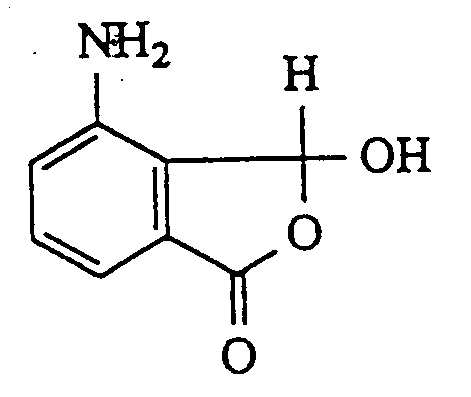
comme produit intermédiaire pour l'obtention d'acides quinoléine-5-carboxyliques substitués en position 3.
comme produit intermédiaire pour l'obtention d'acides quinoléine-5-carboxyliques substitués en position 3.
Revendications pour l'(les) Etat(s) contractant(s) suivant(s): ES
1. Procédé de production du 4-amino-3-hydroxyphtalide de formule
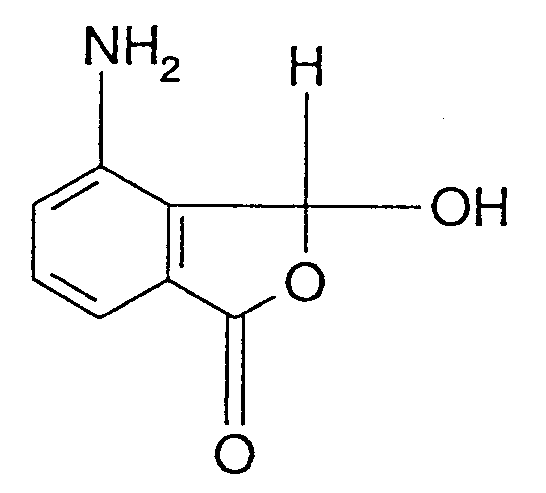
caractérisé en ce qu'on réduit le 4-nitro-3-hydroxyphtalide de formule
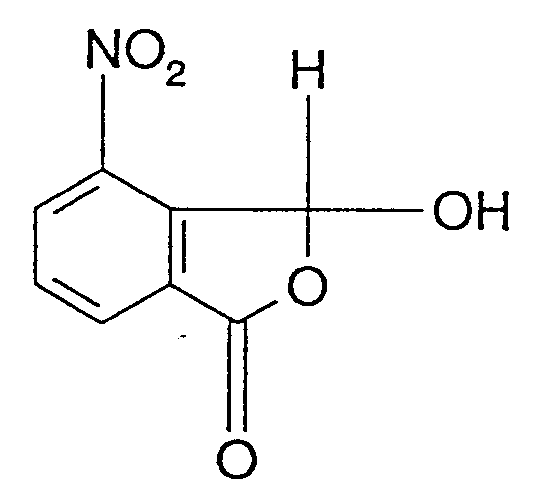
dans des solvants inertes.
caractérisé en ce qu'on réduit le 4-nitro-3-hydroxyphtalide de formule
dans des solvants inertes.
2. Procédé suivant la revendication 1, caractérisé en ce qu'on hydrogène le 4-nitro-3-hydroxyphtalide
en présence d'un catalyseur.
3. Procédé suivant la revendication 1, caractérisé en ce qu'on utilise comme catalyseur
le platine, le palladium, le palladium sur du noir animal, le palladium sur du sulfate
de baryum ou le nickel de Raney.
4. Utilisation du 4-amino-3-hydroxyphtalide de formule
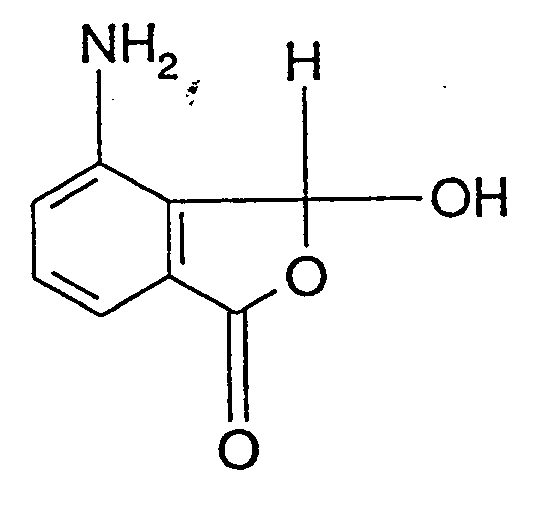
comme produit intermédiaire pour l'obtention d'acides quinoléine-5-carboxyliques substitués en position 3.
comme produit intermédiaire pour l'obtention d'acides quinoléine-5-carboxyliques substitués en position 3.