|
(11) | EP 0 498 326 A1 |

| (12) | EUROPEAN PATENT APPLICATION |
|
|
|
|
|||||||||||||||||||||||||||
| (54) | Plastic optical fiber cords |
| (57) A flame retardant plastic optical fiber cord comprising a plastic optical fiber comprising
a core and a cladding, and a jacket layer provided on the optical fiber, wherein the
jacket layer has an oxygen index of not less than 25 as measured by the method stated
in JAPANESE INDUSTRIAL STANDARD K 7201. |
BACKGROUND OF THE INVENTION
1. Field of the Invention
[0001] The present invention relates to an optical fiber cord comprising a plastic optical fiber comprising a core and a cladding, and a jacket layer provided on the optical fiber, and, more particularly, to a plastic optical fiber cord with excellent flame retardance.
2. Description of the Related Art
[0002] Inorganic glass optical fibers have been known as optical fibers which are excellent in light transmission properties over a broad range of wavelengths. However, since said glass optical fibers do not have good processability or flexural strength, plastic optical fibers were developed and have been widely used as optical fibers.
[0003] These plastic optical fibers are basically comprised of a core polymer comprising a polymer which has excellent light transmission properties and a high refractive index, such as polymethyl methacrylate (hereinafter referred to as PMMA), polycarbonate (hereinafter referred to as PC), and a clad polymer comprising a transparent polymer which has a refractive index lower than that of the core polymer, such as fluorine-containing polymers.
[0004] Known examples of the plastic optical fibers of this type are optical fiber strands, bulk fibers made by covering optical fiber strands with a functional protective layer, optical fiber cords made by covering optical fiber strands with a jacket, bundled fibers made of an assembly of bulk fibers, and optical fiber cables made by applying tension members to the bulk fibers.
[0005] Since these all-plastic optical fiber cords use as a jacket material a vinyl chloride resin containing a plasticizer of not less than 10 wt%, or a polyethylene, its flame retardance is not satisfactory, and consequently its applications are limited.
SUMMARY OF THE INVENTION
[0006] One of the objects of the present invention is to provide an all-plastic optical fiber cord having an excellent level of flame retardance.
[0007] The present invention provides an all-plastic optical fiber cord having an excellent level of flame retardance which cannot be attained by any conventional all-plastic optical fiber cord. The optical fiber cord of the present invention comprises a plastic optical fiber comprising a core and a cladding, and a jacket layer provided on the optical fiber, wherein the jacket layer has an oxygen index of not less than 25 as measured by the method of JIS K 7201.
BRIEF DESCRIPTION OF THE DRAWING
[0008] Figure is a graphic respresentation of the method for testing for non-flammability used in the present invention.
DETAILED DESCRIPTION OF THE PREFERRED EMBODIMENTS
[0009] Heretofore developed fire retardant plastic optical fiber cords use PMMA or PC as a core forming polymer and a plasticized polyvinyl chloride resin as a flame retardant jacket material. Non-plasticized vinyl chloride resins have an excellent level of flame retardance of an oxygen index of 42 as measured by JIS K 7201 ("Method for Testing for Flammability of Polymeric Materials Using the Oxygen Index Method"). In the present invention the oxygen index is as defined in JIS (Japanese Industrial Stardard) K 7201, enacted in 1976. It denotes in volume percentage minimum oxygen concentration value required for the continuous combustion of the material under specified testing conditions. The teaching of JIS K 7201 is hereby incorporated by reference. Since a polyvinyl chloride resin is rigid, a plasticizer has to be added to use it as a jacket material. If dioctyl phthalate, as a plasticizer, in an amount of 30 wt%, is added to a polyvinyl chloride resin, the oxygen index of this plasticized polyvinyl chloride resin is decreased to 24, and the flame retardance of the plastic optical fiber cord coated with this plasticized polyvinyl chloride resin is not satisfactory. Also, even after the source of a flame is removed from the cord, this type of flame retardant plastic optical fiber cord burns for from several tens of seconds to several minutes after ignition but before extinguishes itself.
[0010] Since in the present invention the clad layer is surrounded by a polymer (A) having an oxygen index of not less than 25, the flame retardance of an optical fiber cord can be remarkably improved.
[0011] The polymer (A) which can be used as a jacket material in the present invention may be a single polymer, a blend of single polymers, or a mixture of a single polymer (or a blend of single polymers) and additives such as flame retardants, plasticizers, stabilizers, and lubricants.
[0012] Examples of the single polymer having an oxygen index of not less than 25 include polyvinyl chloride (oxygen index: 45), polyvinylidene chloride (oxygen index: 60), polyvinylidene fluoride (oxygen index: 44), tetrafluoroethylene (oxygen index: 95), polyamide (oxygen index: 29), and PC (oxygen index: 26). A blend of one or more of these polymers may also be used. The exemplified polymers may be a copolymer if the copolymer has an oxygen index of not less than 25. Of course, a mixture of these polymers and flame retardants may also be used.
[0013] Although a polyolefin such as polyethylene or polypropylene has an oxygen index of less than 25, it may also be used if a mixture of the polyolefin and at least one retardant selected from phosphorus flame retardants, halogen flame retardants, inorganic flame retardatns, and etc. has an oxygen index of not less than 25.
[0014] If necessary, additives such as plasticizers, stabilizers, and/or lubricants may be added to the exemplified polymers.
[0015] Examples of the phosphorus flame retardants include phosphoric esters such as triphenyl phosphate and tricresyl phosphate, phosphoric esters containing halogens such as tris(chloroethyl)phosphate, polyphosphonate, phosphonate-type polyols, vinyl-phosphonate, and allyl phosphonate.
[0016] Examples of the halogen containing flame retardants include bromine containing flame retardants such as hexabromobenzene, decabromo diphenyl oxide, tetrabromobisphenol A, and vinyl bromide, and chlorine containing flame retardants such as chlorinated paraffin, chlorinated polyethylene, and perchloropentacyclodecane.
[0017] Examples of the inorganic flame retardants include antimony compounds such as antimony trioxide and antimony pentoxide, metal hydroxides such as alminum hydroxide, molybdenum compounds such as molybdenum trioxide, borate, calcium compound such as calcium carbonate and calcium hydroxide, silicones, and clay.
[0018] Homopolymers or copolymers of polymethyl methacrylate or other methacrylate ester derivatives, polycarbonates obtained by using at least one of the bisphenols represented by general formulas (2) to (8), polymers containing halogens in an amount not less than 30 wt% are highly flame-retardant, and they are the most preferable examples for the core polymers that can be used in the plastic optical fiber cord of the present invention:
[0019] Examples of these polymers are a polymer containing a monomer unit represented by the general formula (1) as the main component, or a copolymer of perfluoro(2,2-dimethyl-1,3-dioxole) and fluorinated olefins such as tetrafluoroethylene or chlorotrifluoroethylene:
(wherein X represents H, CH₃, D, F, CF₃ or Cℓ; Y represents H or D; and Rf represents a linear or branched fluoro alkyl group.)
[0020] In the above, "a polymer containing a monomer unit represented by the general formula (1) as the main component" means that the monomer unit is contained in the polymer in an amount of not less than 70 wt%.
[0021] Clad polymers for the plastic optical fiber cords of the present invention must have a refractive index below that of a core polymer. If a PMMA is used as the core polymer, polymers such as vinylidene fluoride copolymers, fluoroalkyl methacrylates, and fluoroalkyl acrylates or α-fluoroalkyl acrylates, are preferable. If a PC is used as the core polymer, methacrylate polymers such as PMMA can also be used.
[0022] If a polymer containing fluorine is used as the core polymer, any clad polymer material must have a very low refractive index, and α-fluorofluoroalkyl acrylate polymers or copolymers containing perfluoro(2,2-dimethyl-1,3-dioxole) in an amount of not less than 20 mole% are examples of the clad polymer materials. If the content of perfluoro(2,2-dimethyl-1,3-dioxole) in the copolymers is less than 20 mole%, Tg of the copolymers becomes not higher than 60°C , and heat resistance becomes insufficient.
[0023] Examples of the methods for making the plastic optical fiber cords of the present invention include, but are not limited to, i) the monolithic formation of core, cladding and jacket layers by the conjugate melt spinning method, ii) the monolithic formation of an optical fiber of core and cladding by the conjugate melt spinning method, and the coating of a jacket layer onto the optical fiber by a separate process, such as the melt spinning method or the solvent coating method, or iii) the monolithic formation of an optical fiber of core, cladding and protective layers by the conjugate spinning method, and the coating of a jacket layer onto the optical fiber by the separate process.
[0024] In the examples, all monomers to be used were purified by a conventional method, and they were used immediately after distillation.
[Flame Retardance Test]
[0025] The flame retardance of the plastic optical fiber cord of the present invention was measured by the method stated below. As shown in Figure, a plastic optical fiber cord 1 ("test piece") is supported vertically. The flame (inner flame temperature: not less than 836 °C ) of a tirol gas burner 2 is kept in contact with a surface of the test piece for 15 seconds to ignite the test piece, in a manner that, as shown in Figure, the top 3 of the inner flame contacts the surface of the test piece, and then the igniter flame is extinguished. The burning time of the test piece is measured. If the burning time is not shorter than 60 seconds, the flame retardance is judged as "not good." The molten resin of the optical fiber cord is dropped onto absorbent wadding 4 located 165 mm below the bottom of the test piece. If the absorbent wadding burns, the flame retardance is judged as "not good."
[Tg]
Example 1
[0027] A monomer mixture of methyl methacrylic acid containing 0.3 wt% of n-octylmercaptane and 20 ppm of ditertially butyl peroxide was filtered with a tetrafluoroethylene (THF) membrane filter of 0.02 µm pore size, and then polymerized for 4 hours at 180 °C under a pressure of N² gas, and a syrup having a polymerization conversion ratio of 49% was obtained. This syrup was continuously fed into a vented extruder to get a polymer containing a residual monomer of not more than 0.5%. This polymer was fed into the core polymer feeding portion in a spinning machine maintained at 210 °C . The core polymer obtained had a Tg of 109°C and a refractive index of 1.490.
[0028] A copolymer of vinylidene fluoride and tetrafluoroethylene (80 mole%/20 mole%, Refractive Index: 1.402) was melted with a melt extruder, and was fed into the clad material feeding portion in the spinning machine. The fed core and clad polymers were spun through a conjugate spinning nozzle to give an optical fiber having a core-clad structure and an outer diameter of 1 mmφ .
[0029] A jacket material having an oxygen index of 36 was obtained by blending 23 wt% of dioctyl phthalate, 2 wt% of lead stearate, 0.2 wt% of stearic acid, 20 wt% of tris(tribromophenyl)phosphite, and 4.8 wt% of antimony trioxide with 50 wt% of a vinyl chloride resin. This jacket material was melted with a melt extruder, was spun through a crosshead die to surround the outer layer of the optical fiber with a jacket layer having a thickness of 0.6mm. A plastic optical fiber cord having an outer diameter of 2.2mmφ was thus obtained.
[0030] The transmission loss of the optical fiber cord was very small (136 dB/km at 650 nm). Five optical fiber cords were made by the same method, and the flame retardance test was conducted on these cords. The burning times of these test pieces were all 0 second. The melt resin from the bottom of the fiber cord, produced by contacting an igniter flame to the bottom of the fiber cord, was dropped onto absorbent wadding, but the wadding was not ignited.
Comparative Example 1
[0031] An optical fiber having an outer diameter of 2.2 mmφ was obtained by the same method as that used in Example 1, except that the jacket material used was a blend of 67 wt% of polyvinyl chloride resin (mean degree of polymerization: 1450), 30 wt% of dioctyl phthalate, 2.5 wt% of lead stearate, and 0.2 wt% of stearic acid, which has an oxygen index of 22.
[0032] The transmission loss of the thus-obtained optical fiber cord was very small (134 dB/km at 650 nm). Five optical fiber cords were made by the method mentioned above, and the flame retardance test was conducted on these cords. Among the five cords, four fiber cords burned longer than 60 seconds, and the flame retardance was not good.
Example 2
[0033] A monomer mixture of α-fluoro-1,1,1,3,3,3-hexafluoroisopropyl acrylate containing 0.3 wt% of n-octylmercaptane and 18 ppm of ditertiallybutyl peroxide was filtered with a THF membrane filter of 0.02 µm pore size, and then polymerized for 3 hours at 150 °C under a pressure of N² gas, and a syrup having a polymerization conversion ratio of 54% was obtained. This syrup was continuously fed into a vented extruder to get a polymer containing a residual monomer of not more than 0.5%. This polymer was fed into the core polymer feeding portion in a spinning machine maintained at 180 °C . The core polymer obtained had a Tg of 103°C and a refractive index of 1.356.
[0034] A copolymer of perfluoro(2,2-dimethyl-1,3-dioxole) and tetrafluoroethylene (50 mole%/ 50 mole%, Refractive Index: 1.308) was melted with a melt extruder, and was fed into the clad material feeding portion by the spinning method. The fed core and clad polymers were spun through a conjugate spinning nozzle to give an optical fiber having a core-clad structure and an outer diameter of 1mmφ .
[0035] A jacket material having an oxygen index of 36 was made of a blend of 50 wt% of polyvinyl chloride resin (mean degree of polymerization: 1450), 23 wt% of dioctylphthalate, 2 wt% of lead stearate, 0.2 wt% of stearic acid, 20 wt% of tris(tribromophenyl)phosphite, and 4.8 wt% of antimony trioxide. This jacket material was melted with a melt extruder maintained at 180 °C , and was spun through a crosshead die to surround the outer layer of the optical fiber with a jacket layer having a thickness of 0.6 mm. A plastic optical fiber cord having an outer diameter of 2.2mmφ was thus obtained.
[0036] The transmission loss was very small (81 dB/km at 650 nm; 110 dB/km at 770 nm). Five optical fiber cords were prepared by the above method, and the flame retardance tests were conducted on these cords. The burning times of these test pieces were all 0 second. The melt resin from the bottom of the fiber cord, produced by contacting an igniter flame with the bottom of the fiber cord, was dropped onto absorbent wadding, but the wadding was not ignited.
Example 3
[0037] A monomer mixture of 70 mole% of trifluoroethyl methacrylate and 30 mole% of methyl methacrylate containing 0.15 wt% of n-octylmercaptane and 30ppm of ditertiallybutyl peroxide was filtered with a THF membrane filter of 0.02 µm pore size, and then polymerized for 5 hours at 150°C under a pressure of N² gas, and a syrup having a polymerization conversion ratio of 47% was obtained. This syrup was continuously fed into a vented extruder to get a polymer containing a residual monomer of not more than 0.5%. This polymer was fed into the core polymer feeding portion in a spinning machine maintained at 210°C . The core polymer obtained had a Tg of 96 °C (measured by DSC) and a refractive index of 1.424.
[0038] A copolymer of perfluoro(2,2-dimethyl-1,3-dioxole) and tetrafluoroethylene (50 mole%/ 50 mole%, Refractive Index: 1.308) was melted with a melt extruder, and was fed into the clad material feeding portion in the spinning machine. And a copolymer of vinylidene fluoride and tetrafluoroethylene (50 mole%/ 50 mole%) was melted with a melt extruder, and was fed into the protective layer feeding portion in the spinning machine. The fed core and clad polymers were spun through a conjugate spinning nozzle to give an optical fiber having a core-clad-protective layer structure and an outer diameter of 1 mmφ .
[0039] A jacket material having an oxygen index of 28 was obtained by blending 59 wt% of polyethylene of a density of 0.930, 28 wt% of hexabromobiphenyl ether, and 13wt% of antimony trioxide. This jacket material was melted with a melt extruder maintained at 150 °C , and was spun through a crosshead die to surround the outer layer of the optical fiber with a jacket layer having a thickness of 0.6mm. A plastic optical fiber cord having an outer diameter of 2.2 mmφ was thus obtained.
[0040] The transmission loss was very small (103dB/km at 650 nm; 380 dB/km at 770 nm). The flame retardance tests were then conducted. The burning times of these test pieces were all 0 second. The absorbent wadding was not ignited, and the flame retardance was good.
Examples 4-8, Comparative Examples 2 and 3
[0041] Plastic optical fiber having an outer diameter of 1 mmφ were prepared by using the same method as that described in Example 2, and a core, a cladding, and a protective layer as those described in Table 1. Jacket materials as shown in Table 1 were coated on the optical fibers, and optical fiber cords having an outer diameter of 2.2 mmφ were obtained. The results are shown in Table 1.
1. A plastic optical fiber cord comprising a plastic optical fiber comprising a core
and a cladding, and a jacket layer provided on the optical fiber, wherein the jacket
layer has an oxygen index of not less than 25 as measured by the method stated in
JIS K 7201.
2. The plastic optical fiber cord as defined in claim 1, wherein the core is composed
of a polymer containing a monomer represented by the following general formula as
the main component:
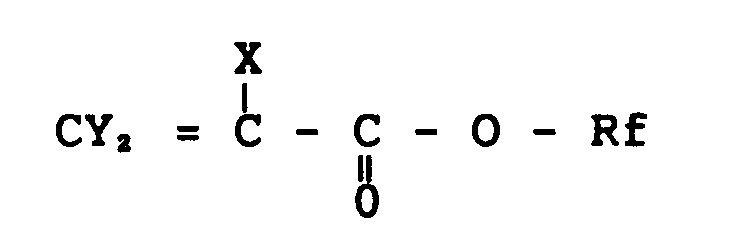
(wherein X represents H, CH₃, D, F, CF₃ or Cℓ; Y represents H or D; and Rf represents a linear or branched fluoro alkyl group.)
(wherein X represents H, CH₃, D, F, CF₃ or Cℓ; Y represents H or D; and Rf represents a linear or branched fluoro alkyl group.)
3. The plastic optical fiber cord as defined in claim 1, wherein the cladding is composed
of a polymer containing perfluoro(2,2-dimethyl-1,3-dioxole) in an amount of not less
than 20 mole%.
4. The plastic optical fiber cord as defined in claim 2, wherein the cladding is composed
of a polymer containing perfluoro(2,2-dimethyl-1,3-dioxole) in an amount of not less
than 20 mole%.