|
(11) | EP 0 500 254 A1 |

| (12) | EUROPEAN PATENT APPLICATION |
|
|
|
|
|||||||||||||||||||||||||||
| (54) | Process for the synthesis of nucleoside-5'-alkylphosphonates |
| (57) A nucleoside-5'-alkylphosphonate is synthesized by reacting a nucleoside, optionally
having protected hydroxyl groups at the 2'- and 3'-positions, with an alkylphosphonic
halide, or reacting a nucleoside in which the hydroxyl groups at the 2'- and 3'-positions
are protected with an alkylphosphonic acid or alkylphosphonic halide in the presence
of a condensation agent. |
[0001] The present invention relates to a process for the synthesis of nucleoside-5'-alkylsulphonates useful as medicines such as an anti-tumor agent, for easy and great scale production thereof.
[0002] For reducing manufacturing expenses of pharmaceutical preparations, it is desirable to establish a more efficient synthesizing process therefore, and various studies have now been pursued aiming at the establishment of such a synthesizing process.
[0003] As the process for the synthesis of nucleoside-5'-alkylphosphonates, there have hitherto been known processes in which DCC (dicyclohexyl carbodiimide) is used as a condensation agent for alkylphosphonating the 5'-hydroxyl group of a nucleoside [Japanese Unexamined Patent Publication (Kokai) No. 1-224393, and Woj- ciech Rode et al., Biochemical Pharmacology, 36, 2, 203-210 (1987)].
[0004] In addition, as synthesizing processes similarto the above-described process, there have been known processes for the synthesis of nucleoside-5'-alkylphosphonates described in Kan Agarwal et al., Nucleic Acids Research, 6, 9, 3009-3024 (1979) and Paul S. Miller et al., Nucleic Acids Research, 11, 15, 5189-5204 (1983).
[0005] In the conventional synthesizing processes using DDC, however, a reaction time as long as about 96 to 120 hours is required, and complicated procedures are necessary for separating the produced nucleoside-5'-alkylphosphonates from the decomposition products thereof, or there are other problematic points, so that industrial large scale production of nucleoside-5'-alkylphosphonates has been difficult.
[0006] The present inventors continued intensive studies for solving the above-mentioned problem. As a result, there has been found a process whose preferred embodiments make possible the synthesis of nucleoside-5'-alkylphosphonates industrially easily and on an extensive scale in a short time.
[0007] In addition, the present inventors have found that when a condensation agent selected from the group consisting of the agents represented by the formulae (I), (II), (III) and (IV) as shown below is caused to act in reacting a nucleoside, in which the hydroxyl groups at the 2'- and 3'-positions are protected, with an alkylphosphonic acid or an alkylphosphonic acid halide, an improvement of the yield and simplification of purification of the product may be achieved, and thus accomplished the present invention.
[0008] Thus, the present invention provides a process for the synthesis of a nucleoside-5'-alkylphosphonate comprising reacting a nucleoside, optionally having protected hydroxyl groups at the 2'- and 3'- postions, with an alkylphosphonic halide
[0009] The present invention also provides a process for the synthesis of a nucleoside-5'-alkylphosphonate comprising reacting a nucleoside in which the hydroxyl groups at the 2'- and 3'-positions are protected with an alkylphosphonic acid or alkylphosphonic acid halide in the presence of a condensation agent selected from the group consisting of the agents represented by the following formulae (I), (II), (III) and (IV):
wherein R1 stands for a chlorine atom or a group
wherein R2 stands for an isopropyl group, and R3 stands for a chlorine atom or a group
wherein R4 stands for a hydrogen atom or a nitro group; and
DESCRIPTION OF THE PREFERRED EMBODIMENTS
[0011] As the nucleoside, there may be mentioned, e.g., thymidine, cytidine, adenosine, guanosine, uridine, 5-fluorouridine, inosine, deoxycytidine, deoxyadenosine, deoxyguanosine, deoxyuridine, 5-fluorodeoxyuridine and the like, and a commercially available product may be used as the nucleoside. In addition, as the nucleoside, in which the hydroxyl groups at the 2'- and 3'-positions are protected, there may preferably be used a product obtained by reacting acetone or triethyl orthoformate and cyclopentanone with the above-described nucleoside in the presence of an acid catalyst such as p-toluenesulfonic acid. Alternatively, the hydroxyl groups may be protected by an acyl group such as acetyl, a silyl group such as trimethylsilyl, a benzyl group such as p-chlorobenzyl, a benzoyl such as benzoyl or a pyranyl group such as tetrahydropyranyl.
[0012] Any solvent may be used so long as it is an aprotic organic solvent with sufficient solvent power, which does not prevent the progress of the reaction. Specific examples of the solvent include, e.g., trimethylphosphate, triethylphosphate, dimethylformamide (DMF), dimethyl sulfoxide (DMSO), ethyl acetate, tetrahydrofuran (THF), dioxane and pyridine. They may be used singly or as a solvent mixture thereof.
[0013] The alkyl group of the used alkylphosphonic acid halide may preferably have 1 to 20 carbon atoms, and as the halogen of the halide, there may be mentioned chlorine, bromine and iodine. As the alkylphosphonic halide, there may be mentioned, e.g., methylphosphonic dichloride, methylphosphonic dibromide, methylphosphonic diiodide, ethylphosphonic dichloride, ethylphosphonic dibromide, ethylphosphonic diodide, propylphosphonic dichloride, propylphosphonic bromide, propylphosphonic dibromide and propylphosphonic diiodide.
[0014] The reaction may be carried out generally within the temperature range between -20 and 100°C, and especially preferably, it is reacted within the temperature range between 0°C and room temperature. Although the reaction time varies depending on the reaction substrate, the solvent and organic bases as described hereafter, it is generally within the range between about 2 and 48 hours. Nucleoside-5'-alkylphosphonates can be purified by combining conventional operations selected from extraction, ion exchange high performance liquid chromatography, reversed phase high performance liquid chromatography, ion exchange chromatography, recrystallization and the like.
[0015] In the above-mentioned reaction, in order to activate the reagent and neutralize the produced acid as occasion demands, there may be used, as a reaction auxiliary agent, an organic base such as tributylamine, pyridine, ammonia, dimethylaniline, triethylamine or y-dimethylaminopyridine.
[0016] The process for the synthesis of a nucleoside used as the starting material, in which the hydroxyl groups at the 2'- and 3'-positions are protected, by giving an embodiment will be explained in the following.
Embodiment
[0017] 400 mg of 5-fluorouridine (produced by Sigma Corporation) and 40 mg of p-toluenesulfonic acid were dissolved in 20 mf of anhydrous acetone, and the mixture was stirred for 3 hours at room temperature. Sodium hydrogencarbonate was added to the obtained reaction liquid under ice cooling and the mixture was allowed to stand overnight. An excessive amount of acetone was added to the mixture, and the salt thus separated out was separated by filtration, following which the obtained residue was washed with acetone, and the washing liquid and filtrate were mixed, and concentrated under reduced pressure, so that 460 mg of 2', 3'-isopropylidene-5-fluorouridine was obtained, which was the chloroform soluble fraction of the obtained residue.
[0019] The nucleoside and the alkylphosphonic halide are identical with the above-described, respectively.
[0020] The alkylphosphonic acid to be used may be one containing 1 to 20 carbon atoms, and the specific examples thereof include, e.g., methylphosphonic acid, ethylphosphonic acid, propylphosphonic acid, butylphosphonic acid, pentylphosphonic acid, and hexylphosphonic acid.
[0021] As the solvent to be used, any may be used, so long as it is an aprotic organic solvent which has sufficient solvent power and does not prevent the progress of the reaction. The specific examples thereof include, e.g., dimethylformamide (DMF), dimethyl sulfoxide (DMSO), ethyl acetate, tetrahydrofuran (THF), dioxane and pyridine, which may be used singly or as a solvent mixture of two or more of them.
[0022] The reaction may be carried out generally at a temperature ranging from -20°C to 100°C, and is preferably, carried out within the temperature range between 0°C and room temperature. Although the reaction time varies depending on the reaction substrate, solvent and organic base, it is generally within the range between about 2.5 and 48 hours.
[0023] Nucleoside-5'-alkylphosphonates obtained by the foregoing procedure can be purified by combining the selected conventional operations such as extraction, ion exchange high performance liquid chromatography, reverse phase high performance liquid chromatography, ion exchange chromatography, recrystallization and the like.
[0024] In the above-mentioned reaction, in order to activate the reagent and neutralize the produced acid as occasion demands, there may be used, as a reaction auxiliary agent, an organic base such as tributylamine, ammonia, dimethylaniline, triethylamine or y-dimethylaminopyridine.
[0025] In the second process of the present invention, the condensation agents of the formulae (I), (II), (III) and (IV) may be considered to accelerate the condensation of the alkylphosphonic acid or its halide with the nucleoside by activating the hydroxyl groups of the phosphonic acid moiety and at the 5'-position of the nucleoside.
[0026] In addition, the nucleoside-5'-alkylsulphonates synthesized according to the present invention may also be suitably obtained as bases, as occasion demands.
[0027] Nucleoside-5'-alkylsulphonates can be converted into the bases thereof either by reacting them with sodium perchlorate or the like in a solvent such as acetone etc., or by converting them into free acids using a cation exchange resin and then neutralizing the free acids with an alkali such as sodium hydroxide, sodium carbonate, calcium dihydroxide, calcium hydroxide etc.
[0028] Next, the present invention will be explained with reference to working examples for the synthesis of nucleoside alkylphosphonates, but it is to be noted that the present invention is not limited to these working examples.
Example 1
[0029] In 200 mf of a solution of trimethylphosphate, in which 52.4 g of commercially available 5-fluorouridine had been dissolved, there was added dropwise under ice cooling 100 ml of trimethylphosphate, in which 79.6 g of methylphosphonic dichloride had been dissolved. Further, 47.4 mf of tributylamine were added dropwise to the thus obtained solution, and the obtained solution mixture was stirred for 10 hours, whereafter ice water was added to the solution and stirred for a while, following which sodium hydrogencarbonate was added to neutralize the solution. Having been washed with dichloromethane, the solution was concentrated under reduced pressure. The salt deposited by suspending the residue in 600 mf of anhydrous methanol was separated by filtration, and added dropwise to 2f of acetone under stirring. The separated white powder precipitate was subjected to centrifugal separation, and then subjected to anion exchange high performance liquid chromatography, following which the fraction eluted in a 0.1 M aqueous solution of triethylamine bicarbonate was collected and concentrated, so that 42.6 g of 5-fluorouridine-5'-methylphosphonate triethylamine salt was obtained.
[0030] The thus obtained compound was dissolved in 300 mf of methanol, and added dropwise under stirring to 1.5 f of acetone in which 85.2 g of sodium perchlorate had been dissolved. The separated precipitate was subjected to centrifugal separation and then washed with acetone, so that 36 g (yield 49.5%) of white powder 5-fluorouridine-5'-methvlphosphonate sodium salt were obtained.
mass spectrum m/e (%): 385 (M+, +Na)
infrared absorption spectrum ν KBrmax cm-1:
3444,1710,1262,1180,1120,1058 ultraviolet absorption spectrum λMeOHmax nm (logs): 0.495 (8960) proton nuclear magnetic resonance spectrum (8 ppm in CDCℓ3): 1.33 (3H, d, J=16.4 Hz) 4.06 - 4.30 (5H, m) 5.92 - 5.97 (1 H, m) 8.12 (1 H, d, J=6.3 Hz)
Example 2
[0031] 302 mg of 2', 3'-O-isopropylidene-5-fluorouridine was dissolved in 10 mℓ of dioxane, and 398 mg of methylphosphonic dichloride was added to the obtained solution, whereafter 237 µℓ of tributylamine were added dropwise to the solution, and the obtained solution mixture was stirred for 10 hours. Ice water was added to the solution and the solution was neutralized with an aqueous solution of 5 % sodium hydrogencarbonate, whereafter the neutralized solution was washed with dichloromethane. After the water phase had been concentrated, methanol was added to the residue and the obtained solution was allowed to stand for a while, following which the deposited salt was separated by filtration, and then the filtrate was concentrated under a reduced pressure. 5 mf of 90% trifluoroacetic acid were added to the residue, and stirred for 4 hours at room temperature, whereafter the obtained homogeneous solution was concentrated under a reduced pressure. The residue was subjected to ion exchange chromatography (developing solvent: 0.1 to 0.2 M aqueous solution of triethylamine bicarbonate), and the eluted ultraviolet absorption fraction was collected and concentrated. The residue was dissolved in 3 mf of methanol and the obtained solution was added dropwise under stirring to 15 mf of acetone, in which 800 mg of sodium perchlorate had been dissolved. The separated precipitate was subjected to centrifugal separation and then washed with acetone, so that 246 mg (yield 68%) of white powder 5-fluorouridine-5'-methylphosphonate sodium salt were obtained. mass spectrum m/e (%): 385 (M+, +Na) infrared absorption spectrum ν KBrmax cm-1: 3444,1710,1262,1180,1120,1058 ultraviolet absorption spectrum λMeOHmax nm (logs): 0.495 (8960) proton nuclear magnetic resonance spectrum (8 ppm in CDCℓ3): 1.33 (3H, d, J=16.4 Hz) 4.06 - 4.30 (5H, m) 5.92 - 5.97 (1 H, m) 8.12 (1 H, d, J=6.6 Hz)
Example 3
[0032] 302 mg of 2', 3'-O-isopropylidene-5-fluorouridine and 192 mg of methylphosphonic acid were twice azeotropically dehydrated with 5 mf of anhydrous pyridine, and then 2,4,6-triisopropylbenzene sulfonyl chloride dissolved in 3 mf of anhydrous pyridine was added to the dehydrated mixture, whereafter the solution was stirred for 4 hours at room temperature. The reaction liquid was concentrated under a reduced pressure, and partitioned with 20 mℓ of tributylamine and 30 mℓ of water, and the water phase was concentrated. 5 mℓ of 90% trifluoroacetic acid was added to the residue and stirred for 4 hours at room temperature, whereafter the obtained solution was concentrated under reduced pressure. The residue was subjected to ion exchange chromatography (developing solvent: 0.1 to 0.2 M aqueous solution of triethylamine bicarbonate), and the eluted ultraviolet absorption fraction was collected and concentrated. The residue was dissolved in 3 mℓ of methanol and the obtained solution was added dropwise under stirring to 15 mℓ of acetone, in which 800 mg of sodium perchlorate had been dissolved. The separated precipitate was subjected to centrifugal separation and washed with acetone, so that 245 mg of white powder 5-fluorouridine-5'-methylphosphonate sodium salt was obtained. mass spectrum m/e (%): 385 (M+, +Na) infrared absorption spectrum ν KBrmax cm-1: 3444,1710,1262,1180,1120,1058 ultraviolet absorption spectrum λMeOHmax nm (logs): 0.495 (8960) proton nuclear magnetic resonance spectrum (8 ppm in CDCℓ3): 1.33 (3H, d, J=16.4 Hz) 4.06 - 4.30 (5H, m) 5.92 - 5.97 (1 H, m) 8.12 (1 H, d, J=6.6 Hz)
Example 4
[0033] 302 mg of 2', 3'-O-isopropylidene-5-fluorouridine and 192 mg of methylphosphonic acid were twice azeotropically dehydrated with 5 mf of anhydrous pyridine, and then 3-nitro-1H-1,2,4,-trazole dissolved in 3 mf of anhydrous pyridine was added to the dehydrated mixture, whereafter the solution was stirred for 28 hours at room temperature. The reaction liquid was concentrated under reduced pressure, and partitioned with 20 mf of methylene chloride, 2 mℓ of tributylamine and 30 mℓ of water, and the water phase was concentrated. 5 mℓ of 10% acetic acid was added to the residue and the obtained solution was stirred for 3 hours at a temperature of 100°C, whereafter the solution was concentrated under reduced pressure. The residue was subjected to ion exchange chromatography (developing solvent: 0.1 to 0.2 M aqueous solution of triethylamine bicarbonate), and the eluted ultraviolet absorption fraction was collected and concentrated. The residue was dissolved in 3 mℓ of methanol and the obtained solution was added dropwise under stirring to 15 mℓ of acetone, in which 800 mg of sodium perchlorate had been dissolved. The separated precipitate was subjected to centrifugal separation and washed with acetone, so that 264 mg of white powder 5-fluorouridine-5'-methylphosphonate sodium salt was obtained. mass spectrum m/e (%): 385 (M+, +Na) infrared absorption spectrum ν KBrmax cm-1: 3444,1710,1262,1180,1120,1058 ultraviolet absorption spectrum λMeOHmax nm (logs): 0.495 (8960) proton nuclear magnetic resonance spectrum (8 ppm in CDCl3): 1.33 (3H, d, J=16.4 Hz) 4.06 - 4.30 (5H, m) 5.92 - 5.97 (1 H, m) 8.12 (1 H, d, J=6.6 Hz)
Example 5
[0034] 302 mg of 2', 3'-O-isopropylidene-5-fluorouridine and 220 mg of ethylphosphonic acid were twice azeotropically dehydrated with 5 ml of anhydrous pyridine, and then 2,4,6-triisopropylbenzene sulfonyl chloride dissolved in 3 ml of anhydrous pyridine was added to the dehydrated mixture, whereafter the solution was stirred for 5 hours at room temperature. The reaction liquid was concentrated under reduced pressure, and partitioned with 20 ml of dichloromethane, 2 ml of tributylamine and 30 ml of water, and the water phase was concentrated. 5 ml of 90% trifluoroacetic acid was added to the residue and the obtained solution was stirred for 4 hours at room temperature, whereafter the solution was concentrated under reduced pressure. The residue was subjected to ion exchange chromatography (developing solvent: 0.1 to 0.2 M aqueous solution of triethylamine bicarbonate), and the eluted ultraviolet absorption fraction was collected and concentrated. The residue was dissolved in 3 ml of methanol and the obtained solution was added dropwise under stirring to 15 ml of acetone, in which 800 mg of sodium perchlorate had been dissolved. The separated precipitate was subjected to centrifugal separation and washed with acetone, so that a white powder substance was obtained. The thus obtained white powder substance was identified to be 5-fluorouridine-5'-ethylphosphonate sodium salt, for it exhibited the following physicochemical properties, mass spectrum m/z (%): 377 (M+, +Na) infrared absorption spectrum ν KBrmax cm-1: 3396,1726,1706,1680,1266,1172 1086, 1042 proton nuclear magnetic resonance spectrum (8 ppm in D2O): 0.88 - 1.78 (3H, m) 4.16 - 4.30 (3H, m) 5.83 - 5.96 (1 H, m) 8.10 (1H, J = 6.6 Hz)
Example 6
[0035] 302 mg of 2', 3'-O-isopropylidene-5-fluorouridine and 220 mg of ethylphosphonic acid were twice azeotropically dehydrated with 5 mℓ of anhydrous pyridine, and then 3-nitro-1 H-1,2,4,-triazole dissolved in 3 me of anhydrous pyridine was added to the dehydrated mixture, whereafter the solution was stirred for 48 hours at room temperature. The reaction liquid was concentrated under a reduced pressure, and partitioned with 20 mℓ of dichloromethane, 2 me of tributylamine and 30 me of water, and the water phase was concentrated. 5 mℓ of 90% trifluoroacetic acid was added to the residue and the obtained solution was stirred for 4 hours at room temperature, whereafter the solution was concentrated under reduced pressure. The residue was subjected to ion exchange chromatography (developing solvent: 0.1 to 0.2 M aqueous solution of triethylamine bicarbonate), and the eluted ultraviolet absorption fraction was collected and concentrated. The residue was dissolved in 3 mℓ of methanol and the obtained solution was added dropwise under stirring to 15 mℓ of acetone, in which 800 mg of sodium perchlorate had been dissolved. The separated precipitate was subjected to centrifugal separation and washed with acetone, so that white powder 5-fluorouridine-5'-ethylphosphonate sodium salt was obtained. mass spectrum m/z (%): 377 (M+, +Na) infrared absorption spectrum ν KBrmax cm-1: 3396,1726,1706,1680,1266,1172 1086, 1042 proton nuclear magnetic resonance spectrum (8 ppm in D2O): 0.88 - 1.78 (3H, m) 4.16 - 4.30 (3H, m) 5.83 - 5.96 (1 H, m) 8.10 (1H, J = 6.6 Hz)
Example 7
[0036] 302 mg of 2', 3'-O-isopropylidene-5-fluorouridine and 220 mg of ethylphosphonic acid were twice azeotropically dehydrated with 5 mℓ of anhydrous pyridine, and then 2, 4, 6-trimethylbenzene sulfonyl-3-nitrot- riazolide dissolved in 3 mℓ of anhydrous pyridine was added to the dehydrated mixture, whereafter the solution was stirred for 3 hours at room temperature. The reaction liquid was concentrated under reduced pressure, and partitioned with 20 mℓ of dichloromethane, 2 mℓ of tributylamine and 30 mℓ of water, and the water phase was concentrated. 5 mℓ of 90% trifluoroacetic acid was added to the residue and the obtained solution was stirred for 4 hours at room temperature, whereafter the solution was concentrated under reduced pressure. The residue was subjected to ion exchange chromatography (developing solvent: 0.1 to 0.2 M aqueous solution of triethylamine bicarbonate), and the eluted ultraviolet absorption fraction was collected and concentrated. The residue was dissolved in 3 mℓ of methanol and the obtained solution was added dropwise under stirring to 15 mℓ of acetone, in which 800 mg of sodium perchlorate had been dissolved. The separated precipitate was subjected to centrifugal separation and washed with acetone, so that white powder 5-florouridine-5'-ethylphospho- nate sodium salt was obtained. mass spectrum m/z (%): 377 (M+, +Na) infrared absorption spectrum νKBrmax cm-1: 3396,1726,1706,1680,1266,1172 1086, 1042 proton nuclear magnetic resonance spectrum (8 ppm in D2O): 0.88 - 1.78 (3H, m) 4.16 - 4.30 (3H, m) 5.83 - 5.96 (1 H, m) 8.10 (1H, J = 6.6 Hz)
Example 8
[0037] 302 mg of 2', 3'-O-isopropylidene-5-fluorouridine and 192 mg of methylphosphonic acid were twice azeotropically dehydrated with 5 mf of anhydrous pyridine, and then 2, 4, 6-trimethylbenzene sulfonyl-3-nitrot- riazolide dissolved in 3 mf of anhydrous pyridine was added to the dehydrated mixture, whereafter the solution was stirred for 2.5 hours at room temperature. The reaction liquid was concentrated under reduced pressure, and partitioned with 20 mf of dichloromethane, 2 mℓ of tributylamine and 30 mℓ of water, and the water phase was concentrated. 5 mf of 90% trifluoroacetic acid were added to the residue and the obtained solution was stirred for 4 hours at room temperature, whereafter the solution was concentrated under reduced pressure. The residue was subjected to ion exchange chromatography (developing solvent: 0.1 to 0.2 M aqueous solution of triethylamine bicarbonate), and the eluted ultraviolet absorption fraction was collected and concentrated. The residue was dissolved in 3 mf of methanol and the obtained solution was added dropwise under stirring to 15 mf of acetone, in which 800 mg of sodium perchlorate had been dissolved. The separated precipitate was subjected to centrifugal separation and washed with acetone, so that white powder 5-fluorouridine-5'-methylphosphonate sodium salt was obtained. mass spectrum m/e (%): 385 (M+, +Na) infrared absorption spectrum ν KBrmax cm-1: 3444,1710,1262,1180,1120,1058 ultraviolet absorption spectrum λKBrmax cm-1: 0.495 (8960) proton nuclear magnetic resonance spectrum (8 ppm in CDCℓ3): 1.33 (3H, d, J = 16.4 Hz) 4.06 - 4.30 (5H, m) 5.92 - 5.97 (1 H, m) 8.12(1H,d,J=6.6Hz)
Example 9
[0038] After 2.8 g of propylphosphonic acid had been twice subjected to azeotropic distillation with 10 mf of pyridine, 3.0 g of 2', 3'-O-isopropylidine-5-fluorouridine were added to the distillate, and the mixture was twice subjected to azeotropic distillation with 10 mf of pyridine, whereafter 7.6 g of 2,4,6-triisopropylbenzene sulfonyl chloride and 30 mℓ of pyridine were added to the distillate and the mixture was stirred for 4 hours at room temperature. 10 mℓ of water were added to the reaction liquid, and the solvent was distilled off, whereafter the residue was suspended in 50 mℓ of water, and the suspension was washed 3 times with 50 mℓ of dichloromethane, following which the water phase was concentrated. The residue was first dried under reduced pressure, and then purified by anion exchange chromatography (filler : DEAE, developing solvent : 0.05 to 0.5 M aqueous solution of triethylamine bicarbonate, linear gradient). The eluted ultraviolet absorption fraction was concentrated and the residue was dissolved in 100 mℓ of 10% acetic acid solution, whereafter the solution was refluxed for 2.5 hours at a temperature of 110°C. The solution was concentrated and dried under reduced pressure, whereafter the residue was subjected to cation exchange column and the eluted acid fraction was collected. The thus collected acid fraction was neutralized with 0.1 N aqueous solution of sodium hydroxide and concentrated under reduced pressure, so that 2.46 g of 5-fluorouridine-5'-propylphosphonate sodium salt was obtained. mass spectrum m/e (%): 369.1 (M+, +H) 391.1 (M+, +Na) proton nuclear magnetic resonance spectrum (8 ppm in CD3OD): 1.03 - 1.07 (3H, m) 1.62 - 1.71 (2H, m) 1.77 - 1.86 (4H, m) 4.17 - 4.20 (3H, m) 4.22 - 4.32 (2H, m) 5.87 - 5.89 (1 H, m) 7.92 - 7.94 (1 H, d, J = 6.4 Hz)
Example 10
[0039] After 2.76 g of propylphosphonic acid had been twice subjected to azeotropic distillation with 10 mℓ of pyridine, 3.0 g of 2', 3'-O-isopropylidine-5-fluorouridine were added to the distillate, and the mixture was twice subjected to azeotropic distillation with 10 mℓ of pyridine, whereafter 7.57 g of 2,4,6-triisopropylbenzene sulfonyl chloride and 30 mℓ of pyridine were added to the distillate and the mixture was stirred for 4 hours at room temperature. 10 mf of water were added to the reaction liquid, and the solvent was distilled off, whereafter the residue was suspended in 50 mf of water, and the suspension was washed 3 times with 50 mf of dichloromethane, following which the water phase was concentrated. The residue was first dried under reduced pressure, and then purified by anion exchange chromatography (filler : DEAE, developing solvent : 0.05 to 0.5 M aqueous solution of triethylamine bicarbonate, linear gradient). The eluted ultraviolet absorption fraction was collected and concentrated, following which the residue was dissolved in 100 mf of 10% acetic acid solution, and the solution was refluxed for 2.5 hours at a temperature of 110°C. The solution was concentrated and dried for 3 hours under reduced pressure, whereafter the residue was subjected to cation exchange column and the eluted acid fraction was collected. The thus collected acid fraction was neutralized with 0.1 N aqueous solution of sodium hydroxide and concentrated under a reduced pressure, so that 1.36 g of 5-fluorouridine-5'-butylphos- phonate sodium salt was obtained. mass spectrum m/e (%): 405.1 (M+, +H) 428.1 (M+, +Na) proton nuclear magnetic resonance spectrum (8 ppm in CD3OD): 0.89 - 0.93 (3H, m) 1.34 - 1.42 (2H, m) 1.55 - 1.66 (4H, m) 4.04 - 4.13 (3H, m) 4.18 - 4.25 (2H, m) 5.94 - 5.96 (1 H, m) 7.96 - 7.98 (1 H, d, J = 6.8 Hz)
Example 11
[0040] 3.0 g of 2', 3'-O-isopropylidine-5-fluorouridine were twice subjected to azeotropic distillation with 10 mℓ of pyridine, and 7.6 g of 2,4,6-triisopropylbenzene sulfonyl chloride and 30 me of pyridine were added to the distillate and the mixture was stirred for 2 hours at room temperature. 4.1 g of hexylphosphonic dichloride was added to the reaction liquid, and the mixture was stirred for 6 hours at room temperature. 10 mℓ of water was added to the reaction liquid, and the solvent was distilled off, whereafter the residue was suspended in 50 mℓ of water, and the suspension was washed 3 times with 50 mℓ of dichloromethane, following which the water phase was concentrated. The residue was first dried under reduced pressure, and then purified by anion exchange chromatography (filler: DEAE, developing solvent : 0.05 to 0.5 M aqueous solution of triethylamine bicarbonate, linear gradient). The eluted ultraviolet absorption fraction was collected and concentrated, following which the residue was dissolved in 100 mℓ of 10% acetic acid solution, and the solution was refluxed for 2.5 hours at a temperature of 110°C. The solution was concentrated and dried for 3 hours under reduced pressure, whereafter the residue was subjected to cation exchange column and the eluted acid fraction was collected. The thus collected acid fraction was neutralized with 0.1 N aqueous solution of sodium hydroxide and concentrated under reduced pressure, so that 1.21 g of 5-fluorouridine-5'-hexylphosphonate sodium salt was obtained. mass spectrum m/e (%): 433.1 (M+, +H) 455.1 (M+, +Na) proton nuclear magnetic resonance spectrum (8 ppm in CD3OD): 0.87 - 0.90 (3H, m) 1.29 - 1.39 (6H, m) 1.56 - 1.66 (4H, m) 4.05 - 4.16 (3H, m) 4.23 - 4.28 (2H, m) 5.94 - 5.95 (1 H, m) 8.10 - 8.12 (1H,d,J= = 6.4 Hz)
1. A process for the synthesis of a nucleoside-5'-alkylphosphonate comprising reacting
a nucleoside, optionally having protected hydroxyl groups at the 2'- and 3'- positions,with
an alkylphosphonic halide.
2. A process according to claim 1, wherein the nucleoside is selected from thymidine,
cytidine, adenosine, guanosine, uridine, 5-fluorouridine, inosine, deoxycytidine,
deoxyadenosine, deoxyguanosine, deoxyuridine and 5-fluorodeoxyuridine.
3. A process according to claim 1, wherein the alkylphosphonic halide is selected
from methylphosphonic dichloride, methylphosphonic dibromide, methylphosphonic diiodide,
ethylphosphonic dichloride, ethylphosphonic dibromide, ethylphosphonic diiodide, propylphosphonic
dichloride, propylphosphonic bromide, propylphosphonic dibromide and propylphosphonic
diiodide.
4. A process according to any preceding claim wherein the reaction is carried out
in an aprotic organic solvent selected from trimethylphosphate, triethylphosphate,
dimethylformamide, dimethyl sulfoxide, ethyl acetate, tetrahydrofuran, dioxane and
pyridine.
5. A process according to any preceding claim wherein an organic base selected from
tributylamine, pyridine, ammonia, dimethylaniline, triethylamine and y-dimethylaminopyridine
is used as a reaction auxiliary agent.
6. A process according to any preceding claim wherein the reaction is carried out
at a temperature of from -20 to 100°C for 2 to 48 hours.
7. A process for the synthesis of a nucleoside-5'-alkylphosphonate comprising reacting
a nucleoside in which the hydroxyl groups at the 2'- and 3'-positions are protected
with an alkylphosphonic acid or alkylphosphonic halide in the presence of a condensation
agent selected from the group consisting of the agents represented by the following
formulae (I), (II), (III) and (IV):
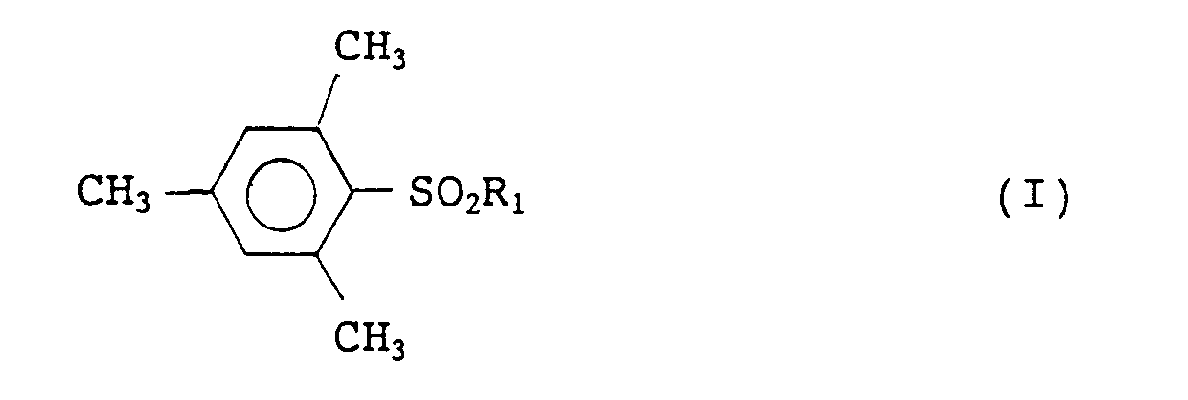
wherein R1 stands for a chlorine atom or a group
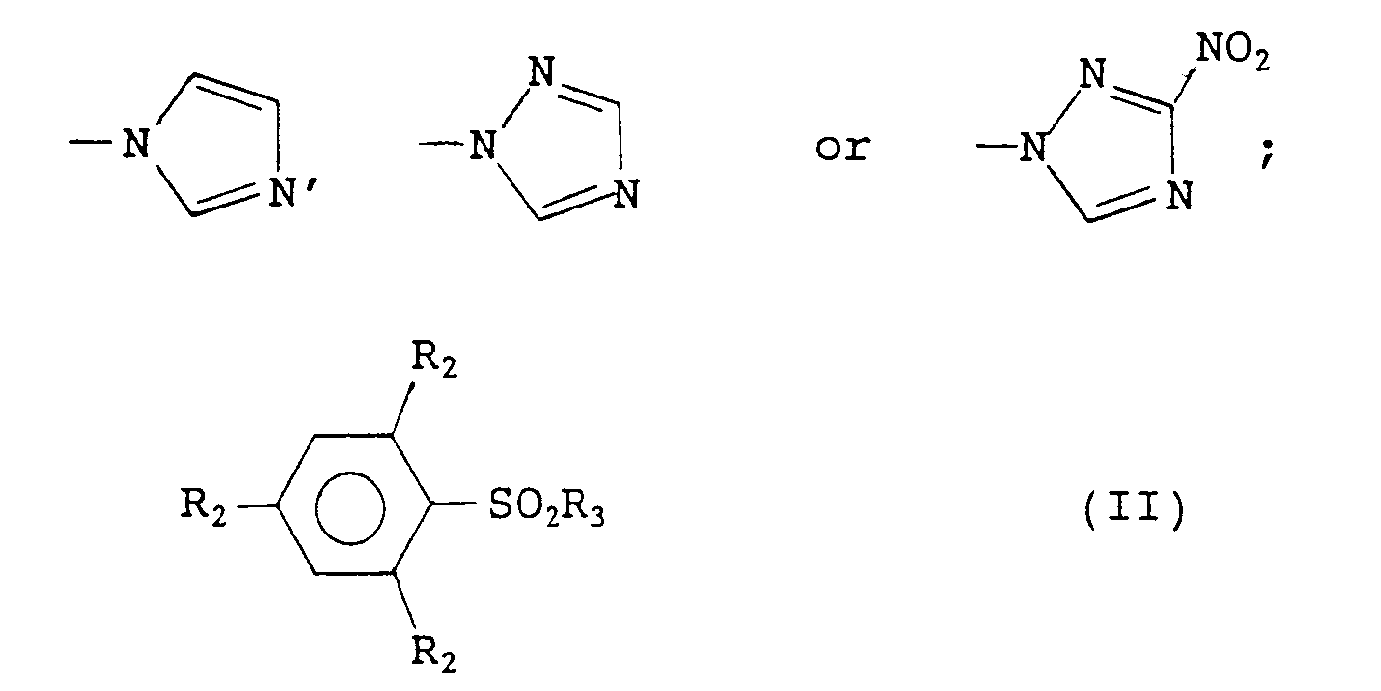
wherein R2 stands for an isopropyl group, and R3 stands for a chlorine atom or a group
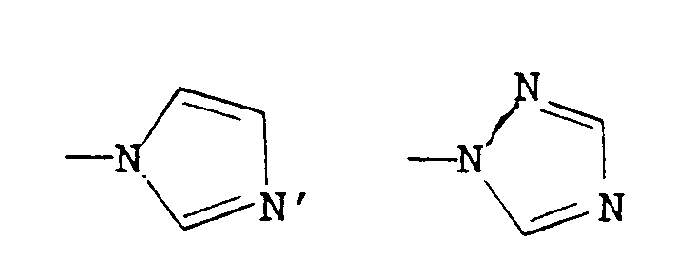
or
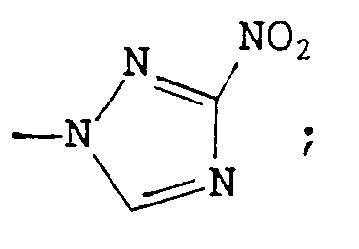
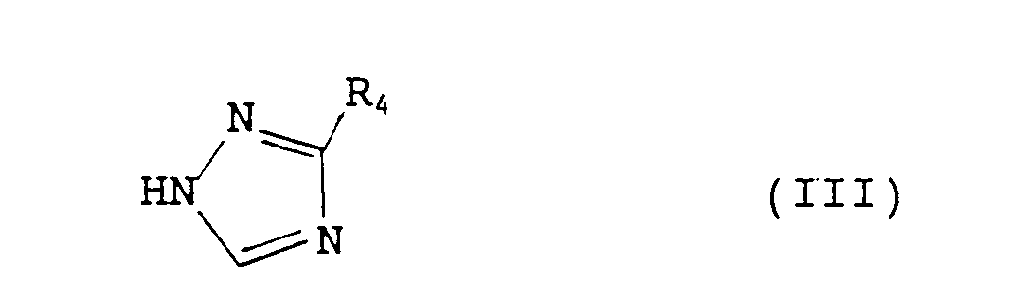
wherein R4 stands for a hydrogen atom or a nitro group; and
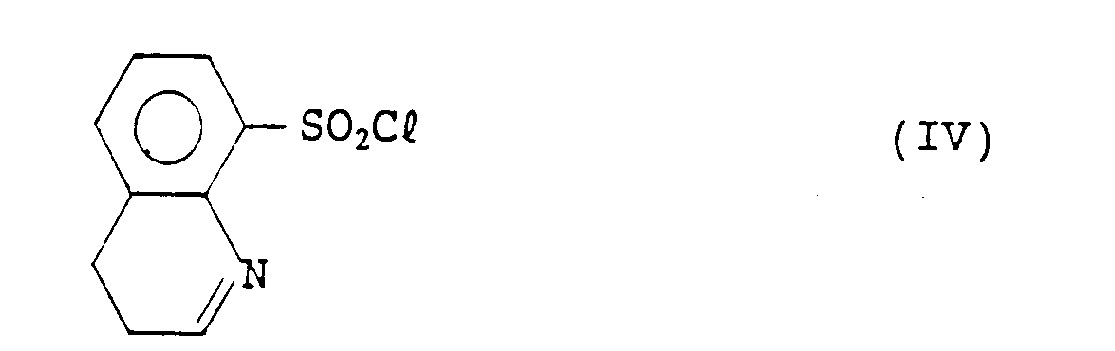
wherein R1 stands for a chlorine atom or a group
wherein R2 stands for an isopropyl group, and R3 stands for a chlorine atom or a group
or
wherein R4 stands for a hydrogen atom or a nitro group; and
8. A process according to claim 7, wherein the nucleoside is selected from thymidine,
cytidine, adenosine, guanosine, uridine, 5-fluorouridine, inosine, deoxycytidine,
deoxyadenosine, deoxyguanosine, deoxyuridine and 5-fluorodeoxyuridine.
9. A process according to claim 7 or 8 wherein the alkylphosphonic acid is selected
from methylphosphonic acid, ethylphosphonic acid, propylphosphonic acid, butylphosphonic
acid, pentylphosphonic acid, and hexylphosphonic acid.
10. A process according to claim 7 or 8 wherein the alkylphosphonic halide is selected
from methylphosphonic dichloride, methylphosphonic dibromide, methylphosphonic diiodide,
ethylphosphonic dichloride, ethylphosphonic dibromide, ethylphosphonic diiodide, propylphosphonic
dichloride, propylphosphonic bromide, propylphosphonic dibromide and propylphosphonic
diiodide.
11. A process according to any of claims 7-10 wherein the reaction is carried out
in an aprotic organic solvent selected from dimethylformamide, dimethyl sulfoxide,
ethyl acetate, tetrahydrofuran, dioxane and pyridine.
12. A process according to any of claims 7-11 wherein an organic base selected from
tributylamine, ammonia, dimethylaniline, triethylamine and y-dimethylaminopyridine
is used as a reaction auxiliary agent.
13. A process according to any of claims 7-12 wherein the reaction is carried out
at a temperature of from -20 to 100°C for 2.5 to 48 hours.