|
(11) | EP 0 501 442 A1 |

| (12) | EUROPEAN PATENT APPLICATION |
|
|
|
|
|||||||||||||||||||||||||||
| (54) | 8-chloro-benzothiazepine-compound for prophylaxis and treatment of sequelae of cerebral neurocyte necrosis |
| (57) Disclosed is a prophylactic and curing agent for sequelae of cerebral neurocyte dyscrasia,
which comprises a benzothiazepine compound represented by the formula:
(wherein R¹ to R⁴ each represent a lower alkyl group) or a phamacologically acceptable salt thereof as an active ingredient. |
BACKGROUND OF THE INVENTION
[0001] This invention relates to a prophylactic and curing agent for sequelae of cerebral neurocyte dyscrasia comprising a benzothiazepine derivative as an active ingredient.
[0002] Cerebral neurocyte dyscrasia has been said to be one of the causes for symptoms such as dementia, parkinsonism, false bulbar paralysis, somnipathy, central pain, paraplegia in flexion and spasm. Thus, development of an agent which can prevent necrosis of cerebral neurocytes, and can prevent and cure these symptoms has been demanded strongly.
[0003] It has been known that 2-(4-methoxyphenyl)-3-lower alkanoyloxy-5-(2-(di-lower alkylamino)ethyl)-8-chloro-2,3-dihydro-1,5-benzothiazepin-4(5H)-one has actions on blood vessels and blood components such as cerebral and coronary vasodilating action, hypotensive action and platelet aggregation inhibitory action (Japanese Patent Publication No. 13994/1988). However, there has not been known about an action on cerebral neurocytes, which is not on a blood vessel system.
SUMMARY OF THE INVENTION
[0004] The present inventors have found unexpectedly that the above benzothiazepine compound which has been known to have cerebral and coronary vasodilating action and hypotensive action has prophylactic and curing effect on sequelae of cerebral neurocyte dyscrasia, and thus, the present invention is to provide the novel pharmaceutical composition.
[0005] The present invention relates to a pharmaceutical composition comprising a benzothiazepine derivative represented by the formula:
(wherein R¹ to R⁴ each represent a lower alkyl group) or a phamacologically acceptable salt thereof as an active ingredient.
[0006] In the pharmaceutical composition of the present invention, an active ingredient compound thereof acts directly on cerebral neurocytes and shows excellent preventive effect on necrosis of cerebral neurocytes, so that the pharmaceutical composition of the present invention is useful as a prophylactic and curing agent for sequelae of cerebral neurocyte dyscrasia and can be used for preventing, curing and alleviating disturbances of consciousness, motor paralysis, cerebral symptoms, speech and language disorders, sense disorders and mental disorders.
DESCRIPTION OF THE PREFERRED EMBODIMENTS
[0008] As a specific example of the active ingredient of the present invention, there may be mentioned a compound of the formula (I) in which R¹ to R⁴ are each an alkyl group having 1 to 6 carbon atoms.
[0009] The benzothiazepine derivative (I) which is the active ingredient of the present invention includes four kinds of optical isomers ((+)-cis, (-)-cis, (+)-trans and (-)-trans isomers) based on asymmetric carbon atoms at 2-position and 3-position of a benzothiazepine skeleton and a mixture thereof, and among them, a cys isomer is particularly preferred.
[0010] In the present invention, the benzothiazepine derivative (I) can be used in the free form or in the form of a pharmacologically acceptable salt thereof. As the pharmacologically acceptable salt, there may be used, for example, an inorganic acid addition salt such as hydrochloride, hydrobromide, hydroiodide, perchlorate, sulfate and phosphate; and an organic acid addition salt such as oxalate, maleate, fumarate, tartarate and methanesulfonate.
[0011] The dose of the benzothiazepine derivative (I) or a pharmacologically acceptable salt thereof varies depending on an administration method, and age, body weight and state of a patient, but, in general, it may be preferably about 0.05 to 20 mg/kg, particularly about 0.5 to 5 mg/kg per day.
[0013] The administration form in the case of oral administration may be either a solid form such as a tablet, a powder, a capsule and a granule or a liquid form such as a solution and a suspension, which can be used as a medical preparation together with a medical carrier suitable for oral administration. As such a medical carrier, there may be used any conventional ones, for example, a binder (syrup, gum arabic, gelatin, sorbitol, tragacanth gum and polyvinyl pyrrolidone), an excipient (lactose, sugar, cornstarch, potassium phosphate, sorbitol and glycine), a lubricant (magnesium stearate, talc, polyethylene glycol and silica), a disintegrating agent (potato starch) and a humectant (sodium lauryl sulfate).
[0014] On the other hand, the administration form in the case of parenteral administration is preferably an injection or an dripping injection by using a distilled water for injection, a physiological saline solution or a glucose aqueous solution.
[0015] The benzothiazepine derivative (I) which is the active ingredient of the present invention can be prepared by, for example, the method disclosed in Japanese Patent Publication No. 13994/1988.
EXAMPLES
Experiment example (Effect of preventing necrosis of hippocampal cells (in vitro))
[0017] Hippocampi were obtained from brains of SD strain fetal rats, and treated with trypsin for dissociation. The cell suspension was plated on previously cultured glia cells of brains from fetal rats in a medium of Dulbecco's modified Eagle's medium (Dulbecco, R. et al (1960), Virology, 12, p. 185) supplemented with 10 % heat-inactivated fetal bovine serum.
[0018] After seven to ten days in culture, the medium was removed and the cultures were exposed to 1 mM KCN in a physiological salt solution (composition (mM): NaCl, 145; KCl, 5; MgCl₂, 1; HEPES, 10; glucose, 10; pH, 7.4) with or without sample (10 µM) . After a 30-minute exposure, cells were returned to the culture-conditioned medium and incubated for 24 hours. The survival rate of the neurons were estimated by comparing the number of neurons in one identical field before and 24 hours after exposure to KCN.
[0019] The results are shown in Table 1.
Table 1
| Sample | Survival rate of hippocampal cells*) |
| (Compound of the invention) (+)-cis-2-(4-methoxyphenyl)-3-acetoxy-5-[2-(dimethylamino)-ethyl]-8-chloro-2,3-dihydro-1,5-benzothiazepin-4(5H)-one·maleate | 75.4 % |
| Non-administered control group | 43.7 % |
| *) The survival rate of the group not treated with KCN and the sample is defined as 100 %. |
[0020] From Table 1, it can be seen that the active ingredient of the present invention has excellent effect of preventing necrosis of hippocampal cells.
[0021] Since the benzothiazepine derivative (I) which is the active ingredient of the present invention or a pharmacologically acceptable salt thereof has action of curing and/or action of preventing cerebral neurocyte damages, it shows excellent effect of preventing necrosis of cerebral neurocytes. Thus, the pharmaceutical composition of the present invention can be effectively used for preventing, curing and/or alleviating various sequelae of cerebral neurocyte dyscrasia, for example, disturbances of consciousness (somnolence, stupor, clouding of consciousness and coma), motor paralyses (hemiplegia and parkinsonism), speech and language disorders (articulation disorders and aphasia), sense disorders (pain, numbness and heat), mental disorders (dementia, hallucination, delusion, delirium, violent behavior, depressed feeling, neurotic symptoms, poriomania and emotional incontinence), ophthalmic symptoms and dysuria, and further preventing recurrence and preventing exacerbation and progress of the above symptoms.
[0022] Further, the benzothiazepine derivative (I) or a pharmacologically acceptable salt thereof has low toxicity and high safety. For example, when 2-(4-methoxyphenyl)-3-acetoxy-5-[2-(dimethylamino)ethyl]-8-chloro-2,3-dihydro-1,5-benzothiazepin-4(5H)-one·maleate is orally administered to mice, its 50 % lethal dose (LD₅₀) was about 800 mg/kg.
1. Use of a benzothiazepine compound represented by the formula:
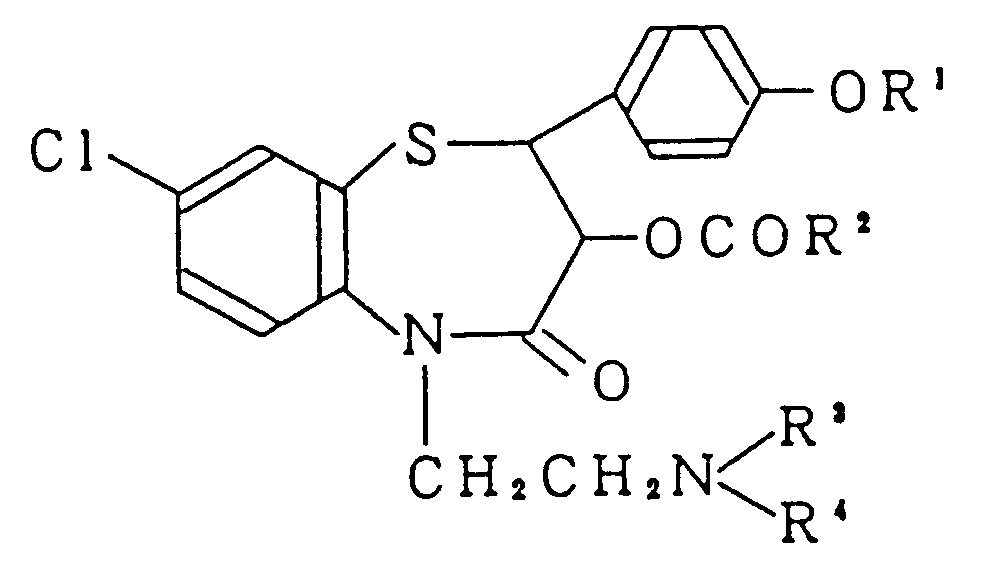
(wherein R¹ to R⁴ each represent a lower alkyl group) or a pharmacologically acceptable salt thereof for the preparation of a prophylactic and curing agent for sequelae of cerebral neurocyte dyscrasia.
(wherein R¹ to R⁴ each represent a lower alkyl group) or a pharmacologically acceptable salt thereof for the preparation of a prophylactic and curing agent for sequelae of cerebral neurocyte dyscrasia.
2. Use of a benzothiazepine compound represented by the formula:
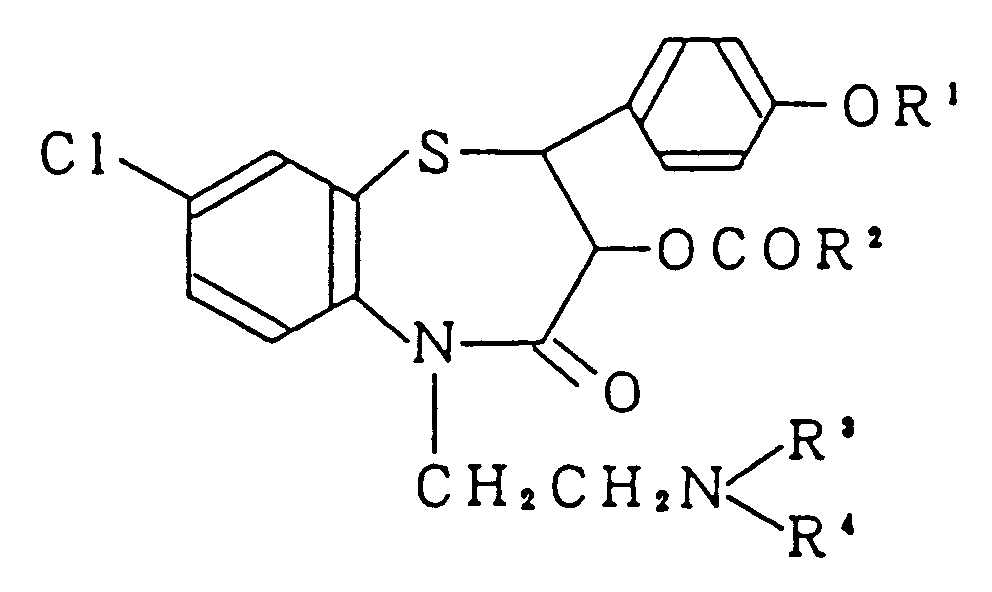
(wherein R¹ to R⁴ each represent a lower alkyl group) or a pharmacologically acceptable salt thereof for the preparation of a prophylactic and therapeutic agent for disturbances of consciousness, motor paralyses, speech and language disorders, sense disorders, mental disorders or dysuria.
(wherein R¹ to R⁴ each represent a lower alkyl group) or a pharmacologically acceptable salt thereof for the preparation of a prophylactic and therapeutic agent for disturbances of consciousness, motor paralyses, speech and language disorders, sense disorders, mental disorders or dysuria.
3. Use of a benzothiazepine compound according to claim 1 or claim 2 wherein R¹ to R⁴
are each an alkyl group having 1 to 6 carbon atoms.
4. Use of a benzothiazepine compound according to claim 1 or claim 2 wherein R¹ to R⁴
are each methyl group.
5. Use of a benzothiazepine compound according to claim 1 or claim 2 wherein the compound
is (+)-cis-2-(4-methoxyphenyl)-3-acetoxy-5-[2-(dimethylamino)ethyl]-8-chloro-2,3-dihydro-1,5-benzothiazepin-4(5H)-one·maleate.
Claims for the following Contracting State(s): ES
1. A method for preparing a prophylactic and curing agent for sequelae of cerebral neurocyte
dyscrasia, which comprises formulating a benzothiazepine compound represented by the
formula:
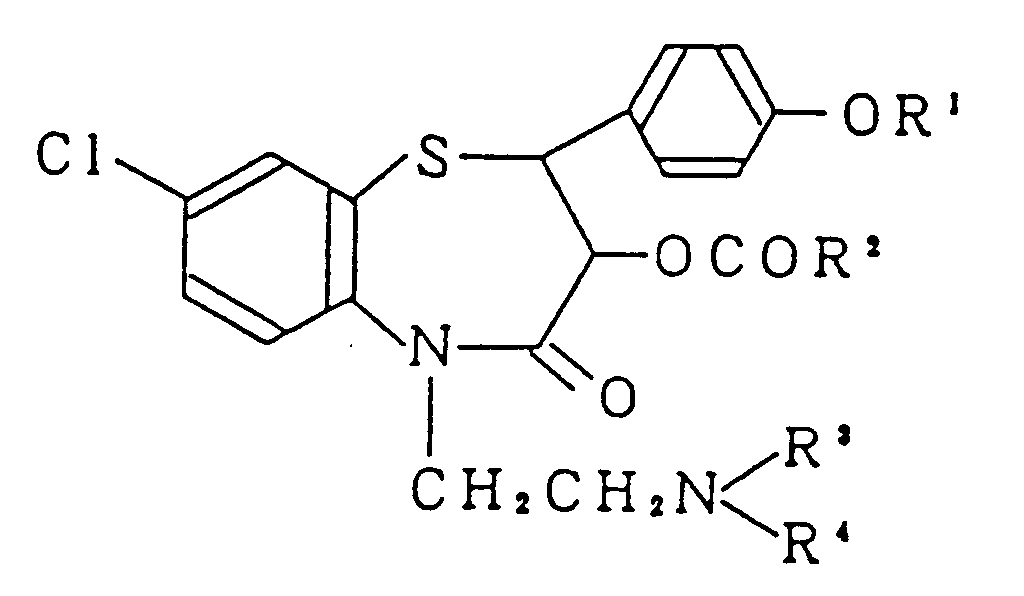
(wherein R¹ to R⁴ each represent a lower alkyl group) or a pharmacologically acceptable salt thereof with medical carriers.
(wherein R¹ to R⁴ each represent a lower alkyl group) or a pharmacologically acceptable salt thereof with medical carriers.
2. A method for preparing a prophylactic and therapeutic agent for disturbances of consciousness,
motor paralyses, speech and language disorders, sense disorders, mental disorders
or dysuria by formulating a benzothiazepine compound represented by the formula:
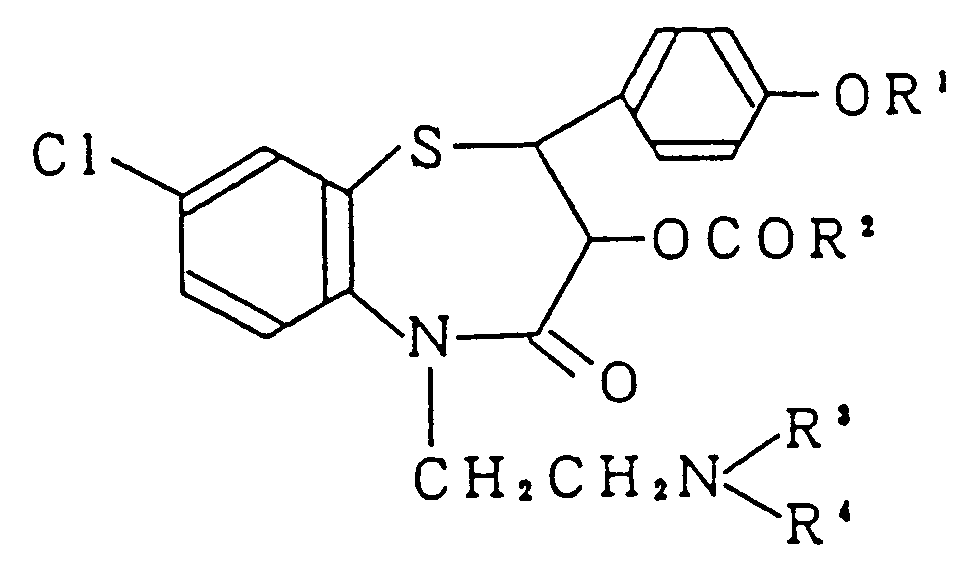
(wherein R¹ to R⁴ each represent a lower alkyl group) or a pharmacolgically acceptable salt thereof with medical carriers.
(wherein R¹ to R⁴ each represent a lower alkyl group) or a pharmacolgically acceptable salt thereof with medical carriers.
3. A method according to claim 1 or claim 2 wherein R¹ to R⁴ are each an alkyl group
having 1 to 6 carbon atoms.
4. A method according to claim 1 or claim 2 wherein R¹ to R⁴ are each methyl group.
5. A method according to claim 1 or claim 2 wherein the benzothiazepine compound is (+)-cis-2-(4-methoxyphenyl)-3-acetoxy-5-[2-(dimethylamino)ethyl]-8-chloro-2,3-dihydro-1,5-benzothiazepin-4(5H)-one·maleate.
Claims for the following Contracting State(s): GR
1. A method for preparing a prophylactic and curing agent for sequelae of cerebral neurocyte
dyscrasia, which comprises formulating a benzothiazepine compound represented by the
formula:
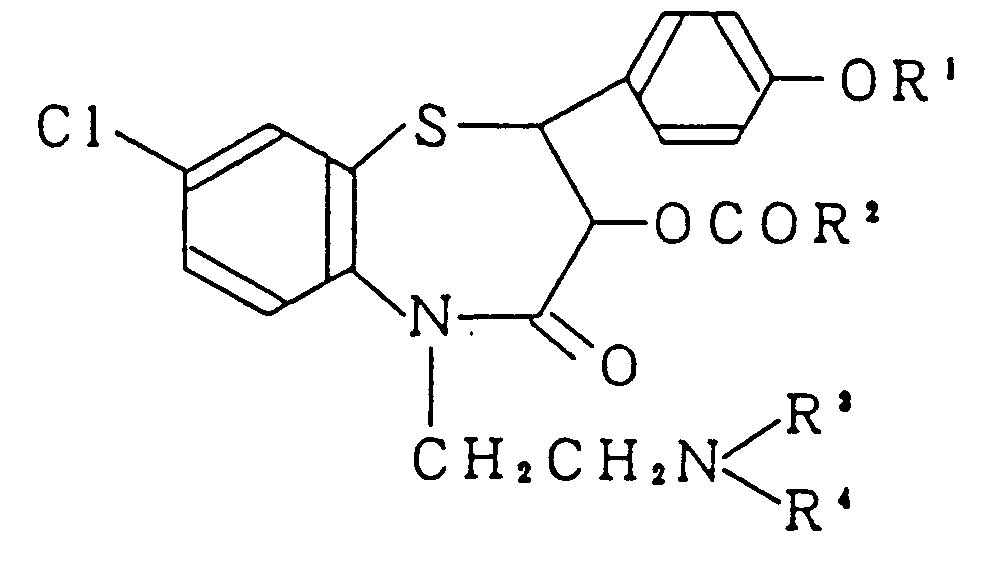
(wherein R¹ to R⁴ each represent a lower alkyl group) or a pharmacologically acceptable salt thereof with medical carriers.
(wherein R¹ to R⁴ each represent a lower alkyl group) or a pharmacologically acceptable salt thereof with medical carriers.
2. A method for preparing a prophylactic and therapeutic agent for disturbances of consciousness,
motor paralyses, speech and language disorders, sense disorders, mental disorders
or dysuria by formulating a benzothiazepine compound represented by the formula:
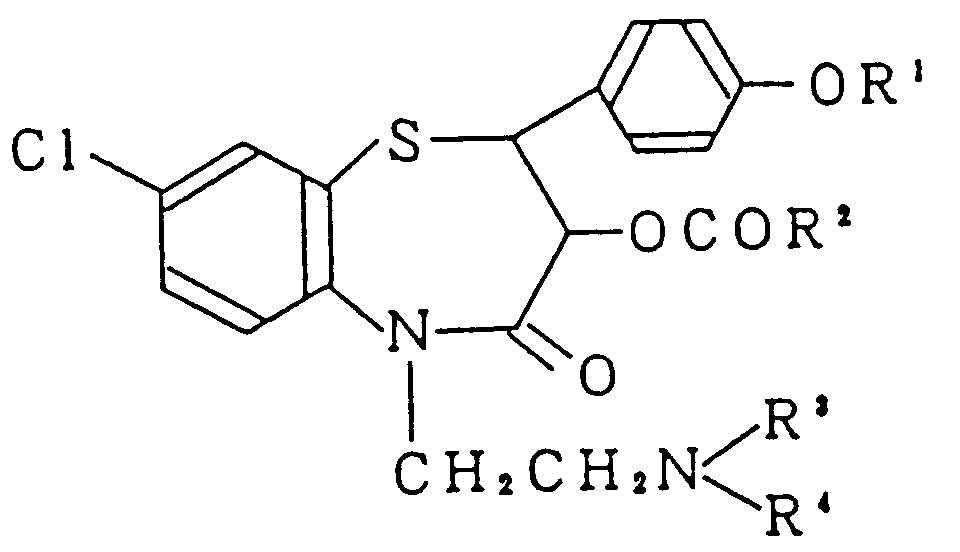
(wherein R¹ to R⁴ each represent a lower alkyl group) or a pharmacolgically acceptable salt thereof with medical carriers.
(wherein R¹ to R⁴ each represent a lower alkyl group) or a pharmacolgically acceptable salt thereof with medical carriers.
3. A method according to claim 1 or claim 2 wherein R¹ to R⁴ are each an alkyl group
having 1 to 6 carbon atoms.
4. A method according to claim 1 or claim 2 wherein R¹ to R⁴ are each methyl group.
5. A method according to claim 1 or claim 2 wherein the benzothiazepine compound is (+)-cis-2-(4-methoxyphenyl)-3-acetoxy-5-[2-(dimethylamino)ethyl]-8-chloro-2,3-dihydro-1,5-benzothiazepin-4(5H)-one·maleate.
6. Use of a benzothiazepine compound represented by the formula:
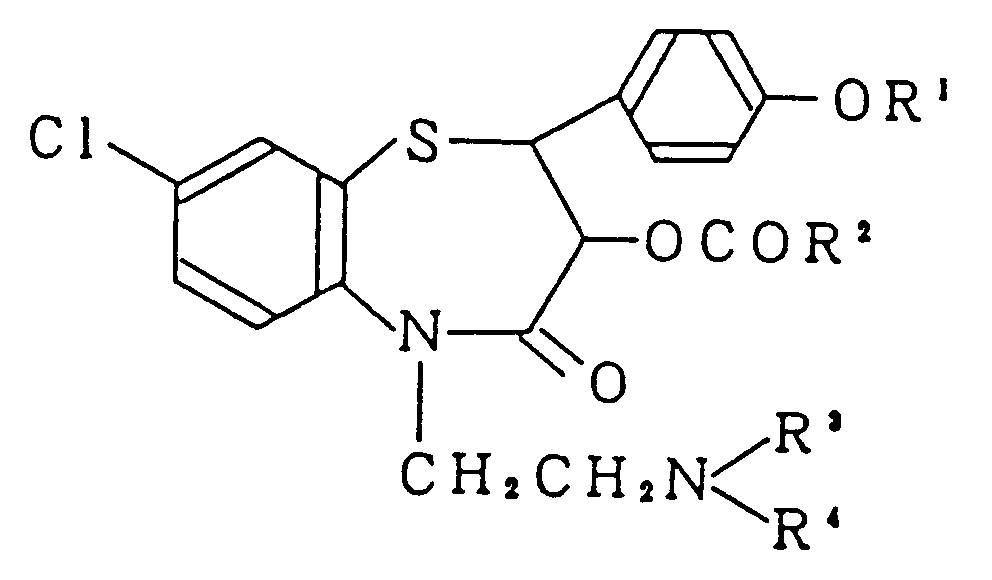
(wherein R¹ to R⁴ each represent a lower alkyl group) or a pharmacologially acceptable salt thereof for the preparation of a prophylactic and curing agent for sequelae of cerebral neurocyte dyscrasia.
(wherein R¹ to R⁴ each represent a lower alkyl group) or a pharmacologially acceptable salt thereof for the preparation of a prophylactic and curing agent for sequelae of cerebral neurocyte dyscrasia.
7. Use of a benzothiazepine compound represented by the formula:
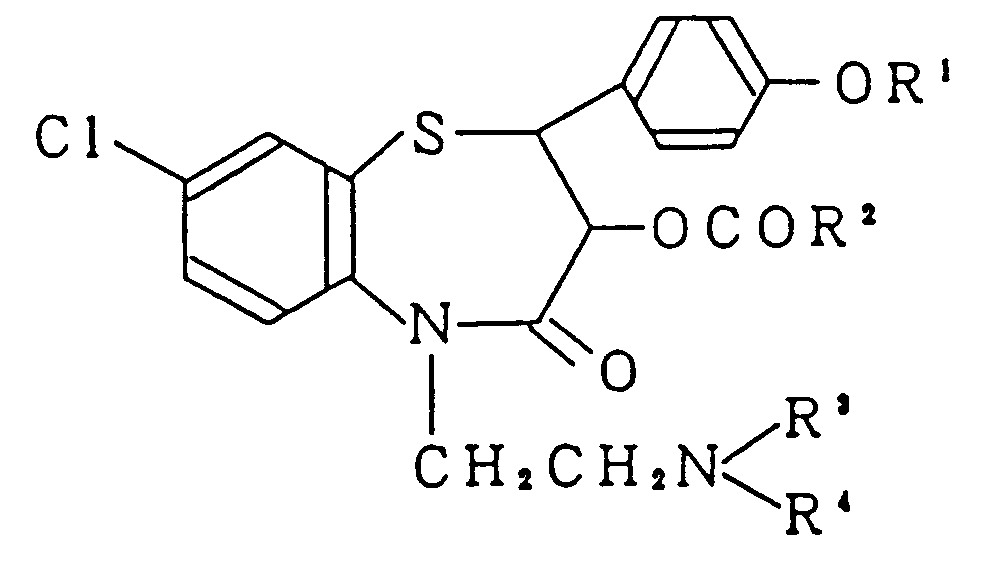
(wherein R¹ to R⁴ each represent a lower alkyl group) or a pharmacologically acceptable salt thereof for the preparation of a prophylactic and therapeutic agent for disturbances of consciousness, motor paralyses, speech and language disorders, sense disorders, mental disorders or dysuria.
(wherein R¹ to R⁴ each represent a lower alkyl group) or a pharmacologically acceptable salt thereof for the preparation of a prophylactic and therapeutic agent for disturbances of consciousness, motor paralyses, speech and language disorders, sense disorders, mental disorders or dysuria.
8. Use of a benzothiazepine compound according to claim 6 or claim 7 wherein R¹ to R⁴
are each an alkyl group having 1 to 6 carbon atoms.
9. Use of a benzothiazepine compound according to claim 6 or claim 7 wherein R¹ to R⁴
are each methyl group.
10. Use of a benzothiazepine compound according to claim 6 or claim 7 wherein the compound
is (+)-cis-2-(4-methoxyphenyl)-3-acetoxy-5-[2-(dimethylamino)ethyl]-8-chloro-2,3-dihydro-1,5-benzothiazepin-4(5H)-one·maleate.