|
(11) | EP 0 508 008 A1 |

| (12) | EUROPEAN PATENT APPLICATION |
|
|
|
|
||||||||||||||||||||||||
| (54) | Skeletal isomerization of olefins |
| (57) A process for the skeletal isomerization of olefins wherein the olefins are contacted
with a SKISO-ll alumina base catalyst to convert into isomerized products effectively
under the conversion conditions comprising a temperature of above 200oC to about 650oC, the pressure of 0.3 to about 10 atmospheres and a molar ratio of hydrogen to olefins
feed from zero to about ten. |
[0001] This invention relates to the preparation of the skeletal isomerization catalyst which permits the isomerization of normal olefins to their isomers. Specifically, this invention relates to the skeletal isomerization as well as double bond isomerization of four to twenty carbon-numbers olefin. This invention more particularly relates to the conversion of linear alkenes into the branched alkenes having the same carbon numbers. The catalyst in this invention is prepared by impregnation process, then the calcination and activation steps, to form a composition of the catalyst named as SKISO-ll, an oxide of Group IIIA on the active alumina pellet.
[0002] In general, the double-bond isomerization reaction of olefin often occurs in the presence of acidic catalyst by proton transfer between olefins. However, it is not necessary to proceed the reaction at high temperture. Skeletal isomerization of olefins is known to be conducted by contacting unbranched olefins with acidic catalysts at more extreme conditions. Therefore, for skeletal isomerization of olefin, the alkyl carbonium ion which is the transition state of double-bond isomerization reaction needs to undergo a rearrangement, and subsequently a proton transfer step to form the desired products.
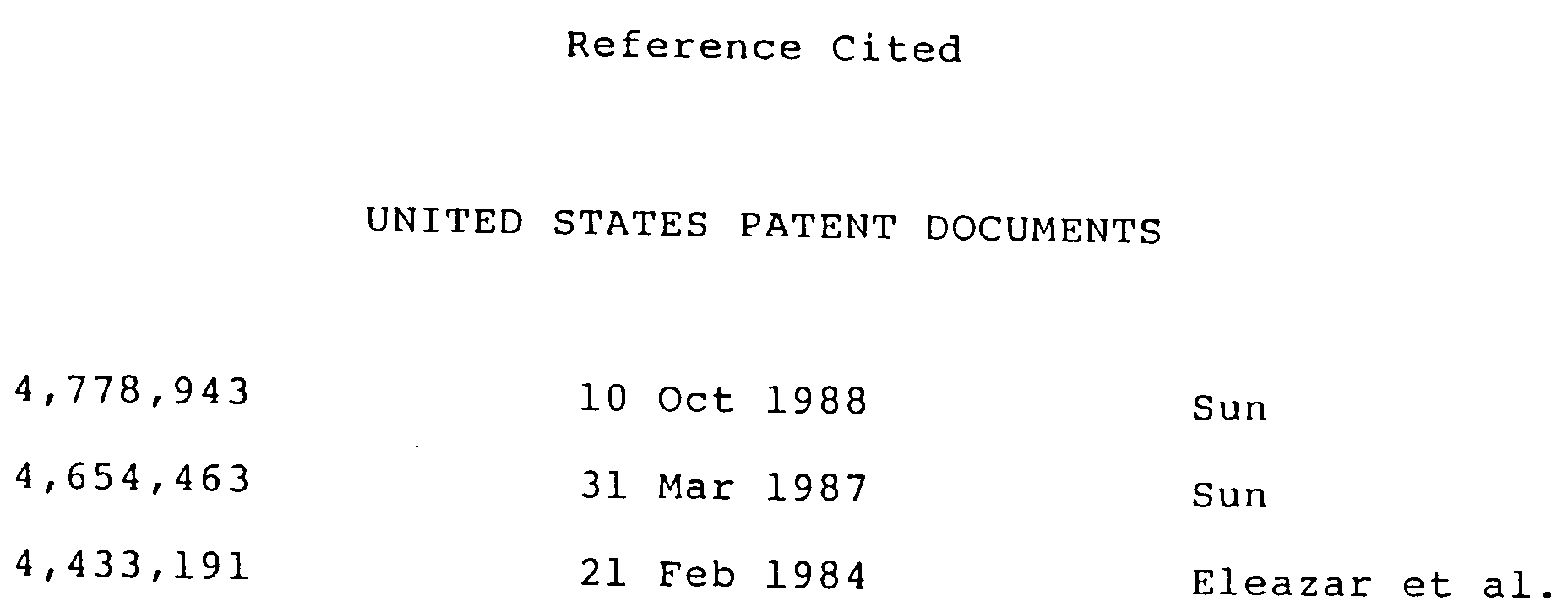
[0003] In the past, the skeletal isomerization catalyst were mostly prepared from the alumina support with some modifications on the surface by halogen-containing compounds, such as HBr or butyl bromide. Examples are : Sun United States Pat. 4,778,943, issued 18 Oct 1988; Sun United States Pat. 4,654,463, issued 31 Mar 1987; and Eleazar et al. United States Pat. 4,433,191, issued 21 Feb 1984. The catalyst in this invention is prepared without any modification of halide compound on the catalyst surface and can be employed to the skeletal isomerization of olefins effectively.
[0004] The product of skeletal isomerization for C4 olefin is isobutylene which is one of the feedstock for producing methyl tertiary butyl ether (MTBE), an ether compound with high octane number used in gasoline pool. For the skeletal isomerization of C5 olefin, the desired product is isoamylene which is the feedstock of producing tertiary amyl methyl ether (TAME), also a high octane number compound. Hence, this invention has an implementation on improving the quality of gasoline.
[0005] It has now been discovered in this invention that the skeletal isomerization of olefins which are characterized in having from 4 to about 20 carbon atoms per molecule can proceed via the action of SKISO-ll catalyst, an oxide of Group IIIA on the surface of gamma- or eta- alumina pellet. The olefin isomers of the main product will be near the equilibium compositions, either for C4, C5 olefins or for other carbon numbers olefins. The activity/selectivity characteristics and stability of the catalyst employed in the process of this invention are superior to other halogenated aluminas, such as brominated or fluorinated aluminas.
[0006] Normal olefins are converted into iso-olefins in the presence of the SKISO-ll catalyst of this invention. The support used in the catalyst is any crystalline type of aluminas, preferred eta- or gamma- alumina with the surface area of above 40 to about 500 m2 /gram (as measured by the BET method using N2). Other inorganic oxides may be used in the catalyst of this invention. However, the catalyst of this invention should contain at least 60 mole % of alumina. Examples of other inorganic oxides which can be used along with alumina are magnasium oxide, calcium oxide, phosphorus oxide, tungsten oxide and palladium. The catalyst should contain an oxide of Group IIIA from about 0.01 to about 20 wt %, preferably from 0.3 to about 11 wt %, based on the total catalyst weight. The preparative method for the catalyst as well as the application of the catalyst on the skeletal isomerization of normal olefins and the resulting mixture are disclosed in this invention. Typically, the catalyst of this invention can be utilized in the skeletal isomerization of olefins to convert n-butenes into isobutylene or to convert n-pentenes into isoamylenes, within which the reaction can be double bond or skeletal isomerization.
[0007] The isomerization reaction of olefins is well known to be limited by the thermodynamical equilibrium of reacting species. The skeletal isomerization catalysts described in some patents or published papers were mostly prepared from the treatment of halogen-containing compound in order to maintain the activity and the selectivity. Hence, there are some disadvantages for those catalysts, such as the investment of the facilities too high, the treatment of the process waste too difficult, etc. The objective of this invention is to propose a new catalyst for which the cost of the process investment can be reduced and the skeletal isomerization of normal olefins can easily proceed.
[0008] The preparation method of the catalyst and the reaction for C4 or C5 olefins are described as follows:
[0009] According to this invention, the characteristics of the preparation process for the catalyst are :
1. The active alumina pellet is impregnated in an acidic solution of Group IIIA compound in the temperature range of 20 to 90oC for 0.5 to 10 hours.
2. The solid catalyst is then calcined and activated either under air or nitrogen or hydrogen for 2 to 30 hours.
3. The calcination temperature is above 300 to about 800oC and the catalyst is then cooled at room temperature to form the desired catalyst.
[0010] The feedstock of skeletal isomerization contains at least one alkene, preferably an alkene having from 4 to 8 carbon numbers per molecule. The alkene may have internal or terminal double bonds. The normal alkenes may contain other hydrocarbons having the same numbers of carbon atoms, such as alkanes. Particular feedstocks in this invention are fractions containing butenes, or mixtures of butenes with isobutylene, mixtures of pentenes with isoamylenes. Such fractions are commonly produced in petroleum refineries or petrochemical plants, for example, C5 stream from naphtha crackers and C4 stream from MTBE plant. The olefinic feedstocks can contain inert diluents with the content of alkenes in the range of above 10 to 95 wt % of the feed stream.
[0011] The typical example of the application of the catalyst is on the isomerization reactions, either double bond or skeletal isomerization, of the C4 or C5 olefins. The term C4 olefin refers to the follow olefins: 1-butene, cis-2-butene, trans-2-butene and isobutylene. The term C5 olefin refers to the following olefins : 1-pentene, cis-2-pentene, trans-2-pentene, 3-methyl-1-butene, 2-methyl-1-butene and 2-methyl-2-butene. The catalyst is regenerable by heating in an oxygen and nitrogen-containing gas at the temperature in the range of above 300oC to about 800oC. For maintenance of the activity of the catalyst, a hydrogen or nitrogen gas is incorporated in the reacting mixture with a molar ratio of gas to the reacting mixture of zero to about ten, preferably a molar ratio of zero to 3. The experimental apparatus and procedure are summarized below.
[0012] The said catalyst is placed in a fixed-bed reactor which has the inner diameter of 2.54 cm and the length of 30.5 cm. Some inert solid particles are placed in lower and upper ends of the reactor to support the catalyst and to make uniform distributions of the reacting stream within the reactor. The experimental apparatus also includes feed pump, heating medium, product collecting and sampling units, mass flow meter and temperature-controlled system, etc. The product is analyzed by gas chromatography, a Carlo Erba GC 6000 Vega Series unit with FID detector. The column is a capillary type.
[0013] The invention is further illustrated by the following examples which are descriptive but not limitative.
EXAMPLE 1
[0014] According to the experimental method stated above, a better example is described as follows. A mixture which contains 94.25 wt% of 2-pentene, 1.29 wt% of isoamylene and other impurities was used as the feed. Under the reaction conditions of temperature at 350 oC, one atmosphere and weight hourly space velocity (WHSV) at 1.0 hr⁻¹, the product distribution is obtained as 1.4 wt% of 3-methyl-1-butene, 12.8 wt% of trans-2-pentene, 5.7 wt% of cis-2-pentene, 63.3wt% of 2-methyl-2-butene and 2-methyl-1-butene(i.e. isoamylenes), 7.8 wt% of pentane and C4- and 8.9 wt% of C6+ hydrocarbons. The conversion of n-pentene and the selectivity of isoamylene were estimated as 0.804 and 0.836, respectively. If pentenes in the product is normalized and compared with the equilibrium compositions of C5 olefins which are estimated thermodynamically, a consistent result is obtained and shown in Table I.
EXAMPLE 2
[0015] Another typical example was carried out for the skeletal isomerization of n-butene. 99.5 wt% of 1-butene was used as the feed to convert into its isomers under the reaction conditions of temperature at 450oC, one atmosphere and WHSV at 2.5 hr⁻¹. The product distribution was obtained as 14.8 wt% of 1-butene, 23.7 wt% of trans-2-butene, 17.2 wt% of cis-2-butene, 33.2 wt% of isobutylene, 3.4 wt% of butane and C3 - and 7.7 wt% of C5 + hydrocarbons. The conversion of n-butene and the selectivity of isobutylene were estimated as 0.449 and 0.728, respectively. Normalizing butenes in the product, the composition is thus very consistent with the equilibrium composition of C4 olefin which is also estimated thermodynamically. The compared result is shown in Table II.
EXAMPLE 3
[0016] The feed is a mixture of 94.25 wt% of 2-pentene and 1.29 wt% of isoamylenes with the flow rate of 35 ml/min. The amount of the catalyst used is 5.5 grams. The operating conditions are at one atmosphere and different temperature, such as 200, 250, 300, 350, 400 and 450oC. The results show that the conversion of normal pentene and the selectivity of isoamylene are similar within the temperature range of 300 to 400oC. The composition of product for each condition is shown in Table III.
EXAMPLE 4
[0017] The feed is 99.5 wt% of 1-butene with the flow rate of 100 ml/min. The operating conditions were selected as at one atmosphere and WHSV at 1.0 for different temperature, 250, 300, 350, 400 and 500oC. The yield of isobutylene is different for various temperature. A quick increasing of the yield of isobutylene is occurred up to 400oC reaction temperature. The composition of product for each condition is shown in Table IV.
EXAMPLE 5
[0018] The calcination temperature of the catalyst also affects the activity of the catalyst on the skeletal isomerization due to effects on the properties of the catalyst, such as surface area and the distribution of active sites. The experimental procedure was the same as case II except that the weight hourly space velocity is at 2.5. The results are summarized in Table V.
1. A process for the skeletal isomerization and double bond isomerization of olefins
having from 4 to about 20 carbon atoms per molecule via the action of the SKISO-ll
alumina base catalyst with the composition of an oxide of Group IIIA on the active
gamma- or eta- alumina pellet is disclosed.
2. The preparation method of the catalyst as specified in claim 1 is described above.
3. Process according to claim 1 and claim 2 wherein the hydrocarbons are C4 olefins to produce isobutylene.
4. Process according to claim 1 and claim 2 wherein the hydrocarbons are C5 olefins to produce isoamylenes.
5. Process according to claim 1 and claim 2 wherein the oxide content of Group IIIA in
the catalyst is at above 0.01 to 20.0 wt% based on the total catalyst weight.
6. Process according to claim 1 wherein a manufacturing method for the catalyst includes
the steps described in claim 2.
7. Process according to claim 1 and 2 wherein the feedstocks contain at least one alkene
with the content of alkenes in the range of 10 to about 95 wt % of the feed stream.
8. Process according to claim 3 wherein the operating conditions for C4 isomerization are : at reaction temperature of 100 to 650oC, at one to about 10 atmosphere, at WHSV in the 0.1 to 15.0 hr⁻¹ , the molar ratio
of maintenance gas to reacting mixture of zero to about ten.
9. Process according to claim 3 wherein the operating conditions for C5 isomerization are : at reaction temperature of 100 to 650 oC, at one to 10 atmospheres, at WHSV in the range 0.1 to 10.0 hr⁻¹ , the molar ratio
of maintenance gas to reacting mixture of zero to about ten.