| (19) |
 |
|
(11) |
EP 0 511 443 A1 |
| (12) |
EUROPEAN PATENT APPLICATION |
| (43) |
Date of publication: |
|
04.11.1992 Bulletin 1992/45 |
| (22) |
Date of filing: 01.05.1991 |
|
|
| (84) |
Designated Contracting States: |
|
AT BE CH DE DK ES FR GR IT LI LU NL SE |
| (71) |
Applicant: LAROY OPTICAL LIMITED |
|
Skipton,
North Yorkshire BO23 2QR (GB) |
|
| (72) |
Inventors: |
|
- McBeath, John
Nelson,
Lancashire BB9 6LS (GB)
- Smith, John
Near Keighley,
West Yorkshire BD29 7DN (GB)
|
| (74) |
Representative: Loughrey, Richard Vivian Patrick et al |
|
HUGHES CLARK & CO
114-118 Southampton Row
London WC1B 5AA
London WC1B 5AA (GB) |
|
| |
|
| (54) |
Optical inspection apparatus |
(57) An optical projection system for projecting a magnified image of an object includes
a 1:2 relay lens (18) having a magnification of x0.5. The object (12) is illuminated
by a collimated substantially parallel light beam from a source (10) and the 1:2 relay
lens (18) produced an intermediate shadow image (19) at its focal plane. A projection
lens (20) is located to project a magnified final image (16) of the intermediate image
(19) on the screen (17). While it is preferred that the relay lens has a magnification
of x0.5, the relay lens may have a different magnification less than x1.
|
|
[0001] This invention relates to optical inspection apparatus in which a magnified image
of an object is projected on a screen to enable inspection of the object.
[0002] In known optical inspection apparatus, a projection lens produces a magnified image
on a screen of an illuminated object. A number of different projection lenses may
be provided, for example mounted on a turret, each having a different magnification.
A user of the inspection system may then select the required magnification by selection
of an appropriate projection lens. A 1:1 relay lens having a magnification of x1 is
provided between the object and the projection lens to enable the optical system to
be spaced at a constant distance from the object being inspected regardless of the
magnification produced by the projection lens. Light from a source is collimated into
a near parallel beam to illuminate the profile of an object to be viewed. The 1 :
1 relay lens produces a shadow image of the object at the plane of the relay lens
and this shadow image is then magnified by a projection lens to produce a magnified
image on a screen of the object. The shadow image produced at the focal plane of the
relay lens has the same dimensions as those of the object and accordingly the projection
lens is required to have a optical diameter sufficient to accommodate a shadow image
of these dimensions.
[0003] According to the invention optical inspection apparatus for producing a projected
image of an object comprises a first lens having a magnification less than x1 to produce
an intermediate image of an object, said intermediate image being of reduced dimensions
relative to the dimensions of the object and a second lens device to produce a projected
magnified final image of the intermediate image.
[0004] An embodiment of the invention will now be described by way of example with reference
to the drawings in which:
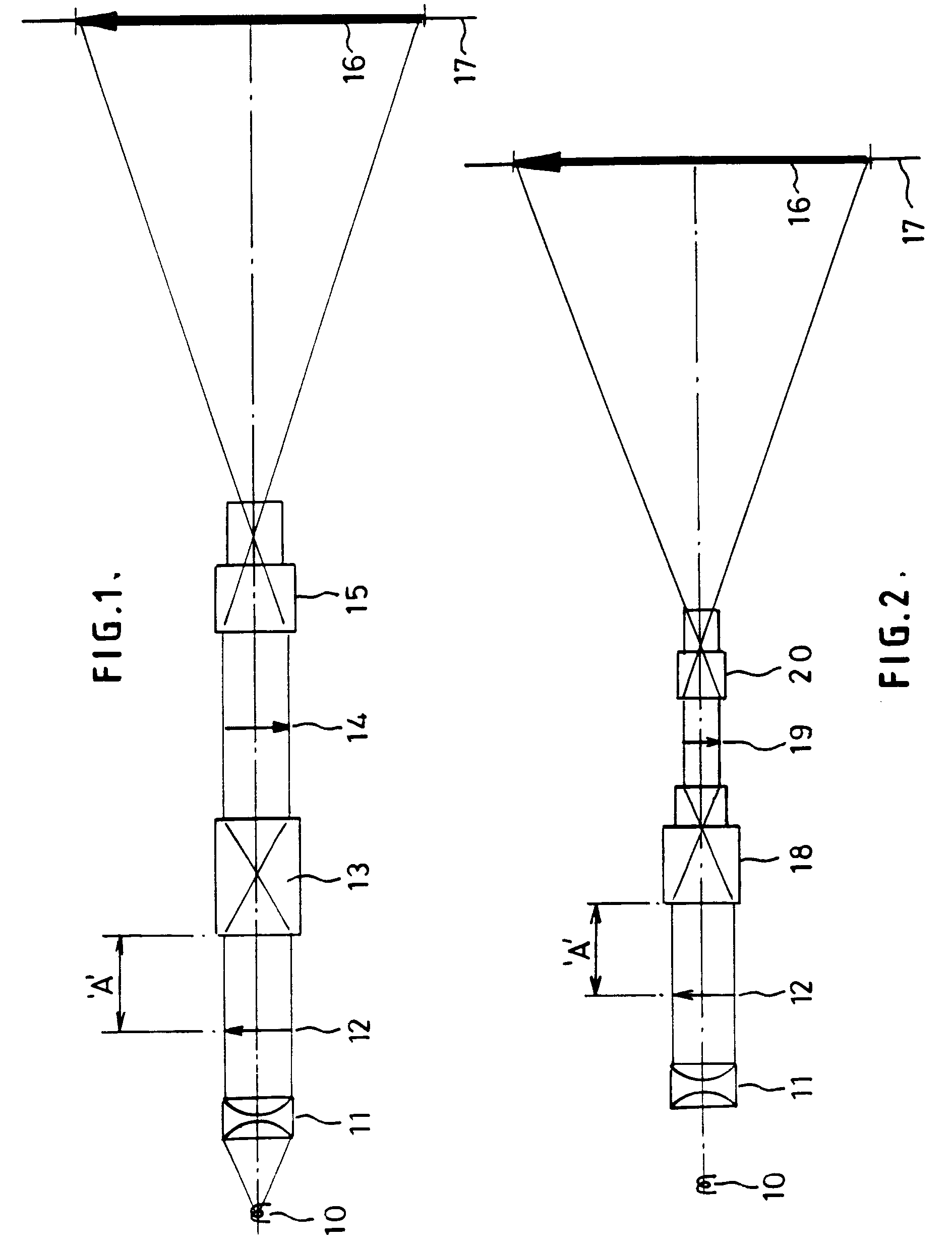
Figure 1 is a diagram illustrating a prior art projection system, and
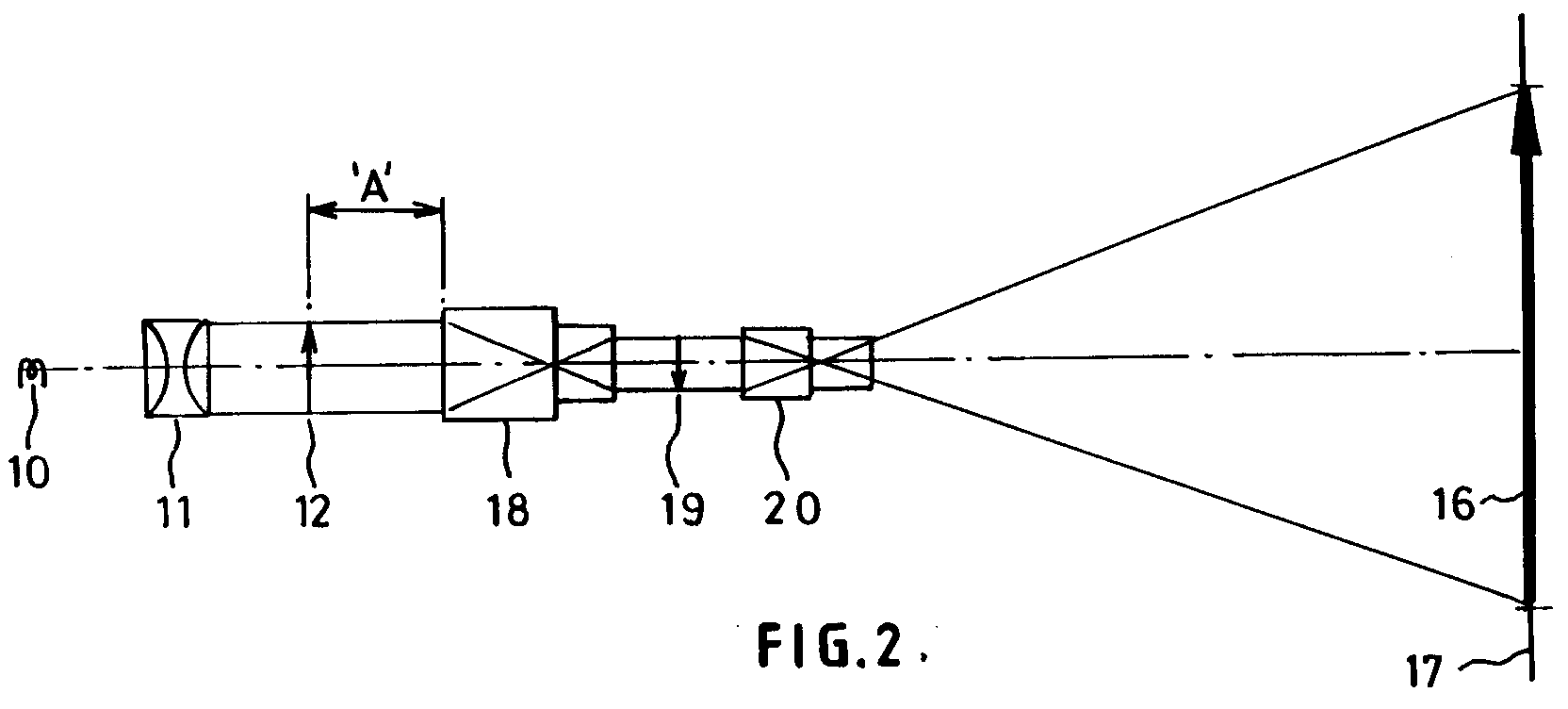
Figure 2 is a diagram illustrating a projection system in accordance with the invention.
[0005] Referring first to Figure 1, a known optical projection system for an inspection
apparatus used for inspecting the profile of an object comprises a source 10 of light
and a condenser lens 11 for collimating the light from the source 10 into a substantially
parallel beam of light. An object 12 to be inspected is located in the path of the
parallel beam of light and a 1:1 relay lens 13 spaced at a distance 'A' from the object
produces, at the focal plane of the lens 13, a shadow image 14 of the profile of the
object 10. The relay lens has a magnification of x1 and hence the shadow image 14
is of the same dimensions as the object 10. A projection lens 15 is located to magnify
the shadow image and to project a magnified final image 16 on a viewing screen 17.
The magnification of the projection lens 15 is chosen to provide the required degree
of magnification of the final image 16 as compared with the object 12 and for example
may be x10 to produce a final image 16 ten times the size of the object 12. It will
be appreciated that since the relay lens has a magnification of x1 and the shadow
image 14 is of the same dimensions as the object 10, the optical aperture of the relay
lens must be sufficiently large to accommodate these dimensions of object and image
and in addition the projection lens 15 is required to have an optical aperture sufficiently
large to accommodate the dimensions of the intermediate shadow image 14.
[0006] In the optical projection system in accordance with the invention and illustrated
in Figure 2, the relay lens 13 of the prior art system having a magnification of 1
is replaced by a 1:2 relay lens 18 having a magnification of x0.5. The object 12 is
illuminated by a collimated substantially parallel light beam from a source 10 and
the 1:2 relay lens 18 produces an intermediate shadow image 19 at its focal plane.
Since the 1:2 relay lens has a magnification of x0.5, the intermediate shadow image
19 is half the size of the object 12. The 1:2 relay lens 18 is designed and constructed
to provide optimum optical performance when producing this half size image of the
object. A projection lens 20 is located to project a magnified final image 16 of the
intermediate image 19 on the screen 17. While it is preferred that the relay lens
18 has a magnification of x0.5, the relay lens may have a different magnification.
In order to produce a required magnification of the final image 16 in relation to
the object 12, the magnification of the projection lens 20 as compared with the projection
lens 15 is increased in proportion to the magnification of the relay lens in accordance
with the formula:-



Accordingly if, for example, a magnification of x10 is required for the final image
16 and using a 1:2 relay lens having a magnification of x0.5 the projection lens would
be required to have a magnification of x20.
[0007] Since the intermediate image 19 is of reduced size when using a relay lens 18 having
a magnification less than x1 the projection lens 20 can have a smaller optical diameter
than that of the projection lens required when using a 1:1 relay lens having x1 magnification.
The cost of lenses is in proportion to the area of the lens and hence considerable
saving in the cost of the projection lens is obtained by the use of a relay lens having
a magnification less than x1 particularly when a number of projection lenses are provided
to enable different magnifications to be obtained. The reduction in size of the projection
lenses enables the size and complexity of the turret supporting the lenses to reduced.
The constant working distance 'A' between the object 12 and the relay lens 18 is retained
and may be of the same dimension as in the prior art system using a 1:1 relay lens.
A further advantage obtained by the use of a relay lens of magnification less than
x1 is that the overall length of the optical system is reduced thereby enabling a
more compact and less expensive expensive construction of the inspection apparatus.
[0008] Usually it is desirable to provide for a number of different magnifications of the
final image which may be selected by a user of the inspection equipment. For this
reason a number of projection lenses having different magnifications are mounted on
a turret which may be rotated by the user to bring any selected one of the projection
lenses into an operative position. Alternatively, the lenses may be mounted on a multi-position
slide to enable any selected one of the lenses to be moved into an operative position.
[0009] While the optical system has been described in relation to an object illuminated
from the rear, the intermediate and final images may be produced from direct (episcopic)
illumination of the object.
1. Optical inspection apparatus for producing a projected image (16) of an object (12)
comprising a first lens structure (18) to produce an intermediate image (19) of the
object and a second lens structure (20) to produce a projected magnified final image
(16) of the intermediate image (19) characterised in that the first lens structure
(18) has a magnification less than x1 so that said intermediate image (19) is of reduced
dimensions relative to the dimensions of the object (12).
2. Optical inspection apparatus as claimed in claim 1 further characterised in that the
first lens structure (18) has a magnification of x0.5.
3. Optical inspection apparatus as claimed in claim 1 further characterised in that the
second lens structure (20) has an optical diameter corresponding to less than the
dimensions of the object (12) being viewed and corresponding to the dimensions of
the intermediate image (19).
4. Optical inspection apparatus for producing a projected image (16) of an object (12)
comprising a source of light (10, 11) for illumination of the object (12) with a collimated
beam of light of substantially parallel rays; first lens means (18) to produce an
intermediate shadow image (19) of said object (12) and second lens means (20) to produce
a projected magnified image (16) of said shadow image (19) characterised in that said
first lens means (18) has a magnification less than x1 so that said shadow image (19)
has dimensions less than corresponding dimensions of said object (12).