|
(11) | EP 0 512 613 A1 |

| (12) | EUROPEAN PATENT APPLICATION |
|
|
|
|
|||||||||||||||||||||||||||
| (54) | Display device |
| (57) A display device in which the deflection device is rotated and the inside surface
of the display window complies with the formula and and . Such a display device has a small raster distortion which can be corrected in a simple manner and a very flat display window. |
[0001] The invention relates to a display device comprising a display tube having a elongated display window with a short and a long axis and an inside surface on which a display screen is provided, a means of generating at least one electron beam being arranged opposite the display screen and a deflection system being located between said means and the display screen.
[0002] The above-described display device is of a conventional type. Such display devices are used in, inter alia, television receivers and computer monitors.
[0003] A problem with this type of display devices is the so-called raster distortion. Due to raster distortion, a straight line is reproduced as a curved line on the display screen. In future HDTV systems this problem will become more prominent. Said systems employ higher line and field scanning frequencies than the conventional systems and generally have a larger display screen. Raster distortion is more conspicuous in relatively large display screens and it is difficult to correct at comparatively high frequencies. In general, raster distortion becomes more problematic according as the flatness of the display window increases.
[0004] It is an object of the invention to provide a display device of the type mentioned in the opening paragraph, in which the above-mentioned problem has been reduced.
[0005] To this end, a display device according to the invention is characterized in that the deflection system comprises a first deflection coil system for generating, in the energized state, a substantially pincushion-shaped line deflection field for deflection in the direction of the short axis of the display screen, and a second deflection coil system for generating, in the energized state, a substantially barrel-shaped vertical deflection field for deflection in the direction of the long axis of the display screen, and in that the inner radius of curvature along the short axis of the display screen Rcminor is given by:
where D is the length of the diagonal of the display screen, and in that the inner radius of curvature along the long axis of the display screen Rcmajor and the aspect ratio A, i.e. the ratio between the long axis and the short axis of the display screen, are given by:
and
The invention is, inter alia, based on the following insights:
The most disturbing raster distortion is formed by a curvature of the field lines in the direction perpendicularly to the line scanning direction. In conventional display tubes, lines are scanned in a direction parallel to the long axis. Said direction will hereinafter also be referred to as the horizontal direction or E-W (east-west) direction. Such display devices often comprise a display system having a first deflection coil system for generating, in the energized state, a substantially pincushion-shaped line deflection field for deflection in the direction of the long axis of the display screen and a second deflection coil system for generating, in the energized state, a substantially barrel-shaped vertical deflection field for deflection in the direction of the short axis of the display screen. Such fields have a positive effect on raster distortion, both in monochrome display devices and in colour display devices. However, raster errors cannot be prevented completely. Usually, the raster distortions in the direction transversely to the line scanning direction are approximately 4% in the lowest order which can be partly compensated by higher-order terms, however, there remains a certain degree of raster distortion due to the difference between the orders, said raster distortion will generally be a pincushion-shaped distortion in the central part of the image. It is noted, that in the case of colour display devices electron beams are usually generated by a so-called in-line electron gun for generating three electron beams extending in one plane parallel to the long axis. Deflection fields as described above have a further positive effect on such colour display devices, which resides in that the display device is self-convergent.
[0006] Raster distortions can be corrected by electronically correcting the deflection of the electron beams. In conventional display devices, in particular, a correction of the raster distortion in the vertical direction (along the short axis) is problematic because it requires a high-frequency (the frequency being dual to the line frequency) correction to be carried out on the low-frequency vertical deflection field. The invention relates to a rotation of the deflection system through 90° in combination with conditions for Rcminor and Rcmajor and A.
[0007] When the deflection system is rotated through 90°, the most important problem with respect to raster distortion is the raster distortion in the horizontal direction (along the long axis of the display screen). A correction of said raster distortion requires a high-frequency correction of a low-frequency signal. An analysis of said raster distortion, which will hereinafter also be referred to as ΔEW, which analysis is carried out within the framework of the invention, teaches that ΔEW is approximately given by:
For the sake of simplicity, said raster distortion ΔEW in the direction transversely to the line scanning direction will hereinafter also be referred to as "the raster distortion(s)". An electronic correction of the raster distortion can be carried out in a simple manner when δ₁*y² is small. In the ease of a large value of δ₁*y², the resultant raster distortion can only partly be compensated by higher-order corrections and, in addition, only in a part of the screen, by carrying out several higher-order corrections, which is difficult. δ₁*y² is small for the indicated area of Rcminor/D, i.e. smaller than approximately 2% so that corrections can be carried out in a simple manner.
[0008] The analysis carried out within the framework of the invention further shows that the coefficients δ₁ and δ₃ are independent of the radius of curvature Rcmajor. An aspect of the invention is based on the insight that the display window can be of a flatter construction in the horizontal direction than conventional display windows, without this having an adverse effect on the raster distortion. In the indicated area of Rcmajor, the display window is of a flatter construction in the horizontal direction than conventional display windows. Further, in particular, the ratio Rcmajor/Rcminor is greater than usual. The indicated conditions for Rcminor, Rcmajor and A strengthen the impression that the display window is flat because the sagittal height z at the end of the short axis and the sagittal height at the end of the long axis differ only slightly from each other. Preferably, the means of generating at least one electron beam in a colour display device is a electron gun for generating three electron beams extending in one plane parallel to the short axis. In this case, also the plane of the gun is rotated.
[0009] A further preferred embodiment of the invention is characterized in that:
In this case, the sagittal heights at the end of the short axis and the long axis differ little from each other.
[0010] A preferred embodiment of the display device according to the invention is characterized in that
and
where Rcdiagonal the radius of curvature along the diagonal of the display screen. Said embodiment is based on the insight that ΔEW is governed only to a small degree by the radius of curvature along the diagonal when the radii of curvature along the short and long axes remain constant, so that it is also possible to manufacture the display window in such a manner that it is flatter along the diagonal than conventional display windows, when the line scanning device extends parallel to the short axis.
[0011] Preferably, it holds that:
In this case, the sagittal height at the end of the long axis and at the end of the diagonal differ only slightly from each other. This strengthens the impression that the display window is flat.
[0012] Preferably, the sagittal height along the short sides of the display window is approximately constant, for example, the sagittal height along the short sides varies less than 2.5% relative to the length of the short axis. If the sagittal height along the short side is not constant, a straight line represented along the short side is perceived as a curved line by a viewer looking at the display window at a angle. This leads to an apparent raster distortion. This effect is small when the sagittal height is approximately constant along the short sides. The apparent raster distortion is most clearly visible along the short sides because, in general, the divergence of the viewing angle is greater in the horizontal direction than in the vertical direction.
[0013] The combination of the above-mentioned conditions for the radius of curvature along the long axis and along the diagonal enables the manufacture of a very flat display window whose sagittal height along the sides of the display window is approximately constant, thus giving the display window a very flat appearance while the apparent raster distortion along the sides is reduced.
[0014] The invention will be explained in greater detail by means of an exemplary embodiment of the display device according to the invention ad with reference to the accompanying drawings, in which
Fig. 1 is a longitudinal cross-sectional view of a display device according to the invention.
Figs. 2a and 2b diagrammatically show an inside surface of a display window which is suitable for a display device according to the invention;
The Figures are not drawn to scale. In the Figures, corresponding parts generally bear the same reference numerals.[0015] The display device, in this example colour display device 1, comprises an evacuated envelope 2 which consists of a display window 3, a cone portion 4 and a neck 5. In the neck 5 there is provided an electron gun 6 for generating three electron beams 7, 8 and 9 which extend in one plane, the in-line plane which in this case is the plane of the drawing. A display screen 10 is located on the inside surface of the display window. Said display screen 10 comprises a large number of phosphor elements luminescing in red, green and blue. On their way to the display screen 10, the electron beams 7, 8 and 9 are deflected across the display screen 10 by means of deflection unit 11 and pass through a colour selection electrode 12 which is arranged in front of the display window 3 and which comprises a thin plate having apertures 13. The colour selection electrode is suspended in the display window by means of suspension means 14. The three electron beams 7, 8 and 9 pass through the apertures 13 of the colour selection electrode at different angles and, consequently, each electron beam impinges on phosphor elements of only one colour. The plane in which the undeflected electron beams lie extends parallel to the short axis of the display screen. The deflection system comprises a first deflection coil system for generating, in the energized state, a substantially pincushion-shaped line deflection field for deflection in the direction of the short axis of the display screen and a second deflection coil system for generating, in the energized state, a substantially barrel-shaped vertical deflection field for deflection in the direction of the long axis of the display screen. In comparison with conventional display devices, this amounts to a rotation of the plane of the gun and the deflection system.
[0016] Fig. 2a is an elevational view of an inside surface of a display window of a display device according to the invention. Said inside surface comprises a display screen 10. Half the length of the short axis is y₀, half the length of the long axis is x₀, the length of the diagonal is D.
[0017] Fig. 2b diagrammatically shows a partly perspective elevational view of an inside surface of a display window which is suitable for a cathode ray tube according to the invention. In said Figure are indicated: the short axis (y), the long axis (x), the sagittal height z, the radius of curvature along the short axis (Rcminor), the radius of curvature along the long axis (Rcmajor), the radius of curvature along the diagonal (Rcdiagonal), the y-value at the end of the short axis (y₀), the sagittal height at the end of the short axis (z₁), the x-value at the end of the long axis (x₀), the sagittal height at the end of the long axis (z₂), the length of the diagonal D and the sagittal height at the end of the diagonal (z₃). All the above quantities relate to the inside surface of the display window. It is noted that the indicated radii of curvature are average radii of curvature along the short axis, the long axis and the diagonal, the value of which can be calculated from the length of the axes and the sagittal heights at the end of the axes. Viewed along each of said axes, the radius of curvature may exhibit a variation with respect to said average value. The end of the long axis, short axis and diagonal is given by the end of the display screen along said axes.
[0018] A display device according to the invention is characterized in that the inside surface of the display window complies with the formula:
and with
and
[0019] The invention is inter alia based on the following insights:
Raster distortions can be corrected by electronically correcting the deflection of the electron beams. In conventional display devices, in particular, a correction of the raster distortion in the vertical direction (North-South direction) (along the short axis) is problematic because it requires a high-frequency (with a frequency equal to the line frequency) correction of the low-frequency vertical deflection field. In future HDTV systems using higher frequencies and, for some types, an increased aspect ratio A while higher demands are imposed on picture reproduction, this problem will become more prominent than in conventional TV systems.
[0020] An analysis carried out within the framework of the invention shows that in a conventional display device the raster distortion in the North-South direction complies with the equation:
In known display devices, the lowest-order term δ'₁*x² at the end of the long axis (x is then maximal) is approximately equal to 4% .
[0021] If the deflection system and, in the ease of colour display devices having an in-line electron gun, the plane of the gun are rotated, the most important problem as regards raster distortion is the raster distortion in the horizontal direction (along the long axis). Correction of said raster distortion requires a high-frequency correction of a low-frequency signal. An analysis of said raster distortion, carried out within the framework of the invention, which raster distortion will hereinafter also be referred to as ΔEW, teaches that ΔEW is given by:
[0022] An electronic correction of said raster distortion can be carried out in a simple manner when the lowest order term is small. In the ease of a large value of the lowest-order term, the resultant raster distortion can only partly be compensated by higher-order terms (the terms with δ₂ and δ₃ and higher-order terms) and only in a part of the screen. With respect to the indicated area of Rcminor/D, δ₁y² is smaller than approximately 2% at the end of the short axis when the deflection fields are rotated relative to the conventional display devices. In that ease, the raster distortion can be compensated to a high degree over the entire screen.
[0023] As follows from an analysis carried out within the framework of the invention, δ₁y² can be written in a first-order approximation as:
where L is the distance between the deflection point and the centre of the display screen, K₁ is a quantity which is governed by the deflection system and the sagittal height z of the inside surface of the display window is written as or expressed by:
where Cij are constants.
[0024] Various deflection systems have been analysed. Said analyses show that K₁ ranges between 0.2L⁻² and 0.1L⁻² and is generally about 0.15L⁻². The curvature along the short axis is given by:
The average radius of curvature Rcminor along the short axis is defined by:
where z₁ ad y₀ are the sagittal height and the y-value, respectively, at the end of the short axis.
[0026] Further, there is approximately the following connection between L and the diagonal D:
and for the y-value at the end of the short axis (y₀) it holds that:
When Rcminor/D ranges between approximately 1.1 and 2.5, δ₁y₀², i.e. the maximum value of the first-order term in ΔEW, is smaller than approximately 2%. δ₁y₀² is minimal when Rcminor/D is approximately equal to 1.5. Thus, Rcminor/D is preferably approximately equal to 1.5, for example between 1.3 and 1.7.
[0027] The sagittal height z₁ at the end of the short axis is given by:
When the aspect ratio A is equal to 4/3, z₁ ranges between 0.026D and 0.035D if Rcminor/D ranges between 1.3 and 1.7. When the aspect ratio is equal to 16/9, z₁ ranges between 0.017D and 0.023D.
[0028] In a display device according to the invention, it holds for the inner radius of curvature along the long axis of the display screen Rcmajor and the aspect ratio A of the display screen that:
and
[0029] The radius of curvature along the long axis is defined by:
where z₂ is the sagittal height at the end of the long axis.
[0030] The above-mentioned analysis shows that both δ₁ and δ₃ are independent of C₂₀ and of C₄₀, i.e. they are independent of the curvature along the long or x-axis and δ₂ is only slightly governed by C₂₀ and C₂₂. This enables a flatter construction of the display screen in the horizontal direction than in conventional display screens, without the raster distortion being very adversely affected. In the area indicated for Rcmajor, the display window is of a flatter construction in the horizontal direction than conventional display windows. In particular, the ratio Rcmajor/Rcminor is greater than usual. Usually, said ratio is approximately 1 for A = 4/3 and approximately √A for A = 16/9. The indicated condition for Rcminor, Rcmajor and A strengthen the impression that the display screen is flat because the sagittal height z₁ at the end of the short axis and the sagittal height z₂ at the end of the long axis differ only slightly from each other. The invention is particularly suitable for display tubes complying with A ≧ 5/3.
[0031] A further preferred embodiment of the invention is characterized in that:
In this case the sagittal heights z₁ and z₂ are almost equal. This strengthens the impression that the display window is flat.
[0032] A preferred embodiment of the display device according to the invention is characterized in that:
and
where Rcdiagonal is the radius of curvature along the diagonal of the display screen. The radius of curvature along the diagonal is defined by:
where z₃ is the sagittal height at the end of the diagonal.
Said embodiment is based on the insight that ΔEW is governed only to a small degree by the radius of curvature along the diagonal so that the display window can be of a flatter construction along the diagonal than conventional display windows. Preferably, it holds that:
[0033] In this case, the sagittal heights at the end of the long axis and at the end of the diagonal are substantially equal.
[0034] Preferably, the sagittal height along the short sides of the display window is approximately constant, i.e. it varies less than 5% relative to the distance between the end of the long axis and the end of the diagonal, which distance is equal to half the length of the short axis in the case of a rectangular display window. If the sagittal height along the short side is not constant, a straight line along said short side is perceived as as a curved line by a viewer watching the display window at an angle. This leads to an apparent raster distortion. This effect is small when the sagittal height is approximately constant along the short sides. The apparent raster distribution is most clearly visible along the short sides because, in general, the divergence of the viewing angle is much greater in the horizontal direction than in the vertical direction.
[0035] Preferably, the sagittal height along the edges is approximately constant, which gives the display window a very flat appearance and reduces the apparent raster distortion along the sides.
[0036] An example of an inside surface of a display window which is suitable for a device according to the invention is an inside surface for which it holds that:
For this surface it holds that:
a)
b)
c)
d)
[0037] The sagittal height at the end of the short axis is 19.67 mm, at the end of the long axis the sagittal height is 30.39 mm and at the end of the diagonal the sagittal height is also 30.39 mm. The sagittal height along the short side is substantially constant. The advantage of a substantially constant sagittal height along the short side has been described above. The lowest-order term of ΔEW is approximately equal to 0.1%.
[0038] In a second example it holds that:
it holds that
The sagittal heights at the end of the short axis and the diagonal are approximately equal to the sagittal heights given in the first example. This example differs from the second example in that the sagittal height at the end of the long axis has changed. The sagittal height along the short side exhibits a variation of approximately 3.5% of half the length of the short axis. The lowest-order term of ΔEW is approximately equal to 0.5%.
[0039] It is possible to produce a display window the sagittal height of which is substantially constant along all sides, and in which additionally Rcdiagonal is greater than 2.5D. This gives the impression that the display window is very flat.
[0040] It is noted that in a conventional type of display device, i.e. a display device in which the plane of the gun and the deflection system are not rotated, the attainment of a raster distortion of the same order of magnitude which can be corrected in an approximately equally simple manner, requires the sagittal height at the edges to be approximately a factor of A² greater. Since the shape of the outside surface roughly follows the shape of the inside surface, such a display window must have a very convex shape.
1. A display device comprising a display tube having an elongated display window with
a short and a long axis and an inside surface on which a display screen is provided,
a means of generating at least one electron beam being arranged opposite the display
screen and a deflection system being located between said means and the display screen,
characterized in that the deflection system comprises a first deflection coil system
for generating, in the energized state, a substantially pincushion-shaped line deflection
field for deflection in the direction of the short axis of the display screen, and
a second deflection coil system for generating, in the energized state, a substantially
barrel-shaped vertical deflection field for deflection in the direction of the long
axis of the display screen, and in that the inner radius of curvature along the short
axis of the display screen Rcminor is given by:

where D is the length of the diagonal of the display screen, and in that the inner radius of curvature along the long axis of the display screen Rcmajor and the aspect ratio A, i.e. the ratio between the long axis and the short axis of the display screen, are given by:


and
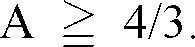
where D is the length of the diagonal of the display screen, and in that the inner radius of curvature along the long axis of the display screen Rcmajor and the aspect ratio A, i.e. the ratio between the long axis and the short axis of the display screen, are given by:
and
2. A display device as claimed in Claim 1, characterized in that:

3. A display device as claimed in Claim 1 or 2, characterized in that

and

where Rcdiagonal is the radius of curvature along the diagonal of the display screen.
and
where Rcdiagonal is the radius of curvature along the diagonal of the display screen.
4. A display device as claimed in Claim 1, 2 or 3, characterized in that

5. A display device as claimed in Claim 4, characterized in that the sagittal height
along the short sides of the display window is approximately constant.
6. A display device as claimed in Claim 5, characterized in that the sagittal height
along the edges is approximately constant.
7. A display device as claimed in one of the preceding Claims, characterized in that
the aspect ratio A is greater than or equal to 5/3.
8. A display device as claimed in one of the preceding Claims, characterized in that
the long axis is the horizontal axis and in that line scanning is effected in the
vertical direction.