|
(11) | EP 0 516 234 B1 |

| (12) | EUROPEAN PATENT SPECIFICATION |
|
|
| (54) |
Phenoxyphenyl derivatives Phenoxyphenylderivate Dérivés de phénoxyphényle |
|
|
|||||||||||||||||||||||||||||||
| Note: Within nine months from the publication of the mention of the grant of the European patent, any person may give notice to the European Patent Office of opposition to the European patent granted. Notice of opposition shall be filed in a written reasoned statement. It shall not be deemed to have been filed until the opposition fee has been paid. (Art. 99(1) European Patent Convention). |
[0001] The invention concerns phenoxyphenyl derivatives, their preparation, pharmaceutical preparations containing the same, and their use for the preparation of a medicament.
[0002] Derivatives having chemical structures related to the phenoxyphenyl derivatives of this invention are known from J. Jilek et al., Collect. Czech. Commun., 54, 1995 (1989), from J. Jilek et al., ibid, 54, 3294 (1989), from Czech Patent Application 151,755, and from European Patent Application 402,097. These references disclose phenylthiophenyl derivatives being selective serotonin reuptake inhibitors. It was found that these prior art compounds have short half-lives, which is a serious drawback in their practical use. The compounds of the present invention, however, have long half-lives and, apart from inhibition of the reuptake of serotonin, also inhibit the reuptake of noradrenaline and dopamine. The dopamine reuptake inhibition is thought to produce a fast elevation of mood, which makes the compounds suitable for the acute relief of symptoms in depression. This is considered to be a substantial advantage over known antidepressant drugs, like specific serotonin reuptake blockers, which have a delayed onset of action of two weeks or more. Moreover, the present compounds, because of their dopamine reuptake blocking properties, are less sedative than the prior art compounds, and thus more appropriate in the treatment of depressive patients with psychomotor retardation. The compounds of the invention can also be used to treat Parkinsons disease, obesity, anxiety disorders, central pain, addiction, and negative symptoms in schizophrenic patients.
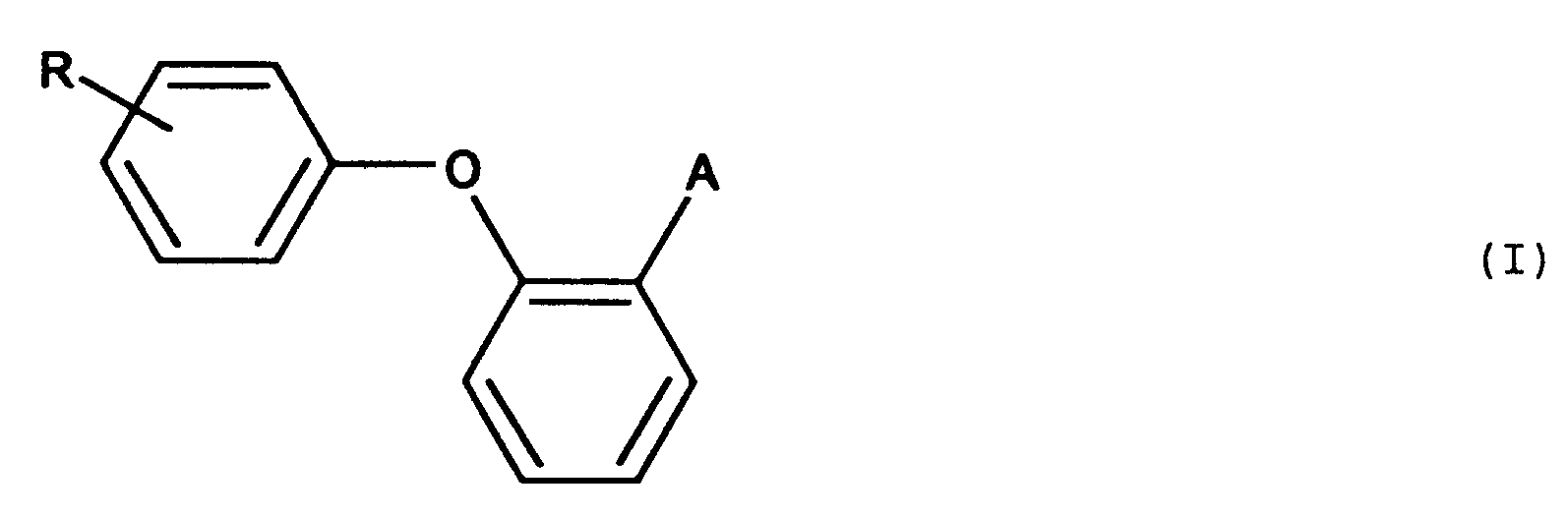
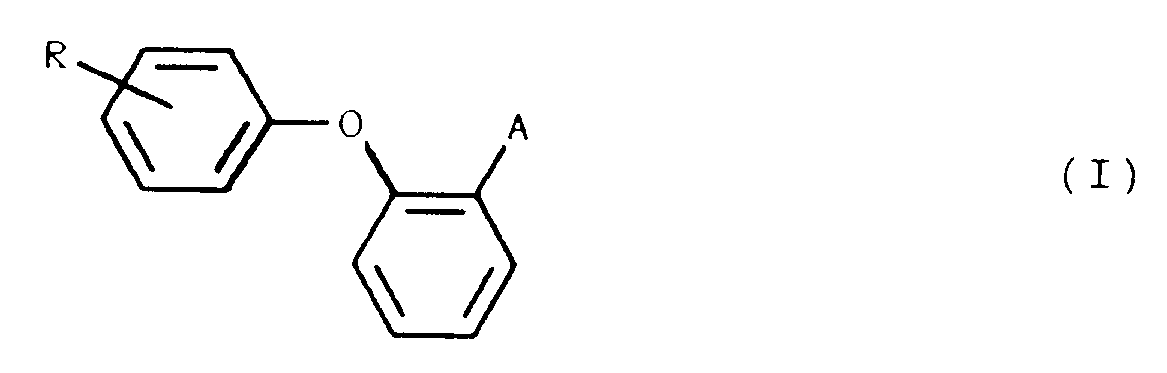
[0003] The phenoxyphenyl derivatives of this invention have the formula
wherein
R is one or two halogen atoms; and
A is CH₂NR₁R₂ or 4,5-dihydro-1H-imidazole, in which R₁
and R₂ are independently selected from hydrogen and a branched or unbranched alkyl having 1 to 6 carbon atoms; or
a pharmaceutically acceptable salt thereof.
[0004] Preferred compounds according to this invention are phenoxyphenyl derivatives according to formula I, wherein R is one or two chlorine atoms, or a pharmaceutically acceptable salt thereof.
[0005] The phenoxyphenyl derivatives of formula I, wherein A is CH₂NH₂, CH₂N(CH₃)₂, or 4,5-dihydro-1H-imidazole, and preferably wherein, moreover, R is one or two chlorine substituents, or a pharmaceutically acceptable salt thereof, are even more preferred.
[0006] The most preferred phenoxyphenyl derivatives are 2-(3,4-dichlorophenoxy)benzenemethanamine and 2-[2-(4-chlorophenoxy)phenyl]-4,5-dihydro-1H-imidazole, or pharmaceutically acceptable salts thereof.
[0007] The term lower alkyl, used in the definition of the phenoxyphenyl derivatives having formula I, means preferably methyl, ethyl, propyl, isopropyl, butyl, tert-butyl, pentyl, or hexyl. Preferred alkyl groups have 1-4 carbon atoms, and most preferred is the methyl group.
[0008] The term halogen used in the definition of formula I means fluorine, chlorine, bromine or iodine. Chlorine is the preferred halogen.
[0009] The novel compounds of formula I may be isolated from a reaction mixture in the form of a pharmaceutically acceptable salt. The pharmaceutically acceptable salts may also be obtained by treating the free base of formula I with an organic or inorganic acid such as HCl, HBr, HI, H₂SO₄, H₃PO₄, acetic acid, propionic acid, glycolic acid, maleic acid, malonic acid, methanesulphonic acid, fumaric acid, succinic acid, tartaric acid, citric acid, benzoic acid, pamoic acid, or ascorbic acid.
[0010] The phenoxyphenyl derivatives according to this invention can be prepared by methods known for analogous compounds.
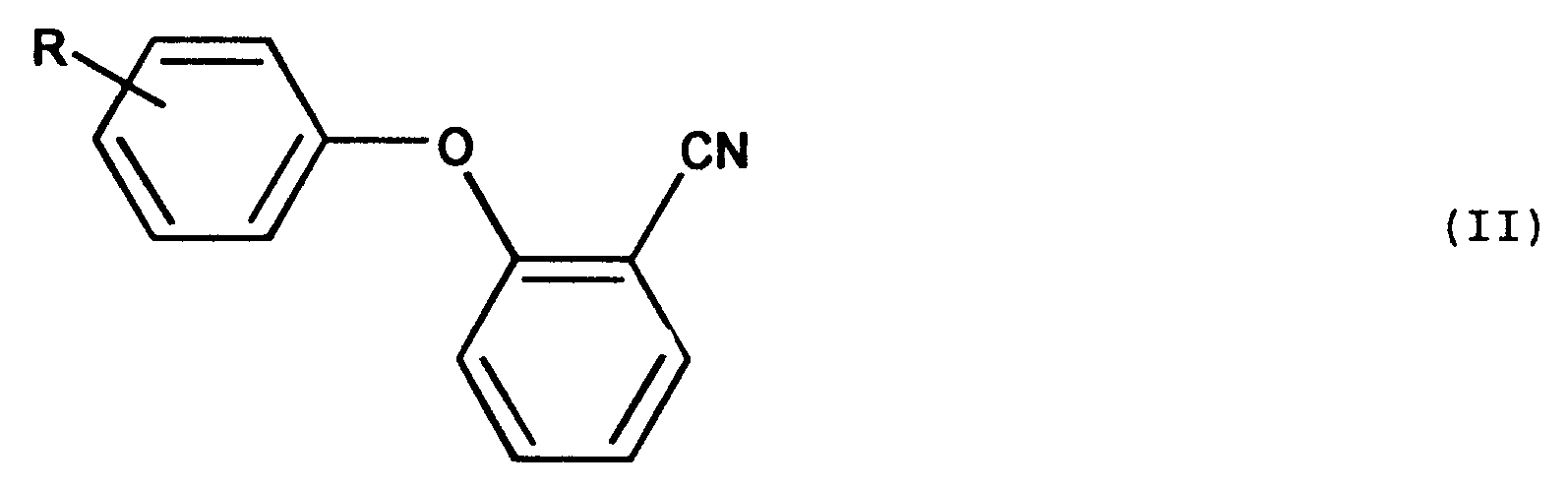
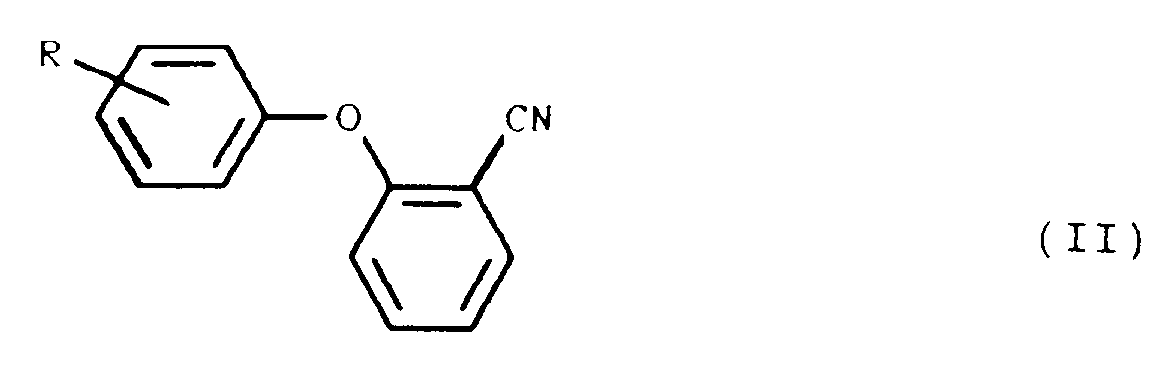
[0011] A suitable method of preparation is a condensation of a nitrile having the formula
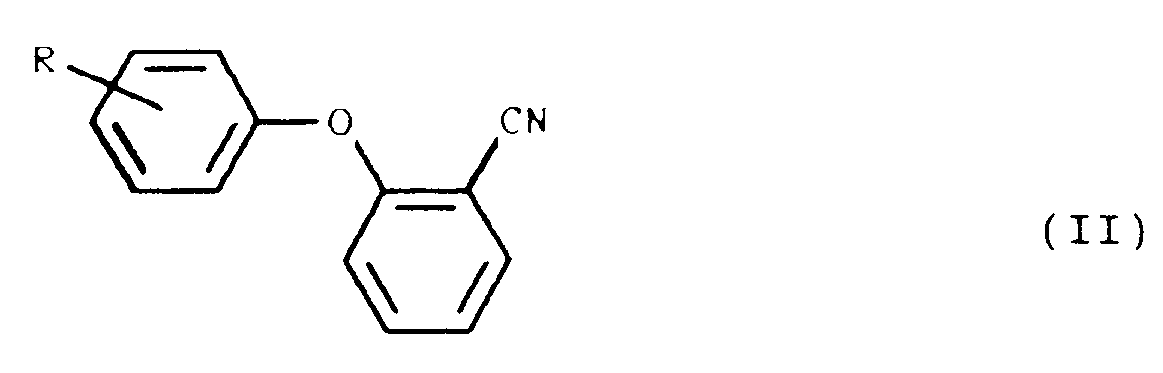
wherein R has the previously given meaning, with 1,2-ethanediamine, optionally followed by conversion into a pharmaceutically acceptable salt; or a reduction of the nitrile having formula II, optionally followed by alkylation and/or conversion into a pharmaceutically acceptable salt.
[0012] The nitrile having formula II can be prepared by condensation of 2-halobenzonitrile, and preferably 2-bromobenzonitrile, with a mono- or dihalo substituted phenol under alkaline conditions. The nitrile may also be prepared by condensation of 2-hydroxybenzonitrile and a bis[mono- or dihalobenzene]iodonium salt, which can be obtained from mono- or dihalobenzene, iodine, and a mixture of sulfuric and nitric acid.
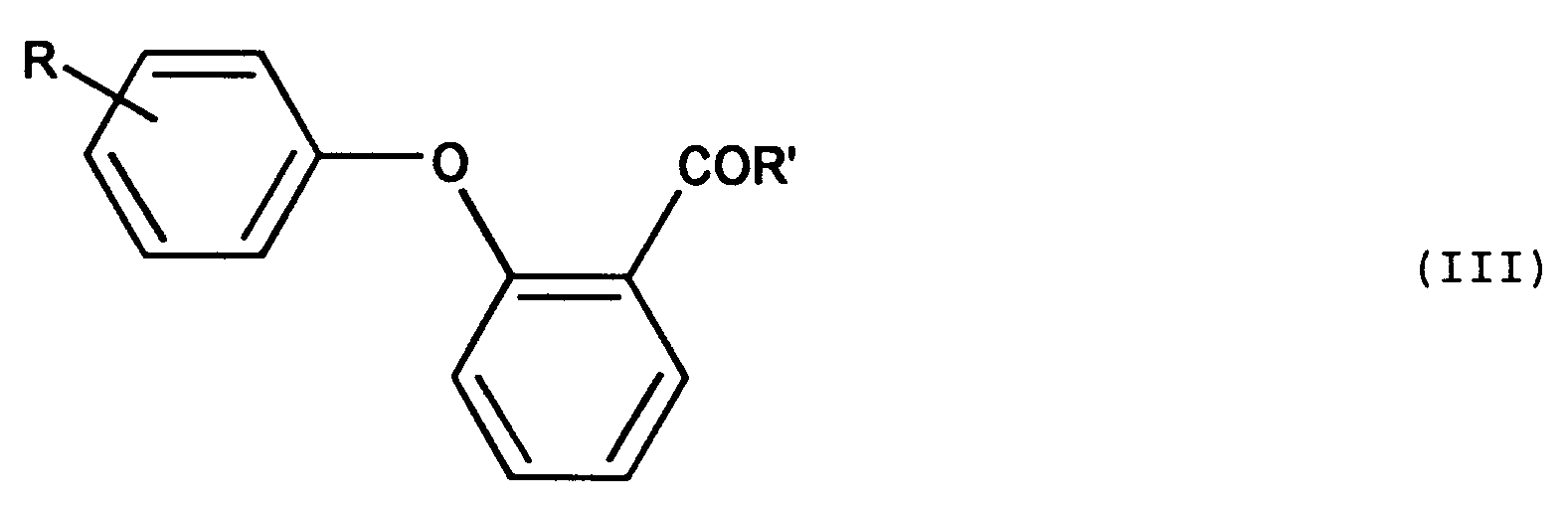
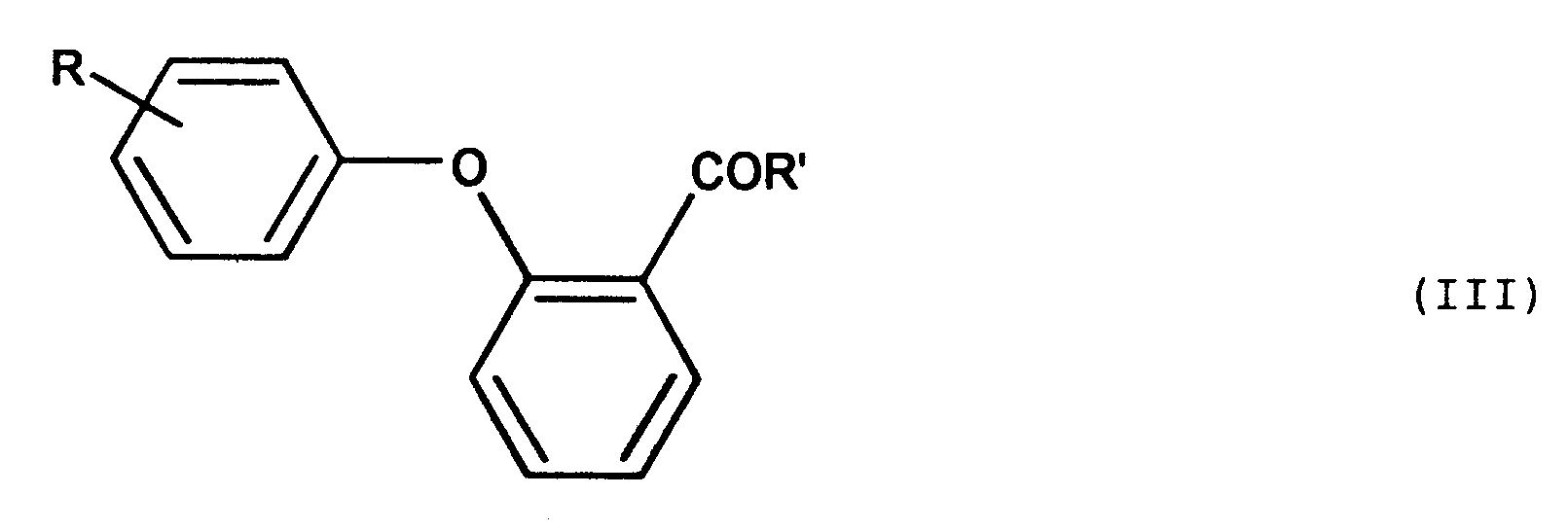
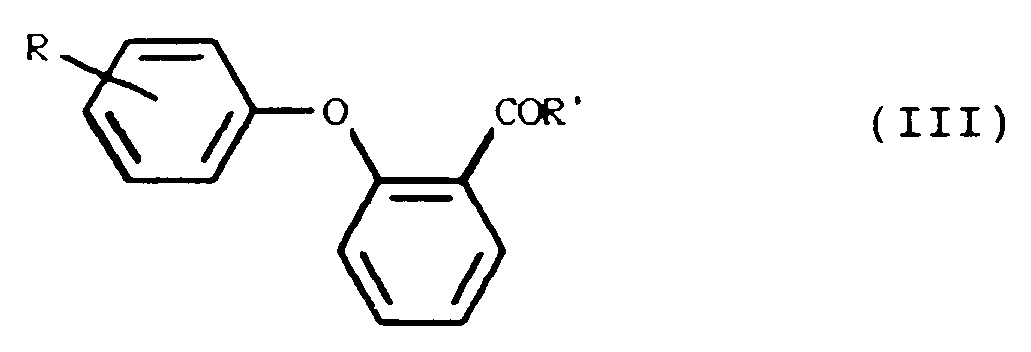
[0013] The phenoxyphenyl derivative of formula I having A is CH₂NR₁R₂, wherein R₁ and R₂ have the previously given meanings, can also be prepared by reduction of an amide having formula
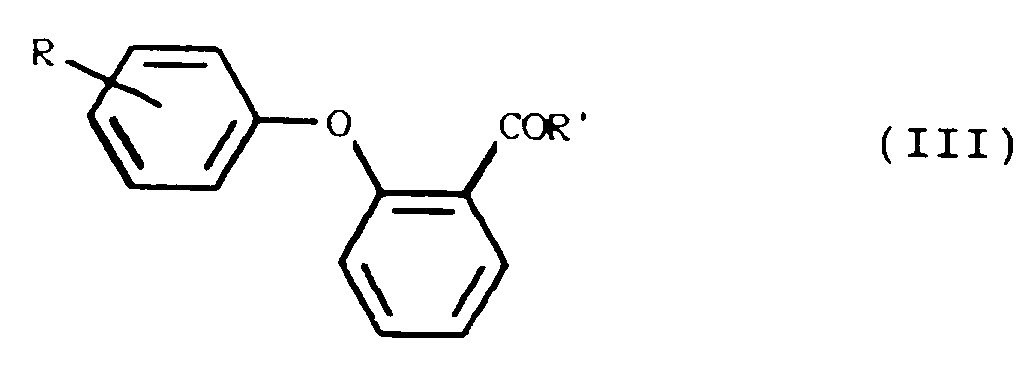
wherein R has the previously given meaning, and R' is NR₁R₂, in which R₁ and R₂ have the previously given meanings.
[0014] Compounds of formula I having A is 4,5-dihydro-1H-imidazole can also be prepared from a nitrile having formula II through a Pinner reaction giving an imino ester, which can be converted into the 4,5-dihydro-1H-imidazole by 1,2-ethanediamine.
[0015] Condensation of 1,2-ethanediamine with acids or esters having formula III, wherein R has the previously given meaning and R' is hydroxy, or methoxy or another lower alkoxy, also gives the desired phenoxyphenyl derivative having A is 4,5-dihydro-1H-imidazole. Lower alkoxy means an alkoxy group of which the alkyl moiety is a lower alkyl group as previously defined.
[0016] Phenoxyphenyl derivatives of formula I having A is CH₂NR₁R₂ can be prepared from acids or esters of formula III by reduction to the corresponding alcohol, conversion of the hydroxy group into a suitable leaving group, such as chlorine or bromine, and condensation with an amine having the formula HNR₁R₂, wherein R₁ and R₂ have the previously given meanings.
[0017] It is possible to convert the products obtained by one of the previously mentioned procedures into another product according to the invention. Using generally known methods it is, for instance, possible to convert compounds wherein R₁ and/or R₂ is hydrogen, e.g. by a Leuckart-Wallach reaction, into compounds wherein R₁ and/or R₂ is alkyl.
[0018] The compounds of the invention may be administered enterally or parenterally, and for humans preferably in a daily dosage of 0,001-10 mg per kg body weight. Mixed with pharmaceutically suitable auxiliaries, e.g. as described in the standard reference, Chase et al., Remington's Pharmaceutical Sciences, the compounds may be compressed into solid dosage units, such as pills, tablets, or be processed into capsules or suppositories. By means of pharmaceutically suitable liquids the compounds can also be applied as an injection preparation in the form of a solution, suspension, emulsion, or as a spray, e.g. a nasal spray.
Example 1
2-(4-chlorophenoxy)benzenemethanamine hydrochloride
[0020] A solution of 51.4 g of 4-chlorophenol in 500 ml of dry N,N-dimethylformamide (DMF) was added to a suspension of 20 g of 60% sodium hydride in 800 ml of dry DMF under nitrogen. After 30 min at 25 °C, 1 g of 18-crown-6 was added. After the addition of 73 g of 2-bromobenzonitrile in 500 ml of dry DMF, the mixture was heated at 100 °C for 16 h. After concentration in vacuo, 2N sodium hydroxide and ethyl acetate were added. The organic layer was separated, washed with 2N sodium hydroxide and water, dried over magnesium sulfate, and evaporated to dryness. The residue was recrystallized from methanol to give in 60% yield 2-(4-chlorophenoxy)benzonitrile.
To a suspension of 6 g of lithium aluminum hydride in 100 ml of dry tetrahydrofuran (THF) were added under nitrogen 20 g of 2-(4-chlorophenoxy)benzonitrile. The mixture was heated at reflux for 3 h, cooled, and 25 ml of 1N sodium hydroxide were added dropwise. The precipitate formed was filtered off and washed with diethyl ether. The filtrate was evaporated to dryness, dissolved in ethyl acetate and acidified with a saturated solution of hydrochloric acid in ethanol. The precipitate was collected and recrystallized from ethanol to give in 95% yield 2-(4-chlorophenoxy)benzenemethanamine hydrochloride. mp 253 °C.
Example 2
2-(3,4-dichlorophenoxy)benzenemethanamine hydrochloride
[0021] To a vigorously stirred solution of 12.7 g of iodine in 13 ml of 60% fuming sulfuric acid and 33 ml of concentrated sulfuric acid, was added dropwise a solution of 7.5 ml of 90% fuming nitric acid, 1.9 ml of 60% fuming sulfuric acid, and 5.5 ml of concentrated sulfuric acid. The mixture was stirred for 2 h at 70-80 °C. After cooling to 0 °C, a solution of 28.2 ml of 1,2-dichlorobenzene was added under vigorous stirring. The reaction mixture was kept at 45 °C for 2 h, cooled to 0 °C, and 100 ml of cold water were added at once. The aqueous layer was decanted, the residue, dissolved in methanol, and 5 ml of concentrated hydrochloric acid were added. The precipitate, after filtration and washing with methanol, was dried, and 24.4 g of this precipitate were added to a solution of 5.6 g of 2-hydroxybenzonitrile and 2.2 g of sodium hydroxide in 440 ml of water. After 22 h of reflux, the mixture was cooled and extracted with diethyl ether. The organic layer was washed with 2N sodium hydroxide, dried over magnesium sulfate, and evaporated to dryness. The residue was recrystallized from diethyl ether to give in 80% yield 2-(3,4-dichlorophenoxy)benzonitrile.
A solution of 10 g of anhydrous aluminum chloride in 150 ml of dry diethyl ether was added dropwise under nitrogen to a suspension of 3.1 g of lithium aluminum hydride in 150 ml of dry diethyl ether, and the mixture was cooled at 0 °C. After 30 min at 0 °C, a solution of 5.0 g of 2-(3,4-dichlorophenoxy)benzonitrile in 150 ml of dry diethyl ether was added slowly. The mixture was stirred for 24 h at 25 °C, and a concentrated aqueous solution of sodium hydrogen carbonate was added. The precipitate was filtered off, the filtrate was evaporated to dryness, dissolved in ethyl acetate, and acidified with a concentrated solution of hydrochloric acid in ethanol. The precipitate was collected and recrystallized from a mixture of ethanol and diethyl ether, to give in 75% yield 2-(3,4-dichlorophenoxy)benzenemethanamine hydrochloride. mp 213 °C.
Example 3
[0022] By addition of an aqueous solution of the disodium salt of pamoic acid to a solution of the compound of example 2 in ethanol, was prepared 2-(3,4-dichlorophenoxy)benzenemethanamine 4,4'-methylenebis[3-hydroxy-2-naphthalenecarboxylic acid] (2:1) salt. mp 230 °C.
Example 4
2-(4-chlorophenoxy)-N,N-dimethylbenzenemethanamine (Z)-2-butenedioate
[0023] A mixture of 5 g of 2-(4-chlorophenoxy)benzenemethanamine (Example 1), 50 ml of formic acid, and 50 ml of a 37% solution of formaldehyde in water was heated at 100 °C for 3 h. The solution was cooled, made alkaline with sodium hydroxide, and extracted with dichloromethane. The organic layer was washed with brine, dried over magnesium sulfate, and evaporated to dryness. The residue was dissolved in ethanol and maleic acid was added. After dilution with diethyl ether, the precipitate was collected, washed with diethyl ether and dried, to give in 80% yield 2-(4-chlorophenoxy)-N,N-dimethylbenzenemethanamine (Z)-2-butenedioate. mp 118 °C.
Example 5
2-[2-(4-chlorophenoxy)phenyl]-4,5-dihydro-1H-imidazole (Z)-2-butenedioate
[0024] A solution of 20 g of 2-(4-chlorophenoxy)benzonitrile (Example 1) in 80 ml of 1,2-ethanediamine was saturated with hydrogen sulfide during 30 min at 0 °C. The mixture was stirred at 25 °C for 4 days, concentrated, and ethyl acetate was added. The organic layer was washed with 2N sodium hydroxide, dried over magnesium sulfate, and evaporated to dryness. The residue was dissolved in ethanol, treated with maleic acid, and recrystallized from ethanol to give in 80% yield 2-[2-(4-chlorophenoxy)phenyl]-4,5-dihydro-1H-imidazole (Z)-2-butenedioate. mp 207 °C.
Example 6
[0025] In an analogous manner, as described in Example 5, were prepared:
a. 2-[2-(3,4-dichlorophenoxy)phenyl]-4,5-dihydro-1H-imidazole (Z)-2-butenedioate. mp 123 °C.
b. 2-[2-(4-chlorophenoxy)phenyl]-4,5-dihydro-1H-imidazole 4,4'-methylenebis[3-hydroxy-2-naphthalenecarboxylic acid] (2:1) salt. mp >250 °C.
Example 7
Claims for the following Contracting State(s): AT, BE, CH, DE, DK, FR, GB, GR, IT,
LI, LU, MC, NL, PT, SE
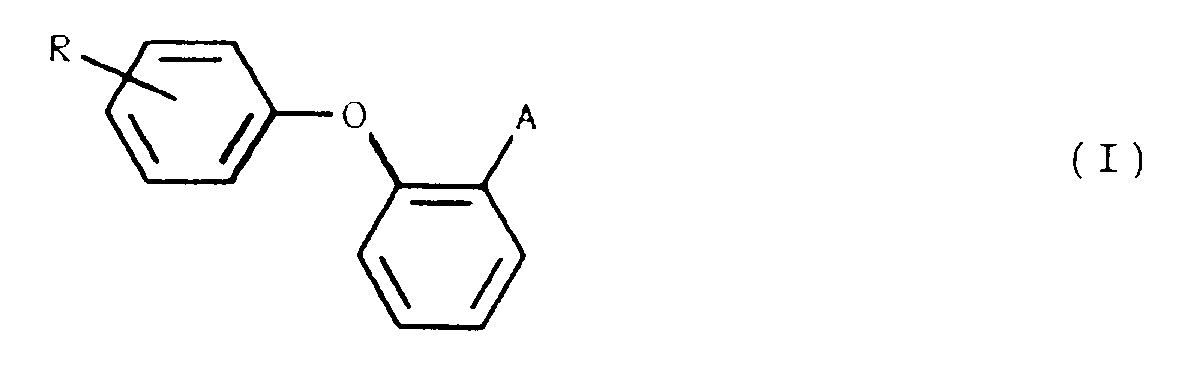
1. A phenoxyphenyl derivative having the formula
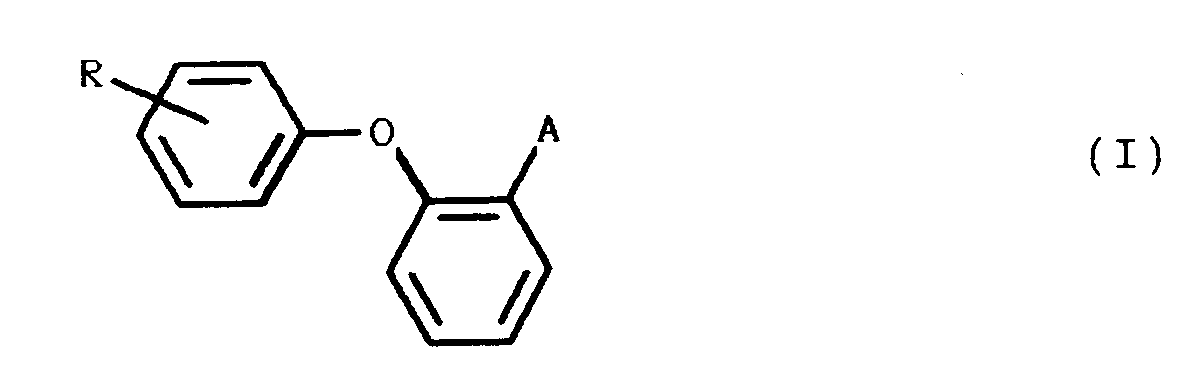
wherein
R is one or two halogen atoms; and
A is CH₂NR₁R₂ or 4,5-dihydro-1H-imidazole, in which
R₁ and R₂ are independently selected from hydrogen and a branched or unbranched alkyl having 1 to 6 carbon atoms; or
a pharmaceutically acceptable salt thereof.
wherein
R is one or two halogen atoms; and
A is CH₂NR₁R₂ or 4,5-dihydro-1H-imidazole, in which
R₁ and R₂ are independently selected from hydrogen and a branched or unbranched alkyl having 1 to 6 carbon atoms; or
a pharmaceutically acceptable salt thereof.
2. The phenoxyphenyl derivative of claim 1, wherein R is one or two chlorine atoms, or
a pharmaceutically acceptable salt thereof.
3. The phenoxyphenyl derivative of claim 1 or 2, wherein A is CH₂NH₂, CH₂N(CH₃)₂, or
4,5-dihydro-1H-imidazole, or a pharmaceutically acceptable salt thereof.
4. 2-(3,4-dichlorophenoxy)benzenemethanamine or a pharmaceutically acceptable salt thereof.
5. 2-[2-(4-chlorophenoxy)phenyl]-4,5-dihydro-1H-imidazole or a pharmaceutically acceptable
salt thereof.
6. The phenoxyphenyl derivative of any one of claims 1-5 for use in therapy.
7. A process for the preparation of the phenoxyphenyl derivative of claim 1, characterized
in that a nitrile having the formula
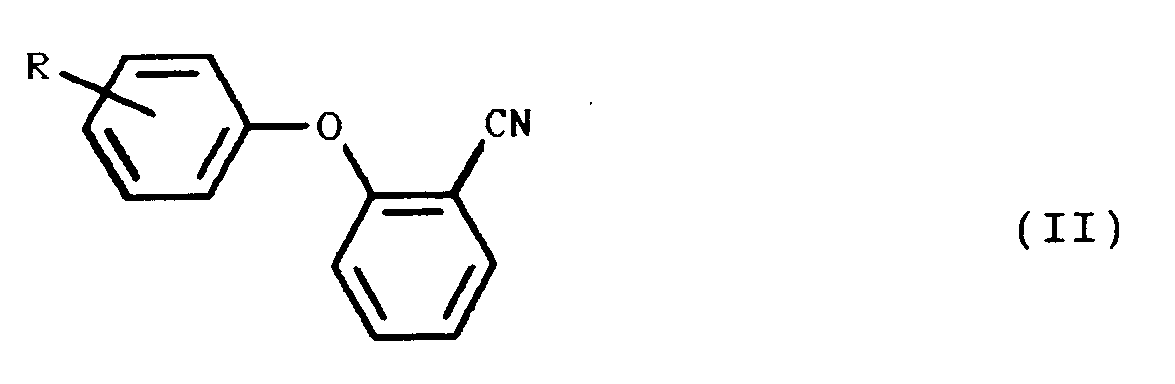
wherein R has the previously given meaning, is condensed with 1,2-ethanediamine, or is reduced, optionally followed by alkylation;
or alternatively, when A is CH₂NR₁R₂, that an amide having the formula
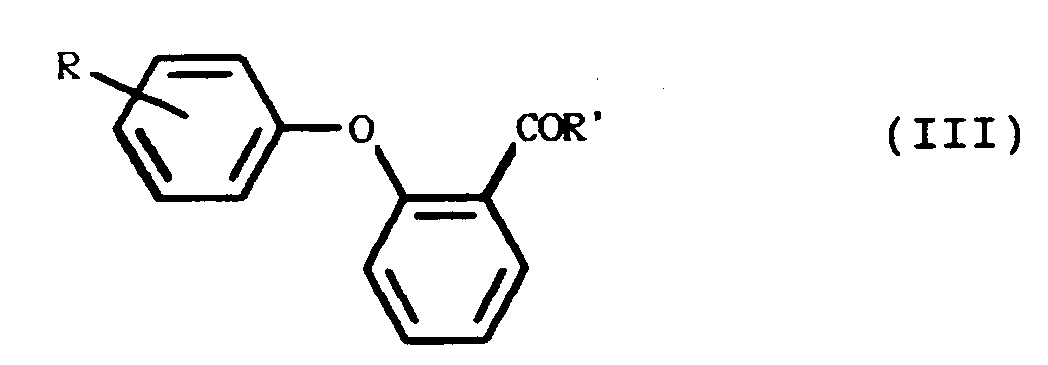
is reduced; after which the compound obtained may optionally be converted into a pharmaceutically acceptable salt.
wherein R has the previously given meaning, is condensed with 1,2-ethanediamine, or is reduced, optionally followed by alkylation;
or alternatively, when A is CH₂NR₁R₂, that an amide having the formula
is reduced; after which the compound obtained may optionally be converted into a pharmaceutically acceptable salt.
8. A pharmaceutical preparation containing the phenoxyphenyl derivative of claim 1 in
admixture with pharmaceutically acceptable auxiliaries.
9. A use of the phenoxyphenyl derivative of claim 1 for the manufacture of a medicament
with a long half-life and activity against depression.
Claims for the following Contracting State(s): ES
1. A method of preparation of a phenoxyphenyl derivative having the formula
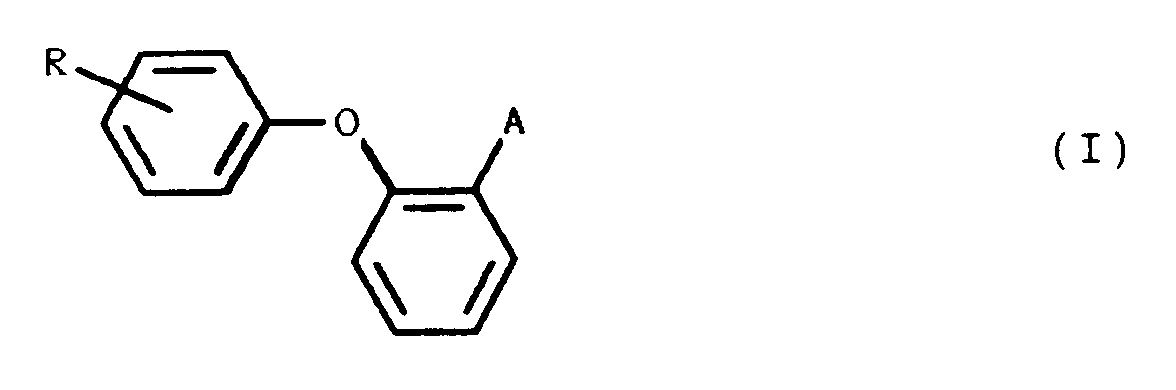
wherein
R is one or two halogen atoms; and
A is CH₂NR₁R₂ or 4,5-dihydro-1H-imidazole, in which
R₁ and R₂ are independently selected from hydrogen and a branched or unbranched alkyl having 1 to 6 carbon atoms; or
a pharmaceutically acceptable salt thereof,
characterized in that a nitrile having the formula
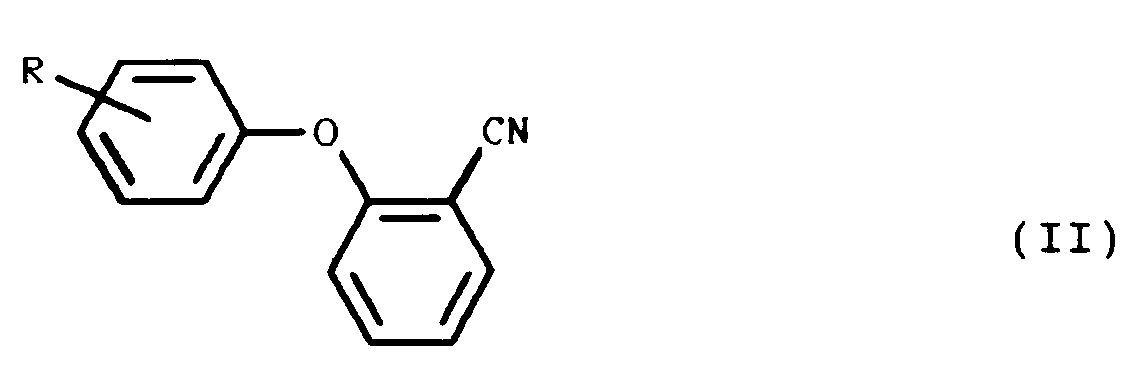
wherein R has the previously given meaning, is condensed with 1,2-ethanediamine, or is reduced, optionally followed by alkylation;
or alternatively, when A is CH₂NR₁R₂, that an amide having the formula
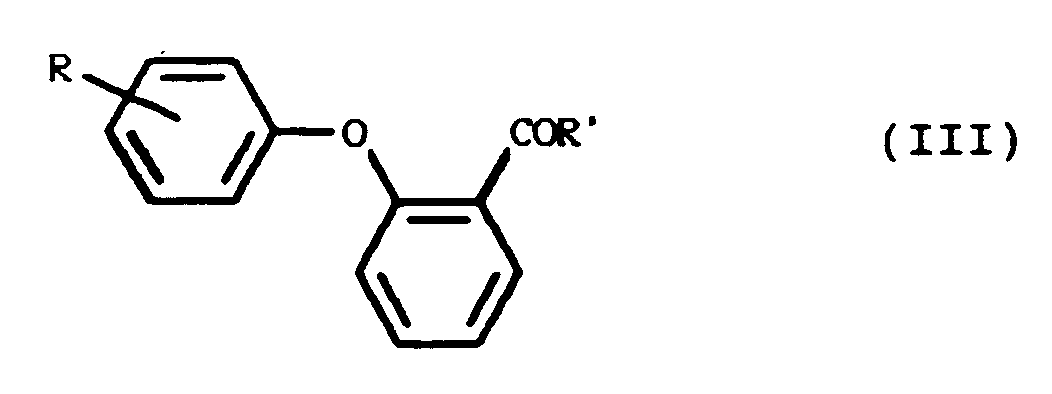
is reduced; after which the compound obtained may optionally be converted into a pharmaceutically acceptable salt.
wherein
R is one or two halogen atoms; and
A is CH₂NR₁R₂ or 4,5-dihydro-1H-imidazole, in which
R₁ and R₂ are independently selected from hydrogen and a branched or unbranched alkyl having 1 to 6 carbon atoms; or
a pharmaceutically acceptable salt thereof,
characterized in that a nitrile having the formula
wherein R has the previously given meaning, is condensed with 1,2-ethanediamine, or is reduced, optionally followed by alkylation;
or alternatively, when A is CH₂NR₁R₂, that an amide having the formula
is reduced; after which the compound obtained may optionally be converted into a pharmaceutically acceptable salt.
2. The method according to claim 1, wherein the phenoxyphenyl derivative has the formula
I, wherein R is one or two chlorine atoms.
3. The method according to claim 1 or 2, wherein the phenoxyphenyl derivative has the
formula I, wherein A is CH₂NH₂, CH₂N(CH₃)₂, or 4,5-dihydro-1H-imidazole.
4. The method according to claim 3, wherein the phenoxyphenyl derivative is 2-(3,4-dichlorophenoxy)benzenemethanamine
or a pharmaceutical acceptable salt thereof.
5. The method according to claim 3, wherein the phenoxyphenyl derivative is 2-[2-(4-chlorophenoxy)phenyl]-4,5-dihydro-1H-imidazole
or a pharmaceutical acceptable salt thereof.
Patentansprüche für folgende(n) Vertragsstaat(en): AT, BE, CH, DE, DK, FR, GB, GR,
IT, LI, LU, MC, NL, PT, SE
1. Phenoxyphenylderivat mit der Formel
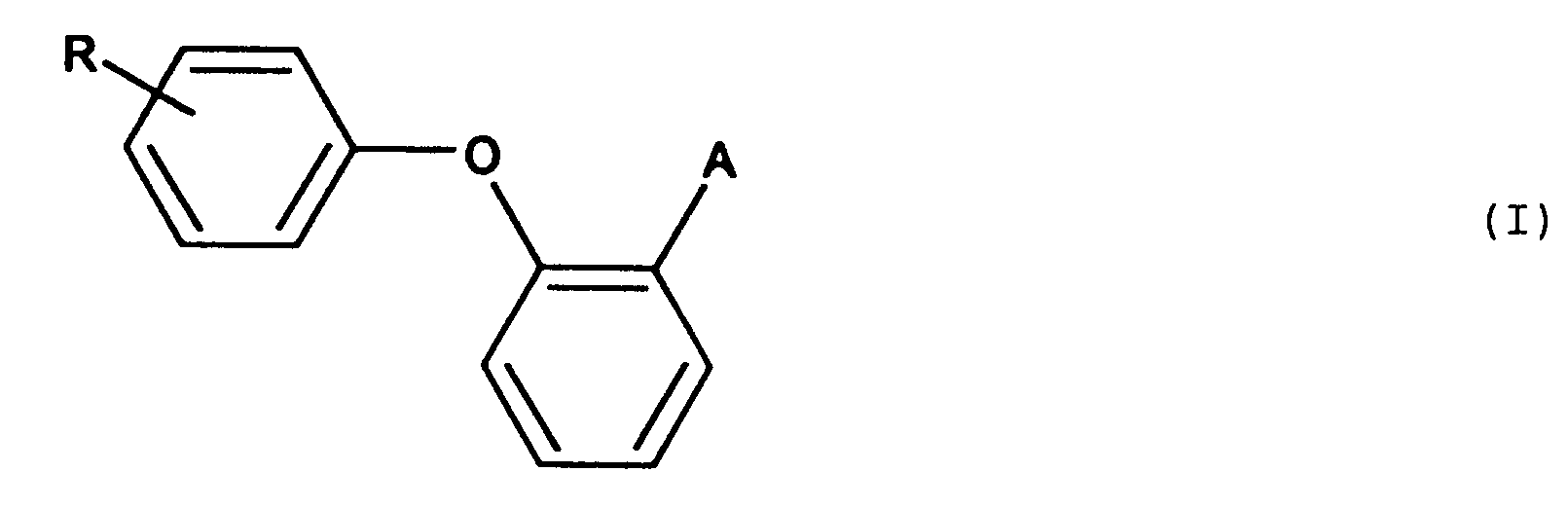
worin R ein oder zwei Halogenatome ist; und A entweder CH₂NR₁R₂ oder 4,5-Dihydro-1H-imidazol ist, worin R₁ und R₂ unabhängig aus Wasserstoff und einem verzweigten oder unverzweigten Alkylrest mit 1 bis 6 Kohlenstoffatomen oder einem pharmazeutisch annehmbaren Salz davon ausgewählt werden.
worin R ein oder zwei Halogenatome ist; und A entweder CH₂NR₁R₂ oder 4,5-Dihydro-1H-imidazol ist, worin R₁ und R₂ unabhängig aus Wasserstoff und einem verzweigten oder unverzweigten Alkylrest mit 1 bis 6 Kohlenstoffatomen oder einem pharmazeutisch annehmbaren Salz davon ausgewählt werden.
2. Phenoxyphenylderivat von Anspruch 1, worin R ein oder zwei Chloratome oder ein pharmazeutisch
annehmbares Salz davon ist.
3. Phenoxyphenylderivat von Anspruch 1 oder 2, worin A CH₂NH₂, CH₂N(CH₃)₂ oder 4,5-Dihydro-1H-imidazol
oder ein pharmazeutisch annehmbares Salz davon ist.
4. 2-(3,4-Dichlorophenoxy)benzolmethanamin oder ein pharmazeutisch annehmbares Salz davon.
5. 2-[2-(4-Chlorophenoxy)phenyl]-4,5-dihydro-1H-imidazol oder ein pharmazeutisch annehmbares
Salz davon.
6. Phenoxyphenylderivat von einem der Ansprüche 1-5 zur Anwendung in einer Therapie.
7. Verfahren zur Herstellung des Phenoxyphenylderivats aus Anspruch 1, dadurch gekennzeichnet,
dass ein Nitril mit der Formel
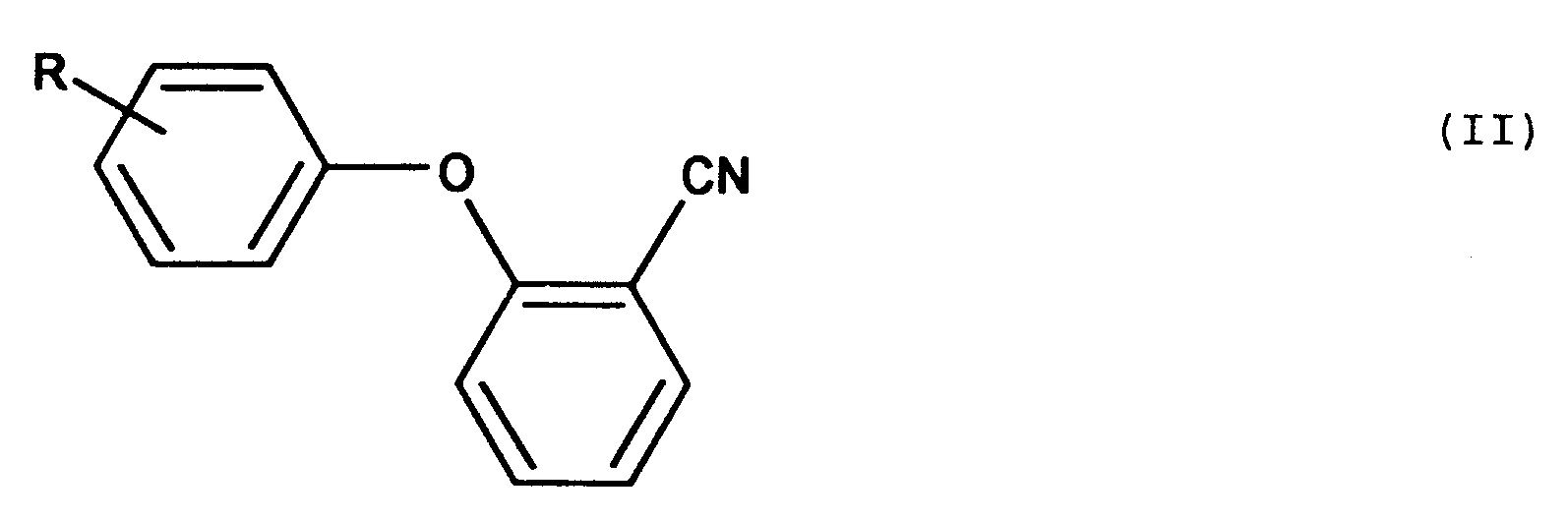
worin R die vorher gegebene Bedeutung hat, mit 1,2-Ethandiamin kondensiert oder reduziert wird, gegebenenfalls gefolgt von Alkylierung; oder alternativ, wenn A CH₂NR₁R₂ ist, dass ein Amid mit der Formel
reduziert wird; danach kann die erhaltene Verbindung gegebenenfalls in ein pharmazeutisch annehmbares Salz überführt werden.
worin R die vorher gegebene Bedeutung hat, mit 1,2-Ethandiamin kondensiert oder reduziert wird, gegebenenfalls gefolgt von Alkylierung; oder alternativ, wenn A CH₂NR₁R₂ ist, dass ein Amid mit der Formel
reduziert wird; danach kann die erhaltene Verbindung gegebenenfalls in ein pharmazeutisch annehmbares Salz überführt werden.
8. Pharmazeutisches Präparat, welches das Phenoxyphenylderivat von Anspruch 1 in Mischung
mit pharmazeutisch annehmbaren Hilfsstoffen enthält.
9. Verwendung des Phenoxyphenylderivats von Anspruch 1 zur Herstellung eines Medikaments
mit langer Halbwertszeit und Aktivität gegen Depression.
Patentansprüche für folgende(n) Vertragsstaat(en): ES
1. Verfahren zur Herstellung eines Phenoxyphenylderivats mit der Formel
worin R ein oder zwei Halogenatome ist; und A CH₂NR₁R₂ oder 4,5-Dihydro-1H-imidazol ist, wobei R₁ und R₂ unabhängig aus Wasserstoff und einem verzweigten oder unverzweigten Alkylrest mit 1 bis 6 Kohlenstoffatomen oder einem pharmazeutisch annehmbaren Salz davon ausgewählt werden, dadurch gekennzeichnet, dass ein Nitril mit der Formel
worin R die vorher gegebene Bedeutung hat, mit 1,2-Ethandiamin kondensiert oder reduziert wird, gegebenenfalls gefolgt von Alkylierung;
oder alternativ, wenn A CH₂NR₁R₂ ist, dass ein Amid mit der Formel
reduziert wird; danach kann die erhaltene Verbindung gegebenenfalls in ein pharmazeutisch annehmbares Salz überführt werden.
worin R ein oder zwei Halogenatome ist; und A CH₂NR₁R₂ oder 4,5-Dihydro-1H-imidazol ist, wobei R₁ und R₂ unabhängig aus Wasserstoff und einem verzweigten oder unverzweigten Alkylrest mit 1 bis 6 Kohlenstoffatomen oder einem pharmazeutisch annehmbaren Salz davon ausgewählt werden, dadurch gekennzeichnet, dass ein Nitril mit der Formel
worin R die vorher gegebene Bedeutung hat, mit 1,2-Ethandiamin kondensiert oder reduziert wird, gegebenenfalls gefolgt von Alkylierung;
oder alternativ, wenn A CH₂NR₁R₂ ist, dass ein Amid mit der Formel
reduziert wird; danach kann die erhaltene Verbindung gegebenenfalls in ein pharmazeutisch annehmbares Salz überführt werden.
2. Verfahren gemäss Anspruch 1, worin das Phenoxyphenylderivat die Formel I aufweist,
worin R ein oder zwei Chloratome ist.
3. Verfahren gemäss Anspruch 1 oder 2, worin das Phenoxyphenylderivat die Formel I aufweist,
worin A CH₂NH₂, CH₂N(CH₃)₂ oder 4,5-Dihydro-1H-imidazol ist.
4. Verfahren gemäss Anspruch 3, worin das Phenoxyphenylderivat 2-(3,4-Dichlorophenoxy)benzolmethanamin
oder ein pharmazeutisch annehmbares Salz davon ist.
5. Verfahren gemäss Anspruch 3, worin das Phenoxyphenylderivat 2-[2-(4-Chlorophenoxy)phenyl]-4,5-dihydro-1H-imidazol
oder ein pharmazeutisch annehmbares Salz davon ist.
Revendications pour l'(les) Etat(s) contractant(s) suivant(s): AT, BE, CH, DE, DK,
FR, GB, GR, IT, LI, LU, MC, NL, PT, SE
1. Dérivé de phénoxyphényle répondant à la formule
dans laquelle
R représente un ou deux atomes d'halogène, et
A représente CH₂NR₁R₂ ou le 4,5-dihydro-1H-imidazole, où R₁ et R₂ sont indépendamment choisis parmi les atomes d'hydrogène ou les radicaux alkyle linéaires ou ramifiés, présentant 1 à 6 atomes de carbone ou bien un sel pharmaceutiquement acceptable en dérivant.
dans laquelle
R représente un ou deux atomes d'halogène, et
A représente CH₂NR₁R₂ ou le 4,5-dihydro-1H-imidazole, où R₁ et R₂ sont indépendamment choisis parmi les atomes d'hydrogène ou les radicaux alkyle linéaires ou ramifiés, présentant 1 à 6 atomes de carbone ou bien un sel pharmaceutiquement acceptable en dérivant.
2. Le dérivé de phénoxyphényle selon la revendication 1, dans lequel R représente un
ou deux atomes de chlore, ou un de ses sels pharmaceutiquement acceptables.
3. Le dérivé de phénoxyphényle selon la revendication 1 ou 2, dans lequel A est un radical
CH₂NH₂, CH₂N(CH₃)₂, ou 4,5-dihydro-1H-imidazole, ou un de ses sels pharmaceutiquement
acceptables.
4. La 2-(3,4-dichlorophénoxy)benzèneméthanamine ou un de ses sels pharmaceutiquement
acceptables.
5. Le 2-[2-(4-chlorophénoxy)phényl]-4,5-dihydro-1H-imidazole ou un de ses sels pharmaceutiquement
acceptables.
6. Le dérivé de phénoxyphényle selon l'une quelconque des revendications 1 à 5, destiné
à un usage thérapeutique.
7. Procédé de préparation d'un dérivé de phénoxyphényle selon la revendication 1, caractérisé
en ce que l'on condense un nitrile de formule
dans laquelle R a la signification ci-dessus avec la 1,2-éthanediamine, ou bien on réduit, puis éventuellement on l'alkyle;
ou bien, si A représente un radical CH₂NR₁R₂,
en ce que l'on réduit un amide de formule
puis on transforme éventuellement le composé obtenu en un sel pharmaceutiquement acceptable.
dans laquelle R a la signification ci-dessus avec la 1,2-éthanediamine, ou bien on réduit, puis éventuellement on l'alkyle;
ou bien, si A représente un radical CH₂NR₁R₂,
en ce que l'on réduit un amide de formule
puis on transforme éventuellement le composé obtenu en un sel pharmaceutiquement acceptable.
8. Préparation pharmaceutique contenant un dérivé de phénoxyphényle selon la revendication
1, en mélange avec des additifs pharmaceutiquement acceptables.
9. Utilisation d'un dérivé de phénoxyphényle selon la revendication 1 pour la fabrication
d'un médicament présentant une demi-vie importante et une activité d'anti dépresseur.
Revendications pour l'(les) Etat(s) contractant(s) suivant(s): ES
1. Procédé de préparation d'un dérivé de phénoxyphényle répondant à la formule
dans laquelle
R représente un ou deux atomes d'halogène, et
A représente CH₂NR₁R₂ ou le 4,5-dihydro-1H-imidazole, où R₁ et R₂ sont indépendamment choisis parmi les atomes d'hydrogène ou les radicaux alkyle linéaires ou ramifiés, présentant 1 à 6 atomes de carbone ou bien un sel pharmaceutiquement acceptable en dérivant caractérisé en ce que l'on condense un nitrile de formule
dans laquelle R a la signification ci-dessus avec la 1,2-éthanediamine, ou bien on réduit, puis éventuellement on l'alkyle;
ou bien, si A représente un radical CH₂NR₁R₂,
en ce que l'on réduit un amide de formule
puis on transforme éventuellement le composé obtenu en un sel pharmaceutiquement acceptable.
dans laquelle
R représente un ou deux atomes d'halogène, et
A représente CH₂NR₁R₂ ou le 4,5-dihydro-1H-imidazole, où R₁ et R₂ sont indépendamment choisis parmi les atomes d'hydrogène ou les radicaux alkyle linéaires ou ramifiés, présentant 1 à 6 atomes de carbone ou bien un sel pharmaceutiquement acceptable en dérivant caractérisé en ce que l'on condense un nitrile de formule
dans laquelle R a la signification ci-dessus avec la 1,2-éthanediamine, ou bien on réduit, puis éventuellement on l'alkyle;
ou bien, si A représente un radical CH₂NR₁R₂,
en ce que l'on réduit un amide de formule
puis on transforme éventuellement le composé obtenu en un sel pharmaceutiquement acceptable.
2. Le procédé selon la revendication 1, dans lequel R représente un ou deux atomes de
chlore.
3. Le procédé selon la revendication 1 ou 2, dans lequel A est un radical CH₂NH₂, CH₂N(CH₃)₂,
ou 4,5-dihydro-1H-imidazole.
4. Le procédé selon la revendication 3, dans lequel le dérivé phénoxyphényle est le 2-(3,4-dichlorophénoxy)benzèneméthanamine
ou un de ses sels pharmaceutiquement acceptables.
5. Le procédé selon la revendication 3, dans lequel le dérivé phénoxyphényle est le 2-[2-(4-chlorophénoxy)phényl]-4,5-dihydro-1H-imidazole
ou un de ses sels pharmaceutiquement acceptables.