|
(11) | EP 0 519 657 A1 |

| (12) | EUROPEAN PATENT APPLICATION |
|
|
|
|
|||||||||||||||||||||||||||
| (54) | Ductile, non-halogenated flame retardant ternary blends of polyetherimide, siloxane polyetherimide copolymer and polycarbonate |
| (57) Non-halogenated ternary polymer blends containing a polyetherimide, a siloxane polyetherimide
copolymer and a polycarbonate are characterized by an unexpected improvement in flame
retardance and ductility. |
BACKGROUND OF THE INVENTION
[0001] This invention relates to non-halogenated ternary polymer blends which are characterized by high impact strengths, good blow moldability, good injection moldability, amenability to thermoforming, and excellent flame retardant performance. The ternary polymer blends are particularly suited for the construction of various panels and parts for aircraft interiors.
[0002] Many applications, especially those in the transportation field, require that engineering thermoplastics be flame retardant. Polyetherimides, polycarbonates, siloxane polyetherimide copolymers, organopolysiloxane-polycarbonate copolymers and combinations thereof have been used in aircraft and automobile parts as well as for insulation for wiring. In addition to possessing advantageous physical and chemical properties, they exhibit good flame retardant properties. See, for example, U.S. patents 4,673,708, 4,629,759, 4,548,997, 4,468,506, 4,387,193, 4,390,665, 4,268,429 and 3,334,154.
[0003] The engineering thermoplastics that are in current use vary in their flame retardant properties and durability. Many do not meet the current standards for the flame resistance of construction materials used for the interior of transport category aircraft. Such standards are embodied in the 1986 amendments to Part 25 - Airworthiness Standards - Transport Category Airplanes of Title 14, Code of Federal Regulations. (See, 51 Federal Register 26206, July 21, 1986 and 51 Federal Register 28322, August 7, 1986). The flammability standards are based on heat calorimetry tests developed at Ohio State University. Such tests are described in the above-cited amendments to 14 C.F.R. Part 25 and are incorporated herein by reference.
[0004] A need continues to exist for engineering thermoplastics that have improved flame retardant properties and durability.
SUMMARY OF THE INVENTION
[0005] In accordance with the present invention, a novel non-halogenated ternary polymer blend consists essentially of a polyetherimide, a siloxane polyetherimide copolymer and a polycarbonate, wherein the relative proportions of the three components are substantially as illustrated in Fig. 3a of the drawings.
[0006] This ternary polymer blend has been found to possess the physical and chemical resistance properties important for applications as aircraft cabin interior components, automobile parts, insulation for wiring and the like. In particular, this ternary blend results in an unexpected improvement in flame resistant performance and ductility. Further, certain ternary blends of this invention meet or exceed the rigorous flammability standards that have been established for aircraft interior components.
BRIEF DESCRIPTION OF THE DRAWINGS
[0007] Fig. 1 illustrates a transmission electron micrograph of an immiscible blend of 80 parts by weight polyetherimide/10 parts by weight siloxane polyetherimide copolymer/10 parts by weight polycarbonate.
[0008] Fig. 2 illustrates a transmission electron micograph of an immiscible blend of 10 parts by weight polyetherimide/80 parts by weight siloxane polyetherimide copolymer/10 parts by weight polycarbonate.
[0009] Fig. 3a illustrates a phase diagram for ternary blends of a polyetherimide, a siloxane polyetherimide copolymer and a polycarbonate, wherein the relative proportions of the three components are expressed as weight percentages. The shaded area of the graph represents the ternary blends of the present invention.
[0010] Fig. 3b illustrates a phase diagram for ternary blends of a polyetherimide, a siloxane polyetherimide copolymer and a polycarbonate, wherein the relative proportions of the three components are expressed as weight percentages. The shaded area of the graph represents preferred ternary blends of the present invention.
[0011] Fig. 4 illustrates impact test results for a ternary blend of a polyetherimide, and a siloxane polyetherimide in a weight ratio of 95/5 with varible proportions of a polycarbonate.
[0012] Fig. 5 illustrates peak heat release and ultimate elongation curves of a ternary blend of a polyetherimide and a siloxane polyetherimide in a weight ratio of 95/5 respectively with variable proportions of a polycarbonate.
DETAILED DESCRIPTION OF THE INVENTION
[0013] The present invention relates to non-halogenated ternary polymer blends. More particularly, the invention relates to certain polyetherimide/siloxane polyetherimide copolymer/polycarbonate blends having unexpectedly and significantly high flame retardant performance and ductility.
[0014] The polyetherimides, siloxane polyetherimide copolymers and polycarbonates, blended in the proportions within the scope of this invention, are immiscible. Thus, in accordance with the invention, the polyetherimide, siloxane polyetherimide copolymer and polycarbonate are blended in proportions such that each polymeric component is uniformly distributed throughout the blend.
[0015] Figure 1 is a transmission electron micrograph of a blend of 80 parts by weight of ULTEM® 1000 grade of polyetherimide, 10 parts by weight of ULTEM® D9000 grade of siloxane polyetherimide copolymer and 10 parts by weight of LEXAN® 131 grade of polycarbonate. Figure 2 is a transmission electron micrograph of a blend of 10 parts by weight of ULTEM® 1000 grade of polyetherimide, 80 parts by weight of ULTEM® D9000 grade of siloxane polyetherimide copolymer and 10 parts by weight of LEXAN® 131 grade of polycarbonate. Both electron micrographs show that the siloxane polyetherimide copolymer coats the polyetherimide, separating it from the polycarbonate component. This microstructure was unexpected and may explain the high impact strengths and ductility of the polymer blends.
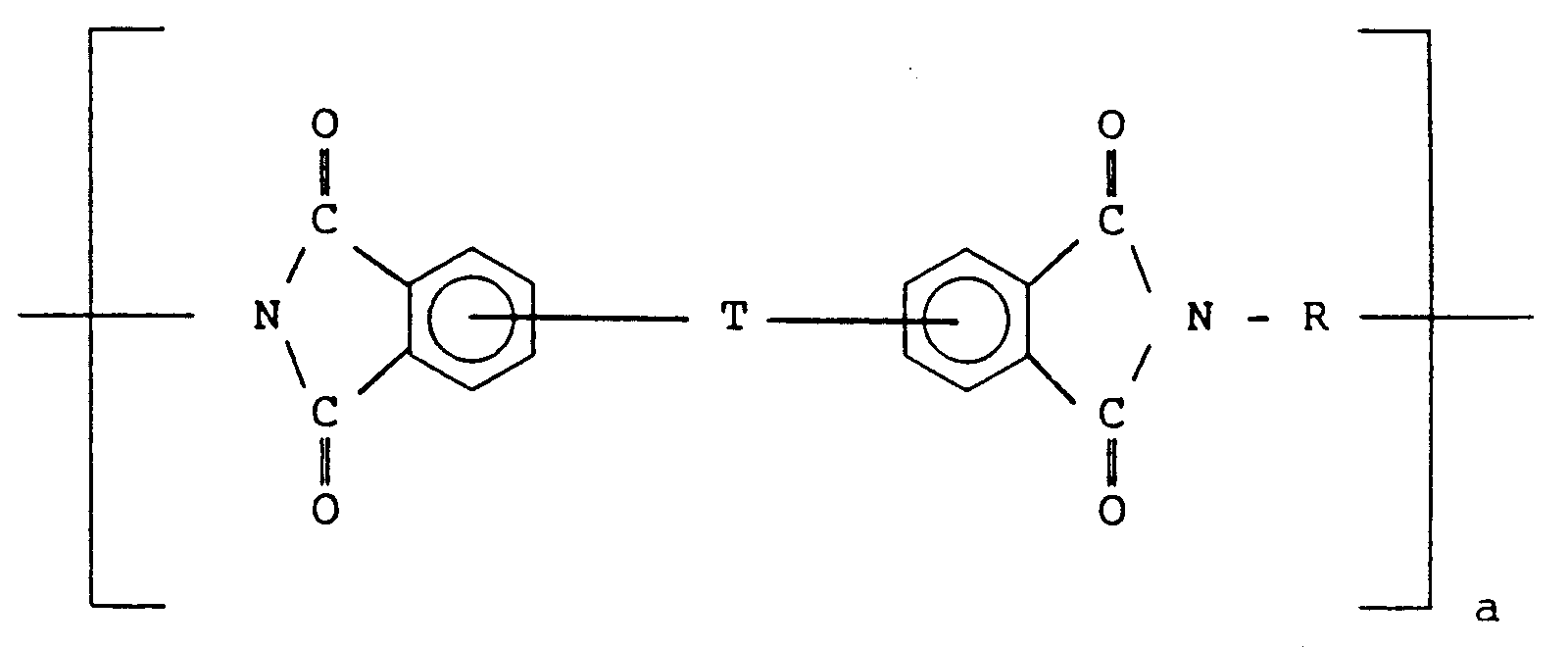
[0016] The polyetherimides used for preparing the blends of this invention contain repeating groups of the formula
wherein "a" is an integer greater than 1, e.g., from 10 to 10,000 or more;
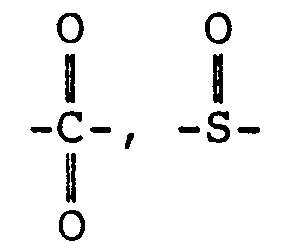
where T is -S-, -O-,
or CxH2x
or a group of the formula
-O-Z-O-
wherein the divalent bonds of the -O- or the -O-Z-O-group are in the 3,3'; 3,4'; 4,3', or the 4,4' positions; Z is a member of the class consisting of (A):
and (B) divalent organic radicals of the general formula
where X is a member selected from the group consisting of divalent radicals of the formulas
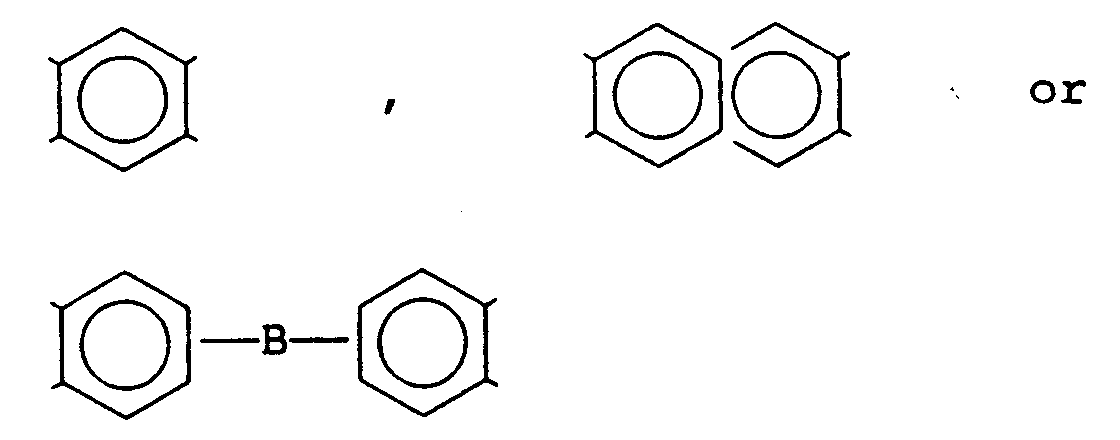
-O-, -S- and -CyH2y-where y is an integer from 1 to about 5; and R is a divalent organic radical selected from the group consisting of (a) aromatic hydrocarbon radicals having from 6 to about 20 carbon atoms and halogenated derivatives thereof, (b) alkylene radicals having from 2 to about 20 carbon atoms, cycloalkylene radicals having from 3 to about 20 carbon atoms, and (c) divalent radicals of the general formula
-S-, -O-,
and -CxH2x-and x is an integer from 1 to about 5.
[0017] In one embodiment, the polyetherimide may be a copolymer which, in addition to the etherimide units described above, further contains polyimide repeating units of the formula
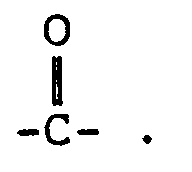
wherein R is as previously defined and M is selected from the group consisting of
where B is -S- or
These polyetherimide copolymers and their preparation are described by Williams et al. in U.S. Patent 3,983,093, incorporated herein by reference.
[0018] The polyetherimides can be prepared by any of the methods well known to those skilled in the art, including the reaction of an aromatic bis(ether anhydride) of the formula
with an organic diamine of the formula
(II) H₂N-R-NH₂
wherein T and R are defined as described above.
[0019] Bis(ether anhydride)s of formula I include, for example,
1,3-bis(2,3-dicarboxyphenoxy)benzene dianhydride;
1,4-bis(2,3-dicarboxyphenoxy)benzene dianhydride;
1,3-bis(3,4-dicarboxyphenoxy)benzene dianhydride;
1,4-bis(3,4-dicarboxyphenoxy)benzene dianhydride;
and
4,4'-bis(phthalic anhydride)ether.
[0020] A preferred class of aromatic bis(ether anhydride)s included by formula I includes compounds of formula III, IV and V, which follow:
and mixtures thereof, where Y is selected from the group consisting of -O-, -S-,
Aromatic bis(ether anhydride)s of formula III include, for example:
2,2-bis[4-(3,4-dicarboxyphenoxy)phenyl]propane dianhydride;
4,4'-bis(3,4-dicarboxyphenoxy)diphenyl ether dianhydride;
4,4'-bis(3,4-dicarboxyphenoxy)diphenyl sulfide dianhydride;
4,4,-bis(3,4-dicarboxyphenoxy)benzophenone dianhydride;
4,4'-bis(3,4-dicarboxyphenoxy)diphenyl sulfone dianhydride; and mixtures thereof.
[0021] Aromatic bis(ether anhydride)s of formula IV include, for example:
2,2-bis([4-(2,3-dicarboxyphenoxy)phenyl]propane dianhydride;
4,4'-bis(2,3-dicarboxyphenoxy)diphenyl ether dianhydride;
4,4'-bis(2,3-dicarboxyphenoxy)diphenyl sulfide dianhydride;
4,4,-bis(2,3-dicarboxyphenoxy)benzophenone dianhydride;
4,4'-bis(2,3-dicarboxyphenoxy)diphenyl sulfone dianhydride; and mixtures thereof.
[0022] The aromatic bis(ether anhydride)s of formula V may be, for example,
4-(2,3-dicarboxyphenoxy)-4'-(3,4-dicarboxyphenoxy)diphenyl-2,2-propane dianhydride;
4-(2,3-dicarboxyphenoxy)-4'-(3,4-dicarboxyphenoxy) diphenyl ether dianhydride;
4-(2,3-dicarboxyphenoxy)-4'-(3,4-dicarboxyphenoxy) diphenyl sulfide dianhydride;
4-(2,3-dicarboxyphenoxy)-4'-(3,4-dicarboxyphenoxy) benzophenone dianhydride;
4-(2,3-dicarboxyphenoxy)-4'-(3,4-dicarboxyphenoxy) diphenyl sulfone dianhydride, and mixtures thereof.
[0023] When polyetherimide/polyimide copolymers are employed, a dianhydride, such as pyromellitic anhydride, is used in combination with the bis(ether anhydride).
[0024] Some of the aromatic bis(ether anhydride)s of formula (I) are shown in U.S. patent 3,972,902 (Darrell Heath and Joseph Wirth). As described therein, the bis(ether anhydride)s can be prepared by the hydrolysis, followed by dehydration, of the reaction product of a nitrosubstituted phenyl dinitrile with a metal salt of dihydric phenol compound in the presence of a dipolar, aprotic solvent.
[0025] Additional aromatic bis(ether anhydride)s also included by formula (I) above are shown by Koton, M.M., Florinski, F.S., Bessonov, M.I. and Rudakov, A.P. (Institute of Heteroorganic Compounds, Academy of Sciences, U.S.S.R), U.S.S.R. patent 257,010, November 11, 1969, Appl. May 3, 1967, and by M.M. Koton, F.S. Florinski, Zh. Org. Khin. 4(5), 774 (1968).
[0026] The organic diamines of formula (II) include, for example:
m-phenylenediamine,
p-phenylenediamine,
4,4'-diaminodiphenylpropane,
4,4'-diaminodiphenylmethane (commonly named 4,4' methylenedianiline),
4,4'-diaminodiphenyl sulfide,
4,4'-diaminodiphenyl sulfone,
4,4'-diaminodiphenyl ether (commonly named 4,4'-oxydianiline),
1,5-diaminonaphthalene,
3,3-diamethylbenzidine,
3,3-dimethoxybenzidine,
2,4-bis(beta-amino-t-butyl)toluene,
bis(p-beta-amino-t-butylphenyl)ether,
bis(p-beta-methyl-o-aminophenyl)benzene,
1,3-diamino-4-isopropylbenzene,
1,2-bis(3-aminopropoxy)ethane,
benzidine,
m-xylylenediamine,
2,4-diaminotoluene,
2,6-diaminotoluene,
bis(4-aminocyclohexyl)methane,
3-methylheptamethylenediamine,
4,4-dimethylheptamethylenediamine,
2,11-dodecanediamine,
2,2-dimethylpropylenediamine,
octamethylenediamine,
3-methoxyhexamethylenediamine,
2,5-dimethylhexamethylenediamine,
2,5-dimethylheptamethylenediamine,
3-methylheptamethylenediamine,
5-methylnonamethylenediamine,
1,4-cyclohexanediamine,
1,12-octadecanediamine,
bis(3-aminopropyl)sulfide,
N-methyl-bis(3-aminopropyl)amine,
hexamethylenediamine,
heptamethylenediamine,
nonamethylenediamine,
decamethylenediamine, and
mixtures of such diamines.
[0027] Preferred polyetherimides are available commercially from General Electric Company, Pittsfield, Massachusetts U.S.A. under the registered trademark ULTEM®.
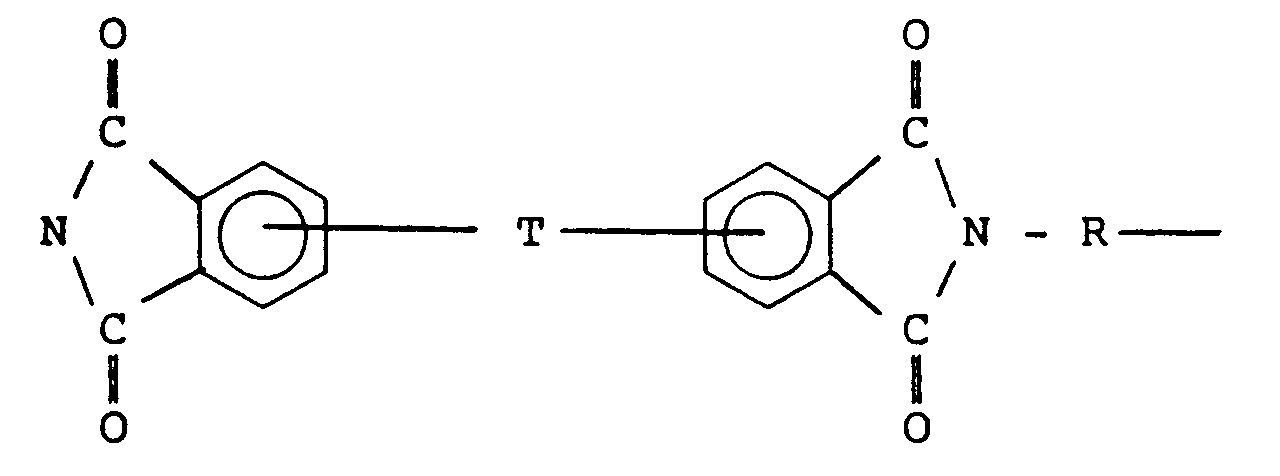
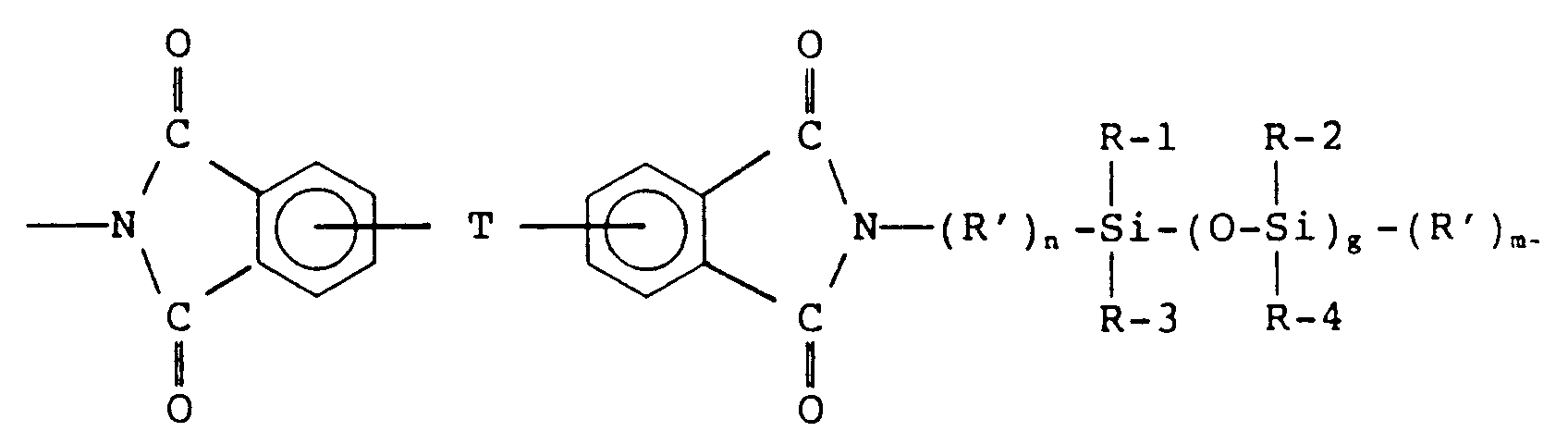
[0028] The siloxane polyetherimide copolymers employed in the blends of this invention may be prepared in a manner similar to that used for polyetherimides, except that a portion or all of the organic diamine reactant is replaced by an amine-terminated organosiloxane of the formula
wherein n and m independently are integers from 1 to about 10, preferably from 1 to about 5, g is an integer from 5 to about 40, preferably from about 5 to about 25, R can be -CxH2x- or phenyl and R-1 through R-4 each can be any of -H, -CH₃, -CxH2xCH₃ or phenyl.
[0029] The organic diamine of formula II and the amine-terminated organosiloxane of formula VI may be physically mixed prior to reaction with the bis(ether anhydride)(s), thus forming a substantially random copolymer. Alternatively, block or alternating copolymers may be used.
[0030] Preferred amine-terminated organosiloxanes are those of the formula VI, in which n and m are each 3, and which have a molecular weight distribution such that g has an average value ranging from about 9 to about 20.
[0031] The diamine component of the siloxane polyetherimide copolymers generally contains from about 20 to 50 mole % of the amine-terminated organosiloxane of formula VI and from about 50 to 80 mole % of the organic diamine of formula II. In preferred copolymers, the diamine component contains from about 30 to about 45 mole %, most preferably about 40 mole % of the amine-terminated organosiloxane.
[0032] The siloxane polyetherimide copolymers used in the blends of this invention can be prepared by any of the methods that are conventionally used for preparing polyetherimides. A presently preferred method for preparation is described in U.S. patent 4,417,044.
[0033] The preferred siloxane polyetherimide copolymers are available commercially from the General Electric Company under the registered trademarks, ULTEM® and SILTEM®.
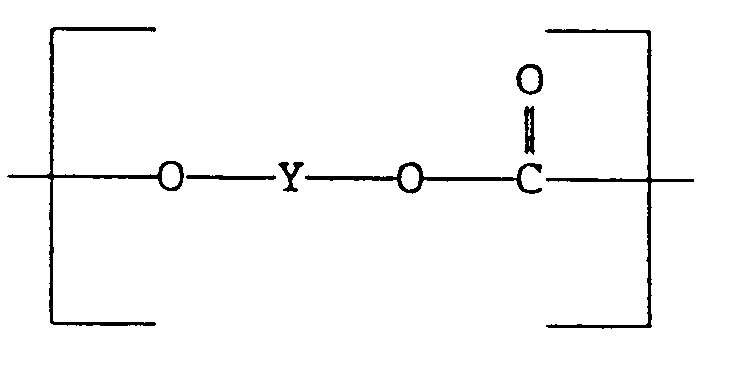
[0034] The polycarbonates used in the blends of this invention are high molecular weight, thermoplastic, aromatic polymers and include homopolycarbonates, copolycarbonates and copolyestercarbonates and mixtures thereof which have average molecular weights of about 8,000 to more than 200,000, preferably of about 20,000 to about 80,000 and an intrinsic viscosity (I.V.) of from about 0.40 to about 1.5 dl/g as measured in methylene chloride at 25°C. In one embodiment, the polycarbonates are derived from dihydric phenols and carbonate precursors and generally contain the recurring structural units of the formula:
where Y is a divalent aromatic radical of the dihydric phenol employed in the polycarbonate-producing reaction.
[0035] Suitable dihydric phenols for producing the polycarbonates include, for example, 2,2-bis(4-hydroxyphenyl)propane, bis(4-hydroxyphenyl)methane, 2,2-bis(4-hydroxy-3-methylphenyl)propane, and 4,4'-bis(4-hydroxyphenyl)heptane, etc.
[0036] It is of course possible to employ two or more different dihydric phenols or a copolymer of a dihydric phenol with a glycol or with a hydroxy- or acid-terminated polyester, or with a dibasic acid in the event a carbonate copolymer or interpolymer rather than homopolymer is desired for use in the preparation of the blends of this invention. The blends of any of the above materials also can be employed to provide the aromatic polycarbonate. In addition, branched polycarbonates, such as are described in U.S. patent 4,001,184, can be utilized in the practice of this invention, as can blends of a linear polycarbonate and a branched polycarbonate.
[0037] The carbonate precursor employed can be either a carbonyl halide or a carbonate ester. The carbonyl halides which can be employed are carbonyl bromides, carbonyl chlorides and mixtures thereof. Typical of the carbonate esters which can be employed are diphenyl carbonate; a di(alkylphenyl)carbonate such as di(tolyl)carbonate, etc.; di(naphthyl)carbonate, etc. or mixtures thereof. While other carbonate precursors are known to those skilled in the art, carbonyl chloride, also known as phosgene, is preferred.
[0038] The polycarbonate also can be a copolyestercarbonate as described by Clayton B. Quinn in U.S. patent 4,430,484 and the references cited therein, incorporated herein by reference. Preferred polyestercarbonates are those derived from the dihydric phenols and carbonate precursors described above and aromatic dicarboxylic acids or their reactive derivatives. A very useful class of aromatic polyestercarbonates are those derived from bisphenol A; terephthalic acid or isophthalic acid or a mixture thereof and phosgene. If a mixture of terephthalic acid and isophthalic acid is employed, the weight ratio of terephthalic acid to isophthalic acid may be from about 5:95 to about 95:5.
[0039] The polycarbonates of the subject blends can be manufactured by known processes, such as for example, by reacting a dihydric phenol with a carbonate precursor, such as diphenyl carbonate or phosgene in accordance with methods set forth in the above-cited literature and U.S. patents 4,018,750 and 4,123,436 or by transesterification process such as are disclosed in U.S. patent 3,153,008, as well as other processes known to those skilled in the art.
[0040] The aromatic polycarbonates are typically prepared by employing a molecular weight regulator, an acid acceptor and a catalyst. The molecular weight regulators which can be employed include phenol, cyclohexanol, methanol, alkylated phenols, such as octylphenol, p-(t-butyl)phenol, etc. Preferably, phenol or an alkylated phenol is employed as the molecular weight regulator.
[0041] The acid acceptor can be either an organic or an inorganic acid acceptor. A suitable organic acid acceptor is a tertiary amine and includes such materials as pyridine, triethylamine, dimethylaniline, tributylamine, etc. The inorganic acid acceptor can be one which can be either a hydroxide, a carbonate, a bicarbonate or a phosphate of an alkali or alkaline earth metal.
[0042] The catalysts which can be employed are those that typically aid the polymerization of the monomer with phosgene. Suitable catalysts include tertiary amines such as triethylamine, tripropylamine, N,N-diethylamine, quaternary ammonium compounds such as, for example, tetraethylammonium bromide, cetyl triethyl ammonium bromide, tetra-n-heptyl ammonium iodide, tetra-n-propyl ammonium bromide, tetramethyl ammonium chloride, tetra-methyl ammonium hydroxide, tetra-n-butyl ammonium iodide, benzyltrimethyl ammonium chloride and quaternary phosphonium compounds such as, for example, n-butyltriphenyl phosphonium bromide and methyltriphenyl phosphonium bromide.
[0043] Also included are branched polycarbonates wherein a polyfunctional aromatic compound is reacted with the monomer and carbonate precursor to provide a thermoplastic randomly branched polycarbonate. Illustrative polyfunctional aromatic compounds which can be employed include trimellitic anhydride, trimellitic acid, pyromellitic acid, pyromellitic dianhydride, mellitic acid, mellitic anhydride, trimesic acid, benzophenonetetracarboxylic acid, benzophenonetetracarboxylic anhydride and the like. The preferred polyfunctional aromatic compounds are trimellitic anhydride and trimellitic acid.
[0044] The relative proportions of the polymeric components are within a defined range, as illustrated in Fig. 3a of the drawings. The blends of the present invention are represented substantially by the shaded area of the phase diagram shown in Fig. 3a. This area corresponds approximately to blends containing from about 0.5 to about 75 parts per hundred resin ("phr") polycarbonate, about 0.5 to about 26 phr siloxane polyetherimide copolymer and the balance polyetherimide, wherein the polyetherimide concentration is at least about 60% by weight of the blend. Preferred blends of this invention are represented by the shaded area on the phase diagram shown in Fig. 3b. This area corresponds approximately to blends containing from about 0.5 to about 35 phr polycarbonate, 0.5 to about 10 phr siloxane polyetherimide copolymer and the balance polyetherimide, wherein the polyetherimide concentration is at least about 73% by weight of the blend. Optimum flame retardant performance has been found to occur in blends in which the weight ratio of polyetherimide/siloxane polyetherimide copolymer is about 95/5.
[0045] Figure 4 illustrate impact performance of the ternary blends of the present invention for the notched Izod, reverse notched Izod and Gardner impact tests. These tests were performed in accordance with accepted ASTM methods. The samples which were tested were composed of 95 parts by weight of a polyetherimide (ULTEM® 1000) and 5 parts by weight of a siloxane polyetherimide (ULTEM® D9000) with each test sample having variable amounts by weight of a polycarbonate (LEXAN® 131). The test results demonstrate that a polymer blend with a matrix comprising 95 parts of a polyetherimide and 5 parts of a siloxane polyetherimide copolymer shows improved impact results when a polycarbonate is added to the polymer in amounts of greater than about 10% by weight.
[0046] Figure 5 illustrates peak heat release rate and ultimate elongation in relation to the amount of polycarbonate blended with a matrix composed of 95 parts by weight of a polyetherimide and 5 parts by weight of a siloxane polyetherimide copolymer. As the amount of polycarbonate is increased in the ternary blend, the peak heat release rate increases. The ultimate elongation initially increases but begins to plateau as the amount of polycarbonate increases. Optimum peak heat release rate and ultimate elongation occur where the polycarbonate is at about 20% by weight of the ternary blend.
[0047] In addition to the polymeric ingredients, the blends may contain other materials, such as fillers, additives, reinforcing agents, and the like. The blends of the invention exhibit unexpected improvements in flame retardant performance and ductility over the engineering thermoplastics individually or in the currently used binary and ternary combinations. The blends also meet or exceed the flammability standards of Part 25 of Title 14 of the Code of Federal Regulations.
[0048] The following examples are provided only to illustrate the improved flame retardance and ductility of the present invention and are not intended to be limiting.
[0049] All compositions were prepared by dry blending the ingredients and extruding the mix using a screw-type extruder. The extrudate was comminuted into pellets and the pellets were injection molded into test specimens.
[0050] Except as described below, all of the heat and smoke release properties were determined by the Ohio State University (OSU) rate-of-heat-release apparatus and the National Bureau of Standards (NBS) Smoke Chamber, which are in accordance with the procedures set forth in Part 25 of 14 C.F.R.
Examples 1-22
[0052] The test samples which were utilized, ULTEM® 1000 (polyetherimide), LEXAN® 131 (polycarbonate) and ULTEM® D9000 (siloxane polyetherimide copolymer) can be obtained from the General Electric Company, Pittsfield, Massachusetts, U.S.A.
[0053] From Table I, it is clear that the ternary blends of polyetherimide, polycarbonate and siloxane polyetherimide copolymer in the proportions within the scope of the present invention led to unexpected overall improvements in flame retardance and ductility. The OSU heat release values and the maximum smoke density (Ds MAX) values obtained by the compositions of the present invention were unexpectedly superior to those outside the scope of the present invention. Test samples 7, 8, 9, 10, 18, 19, 20 and 22, which have a polyetherimide to siloxane polyetherimide copolymer weight ratio of about 95:5 respectively, showed improved OSU heat release values and Ds MAX values in comparison to test samples 1 through 6 and 12 through 17, which do not have a polyetherimide to siloxane polyetherimide copolymer weight ratio of about 95:5. Heat release and maximum smoke density are very important for applications for use where flame resistance, slow burn and minimal smoke concentration are desired, as for example, in the construction of and furnishing of aircraft, ships, automobiles and the like. The results indicate a surprisingly very slow heat release thus burn rate and a surprisingly low maximum smoke density under continuous exposure to a radiant source.
1. A ternary polymer blend which consists essentially of (a) a polyetherimide, (b) a
polycarbonate and (c) a siloxane polyetherimide copolymer, wherein the relative proportions
(by weight) of the three ingredients are represented substantially by the shaded area
of the diagram in Figure 3a of the drawings, and wherein the polyetherimide has the
formula:
and the siloxane polyetherimide copolymer consists essentially of repeating units of the formula
and repeating units of the formula
wherein R' is CxH2x or phenyl; R-1, R-2, R-3 and R-4 independently are H, CH₃, CxH2x CH₃ or phenyl;
where T is -S-, -O-,
or CxH2x or a group of the formula
-O-Z-O-
wherein the divalent bonds of the -O- or the -O-Z-O-group are in the 3,3', 3,4', 4,3' or 4,4' positions; Z is a member of the class consisting of (A)
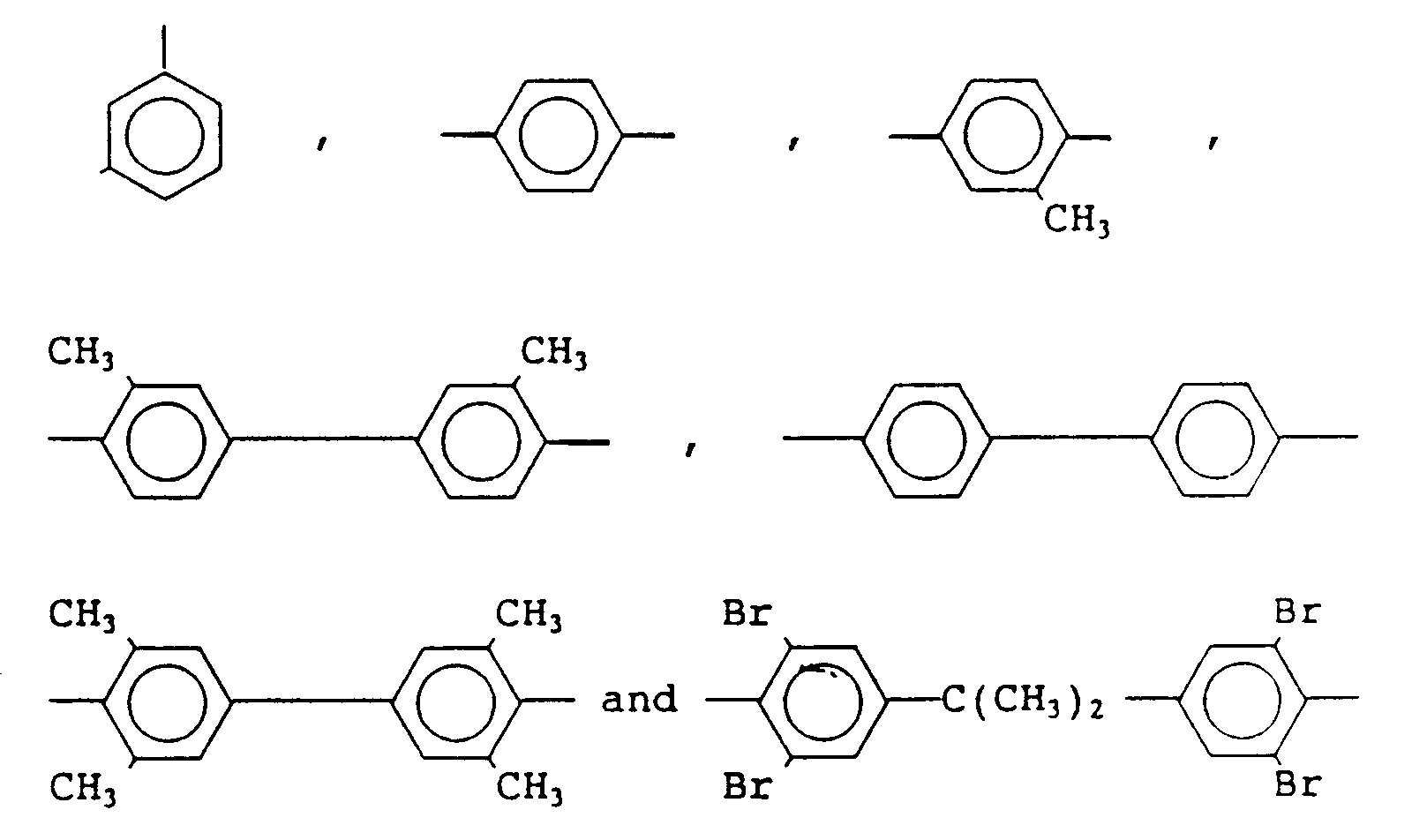
and (B) divalent organic radicals of the general formula

where X is a member selected from the group consisting of divalent radicals of the formulas
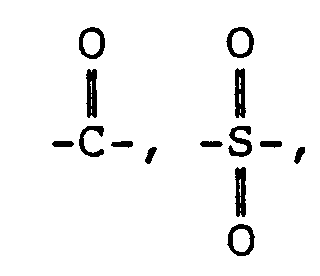
-O-, -S- and CyH2y
where y is an integer from 1 to about 5; and R is a divalent organic radical selected from the group consisting of (a) aromatic hydrocarbon radicals having from 6 to about 20 carbon atoms and halogenated derivatives thereof, (b) alkylene radicals having from 2 to about 20 carbon atoms, cycloalkylene radicals having from 3 to about 20 carbon atoms, and (c) divalant radicals of the general formula

where Q is a member selected from the group consisting of
-S-, -O-,
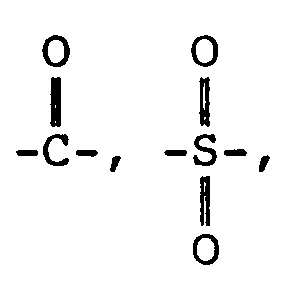
and -CxH2x-,
x is an integer from 1 to about 5, n and m independently are integers from 1 about 10 and g is an integer from 5 to about 40.
and the siloxane polyetherimide copolymer consists essentially of repeating units of the formula
and repeating units of the formula
wherein R' is CxH2x or phenyl; R-1, R-2, R-3 and R-4 independently are H, CH₃, CxH2x CH₃ or phenyl;
where T is -S-, -O-,
or CxH2x or a group of the formula
-O-Z-O-
wherein the divalent bonds of the -O- or the -O-Z-O-group are in the 3,3', 3,4', 4,3' or 4,4' positions; Z is a member of the class consisting of (A)
and (B) divalent organic radicals of the general formula
where X is a member selected from the group consisting of divalent radicals of the formulas
-O-, -S- and CyH2y
where y is an integer from 1 to about 5; and R is a divalent organic radical selected from the group consisting of (a) aromatic hydrocarbon radicals having from 6 to about 20 carbon atoms and halogenated derivatives thereof, (b) alkylene radicals having from 2 to about 20 carbon atoms, cycloalkylene radicals having from 3 to about 20 carbon atoms, and (c) divalant radicals of the general formula
where Q is a member selected from the group consisting of
-S-, -O-,
and -CxH2x-,
x is an integer from 1 to about 5, n and m independently are integers from 1 about 10 and g is an integer from 5 to about 40.
2. The ternary polymer blend of claim 1, wherein the polyetherimide further comprises
repeating units of the formula:
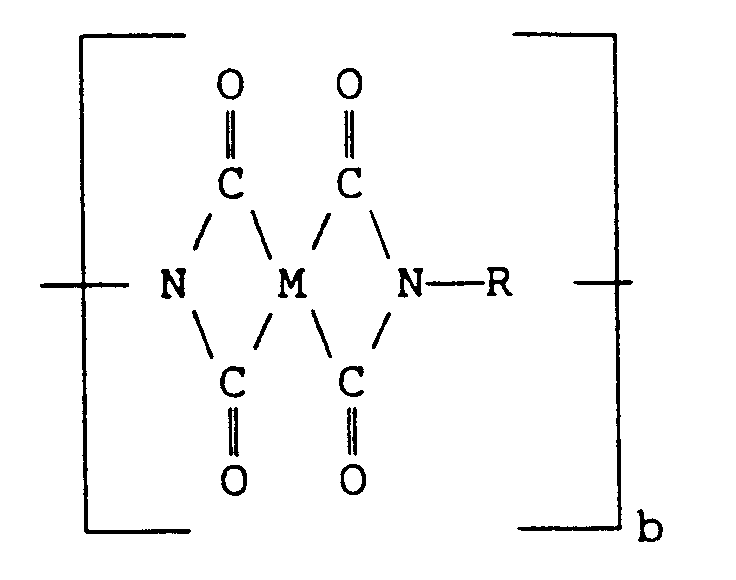
wherein b is a whole number greater than 1, M is:
where B is -S- or
wherein b is a whole number greater than 1, M is:
where B is -S- or
3. The ternary polymer blend of Claim 1 or Claim 2, wherein n and m are integers from
1 to about 5, g is an integer from 5 to about 25 and R-1, R-2, R-3 and R-4 are each
methyl.
4. The ternary polymer blend of any preceding claim, wherein g has an average value from
9 to about 20 and the organosiloxane-containing repeating unit constitutes from about
20 to about 50 mole % of the siloxane polyetherimide copolymer.
5. The ternary polymer blend of any preceding claim, wherein the organosiloxane-containing
repeating unit constitutes from about 25 to about 40 mole % of the siloxane polyetherimide
copolymer.
6. The ternary polymer blend of any preceding claim, wherein the polycarbonate is selected
from the group consisting of homopolycarbonates, copolycarbonates, polyestercarbonates
or mixtures thereof having the general formula:
where Y is a divalent aromatic radical of the dihydric phenol employed in the polycarbonate-producing reaction.
where Y is a divalent aromatic radical of the dihydric phenol employed in the polycarbonate-producing reaction.
7. The ternary polymer blend of claim 6, wherein Y is a divalent aromatic radical derived
from a dihydric phenol selected from the group comprising: 2,2-bis(4-hydroxyphenyl)propane,
bis(4-hydroxyphenyl)methane, 2,2-bis(4-hydroxy-3-methylphenyl)propane, hydroxyphenyl
heptane or mixtures thereof.
8. The ternary polymer blend of Claim 6 or Claim 7, wherein the polycarbonate comprises
a homopolycarbonate or copolycarbonate derived from one or more dihydric phenols and
one or more carbonate precursors.
9. The tenary polymer blend according to Claim 8, wherein the dihydric phenol is 2,2-bis(4-hydroxyphenyl)propane
and the carbonate precursor is carbonyl chloride or diphenyl carbonate.
10. The ternary blend according to Claim 6, wherein the polycarbonate is derived from
an aromatic dihydric phenol, a carbonate precursor and an aromatic dicarboxylic acid.
11. The ternary polymer blend of claim 10 wherein the aromatic dihydric phenol is selected
from the group comprising 2,2-bis(4-hydroxyphenyl)propane, bis(4-hydroxyphenyl)methane,
2,2-bis(4-hydroxy-3-methylphenyl)propane or 4,4'-bis(4-hydroxyphenyl)heptane or mixtures
thereof.
12. The ternary polymer blend of Claim 10 or Claim 11 wherein the aromatic dicarboxylic
acid comprises terephthalic acid or isophthalic acid or mixtures thereof.
13. The ternary polymer blend of claims 1, 2, 3, 4, or 5, wherein the siloxane polyetherimide
copolymer is a random copolymer,a block copolymer or an alternating copolymer.
14. The ternary polymer blend of any preceding claim, in which the relative proportions
(by weight) of the three ingredients (a), (b) and (c) are represented substantially
by the shaded area of the diagram in Figure 3b of the drawings.
15. The ternary polymer blend of Claim 14, wherein the polyetherimide consists essentially
of repeating units of the formula :
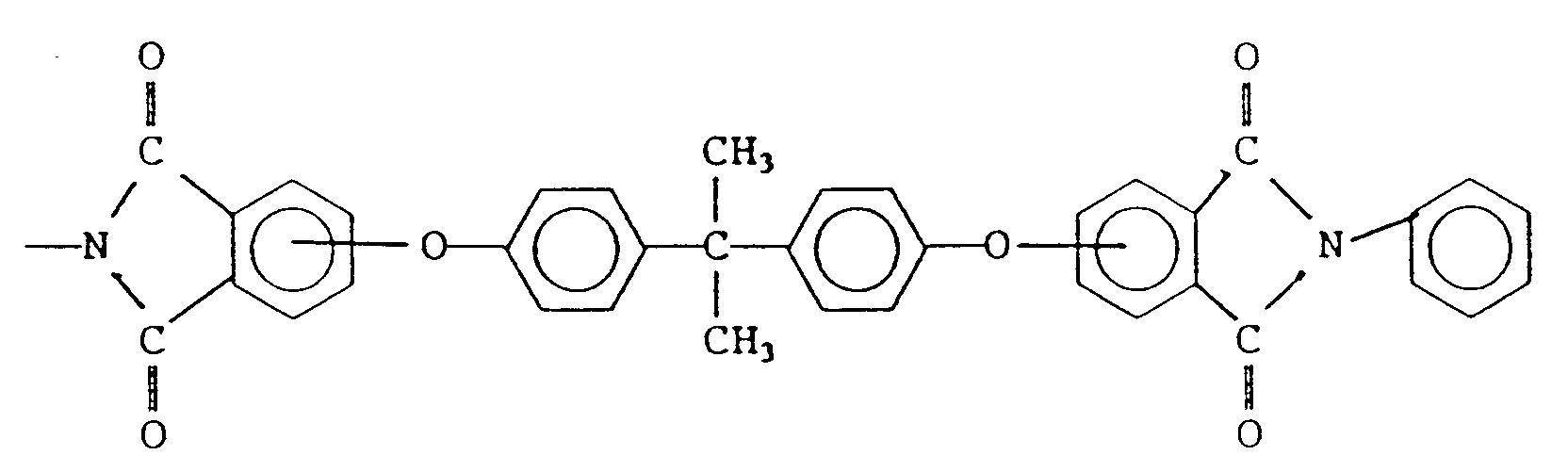
and the siloxane polyetherimide copolymer consists essentially of repeating units of the formula:
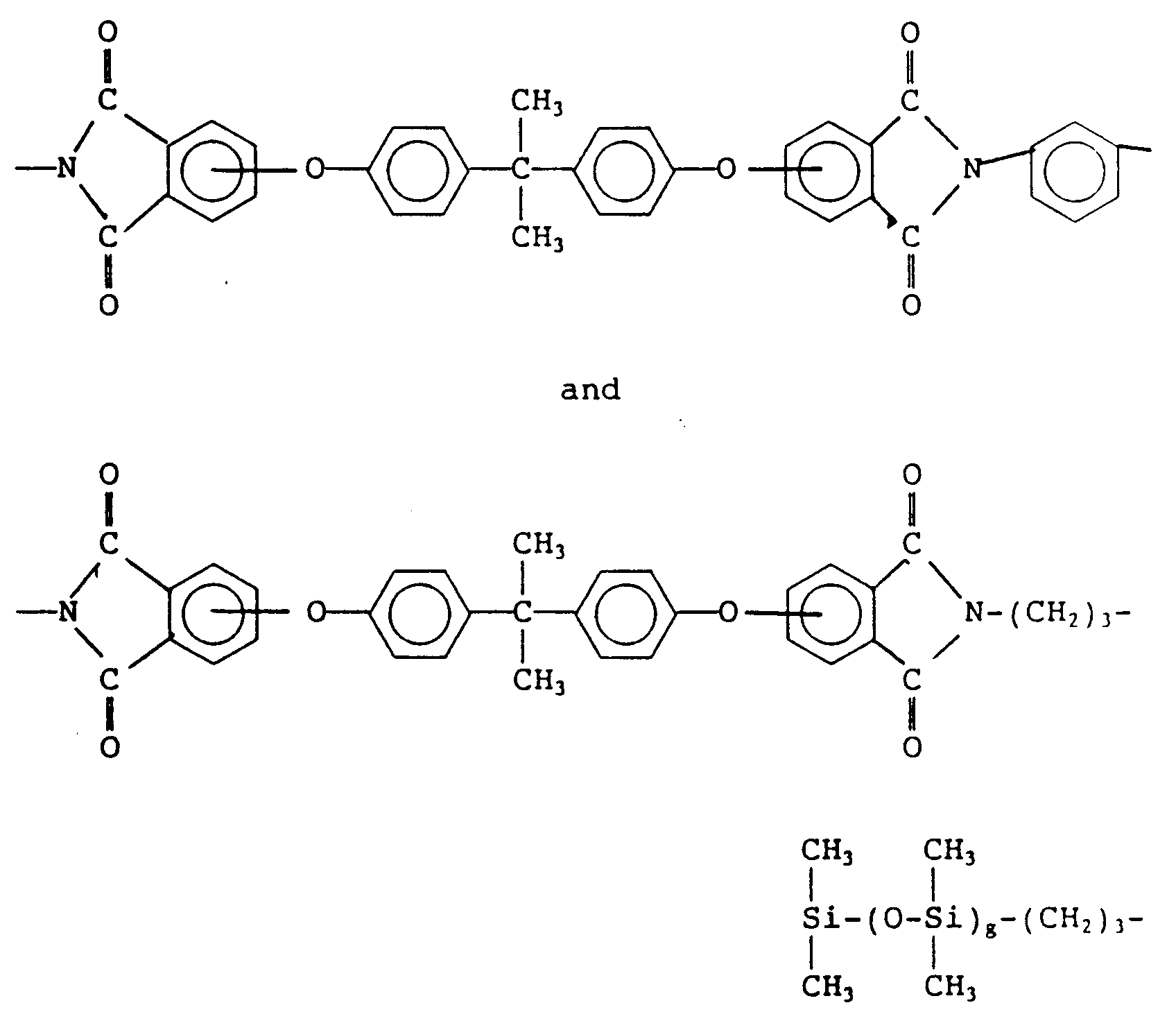
wherein g has a value from about 9 to about 20; and wherein the polycarbonate consists essentially of units of the formula:
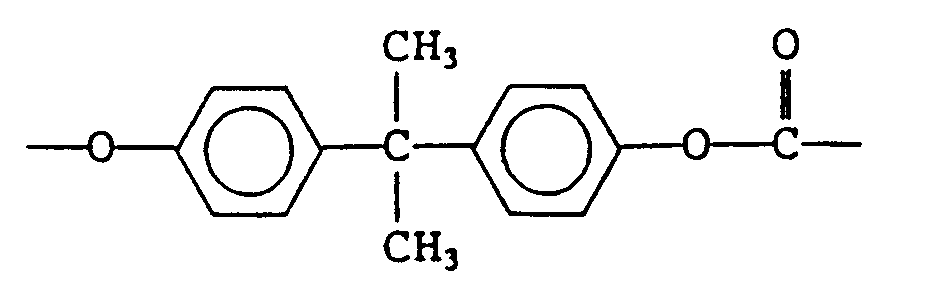
and the siloxane polyetherimide copolymer consists essentially of repeating units of the formula:
wherein g has a value from about 9 to about 20; and wherein the polycarbonate consists essentially of units of the formula:
16. The ternary polymer blend of any preceding claim which further comprises fillers,
pigments, reinforcing agents or mixtures thereof.
17. The ternary polymer blend of any preceding claim wherein the weight ratio of polyetherimide
to siloxane polyetherimide is about 95:5.