(57) An electrical system wherein the electrical conductive traces on the circuit boards
are routed to achieve a balanced net to reduce noise caused by transmission line reflections.
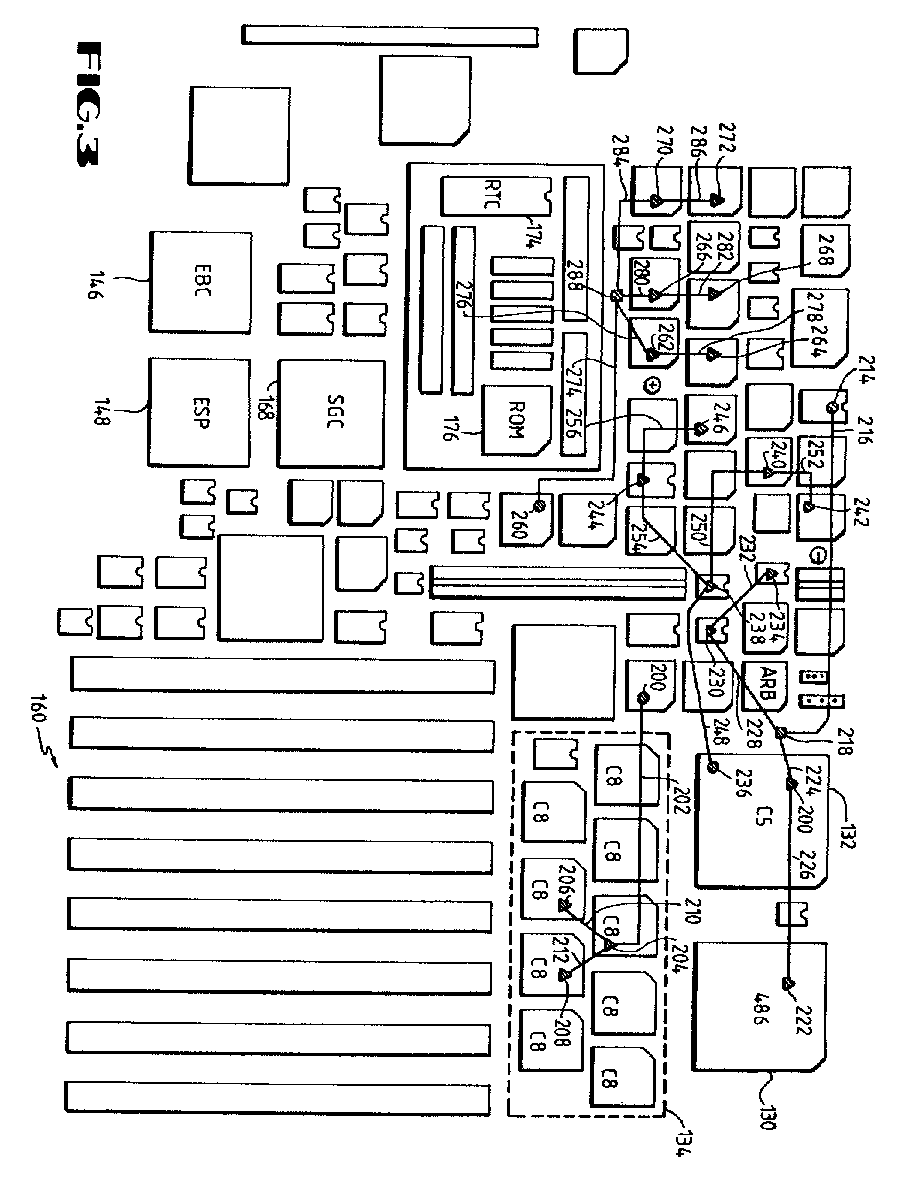
A trace (202,216,248,274) is routed from the source terminal (200,214,236,260) of
the net to a balanced junction (204,218,238,288) wherein if there are an odd number
of load terminals, or loads, the balanced junction is located at one of the loads
(204,238). The remaining loads are grouped into branches wherein each branch includes
an equal number of loads. A trace is routed between each of the loads of each branch
to serially connect the loads of each branch together, or, a trace is routed from
a center one of the branch loads to each of the remaining branch loads, forming subbranches.
In an alternate embodiment, a balanced subbranch is developed. The balanced load is
connected to a pseudo-balanced load, which further receives an equal number of branches.
The 3 pseudo-balanced load is then connected to another pseudo-balanced load, which
may also receive an equal number of branches. This pseudo-balanced load is connected
to the source. In another alternative, two balanced subbranches have their balanced
loads connected to a central balanced load. This balanced load may receive even further
numbers of equal branches. The balanced load is connected to the source.
|
|
