|
(11) | EP 0 524 698 B1 |

| (12) | EUROPEAN PATENT SPECIFICATION |
|
|
| (54) |
Water heater with reduced NOx output Wassererhitzer mit reduzierter NOx-Emission Chauffe-eau à émission réduite de NOx |
|
|
|||||||||||||||||||||||||||||||
| Note: Within nine months from the publication of the mention of the grant of the European patent, any person may give notice to the European Patent Office of opposition to the European patent granted. Notice of opposition shall be filed in a written reasoned statement. It shall not be deemed to have been filed until the opposition fee has been paid. (Art. 99(1) European Patent Convention). |
BACKGROUND OF THE INVENTION
[0002] Most water heaters adopt a so-called Bunsen combustion system which carries out partially premixed combustion at the primary air ratio of 0.1 - 0.7 which is followed by combustion with secondary air. In cases where this method is used, the amount of generated nitrogen oxides (hereinafter called NOx) is approximately 100 - 150 ppm when corrected to 0% of O₂ (the same correction is hereinafter applied). In such a case, known examples for reducing NOx generated include a fully premixed combustion system, a flame cooling system using a radiation rod and an exhaust gas recycling system.
[0003] Although the fully premixed combustion system is capable of reducing NOx to less than 60 ppm by increasing an excess air ratio and consequently lowering the temperature of the flame, a problem exists in that it is necessary to precisely control the excess air ratio and prevent oscillating combustion and backfiring, which tends to occur in the method. This causes the manufacturers to incur a large cost increase due to their efforts to implement countermeasures.
[0004] The flame cooling method using a radiation rod calls for inserting a radiation rod in the flame so that the rod is heated until it glows red and emits radiation heat, thereby reducing the temperature of flame and, thus, the generation of NOx. Output of carbon monoxide (hereinafter called CO) is prevented by heating of the radiation rod. For this reason, however, it is necessary to use ceramics or heat resistant steel for the radiation rod. In addition to the fact that such materials are costly and their durability is insufficient, there is a limit to which the radiation is able to lower the temperature and reduce NOx with this method. And, it is very difficult to reduce NOx by more than about 30% without CO emission.
[0005] As for the exhaust gas recycling method, it is widely known that the amount of NOx emission can be reduced to a half when the recycling ratio of exhaust gas is 10 - 15%. For the capacity of Bunsen burners of conventional water heaters, however, it is impossible to recycle exhaust gas at such a high recycling ratio as 10 - 15%; this may otherwise result in a lifted flame. Therefore, under the present conditions, such conventional water heaters are able to reduce NOx only to approximately 90 ppm by this method. Furthermore, it is necessary to take measures to prevent exhaust gas from causing corrosion in conduits used for recycling exhaust gas, fans and burner units; such extra efforts result in cost increases. Because of the above reasons, there is strong demand for development of a water heater which is capable of greatly reducing NOx and restricting an output of CO while maintaining a relatively simple construction and avoiding cost increases to the greatest extent possible.
SUMMARY OF THE INVENTION
[0006] More especially the invention relates to a water heater with reduced nitrogen oxides output, having a partially aerated burner producing laminar flame of premixed combustion gas above a plurality of serially aligned flame ports in said burner comprising: a plurality of water conduits disposed at a downstream side of said partially aerated burner and in communication with a heat exchanger of the water heater; whereby during operation heat is removed from said laminar flame by means of heat absorption by said water conduits thereby lowering the temperature of said laminar flame in the said highest flame temperature area at the downstream side of water conduits as known from FR-A-2647192.
[0007] In FR-A-2647192 there has been described a structure, control method and the like for applying the flame cooling method to a boiler, air conditioner, hot water supply apparatus and the like. However the position of water conduits in the flames, effective for NOx decrease has not been specified.
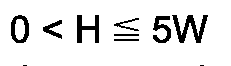
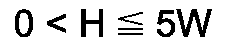
[0008] The water heater according the invention is characterised in that said water conduits are disposed in a position such that there is a distance "H" between said water conduits and the surface of said burner ports, that a distance "W" is de width of a burner port surface; and that said position is defined by the formula:
such that said during operation the water conduits are located between the burner ports and an area of the highest flame temperature in said laminar flame formed at the downstream side of said burner ports.
[0009] According to the present invention, a plurality of NOx reducing water conduits are disposed in an appropriate positional range located between the range where the temperature of laminar flame formed at the downstream side of the burner port is the highest and the burner port in order to remove heat form the laminar flame by heat absorption of the plurality of NOx reducing water conduits and lowering the temperature of flames in the highest flame temperature range at the downstream side of the NOx reducing water conduits, thereby reducing an output of NOx.
BRIEF DESCRIPTION OF DRAWINGS
[0010] Fig. 1 is a schematic view showing an embodiment of a water heater according to the present invention.
[0016] Fig. 7 is a perspective view to illustrate the relationship of the position between a burner having a pilot member and a NOx reducing water conduit.
[0017] Fig. 8 is a section view of a principal part to illustrate the relationship of the position between a burner having a pilot member and a NOx reducing water conduit.
[0018] Fig. 9 is a perspective view of another embodiment to illustrate the relationship of the position between a burner having a pilot member and a NOx reducing water conduit.
[0019] Fig. 10 is a section view of a principal part of another embodiment to illustrate the relationship of the position between a burner having a pilot member and a NOx reducing water conduit.
[0020] Fig. 11 is a plot of characteristics concerning emission of NOx in cases where a burner is provided with a pilot member and a single NOx reducing water conduit.
[0021] Fig. 12 is a plot of characteristics concerning emission of NOx in cases where a burner is provided with a pilot member and a pair of NOx reducing water conduits.
[0022] Fig. 13 is a perspective to illustrate the relationship of the position between a NOx reducing water conduit and a burner which is not provided with a pilot member.
[0023] Fig. 14 is a section view of a principal part to illustrate the relationship of the position between NOx reducing water dented and a burner which is not provided with a pilot member.
[0024] Fig. 15 is a perspective view of another embodiment to illustrate the relationship of the position between a NOx reducing water conduit and a burner which is not prodded with a pilot member.
[0025] Fig. 16 is a section view of a principal part of another embodiment to illustrate the relationship of the position between a NOx reducing water conduit and a burner which is not provided with a pilot member.
[0026] Fig. 17 is a plot of characteristics concerning discharge of NOx in cases where a burner is provided with a single NOx reducing water conduit and no pilot member.
[0027] Fig. 18 is a plot of characteristics concerning discharge of NOx in cases where a burner is provided with a pair of NOx reducing water conduits and no pilot member.
DETAILED DESCRIPTION OF THE INVENTION
[0030] In the drawings, numerals 1, 8 and 9 respectively denote a water heater, a cold water conduit and a hot water conduit. Numeral 2 denotes a burner. As described above there are two kinds of burner 2; one with a pilot member 4 and another without pilot member 4. Numeral 10 denotes a plurality of NOx reducing water conduit in between water introducing portion 13 and water receiving portion 14 (see Fig. 2) and has such a configuration that heated water is returned to cold water conduit 8 or hot water conduit 9 after the process of heat absorption. There are various configurations for water introducing portion 13 and water receiving portion 14, one such configuration is shown in Fig. 2 introducing a part of a water flow in cold water conduit 8 into NOx reducing water conduits 10 and then feeding the water out towards hot water conduit 9; another shown in Fig. 3 which calls for introducing the entire water flow in cold water conduit 8 into NOx reducing water conduits 10 and then returning the heated water into cold water conduit 8; another shown in Fig. 4 introduces a part of the water flow in cold water conduit 8 into NOx reducing water conduits 10 and then returns the heated water into cold water conduit 8; another shown in Fig. 5 introduces the entire hot water flow in hot water conduit 9 into NOx reducing water conduits 10 and then returns the further heated hot water into hot water conduit 9; and another shown in Fig. 6 introduces a part of the hot water flow in hot water conduit 9 into NOx reducing water conduits 10 and then returns the further heated hot water into hot water conduit 9. The drawings show examples of configurations only for the purpose of explanation, and a user may select a desired configuration as necessary.
[0031] NOx reducing water conduits 10 comprised together with water introducing portion 13 and water receiving portion 14 configured as above, are superposed in parallel with each other above the surface of burner ports 3. NOx reducing water conduits 10 must be disposed within an appropriate positional range wherein 0 < H ≦ 5W.
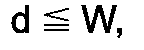
[0032] In addition to reducing output of NOx it is also possible to restrict output of CO by setting the diameter of NOx reducing water conduits 10 such that d ≦ W, when the NOx reducing water conduits 10 are disposed in the appropriate positional range. In the above formulas, "H", "W" and "d" respectively represent the distance between NOx reducing water conduits 10 and the surface of the burner ports, the width of the surface of a burner port (including the width of a pilot member if there is any), and the diameter of a NOx reducing water conduit.
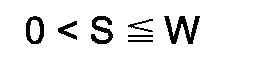
[0033] NOx reducing water conduits 10 superposed right above burner ports 3 and parallel to the burner, may comprise a single conduit or a pair of conduits for each burner, with space S between the pair of conduits. In the latter case, S should be in the range of 0 < S ≦ W. As NOx reducing water conduits 10 are superimposed parallel to each burner, heat is exchanged by NOx reducing water conduits 10 effectively.
[0034] In the case shown in Fig. 2, when water is introduced into a water heater 1, a part of the water flows from cold water conduit 8 into NOx reducing water conduits 10, where it absorbs heat, and then, the heated water is fed to the outside of the water heater through hot water conduit 9 At that time, premixed air has already been introduced to burner 2, at the excess air ratio of 0.1 - 0.7, and flame 6 is generated at burner port 3. The heat of flame 6 is absorbed by water flowing through NOx reducing water conduits 10, and thus, the temperature generated in the highest flame temperature range 7 at the downstream side of NOx reducing water conduits 10 is effectively reduced. In this case, NOx reducing water conduits 10 are disposed in the appropriate positional range 0 < H ≦ 5W. In the event that H is less than 0, it causes such problems as flame-lift and insufficient heat absorption due to the fact that the combustion, at the position where the value of H is too small, does not produce sufficient heat. As a result, the temperature of flame at the downstream side of NOx reducing water conduits 10 is not sufficiently lowered, and NOx reduction effect is small. On the other hand, although it is possible to increase amount of heat absorption by increasing the value of H so that it is greater than 5W, when a large value is used for "H", the temperature of combustion gas before the flame reaches the NOx reducing water conduit, has already reached a temperature sufficient to increase the output of NOx at the upstream side. Therefore, with excessively high "H", it is impossible to reduce NOx by a large degree.
[0035] By means of making the diameter (d) of NOx reducing water conduits 10 disposed in the appropriate range shorter than the width (W) of the surface of the burner port, combustion at the downstream side of NOx reducing water conduits 10 continues smoothly, thereby restricting the output of CO as well as NOx. Furthermore, combustion in this configuration is nearly as quiet as the case where NOx reducing water conduits 10 are not disposed. In the case where a pair of NOx reducing water conduits 10 are superposed right above burner ports 3 of each burner 2 with space S between the pair, laminar flame is obtained in good condition, and heat absorption from the laminar flame by NOx reducing conduits 10 increases. Therefore, low temperature combustion is achieved more effectively.
[0036] According to the above embodiments, water used in NOx reducing water conduits 10 to reduce NOx is heated by means of heat absorption from the laminar flame and is returned to cold water conduit 8 or hot water conduit 9 to be fed to the outside of the water heater. Thus, thermal efficiency does not decrease at all.
[0037] In Figs. 1 through 20, numerals 5 and 19 respectively denote a pilot orifice and a heat exchanger. Fig. 11 shows an embodiment wherein each burner 2 having pilot member 4 is provided with a single NOx reducing water conduits 10. From Fig. 11, it is evident that, when H is within the range of 0.3W ≦ H ≦ 5W, output of NOx is considerably lower than that of a conventional water heater. In this case, as long as d = W, no problem should occur because output of CO is restricted as noted above. When d is greater that W, however, the problem of flame-lift occurs and the objective of the present invention is therefore not achieved.
[0038] In the same manner as above, Fig. 12 shows an embodiment wherein each burner 2 having pilot member 4 is provided with a pair of NOx reducing water conduits 10, which are laterally parallel and disposed with a space S there between. From Fig. 12, it is evident that when H is within the range of 0.5W ≦ H ≦ 5W, the output of NOx is considerably lower than that of a conventional water heater. Should H be equal to 0, however, the problem of flame-lift occurs. As long as d = 1/2W, the output of CO is restricted as noted above. When d is greater than W, however, the problem of flame-lift occurs, and the object of the present invention is therefore not achieved.
[0039] Fig. 13 through 16 show embodiments wherein burner 2 does not have pilot member 4. In the embodiments shown in Figs. 13 and 14, each burner 2 is provided with a single NOx reducing water conduit 10, whereas burner 2 of the embodiments shown in Figs. 15 and 16 is provided with a pair of NOx reducing water conduits 10. From Figs. 17 and 18, it is evident that, when H is within the range of 0.5W ≦ H ≦ 5W, output of NOx is considerably lower than that of a conventional water heater. In this case, as long as d = W (in case of a single NOx reducing conduit) or d = W/2 (in case of a pair of NOx reducing conduits), a CO problem should not occur because the output of CO is restricted as described above. When d is greater than W, however, the problem of flame-lift occurs, and the object of the present invention is therefore not achieved. As mentioned the above, to reduce NOx effectively, it is required to dispose the NOx reducing water conduit 10 at an appropriate position in flame 6.
[0040] In a heater 1 having a NOx reducing water conduit 10 having the same diameter of a cold water conduit 8 and of a hot water conduit 9, it is difficult to dispose a plurality of NOx reducing water conduits 10 in close and parallel to each other, thus, a problem exists in that it is not possible to dispose the NOx reducing water conduit 10 at an appropriate position in flame 6 of the water heater.
[0041] Furthermore, when the distance between adjacent NOx reducing water conduits 10 disposed in flame 6 is small, it is difficult to form a bend having a small radius. Further, when the flow rate in the NOx reducing water conduit 10 is greater when its diameter is larger, some part of the surface temperature of the NOx reducing water conduit 10 may become lower the the dew-point temperature of combustion gas. Then, due to condensation of the combustion gas, a dew occurs on the surface of the NOx reducing water conduit 10, thereby causing corrosion of the NOx reducing water conduits 10 and bad combustion characteristics. Further, when the cold water conduit 8 or the hot water conduit 9 is inserted into the combustion gas, the problem is that because of a larger diameter of the cold water conduit 8 or hot water conduit 9 a uniform flame line of the combustion gas is disturbed and then a combustion noise is intensified.
[0042] In order to solve the foregoing problems, at one side above burner 2 there is disposed a water distribution manifold 11, while above and on the other side there is disposed a water collection manifold 12. Both the water distribution manifold 11 and water collection manifold 12 are connected to a plurality of NOx reducing water conduits 10 supported therebetween. The outer and inner diameter of each NOx reducing water 10 is to be smaller than that of cold water conduit 8 and of hot water conduit 9.
[0043] Cold water conduit 8 comprises a cold water inlet 17, while hot water conduit 9 comprises a hot water outlet 18.
[0044] The cold or hot water introduced into water distribution manifold 11 from an arrow direction is fed to water collection manifold 12 while absorbing a combustion heat through the plurality of NOx reducing water conduits 10.
[0045] As described above, the outer and inner diameter of each NOx reducing water conduit 10 is smaller than that of cold water conduit 8 and of hot water conduit 9. In addition, since the heat of the combustion gas is absorbed by the plurality of NOx reducing water conduits 10 partitioned separately, the surface temperature of NOx reducing water conduits 10 can be maintained in better condition of dew condensation. Accordingly, various problems occurring from condensation can be avoided.
[0046] In addition, since a water introducing direction in water distribution manifold 11 is, as shown in Figs. 2 - 6,19 and 20, contrary to a water feeding direction in water collection manifold 12, the cold or hot water flows uniformly in all of NOx reducing water conduits 10. Under the foregoing circumstances, the present device not only prevents the condensation more effectively, but also prevents boiling from occurring in NOx reducing water conduits 10 when the flow rate is low. Yet, in the light of the device construction or configuration, the water introducing direction in water distribution manifold 11 may be the same as the water feeding direction in water collection manifold 12.
[0047] Preferably, a water introducing portion 13 is communicated with hot water conduit 9, because the surface temperature of NOx reducing water conduits 10 becomes higher, so that condensation can be prevented effectively. In Figs. 5 and 6, both the water introducing portion 13 and water receiving portion 14 are communicated with hot water conduit 9, while in Figs. 3 and 4, both are communicated with cold water conduit 8. Further, as shown in Figs. 4 and 6, a part of the cold or hot water may be introduced into NOx reducing water conduits 10. As shown Fig. 2, water introducing portion 13 may be communicated with cold water conduit 8 and water receiving portion 14 may be communicated with hot water conduit 9.
[0048] Referring to Figs. 19 and 20, water heater 1 includes a water quantity control valve 15. When the flow rate is large, control valve 15 is opened due to a signal from a water flow sensor 16, while when the former is small, the latter is closed. In this way, by suitably controlling the water flow to be supplied into NOx reducing water conduits 10, it becomes possible to prevent the decline of the surface temperature of NOx reducing water conduits 10. Further, control valve 15 prevents water from boiling in NOx reducing water conduits 10 when the flow rate is small. In addition, when the pressure loss of water flow in NOx reducing water conduits 10 becomes larger, control valve 15 can make a suitable adjustment so as to maintain a proper rate of water flow in the NOx reducing water conduits 10.
[0049] Referring to Figs. 7, 9, 13 and 15, the plurality of NOx reducing water conduits 10 are disposed in parallel above a plurality of partially aerated burners 2. These embodiments show the plurality of NOx reducing water conduits 10 disposed in an appropriate position in flame 6. Since the distance between adjacent NOx reducing water conduits 10 is small, it is usually difficult to form a small radius bend, however, the need for such a bend is eliminated since both ends of each NOx reducing water conduit 10 are connected to water distribution manifold 11 and water collection manifold 12. Therefore, it is easy to manufacture such a system.
[0050] As discussed above, the water distribution manifold and water collection manifold which are superposed above the burner in the midst of a flow passage from the cold water inlet to the hot water outlet are communicated with the plurality of NOx reducing water conduits each of which is smaller than the outer and inner diameter of the cold water conduit as well as the hot water conduit. As a result, the heat of the combustion gas from the burner can be absorbed efficiently by the plurality of NOx reducing water conduits which are disposed in an appropriate position in flame so as to reduce NOx output effectively. This advantage is very suitable for a water heater having high combustion load and a large number of partially aerated burners.
[0051] The advantages and features of the above described embodiments of the present invention are summarized below.
[0052] Since the plurality of NOx reducing water conduits are connected to both of the water distribution manifold and water collection manifold, the small distance between adjacent NOx reducing water conduits is not a problem.
[0053] The surface temperature of each NOx reducing water conduit is maintained in better condition of dew condensation, so that the present device can prevent condensation from developing, corrosion of the NOx reducing water conduits, a bad combustion or the like.
[0054] Additionally, since the outer and inner diameter of each NOx reducing water conduit is smaller than that of the cold water conduit and of the hot water conduit, it is possible to prevent a combustion noise occurring due to disorder of the combustion gas flow.
[0055] Furthermore, since the water flow rate of all the NOx reducing water conduits is always kept uniform the present device can prevent condensation from developing as well as a water boiling phenomenon in the NOx reducing water conduits when the flow rate is low.
[0056] Still further, since the water having passed the plurality of NOx reducing water conduits can be used for the hot water, there is no decrease of thermal efficiency at all.
1. A water heater (1) with reduced nitrogen oxides output, having a partially aerated
burner (2) producing laminar flame of partially premixed combustion gas above a plurality
of serially aligned ports in said burner comprising:
a plurality of water conduits (10) disposed at a downstream side of said partially aerated burner (2) and in communication by means of cold and hot water conduits (8,9) with a heat exchanger (19) of the water heater;
whereby during operation heat is removed from said laminar flame by means of heat absorption by said water conduits (10) thereby lowering the temperature of said laminar flame in the said highest flame temperature area at the downstream side of water conduits (10), characterised in that said water conduits (10) are disposed in a position such that there is a distance "H" between said water conduits (10) and the surface of said burner ports, that a distance "W" is the width of a burner port surface; and that said position is defined by the formula :
such that said during operation the water conduits are located between the burner ports and an area of the highest flame temperature in said laminar flame formed at the downstream side of said burner ports.
a plurality of water conduits (10) disposed at a downstream side of said partially aerated burner (2) and in communication by means of cold and hot water conduits (8,9) with a heat exchanger (19) of the water heater;
whereby during operation heat is removed from said laminar flame by means of heat absorption by said water conduits (10) thereby lowering the temperature of said laminar flame in the said highest flame temperature area at the downstream side of water conduits (10), characterised in that said water conduits (10) are disposed in a position such that there is a distance "H" between said water conduits (10) and the surface of said burner ports, that a distance "W" is the width of a burner port surface; and that said position is defined by the formula :
such that said during operation the water conduits are located between the burner ports and an area of the highest flame temperature in said laminar flame formed at the downstream side of said burner ports.
2. A water heater as claimed in claim 1 wherein a water introducing portion (13) is formed
such that a part of a water flow in the cold water conduit (8) is introduced into
said plurality of NOx reducing water conduits (10) and then fed therefrom into the hot water conduit (9).
3. A water heater as claimed in claim 1 wherein a water introducing portion (13) is formed
such that all of water flowing in the cold water conduit (8) is introduced into said
plurality of NOx reducing water conduits (10) and then fed therefrom to return to said cold water
conduit (8).
4. A water heater as claimed in claim 1 wherein a water introducing portion (13) formed
such that a part of a water flow in the cold water conduit (8) is introduced into
said plurality of NOx reducing water conduit (10) and then fed therefrom to return to said cold water conduit
(8).
5. A water heater as claimed in claim 1 wherein a water introducing portion (13) is formed
such that all of water flowing in a hot water conduit (9) is introduced into said
plurality of NOx reducing water conduits (10) and then fed therefrom to return to said hot water conduit
(9).
6. A water heater as claimed in claim 1 wherein a water introducing portion (13) is formed
such that a part of a water flow in a hot water conduit (9) is introduced into said
plurality of NOx reducing water conduits (10) and then fed therefrom to return to said hot water conduit
(9).
7. A water heater as claimed in any preceding claim wherein:
said NOx reducing water conduits (10) have a diameter "d" restricted to the range represented by the formula :
such that an output of nitrogen oxides is thereby reduced and at the same time an output of carbon monoxide is thereby restricted.
said NOx reducing water conduits (10) have a diameter "d" restricted to the range represented by the formula :
such that an output of nitrogen oxides is thereby reduced and at the same time an output of carbon monoxide is thereby restricted.
8. A water heater as claimed in any preceding claim wherein said partially aerated burner
has burners (2) each provided with a single NOx reducing water conduit (10) superposed right above the burner port surfaces of said
partially aerated burner.
9. A water heater as claimed in any preceding claim 1-7 wherein:
said partially aerated burner has burners (2) each provided with a pair of NOx reducing water conduits (10) superposed right above the surface of the ports of said burner so as to be laterally parallel to each other with a space therebetween having the distance "S"; and
said distance being in the range represented by the formula:
said partially aerated burner has burners (2) each provided with a pair of NOx reducing water conduits (10) superposed right above the surface of the ports of said burner so as to be laterally parallel to each other with a space therebetween having the distance "S"; and
said distance being in the range represented by the formula:
10. A water heater as claimed in any preceding claim, wherein an outer and inner diameter
of each of said plurality of NOx reducing water conduits (10) is smaller than that of a cold water conduit and a hot
water conduit communicating with said NOx reducing water conduits via water collection and distribution manifolds (11, 12)
and with the heat exchanger (19).
1. Wassererhitzer (1) mit reduziertem Ausstoß an Stickstoffoxiden, der einen teilbelüfteten
Brenner (2) aufweist, welcher eine laminare Flamme aus teilweise vorgemischtem Verbrennungsgas
über einer Vielzahl von seriell ausgerichteten Öffnungen im Brenner erzeugt, mit einer
Vielzahl von Wasserleitungen (10), die abstromseitig des teilbelufteten Brenners (2)
angeordnet und über Kalt- und Heißwasserleitungen (8, 9) mit einem Wärmetauscher (19)
des Wassererhitzers in Verbindung stehen,
wobei während des Betriebes durch Wärmeabsorption durch die Wasserleitungen (10) Wärme von der laminaren Flamme abgezogen und auf diese Weise die Temperatur der laminaren Flamme im Bereich der höchsten Flammentemperatur abstromseitig der Wasserleitungen (10) abgesenkt wird,
dadurch gekennzeichnet, daß die Wasserleitungen (10) derart angeordnet sind, daß ein Abstand "H" zwischen den Wasserleitungen (10) und der Oberfläche der Brenneröffnungen vorhanden ist, der durch die Formel
festgelegt wird, wobei "W" die Breite einer Brenneröffnungsfläche ist, so daß während des Betriebes die Wasserleitungen zwischen den Brenneröffnungen und einem Bereich der höchsten Flammentemperatur in der abstromseitig der Brenneröffnung gebildeten laminaren Flamme angeordnet sind.
wobei während des Betriebes durch Wärmeabsorption durch die Wasserleitungen (10) Wärme von der laminaren Flamme abgezogen und auf diese Weise die Temperatur der laminaren Flamme im Bereich der höchsten Flammentemperatur abstromseitig der Wasserleitungen (10) abgesenkt wird,
dadurch gekennzeichnet, daß die Wasserleitungen (10) derart angeordnet sind, daß ein Abstand "H" zwischen den Wasserleitungen (10) und der Oberfläche der Brenneröffnungen vorhanden ist, der durch die Formel
festgelegt wird, wobei "W" die Breite einer Brenneröffnungsfläche ist, so daß während des Betriebes die Wasserleitungen zwischen den Brenneröffnungen und einem Bereich der höchsten Flammentemperatur in der abstromseitig der Brenneröffnung gebildeten laminaren Flamme angeordnet sind.
2. Wassererhitzer nach Anspruch 1, bei dem ein Wassereinführabschnitt (13) derart ausgebildet
ist, daß ein Teil des Wasserstromes in der Kaltwasserleitung (8) in die Vielzahl der
NOx reduzierenden Wasserleitungen (10) eingeführt und dann von dort zur Heißwasserleitung
(9) geführt wird.
3. Wassererhitzer nach Anspruch 1, bei dem ein Wassereinführabschnitt (13) derart ausgebildet
ist, daß das gesamte in der Kaltwasserleitung (8) fließende Wasser in die Vielzahl
der NOx reduzierenden Wasserleitungen (10) eingeführt und dann von dort zur Kaltwasserleitung
(8) zurückgeführt wird.
4. Wassererhitzer nach Anspruch 1, bei dem ein Wassereinführabschnitt (13) derart ausgebildet
ist, daß ein Teil des Wasserstromes in der Kaltwasserleitung (8) in die Vielzahl der
NOx reduzierenden Wasserleitungen (10) eingeführt und dann von dort zur Kaltwasserleitung
(8) zurückgeführt wird.
5. Wassererhitzer nach Anspruch 1, bei dem ein Wassereinführabschnitt (13) derart ausgebildet
ist, daß das gesamte in einer Heißwasserleitung (9) fließende Wasser in die Vielzahl
der NOx reduzierenden Wasserleitungen (10) eingeführt und dann von dort zur Heißwasserleitung
(9) zurückgeführt wird.
6. Wassererhitzer nach Anspruch 1, bei dem ein Wassereinführabschnitt (13) derart ausgebildet
ist, daß ein Teil des Wasserstromes in einer Heißwasserleitung (9) in die Vielzahl
der NOx reduzierenden Wasserleitungen (10) eingeführt und dann von dort zur Heißwasserleitung
(9) zurückgeführt wird.
7. Wassererhitzer nach einem der vorangehenden Ansprüche, bei dem die NOx reduzierenden Wasserleitungen (10) einen Durchmesser "d" besitzen, der auf den Bereich
beschränkt ist, der durch die Formel
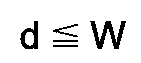
wiedergegeben wird, so daß der Ausstoß an Stickstoffoxiden reduziert und zur gleichen Zeit der Ausstoß an Kohlenmonoxid reduziert wird.
wiedergegeben wird, so daß der Ausstoß an Stickstoffoxiden reduziert und zur gleichen Zeit der Ausstoß an Kohlenmonoxid reduziert wird.
8. Wassererhitzer nach einem der vorangehenden Ansprüche, bei dem der teilbelüftete Brenner
Brenner (2) besitzt, die jeweils mit einer einzigen NOx reduzierenden Wasserleitung (10) versehen sind, die unmittelbar über den Brenneröffnungsflächen
des teilbelüfteten Brenners angeordnet ist.
9. Wassererhitzer nach einem der vorangehenden Ansprüche 1 bis 7, bei dem
der teilbelüftete Brenner Brenner (2) aufweist, die jeweils mit einem Paar von NOx reduzierenden Wasserleitungen (10) versehen sind, die unmittelbar über der Fläche der Öffnungen des Brenners angeordnet sind, so daß sie seitlich parallel zueinander angeordnet sind und zwischen sich einen Raum mit der Distanz "S" bilden; und
diese Distanz in einem Bereich liegt, der durch die Formel
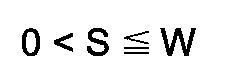
festgelegt wird.
der teilbelüftete Brenner Brenner (2) aufweist, die jeweils mit einem Paar von NOx reduzierenden Wasserleitungen (10) versehen sind, die unmittelbar über der Fläche der Öffnungen des Brenners angeordnet sind, so daß sie seitlich parallel zueinander angeordnet sind und zwischen sich einen Raum mit der Distanz "S" bilden; und
diese Distanz in einem Bereich liegt, der durch die Formel
festgelegt wird.
10. Wassererhitzer nach einem der vorangehenden Ansprüche, bei dem der Außen- und Innendurchmesser
einer jeden der Vielzahl der NOx reduzierenden Wasserleitungen (10) kleiner sind als die einer Kaltwasserleitung und
einer Heißwasserleitung, die mit den NOx reduzierenden Wasserleitungen über Wassersammel- und Wasserverteilerrohre (11, 12)
und mit dem Wärmetauscher (19) in Verbindung stehen.
1. Chauffe-eau (1) avec sortie d'oxyde d'azote réduite, comportant un brûleur partiellement
ventilé (2), produisant une flamme laminaire de gaz de combustion partiellement prémélangé
au-dessus de plusieurs orifices alignés en série dans le brûleur comprenant :
plusieurs conduites d'eau (10) disposées sur le côté aval du brûleur partiellement ventilé (2) et en communication par les conduites d'eau chaude et d'eau froide avec un échangeur de chaleur (19) du chauffe-eau;
moyennant quoi pendant le fonctionnement, de la chaleur est prélevée de la flamme laminaire par absorption thermique de chaleur par les conduites d'eau (10), permettant ainsi d'abaisser la température de la flamme laminaire dans la zone de température de flamme la plus élevée sur le côté aval des conduites d'eau (10), caractérisé en ce que les conduites d'eau (10) sont agencées dans une position telle que l'on a une distance "H" entre les conduites d'eau (10) et la surface des orifices du brûleur, et que cette distance "W" est la largeur d'une surface d'orifice de brûleur; et en ce que la position est définie par la formule :
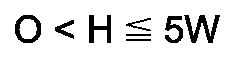
de telle sorte que pendant le fonctionnement les conduites d'eau sont situées entre les orifices de brûleur et une zone de température de flamme la plus élevée dans la flamme laminaire formée sur le côté aval des orifices de brûleur.
plusieurs conduites d'eau (10) disposées sur le côté aval du brûleur partiellement ventilé (2) et en communication par les conduites d'eau chaude et d'eau froide avec un échangeur de chaleur (19) du chauffe-eau;
moyennant quoi pendant le fonctionnement, de la chaleur est prélevée de la flamme laminaire par absorption thermique de chaleur par les conduites d'eau (10), permettant ainsi d'abaisser la température de la flamme laminaire dans la zone de température de flamme la plus élevée sur le côté aval des conduites d'eau (10), caractérisé en ce que les conduites d'eau (10) sont agencées dans une position telle que l'on a une distance "H" entre les conduites d'eau (10) et la surface des orifices du brûleur, et que cette distance "W" est la largeur d'une surface d'orifice de brûleur; et en ce que la position est définie par la formule :
de telle sorte que pendant le fonctionnement les conduites d'eau sont situées entre les orifices de brûleur et une zone de température de flamme la plus élevée dans la flamme laminaire formée sur le côté aval des orifices de brûleur.
2. Chauffe-eau selon la revendication 1, dans lequel une portion d'introduction d'eau
(13) est formée de telle sorte qu'une partie de l'écoulement d'eau dans une conduite
d'eau froide (8) est introduite dans la pluralité de conduites d'eau de réduction
de NOx puis alimentée à partir de là dans la conduite d'eau chaude (9).
3. Chauffe-eau selon la revendication 1, dans lequel une portion d'introduction d'eau
(13) est formée de telle sorte que toute l'eau s'écoulant dans la conduite d'eau froide
(8) est introduite dans la pluralité de conduites d'eau de réduction de NOx (10) puis alimentée à partir de là pour revenir dans la conduite d'eau froide (8).
4. Chauffe-eau selon la revendication 1, dans lequel une portion d'introduction d'eau
(13) est formée de telle sorte qu'une partie de l'écoulement d'eau dans la conduite
d'eau froide (8) est introduite dans la pluralité de conduites d'eau de réduction
de NOx (10) puis alimentée à partir de là pour revenir dans la conduite d'eau froide (8).
5. Chauffe-eau selon la revendication 1, dans lequel une portion d'introduction d'eau
(13) est formée de telle sorte que la totalité de l'eau s'écoulant dans une conduite
d'eau chaude (9) est introduite dans la pluralité de conduites d'eau de réduction
de NOx (10) puis alimentée à partir de là pour revenir dans la conduite d'eau chaude (9).
6. Chauffe-eau selon la revendication 1, dans lequel une portion d'introduction d'eau
(13) est formée de telle sorte qu'une partie de l'écoulement d'eau dans une conduite
d'eau chaude (9) est introduite dans la pluralité de conduites d'eau de réduction
de NOx (10) puis alimentée à partir de là pour revenir dans la conduite d'eau chaude (9).
7. Chauffe-eau selon l'une quelconque des revendications précédentes, dans lequel :
les conduites d'eau de réduction de NOx (10) ont un diamètre "d" limité à la plage représentée par la formule:

réduisant ainsi la sortie d'oxyde d'azote et limitant également en même temps la sortie de monoxyde de carbone.
les conduites d'eau de réduction de NOx (10) ont un diamètre "d" limité à la plage représentée par la formule:
réduisant ainsi la sortie d'oxyde d'azote et limitant également en même temps la sortie de monoxyde de carbone.
8. Chauffe-eau selon l'une quelconque des revendications précédentes, dans lequel le
brûleur partiellement ventilé comporte des brûleurs (2) dont chacun est équipé d'une
conduite d'eau de réduction de NOx (10) superposée juste au-dessus des surfaces d'orifice de brûleur du brûleur partiellement
ventilé.
9. Chauffe-eau selon l'une quelconque des revendications 1-7 dans lequel :
le brûleur partiellement ventilé comporte des brûleurs (2) dont chacun est muni d'une paire de conduites d'eau de réduction de NOx superposées juste au-dessus de la surface des orifices du brûleur de façon à être latéralement parallèles entre elles avec un espace intermédiaire de distance S, cette distance se situant dans la plage représentée par la formule :
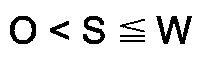
le brûleur partiellement ventilé comporte des brûleurs (2) dont chacun est muni d'une paire de conduites d'eau de réduction de NOx superposées juste au-dessus de la surface des orifices du brûleur de façon à être latéralement parallèles entre elles avec un espace intermédiaire de distance S, cette distance se situant dans la plage représentée par la formule :
10. Chauffe-eau selon l'une quelconque des revendications précédentes, dans lequel un
diamètre extérieur et intérieur de chacune de la pluralité de conduites d'eau de réduction
de NOx (10) est inférieure à celui de la conduite d'eau froide et une conduite d'eau chaude
communiquant avec les conduites d'eau de réduction de NOx par le biais de tubulures de distribution et de recueil d'eau (11, 12) et avec l'échangeur
de chaleur (19).