|
(11) | EP 0 529 542 A1 |

| (12) | EUROPEAN PATENT APPLICATION |
|
|
|
|
|||||||||||||||||||||||||||
| (54) | High-Strength, abrasion-resistant aluminum alloy and method for processing the same |
| (57) The present invention provides a high-strength, abrasion resistant aluminum alloy
having a composition represented by the general formula; AlaMbXcZdSie wherein M is at least one element selected from the group consisting of Fe, Co, and
Ni; X is at least one element selected from the group consisting of Y, La, Ce and
Mm (mischmetal); Z is at least one element selected from the group consisting of Mn,
Cr, V, Ti, Mo, Zr, W, Ta and Hf; and a, b, c, d and e are all expressed by atom percent
and range from 50 to 89%, 0.5 to 10%, 0.5 to 10%, 0 to 10% and 10 to 49%, respectively,
with the proviso that , the alloy containing fine Si precipitations and fine particles of intermetallic compounds dispersed in an aluminum matrix. The aluminum alloy may further contain not greater than 5% of at least one element selected from the group consisting of Cu, Mg, Zn and Li. The alloy can be warm-worked at 300-500 °C and is useful for various industrial applications where high abrasion resistance and high strength are required. |
BACKGROUND OF THE INVENTION
1. Field of the Invention
[0001] This invention relates to a high-strength, abrasion resistant aluminum alloy usable for sliding members, especially for vanes and rotors of rotary compressors, valve operating mechanisms of internal combustion engines, cylinders of magnetic heads, cylinders and pistons of miniature engines of model assemblies, pistons of engines and the like, and also to a method for processing the aluminum alloy.
2. Description of the Prior Art
[0002] In many instances, cast iron or alloyed steel is employed as a counterpart material for the sliding members described above so that the sliding members are used in combination with such a counterpart material.
[0003] The material employed for these members is, therefore, required to have excellent strength and heat resistance together with high abrasion resistance and also a coefficient of thermal expansion not different too much from the coefficient of thermal expansion of the counterpart material.
[0004] Among conventional aluminum alloys, Al-Si alloys are known as having excellent abrasion resistance. Among them, those having an Si content of 12-25 wt% are widely employed. Many of these materials are cast materials and, in order to exhibit abrasion resistance by coarse primary silicon crystals, coarse Si crystals of 20 µm or greater are precipitated in the alloys.
[0005] The above-described cast Al-Si alloys are, however, accompanied by the problems that their sliding counterpart materials are subjected to more wearing by coarse primary silicon crystals and that they have low strength because they are cast materials. Further, processing operations are difficult - including cutting, cold working and warm working.
[0006] To improve the processability, it is necessary to reduce the Si content. A reduction in the Si content, however, leads to a greater coefficient of thermal expansion, resulting in the problem that difficulties are encountered in securing a suitable clearance relative to the sliding counterpart material.
SUMMARY OF THE INVENTION
[0007] The present invention has overcome the above problems. In one aspect of this invention, there is thus provided a high-strength, abrasion-resistant aluminum alloy having a composition represented by the general formula: AlaMbXcZdSie wherein M is at least one element selected from the group consisting of Fe, Co and Ni; X is at least one element selected from the group consisting of Y, La, Ce and Mm (mischmetal); Z is at least one element selected from the group consisting of Mn, Cr, V, Ti, Mo, Zr, W, Ta and Hf; and a, b, c, d and e are all expressed by atom percent and range from 50 to 89%, 0.5 to 10%, 0.5 to 10%, 0 to 10% and 10 to 49%, respectively, with the proviso that
, said alloy containing fine Si precipitations in an aluminum matrix and finely dispersed particles of intermetallic compounds in the aluminum matrix. The aluminum alloy may additionally contain not greater than 5% of at least one element selected from the group consisting of Cu, Mg, Zn and Li.
[0008] In a second aspect of this invention, there is also provided warm-working the aluminum alloy of the above composition at 300-500 °C into various members.
BRIEF DESCRIPTION OF THE DRAWINGS
[0009] FIG. 1 is a graph diagrammatically showing the results of a test on the extents of wearing of sample materials and those of their counterpart materials.
[0013] FIG. 5 is a graph showing a relationship between Si content and tensile fracture strength in Example 3.
[0014] FIG. 6 is a graph showing a relationship between Si content and coefficient of thermal expansion in Example 3.
[0015] FIG. 7 is a graph showing a relationship between temperature and tensile fracture strength in Example 4.
DETAILED DESCRIPTION OF THE PREFERRED EMBODIMENTS
[0016] In the composition of the present invention, it is not preferred to reduce the content of Al to less than 50% from the significance of weight reduction. Al contents greater than 89% are not preferred because the strength and abrasion resistance are reduced.
[0017] Fe, Co and/or Ni as the element M forms intermetallic compounds with Al and is dispersed as fine particles of 0.01-5 µm or so in the aluminum matrix to enhance the strength and heat resistance. If its content exceeds 10%, dispersed particles become so much that embrittlement takes place. If its content is less than 0.5%, the matrix cannot be strengthened sufficiently.
[0018] Y, La, Ce and/or Mm as the element X also forms intermetallic compounds with Al and is dispersed as fine particles of 0.01-5 µm or so to enhance the strength and heat resistance. If its content exceeds 10%, dispersed particles become so much that embrittlement takes place. If its content is less than 0.5%, the matrix cannot be strengthened sufficiently.
[0019] Mn, Cr, V, Ti, Mo, Zr, W, Ta and/or Hf as the element Z forms a solid solution with Al to enhance the Al matrix and, at the same time, form intermetallic compounds with Al or by itself and is dispersed as fine particles of 0.1 µm or smaller in crystalline grains of Al, thereby reducing the coarsening of crystal grains and enhancing the strength and heat resistance. If its content exceeds 10%, dispersed particles become so much that embrittlement takes place. Although no particular limitation is imposed on the lower limit of the content of the element Z, the content of the element Z may be preferably at least 0.5% from the viewpoint of enhancement of the matrix.
[0020] Si itself is dispersed as fine particles of 10 µm or smaller, thereby serving to enhance the abrasion resistance and hardness of the alloy. By adjusting the amount (content) of Si particles to be dispersed, the coefficient of thermal expansion of the alloy can be controlled. Amounts smaller than 10% are not effective for the improvement of abrasion resistance, whereas amounts in excess of 49% make materials brittle so that their strength is reduced.
[0021] The alloy according to the present invention can be obtained as powder prepared by conducting quenching at a solidification velocity of 10⁴ °C/sec or higher in accordance with an atomizing process or as a quenched thin ribbon prepared by conducting quenching in a similar manner. The thus obtained atomized powder is a powder metallurgical raw material having good processability. The quenched this ribbon is cut as it is and is used as sliding members.
[0022] The material in the above-described form is subjected to processing such as pressing or extrusion and is then finish-processed into a final product. These processings are conducted in a warm range of from 300 °C to 500 °C. This temperature range can provide the product with practical strength. As a specific extrusion process, atomized powder is filled under vacuum within an aluminum can and is then extruded at a temperature of 350 ± 30 °C under a pressing force of 10 tons/cm². The thus-processed material has structure that fine Si particles, preferably of 0.1-5 µm, and fine particles of intermetallic compounds, preferably of 0.01-5 µm, are evenly dispersed in an Al-supersaturated solid solution formed upon atomization.
[0023] In the alloy according to the present invention, the abrasion resistance of the aluminum alloy has been enhanced primarily by the precipitated Si and the intermetallic compounds. Because Si precipitations are very small, they do not affect the processability and, when employed as a sliding member, does not cause the counterpart material to wear even if the Si content is increased. Further, the heat resistance and strength have been enhanced by the intermetallic compounds and the heat resistance has been enhanced by the solid solution or the like of the element Z, so that the structure of the alloy is coarsened less even when subjected to warm working.
Example 1
[0025] Materials of the compositions shown under the invention samples in Table 1 and under the comparative samples in Table 2, respectively, were subjected to high-frequency melting, whereby master alloys were produced. Those master alloys were separately formed into quench-solidified thin ribbons (thickness: 0.02 mm, width: 1 mm) by a single roll and then subjected to X-ray diffraction. They were found to have the structures and hardnesses presented in Table 3 and Table 4, in which "FCC" indicates a face centered cubic crystalline structure.
Table 3
| Invention Sample No. | Structure | Hardness (Hv) |
| 1 | FCC + Si + intermetallic compound | 200 |
| 2 | FCC + Si + intermetallic compound | 230 |
| 3 | FCC + Si + intermetallic compound | 235 |
| 4 | FCC + Si + intermetallic compound | 250 |
| 5 | FCC + Si + intermetallic compound | 270 |
| 6 | FCC + Si + intermetallic compound | 285 |
| 7 | FCC + Si + intermetallic compound | 300 |
| 8 | FCC + Si + intermetallic compound | 350 |
| 9 | FCC + Si + intermetallic compound | 360 |
| 10 | FCC + Si + intermetallic compound | 365 |
| 11 | FCC + Si + intermetallic compound | 350 |
| 12 | FCC + Si + intermetallic compound | 370 |
| 13 | FCC + Si + intermetallic compound | 340 |
| 14 | FCC + Si + intermetallic compound | 375 |
| 15 | FCC + Si + intermetallic compound | 330 |
| 16 | FCC + Si + intermetallic compound | 320 |
Table 4
| Comparative Sample No. | Structure | Hardness (Hv) |
| 1 | FCC | 130 |
| 2 | FCC | 100 |
| 3 | FCC | 80 |
| 4 | FCC + Si | 75 |
| 5 | FCC + Si | 90 |
| 6 | FCC | 55 |
[0026] The hardness of each sample is a value (DPN) as measured by a Vickers microhardness tester under 25 g load. It is understood that the materials according to the present invention had a hardness (Hv) of 200-375 and were extremely hard whereas the comparative materials had a hardness of 55-130 and were inferior to the invention materials.
Example 2
[0027] Invention Samples 1, 2, 3 and 4 in Table 1, Comparative Samples 1 and 2 in Table 2 as well as an alloy having a composition equivalent to A390 (designation by Japanese Industrial Standards) were each formed into powder (average particle size: 15 µm) by the high-pressure gas atomizing method. After they were confirmed to have the same structures as those of the corresponding Samples shown in Table 3 and Table 4, they were separately filled in copper containers, capped, evacuated to 1 x 10⁻⁵ Torr, and then compressed at 347 °C by a press into billets.
[0028] Each billet was separately placed in a container of an extruder and warm-extruded at 377 °C and an extrusion ratio of 10, whereby an extruded rod was obtained. The extruded rods prepared from the invention samples had the structure that intermetallic compounds and Si were evenly distributed as fine particles. On the other hand, the extruded rods prepared from the comparative samples had an FCC structure.
[0029] The above extruded material was worked into a configuration as shown in FIG. 2, disposed in contact with a rotor, made of eutectic cast iron, as a counterpart material as shown in FIG. 3, and then tested under the following conditions: load "F": 100 kg/mm, velocity: 1 m/sec, lubricating oil: "REFOIL NS-4GS" (trade name; product of Nippon Oil Company, Ltd.). In FIG. 2, reference numeral 1 shows a test piece and all dimensions are shown in millimeter units. Reference numerals 1 and 2 in FIG. 3 show the test piece and the rotor, respectively. The results are diagrammatically shown in FIG. 1.
[0030] The alloy having the composition equivalent to A390 aluminum alloy known as an abrasion-resistant aluminum alloy and Comparative Samples 1 and 2 caused the counterpart materials to wear substantially. In the case of the samples of the present invention, they and the counterpart materials were both worn less so that the materials according to this invention were found to have good compatibility with the counterpart materials.
Example 3
[0031] By changing the Si content of an alloy having the composition of (Al0.935Ni0.03Fe0.01Mm0.025)100-xSXx in a similar manner to Example 2, variations in hardness (Hv), tensile fracture strength (MPa) and coefficient of thermal expansion (10⁻⁶/K) were investigated. The results are diagrammatically shown in FIG. 4, FIG. 5 and FIG. 6, respectively. It is envisaged that the processability is not affected even when the Si content is increased and also that the coefficient of thermal expansion can be controlled as desired by adjusting the Si content.
Example 4
[0032] Measurement results of temperature dependency of tensile fracture strength (MPa) are diagrammatically illustrated in FIG. 7, with respect to Al83.5Ni₃Fe₁Mm2.5Si₁₀ (solid curve) and Al82.9Ni₃Fe₁Mm2.5Mn0.6Si₁₀ (dotted curve). From the results, it is understood that abrasion-resistant materials having high heat resistance were obtained.
[0033] In the alloy according to this invention, the abrasion resistance has been enhanced primarily by finely precipitated Si particles and intermetallic compound particles. The processability of the alloy is not affected even when the content of Si is increased, whereby warm working is feasible. Even when being subjected to warm working, its crystalline structure undergoes little coarsening. Further, the heat resistance and strength have been enhanced by the intermetallic compounds.
1. A high-strength, abrasion-resistant aluminum alloy having a composition represented
by the general formula; AlaMbXcZdSie wherein M is at least one element selected from the group consisting of Fe, Co, and
Ni; X is at least one element selected from the group consisting of Y, La, Ce and
Mm (mischmetal); Z is at least one element selected from the group consisting of Mn,
Cr, V, Ti, Mo, Zr, W, Ta and Hf; and a, b, c, d and e are all expressed by atom percent
and range from 50 to 89%, 0.5 to 10%, 0.5 to 10%, 0 to 10% and 10 to 49%, respectively,
with the proviso that

, said alloy containing fine Si precipitations in an aluminum matrix and finely dispersed particles of intermetallic compounds dispersed in the aluminum matrix.
, said alloy containing fine Si precipitations in an aluminum matrix and finely dispersed particles of intermetallic compounds dispersed in the aluminum matrix.
2. An alloy as claimed in claim 1, wherein said alloy further contains not greater than
5% of at least one element selected from the group consisting of Cu, Mg, Zn and Li.
3. A method for processing a high-strength, abrasion-resistant aluminum alloy, which
comprises warm-working at 300-500 °C an aluminum alloy stock having a composition
represented by the general formula; AlaMbXcZdSie wherein M is at least one element selected from the group consisting of Fe, Co and
Ni; X is at least one element selected from Y, La, Ce and Nm (mischmetal); Z is at
least one element selected from the group consisting of Mn, Cr, V, Ti, Mo, Zr, W,
Ta and Hf; and a, b, c, d and e are all expressed by atom percent and range from 50
to 89%, 0.5 to 10%, 0.5 to 10%, 0 to 10% and 10 to 49%, respectively, with the proviso
that

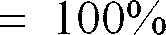
, said alloy containing fine Si precipitations in an aluminum matrix and finely dispersed particles of intermetallic compounds in the aluminum matrix.
, said alloy containing fine Si precipitations in an aluminum matrix and finely dispersed particles of intermetallic compounds in the aluminum matrix.
4. A process as claimed in Claim 3, wherein said composition further contains not greater
than 5% of at least one element selected from the group consisting of Cu, Mg, Zn and
Li.